




Abstract
A flight safety warning method based on reachability analysis and fuzzy inference is proposed against aircraft icing. A nonlinear model of iced aircraft with uncertainty is proposed based on the existing research results on the effects of icing and the uncertainty in icing detection. To deal with the uncertainty caused by icing, reachability analysis is used to estimate the safe flight envelope of iced aircraft. On this basis, fuzzy inference is employed for flight safety warning which can be used to enhance the pilot’s situational awareness in icing encounters. Simulations of the GTM (Generic Transport Model) aircraft show that, the proposed method has the potential to further increase the flight crew awareness about the risk of losing control in flight under icing.
Introduction
Icing alters the aerodynamic characteristics of the aircraft, which in turn alters the flight envelope. The aviation industry gives immense importance to the harmful effects of icing and developed many anti-icing and deicing techniques. However, some serious aviation accidents induced by icing are still reported occasionally. The statistics show that many severe aviation accidents can be traced back to a similar cause, that is, aircraft exceeding the safe flight envelope. 1 Icing is a major cause of aircraft exceeding the safe envelope and even loss of control in flight (LOC-I). 2 Under icing conditions, the safe envelope of the aircraft will shrink. If the pilot lacks the awareness of the shrunk safe envelope and still controls the aircraft according to the normal envelope, an accident would likely happen in the worst-case scenario. Therefore, it is necessary to enhance the pilot’s situational awareness of the flight envelope under icing condition. This involves icing effect estimation, safe envelope estimation, and safety warning.
Presently, most modern planes are equipped with constraint and protection systems. However, the current types of protections are static. They deter pilot inputs from exceeding certain predefined limits. However, icing significantly changes the aircraft’s aerodynamics performance and other parameters. Compared with other adverse conditions, it is more challenging to deal with the impact of icing on flight safety. Icing may occur at different locations onboard, and it has different severity. The occurrence of icing will have an adverse effect on the aircraft flight ability or performance, such as degrading aircraft performance and handling characteristics, and even leading to aircraft LOC-I. 3 In addition, icing conditions are difficult to detect in flight practice.
It is a challenge to obtain the safe flight envelop for aircraft. Most methods use the parameters of the physical model to obtain the flight envelope bounds or the limitation of commands.4,5 Various univariate or bivariate flight envelopes have been extensively studied. These envelopes typically contain flight speed, altitude, angle of attack, sideslip angle, etc. 6 The coupling between these parameters, as well as the pilot’s operational input, is also critical for flight safety. Therefore, a multi-dimensional safe envelope should be constructed by considering flight state variables and maneuvering control variables. In Helsen et al., 1 the safe envelope is defined as the intersection of three envelopes, namely the dynamics envelope, the structural and comfort envelope, and the environmental envelope. The dynamic envelope reflects the dynamics and kinematic limits of aircraft and is an important envelope that is closely related to flight safety. Reachability analysis is a direct safety verification method that can deal with multidimensional system models. Therefore, reachability analysis has been tried to estimate the multidimensional dynamic envelope of an aircraft.1,7 The neural network-based methods have also been employed to achieve flight envelope bounds estimation. In Xie et al., 8 the safe flight envelope bounds are updated adaptively based on the safety critical information obtained by a sparse recurrent fuzzy neural network. However, these methods are more demanding on computing resources.
Estimating the safe flight envelope in icing encounter is a more difficult task. Flight envelope estimation for iced aircraft is a challenge. The Icing Contamination Envelope Protection (ICEPro) system 9 was designed and implemented to identify degradations in airplane performance and flying qualities resulting from ice contamination and provide safe flight-envelope cues to the pilot. ICEPro uses a of a-priori information and real-time aerodynamic estimations to provide safe limits of the flight envelope during in-flight icing encounters. In Zhang et al., 10 a database-driven safe flight envelope protection method is proposed for abnormal cases like structural damage and icing occur. Based on the information given by damage classification, the flight envelopes are explicitly retrieved and processed online from the database. Therefore, this method requires estimating and storing envelopes under multiple icing conditions. This paper presents a new method to predict the safe flight envelope and perform safety monitoring in icing encounter. The proposed method introduces the effect of icing into the system as an uncertainty parameter. as long as the icing uncertain parameter can be estimated, the safe flight envelope can be given systematically, which makes it possible to estimate the safe flight envelope under icing conditions online and eliminates the need to store large amounts of envelopes beforehand.
The flight safety warning system evaluates the safety of the flight state and feeds safety information back to the pilot in some way. In Van Baelen et al., 11 , the risk-evolution analysis is used determine whether a flight state is safe or not, and the safety of the whole flight space is presented in the form of a cloud chart, which provides vivid and predictive information for the pilot by means of computational flight dynamics. In Van Baelen et al., 11 a haptic feedback system is designed by using force feedback through the control device to provide intuitive information on the state of the aircraft relative to the flight envelope protection.
In this paper, a flight safety warning method for iced aircraft is proposed based on reachability analysis and fuzzy inference. The effect of icing on aircraft dynamics is described by an uncertain parameter. To deal with the uncertainty caused by icing, reachability analysis is used to estimate the safe flight envelope. The estimation of the envelope is obtained by solving the Hamilton-Jacobi equation, which requires an optimal solution for parameters such as control inputs and icing effects. Then the Hamilton-Jacobi equation can be efficiently solved within the framework of level set method. To improve safety of iced aircraft, a flight safety warning method is proposed based on fuzzy inference. The main input to fuzzy inference is the physically meaningful variables constructed in the flight envelope. The contributions are as follows:
(1) The use of an uncertainty parameter to describe the effects of icing on aircraft. Consequently, uncertainties due to changes in meteorological conditions, the working conditions of the anti-icing system and icing detection can be taken into account.
(2) The reachability analysis is used to obtain the safe flight envelop of iced aircraft. Consequently, the effect of the uncertainty caused by icing on the flight envelope can be theoretically handled. Compared with univariate or bivariate flight envelopes, the flight envelope obtained by the proposed method is stored using a function defined in state space, which can be used to construct variables that characterize flight safety.
(3) The designed fuzzy inference system can generate signals containing the information of flight safety. This information is not simply derived from a comparison of control input limits and actual control inputs. Instead, it is inferred from the relative relationship between the flight state and the flight envelope in the state space. The input variables of the fuzzy inference system are constructed from the safe flight envelope in the state space. These variables not only reflect the safety of the current flight state, but also have a certain degree of predictability.
Longitudinal nonlinear model of iced aircraft
Icing changes the shape of aircraft and affects aerodynamic characteristics. As a prerequisite for flight envelope estimation and flight safety warning, a dynamic model of the aircraft in icing encounter must first be established
Longitudinal nonlinear dynamics model of GTM aircraft
GTM aircraft is a general purpose transport aircraft model developed by NASA (National Aeronautics and Space Administration) to study loss of control.12,13 Equation (1) can describe the longitudinal dynamics model. 14
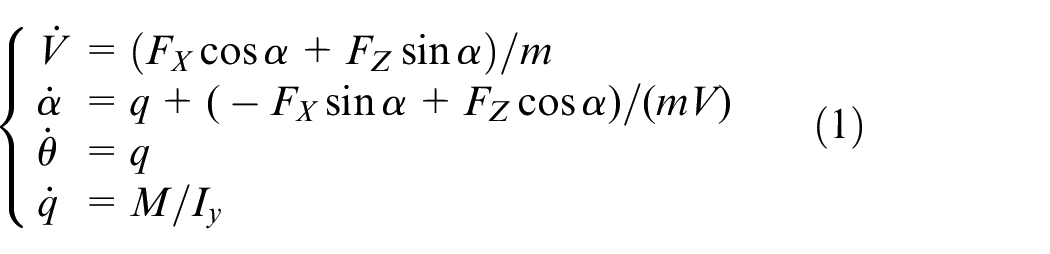
Where
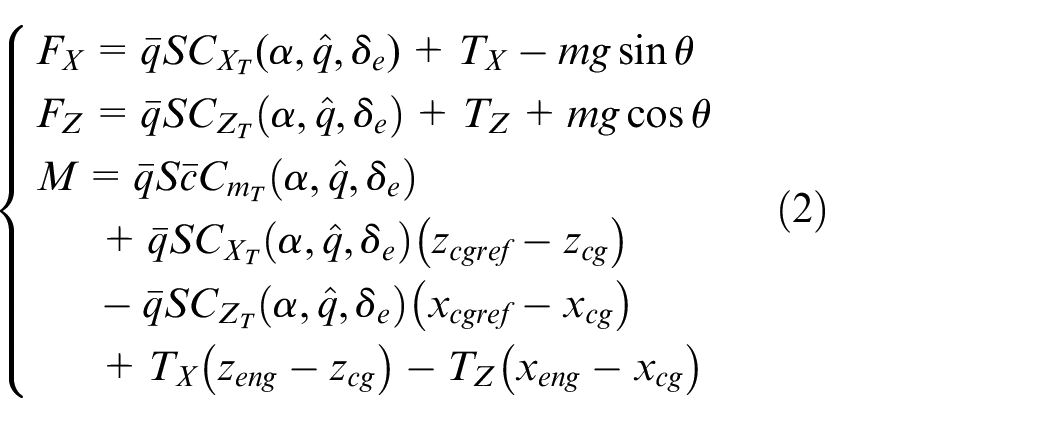
Where

Where
The model used in this paper is compared with GTM DesignSim.
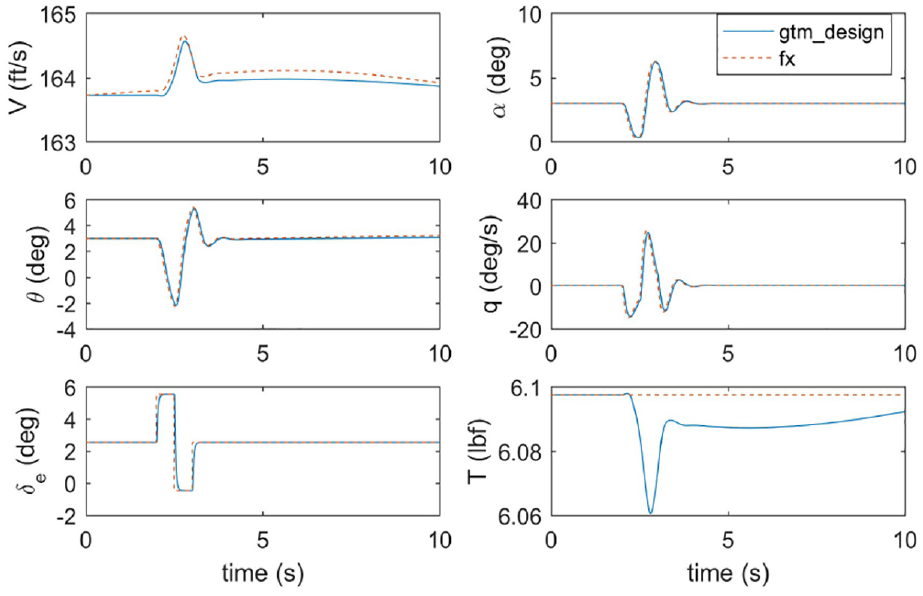
The comparison of state curve.
Figure 1 reveals that the model used in this paper is consistent with the longitudinal dynamic characteristics of the GTM. The difference between the two state curves is caused by the polynomial fitting of some aerodynamics coefficient tables, presented in this paper. The reasons and details for using polynomial fitting are explained in the next section. In Figure 1, the small difference in thrust is caused by changes in flight altitude and speed.
Uncertainty description of icing effects
The icing effect model proposed by Bragg et al. is widely used. 16 In this model, the icing effects on aircraft aerodynamics coefficient are expressed as:

Where
(1) Aircraft icing is a dynamic development process, and meteorological conditions continue to change. In addition, the anti-icing/deicing system works intermittently. When it works, the severity of icing will be reduced, and when it does not work, the severity of icing may be increased.
(2) The severity of icing is difficult to detect and quantify accurately. The ice detection results obtained in practice are often uncertain.
(3) The effects of icing on aircraft aerodynamic characteristics are complex. The icing effect estimation model can only describe the general trend of iced aircraft aerodynamic characteristics. Therefore, there is uncertainty in the model.
Considering these reasons, we believe that it is reasonable to use the uncertainty model to describe the effects of icing. Lampton et al. proposed an estimation method of iced aircraft model based on flight test and wind tunnel test data, in which the aerodynamic coefficient is described by a range of values. 3 This method takes the icing effect as a parameter of the system, which can easily estimate the aerodynamic coefficients of different aircraft under icing conditions. In this paper, the Bragg model and Lampton method are combined, and an uncertainty description method of icing effects is developed. The Bragg model can be expressed as:

Where the two parameters

Where
The model in equation (6) is an attempt to describe the icing uncertainty. In the optimization problem, the uncertainty parameter
The GTM aerodynamic data is given in the form of a lookup table. Each aerodynamics coefficient is composed of a series of look-up tables. By using uncertainty description, the icing effect factors are superimposed into each aerodynamics coefficient, and then the aerodynamics coefficient of the iced aircraft can be expanded as:
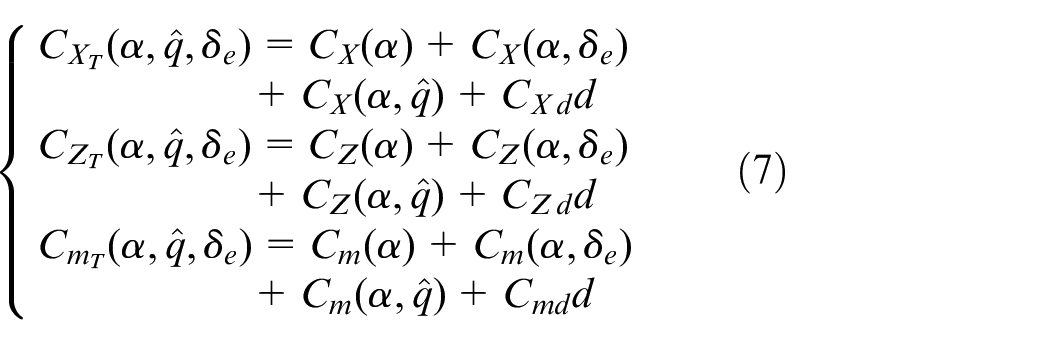
Where
The model in equation (6) separates the icing uncertainty and control inputs. Equation (7) assumes that the aerodynamic coefficients associated with the control inputs do not explicitly contain the icing uncertainty. This results in no explicit cross-term between icing uncertainty and control inputs. The models in equations (6) and (7) do not apply to cases where icing happens on the control surfaces.
Flight safety set
Safety set of nonlinear dynamics systems
Consider the nonlinear system with external inputs and uncertain parameters as shown in equation (8):

Where
For safety reasons, the state variables of the aircraft should be properly limited. Suppose the state variables of aircraft is constrained within the set
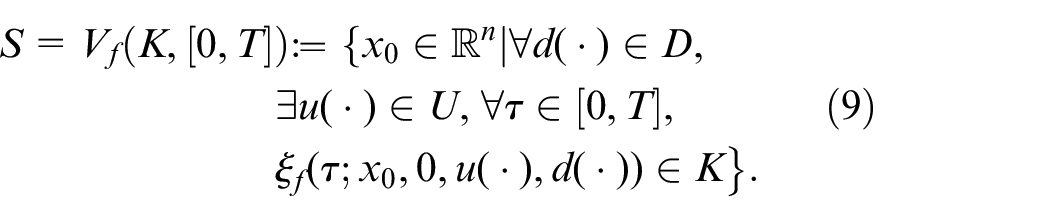
Set

Where

The function of the control variable

Flight safety set calculation
The key to calculating flight safety set is to determine the boundary conditions
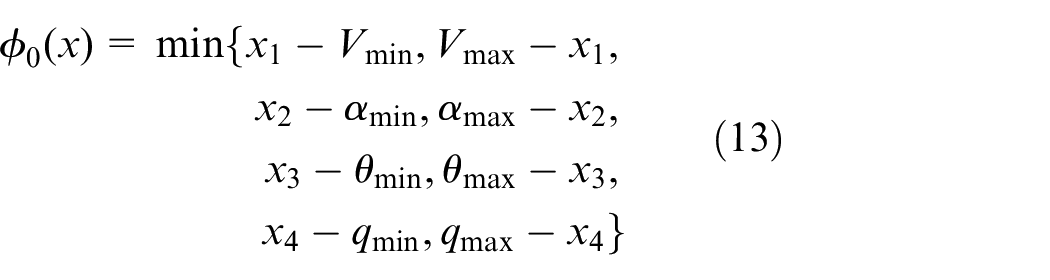
Thus, if
In addition to the boundary conditions, the Hamilton-Jacobi equations require solving optimization problems (11) and obtaining optimal solutions
A level set algorithm can be employed to solve the viscosity solution
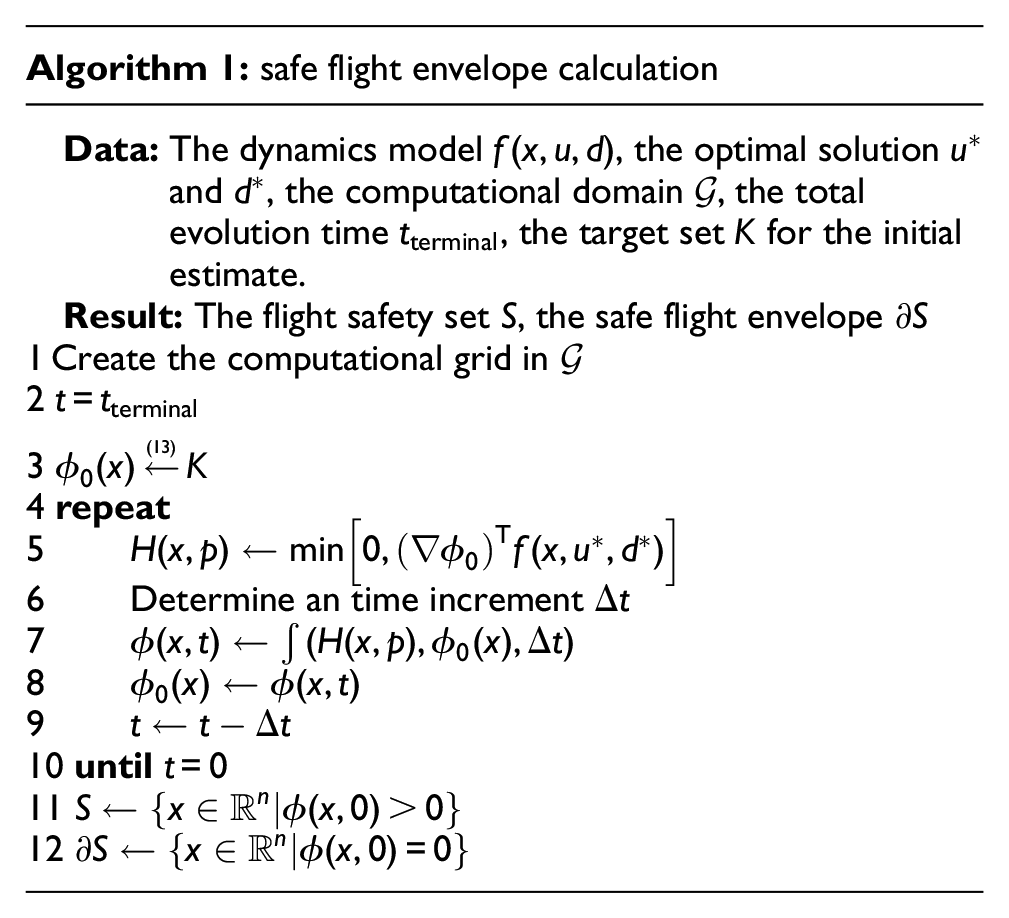
In Algorithm 1, the safety set is determined by the limits of flight state variables, the limits of control input variables and the range of the severity of icing. Once these conditions are given, The flight safety set is determined. For a specific aircraft, it is reasonable to think that limits of flight state variables and the limits of control input variables are known. Therefore, the flight safety set will vary with the given severity of icing. If the severity of icing changes dynamically during flight, then the flight safety set also changes during flight.
For the clean aircraft,

From equations (1) and (2), it is clear that there is no cross-term between control variables

Thus,

Where
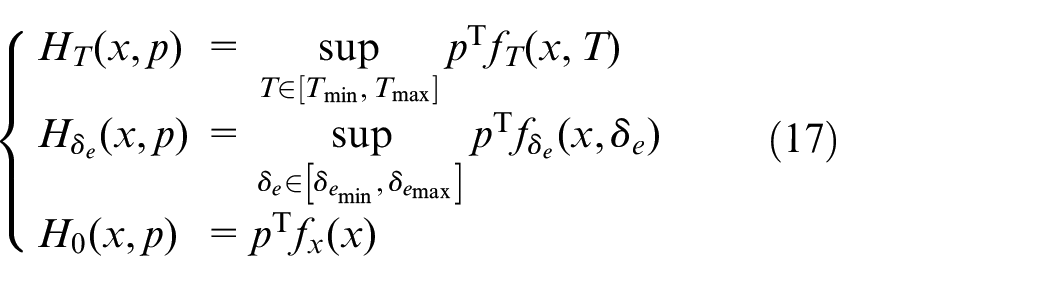
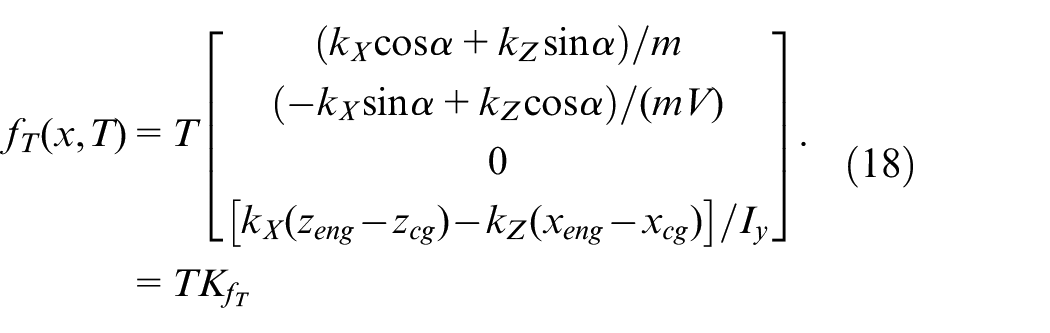
Thus,

For
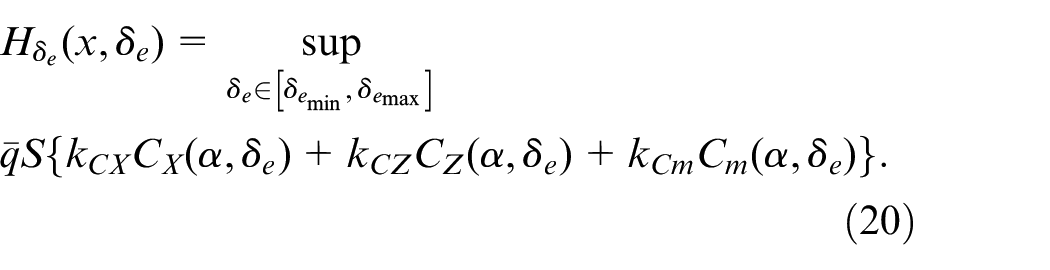
Where
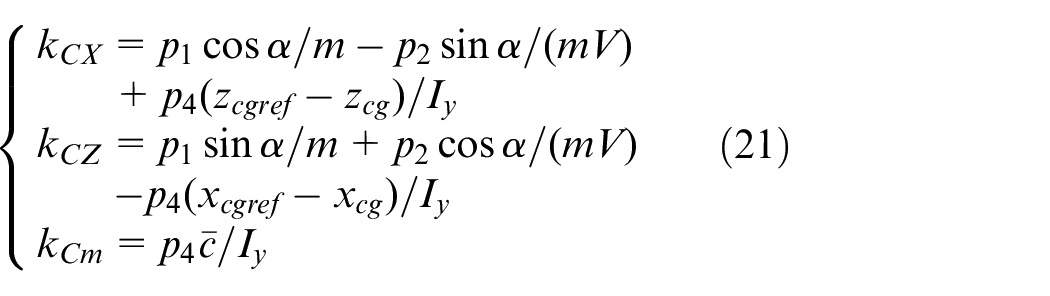
To facilitate the search for the optimal solution

Where

Where

Where
Because

The optimal solution
Case 1,
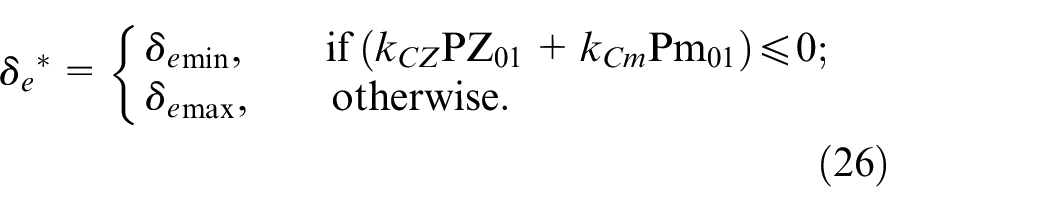
Case 2,

Case 3,

After setting the boundary conditions and finding the optimal solutions
The longitudinal dynamics model of aircraft has four state variables, so the system state space is four-dimensional and the solution function
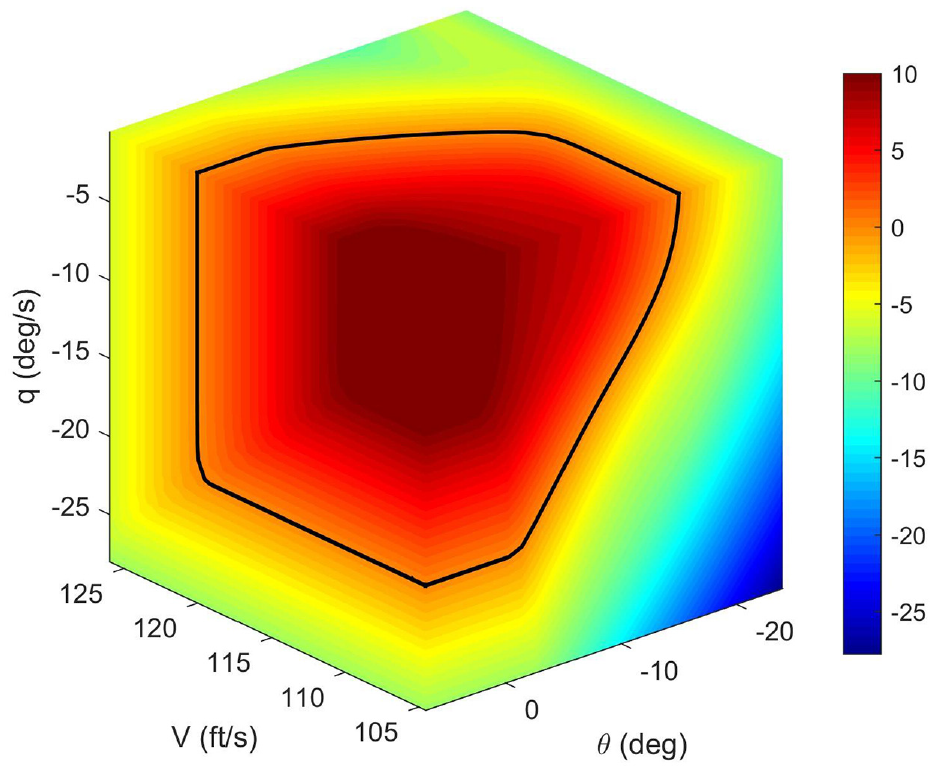
The slice of solution function
A three-dimensional subspace is obtained from the slice of
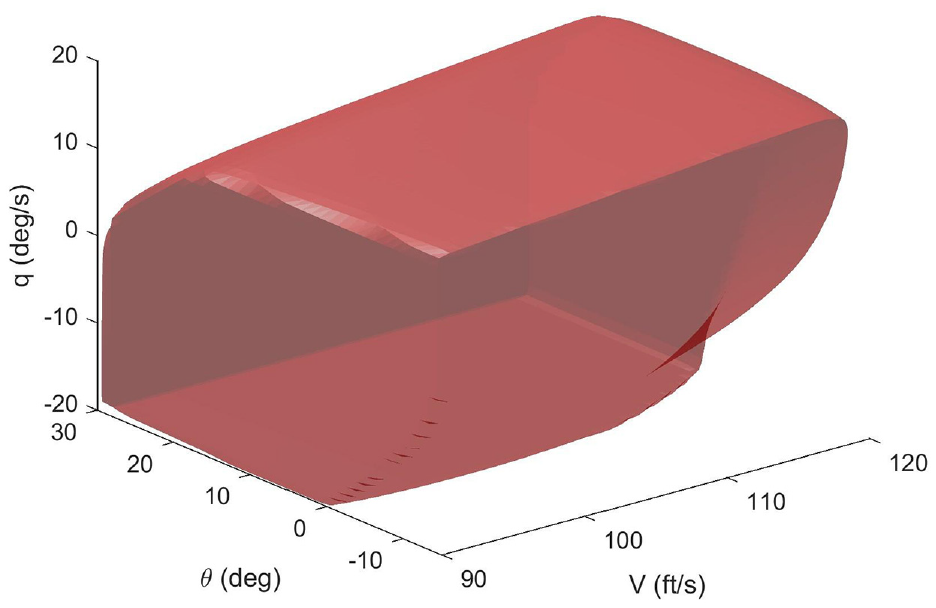
The slice of the safe flight envelope.
Figures 2 and 3 present the flight safety set and the envelope of the calculation up to the terminal time
Verification of safety set boundary
For the state points in the safety set, permitted control can always be found to keep the flight state within the target set
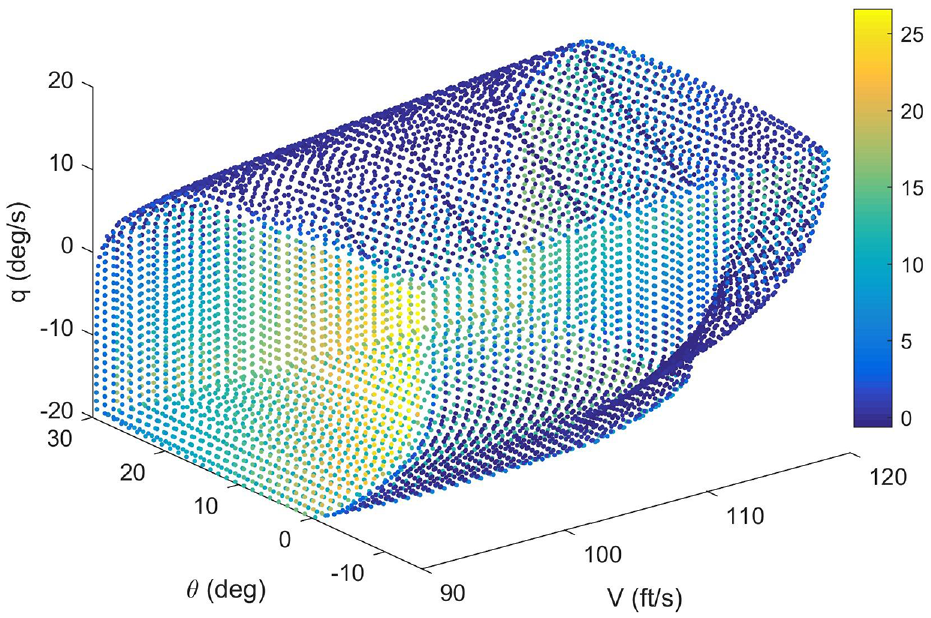
The scatter of
Moreover, when the system state is outside the safety set
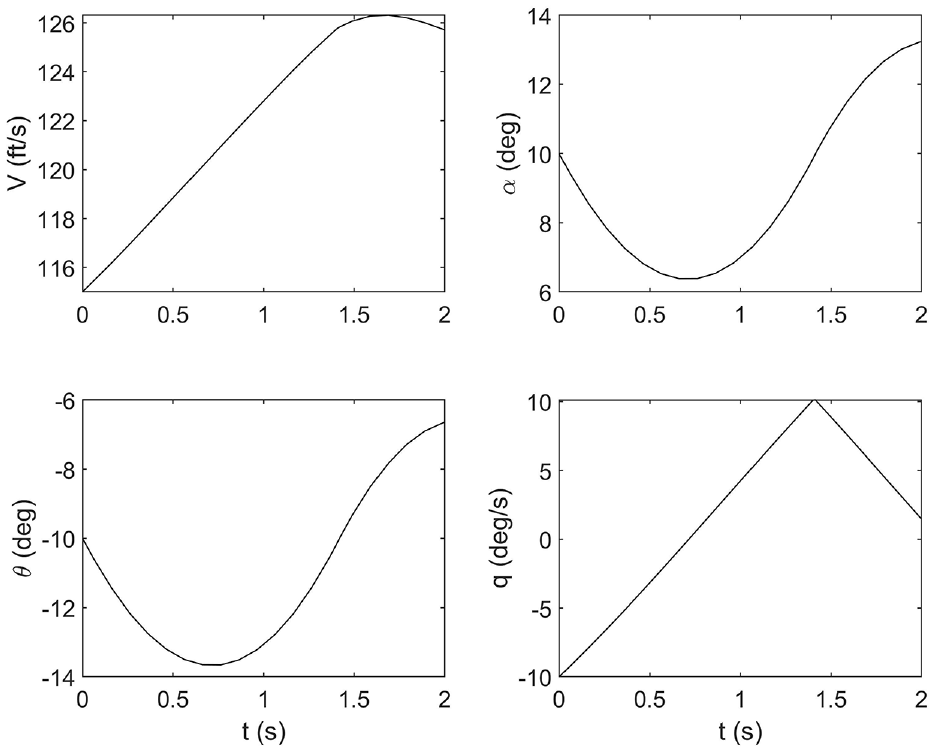
The state response curve of
On the other hand, for the state points within the safety set, there is always a feasible control to keep the flight state in the target set
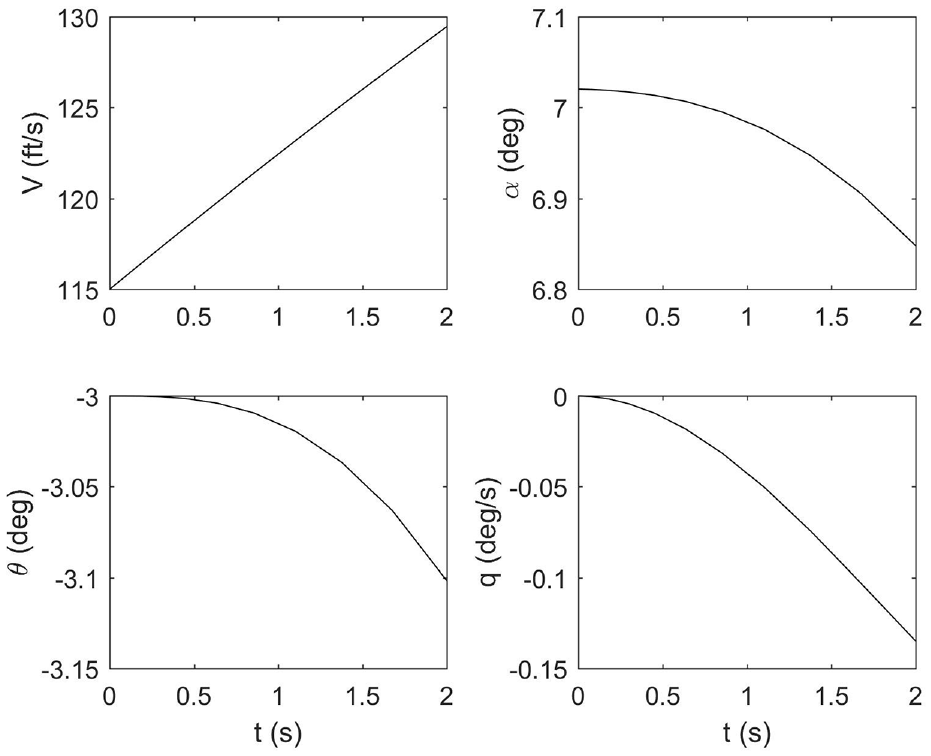
The state response curve of
As shown in Figure 6, the system state was traversed from within the safety set and exceeded state limits due to lack of proper controls. If the control is switched to
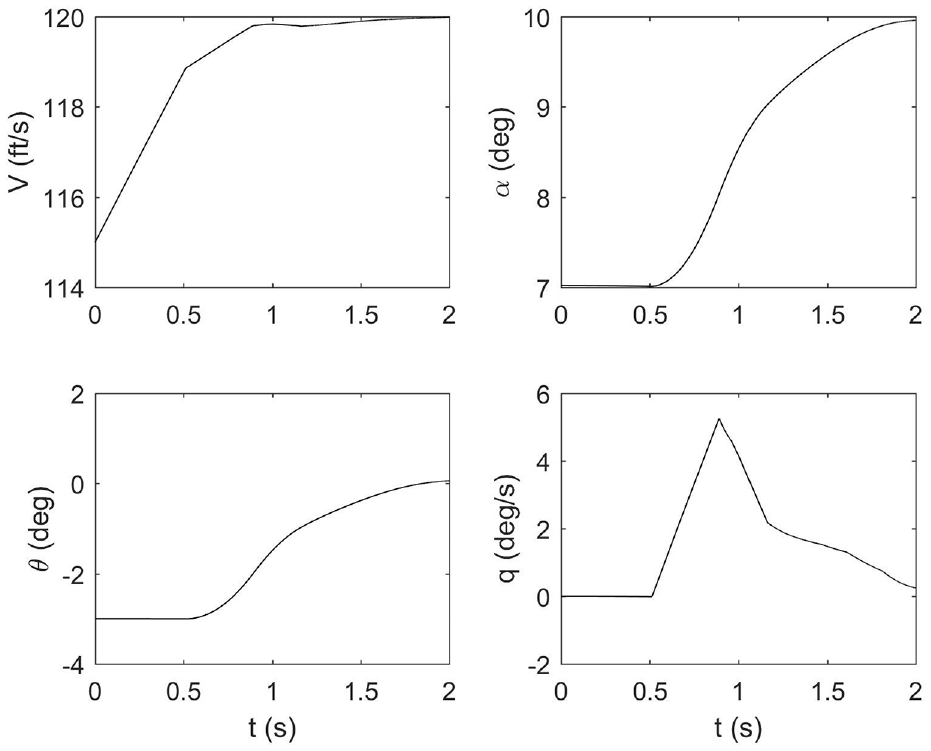
The state response curve of
As shown in Figure 7,
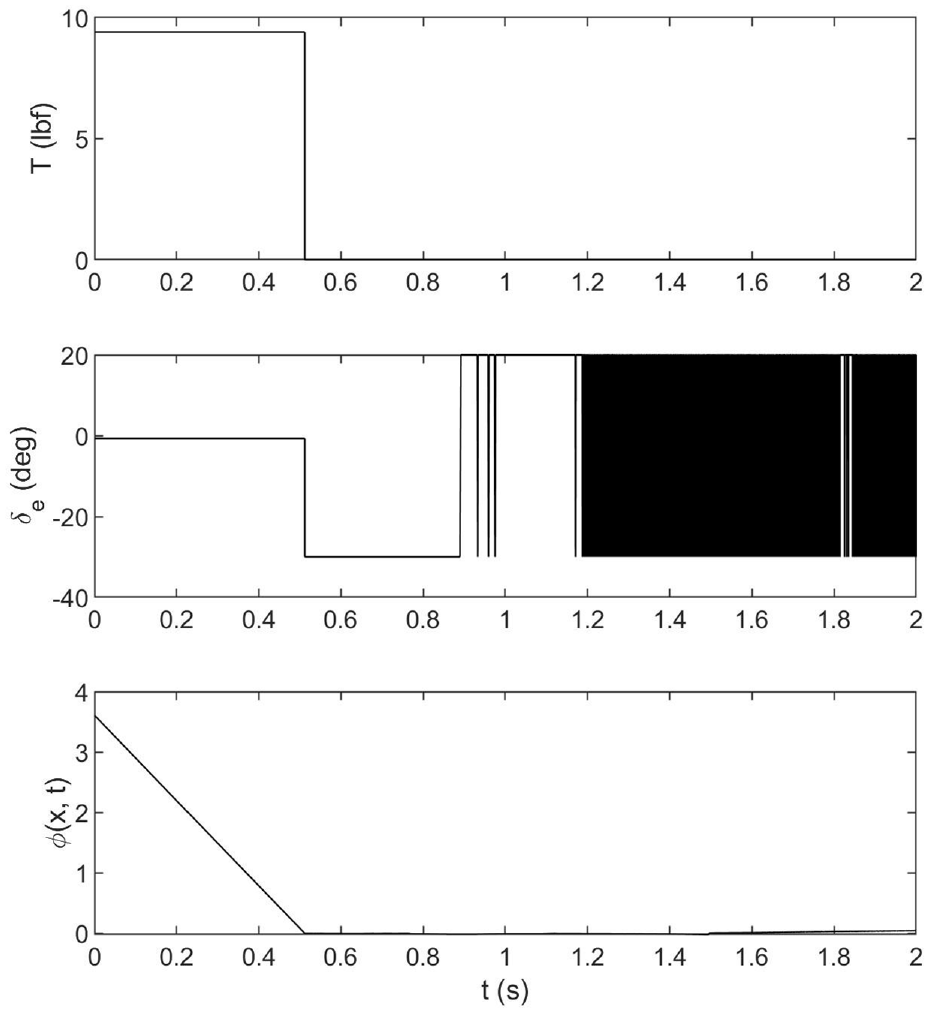
The real-time value of control variables and
From Figure 8, it can be observed that
Damage of icing to flight safety
Flight safety set of iced aircraft
According to equations (6) and (7), there is no cross-term between icing uncertainty

Where
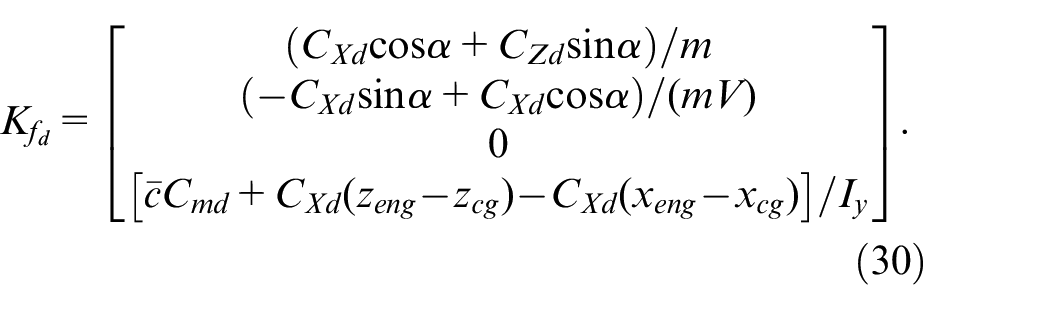
Therefore,

So the optimal solution of

For a specific type of aircraft, the icing effect coefficient can be estimated by wind tunnel test and flight test data. According to the variation rule of aerodynamics coefficient of GTM aircraft after icing,
2
the relevant parameters are estimated as:
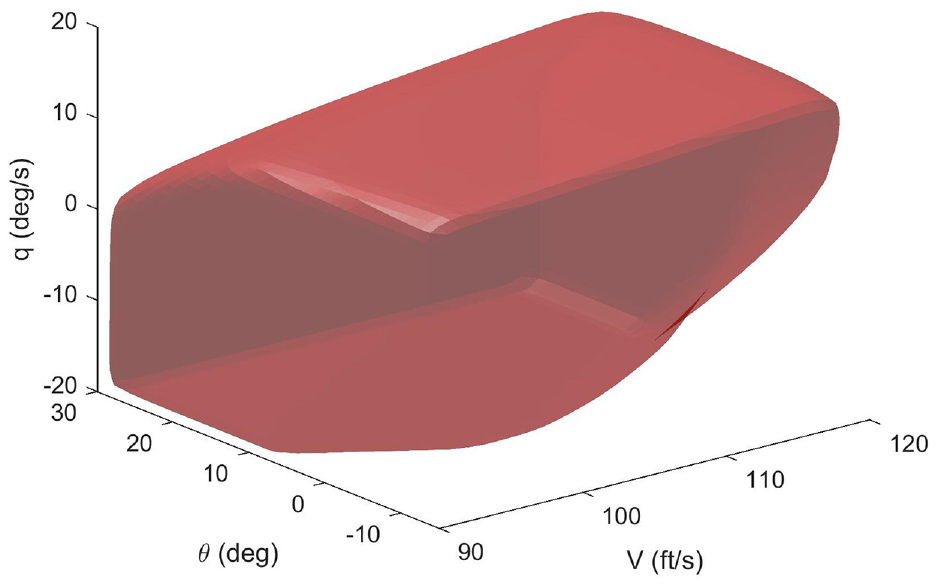
The slice of the safe flight envelope of the iced aircraft.
Analysis of icing damage
In Algorithm 1,
By comparing Figures 3 and 9, it is observed that the volumes of the safety sets in Figure 9 are about 15% less than that in Figure 3. The red and the blue transparent surfaces in Figure 10 are the safe flight envelope of clean aircraft and iced aircraft, respectively. It can be known that the envelope shrinks seriously in icing encounter.
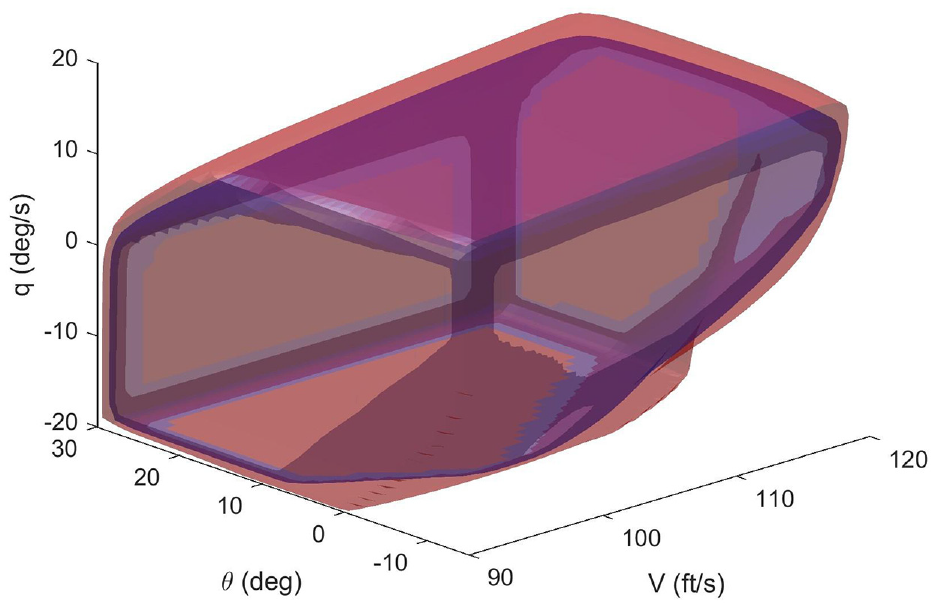
Comparison of the envelope of clean aircraft and iced aircraft.
From Figure 10, it can be observed that, the high-speed part of the flight safe envelope on the
It can be found that icing seriously compressed the flight safety set. If the driver is not aware of the shrinking envelope, it is easy to make mistakes and lead to flight accidents. Therefore, it is necessary to enhance pilots’ awareness of flight safety under icing conditions and implement safety warning.
Flight safety warning of iced aircraft
Flight safety is a fuzzy concept that is described by a fuzzy set. The causal relationship between flight state variables and flight safety is complex and difficult to be described by explicit functions. Therefore, the fuzzy inference is used in this paper for the safety warning of iced aircraft.
The fuzzy comprehensive evaluation method has been used in flight safety evaluation. 20 In the fuzzy comprehensive evaluation method, all parameters associated with flight safety (state variables and maneuver variables) are divided into several intervals according to prior knowledge. Then, the interval of each parameter is determined according to the state of the system. Finally, the comprehensive safety evaluation results are obtained by using the composition rules. The advantage of this method is that all factors can be managed directly. However, this method is highly dependent on experience and needs to store the state classification intervals of each parameter under different icing conditions.
In contrast, the fuzzy inference method used in this paper does not directly classify flight state variables or control variables. Instead, the flight safety set is estimated based on a nonlinear model with icing uncertainties, flight state variables and control variables. Based on this safety set, the safety warning variables such as generalized distance, velocity, and acceleration are constructed. The safety warning variables are used for fuzzy inference to realize safety warning. Thus, the method proposed in this paper is based on the flight dynamics mechanism rather than completely depending on experience.
Flight safety warning variables of iced aircraft
The solution function of the Hamilton-Jacobi equation provides a measure of the distance between the state point and the safe flight envelope.

The control variable

For the state inside the safety set

Equation (35) has a clear geometric meaning, that is, the rate of change of distance
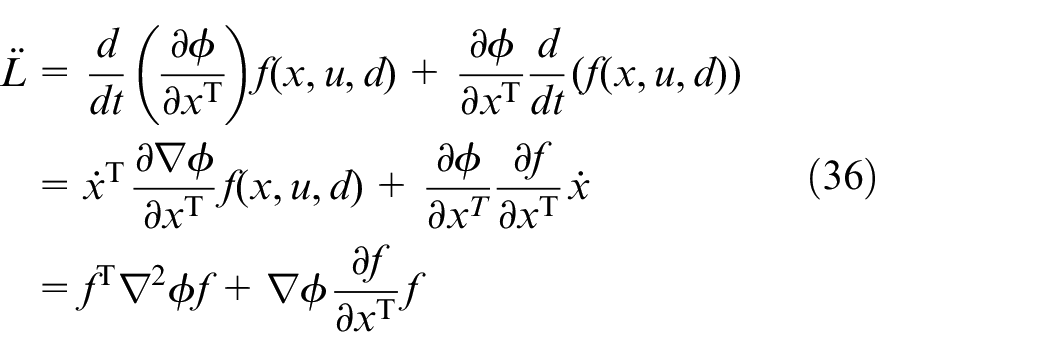
Thus, for an iced aircraft,
Fuzzy inference system
Fuzzy inference uses membership function and implication operator to express the relationship between factors and conclusions. In fuzzy inference, input variables should be fuzzified first. The variable value
The key to deciding the membership function is to establish relevant shape parameters. Taking the trapezoidal membership function as an example, its shape is determined by the turning point of the function curve. The parameters of the relevant membership function can be determined based on the value distribution of variables on the computing grid. The value distribution of
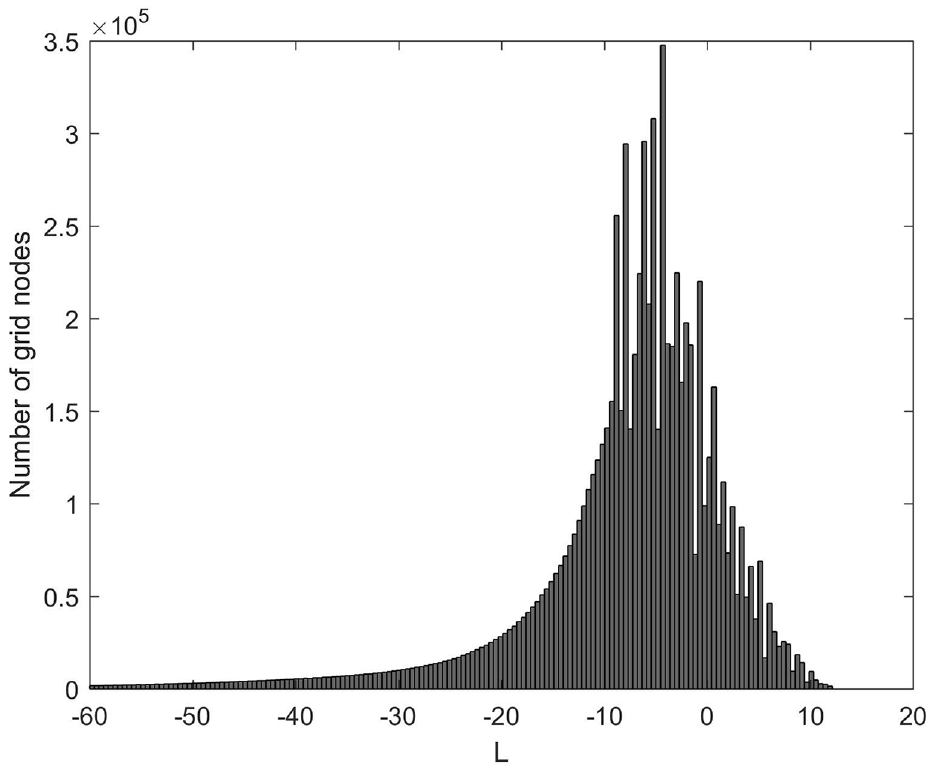
The value distribution of
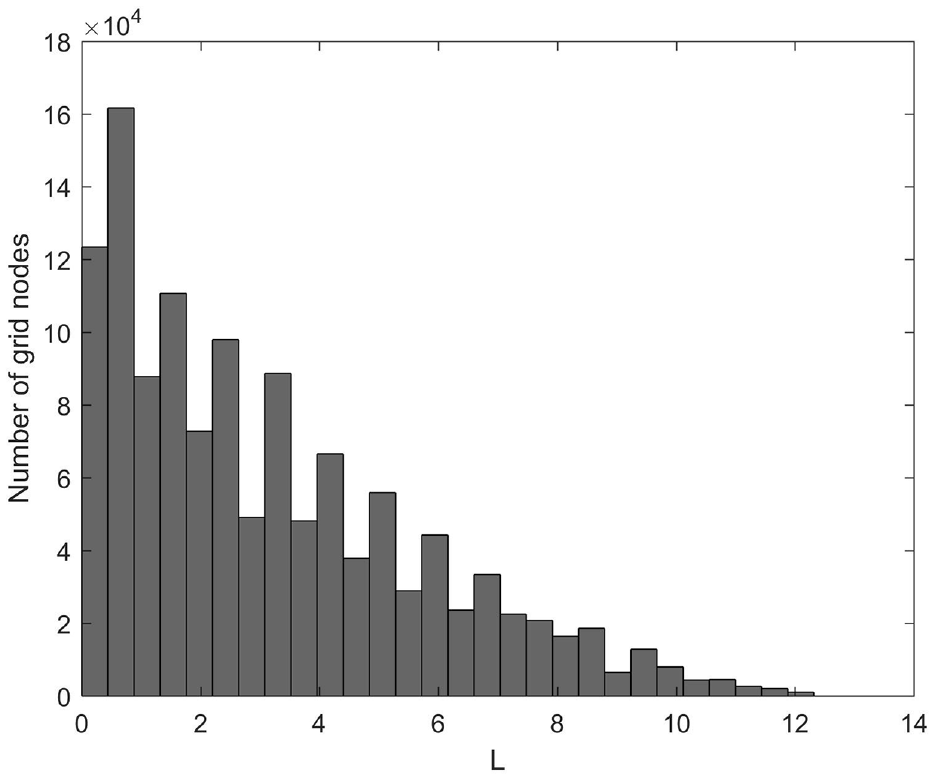
The value distribution of
Considering the value distribution of
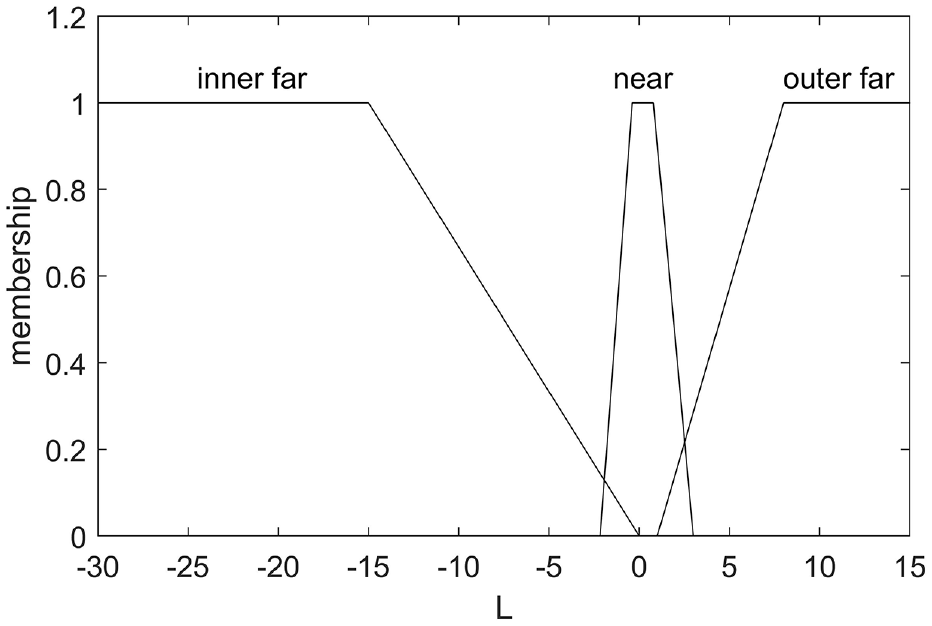
The membership function for
There is some overlap between the fuzzy sets in Figure 13. The overlap between fuzzy sets is helpful to improve the smoothness and robustness of the input and output of the inference system. Similarly, the membership functions describing variables
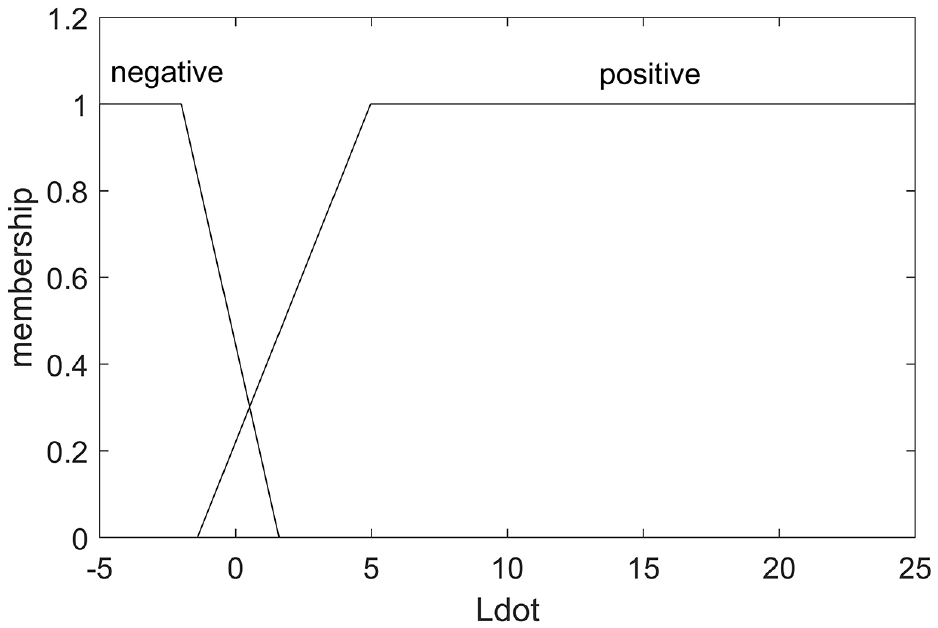
The membership function for
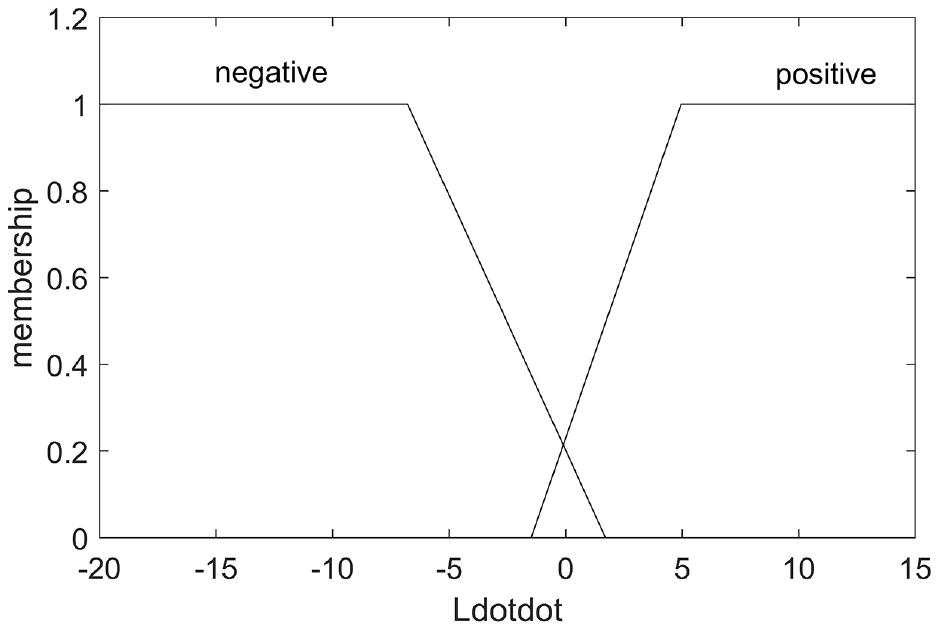
The membership function for
In this paper, the inference conclusion, namely flight safety, is divided into four fuzzy sets, including safety, caution, vigilance, and danger. For safety warning, usually only a fuzzy set of inference results is required, and there is no requirement for defuzzify. Therefore, in this paper, simple triangular membership functions are used to describe the safety fuzzy sets, as shown in Figure 16.
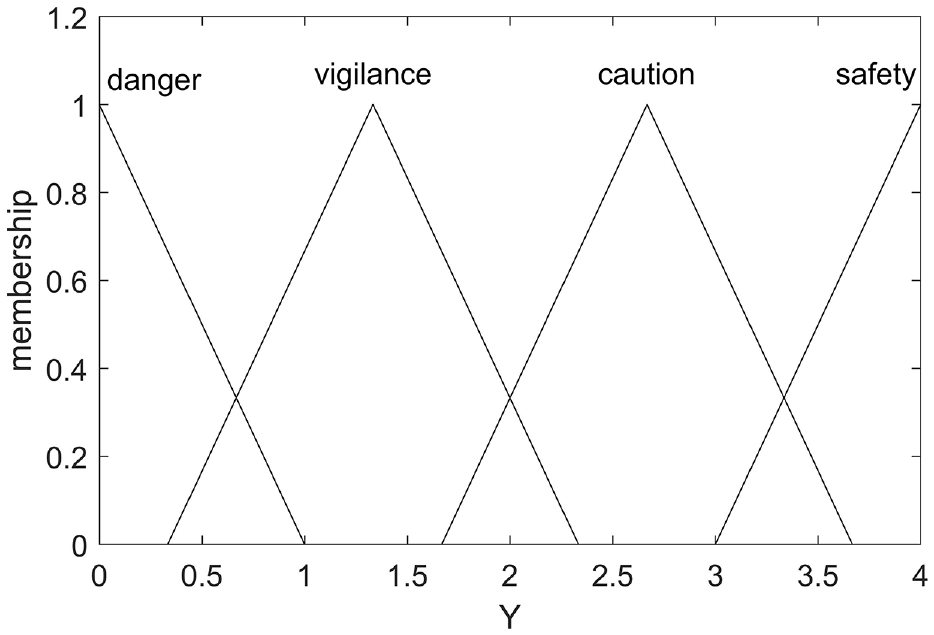
The membership function for describing flight safety.
Inference rules describe the causal relationship between input and output. The nonlinear relationship between input and output is expressed by the membership function and implication and aggregate. For the safety warning of iced aircraft, the inference rules used in this paper are as follows:
The last column of the Table 1 is the weight of the rule. The configuration of inference rules and their weights in Table 1 is rough and serves to demonstrate the feasibility of the method. In practice, the experience of pilots and aircraft designers should be integrated, and the inference rules and the weights of safety warning should be configured more delicately through wind tunnel tests and flight tests.
The inference rules.
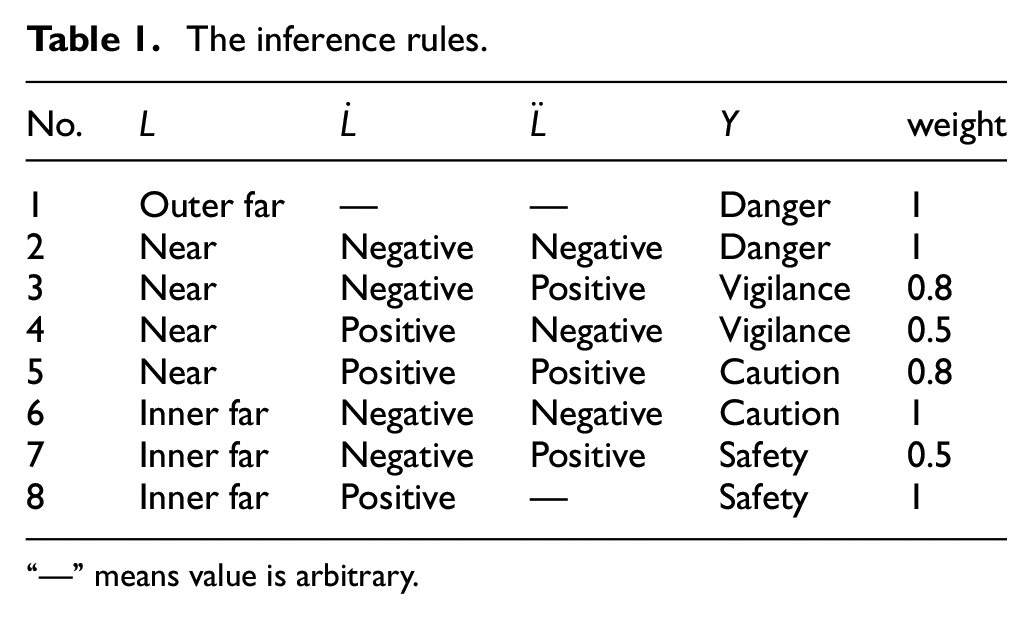
“—” means value is arbitrary.
Iced aircraft safety warning based on fuzzy inference
Inference rules in Table 1 are graphically expressed in MATLAB (Matrix Laboratory) using the fuzzy logic toolbox, as shown in Figure 17.
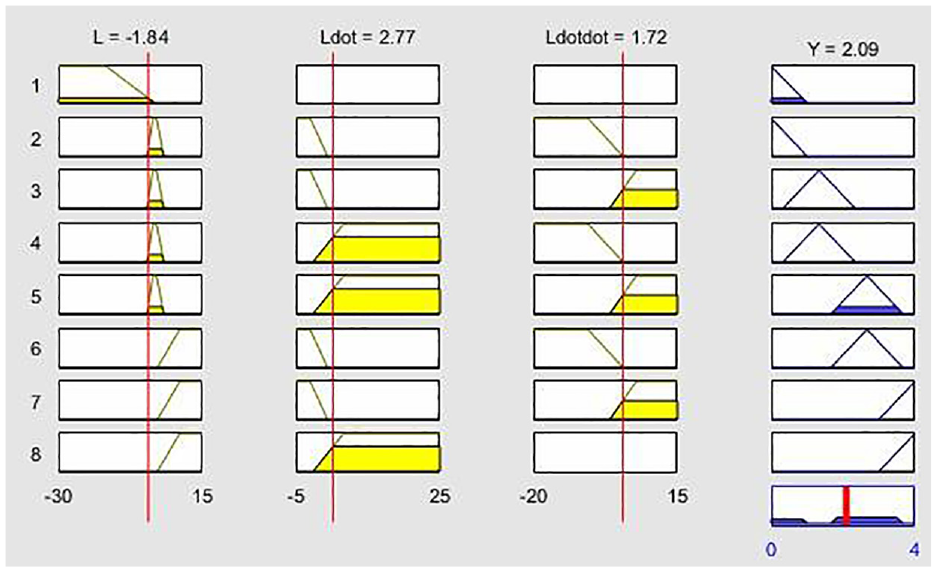
The fuzzy inference rules for iced aircraft safety warning.
Each line in Figure 17 corresponds to an inference rule. Each column in the first component of the rule corresponds to an input variable. The second component of the rule, namely the inference result, is a fuzzy set. In Figure 17, the adopted implication operator is the Mamdani minimum operator, the composite operator is the maximum-minimum operator, and the center of gravity method is used for defuzzify, which forms a typical Mamdani fuzzy inference system. Based on the inference rule, the safety degree of each point in the flight state space can be inferred, and the results are shown in Figure 18.
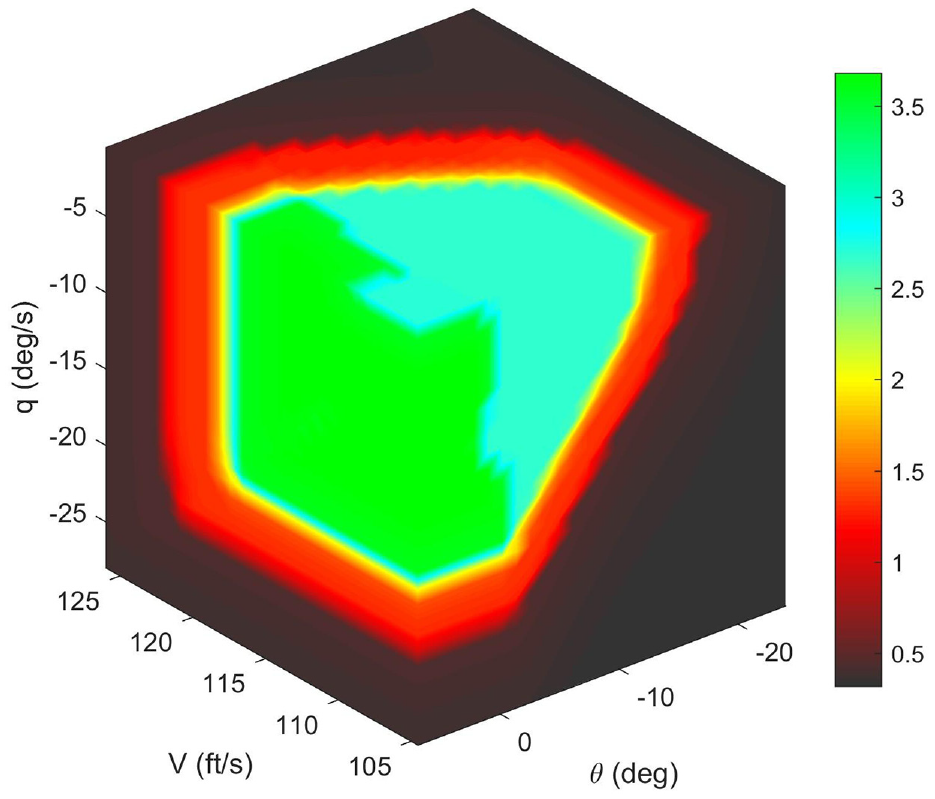
Safety assessment of the flight state space.
According to the membership function, as shown in Figure 16, the larger the value of the safety variable
The values of
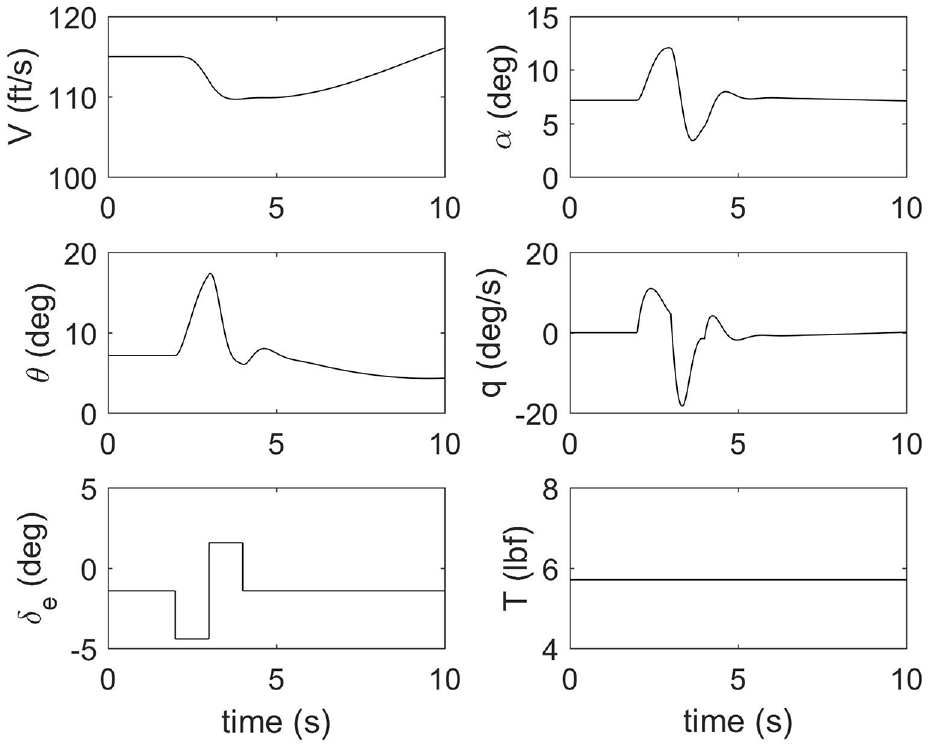
The state response curve.
From Figure 19, it can be observed that the angle of attack, pitch angle and pitch rate of the aircraft have changed significantly, especially the angle of attack, and the magnitude of the change is close to the envelope. As a result, flight safety warning output changes drastically. The real-time safety warning output is shown in Figure 20.
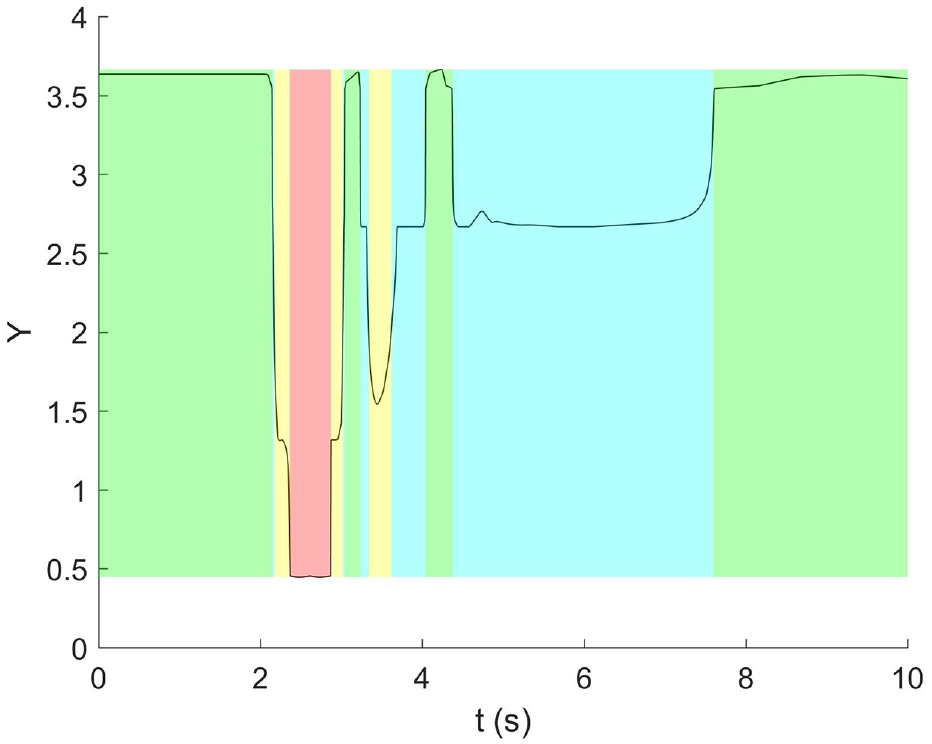
The output of safety warning.
Distinct colors are used to indicate the safety degree of the safety warning output in Figure 20. Green, cyan, yellow, and red represent safety, caution, vigilance, and danger, respectively. The rapid and substantial changes in flight state are reflected in the safety warning output of the system. Once the flight safety warning output is assessed as dangerous, it indicates that the pilot approaches the envelope.
The flight state curve is shown in Figure 21. At first, the plane is safely flat. From
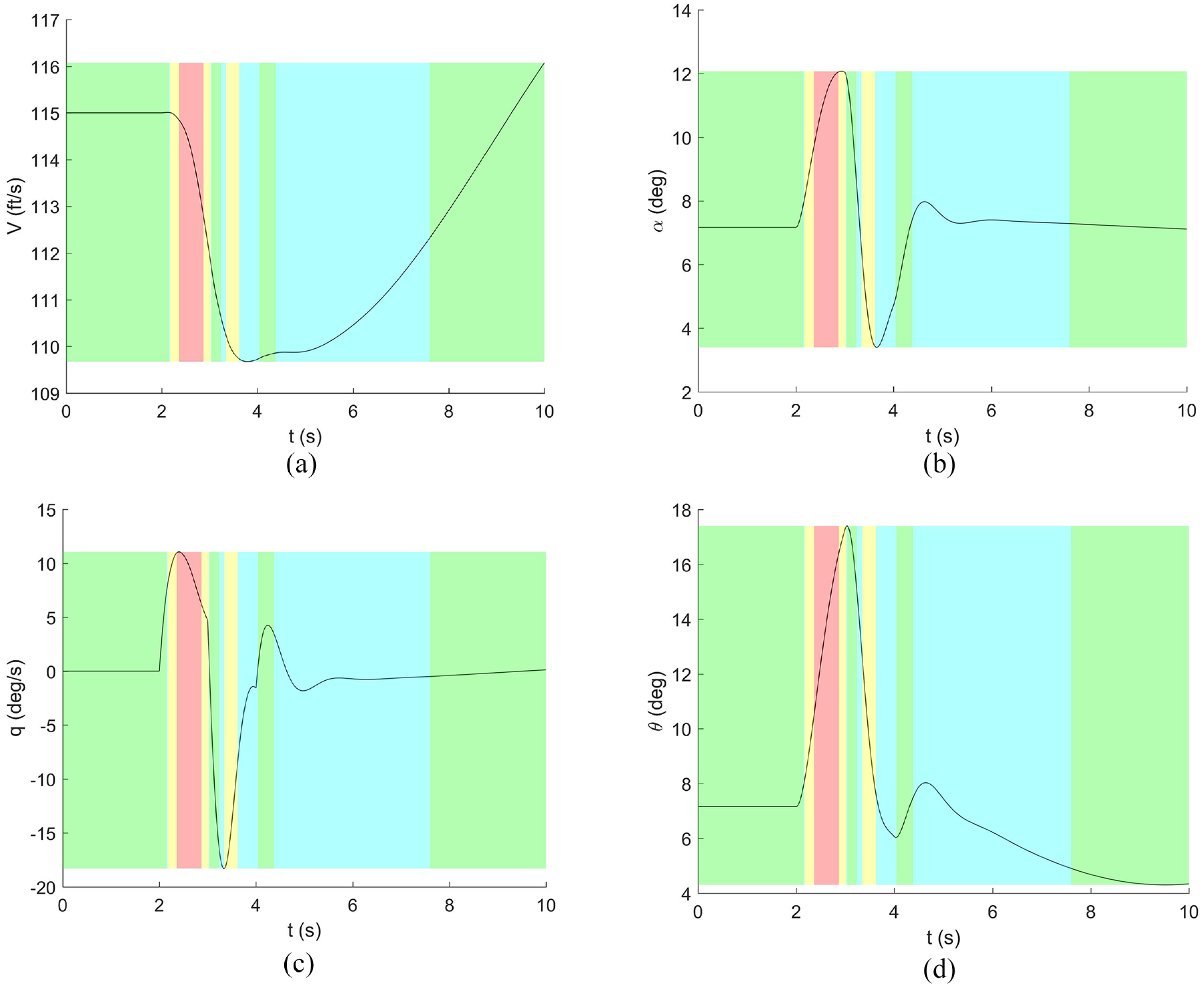
The state curves and output of safety warning: (a) flight velocity, (b) angle of attack, (c) pitch angle, and (d) pitch rate.
The curve of angle of attack is shown in Figure 21(b). It can be found that the time of the warning output as dangerous is earlier than that when the angle of attack reaches its limit. This is because of the comprehensive use of variables
How to apply the methods proposed in this paper to aircraft will be the focus of our subsequent research work. For the following reasons, we recognize that there are many difficulties in applying the proposed methods.
(1) The control law of the aircraft has a significant impact on flight safety. Both safety warning and the flight envelope estimating aim to keep the state within a safe range, which limits control. Introducing restrictions directly into flight control laws is a matter of great care.
(2) The flight crew is responsible for all manipulation results and should therefore have the highest control authority, and control restrictions should try not to bypass the crew.
(3) Under the existing flight control computer hardware conditions and flight control law design habits, the industry is cautious about envelope estimation methods such as the one proposed in this paper.
Therefore, we tend to use safety warning and envelope estimation to provide safety-critical information to the flight crew, rather than directly playing a role in the flight control laws. In recent work, we have experimented with incorporating safety warning and envelope estimation information into the primary flight display and head-up display. Safety warning information is transmitted to the crew through flashing text and voice. Flight crews expect a concise and intuitive way to display envelope, however the envelopes estimated in this paper are multidimensional structures described by implicit functions. How to project the estimated multidimensional envelope onto the flight display is our main challenge.
Conclusions
A flight safety warning method for iced aircraft is proposed based on reachability analysis and fuzzy inference. The effect of icing on aircraft dynamics is described by an uncertain parameter. To deal with the uncertainty caused by icing, reachability analysis is used to estimate the safe flight envelope. The estimation of the envelope is obtained by solving the Hamilton-Jacobi equation, which requires an optimal solution for parameters such as control inputs and icing effects. Under icing conditions, flight envelope shrink severely. In the example of this paper, the safety boundary shrinks by 15% in icing encounters, which will significantly increases the pilot’s workload. To improve safety of iced aircraft, a flight safety warning method is proposed based on fuzzy inference. The main input to fuzzy inference is the physically meaningful variables such as generalized distance, velocity, and acceleration. These variables not only reflect the safety of the current flight state, but also have a certain degree of predictability. However, this method has limitations. The icing uncertainty parameter is optimized toward the flight state exceeding the envelope. Therefore, the safety set obtained is conservative to some extent, and there may be false alarms as the result of fuzzy inference. The method proposed in this paper is intended to alert the crew to future unsafe or otherwise undesired conditions. Therefore, it is necessary to develop display technology for presenting safety warning information and the estimated flight envelope.
Footnotes
Acknowledgements
The authors would like to thank the editors and the anonymous reviewers for their constructive comments and suggestions that have improved the quality of this paper.
Declaration of conflicting interests
The author(s) declared no potential conflicts of interest with respect to the research, authorship, and/or publication of this article.
Funding
The author(s) disclosed receipt of the following financial support for the research, authorship, and/or publication of this article: This work is supported by the Basic Research Program of Shaanxi Province of China (2021JQ-360).
