



Abstract
Aiming at the problems of poor control accuracy and long time consuming in traditional deviation electric quantity control methods, a real-time deviation electric quantity control model design for regional electricity spot market is proposed. Through the base electric quantity, generation side electric quantity and consumption side electric quantity, the electricity market assessment and settlement results are obtained. The Monte Carlo method is used to simulate the generation of user-side load scenarios and the corresponding scenario probability, set electric quantity assessment and settlement constraints, verify the actual total electric quantity consumption of all users in the current month, the actual total interactive electric quantity and the actual total exchange market electricity, and obtain the actual total base electric quantity of the current month. Calculate the difference between the actual electric quantity and the planned electric quantity, determine the allowable range of real-time control deviation electric quantity, and use the rolling compensation method to control the electric quantity consumption side. The experimental results show that the proposed model has an error of only 1% for real-time deviation electric quantity control in the regional electricity spot market, and the control time is short.
Keywords
Introduction
In 2015, China’s new round of electricity market-oriented reform was fully launched, and China’s electricity supply gradually changed from traditional planning mode to modern trading mode. 1 At present, the bilateral transaction and centralized bidding transaction carried out in the regional electricity spot market take the contract electric quantity as the settlement basis. 2 The difference between the actual electric quantity and the planned electric quantity is the contract deviation electric quantity. The factors that lead to the generation and consumption deviation include the accuracy of electric quantity generation and consumption prediction algorithm, and the characteristics of users’ electric quantity consumption. 3 The power deviation control method is to divide the power consumption area according to the nature of the industry’s power consumption, and obtain the historical power consumption data of the power consumption area. According to the historical power consumption data of each power consumption area, the external factor indicators that affect the power consumption of each power consumption area are determined. A method to determine the predicted electricity quantity according to the forecast result of each electricity consumption area. The appearance of the deviation electric quantity leads to the economic impact of electricity enterprises. Therefore, researchers in this field have done a lot of research to solve the problem of deviation electric quantity.
Ma et al. 4 proposes the design of an optimization model for the evaluation of daily deviation electric quantity of electricity sales companies that takes into account real-time electricity trading. Based on the actual electricity purchase and storage transactions in the market, this model constructs an evaluation model aimed at maximizing the benefits of electricity sales, unifies the electricity price list and unit cost, and conducts sensitivity analysis on it. This model sells energy storage power stations. Electricity price has the greatest impact on the additional income, and the positive and negative deviations have the greatest impact on the overall income of the electricity sales company. However, this model has very little consideration of the deviation electric quantity control, and the accuracy of the deviation control is low, and further improvement is still needed.
Gong et al. 5 proposes a blockchain-based electricity spot trading market research. Based on the similar network topology of blockchain and electricity spot market system, this paper aims at the intelligence, real-time, and security requirements of electricity spot market transactions. The restrictive factors of intraday time-of-use electricity price are analyzed, and the real-time dispatch transaction and supervision model of electricity spot under the blockchain architecture is designed. However, the calculation of this method is complicated and time-consuming.
Yan et al. 6 method is based on fuzzy comprehensive evaluation method, which comprehensively considers four important indicators of each transaction: transaction type, transaction cycle, transaction power, and transaction price. Set the weight of each indicator, transaction type and transaction cycle membership function, and finally determine the comprehensive evaluation score of each transaction. However, this method does not take into account the control factors of deviation power, resulting in low accuracy.
In Cai et al., 7 this method establishes the time-delay differential equation model of the power system. They proposed a time-delay power system control method based on an improved integral quadratic constraint (IQC) algorithm. In this method, a combination of IQC and dissipation inequality is used, and a time-delay feedback controller is designed to make its stability criterion more accurate. However, the calculation process of this method takes a long time.
Therefore, from the perspective of electric quantity settlement and balance compensation, this paper analyzes the operation and settlement mode of regional electricity spot market, proposes a real-time deviation electric quantity control model suitable for regional electricity, and applies it to the actual electricity market to determine the application value of the model in the market environment.
Regional electricity spot market trading mechanism and electric quantity assessment and settlement
In order to ensure that the regional electricity market maintains a balance between electric quantity generation and electric quantity consumption, and operates in accordance with the signed electric quantity purchase contract, a real-time deviation electric quantity control model for the regional electricity spot market is constructed. In the actual electric quantity control process, first predict the real-time market electric quantity and price, determine the proportion of the allowable electric quantity deviation according to the settlement method of the spot market, and determine whether the deviation of the electric quantity during the period is within the range of the allowable deviation ratio. If the deviation electric quantity exceeds the specified range, it is necessary to control the deviation electric quantity, set the deviation electric quantity control period set and constraint conditions, calculate the size of the control electric quantity, aim at the minimum cost and maximize the benefit, output the deviation electric quantity value, and adopt the rolling compensation method to achieve control. The design of this model combines the operation and settlement mechanism of the electricity spot market to improve the control effect of real-time deviation electric quantity.
Analysis of the trading mechanism of the regional electricity spot market
The operation of the regional electricity spot market is highly coupled with the operation of power grid dispatching. The policy environment of the market determines the dispatching mode of the electricity spot market. Through the analysis of regional electricity grid power supply, load, and network operation mode, the construction of the regional electricity spot market is determined. The basic structure of the current electricity spot market construction is as Figure 1.
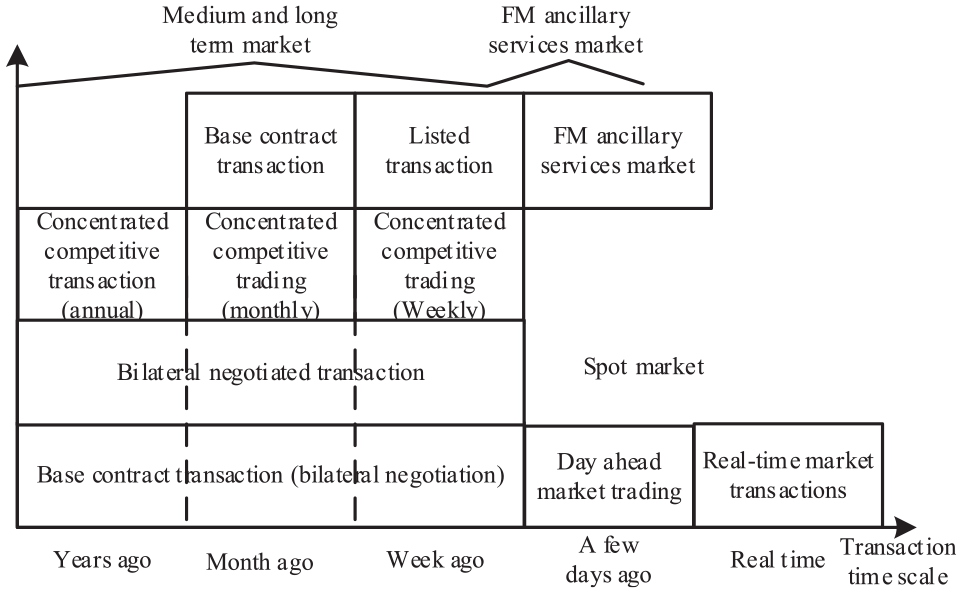
Block diagram of regional electricity spot market construction.
In the context of the construction of a regional electricity spot market, a specific analysis of its operating mechanism is carried out.
In regional electricity spot market transactions, medium and long-term transactions can be divided into on-exchange and over-the-counter transactions according to the transaction location. Combined with the transaction methods, they can be specifically divided into bilateral negotiated transactions, centralized competitive transactions, listed transactions, and base contract transactions. In order to meet the needs of market entities for centralized trading to the maximum and avoid the dispersion of trading volume caused by too many trading windows, the annual, monthly, and weekly centralized competitive trading value

In formula (1),
In different time periods, the parameters in formula (1) can be used to represent medium and long-term transactions in the regional electricity spot market, and to obtain information on preliminary transaction results in time.
Spot transactions in the regional electricity spot market mainly refer to transactions carried out in the day-ahead and real-time markets. The day-ahead market operation steps are: Setting operating boundary conditions, publishing transaction-related information before starting the transaction, evaluating the power supply capacity of the electricity market, and adopting electricity market control measures, calculating the day-a-day market clearing results and publishing the final transaction results. Real-time market transactions take the minimization of electric quantity generation costs as the optimization goal, and use the security-constrained economic dispatch method for centralized optimization calculations. Compared with day-a-day transactions, it saves the two steps of pre-release information and day-ahead information declaration. Real-time refers to the actual operation scheduling plan, which is based on a time point every 5 min (i.e. 12 points per hour), and finally forms a 24-h output plan throughout the day. Real-time scheduling refers to the currently calculated unit output corresponding to the next 5-min time point.
According to the regulations of the regional electricity spot market, the electric quantity settlement process can be divided into settlement data preparation, daily settlement, and monthly settlement. Among them, the settlement data preparation stage needs to report the disassembled transaction results, and push the completion of the daily clearing of the spot market to the market system.8,9 Set the time for daily settlement and monthly settlement, repeatedly confirm the settlement electric quantity, electric quantity price, and electric quantity fee generated in a cycle, and obtain the final settlement result, which will be released to the regional electricity spot market entities and power supply companies.
Obtaining the results of electric quantity assessment and settlement in regional electricity markets
Constraints on electric quantity assessment and settlement
According to the transaction mechanism of the regional electricity market, electric quantity calculation is carried out from the two perspectives of electric quantity generation and electric quantity consumption. In the process of electric quantity assessment and settlement, it is assumed that all users are sold at a uniform price. When assessing electric quantity, the seller of electric quantity is responsible for all assessment costs. Monte Carlo simulation is used to generate user-side load scenarios and corresponding scenario probabilities, and clustering is used to reduce scenarios. Monte Carlo method is a basic method to describe various random phenomena in the process of equipment operation, and it is especially suitable for some problems that are difficult to be solved by analytical methods. The advantage of this method is that its computational error is independent of the dimensionality of the problem. Problems with statistical properties can be solved directly. Among them, the simulation scenario of a specific load can be expressed as:

In formula (2),

Formula (3) represents the balance constraint in the electric quantity settlement process, where the parameter
Assessment of base deviation electric quantity, electric quantity generation side electric quantity, and user side power
Under the condition that the above constraint conditions are determined, the actual total electric quantity consumption of all users in the current month, the actual total interactive electric quantity consumption, and the actual exchange total market electricity are verified to obtain the actual total base electric quantity of the current month. The specific settlement verification method is as Figure 2.
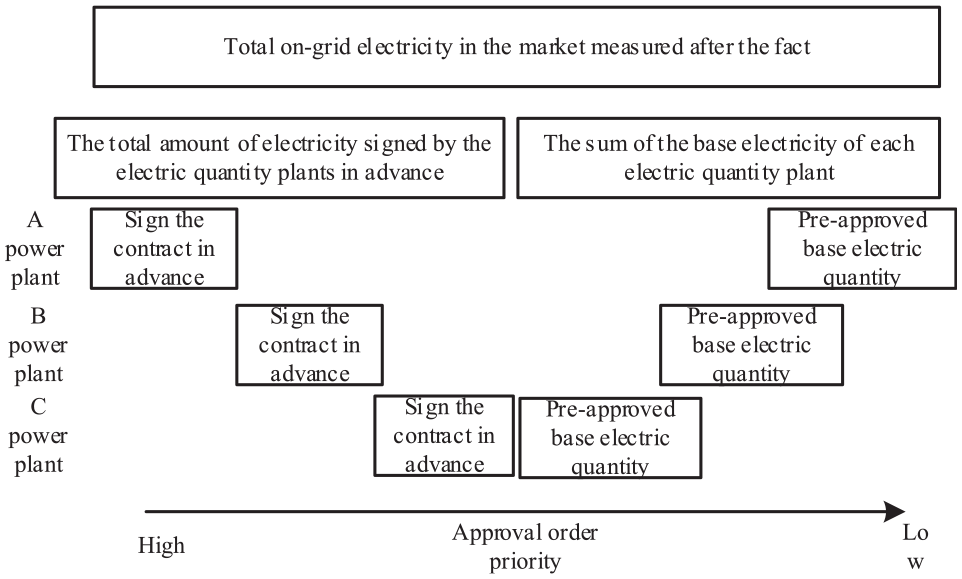
Real-time base electricity verification method for the electricity market.
After verification and calculation, it can be concluded that the actual total base electric quantity in the electricity market is expressed as:

In formula (4),

In formula (5),

In formula (6),
In the same way, the contract power for real-time transactions in the regional electricity spot market is:

In formula (7),
Real-time control deviation electric quantity control model construction
Real-time control deviation electric quantity value determination
The calculation of the real-time deviation electric quantity in the regional electricity spot market is divided into two parts, one is the deviation between the planned power consumption and the actual power consumption, and the other is the deviation between the planned power generation and the actual power generation. Among them, the power generation deviation is:

In formula (8),
The calculation expression of electricity consumption is:

Then, the real-time deviation electric quantity value of the electricity spot market is:

The real-time control deviation electric quantity value calculated by the above formula is the deviation amount to be controlled.
Real-time control deviation electric quantity control model
Before constructing the compensation control model for the real-time deviation electric quantity of the regional electricity spot market, it is necessary to determine whether the deviation value of the power is within the normal allowable range. The set deviation allowable interval range is as Figure 3.
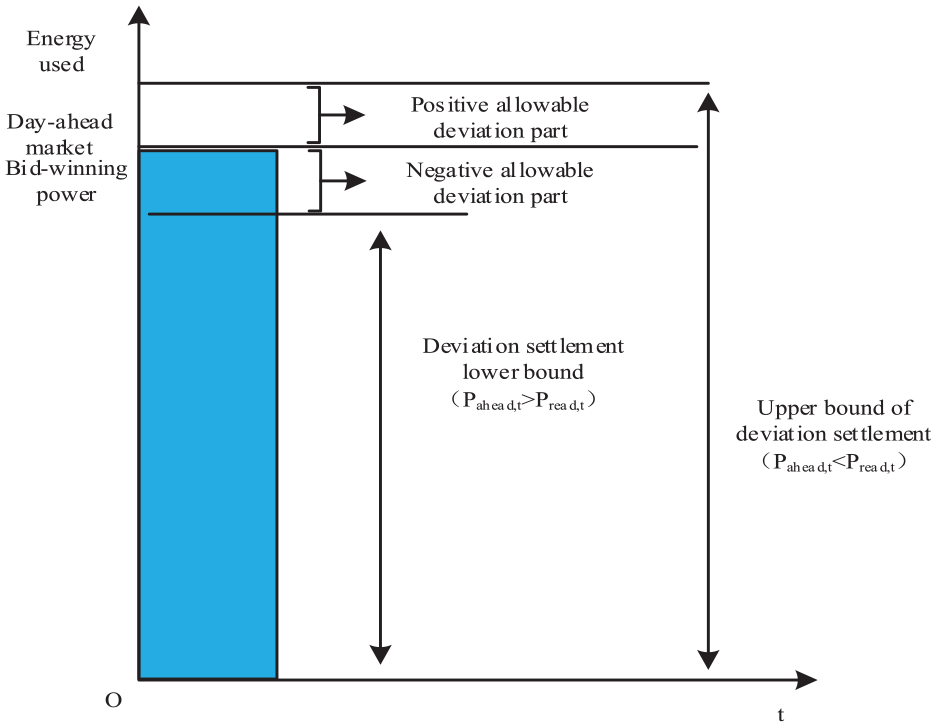
Allowable range of real-time deviation electric quantity.
If the calculated
The market can sign contracts with users to provide incentives at prices, prompt users to adjust the load curve, establish user-side energy storage equipment, improve the shape of the load curve in the regional electricity spot market, and reduce the probability of real-time deviation electricity. For power companies, the real-time deviation electric quantity control is to call user-side resources at a lower cost as much as possible to keep the load curve within the allowable deviation ratio. Therefore, the constructed real-time deviation electric quantity control model is:

In formula (11), the parameters
Considering the repeatability of power load curve, the normal distribution of power prediction error is 0, and the calculation formulas are as follows:


In formulas (11) and (12),
The real-time deviation electric quantity control model constructed above can effectively control the actual deviation. However, due to the continuous change of the original parameters, the power will produce irregular residual fluctuations. At this time, this needs to be corrected. This article uses rolling compensation to compensate it is modified, namely, the rolling compensation model

In formula (12), ℑ represents the one-time accumulated value of the original parameters of the rolling residual, and
By rolling compensation, the deviation caused by the power generation deviation and the power consumption deviation is corrected, and it is controlled within the allowable range, so as to realize the control of the real-time deviation electric quantity of the regional electricity spot market.
Experimental analysis
Experimental environment
The power spot market consisting of four electricity plants with capacities of A, B, C, and D within the X area is selected as the research object of this performance experiment. The selected power plants all signed an identical market transaction, and the total electric quantity generation of the four power plants was 1 kW h, the operating system used in the experiment was Windows 10, and the power measurement device was used to obtain experimental sample data. The specific experimental environment is as Figure 4.
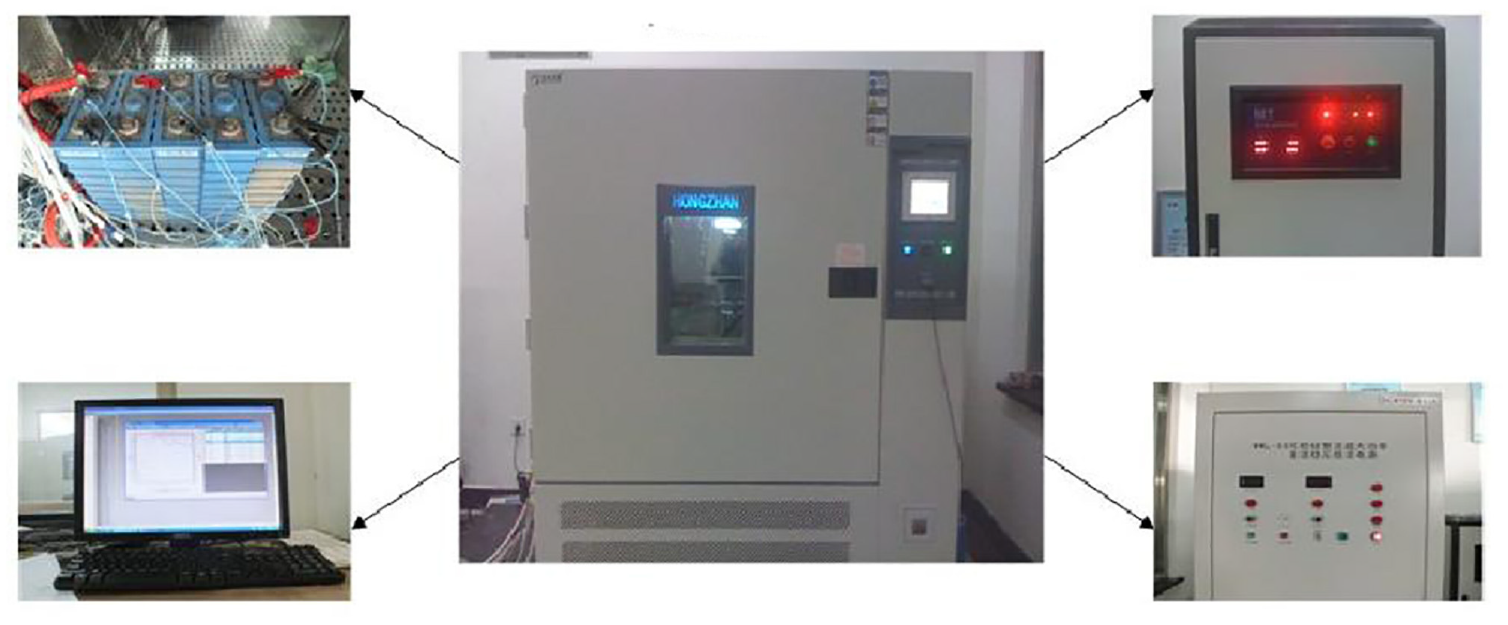
Experimental environment.
Experimental parameters
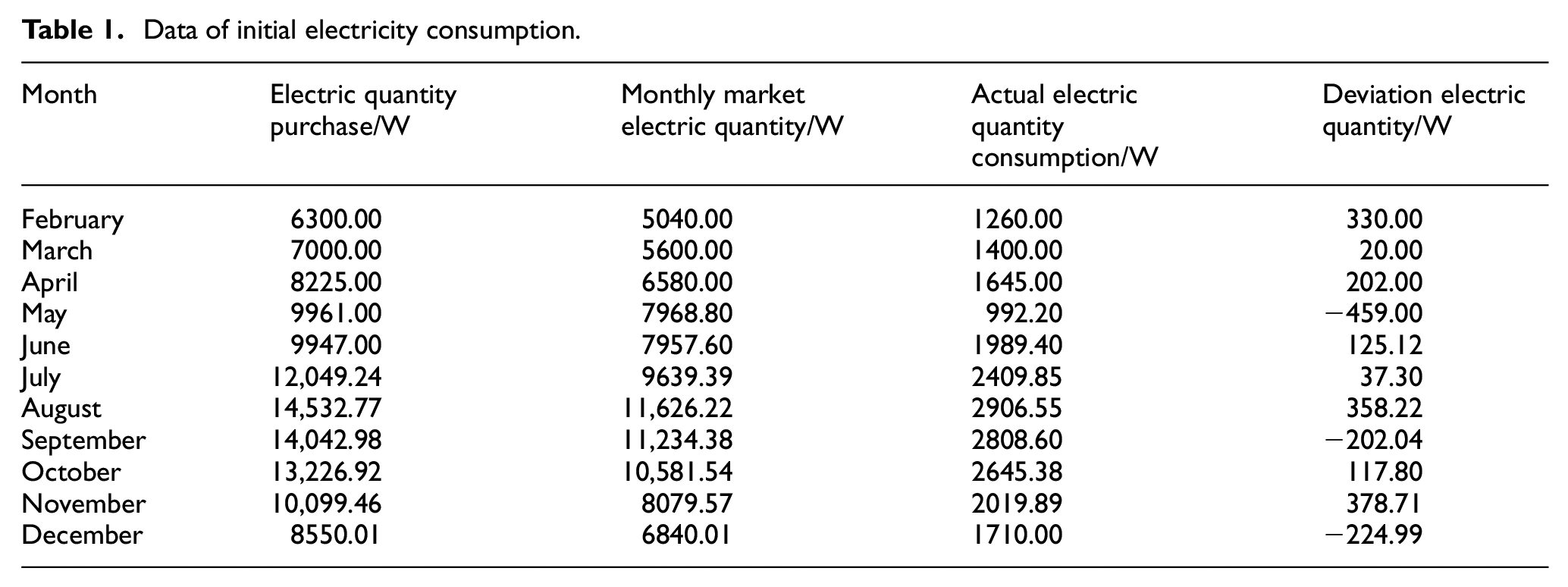
Without external control, obtain the initial electricity consumption data of the market environment, and determine the real-time electricity deviation value of the initial market. The initial power consumption data obtained is as Table 1.
Data of initial electricity consumption.
Experimental program
Based on the initial power consumption data acquisition, the proposed method is compared with Yan et al. 6 based on the fuzzy comprehensive evaluation of the transaction settlement deviation electric quantity processing method and Cai et al. 7 the time delay power system control method based on the improved IQC algorithm.
In order to reduce the error that occurs in the experiment, the experiment is repeated multiple times, and the value of each result is the average value of the experiment. The accuracy of the deviation electric quantity control and the time-consuming control are used as experimental indicators to verify the effectiveness of the proposed model.
Analysis of experimental results
Error analysis of deviation electric quantity control in different methods
In order to verify the reliability of the proposed method, the experimental analysis of the proposed method, the fuzzy comprehensive evaluation of the transaction settlement deviation electric quantity processing method and the improved IQC algorithm time delay power system control method of the deviation electric quantity control error, the experimental results are as Figure 5.
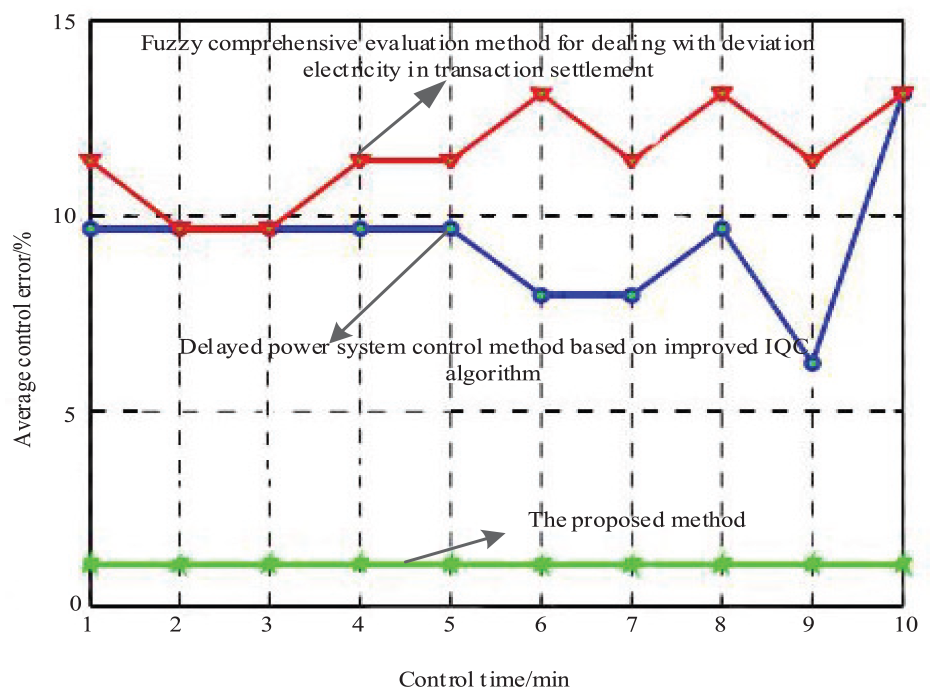
Error comparison of different methods of deviation electric quantity control.
Analyzing Figure 5, it can be seen that there are certain differences in the errors of the three methods for the deviation electric quantity control. Among them, the average control error of the proposed method is at least about 1%, and always remains at about 1%; while the other two methods have higher average control errors and are unstable. The average control error of Yan et al. 6 method is 11%, and the average control error of Cai et al. 7 method is 8%. Because Yan et al. 6 method considers the weight of various factors, but due to the long transaction cycle, the error is high. Cai et al. 7 method is too conservative in the judgment of the results, and does not consider uncertain factors, so the error is large. In contrast, the proposed method has lower control error and higher accuracy. This is because the proposed method takes into account the actual total electric quantity consumption, the actual total interactive electric quantity consumption and the actual total exchange market electricity consumption, adopts the rolling compensation method to control the power error of the power side, and preprocesses the actual control power in advance, thus improving the control accuracy, which verifies the scientific effectiveness of the proposed method.
Time-consuming analysis of different methods of deviation electric quantity control
In order to verify the feasibility of the proposed method, the experimental analysis of the proposed method, fuzzy comprehensive evaluation of the transaction settlement deviation electric quantity processing method, and the improved IQC algorithm time delay power system control method to control the time consumption of the deviation electric quantity, the experimental results are as Figure 6.
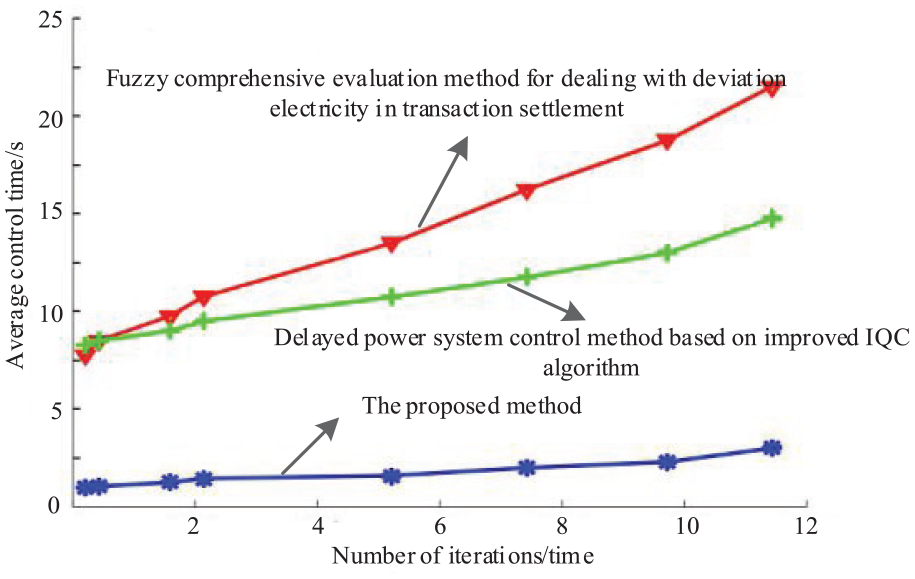
Comparison of time consumption of different methods of deviation electric quantity control.
Analyzing Figure 6 can see that the three methods used to control the deviation electric quantity consumption are different. When the number of iterations is 4, the average control time of the proposed method is about 2 s. The average control time of the deviation electric quantity of the fuzzy comprehensive evaluation method of transaction settlement deviation and the time delay power system control method of the improved IQC algorithm are respectively approximately 12 and 9 s. Because the fuzzy comprehensive evaluation method calculates each transaction, it can carry out accurate evaluation, and the control of electricity when there is a deviation takes a long time. When the number of iterations is 12, the average control time of the proposed method is about 3 s. The average control time of the deviation electric quantity of the proposed method is about 3 s. The fuzzy comprehensive evaluation of the transaction settlement deviation electric quantity processing method and the improved IQC algorithm time delay power system control method are respectively about it is 22 and 15 s. In contrast, the control of the proposed method takes the shortest time. This is due to the fact that the proposed method determines the deviation range of the deviation electric quantity during control, thereby shortening the search speed and verifying the scientific validity of the proposed method.
Conclusion
In order to improve the accuracy of real-time deviation electric quantity control in the regional electricity spot market, this paper proposes to construct a real-time deviation electric quantity control model for the regional electricity spot market. Through the analysis of the trading mechanism of the electricity spot market, the results of the electricity market electricity assessment and settlement are obtained. The Monte Carlo method is used to simulate the scene of the user side load and the corresponding scene probability, set the power assessment and settlement constraint conditions, verify the actual total electric quantity consumption of all users in the current month, the actual total interactive electric quantity, and the actual total exchanged market electricity to obtain the actual total of the current month base electric quantity. Calculate the difference between the actual electricity and the planned variables, determine the allowable range of real-time control deviation electric quantity, use rolling compensation to control the power consumption on the power side, build a real-time deviation electric quantity control model, and complete the real-time deviation electric quantity control of the regional electricity spot market. Compared with traditional methods, the proposed method has the following advantages:
The error of the real-time deviation electric quantity control of the regional electricity spot market using the proposed method is only 1%, and the control accuracy is high.
The proposed model takes a relatively short time for real-time deviation electric quantity control in the regional electricity spot market, and the shortest time is about 3 s.
The work done in this paper can provide guidance for the real-time deviation power management and control of electricity sales companies, which has certain practical significance. The research method of this paper is mainly aimed at controlling the deviation of electricity in regional transactions, and has not considered the influence of factors such as cross-regional transactions and network losses on the control of deviation electricity. Subsequent work could take this into account. Factors such as frequency regulation service and new energy output were added to the model to further improve the research.
Footnotes
Declaration of conflicting interests
The author(s) declared no potential conflicts of interest with respect to the research, authorship, and/or publication of this article.
Funding
The author(s) received no financial support for the research, authorship, and/or publication of this article.
