




Abstract
The triple-frequency linear combination with a low noise, a long wavelength, and a weak ionosphere is beneficial to effectively eliminate or weaken the common errors, advance the reliability of cycle slip detection and repair, and speed up the convergence time of fixed ambiguity. By establishing the Galileo triple-frequency carrier linear combination model, three types of linear combinations are derived: Geometry-free (GF) combinations, minimum noise (MN) combinations, and ionosphere-free (IF) combinations. The geometric relationships of these linear combinations are displayed in the form of image. The results indicate that the angle formed by the IF combinations and the MN combinations is between 75.02° and 86.01°, which also illustrates that it is more difficult to meet the carrier phase combinations with a low noise and a weak ionosphere. Moreover, to guarantee the integer cycle characteristics of ambiguity, the combination coefficient must be an integer. Galileo triple-frequency linear combination is solved utilizing the extremum method. To sum up, the sum of the coefficients of the extra wide lane (EWL) combinations and wide lane (WL) combinations is zero, and the sum of the coefficients of the narrow lane (NL) combinations is one. (0, 1, −1) is the optimal triple-frequency linear combination in Galileo. Three independent linear combinations are selected separately from the EWL, WL, and NL to jointly solve the integer ambiguity. Further, it creates a prerequisite for high-precision and real-time kinematic positioning.
Keywords
Introduction
With the stable operation of Galileo and BDS systems and the promotion of the modernization and transformation of GPS and GLONASS systems, global satellite navigation system (GNSS) has developed multi-system and multi-frequency integrated positioning and navigation. The development of GNSS technology also provides a broad space for the prosperity of smart city, traffic control, CORS, and other applications.1,2 GNSS broadcasts more than three frequency carrier signals at present. On July 25, 2018, Europe successfully launched four Galileo satellites with full operational capability. So far the number of Galileo space constellation satellites has reached 26, the 26 satellites expand the global coverage of Galileo and achieve full operational capacity. 3 The multi-frequency carrier phase of the Galileo system can form triple-frequency linear combination with smaller ionospheric delay error, lower observation noise error and longer wavelength through certain linear combination. 4 Using these excellent performance linear combination, the different linear combination can be selected according to the different application scenarios, which can effectively eliminate or weaken many kinds of error, and speed up the convergence time of fixed ambiguity resolution.5,6
Considering the advantages of linear combination observations and the continuous development of multi-frequency technology, Researchers have performed many studies on triple-frequency carrier linear combination theory. Han and Chris 7 proposed to use the new civil frequency signal L5 of GPS to constitute the triple-frequency linear combination. Some useful linear combinations are given. Feng 8 presented that three optimal carrier linear combinations of GNSS achieved a more reliable triple-frequency ambiguity resolution strategy. Cocard et al. 9 proposed to use GPS new carrier signal L5 for three-frequency carrier linear combination, and analyzed the characteristics of the tripe-frequency linear combination. Urquhart 10 presented to obtain the optimal three-frequency linear combination, the derivation of the characteristics for the linear combinations is performed including the second and third order ionospheric delay amplification factors. Zhang and He 5 and Richert and El-Sheimy 11 studied many kinds of triple-frequency carrier linear combinations. The authors explored different types of linear combinations and verified the geometric relationship between them. Wu 12 focused on error characteristics, and listed a series of the typical combinations. All the above studies established a theoretical basis to calculate ambiguity of multi-frequency applications. Liu et al. 13 applied multi-frequency combination observation with excellent GPS performance to solve cycle slip. Li et al.14,15 studied GF and IF triple-frequency combination observations and solved the problem of the triple-frequency AR of the medium and long baseline scenarios. Yu et al. 16 resolve the triple-frequency combination coefficient based on the least square method. Li et al.17,18 proposed to use the function extremum method to solve the GNSS triple-frequency optimal linear combination. Huang et al. 19 investigated the self-adaptive clustering algorithm, and experiment verified that the algorithm offers a lower workload and great efficiency and can still find the best combination. Wang and Liu 20 and Duong et al. 21 produced a comprehensive study of the inter-frequency combination of four Galileo carrier phase observations, in which several typical linear combinations were calculated. Wei et al., 22 Zhang et al., 23 and Fan et al. 24 utilized the function extremum method to develop integral coefficients of triple-frequency linear combinations for BDS-2, GPS, and BDS-3 and verified the optimal triple-frequency carrier linear combinations of BDS-3 for four civil frequencies. He et al., 25 Meng and Li, 26 and Fanjun et al. 27 adopted the fuzzy C-means clustering algorithm to optimize data for BDS triple-frequency carrier combination observations. Then, through the matrix transformation method and measured data, the integer ambiguity of the optimized combination was resolved.
Different linear combination coefficients correspond to different combination observation wavelength, ionospheric delay effect and noise characteristics. The extremum method studies systematically the four triple-frequency carrier combination in Galileo (E1, E6, E5a, and E5b) through mathematical derivations. This method can obtain the Galileo linear combinations of optimal integral coefficients, which can guarantee the integer characteristics of ambiguity and improve the efficiency of fixed ambiguity resolution. 28
Galileo triple-frequency linear combination model
The original carrier phase observations can form new combination observations via mathematical operations. 29 Some linear combination observations can have the characteristics of a long wavelength, low noise, weak ionospheric delay, which are convenient simplifying data processing model and fixing the integer ambiguity.
Since the Galileo satellite navigation system began its initial operation service on December 15, 2016, as of August 10, 2020, 4 in-orbit validation satellites and 22 full operational capability satellites have been deployed in the Galileo constellation. Among them, PRN E20 and E22 cannot be used, E14 and E18 are under testing, and the other satellites are in normal operation. All Galileo satellites in normal operation broadcast signals at four civil frequencies: E1, E6, E5a, and E5b. Therefore, four groups of triple-frequency carrier linear combination can be acquired. In December 2016, the European Commission released the European GNSS (Galileo) Open Service Signal-In-Space Interface Control Document (OS SIS ICD) Issue 1.3. 30 The satellite navigation signals of Galileo are displayed in Figure 1.
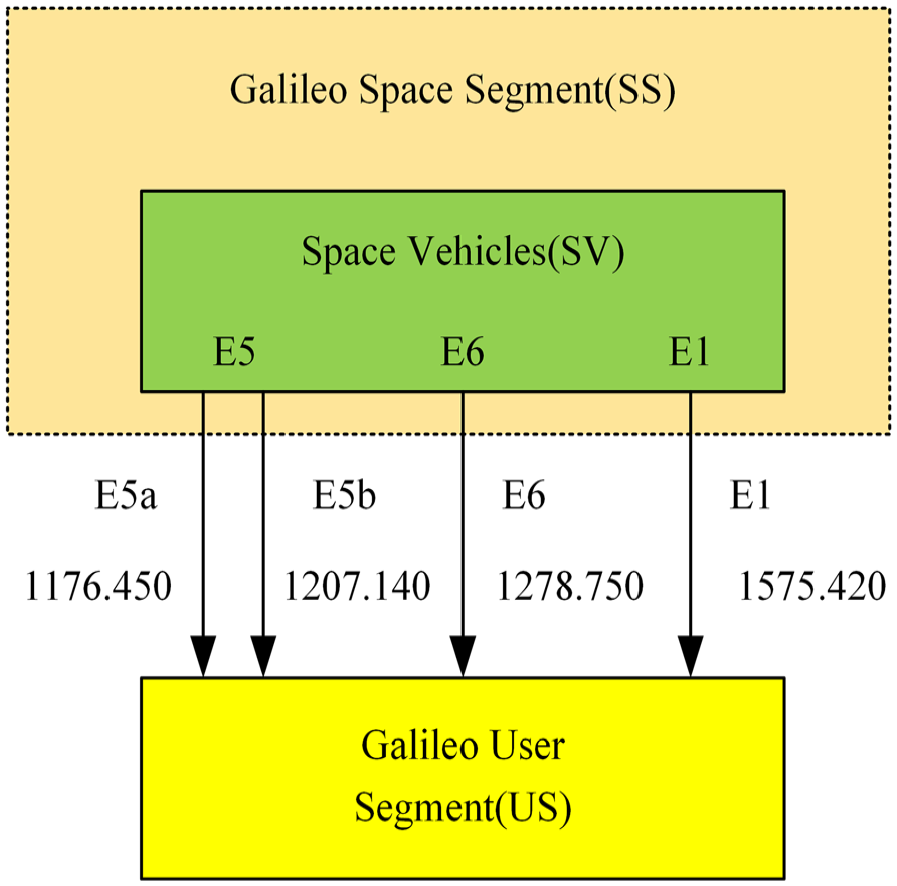
Satellite navigation signal from Galileo.
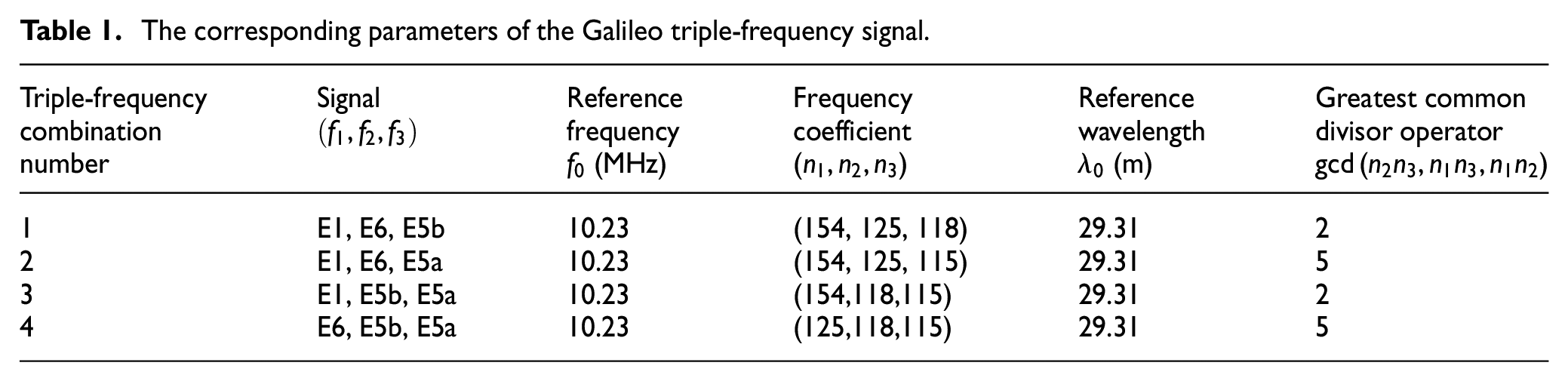
Taking the triple-frequency carrier signals as a group, four groups of triple-frequency carrier signals can be obtained. To unify the number of the following formula, the triple-frequency linear combination is arranged in the frequency values from largest to smallest, satisfying
The corresponding parameters of the Galileo triple-frequency signal.
When the pseudo-range neglects the ionospheric high order term and multipath effect, the pseudo-range

where








where
Characteristic analysis of triple-frequency linear combinations
The purpose of multi-frequency linear combination is to acquire the excellent performance linear combination with a long combination wavelength, a weak ionospheric effect, and a low observation noise. However, there are a fewer linear combinations that can satisfy the above the three conditions. To obtain the optimal triple-frequency linear combinations of Galileo, the geometric relations of the four types of linear combinations are studied.
Long wavelength combinations
Taking combination 1 as an example, the coefficients of the carrier signal E1, E6, and E5b are

The lane number is a special linear combination that characterizes the wavelength.
9
Formula (10) shows that the wavelength
The relationship between the wavelength
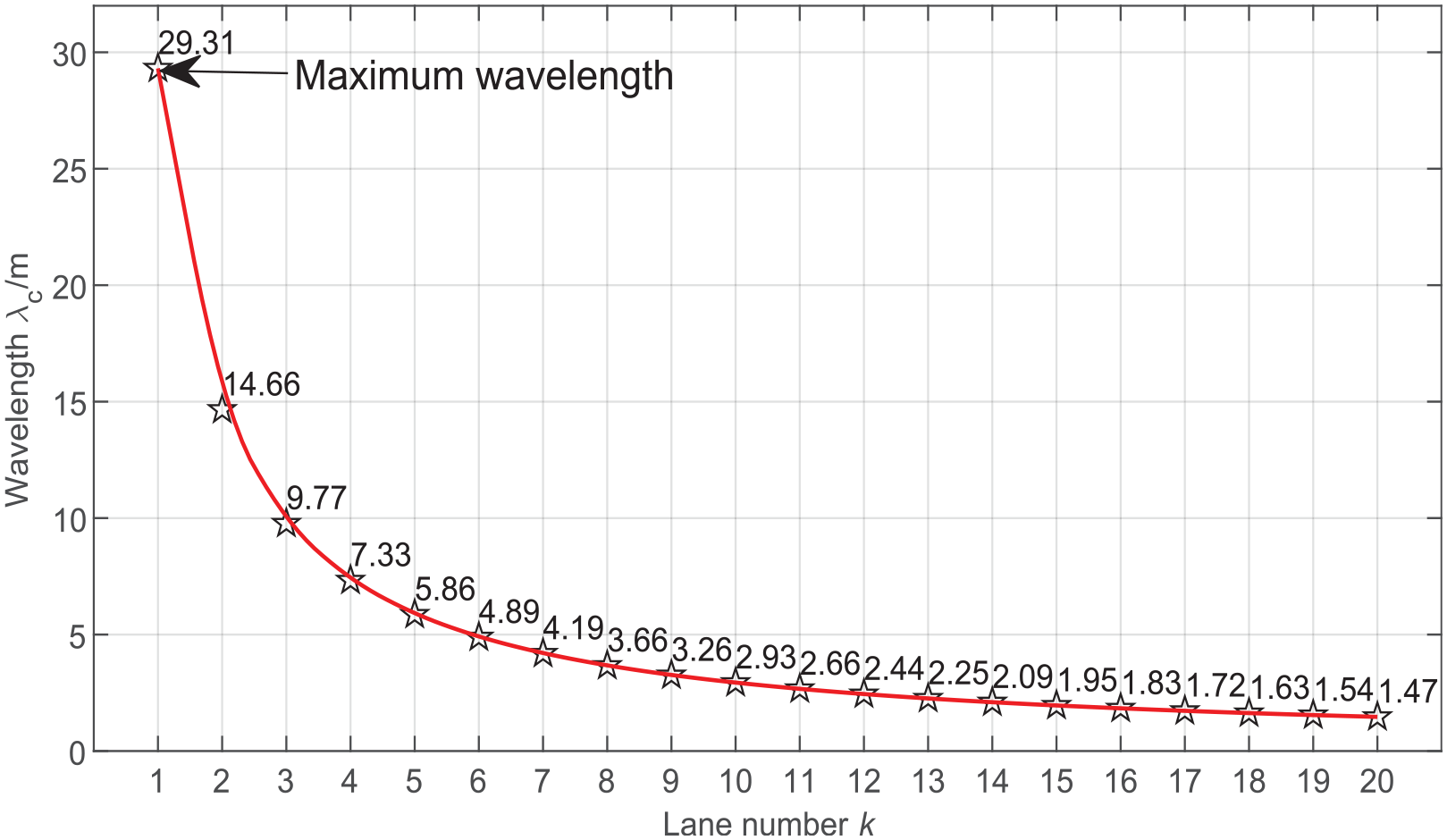
Relationship between the lane number
Geometry-free (GF) combinations
Non-dispersive errors (tropospheric delay error, receiver clock error) is unrelated to the frequency.
31
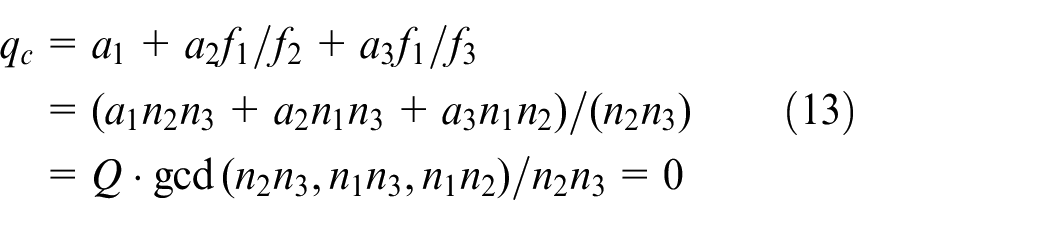
However, the non-dispersive error of the triple-frequency carrier combination in cycles is

When

The GF combinations are a three-dimensional space plane determined by satisfying Formula (12). The plane is determined by the combination coefficient
By comparing Formulas (10) and (11), it can be concluded that the combinations of GF and long wavelength can establish a close relationship through the lane number
Ionosphere-free (IF) combinations
In high precision positioning, the ionospheric effect is the main factor for the fixed ambiguity. To eliminate or mitigate the ionospheric delay error, it is important to find a group of linear combination observations that can eliminate the influence of the ionosphere. The triple-frequency linear combination can accelerate the fixed efficiency of ambiguity resolution. Below, we discuss the Galileo triple-frequency IF combinations. When the ionospheric amplification factor
Where

The IF combination for Galileo system combination 1 is a spatial plane determined by the combination coefficients
Minimum noise (MN) combinations
The noise of the original carrier phase observation for Galileo is generally


As shown in Formula (16), when the wavelength

The combination satisfying Formula (17) is a straight line, and the expression satisfying that line is

where
Geometric relationships of the three types of linear combinations
To comprehensively understand the characteristics of the real coefficients linear combinations for the Galileo, we next proceed a detailed analysis of the long wavelength combinations, IF combinations, GF combinations, and MN combinations and then discuss the geometric relationship between these linear combinations.
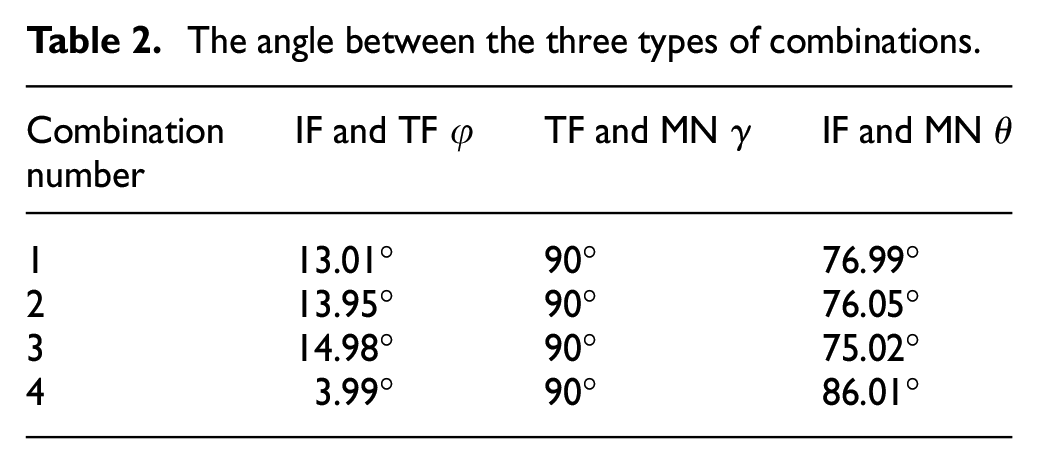
The angle formed by IF combinations and GF combinations

2. The angle formed by GF combinations and MN combinations

3. The angle formed by IF combinations and MN combinations

Table 2 shows that the angle between the plane composed of the IF combination and the GF combination is small, with a value between 3.99° and 14.98°. According to the principle of correlation, it is easy to simultaneously obtain a combination of the ionospheric delay and non-dispersive error with low influence.
The angle between the three types of combinations.
To illustrate the geometric relationship of two types linear combinations more intuitively, Figure 3 displays the distribution of the two planes in a spatial rectangular coordinate system. The angle between the two planes is 13.01°. The angle between the two planes is small, which indicates that there is a strong correlation between them, and the changing trend of the combinations is basically the same. Because there is a positive correlation between the GF combinations and long wavelength combinations, it is easy to acquire the combinations of weak ionospheric delay and long wavelength at the same time.
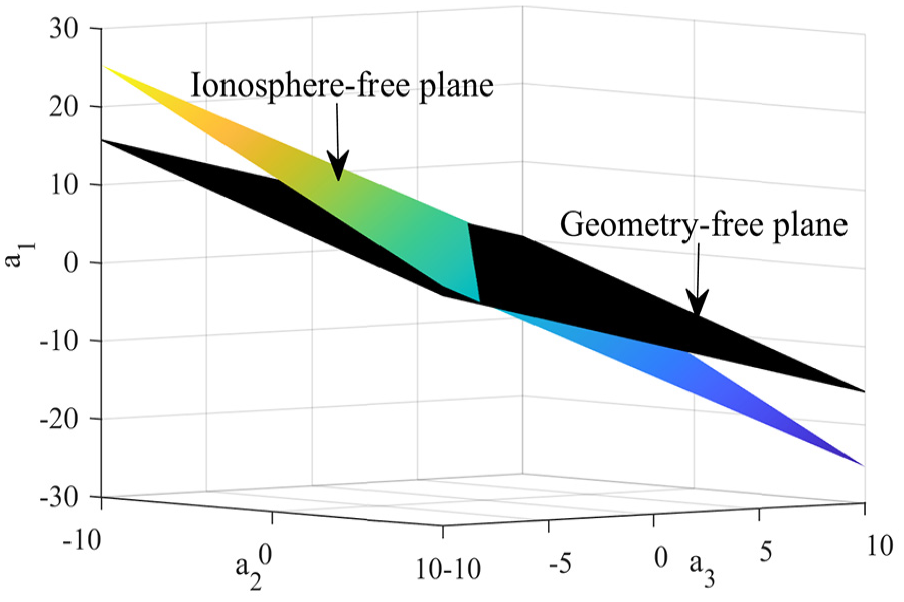
The spatial geometric distribution of the IF plane and GF plane.
Figure 4 indicates the spatial distribution of the IF combinations and the MN combinations of Galileo system combination 1 (E1, E6, E5b); the angle between the two is 76.99°. Because this angle is very large, it is difficult to meet the linear combination of the weak ionospheric effect and low noise at the same time. The ideal combination can only be achieved near the intersection of the IF plane and the MN line. For the other three combinations of Galileo, Table 2 shows that the angle formed by IF combinations and MN combinations lies between 75.02° and 86.01°, which is similar to that of combination 1.
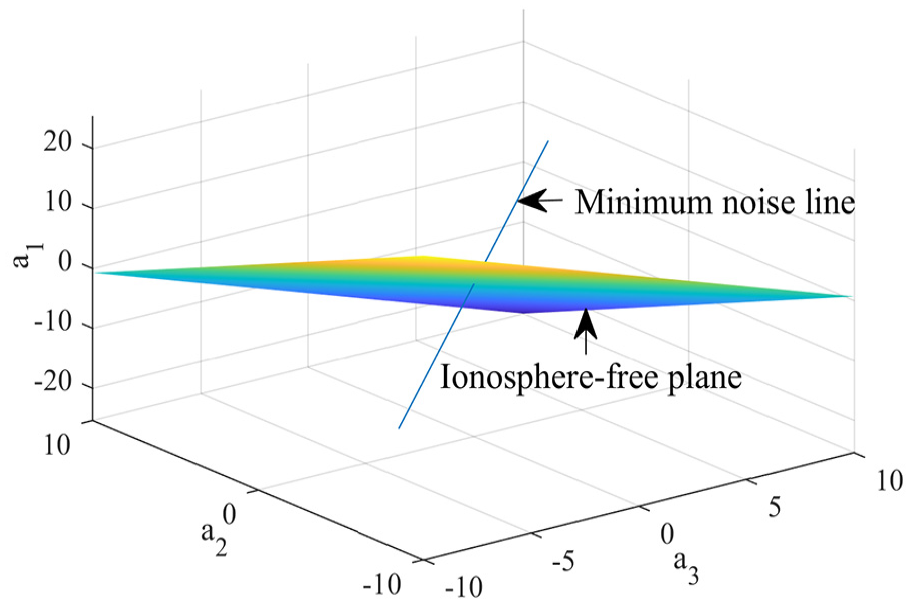
The spatial geometric distribution of the MN line and IF plane.
Formulas (12) and (18) calculate that the angle formed by the GF combinations and the MN combinations is 90°, which is orthogonal. This conclusion is also verified in Table 2, which indicates that there is no geometric correlation between them. Usually, the closer the combination coefficients is to the GF combination plane, the greater the observation noise. Similarly, the long wavelength combinations accompany the greater observation noise.
Among the four groups of Galileo triple-frequency linear combinations, the angle formed by IF combinations and the MN combinations of combination 4 (E6, E5b, E5a) is 86.01°, which is almost vertical. It is more difficult to satisfy the linear combination with a weak ionospheric effect and low noise. Therefore, the combination 4 is not an ideal Galileo triple-frequency linear combination.
Figures 3 and 4 show results of the analysis of the relationship between the three types of linear combinations from the perspective of spatial geometry. Since there is a positive correlation between the long wavelength combinations and the GF combinations, the characteristics of the four types of carrier phase combinations are clearly constructed based on the spatial geometric distribution. These characteristics can help us choose different carrier phase linear combinations according to different baseline lengths, application purposes, and application occasions.
Optimization and selection triple-frequency linear combinations
To understand the general characteristics of the Galileo triple-frequency combination, the paper analyzed four types of real coefficients linear combination in the previous section, and obtained the geometric relations of the long wavelength combinations, IF combination, GF combination, and MN combination. It is conducive to optimize the selection of triple-frequency linear combination. To guarantee the integer cycle characteristics of ambiguity resolution
Selecting the linear combination using the extremum method
Galileo triple-frequency carrier phase observations can form infinite linear combinations according to different conditions
The combination coefficients
The combination observation
The combination observation
The combination observation
Contradiction and unity go hand in hand, and this applies to linear combinations. In a perfect world, we would look for combinations that have all of the desirable characteristics—that is, a combination that reduces wide lane, receiver noise, and ionospheric refraction. This is represented by the green area in
Figure 5, which illustrates an ideal linear combination. 10
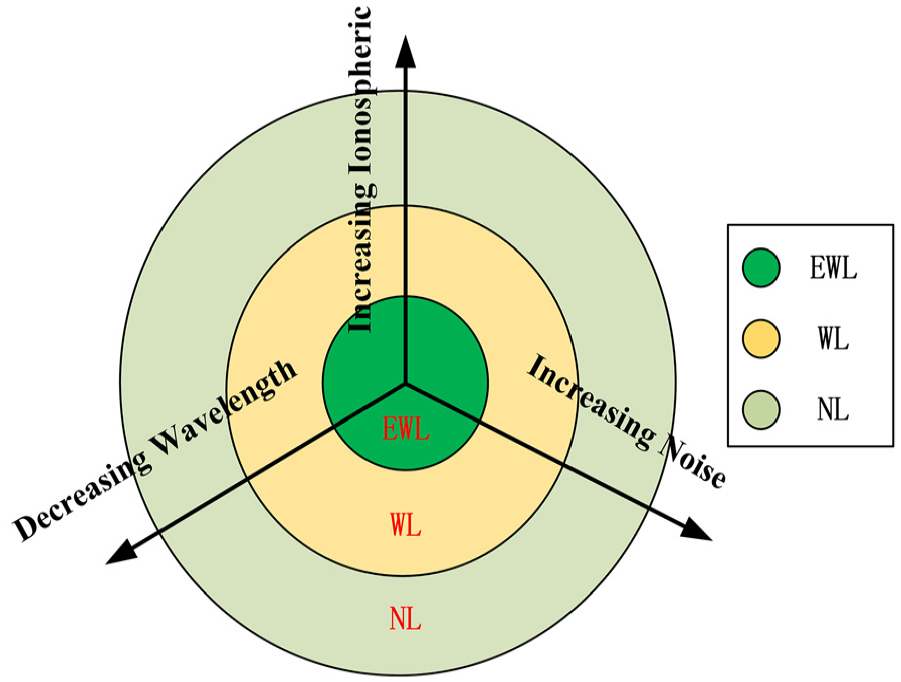
Different linear combinations represented by different color areas.
The above four conditions make a qualitative analysis of the selection of meaningful carrier phase linear combination observations, and then make a quantitative analysis of all possible linear combinations of the integral coefficients. As shown in Formula (22), the above four conditions are stated in the form of a function expression.
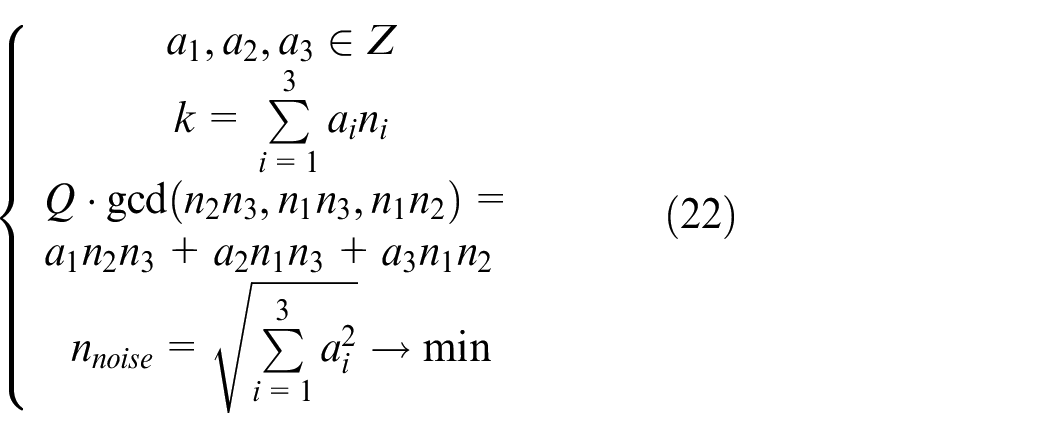
where
The linear combination coefficient
Formula (22) is expressed in the form of a matrix as follows:
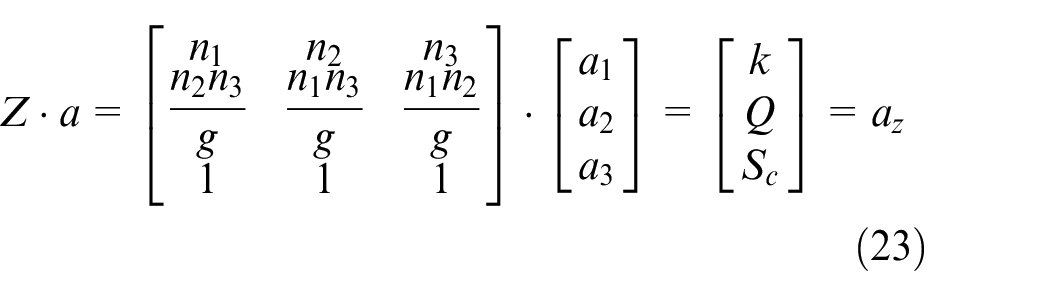
where

where
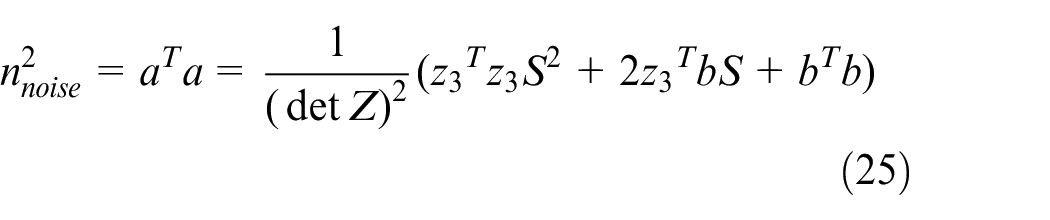
Then, take the derivative of Formula (25):

The nearest integer operator

Since the coefficient of the lane number


If a weak ionospheric combination is acquired, the ionospheric amplification factor is
To better present the linear relationship between
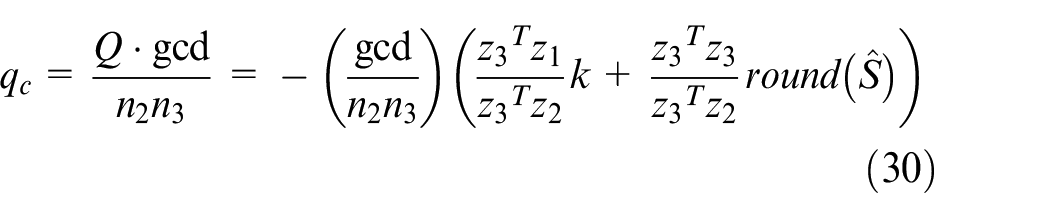
The above formula represents the relationship between
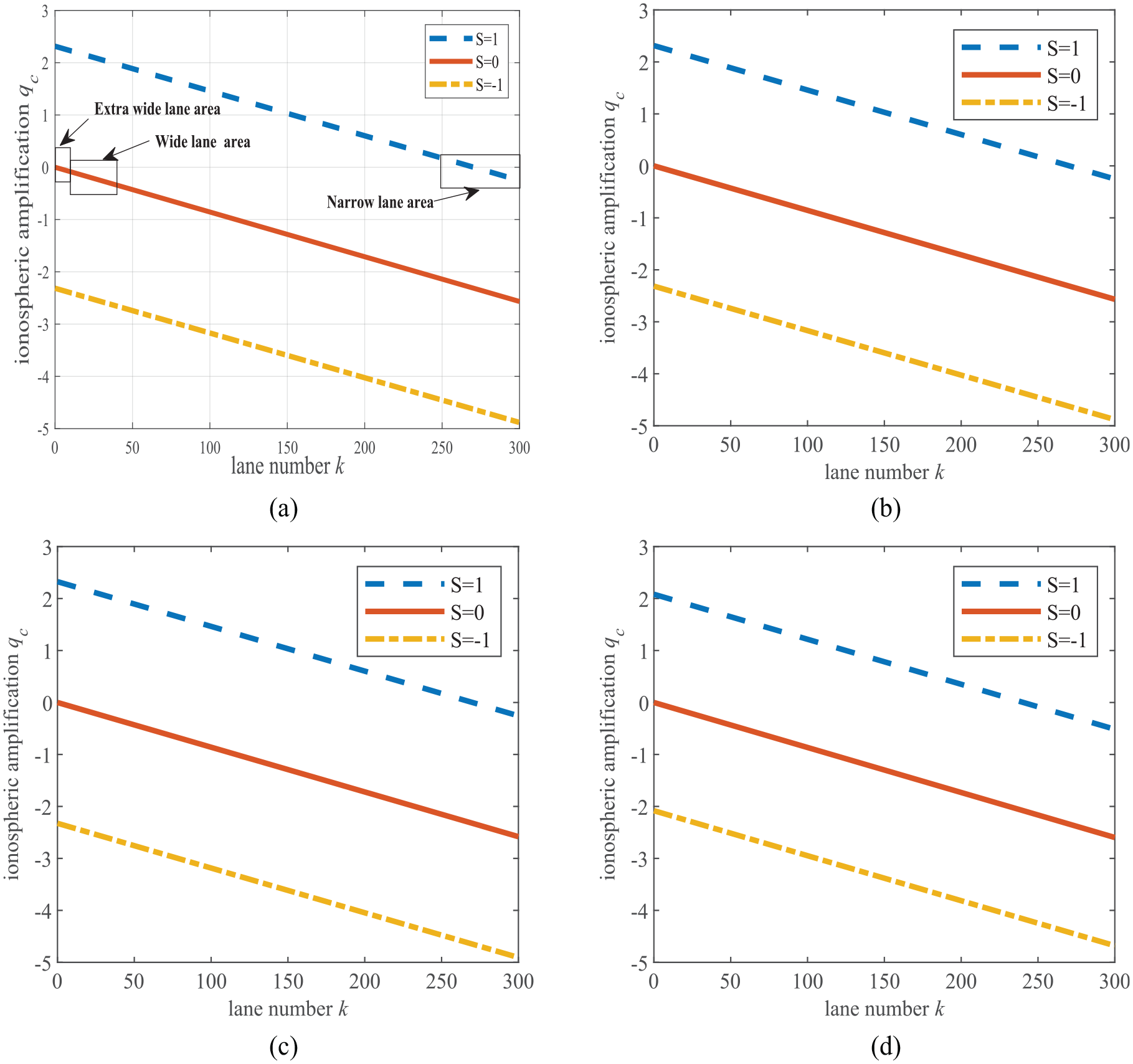
(a) Minimum noise line distribution of Galileo combination 1, (b) minimum noise line distribution of Galileo combination 2, (c) minimum noise line distribution of Galileo combination 3, and (d) minimum noise line distribution of Galileo combination 4.
Among the four groups of Galileo linear combinations, when the wavelength and the minimum noise take a fixed value, the analysis in Figure 6 indicates that the ionospheric delay amplification factor in cycles increases with an increase of the
The optimal triple-frequency linear combination satisfying the requirements of a low noise, a long wavelength, and a weak ionosphere is located in the wide lane area marked in Figure 6(a), and the sum of the combination coefficients
When
Optimal linear combination of the Galileo system
The errors of the short baseline have a strong correlation. Therefore, the noise effect is paid more attention for a short baseline. The correlation of ionospheric delay is weak at the medium and long baseline. Thus, we should pay more attention to combination observations with weak ionospheric delay. For different purposes, the selection of Galileo multi-frequency linear combination has different constraints.
The principle of linear combination needs to meet the four basic conditions of Formula (22). The four groups of Galileo linear combinations correspond to the EWL, WL, and NL, respectively according to the wavelength.
11
The EWL combinations should satisfy
The wavelength, ionospheric delay, and observation noise have different effects at different baseline lengths. It is more sensitive to the ionospheric delay in the medium and long baseline, and it is more sensitive to the wavelength and observation noise in the short baseline. Therefore, it is necessary to select three independent optimal linear combination for triple-frequency ambiguity resolution according to different application scenarios.
Table 3 lists the Galileo triple-frequency carrier signals (E1, E6, E5b) that meet the constraints of the EWL, WL, and NL. The linear combinations with better performance are displayed in bold in Table 3. For the EWL and WL combinations with the sum of combination coefficients is zero, it stand for the EWL and WL combinations with longer wavelength. Meanwhile, the
Optimal linear combination for Galileo system combination 1 (E1, E6, E5b).
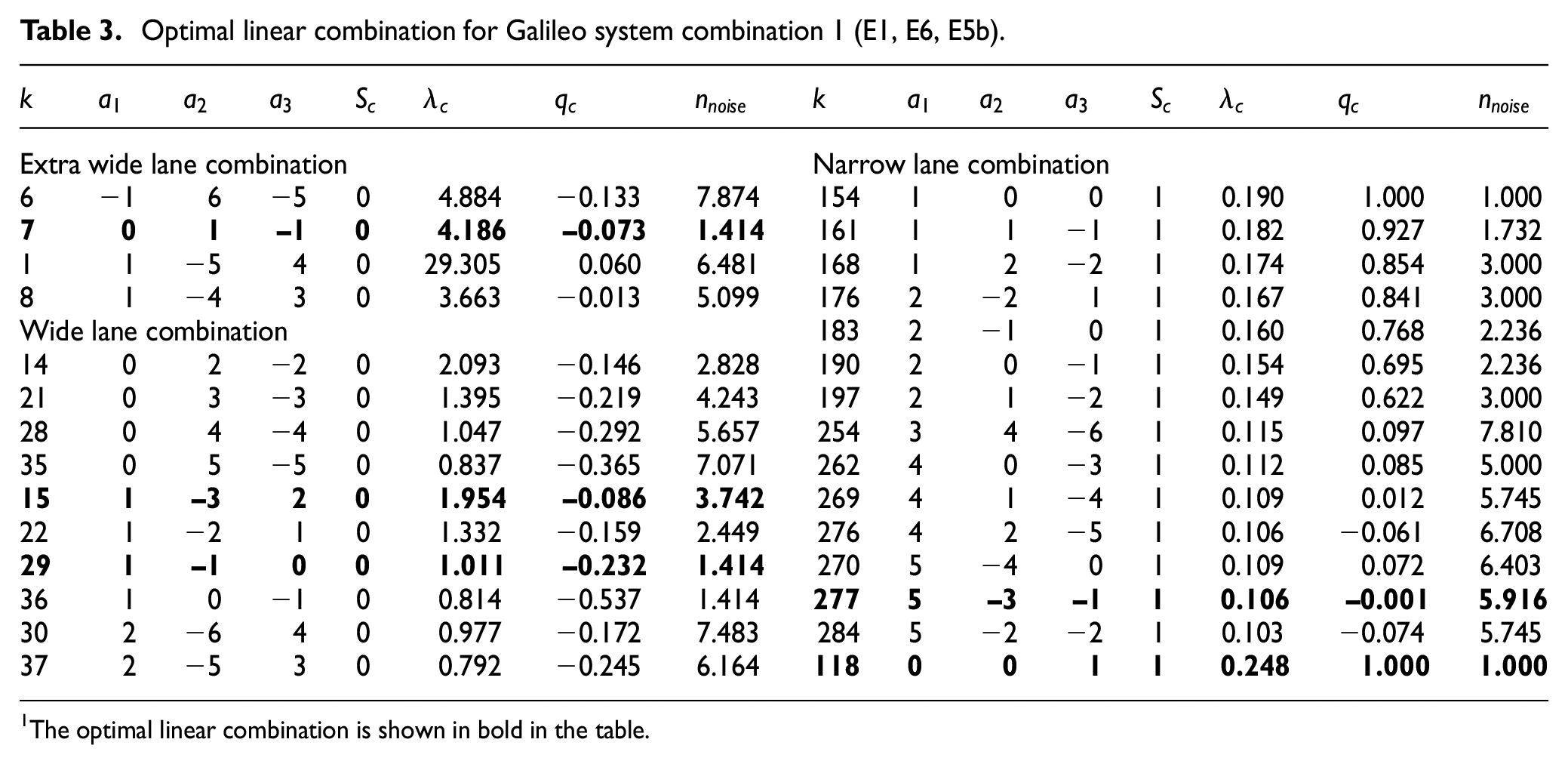
The optimal linear combination is shown in bold in the table.
By analyzing and comparing the above statistics results, we can see the following:
First combination: No matter what a short baseline or a long baseline scenario, the triple-frequency linear combination (0, 1, −1) can be selected. Because the longer wavelength is
Second combination: In the WL combination, the first four combinations have multiple relationships with the EWL combination (0, 1, −1). They have a linear correlation and cannot be used as an independent second linear combination to solve integer ambiguity. In the long baseline scenario, a WL combination (1, −3, 2) with a smaller ionospheric delay amplification factor
Third combination: The third independent combination should use a NL combination with the sum of the combination coefficients
According to the above analysis and the different application scenarios, the four groups of optimal triple-frequency linear combination in the Galileo system is listed in Table 4.
The optimal linear combination of the four Galileo combinations in EWL, WL, and NL.
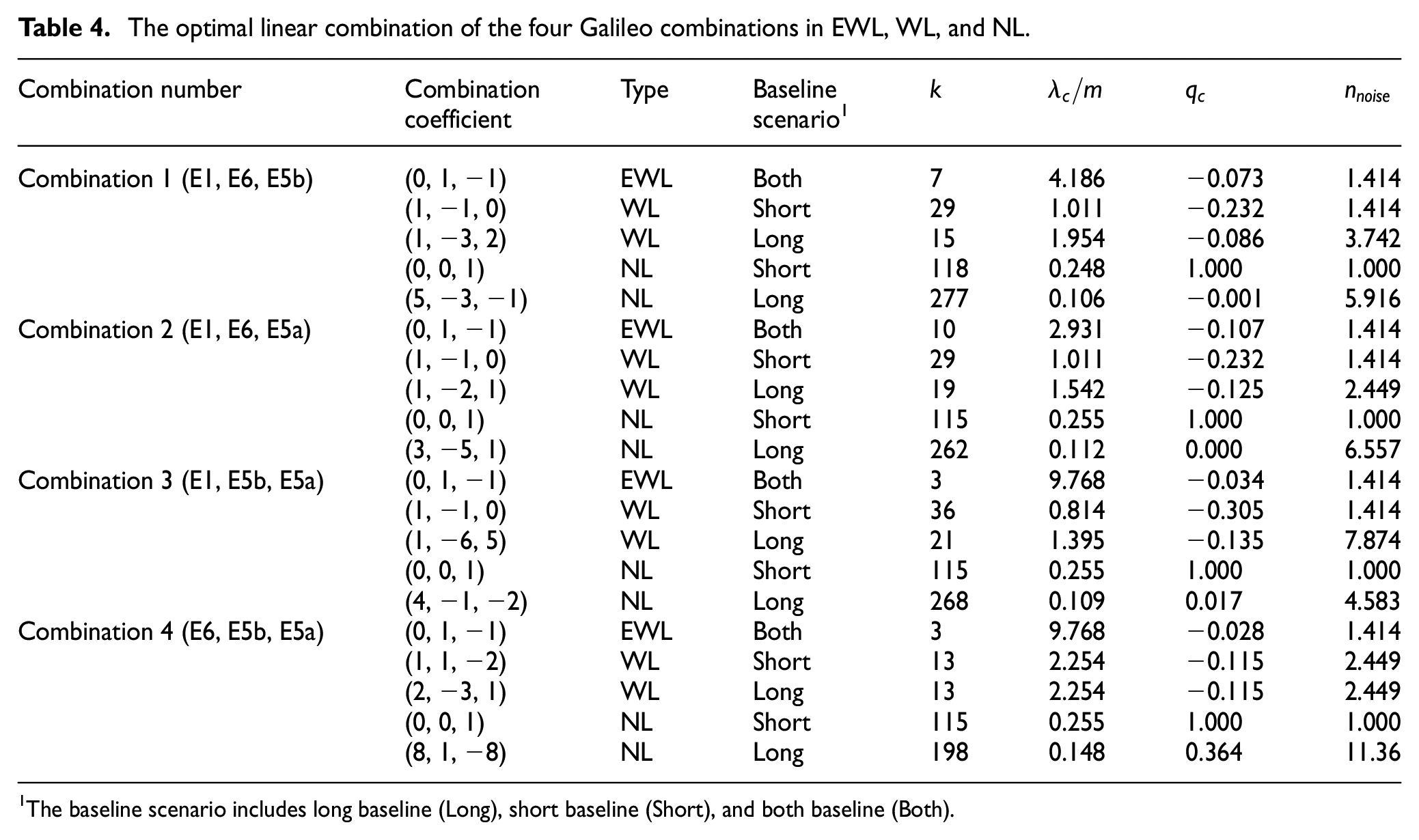
The baseline scenario includes long baseline (Long), short baseline (Short), and both baseline (Both).
As can be seen from Table 4, the combination coefficient (0, 1, −1) is the common EWL combination in Galileo system. This combination has the minimum noise amplification factor
To more intuitively display the characteristics of the optimal triple-frequency linear combination in Galileo system, Table 5 listed all EWL combinations without multiple relationships. all EWL combinations in Galileo system are drawn on the plane constructed by
All EWL combinations in Galileo system.
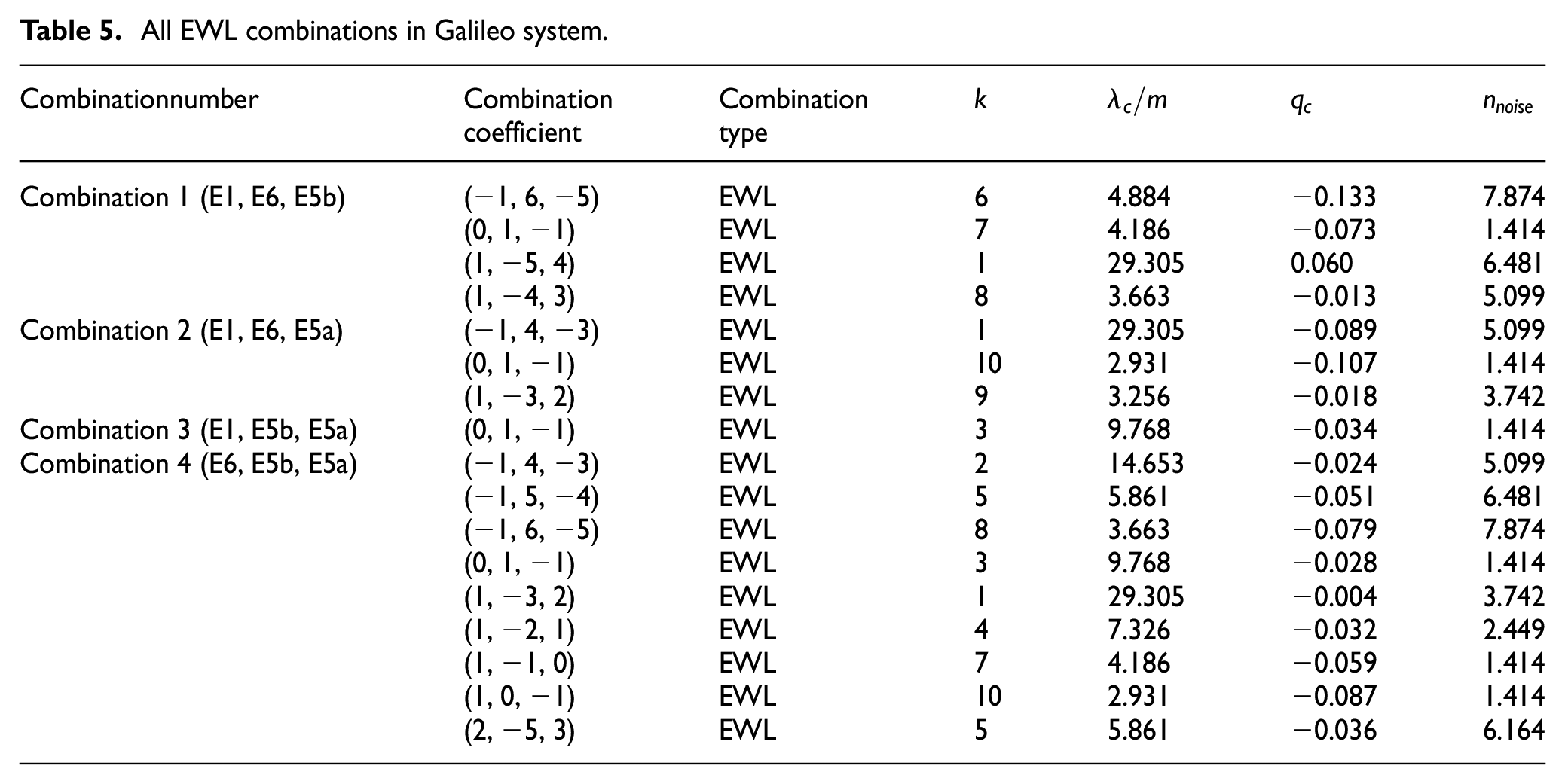
In the
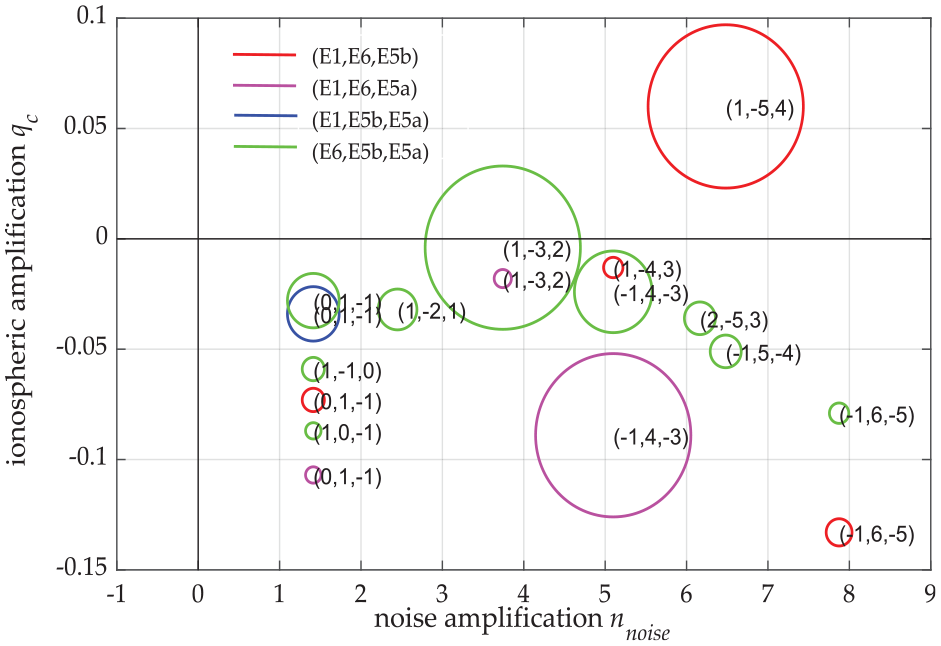
Characteristics analysis of all the EWL combinations.
By analyzing the distribution of each combination circle in Figure 7, the conclusion is as follows:
The combination (0, 1, −1) of Galileo system is the closest to the origin of coordinates. The combination (0, 1, −1) is the optimal triple-frequency linear combination of Galileo system.
Generally speaking, the larger the combination coefficients
The linear combination increases the noise amplification factor
The ionospheric amplification factor of all the EWL combinations is within the range
When the carrier frequency is different, the same coefficients of combination (0, 1, −1), (1, −3, 2), and (1, −4, 3) also has a difference in its wavelength
In order to further verify the superiority of the linear combination observations selected in this paper, we have provided an example in the updated manuscript. The example analyzes the performance of the EWL of Galileo combination 2 (E1, E6, E5a). This paper uses the Second-order Time-difference Phase Ionospheric Residual (STPIR) to calculate the integer ambiguity. By comparing the values of the integer ambiguity rounding error in the long baseline and short baseline scenarios, the advantages of the above EWL are verified.
In the short baseline scenario, the static data of IGS reference station WHU2 (Wuhan) and JFNG (Jiufeng) on June 15, 2020 are used. The sampling interval is 1 s. The observation time is about 4 h, and the baseline length is about 13.1 km. In the long baseline scenario, the static data of IGS reference station WHU2 and HKWS (Hongkong) on July 18, 2020 are used. The sampling interval is also 1 s. The observation time is about 3 h, and the baseline length is about 902.9 km. The observation data for ambiguity resolution are all from PRN08 and PRN15 of Galileo. Figures 8 and 9 are the EWL ambiguity rounding errors of Galileo combination 2 over time under the long and short baselines.
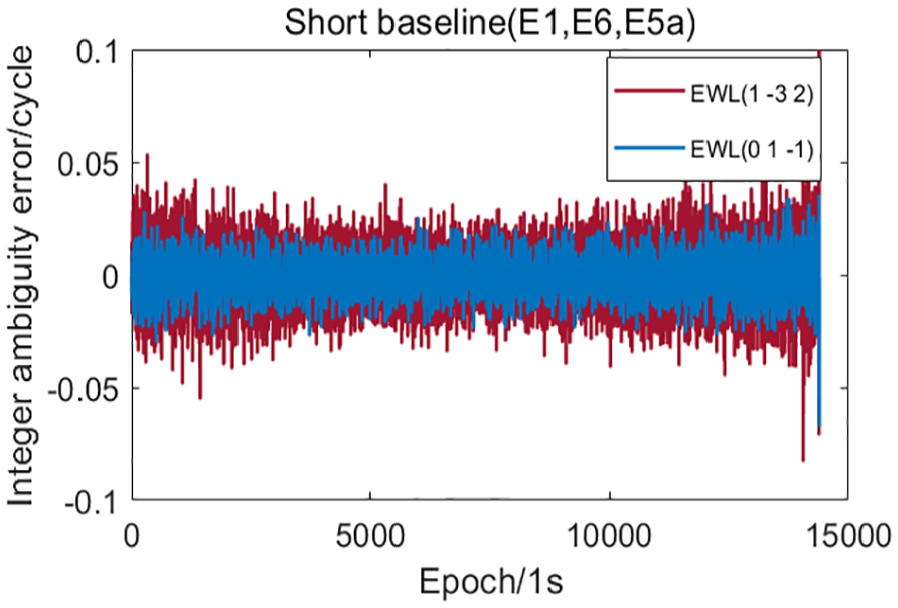
Ambiguity rounding error varies with time under short baseline.
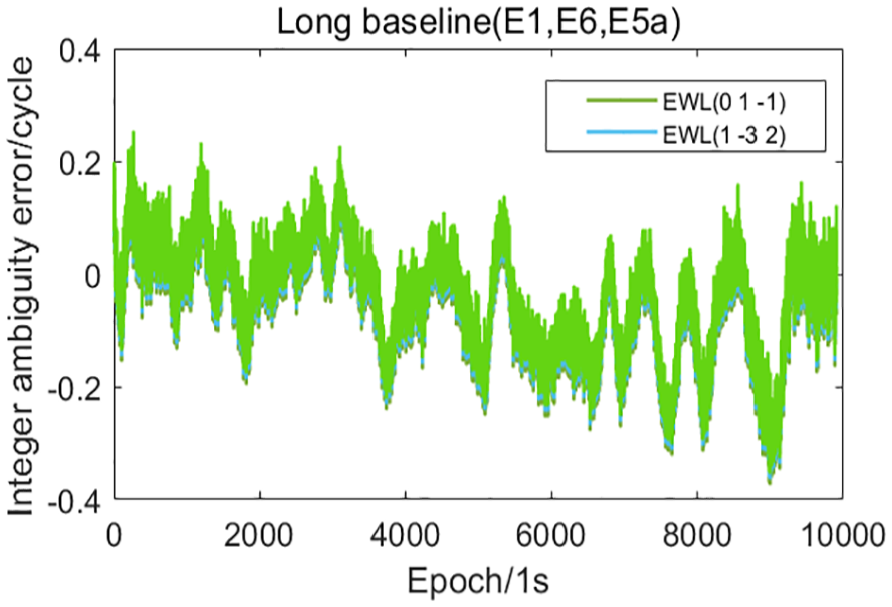
Ambiguity rounding error varies with time under long baseline.
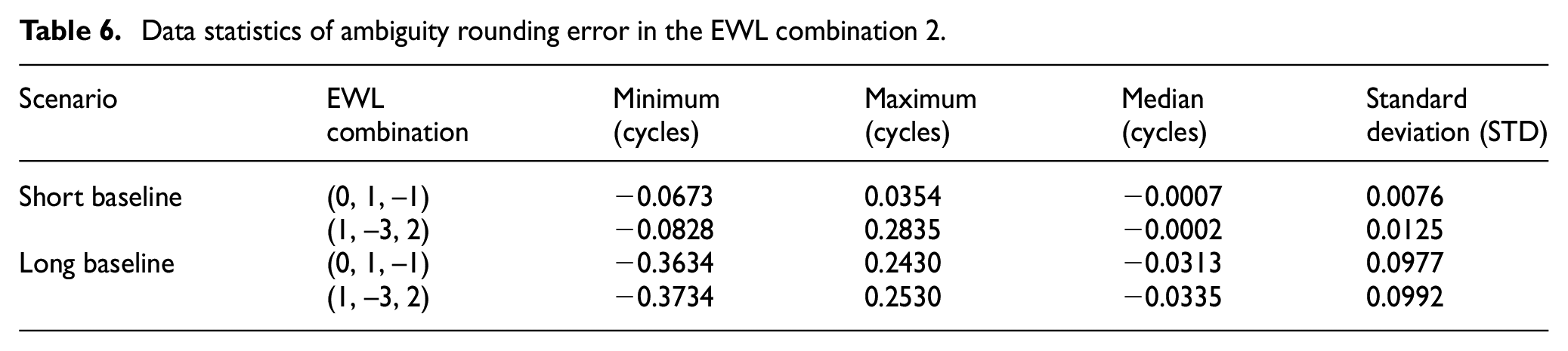
It can be seen from Figures 8 and 9, the linear combination of EWL (0, 1, −1) and (1, −3, 2) have an ambiguity rounding error of ±0.05 cycles under most epochs in the short baseline scenario. The integer ambiguity of combination 2 (E1, E6, E5a) is easy to be determined. In the long baseline scenario, the ambiguity rounding error changes greatly, which is mainly caused by the increase of baseline length and ionospheric delay. The ambiguity rounding error of (0, 1, −1) and (1, −3, 2) is within ±0.4 cycles, so the integer ambiguity of linear combination can be estimated by rounding. According to the statistical data in Table 6, the parameters of combination (0, 1, −1) are better than combination (1, −3, 2) in both long baseline and short baseline scenarios, which also confirm the conclusion: combination (0, 1, −1) is the optimal triple frequency linear combination.
Data statistics of ambiguity rounding error in the EWL combination 2.
Conclusion
This paper uses the four civil frequencies of the Galileo system as the object of study. Firstly, the model of the triple-frequency carrier linear combination of Galileo is analyzed. The combination model can effectively eliminate or weaken the common observation error, and theoretically derive long wavelength combinations, IF combinations, GF combinations, and MN combinations. According to the different spatial distribution of them, the relationships between them are analyzed from a geometric perspective. Secondly, the optimal triple-frequency linear combination of integer coefficients was solved based on the extremum method, and the relationships between the lane number
The angle formed by IF combinations and GF combinations is relatively small, which indicates that there is a strong correlation between them, and the changing trend of the combinations is basically the same. Meanwhile the GF combinations have a positive correlation with the long wavelength combinations. Thus, there are many combinations that can satisfy both long wavelength and weak ionospheric delay combinations.
The angle formed by the MN combinations and the other two combinations is relatively large, even the angle formed by GF combinations and MN combinations is 90°. Therefore, it is very difficult to simultaneously satisfy the optimal triple-frequency linear combination with a low noise, a long wavelength, and a weak ionosphere.
When the wavelength and the minimum noise take a fixed value, the ionospheric delay amplification factor in cycles increases with an increase of the sum of the combination coefficients. The ionospheric delay amplification factor is more than twice the value of
The sum of the EWL and WL combination coefficients is zero. The sum of the NL combination coefficients is one. There are only two independent linear combinations from the EWL and WL. The third independent combination needs to be selected from the NL combinations.
All linear combinations can amplify the observation noise in cycles; the minimum noise amplification factor after a linear combination is 1.414.
The EWL combination (0, 1, −1) is the optimal triple-frequency carrier phase linear combination in Galileo system.
Footnotes
Acknowledgements
This research was performed with technology and equipment support from the Satellite Navigation Laboratory. We wish to express our sincere gratitude to Dr Dong and MS Fu for their valuable help.
Author contributions
Conceptualization, X.D., W.F., and J.W.; methodology, X.D. and D.Y.; software, J.W. and W.F.; validation, J.W. and Z.S.; investigation, W.F. and D.Y.; resources, J.W. and Z.S.; writing—original draft preparation, J.W.; writing—review and editing, J.W.; visualization, J.W. and W.F.
Declaration of conflicting interests
The author(s) declared no potential conflicts of interest with respect to the research, authorship, and/or publication of this article.
Funding
The author(s) received no financial support for the research, authorship, and/or publication of this article.
