




Abstract
The multicriteria decision-making methodology is utilized to assess different portable hard disk drive alternatives, according to the purchaser/retailer/wholesaler liking with respect to various attributes. The hard disk drive comes under various types and has a number of attributes connected with it such as storage capacity, size, data transfer speed and physical dimensions. The modern market caters to a wide variety of customer needs. Therefore, it becomes the need of the hour to present a simple technique to select the best alternative for purchaser/retailer/wholesaler to satisfy their combined needs. Among the multicriteria decision-making methods, the more simple and widely used technique weighted aggregated sum product assessment is utilized in this work. The data of different hard disk drives were collected that were available in the Indian market and 24 different models of five brands were considered in decision-making. The equal weights method and objective weights method, that is standard deviation method, are utilized to allocate weights of significance to the criteria. The ranks obtained with simple additive weighting, weighted product method and weighted aggregated sum product assessment are presented, and final ranks are considered with weighted aggregated sum product assessment method because it is an amalgamation of the simple additive weighting and weighted product method. The result reveals that Western Digital comes out to be the first choice as a brand because the top three models belong to them with both equal and objective weights. While utilizing these techniques, a consumer can purchase the best hard disk drive and it is also very advantageous for merchants and sellers to aid users in procuring their gadgets while manufacture of hard disk drive can produce their product with unique technological features aimed at particular users. Furthermore, the subjective weights can be considered to select the best alternative.
Keywords
Introduction
Hard disk drive (HDD) is an electro-mechanical gadget utilized to store data and is launched by the International Business Machines Corporation of America in 1956. Since then HDD has become the prevailing storage apparatus for all, types of computers that started near the beginning 1960s. Since then a number of companies are manufacturing and supplying, HDDs due to non-volatile memory, Holst 1 reported that the sales of HDDs are highest in the year 2010 which is more than 600 million and the sales are increasing, day by day, around 83 million HDDs shipped worldwide in the third quarter of 2019. The projected revenue of external storage in Japan will be around US$3 billion by 2023. 2 The market to store any type of data is anticipated to reach roughly US$78.1 billion by 2021. 3 The CMR India 4 reported external HDD market growth by 24% in terms of unit shipments and external HDD 2.5 in takes 99% market share and it is due to online platforms. The external HDD of capacity 1 TB contributed 52% market share after 2 TB (34%) and it turns into the most well-liked among customers. The CMR India 4 also reported the 27% growth of external HDDs in the third quarter of 2019, the 1 TB and 2 TB shipments collectively contributed 86% market share. At the same time as per IDC, 5 India’s external storage market stood at US$91.8 million and growing 8% year over year because manufacturing, government, banking, professional services and telecommunication industries contributed 83.2% of the overall external storage market.
External HDD is one of the devices which people need now a day’s very often to store useful records or data in terms of any backups or copy of data for a long time. There are many vendors available around the world who manufacturers these devices, but some of the foremost are western digital (WD), Seagate, SanDisk, Toshiba, Transcend, Lenovo and many others. The HDDs have a variety of attributes associated with it, for example, price of HDD, data transfer speed, storage capacity, weight and its size and hence become a problem of multicriteria decision-making (MCDM) for a purchaser/retailer/trader even for a manufacturer or for developer of expert systems or developer of web making sites doing a comparison of equipment/gadgets.
The MCDM refers to identifying the suitable option where mutual evaluation is involved for many different sets of circumstances criteria. 6 There are a number of MCDM methods which are frequently used for decision-making; Savitha and Chandrasekar 7 applied simple additive weighting (SAW) and weighted product method (WPM) for wireless network selection, Melia 8 to share sector investment selection and Khandelwal and Jain 9 to the cluster head selection. The optimization of machining variables completed with Vlse Kriterijumska Optimizacija Kompromisno Resenje (VIKOR) and technique for order of preference by similarity to ideal solution (TOPSIS) techniques.10,11 Kumar et al. 12 applied TOPSIS scheme for optimization of output responses with equal, subjective weights (analytic hierarchy process (AHP)) and objective weights (entropy method). The standard deviation method (SDM) was utilized to allot objective weights to responses by Xu and Cai; 13 Xu and Da 14 to uncertain linguistic environment; Achebo and Odinikuku 15 to welding operation output parameters; Mohamed and Ahmed 16 to project selection problem; Majumder and Majumder 17 applied to optimization of manufacturing process parameters. Srivastav and Agrawal 18 utilized TOPSIS technique to select best non-dominated solutions achieved with multiobjective particle swarm optimization. Roy and Majumder 19 applied MCDM approach to select an optimum design configuration for a heat exchanger and achieved 22% enhanced exchange efficiency of the selected model. Rathi et al. 20 applied VIKOR, TOPSIS and fuzzy approach to rank diverse states of India having prospective of wind energy. Kumar and Singh 21 selected the best vacuum cleaner with TOPSIS method. Luo et al. 22 applied entropy method to boost variable predictive model-based class discrimination performance.
The weighted aggregated sum product assessment (WASPAS) method has come under recently developed MCDM methods and developed by Zavadskas et al. 23 which achieved 1.3 times more accuracy than WPM and 1.6 times more than weighted sum model (WSM) and till date, it was applied in diverse industrial applications. Zavadskas et al. 24 tested the reliability of WASPAS technique and compared the results with multiobjective optimization on the basis of ratio analysis (MOORA) technique while ranking of buildings and the results of both the methods are closely related. Chakraborty et al. 25 also proved the applicability and effectiveness of the WASPAS method while considering five diverse manufacturing problems of other researchers such as selection of an industrial robot, 26 an automated inspection system, 27 a flexible manufacturing system, 28 a machine picking, 29 and an automated guided vehicle 30 subsequently Chakraborty et al. 25 observed that for all the five problems, the rankings as accomplished by WASPAS technique strongly match with those attained by the past researchers. Mathew et al. 31 utilized different normalization techniques in WASPAS technique and reported that the linear normalization (Max–Min) technique furnishes better results. Hybrid WASPAS was utilized by Zavadskas et al. 32 to select waste plant; Zavadskas et al. 33 to pick circuit design and Nie et al. 34 selected the position of the solar plant. Some of the significant studies of WASPAS method are briefly presented in Table 1 and it shows the year’s wise research conducted to make the decisions.
Significant literature of WASPAS method.
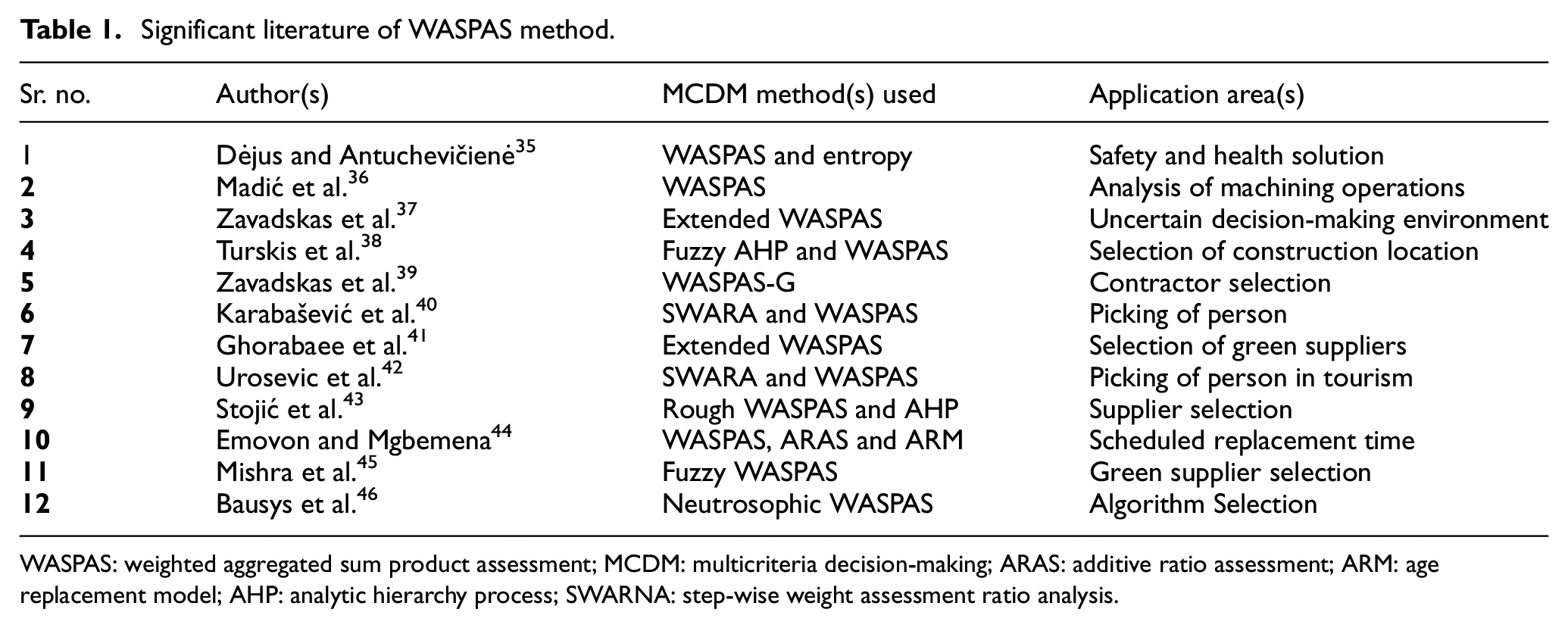
WASPAS: weighted aggregated sum product assessment; MCDM: multicriteria decision-making; ARAS: additive ratio assessment; ARM: age replacement model; AHP: analytic hierarchy process; SWARNA: step-wise weight assessment ratio analysis.
The rest of this paper is organized as follows: section “Selection of the benchmark” provides a brief overview of the selection of the benchmark, that is, portable HDD and its associated attributes and data collection, section “WASPAS method” describes the implementation steps used in WASPAS method, section “Selection of portable HDD: decision-making with WASPAS” describes the application of WASPAS method to select the best alternative of HDD, section “Sensitivity analysis” provides sensitivity analysis and section “Conclusion” contains the concluding remarks.
Selection of the benchmark
Long-time back people use floppy disks some days earlier they used compact disk (CD) or digital versatile disk (DVD); all of these are not much used these days because of inadequate memory, but the external HDD can store data up to terabytes. The external HDD works on a similar principle as internal HDD, which have moving mechanical parts and an optical head, which read/write the data on magnetic disk. It retrieves data by rapidly rotating platters (disk profile) which have magnetic coating and it rests in a cover having air sealing. The within one side of the cover is known as disk controller and a motor attached to the board rotates the platters around at 3600 or 7200 r/min. 47 The HDDs have features which decide its performance as a manufactured/assembled product/gadget or predominantly associated with the mechanical character of the revolving disk and head such as average access time, that is, the time needed to travel the head on a track. The seek time refers to the time taken by the head to move on the disk with data. The data transfer speed is a function of platter revolving speed, soundtrack density and position on the track, but heat as well as vibration reduces the speed. 48 The USB 2.0 interface is usually utilized for external HDD, but it has a slower data transfer rate and other interfaces such as USB 3.0 also coming. Generally, the 2.5-in variant of hard disk refers to portable external drive and 3.5-in variant to desktop external drive.
The external hard disk has much utility in industries/service-sector to store old records and is also very useful in daily life of the people since it is used to store multimedia/document files and so on. The portable HDD comes under various types and with many different attributes/criteria such as storage, size, data transfer speed and physical dimensions for better ergonomic value. In decision-making, usually beneficial criteria refer to higher value, for example, storage of hard disk and non-beneficial criteria refers to lower value, for example, price of hard disk. In this case study, to select best HDD out of existing options, eight significant features are contemplated such as:
Cost of HDD (HDD-Co) in Indian rupees (INR);
Weight of HDD (HDD-W) in g;
Dimensions of HDD; taken in terms of volume of the HDD (HDD-Vol) in cm3;
Storage capacity of HDD (HDD-Cap) in TB;
USB connectivity of HDD (HDD-Con), for example, 3.0, 3.1 and so on;
Warranty of HDD (HDD-War) in years;
Data transfer speed of the HDD (HDD-DTS) in Gbps;
Color variation of HDD (HDD-CV) in number, for example, 1, 2, 3 and so on.
The HDD-Co, HDD-W and HDD-Vol are non-beneficial and the HDD-Cap, HDD-Con, HDD-War, HDD-DTS and HDD-CV are beneficial criteria. Subsequently, the WASPAS technique is utilized to pick the superlative option from 24 accessible portable HDD alternatives in Indian market. The data collected from the Indian market were limited to HDD-Co from INR 3000 to 7000, HDD-Cap from 1 TB to 2 TB as it has around 86% market share, form factor and wired USB 3.0 to USB 3.1 connectivity.
WASPAS method
It was initially offered in 2012 and observed as a valuable expansion of the SAW and a WSM by Zavadskas et al. 23 The steps utilized in this technique are given as follows.
Step 1: Alternatives or options are worked out with suitable evaluation criteria allied with it.
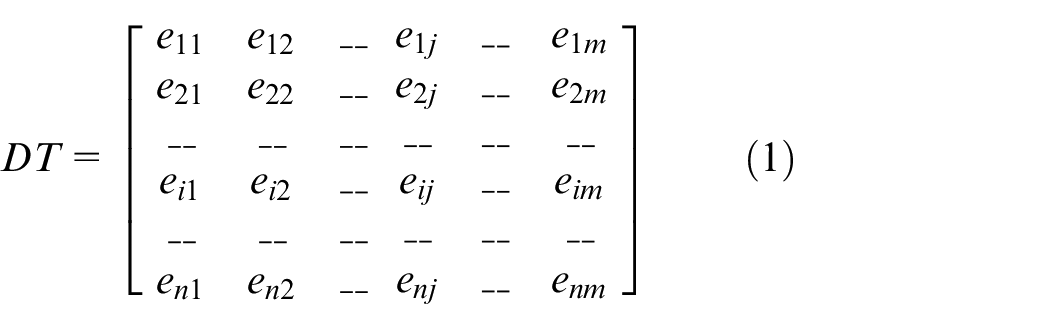
Step 2: The decision template is given away in equation (1). Every row of decision template or matrix is allotted to one option (HDD), and all columns are allotted to one criterion (price, storage, data transfer speed, weight, volume and so on). Accordingly, the eij of the decision template “DT” (eij; i = 1, 2,…, a no. of alternatives (n), j = 1, 2,…, no. of attributes (m)) are contributions
Step 3: The linear normalization technique is utilized to make the collected data of “DT” dimensionless. Equation (2) for beneficial criteria, for example, profit and in equation (3) for nonbeneficial criteria, for example, price.
Compute the normalized decision matrix, NDMij by the linear normalization technique as shown in equation (2) for beneficial criteria, that is, the superior value is wanted, for example, profit and in equation (3) for nonbeneficial criteria, that is, an inferior value is wanted, for example, cost


Step 4: There are different techniques to allocate weights of importance to the responses, that is, equal, objective and subjective preferences, but the equal weights method (EWM) and standard deviation method (SDM) are utilized in this study; the total sum of all weights ought to be unity.
EWM
The equal weights are obtained by equation (4)

where m is a number of attributes.
SDM
The SDM weights of the criteria assessed without taking care of subjective liking of the decision-maker by equation (5)

where
To accomplish the weighted, normalized matrix (WZij), equation (6) is utilized

Step 5: A dual criteria of optimality is applied based upon SAW is shown in equation (7) and the WPM is shown in equation (8)


The dual comparative significance of the alternative, that is, performance index (Qi) based upon SAW and WPM techniques, is calculated as shown in equation (9)

where ƛ = 0, 0.1, 0.2,…, 1.
Equation (10) is used to locate the optimal assessment of ƛ for a specified decision-making problem 23

Step 6: The performance index
Selection of portable HDD: decision-making with WASPAS
The accessible portable HDD from HDD-A1 to HDD-A24 is shown in Table 2. The information obtained on the HDD with the eight attributes such as HDD-Co, HDD-W, HDD-Vol, HDD-Cap, HDD-Con, HDD-War, HDD-DTS and HDD-CV of five brands with 24 models is presented in Table 3. Table 3 belongs to step 1 and step 2 and is also known as decision template or matrix for picking the most excellent HDD as per equation (1).
List of 24 portable hard disk drive alternatives.
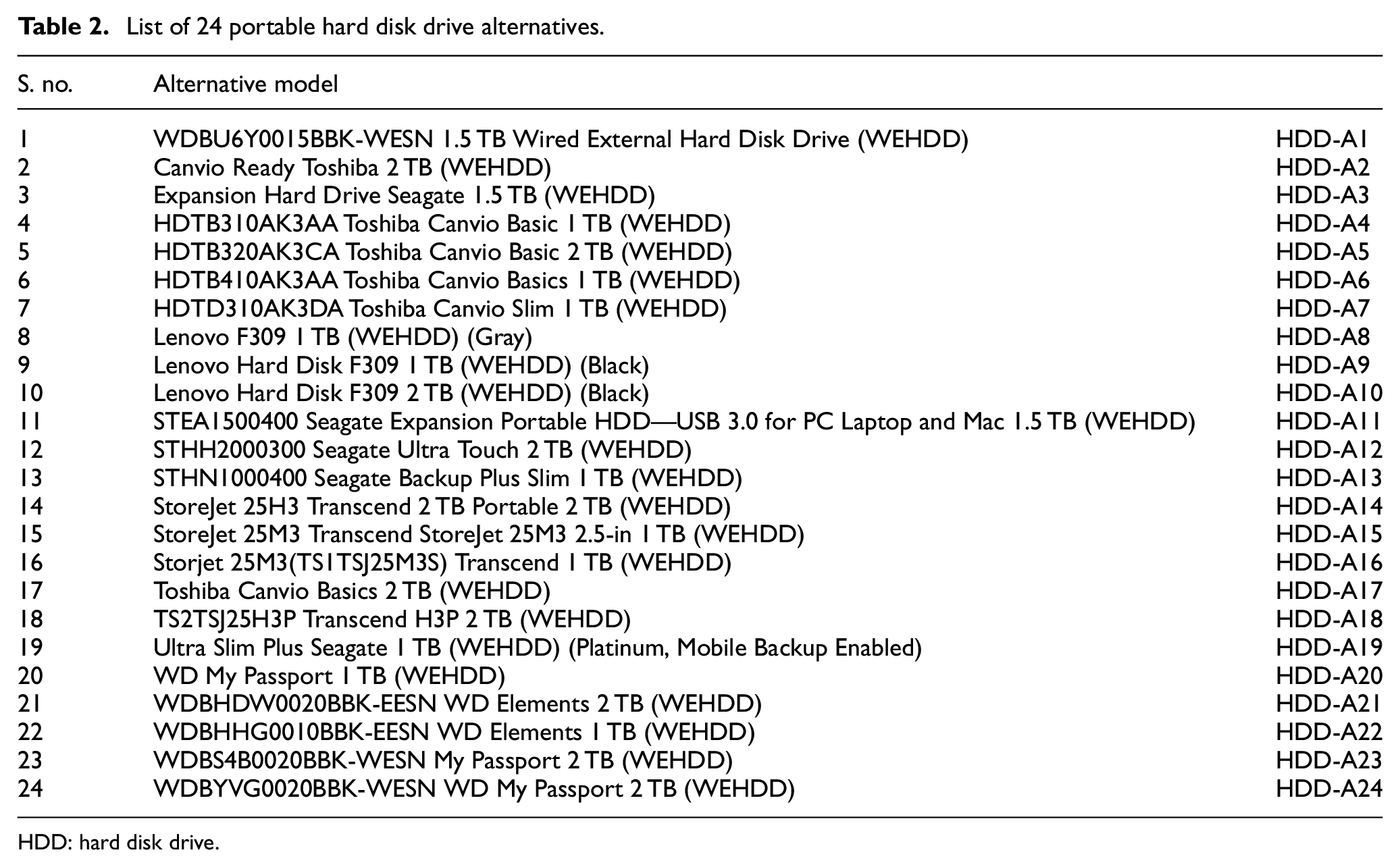
HDD: hard disk drive.
Decision matrix for 24 portable hard disk drive.
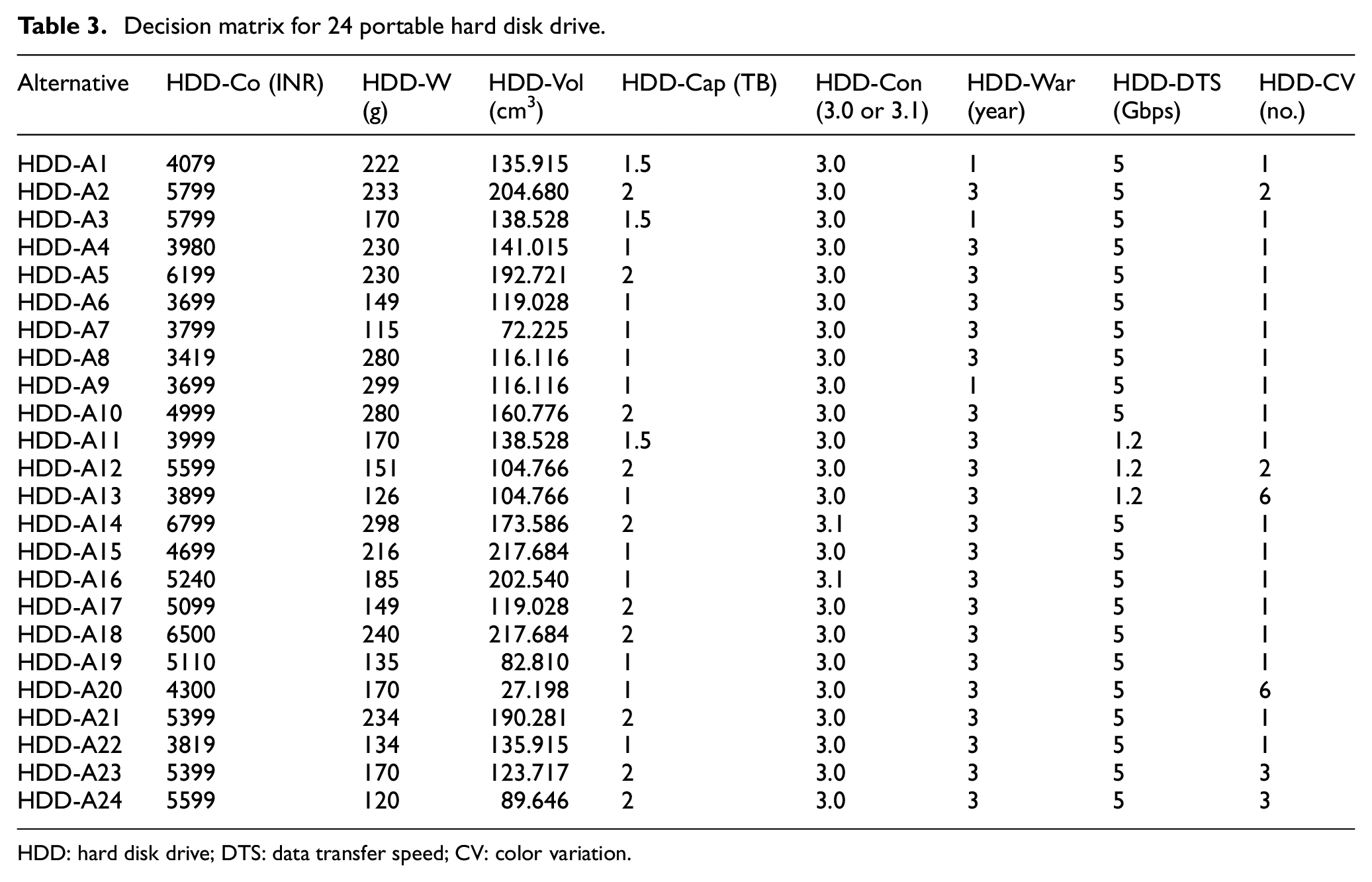
HDD: hard disk drive; DTS: data transfer speed; CV: color variation.
The attribute/criteria taken in picking the suitable HDD are having unlike entities and aspects (dimensions), so equation (2) is utilized for normalization of beneficial criteria and by equation (3) for non-beneficial criteria and the attained results (only four decimal places) are given away in Table 4. The HDD-Co, HDD-W and HDD-Vol are non-beneficial and the HDD-Cap, HDD-Con, HDD-War, HDD-DTS and HDD-CV are beneficial criteria. Equations (4) and (5) are utilized to calculate equal weights and objective weights of the attributes, respectively, in accordance with step 4: EWM and SDM techniques. The calculated weights with both the methods are shown in Table 5. Then, equation (6) is applied to attain matrix which is the multiplication of normalized matrix and corresponding weights and is presented in Table 6 for EWM and in Table 7 for objective weights (SDM).
Normalized decision matrix.
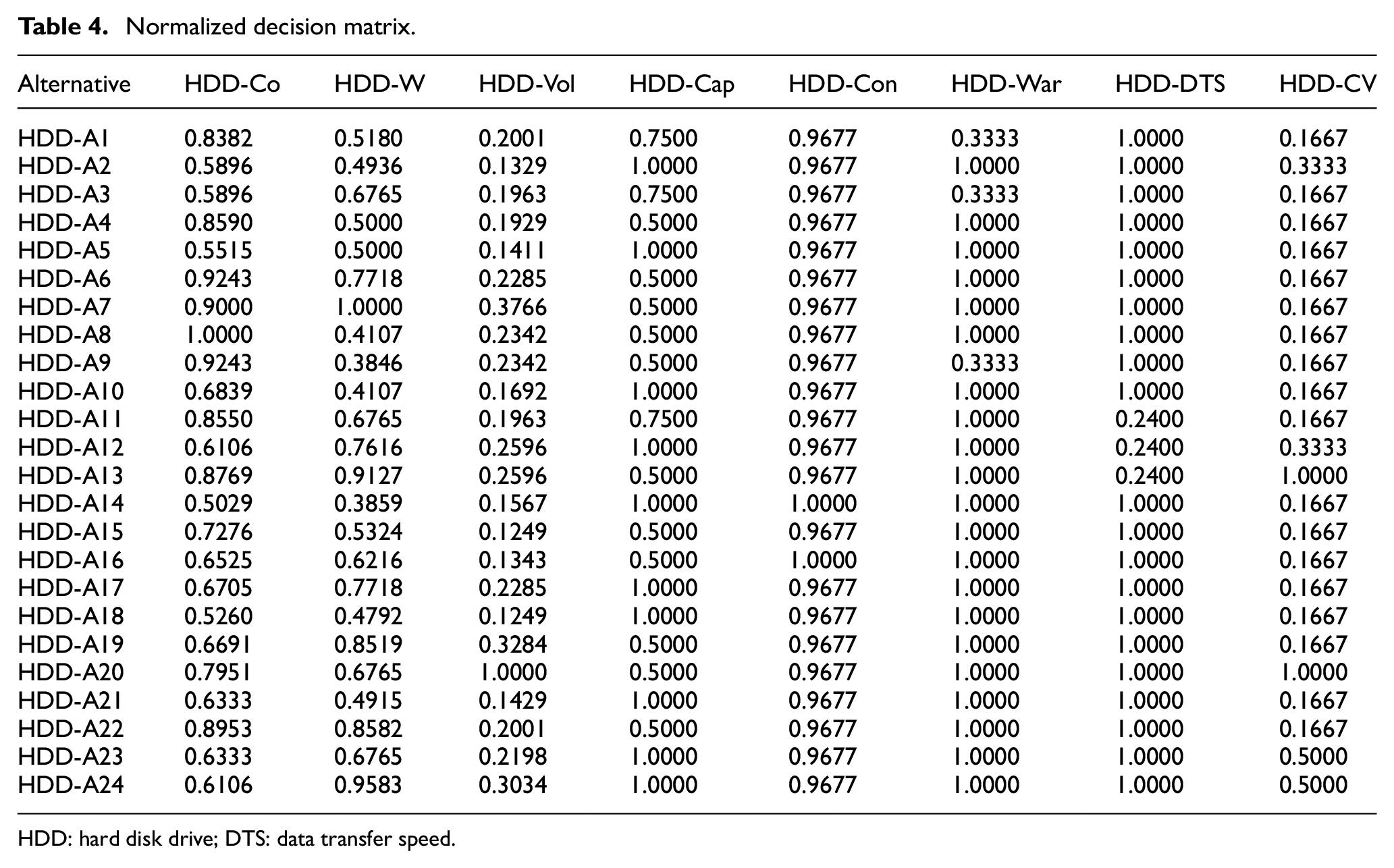
HDD: hard disk drive; DTS: data transfer speed.
Weights of importance.

HDD: hard disk drive; EWM: equal weights method; SDM: standard deviation method; DTS: data transfer speed; CV: color variation.
Weighted, normalized matrix (EWM).
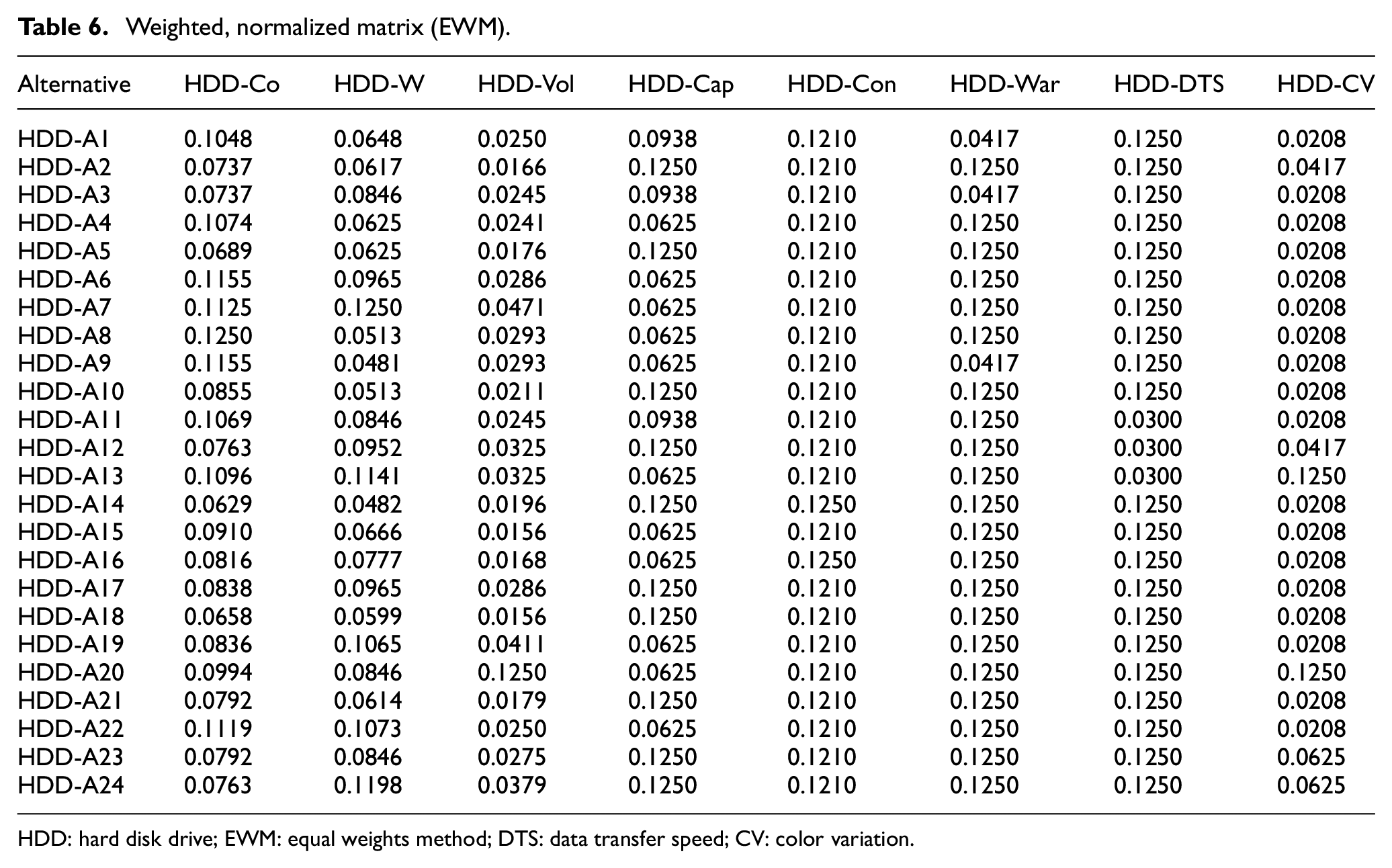
HDD: hard disk drive; EWM: equal weights method; DTS: data transfer speed; CV: color variation.
Weighted, normalized matrix (SDM).
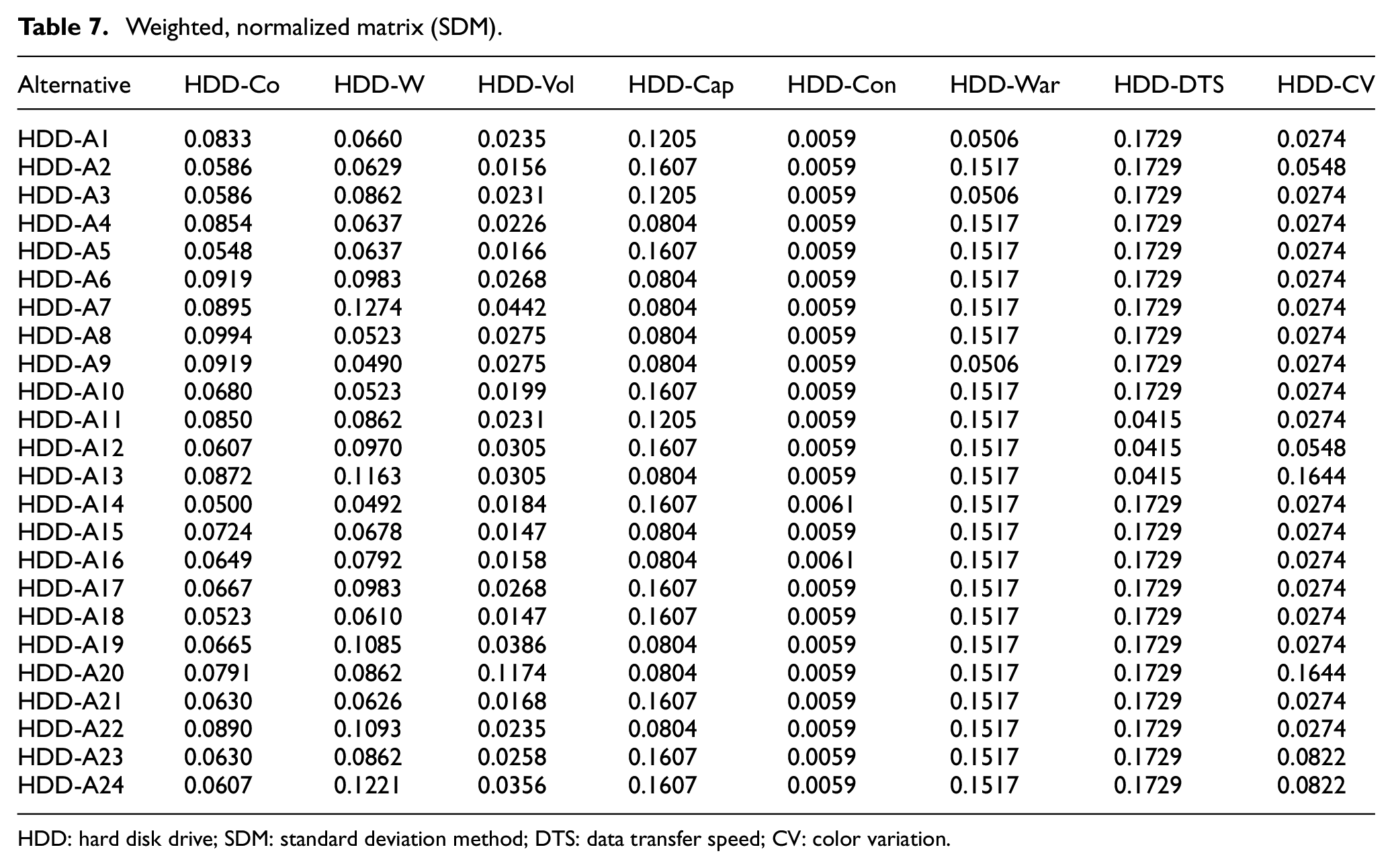
HDD: hard disk drive; SDM: standard deviation method; DTS: data transfer speed; CV: color variation.
Equation (7) is used to calculate performance value as per SAW method and equation (8) is as per WPM method, the dual optimal solution is obtained with equation (9) as per WASPAS, the optimal value of ƛ is obtained for every alternative with equation (10) and the attained results are given away in Table 8 for EWM and in Table 9 for objective weights SDM. The rank of each alternative (HDD-A1 to HDD-A24) is also shown in Tables 8 and 9. The HDD-A20 (WD My Passport 1 TB (WEHDD) is the top preference with EWM of performance index of 0.8594 at optimal ƛ value of 0.6407 (refer Table 8). The HDD-A20 has also been the top preference with objective weights (SDM) of performance index 0.8475 at optimal ƛ value of 0.6016 (refer Table 9).
Optimal ƛ and rank with EWM.
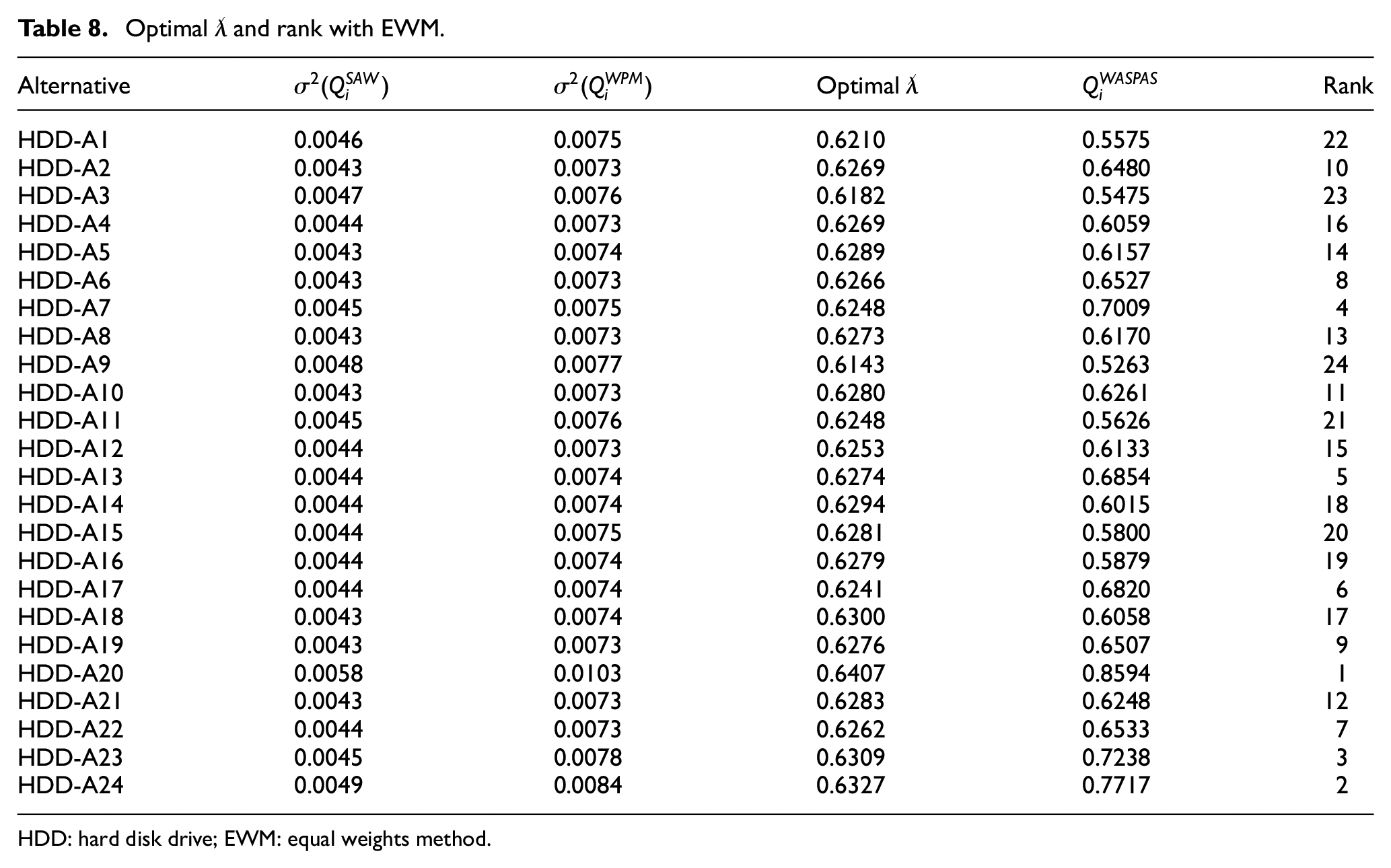
HDD: hard disk drive; EWM: equal weights method.
Optimal ƛ and rank with SDM.
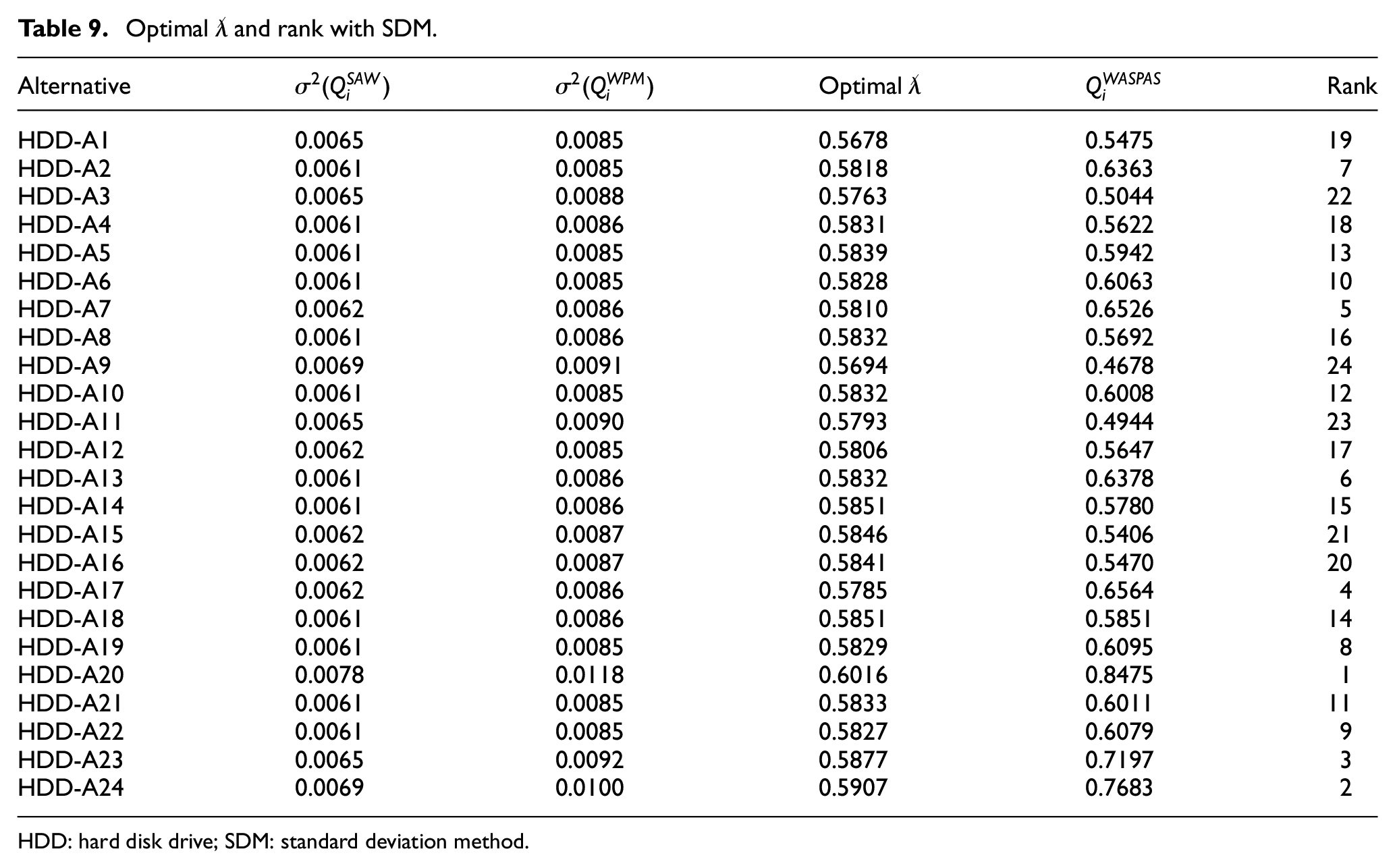
HDD: hard disk drive; SDM: standard deviation method.
Similarly, rank 2 goes to HDD-A24 with performance index
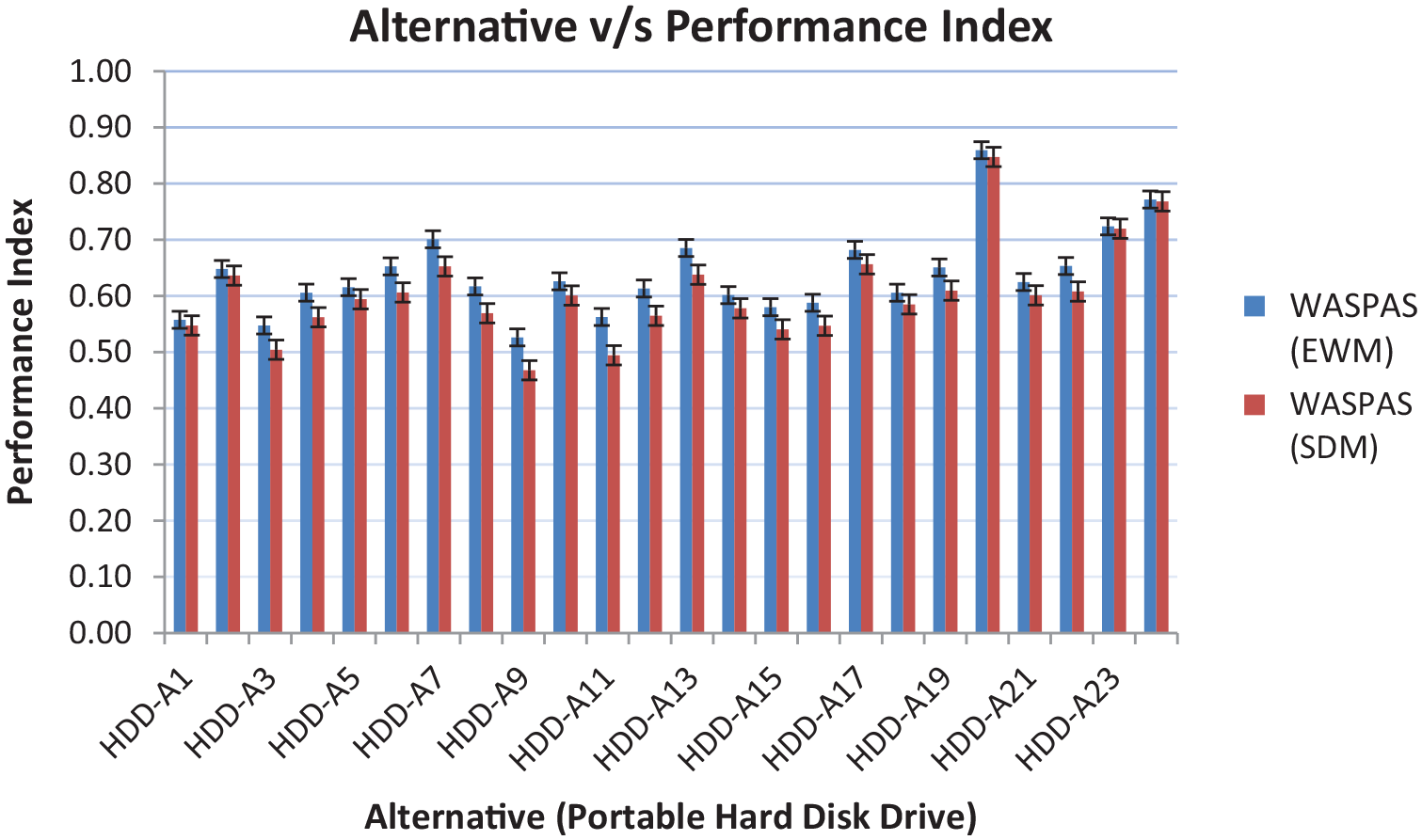
Plot for WASPAS performance index at optimal ƛ.
Sensitivity analysis
Sensitivity analysis is usually an approach utilized to check stability of results (ranks). In this study, it is achieved by varying the coefficient ƛ from 0 to 1 and ranks are also verified with SAW and WPM methods with equal and objective weights. The value of ƛ is varied from 0 to 1 and the attained results are given away in Table 10 for EWM and in Table 11 for objective weights SDM.
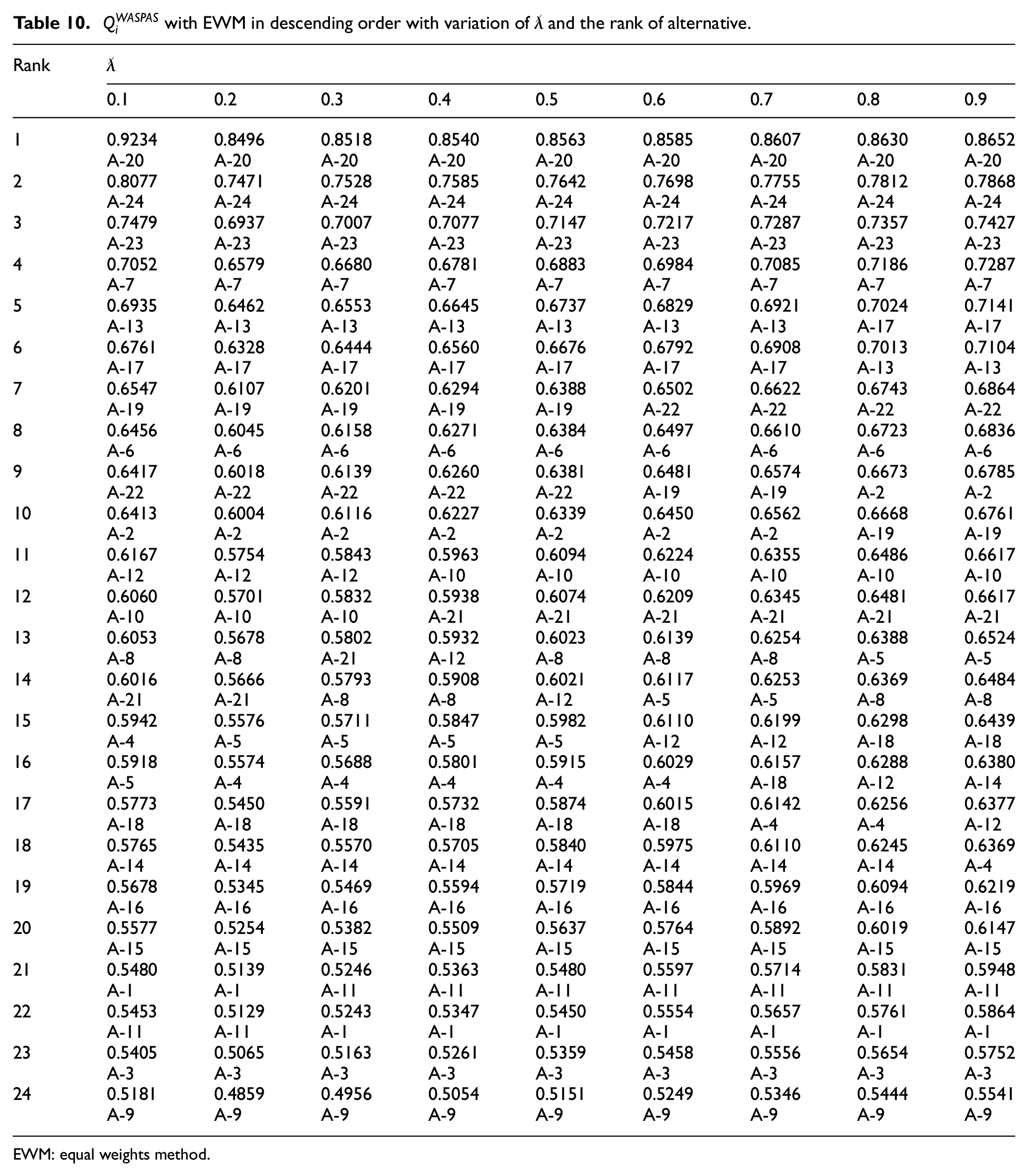
EWM: equal weights method.
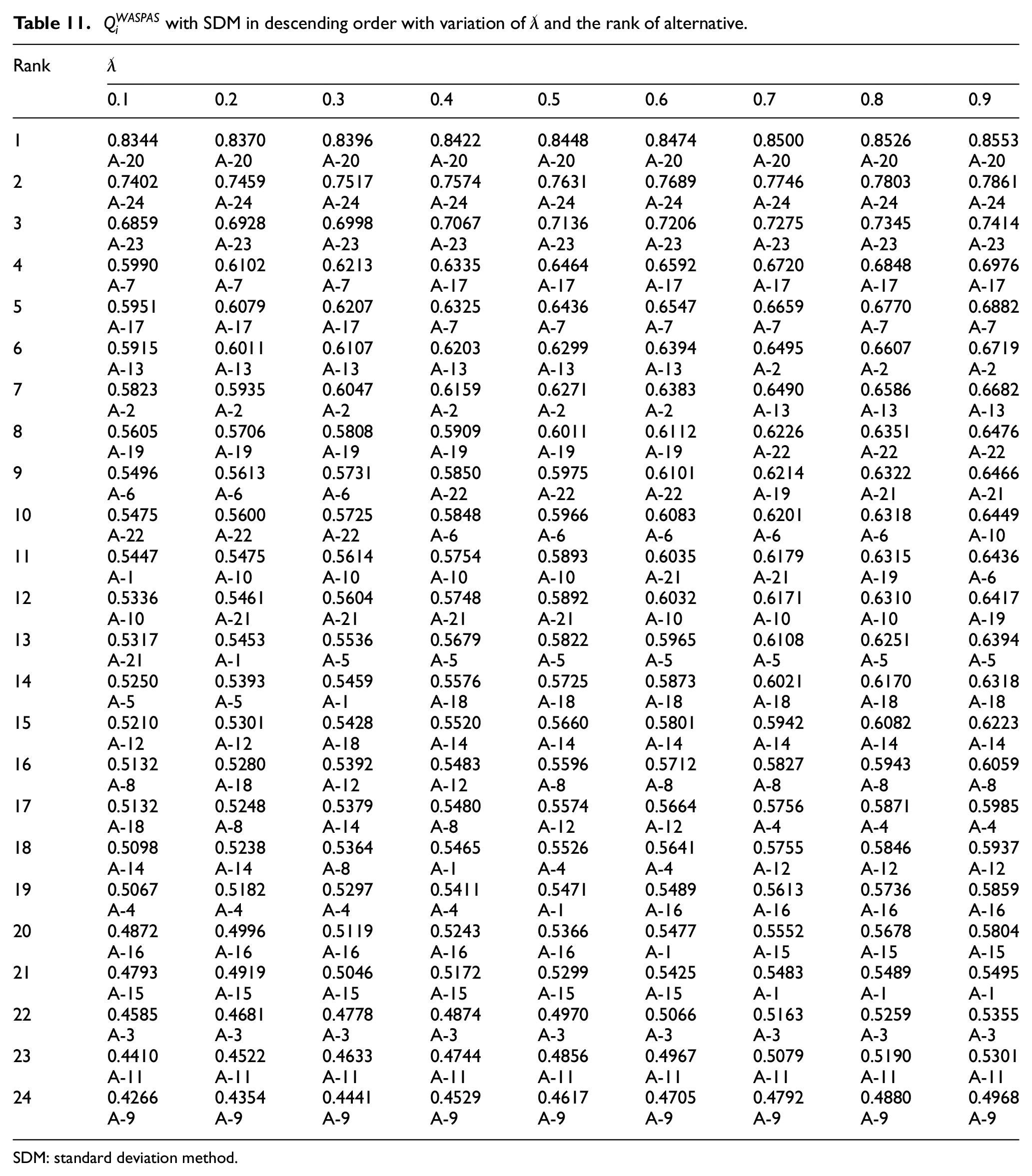
SDM: standard deviation method.
The results in Table 10 with equal weights clearly indicate that the change in ƛ does not affect the HDD ranks, the first four ranks go to HDD-A20, HDD-A24, HDD-A23 and HDD-A7, respectively, and these ranks do not change with variation in ƛ from 0.1 to 0.9. The rank slightly alters after fifth rank onward, but these changes are minor. Table 10 also indicates that with increases in ƛ value, the performance index values also increase from ƛ 0.2 to 0.9.
The results in Table 11 with objective weights also clearly indicate that the change in ƛ does not affect the HDD ranks, the first four ranks go to HDD-A20, HDD-A24, HDD-A23 and HDD-A7, respectively, and these ranks do not change with variation in ƛ from 0.1 to 0.9. The rank slightly alters after fifth rank onward, but these changes are minor. Table 11 also indicates that with increases in ƛ value, the performance index values also increase from ƛ 0.1 to 0.9.
The ranks are also verified with SAW and WPM methods with equal EWM and objective weights SDM. When value assigned to ƛ is equal to zero, then equation (9) becomes equivalent to equation (8), that is, performance index as per WPM method and when the value assigned to ƛ is equal to one, then equation (9) becomes equivalent to equation (7), that is, performance index as per SAW method. The ranks attained by SAW and WPM methods with equal EWM and objective weights SDM are shown graphically in Figure 2. The ranking results are almost similar as obtained by the WASPAS method with optimal ƛ values for each HDD alternative.
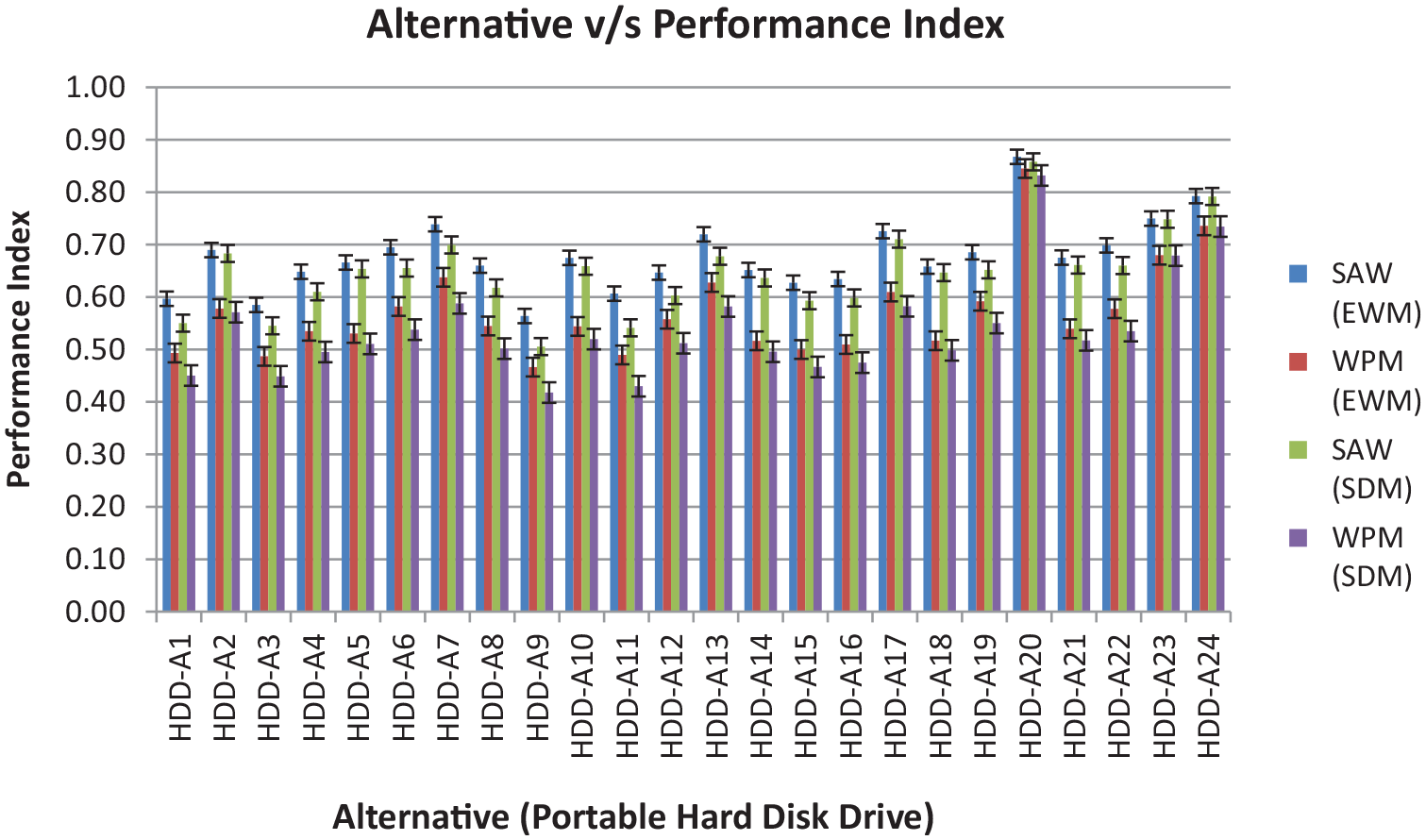
Plot for performance index with SAW and WPM.
As a result, the applied methodology based upon the WASPAS method can be used to pick the best alternative of HDD even when the first choice is not available other next best alternatives can be picked. The choice of weights of importance can also be supportive to settle on the final decision. This methodology to pick the most excellent option of the HDD is extremely usual and sound; it can be effortlessly applied to select other varieties of HDDs and gadgets or industrial purposes such as picking of industrial robots and materials in different applications and so on. In this work, equal and objective weights are considered; further subjective methods can be considered to assign weights of importance to the attributes, such as the analytical hierarchy process can be applied which considers a pairwise comparison of attributes. Moreover, the attributes of HDD such as number of USB ports, universal flash storage version UFS 3.0 and wireless HDD can be considered for an extension of this work.
Conclusion
The aim of this case study is to recognize the most appropriate portable HDD alternative available in Indian market while considering diverse decision criteria as well as equal and objective preferences into account. The data of 24 alternatives of five different brands of HDD were collected within the constraints and eight most significant attributes were considered. The WASPAS method was used for decision-making due to its mathematical ease and ability to offer more precise outcomes as compared to other methods. The significance of criteria in terms of weights is calculated with equal and objective preference with EWM and SDM, respectively, whereas avoiding subjective judgment in this case. For each HDD alternative, the ƛ is varied and optimal ƛ is calculated for final ranking.
The results reveal that the HDD-A20 of WD My Passport 1 TB (WEHDD) comes out to be the first choice both with equal and objective weights. The HDD-A20 has 1 TB of capacity, cost of INR 4300, weight 170 g, volume of 27.198 cm3 with dimensions of 78.2 × 37 × 9.4, connectivity of USB 3.0, data transfer rate of 5 Gbps and warranty of 3 years and available in six different colors. The HDD-A24 WDBYVG0020BBK-WESN WD My Passport 2 TB (WEHDD) is the second preference, after by HDD-A23 WDBS4B0020BBK-WESN My Passport 2 TB (WEHDD). The sensitivity analysis also shows that the ranks achieved with WASPAS method are stable.
The methodology applied based upon the WASPAS method to select the best portable HDD is very logical and has higher computational simplicity. This approach of MCDM is very favorable for user/vendor/merchant or even for website designer/comparing sites those are contrasting dissimilar products and items for sales purpose and it is also capable of solving engineering problems. The manufacturers of different gadgets can take advantage of this methodology for better productivity as the best selected item or product has direct link with the performance of mechanical/electrical parts connected with it. Furthermore, a fuzzy approach might be ascertained to take decisions when the data are imperfect and subjective weights preference can be considered for further analysis.
Footnotes
Declaration of conflicting interests
The author(s) declared no potential conflicts of interest with respect to the research, authorship and/or publication of this article.
Funding
The author(s) received no financial support for the research, authorship and/or publication of this article.
