




Abstract
Increasing the inlet air temperature causes a reduction in the air mass flow rate, and the efficiency and output power of a gas power plant will reduced. To compensate this power and efficiency decrease, different cooling systems can be applied to the inlet air flow. This paper introduces and analyzes different gas turbine cooling systems and studies their effect on the efficiency of Zanbagh power plant’s G11 gas unit by extracting the governing equations regarding the characteristic curve and coding in the MATLAB software. In average, the simulation results show that reduction of 1 °C of inlet air temperature between 14 °C and 50 °C causes an efficiency and power output increase by 0.085% and 0.16 MW, respectively. The maximum cycle efficiency increase applied to cool the inlet air is around 2.7%, which can be achieved using the wet compression method. In addition, this method can reduce fuel consumption by 5% in comparison to a normal cycle.
Introduction
A great demand in electricity due to high consumption of cooling systems during summer is an important challenge for electricity suppliers. In Iran, the total generated electrical power is about 69,000 MW, whereas 58,000 MW of this amount is generated by gas power plants or in a gas section of combined cycle power plants.1,2 Although gas turbines have many advantages, such as easy installation, ease of changing load in a short time and high power-to-weight ratio, their low efficiency (around 30%) is their major disadvantage, which is due to high heat losses and radiation heat losses from exhaust and combustion chambers, respectively.3,4
Improvements in gas turbine cycle can be achieved by applying advanced cycles or off-design analysis methods to minimize deviations from the predefined design conditions. 2 Since gas turbines directly intake fresh air, every factor that changes the surrounding air conditions can change the performance of the gas turbine. One of these factors is the inlet air temperature of the compressor. It should be notified that the gas turbines are considered as constant-volume machines, where in a constant rotational speed, a constant mass flow will pass through them. An increase in inlet air temperature (ambient temperature) causes a decrease in its density. High inlet air temperature can lead to increased power consumption by the compressor, as well as a decrease in turbine-generated power and a 6%–9% decrease in the net output power for an increase in each Celsius degree. 5
Both direct-contact (like evaporation method) and indirect-contact cooling methods (like cooling by compression or absorption chillers) have been studied in many previous studies.6–8 The evaporative cooling includes spraying pressurized water (fog), wet media and spraying of water through the compressor (wet compression) or a combination of these methods. In a fog system, spraying water through high-pressure nozzels forms small water particles, which due to evaporation cools the air. In this method, if large water particles are sprayed, evaporation will not occur completely, causing some of these particles to enter the compressor. In the fog system, demineralized water will be converted to fog-like particles by spraying through high-pressure nozzles (7–21 MPa). The demineralized water used in the fog system is completely (or almost) free of dissolved minerals as a result of membrane filtration (reverse osmosis or nanofiltration). The amount of dissolved solids in this water is less than 10 mg/L. The electrical conductivity is generally less than 2 mS/cm (micro Siemens per centimeter) or maybe even lower (<0.1 mS/cm). 9
These particles cool the air at the inlet of the gas turbine by evaporation, as mentioned before. In this method, 100% relative humidity can be achieved at the gas turbine inlet. 10 In the wet media method, air passes through wet baffles and will be cooled by the evaporation of water on these baffles. The quality of cooling water in this method is lower than the fog system. But in this method, maximum evaporation cannot be achieved, and usually, evaporation efficiency is around 90%. The fog system has been discussed since 1950, and Wilcox and Trout 11 have suggested that injecting water into compressor’s intake air causes a decrease in the compressor’s outlet air temperature and reduces its power consumption. The aim of wet compression approach is to achieve isothermal compression, instead of the adiabatic process, by spraying water into a compressor. The gained efficiency and increased turbine output power compensate the cost of spraying water. The increase in cycle’s net output power, a decrease in compressor’s power consumption and a reduction in NOX output are some of the benefits of applying the wet compression method. The effectiveness of this method highly depends on ambient temperature and relative humidity. Whenever the ambient temperature increases and the relative humidity decreases, the evaporative cooling efficiency will also increase.5,9,12
Bagnoli and Bianchi, 13 using the developed model, analyzed the effect of water injection into the compressor on a 7EA gas turbine and found that gas turbines, compared to standard conditions, lose up to 15% of its output power due to temperature increase. Evaporative cooling systems have many advantages such as low capital and operational cost and an average maintenance cost than other cooling methods and a lower NOX pollution in the exhaust gases. The disadvantages of these evaporative systems are low performance efficiency and high water consumption. In addition, if the sprayed water does not evaporate before entering the compressor, it will harm the compressor blades. Therefore, if we replace the fog system with wet compression, the risk of damaging the compressor blades will be reduced. 14 In a refrigeration cooling system (indirect-contact cooler), cooling is carried out by passing air over the cooling water coils. The chilled water flows through cooling coils, and by passing over these coils, the air will loss a large amount of heat. Chillers that are used in this method can be compression or absorption types. 15 In addition, chillers can be used for producing cold water at non-peak hours to be used for cooling the air during peak temperature hours to compensate for efficiency losses.
Shirazi et al. 16 have used the ice bank storage methods for cooling the gas turbine’s inlet air in Saudi Arabia. One of the advantages of the refrigeration cooling system is the ability to cool air lower than its wet-bulb temperature, neglecting the surrounding air humidity. To avoid air from partially freezing at the compressor’s inlet, the air will not be cooled lower than 4 °C. In humid regions, these systems are preferred more than the evaporative cooling systems. 17
Although using compression cooling systems gives more net generative power, it can lead to a decrease in overall thermal efficiency. 15 The results of Yang et al.’s 18 research work on analyzing the economic potentials in Saudi Arabia for using cooling systems in combined cycle units shows that the fog system’s efficiency is considerably higher than the chiller cooling systems, that is, efficiency in temperature range of 15 °C–20 °C. In addition, it also has a lower capital cost.
Farzaneh-Gord and Deymi-Dashtebayaz 19 and also Zaki et al. 20 have suggested applying reverse Brighton cycle for cooling the inlet air to improve the efficiency of the gas turbines. Based on the results of a recent research, 20 the decrease in inlet air temperature, even lower than standard temperature, can lead to an increase in the output power around 20% (as its advantage) and a 6% decrease in thermal efficiency (as its disadvantage). Jassim et al. 21 performed an exergy analysis on their gas turbine system and found that irreversibilities can cause a decrease in efficiency of around 14.66%. However, Erickson et al. 22 and Erickson 23 have proposed a combined system including wet compression and absorption cooling systems that work by absorbing heat from exhaust gases.
In 2003, Ameri and Hejazi 24 carried out research on the performance of an Alstom F5 gas turbine, which is located in Chabahar. To reduce inlet air temperature of the gas turbine, an absorption cooling system is used, in which a heat-recovery steam generator is used to feed the chilling system. The results showed that using a lithium bromide absorption chiller system can increase the output power of the Chabahar gas turbine by about 11.3%.
Some other studies have addressed the economic evaluation of the cooling systems. In this field, Gareta et al. 25 have developed an algorithm for computing the increase in annual production of a combined cycle unit and have also analyzed some inlet air–cooling technologies economically. Chaker et al. 14 have analyzed the economic potential for using evaporative cooling systems for US gas units. In the mentioned research, a detailed climatic analysis is made at 106 major locations all over the world to provide the hours that a required cooling can be obtained by direct evaporative cooling. These data will allow the gas turbine operators to easily make an assessment of the economics of evaporative fogging.
Andrazian 26 has a calculative challenge with off-design performance modeling of gas turbine cycles, considering exergy costs and CO2 reduction. However, using advanced cycles are not investigated in this paper. The effect of inlet air cooling on the performance of a gas turbine or the economic analysis of these systems has been investigated in different studies. Since the performance of different methods depends on climatic conditions and the structure of each gas unit, the effects of different cooling systems on the G11 gas unit (GE-F5) for Yazd’s Zanbagh power plant has been investigated in this paper. Even though Khodsiani et al. 27 have studied the off-design gas unit’s behavior, the main objective of this paper is to analyze the effect of different cooling systems on a gas turbine’s behavior by applying a non-classic off-design method.
Under investigation GE-F5 gas unit specification
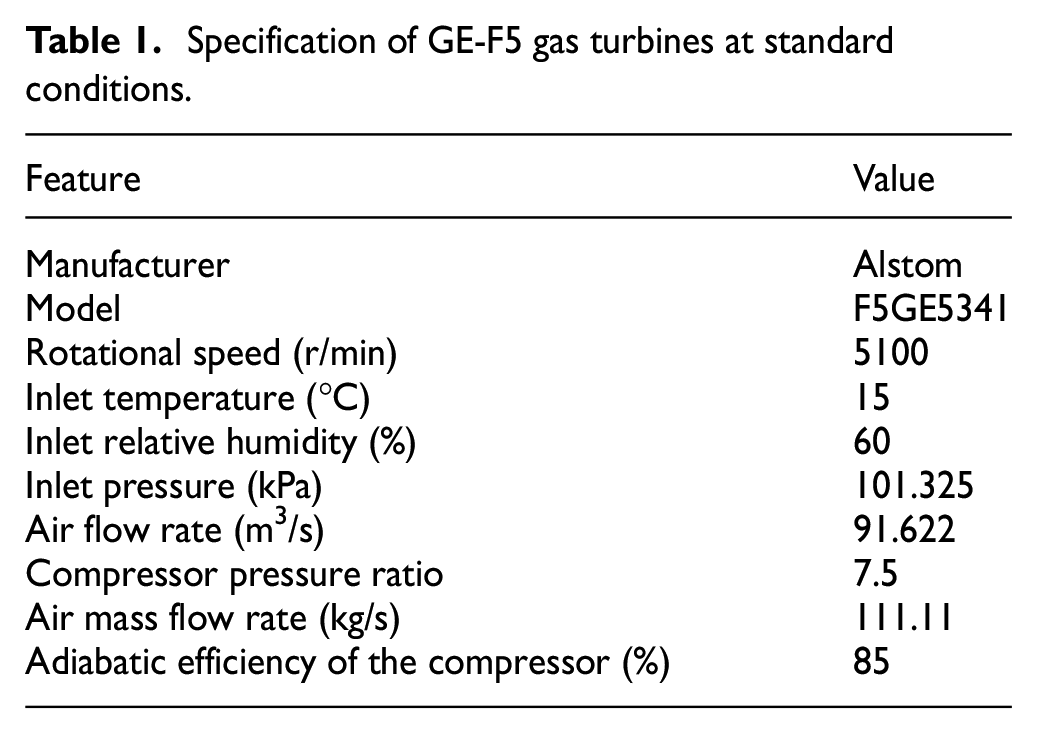
The case study unit is an Alstom GE-F5 with a nominal capacity of 25 MW, which is a single-shaft and hot-end drive and has been operating for 30 years, but some parts and subsystems (such as, fuel system) were changed in 2009. The current operational capacity of this unit is only about 19 MW because of depreciation, erosion of compressor blades and fouling on blades. This unit, along with other three similar units of Zanbagh power plant, is located in the entrance of Yazd city, at 31.9318° of north latitude and 54.3184° of east longitude. The units’ specifications and characteristics in the standard condition are given in Table 1.
Specification of GE-F5 gas turbines at standard conditions.
The Zanbagh power plant is used in order to extract compressor and turbine characteristic curves. Figures 4–7 are related to Zanbagh GE-F5 gas unit. Also for the validation of the code, a data measurement was done at the site of that power plant. And by mean of these data, the validation was performed.
The innovation of this research contains analyzing the effect of applying different cooling systems, under an off-design analysis of GE-F5 gas unit, which is validated based on real-time data that are collected from measurements.
Governing equations
Working principle of the gas turbines is thermodynamically based on Brayton cycle, in which the air is compressed adiabatically, combustion occurs at constant pressure, and the expansion and compressing the air in the turbine are also done adiabatically and finally, the air reaches its initial pressure. The thermal efficiency of an ideal gas turbine cycle is calculated using the following formula
As it is observed, by increasing the isentropic pressure ratio, the cycle’s efficiency will be increased.
Adiabatic efficiency should be corrected to isentropic efficiency. The examination of compressors is based on the design information and the calculation of compressor efficiency according to a constant temperature and isentropic methods. Since the compressor is a turbomachine, its performance can be considered as an adiabatic process. The ideal state of the compressor performance is isentropic. Therefore, to evaluate the compressor performance relative to ideal conditions (isentropic), the isentropic efficiency of the compressor is defined as follows

where Ws and Wa, respectively, represent the axial load required by the compressor under isentropic conditions and real conditions

On the contrary, in the case of turbomachines, where the heat transfer of a fluid with the environment, compared to the work carried out on the fluid, is negligible, Ws and Wa can be considered equal to Hs and Ha, which is equivalent to changing the enthalpy of the fluid in isentropic and real conditions.
Higher isentropic pressure ratio, or in other words, increasing P2, leads to an increasing T3 or the maximum temperature of the cycle and also a higher efficiency. The main difference between the real and ideal cycle of the gas turbine is due to non-isentropic compression in the compressor, non-isentropic expansion in the turbine, and also the pressure drops in flow passages and combustion chambers (for open cycles and also heat exchanger (for closed cycles); Figure 1). 5
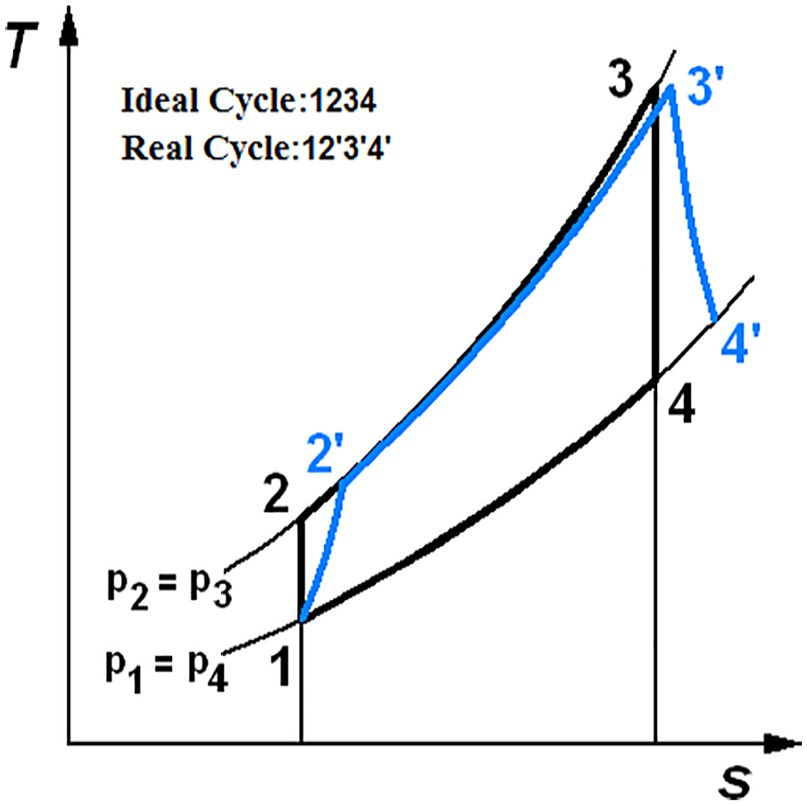
Ideal and real Brayton cycle.
In this research paper, the off-design analysis is applied for analyzing the gas turbine cycle, where the description of this method will be discussed as follows. All the governing equations are mentioned and described in section “ Coding the governing equations based on off-design analysis algorithm.”
Off-design analysis
Algorithm
For the purpose of prediction regarding gas turbines behavior at off-design conditions, an algorithm is used, which will be described in the following sections. It should be mentioned that classic off-design analysis of gas turbine behavior has been done in some papers; however, in this paper, a new method is applied for off-design analysis, in which three different parameters of the gas turbine are considered together, whereas one parameter has been investigated in other papers. As an assumption and in order to simplify the equations and convergence of solution values, three terms namely the pressure drops at the inlet and exhaust and compressor and turbine air bleeding are ignored. Also as another assumption, gas properties, specific heat
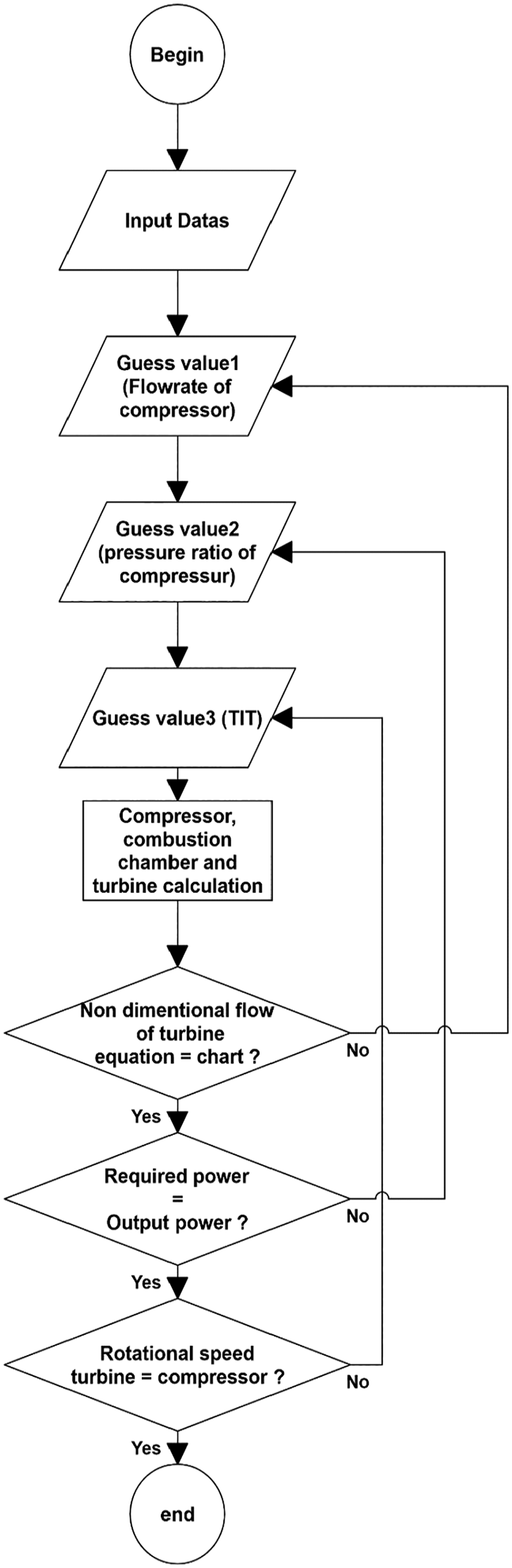
Code algorithm.
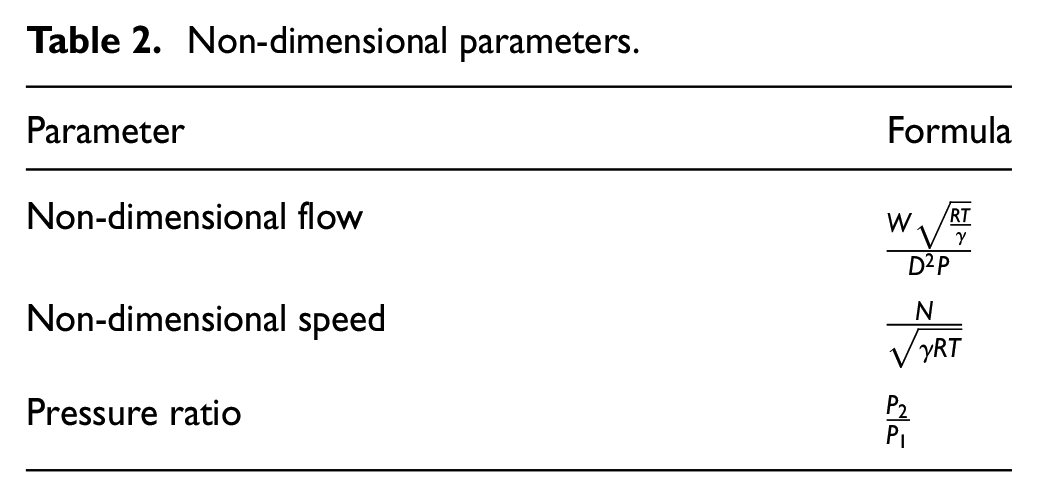
Non-dimensional parameters.
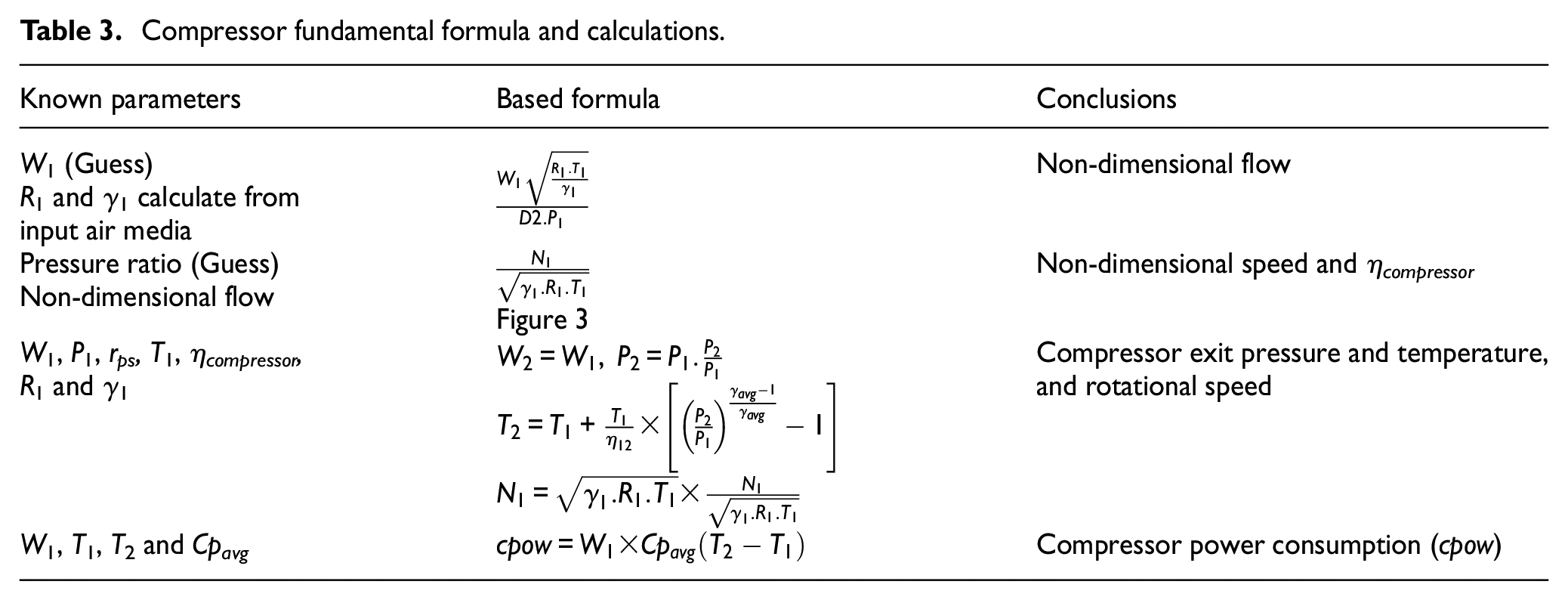
Compressor fundamental formula and calculations.
Combustion chamber fundamental formula and calculations.
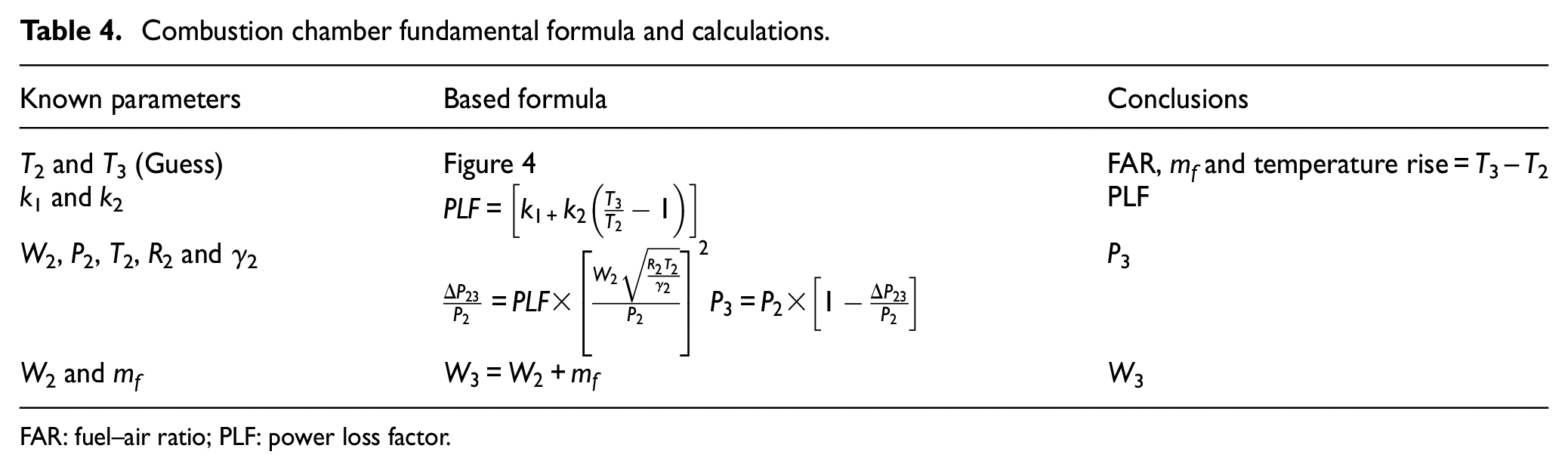
FAR: fuel–air ratio; PLF: power loss factor.
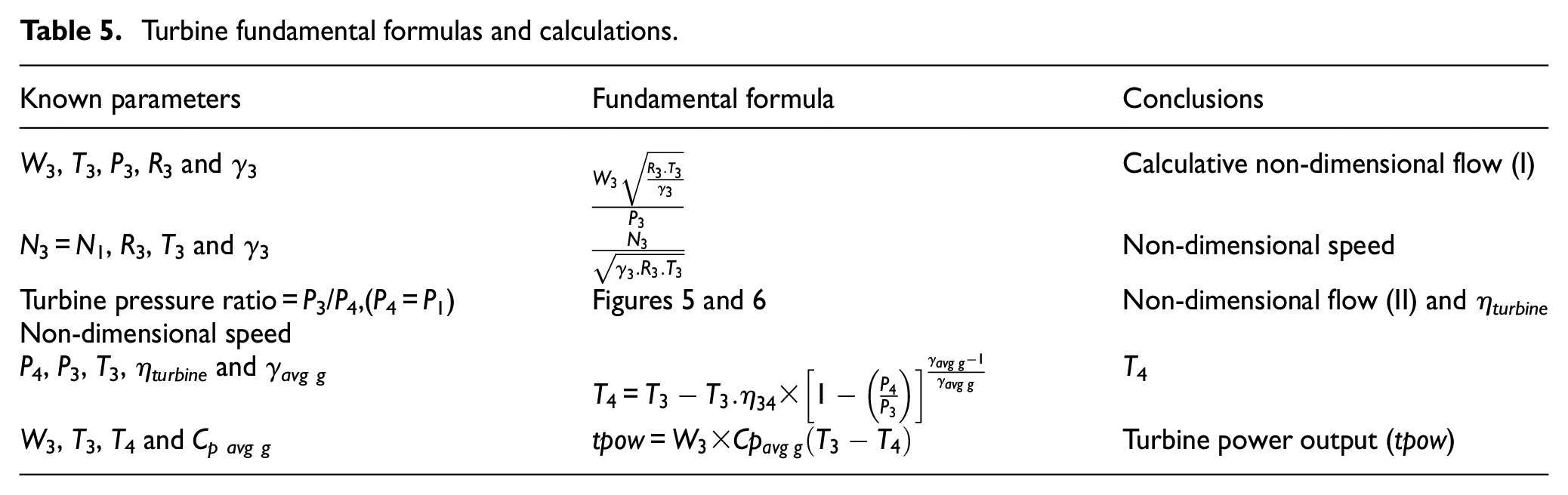
Turbine fundamental formulas and calculations.
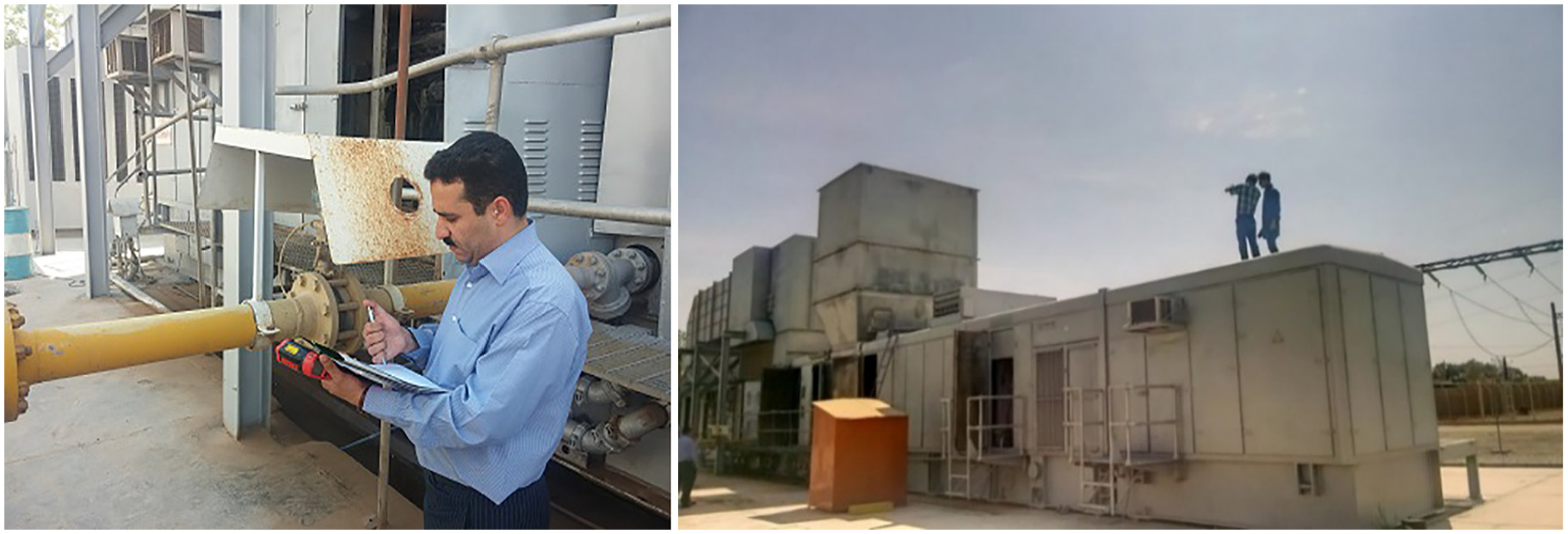
Images from the measurement process on the site.
In this algorithm, compositions of fuel and air and their specifications and also the required output power of the cycle are considered as input data. In addition, the compressor inlet flow rate, its pressure ratio, and the value of TIT have been guessed in iteration loops until it is finally corrected. According to the facts that some of the values are a guess in the calculations, the convergence of equations is important, although some nested loop was considered of for corrections in the coding.
The extraction of compressor characteristics curves
Regarding the age of the unit (30 years old) and inaccessibility to the characteristic curve of the turbines and compressor behavior, similar unit’s curves of other power plant were chosen and then using the real operation data, the non-dimensional curves were corrected. Then, using the digitizer and Im2graph software and choosing several points on the curves, coordinates of the points were transferred to an Excel data sheet and the equations of accurate regression curves were extracted. Extracted coordinates of compressor map, combustion temperature behavior diagram, turbine non-dimensional diagram and turbine isentropic efficiency diagram by Im2graph software are shown in Figure 4 –7, respectively.
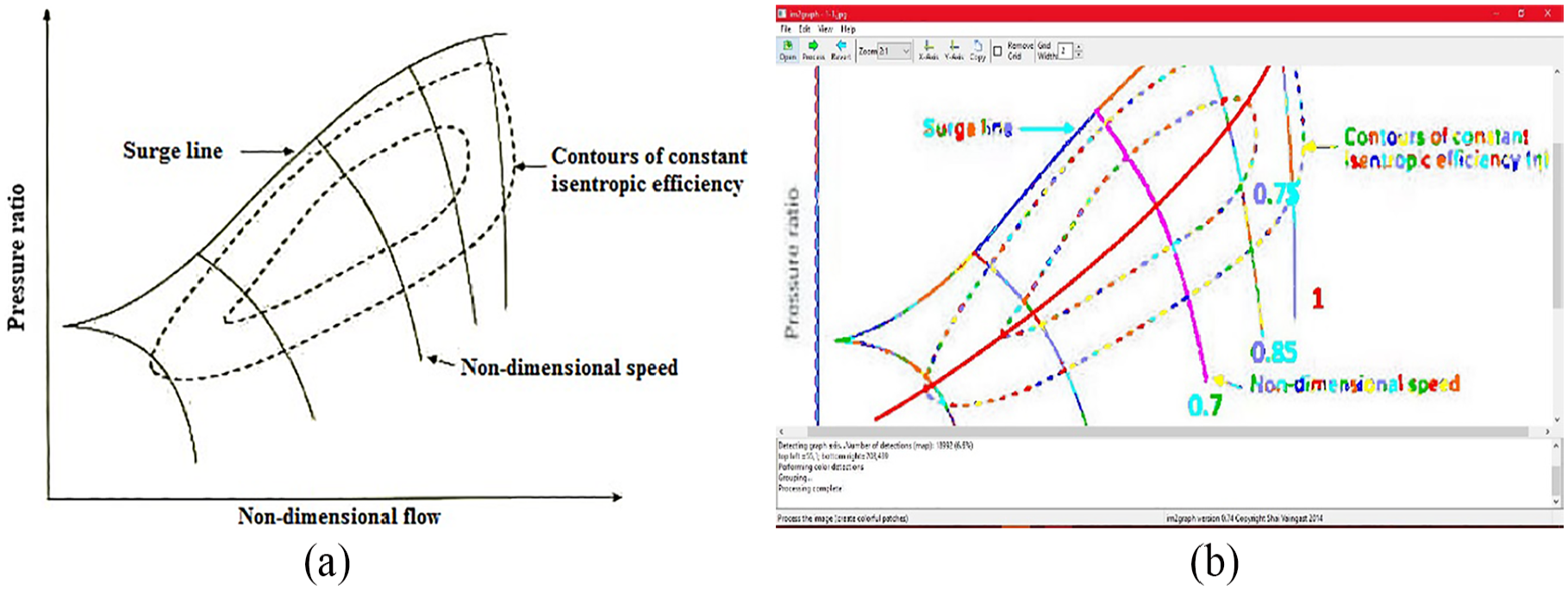
(a) Compressor map 28 (partly associated) and (b) the curve and equations extracted based on unit behavior using the Im2graph software.
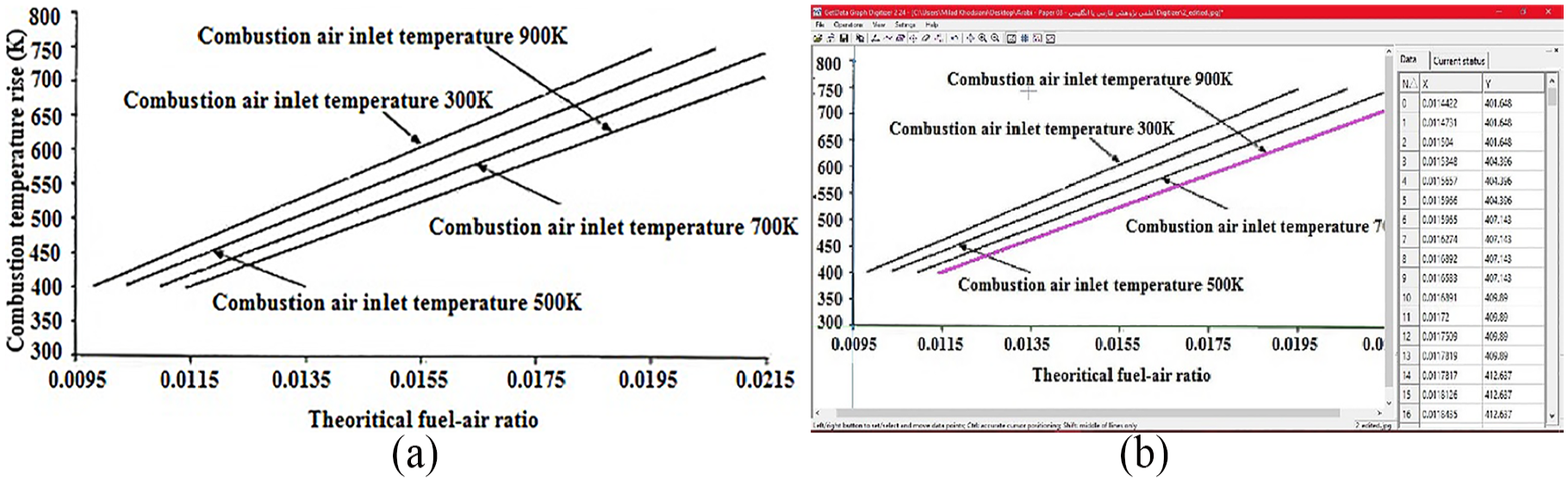
(a) Combustion temperature behavior diagram 28 (partly associated) and (b) equations extracted using the Digitizer software.
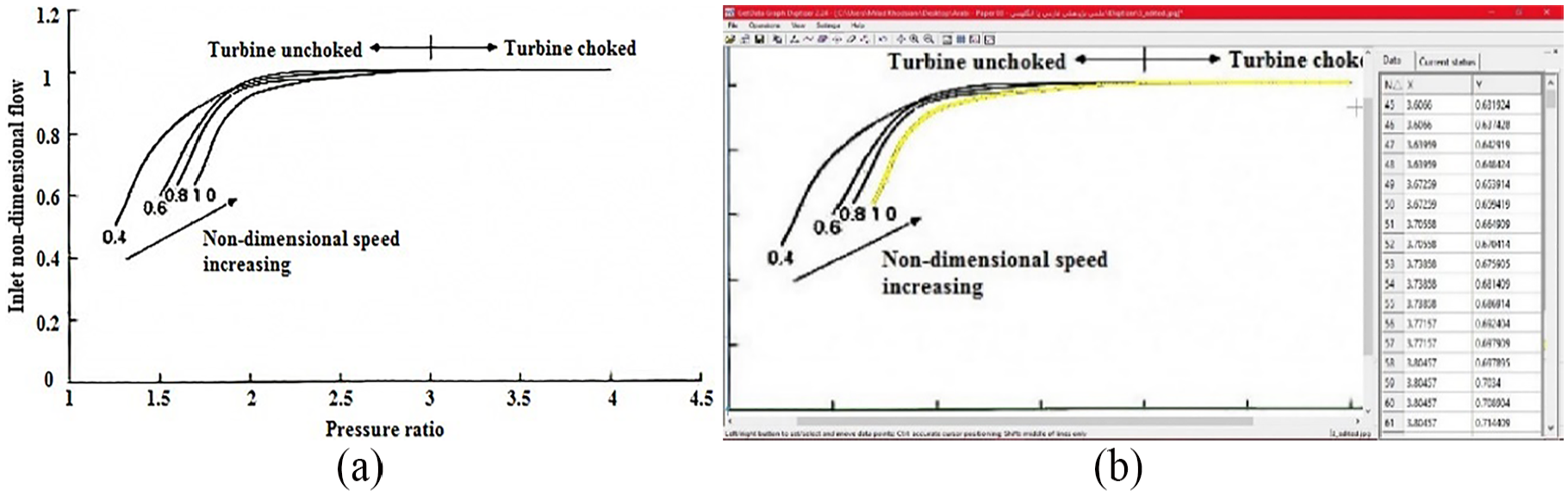
(a) Turbine non-dimensional flow diagram 28 (partly associated) and (b) the curve and equations extracted using the Digitizer software.
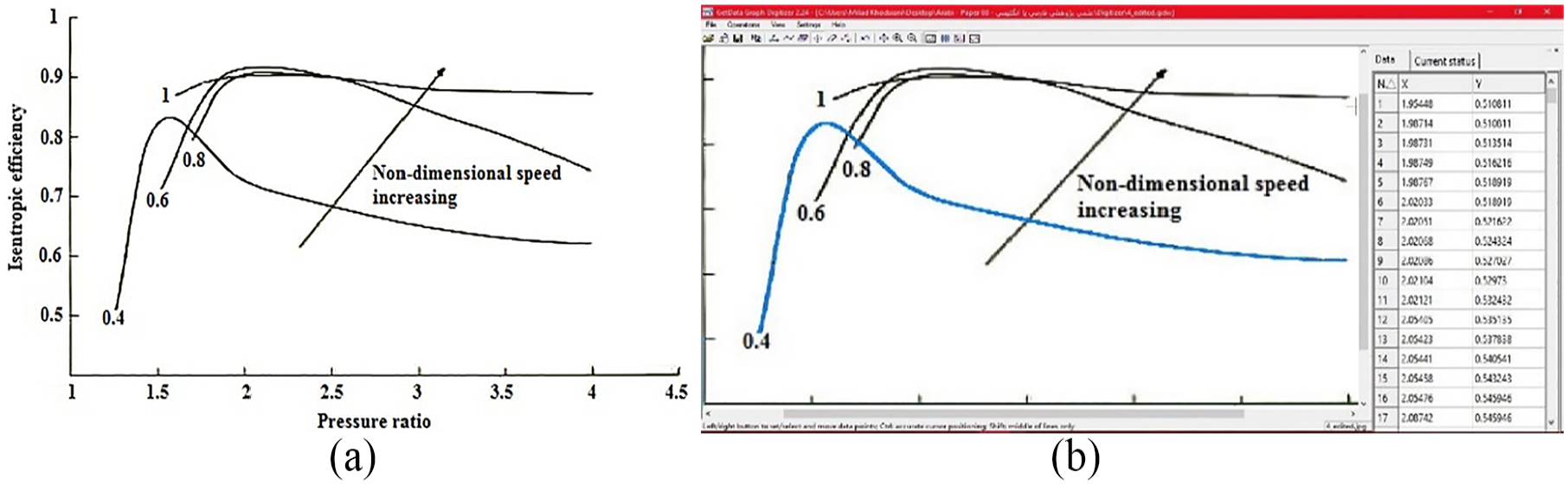
(a) Turbine isentropic efficiency diagram 28 (partly associated) and (b) the curve and equations extracted using the Digitizer software.
Coding the governing equations based on off-design analysis algorithm
Based on the extracted equations in section “The extraction of compressor characteristics curves,” a super code model in MATLAB software for off-design analysis of the GE-F5 was developed. This numeric code was written to analyze the sensitivity of the parameters that affect GE-F5 behaviors and output characteristics. The equations and fundamental formulas used in the off-design analysis are shown in Table 3, 4 and 5.
Verification of the model
In order to verify and ensure the modeling by transferring of calibrated measuring equipment to the site, some parameters of the operating unit in several positions accurately measured and compared with the values obtained from the model.
Table 6 shows the comparison of some measured values in the site with values obtained from the model at different hours of a day. Exhaust temperature, compressor discharge temperature and fuel consumption of the unit was considered for validation.
Comparison of some measured values with values obtained from the model.
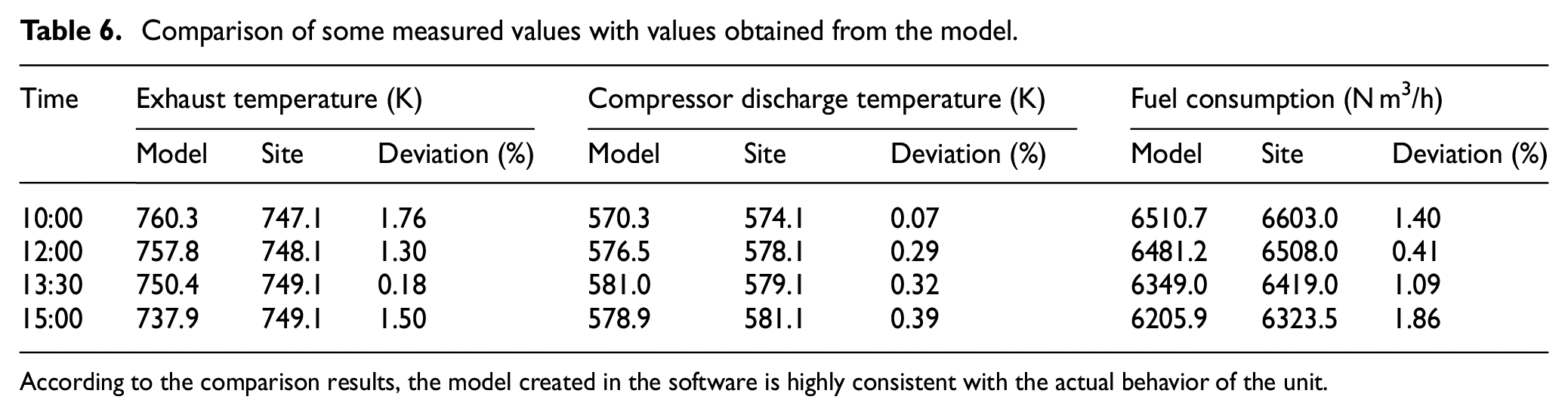
According to the comparison results, the model created in the software is highly consistent with the actual behavior of the unit.
Implementation of various cooling systems over the new proposed model
In a conceptual study, in order to analyze the effects of each compressor’s inlet air–cooling method at any surrounding conditions, considering temperature and humidity and the altitude of the units’ location, the behavior of each cooling system was determined and investigated on psychometric charts.
In the wet media method, the air condition changes on the psychometric chart on a constant wet-bulb temperature line that starts from the initial condition and ends at the relative humidity of 90% by absorbing the existing humidity from the wet baffles.
The fog method is applied in two different ways: underspray fogging and overspray fogging. The first acts almost the same as wet media method, with a difference that output air’s relative humidity in fog system is 100%, and it is assumed that sprayed water particles are completely evaporated before entering the compressor.
In the latter method, due to the high amount of the spraying, some water particles may enter the compressor.
In the chiller cooling system, the air properties changes from initial dry-bulb temperature on a constant humidity ratio line to 100% relative humidity on the psychometric chart and then temperature reduction continues on the saturation line to a temperature of 7 °C, which is defined as a lower temperature limit for the gas turbines. To prevent frost formation while the air temperature declines on the saturation line, some of the moisture in the air will condense.
Code results
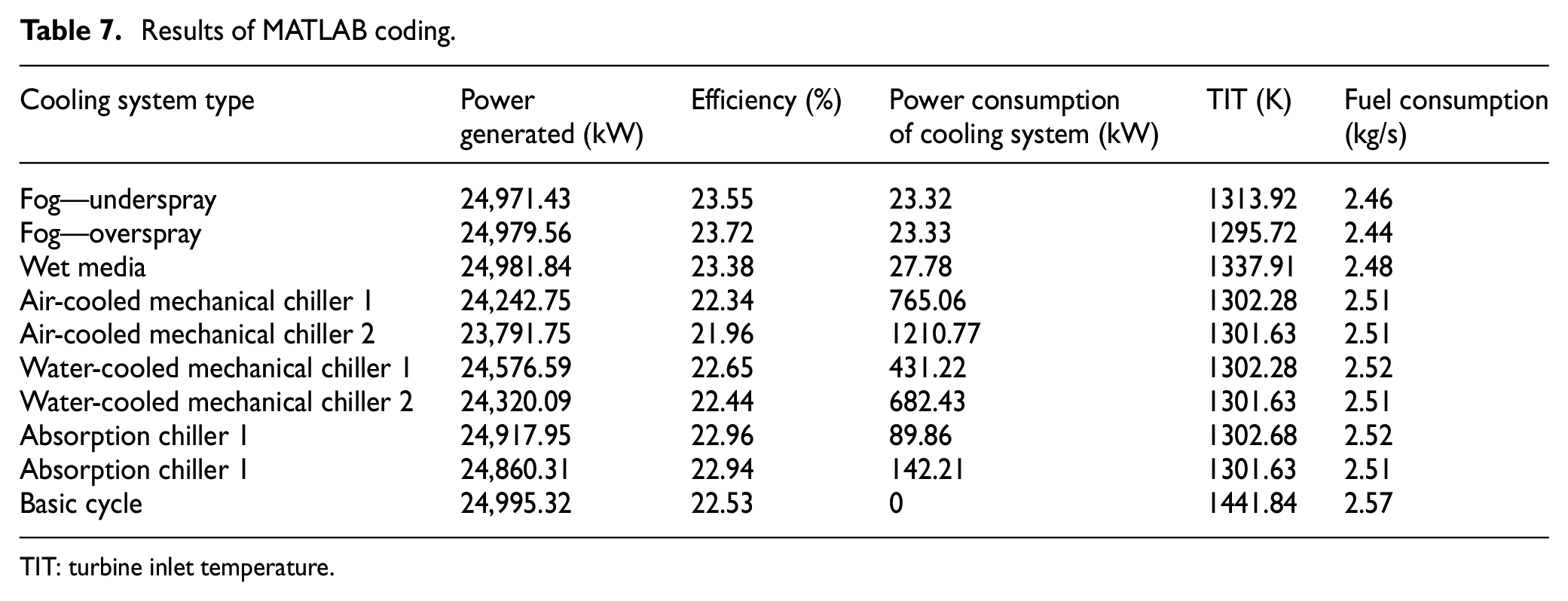
For comparing the effect of different cooling system at an ambient temperature of 30 °C and 15% relative humidity, the behavior of the unit at 25 ± 0.1 MW output power was investigated by coding in MATLAB software. In Table 6, for chiller cooling system, Mode 1 corresponds to the change in the air state from surrounding conditions to saturation line and mode 2 relates to the temperature decrease on the saturation line up to 7 °C. As shown in the coding results, at constant output power, the wet compression cooling system or overspray has the highest efficiency and lowest fuel consumption for GE-F5 gas units. In the overspray system, the amount of sprayed water is 25% more than the required amount for reaching 100% relative humidity. Therefore, some of the water can enter the compressor and evaporate within the compressor stages and reduce the compressor’s power consumption.
The fuel consumption of the basic cycle and each cooling system, obtained from the code, are presented in Figure 8. According to this graph, and considering fuel consumption for this type of unit, wet compression or overspray fogging is a suitable cooling system. In this system, basically, the fuel consumption is 2.44 kg/s and 5% lower in comparison with a normal cycle.
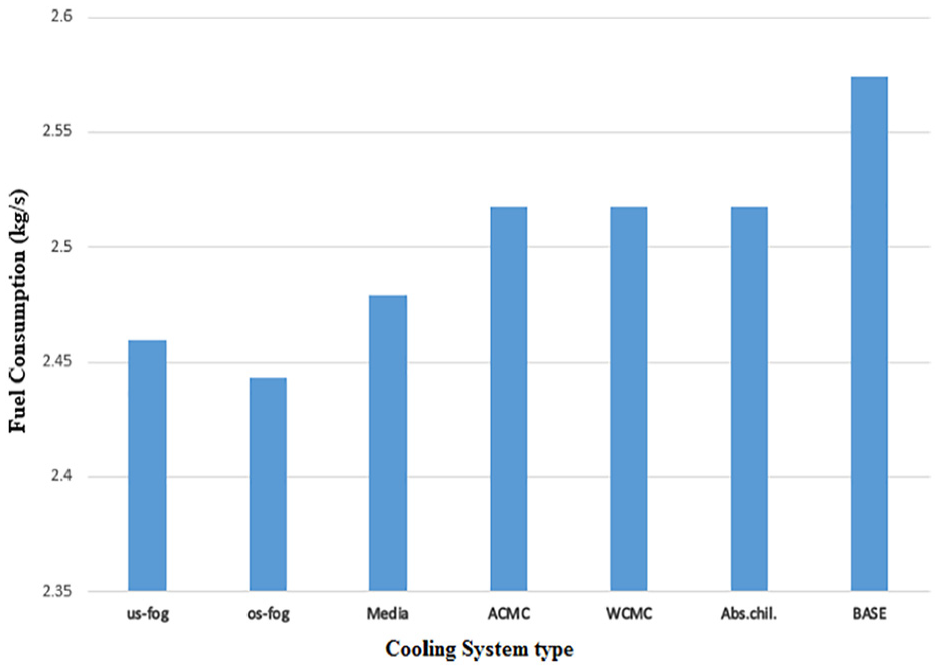
Fuel consumption of the unit applying various cooling systems.
Using different cooling systems as shown in Table 7, will reduce TIT, which will reduce thermal stresses and lengthen the blade’s working life. By applying different inlet air–cooling systems, the TIT changes. But as shown in Table 7, the temperature variations are negligible or less than 5%.
Results of MATLAB coding.
TIT: turbine inlet temperature.
At the overspray method, which is mentioned in the table, the amount of sprayed water exceeds the moisture content required to reach the air to a saturation state. In this study, the moisture content is considered to be 110%. In the mode of mechanical chiller 1, the air dry-bulb temperature is reduced until the condition of air reaches the saturation state according to the psychrometric chart. In mechanical chiller mode 2, the air temperature is lowered from the previous state and some of the humidity in the air is condensed.
Software simulation of GE-F5 behavior; analysis and validation
After developing the mentioned MATLAB super code, which was arranged to analyze the off-design system behavior for validation purpose, the results were compared with the results of the unit’s performance simulation using Thermoflow software. In the GT Pro module, the unit’s behavior was simulated in similar surrounding conditions, as considered for codes input data. The efficiency of the unit in both modes was compared, and the results are provided in Figure 9.
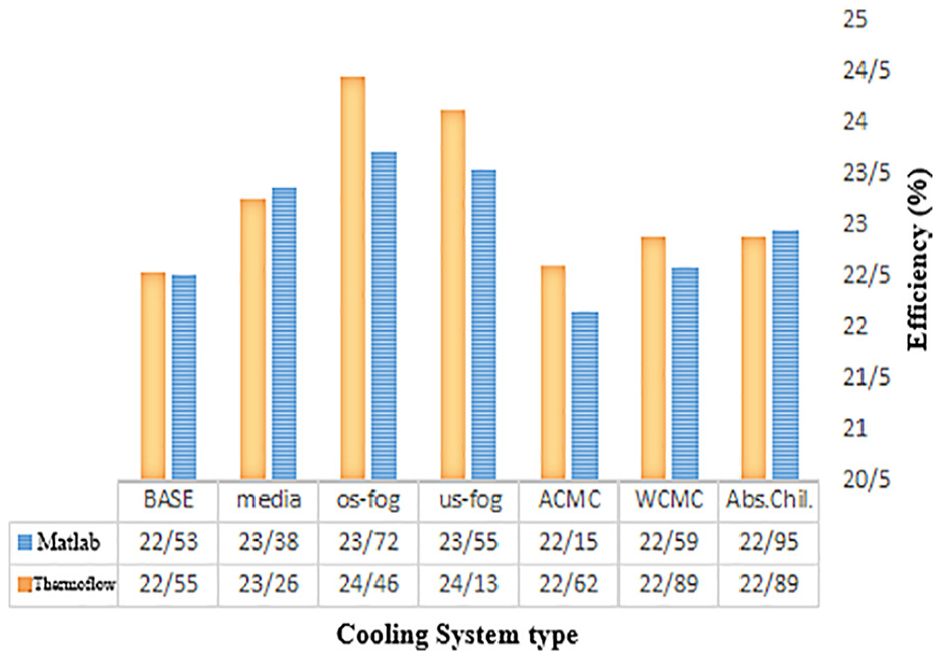
Comparison between Thermoflow simulation and MATLAB coding results.
According to Figure 9, the results obtained from the code, precisely comply with the results of the Thermoflow software simulation.
In addition, necessary parameters of the operating unit were measured by some portable calibrated measuring devices, whose measurement results approve the obtained result from the code at base mode.
Conclusion
In order to analyze the different cooling systems effect, the results were compared with each other. The results of MATLAB coding comply precisely with the software simulation results. In off-design system behavior analysis, minimizing the deviations and maximizing the energy performance are topics that should be considered.
Based on previous studies and investigations on gas turbine behavior at off-design conditions and also recent research results, cooling the compressor’s input air in a GE-F5 gas turbine increases the efficiency and the output power. The simulation results show that a reduction of 1 °c in the inlet air temperature between 14 °C and 50 °C causes an efficiency and power output increase by 0.085% and 0.16 MW, respectively. The maximum cycle efficiency increase applying to cool the inlet air, is around 2.7% which can be achieved by using a wet compression method.
After wet compression, which has the highest energy performance, fog and media systems are the most suitable cooling systems.
In addition, from fuel consumption point of view, the wet compression system with the advantage of 5% lower fuel consumption than normal cycle has a better performance. In addition, results showed that the higher the relative humidity, the lower the evaporating method’s performance. Compression chiller cooling systems have no significant effect on the unit’s output power and the main reason is their high consumption power, especially in the regions with low relative humidity, and even in some cases, the consumption power of chiller is more than the power increase.
Footnotes
Appendix 1
Acknowledgements
The present study was supported by Materials and Energy Research Center (MERC) through PhD student grant No. 581394052 for the purpose of science development and acknowledge for the supports.
Declaration of conflicting interests
The author(s) declared no potential conflicts of interest with respect to the research, authorship and/or publication of this article.
Funding
The author(s) received no financial support for the research, authorship and/or publication of this article.
