




Abstract
The productivity of shell and tube heat exchangers are governed by various geometrical parameters like tube diameter, tube thickness, tube length, tube pitch, tube layout, installation area and baffle spacing of the heat exchanger. The operational efficiency of heat exchangers is highly influenced by the characteristics of heat exchanger parameters. The exchanger efficiency gets trapped due to many incongruities’ effects like over-pressure, bio-fouling, chemical fouling and corrosion. The selection of optimum design configuration is essential to achieve higher operational efficiency for a heat exchanger. But the performance and reliability of the optimization process play a key role in selecting and deselecting significant and insignificant parameters, respectively. So, cognitive selection of parameters and henceforth a reliable optimization process is required to identify optimal design for a heat exchanger. Moreover, economic factors also contribute to attain a consolidated yield result for a heat exchanger. This research proposes an optimal configuration with the help of ensemble output obtained by multi-criteria decision making and nature-based optimization algorithm. It has been found that exchange efficiency in optimal configuration is boosted by 22% from prototype heat exchanger.
Keywords
Introduction
Shell and tube double-pipe heat exchangers (STHEs) are extensively used for process optimization in various enterprises like food processing, power generation, chemical plants and automobile industry.1–3 The performance of STHEs depends primarily on surface area of exchange and flow resistance of the fluids. The geometric features of STHEs with the number of corrugations and turbulence in fluids have an obvious impact on the exchange efficiency (EE) between the fluids.4,5 After an in-depth survey of the pertaining literature, reports and monographs, it was found that the tube diameter (TD), tube thickness (TT), tube length (TL), tube pitch (TP), tube layout (Tl), installation area (A) of the exchanger along with the baffle spacing (BS), installation and operation cost including cost of pumping (IC), maintenance cost (MC) and replacement cost (RC) are the independent parameters which control the surface area, fluid resistance and turbulence in STHEs.6–8 The TD, TT, TL, TP Tl and A are accountable for the portion of surface area available to exchange heat between fluids, whereas baffles have a proportional effect on the resistance and turbulence in the fluids and it also impacts the cost of pumping the fluid into an exchanger. 9 The cost of installation, maintenance and replacement of the material will again depend on the amount of surface area that can be made available for the exchange where the increase in surface area will end up with enhanced expense. 10
Therefore, the exchange efficiency (EE) can be considered as a function of these 10 parameters comprising geometrical and economical factors. Some other parameters also affect the EE, but their roles are either negligible or can be represented by any one of these 10 parameters. The last three cost parameters mainly represent economic liabilities which are not physically related with exchanger efficiency. But these cost parameters facilitate the management to take realistic decisions ensuring the profitability of the plant.
Motivational factors for exchange efficiency of STHEs
All the 10 parameters are important as they can influence exchange efficiency (EE) which fluctuates with situations imposed due to change in production demand, time of operation, production capacity, investments, power availability, material, lifetime of exchanger and cycle efficiency. 11 So, an individual parameter will stand with its own weight factor based on the imposed criteria for changing the exchange efficiency of STHEs in different levels of intensity. Therefore, all the parameters are not equally significant to control EE of a heat exchanger (HE). If the production demand of the plant is suddenly increased, then the exchange efficiency should be adjusted (increased) to mitigate the expected requirement. In the process, few parameters will play a significant role in enhancing the heat transfer process and other parameters will ensure the enhancement of the process. Again, when the investment to a plant receded due to some factors, specific parameters are required to be modified to maintain the normal operation of the exchanger without increasing the cost of operation. The variation in power provided to a plant will also impede on the exchanger, but the effect will not be uniform among all the related variables. Likewise, a change in the time of operation, production capacity, material quality, life time or cycle efficiency will impact only certain factors for which the overall efficiency of STHEs may vary. Most of the previous investigations for a shell-and-tube heat exchanger endeavoured to maximize the productivity of the unit either by transforming the geometric designs or the materials of the pipe to reduce resistance or by proposing innovative design modifications to increase turbulence which in turn can increase the contact surface area of the fluids.
Barros et al. 12 proposed sustainable performance optimization of an HE by the optimization of sustainability index (SI) which is a function of shell internal diameter, tube outside diameter and baffle spacing. The index was optimized with the help of Brute force, Monte Carlo and genetic algorithm (GA). The results from the optimization stressed that no design is optimal, but different designs contribute in a different manner to optimize the sustainability of the system. Shirvan et al. 13 introduced a new STHE design where the tube was designed like a cosine wave. The objective of this study was to enhance the thermal performance factor which was found to be greater for wave-like tubes compared to that for the smooth tubes. According to the results achieved from this study, it was concluded that a low flow rate for hot water and a high flow rate for cold water are required for optimal thermal performance of a specially designed HE. In a study executed by Dhavle et al., 14 the EE was optimized where different inlet and outlet temperatures at the shell side and tube side, tube outside diameter, baffle spacing, pitch size, shell inside diameter and number of tube passes were considered as the design variable and cohort optimization was used as the optimization technique. The economic liabilities were used as the constraints. The results from this study demonstrated that the complex design and high manufacturing cost of STHEs require identifying an efficient and optimum design to reduce overall cost incurred by an STHE at the time of installation, operation and maintenance. Chandrakanth et al. 15 selected tube length, tube thickness, tube outer diameter, number of supports and tube side velocity of the fluid as the design parameters to minimize the operating cost of an HE using Taguchi approach controlling heat transfer area and pressure drop across the tubes. The results of the study showed the importance of the significant factors for optimization, namely, intelligent decision-making methods like analysis of variance (ANOVA) and regression analysis. This investigation also used the pertinent literature to identify the most feasible parameters to solve the problem. Selbaş et al. 16 applied the GA approach to optimize the solution with the selected design parameters. The logarithmic average of temperature difference (LMTD) method was used to find the area associated with heat transfer for a specified design configuration.
From the studies discussed in the previous section, it can be concluded that different parameters are accountable for optimizing EE in STHEs. Very few studies have utilized the significance of relevant parameters to optimize the performance of STHE. The optimized thermal performance, heat transfer coefficient and heat transfer area all contribute to achieve optimal exchange efficiency in a shell-and-tube heat exchanger. It has been found from the literature that tube geometry, baffle spacing and fluid properties are mostly used to optimize the exchange efficiency for an HE. The economic constraints were used as a limiting factor to develop the optimal configuration which will be realistic and viable for replications. The objective of this investigation is to identify the priority of the significant parameters and inclusion of the worthy parameters in the optimization procedure. Section ‘Objective of the investigation’ elaborates the objective of the investigation.
Objective of the investigation
The application of nature-based optimization (NBO) techniques has been rarely presented in the literature to optimize the output (exchange efficiency) in a shell-and-tube heat exchanger in view of utmost exchange efficiency (EE). Moreover, this investigation also substantiates the potentiality of the methods to choose the best configuration for an HE. In this study, there are two distinct objectives using a single benchmark function developed by the decision-making method and optimization techniques. The first objective is to differentiate the significance of the heat exchange parameters based on their impact on performance efficiency of STHEs. On successful completion of the first objective, the trouble for wrong selection or null selection of parameters will be concerned to limit preventable investments in process engineering. Subsequently, an optimal configuration of STHEs was identified with the help of a group of NBO algorithms as the second objective such that the resultant prototype will yield optimal EE under essential geometric constraints.
The main objective of this study is to analyse the potentiality of ensemble multi-criteria decision-making (MCDM) techniques for identification of priorities of significant parameters selected for the study. The other objective of the investigation is the monitoring performance of MCDM techniques and NBO optimization approaches to achieve optimal exchange efficiency for a shell-and-tube heat exchanger.
Brief methodology
The methodology adopted to fulfil the objectives of the research is described as follows:
(a) Sorting of relevant parameters based on their priority by the implementation of the augmented output from analytical hierarchy process (AHP), weighted sum method (WSM) and weighted product method (WPM) which are the most used MCDM techniques;
(b) Development of the benchmark function based on the priority indicators;
(c) Optimization of the benchmark function by ensemble output from three different NBO techniques.
In recent years, many studies17–19 attempted to optimize various objective functions with the help of MCDM followed by the NBO process like polynomial neural network (PNN).
In this research, investigation of a shell-and-tube heat exchanger in view of optimal exchange efficiency using ensemble MCDM and NBO techniques is a new approach. This is an innovative application of soft computing technique to evaluate optimal performance of a thermodynamic system (HE). The optimization results were validated with a prototype HE. The prototype was developed with the help of an optimal configuration proposed by a new method in this investigation.
MCDM is used for decision making and the implementation of the compensatory method ensures the generation of a numerical medium to dissimilate the significance of pertinent variables. MCDM is a well-recognized decision-making tool and its benefits and prospects are well documented in the literature.20–22 Although MCDM is a popular tool for decision making, it had been rarely proposed in HE studies. The NBO techniques are used to optimize a discrete domain. The time of convergence for such techniques is shorter compared to the classical optimization methodologies. Also, the randomness involved in these methods ensures maximum consideration of possible solutions within the feasible domain. The NBOs are extensively used in different studies23–26 and are known for their successful recognition of the finest point under minimum increment of time within the domain of acceptance. The merits of the NBO approaches encourage researchers to apply the nature-inspired optimization process for optimal heat transfer analysis in thermal systems like HEs. However, this study utilized the ensemble output from particle swarm optimization (PSO),27–31 GA32–34 and enhanced particle swarm optimization (EPSO)35,36 to identify the best fit configuration for HE in view of optimal exchange efficiency (EE).
Methods
This investigation utilized the advantages of MCDM methods like AHP (section ‘AHP’), WSM (section ‘WSM’) and WPM (section ‘WPM’) to rank the relevant variables as per their significance and the PSO (section ‘PSO’), GA (section ‘Sawtooth genetic algorithm (SGA)’) and EPSO (section ‘EPSO’) maximize the benchmark function to identify the best configuration for an HE to produce an optimal EE. The significance, benefits and limitations of the methods are delineated in the following sections.
AHP
The AHP is an excellent MCDM tool most widely used by decision makers and researchers across the globe.37,38 This technique provides solution in three parts: the first part addresses the problem, the second part guides the solution and in third part AHP plays the most vital role to find the criteria required to evaluate the alternative solutions. Since AHP has been introduced by Satty,39,40 it has been applied to solve decision-based problems in multiple domains. The AHP concept is admired and implemented successfully in the engineering, management, finance, accounting and healthcare industries for optimization, prioritization, resource allocation, benchmarking and quality management.41–44 It has the potential for expediting multiple objective programming analyses. 45 The AHP approach is a subjective methodology involving higher level of mathematics. 46 In this method, weights are assigned for elements by decision makers through direct questioning or a questionnaire method. There can be a conflict between decision makers about the accuracy of the method because conversions from the verbal to numerical scale impose inconsistency and complexity. 47
WSM
WSM is a recognized multi-attribute utility analysis that applies a linear relationship for evaluating several alternatives in terms of the number of decision criteria.48,49 It involves normalizing the rank value across all criteria assigning preference weights, multiplying the weights by the rank value and adding up the resulting rank value to achieve the final weighted rank. The method requires quantitative information on rank value and priorities, and only the relative values are used in the assessment. It provides a complete ranking of alternatives and information on the relative differences between alternatives. The main advantage of the WSM method is that it is easy to comprehend and can effectively grip qualitative and quantitative data. The method can be applied in many crucial areas of science, engineering, technology, management, finance and accounting for decision making. This method is also used for emergency services like healthcare and military operations and the obtained solution will provide decisions of a higher quality. It is less suitable for processing qualitative information. This method is prejudiced by personal preferences of decision makers and the solution may vary due to individual preference factor.
WPM
In WPM, alternatives are compared with others by multiplying a number of ratios, one for each criterion. The individual ratio is raised to the power equivalent to the relative weight of the corresponding criterion. 50 WPM can be used in single- and multi-dimensional decision-making problems. Another advantage of the WPM is the ability to use relative values instead of the actual value. The execution time for the WPM is more than that for the weighted average method (WAM). Moreover, the calculation process is a bit complicated in the WPM.
PSO
PSO is an artificial intelligence (AI) technique introduced by Eberhart and Kennedy 51 in 1995. This approach is used to obtain the best solution for complex problems in various fields. The process of the PSO algorithm for searching an optimal value follows the work of animal society which has no leader. PSO optimization consists of a swarm particle, where the particle represents a potential solution. The particle will move through a multi-dimensional search space to find the best position in that space. PSO techniques can generate high-quality solutions within a shorter calculation time and stable convergence characteristics than the other stochastic methods. PSO has a limited number of parameters in comparison with the other challenging heuristic optimization methods. Also, the impact of parameters on the solutions is considered to be less sensitive compared to the other heuristic algorithms. 52 In PSO, the high speed of convergence often leads to speedy loss of diversity during the optimization process. It leads to unwanted impulsive convergence.53,54
Sawtooth genetic algorithm (SGA)
SGA is a category of GA proposed by Koumousis and Katsaras. 55 It uses a variable population size with periodic initialization in the form of a sawtooth function with a specific amplitude and period of variation. In each period, the population size decreases linearly and at the beginning of the next period randomly generated individuals are appended to the population. The scheme is characterized by the population size, amplitude and period of variation.56,57 SGA improves the performance of GAs and can be easily introduced to any existing GA code. The performance advancement is due to dynamics of evolution of GA and the synergy of the combined effects of population size variation and recur initialization. The main disadvantages of SGA are slow convergence along with local minima or maxima.
EPSO
EPSO is a hybrid optimization method composed of two conventional meta-heuristic strategies, that is, evolutionary algorithm (EA) and PSO. EPSO was introduced in 2002. 58 In some studies, EPSO has also been termed as ‘enhanced PSO’.59,60 EPSO is characterized with better convergence characteristics and robustness in convergence. As a hybrid technique, EPSO provides benefits of both EA and PSO, and it converges very quickly towards the optimal solution. The literature also represents the improved performance of EPSO while dealing with complex non-linear functions. 61 But when the number of iterations increases, EPSO exhibits a slow progress. 62
Detailed methodology
The methodology adopted for this research has been discussed in detail in the next few sections.
Sorting relevant parameters
All the selected parameters were ranked based on the potentiality to regulate the exchange efficiency (EE). The next section describes the methodology adopted to determine the significance of the selected features.
Scoring the parameters
The exchange efficiency of STHEs depends upon both geometric parameters (TD, TT, TL, TP, Tl, A and BS) and cost parameters (IC, MC and RC). The cost parameters can include the cost effect in the HE analysis. However, all the selected parameters were adjudged based on a scale of 10 with respect to its role in increasing or decreasing the uncertainty, operational expenditure, energy efficiency and working environment. The parameters being rated 10 and 0, respectively, indicate their maximum and minimum roles in controlling the uncertainty, expenditure, energy and environmental conservation during the operational phase of the exchanger. The schematic diagram of the methodology adopted in this study is depicted in Figure 1.
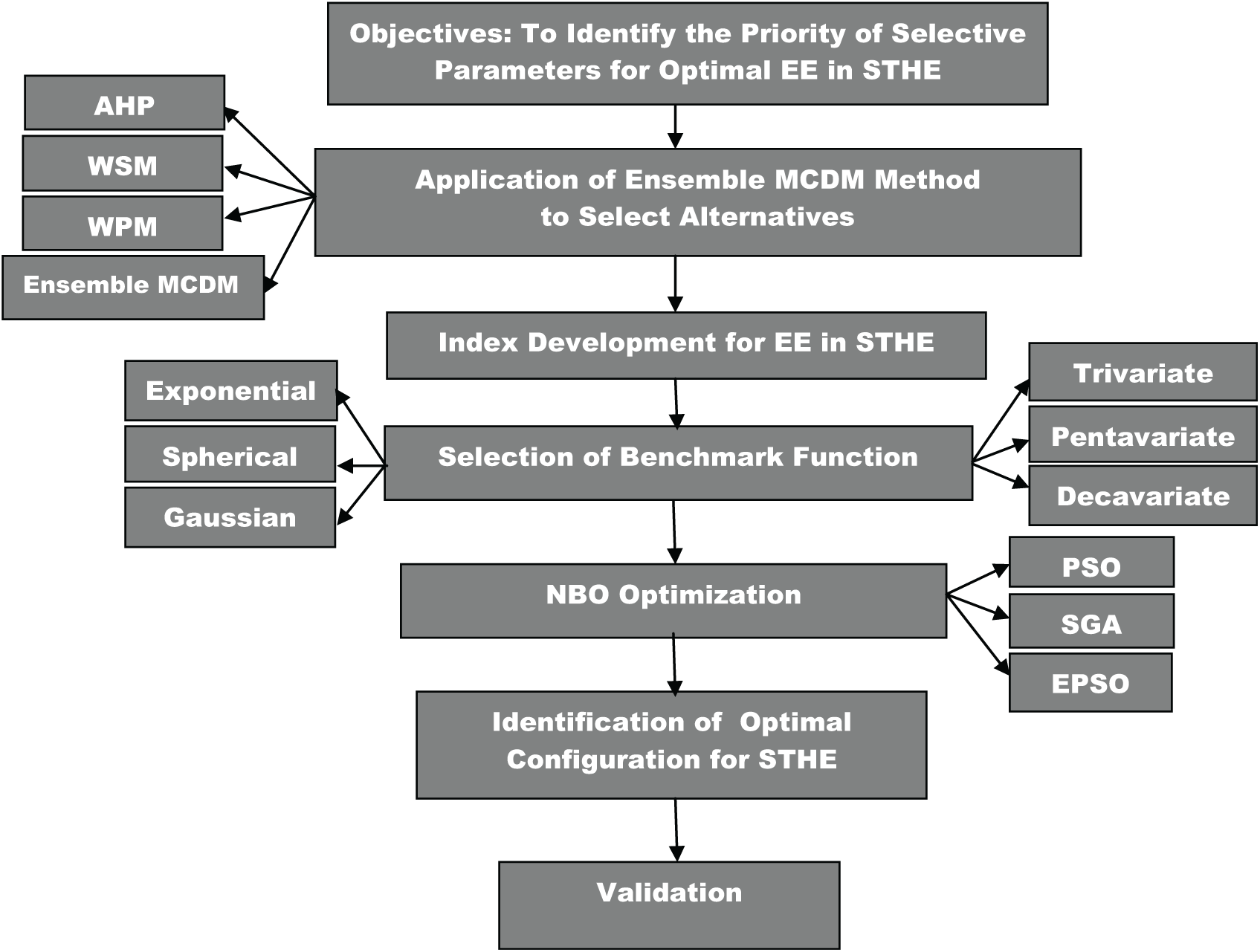
Schematic diagram of the methodology adopted in this investigation.
Application of the MCDM method
The next few sections will describe the way MCDM was implemented to find the relative significance of the selected parameters which are accountable to manipulate the exchange efficiency (EE) during the operational phase. The steps in using the MCDM technique basically include the selection criteria and alternatives followed by the application of the aggregation method to find the significance of the selected parameters. The relative weights for the alternatives were determined with respect to a set of criteria. Therefore, the criteria were selected in such a manner that the impact on the parameters due to criteria can be recognized easily. Moreover, the alternatives were selected in such a way that any change in the alternatives will change the objective of decision making.
Selection of criteria
The selected alternatives were assigned four criteria, that is, uncertainty, expenditure, conservation of energy and impact on environment. The motive for selecting the criteria includes crucial factors (uncertainty, cost, energy use and environmental impact) during the operational phase of the HE. The criteria were used to rate the selected alternatives. The score was assigned to the alternatives analysing the significance of criteria to influence the alternatives. Moreover, an increase in efficiency ignoring the effect of expenditure, energy use and environmental impact will yield an infeasible and impractical solution.
Selection of alternatives
In the MCDM method, the major objective is to find the weight of parameters chosen for the study. In this study, the 10 selected parameters are called alternatives and all the 10 alternatives play a significant role in regulating the exchange efficiency of an HE as reported in the literature. Moreover, these alternatives are also significant for all the four selected criteria during the operational phase of the exchanger. In the previous sections, the selection of criteria (uncertainty, expenditure, environmental impact and energy use) was discussed. Here, the selected parameters (alternatives) were rated with the help of the selected criteria on a scale of 10.
Application of the aggregation method
Here, three different MCDM methods were implemented and their significance, benefit and limitations were discussed in section ‘Methods’. The results from AHP, WSM and WPM were aggregated to find the importance of the parameters (alternatives). Although AHP, WSM and WPM have some lacunas in their procedures, the methods also have unique benefits which can yield an insightful decision for complex problems. In this analysis, the outputs from all the three methods are combined to include the all-around contribution from the selected methods. Therefore, the aggregation process basically standardized the results considering its usefulness and limitations.
However, in this investigation, all the parameters were scored (on a scale of 10) with respect to the criteria and all the criteria were scored with respect to the objective. The same scores were used to rank the selected alternatives in descending order. The parameter with the highest score was assigned rank 1 and the parameter having the lowest score among all the parameters was assigned rank 10. In the pairwise comparison matrix (PCM), each of the parameters or alternatives is compared with every other parameter with respect to their impact on the criteria and subsequently the objective of decision making. The ratio of importance between the parameters was represented by the ratings retrieved from a nine-point Saaty’s scale. The relative significance between the two parameters was evaluated comparing the score ratio of the alternatives. As the score has no unit, the interference of the scale difference was absent. Also due to the use of a uniform scoring system, inconsistency in the rating was avoided. Therefore, the determination of the consistency ratio by the AHP process to measure consistency in decision becomes needless.
The AHP method is widely used for pairwise comparison. The main advantage of AHP is sustaining hierarchical structure and generating aggregated impression about the importance of the parameters. The limitation of AHP is that resultant weight is not produced and often difference between the weights becomes negligible and inadequate for retrieving a clear decision. The WSM method is applied to find the overall significance of the parameters based on the weighted average of the magnitude of the alternatives. But this process is fast as a single matrix is required to be calculated instead of multiple matrices as is the case for the AHP method. The resultant significance in the WSM method is absolute not relative like the AHP method. In this investigation, score is utilized instead of rating the parameters and it eliminates the scale difference issue. However, the deficiency due to absoluteness in the decision output enforced the authors to apply a third method called WPM. In WPM, comparison of importance between the alternatives with respect to the criteria is calculated in a single matrix and all the ratios of comparison are multiplied to find the cumulative decision. The alternative with the highest product of comparison ratios is selected as the best alternative. The most encouraging part of WPM is its ability to calculate relative significance of parameters and develop a cumulative decision. This method is somehow limited due to consideration of arbitrary fraction as the weight of importance for criteria. It is retrieved by the decision maker about the significance of the criteria.
In this study, alternatives or parameters were assigned rank based on ensemble output of three MCDM techniques. The resultant value (fraction) is proportional to the significance of the parameters which are used to assign rank for the parameters based on their role in regulating exchange efficiency (EE) considering the effects of uncertainties, operational expense, energy utilization and environmental issues. In this investigation, the hierarchy of the decision-making problem is depicted in Figure 2.
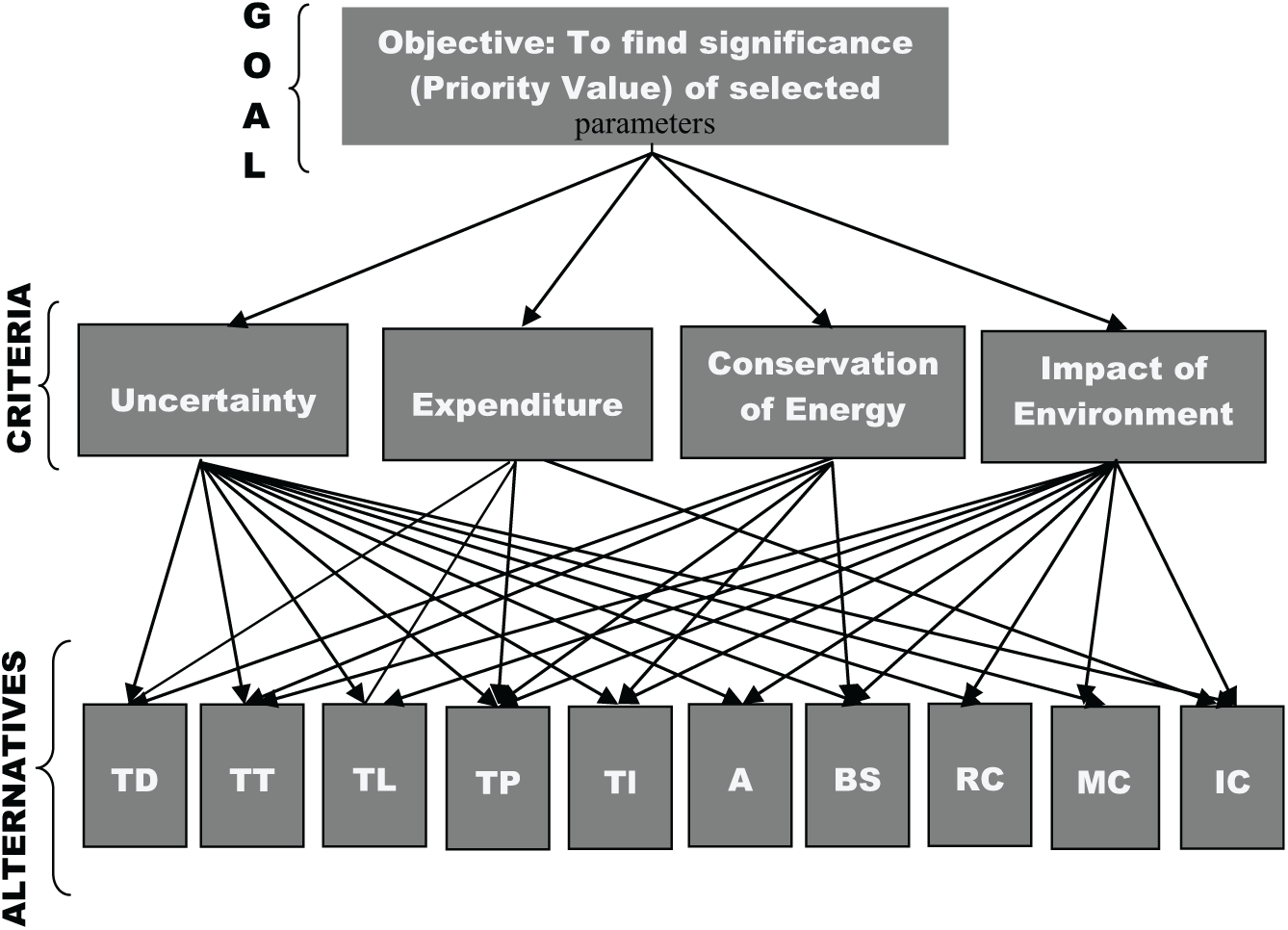
Hierarchy of the decision problems investigated in this study.
Implementation of the common activation function
A common activation function was used within a uniform and equal domain of feasibility. The exponential, spherical and Gaussian functions were employed for HE optimization to find a yield value for EE using beneficiary and non-beneficiary parameters.
Exponential function
The exponential function improves the clarity of a function and indicates rapid aggravation of the independent variable. However, this function obtains a uniform domain of feasibility and is represented by a general mathematical equation (1)

Spherical function
Spherical function is a unidirectional multiplier which is continuous, convex and unimodal by nature. It can increase the significance of independent parameters and ample alteration can be induced for a small change in the parameter. The domain for the function is [–1 to +1] and the representative polynomial is a full parabola. The spherical function is considered as one of the benchmark functions for testing the optimization method represented by equation (2)

The spherical function has ‘d’ local minima except for the global one.
Gaussian function
A Gaussian function is characterized by a ‘bell curve’ shape as depicted in equation (3)

where a, b and c are arbitrary real constants; a is the height of the curve’s peak; b is the position of the centre of the peak; and c is the standard deviation or Gaussian root mean square (RMS) width.
Development of the objective function
In this investigation, optimization was performed with nine variations based on the activation function and number of variables included in the optimization. In first three variations, the exponential functions of the most significant three, five and all the parameters were included separately to create three different objective functions. Similarly, for two other functions also three different numbers of variables were used. As a result, nine different objective functions were developed among which the function that produces the maximum value will be treated as the best function and the optimal configurations retrieved by the function will be selected as the best configuration that can produce, under different constraints, maximum efficiency from the STHE.
The beneficiary and non-beneficiary parameters affecting the EE of the STHE are represented by equation (4)

where
The optimization functions with the three most significant parameters (tri-variate) are presented in the exponential, spherical and Gaussian forms as indicated by equations (5)–(7), respectively



In the tri-variate condition, the weight of importance will be
Similarly, the activation functions
Accordingly, the activation functions
The set of equations for the exponential, spherical and Gaussian functions (5)–(7) is subjected to the following constraints

where
The constraints represent that the summation of weights is unity as shown in equation (8)

The values of the beneficiary and non-beneficiary parameters were normalized after the result from the optimization was retrieved. The average, best and worst values from the three iteration techniques, that is, SGA, PSO and EPSO, and from the three different functions like exponential (EXP), spherical (SPHERE) and Gaussian (GAU) activation functions with three, five and all the selected indicators were compared to find the best values of the optimization function and the corresponding values of the indicators were expected to generate higher EE compared to that from a conventional design of STHE.
Application of the optimization techniques to identify the optimal configuration
This study utilized three different optimization techniques (SGA, PSO and EPSO) to find the best possible configuration under logistical, geometrical and numerical constraints. The tube diameter (TD), tube thickness (TT), tube length (TL), tube pitch (TP), tube layout (Tl), installation area (A) for the exchanger, baffle spacing (BS), installation cost (IC), maintenance cost (MC) and replacement cost (RC) were considered as the decision variables which varied between zero and unity, that is, in the normalized domain. In this investigation, the decision variables were used in the activated ratio mode in the objective function.
The SGA technique is known to be a quick convergent and fast optimizer which initiates the optimization process with few random solutions considered as the genes which are crossed over to find new genes or solutions that can produce the ideal solution for an optimization problem. Although popularly utilized to solve various optimization problems, the method has a lacuna for the generation of a new variant which is unnecessary and consumes a lot of computational time and cost. In this investigation, the SGA technique was used as an optimization technique to find the maximum value of the objective function. Similarly, the PSO technique is a variant of the swarm-based optimization technique mainly applicable for the continuous optimization process. PSO is also fast convergent, but it often overrides the boundary conditions imposed on the optimization problem. The EPSO does not have the limitation of overriding and is the newer version of PSO. The mean value, variation and period of training by the SGA method were assumed to be equal to 50, 45 and 10, respectively, whereas 70% probability of crossover or scope of producing new genes was selected for optimizing the objective equation. In the case of PSO and EPSO, the cognitive and social parameters were taken as 2 and the initial weight is assumed to be 0.8, whereas the crossover rate is fixed at 70%.
All the three techniques were applied in the exponential, spherical and Gaussian activation functions for the most significant (3, 5 and all 10) parameters to find the optimal configuration. The assigned index form represents beneficiary parameters in the numerator and the non-beneficiary parameters in the denominator of the objective function. The yield value of the objective function was identified in view of methodology, function and number of alternatives, and a prototype model was developed with the help of optimal configuration achieved from the investigation. The results of the MCDM-NBO framework were validated with a conventional HE.
Development of the prototype for validation of the optimization result
A closed-loop forced-flow solar water heating (CLFFSWH) system was prepared with the help of the STHE developed as per the configuration proposed from the selected results of the optimization (Table 4). Here water was selected as the heat transfer fluid and a 150-W solar heat collector was used for heating the fluid. In the water heating system, water was used as the working fluid for both the shell side and the tube side. The cold water was first channelized into the solar heat collector and after heating the hot water was transported back to the shell side of the HE. The hot water from the collector exchanges its heat energy with the shell-side fluid to warm and supply for household use. A controller was used to regulate the flow of the heat transfer fluid. This system was operated for 6 h at full load condition for heating. The IC, MC and RC were maintained in such a way that they follow the optimal ratio recommended by the optimization. The EE was noted after each hour. The output EE, for optimal configuration, is improved in comparison with other configurations. The schematic diagram for the prototype HE is presented in Figure 3.
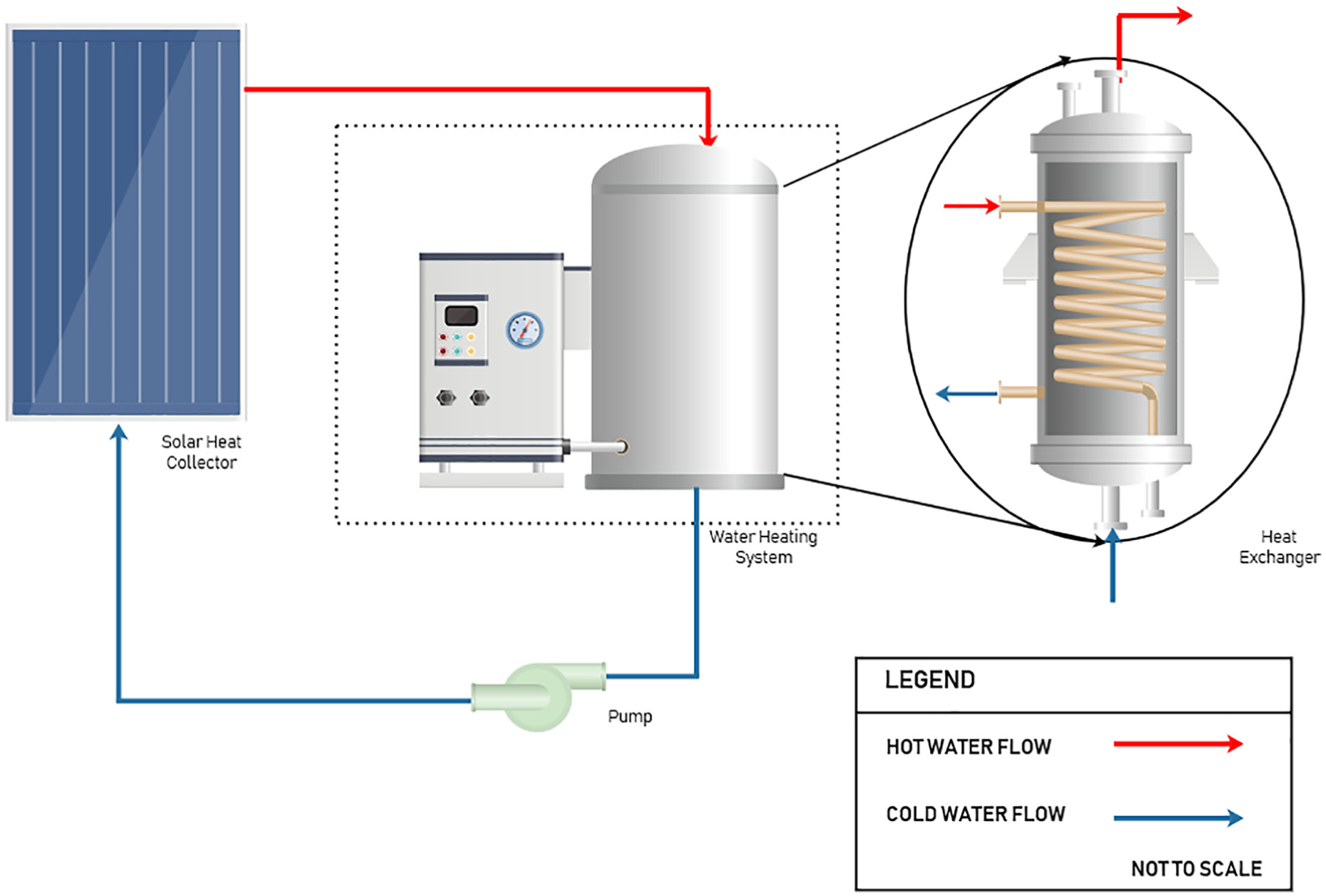
Schematic diagram of the prototype heat exchanger.
The prototype is required to be tested in real-life conditions. But before that it can be concluded that a better heat exchange efficiency can be achieved with the estimated optimal configuration. The prototype was developed to validate the optimization results recorded from the optimal configuration of HE. The main objective was to contrast the exchange efficiency of the prototype with the optimization output and conventional HE. The ratios of TD, TT, TL, TP, Tl, A, BS, IC, MC and RC of the conventional STHE were selected as 10.00%, 10.00%, 20.00%, 12.45%, 12.36%, 12.17%, 9.05%, 7.50%, 2.98% and 3.49%, respectively, having the EE of 65%.
Results and discussion
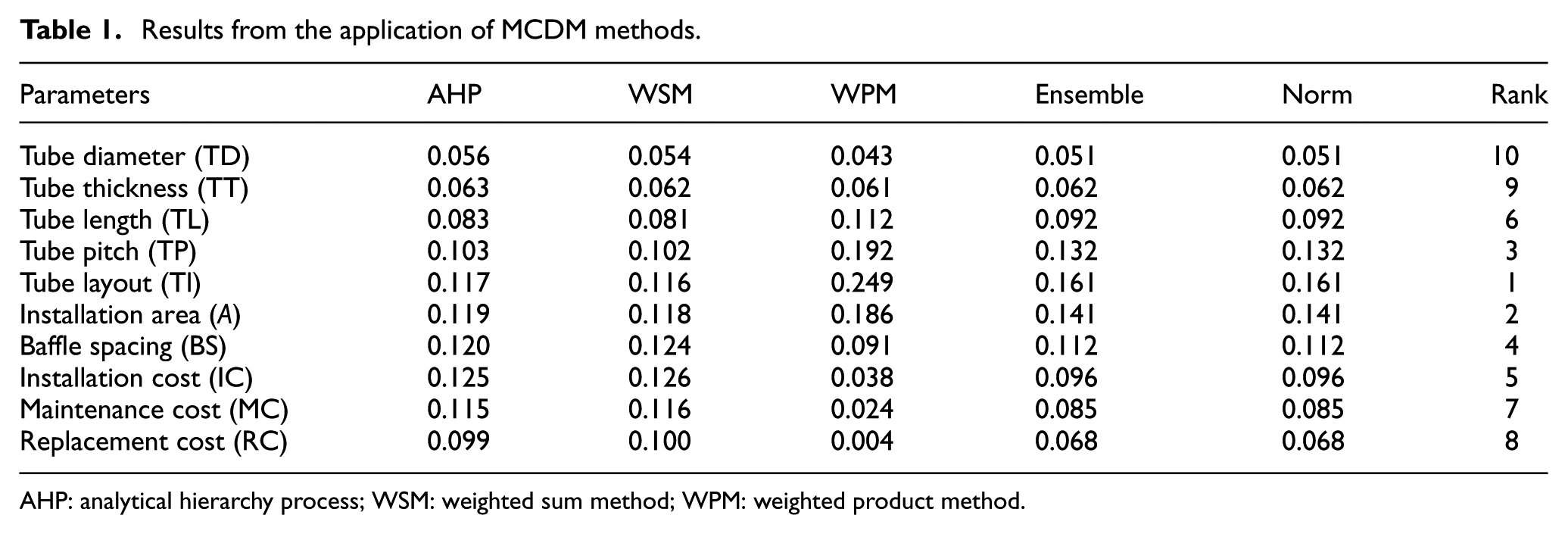
Table 1 shows the weights of significance or priority value of the selected parameters with respect to the EE of STHEs as estimated from AHP, WSM and WPM. The ensemble output from all the three MCDM methods is also shown in the same table. Finally, the ensembled values were normalized and the rank was assigned to the parameters. The best rank (1st) was assigned for the highest normalized value and the last rank (10th) was assigned for the lowest normalized value. The normalized output was used for the objective function (equation (4)).
Results from the application of MCDM methods.
AHP: analytical hierarchy process; WSM: weighted sum method; WPM: weighted product method.
From the table, it can be seen that tube layout (Tl) followed by installation area (A) and tube pitch (TP) were found to be the three most significant parameters which have maximum influence on increasing the EE.
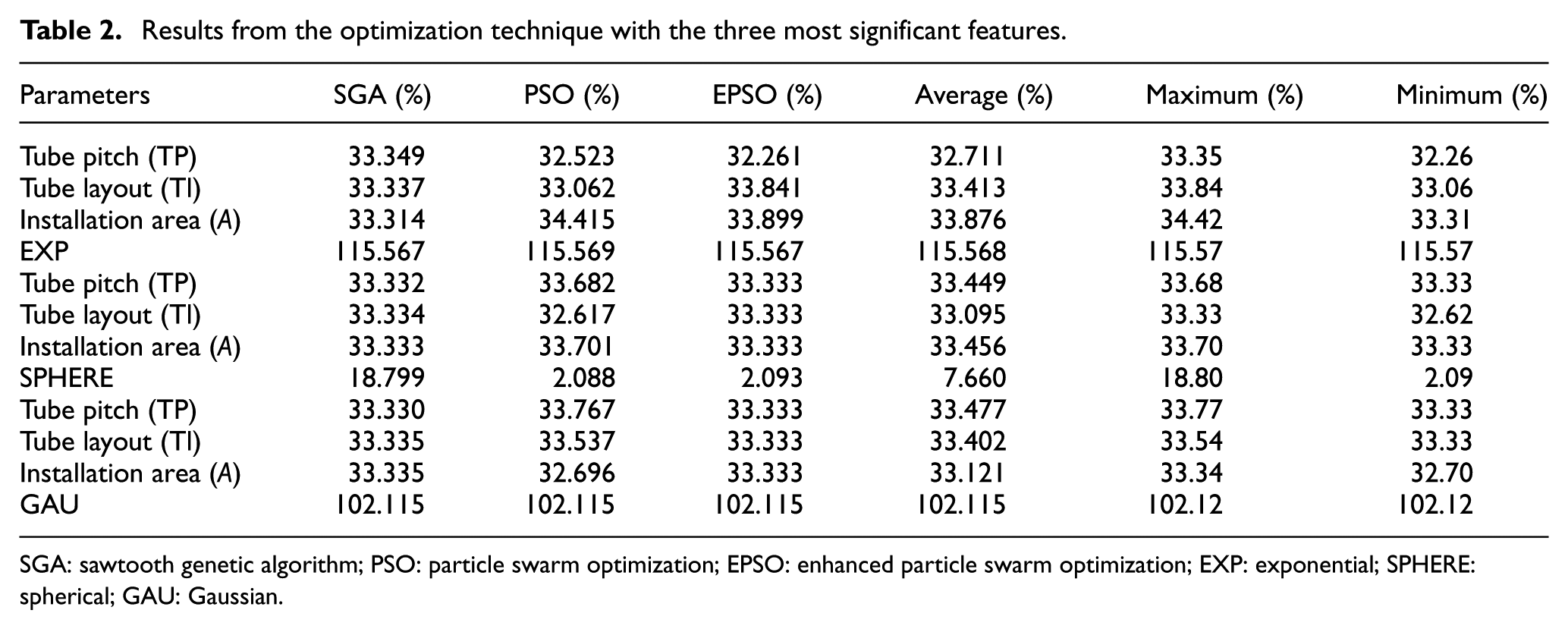
From the AHP and WSM techniques, the priority value for tube layout (Tl) was found to be the fourth (rank 4) most significant parameter. But the priority value for Tl obtained from WPM was the highest (rank 1). The absolute difference between the priority values was most pronounced for WPM compared to that of the other two methods. The average absolute difference (AAD) for WPM was found to be 5.02 times more for AHP and 4.88 times more for WSM, which indicate that the priority value estimated from WPM was more distinct compared to those from AHP and WSM. Therefore, WPM was corroborated to other methods to generate ensemble priority values for the selected parameters. It makes the analysis more transparent and rational. Table 2 presents the optimization results evaluated with three significant parameters. The maximum, average and minimum values of the objective function from three different optimization techniques (SGA, PSO and EPSO) are also displayed in the table.
Results from the optimization technique with the three most significant features.
SGA: sawtooth genetic algorithm; PSO: particle swarm optimization; EPSO: enhanced particle swarm optimization; EXP: exponential; SPHERE: spherical; GAU: Gaussian.
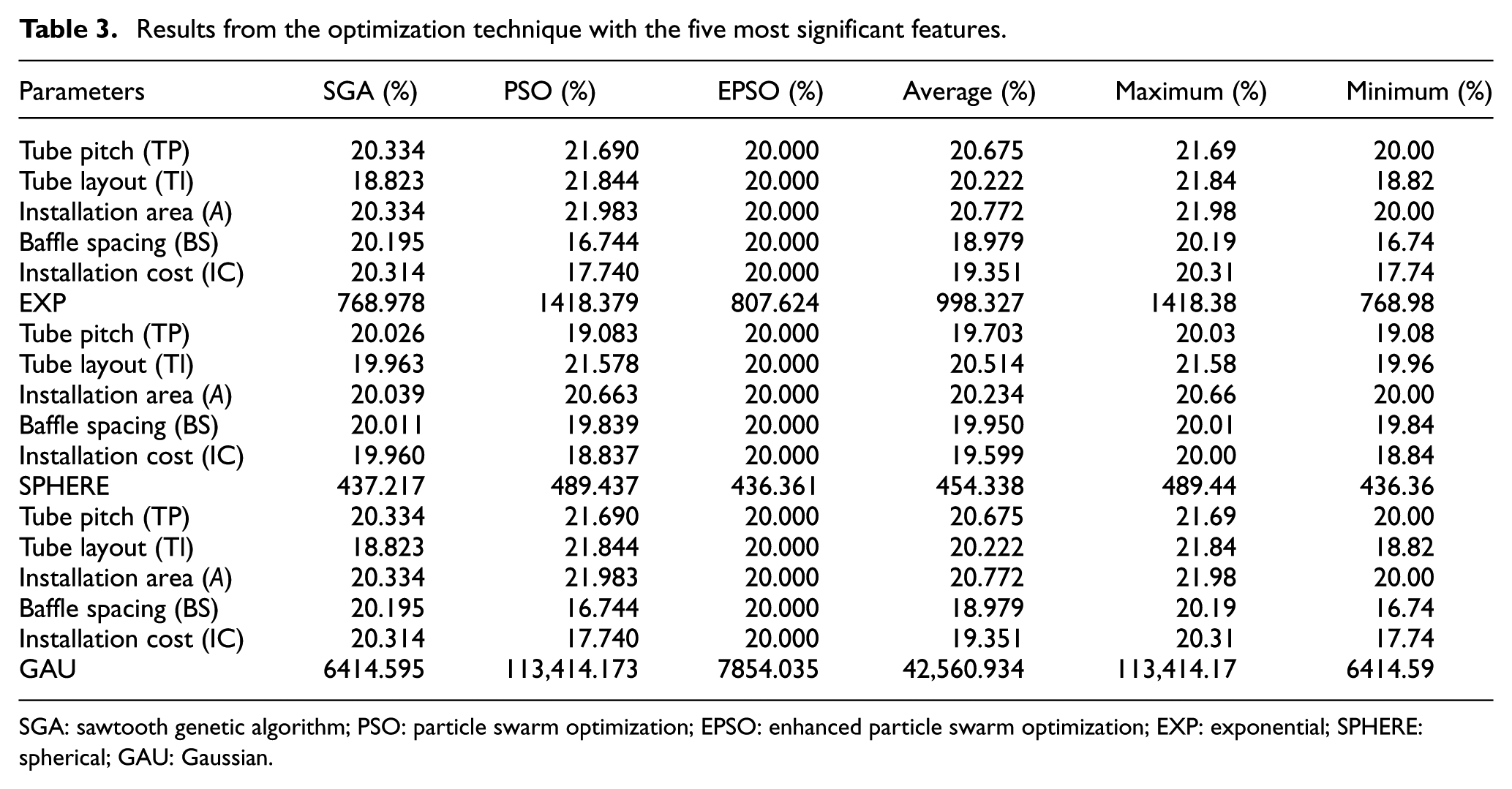
Similarly, Table 3 presents the optimization results evaluated with five significant parameters. The maximum, average and minimum values of the objective function from three different optimization techniques (SGA, PSO and EPSO) are also displayed in the table.
Results from the optimization technique with the five most significant features.
SGA: sawtooth genetic algorithm; PSO: particle swarm optimization; EPSO: enhanced particle swarm optimization; EXP: exponential; SPHERE: spherical; GAU: Gaussian.
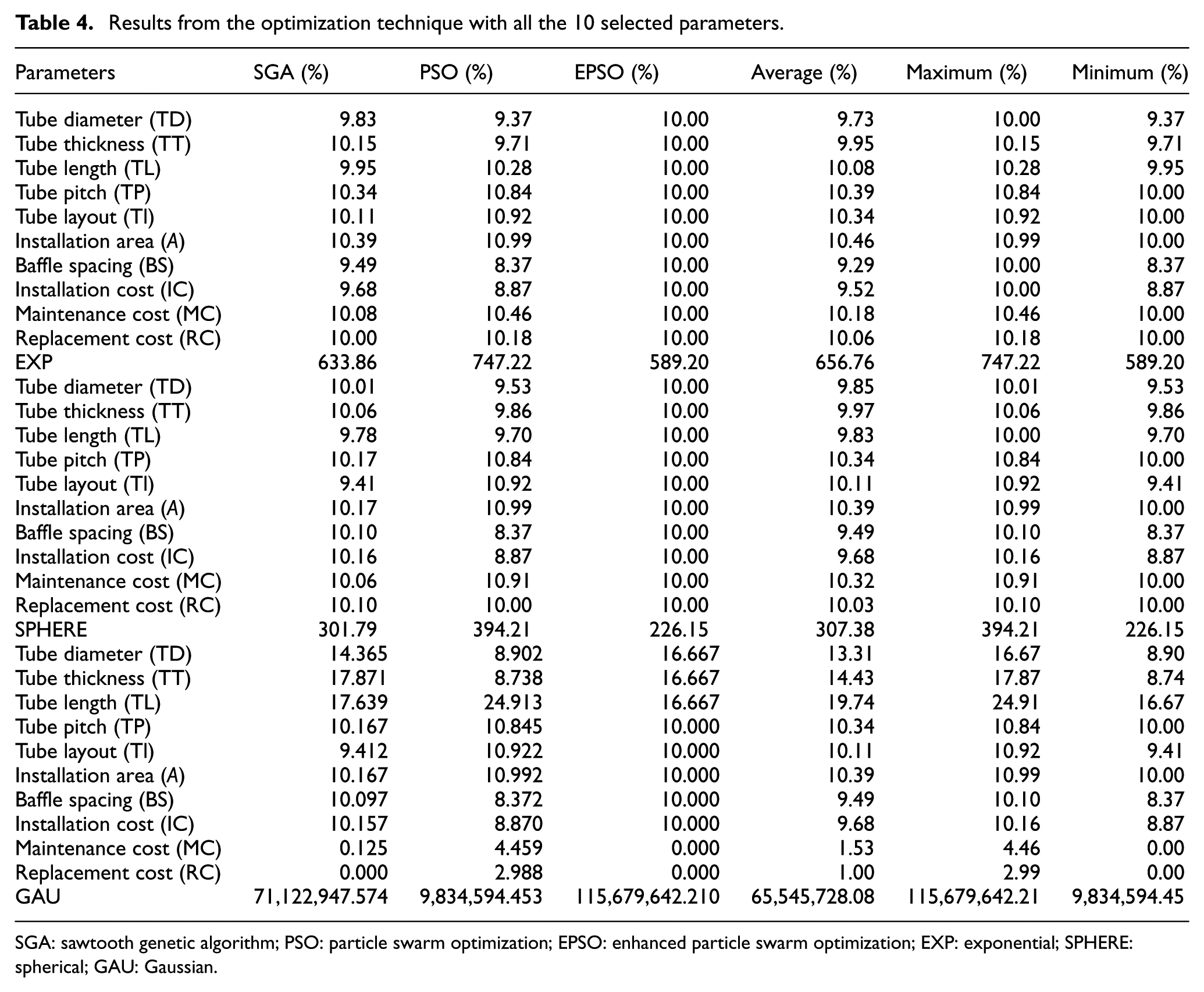
Finally, Table 4 presents the optimization results evaluated with all the 10 selected parameters. The maximum, average and minimum values of the objective function from three different optimization techniques (SGA, PSO and EPSO) are also displayed in the table.
Results from the optimization technique with all the 10 selected parameters.
SGA: sawtooth genetic algorithm; PSO: particle swarm optimization; EPSO: enhanced particle swarm optimization; EXP: exponential; SPHERE: spherical; GAU: Gaussian.
Comparing Tables 2–4, it is observed that the optimization function developed with all the 10 selected parameters activated with the Gaussian function shows maxima compared to other variants for different numbers of decision variables. The average, maximum and minimum values of the objective function were obtained from three iteration techniques.
It is observed that with the three most significant parameters the maximum yield value observed was 115.57% for the exponential function, whereas for the five most significant parameters yielding occurred by the Gaussian function and the value is 0.113 × 10⁶%. But considering all the 10 parameters, the yield value achieved was 115.68 × 10⁶%. Therefore, with all the 10 parameters the yield values of the objective function are 0.102 × 10⁻⁶ and 100.01 × 10⁻⁶ times more compared with the cases of five and three most significant parameters.
If the maximum values for all the three activation functions are considered for all variants, then the Gaussian function provides the maximum yielding value for the objective function. The maximum yields recorded from the exponential and spherical functions for the five most significant parameters were found to be 1418.38% and 489.44%, respectively. But inclusion of all the 10 parameters in the objective equation activated by Gaussian function can deliver an yield value of 115.68 × 10⁻⁶% which is 8.16 × 10⁻⁶ and 23.64×10⁻⁶ times more compared to the exponential and spherical functions, respectively.
The outputs contrasted from different iteration techniques, and it is found that the results obtained by PSO are improved compared to the SGA and EPSO techniques for three variants of objective function (tri-, penta- and deca-variate) and three forms of activation function. But the maximum output was obtained using the EPSO technique with activated Gaussian function for the deca-variate objective equation. Although EPSO achieves the highest yield value for the objective function with all variants for all the three activation functions, in optimal condition the magnitudes of MC and RC were set to zero which is impossible in the real-life scenario. Therefore, the next highest objective function which was obtained in the deca-variant state with the Gaussian activation function and PSO technique predicted the most optimal scenario within the feasible and realistic domain compared to all the other 27 scenarios developed for this study.
The corresponding magnitude of the decision variable was selected for producing a prototype which can yield EE possible within the feasible and realistic domain. The optimal ratios were found to be 8.902%, 8.738%, 24.913%, 10.845%, 10.922%, 10.992%, 8.372%, 8.870%, 4.459% and 2.988% for tube diameter (TD), tube thickness (TT), tube length (TL), tube pitch (TP), tube layout (Tl), installation area (A), baffle spacing (BS), installation cost (IC), maintenance cost (MC) and replacement cost (RC), respectively. The prototype was developed considering the above optimal ratio which was expected to produce 1.04 × 10⁻⁶ times higher output compared to that for a uniformly weighted and valued STHE. This indicates that the configuration of STHEs may follow the optimal ratio to produce the maximum heat exchange efficiency possible within the feasible domain.
Conclusion
This investigation evaluates the yielding characteristics of exchange efficiency in a shell-and-tube heat exchanger with the help of a novel activation-based objective function which was iterated by three different NBO techniques – SGA, PSO and EPSO. The objective function was developed using three different activation functions, that is, exponential, spherical and Gaussian functions. At first, the priority index was identified for the 10 selected parameters with the goal of optimal exchange efficiency. The activation function of the weighted priorities for beneficiary and non-beneficiary parameters was considered in objective equation with three, five and all (10) most significant parameters for optimal exchange efficiency. Therefore, nine different objective functions were developed to find the optimal configuration for STHEs. The weights of the parameters were calculated by the application of three different MCDM methods and using ensemble of the output from all the three methods. Accordingly, it was found that PSO iterated Gaussian function of all the 10 variables generated the best result under feasible domain. The investigation and analysis showed that tube layout (Tl) followed by exchanger area (A) and tube pitch (TP) were found to be the three most significant parameters showing an excellent impact on finding optimal exchange efficiency.
The results from the optimization were validated with a prototype STHE developed and compared with a conventional STHE having an efficiency of 65% for 6 h in full load condition. The average exchange efficiency of the prototype STHE was found to be 87%. The results from the study and the prototype STHE required to be tested rigorously in a real-life scenario for reliable implementation.
Therefore, comparing the outputs received from prototype and those from conventional STHE under a similar condition and the same time scale, it can be concluded that prototype can produce better efficiency and can save operational and maintenance cost in a real-life scenario.
Since the cost factor is included in this analysis, the optimal output can produce improved efficiency within the frame of realistic expenditure. The use of activation function in optimization is a relatively new approach cascading results from the ensemble MCDM methods which ensures competiveness and reliability of the results. The experimental validation confirms its practicability in the real-life scenario. Nevertheless, in the real-life scenario, prototype requires testing, different uncertainties will be encountered in practice and HE may be analysed in further considering those real-time challenges.
Footnotes
Declaration of conflicting interests
The author(s) declared no potential conflicts of interest with respect to the research, authorship and/or publication of this article.
Funding
The author(s) received no financial support for the research, authorship and/or publication of this article.
