




Abstract
In this study, real-time monitoring and control platform based on thermal comfort was developed to control space heating in living spaces. To calculate the thermal comfort level in a living space, environmental factors such as indoor air temperature, mean radiant temperature, air velocity, and humidity are needed. In order to obtain the environmental factors, sensor nodes based on wireless sensor networks were developed. According to the data obtained from the sensor nodes, the thermal comfort index was calculated, and radiators used for space heating were controlled via monitoring and control software based on PC. Furthermore, several experiments were performed between living spaces where real-time monitoring and control platform was installed and living spaces heated with conventional methods. The measurements were carried out in four rooms at the Faculty of Technology of Suleyman Demirel University in Turkey during the winter season. The heat transferred from room radiators by creating proper conditions that can change the thermal comfort index was compared in the experiments. During experimental measurements, it was observed that the heat transferred to the environment through the room radiators reduced significantly, especially with closed doors and windows.
I. Introduction
Technological developments in recent years and rapid increase in the world population have increased the energy demand significantly. Nowadays, the commercial sector, industrial sector, residential sector, and transportation sector are the leading sectors in terms of the amount of energy demanded. In 2014, the amount of energy consumption in the residential sector was 21,558.35 trillion Btu in the United States. It is ranked third after industrial sector and transportation sector. 1 In the energy consumption of residential sector, factors such as air conditioning, water heating, electronic devices, lightening, and space heating are highly effective. In recent years, the rapid urbanization of the world’s population and an increase in the number of people who spend most of their time in living spaces such as residential, commercial, and public sector buildings have increased the importance of energy efficiency in these areas. Most of the energy needed in the residential sector is consumed for space heating. The amount of the energy used for space heating was 35 million Btu per household in the United States between 2000 and 2009. It is approximately 40% of the energy consumption in the residential sector. 2
A. The importance of thermal comfort for space heating
The importance of space heating commonly used in home automation systems has gradually increased all over the world in recent years, and a number of studies have been performed on the topic.3–7 Nowadays, there are many commercial room temperature control systems in the market. Some systems have been developed for creating different temperatures in different areas of the living spaces. Thus, occupants can make individually a temperature choice with smartphones or tablets.8,9 Other systems provide monitoring and control of room temperature with remote control systems while occupants are outside. 10 The common feature of these systems is that they control the space heating according to the current room temperature. Wired or wireless room thermostat systems including thermostatic radiator valves are used in room temperature control systems. Thermostatic radiator valves are among the most common devices used to save energy in space heating. These devices are used to keep the room temperature at a certain level by controlling the flow of hot water entering the radiator. 11 Since comfort perception is a concept at individual level, this temperature level varies from person to person. For this reason, to control the indoor temperature according to the thermal sensations of the occupants in the home automation systems where space heating is controlled will be a more accurate approach. The temperature sensed by the occupants may not be the same in a living space with similar physical characteristics and equal temperature values. For instance, the occupants may not have equal thermal sense in a living space controlled by thermostatic radiator valves and where the space temperature is desired to be at 22 °C. This situation can also be observed in the studies in the literature in which the thermal sensations of the occupants were obtained by surveys.12–15 For this reason, while the automation systems controlling the space heating in living spaces are designed, sensibilities of the occupants in terms of thermal comfort should be considered. A thermal comfort model based on the thermal balance of the human body was developed by Fanger 16 for living spaces in 1970. In this model, Fanger calculated the Predicted Mean Vote (PMV) index using six different parameters consisting of indoor air temperature, mean radiant temperature, air velocity, humidity, activity, and clothing. In the later years, ISO 773017 and ASHRAE 5518 standards published for thermal comfort and based on the PMV model provided useful information about the use of thermal comfort in daily life.
B. The thermal comfort applications in home automation systems based on wireless sensor network
Home automation systems are built on wired or wireless communication architectures. Since living spaces in buildings have a multi-room structure, to gather data with a large number of sensors is needed in automation systems controlling the space heating. Wireless sensor networks (WSNs) provide many advantages in terms of different properties such as data range, transmission speed, reliability, cost, and expansion compared to wired networks. In recent years, WSN, which have been used in many fields such as health, 19 remote monitoring and control,20,21 and security, 22 have also been intensely preferred in home automation systems. In the literature, the use of thermal comfort in home automation systems, in which space heating is controlled via WSN, includes differences. In their PMV-based studies, Torresani et al. 23 have developed a monitoring system based on WSN for the management of thermal comfort in living spaces. Indoor air temperature, mean radiant temperature, humidity, and air velocity were measured with WSN nodes designed in this study. They used a thermopile to measure the mean radiant temperature and a thermal mass flow sensor to measure air velocity. Kumar and Hancke 24 have developed a real-time WSN system which can measure temperature, humidity, CO, and CO2 and is based on IEEE 1451 standard for monitoring and control of thermal comfort in living spaces. Anand et al. 25 have developed a system adjusting thermal comfort and air quality with windows controlled by an automatic damper mechanism based on WSN. In several other studies,3,26 automation systems not based on PMV have been designed.
The predictive control approaches based on artificial intelligence such as artificial neural networks, fuzzy logic, and ANFIS were used to obtain a high level of thermal comfort in the other studies. To obtain the energy efficiency,27–29 to control the radiator valves, 30 and to ensure thermal comfort according to people by providing the learning from previous experiences 31 were aimed in these studies based on PMV and using WSN.
Literature reviews have indicated that studies based on WSN and PMV and realized by being analyzed in terms of energy efficiency in real time and developed for space heating are limited.
The objective of this study is to develop an automation system based on PMV to control the space heating in living spaces. In this study, WSN nodes were designed to obtain the data in living spaces. The monitoring and control software (MCS) based on PC was developed to determinate the position of radiator valves and to calculate the PMV value according to the data from nodes. After the system had been developed, four rooms under the same conditions were selected, and several experiments were realized. The developed system was settled to the three of these rooms, and the fourth room was heated with the conventional method. The amount of the heat transferred by the radiators in the rooms was compared by creating conditions which could change the PMV index in the experiments.
This article is organized as follows. As a thermal comfort index formulation is employed, its computation is discussed in section II. The architecture of monitoring and control platform is described in section III. Several experiments are then presented in section IV. The paper ends with conclusion and a description of future work.
II. Thermal Comfort and PMV
Thermal comfort is defined by ASHRAE 55 18 as “that condition of mind that expresses satisfaction with the thermal environment and is assessed by subjective evaluation.” Thermal comfort is a phenomenon not only with regard to physiological conditions or physical environment but also is decided with the emotions and feelings of people and can vary even in people who have the same physical conditions. 32 According to the heat-balance model developed by Fanger, 16 thermal energy produced by the body is equal to the heat lost from the body and there is a thermal balance in question. The body temperature is balanced by being thrown to outside the body from the skin through sweating and respiration heat produced by the body, and the high comfort sensation for the occupants is ensured. The thermal comfort equation, which has been developed by Fanger and based on heat-balance model, is given in Equation (1)

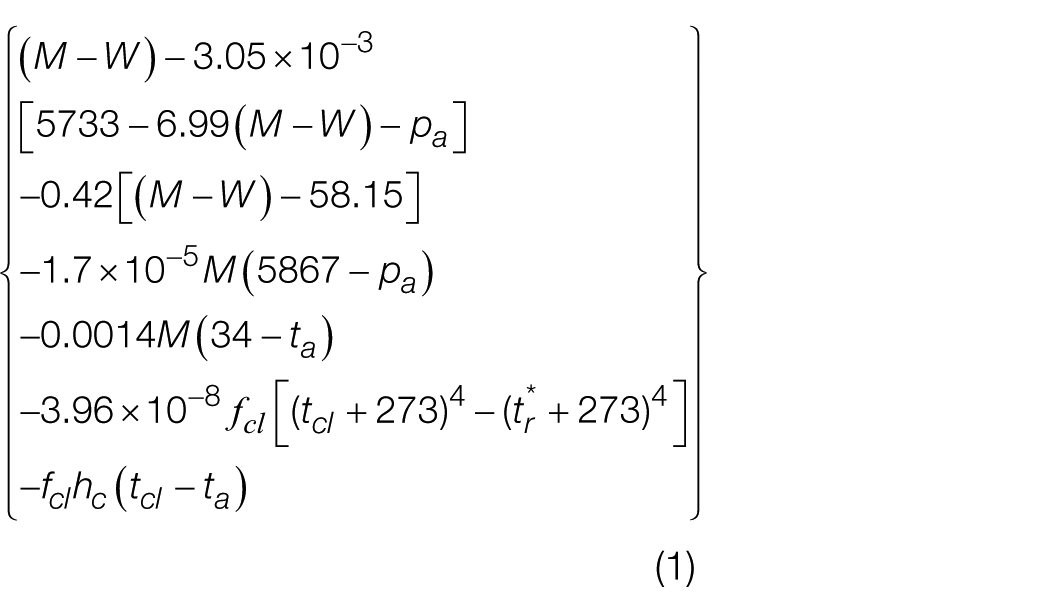
tcl, hc, and fcl are given by Equations (2), (3), and (4), respectively

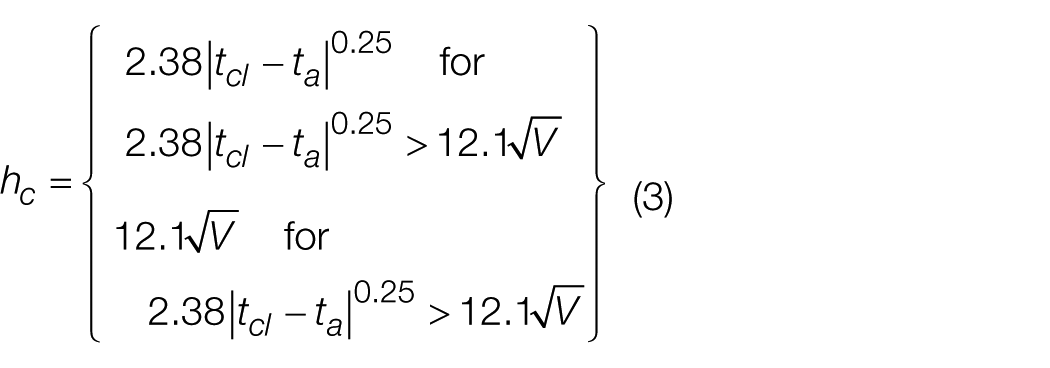

where M is the metabolic rate (W/m2), W is the effective mechanical power (W/m2), Pa is the water vapor partial pressure (Pa), ta is the air temperature (°C), fcl is the clothing surface area factor, tcl is the clothing surface temperature (°C),
PMV is defined as “An index that predicts the mean value of the votes of a large group of persons on the 7-point thermal sensation scale” in ASHRAE Standard 55. 18 How many people sense a certain thermal environment can be determined with ASHRAE thermal sensation scale 18 which can be seen in Figure 1 . The PMV index calculated according to environmental and personal factors on this scale is represented by seven different thermal sensation values.
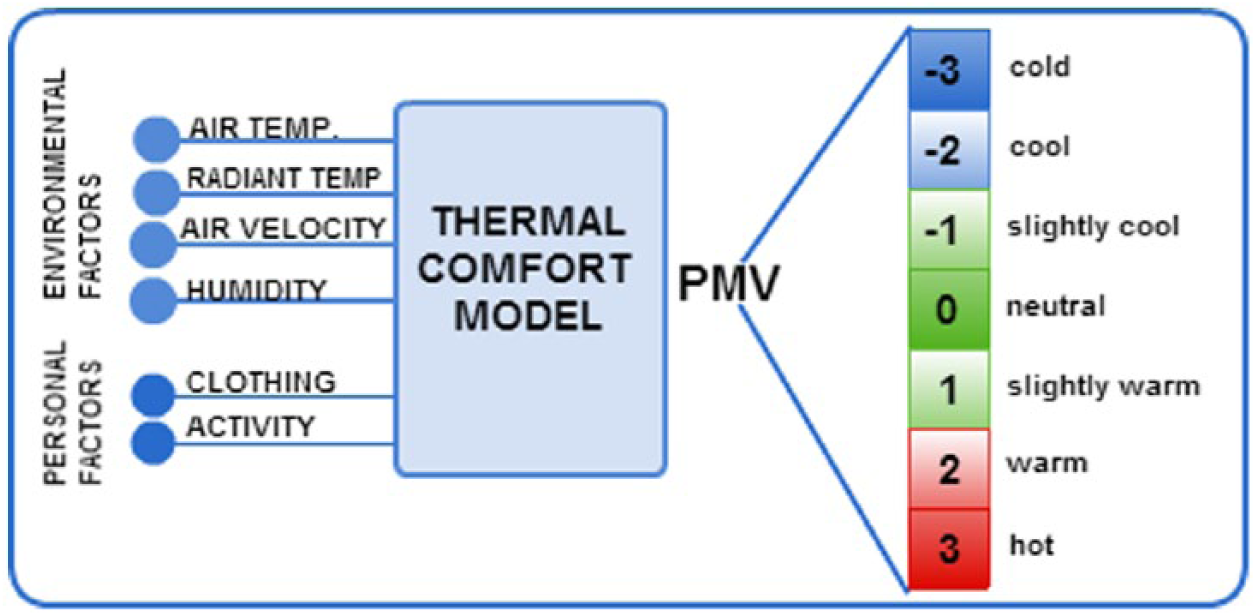
PMV index parameters and ASHRAE thermal sensation scale
PPD (Predicted Percentage Dissatisfied) is the other index related to PMV used to determine the percentage of the dissatisfied with the thermal comfort level in living spaces. The relationship between PMV and PPD can be calculated, as indicated in Equation (5)

Experiments performed on humans have shown that if PMV = 0 in living spaces, the PPD value is approximately 5%. When the PMV value is approximately −2 or 2, the PPD value is observed to be approximately 75%. 17
III. The Architecture of Monitoring and Control Platform
As can be seen in Figure 2 , the monitoring and control platform consists of three main parts: coordinator node, sensor nodes, and MCS. Coordinator node is connected to the computer, including MCS via the USB interface. Coordinator node performs duplex communication between sensor nodes and MCS.
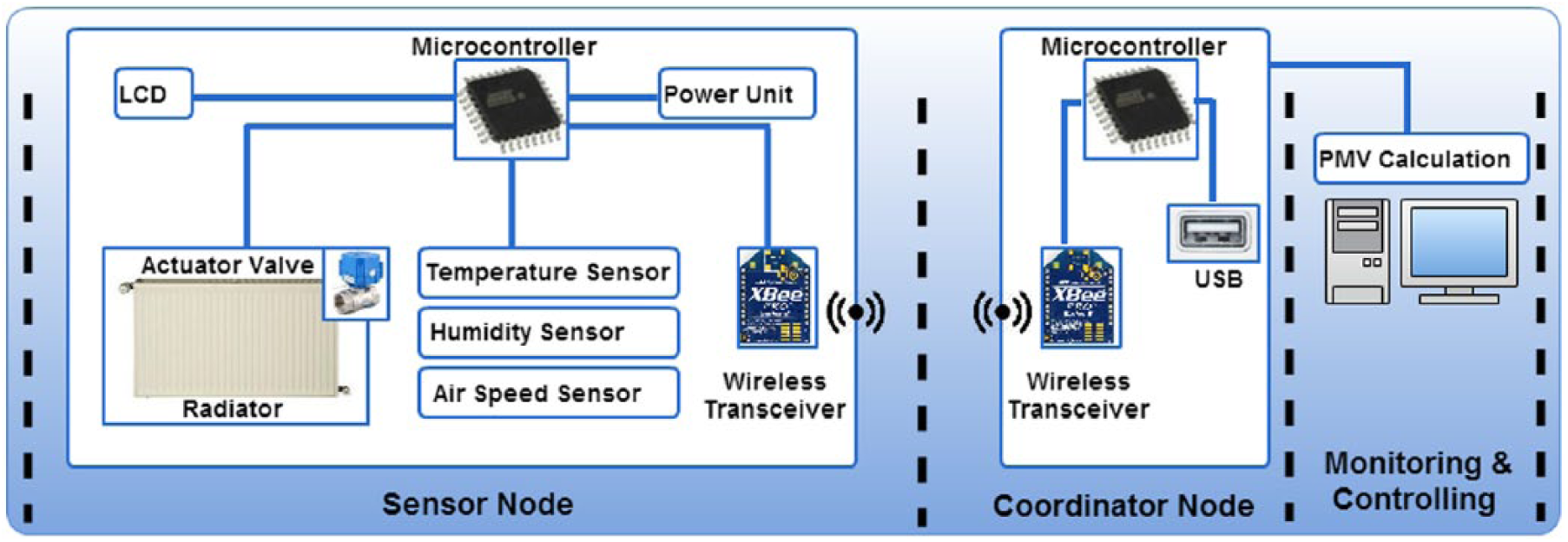
The block diagram of monitoring and control platform
Sensor nodes transmit to coordinator node the parameters including indoor temperature, humidity, and air velocity via wireless modules based on zigbee. Sensor nodes are also connected to radiators controlled by an electric actuator valve (EAV). Sensor nodes control the EAV according to the data received from the coordinator node. Moreover, the occupants are informed about the indoor comfort level through an LCD screen settled on the sensor nodes. WSN systems can be expanded by increasing the number of sensor nodes. For this reason, the number of sensor nodes used in this study can be changed according to the size of a living space where they will be settled.
The data coming from sensor nodes are saved in the database via MCS, and PMV is calculated. The position of EAV controlled by sensor nodes is determined according to the PMV value.
A. The WSN nodes
In this study, zigbee nodes based on IEEE 802.15.4 standard and commonly used in home automation systems were used. Zigbee wireless transceivers have the properties such as low power consumption, low cost, easy installation, and containing maximum 65,535 nodes. 33 Sensor nodes and coordinator nodes have several common hardware units. A microcontroller from 16-bit DSPIC33F family and Digi XBee Pro 50 mW wireless transceivers were used in both nodes. Sensor nodes also include sensors measuring the parameters such as indoor temperature, humidity, and air velocity. In order to measure indoor temperature and humidity, an SHT-15 sensor was used.
Another parameter which is used to calculate the PMV is the mean radiant temperature. This parameter reveals how people are affected by surface temperatures in a closed environment and is measured more difficult compared to air temperature. The mean radiant temperature can include different values in indoor and outdoor spaces. While the mean radiant temperature can be measured up to 30 °C higher than the outdoor temperature on sunny days, it is almost identical to the indoor temperature in indoor space and is disregarded in some studies.34,35 In this study, it is assumed that the mean radiant temperature is equal to the indoor temperature.
Another parameter which must be measured for PMV is air velocity. Air velocity generally changes between 0 and 1 m/s in indoor spaces. These speeds have an effect on thermal comfort even in the indoor space. Since air velocity does not indicate a normal change depending on the time, the average of the data can be periodically obtained. 18 Bermejo et al. 31 used the value of air velocity in the indoor environment as 0.5 m/s in their study. In this study, air velocity was measured via an anemometer which can be connected to sensor nodes via a serial port during the measurements.
Sensor nodes regulate the hot water flow in radiators by controlling the EAV. A sensor node and EAV can be seen in Figure 3 . Since PMV has seven different values between −3 and 3, proportional EAV was preferred instead of On/Off EAV. The position of EAV consists of seven stages changing between 0 and 1. If the position of the valve is zero, it is fully open, and if the position of the valve is 1, it is fully close. After having calculated the position of EAV by MCS, it is sent to the sensor node.
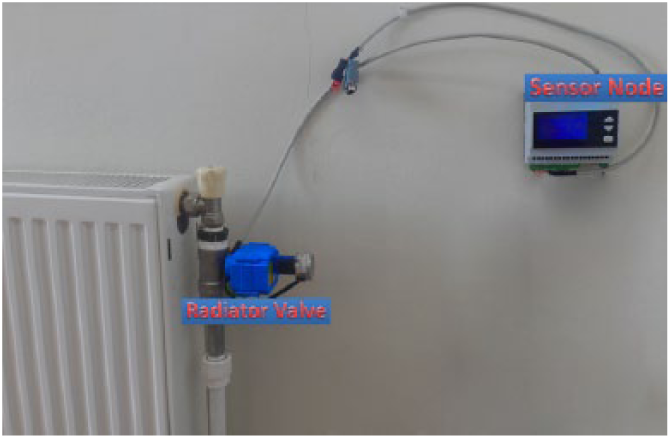
Sensor node and EAV
B. MCS
In this study, the automation software based on PC was developed, and the graphical user interface (GUI) of MCS is given in Figure 4 . C# programming language was used as a software language. SQL Server database management system was preferred to save the data measured via sensor nodes. Modbus protocol was used for communication between MCS and sensor nodes.
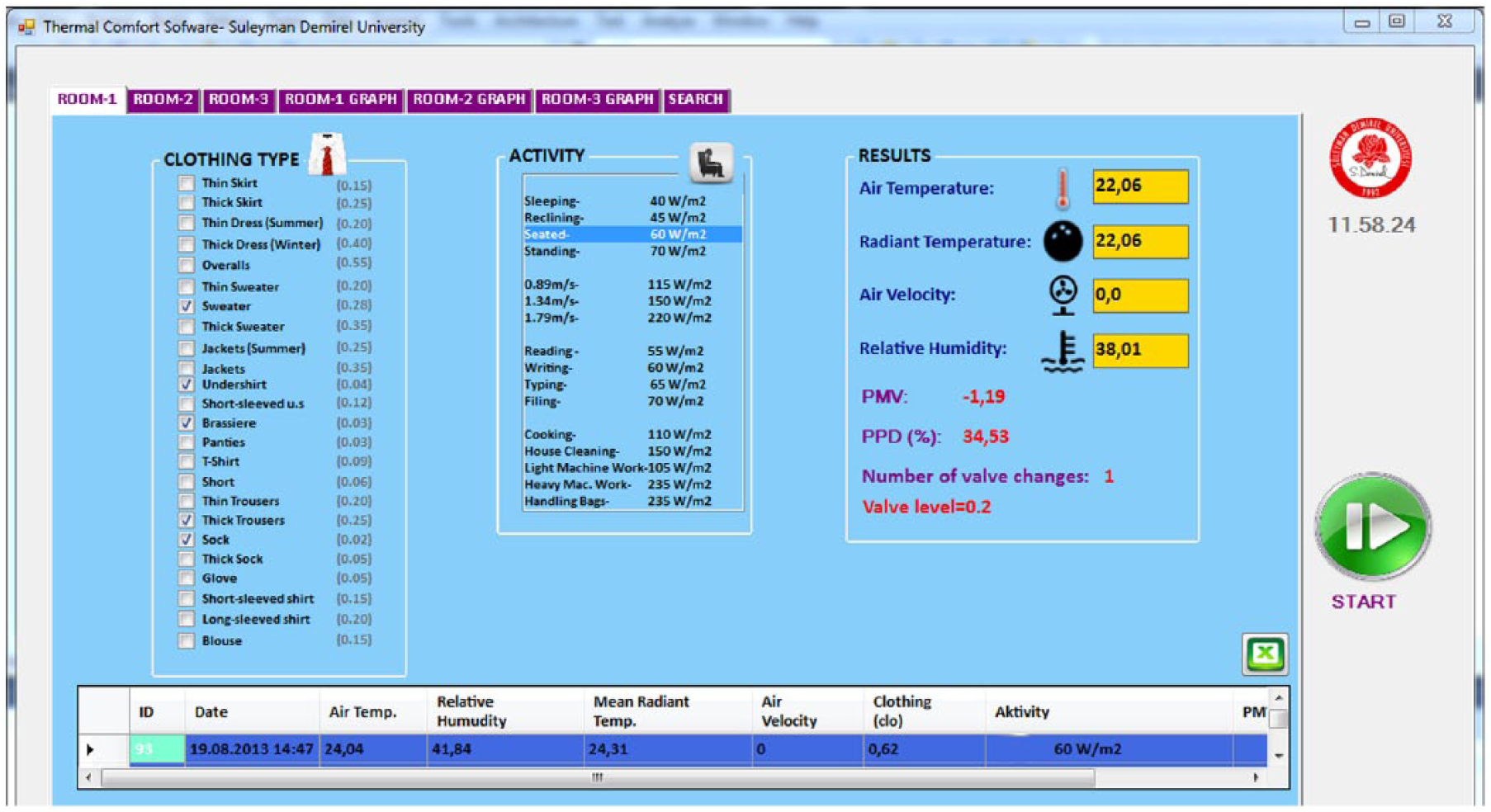
The GUI of monitoring and control software
Activity is the personal parameter of PMV dynamically changing and significantly affecting the comfort sense of people. The amount of heat generated according to the movement intensity of the human varies and the heat generated by a variety of activities is called a metabolic rate with the unit of “met” (1 met = 58.2 W/m2). The other personal parameter affecting the thermal comfort sense of people is clothing with the unit of “clo.” Overdressing or underdressing causes the thermal unbalance between the human and outdoor space. Metabolic rates 18 for a variety of activities and clothing thermal resistances of various clothing groups 17 can be dynamically selected by the user via MCS.
PMV, PPD, and the position of valves are calculated via MCS after personal factors, and environmental factors are obtained. Furthermore, MCS introduces the graphics of changes depending on the time of the PMV and PPD values.
IV. Experiments
Several experiments were performed to determine the amount of saved energy obtained by the system developed in living spaces. The experiments were conducted under the same conditions in four rooms of one building used by the Faculty of Technology of Suleyman Demirel University, in Isparta city, Turkey. February is the coldest month in Isparta with an average temperature of −1 °C and experiments were performed in this month. The sensor nodes controlled by MCS were installed to the first three of the rooms, which are expressed by numbers 1, 2, 3, and 4. Room 4 which did not have any control system was heated with the conventional method. The time interval for data transmission between sensor nodes in three rooms and MCS was determined as 10 min. It can be changed by the occupant via MCS.
The amount of saved energy was calculated with the amount of heat transferred by room radiators. The amount of heat transferred by a radiator can be calculated, as indicated in Equation (6)

where Q is the heat transferred through a radiator (kJ/s),
In order to calculate the
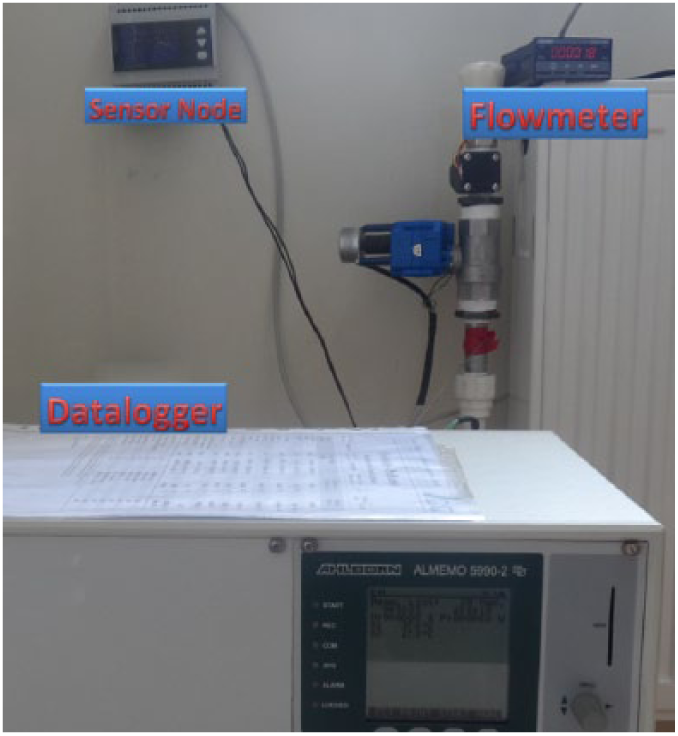
An experimental setup for measurements
The experiments were performed synchronously in all rooms between 11:00 am and 13:00 pm. Since the PMV needs to be changed during experiments, indoor temperature, humidity, and air velocity were changed by adjusting the positions of doors and windows (open/closed) in the rooms. The activity and clothing values which have an effect on PMV were changed by MCS.
A. Experiment 1
In the first experiment, doors and windows in the rooms were closed. The clothing thermal resistance was selected as 1 clo and activity was selected as sitting (60 W/m2). In experiment 1, the amount of heat transferred by radiators can be compared in Figure 6 . Qs is the average of Q values in room 1, room 2, and room 3, and Qt is the Q value in room 4. As can be seen in Figure 6 , while the average value of Qs is equal to 22.5 kJ/s, the average value of Qt is equal to 42.6 kJ/s.
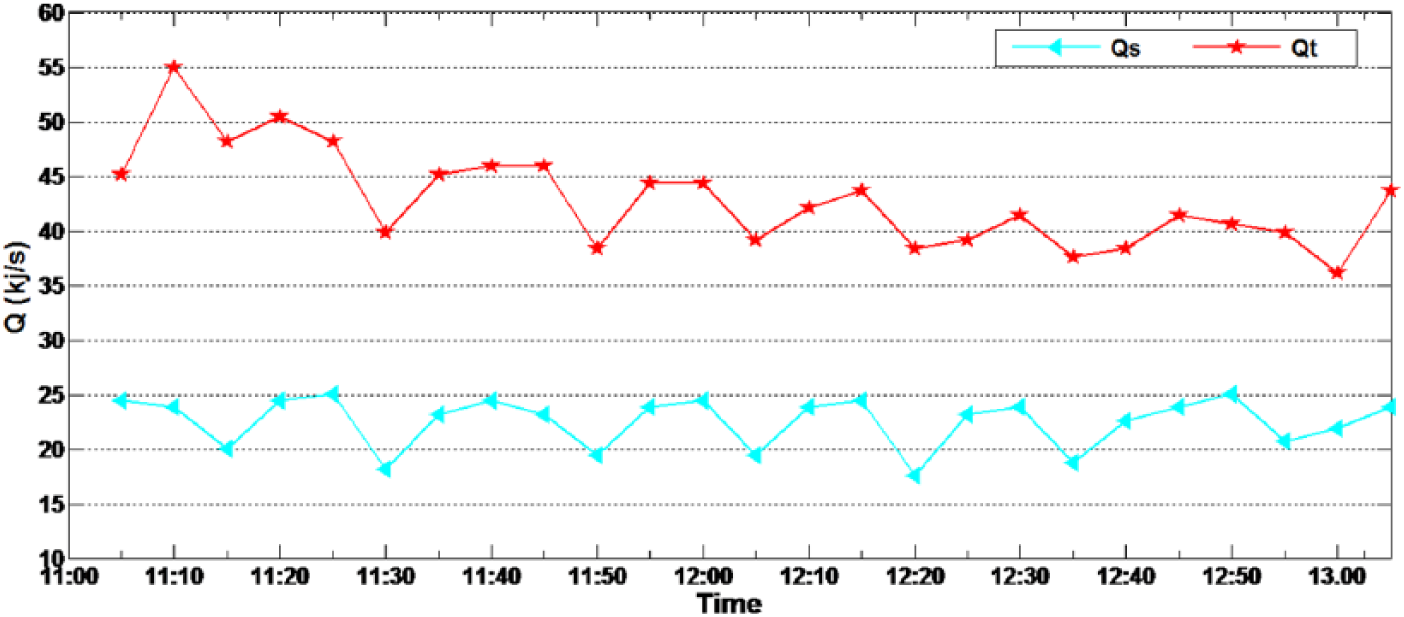
The amount of heat transferred by radiators in rooms for experiment 1
Figure 7 shows the position of EAV and the average of the PMV value in the rooms during experiment 1.
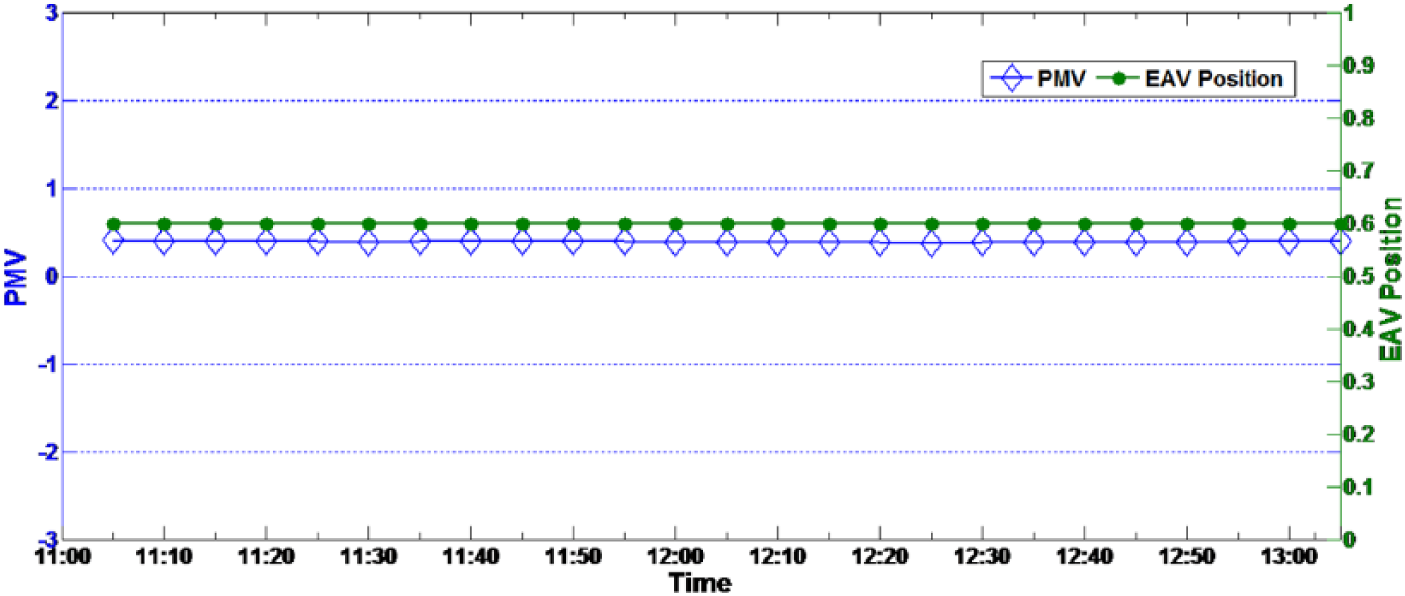
The position of EAV and the average of PMV in the rooms during experiment 1
B. Experiment 2
Door and windows were closed in the rooms during experiment 2. The clothing thermal resistance was selected as 1.75 clo and activity was selected as sitting (60 W/m2). The value of clothing thermal resistance was increased significantly compared to experiment 1. As can be seen in Figure 8 , while the average value of Qs is equal to 18.9 kJ/s, the average value of Qt is equal to 40.2 kJ/s.
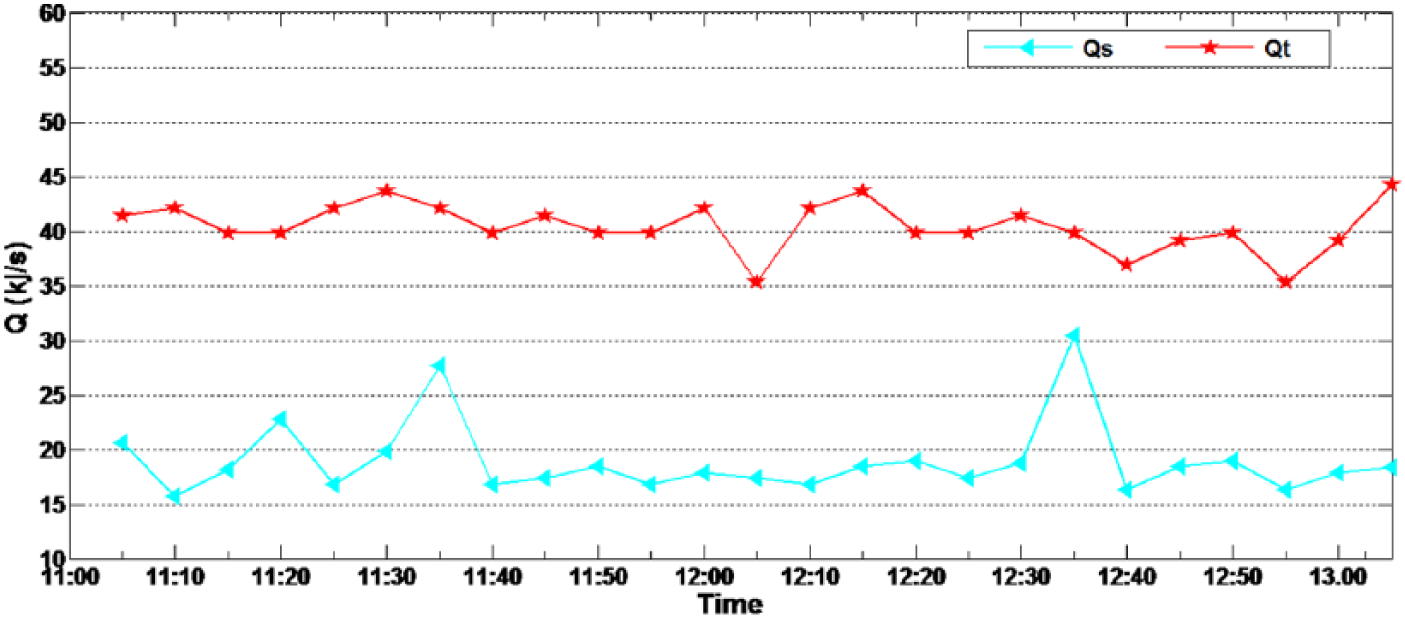
The amount of heat transferred by radiators in the rooms for experiment 2
Figure 9 shows the position of EAV and the average PMV value in the rooms during experiment 2.
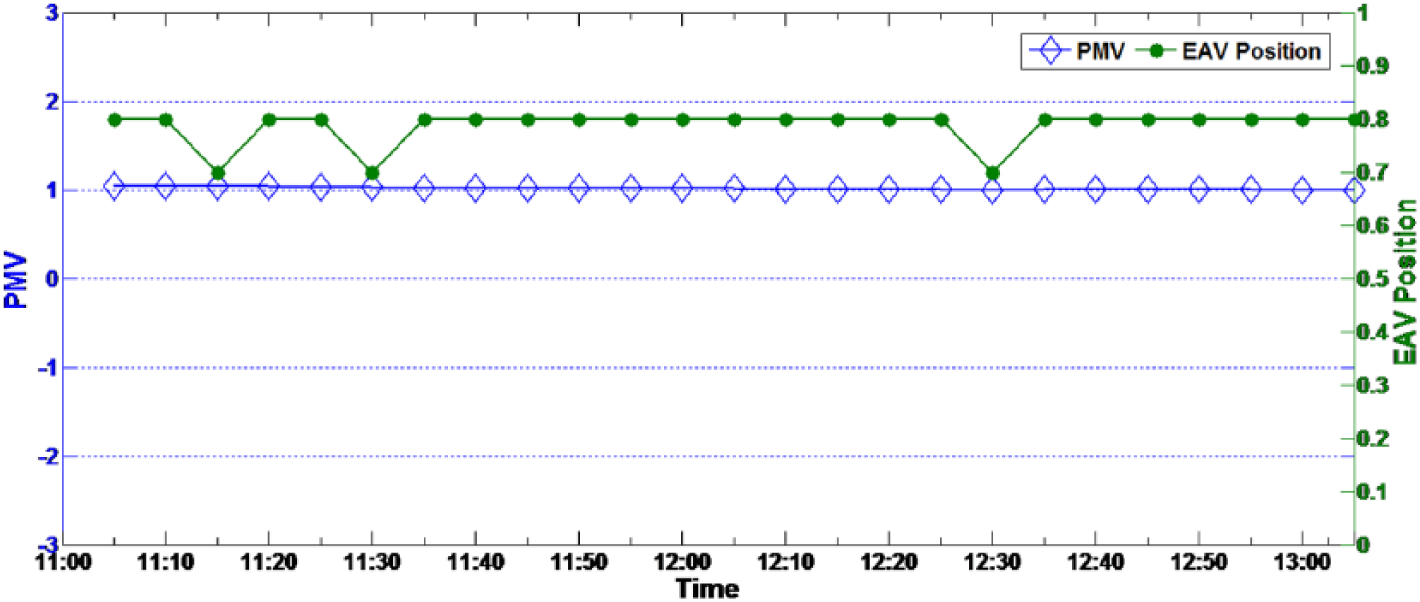
The position of EAV and the average of PMV in the rooms during experiment 2
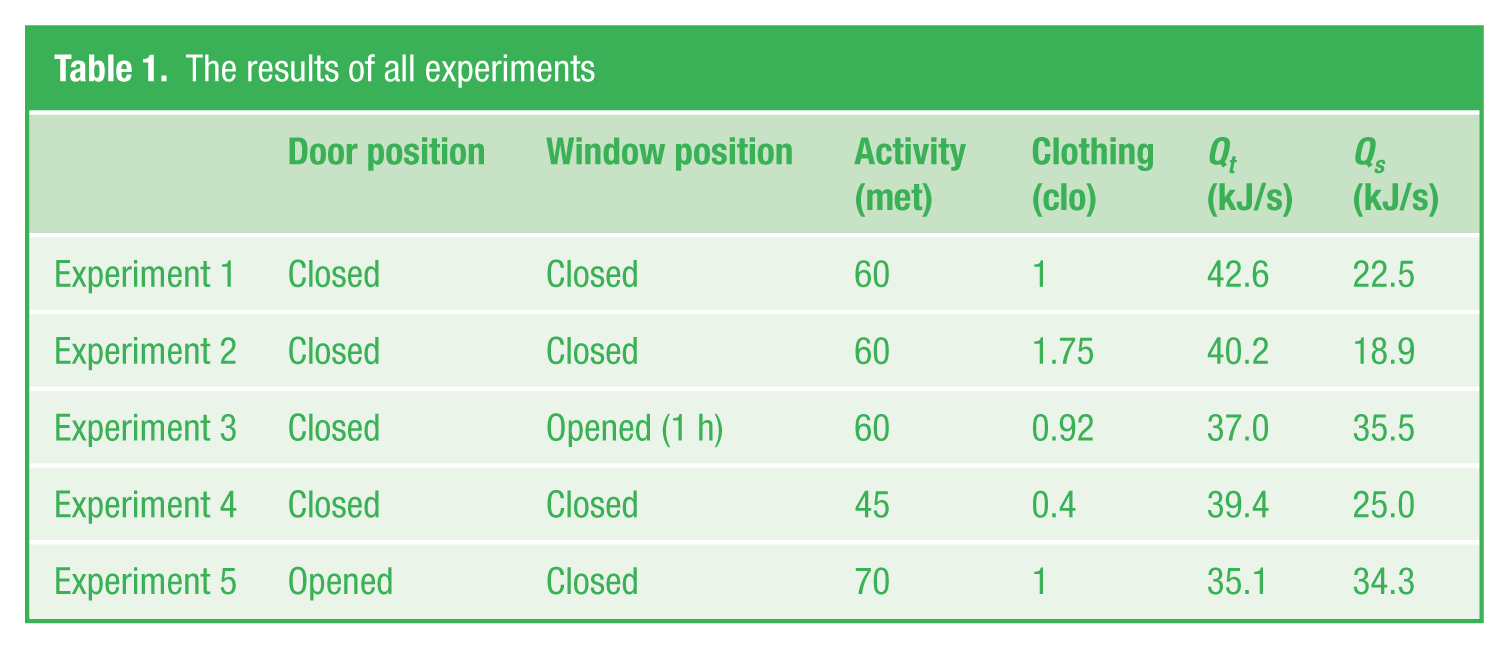
Table 1 shows the results obtained from several experiments. It can be seen from the data in Table 1 that the value of Qs decreases significantly when the windows and doors are closed in the experiments and, therefore, a significant energy saving compared to room 4 is obtained. Furthermore, the results show that if the doors and windows are opened, the value of Qs is close to the value of Qt. In experiments 1, 2, and 4, to change the clothing thermal resistance and activity is important for the value of Qs.
The results of all experiments
V. Conclusion
In this study, an application based on WSN, in which space heating was controlled according to the thermal comfort sensation of the occupants, was realized. The position of radiator valves used for heating in the rooms was changed in real time according to the PMV index, and the thermal comfort parameters were continuously monitored via MCS based on PC.
After the hardware and software processes of the system had been completed, the energy save of the system was analyzed by comparing the amount of heat transferred by the radiators in the living spaces in the experiments conducted. It was observed that the heat transferred to the environment through the room radiators reduced significantly, especially with closed doors and windows. Also, the experiments showed that to change the values of personal parameters such as clothing and activity is effective in the amount of heat transferred by radiators.
In future studies, researchers may focus on the development of applications in which a new comfort value is calculated by taking into account the thermal sensation of each person in living spaces where many people live. Moreover, smartphone systems may be developed instead of PC-based systems in order for studies to gain a commercial dimension.
Footnotes
Funding
The author(s) received no financial support for the research, authorship, and/or publication of this article.