



Abstract

Weidmuller Enhances Its Integrated Energy Management Offer
Using expertise it has gained over the last few years to establish a comprehensive energy management system for manufacturing companies, the company is offering customised advice in the energy management sector for ‘Industry 4.0’.
To support networked production, data from current production processes is analysed, and a bespoke monitoring solution is developed and implemented for customers. One of the key elements of energy management is to provide a transparent overview of energy flows in production. This enables sites with high energy consumption to be addressed specifically.
The Weidmüller algorithm can show optimisation potential by means of energy peak load analytics. An ‘Out-of-Time-Detect’ algorithm can also detect machines or machine parts that were not switched off at the weekend or in the evening. The algorithm also uses energy data to identify machines that are running outside of the specified standard operation as a result of wear or an imminent defect.
ARC to Hold European Industry Forum Event in May 2017
On 16–17 May 2017, ARC Advisory Group will host its European industry forum (EIF) at the Meliã Hotel in Sitges, Spain.
The forum will include exclusive sessions on major issues facing our industry, with multiple tracks and workshops that enable executives to explore topics such as Industrie 4.0, IIoT & Smart Manufacturing, Cybersecurity, IT/OT Convergence, Energy & Sustainability, among others. Andy Chatha, President and Founder of ARC Advisory Group, will give a keynote speech at the event.
Harland Simon Uses Radio Frequency Identification for Stock Control at Addenbrookes National Health Service Trust
In any acute hospital, ordering and preparing materials for scheduled and emergency procedures is a key process which traditionally takes up a large proportion of clinical time. By using radio frequency identification (RFID) technology to centralise and streamline the management of theatre supplies, Cambridge University Hospitals National Health Service (NHS) Trust (CUH) have freed up time for clinical staff, optimised stock holding and minimised waste.
The RFID Discovery Inventory system interfaces with CUH’s inventory database. This enables the hospital to accurately record usage for each operation and ensure reliable inventory replenishment. The Trust is believed to be the first in the United Kingdom to introduce a central theatre kitting service using RFID technology, and now prepares around 100–120 kits per day for elective procedures plus 50 for emergency and contingency kits.

All equipment that theatre staff require for a specific procedure is collated in a patient specific tote box, which contains a RFID tag to allow its unique identification.
Benefits include optimised stock levels and reducing per-patient costs. Harland Simon is discussing extending the system into the Cardiology and Interventional Radiology units at Addenbrookes, realising further cost savings.
Yokogawa Launches Successor to AQ6315A Spectrum Analyser
The new AQ6374 is the successor to the Yokogawa and ANDO-branded market-leading AQ6315A wideband optical spectrum analyser.
Featuring diffraction grating–based monochromator technology delivering high-precision measurement performance and accuracy, an enhanced user interface and an air purging feature, the new instrument offers engineers a powerful benchtop tool for general-purpose optical spectrum measurements over the wavelength range from 350 to 1750 nm.
By enhancing the control technologies originally developed for the AQ6370 series, the AQ6374 model achieves measurement speeds up to 40 times that achieved by the AQ6315A. The ability to sample 100,001 points of data (100 times as much as the AQ6315A) enables measurement over a broad wavelength range with high resolution, while data-transfer rates during remote control via Ethernet are up to 100 times faster than for the AQ6315A.
The measurement performance achieved by the monochromator technology includes a wavelength resolution setting from 0.05 to 10 nm, a wavelength accuracy of ±0.05 nm (at 633 and 1523 nm) or ±0.2 nm (from 350 to 1700 nm), a level accuracy of ±1.0 dB, level sensitivity of −80 dBm (from 900 to 1600 nm), a measurable power range from −80 to +20 dBm, a close-in dynamic range of 60 dB (peak ± 1.0 nm, resolution 0.05 nm) and a sweep time less than 0.5 s.
Internal data storage of 512 Mbytes is included, and external data storage is supported via a USB interface. Ethernet RJ-45 and GP-IB interfaces are also incorporated. A built-in calibration source is provided for automatic optical alignment and wavelength calibration.
The new purging feature is designed to minimise the influence of water-vapour absorption on spectral measurements by continuously supplying a pure purge gas such as nitrogen (or just some dry air) to the monochromator through dedicated connectors on the back panel.

The AQ6374 features an ergonomically designed graphical user interface for maximum user friendliness, incorporating elements such as a full text menu, aggregation of measurement conditions, display of a ‘hard key’ menu the same as the panel layout, and a trace setting menu.
Because of its capability of measuring over a broad wavelength range, the AQ6374 is well-suited to testing light sources, optical filters and sensors operating in the visible range as well as in the telecom range of the spectrum.
Bravo Environmental Uses RFID to Identify Underground Pipes, Wires
Seattle-based underground utility maintenance and inspection company Bravo Environmental is burying an RFID tag at each location it accesses underground, in order to create an automatic record of what occurred, as well as where and when, and to enable personnel and customers to locate a particular pipe, conduit or other underground equipment after it is covered.
The company is using the ‘InfraMarker’ asset-management solution, provided by Berntsen – which consists of the RFID tags, an iOS- and Android-based app, and geographic information systems (GIS) software supplied AmigoCloud – to manage data regarding each marker’s location.
The InfraMarker 362B utility marker is made with an Omni-ID Dura 3000 RFID tag.
Each tag contains an off-the-shelf EPC Gen 2 ultrahigh-frequency (UHF) RFID transponder, as well as a magnet detectable by means of a magnetic locator. The company determined that Berntsen’s markers could easily be scanned by an RFID reader or magnetic locator after the project was complete, and is now installing the markers wherever it digs.
The subsurface utility engineering (SUE) excavation process consists of evaluating an area at the request of an engineering firm, and then excavating to seek the horizontal and vertical locations of a piece of infrastructure, such as a gas line, water pipe or electric cable. Before Bravo Environmental began using the InfraMarker system, its employees manually recorded the locations of whatever they found underground, took pictures of those items and forwarded that data to the office so that the information could be packaged and shared with the customer.
The InfraMarker solution includes TSL’s 1128 Bluetooth UHF RFID reader with a cradle for a smartphone loaded with the InfraMarker app. The app can utilise the phone’s global positioning system (GPS) location data to record a marker’s longitude and latitude. A phone’s GPS unit, however, is not as precise as a GPS device designed specifically for industrial purposes. As such, the app can also use the phone’s Bluetooth radio to access an industrial GPS device – such as a Trimble R-1 global navigation satellite system (GNSS) receiver – to determine a more precise location.
When Bravo’s workers dig a hole to search for utilities, they identify what they locate and then insert an InfraMarker tag about 12 inches below the surface. Staff members in the field can use the handheld with a smartphone to write data to the marker tag. The InfraMarker app on the iOS or Android phone then captures the tag’s ID and other information written to the tag, and forwards that data to the AmigoCloud software. Workers use the app to enter a description of the area, along with the type of utility found at the site (a gas pipe, for instance), the owner, any pictures or video footage of the asset and area, and notes regarding conditions. The device forwards the tag ID and related data to the AmigoCloud software, which links that information together.
The data collected can be shared with any authorised parties, such as engineering firms, contractors or other companies, that may need to dig underground, and Bravo Environmental can control access to that data.
Siemens Launch New Controllers for Rail Applications
New automation controllers for rail applications are being launched by Siemens. The new rail-tested and approved ‘Siplus’ extreme rail devices are based on the latest generation of Simatic S7 controllers and are specially designed for the extreme conditions encountered in rail applications.
The new range includes the ‘Siplus’ extreme rail S7-1500 and S7-1200 advanced, basic and distributed controllers with ET 200SP, as well as the ‘Siplus’ HMI KP300 basic rail panel for operator control and monitoring. The devices have comprehensive certifications and all the necessary rail approvals (EN 15121, 45545, 50124, 50125 and 50155) and can be used on board the train or on the track for a wide range of automation tasks covering all rail applications.
Typical applications are heating, ventilation and climate control (HVC) systems in the train and signal systems, door drive systems on platform screen doors or sanding and lighting systems in the depot.
The network ‘Siplus’ extreme rail devices supersede the existing ‘Siplus’ S7-200 and S7-300 technology. Divided into two groups, the power supply for each channel group’s outputs is monitored for under voltage. The primary and secondary sides of each channel group are galvanically separated via optic couplers.
IHS Markit Predicts Increasing Demand for Smart High-End Safety Solutions
Industrial networking is part of safety solutions and connectivity. Some older fieldbus technologies are inherently safe; but it has taken some time to ensure that some Ethernet technologies are fully safe. There are still opportunities for newer technologies with great potential for high-end solutions.
According to the latest research from the Discrete Machine-Safety Components Annual Service, revenues from safety I/O are projected to grow faster than those from standard I/O. Digital modules in safety I/O remain the most popular globally, and most likely to remain so, as analogue costs more and can be seen as unnecessary.
Basic drives are the most common and becoming commonplace in emerging countries since they cost less and there is less stringent legislation on implementing safety practices in manufacturing. However, in Europe, Middle East and Africa (EMEA), sales of advanced drives are starting to grow quickly.
The focus on machine-safety components in mature markets is shifting from price to providing more features, benefits and connectivity. This shift means the mature market tends to use high-end components. Globally, IHS Markit predicts that revenues of laser scanners will surpass those of Type 2 light curtains in 2018; and revenues from safety programmable logic controllers (PLCs) will surpass those from safety relays in 2019. Neither of these trends is predicted to occur in the Asia-Pacific machine-safety markets, where price pressure remains high.
The requirement for – and the use of – safety PLCs is gradually increasing every year. Mature markets are seeking advanced solutions. With this need in mind, there will be a push on the prices of high-end PLCs, and so the average selling price (ASP) will decrease.
Ocean Optics Diffuse Reflectance Probe Provides Measurement Consistency
The Ocean Optics diffuse reflectance probe (DR-Probe) measures 45° diffuse reflectance, enhancing UV-Vis and near infrared (NIR) spectroscopy results. This sampling tool removes localised variance in reflectance measurements. It is suitable for applications such as colour analysis, material identification and food quality monitoring.
The DR-Probe integrates a light source and collection optics into one unit to measure 45° diffuse reflectance. With the probe’s collection optics fixed in place relative to the light source, the measurement geometry is constant. An included standoff accessory ensures a consistent 40-mm focal length between the probe and the sample. Sampling uniformity increases the reliability and consistency of measurement results.
The DR-Probe has an all-metal construction for durability in the lab or field. Its 6W tungsten halogen bulb has a 10,000-h lifetime.

Trescal Urges Industry to Do More to Protect Air Tools Users
Improperly installed and inferior quality air hoses pose a danger to air tool users, according to a leading international calibration specialist.
The advice, from Trescal, has been issued to heighten awareness among manufacturing organisations regarding the potential risks associated with the use of air tools on production, assembly and repair operations.
The concerns surround the fact that many industrial air tools are being fitted with unsuitable, lower quality or wrong diameter air hoses or that inadequate checks and validates are in place. This can lead to a risk of injury to operators or damage to components by the air hose working loose.
The fitting of air hoses is an operation that end-users perform themselves during installation, but not enough thought is given to whether the correct hose is being used or the quality of the attachment. This can result in the line coming off during operation or vibration injury due to over or under flow of air pressure.
An inappropriate air line is a considerable health and safety hazard in industrial applications. Most air tools have circa 90 pounds/in2 (pressure) going through them, and if the line is inadequate, this heightens the risk of the air hose becoming detached from supply and increases the likelihood of accidents that can injure operators or damage components.
Using the correct diameter hose will not only protect operators and components but, in addition, ensure the correct air flow is being used for the right application of the tool.
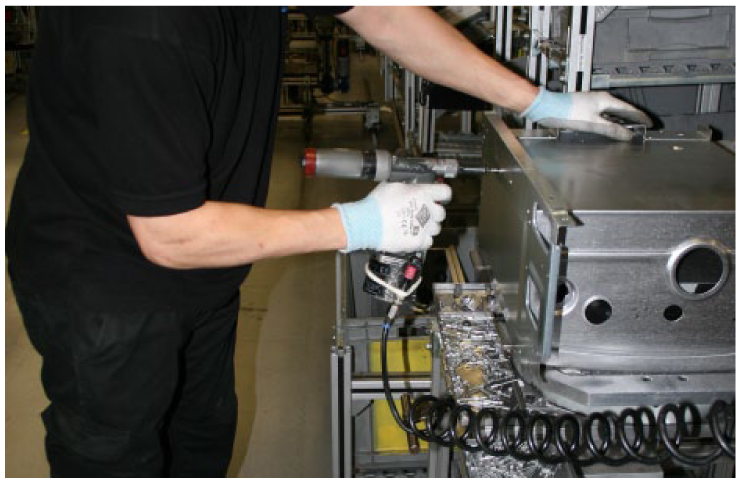
One of the ways to mitigate risk is to employ an independent company to validate the components. Trescal are able to offer this service to industry at legislative standards working within the air tool manufacturer’s specifications.
Martindale Electric’s Legionella Testing Thermometer Kit Now Available
Now available from Martindale Electric is the new ‘ThermokitLGN’ Legionella Testing Thermometer Kit.
The kit tests and monitors water temperature and conditions that can favour the growth of Legionella and other harmful bacteria.
Carrying a risk of infection, such as Legionnaires disease, legionella bacteria is commonly found in installations such as cooling towers and air-conditioning and industrial cooling systems in larger buildings, such as hotels and hospitals.
With water temperature being a key factor, the new thermometer kit can be used to monitor and test the temperature of both standing water and the surface of pipes and tanks that form part of a water system. The kit includes a DT73 thermometer with maximum function and two robust surface and immersion probes to simplify measurement in accordance with the revised approved code of practice (ACOP) issued by the Government’s Health and Safety Executive.
Lightweight and complete with a soft carry case, the ThermokitLGN complies with recent legislation, which states that all employers who manage premises with hot/cold water systems and/or wet cooling systems have a legal responsibility to identify any risk of contamination and to prevent or control it.
Only Four Components Required for Allegro Low-Voltage Bipolar Stepper
Allegro MicroSystems Europe has launched the A3916 low-voltage bipolar stepper or dual DC motor driver IC.
The new device is designed for pulse-width-modulated (PWM) control of low-voltage stepper motors or dual DC motors using just four external components, and is capable of output currents up to 1 A per channel and operating voltages from 2.7 to 15 V.
The A3916 integrates all motor control circuitry including a fixed off-time PWM regulator that sets a peak current in the motor winding based on the selection of a low-value current-sense resistor. A single supply eliminates the need for an external low-dropout regulator, and the integrated charge pump requires only one external capacitor.
Output diagnostics are provided by an active low fault output that notifies the user of a thermal shutdown (TSD) or over-current protection event.
The new device is targeted at applications that run off single, Li-ion cell or 3 AA batteries, including office and industrial automation systems, point-of-sale equipment, 3D printers, medical, closed-circuit television (CCTV) and the toy market.

Two package options are offered: a low-profile 3 × 3 mm 16-terminal QFN (suffix ES) and a drop-in replacement for the A3916 in a low-profile 4 × 4 mm 20-terminal QFN (suffixes ES and -1). Both products have an exposed power tab for enhanced thermal dissipation.
Emerson Launches New Plantweb Digital Ecosystem
Emerson has introduced the expanded ‘Plantweb’ digital ecosystem, a scalable portfolio of standards-based hardware, software, intelligent devices and services for securely implementing the Industrial Internet of Things (IoT) with measurable business performance improvement.
Plantweb supports enterprise-wide operations with an expanded portfolio of pervasive sensing field instruments, the secure ‘First Mile’ family of software, gateways, security devices and services, the Plantweb Insight and Advisor scalable suite of software applications, the AMS ARESTM platform and Microsoft-enabled, cloud-based remote expert connected services.
Emerson’s Plantweb digital ecosystem includes several new products, services and partner-enabled solutions:
Pervasive Sensing. A non-intrusive temperature sensor, as well as new sensing technologies in the area of corrosion detection, medium voltage electrical protection and hazardous gas leak detection, among others.
Secure First Mile. A set of architectural approaches and designs that allows customers to selectively connect highly secure data from protected control and operation systems (OT) to operational performance applications in the cloud environment (IT).
Plantweb Insight Software. Analytics for monitoring asset health. Plantweb Insight applications can run independently of existing business systems and distributed control systems (DCS) and provide a simple yet powerful entry point to Industrial IoT.
Plantweb Advisor Software. Analytical expert applications for asset health, performance modelling and facility-wide energy optimisation. Health Advisor, Performance Advisor and Energy Advisor applications are scalable to thousands of assets across multiple facilities for enterprise-wide equipment and energy analytics.
AMS ARES Platform. An asset-management platform that aggregates the health of assets from multiple business systems, and pushes these data to relevant plant personnel depending on their roles and responsibility, either on desktop or mobile device.
Always Mobile. The DeltaV Mobile application allows users to securely and remotely monitor their process and receive notifications on user-selected process alarms.
Microsoft Azure and IoT Cloud. Emerson has standardised on the cloud-based Microsoft Azure IoT Suite to enable connected services, expanding the Plantweb digital ecosystem to provide a secure, flexible platform for private cloud networks and third-party cloud service relationships.
According to research conducted by Industry Week, only 5% of industrial manufacturers have a comprehensive Industrial IoT strategy, while more than 50% see improved business performance as a reason to invest in Industrial IoT technologies.
Altra Completes Acquisition of Stromag
Altra Industrial Motion, a global manufacturer and marketer of electromechanical power transmission and motion control products, has announced that on 30 December 2016, it acquired the Stromag business from GKN plc.
Stromag generated approximately EURO131m in revenue in 2015, and the acquisition is anticipated to be accretive to Altra’s earnings in 2017, excluding any one-time or acquisition-related costs.
The acquisition cost comprised the assumption of debt totalling approximately EURO14m and a cash consideration of approximately EURO184m, and is subject to normal adjustments related to working capital and other reconciling items.
‘Stromag provides Altra with complementary products, increased presence in key geographic regions and penetration into new growth end markets’, said Carl Christenson, Chairman and CEO of Altra. ‘It has a strong reputation, and its highly engineered clutches, brakes, torsional couplings and limit switches serve as excellent product extensions for Altra. We are excited to welcome the more than 700 Stromag employees to the Altra family’.

Yokogawa Wins Order for United Arab Emirates Power and Desalination Station
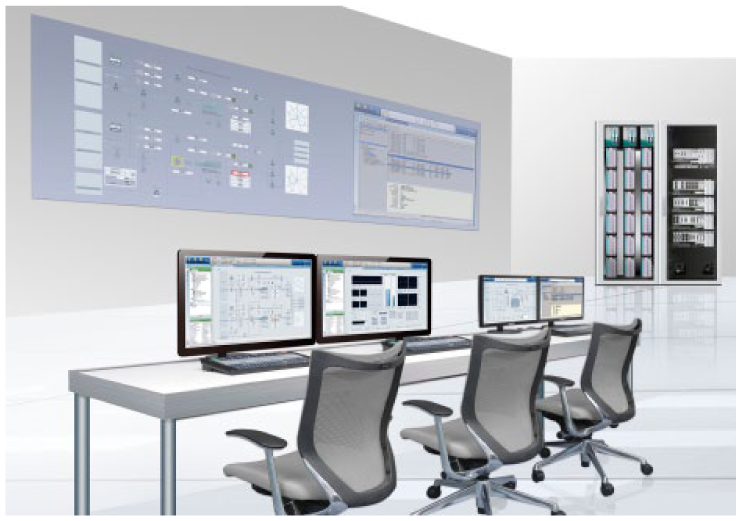
Yokogawa has announced that its subsidiary Yokogawa Middle East & Africa has received an order from the Sharjah Electricity & Water Authority (SEWA) to provide control systems for the Layyah Power and Desalination Station.
SEWA, the owner and operator of this plant, is an agency of the Emirate of Sharjah, which is one of the states that make up the United Arab Emirates (UAE).
SEWA is retrofitting the control systems, auxiliary facilities and utilities for units 7 and 8 at the Layyah Power and Desalination Station. Each of these units comprises a 75 MW oil and gas-fired thermal power plant and a 27,000 m3/day multi-stage flash (MSF) desalination plant: a technology that involves the heating and evaporation of seawater in multiple vacuum distillation tanks to produce steam, which is then condensed to produce fresh water. Such systems are energy-efficient because they use the heat from the steam that is created in the vacuum distillation tanks.
For this project, Yokogawa Middle East & Africa will deliver the Centum VP integrated production control system for the boiler, turbine governor, turbine protection system and the desalination plant at each of these units, as well as the Prosafe-RS safety instrumented system for burner management and boiler protection.
The company will also deliver field instruments such as the Dpharp EJA series differential pressure/pressure transmitter, continuous emission monitoring systems (CEMS) and steam and water analysis systems (SWAS).
In addition to being responsible for engineering, the company will provide support for the installation and commissioning of these systems, with all work scheduled for completion by September 2017. This is Yokogawa’s first ever DCS order for a power and desalination plant in the UAE.
In the UAE and throughout the Middle East, demand for electricity and water is soaring due to rapid economic growth. Power and desalination plants that rely on the region’s abundant oil and gas resources make up an important part of this region’s infrastructure. Backed by this order, Yokogawa will continue working to expand its control business in the power and water infrastructure market.
Medacta USA Tries RFID for Parts Tracking
Orthopaedic implant company Medacta USA is piloting an RFID-enabled solution to track its loaner kits when they are provided to hospitals. Each kit comes in the form of a case filled with Medacta USA implant products.
The system, supplied by inventory-management technology firm Terso Solutions, allows Medacta USA to receive daily updates regarding which products are inside each case, as well as each time the case is opened. In this way, users can view which implants remain in a particular kit, and where that case is located. That information is intended to help the company prevent errors, investigate losses and, if Medacta USA adopts the system permanently, automate the billing process.
Since Medacta USA began testing the technology, it has been able to more accurately and efficiently replenish kits with replacement items – even when cases are still in the field – since Medacta USA now knows which items were removed from the kit and not returned. It also knows when and where those actions occurred.
Terso Solutions’ RFID mobile case automated inventory-management solution consists of Terso’s mobile case, a Pelican hard-sided carrying case with a built-in RFID reader, a 4G cellular radio and a microprocessor to store read data and forward that information to Terso’s Jetstream cloud-based software.
When Terso’s RFID Mobile Case is opened and then closed, its built-in Impinj RS500 reader interrogates the RFID tag attached to each surgical item, and then forwards that data to the Jetstream software via a cellular connection.
An Avery Dennison AD-321 RFID tag is attached to each implant product’s packaging, so that as it is placed inside the kit, the case’s reader can capture every tag’s unique ID number, which is linked to that product’s description and serial number in the Jetstream software. Each time the case is opened and then closed, the reader is prompted to interrogate the tags, and to then transmit the ID numbers to the Jetstream software via a cellular connection.
Once each evening, the case’s reader automatically interrogates the tags again and forwards that data to the software, thereby updating the inventory status – even if the case may not have been opened that day.
Medacta USA is currently testing two Terso cases filled with implants for hip surgeries. Each case has travelled to a customer and back 10–15 times, McIntyre says, and has functioned well. The only problem that has occurred, he reports, is periodic loss of transmission when the case is at a location – in a hospital basement, for instance – in which cellular coverage is unreliable.
Allegro Introduces a Dual-Die Programmable Linear Hall Sensor IC
The new A1346 from Allegro MicroSystems Europe is a dual-die, highly programmable linear Hall sensor IC that is an ideal solution for safety-critical applications.
The A1336 incorporates full die redundancy with the added benefits of full diagnostics. The combination of these two features allows for a higher level of diagnostics without interruption to the application (where diagnostics would otherwise render a die temporarily unresponsive) and also allows the controller to know which die to trust when the two outputs do not agree.
The new device incorporates dual high-precision, programmable Hall-effect linear sensor integrated circuits with open-drain outputs, for both automotive and nonautomotive applications. The signal paths in the A1346 provide flexibility through external programming that allows the generation of accurate and customised outputs from an input magnetic signal.
Each BiCMOS monolithic integrated circuit incorporates a system-on-chip configuration that includes a Hall sensing element, precision temperature compensating circuitry to reduce the intrinsic sensitivity and offset drift of the Hall element, a small-signal high-gain amplifier, proprietary dynamic offset cancellation circuits, advanced output linearisation circuitry and advanced diagnostic detection.
A key feature of the A1346 is its ability to produce a highly linear device output for nonlinear input magnetic fields. To achieve this, it features 16-segment customer programmable linearisation, where a unique linearisation coefficient factor is applied to each segment. Linearisation coefficients are stored in a lookup table in EEPROM.
The A1346 contains two proprietary Single Edge Nibble Transmission (SENT) protocols in addition to SAEJ2716: SSENT and ASENT. Both protocols enable the user to attach up to four devices on one SENT line to reduce system costs. SSENT provides sequential access to the sensors connected to the same line. SSENT provides a very low overhead method to maximise the sensor bandwidth on this single SENT line, minimising impact on system performance, while ASENT provides random access to all the sensors on the common SENT line.

Both protocols allow individual sensors on the same line to enter diagnostic mode while the other sensors continue to respond to queries, allowing for the highest diagnostic coverage while maintaining 100% availability of the sensor solution.
This new device is primarily targeted at the automotive market with end applications including electronic power steering (EPS) torque sensing, braking (pedal travel, piston position and brake wear) and transmission actuator/clutch position sensing.
The A1346 is available in a surface-mount, lead (Pb) free 14-pin TSSOP package (LE suffix), with 100% matt-tin lead frame plating.
Drive Lines Develops Precision Drive for Aircraft Wing Spar Former
When AIC Group won a contract to manufacture a large hot drape former for a major aerospace company in Russia, it turned to Drive Lines of Bedford for help with the drive systems.
The two companies had worked on similar projects together previously, so between them had expert knowledge of this laminating technology. Hot drape formers are popular with the aerospace industry because they can be used to make strong but lightweight parts for aircraft. In this case, the former is to be used to produce wing spars.
AIC has been working in the field since 1990 and has always been at the forefront of the technology. It has incorporated many advanced features into its former designs, including zoned heating beds, precise bed location, tool pre-heating, sophisticated vacuum control and double diaphragm technology. These, combined with sophisticated software and controls, provide the ability to deliver solutions for the production of the most complex spars and ribs.
The Russian former is, at 11 m × 2 m, relatively large and like every AIC machine is a bespoke design that allows laminates of over 20 mm thickness to be formed to precise dimensions.
Essentially, it consists of a vacuum bed containing the forming tool. Located over this is a ‘hot box’ which heats up the tool. There is also a ‘lamp bank’ which is used to heat the composite materials so that they mould themselves onto the tool. The hot box and the lamp bank are mounted in a lifting frame which can be raised by a drive mechanism, specified by Drive Lines, to allow clear access to the vacuum bed.
The lamp bank weighs 12 tonnes and, at 8.5 tonnes, the hot box is only a little lighter. They need to be raised by 1250 mm, with the full extent of travel being achieved in 75 s (i.e. 1 m/min).
Working with AIC design team, it was decided to use a single central motor driving four screw jacks through a bevel reduction gearbox. In order to ensure an absolutely even lift, drive shafts were specified that would not have unpredictable amounts of backlash or wind-up, but which would all transmit precisely the same torque over exactly the same distance.
The screw jacks selected were Drive Lines’ Grob MJ4 units and each was fitted with a bespoke safety nut and trunnion adapter designed specifically for the machine. The gearbox chosen was a Drive Lines PowerGear precision bevel unit and was connected to the jacks by R + W high speed elastomer line shafts.
The Grob MJ4 screw jacks are available from Drive Lines in a variety of designs, sizes and options to suit the application in hand. They are typically used to move a load linearly between positions and can be used vertically or horizontally. Maximum lifting force is up to 50 kN each and stroke lengths are available up to 4 m as standard – though these can be made longer by special request.

PowerGear bevel gearboxes are capable of transferring considerable torques, and so are ideal for this hot drape former project. The gearboxes are often used in mobile applications and are designed to be maintenance free.
Drive Lines specifies R + W line shafts when there is a need to ensure precise motion and/or torque transmission. They are torsionally stiff so highly accurate even in the most dynamic servo applications. Used with Servomax elastomer couplings, they eliminate vibration to provide smooth motion as well as accurate positioning.
Because of the combined reduction effect of the gearbox and screw jacks, a 7.5 kW brake motor was specified by Drive Lines and this provides all the motive power needed.
AHDB Uses RFID to Track Slugs, Reducing Pesticide Use
Shell-less terrestrial gastropod mollusks – commonly known as slugs – are slimy and rather disgusting. They are also harmful to farm crops. The UK’s Agriculture and Horticulture Development Board (AHDB) estimates that, left uncontrolled, slugs could cost UK potato, wheat and oilseed rape producers nearly £100 million (US$122 million) a year. That’s why the AHDB is funding research into how best to control them.
Typically, farmers growing crops susceptible to slug damage spread molluscicides (pellets about the size of a grain of rice) on the soil surface to kill slugs. The molluscicides are applied to the whole crop, but this is economically inefficient, since slugs usually congregate in patches within the field. If farmers were able to apply molluscicides only to the areas infested with patches of slugs, they would save money and reduce potential runoff into streams and lakes.
But how can farmers determine where the slugs are likely to gather in their fields? The AHDB is funding research into slug behaviour. The goal of the work, being led by Prof. Keith Walters at Harper Adams University, is to understand where slug patches are likely to form within the crop, how these patches form and how stable they are.
To track slugs in the field, Harper Adams University researchers Emily Forbes and Tom Pope hit on the idea of using passive low-frequency (LF) RFID tags. The researchers inject the slugs with a passive LF tag, which, they report, has not adversely affected the mollusks’ health or behaviour. Since the small LF tags have a short read range, the researchers are using a handheld antenna connected to a reader, which provides a detection range of approximately 20 cm (8 in).
A major advantage of using RFID tags is that researchers don’t need to collect the slugs to track them, so it is fast and allows them to study large numbers of slugs at the same time.
With any luck, RFID will help control slugs more cost-effectively and in a way that safeguards the environment.
Leipold Group Expands into Turned Parts for Aircraft Production
The Leipold Group has expanded its portfolio into a new sector – precision connection elements for aviation. Behind this decision lies a new partnership with the aviation industry supplier GMT. Although Leipold is a newcomer to this highly specific market, the manufacturer’s size means that it can offer flexible production structures in series production, along with high levels of process reliability. The parts supplied are currently being used in various models, for instance the Airbus A350.
The new portfolio includes connecting elements – in particular, fork joints, rings and bushings made from a range of different metals such as high-alloy steels, titanium and other special alloys. These depend on exactly which part of the aircraft they will be used in.
The precision parts are installed in what are known as tie-rods. These are used as connecting elements at interfaces: for instance, at the mountings of water tanks and luggage racks, in lift struts, but also in highly critical areas such as the flap openings for the landing gear mechanism or on interior elements that are also connected to the aircraft skin (chassis).
In this process, Leipold has taken responsibility not only for production, which it assures due to its excellent process capability, but also for quality assurance. In a downstream production stage, the manufacturer uses a 3D-coordinate measuring machine to ensure that the extremely exacting precision requirements for these aviation parts have been met. The tolerances for boring diameters, roundness and coaxiality are in the micrometer range.
Leipold is listed as a link in the supply chain for the well-known aircraft manufacturers Airbus, Boeing and Bombardier. Initially, the series production parts were used in the Airbus A380, whereas today, most of the turned parts are fitted in the A350. Several hundred Leipold parts are used in every single aircraft.

The background to the portfolio expansion is a new partnership with GMT GmbH. Because machining is not one of the core competencies of the aviation supplier, headquartered in the town of Bühl, in Baden, it has outsourced machining production to external suppliers ever since it set up the business division. Previously, GMT tended to award contracts to smaller turning shops with less capacity. Now, however, its constant growth in the aviation segment has forced it to rethink. Seeking a reliable partner for the production of critical turned parts in high volumes, GMT turned to Leipold.
Bürkert Maintains List Price Freeze for 2017
Fluid control expert, Bürkert, has implemented a list price freeze for January 2017. While many other manufacturers have already raised prices by between 5% and 11%, Bürkert aims to maintain current list price levels for its customers.
Recent changes in Euro and USD exchange rates with Sterling have increased pressure on manufacturers to raise UK prices in order to maintain their margins. However, Bürkert’s investment in modern manufacturing technology has enabled it to withstand significant external pressures from currency exchange rates.
For its part, Bürkert continues to support its customers by continuing to develop new technologies as well as providing all the essential elements for fluid control processes.
