



Abstract

Improving Automated Solutions for Pressure Design
As manufacturers have begun to adjust in order to meet today’s highly automated, intelligent and connected landscape, the requirements of hydraulic projects are changing.
Pressure Design’s initial full HMI/SCADA project was for a customer who supplies fundamental parts to the aerospace industry. In the regulated and data-heavy aerospace industry, it is a requirement that parts manufactured for use in aerospace applications have an accurate production data trail and an easily accessible data archive in case of product failure.
Pressure Design was originally commissioned to fix a small fault on the ring mill for the customer. As the ring mill had no data management system, it was suggested that adding a computer to the network can record and store production data in a more efficient way.
Following further discussion, the customer decided they needed a company-wide solution to its data handling issues and, although HMI/SCADA software was the obvious answer, finding a fully flexible software solution compatible with the company’s existing infrastructure and varying models of PLCs was no simple task.
The HMI software or basic controls in place varied as the original equipment manufacturers (OEMs) often provided a propriety solution, with limited functionality. The Zenon solution proposed by Pressure Design has more than 300 native drivers and communication protocols and is claimed to be ‘hardware independent’ – meaning the solution is fully compatible with the existing PLCs on site.
Pressure Design provided a simple way to accurately record data and to keep this data securely on file for at least 10 years. Adding value and functionality to existing and new infrastructure, Zenon played a crucial role in providing this complete solution to the customer.
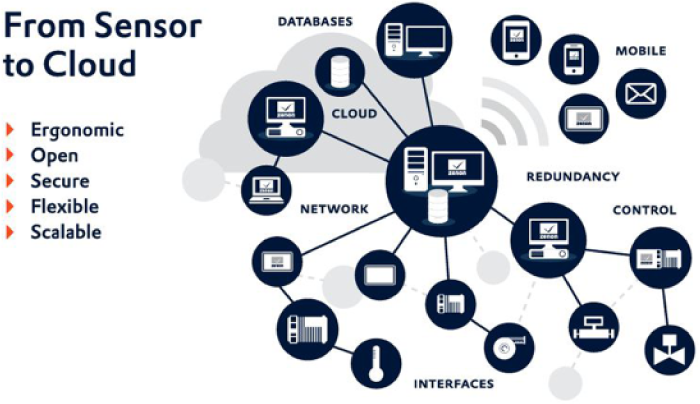
Zenon’s advanced visualization capabilities proved very usual for Pressure Design, especially when it comes to off-site fault finding. The software provides the complete status of a particular piece of equipment and can pinpoint and identify prospective problems that may occur.
Zenon’s chronological events list (CEL) has proved to be more than just a safety feature for Pressure Design. The CEL allows operators to log on and see who has done what, when and where, providing a reliable trail of investigation should a problem be encountered on the factory floor.
For testing, this feature not only highlights the cause of the problem but also enables customers to find out why a problem has occurred and rectify the issue quickly and efficiently.
Nugen Audio Launches Latest Version of Halo Upmix
At IBC 2016, NUGEN Audio has upgraded Halo Upmix, a plug-in for high-quality upmixing of stereo audio to surround sound. With the newest version, Halo Upmix now enables multichannel-to-multichannel upmixing.
Available in Avid AAX, VST and AU formats, Halo Upmix automates the creation of a stereo-to-surround, downmix-compatible signal with unique centre-channel management and spatial density controls. Halo Upmix combines several technologies, including frequency and time-domain energy distribution and neural network artificial intelligence, enabling producers to target various upmix goals including full stable surrounds, exact downmix matching and full dialogue isolation.
The software includes a new set of algorithms for upmixing from multichannel audio (LCR, Quad (4.0), 5.0, 5.1, 7.0 and 7.1) to either 5.1, 7.1 or 9.1 (7.1.2). Several other modifications are also available, designed to enhance user operability and finesse the interface customization process.
Earlier this year, Nugen Audio introduced a 9.1 option for Halo Upmix that allows the introduction of a vertical dimension into the upmix, generating a 7.1.2 (Dolby Atmos) bed-track-compatible signal. The 9.1 option provides users with greater flexibility for high-quality archival restoration, content repurposing, post-production and sound design.
At IBC 2016, the company showed Loudness Toolkit 2, its suite of loudness metering and correction tools. Consisting of the VisLM-H 2 loudness meter, LM-Correct 2 quick-fix tool and ISL 2 true-peak limiter, Loudness Toolkit 2 now offers workflow enhancements and upgrades for users of nonlinear editors and digital audio workstations.
Nugen Audio also offers Site, a floating licence system for enterprise customers, designed for customers with 10 or more seats. Site is available for Halo Upmix and the components of the Loudness Toolkit 2.
The Internet of Things in Process Automation Is Becoming a Reality
The Internet of Things (IoT) in the world of process automation is moving from hype to reality. In recent months, several suppliers have introduced products, applications and services that are the first ‘real world’ manifestations of what the IoT will look like in process industry applications. Larry King looks at some examples of new products.
ABB’s Smart Sensor for low-voltage motors provides wireless condition monitoring data for low-voltage motors. The unit transmits information on vibration, temperature, loads and energy consumption to the cloud and generates alerts when motors under-perform.
Emerson Process Management has introduced several new sensors that are low cost, wireless or both. The Rosemount 975 line of optical flame detectors are designed to perform in harsh environmental conditions and connect directly to alarm or automatic fire extinguishing systems. Emerson has also introduced the Enardo 2000 emergency pressure relief vent range (EPRVs), which are wirelessly monitored. Emerson is combining its ability to monitor thousands of sensors in a process plant and turn the data from those sensors into useful information, allowing customers to adopt a more proactive maintenance philosophy.
Honeywell Sentience represents a foundational set of capabilities that allows each Honeywell business to focus on unique areas and integrate complementary technologies. The platform uses the latest cloud standards for data security and can be hosted in a variety of ways, including private clouds. Honeywell’s Virtual Engineering Platform (VEP) provides a secure, centrally hosted cloud environment to execute industrial automation projects and to do process automation system engineering.
Rockwell Automation’s mobility collaboration project with Microsoft is designed for industrial environments where wireless network connections are unreliable. The toolkit provides a consistent web-based user interface for a specific device: tablet, smartphone or desktop.
Schneider’s Modicon M580 – ePAC controller manages all communications on an open Ethernet backbone; from the control network, such as SCADA, asset management and DCS, down to the field network via remote or distributed equipment. This even includes the controller’s backplane bus, which has Ethernet processing built into its core. The design allows users to deliver deterministic solutions over standard, proven and open Ethernet architectures.
Earlier this year, Siemens introduced MindSphere, its cloud-based platform for analytics. MindSphere is a platform of tools and services that allows users to configure their own analytics applications or offer analytics as a digital service to their customers. These services include data recording, transmission and safe storage, as well as a framework for developing applications quickly. Rather than offering a complete ecosystem by itself, Siemens has entered into a number of partnerships to support the platform. The open architecture is based on SAP HANA, and Siemens plans soon to expand the number of hosting partners to include Atos and Amazon Web Services, as well as Chinese-based provider, according to the company.
From sensors to edge computing devices and gateways and cloud-based engineering, the IoT is becoming a reality for process automation.
ArcelorMittal Optimizes Supply Chain Logistics with Predictive Analytics
Following recent expansion, ArcelorMittal’s operations in Canada now extract, process, haul and ship roughly 26 million metric tons of iron ore products yearly to support steel production. Operations include open pit iron ore mines and associated processing facilities in Mont-Wright and Fire Lake; a pelletizing plant and private shipping port in Port-Cartier, Quebec; and a 420-km railway connecting the mines and the port.
This expansion created a bottleneck in supply chain logistics. The company solved the problem by implementing a new information strategy to support the expansion project. This new information strategy, enabled by the company’s OSIsoft PI System, did not require a major capital expenditure.
Allegro Introduces New Bipolar Stepper/DC Motor Driver
Allegro MicroSystems Europe has announced a new 40 V motor driver IC capable of driving one stepper motor and one DC motor. The bipolar stepper driver outputs are rated up to 1.6 A and the high current DC driver at 3.2 A.
Allegro’s A5989 includes fixed off-time pulse width modulation (PWM) current regulators along with 2-bit nonlinear digital-to-analogue converters (DACs) that allow stepper motors to be controlled in full, half and quarter step modes. The DC driver can operate in forward, reverse, coast and brake modes, with either fast or slow PWM decay control.
This new device is targeted at automation markets with applications including point of sale, lottery, printers, vending and ATMs.
Protection features include thermal shutdown with hysteresis, under voltage lockout, crossover current and over current protection. Low current sleep mode is included to improve efficiency.
The A5989 is supplied in a leadless 6 mm × 6 mm × 0.9 mm, 36-pin QFN package with exposed power tab for enhanced thermal performance. The package is lead (Pb) free, with 100% matt-tin leadframe plating.

Process Instruments Provide Sensor-Based Clean/Flush Systems
The ‘Autoclean/Autoflush’ system from Process Instruments is an alternative to mechanical cleaning mechanisms which can clog and break. By regularly spraying the sensor/probe with clean water or air, the sensor remains clean and free from fouling for extended periods of time.
This option can be added to a pH, ORP, turbidity, suspended solids or dissolved oxygen (DO) sensor.An end cap directs the flow of clean water (or air for a DO sensor) across the face of the sensor, blasting any dirt away. When using air to clean a DO sensor, the system can also automatically verify that the sensor is still responding correctly.
For sensors that require flow cell mounting like chlorine, ozone and chlorine dioxide, the system has inbuilt valves which automatically start and stop the sample flow and controls the flow of clean water past the probe. The user can set the flushing interval and duration to keep the flow cell and sensor clear from fouling.
Analytics Paves the Way to Industrie 4.0
In just 2 years, the manufacturing industry has realized that the digital transformation of industry on the plant floor is really happening. Despite this, many companies are still unsure of where to start.
To convince conservative industrial companies, you still need to make a good business case with a predictable return on investment. Industrial analytics is emerging as an ideal entry-level application.
The ‘digital transformation’ has been under way for years in other areas, but is just now reaching the industrial world. However, industrial applications are much more complex. There is quite a difference between implementing eight sensors in a smartphone versus thousands of data points in an industrial plant. Investment cycles in the manufacturing and process industries are much longer and companies are slower to adopt new technologies – hence the late start for the digitalization of industry.
Automation systems have always produced large amounts of data, but these were mostly left ‘to rot on the vine’ because of the difficulty to harvest them. But times are changing quickly. Ethernet is now the norm in automation architectures, and the ‘last mile’ to edge devices is being paved with new IP-based solutionslike APL for explosive environments, or IO-Link for low-cost sensors in applications where an IP connection may be too expensive.
Analytics in industrial applications can produce surprisingly quick returns on investment by avoiding or even predicting equipment failures before they happen. Losses due to unforeseen production stops range from lost production time, to whole batches that have to be thrown away. Even small manufacturing companies can improve productivity by eliminating unscheduled downtime.
Machine builders can employ analytics to create new business models based on remote digital services that generate new after-sales revenue streams and maintain customer relationships. Analytics can be applied to existing processes and don’t need to be designed in from the beginning.
In 2015, Siemens introduced MindSphere, its cloud-based platform for analytics. MindSphere is an open system that provides tools and services for users to develop their own analytics applications, or offer analytics as a digital service to their customers. These services include data recording, transmission and safe storage, as well as a framework for developing applications quickly. Siemens launched MindSphere to address the following market developments:
Analytics are an important first step for customers in implementing concepts like Industrie 4.0, the Industrial Internet of Things (IIoT) and smart manufacturing.
Analytics can be applied in a wide range of areas, both engineering and operations, to optimize processes, shorten development time and create whole new business models based on digital services.
Analytics is already driving a fundamental shift from capex to opex, as end users reallocate capital from investments in own assets to outsourcing key services.
Rather than offering a complete ecosystem by itself, Siemens has entered into a number of partnerships to support the platform. The open architecture is based on SAP HANA. Siemens soon plans to expand the number of hosting partners to include Atos and Amazon Web Services, as well as a Chinese-based provider, according to the company.
New analytics solutions like MindSphere help users with process knowledge, but not necessarily data analysis skills, to quickly set up an analysis. The beauty of such solutions is that they are infinitely scalable. While complex analyses of large data sets or streaming data are possible, MindSphere also allows users to get up and run quickly by configuring simple analyses that can be optimized or expanded later.
A solution for industrial analytics is made up of more than just tools to search existing data. Analytics requires an infrastructure that understands the protocols of existing architectures. Data first need to be extracted from legacy equipment, often located at remote sites, before they can be filtered and put into perspective.
ABB Demonstrates Future Possibilities for Home Automation
At the IFA consumer electronics trade show in Berlin, ABB’s Busch-Jaeger business showcased how the Internet of Things, Services and People enable a fully connected home. Highlights included the launch of wireless ‘free@home’ home automation system, the expansion of the mozaiq platform and the integration of solar power in the smart home.
The home automation market is forecast to grow to $490 billion by 2019, an annual growth rate of 50%, according to digital research service BI intelligence and ABB is ready, with several new products, to fulfil the needs of homeowners, architects and developers.
ABB announced earlier this year the development of a wireless solution that can be used as an extension to the free@home wired system or as a stand-alone option. This opens up the possibilities to use free@home in rental properties or in other situations where homeowners do not want a wired solution. Free@home can manage up to 60 home automation functions from lighting, home entertainment and heating to blind control and security systems and can be set up to have pre-configured ‘scenes’ that instantly and dramatically change the look and feel of a room.
ABB is in a joint-venture partnership with Bosch and Cisco, called Mozaiq Operations GmBH, which focuses on advancing the interoperability of home automation functions. ABB demonstrated the potential of the mozaiq platform highlighting new functions that are under development.
ABB also displayed the Renewable Energy Accumulator and Conversion Technology (REACT) storage inverter, a solution for home solar energy management and storage. REACT allows energy harnessed from the sun to be stored in a modular 2 to 6 kWh Li-ion battery for use during periods of peak demand, reducing reliance on the external supply. By using stored power during periods when tariffs are high, consumers’ energy bills can be reduced. The energy storage and management facility of REACT can allow up to 25% more on-site solar energy to be used.
REACT works seamlessly with ABB’s free@home to autonomously power and manage home automation functions. Together, these innovations expand the potential of home automation, providing improvements in comfort, efficiency and convenience to the world of smart home living.
Beha-Amprobe Launches New Clamp Multimeter
Beha-Amprobe has introduced the Beha-Amprobe ACD-14-PRO-EUR dual display 600 A TRMS clamp multimeter with a large backlit LCD dual display that simultaneously displays voltage and amperage measurements.
The unit offers a range of measuring functions for electrical and HVAC applications.
Voltage drop testing is required by International Electrotechnical standards (IEC 60364-6, IEC 60364-5-52). It defines the maximum percentage of the voltage drop between maximum voltage at zero current and minimum voltage at maximum current, ensuring electrical equipment and motors are working within specified voltage to avoid potential damage or malfunction of electrical appliances.
The unit features ‘True-RMS’ for accurate voltage measurements in noisy electrical environments, low pass filter for current and voltage measurements on variable frequency drives, and in-rush current measurements to verify maximum current surge during motor start-ups. Its amp-tip function enables precise measurement of low current down to 0.1 A on small diameter wires for reliable, accurate measurements.
For HVAC technicians, the unit measures temperature with the included thermocouple, capacitance for start-up and run capacitors, and dc micro amps for flame sensor testing.
The Beha-Amprobe ACD-14-PRO-EUR is safety rated with measurement category CAT III 600 V and comes complete with test leads, banana plug K-type thermocouple, two AAA batteries, manual and carrying case.

Harmonic Drive Launches High-Precision Gearbox Range
High-precision gearing specialist, Harmonic Drive UK, has launched CSF-2UP, a new gearbox range designed for medical technology, robotics and measuring-instrument applications.
The CSF-2UP gearboxes form part of the CSF Series, a range characterized by its very short length and low weight. The new gearbox range is available in three sizes, with gear ratios of 30, 50 and 100 at a repeatable peak torque from 1.8 to 28 N m. The gearbox can accept maximum speeds of up to 8500 r/min, which ensures applications benefit from excellent dynamics and extremely short machining times.
The zero backlash capability of the CSF-2UP gearbox range, combined with its lightweight and compact features, makes it ideal for use in high-precision positioning tasks in applications with limited space, such as jointed arm robots, measuring instruments and various uses in the growing medical technology market.

Anritsu Show Vector Network Analysis at European Microwave Week
Anritsu Corporation showed recent trends in Vector Network Analysis (VNA) technology and innovation at European Microwave Week in London recently, including new additions to the Shockline and Vectorstar product families, and demonstrated some of the latest developments in test and measurement.
The Vectorstar ME7838 series is a broadband VNA with single-frequency sweep from 70 kHz to 110, 125 and 145 GHz. When configured with waveguide ‘mmWave’ modules, the series will operate up to 1.1 THz.
The new Shockline MS46500B series can reduce cost-of-test and improves time to market in numerous testing applications, including designing and manufacturing mobile network equipment, mobile devices, automotive cables, high-speed data interconnects and system integration components.
Anritsu also demonstrated their spectrum monitoring systems which facilitate the identification and removal of interference signals that reduce network capacity. Based on the family of MS2710XA remote spectrum monitors, combined with ‘Vision’ software MX280001A, Anritsu offers a new platform of remote spectrum monitoring products designed for radio surveillance, interference detection and government spectrum policy enforcement.

Connected Services for Trouble-Shooting, Monitoring and Predictive Analytics
In engineering and building process plants, the trend is to share more operational data, more frequently, between asset owner-operators and equipment or service providers and their subcontractors, such as:
Engineering procurement and construction companies (EPCs);
Equipment manufacturers;
Process licensors and engineering/operational service providers;
Operations and maintenance contractors.
Outotec, a process technology firm in minerals and metals processing, water treatment, energy and chemicals, set up a digital platform to provide secure, low-cost and scalable access to the historic data of its customers’ plants using OSIsoft’s PI Cloud Connect software and the PI System.
Outotec currently uses this platform for troubleshooting. In the future, it plans to perform 24/7 monitoring and predictive analytics to improve the operations of its clients’ equipment, processes and plants. According to the company, this cloud-based solution has delivered considerable economic value-add for both Outotec and its customers.
Other engineering and plant service providers are putting similar types of solutions in place. To better understand which processes and technologies are used for sharing operational data, ARC Advisory is conducting a survey. We invite owner-operators of process plants and their service providers to participate, at www.surveymonkey.com/r/F8M5M22.
30.BI-MU Exhibition Is a Recent Success
The 30.BI-MU exhibition in Fieramilano, Italy, took place on 4–8 October 2016. The exhibition was focussed on advanced production processing and additive technologies applications in manufacturing.
Members of the ‘Additive Technologies Club’, an initiative created by Aita-Associazione Italiana Tecnologie Additive with the support of the UCIMU Foundation, were able to meet customers and potential partners, exhibiting their products in appropriate stands or in the showcases of the special dedicated area.
A conference session took place, highlighting the connections between the machine tool world and that of additive technologies, with the support of experts in both sectors.
Ethernet Networks Gain Ground in the World of Flow Applications
Already widely adopted in the consumer and business world, Ethernet continues its rapid penetration into the process and factory world. A number of network developments have helped drive adoption for industrial automation applications. While researching for the soon to be released Flowmeter Global Market Research reports (Coriolis, Magnetic, Ultrasonic, Vortex), ARC discovered that the adoption of Ethernet network has grown in recent years, especially for flow applications.
Ethernet offers many benefits: lower total cost of ownership (TCO), improved adaptability, better security, widespread availability and market familiarity. In recent years, the networking technology has also overcome many of its disadvantages that hindered adoption in the industrial world. Using fibre-optic cables, Ethernet can be deployed over longer distances. Ethernet switches for hazardous areas are available and users also have the option of power over Ethernet (PoE), so there is no need to run additional lines for power supply.
In the process world, Ethernet can now connect a wide range of field instruments, including flowmeters, to the central control system. Suppliers are now offering Ethernet modules to allow easy integration of their flowmeters into Ethernet/IP control systems. Some suppliers are also offering flowmeters with native Ethernet connection. Users can use a webserver to remotely view device data, conduct diagnostics and configure the flowmeter. As owner-operators look to simplify operations and achieve higher efficiency, ARC sees rising adoption of industrial Ethernet.
The realization of advanced concepts such as Industrie 4.0 and the Industrial Internet of Things (IIoT) requires open and advanced digital networks that not only facilitate easy connection of field devices to central control systems but also to enterprise systems and cloud platforms. Ethernet networks align well with these concepts by providing flexibility and ease of integration to support Industrie 4.0 and connectivity for the IIoT.
Freightex Shortlisted for Global Freight Award 2016
European road service Freightex and data aggregator and unifier GateHouse have announced that Freightex’s service offering, incorporating ghTrack data tracking technology, has been shortlisted in the innovation category of the Global Freight Awards 2016. The awards are run in association with Lloyds List.
A panel of leading industry experts shortlisted Freightex because it enables transport managers to have immediate visibility of assets in transit (using GPS or telematics systems), improving the efficiency of daily operations.
With GateHouse Logistics’ ‘ghTrack’ technology integrated into its service product, Freightex aggregates and unifies all data relevant to customer assets in transit on one screen. As a Data-as-a-Service (DaaS) cloud platform, the technology enables all involved in the logistics supply chain to create supply efficiencies. With ghTrack, the days when transport managers wasted time in powering-up more than 200 tracking systems for key asset data such as positioning and time of arrival have long gone.
Winners of the Global Freight Awards will be announced at a gala ceremony at the Lancaster Hotel, London, on 3 November 2016.
TP-Link Talon AD7200 Wi-Fi Router Delivers up to 4600 Mbps on the 60 GHz Band
TP-Link has launched the Talon, a multi-band router powered by the latest 802.11ad and 11ac MU-MIMO solutions. The unit can deliver up to 4.6 Gbps on 60 GHz band. This is nearly three times the previous maximum transfer speed of 1733 Mbps that was capable on the 5 GHz band used by 802.11ac routers.
For those that need a large number of smartphones, tablets, laptops and connected smart devices, the router delivers more bandwidth than most people will need.
The Talon AD7200 features a unique eight antenna design, with high-powered amplifiers and Dynamic Beamforming Technology to supercharge the Wi-Fi signal, so that all smart home, work and play devices remain connected to the network at all times.
Key features of the unit include the following:
AD7200 multi-band with ‘4-stream’ technology delivers up to 7200 Mbps Wi-Fi speeds over 2.4 GHz (800 Mbps), 5 GHz (1733 Mbps) and 60 GHZ (4600 Mbps) bands;
MU-MIMO technology;
1.4 GHz dual-core CPU;
Active 60 GHz adaptive beam-forming, to enable Gigabit performance and dense deployment;
Four gigabit Ethernet ports;
Two USB 3.0 ports;
Advanced security encryption;
Manage the router from a mobile device (Android, iOS) using the TP-LINK Tether App;
Supports 802.11ad and backwards compatible with 802.11a/b/g/n/ac.
PCB Piezotronics Offers Solutions for Vibration Applications
PCB Piezotronics, the provider of vibration, acoustic, pressure, force and torque sensors, offers a range of triaxial accelerometers, providing measurement solutions for a broad range of multi-axis vibration applications.
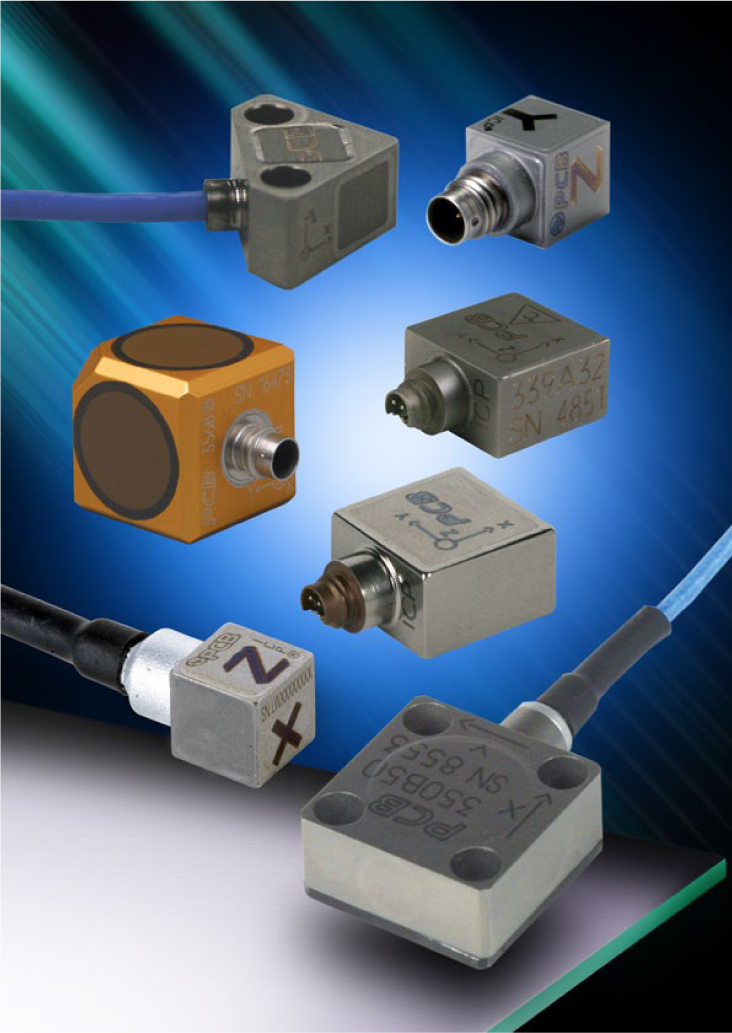
Model 356A45 is a new design of triaxial accelerometer, offering frequency response of 10 kHz on all three axes compared to competitive products that typically offer upper frequency response from 5 to 8 kHz but frequently have different responses on one of the three axes. The unit features 100 mV/g sensitivity with a measurement range of ±50 g pk and is ‘Transducer Electronics Data Sheet’ (TEDS) compliant. A non-TEDS model (356A24) with a 12-KHz frequency range on all three axes is also available.
Model HT356B01 provides a sensitivity level of 5 mV/g and measurement range of ±1000 g pk over the frequency range 2–8000 Hz (y or z axis) and 2–5000 Hz (x axis). This ceramic shear mode ICP accelerometer is designed for use in high-temperature applications operating up to 180 °C. The unit is a 6-mm cube weighing 1 g.
For applications where accelerometers are used in a fast changing temperature environment such as under vehicles on track testing, the effect of temperature change will affect the sensitivity of the sensor. With standard triax models, the temperature coefficient is around 0.14% per °C but PCB provides the 339A32 with a temperature coefficient of ≤0.02% per °C making it very stable where transient temperatures are encountered.
Model 356B18 is an ultra-sensitive unit that is popular for monitoring vibration in buildings and structures. It features sensitivity of 1000 mV/g so even a 0.2 g vibration would provide an output of 200 mV. This unit can also resolve signals down to 0.0005 g.
For shock applications, the model 350B50 is based on a piezo crystal with ICP power. It features a measurement range of 10,000 g and can survive shocks of up to 25,000 g. Model 3503A1060KG is a triaxial MEMS shock accelerometer featuring a 60,000 g range on all three axes.
Anritsu Introduces Pocket-Sized Cable/Antenna Analyser
Anritsu has introduced the Site Master S331P. The unit provides wireless operators, contractors, DAS installers and maintenance professionals with a pocket-sized headless cable and antenna analyser that can measure the new LTE-U frequencies.
Two models, covering 150 kHz to 4 GHz and 150 kHz to 6 GHz, are available – each model has a sweep speed of 500 µs/data point. This wide bandwidth capability enables the unit to support low-frequency radio communication environments, including public safety networks, as well as higher frequency applications, such as LTE-U in the 5 GHz unlicensed spectrum.
Leveraging the same user interface as the industry leading Site Master S331L, the unit features an integrated help function as well as a ‘classic mode’ of operation that maintains the de facto site master look and feel to simplify performing tests. An ‘advanced mode’ has an innovative graphical user interface (GUI) with a modern button layout and functionality. Advanced mode also expands the number of available markers to eight and has six customizable touch screen icons to recall regularly used setups.
Optimized for field use, the S331P comes standard with an N(m) connector for direct connection to N(f) devices, eliminating the need for phase stable cables. The unit is externally controlled and powered via USB from a user-supplied Windows tablet or laptop, eliminating the need for a battery.
The unit offers access to a suite of software applications, such as line sweep tools (LST), handheld software tools (HHST), ‘easyTest’ Tools and the award-winning ‘SkyBridge’ Tools cloud-based trace management solution. Users can view a fast preview of stored sweeps, as well as edit, rename and archive sweeps, and quickly generate PDF or HTML reports using LST software. The unit uses the standard *.dat sweep file format and is compatible with HHST, which is widely used by mobile operators, making the solution compatible with most standard workflow procedures.
EasyTest Tools and SkyBridge Tools allow test plans and reports to be created. Unit can be used with the Network Master Pro MT1000A optical transport tester and CPRI-RF handheld test solutions for a complete field test portfolio for high-bandwidth LTE networks.

Promotional Pricing Offered by Fluke for Installation Tester
Until 31 December 2016, Fluke UK is offering The Fluke 1664 FC installation tester at a special promotional price. This offer can be seen at www.fluke.co.uk/promotions.
The Fluke 1664 FC features the patent pending Insulation ‘PreTest’ function that detects if an appliance is connected to the system under test and will stop the test while also providing a visual warning. Insulation PreTest helps avoid accidental and costly damage to peripheral equipment.
Also new to the 1664 FC is an auto test function that does five required installation tests in one sequence, ensuring compliance with BS7671 17th Edition Wiring Regulations. This reduces test time by up to 40% compared to previous Fluke models.
The new Fluke 1660 Series is designed to verify insulation resistance, loop impedance, resistance of the earth connect, resistance to earth, RCD performance in TT and TN systems, phase sequence, and loop/line impedance and RCD tests in IT systems.

Specialist Compliance Tester Improves Productivity at Hadar Lighting
Investment in new test technology has enabled a leading manufacturer of industrial and commercial lighting products to significantly reduce production line test times, increasing productivity and manufacturing efficiencies.
Hadar Lighting designs and manufactures a wide range of lighting fixtures, including systems for hazardous areas in industrial and commercial environments, as well as traditional lighting products; the company is increasingly providing high-performance LED luminaires and has recently upgraded its production line test technology with the purchase of specialist Clare HAL LED testers from Seaward.
The HAL LED incorporates a range of electrical test capabilities to meet the demands of different production line testing needs. At Hadar, the new advanced test stations perform earth bond testing alongside an AC/DC flash test, insulation test and function test to ensure that all products meet the test specification needs of all relevant luminaire product standards.
Lighting systems used in hazardous area installations require compliance with EN60079-14. For flash testing, the high-resolution 10-V incremental voltage range provided by the HAL LED allows the Hadar production engineering team to more accurately meet the specific test parameters included in the standard.
Push button activation enables pre-determined tests entered in the HAL LED to be carried out automatically on each lighting fixture. Importantly, the automatic test sequencing feature has enabled previous test times to be reduced by almost 20 s on each individual fixture, giving overall throughput savings of up to 1 h on typical product runs of 200 lighting units.
Networking of the HAL LED test stations (with ‘Safety e-Base Pro’ software) enables test results to be recorded against product serial numbers, providing a traceable pass/fail record keeping system.
Hadar Lighting is the lighting division of A-Belco Hazardous Area, an independent specialist UK manufacturer of explosion proof, flame proof and intrinsically safe electrical installation products for potentially explosive atmospheres within the oil and gas, petro-chemical, pharmaceutical and marine industries worldwide.

Red Lion’s N-Tron Managed Switches Now Have ODVA Certification
Red Lion Controls has announced that their ‘N-Tron’ series of NT24k and 700/7000 managed industrial Ethernet switches have been awarded ODVA certification. The units already meet the requirements of the Common Industrial Protocol (CIP) specification.
Industrial factory automation customers require a vendor-agnostic method for configuring and communicating with diverse devices in their industrial network. CIP provides consistent device access, allowing a single configuration tool to monitor and configure CIP devices without the need for vendor-specific software.
ARC Advisory Group Are Researching Market for Decentralized Servos
ARC Advisory Group has announced a survey into the future development of decentralized servo drives. This survey of suppliers, users and original equipment manufacturers will capture the trends towards more decentralized solutions in drive technology.
The survey is located here, at https://www.surveymonkey.com/r/35LX7Z7.
Electro Rent Europe Expands EMEA Headquarters by 40%
Electro Rent Europe, a provider of rental test equipment to the aerospace and defence, telecoms, semiconductor and industrial sectors, has announced the expansion of its headquarters in Mechelen, Belgium, due to continuous growth.
Laboratory space, warehousing and office space have been expanded by about 40% at the headquarters and more employees are being added. The company currently employs more than 50 people in EMEA and will continue its recruitment drive over the coming years to cope with increasing demand from various end markets.
The company has added several new offices and extra meeting rooms. Doubling the laboratory space gives room for nine technicians compared with five previously. It has also installed a separate calibration laboratory.
Wouter Merckx, operations manager for Electro Rent Europe, said, Thanks to the new dedicated calibration lab, we can work in optimal environmental circumstances as we can control temperature and humidity in the room. Each lab technician will also have a larger and enhanced test bench on which to work.
An Electronic Padlock for All Occasions
The Xesar and AirKey master key systems can now electronically secure access situations where a padlock is required.
EVVA already received the first patent for a cylinder padlock in 1937 and established the company’s success in security technology. ‘It was clear that the most successful product in EVVA’s history should also follow the electronic path’, explained Heiner Dolinar, product management division executive at EVVA.
The electronic padlock can be used indoors and outdoors. With IP65 protection, it is also suitable for the fiercest weather conditions. The electronic padlock is the solution for all protruding locks within a master key system that must be locked at defined times, while the act of unlocking is logged.
The padlock is supplied preassembled, and so is ready for stationary use. With the various shackle lengths of the padlock, even more access situations can be secured with an electronic padlock and integrated into the Xesar and AirKey master key systems.

Are Motors the Tip of the Iceberg When It Comes to Improving Drive Train Efficiency?
Fuelled by the introduction of more stringent IE efficiency classes, manufacturers are chasing headline efficiency figures which could only have been dreamed of just 10 years ago. There is no denying that this is a positive thing for industry, but is motor efficiency just the tip of the iceberg?
As a leading manufacturer of high efficiency (IE2), premium efficiency (IE3) and super premium efficiency (future IE4) motors, Bauer Gear Motor is well placed to understand the value that a motor’s performance can place on the end-user’s running costs. However, its engineers are keen to stress to anybody who asks them that the motor is just one piece of the puzzle.
Bauer believes that a view should be taken of a single, ‘Electro-Mechanical’ package; one which must be fully integrated to achieve maximum performance. The potential energy savings throughout the drivetrain can typically be distributed via the ‘ZVEI’ model:
10% via improved efficiency of the motor;
30% via electronic speed regulation;
60% via optimization of the mechanical system.
The model shows there is no point specifying the latest motor if the foundations are not already in order.
Using a speed control device to monitor and regulate a motor will quickly improve any application that does not require the motor to operate at full load at all times. In fact, even when operating at full load, a motor with a variable speed drive installed will still be more efficient at start-up.
The importance of speed control in real-world efficiency is recognized by the introduction of Regulation 640/2009. This stipulates that IE2-rated motors between 7.5 and 375 kW must be variable frequency drives (VFD).
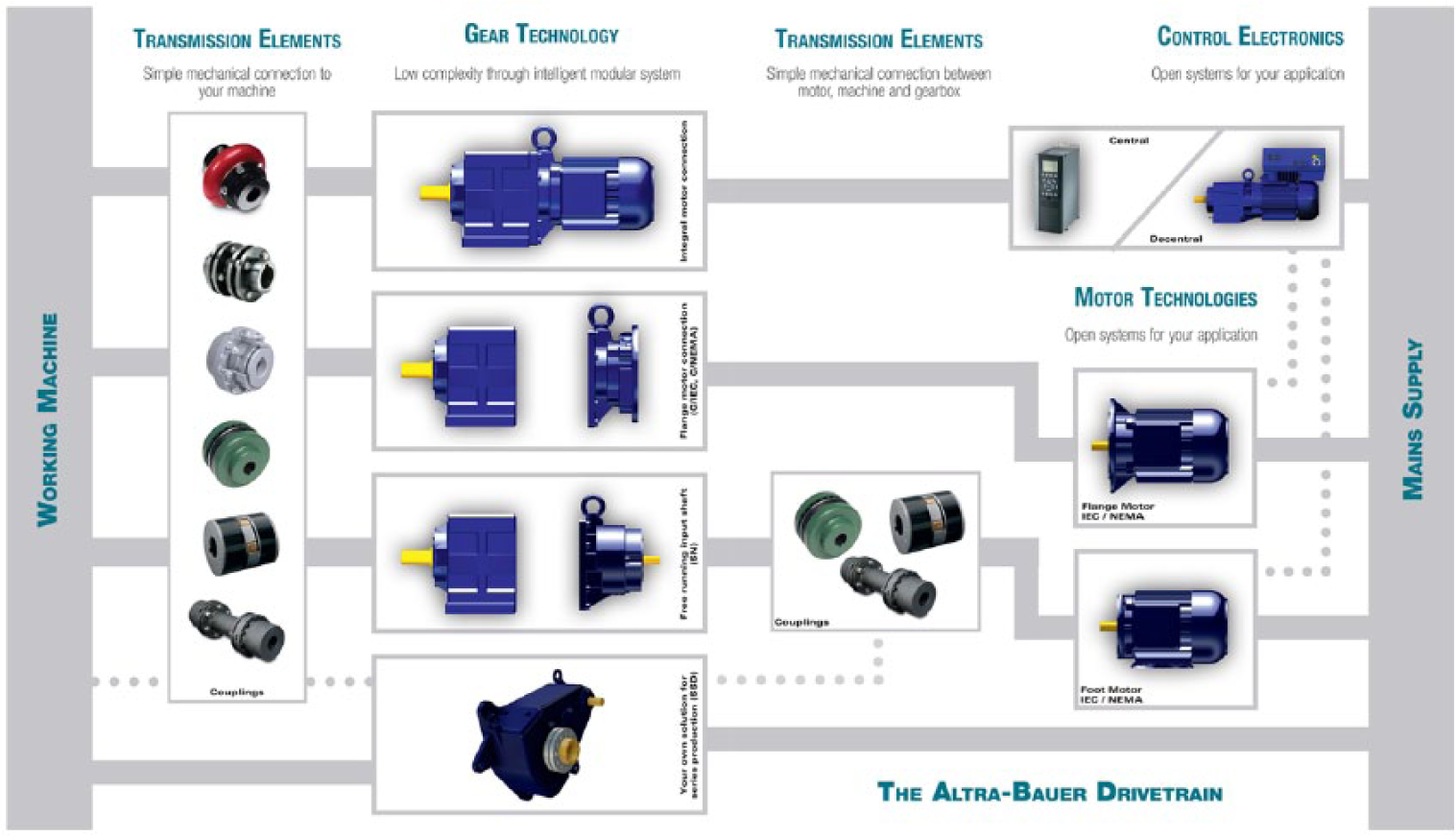
Within the electro-mechanical package, the mechanical components can be broken down into two sub-groups: gear technologies and drivetrain optimization.
Specifying the most efficient gearbox allows you to transmit a larger percentage of the motor’s power for its intended function. A well-specified and efficient gearbox will avoid unnecessary oversizing and reduce system losses in operation. It is these system losses that are a major factor in the EN50598 standard, which awards the new IES efficiency classes based on the efficiency of the complete power drivesystem.
Drivetrain optimization is the last piece of the puzzle, but no less important than the considerations that have come before it. Once each aspect of the drivetrain has been specified, it must then be integrated into the machine with as much efficiency as possible.
It is important that an efficient mechanical system is specified as a foundation, but, once that is in place, significant savings can be made by combining the latest electric motors with well-integrated inverter drives.
To return to the iceberg analogy, the advances being made within motor technology really are the visible tip. It is attention grabbing which helps make us realize that system efficiency is something that we should be doing. Without a properly specified drivetrain, an IE4 motor on its own will never meet the full efficiency potential.