



Abstract

I. Endress+Hauser Wins ‘Global Company of the Year’ Award from Frost & Sullivan
Endress+Hauser has been awarded Frost & Sullivan’s ‘Global Company of the Year’ award. The award for water analysis instrumentation is based on an independent study, taking into account the company’s visionary innovation and performance as well as customer impact.
‘Endress+Hauser’s product range covers all analytical parameters needed to monitor water quality’, said Krishnan Ramanath, industry analyst at Frost & Sullivan.

II. Yokogawa Updates FieldMate Device Management Software
Yokogawa Electric Corporation has updated its ‘FieldMate’ device management software to R3.02 in August. FieldMate is a software programme used to configure, adjust, and manage a wide variety of field devices used in factories and other production sites. This latest version of FieldMate includes new functions that reduce maintenance workload by simplifying a number of field maintenance tasks. The company has also released an enhanced version of ‘FieldMate Validator’, an optional software tool that verifies connections between field instruments and control system I/O devices.
Previous FieldMate versions could run on Windows 7 PCs and tablets. FieldMate release 3.02 can now be used on PCs and tablets running Windows 10. This is particularly significant because Windows 7 and 10 tablets are increasingly being used in the field by maintenance personnel.
The new release offers one-touch operations for complex procedures. Dedicated buttons have been added to the FieldMate home screen for maintenance tasks such as zero point adjustments and input loop checks. This simplifies complex tasks and improves maintenance efficiency.
The new release allows users to save parameters such as field device settings in a database. Operatives can compare current values and previous settings for a parameter by pressing the ‘All Parameters’ button on the home screen, allowing changes to be verified when troubleshooting problems.
The software supports the configuration, adjustment, and troubleshooting of transmitters, analysers, and other types of field devices in plants, and the management of information on these devices. It is targeted at applications such as oil, petrochemicals, chemicals, pulp and paper, pharmaceuticals, foods, and iron and steel.
FieldMate Validator is an optional software tool that is used to verify the connections between newly installed field instruments and control system I/O devices. The software now supports the I/O devices that were developed to facilitate quick upgrades to Yokogawa’s Centum VP R6.03.
Fieldmate supports all major industry-standard communication protocols such as Foundation Fieldbus, Brain, and Hart, as well as the FDT/DTM open software execution framework. Support for the ISA100.11a field wireless communications standard enables the configuration and adjustment of any vendor’s network-capable field devices, regardless of the communications protocol used.
III. Partnership with Morgan Advanced Materials Delivers Measurable Benefits
A working partnership between Morgan Advanced Materials and Renishaw, a global company specialising in industrial metrology and spectroscopy, continues to go from strength to strength.
Morgan supplies high-precision alumina ceramic stylus stems for touch trigger probes used for a variety of specialist applications. In order to ensure optimal component performance, high-accuracy verification is needed and high-quality measurement tools are a fundamental part of this process.
Used in product development, manufacturing, and assembly, the role of a touch trigger probe is to measure the physical geometrical characteristics of complex objects including products and tooling. Attached to coordinate measurement machines (CMMs), or high-speed computer controlled machines that provide in-process measurement, the probe measures points on the surface of an object according to a three-dimensional coordinate system.
The probe registers the position and quantifies the geometrical properties of the object, creating precision measurements to the micron range. This builds into a detailed virtual representation of the object for comparison against computer-aided design (CAD) and 3D models and provides measurement data for analysis.
Morgan’s alumina materials offer high stiffness and are lightweight, inert, non-magnetic, and stable during temperature fluctuations, due to a low coefficient of thermal expansion.

Morgan’s ceramic styluses also provide crash damage protection to high-value measuring systems, as they are designed to break in the event of a programme setting error. Stainless steel stylus may continue to transfer stress to the part it is measuring, causing damage to the probe and the wider system or the valuable component being measured.
Morgan continues to work closely with Renishaw’s team of engineers, helping to develop future product lines that will drive improvements within the measurement process.
Oliver Ridd, international sales and new business development manager at Morgan Advanced Materials, commented, The relationship between Morgan and Renishaw showcases the best in material science innovation. We work hard to understand our customers’ requirements as this is what allows us to develop optimised, cost effective solutions which help overcome their most demanding and technical challenges.
IV. Reo Upgrades Reoline Range to Include Stepless Voltage Adjustment
Power quality specialist Reo UK has refreshed its Reoline range of portable power supplies for laboratory, test, and factory applications. The range provides an adjustable low-loss output voltage, integrated short-circuit protection and does not generate electromagnetic interference (EMI), ensuring that the power supply is consistent and reliable.
The Reoline range offers stepless adjustment of voltage in its toroidal transformers, from zero to maximum output. Each unit is able to operate under high inrush currents and withstand sustained overloads, without a detrimental impact on overall performance.
Steve Hughes, managing director of REO UK, explains, A quality assurance department must be able to test at a variety of clearly defined voltages. This allows for correct measurement of minimum and maximum input voltages of a given piece of equipment, without which reliable parameters cannot be set. Without that accuracy, equipment may be subject to insufficient testing and incorrect rating – causing problems for end users after it enters the market.

The Reoline range makes use of Reo’s Reovar variable transformers for test and measurement facilities. The Reoline range can therefore offer protection from power quality problems that arise in the sector, such as semiconductor switching noise. Electrical noise can reduce equipment electrical efficiency, as well as unpredictable current fluctuations.
The range is available in a number of versions, with a choice of alternating current (AC) or direct current (DC) models to meet the electrical requirements of any facility. AC models offer a max output voltage of 200 V, while DC models provide up to 250 V. Engineers can also specify whether they want digital or analogue products, as well as separate or auto-windings.
Reo UK can modify Reo products, with isolated outputs as well as current-monitoring meters, to deliver the specific power needs of their application.
V. Futek Torque Sensors Prolong the Life of Hinges
Torque hinges, friction hinges, and position hinges are all synonyms for a type of hinge that allows two parts to rotate about one another when a load is applied. The hinge then returns to its original position when that load is removed due to its high torsional stiffness.
Hinges are used in a wide variety of applications, and so high reliability is required – very often beyond the design lifetime of the product. To ensure this high reliability, fatigue and cycle testing must be performed to verify the hinge lifespan when integrated into the product.
An example for this application is Futek’s TFF400 reaction torque sensor paired with instrumentation (USB220, IAA Amplifier). For more in-depth analysis of hinge performance, a TRS605 rotary torque sensor with a built-in encoder paired with a USB520 can be used.

VI. Emerson Introduces New Flame Detectors to Help Keep Personnel and Facilities Safe
Emerson has announced the release of the Rosemount 975 range of optical flame detectors designed to perform in the harshest environmental conditions and connect directly to alarm or automatic fire extinguishing systems.
The new line incorporates a variety of flame detection technologies that provide optimal coverage for a wide range of process industries, including upstream oil and gas installations,chemical plants, and refineries. Multi-spectrum infrared sensor technology detects hydrocarbon fuel and gas fires as well as ‘invisible’ hydrogen fires with wide area coverage and strong false alarm immunity. Integrated ultraviolet and infrared sensor technology rapidly detects hydrocarbon-based fuel and gas fires, hydroxyl and hydrogen fires, as well as metal and inorganic fires with robust false alarm immunity.
The range features heated windows for operation in harsh weather conditions, such as snow, ice, or condensation; broad operating temperature ranges from −67 F to 185 F (−55 C to 85 C); and multiple output options for maximum flexibility and compatibility. The range is approved to safety integrity level (SIL) 2 (TÜV). The detectors can even be tested in-field with a specially designed flame simulator at distances of up to 40 ft (12 m) from the detector, eliminating the need for personnel to stand on scaffolding or supports to access the detector.

VII. Autonaut Secures Investment as Seiche Takes Majority Stake
AutoNaut has secured investment from the Seiche Group to advance R&D aims, assure long-term growth, and develop business across UK and international markets.
In September 2015, Seiche agreed its first investment in AutoNaut, and this new deal sees them take a majority stake in the company. AutoNaut Ltd is the new name for the company previously trading as MOST (Autonomous Vessels), founded in 2012.
Directors David Maclean and Mike Poole will continue to run the company from their Chichester base, concentrating on technical and marketing/sales activity respectively.
The investment from Seiche will provide additional resources for R&D and manufacturing as well as administrative support. Seiche will also help to expand all sales and marketing activity. As one of the fastest growing companies in the marine technology sector, Seiche will provide a springboard for AutoNaut into a number of commercial markets.
AutoNaut Ltd design and manufacture wave-propelled boats, equipped to operate as an autonomous marine data collection hub. A fleet of craft is now in production in a range of sizes to suit multiple applications across the oil and gas, renewables, civil engineering, research, and science sectors, as well as for defence, security, and surveillance.
AutoNaut vessels require no fuel, making them capable of long endurance ocean missions. The vessels are storm-proven and operate persistently at up to 4 knots with the manoeuvrability to perform a range of survey tasks from station-keeping to complex transects.
A suite of state-of-the-art sensors can be fitted, including gyro-stabilised high-definition (HD) cameras, hydrophone, oceanographic sensors, electronic and radar detection equipment. The craft may then act as a communications bridge to transmit data to shore in real time for remote offshore operations. Possible applications are passive acoustic monitoring (PAM), pipeline inspection, and surveillance for illegal fisheries and border patrol.
Successful trials monitoring noise in the English Channel have recently been completed with a PAM-AutoNaut, in partnership with Plymouth University. The application will be developed further in the coming months with a baseline sound survey for oil and gas industry in UK waters. Participation will then follow in the anti-submarine warfare (ASW) section of the North Atlantic Treaty Organization (NATO) unmanned warrior exercise off the Hebrides in October.
Seiche was listed in the 2015 Sunday Times ‘Tech Track’ league as the fastest growing marine technology company in the United Kingdom. The company specialises in the manufacture of underwater acoustic systems and provides a range of services in modelling, measurement, and mitigation. The company also runs training in advanced underwater acoustics, PAM, and Joint Nature Conservation Committee (JNCC) accredited marine mammal observation.
VIII. Inmoco Provide Linear Actuator with Elegant Design
The DA series of electromechanical linear actuators is designed around an integrated motor and roller screw to maintain high levels of accuracy.
Made by Diakont, the units are used in demanding applications in automation and robotics, resistance welding, machine tool positioning, semiconductor manufacturing, packaging machines, and many other fields. The units are used as alternatives to hydraulic and pneumatic cylinders, and do not require power packs or compressors.
The advanced roller screw design converts rotary torque to linear motion. With a high level of surface contact and minimal backlash, the unit’s roller screws offer high load capacity, tolerance to shock loads, absence of vibration, and output efficiency.
The series incorporates integrated permanent magnet synchronous motors (PMSM) that maintain accuracy in highly dynamic and high force applications. The elegant design couples the motor’s rotating output shaft to the actuator’s drive mechanism.
Units can produce a continuous force of up to 22,300 N (5013 lbf) and speed of up to 833 mm/s (32.8 in./s). Standard units have a nominal backlash of less than 0.1 mm (0.004 in.), and zero backlash options are also available. The lead accuracy is 0.025 mm/300 mm (0.001 in./ft). The units can withstand temperatures of −40°C to +100°C and are available with IP66 ratings.
DA actuators are equipped with patented in situ lubrication ports which are designed so that re-lubrication, the actuators’ only required maintenance, is carried out without having to disassemble the actuators or remove them from their mounting.

Standard actuators will suit most requirements, and bespoke modifications can be made by Inmoco where required. Inmoco offers a wide range of compatible motion control components, along with bespoke engineering capabilities, applications expertise, test, and calibration.
IX. Spectro Introduces Energy-Dispersive X-Ray Fluorescence Analysers for Elemental Analysis of Precious Metals
Spectro Analytical Instruments has launched a new range of small-spot energy-dispersive x-ray fluorescence (ED-XRF) analysers for elemental analysis of precious metals.
The new generation SPECTRO MIDEX analyser incorporates the latest developments in ED-XRF detector technology. The new instrument delivers both an increased accuracy of elemental analysis – critical in the refining of precious metals – and accelerated testing times for higher sample throughput – a priority for high-volume hallmarking centres. It is easier to operate and features helpful software and the easy transfer of results into a laboratory network.
The units include a high-resolution silicon drift detector (SDD) to improve accuracy of detection for trace and minor elements. The high count rate delivers a four-fold increase in intensity for similar test duration.
For small jewellery items or drill cuttings from re-melted samples, the unit analyses a small spot (typically 1 mm). For silver samples, which may be relatively inhomogeneous, averaged results from an optional larger spot size maintain high-accuracy results.
An integrated video system aids in accurate positioning of the sample and also can help document the testing spot. The units can display, printout, and transfer analysis results for later analysis and/or proof of compliance.

Optional ‘AMECARE’ machine-to-machine (M2M) support extends self-diagnostic functions with proactive alerts, backed by direct monitoring via a remote Spectro service expert’s PC.
X. Updated Radio Frequency Signal Spectrum Analyser from Tektronix Now in Stock at RS Components
RS Components has introduced an addition to its portfolio of analysis tools with the Tektronix USB real-time spectrum analyser, for electronics design engineers working with radio frequency (RF) signals.
The analyser’s frequency range from 9 kHz to 6.2 GHz provides bandwidth analysis of many applications – from conducted EMI to the latest wireless local area network (WLAN) standard.
Features of the tool include a minimum signal event duration of 100µs for 100% probability of intercept, and a real-time spectrum/spectrogram display over a 40 MHz bandwidth, which minimises the time spent on transient discovery and interference hunting. Enhanced measurement options include mapping, modulation analysis, standards support, and pulse measurements. Other specifications include a +20 to −160 dBm measurement range and spurious-free dynamic range (SFDR) of 60 dBc (typical).
Ready to connect to a PC via its USB3.0 interface, the analyser operates with SignalVu-PC software. This provides 17 spectrum and signal analysis measurements as standard and is the same analysis software used on Tektronix’s high-performance signal analysers and oscilloscopes. Direct control of the RSA306B is provided via the application programming interface (API), which means that users can transfer data to other programmes for further analysis; for example, also included with the software is a MATLAB driver (which has support for Instrument Control Toolbox). Streaming capture to disc enables gapless recording of long-duration events.
The unit uses EMI checks for pre-compliance and diagnostics. Troubleshooting can be done with DPX and domain correlation. Bluetooth and WLAN testing are provided using module support that speeds up testing for popular ‘Internet of Things’ (IoT) wireless standards. Regulatory monitoring capability is also provided by the industry’s best open signal database, so users can see signal compliance at a glance.
The device measures 30.5 × 190.5 × 127 mm3 and weighs 560 g, and is compliant with Mil-STD-28800 Class 2 environmental, shock, and vibration specifications, for use in harsh conditions.
XI. Copa-Data Wins Two Awards at Microsoft ‘Worldwide Partner Conference’
Copa-Data has won two awards at the Microsoft ‘Worldwide Partner Conference’ (WPC) in Toronto. The company’s ‘Smart City’ solution, using its Zenon software, won the ‘Microsoft Partner’ award in the ‘Public Sector: Microsoft CityNext’ category. COPA-DATA is the first company from Austria to receive such an award.
As a founding member of the Isv4industry software alliance, Copa-Data was awarded ‘Microsoft Partner of the Year’.
The award was made for the company’s IoT solution for the Slovenian renewables producer Gorenjske Elektrarne. The solution combined Copa-Data’s Zenon software platform with Microsoft’s cloud services.
Zenon was established as a supervisory control and data acquisition (SCADA) system for decentralised monitoring of a total of 23 photovoltaic plants, 15 hydroelectric power plants, and three combined cycle plants across Slovenia. Combined cycle plants use gas and steam turbines to produce up to 50% more electricity from the same fuel as a traditional single cycle plant.
COPA-DATA was a founding member of the Isv4industry alliance in 2015, created to show industrial corporations the concrete value of the newest technological developments in existing infrastructures.

XII. Micro-Measurements Releases CEA-Series Strain Gauges
Micro-Measurements has launched three CEA-series strain gauges designed to perform standard compression tests on polymer matrix composite materials. The new sensor patterns feature a unique configuration that is ideal for any strain measurement requiring close proximity to one-sided features, such as weld joints, structural discontinuities, or stress risers like holes and cracks.
‘Structural designers have told us that finding the compression strength of composite materials is necessary and is the subject of ASTM Standard Test Method D6641’, said Bob Watson, director of engineering, Micro-Measurements.
The loading device recommended for use with D6641 provides a 12.7 mm (0.5 in.) test section length and a test section width range of 12.7–30 mm (0.5–1.2 in.). The 062UB, 125UB, and 250UB patterns are designed with both solder tabs placed on one side of the linear sensing grid, which allows these foil strain sensors to be properly oriented on the composite specimen, keeping the sensing grid centred in the test zone.
Available in 350 ohm to minimise self-heating, the UB patterns are made in the popular CEA-Series construction, which features a thin, flexible, cast polyimide carrier backing and encapsulation, and copper-coated solder tabs. The UB patterns are also available with optional pre-attached lead wires, eliminating the chance of heat damage to the test specimen during soldering.
XIII. New Gas Analyser Detects and Analyses 12 Gases Simultaneously
In response to the worldwide need for accurate gas analysis and emissions monitoring systems, Emerson has released the Rosemount CT5400 continuous gas analyser.
Combining tuneable diode laser (TDL) and quantum cascade laser (QCL) technologies, the CT5400 uses a patented ‘laser chirp’ to provide high-resolution spectroscopy. The unit detects a range of molecules in both the near and mid-infrared range of spectroscopic light, with an enhanced dynamic range from sub-parts per million (sub-PPM) to percent levels.
The design of the CT5400 can incorporate up to six high-resolution laser modules and can detect, measure, and monitor up to 12 critical components simultaneously.
The unit is designed for process applications, DeNOx/selective catalytic reduction (SCR), ammonium nitrate precursors, continuous emissions monitoring systems (CEMS), and continuous ambient monitoring systems (CAMS). The unit is an alternative for plants with an existing shelter or safe area application.
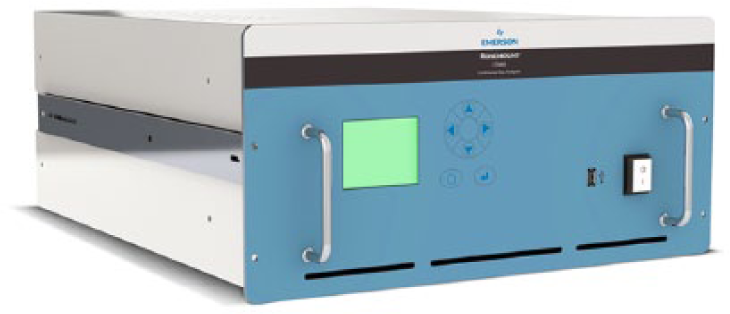
Sub-second measurements give operators the ability to make process adjustments, minimising down-time. Measurements are direct or ‘first principle’, unlike many traditional technologies where measurements are inferred.
XIV. Vega Introduces EX-Approved Sensor with Bluetooth for 80 GHz Radar
Bluetooth communications have been a standard option across Vega’s range of Plics transmitters since March 2016, and the range is also backward compatible to all sensors supplied since 2002. The Plics range features secure 64-bit encryption and pairing using apps or a USB dongle via PACTware. Up until now, it has only been available for safe area devices.
For the new 80 GHz radar level sensors, Vega has now launched the Vegapuls 64 (liquids) and 69 (bulk solids) sensors, which feature ATEX/IECEx: Ex ia, Ex ia/t (Dust) FM: OL, XP, and DIP approvals. Sensors can be set up and managed using EX-capable tablets and smartphones, run by Android, with Bluetooth 4.0 via the Vega ‘Tools’ app. They can also be operated via a magnetic pen through a window.
With the new sensors, no covers are removed or wires connected to sensors or signal cables – ‘hot work’ permits may not be needed. Engineers can work from safer locations, such as outside clean rooms in electronics, pharma, and food industries.

XV. Low Profile Accelerometer from Monitran Measures Vibration in Three Axes
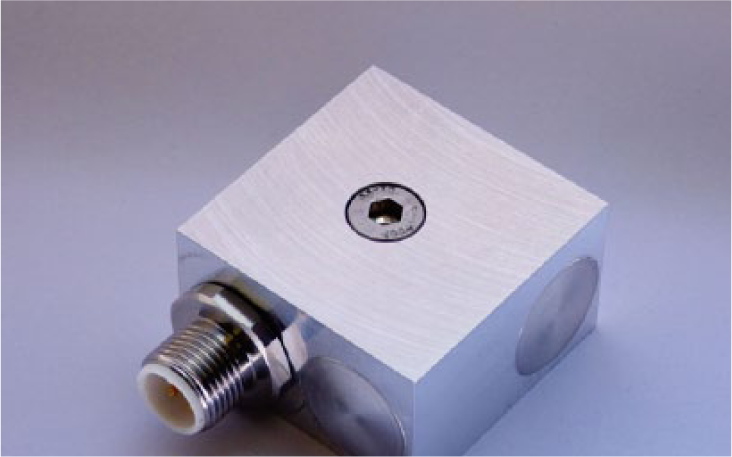
Designed for vibration measurement, the new MTN/1330 tri-axial accelerometer from Monitran measures acceleration simultaneously, in all three spatial axes.
The constant current device has three isolated AC outputs corresponding to the X, Y, and Z axes, and a top-entry 4 pin M12 connector. Standard sensitivity is 100 mV/g at 80 Hz, and the acceleration range is ±80 g.
The internal electronics use a new printed circuit board (PCB) design and are isolated to minimise noise, with increased bias voltage stability. The case is sealed to IP66 and is available in stainless steel, or aluminium for reduced weight.
Typical application sectors include aerospace, automotive, and general research and development.
XVI. Magnetic Couplings Work with the ‘Law of Attraction’ to Reduce Maintenance Costs
If leakage, or the ‘risk’ of leakage, can cause major issues with your machine, system. or site, a magnetic coupling could be the best solution. Traditional sealing methods such as packing, lipseals, and mechanical seals on rotating equipment have their limitations and will always require an element of maintenance, service, and eventual replacement.
The design and operation of a magnetic coupling without contacting parts removes the cost of servicing traditional dynamic seals. Magnetic couplings can also be adapted to cope with high temperature and/or high pressure while pumping corrosive and potentially harmful chemicals, especially in hazardous environments such as ATEX or offshore.
Utilising the ‘law of attraction’ between the north and south poles of a magnet provides the transfer of torque from one shaft to another, rather than by direct mechanical means. With no physical contact between the shafts, this allows a static barrier (canister) to be used as a stationary seal. No moving parts would greatly reduce maintenance costs.
Magnetic couplers lend themselves to many applications, from pumps to mixers, agitators to compressors, and torque limiters to linear drive systems.

XVII. Trade Show Brings Together Offshore Sector Companies in Scotland
The Instrumentation Scotland & Offshore Systems trade show took place at the Aberdeen Exhibition and Conference Centre (AECC) in Aberdeen on Wednesday, 31 August, and Thursday, 1 September.
Products on show included ‘Lite Pressure’ compression springs from Lee Spring, and various Fieldbus technologies from Milland Associates. CPD seminars also took place, including a presentation on gas detection and offshore processing, delivered by Shawcity.
XVIII. French Environment Minister Wants Radar Level Sensors for Flood Level Monitoring
The minister of the environment for France, Ségolène Royal, said recently on TV ‘Operative monitoring of floods overall worked well, but some sensors have experienced problems, a new system of radar sensors will be trialled to compensate for this’.
Radar sensors for tide, river, and flood level monitoring are being adopted across many sectors of the United Kingdom and Europe. They are unaffected by weather or surface conditions, they require no stilling tubes or cable conduits for protection, and so they are safer.
XIX. Yokogawa Invests in Silicon Valley-Based Fog Computing Start-Up
Yokogawa Electric Corporation has announced that it has invested in FogHorn Systems, a silicon valley start-up and developer of fog computing technology. Yokogawa aims to develop fog computing technology through its investment in Foghorn, to expand the range of solutions that Yokogawa provides.
Due to the growth of cloud computing services and the huge number of devices that have access to cloud resources, there is a growing concern over issues such as network congestion and data processing delays. Fog computing is gaining traction as a technology solution to this problem.
FogHorn Systems, a pioneer in the development of software for fog computing applications, has attracted the interest of various companies that are promoting the IoT. Led by March Capital and GE Ventures, the company has succeeded in raising US$12m in funding from multiple investors, including Yokogawa, Robert Bosch Venture Capital GmbH, and Darling Ventures. Yokogawa’s stake in the company is worth US$900,000.
Yokogawa offers a wide range of control solutions that help its customers improve the safety and efficiency of their operations and make the most effective use of their assets. These solutions include field instruments, control systems, manufacturing execution systems (MES), and management information systems.
‘Industrial Internet of Things’ (IIoT) technology is making rapid inroads in the control field, and it is expected that fog computing will provide an opportunity to offer real-time and distributed processing in edge computing applications that will accelerate its adoption as an IIoT enabler.
Yokogawa will seek not only to optimise production processes but also the flow of material and information within and between companies, including their value and supply chains. Yokogawa is committed to working with customers to create new industry solutions through the effective use of IIoT.
XX. Festo Embeds OPC Unified Architecture in Its Valve Terminals to Drive Benefits of ‘Industry 4.0’
Festo has embedded OPC unified architecture (OPC-UA) into its valve terminals, enabling plant managers and engineers to realise the benefits of smart manufacturing and ‘Industry 4.0’ principles. The valve terminals, which control factory and process automation and combine fluid and motion control, can now be seamlessly embedded in any Industry 4.0 host environment, supporting factories of the future.
OPC-UA is an industrial M2M communication protocol for interoperability. It is the data exchange standard for manufacturer and platform-independent industrial communication. Driven by the requirements of Industry 4.0 and the IIoT, many agree that OPC-UA enables the adoption of smart manufacturing.
Festo will be integrating OPC-UA technology into many more of its electrical controls in the coming years. As OPC-UA is platform and operating system independent, it can provide an open communication solution from the front-end devices, sensors and actuators, or controllers right up to the cloud.
All Festo’s valve terminals with CPX remote I/O can be extended to include an integrated CODESYS controller. This means that OPC-UA is an available option for Industry 4.0 host environments in factory automation and process automation applications. OPC-UA is available with the CPX terminal, valve terminals CPX/MPA and CPX/VTSA (OPC-UA server), compact controller CECC (OPC-UA server), and display and operating unit CDPX (OPC-UA client). Festo can also provide mechatronic subsystems as complete customer solutions incorporating OPC-UA.
OPC-UA is bringing industry much closer to true ‘plug and play’ functionality with seamless integration between components that can then talk to each other, so more data can be gathered and exchanged easily. Festo is using the technology at its new EURO 70 m automated manufacturing facilities in Scharnhausen, Germany.
XXI. International Accessible Vehicle Specialist Strengthens ANZ Operations
Mobility Networks, the international innovator in wheelchair lifts and ramps for buses, coaches, mini-bus, and other accessible vehicles, has opened a new Canberra office and service base to support Australia and New Zealand. Mobility Networks provides a ‘one-stop-shop’ accessibility service for vehicle convertors, body builders, fleet operators, and domestic drivers.
The company intends to market its ‘Coach Front Entrance Cassette lift’ in the ANZ market. The platform is stowed internally under the entrance steps of a coach, and when combined with the company’s variable height ‘Magic Floor’, wheelchair passengers can easily transfer from ground level to a raised passenger deck. Mobility Networks now also supplies vehicle lifts manufactured by Caroil. The Caroil product range has been overhauled to enhance product and service quality for the ANZ market.
With new ANZ legislation stipulating that all coaches and buses must be wheelchair accessible, the range of lifts available from Mobility Networks will be able to meet this requirement while minimising risk and maximising safety for all.
In addition to the PCV market, Mobility Networks can also provide specialist products for the domestic wheelchair accessible vehicles (WAV) sector in the ANZ region. This ‘Flexi’ branded range includes the FlexiWinch, FlexisRamp, and the FlexiWAV lowered floor and tailgate ramp conversion kits.
The FlexiWinch is a powered belt system that helps pull a wheelchair and occupant into a vehicle via a ramp. It is ideal for use with Mobility Network’s folding two-piece Flexisramp. The FlexiWAV range provides specialist vehicle convertors with a ready-made flat floor and ramp package that can be slotted into original equipment manufacturer (OEM) cars during adaptation for wheelchair access.
XXII. Adlink Launches Computer-on-Module Express 3.0-Compliant ‘Computer-on-Module’
Adlink Technology, a provider of IIoT and communications platforms, has announced its first ‘computer-on-module’ (COM). The unit is based on the latest PCI Industrial Computer Manufacturers Group (PICMG) COM Express 3.0 specification, with the new Type 7 pin-out.
Adlink is a leading developer in delivering a server-grade platform and 10 Gigabit Ethernet (GbE) capabilities to a COM form factor. The unit targets customers building space-constrained systems in industrial automation and data communication, such as virtualisation, edge computing, or other numerical applications, that require high-density CPU cores balanced by reasonable power consumption.
The unit’s Type 7 pin-out does away with all graphics support and replaces it with up to four 10 GbE ports and an additional eight PCIe ports, bringing the total PCIe support to up to 32 PCIe lanes. The Type 7 pin-out has been designed to leverage all the functions of low power, headless server-grade ‘system-on-a-chip’ (SoC), with a thermal design power (TDP) below 65 W.
The Intel Xeon SoC featured in the unit supports up to 16 CPU processor cores, 32 PCIe lanes, and multiple 10 GbE ports. In addition, the Type 7 pin-out brings out 10GBase-KR signals, meaning the carrier board designer can choose between KR-to-KR, KR-to-optical fibre, and KR-to-copper. A network controller sideband interface (NC-SI) bus is also supported, allowing for intelligent platform management interface (IPMI) board management controller (BMC) support on the carrier board.
Adlink is playing a leading role in the PICMG subcommittee that is currently defining the new Com Express 3.0 specification. The specification preview defines the new Type 7 pin-out and allows module manufacturers and customers to start designs before the full specifications are published, which is expected to be the end of Q3 2016.
The unit provides up to 32 GB dual channel DDR4 at 1867/2133/2400 MHz ECC (dependent on SoC), up to eight PCIe x1, two PCIe x4, one PCIe x16, two SATA 6 Gb/s, and four USB 3.0/2.0. The module comes with a build option for an operating temperature range of −40°C to +85°C and supports Adlink’s smart embedded management agent (SEMA), which enables remote management and control of distributed devices.

The unit connects seamlessly to Adlink’s SEMA Cloud solution to enable remote monitoring, autonomous status analysis, custom data collection, and initiation of appropriate actions. All collected data, including sensor measurements and management commands, are available remotely via encrypted data connection.
XXIII. Bürkert Provides Precision Gas Control for Gas Research Application
Designing and manufacturing one-off pieces of equipment requires engineering skill, especially when that equipment is required to control combustible gases and deliver precisely repeatable results. So when Saflame was approached to design an experimental combustion rig which required precise, independent control of three gases, it turned to Bürkert Fluid Control Systems to provide the solution.
Saflame is a manufacturer and supplier of thermal processing and control equipment to a wide range of industries and has considerable expertise in designing the control mechanisms including the use of PLCs, SCADA, and fieldbus systems. This experience led to a request from the Chemistry Department at the University of Liverpool for Saflame to develop a special laboratory combustion rig for research into flame deposition of chemical films onto various materials.
The basic concept of the combustion rig was to provide a platform which would allow oxygen, nitrogen, and liquefied petroleum gas (LPG) to be mixed at precise ratios and ignited to produce a consistent flame. Once a stable flame is established, a test chemical is introduced into this flame and then deposited onto a sample material plate which is positioned in front of the flame.
Saflame approached Bürkert with the specifications for the gas control system, and following the consultation, Bürkert suggested the Type 8713 mass flow controller (MFC) for gases, which was ideally suited to this project.
The Type 8713 MFC is designed to provide precise and consistent results, using CMOSens technology to accurately measure the gas flow rate. This allows the unit to control a set point or actual value changes within 100 ms while maintaining its high sensitivity, even at low flow rates.
Three Type 8713 MFCs, one for each gas, were incorporated into the design and connected to the GRX SCADA system, which allowed each MFC to be independently programmed, controlled, and monitored during each experiment.

Gary Williams, technical director at Saflame, comments, ‘The Bürkert product really was a plug and play item with its connectivity allowing direct control through our GRX SCADA system, which allows the parameters of each experiment to be recorded and replicated if necessary’.
XXIV. Panasonic Adds a Millimetre to Its Micro Photoelectric Sensor Range
Panasonic Electric Works has upgraded its U-shaped micro-photo-electronic sensor range. Although the external dimensions of the range has not changed, the distance between the emitting and receiving elements have been increased by 1 mm. The wider distance between the emitter and receiver decreases the possibility of collision with the objects they are designed to detect.
The fixed width of the sensing head eliminates the need to perform beam alignment during installation. Areas of the sensor, such as PCB to cable connections, have been encapsulated in resin. This helps prevent malfunctions caused by vibrations and impacts.
All models in the PM-25/45/65 series are equipped with reverse polarity protection so that the sensor is not damaged by incorrect wiring. The cabled PM-25 and PM-45 series offer an IP64 environmental resistance rating.
The nature of U-shaped photoelectric sensors mean they do not need to have their emitters and receivers aligned, as both are fixed inside the sensor body. To aid mounting and beam positioning, the sensor body has marks indicating the upper and lower positions of the beam axis as well as a mark for the beam width.
The three series of U-shaped photoelectric sensors come in a large variety of types for installation in small spaces. The PM-25 and PM-45 series are equipped with a 3-m cable.
XXV. Rittal Uses Radial Fans in Its New Roof-Mounted Fan Range
Rittal has launched a new range of roof-mounted fans. The new range is designed to reduce the costs associated with operation, installation, and maintenance while better protecting the installed equipment that they are required to cool.
Rittal use radial fans, together with optimised air routing, to maximise the installed air throughput and minimise energy consumption. The fan performs effectively against pressure in a housing that has been developed to reduce resistance to air flow to a minimum. Despite an air path with low resistance, the fans can protect the components inside the panel to an ingress protection (IP) category of IP55.
The range, which includes a passive vent and models that provide uninstalled air throughputs of 500, 800, and 1000m3/h, uses a single housing, offering the flexibility to fit any unit to a single roof panel. The largest fan incorporates electronically commutated (EC) motors to further improve efficiency.
The range includes a clamping mechanism that allows the fans to be fitted from either inside or outside the enclosure, quarter-turn fixings that permit access to the filters, and a plug terminal electrical connection.
