




Abstract
Ultrasound transducers are used in a multitude of applications. A typical ultrasound transducer assembly consists of a piezoelectric layer, one or more matching layers and a backing layer. Dimensions and shape of these structural elements and properties of the used materials (especially those of piezoelectric layer) have a great influence on the resulting properties of the ultrasound transducer. The properties of the material used for the piezoelectric layer have strong dependence on the field conditions like temperature and pressure. The paper aims at studying the effect of temperature and pressure on the resonant frequency of the piezoelectric element. The change in the resonant frequency results in change in the material constants of the piezoelectric disc. Using these practical values of material constants, a realistic model of piezoelectric element can be developed. This helps in prediction of behaviour of the resulting ultrasound transducer and accelerates the design procedure. The real-life application considered for the conditions of temperature and pressure is open channel flow measurement. Traditionally used lead zirconate titanate (PZT)-based ceramic is the material chosen for the piezoelectric layer.
I. Introduction
Ultrasound transducers are used in a broad range of applications such as detection of defects in engineering materials, imaging in medicine and in process industries for the measurement of process parameters like flow, level, density and so on. A multitude of applications are described in the literature. 1 The heart of a typical ultrasound transducer is the piezoelectric element. A variety of piezoelectric materials like ceramics, polymers, ceramic–polymer composites and single crystals are available. Lead zirconate titanate (PZT)-based ceramics have been traditionally used as the material for piezoelectric element because of a high coupling coefficient, wide range of dielectric constants and low electrical losses.2,3 Therefore, the material chosen for experimentation is PZT. Piezoelectric materials in the ultrasound transducers are subjected to a variety of environmental conditions based on the application. 4 The ultrasound transducer used for underwater open channel flow measurement is subjected to considerable temperature and pressure variations beneath the surface of water.5–8 PZT has been a subject of intensive investigation, and evidence of change in its properties with temperature and pressure is widespread.4,9–12 Qiu et al. 4 have presented temperature- and pressure-based characterization of piezoelectric single-crystal material (PMN-PT, Lead Magnesium Niobate Lead Titanate). Underwater sonar and nondestructive testing at elevated temperatures are the applications considered for the temperature (−5 to 125 °C) and pressure (0–20 MPa) ranges. The parameters analysed are the permittivity (εr33S), coupling coefficient (kt), electric displacement (c33D) and piezoelectric stress constant (e33). Variation of electromechanical coupling factor (kp), mechanical quality factor (Qm), relative dielectric constant (εr) and charge constants (d33 and d31) of soft PZT material as a function of temperature ranging from room temperature to the Curie point of the piezoelectric crystal is studied in Miclea et al. 9 Sherrit et al. 10 have used the impedance resonance technique to measure the impedance spectra of PZT ceramic specimens over temperatures ranging between 0 and 100 °C. They determined the temperature dependence of elastic, dielectric and piezoelectric constants. Wolf and Trolier-McKinstry 11 presented the temperature dependence of the effective transverse piezoelectric coefficient (e31,f) in PZT thin films measured between −55 and 85 °C. Portelles et al. 12 have plotted the impedance frequency plot for a temperature range of 25–200 °C with the PZT element operated in a radial mode. Gehin et al. 13 developed a new force resonant sensor, natural frequency of which is a function of the applied force.
This paper reports an investigation of the temperature and pressure dependence of the resonant frequency of the PZT. The real-life application considered for the conditions of temperature (5–50 °C) and pressure (1 kg cm−2) is an open channel flow measurement. The conditions considered are more practical and application specific. For the said application, the transducer is immersion type, so the temperature and pressure conditions are that of water. Also, a simple resonant frequency measuring method is used against an expensive impedance analyser used by most of the studies.
The paper is organized as follows: Section II discusses the related theory. Section III defines the material samples and reports the experimental arrangements used to acquire the observations. The procedures are also outlined. Illustrative results are presented and discussed in section IV. In section V, the findings and conclusions drawn are given.
II. Theory
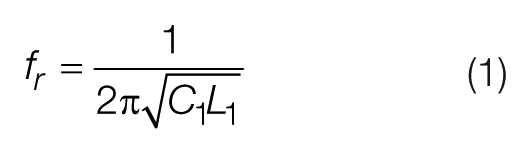
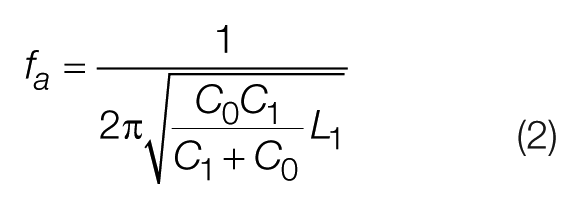
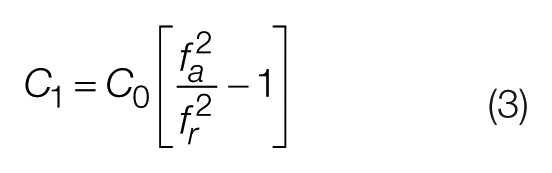
Ultrasound transducers are the key element that governs the performance of any measurement system. Modelling of ultrasound transducers allows rapid prediction of performance of ultrasound transducers, and the design specifications are met in a much shorter time. Piezoelectric element in the ultrasound transducer plays an important role in the performance of the transducer. The characterization of piezoceramics allows us to obtain important parameters for designing ultrasound systems. Modelling with equivalent electric circuits is used for studying the behaviour of piezoelectric discs. The equivalent circuit is as shown in Figure 1 . The branch with capacitance Co represents the electrical nature of the piezoelectric disc, whereas the branch with components R1, L1 and C1 represents the mechanical behaviour of the piezoelectric disc. In this equivalent circuit, the resonant and antiresonant frequencies are given by the equations (1), (2) and (3)
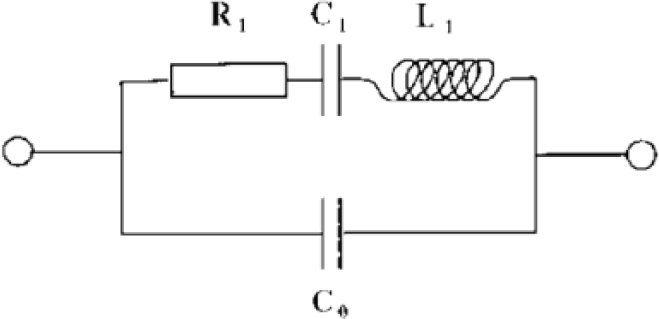
Equivalent circuit representing piezoelectric ceramic
With change in temperature and pressure, the change in resonant and antiresonant frequencies can be recorded and model parameters can be computed. Also material constants like electromechanical coupling, dielectric permittivity and so on can be computed. The values of material constants can be used in finite element analysis models of piezoelectric discs. The model parameters computed from the practical values of the resonant frequency will result in a more realistic model.14,15
III. Experimental Arrangements
Details of the PZT discs under test are as shown in Table 1 . The selection of these dimensions is based on the required resonant frequency of PZT for open channel flow measurement. 16
Discs under test (Sparkler Ceramics Pvt Ltd, Pune, India)
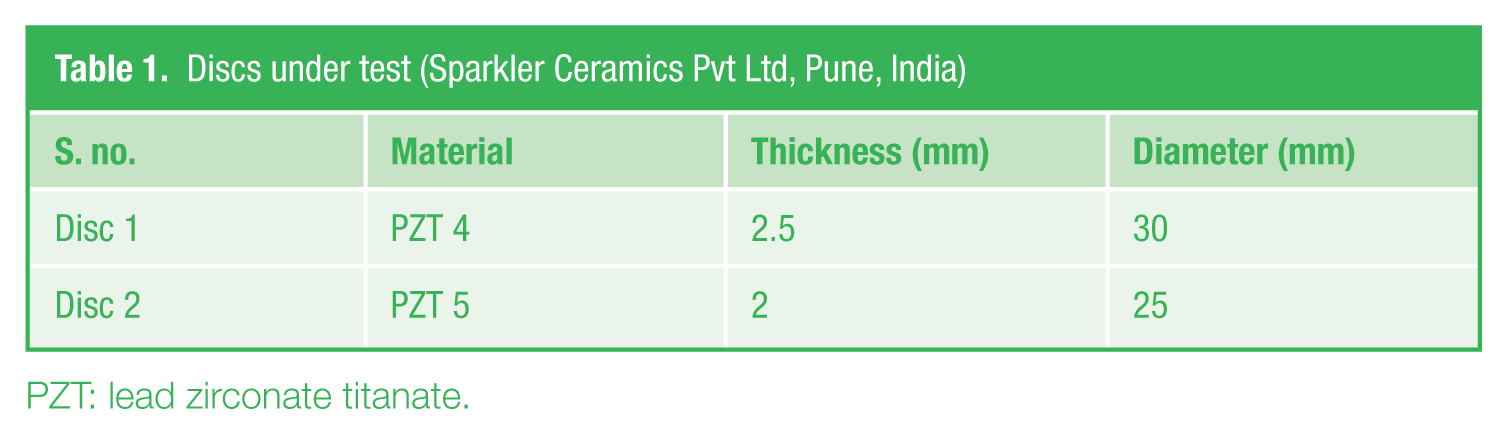
PZT: lead zirconate titanate.
The effect of change in temperature on the resonant frequency is tested using a temperature-controlled water bath. The setup consists of a temperature-controlled water bath, circuit, 15 Aplab signal generator and oscilloscope, and potted PZT discs. The PZT disc is potted for preventing it from shorting after immersion in water bath. The temperature of the water bath is controlled using Honeywell’s Universal Digital Controller (UDC3000). Time duplex control strategy is used. The water bath is stirred using a motorized stirrer to keep the temperature uniform. The water bath is thermally insulated for prevention of heat loss to the atmosphere. The temperature is maintained using a heating coil and a cooling jacket. The temperature of the water bath is measured using a thermocouple. The block diagram and the photograph of the setup are as shown in Figures 2 and 3 , respectively.
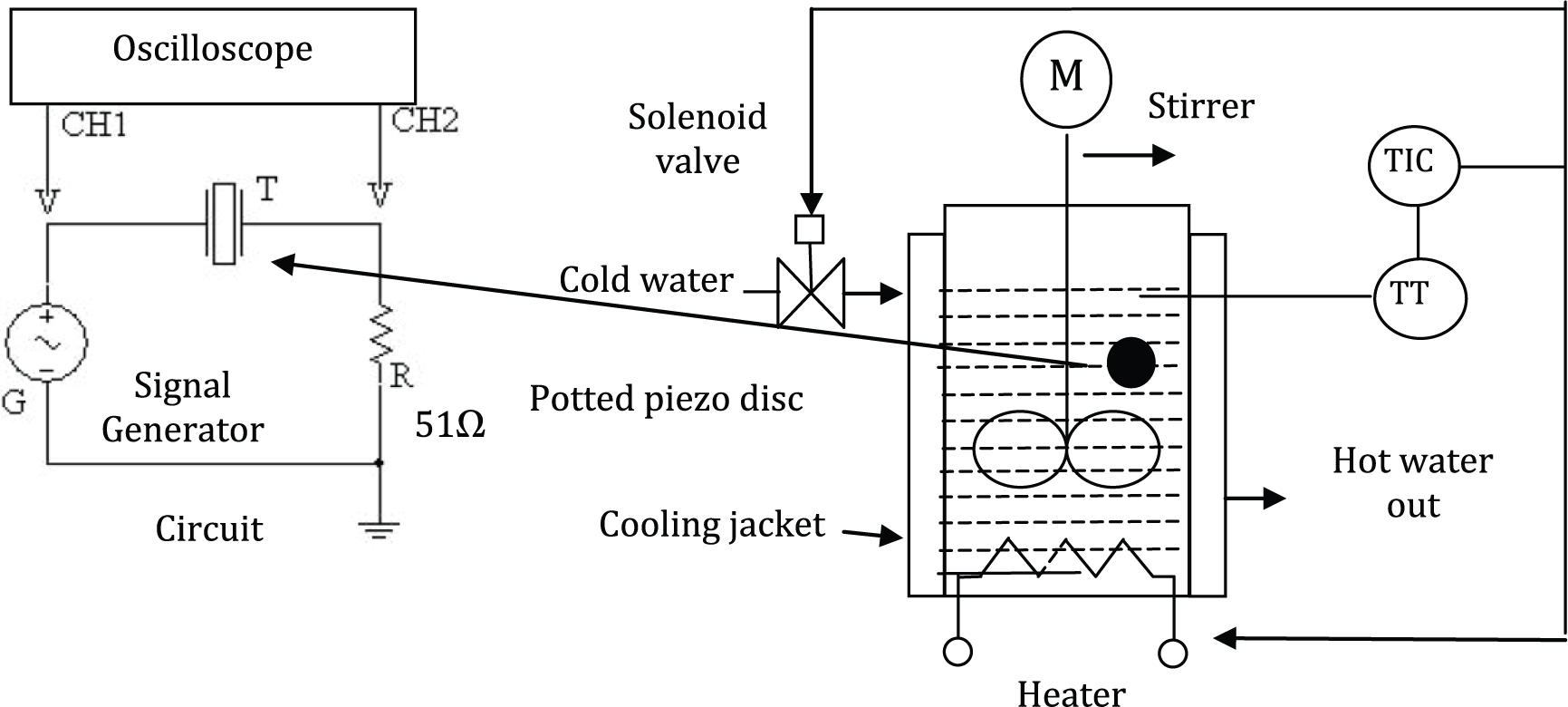
Setup for temperature characterization
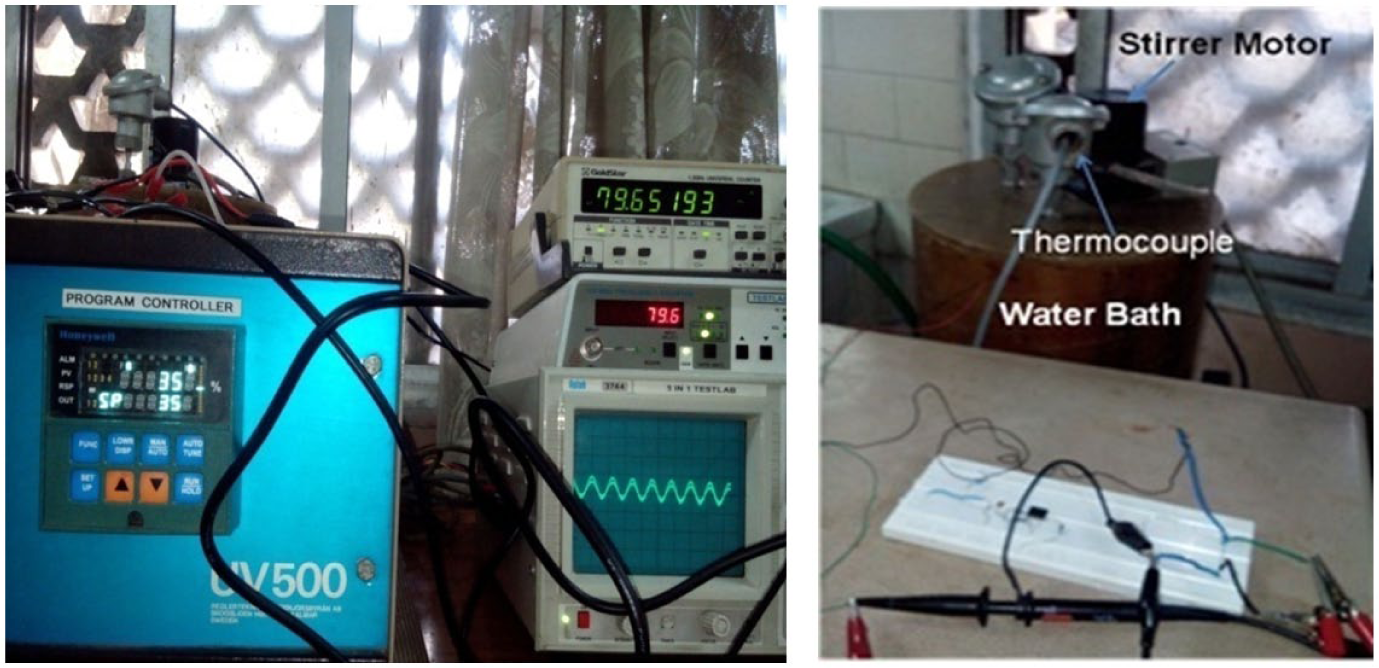
Photograph of the setup for temperature characterization
The temperature of the water bath is varied and maintained in the range from 5 to 50 °C in steps of 5 °C. The change in the resonant frequency is observed. The selection of the temperature range is based on the application considered. Sufficient soaking time is provided. The experiment was repeated for 10 times, and average values were computed.
Pressure also has an effect on the resonant frequency. For open channel flow measurement, the maximum water head above the flow meter considered is 10 m. 16 The head pressure acting on the ultrasound flow meters affects its resonant frequency. To simulate the head pressure acting on the ultrasound transducer, weights calibrated in terms of pressure are used.
Head pressure is given by equation (4)

where h is the water level above the flow meter in metres, ρ is the density of water (1000 kg m−3) and g = 9.80665 m s−2. Thus, P = 10 × 1000 × 9.80665 = 98066.5 Pa = 14.223 psi ~ 15 psi ~ 1 kg cm−2.
Pressure is defined by equation (5)
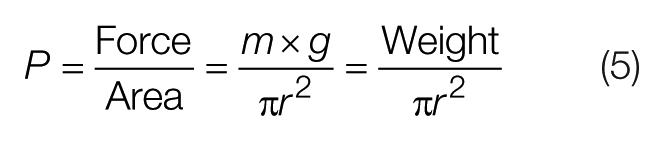
The diameter of PZT 5 is 25 mm and radius = 12.5 mm = 1.25 cm.
Area and pressure are calculated in equations (6) and (7)


Therefore, the maximum weight is 4.9087 kg.
The precalibrated weights are applied to the piezoelectric discs, and the change in resonant frequency is observed. The maximum weight that can be applied to PZT 5 of 25 mm diameter for creating a pressure of 1 kg cm−2 is 4.9087 kg. Similar calculations are done for PZT 4. Maximum weight that can be applied for PZT 4 is 7.068 kg. The setup consists of a circuit, PZT disc, weights, Aplab signal generator and oscilloscope, which is shown in Figure 4 . The photograph of the setup is shown in Figure 5 .
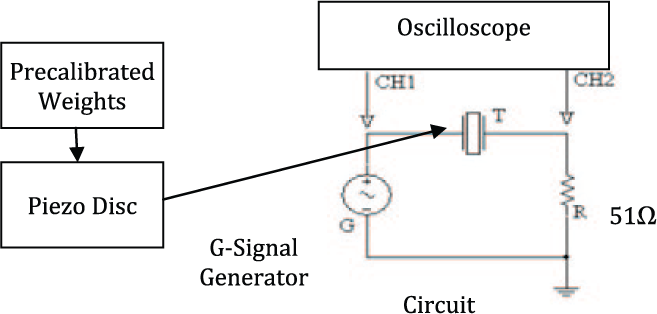
Block diagram of pressure characterization
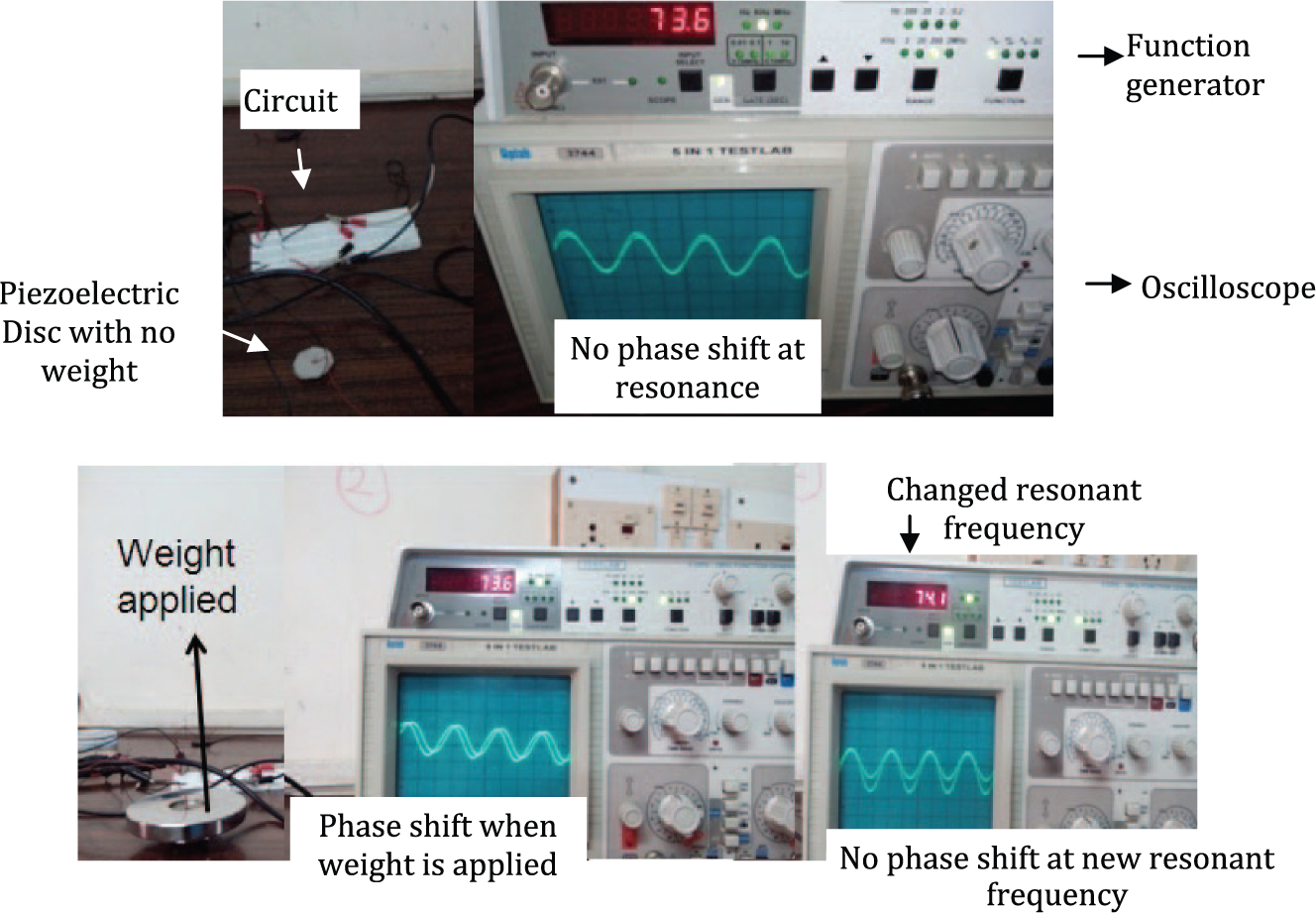
Photograph of pressure characterization setup
IV. Results and Discussion
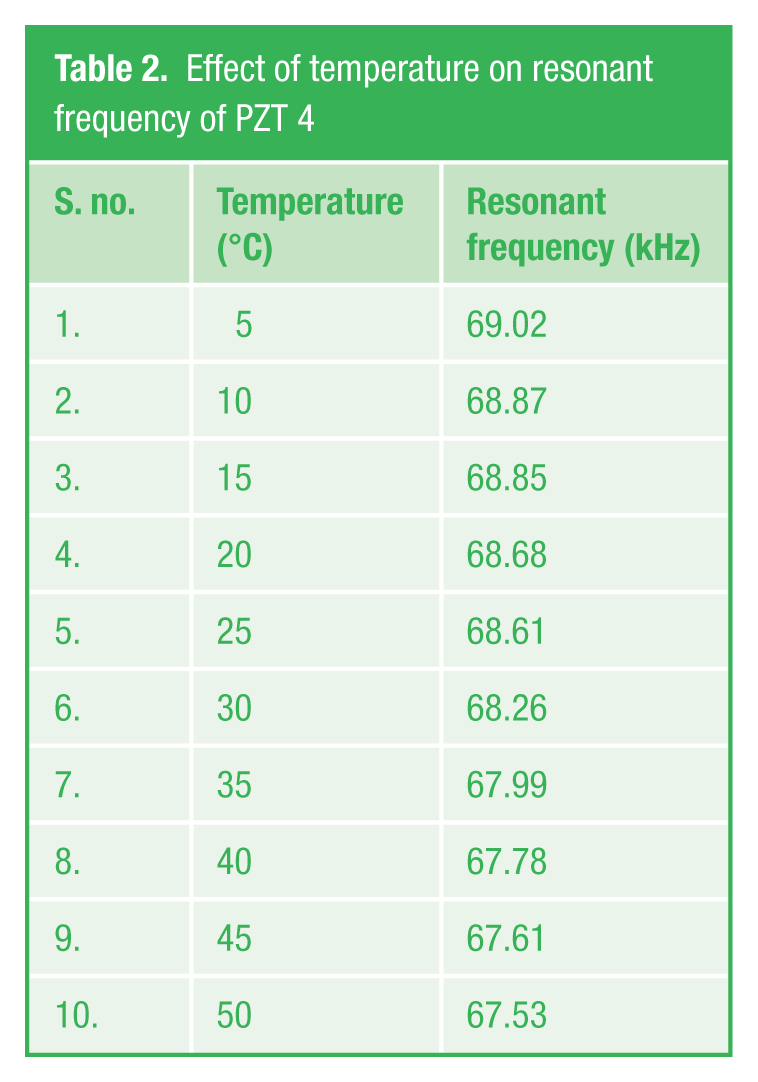
To study the effect of temperature on the resonant frequency, the temperature is varied from 5 to 50 °C in steps of 5 °C. The change in resonant frequency of PZT 4 with temperature of the water bath is tabulated in Table 2 , and the respective graph is shown in Figure 6 .
Effect of temperature on resonant frequency of PZT 4
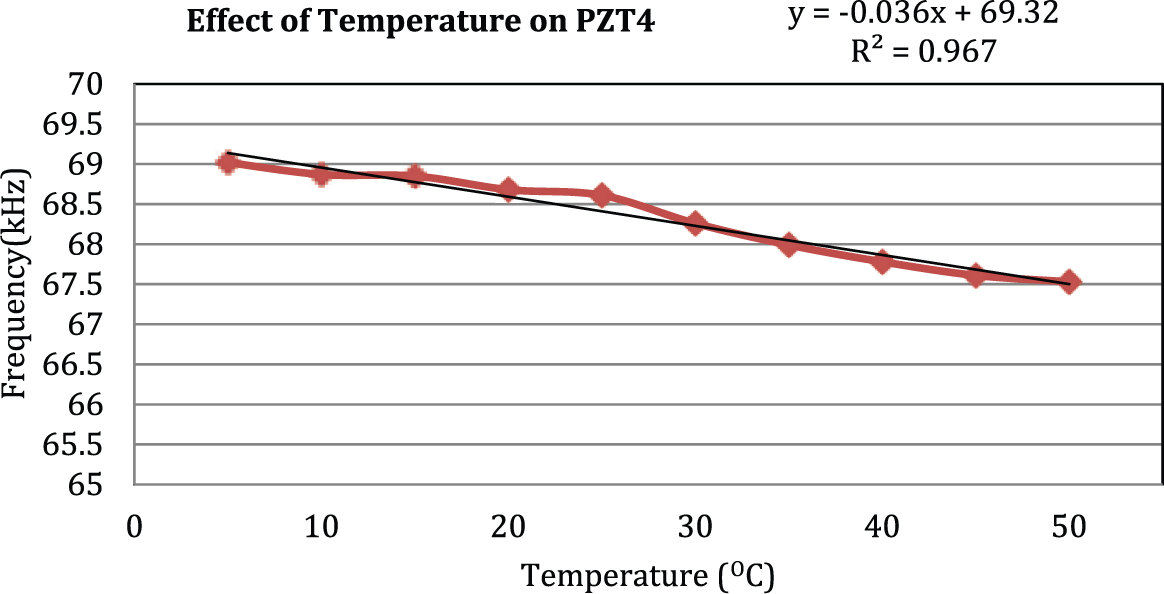
Effect of temperature on resonant frequency of PZT 4
The readings are the average of 10 such observations. Table 3 shows the effect of temperature on PZT 5. Figure 7 shows the resulting graph. It is observed that as the temperature increases, the resonant frequency decreases. The resonant frequency of the piezoelectric element is directly proportional to stiffness constant. 17 If the temperature of the piezoelectric element increases, its stiffness decreases, and so the resonant frequency decreases. For PZT 4, the change in resonant frequency for the given temperature range is 1.49 kHz. For PZT 5, the resonant frequency decreases with temperature till 40 °C. There is a limit to which the stiffness changes with temperature. Till 40 °C, the change in resonant frequency is 4.33 kHz. PZT 4 is hard as compared to PZT 5, so the change in resonant frequency of PZT 5 with temperature is more than PZT 4. Increase in the resonant frequency of PZT 4 will be seen at temperatures greater than 50 °C. The graph of resonant frequency versus temperature for PZT 4 is plotted till 40 °C.
Effect of temperature on resonant frequency of PZT 5
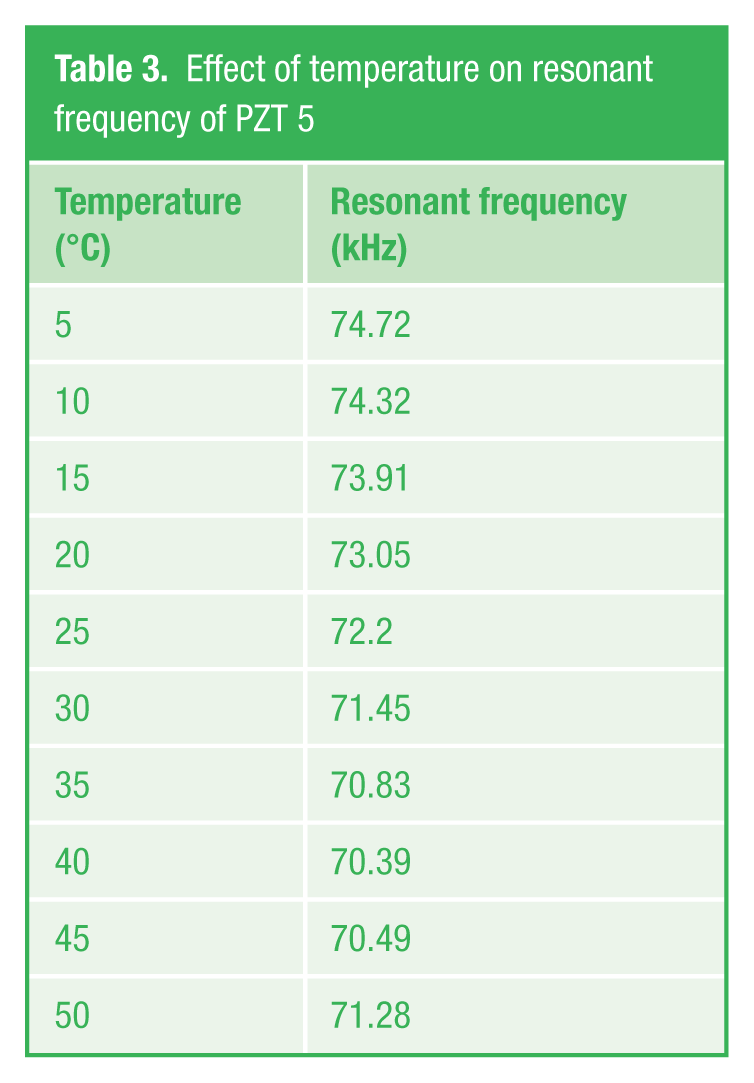
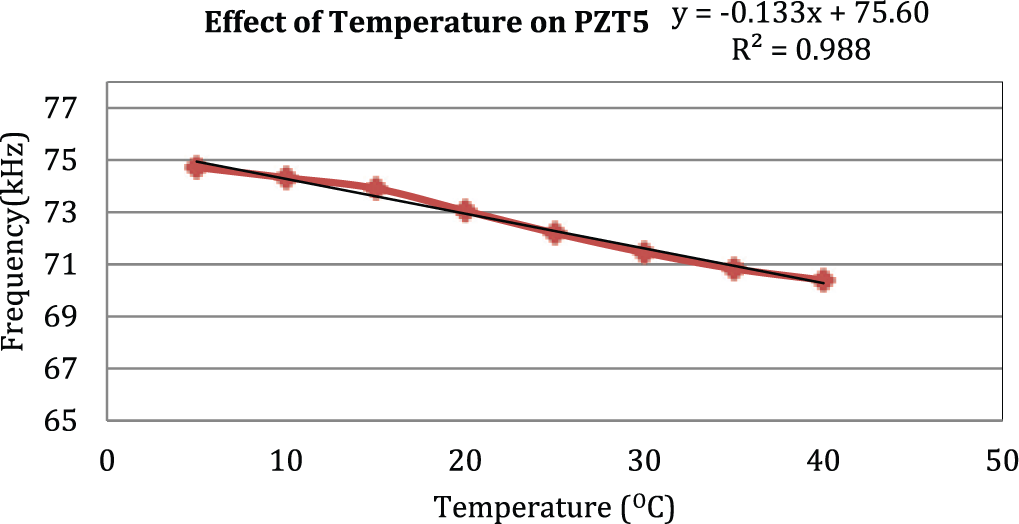
Effect of temperature on resonant frequency of PZT 5
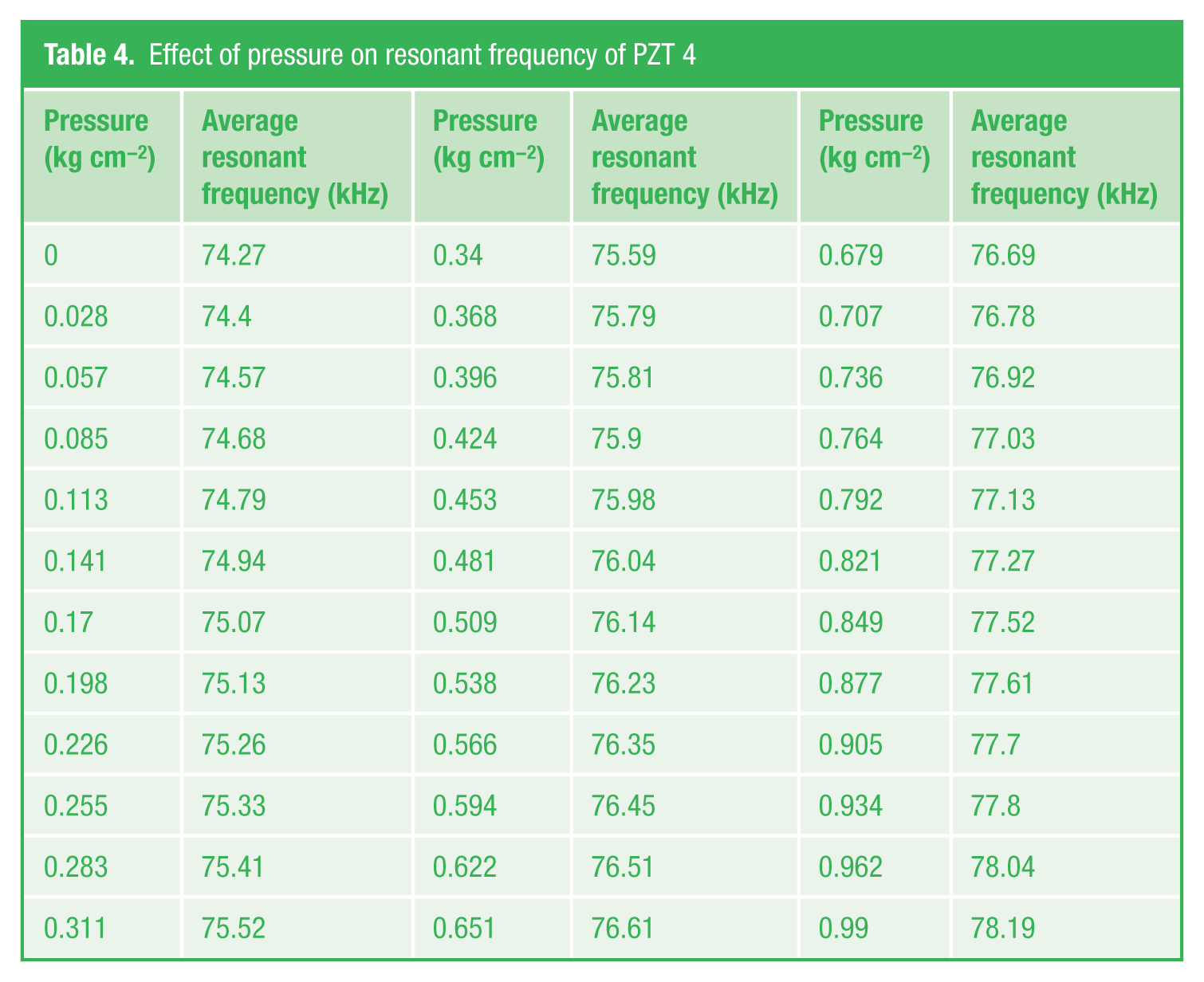
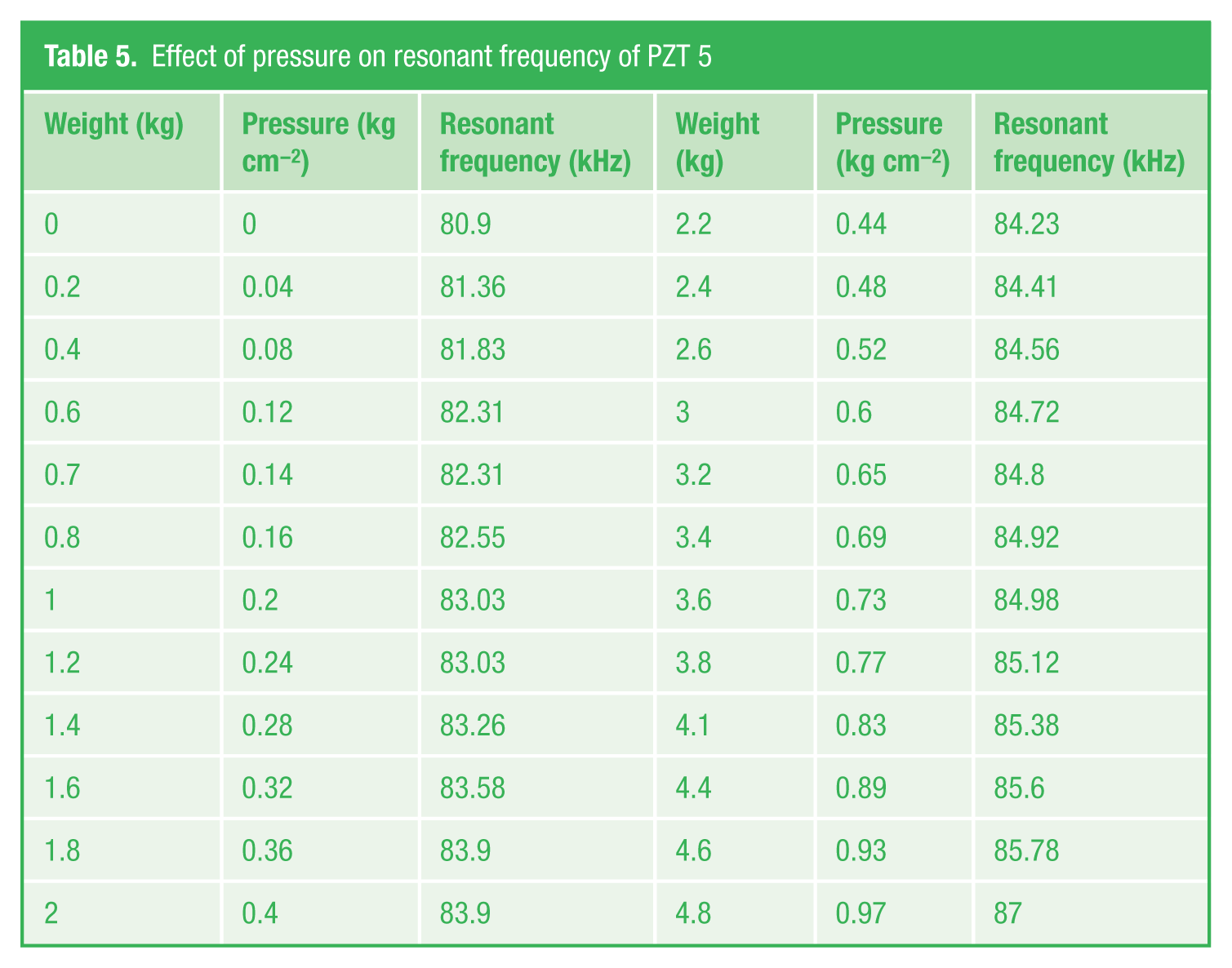
To study the effect of head pressure on the resonant frequency of the PZT, weights ranging from 200 g to 4.8 kg were applied to the PZT 5 disc and weights ranging from 200 g to 7 kg were applied to PZT 4. The observations of PZT 4 are shown in Table 4 , and the graph of these observations can be seen in Figure 8 . The observations of PZT 5 are tabulated in Table 5 , and the graph is shown in Figure 9 . The readings are the average of 10 such observations.
Effect of pressure on resonant frequency of PZT 4
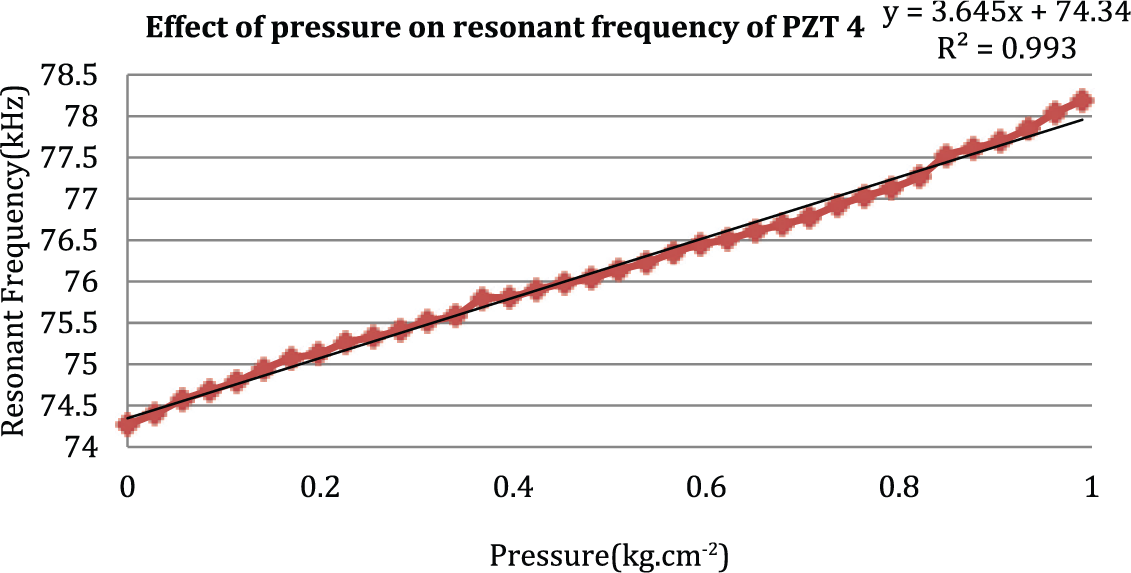
Effect of pressure on resonant frequency of PZT 4
Effect of pressure on resonant frequency of PZT 5
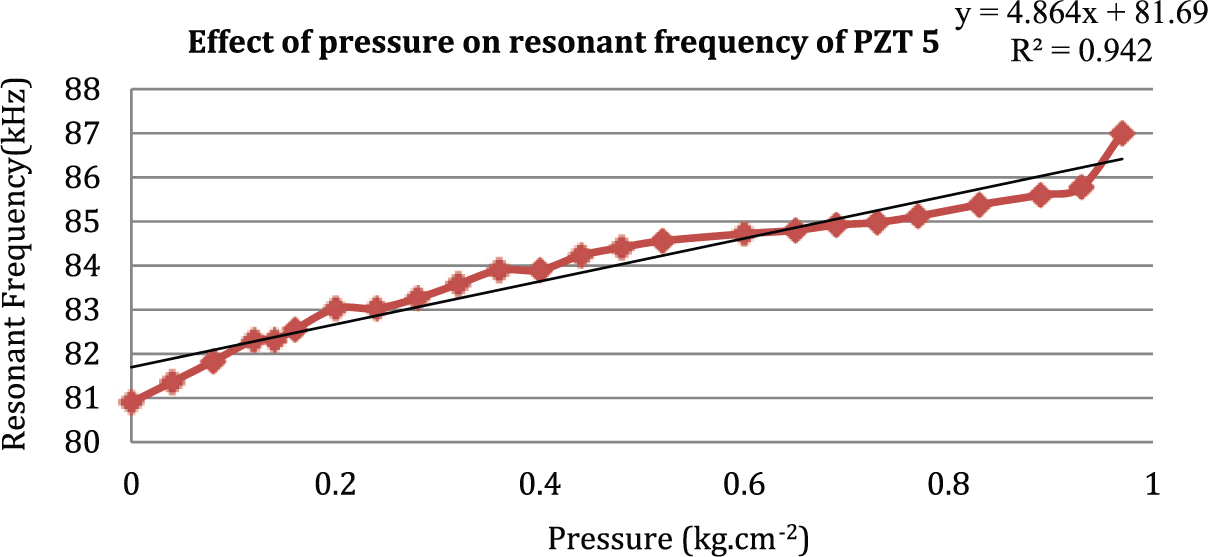
Effect of pressure on resonant frequency of PZT 5
As the pressure increases, the resonant frequency increases. The resonant frequency is inversely proportional to the thickness of the piezoelectric element. 17 As pressure is applied to the piezoelectric element, the thickness decreases, and so the resonant frequency increases.
V. Conclusion
In this paper, the effect of change in temperature on the resonant frequency of ceramic piezoelectric crystal (PZT 4 and PZT 5) is presented. The temperature conditions in open channel flow measurement are considered. As temperature increases, decrease in resonant frequency is seen till a certain temperature. For PZT 4, for the given temperature range, the change in resonant frequency is 1.49 kHz; 1.49 kHz in 69.02 kHz is 2.15%. On the simple regression analysis, the regression equation was y = −0.036x + 69.32 (R2 = 0.967). For PZT 5, for the given temperature range, the change in resonant frequency is 4.33 kHz; 4.33 kHz in 74.72 kHz is 0.58%. On the simple regression analysis, the regression equation was y = −0.133x + 75.60 (R2 = 0.988). PZT 5 being soft as compared to PZT 4, it is more sensitive to temperature changes. An increase in resonant frequency is seen with increase in pressure. As pressure increases, increase in resonant frequency is seen. For PZT 4 with change in pressure, the change in resonant frequency is 3.92 kHz; 3.92 kHz in 74.27 kHz is 5.27%. The simple regression equation obtained for PZT 4 is y = 3.645x + 74.34 (R2 = 0.993). For PZT 5 with change in pressure, the change in resonant frequency is 6.1 kHz; 6.1 kHz in 80.9 kHz is 7.5%. For PZT 5, the simple regression equation observed is y = 4.864x + 81.69 (R2 = 0.942). The effect of this change in resonant frequency due to changes in temperature on the error in flow measurement needs to be assessed. Also, based on the values of resonant frequencies recorded,values of material constants can be computed and response of equivalent circuit model can be plotted.
Footnotes
Acknowledgements
The author is thankful to the management of Cummins College of Engineering for their valuable support for carrying out this work.
Funding
The author(s) received no financial support for the research, authorship, and/or publication of this article.