




Abstract

Laser Scan Microscopy Rivals Atomic Force Microscopy for Electro-Mechanical Testing
As part of research into flexible thin-film electronic devices, Dr Megan Cordill, from the Erich Schmid Institute for Materials Science and the University of Leoben (Austria), has used confocal laser scanning microscopy (CLSM) with the Olympus LEXT OLS4100.
Combining a mechanical straining stage with high-resolution observation allows in situ analysis of electrical and mechanical properties, and CLSM proved to be a faster and more insightful alternative to atomic force microscopy (AFM), as described in the latest Olympus application note.
The electronics industry is rapidly moving towards flexible thin-film devices, but designs must withstand stress. Working towards this aim, Dr Cordill studies the behaviour of thin-film devices during strain, including the strength and electrical resistance of the film and its adhesion to the substrate.

Observation data generated with the LEXT OLS4100 compared favourably to AFM, with added benefits. A larger field of view and higher range allowed more comprehensive analysis, as AFM can only visualise shallower surface features and 4–5 cracks per image, failing to provide meaningful statistics.
Shedding light on the behaviour of thin-film devices, utilising the LEXT OLS4100 in Dr Cordill’s research has demonstrated how conventional designs with interlayers between the substrate and conducting thin film can lead to cracking, and the tantalum adhesion layer beneath gold films can buckle and delaminate. With the new setup, manufacturers can determine when damage appears, improving product reliability.
Pickering Interfaces Introduces High-Density PXI Matrix Range
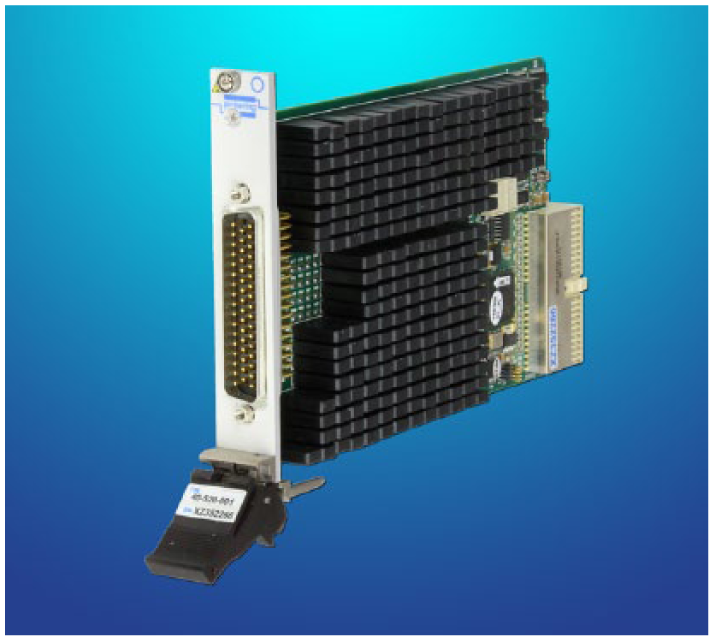
Pickering interfaces, the provider of modular signal switching and simulation for electronic test and verification, has expanded its range of one-pole high-density PXI matrix modules.
The units (40–520 family) are high-density matrices with 22 different configurations and up to 256 cross-points to suit a large variety of user requirements. The choice of six bus widths (×16, ×12, ×8, ×6, ×4 and ×2) offers very long life with good low-level switching performance and excellent contact resistance stability.
The range comes with Pickering’s Built-in Relay Self-Test (BIRST) and is also supported by their eBIRST Switching System Test Tools. These tools provide a quick and simple way of finding relay failures within the modules. Typical applications include signal routing in automatic test equipment (ATE) and data acquisition (DAQ) systems.
Meteocontrol Installs Monitoring Systems for 130 MWp Photovoltaic Power in Great Britain
Meteocontrol GmbH has installed 60 ‘blue’Log X’ series monitors at six British solar parks with its monitoring systems and put them into operation. Meteocontrol’s client, BayWa r.e., built the turnkey facilities with a total power capacity of around 130 MWp and then worked with Meteocontrol to connect them to the grid on schedule in March 2016.
BayWa r.e. has taken on operation management for the six photovoltaic (PV) plants itself and thus oversees wind and solar parks producing around 440 MW in the United Kingdom.
Anritsu Signs UK Distribution Agreement with Electro Rent
Anritsu Corporation, a provider of innovative test and measurement solutions for advanced and converged networks, today announced that they have signed a distribution agreement with Electro Rent UK, a leading provider of new and used test equipment for rent, lease or purchase.
The distribution agreement extends Electro Rent’s existing relationship with Anritsu as a preferred reseller and rental partner in the United States and Canada. Under the terms of the new agreement, Anritsu’s industry-leading field analysers will now also be available in the United Kingdom through Electro Rent.
The Anritsu solutions offered through Electro Rent in the United Kingdom include a range of microwave, radio frequency (RF) and mobile protocol cable, spectrum, and network field analysers for the installation and maintenance markets, meeting all levels of communications test and measurement needs.
As part of the agreement, Electro Rent will provide customers with sales and service support for the United Kingdom from its head office in London. These services will be offered in addition to support already provided for these products, such as short-term and long-term rent, lease, rent-purchase, rent-to-own and flex-term.

Electro Rent has been investing and growing their business in the United Kingdom over the last 10 years, and has strong relationships with a wide range of key UK customers.
New Ring Encoder Range from Heidenhain Provides High-Accuracy Feedback
High-accuracy feedback of angular motion, compact dimensions, frictionless non-contact operation and resistance to contamination, despite having an optical grating, are the main benefits of the new ECA 4000 absolute ring encoder range from German manufacturer, Heidenhain.
The ECA variant offers 60% smaller position error and 45% faster operation than the equivalent ERA 4000 incremental ring encoder.
Typical applications are controlling the position of swivelling heads, spindles and rotary tables on tool and gear grinders, machining centres, and computer numerical controlled (CNC) lathes. The units may also be used to control robots and to position semiconductor wafer motion stages.
Each ring employs a three-point method that allows the installer to align the centres of the encoder drum and machine bearing in just a couple of minutes.
After setting the scanning gap between the read head and the outside diameter (OD) of the steel drum, signal quality is verified and the encoder system is ready for feedback to the control via a Heidenhain Endat 2.2 high-speed serial interface.
ECA 4000 encoders are available with a wide spread of drum ODs from 104 to 560 mm. Inside diameters range from 70 to 512 mm so that machine designers can pass cabling and other services through the centre to streamline machine design.
Each ring size has a unique line count around the outside, up to 44,000 in the case of the largest model, for which an accuracy of ±1.5 arc seconds is specified for the twin-track graduations. Each ring is capable of resolutions better than 0.01 arc second. Fast reaction time, even at speeds up to 2,500 rpm, makes the encoders suitable for use with direct drive motors.

The encoders have a high degree of vibration and shock resistance, a protection rating up to IP67 and an operating temperature range of −10 °C to +70 °C.
Beckhoff’s EJ-Series Provides Efficient Input/Output and Motion Solutions for High-Volume Applications
EJ-series EtherCAT plug-in modules provide an efficient wiring solution for machines built in large- and medium-sized production runs. With new motion modules, space-saving compact drive technology from Beckhoff is seamlessly integrated into a plug-in module concept, enabling extremely compact input/output (I/O) and motion solutions that perfectly match customer requirements without sacrificing customisation capabilities.
The modules, with electronics based on the popular EtherCAT I/O system, are directly inserted into an application-specific signal distribution board that transmits signals and power to the individual connectors. Connections via pre-configured cable harnesses replace the expensive installation of individual wires, reducing per-unit costs and minimising the risk of faulty wiring because the EJ components are clearly coded.
The EJ7047 stepper motor module was designed for applications in the medium performance range. The device features two inputs for limit switches; the second input can alternatively be configured by the user as an output. This makes it possible to install a holding brake, for example. In conjunction with stepper motors from the AS10xx series, the user can optionally implement vector control, delivering enhanced motion dynamics and reduced power consumption.
The EJ7342 two-channel DC motor output stage is designed for direct operation of two DC motors, and offers galvanic isolation from the E-bus. Speed and position are set by the automation device via a 16-bit value, so a simple servo axis can be implemented by connecting an incremental encoder.

For high dynamic applications and for feeding multiple axes via a single power supply, integration of the EJ9576 brake chopper module is recommended. This protects the system against damage from overvoltage by absorbing part of the energy. If the voltage exceeds the terminal’s capacity, it discharges excess energy via a separate external resistor.
High and Dry through the Gotthard Tunnel
After 20 years of planning and construction, Switzerland celebrates the completion of the Gotthard Base Tunnel of 57 km, which is the world’s longest railroad tunnel, and 2300 m of solid rock rises above the new line at its deepest point. The construction must not only withstand extreme mountain pressure, but also substantial volumes of mountain water must be prevented from seeping in.
To make sure the entire tunnel stays dry, two drains were laid in the floor of each of the single-track tubes. The drainage system separates the (clean) mountain water from the (mostly clean) wastewater that is drained off for removing impurities during operations or in the event of an accident. Every second, 5 L of wastewater are carried away from each tunnel tube in every direction. The water is collected in catch basins at both ends of the tunnel and checked for pollution.
The measurement technology for the tunnel drainage is provided by process automation specialist Endress+Hauser: 180 instruments (some explosion protected) and three measuring panels detect flow volumes, levels, conductivity, the pH value and the turbidity of mountain wastewater.
Anritsu Adds Features to Vector Network Analyser Range that Improves Signal Integrity Testing Capability
Anritsu Corporation continues to address the test needs of signal integrity (SI) engineers with the introduction of options for its VectorStar and ShockLine vector network analysers (VNAs). This provides SI engineers with improved tools to conduct channel diagnostics and model validation of high-speed digital circuit designs.
The VectorStar and ShockLine VNA families provide capabilities that enable SI engineers to meet their measurement needs across a wide range of applications. VectorStar is Anritsu’s highest performance VNA product line and is often used by SI engineers with the most challenging design requirements. For example, some designers want their test systems to be able to include up to the fifth harmonic of their system clock.
VectorStar offers two- and four-port broadband configurations from 70 kHz to 70 GHz, 110 GHz and 145 GHz with a single coaxial connection, supporting the latest data rates, including 25/28 Gbps and 43 Gbps.
Anritsu’s ShockLine VNA family also has excellent performance, but less capability at a lower price for less demanding SI applications. This makes ShockLine VNAs well suited for lower data rate systems or manufacturing applications.
With the introduction of the VectorStar Eye Diagram and ShockLine advanced time domain (ATD) options, engineers now have a more complete set of tools to meet SI design and channel modelling requirements. Whether the application calls for the highest performance, full featured capability of the VectorStar VNAs, or good performance at a lower price offered through the ShockLine family, Anritsu offers a wide range of solutions for today’s and tomorrow’s SI challenges.
New Ultra-Small Digital Humidity Sensor: Simplicity Meets Proven Performance
Sensirion, the manufacturer of humidity, temperature and flow sensor solutions, presents its second-generation wafer-level chip-scale package (WLCSP) humidity sensor: the SHTW2.
The SHTW2 humidity sensor comes in a flip chip package – an established technology that represents one of the simplest and smallest possible ways of packaging a semiconductor chip and results in a tiny footprint of 1.3 × 0.7 × 0.5 mm3. The SHTW2 also pioneers a new category of ultra-small humidity sensors suitable for applications with the tightest space constraints.
The SHTW2 is based on Sensirion’s ‘CMOSens’ Technology, which offers a complete sensor system on a single chip with a digital I2C interface. The sensor is fully calibrated and covers a humidity measurement range of 0% to 100% relative humidity (RH) and a temperature measurement range of −30 °C to 100 °C, with a typical accuracy of ±3% RH and ±0.4 °C. The operation voltage of 1.8 V and the low power consumption make the SHTW2 perfect for integration in consumer electronics that run on the tightest power budgets, such as mobile phones, wearables and Internet of Things (IoT) applications.

Sensirion’s complete solution approach means that Sensirion not only provides sensor hardware, but also supports customers with hardware and software integration as well as by developing algorithms and use cases.
CEDIA and Certsure Unite to Educate Electrical Contractors
CEDIA has partnered with Certsure, a foundation for building services certification, to host a new 2-day course. Called ‘Data Cabling for Domestic Installers’, the course has been designed specifically for electricians who are planning to extend their services to the smart home industry.
Throughout the course, delegates will be guided through practical demonstrations, including fitting and testing connections and wiring a data network suitable for a smart home. Day 1 will cover ‘Cables and Connectivity’ with Day 2 focusing on ‘Data Networks in Residential Properties’. The training will conclude with a Q&A followed by a short written test.
After successfully completing this course, delegates will be able to develop their knowledge and skills in other areas of smart home technology, including audio and video distribution, sub-system integration and control.
Telit and DMI Collaborate on End-to-End Enterprise Solutions for the IoT
Telit, a player in the IoT sector, and DMI, a global provider of mobile business solutions, have announced a collaboration to deliver end-to-end IoT solutions for enterprise customers. The collaboration between Telit and DMI has resulted in the Cloud-based Telit IoT portal, providing customers with a single point of access for integrating data from remote assets with their enterprise systems, databases, and web-based mobile apps and dashboards.
Telit and DMI have combined their expertise in monitoring and control, industrial automation, asset tracking, field service operations and predictive maintenance to bring actionable business intelligence to organisations across multiple industries and market segments globally.
Customers can implement the integrated solution to extract real-time performance data from remote machines using big data analytics. Industrial customers can, for example, review when and where facilities have been serviced, determine where machines are physically located, track raw material levels, order replacements and perform preventative maintenance on a single machine or an entire fleet of machines anywhere in the world.
E2S Warning Signals Showcase Latest Audible and Visual Signalling for Fire
The D1x family of Class I and II Division 1 signals from E2S offer high-performance audio-visual warning in the most hazardous of environments. The D1xS alarm horns are UL and cUL marked, suitable for use as public mode fire alarm and also approved for Zone 1 and Zone 20 applications.
With sound output levels up to 116 dB(A), the horns contain 64 different alarm tone patterns and 4 remotely selectable stages/channels enabling multiple notifications from a single device. The D1xC combined alarm horns and xenon beacons are similarly approved for fire alarm use – the horn as public mode and the xenon light as private mode.
Employing enclosures manufactured from marine grade LM6 aluminium, the audible alarms can be configured with a traditional flare horn or an omnidirectional radial horn. The xenon beacon component is available in either 5 or 10 J variants.
The D2x family of compact alarm horns and combination horns with xenon lights offer system designers one device, globally certified. The D2x signals contain the advanced technology featured in the Class I Div 1 D1x family but in an ultra-compact 11 × 6″ footprint.
For industrial fire protection system designers, the new ML15 and ML25 speakers, UL and cUL, approved for fire alarm and emergency, and professional and commercial use in the United States and Canada. Available in 15 W and 25 W versions, the 70 V line speakers use lightweight, high impact ABS.
Fluenta Appoints New Engineering Director to Lead New Product Deployments
Fluenta, a provider of ultrasonic measurement and management technology for the oil and gas Industry, today announces the appointment of Dr Neil Bird as engineering director to lead Fluenta’s Research and Development (R&D) and engineering activities.
Bird will initially focus on the launch of the newest product in the Fluenta flare gas metre range, the 160X, which offers enhanced transducers allowing accurate measurement of flare gas in more environments, including extended high and low temperatures from −220 °C to +250 °C.
Bird brings a wealth of high-level expertise to the role having held a number of technical directorships at companies such as Xaar, Thermo Fisher Scientific and Philips. Bird has been managing R&D and product development groups since 1999 where he has worked on the development of a variety of technologies including liquid crystal displays (LCD), micro electrical mechanical systems (MEMS), optics, wireless, and the development and standardisation of 4G.
New Pneumatic Process Actuator from Festo Set to Turn Heads
Festo, the leading supplier of automation equipment, has leveraged its design capability, manufacturing scale and logistical strengths to offer customers a modern quarter turn actuator (DFPD), with price reductions of up to 20% compared with previous models, as well as next day delivery.
The updated configurable DFPD sets a new benchmark for quarter turn actuators and offers a simple modular design. The DFPD is ideal for many tasks in the process industry, including automating butterfly or ball valves and air dampers in the chemical, beverage and pharmaceutical industries, as well as in water treatment. It can be used as an individual actuator or combined with other components, such as sensor boxes, positioners and pilot valves, as part of a complete, integrated single manufacturer automated process valve system.
With a torque range from 10 to 480 Nm, a rotation angle of up to 180° and corrosion-resistant versions, the single or double-acting DFPD performs well across a broad range of applications and industries. Its rack-and-pinion combination is easy to install, even when space is at a premium. Both the end stop positions can be adjusted by ±5° for increased flexibility during commissioning. The direction of rotation can be selected and the rotation angle for standard sizes is up to 90°, rising to 180° for the 40, 120, 240 and 480 sizes.
Thanks to its innovative spring cartridge design, the single-acting DFPD’s pressure range can be easily optimised for the task in hand. Nine different spring combinations allow pressures from 2 to 6 bar to be efficiently configured in increments of 0.5 bar to meet the most precise operating pressure requirements. The standard version is suitable for temperatures between −20 °C and +80 °C, with variants also available to operate reliably at either low or high extreme temperatures, ranging from −50 °C to +150 °C.
With optional corrosion-resistant surface coatings, the DFPD can also be used in harsh conditions. It can be mounted anywhere and its range of variants, the standardised hole patterns to NAMUR VDI/VDE 3845 for pilot valves, as well as its many compatible peripheral components mean that it can fulfil a large variety of applications.
Ocean Optics Enhances Capabilities of NIRQuest Series Spectrometers
Ocean Optics has enhanced the NIRQuest series of small-footprint, near-infrared spectrometers. All NIRQuest spectrometer models now come with a replaceable slit design as standard, increasing measurement flexibility with easy user changes in the field. The option of adding an internal shutter is now available to more effectively manage light throughput and dark measurements in experiment setups.
The NIRQuest is a spectrometer with a fast response time and good optical resolution over 900–2500 nm to suit applications from moisture detection and chemical analysis to high-resolution laser and optical fibre characterisation. Slit size is one of the determining factors in the optical resolution of a spectrometer. The choice inevitably involves design trade-offs: a larger slit increases throughput, but at the expense of optical resolution; a smaller slit yields higher optical resolution, but decreases throughput.
The flexibility to adjust the width of the slit helps eliminate these trade-offs by granting users the ability to adapt spectrometer performance in the field, without the need for recalibration.
Shutter type is another mechanism to configure a spectrometer for maximum performance in a given application. The NIRQuest’s new internal shutter option is useful for applications where placing an external shutter is difficult, such as emissive setups and probe-based measurements.

Internal shutters are also more convenient for applications where light intensities change, requiring users to dynamically adjust integration times and re-normalise the spectrometer. The internal shutter improves signal throughput in the setup and allows for shorter integration times for an equivalent level of signal. External hardware triggering functions allow users to capture data when an external event occurs, or to trigger an event after DAQ.
The NIRQuest series includes several models of pre-configured spectrometers, each optimised for the best response within a specific wavelength range. A custom model is also available for users who want to select the ideal combination of optical bench components, including gratings, slits and filters for a particular application.
What are the Challenges for an Automated Engineering Solution for Flexible Manufacturing?
Increased demand for customised products and shrinking time-to-market expectations have contributed to the fundamental shift in how products are designed and created. To fulfil today’s demand for smart products and customised design, manufacturers must break away from their outdated, mass manufacturing habits and explore the world of automated engineering.
Without doubt, the move from ‘off the shelf’ equipment to industrial machinery with customer-specific configuration is the basis for flexible and efficient production processes, but the implementation can create challenges when it comes to software engineering.
Manual software configuration is not always feasible, because it requires a high involvement of technical engineering. This increases the likelihood of error rates, engineering time and can result in spiralling costs. Ideally, the HMI/SCADA software should be able to generate individual projects in an automated manner, without any errors.
HMI/SCADA applications already play a critical role in smart facilities: collecting, feeding and analysing data from the machinery on the factory floor, right up to ERP level. However, to achieve customised production lines, the software should also be capable of automated equipment configuration.
Intelligent HMI/SCADA software that uses automated engineering has benefits for machine builders, system integrators and manufacturers. It means machine builders have more flexibility to configure equipment in accordance with customer requirements, while also saving time and costs on the configuration.
System integrators can use automated engineering to develop their system faster and with less engineering effort than their competitors can. Finally, automated engineering enables manufacturers access to clear visualisation of the production process, giving operators and management real-time insights into their production line performance.
Modularisation is one of the major advantages of automated engineering. By enabling automated communication between separate modules or cells on the factory floor, modularisation allows a number of different manufacturing processes and combinations to take place simultaneously in the facility.
The automated nature of modularisation significantly reduces the amount of human effort required; both for commissioning new industrial machinery and for making changes to the equipment.
Fulfilling customer demands has always been a priority for manufacturers. With increasing innovations in technology, customer expectations are constantly changing. The way manufacturers design, make, deliver and maintain products has to keep up with customer demands in the era of Industry 4.0 and the ‘Smart Factory’. One way of staying ahead of competitors is taking advantage of the benefits automated engineering can offer.
Sensirion Upgrade SDP3x Differential Pressure Sensor
Sensirion, the manufacturer of high-quality sensors, is expanding its SDP3x series. The extended measurement range and additional features of the differential pressure sensor – such as I2C address selection – broaden the scope of application possibilities in the medical technology and consumer goods industry.
The SDP32 allows the user to select from up to three I2C addresses with the ADDR pin, rather than communicating with just one address. Address selection was also added to the existing SDP31. The analogue SDP37 has a configurable output signal – the output curve (linear or root square) can be selected with one pin and the latency defined with the other pin (low latency signal or best signal-to-noise ratio). Versions of the SDP3x differential pressure sensor with an extended pressure range will be launched later in 2016.

The new SDP3x differential pressure sensor is smaller than other differential pressure sensors – it measures just 5 mm × 8 mm × 5 mm. The sensor can be integrated into devices which previously lacked sufficient space for any sensor technology. The new sensor is particularly suitable for the measurement of mass flow in medical technology, especially in medical ventilation or inhalers, in the consumer goods industry or in various appliances.
Schurter Expands Range of CEE-Connectors
With a long history of innovation in the connector and electromagnetic compatibility (EMC) marketplace, Schurter has expanded its range of power entry modules with the introduction of the FMAD and FMAB CEE connectors, featuring a first of its kind integrated line filter for one- and three-phase industrial and power distribution applications. The integrated filter optimises suppression of conducted emissions by eliminating cables between the inlet and filter.
The CEE connectors according IEC 60309 are used all over the world for industrial applications and power distribution. The single- and three-phase connectors can be used for any application with a detachable power cord.
Noise generating electronics used in machines drive demand for electromagnetic interference (EMI) suppression filters in order to meet international EMC standards. This filter is typically mounted on the metal chassis for optimal performance. Traditionally, wires are used to connect the power inlet to the EMI filter mounted separately on the chassis. These wires can vary in length and can cause EMC problems with electromagnetic fields generated by a noise source inside the equipment bypassing the filter.
The new CEE connector with integrated filter solves this problem by eliminating these wires and making a direct connection between the filtered connector and its metal shield, which is grounded to the panel cut-out. The unit can be front or rear panel mounted directly where the power comes into the equipment.

The new FMAB CEE series is suitable for single-phase AC applications. It extends the power entry module concept outlined in IEC 60320, where power input is limited to 16 A. Both the FMAB CEE and the FMAD CEE, which is designed for three-phase applications, are rated from 16 to 32 amperes. They are designed and approved according to IEC 60309, UL 1283 and CSA 22.2 no. 8. The voltage rating is 250 VAC (IEC, UL, CSA) and 110/125 VAC (UL, CSA). The new filter series are suitable for use in industrial appliances exposed to temperatures ranging from −40 °C to +85 °C. Screw terminals are provided for ease of installation.
Moritex’s New Bi-Telecentric Lenses Ensure Accurate Imaging Performance on Manufacturing Lines
Moritex’s machine vision lenses provide imaging for machine vision systems used in assembly and inspection processes on manufacturing lines. The lenses are used to achieve high-resolution and low distortion levels from the centre to edge of the lens, and provide even depth of images. These new lenses also include a telecentric lens with a backlight that delivers optimal parallel light irradiation. Combined with these optical technologies, Moritex’s bi-telecentric lenses are ideal for any measurement environment.
The MTI Telecentric Illuminator series is designed to provide high collimated light performance over a large field of view. The MTI models have a flexible design allowing it to be coupled with the various coaxial lights in their light-emitting diode (LED) portfolio.
The MTL bi-telecentric lenses come with their own actual modulation transfer function (MTF) measurements (space frequency). This indicates decreased contrast in the number of black and white pattern bars per millimetre of image plane, when black and white pattern bars with continuously changing intensity are formed by the lens. MTF is one way to evaluate a lens’ capability to re-produce contrast.
Mantracourt Launch New Bridge Amplifier
Mantracourt, the producer of high precision measurement electronics, has announced the launch of the LCD20 load cell, DIN rail signal amplifier specifically designed for automation and industrial process control. This new intelligent strain gauge bridge amplifier is a stackable microprocessor-based unit and is complemented by Mantracourt’s LC Toolkit software that provides intuitive setup and logical calibration and control.
The LCD20 has standard analogue outputs of 4–20 mA and 0–10 V, with two digital inputs and has a specification to match most load cells, pressure or strain gauges over a wide range of sensitivities. Two set point relays allow users to set individual thresholds, so providing controls and alarms without the cost of additional instrumentation. Design engineers at Mantracourt have developed the LCD20 to support six wire input to compensate for any barrier or cable losses.
The LCD20 is easy to set up through either a PC or digital handheld programmer. Configurations can then be saved to a file that can be sent to end-users via email in the event of loss or outage. For added security, lockable features can prevent accidental or malicious end-user changes to the configuration.
To complement the LCD20, Mantracourt offers its free LC Toolkit software. This software for Windows enables users to configure the LCD20 via an intuitive and icon-based navigation system. With simple to follow instructions and highlighted interactive elements, users can configure, save and restore settings, calibrate input and output and log data to a comma-separated value (CSV) file. There is also real-time graphical representation of sensor output.
Yokogawa Europe Launches Analyser Systems Integration Service
Yokogawa Europe today announced the launch of a new service – Analyser System Integration (ASI).
The mature European process industry has many ageing plants, with many requiring updates, renovation and modernisation. The complex nature of these renovation projects requires the highest quality design and engineering at all stages of implementation. At the same time, project managers need to simplify the procurement process to help manage risk and ensure that there is clear ownership of each part of the project.
One of the major issues facing project managers is finding a team with the right skills and experience for specialist areas of project implementation. Yokogawa’s ASI service guarantees access to qualified and certified design and implementation. The project management team is fully certified to project management professional (PMP) standard, while the engineering team can design solutions to the explosion-proof standards specified by ATEX, IECEx and all other relevant standards bodies. The engineers are backed up by a professional execution team with more than 150 years of accumulated installation experience.
The service provides a full analytical services life cycle from design, fabrication and manufacturing to installation, on-site services and training. Yokogawa ASI also links up to the similar services provided by Yokogawa in its Asian and US divisions providing customers with global coverage – an obvious advantage for international organisations and projects.
Yokogawa Europe’s new ASI service is set to provide a simplified supply chain for the analyser needs of major process engineering projects, ensuring quality of design and implementation, together with reduced project risk and cost, all backed by Yokogawa’s reputation for quality.