



Abstract

Servo Motor with Integral Ethernet Interface Can Connect Directly with Computer Numerical Controls
INMOCO (http://www.inmoco.co.uk) has launched a range of servo motors with an Ethernet interface – the Kollmorgen DRIVE-CLiQ range.
These synchronous motors can be used for computer numerical control applications with Siemens’ Sinumerik control in machine tools and other metal-processing applications, without having to compromise in terms of the connection technology.
DRIVE-CLiQ is a special Ethernet-based interface for the Sinumerik control produced by Siemens – originally made as a DRIVE-CLiQ sensor for use with motors from other manufacturers.
However, the module needed to be individually installed, which took time, required space in the control cabinet and increased the likelihood system failures. Now the control system can automatically recognise the Kollmorgen motors, often allowing existing cabling to be used.
The range uses single- and multi-turn 24-bit resolution feedback device systems for high-accuracy position resolution – a single-encoder system that can be used for monitoring and closed-loop functions.
The AKM motor series is available in eight standard frame sizes and 28 frame-stack lengths, with INMOCO offering the DRIVE-CLiQ option on sizes 4, 5, 6 and 7. It provides a comprehensive choice of voltage, feedback, braking and interfacing options.

The units’ modular construction means bespoke specifications such as special windings, shafts and mechanical/electrical interfacing are easily accommodated.
ARC Advisory Group Researching Decentralised Servo Technology
ARC Advisory Group (http://www.arcweb.com) is researching the future development of decentralised servo drives. This survey of suppliers, users and original equipment manufacturers will capture the trends towards more decentralised solutions in drive technology. To take the survey, go to https://www.surveymonkey.com/r/35LX7Z7.
Siemens Expands Portfolio for Basic Controllers
Siemens (http://www.siemens.com) has added new products and features to its range of SIMATIC S7-1200 basic controllers. The energy meter module SM1238 precisely records energy flows. The CPU 1212FC has been adopted across the range of basic controllers for fail-safe applications in the lower power range.
For operators looking to branch out into the field of machine-related energy management, Siemens now offers the SM1238 energy meter module for the SIMATIC S7-1200 range. The module is just 45-mm wide and can be used to record energy flows directly in the CPU, visualised with a human machine interface (HMI) system such as a basic or comfort panel.
The SM1238 energy meter module records electrical values up to 480 V AC, in a one-phase or three-phase network with direct connection but without a transformer. The user can adjust a number of diagnostic parameters, and an external 1–5 A current transformer is used to measure the current.
The Safety CPU 1212FC is able to handle standard and safety-related automation tasks, such as protective door monitoring, in a single device and supports the PROFIsafe protocol. Supporting PROFIsafe enables connection via PROFINET, reducing wiring outlay and saving space.
Firmware for the SIMATIC S7-1200 range has been updated with the latest version of the Totally Integrated Automation (TIA) portal v14 engineering framework and expanded to include additional functions, such as the media redundancy protocol (MRP), backup/restore and PROFIsafe compatibility.
Fluke Reduces Prices on a Range of Products
Until 30 June 2016, and while stocks last, Fluke (http://www.fluke.co.uk) is offering price reductions on a range of products. These include digital multimeters (DMMs) featuring ‘Fluke Connect’, clamp meters, an infrared (IR) thermometer and laser distance meter kit, an insulation tester and an electrical tester kit.
The Fluke A3000FC kit includes two products which can communicate with the ‘Fluke Connect’ mobile app, allowing the user to share live measurements and monitor readings from a safe distance. The Fluke 3000 FC is a wireless, true-root mean square (rms) DMM which can display readings from up to three ‘Fluke Connect’ instruments simultaneously; the Fluke a3000 FC wireless AC clamp meter measures up to 400 A AC and can record up to 65,000 readings.
The second multimeter kit includes the Fluke 115 DMM meter for field service technicians and a TLK-225 SureGrip master accessory set of leads and connectors.
Two clamp meters are part of the promotion. The Fluke 325 is designed to verify the presence of load current, AC voltage and continuity of circuits, switches, fuses and contacts. A C1600 gear box and a Fluke 325 current clamp with H3 holster are included. Also available is the AC/DC Fluke 365E clamp meter, which has a thin, small and detachable jaw design for manoeuvring around tightly packed wires.
Also, on offer for applications that do not need a full IR camera, the Fluke 62 MAX+ IR thermometer used with a Fluke 414D laser distance meter is designed for configuring layout and troubleshooting electrical/heating, ventilation and air conditioning (HVAC) problems.
Finally, the T5-1000 Electrical Tester Kit enables the user to check voltage, continuity and current with one compact tool. It comes with the T5-KIT-1 accessory kit which includes add-on probes and a soft case.

Using Fluke’s ‘Fluke Connect’ app enables users to capture and trend measurements for secure storage in the ‘Fluke Cloud’ service. Technicians can wirelessly transmit measurement data multiple test tools to their smartphones for secure storage, and measurement data can be combined and reports created using the app in real time.
B&R Introduce a Versatile Range of X20 Controllers
B&R has introduced a range of X20 controllers, the Compact-S. Customers can choose between five different variants to get the product that best meets the requirements of the machine – technically and economically.
Network connectivity is provided via gigabit Ethernet connection, and each unit has two USB 3.0 and USB 2.0 ports, providing maximum flexibility for connection of cameras. The POWERLINK interface is fully compatible with all other X20 controllers.
The most powerful version of the Compact-S controllers achieves cycle times down to 400 µs and has 256 MB of RAM and 2 GB of internal flash memory.
If this performance is not needed, a variant with a maximum cycle time of 800 µs or 1 ms can also be selected.
For machines that do not require a real-time network, the two smallest Compact-S variants can be used. They have fast Ethernet and can achieve cycle times as low as 2–4 ms.
‘Hardware-in-the-Loop’ Simulators Now Available from MDL
High-performance ‘hardware-in-the-loop’ (HIL) simulators for testing power electronics control systems are now available from MDL Technologies following a distribution agreement with manufacturers Typhoon HIL.
The new Typhoon HIL402 is a notebook-sized HIL emulator offering ultra-high fidelity real-time simulation. It allows engineers to design, test and verify controllers and control systems for applications such as smart inverters, micro-grids and battery storage systems as well as hybrid and fully electric automotive power trains.
Its test suite allows one-click operation of complex testing scenarios, and simulations can run accurately for extended periods on the unit’s high-spec hardware.
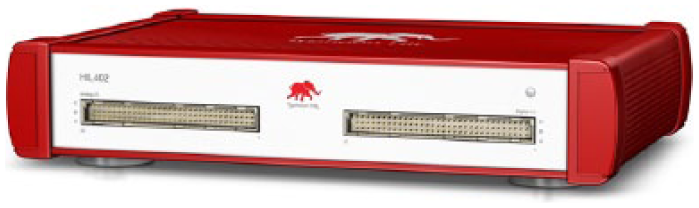
The Typhoon HIL system is also useful in educational establishments since educators and researchers in the power electronics field can use it to perform research at a fraction of the cost of traditional power electronics laboratories, while giving their students industry-relevant hands-on experience in a completely safe teaching environment. For more information, go to http://www.mdltechnologies.co.uk.
Marc von Waldkirch Becomes the New Chief Executive Officer of Sensirion
Marc von Waldkirch will become chief executive officer (CEO) of Sensirion (http://www.sensirion.com), the Swiss high-tech company, on 1 July 2016. His predecessors, founders Felix Mayer and Moritz Lechner, will continue to play an active role sharing responsibilities as chairmen of the company.
Mayer and Lechner, as co-chairmen of the company, will focus instead on strategic product innovations for new markets. They will both remain active at Sensirion.

Forcam Produces Guide to Manufacturing ‘Track-and-Trace’
Forcam (http://www.forcam.com) has produced an online guide to its manufacturing execution system (MES). The guide is available at http://marketing.forcam.com/acton/media/14751/traceability.
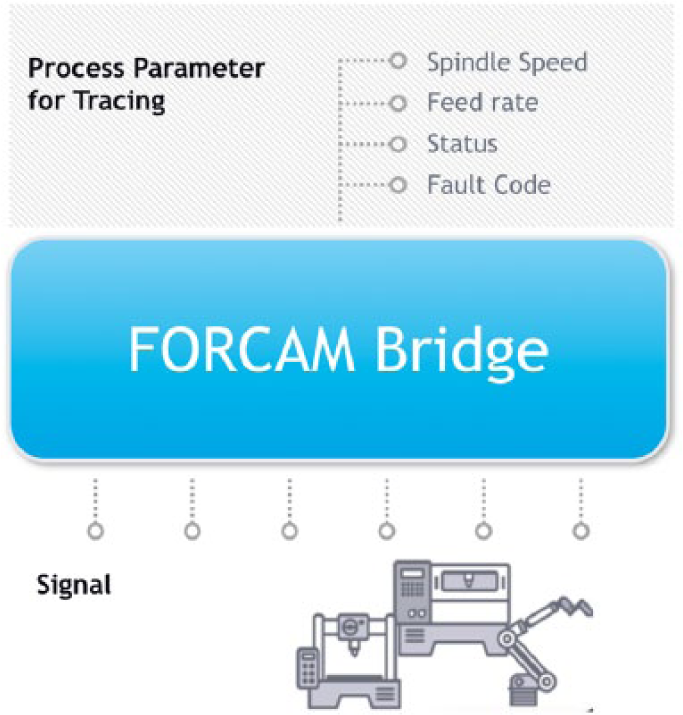
With the Forcam Force track-and-trace module in place, every operation has a digital profile. With process digitisation, it is possible to define what parameters characterise in-specification product.
On a machining centre, this could be a combination of data on spindle speed, time and power drawn. Deviations from this profile will flag suspect components and possible process problems before even on-machine metrology can spot the issue.
Andrew Steele, Forcam’s UK managing director, explained, Data is processed in real time in the cloud to give role relevant feedback to plant managers, workshop supervisors and machine operators. Productivity is the main benefit, but having a complete history of component production and processing comes a close second.
In the case of product recall, having a complete history of production operations significantly reduces disruption and associated costs. ‘Data from Forcam Force streams directly into the ERP system enabling complete backward and forward traceability through the supply chain, so suspect components or materials are more easily identified and recalled’, Andrew Steele explained.
Track-and-trace is just one aspect of Forcam Force, a comprehensive system for networking shop floor operations to give information in real time for more effective production control. Users commonly report 20%–30% productivity gains and use the system to sustain continuous improvement.
Brüel & Kjær Introduce Noise Vibration Harshness for Automotive Computer-Aided Design Models
Brüel & Kjær (http://www.bksv.com) has launched a noise vibration harshness (NVH) simulator that can accommodate large computer-aided design (CAE) models. Non-experts and experts alike can experience the consequences of component design decisions by driving an authentic simulation.
Until recently, incorporating CAE design data into NVH simulators has been restricted to the initial setting of NVH targets, rather than throughout the vehicle development process.
With Brüel & Kjær’s new simulator, complete CAE component design models can be driven by anyone in just seconds, inserted into the complete virtual vehicle simulation. This allows the latest design or many design alternatives to be easily driven, in order to compare them with previous designs and benchmarked competitor vehicles – at any stage in the development process.
This new capability – called CAE Auditioner – converts standard CAE response data from all common CAE codes into NVH simulator models. Engineers can also blend CAE models with real-world test data at will, speeding up development by integrating the worlds of test and CAE.
NVH simulators are widely used to set sound targets, by ‘driving’ benchmark vehicles and capturing their subjective opinions, before development on new vehicles even begins.
During the development process, engineers can deconstruct the noise and vibration experienced in an existing vehicle to detect and quantify the sources of very specific sound features, such as boom or rumble.

The software package that performs this – source path contribution (SPC) – can also isolate the paths sound energy takes through the vehicle. Using Brüel & Kjær’s NVH simulator, engineers can create and drive a virtual vehicle based on such data.
Endress+Hauser Group Honours Invention
The Endress+Hauser Group (http://www.endress.com) invests more than 7% of its sales worldwide in research and development. A consistently high rate of patent applications in all areas of measurement technology is proof of the company’s commitment to innovation.
‘With 270 first applications and 456 patents granted, we’re pleased to report that we once more exceeded last year’s good results’, says Angelika Andres, Head of PatServe, Endress+Hauser’s intellectual property department. ‘The development shows a high level of continuity and a good spread across all our key technologies’.
The segment with the strongest growth was analytics, where the strategic acquisitions of recent years (Analytik Jena, SpectraSensors and Kaiser Optical Systems) make themselves felt.
From 1 April 2016, three experts will protect technical innovation at PatServe’s Greenwood site in Indiana, where Endress+Hauser produces level, flow, pressure and temperature measurement instruments.
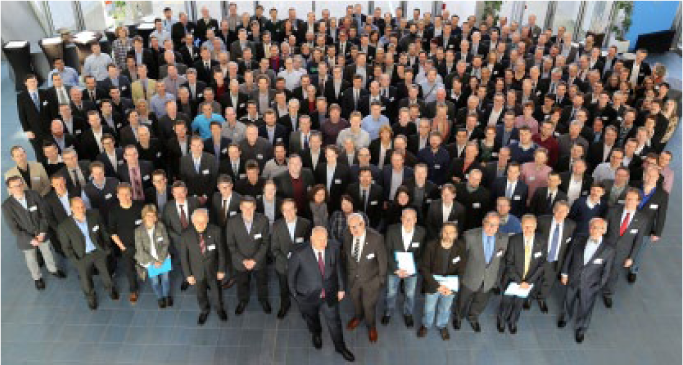
Honouring its inventors has a long tradition at the measurement and automation technology specialist: Employees who have filed a patent are invited to the annual Innovators’ Meeting. Attended by over 300 people, the 2016 event took place on 11 March at the exhibition centre in Mulhouse, France.
Olympus’ Microscope Range Simplifies Advanced Microscopy
Olympus (http://www.olympus-ims.com) has launched its new modular BX3M upright microscope series and OLYMPUS Stream 2.1 micro-imaging software, together enhancing a variety of materials science and industrial applications.
The new modular BX3M series of upright microscopes can be customised to suit many requirements – from a cost-effective workhorse to a high-end research system. The design now includes advanced illumination modes for in-depth and efficient analysis and is ideal for use alongside the new OLYMPUS Stream 2.1 micro-imaging software. The new software works seamlessly with the BX3M to simplify the workflow, from observation through to measurement, analysis and report creation.
As well as a selection of traditional illumination modes, the BX3M includes imaging techniques to enhance industrial inspection tasks and is ideal for failure analysis of complex samples. To enable faster topographic and defect analysis, directional darkfield is made possible through segmented light-emitting diode (LED) illumination, which provides flexible illumination from different angles.
For samples with varying structures such as a printed circuit board (PCB), OLYMPUS MIX illumination combines directional darkfield not only with brightfield but also with polarisation and fluorescence imaging. This enables the acquisition of colour, contrast and topographic information in one comprehensive image, benefiting a host of applications, from the analysis of composite materials to flaw inspection of semiconductors.
Switching between standard observation modes is achieved by turning a dial, with easily adjustable aperture settings and a new LED illuminator. Images can now also be visualised with 4 K resolution for checking, thanks to the latest technology of the OLYMPUS UC90 camera.
The new OLYMPUS Stream 2.1 software, which includes a new ‘restore device setting’ function, allows the same acquisition settings to be replicated quickly between different users. This allows tasks such as quality assurance and quality control to be completed quickly, meeting operational standards in, for example, the automotive and aerospace sectors.

New features also include instant MIA for high-resolution visualisation of large samples exceeding the field of view – where a single large image is automatically generated while simply moving a manual stage.
With the BX3M and OLYMPUS Stream 2.1, hardware and software seamlessly integrate to form a customisable and expandable platform, user-optimised to deliver an efficient workflow.
Emerson to Help Hitachi Zosen Inova Provides Environmentally Friendly Power
Emerson Process Management, a global business of Emerson (emerson.com), will provide process automation technologies and services for current and future waste-to-energy projects of Hitachi Zosen Inova.
Under a global framework agreement, Emerson has been selected as a preferred supplier responsible for providing automation technologies to Hitachi Zosen Inova. These include control and safety systems, predictive maintenance software, control valves and measurement devices and services such as engineering, project management and life-cycle care.
The agreement formalises the relationship between the two companies following a successful project at Perlen, near Lucerne, Switzerland. The US$319 million (CHF320m) Perlen project is the largest climate protection project in central Switzerland. The facility is set to produce 155,000 MWh of electricity per year, covering the energy requirements of nearly 38,000 households and will supply 320,000 MWh of steam to an adjacent paper mill.
Hitachi Zosen Inova supplied a complete advanced combustion system, boiler and flue gas treatment at the Perlen plant, while Emerson provided engineering, installation, commissioning, start-up and servicing of over 600 critical measurement instruments. Using Emerson’s advanced measurement technologies that incorporate a range of diagnostic functions, operators will be able to optimise plant performance and minimise maintenance.
Emerson is currently working with Hitachi Zosen Inova on further waste-to-energy projects in Europe, including three in the United Kingdom.
Additional Poles Add Flexibility to Intrinsically Safe Connector Family
HARTING (http://www.harting.co.uk) has extended the Han Ex intrinsically safe connector family with a number of new standard inserts and housings, offering users greater flexibility by providing additional contact numbers.
The Han Ex range, which is deployed chiefly in the mining, chemistry and process automation industries, is designed to conform to the ignition protection intrinsic safety category and can also be used in explosion-endangered zones 1 and 2. In intrinsically safe electrical circuits, power is limited, so that, even if a spark occurs, it cannot ignite potentially explosive surroundings.
The product portfolio offers new standard inserts and housings in the HARTING sizes of 6B–24B and includes contact inserts for compact spaces. Up to 64 connections are possible in combination with a 24B housing. Crimp, screw and cage clamp connection technologies are all available. The housings offer cable outlets of M20 to M40.

The housing alloy has been selected to enable applications in methane/coal-dust atmospheres. In addition, the connectors comply with the IP protection class 65 in the plugged state. The blue colouring of the housing is the standard indication for intrinsically safe electrical circuits.
79 GHz Radar Instrument Launched for Level Measurement in Liquids
Endress+Hauser (http://www.endress.com) presents the world’s first radar with a transmission frequency of 79 GHz for level measurement in liquids. The new Micropilot NMR81 for high-accuracy custody transfer applications is certified by independent test authorities to an accuracy of ±0.5 mm. The sharply focused microwave beam angle ensures safe and reliable measurements without any interfering signals even in narrow tanks with baffles.
Micropilot NMR81 utilises 79 GHz technology to generate a narrow beam angle of 3° or 4°. Measurements are substantially more reliable even in narrow tanks because the radar beam avoids obstacles such as baffles on the tank walls and is less prone to interference.
Taking measurements right at the bottom of very tall tanks is easier because the beam does not hit the tank walls prematurely. Installation relatively close to the tank wall is possible with the narrow beam angle. The technology permits very long measuring ranges of up to 70 m. In custody transfer, the instrument measures up to 30 m with an accuracy of ±0.5 mm.
Custody transfer applications require the highest measurement performance. The American Petroleum Institute (API) and International Organization of Legal Metrology (OIML) recommend an accuracy of 1 mm (1/16″) for a level instrument under factory calibration conditions and within 4 mm (3/16″) for the entire measurement system after installation in the tank. Micropilot NMR81 easily fulfils all API and OIML requirements.
The antenna is equipped with a gas-tight feed through. This ‘second line of defence’ is particularly important for handling highly toxic or diffusive products.
ARC Advisory Group Published Study of Optical Process Analysers
ARC Advisory Group (http://www.arcweb.com) has published a study of the market for optical process analysers. The study delivers current market analysis plus a 5-year market and technology forecast.
The global manufacturing environment is changing rapidly and in dramatic ways. Competitive pressures drive companies to seek new ways to maintain margins, ensure more consistent product quality and support innovation. Many companies are responding by optimising their processes and plants and adopting emerging information-driven manufacturing approaches.
Process analysers are used to provide higher level optimisation applications with accurate, real-time composition information on raw materials, in-process components and final products.
Optical analysers, which measure chemical parameters using light waves, offer several key operational benefits. ARC market research indicates that the optical analyser market is relatively independent of business cycles. More than 60% of the sectors concerned are of an essential nature – for example, water and wastewater, food and beverage and pharmaceutical.
This study is intended to help real-time optical process analyser suppliers and purchasers keep abreast of technology advancements. It explores the key issues that will impact this business in the near future.
Explosion-Proof Cabinets Simplify Deployment of Field Instrumentation in Process Plants
INTERTEC (http://www.intertec.info) has launched a new range of explosion-proof cabinets to protect field instrumentation operating in hazardous areas. Available in a range of standard sizes, as well as in custom shapes up to walk-in shelter size, the cabinets are certified for use in zone 1 and zone 2 hazardous areas.
The range is ideal for housing forward-placed analyser equipment in industrial process facilities, such as petrochemical/oil refineries and fertiliser production/storage plants, and also provides the possibility to install non-Ex-rated analysers and instrumentation inside zone 1- or 2-classified environments.
INTERTEC’s pressurised explosion-proof (Ex p) cabinets are constructed from glass-reinforced polyester (GRP) composite materials. These materials are highly resistant to corrosion and have a similar strength to stainless steel but are about 75% lighter, making them ideal for equipment containment and personnel shelter applications.
The cabinets are especially suitable when robustness and rigidity need to be combined with low mass – such as on offshore platforms. They are also ideal for areas where there is a need to mitigate injury to personnel or damage to equipment, such as on sites where there is risk of an explosion.
GRP composite materials also have a much higher thermal resistance than metal. This simplifies the construction of cabinets that provide excellent insulation, greatly reducing the energy required to heat or cool the equipment. It is also easier to build cabinets without any thermally conductive links between their exterior and interior surfaces, thereby avoiding cold spots which can lead to problems with condensation.
INTERTEC can produce single-piece panels of GRP composite as large as 6 × 12 m. This enables the company to create cabinets of virtually any size. The panels can be chemically bonded to create very tight sealing that prevents the ingress of hazardous gas and reduces the consumption of air, which is used to create the slight positive over-pressure needed for Ex p protection. Any requirement for special air locks to allow access to equipment inside the cabinet or shelter can be accommodated very easily.
The pressurised cabinets are equipped with a control unit that regulates the flow of inert purging gas or compressed air and then monitors the pressure inside the cabinet to ensure that it is maintained slightly above atmospheric pressure by automatically compensating for any leakage losses. INTERTEC works with a number of controls manufacturers to equip its Ex p cabinets with the most appropriate type of purging and pressurisation systems.
Each partially equipped enclosure is then tested by INTERTEC at one of its manufacturing plants, before being delivered to the system integrator for installation of the analyser instrumentation. Final safety testing of the complete unit is carried out at the integrator’s facility, prior to its installation at the customer’s site.
INTERTEC is certified by various competent bodies – including Physikalisch-Technische Bundesanstalt (PTB) – to perform the necessary compliance testing.
Steute Launches Range of Switches for Explosive Environments
With its ‘Wireless Ex’ range of switches, the Steute (http://www.steute.co.uk) business division Extreme has developed a technology making the installation and operation of switchgear in explosive environments easier.
Switching devices are no longer connected to the evaluation units in the control cabinet by ex-compliant cables but via a wireless protocol developed by Steute. This variant of the company’s Wave wireless technology is certified in accordance with both ATEX and IECEx – and is available for an increasing number of switching devices.
New products just added to the range include Ex RF 96 wireless position switches in a slim rectangular design and the Ex RF 96 ST wireless inductive sensor with M12 connector for Ex RF IS M 12, M 18 and M 30 wireless inductive sensors.
In both series, the energy required to transmit the wireless protocol is provided by long-life batteries. Switches need no cables and can be installed quickly on machines and plants in Ex zones, even on components which are moving or difficult to access. The special Ex-protected lithium battery can be changed inside Ex zones 1 and 2, making battery changes much simpler and faster.
Set Point Station for Hazardous Environment Launched
BEKA (http://www.beka.co.uk) has launched an ATEX- and IECEx-certified intrinsically safe panel mounting set point station (set point generator), enabling the current flowing in a 4/20-mA loop to be manually adjusted from within a hazardous area.
Housed in a 316 stainless-steel enclosure, this new instrument may be safely installed in an Ex e, Ex p, Ex n or Ex t panel enclosure without invalidating the enclosure’s certification.
The instrument is loop powered and displays the process variable represented by the 4/20-mA signal in engineering units on an 11-mm high display. Frequently used values may be entered as pre-sets. A display backlight, which may be loop or separately powered is available as a factory-fitted option.

For general purpose applications, the complementary BA647E-SS is a noncertified version, the stainless-steel enclosure and impact-resistant armoured glass window work well in severe environments.