



Abstract

Wireless Steam Trap Monitor Receives ISA100 Certification
The Wireless Compliance Institute has announced that Armstrong International (www.armstrongint.com) has released a new steam trap monitoring product that has successfully achieved ISA100 wireless certification.
The Armstrong Intelligent Monitoring (AIM) ST6700 wireless steam trap monitor monitors and evaluates steam trap operation, determining significant problems that could put operations at risk.
The unit can accurately detect issues, such as plugged and blow-through steam traps, that can result in failed equipment, loss of product, safety concerns and significant energy loss. The ISA100 wireless certification provides assurance that the devices will interoperate in any ISA100 wireless-compliant network.
New Report on Industrial Internet of Things and Field Automation for Oil and Gas
ARC Advisory Group has produced a market report on the use of the Industrial Internet of Things (IIoT) in the oil and gas sector.
The onshore oil and gas industry is facing new and difficult challenges. For example, operators are being asked to monitor and manage increasingly larger fields. Some fields, like the Eagle Ford in Texas, are now over 800 mi2 (2000 km2) in size. Another key factor is that many fields – especially the unconventional reservoirs – are moving into the ‘brownfield’ phase where the focus is shifting from drilling and completion activities, to optimising existing production assets.
The field automation technology landscape is also rapidly evolving. Sensors are getting smarter and can now take new and different measurements. This includes additional values generated by process variable sensors, waveform data generated by vibration sensors and fibre optic cables used as distributed sensors generating a measurement every metre along the cable.
Operators must now also make sense of and contend with a new set of data associated with all the smart original equipment manufacturer (OEM; pumps, valves, engines, etc.) with embedded sensors generating performance and equipment health data.
Go to www.arcweb.com to find out more.
PTC Acquires Kepware to Extend Internet of Things Offer
PTC (www.ptc.com) has announced that it has signed an agreement to acquire Kepware, a software development company that provides communications connectivity to industrial automation environments. The acquisition will help to enhance PTC’s portfolio of Internet of Things (IoT) technology, further accelerating the company’s entry into the factory setting and IIoT.
Kepware and PTC share many common customers. Industrial environments already using Kepware technology will be able to leverage capabilities available in the PTC ThingWorx IoT technology platform.
The acquisition of Kepware will also provide a connectivity option for PTC customers to gain visibility into data from a range of industrial controls and production equipment, enabling them to extend their smart, connected factory initiatives. PTC intends to maintain the Kepware partner ecosystem and to continue developing and enhancing the Kepware technology, once acquired.
This acquisition provides additional technology that can be leveraged by PTC’s relationship with GE, who previously announced that the two companies are partnering to deliver a manufacturing solution that will be available within GE’s Brilliant Manufacturing suite of products.
Quantitech Renews Distribution Deal for Oil in Water Analyser
Quantitech, the Milton Keynes–based instrumentation specialist, has been re-appointed by Spectro Scientific as exclusive distributor in the United Kingdom and Ireland for the InfraCal 2, a portable infrared analyser.
The latest version of the device offers many new features such as multiple calibrations, lower detection limits, faster analysis, data logging and a new touchscreen with security features.
The InfraCal 2 has become a popular choice for applications such as produced water monitoring at offshore installations and on-board ships, because of its reliability and speed of use. It is also used for applications such as sub-ppm detection of fats, total petroleum hydrocarbon (TPH) or oil in water, monitoring cleaning efficiency of metal parts, measuring barrier layers in flexible films, textiles and fibre finishes, research and quality control.
For more information, go to www.quantitech.co.uk.
The InfraCal 2 is a portable infrared analyser for applications such as produced water monitoring at offshore installations and on-board ships – among others.

New Research on Optical Online Analysers
ARC Advisory Group (www.arcweb.com) is conducting a research on Optical Online Analysers. A market study and a series of reports will be available for customers – participants will receive a copy of the key findings for free.
Real-time online optical process analysers are applied in gas, liquid and solid production, they send out and measure light (electro-magnetic radiation) ranging from infrared to the ultraviolet (UV) spectrum. This study focuses on optical analysers integrated directly or in a bypass into the process, to provide real-time data.
The survey is designed for suppliers and end users of optical process analysers. It contains different set of questions for each group.
The survey can be found at https://www.surveymonkey.com/r/MMJCMLV.
IIoT Guide for Systems Integrators Launched
Moxa has published an IIoT guide intended primarily for systems integrators.
The IoT has the potential to reduce costs, improve flexibility and open new markets. The concept has obvious applications to the world of industrial automation, where there are huge opportunities for improvements in efficiency, safety, and operating and maintenance costs, if numerous hardware controllers, sensors and other devices can communicate and coordinate intelligently with each other and staff, instead of working in isolation.
However, building an IIoT poses real challenges for hardware developers and systems integrators. These challenges include limited space inside cabinets, high temperatures that can disable critical components such as wireless modules, the huge cost of connecting all those IoT devices together, interoperability with legacy devices, and how to deal with a torrent of raw data that can clog up networks and overload processors.
Moxa’s new white paper analyses these issues in order to guide users and systems integrators towards optimal solutions.
For more information, go to www.moxa.com.
EtherCAT and Open Platform Communications Work on Common Interface Specifications
The EtherCAT Technology Group (ETG) and the Open Platform Communications Foundation (OPCF) are working together to produce common interfaces for Industrie 4.0 and IoT. The goal of the project is consistent communication between EtherCAT and OPC Unified Architecture (UA).
Industrie 4.0 and IoT demand continuous communication through all layers and levels within the digital factory and into the cloud. Since the ETG and OPCF announced their cooperation earlier this year, both organisations are working on an interface which offers existing devices and machines an Industrie 4.0-compliance, on the basis of the EtherCAT communication.
Real-time communication information from EtherCAT networks is made available for the Industrie 4.0 components and cloud services through the defined mapping on the OPC UA information model. Security measurements protect the encapsulated machine or the single device from non-authorised manipulation.
With the implementation of the specification, the information within a component such as a machine or a device from the machine network is mapped to Industrie 4.0-compliant communication mechanisms and is made available for the component. This enables consistent access to all information, and takes into account security aspects and real-time requirements in the production levels of a plant.
For more information, go to www.ethercat.org.
New Adaptor Provides Compatibility with M12 PushPull
Harting (www.harting.com) has introduced a new M12 ‘PushPull’ adaptor that enables the use of unthreaded connectors in existing applications with a standard flange, allowing quick and secure mating with existing components.
The unthreaded locking mechanism of the M12 ‘PushPull’ connector allows quick and secure mating without the use of additional tools and indicates correct assembly with a clearly audible click. As a result, the connection retains its vibration resistance under the most demanding conditions.
However, because this innovative locking system requires an M12 compatible flange on the device side, it has not previously been possible to use the ‘PushPull’ system in existing applications. This has changed with the development of the new adaptor, which has threads to support the standard M12 flange and the M12 ‘PushPull’ locking mechanism flange. This allows the ‘PushPull’ functionality to be retrofitted to devices with a standard M12 flange.
Radio Frequency Identification Solution Triggers Danish Traffic Lights When Bikes Approach
Traffic lights are going green for cyclists automatically at one particular intersection in Aarhus, Denmark, with the city’s pilot deployment of a passive radio frequency identification (RFID) solution, known as 2Green, provided by ID-advice.
With RFID tags attached to bicycles and readers installed at the intersection, the system can detect when a cyclist is approaching. It can then forward a prompt to the traffic-signalling software to switch the light facing the bike to green, while turning the cross-traffic light to red. That data are also collected for analytics purposes.
The solution is part of the European project known as Radical, launched in 2013 to develop smart cities using IoT services. Six cities from as many European countries are taking part in the Radical project, using a variety of technologies for other smart-city applications.
At one of Aarhus’ busy roads, the city installed two RFID readers, one at each side of the intersection, to identify the presence of bicyclists. Aarhus, the second largest city in Denmark, is home to thousands of cyclists, many of whom are university students. The city opted to test a system that would enable a select number of cyclists to safely move through intersections quickly, while compelling vehicles to always stop when those bicycles are in the intersection. The solution, however, needed to be flexible enough to be bypassed in some cases, such as the presence of an emergency vehicle.
Aarhus opted to test a solution from Danish firm ID-advice at a junction having a high level of bike traffic and fewer motorised vehicles. At the selected intersection, ID-advice installed two Scirocco R610 RFID readers wired to Scirocco A100 reader antennas to capture each ultra-high frequency (UHF) tag’s ID number.
One of the two RFID readers, installed at each side of an intersection, identify the presence of bicyclists in Aarhus.

ID-advice opted to use passive Confidex Carrier UHF RFID tags because they performed best in this application, based on their reading distance: 4–8 m) – light weight, and the ease with which they could be mounted on a bicycle.
The city then distributed 200 of the tags to cyclists in the area. A tag was fastened to each bike’s front wheel. Two readers – one on each side of an intersection – were installed at a spot where the bike lane crossed a vehicular road so that a bicycle tag’s ID would be captured regardless of whether it was moving.
When a bicycle comes within range, the reader captures its tag’s unique Electronic Product Code (EPC) ID number. That verifies that the ID is that of a bike tag and forwards instructions to the traffic light’s built-in software, via an output signal, to change the light to green in the cyclist’s direction. The traffic-light control software has been programmed so that, in some instances, the 2Green technology is overridden in order to ensure that vehicles pass safely through the intersection.
The reader also forwards data, via a cellular connection, to the Radical software platform – a data repository designed for use in replicating smart-city services in other cities – on the Radical programme’s server.
If the pilot, which ends in February 2016, is successful, the city plans to install 1000 bicycle tags and expand it to other junctions.
For more information, go to www.id-advice.dk.
Cooled Thermal Camera Launched for Industrial Automation
For automation applications that call for high sensitivity as well as super accurate camera synchronisation and triggering, FLIR Systems has introduced its new, fixed mounted A66xx-Series. These are cooled cameras for automated thermal inspection and process control on high-speed production and processing lines.
The A66xx thermal imaging cameras have a cooled indium antimonide (InSb) detector, which reduces thermally induced noise to below that of the signal from the scene being imaged. As a result, these are the most sensitive in the standard FLIR A-Series range, able to see minute temperature differences, capture high-speed thermal events, measure temperatures of very small targets and synchronise with other measuring devices.
The InSb cyrocooler allows the FLIR A66xx to operate in the 3–5 µm, mid-wave infrared band where thermal contrast is high. This is important because the higher the thermal contrast the easier it is to detect objects against a background that offers little thermal difference. The detector is said to produce crisp thermal images at 640 × 512 pixel resolution with a thermal sensitivity of <20 mK.
FLIR’s cooled A666xx camera imaging an incandescent lamp filament. It is suitable for automated thermal inspection and process control on high-speed production and processing lines.

The A66xx models, it is claimed, also have much higher imaging speeds than their uncooled counterparts. For example, the A6600 supports image frame rates up to 480 frames per second when operating in windowing mode, while the A6650 supports up to 4175 frames per second in a 16 × 4 pixel window.
The camera uses a global shutter that reads the output of all pixels to be read simultaneously rather than line by line, the method by which uncooled cameras handle the thermal data. This improves the camera’s ability to focus on fast-moving objects.
The FLIR A66xx cameras use a standard ‘GigEVision/GeniCam’ interface to transmit both commands and full dynamic range digital video; additional interfaces include a Bayonet Neill–Concelman (BNC) analogue video output.
For more information, go to www.flir.com.
Bosch Demonstrated Connected Cars at Consumer Electronics Show 2016
Bosch (www.bosch.co.uk) showed its latest connected car assistance systems at Consumer Electronics Show (CES) 2016, including its new haptic touchscreen, which has already been awarded a CES 2016 Innovation Award.
The screen uses feedback to generate the sensation of real buttons by way of haptic feedback, which makes it easier to operate infotainment applications such as navigation, radio and smartphone functions. Often drivers will not even need to look at the information on the screen to control it – instead, they can keep their eyes on the road.
The screen generates the feel of rough, smooth and patterned surfaces to indicate different buttons and functions. The touchscreen looks no different from an ordinary display – and yet it gives users the impression that they are pressing real buttons. Drivers’ preferences as well as appointments in their diary are also taken into account. Drivers will be able to activate the autopilot to free up even more time and make their journey more relaxed.
With a connection to the smart home, the car will enable household functions such as heating or security systems to be operated at any time. The driver will be able to use it to access online services and smartphone apps, and control it using gestures and speech, just as if they were talking with a passenger.
Highly automated driving will further increase the safety of road traffic. This development will come to freeways in 2020. According to forecasts made by Bosch accident researchers, increasing automation can significantly reduce accident numbers – by up to one-third in Germany alone.
Visitors also learned how Bosch’s Highway Pilot works, an automated system that assumes all the driver’s tasks and responsibilities on freeways. This technology is already being tested on public roads in Germany, the United States and Japan.
Cars will also be able to see around bends and be aware of possible danger spots, thanks to a stream of real-time information from the Internet on the location of traffic jams, construction sites and accidents. This data will serve as an electronic ‘connected horizon’ and give cars an even better picture of what lies ahead – further increasing safety and efficiency.
Another feature of the system is automated valet parking. This solution does more than relieve drivers of the task of finding a vacant space in a parking garage: it enables cars to park themselves. Drivers can simply leave the car at the entrance to the parking garage. Using a smartphone app, they then instruct their car to find a space for itself. When ready to leave, they call the car back to the drop-off point in the same way.
Fully automated parking relies on smart infrastructure in parking garages plus the vehicle’s on-board sensor systems – and connectivity for both. Sensors in the pavement provide up-to-date information on where free parking spaces are located, so cars know where to go. Bosch is developing not only the fully automated parking function, but also all the necessary components in-house.
Bosch’s latest connected car assistance system seen at work. It uses a new haptic touchscreen, which has already been awarded a CES 2016 Innovation Award.

The touchscreen gives users the impression that they are pressing real buttons.

Fast Drinking Water Analyser Helps Anglian Water Optimise Treatment
An advanced precision analyser has dramatically reduced the time and complexity of measuring trihalomethane (THM) levels in drinking water at Anglian Water.
Capable of analysing samples in less than 30 min, with no reagents or sample preparation, the powerful instrument has been supplied by the instrumentation products division of motion and control technology expert Parker Hannifin.
During the last 5 years, Anglian Water has invested more than £100 million in drinking water improvements, surpassing some of the most stringent quality targets in the world. In July 2015, the company took the strategic decision to further enhance its water treatment and supply processes by installing an in-house THM sample monitoring and analysis system.
In England and Wales, water supply regulations enforced by the Drinking Water Inspectorate (DWI) set a maximum limit of 100 µg/L for total THM concentration. Water supply companies, therefore, closely monitor THM levels to ensure compliance with this regulatory limit and maintain water quality and safety.
Until now, like many water supply companies, Anglian Water has relied on a laboratory for THM analysis. This involved sending samples to the laboratory and waiting for the results. Anglian Water therefore decided to look for an alternative on-site method, which would take pressure off its laboratory and deliver a same-day result.
The THM analyser that Parker has supplied is an integrated purge-and-trap system connected to a compact gas chromatograph column and a very sensitive surface acoustic wave (SAW) detector. It provides a completely self-contained solution for real-time measurement and analysis of THM concentration levels, down to as low as 1 ppb for each individual species of THMs. The analyser can measure chloroform, dichlorobromomethane, dibromochloromethane and bromoform – the four species that make up total THMs – to within 10% accuracy.
Parker supplies the THM analyser as a complete turnkey package. The high purity pressure regulators and precision control valves for its helium carrier gas system are made by the company’s ‘Veriflo’ division.
For more information, go to www.parker.com.
Programmable Logic Controller Launched for Stand-Alone Budget Systems
Panasonic’s new FP7 programmable logic controller (PLC) features improved performance in a smaller design, comprehensive communication features and integration of motion control. Its compact size allows easy integration into machines, where saving space is required. The PLC only needs 14 ns per programme step.
The modular CPU can be expanded by up to 16 expansion units. In addition, a great number of application and communication cassettes from the FP7 product family are available. These add-on cassettes can be added to the CPU to increase functionality without increasing the footprint of the system. Maintenance and hour metre operation are possible, thanks to the integrated clock/calendar function.
Panasonic’s new FP7 PLC is easily integrated into machines where space is at a premium.

For more information, go to www.panasonic-electric-works.co.uk.
Det-Tronics Wins Exida 2015 Safety Award
Det-Tronics’ (www.det-tronics.com) FlexSight LS2000 line-of-sight infrared gas detector has been selected by Exida, a leader in functional safety and cybersecurity certification for the process industries, as a winner of its coveted annual Safety Award.
The FlexSight LS2000, released in 2015, is a next-generation solution with improved optical field of view, an advanced housing design, simplified mount and improved alignment tolerance.
Designed to provide continuous monitoring of combustible hydrocarbon gas concentrations in a wide range, the technology was recognised for its safety features in Exida’s fire and gas sensor category.
The unit was developed to perform in harsh, real-life operating conditions, including foggy environments and areas prone to severe vibrations, sending alerts in these conditions where previous line-of-sight products failed.
Omron and Digi-Key Expand Partnership to Global Authorisation
Global electronic components distributor Digi-Key Electronics and Omron Corporation today announced that they have expanded their partnership to include all of Asia.
Asia was the last region remaining for a full global authorisation between the two companies. Omron’s wide selection of components will now be marketed and shipped around the world.
For more information, go to www.digikey.com.
Robots in 10% of US Households by 2020
New data from Juniper Research has forecast that over 1 in 10 American households will own a consumer robot by the end of the decade, up from under 1 in 25 this year. At this early stage in the market’s development, shipments are expected to be dominated by so-called ‘task’-oriented robots assigned to take over household chores, such as lawn mowing or vacuum cleaning.
Devices such as iRobot’s Roomba and Droplet Robotics’ Sprinkler offer tremendous ‘fire and forget’ type convenience for consumers, and despite obvious design compromises, are likely to usher in a new era of housekeeping.
The new research, Worldwide Consumer Robotics: Markets & Strategies 2015–2020, found that the performance of more complex robots, such as SoftBank’s Pepper, while improving, are heavily limited by present-day technology. Thus, in order to meet consumer expectations, smarter, more contextually aware robots are required.
Achieving a leap forward in artificial intelligence (AI) will demand not only more computing power, but also much greater efficiency if processing is to be offloaded from the cloud. Therefore, new approaches in chip design, such as IBM’s TrueNorth, are likely to become important in the medium term, the study finds.
Additionally, the research found that cost and trust are key factors in preventing mass take-up. Component economies of scale have yet to be achieved, while R&D costs are high. Meanwhile, studies indicate that humans do not trust robots, even if a robot is able to perform better than a human on average.
Other key findings of the report include healthcare – an ageing global population means that there are long-term opportunities for healthcare robots – and three-dimensional (3D) printing; falling 3D printer costs and new printer capabilities offer developers to slash the cost of prototyping.
The white paper, titled ‘Consumer Robotics – Rise of the Machines’, is available to download from http://www.juniperresearch.com, together with further details of the new research and interactive dataset.
Twiflex Continues to Develop Its Calliper Brake Range
Specifying a brake for manufacturing speed control and safety that will operate reliably and efficiently is a challenging balance between initial expenditure and whole-life costs. Through continued commitment to R&D, Twiflex offers a wide range of heavy-duty calliper brakes, enabling Twiflex engineers to quickly determine solutions for most applications.
Founded in 1946, Twiflex has a rich history of innovation; it was the first to offer disc brake technology for general industrial applications. Its name is now synonymous with quality and reliability in industries as diverse as mining, marine and offshore, upstream oil and gas, metals processing and renewable energy.
As a technical partner to many of the world’s leading industrial brands, Twiflex is well aware, it says, of the evolving needs of the market. Its R&D department works to meet these needs either through development of existing models, introducing brand new designs or succession planning for legacy products.
The recently released VBS was developed to address the specific demands of conveyor drive applications.

Any new product launched is the result of a formal development process, rooted in meeting the needs of either a single customer or a collective industry. As an example, the recently released variable braking system (VBS) was developed to address the specific demands of conveyor drive applications. It offers all of the benefits of the large modular designs; a two-million-cycle design life, easily replaced friction lining and the ‘Parked-Off’ maintenance feature, all in a compact, spring-applied unit.
For more information, go to www.twiflex.com.
CC-Link Industrial Ethernet and PROFINET Developing Standardised Interfaces
Digital communication using a fieldbus or Industrial Ethernet (IE) is already widely used in modern production plants and is an important building block for increasing productivity. The demand for intelligent communication will continue to increase because of megatrends such as Industry 4.0 and IIoT. However, many devices and machines of different communication systems have incompatible interfaces and are unable to exchange data.
To solve this problem, CC-Link Partner Association (CLPA) and Profibus & PROFINET International (PI) aim to enable transparent and easy bi-directional communication between CC-Link IE and PROFINET devices through standardised interfaces. To this end, a joint working group is being established to develop the necessary technical specifications to achieve this goal.
When work on the specifications is complete, it will be available to members of both organisations for implementation.
For more information, go to www.clpa-europe.com.
What Is the Future of the Electronics Instrumentation Industry?
Looking back at the past 10–15 years of the electronic instrumentation industry, it is certainly disappointing to realise that the market for new test equipment in 2015 is about the same size or less. What does this tell us and will the industry perform better in the future?
Recently, Frost and Sullivan published three market reports in this area, identifying where the new opportunities for growth are and how to stay profitable in a changing economical environment. These are ‘A Few Observations on IoT and Test & Measurement’, ‘Changing Dynamics in the Electronics Test and Measurement Industry’ and ‘Electronics Instrumentation Industry: New Trends Provide Second Chance’.
For more information, go to www.frost.com.
SEL Axion phasor measurement unit is IEEE certified
Schweitzer Engineering Laboratories has announced that the IEEE Standards Association (IEEE-SA) has certified the SEL-2240 Axion as complying with all applicable requirements in the IEEE Synchrophasor Measurement Test Suite Specification – Version 2.
To attain this certification, the Axion met or exceeded the rigorous requirements established by the IEEE Synchrophasor Conformity Assessment Steering Committee (SCASC), which consists of industry subject matter experts.
Consumers Energy Laboratory Services, an IEEE-authorised independent laboratory, conducted the tests to verify compliance.
For more information, go to https://www.selinc.com/SEL-2240/
User-Defined Path Profile Integrated Circuits Developed for Dedicated Controllers
Inmoco (www.inmoco.co.uk) has announced an optional ‘user-defined profile mode’ feature on Magellan Motion Control integrated circuits (ICs) or silicon chips), which provides the capability for multi-axis synchronised continuous path profile generation on the chip.
Made by Performance Motion Devices in the United States, the chips are designed for use in dedicated motion controllers, rather than programmable servo drives. As such, they are ideal for applications such as two-dimensional (2D) and 3D printing, robot control such as selectively compliant articulated robot arms (SCARA), biological and medical laboratory testing, glue laying, laser cutting and military equipment.
The user-defined profile mode is a flexible system for reading a stream of incoming positions or time values and using them to generate a corresponding continuous stream of commanded output positions. Because the relationship between the incoming data stream and the output positions can be entirely flexible, any desired shape can be drawn.
Made by Performance Motion Devices in the United States, the chips are designed for use in dedicated motion controllers.

The user-defined profile mode allows one of three master axis sources to be selected: actual position from an external encoder, commanded position from an internal profile or time. The choice of source determines the speed, whether the contour is synchronised to an external or internal source, and whether the contour is always traversed forwards or may also be traversed backwards.
When actual position is used as the source, an external encoder is used and the speed and direction are entirely controlled by it. This provides a cam function, where execution of the internal user-defined profile is synchronised to an external mechanism or other electronic signal source.
With the master axis source set to commanded position, one of the Magellan’s internal axes provides the position data stream that is used to traverse the user-defined contour. This provides velocity control.
If the master axis source is set to time, the internal clock provides the incoming data, so neither the rate nor the direction of profile traversal will change and all available axes can be used to drive motors.
The six user-defined parameters create a particular mapping from the incoming data from the master axis to the driven axis commanded output positions. This mapping approach to profile generation forms the core of the user-defined profile mode, and ensures that synchronisation to the incoming data stream is automatic. So, if the incoming data slows down or speeds up, the output matches the speed change exactly, making it suitable for use in a wide variety of real-world applications.
Reiser Selects Moog’s Motion Base and Software for Helicopter Flight Simulator
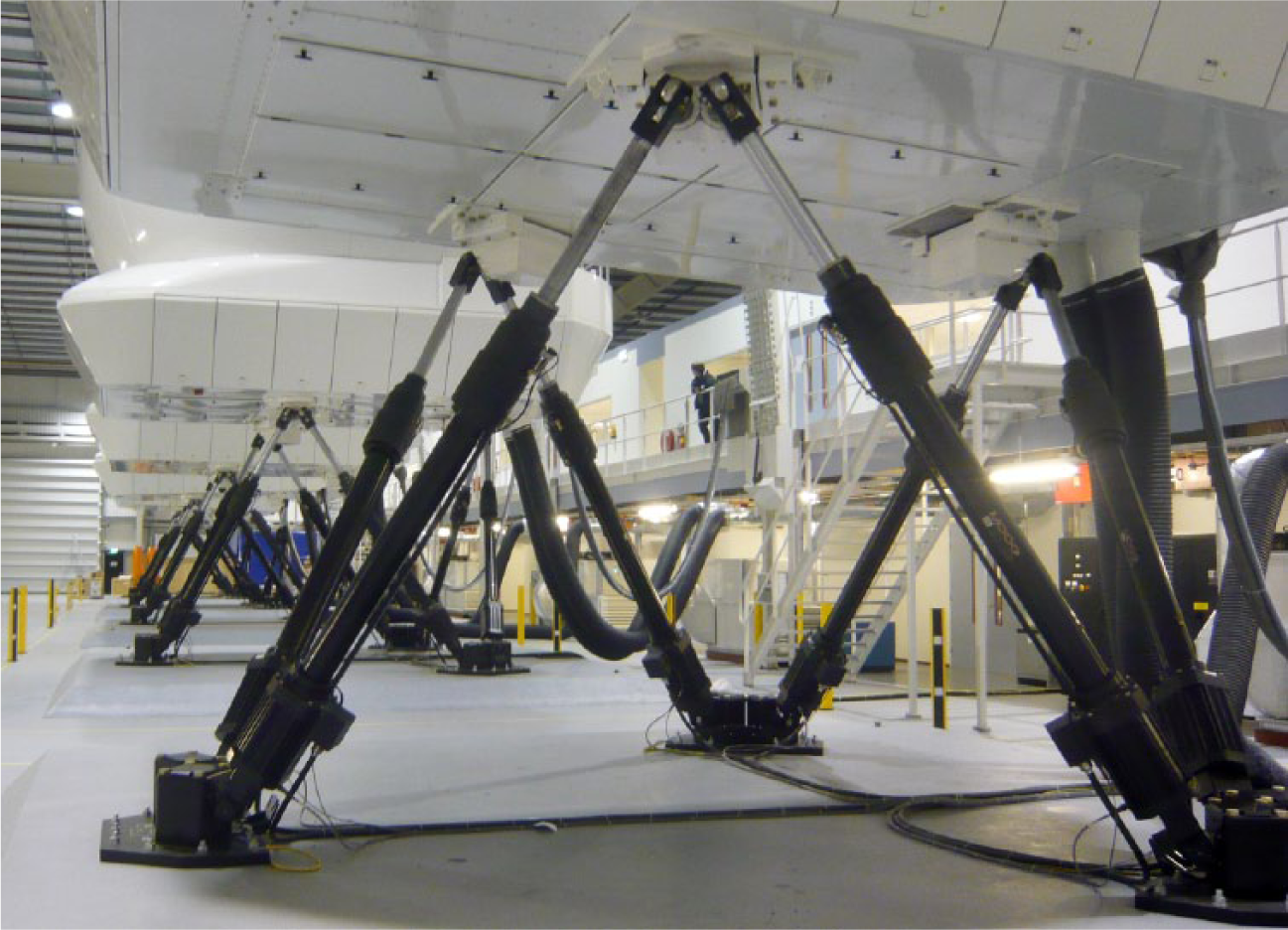
Moog Industrial Group (www.moog.com) has been selected by Reiser to provide an electric motion base, vibration platform, control loading system and software for the Helicopter Full Flight Simulator – Level D (FFS-D).
Reiser was awarded a contract from ADAC HEMS Academy GmbH to support H145 pilots with the most realistic training for their future missions.
The vibration platform will provide realistic levels of vibration in vertical, lateral and longitudinal directions to reproduce the specific feel of the H145 helicopter and offer more realistic cueing and motion profiles.
The second generation of Moog’s ‘Electric Motion’ system will use the latest software and Moog’s recently launched automated test module to facilitate quality test guide (QTG) requirements.
Moog will provide an electric motion base, vibration platform, control loading system and software for the Helicopter FFS-D.
Miniaturised Optical Devices Enabled by Carbon Nanotechnology
Research published today in Nature’s Scientific Reports demonstrates carbon nanotubes (CNTs) creating wafer-thin, flat structures that enable the miniaturisation of a range of optical devices. Removing the need for traditional curved refracting lensing systems, which are generally bulky and expensive, will enable new compact optical systems based on this nanotechnology.
A team of researchers from the University of Surrey’s Advanced Technology Institute (ATI) grew vertically aligned CNTs, in a grid-like formation on glass. The material is either highly transparent or opaque depending on its angle with respect to the beam. This property makes it ideal for either collimating a beam of visible white light or for absorbing stray light that is off the axis of the CNTs. This enables significant improvement to line-of-sight applications such as optical data transfer, or the rejection of stray light in high specification space telescopes.
Professor Ravi Silva, director of the ATI and co-author of the work noted, ‘Collimation maintains an accurate record of the image and is classically done by using two lenses, each with a specific shape and placed a certain distance from each other’.
‘What we have shown in this study’, he continued,
is that carbon nanotubes grown in this way can produce a well-collimated beam of visible light using a single flat material, a practical feature of a Veselago lens. This will lead to a new approach to small and flexible optical devices.
The next step for this work is to incorporate this material into existing technology. The ATI has already demonstrated low-temperature growth processes to enable direct wafer-scale integration of vertical CNTs with complementary metal-oxide-semiconductor (CMOS) devices.
For more information, go to www.surrey.ac.uk.
Integrating robots into machine automation
Yaskawa has integrated POWERLINK into its DX200 high-performance robot controller, making it possible to seamless incorporate Motoman robots into machine automation systems.
The claimed advantages include reduced commissioning times and better clock accuracy.
Integration in a POWERLINK network results in further benefits such as increased productivity. In addition, machines or plants can be designed more flexibly. A separate operator terminal for robots is not needed since all data required for operation and diagnostics can be displayed and modified on the machine’s main terminal.
The DX200 enables synchronous control of up to eight robots or 72 axes, and it is fitted with a built-in safety controller in accordance with performance level (PL) d/Category 3 for up to 32 user-defined safety areas and up to 16 different tools.
For more information, go to: www.ethernet-powerlink.org
Tiny Sensors, Big Impact – High-Tech Components for the IoT
Bosch (www.bosch.co.uk) has been showcasing its newest developments of ‘micro-electro-mechanical’ systems (MEMS) sensors. MEMS sensors are the eyes and ears of modern technical systems and can be found in smartphones and tablets.
The company’s latest technologies include new acceleration and yaw-rate sensors, an environment sensor solution, a development platform for IoT applications and the world’s first retrofit emergency call service adapter for cars.
Found in vehicles, smartphones, games consoles, tablets and countless other devices, Bosch MEMS sensors are small, robust, smart and energy saving. Without them, a host of applications in both consumer electronics and cars would not be possible.
For example, it is because of MEMS sensors that a smartphone knows the way to display the information on its screen depending on which way it is turned. While in cars, sensors are the centrepiece of the electronic stability programme (ESP) system, helping to ensure the vehicle remains safely on the road in critical situations.
Bosch is making sensors not only smaller, but also smarter – while making them as energy efficient as possible. The improvements pave the way to offer smart home applications that make consumers’ lives easier, and for companies to join Industry 4.0. Future plans include systems that draw energy from their environment through a process called energy harvesting.
The company’s ambient sensor is a smart sensor solution capable of measuring, analysing and communicating ambient conditions in buildings. The variables it measures include air quality, lighting conditions and noise levels. The integrated sensor helps improve the climate in office spaces and private homes. It can send its readings to a smartphone and recommend changes to things such as ventilation or lighting. Its long battery life is a further advantage.
The ambient sensor can not only be integrated into building automation systems, but also operated as a stand-alone solution.
Another development is the XDK, which is a sensor platform that allows users to develop prototypes and new applications for the IoT. The hardware platform provides access to various MEMS sensors and connectivity options and the software can be tailored to fit the given application and complements the hardware components perfectly.
It features a range of components including an acceleration sensor, a yaw-rate sensor, a magnetometer and sensors to measure atmospheric pressure, air temperature and humidity, noise levels and digital light.
Other features include Bluetooth and WiFi connections, a microcontroller, integrated antennas, micro-SD card reader and battery. The XDK Community gives developers the chance to exchange ideas, collaborate on new project ideas and take part in events.

With the expectation for sensors to be as small and energy efficient as possible and to deliver even better performance, apps for smartphones and tablets can be a daunting challenge. The battery has to last as long as possible, but it is also crucial that users can quickly access the app they want.
Bosch has already demonstrated the first acceleration sensors to be compatible with Android and feature integrated intelligence while also being energy saving. Moreover, the firm’s new yaw-rate sensors have been developed to meet the requirements of mobile gaming, augmented reality and virtual reality applications. What is more, they combine low operating costs with high picture stability.