



Abstract

Electronic Instrumentation – What Is the Future? A New Study Points the Way
Newly published research by Frost & Sullivan underlines the growth areas for the electronic instrumentation industry in upcoming years.
Looking back at the past 10–15 years of the electronic instrumentation industry, it is certainly disappointing, says the firm, to realise that the market for new test equipment in 2015 is about the same size or less. What does this tell us and will the industry perform better in the future?
Frost & Sullivan recently published three market insights about the future of the electronic industry and what will determine it, where the new opportunities for growth are, and how to stay profitable in changing economical environment.
These market insights are listed below:
A Few Observations on IoT and Test & Measurement
Changing Dynamics in the Electronics Test and Measurement Industry
Electronics Instrumentation Industry: New Trends Provide Second Chance
Over the next 5–10 years, 5G and other technologies will take the electronic instrumentation market to higher frequencies spelling significant growth opportunities for test manufacturers.
The move towards a more connected, zero-latency, and autonomous world will certainly provide room for growth for the electronic instrumentation market. With the Internet of Things (IoT), a myriad of devices will be connected to the Internet. While low latency will not be provided for all applications and devices in the short term due to costs, the desire for low or no latency for a number of devices and applications is here and will provide opportunities to test manufacturers.
The study also finds that while wireless communications and aerospace and defence will remain significant end-user segments for electronic test and measurement equipment, demand is likely to increase in smaller end-user segments such as automotive and industrial electronics due to the greater integration of wireless technology in various devices.
The world is also on the path to become more autonomous with mobile robots, drones, and autonomous cars. While all of these technologies will translate into demand for electronic instrumentation, some, such as the autonomous car, will generate significant opportunities for test manufacturers due to the onus put on safety. Leading automotive original equipment manufacturers (OEMs) are currently embracing automated driving translating into significant R&D opportunities for test manufacturers.
The hyper connectivity of customers will also call for a greater focus from test manufacturers on their go-to-market channels. While online channels have grown in importance for mid- and low-end test equipment, this trend is also relevant to more high-end expensive test equipment from a digital marketing perspective.
Jessy Cavazos, Industry Director for Test and Measurement at Frost & Sullivan, commented, ‘In the past decade, the electronic instrumentation industry did not maximise the revenue opportunity coming from the move towards connectivity and the proliferation of electronics as most companies missed out on dramatic changes happening in the customer base’.
‘The next decade’, she said, will not come without challenges for the electronics instrumentation industry. However, trends are favorable to the future growth of the electronic test and measurement market. Test manufacturers must not only be aware of the evolution of technologies and related test requirements but also expand their horizons to understand the impact of other trends on their business.
For complimentary access to the full version of Market Insights, email your full contact details to Julia Nikishkina, Corporate Communications at
New Bosch Company Allows Users to Control Smart Home Using One App
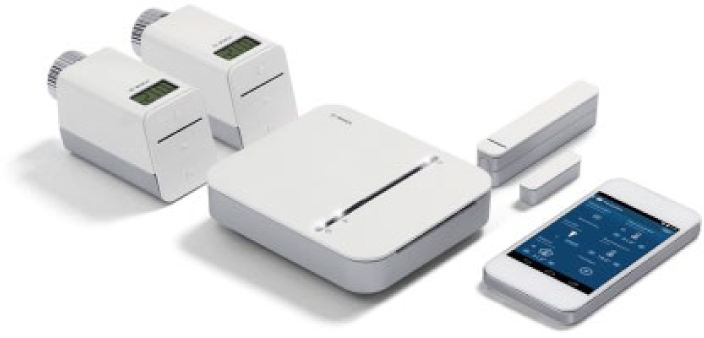
Bosch (http://www.bosch-connectivity.com) is strengthening its business in solutions for the smart home. From 1 January 2016, the newly founded subsidiary, Robert Bosch Smart Home GmbH, will bring together the company’s smart home activities, including related software and sensor-system expertise. The new company will offer products and services for connected homes from a single source, allowing it to fulfil tasks such as report break-ins and help control the heating to save energy.
Customers will be able to order the first Bosch smart home products online, from January 2016. These include the smart home controller, a smart thermostat, and a contact for doors or windows. By 2020, it is expected that 230 million homes worldwide – almost 15% of all households – will feature smart home technologies.
The company’s smart home solutions meet, it claims, ‘the highest standards of data protection and data security’. Bosch has also set up a centre of competence for product security. Customers and users have full transparency and decide for themselves how their data are used.
In the product offering, a single platform can connect the heating, lighting, smoke alarms, and appliances in a home. All these can then be operated using a smartphone or tablet. The core of the system is the Bosch smart home controller, a central control unit that connects the components with each other and to the Internet.
In the future, users will be able to use the smart home app to combine the basic functions of unrelated devices. For example, the door and window contact solution reports whether a window is open. When this happens, the system can automatically turn down the heating in the relevant room, in line with the user’s preference settings. The system will sound an alarm if a window or door is broken open when the occupant is absent – meaning there will no longer be any need for a separate alarm system.
Looking at connectivity, Bosch believes that open standards and open platforms will make the technology as user-friendly as possible. For this reason, the firm’s smart home system is modular and expandable and is easy to connect compatible devices made by other manufacturers to it.
Embedded Boards for Industrial Automation, Medical, and Infotainment Uses
ADLINK Technology (http://www.adlinktech.com), a global provider of cloud-based services, intelligent gateways, and embedded building blocks for edge devices that enable the IoT, is now offering a series of new Mini-ITX computing platforms.
These are said to be ready for use as commercial off the shelf (COTS) solutions for infotainment (gaming/retail), medical, and industrial automation applications that require rich input/output (I/O) options and high-performance graphic capabilities.
The high-performance mini-ITX embedded boards are based on both fourth generation Intel Core i7/i5/i3 desktop processors and AMD embedded second generation R-series APUs, which specifically target the infotainment and industrial automation markets.
The boards support both a PEG ×16 card slot and an additional PCIe ×1 I/O card slot, and additional features include a removable Basic Input/Output System (BIOS) chip, a vertical USB port for security dongles, and Serial AT Attachment (SATA) docking sockets to accommodate SATA-DOM (disk-on-module).
All boards feature dual power inputs that allow for use of either a single 12V-DC power supply or a standard ATX power supply. The boards further offer up to four serial ports (RS232/422/485) and multiple USB 2.0/3.0 ports.
Entry-level mini-ITX embedded boards are based on the latest Intel Atom processor roadmap and mainly focus on industrial automation and medical applications. These boards are also available in ‘Extreme Rugged’ versions for operation in −40 to +85 °C environment.
The range is equipped with SEMA (‘Smart Embedded Management Agent’), enabling on-premises management and control of distributed devices via the SEMA cloud solution to enable remote monitoring, autonomous status analysis, custom data collection, and initiation of appropriate actions. All collected data, including sensor measurements and management commands, are available through an encrypted web interface or via encrypted Application Programming Interface (API).
ADLINK’s new series of mini-ITX platforms include ‘Highly Accelerated Life Testing’ (HALT), extended operating temperature, MIL-STD, and shock and vibration. The boards come with 7-year product availability.

Motion Controller Is Powerful Yet Compact
The NYCe 4000 multi-axis motion controller offers an integrated set of control and drive hardware in a small housing. The hardware is designed to handle complex operations, combining an open software architecture and Sercos automation networking to provide a platform for motion solutions and simple integration into the automation landscape.
High-level programming languages allow users to write complex motion control programs. High-speed control loops with 32-kHz bandwidth deliver maximum precision and dynamic performance. The motion control system can handle up to 120 digital and analogue I/Os in parallel in real time for implementing complex process operations on standardised hardware. Pre-defined software algorithms ensure zero-vibration and zero-backlash.
For more information, go to http://www.boschrexroth.com.
Ocean Optics’ Flame Spectrometer Lives up to Its Name, Joins ‘Trail by Fire’ Expedition
Ocean Optics (http://www.oceanoptics.com) has sponsored a team of volcanologists on a mission to study volcanoes in the South American Andes, providing Flame miniature spectrometers and accessories.
The ‘Trail by Fire’ project, funded by a grant from Land Rover and the Royal Geographical Society, will attempt to quantify the total amount of volatile chemical elements released by volcanoes in Chile and Peru.
Ocean Optics’ Flame spectrometers will be flown directly below volcanic plumes on an unmanned aerial vehicle (UAV – a drone), taking differential optical absorption spectrometry (DOAS) measurements to quantify sulphur dioxide (SO2) levels, with the goal of better understanding volcanic effects on climate.
The Flames will be part of world’s first mobile volcano observatory, a specially outfitted Land Rover Defender 110, reaching some of the most remote and hard to study volcanoes on earth. Faced with difficult to navigate terrain and high altitudes, the team chose TurboAce Matrix UAVs to carry the spectrometers to the volcanic plumes for measurement.
Using UAVs allows the researchers to get closer to the plume and collect a full cross section of measurements, providing higher accuracy than the ground-based measurements typically used in DOAS. The Flame’s small size and low weight (265 g) were key factors in its selection, as payload weight, always an important consideration for UAVs, is especially critical at high altitude.
More importantly, perhaps, the Flame offers the high resolution and thermal stability required for DOAS measurement, allowing the team to measure very small fluctuations in SO2 content. The spectrometers are controlled by the UAV’s on-board microprocessor, integrated with Ocean Optics’ open source ‘SeaBreeze’ drivers.
Spectra collected by the Flame are saved to the UAV’s on-board memory and wirelessly beamed back to the ground station. This real-time feedback will allow the team to verify operation and make measurement adjustments as the UAV is in flight. The spectrometer’s modular design, with interchangeable slits to adjust resolution and throughput, will enable the team to respond quickly and easily to changing conditions in the field.
The ‘Trail by Fire’ expedition is being funded by a £30,000 grant from Land Rover, in addition to the Defender 110 donation. A number of other partners have donated equipment to the project, including Ocean Optics’ sister company, Crowcon Detection Instruments. Crowcon’s personal gas monitors will alert the team to any potential danger as they collect samples of toxic volcanic gases.
The ‘Trail by Fire’ team (L-R): Dr Philipson Bani, Dr Ian Schipper, Aaron Curtis, Dr Talfan Barnie, Dr Nial Peters, and Dr Yves Moussallam.

Bruel and Kjaer Introduce App and Two-Dimensional Barcodes for Quicker Transducer Setup
Setting up transducers for sound and vibration measurements is a much simpler process for engineers with Brüel & Kjær’s new smart transducer setup concept – so the company claims.
When several transducers have been mounted onto test objects, such as vehicle engines or aircraft components, it can be very time-consuming to link them to the measurement software correctly. The tester needs to identify each transducer and trace its cabling through to the data-acquisition hardware, before they can manually add information about its alignment and location.
Setup has always been a lengthy and confusing exercise, where it is easy to mix the transducers up or induce human errors into the many inputs. Brüel & Kjær’s transducer smart setup app speeds this process up, removes the need to trace cables, and simplifies it to reduce input errors.
The app scans the transducer using the smartphone’s camera, which it uses to recognise the accelerometer, its location, and its orientation (component ID, node ID, and DOF direction). It then automatically synchronises this information with the measurement software, so it does not matter which transducer is plugged into which input connector. With a modal test involving 100 accelerometers, this can save hours.
The transducer smart setup app works best on accelerometers and microphones with data matrix codes (also known as QR-codes). A patented algorithm automatically detects the orientation of an accelerometer from the code. For accelerometers and microphones without a data matrix code, the transducer smart setup app semi-automates inputs such as alignment and location, saving time and reducing inputs in comparison with traditional setup procedures – and removing the need to trace cables.
Brüel & Kjær accelerometers and microphones are equipped with data matrix codes as standard. The data matrix code also provides immediate access to detailed information for the transducers, such as technical specifications and calibration data, when scanned by any two-dimensional (2D) barcode reader.
For more information, go to http://www.bksv.com.
Hart-Enabled Multiplexer Supports Scheduled Maintenance Diagnostics
New Hart multiplexers provide an overall communication solution for plant safety and monitoring.
A wide range of MTL Hart multiplexers provide a reliable link between field devices and plant control systems. They enable users to reduce unscheduled plant downtime and increase reliability through predictive maintenance diagnostics as part of a plant asset management strategy.
Three new multiplexers, the MTL4851, MTL4852, and MTL4854, are designed to communicate with process instruments supporting the latest Hart standards. Creating a simple interface between smart devices in the field to Hart-enabled communication systems, the MTL4851 and MTL4852 multiplexers provide a scalable solution from 16 to 256 channels per node in an easily configurable package.
With auto-detection of communication parameters, no switches on the modules, and up to three times faster scan than comparable products, users can make significant savings in commissioning time, associated costs, and reduce project risk.
When combined, the MTL4851 and MTL4852 multiplexers provide a communication system for access to device health and process data and the modules can be connected on one network giving access to approximately 8000 devices. Connected to Ethernet networks with the ET-485 accessory, the multiplexers offer a low cost per channel in the MTL range.
For more information, go to http://www.mtl-inst.com.
Industrial Controllers for IoT and Global Rollout
Hitachi, Ltd (http://www.hitachi.co.uk), Hitachi Industrial Equipment Systems Co., Ltd (HIES), and Hitachi Industry & Control Solutions, Ltd, have announced that they have developed industrial controllers that use open technologies to support the global rollout of the IoT.
The middle range version of these next generation industrial controllers will be offered by HIES, and the high-end version by Hitachi Industry & Control Solutions.
Sales are set to begin in stages from April 2016. The controllers will be marketed to a broad range of industries, including the packing machinery, material handling equipment, machine tool, semiconductor/liquid crystal manufacturing equipment, and instrumentation fields.
Inverter a Solution for Pump Shutdown False Alarms
The new FR-F800 inverter drive from Mitsubishi Electric provides an intelligent solution to the problem of false alarms caused by shut down of pumps and fans.
The FR-F800’s on-board intelligence virtually eliminates nuisance trips, makes setup easy, and can achieve energy efficiency of 98%. It includes many advanced features for specific industries and applications such as wastewater processing, compressors, and HVAC (heating, ventilation, and air conditioning).
Unlike most drives, auto-tuning in the FR-F800 can effectively detect the torque curve of the attached fan or pump and react appropriately when operational limits are approached.
The FR-F800 has a bespoke proportional, integral, and differential (PID) controller and on-board programmable logic controller (PLC), which provides the drive with stand-alone capabilities. The unit is also fitted with a second PID controller so that it can control multiple fans, pumps, and compressors directly, without requiring an additional controller.
A six-line liquid-crystal display (LCD) includes an easy start-up and auto-tune wizard function and can show customised text messages. An auto-detect capability means connection to a human machine interface (HMI) is straightforward. The unit supports all the major network connectivity protocols, including CC-Link, Profinet, Ethernet, and others.
In addition, the F800 has been designed for maximum backwards compatibility with earlier generation drives. Existing installations can be upgraded to a new F800 in a simple swap-out.
The F800 is fully compliant with European Electromagnetic Compatibility (EMC) Directive standards. It meets safety directives, has marine approvals, and TÜV, UL, cUL, and CE certification.
For more information, go to eu3a.mitsubishielectric.com/fa/en/solutions.
The new FR-F800 inverter is designed to provide high reliability in tough pumping applications.

NPort Operations Mode Publication Gives Serial to Ethernet Connection Guidance
Managing the connection between a serial device and an Internet protocol (IP) network is so much more than simply using serial device servers to connect serial devices to an Ethernet network.
So Moxa has produced a guide to Nport operations mode, to give operational staff even more tips on how to properly connect or disconnect Transmission Control Protocol (TCP) connections, how to send data to devices via multi-host networks, how close are virtual communication (COM) and native COM ports, and how to confirm that a complete data package has been sent.
For more information, go to http://www.moxa.com/Event/Tech/2015/connecting_all_of_your_things/Download-4.htm.
RS Wins Trio of Distribution Awards from Pico
RS Components (RS) has won a number of awards from Pico Technology, a leading vendor of PC-based oscilloscopes and data loggers. RS won 3 of the 10 awards handed out at the recent annual awards event held by Pico for its key distribution partners.
Pico is recognised as a supplier of innovative and cost-effective alternatives to traditional test equipment and data-acquisition products, making high-quality instrumentation highly affordable.
RS won the overall Pico Technology ‘Distributor of the Year’ award, as well as winning in ‘Growth Excellence’ and ‘Highest Unit Volume’ categories. The awards were primarily a result of the excellent performance demonstrated by RS for selling Pico products and technologies over the past 12 months, which represented sales growth of 15% year-on-year.
‘RS has been one of our leading distributors of our test equipment for some time now’, said Trevor Smith, business development manager at Pico Technology. ‘Over the past 12 months, RS has been very effective in penetrating target markets and connecting our products to leading customers’.
‘These awards are further recognition of our leading position as a worldwide distributor of test and measurement equipment’, explained Graham Cave, global category manager at RS Components. ‘Pico Technology is a fast-growing British company and is one of the most innovative emerging companies in the test and measurement field. We are very proud to continue to play a role in their success story’.
For more information, go to http://www.rs-online.com.
Low-Frequency Mic and Preamp for Infrasound Measurements
PCB Piezotronics (http://www.pcbpiezotronics.co.uk), a specialist in vibration, acoustic, pressure, force, and torque sensors, has launched a new half-inch (12 mm) microphone and preamplifier system (model 378A07), designed for use in low-frequency testing and ideal for studies ranging from wind turbines to natural events like tornadoes.
Low-frequency measurements are commonly required for wind turbines, sonic booms, diesel engines, and specialised loudspeaker systems to name a few. Natural events such as tornadoes and earthquakes emit very-low-frequency pressure waves, which can travel long distances without being blocked. Model 378A07 microphones can detect these low-frequency signatures as potential danger.
This free-field pre-polarised microphone has a frequency range of 0.13 Hz–20 kHz (±2 dB), which meets the IEC 61094-4 standard for test and measurement microphones. This covers infrasound, which is below the normal hearing range for adults.
PicoCoulomB (PCB) carries a full complement of pre-polarised and externally polarised condenser microphones and preamplifiers. Pre-polarised microphones use standard coaxial cables and are Investor Confidence Project (ICP) compliant, allowing power supplies to be shared with other ICP compliant products such as accelerometers. This interchangeability can result in significant per-channel cost savings as well as reducing test setup time.
The 378A07 microphone is supplied with an American Association for Laboratory Accreditation (A2LA) and International Laboratory Accreditation Cooperation (ILAC) accredited initial calibration.
The microphone and preamplifier system is ideal for studies ranging from wind turbines to natural events like tornadoes.

Economical TCA ECO Modular System Is Adjustable and Economical
To satisfy the demand for flexibility and increasing data rates, cooling capacities and power consumption, Pentair has developed the Schroff AdvancedTCA ECO modular system.
Designed with user-friendliness in mind, this 14U AdvancedTCA system is based on a modular concept – all features can be upgraded or minimised as required and the cooling and power supply can be easily adapted to suit.
Today, AdvancedTCA systems are no longer used only in high-performance applications such as in telecommunications and datacoms as an OEM application; new applications from other fields now use AdvancedTCA technology as a platform. Per-slot requirements range from 150 W for low-power applications to 500 W for the most demanding applications. Optimal price to performance may be obtained by minimising non-essential features and maximising critical ones.
This modular system is designed to cater to a wide range of customer requirements. Specific aspects, such as redundancy, cooling capacity, and power entry module (PEM) rating, can be easily matched to the requirements of a given application.
A removable fan tray provides cooling using six or eight standard fans and delivering a cooling capacity of 250 or 450 W/blade, respectively. Alternatively, six higher output fans may be used together to provide cooling of over 500 W/blade. With these modular fan drawer options, the system cooling capacity can be designed with flexibility and to a budget. The ECO modular fan tray is fitted below the board cage and connected directly to the backplane.
The telco alarm panel and the two RJ45 connectors for the shelf manager ports are positioned on the front panel of the fan tray. No separate alarm module is required. With the fan tray in autonomous mode, the system can also be operated without a shelf manager. In this case, the fan controller monitors the air inlet and air outlet temperatures and sets the fan speed accordingly.
The ECO modular system provides reliable power distribution at an optimal cost. The modular concept supports 250 or 500 W/slot and a power supply unit with or without redundancy.
Pentair offers the AdvancedTCA ECO modular system as a standard product from stock in two configurations. All other modular configurations are assembled to specification.
For further information, go to http://www.pentairprotect.com.
The AdvancedTCA ECO modular system can be matched to customer requirements.

Field-Programmable Gate Array Mezzanine Card Products Now Comply with VITA 57 Standard
Since the specification for field-programmable gate array (FPGA) Mezzanine Cards (FMC), known as VITA 57, was ratified in 2010, it has seen growing market acceptance. To satisfy market demand, Pentair now offers Schroff FMC front panel kits and components, which allow for seamless integration of FMCs into standard 19″ sub-racks.
Schroff FMC kits are available in two sizes – 3 and 6 U – and comprises ‘U’ shaped front panel with FMC cutout(s), bezel(s), IEL handle(s), EMC gaskets for both front panel and bezel(s), and all required hardware. For ease of installation, they are shipped fully assembled. Individual front panels, bezels, and EMC shielding components are also available.
These new FMC products complement Pentair’s proven line of Schroff PCI Mezzanine Cards (PMC) front panel kits and components. As with all Schroff front panel products, modifications such as custom cut-outs and printing can be easily accommodated.
Both PMC and FMC products can be used in all popular industry architectures, including VME, VPX, CompactPCI, and CompactPCI Serial.
For further information, go to http://www.pentairprotect.com.
New FPGA Mezzanine Card (FMC) products in compliance with the VITA 57 standard.

IAR Embedded Workbench Plug-In Added to Percepio’s Tracealyzer
Percepio AB (http://www.percepio.com), the Swedish developer of RTOS visualisation tools, has launched a plug-in for IAR Embedded Workbench for ARM.
The plug-in will be delivered in the latest release of IAR Embedded Workbench for ARM 7.50, and will enable Percepio Tracealyzer for FreeRTOS to operate from within the IAR Embedded Workbench IDE. This will give developers access to Tracealyzer’s visualisations – claimed to be ‘cutting edge’.
According to Percepio founder, and CEO Dr Johan Kraft, ‘When used in combination with IAR Embedded Workbench, Tracealyzer facilitates debugging, validation, profiling, documentation and training. This can help avoid weeks of troubleshooting and vastly increase development speed’.
Anders Lundgren, product manager for IAR Embedded Workbench for ARM, IAR Systems, commented, ‘Percepio’s visualisation techniques complement the C-SPY debugger of IAR Embedded Workbench in catching timing-based errors in RTOS-based systems’.
‘Having access to third-party productivity tools integrated directly in the toolchain is a great benefit for IAR Embedded Workbench users and is a way for us of supporting them throughout the development cycle’, he concluded.
Percepio’s visualisation offers 20 or more views, which are interconnected to allow viewing the trace from multiple perspectives – for instance, CPU usage, memory allocation, task synchronization and communication events, as well as selected state variables and I/O values.
Percepio AB has launched a plug-in for IAR Embedded Workbench for ARM.

Electronics Housing System Is ‘Universal’
Phoenix Contact says that its new electronic housing (EH) system enables device applications to be designed with ease. With seven overall widths, two overall heights, and three cover versions, there are over 100 possible combinations.
Various different PCB connection technologies can be integrated easily for application-based device concepts. The EH can be snapped onto DIN rails without tools or mounted on the wall as usual. An integrated labelling field makes it easy to identify the housing directly.
The EHs are made of ABS and have a flammability rating of HB according to UL94. With the new EHs from the EH series Phoenix Contact has rounded off its product range in the field of DIN rail mountable housings.
For more information, go to http://www.phoenixcontact.com.
Yokogawa Wins Control Systems Order for One of Largest Methanol Plants
Yokogawa Electric Corporation (http://www.yokogawa.com/eu) has received an order from Orascom E&C USA to deliver control and safety systems for the Natgasoline LLC methanol plant.
Currently under construction in Beaumont, TX, this facility will have a capacity of approximately 1.75 million tonnes per year when it starts production in 2017, making it one of the world’s largest methanol plants. Based on nameplate capacity, it will be the largest methanol plant in the United States.
For the process control and safety of the Lurgi MegaMethanol process technology and auxiliary facilities throughout this plant, Yokogawa will deliver the Centum VP integrated production control system, ProSafe-RS safety instrumented system, Exaquantum plant information management system, and Plant Resource Manager (PRM(R)) software package.
Yokogawa Corporation of America will be responsible for the engineering and delivery of these systems and will provide support with installation and commissioning. The delivery of all systems will be completed by August 2016.
Yokogawa won this order because of its track record in completing projects and demonstrated ability to deliver comprehensive, integrated solutions that help optimise operations.
Daniel Duncan, president and CEO of Yokogawa Corporation of America, commented, ‘Yokogawa entered the US market in 1957 and we have grown our business across diverse markets, but have had particular success in oil and gas refining and offshore production, LNG liquefaction and chemical manufacturing’: We are proud to win the first order for a new US grass roots methanol plant that exceeds a million metric tons per year. This project allows us to build on our already extensive track record in executing and maintaining methanol production in North America. (Daniel Duncan said)
Medical Flow Measurement Range Expanded
Sensirion (http://www.sensirion.com) has expanded its SFM3xxx platform for flow measurement in medical applications. For the first time, the flow sensor range now includes autoclavable mass flow metres. The five products in the platform now, therefore, says the company, offer the right solution for all gas flow measurement applications in medical technology.
The SFM3xxx platform consists of five mass flow metres. These mass flow metres offer a comprehensive range of features, making them suitable for a variety of medical applications. All the sensors of the platform share characteristics such as high precision and robustness. The fully calibrated and temperature-compensated sensors measure the flow rates of air and other non-aggressive gases bi-directionally and accurately. They also impress with very low pressure drop and fast response time.
Because of their common and individual features, the platform’s five mass flow metres offer a broad range of capabilities for gas flow measurements in all medical devices. The already established digital mass flow metre SFM3000 is suitable for high-volume applications where cost is paramount.
With the SFM3100, Sensirion offers an analogue product that can be easily integrated into existing devices. A temperature sensor in the gas channel of the sensor enables highly precise temperature compensation and eliminates the need for an additional temperature sensor.
The new mass flow metre, the SFM3200, offers a broad dynamic measurement range and high precision at low flow rates. Thanks to the very low pressure drop in the flow body, this sensor is particularly suitable for medical ventilation and other respiratory applications.
With the SFM3200-AW and SFM3300-AW, the company now offers two autoclavable mass flow metres. The new sensors can be treated in an autoclave, making them reusable. The SFM3200-AW offers, it is claimed, exceptional performance at low flow rates, while the SFM3300-AW is notable for its stability in varying inlet conditions. Sensirion is also developing a new disposable product.
Sensirion’s SFM3xxx platform for flow measurement in medical applications has now been expanded.

Bipedal Robot Has a Spring in Its Step
A video in the Engineer publication (online) shows the strides being made by engineers in replicating human gait in bipedal robots.
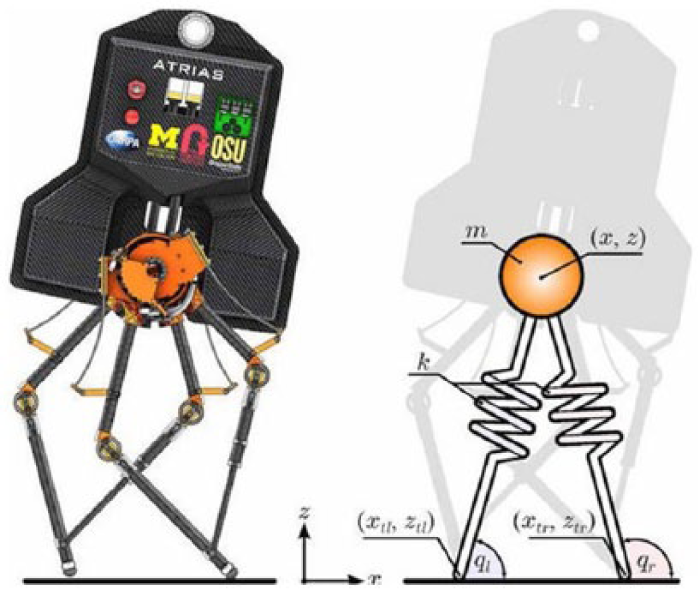
This particular bipedal robot has been dubbed ATRIAS – ‘Assume The Robot Is A Sphere’ – by its creators at the Technical University of Munich (TUM) and Oregon State University.
According to the team, ATRIAS has three motors in each leg, with two of the motors acting directly on the two leg springs. The third motor ensures lateral stability. Trials showed that it walks three times more efficiently than other human-sized biped robots.
For more information, go to http://www.theengineer.co.uk.
ATRIAS goes for a stroll in the park for the first time.
Putting the Brakes on Lifts
Ever since the idea of vertical transportation by lift was conceived, the next step was going to be ensuring it was reliable. New designs need to fit within the constraints of the building, while older designs may benefit from improved technology and control features. Warner Electric has a range of highly reliable braking systems that conform to the latest standards.
The company has over 60 years’ experience in designing and manufacturing high specification, cost-effective braking systems for installation in new designs as well as for upgrading older units. With every new building there is a new challenge, and the systems designed for the comfort and convenience of the occupants are usually a bespoke design which must conform to the latest local building standards.
To help both lift and traction machine manufacturers, Warner Electric develops its extensive range of braking systems, which are designed to work with both geared motors and gearless motors, as well as offering solutions for retro-fit applications. With systems conforming to EN81-20 and EN81-50, which set the benchmark for lift design for more than half the globe, the company claims also to have the engineering expertise to develop bespoke systems based on an extensive product range.
Systems can be specified as holding brakes for maintaining position relevant to the lift shaft, or to prevent an ascending car from over-speeding and unintended movement. In both cases, the designs can include a double braking system offering the redundancy that may be required by some applications. Simplified installation procedures and near zero maintenance requirements complement the extensive list of specifications.
Features include new damping systems, which maintain low noise, and new lining materials reduce the overall size and extend the life of the braking system.
Christophe explained, Our customers expect innovative, robust and competitive solutions that meet a wide range of demands. In addition, these products need to be manufactured and delivered to our customers at the earliest opportunity. This has led to changes in manufacturing processes that optimise efficiency and reduce lead times.
For more information, go to http://www.warnerelectric-eu.com.
Warner Electric has over 60 years’ experience in designing and manufacturing high-quality braking systems for elevator applications.
