



Abstract
CNC Axis Sharing Facility Allows Versatile Design
NUM (http://www.num.com) has launched an innovative new CNC axis sharing facility that enables designers to control a number of functionally interrelated groups of motion axes. It does this using advanced dynamic resource allocation techniques to share control across multiple CNC kernels.
Typical applications include multi-station production centres and rotary transfer machines with complex multi-role axis control requirements.
Each individual CNC kernel accommodates combinations of interpolated axes or spindles – up to a combined total of 32 – and supports up to eight CNC channels. Furthermore, each channel can operate autonomously or be synchronised with the other seven channels.
Using multiple CNC kernels and the new axis sharing facility, machine designers can implement control schemes for virtually any type of machine tool, regardless of its complexity. NUM’s Flexium + 68 CNC architecture is scalable and suitable for systems with more than 200 interpolated axes and spindles, and more than 50 CNC channels.
The platform offers a choice of three configurations of CNC kernel, enabling machine designers to create cost- and performance-optimised control systems for a wide range of automation.
All CNC, servo drive, I/O, automation programmable logic controller (PLC) and safety PLC functions are programmed using a single customisable unified toolset. The software covers a broad range of machining functions, including part grinding, tool grinding, turning, milling, gear hobbing, shaping and finishing, as well as water-jet, laser and plasma cutting.
Dutch Hospital Uses Wristband Beacons to Track Treatment for Cardiac Patients
The cardiology department of Netherlands health-care provider Leiden University Medical Centre (LUMC) has begun using a cloud-based solution provided by Zebra Technologies (https://www.zebra.com) to track the amount of time it takes for cardiac-arrest patients to receive a balloon angioplasty treatment.
The solution is helping the hospital to improve what it calls its door-to-balloon (DTB) rate, in order to better ensure that patients are treated as quickly as possible, thereby improving their chances of survival and recovery. Better data are available too.
LUMC sought an automated method of measuring and documenting its DTB performance, and then to use the collected data to improve its DTB times. The hospital asked Zebra to develop a time-tracking system for its DTB needs.
When an ambulance carrying a patient with a perceived acute myocardial infarction (AMI) condition arrives at the emergency department, a wristband with a built-in bluetooth low energy (BLE) beacon is attached to that individual’s arm. As the patient enters the facility, a BLE radio built into a tablet mounted near the entrance transmits the wristband’s ID via a WiFi or 4G Internet connections to the Zatar cloud-based service, which records the wristband’s time and location.
As the patient is taken to various laboratories, other tablets installed along the route continue to pick up the wristband ID as it comes within range, thus updating that wristband’s status to indicate in real time how quickly it is moving from one location to the next.
Each time the wristband nears a tablet, the Zatar software prompts the tablet to display the accumulated time against a background colour of green, orange or red, in order to indicate staff performance. For instance, if the patient is moving through the process to the lab quickly, the tablet screen will be green. However, if the time is approaching the maximum acceptable wait, the colour will be orange, while very late would be indicated with a red screen. The hospital can set the criteria for the colour changes on the tablet, based on its own performance goals.
The patient is then received into one of the laboratories, where one tablet and two Bluetooth button beacons have been installed. The interventional cardiologist presses one button beacon after the needle is inserted to record the needle time, and the other button beacon to document the procedure’s completion. The tablet captures the ID numbers of the button beacons and the wristband, thereby linking that patient with the final phases of the DTB process.
As soon as a heart-attack patient arrives at the emergency department, a wristband with a built-in Bluetooth low energy beacon is attached to that individual’s arm.

The data are available via Zatar’s representational state transfer (REST) application programming interface. The solution displays performance in real time as the patient is transported and treated so that staff has all the information they need to provide angioplasty within the desired time frame.
The technology is provided as software as a service (SaaS). Installation consists simply of mounting the tablets within the hospital’s corridors and laboratories. Altogether, the facility has up to 20 tablets for all of its catheterisation laboratories and routes.
New Control System Provides Process Visuals for Smaller Plants
The PMSX micro by Mitsubishi Electric (https://gb3a.mitsubishielectric.com), a control system designed for use on smaller scale plants, such as renewable energy power plants, was launched at the Recycling and Waste Management (RWM) Exhibition in Birmingham earlier this year. It runs on a single computer yet delivers proven control technology in an inexpensive and easily engineered package.
The control system displays a status overview for an entire installation using process visuals, offering a level of control that has only been available to larger plants. It has a graphical interface, which lets operators interrogate details of the system and make alterations to parameters as required. It is available in two formats: a conventional tower PC with a separate 22 inch monitor, or a panel PC with an integrated 21.5 inch full high definition (HD) display.
The control system has a comprehensive integrated alarm and event system – when alarms occur, the operator can navigate directly to the relevant process graphic, allowing an appropriate response to production events. The system also records events and messages securely in a database, allowing process flows with operator-added comments to be traced in the event of production problems or following changes to the plant.
The system includes built-in maintenance functions, as well as a wide range of analysis options to help operators understand process data and improve plant performance. The system is suitable for applications with around 1000 analogue or digital inputs and outputs across three to five separate automation stations.
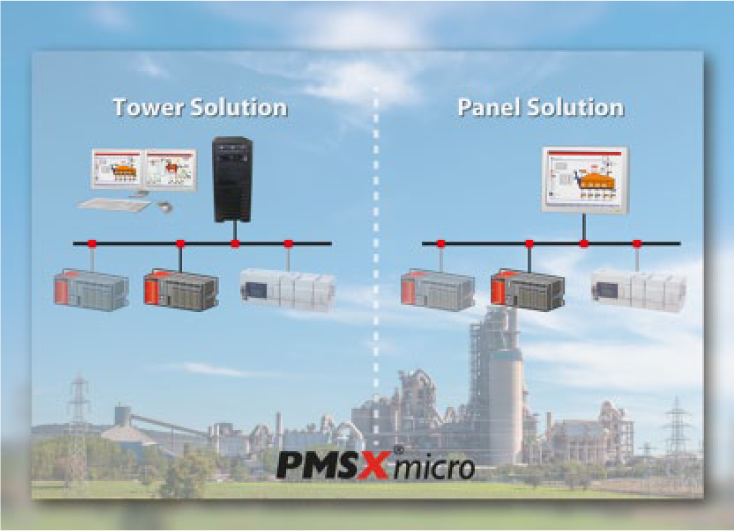
The PMSX micro is a control system designed specifically for use on smaller scale plants, such as renewable energy power plants.
The Feds Issue an Internet of Things (IoT) Warning
The US Federal Bureau of Investigation (FBI; https://www.fbi.gov) has issued a public service announcement entitled ‘Internet of Things Poses Opportunities for Cyber Crime’. The content of the announcement relates to all IoT implementations, especially consumer, but includes information and recommendations of use to manufacturers as noted below.
Among the IoT risks noted in the bulletin are as follows:
The Universal Plug and Play protocol (UPnP) can be exploited to gain access to many IoT devices. UPnP describes the process when a device remotely connects and communicates on a network automatically without authentication, and is designed to self-configure when attached to an Internet protocol (IP) address, making it vulnerable to exploitation. Cyber actors can change the configuration and run commands on the devices, enabling the devices to harvest sensitive information, conduct attacks against homes and businesses, or engage in digital eavesdropping.
An exploitation of default passwords to send malicious and spam emails, or steal personally identifiable or credit card information.
Unsecured or weakly secured devices provide opportunities for cyber criminals to intrude upon private networks and gain access to other devices and information attached to these networks. Devices with default passwords or open WiFi connections are an easy target for cyber actors to exploit. Examples of such incidents are as follows:
Cyber criminals can take advantage of security oversights or gaps in the configuration of closed circuit television and automated devices, such as security systems, garage doors, thermostats, and lighting. Systems not properly secured can be located and breached by actors who wish to stream live feed on the Internet for anyone to see. Any default passwords should be changed as soon as possible, and the wireless network should have a strong password and firewall.
Email spam attacks are now being sent from home-networking routers, connected multi-media centres, televisions, and appliances with wireless network connections. Devices affected are usually vulnerable because the factory default password is still in use or the wireless network is not secured.
Criminals can gain access to unprotected devices used in home health care, such as those used to collect and transmit personal monitoring data or time-dispense medicines. These devices may be at risk if they are capable of long-range connectivity.
Business-critical devices connected to the Internet, such as the monitoring systems on fuel (i.e. petrol) pumps, are a target for cyber-crime. Using this connection, the criminals could cause the pump to register incorrect levels, creating either a false petrol or diesel shortage or allowing a re-fuelling vehicle to dangerously overfill the tanks, creating a fire hazard. Alternatively, the connection to the point of sale system could be interrupted, allowing fuel to be dispensed without registering a monetary transaction.
Business users should carefully consider whether an IoT solution is appropriate for their needs, and only use manufacturers with a proven track record in providing secure solution. IoT devices should operate on their own protected networks, which are regularly updated with the latest security patches, and UPnP should be disabled.
Consumers should be aware of the capabilities and pitfalls of devices installed in their homes, and should always change default passwords to strong passwords on a secured WiFi router.
Patients should be informed about the capabilities of any medical devices prescribed for at-home use. If the device is capable of remote operation or transmission of data, it could be a target for a malicious actor.
Omron Adds Robotics Technology with Acquisition of Adept Technology
Omron Corporation (in the United Kingdom; https://omron.co.uk/en/home), the provider of core sensing and control technology, and Adept Technology, a provider of intelligent robots and autonomous mobile robot solutions and services, have announced that Omron will acquire Adept.
Omron plans to acquire 100% of the outstanding shares of Adept common stock through an all cash tender offer, followed by a second-step merger. Omron will offer Adept investors $13.00 (£8.53) per share of Adept common stock, a 63% premium over the closing price for Adept’s common stock on 15 September 2015. Omron will fund the tender offer through cash on hand.
The transaction is subject to customary closing conditions, including at least a majority of shares of Adept common stock being tendered in the offer, expiration of the applicable waiting period under the Hart-Scott-Rodino Antitrust Improvements Act 1976, and receipt of required foreign antitrust approvals. The transaction has been unanimously approved by the Boards of Directors of both companies.
By adding the robotics technology of Adept to its current offering, Omron says that it will be very well positioned to provide manufacturers in the automotive, digital device, food and beverage, packaging, and other industries with solutions and engineering support.
Founded in 1983, Adept recorded annual sales of $54.2 million (£35.5 million) and gross margin of 42.0% in the fiscal year ended 30 June 2015. The company’s intelligent automation product lines include autonomous mobile robots, industrial robots, configurable linear modules, machine controllers for robot mechanisms and other flexible automation equipment, as well as machine vision systems and software.
Adept’s strategy is to provide a broad range of highly reliable integrated products along with world-class service to allow manufacturers to maximise productivity, safety, flexibility and product quality.
This acquisition is a part of the acceleration of Omron’s input, logic, output and safety (ILO + S) strategy for its industrial automation business, which provides automation solutions for manufacturing industries.
Following the transaction, Rob Cain, president and CEO of Adept, will continue to lead Adept and will report to Nigel Blakeway, chairman CEO and president of Omron Management Centre of America, Omron’s wholly owned US subsidiary.
Innovative Radio Frequency Identification (RFID) Tags Are Shaping the Future of Identification
The development of RFID is changing the cable management sector, with recently launched identification tags enabling users to implement secure and sophisticated cable management solutions.
HellermannTyton (http://www.hellermanntyton.co.uk/site/), the supplier of cable fastenings and fixings, has developed a range of nylon and stainless steel identification cable ties with an integrated RFID tag. Integrating data within a cable tie, the tags enable users to easily fix cables and equipment that need to carry a serial number for tracking and identification purposes.
The single fix RFID cable tie provides larger capacity and productivity, working in sync with existing systems. Although not a new concept, RFID is being used to work with existing coding and software and provide a foolproof way to ensure cable management is safe, secure and readable.
RFID data technology is being used to collate and register products that can talk to a network system – essentially it is a tracker that can be read even when the labelling cannot.
John Banks, UK national product manager in identification, explained, This use of RFID within cable management means that not only can each cable or piece of equipment be identified, but the tags can be changed, updated and locked, with risk of damage and marks being accidentally removed reduced. ‘Although there is still a wider scope of opportunities for using RFID technology, it has provided the installer with a secure and reliable identification system’.
He concluded, Benefits include taking away manual reading mistakes, the ability to pre-programme a serial number to provide a direct link to a network without human contact, and compatibility with existing systems.
HellermannTyton has developed a range of nylon and stainless steel identification cable ties with an integrated RFID tag.

There are many options available with more configurations in development. Each variant comes fitted with the appropriate low frequency (LF), high frequency (HF) or ultra-high frequency (UHF) RFID transponder.
Power Quality Analysers from Outram Send Waveform Data Remotely
Power quality analysers often need to be left in position on site for a number of weeks while they record voltage, current and other parameters for subsequent analysis. With the launch of Outram Research’s PMGateway app, the company’s power quality analysers can now be interrogated by a local android phone or tablet, which downloads recorded data and emails it to a PC or server for analysis.
Especially useful where there is no local Ethernet network, this remote operation works with the whole range of Outram’s power quality analysers since they can all be bluetooth enabled. PMGateway can also be used to control the analyser and examine its data live.
Using the company’s Pronto software, a windows tablet or PC can then be used to extract the relevant data and present it in the form of graphs or tables for analysis and reporting.
‘The ability to email the recordings remotely reduces the need for site visits, making the process much more convenient and saving a lot of time’, said John Outram, managing director of Outram Research.
Data recorded on Outram power quality analysers can now be downloaded remotely and emailed for analysis and reporting.

PMGateway is the latest in remote communications from Outram. The PM7000 and PM7000 fault level monitor models optionally have Ethernet capability and may be used with Nortech’s Envoy and iHost remote access systems. Designed and manufactured in the United Kingdom, Outram instruments use sophisticated data processing technology (including adaptive store) to monitor and analyse the behaviour of utilities’ power distribution networks as well as industrial, commercial and domestic installations.
Able to measure hundreds of individual parameters simultaneously, such as voltage, current, power, frequency, phase angle, individual harmonics, sags and swells, and fault level, they can identify issues such as energy losses and help prevent damage to electrical equipment. For more information, go to: http://www.outramresearch.co.uk
Yokogawa to Provide Network Health Check Service to Asahi Kasei Chemicals
Yokogawa Solution Service Corporation, responsible for Yokogawa’s control business in Japan, has received an order from Asahi Kasei Chemicals to provide a network health check at its Mizushima works.
Yokogawa will analyse and verify the integrity of the data traffic on the control system communications buses at Mizushima, using a combination of network visualisation technology and data traffic analysis.
As the threat of cyber-attacks has increased in recent years, there is a pressing need for secure control systems, particularly those used in critically important infrastructure such as electric power, gas and petrochemical plants. It is often no longer sufficient to rely solely on general security measures such as the use of antivirus software.
Yokogawa’s network health check service is able to visualise the status of communications traffic on a network after periodically collecting and analysing log data. When data traffic from an unknown IP address, communication via an unspecified protocol or port, data loss or some other potential hazard is detected, Yokogawa will then work with the customer to identify possible causes and propose any necessary improvements.
Unlike conventional services that rely on the monitoring and analysis of vast amounts of control system communications traffic, the company’s service is able to visualise the status of the control system’s communications traffic so that action can be taken in response to any potential issue.
Yokogawa jointly developed this visualisation technology with Yasuo Okabe of Kyoto University, Hiroki Takakura of the National Institute of Informatics, and the National Institute of Information and Communications Technology (NICT).
Yokogawa develops and provides its customers with a variety of highly secure device and system solutions, and is also engaged in the provision of on-going operational support services. The company will continue to assist its customers through the provision of control system cyber security solutions. For more information, go to: http://www.yokogawa.com/uk/
Panasonic Extend FP7 PLC Range with New Central Processing Unit (CPU)
The Panasonic FP7 range of high-performance modular PLCs has been extended with the introduction of an entry-level CPU targeted at applications where high CPU performance is required without the need for high-performance communications features or large I/O requirements.
The CPU offers 64 k of program memory and is fitted with non-volatile data memory and a real-time clock. USB and RS232C tool ports are provided as standard, with two additional expansion ports that support cassettes offering various combinations of RS232C, RS485 and Ethernet-based communications as required.
Input and output capability is supported allowing up to 16 expansion units to be connected to the CPU for control of digital and analogue I/O, temperature control, high-speed counting and positioning modules.
The CPU is programmed with Panasonic’s FPWIN Pro7 IEC61131-3 compliant multi-language software that supports instruction lists, ladder and function block diagrams, a sequential function chart and structured text programming languages. The software supports a range of comprehensive and powerful libraries that have been developed over many years.
Go to: http://www.panasonic.com/uk/
Panasonic has launched an entry-level CPU for its FP7 range of PLCs.

RWM Exhibition Proves a Hit for Mitsubishi Electric’s Energy From Waste (EFW) Plant Control Solutions
As an experienced supplier of turnkey electrical, instrumentation and control (EI&C) projects to power generation plant operators around the world, Mitsubishi Electric attended the 2015 RWM Exhibition to present its latest solutions and services for EFW plants and energy management.
The show is one of the Europe’s leading events for resource management industries, including the EFW sector.
Leading industry figures suggest that up to 17% of the UK’s demand from electricity could practicably be met by EFW plants. This would help to reduce dependence of fossil fuels while also reducing dependence on landfill sites for waste management.
Louis Meyer, Director of Process Industries of Mitsubishi Electric’s Factory Automation-European Business Group.

Mitsubishi Electric has supported EFW plants in other parts of the world and is aware of the importance of maximising efficiency while ensuring that all emission standards are met. It has developed a range of products and services, which can improve production performance and will help to ensure that this important emerging industry continues to grow.
The 2015 RWM Exhibition proved successful as an opportunity to meet professionals in the United Kingdom and across Europe, while showcasing several innovative new solutions for the EFW industry. These included the Virtual power plant, which uses cutting edge control technologies to create a stable energy network by automatically managing multiple plants to work together and meet real-time energy needs.
Mitsubishi Electric (https://gb3a.mitsubishielectric.com) claims that its stand was a firm favourite for visitors from the EFW sector.
New Infrared Sensor Lets Engineers Check Temperatures with a Smartphone App
Calex Electronics (http://www.calex.co.uk) has announced the new PyroNFC, a small, low-cost infrared temperature sensor that lets engineers and machine operators use a smartphone app to check temperature measurements on the production line.
The PyroNFC sensor measures the temperature of surfaces in industrial processes without contact, and at just 29 mm in length, it is the smallest sensor that Calex has ever produced. It has a linear voltage output for connection to industrial process instrumentation, and an open drain alarm output that can be used simultaneously.
By touching a near field communication (NFC)-enabled smartphone against the back of the sensor, the user can read the measured temperature with the free app. The reading updates continuously while the phone is touching the sensor.
With the app, the user can also read or write configuration parameters including the emissivity setting, which allows an accurate reading on a variety of materials. There is no need to power the sensor to do this: hundreds of sensors can be configured in minutes on a benchtop without connecting a single wire or cable.
Anthony Smith, product marketing manager at Calex, explains why NFC is such an exciting new technology: ‘Everyone has a smartphone, and more and more industrial products are incorporating smartphone connectivity’, he said, NFC is the simplest way to connect to another device. You don’t need to plug in a cable, and it is quicker than Wi-Fi or Bluetooth as you don’t need to search for devices or pair with them.
He concluded, Smartphone apps are the easiest way to do simple tasks like measuring a temperature. To take a reading it really is as simple as touching the phone to the sensor. With the app installed, you don’t even have to look for it when you want to use it. When you touch a sensor with the phone, the app opens automatically, even from the home screen. You can see the temperature immediately.
The PyroNFC lets engineers use a smartphone app to check temperature measurements on the production line.

Tiny Detector-Only Device for Low Cost, High Volume OEM Spectral Sensing
Ocean Optics (http://oceanoptics.com) has expanded its Spark spectral sensor range with the addition of the Spark-DET-VIS. The most versatile of the Spark line of spectral sensors, the tiny sensor-only version weighs less than 1 g.
While optical technology advances have shrunk instrument size, the Spark-DET-VIS still delivers full spectral measurements over the visible wavelength range of 380–700 nm.
The unit measures simple absorbance, fluorescence and emissive colour. Its ultra-compact size is ideal for high volume integration into the custom electronics of a wide range of portable and Internet-enabled sensing devices for environmental, food, agriculture, biomedical and quality control applications. A USB version is available for initial application development.
The unit is the first Ocean Optics spectral device to replace traditional diffraction gratings with a solid-state optical encoder. The resulting unit size and cost are comparable to that of a less robust red, green and blue (RGB) filter diode detector, but with the ability to take full spectral measurements.
The unit’s aperture design optimises light throughput, ensuring thermal stability over a −10 to 60 °C operating range for accurate analysis in harsh environments. Unlike comparable devices, Spark delivers optical resolution of 4.5–9.0 nm (full width at half maximum (FWHM)), making it viable for a wide range of applications.
The aperture design of the Spark-DET-VIS ensures thermal stability over a −10 to 60 °C operating range for harsh environments.

Trescal’s Refurbished Manchester Facility is Up and Running
Trescal UK’s refurbished and enlarged Manchester facility has opened its doors, following completion of major works to deliver an enhanced calibration and testing capability.
The new facility, which has incorporated part of Trescal’s capability in Leigh, services an extensive range of calibration requirements. This includes the following capability: high voltage, acoustics, accelerometry, mass, torque, dimensional, electrical and pressure.
Trescal’s refurbished Manchester facility has now re-opened.

The project, which was completed on the 31 May 2015, refurbished existing laboratory facilities and created new specialist standard laboratories, which operate under strict climatic conditions to within 0.5 °C. During the refurbishment 8.5 miles of data cabling and 3.5 miles of power cabling was laid in the building. New equipment provided includes a new coordinate measurement machine (CMM) and an automated screw gauge calibration unit.
The Manchester facility offers services in the north of England, as well as providing dimensional calibration support to the UK Trescal network and being the central hub for Trescal’s logistics operation in the United Kingdom. The key industrial sectors served being aerospace, rail, pharmaceuticals, energy and automotive.
Go to: http://www.trescal.com.
Yokogawa Releases Exaquantum Plant Information Management System
Yokogawa Electric Corporation (http://www.yokogawa.com/uk/) has announced the release of Exaquantum R3.01. Compared to the previous version of the Exaquantum plant information management system, Exaquantum R3.01 delivers, it is claimed, a six-fold increase in data acquisition performance and can handle five times as many data points (tags).
The latest version of Exaquantum delivers a large increase in data acquisition speed and the number of tags that can be handled by a server, giving plant operators a much more detailed understanding of their plant processes.
Positioning Exaquantum R3.01 as a data historian platform for acquiring and storing the plant data needed to improve plant operations, Yokogawa will use this product to create value with its customers and expand its solutions business.
Exaquantum R3.01 achieves an event-driven data acquisition and processing speed of 600,000 tag updates/minute, which is six times faster than the company’s previous release. The server can now handle up to 500,000 tags, five times the amount possible with the company’s previous release. This dramatically increases the amount of information customers have at their fingertips. By being able to analyse a wider range of process data, they can obtain a much more accurate understanding of what is happening in a process and zero in on solutions that will improve their plant operations.
The latest version of Exaquantum delivers a large increase in data acquisition speed.

Users can now access their data not only from a browser on a desktop or laptop PC, but also from any Windows or iOS tablet. The software also comes with an improved conversion tool that allows users to convert Exaquantum graphic windows for viewing with Yokogawa’s Centrum VP integrated production control system – the tool can simultaneously convert multiple process graphics.
Other engineering tools available for use with Exaquantum R3.01 have been improved to reduce engineering workload.
Applications include real-time creation of plant process databases, processing of acquired data by means of arithmetic and other operations and display of acquired data in graphics, trend charts and spreadsheets.
Charge Accelerometer Improves Process for Triaxial Measurements
To make triaxial measurements easier for automotive and industrial engineers, Brüel & Kjær (http://www.bksv.co.uk) has created a new charge accelerometer, the Type 4527-C.
The 4527-C only needs one cable to link up with the three output channels on a data analyser system, reducing set up time during tests. With an operational temperature up to +230 °C, the accelerometer is ideal for measuring in applications that generate intense heat, such as powertrains, engines, vehicle exhausts and gas turbine equipment.
Its small size and weight also enable the user to measure in locations where there has previously only been space for single-axis accelerometers – such as the engine mounts and the exhaust.
The connector and cable have been specially created to avoid triboelectric noise, which originates in the connectors and affects measurement data. The unit has a robust titanium casing with a single integrated Microtech-compatible 4-pin connector.
A range of mounting options allows users to secure them on any surface using an M3 stud, and an adhesive pad that extends the life of the transducer.
Nominations Are Open for the Berthold Leibinger Innovation Prize
Nominations are being accepted up to 31 December 2015 for the Berthold Leibinger Innovation Prize, honouring implemented inventions or technical development in applied laser technology.
The ninth call for the innovation prize falls during the UNESCO’s International Year of Light. The technical application of light is central to our lives. Such applications include information and communication technology, sensors and measurement, medicine and biotechnology, material processing, illumination and imaging.
Laser light is increasingly used in all of these fields, in every day products, as well as in laboratories, medical centres and factories. It is found in infrastructures above and below ground as well as in space. Laser light is everywhere and excellent innovations with this technology receive distinction and special recognition with the Berthold Leibinger Innovation Prize.
At the award ceremony on 9 September 2016 in Ditzingen, Germany, EURO 30,000 for the first prize, EURO 20,000 for the second prize and EURO 10,000 for the third prize will be awarded. At the same time, the private foundation awards an individual with the prestigious Berthold Leibinger Zukunftspreis for laser research accompanied by a monetary award of EURO 30,000.
A jury of 10 international experts will choose the prize winners as well as up to eight finalists for the innovation prize.
Finalists are invited to the jury session in May 2016 to present their innovations personally. Those eligible to apply or to be nominated for the innovation prize are individuals and project groups worldwide whose main development efforts and market potential lies in the application of laser light or the development of laser devices.
Submitted work must be completed and disclosure must not be restricted – applications may be submitted by post or electronically, in English. Both individual applications and well-supported nominations are allowed for the innovation prize.
The international Berthold Leibinger Innovation Prize from the non-profit foundation, Berthold Leibinger Stiftung, has been awarded every other year since 2000. The first Berthold Leibinger Innovation Prize for research in applied laser technology was awarded in 2006. For more information, go to: http://www.leibinger-stiftung.de
Pentair Achieves Safety Integrated Level (SIL) 3 Certification for Westlock Position and Control Monitors
Pentair (http://www.pentair.com) has successfully achieved SIL 3 certification for its Westlock Controls AccuTrak range of position and quantum control monitors. Obtained from the third-party certification organization exida, this universal accreditation validates the performance of the products for the most hazardous of applications.
Mike Lutolf, global product manager – controls at Pentair, commented: ‘Safety is our ultimate priority, so being one of the few manufacturers offering SIL 3 certified position and control monitors is a big step forward for Pentair’.
‘Typically, many products on the market’, he said, ‘are SIL 3 capable, but not officially certified. By offering products that meet exida’s stringent design and quality requirements, we are going beyond the industry norm to ensure full compliance with SIL 3 applications’.
After passing rigorous failure modes, effects and diagnostic analysis (FMEDA), Pentair’s successful assessment enables the AccuTrack and Quantum product lines for use in SIL 3 applications in low demand mode, where systems operate less than once a year.
The company’s position and control monitor series are designed to provide a fail-safe system in critical environments, without compromising safety-instrumented systems (SIS). Using this certified equipment also makes it easier to implement a safety system in process applications, in compliance with international standards.
SIL 3 accreditation allows products to be used in low demand applications.

Pump and Lift Station Level Controller Launched
Designed for sewage pump stations, lift stations, wet wells and tank level control, the new Greyline PSL 5.0 Level Controller offers a non-contacting ultrasonic sensor mounted above the liquid, and has six independently programmable control relays for pump or valve control, level alarms, diallers, temperature alarm and echo-loss alarm.
The non-contacting, ultrasonic sensor can be mounted in the tank or wet well, and the watertight control electronics can be installed in the control room or any location within 500 ft/150 m of the sensor. A menu system and built-in keypad can set up and store measurement range, relay set points and pump alternation sequence, which can be viewed on the PSL 5.0 backlit liquid crystal display (LCD) display.
For hazardous locations, the ultrasonic sensor is rated ‘intrinsically safe’ with an optional safety barrier. It is rated for measurement ranges up to 32 ft/10 m.
A submersible pressure sensor or other 4–20 mA level transmitter to the PSL 5.0 can be connected for fail-safe hybrid sensing. The PSL 5.0 will auto-calibrate the redundant sensor and if signal is lost to the ultrasonic sensor, the redundant sensor will seamlessly take over monitoring until signal resumes from the ultrasonic. The redundant sensor is continuously monitored to ensure availability during primary sensor failure. Go to: http://www.greyline.com.
The non-contacting ultrasonic sensor can be mounted in the tank or wet well.

News in Brief
Anritsu obtains RF conformance test certification for 3GPP standards
Anritsu Corporation (http://www.anritsu.com) has announced that the company’s LTE-advanced RF conformance test system, the ME7873LA, has obtained PTCRB certification. This means that the ME7873LA now also supports 3DL CA tests as defined in 3GPP release 10, supporting LTE-advanced terminals operating on north American frequency bands. By securing the PTCRB certification for 3DL CA, the ME7873LA will help cut the time to market for new products using 3DL CA services.
Panasonic announces 3-year warranty on automation products
Panasonic (http://www.panasonic.com/uk/) has announced that from 1 September 2015 a range of automation products will be offered with a 3-year warranty as standard. The warranty is available for sensors, ionisers, and UV curing systems, PLCs, servo drives, touch panels, and inverters, as well as factory automation components such as timers, counters, limit switches, power meters, hour meters, fans and temperature controllers.
Kontron launches new touch-screen HMI display
Kontron, a global provider of embedded computing technology (ECT), today announced that its TRACe HMID104-CK EN50155-certified fan-less operational panel PC display is in production. This touch-screen HMI offers a flexible COTS-based unified design approach for interoperability, and enables train control system developers to adapt functionality to different application needs. These benefits translate into the ability to reduce development costs, speed of development of individual systems and shortened time to market. Go to: http://www.kontron.com.
Automated solution for protocol conformance tests released
Anritsu Corporation and COMPRION GmbH have developed a solution to fully automate the execution of all 3GPP TS 36.523 LTE conformance tests required for certification and pre-certification of mobile devices. The combination of Anritsu’s ME7834 Protocol Conformance Test System with COMPRION’s Test SIM Simulator allows chipset developers, terminal vendors and test houses to fully automate GCF and PTCRB conformance tests, improving overall testing efficiency and freeing up valuable test engineering time. Go to: http://www.anritsu.com