




Abstract
The paper presents an analysis of the process of application of measurement and control systems in underground coal mines in Serbia. Particular attention is paid to the experience with the first systems introduced in the mines ‘Soko’ and ‘Aleksinacki Rudnici’. A significant part of the paper is devoted to the description of the process of the development and improvement of systems, described by three aspects (technical, exploitation and commercial/financial). The technical aspect is described by seven criteria (imported systems, basic technical knowledge, input/output properties, real-time functions, offline processing, alarm processing and presentation and education) and 18 indicators. The exploitation aspect is described by six criteria (system design, reliability and accuracy, data presentation, alarm processing, use of information, and operation and maintenance) and 21 indicators. The commercial and financial aspects are described by financial indicators that show the positive effects of domestic development of the system.
I. Introduction
Difficult working conditions in underground coal mines, accompanied with ever-present threats to lives or health of miners, led to thinking about how to put under the control complex and often unpredictable underground mining processes. The solution to this problem was found in the introduction of the required equipment and systems for monitoring and control of individual technological units of the technological process of mine exploitation.
Previous studies dealing with this issue promoted the following research areas: injuries in the underground coal mine,1,2 main causes of mining equipment accidents,3,4 research of underground mine working environment parameters and ventilation,5,6 location of control devices in underground mines, 7 useful methods for ensuring mining safety, 8 research of voice communication systems,9,10 human factors elements in process safety analyses,11,12 and related designer tips for safer mining equipment.13,14
Research conducted in Serbian coal mines with underground exploitation has shown that the highest priority is given to the control of parameters of the working environment, where ventilation, gas and fire parameters are dominant. 9 The first measurement devices in Serbian coal mines were methane control devices that allowed automatic local alarm signalling (‘Seliste’ pit in mine ‘Rembas’, Resavica). Frequent mine accidents have imposed the need for the application of more powerful technical solutions that would allow local and additional remote control and provide a centralized display and processing of data on the concentration of methane as well as data on other relevant parameters. Joint research performed by mining associations, institutes, faculties and an electrical machine development company pointed to a conclusion that the concentration of methane, carbon monoxide and oxygen, airflow speed and separate ventilation speed, depression of the main fan, short circuits in ventilation network, temperature and humidity parameters and parameters of resulting fires in their early phase (endogenous fires) must be measured.7,9
The analyses of the existing systems in Serbian coal mines with underground exploitation have also shown that in parallel with modernization of parameter control, devices and systems for effective and independent voice agreements and exchange of voice messages between underground workers and responsible technical person on the surface should be introduced. 9 Devices and systems for the control of parameters and voice communication together constitute mine measurement and control system (MCS). The detailed description of the developed system is presented in Marjanovic and colleagues.7,9
The importance of human factors and ergonomics is described in human factors/ergonomics (HSE). 15 The human element in efficient control systems is important in order to achieve optimal control system performance.16,17 Plenty of case studies from different mining and minerals processing sectors are based on ‘Naturalistic Decision Making’ theory. 18 Removing humans from the decision-making loop by means of automation was proposed as the solution for increasing reliability. 19 However, operators must stay in order to control the operations and to initiate adequate safety activities. 20 Besides, different methods of interaction between operators and equipment for monitoring and control are necessary in the control room. 21
New devices for communication are developed to simplify communication between operator and machine, and the most important aspects of human–machine interface are colour, text presentation and audio effects.22,23 The way humans control a process is defined by the way the information in the control room from the processes is perceived and interpreted.11,24,25 However, the automation not only removes all human errors but also introduces new ones. Errors are caused by the complexity of human–machine interface, limited operator skills and training, higher workload during emergencies, complex coordination and communication procedures, control room layout and information presentation.7,9,26 –29
II. The Requirements for the MCSs
The perceived technical shortcomings, sources of unreliability and high cost of the existing systems initiated the development of new MCSs. The following basic technical requirements were defined: continuous measurement of relevant parameters of the environment; continuous service, even in conditions of increased methane concentration (above the permitted value defined in the project); working in real-time mode; reliable operation in unpleasant pit conditions expressed by constant presence of danger from explosive and flammable gas and coal dust, high humidity and distinct oxidation processes, the impact of the increased airflow speed, low light that makes it difficult to read from local measurement devices, mechanical damage, flooding and so on; centralized data processing in centres for control and management; real-time presentation of synoptic mine scheme with locations of measurement devices and current measurement results; light and sound alarms when controlled parameters exceed the default pre-alarm and alarm values; data archiving and offline processing; creation, viewing and printing the reports in the form of diagrams and tables; diagnostic capabilities; and effective voice communication between underground workers and operators in the control centre.
Based on these requests, the concept of MCS was prepared, and it included determining the ways of relevant measurement parameters and defining the technical requirements for measurement devices, defining the ways of data collection in the pit and transferring data to the control centre (digital, multi-point), specification of the equipment in the control centre, determining the way of presentation of information in normal and alarm situations in real-time, definition of data processing methods in offline mode and preparation of reports, specifying the requirements for local and remote control and so on. Real-time monitoring tools are concerned with measuring the current state of the environmental parameters and system indicators, providing up to date information about the system performance.
Defined technical requirements and MCS concept determined the structure of MCS that was designed, developed, manufactured and certified. An example of a real-time data presentation is shown in Figure 1 . Video display unit presents a linear scheme of underground mine with marked routes, mine ventilation systems, power facilities, transportation routes and vales of measured data. Figure 1 presents an alarm situation, where the airflow speed in the room with flow-through ventilation was below the acceptable value, while the concentrations of oxygen (O2) at one location and methane (CH4) at two locations were increased (the values shown in dark-coloured rectangles).
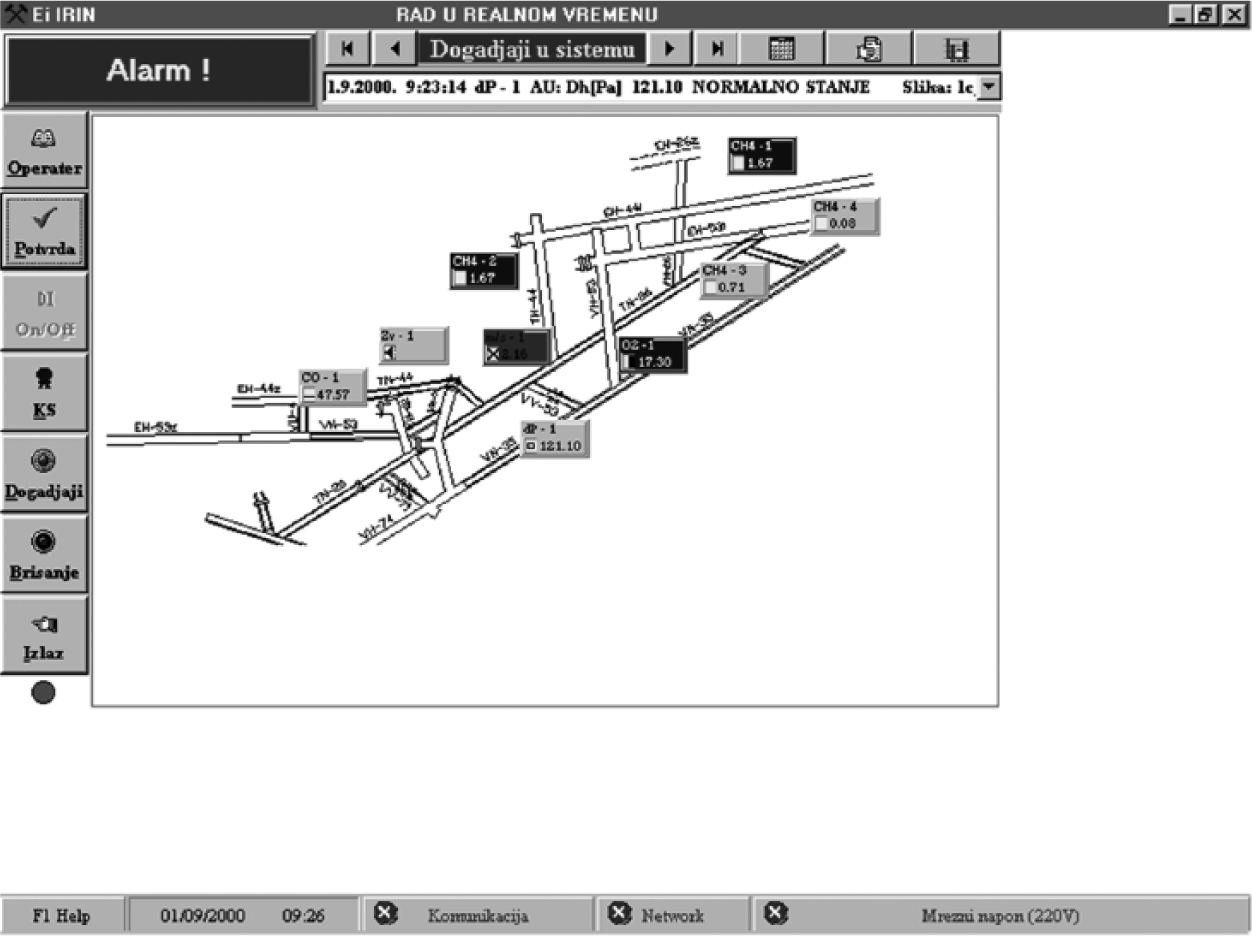
Data presentation in real-time
III. The Aspects of the Development and Maintenance Efficiency
Working on the design, development, production, implementation and maintenance of the MCSs in Serbian coal mines with underground exploitation, the following experience has been acquired, which is summarized in Figure 2 . It includes technical, exploitation, financial and commercial aspects, described in the following sections.
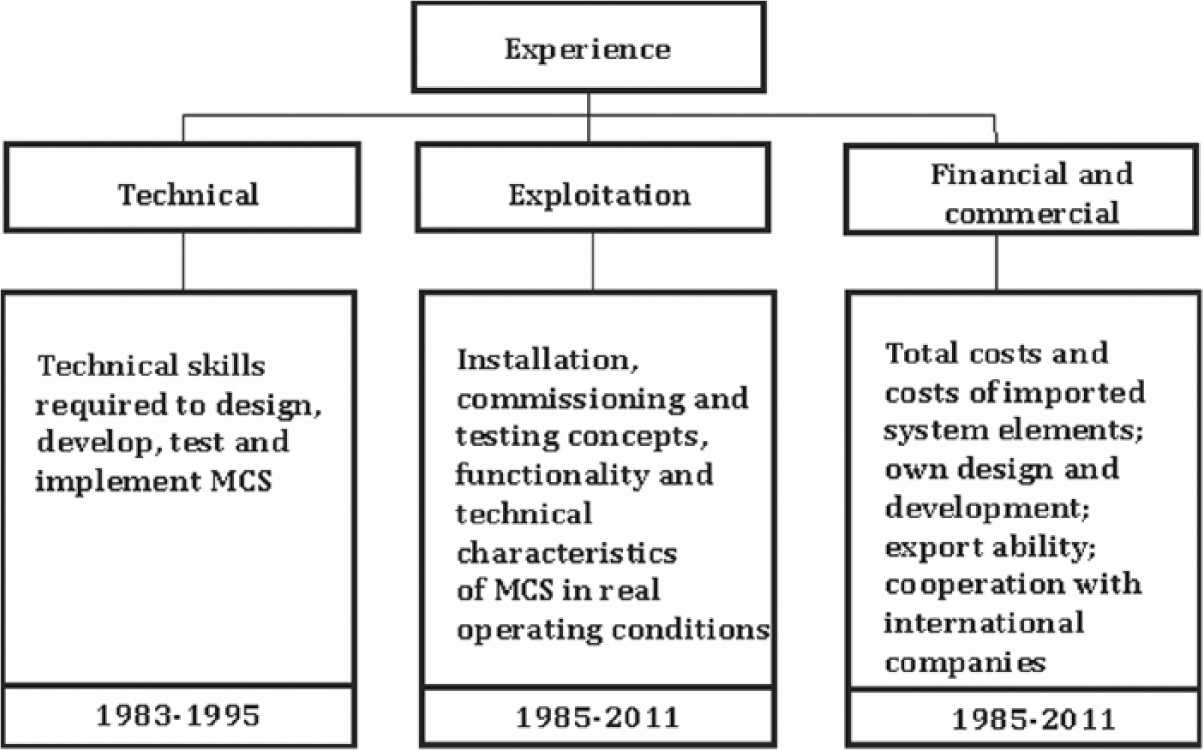
The aspects of the development and maintenance efficiency achieved from previous experience
A. Technical aspect
During the application of new MCS, a database of technical experience has been created. Acquired technical experience is summarized in Figure 3 and in detail described in project requirements defined in underground coal mines. This experience stands for a good knowledge base that enabled the definition of much better technical solutions for MCS systems that are still in application and that can be simply redesigned in hardware and software.
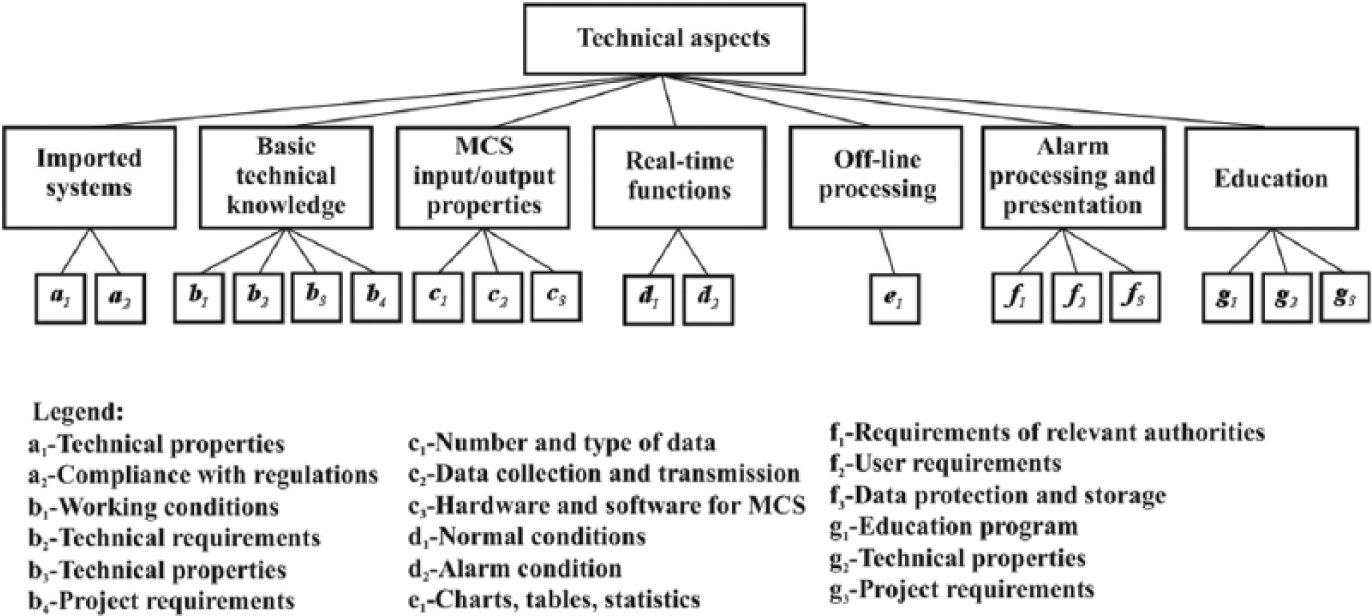
Illustration of technical experience
The first phase of redesigning included the expansion of acquisition and monitoring functions by functions of the remote control of underground exploitation and functions of coal transportation to the surface, separation (separating coal from tailings), selection according to size and dispatch of coal to end users.
The second phase of redesigning was focused on the ergonomic analysis of measurement devices in the mine and the equipment in control centres and their adaptation according to ergonomic recommendations.7,9,26 This was especially important for dispatch consoles and means for displaying information. The improvements of the technical characteristics of the system introduced continuous measurement instead of measurement in fixed intervals of maximum 4 min on the same locations, transmission and centralized processing in the control rooms, display and recording of data processing, and better data presentation about events in the pit. 7
B. Exploitation aspects
New technical solutions that have been applied since 1985 have increased the level of protection in underground coal mines. Systematic monitoring of input–output characteristics of operations in the system enables collecting of data that allow exploitation analysis of the inherent characteristics of the parts of MCS. Figure 4 shows exploitation analysis.
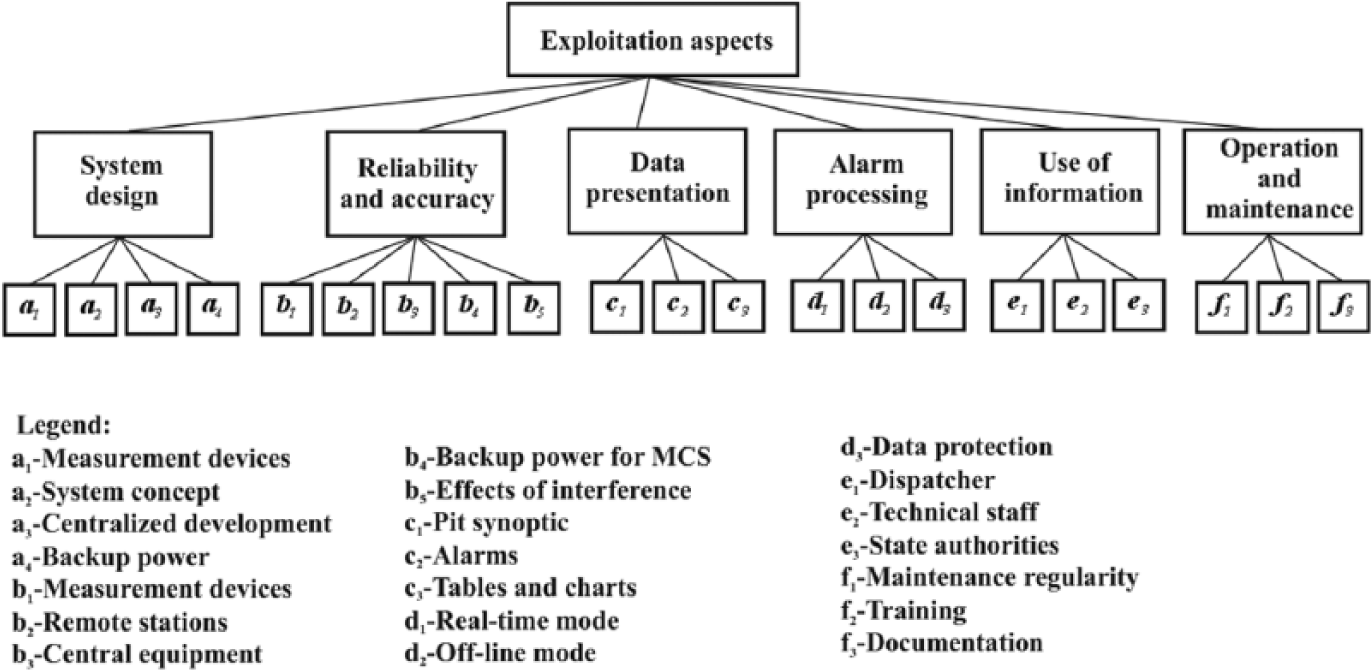
Illustration of exploitation analysis
Long period of exploitation of system made it possible to create a realistic picture of the concept – system configuration and the functionality of individual parts and general characteristics. Adopted concept on the basis of which measurement devices have full autonomy at work, digital data are transmitted and the whole system is backed up by the computer and power supply from a reserve source proved to be correct. The initial conception was changed only with respect to the backup supply of the central equipment, which in practice had adverse effect on the overall functionality of MCS.
The reliability and accuracy of the system and component units were analysed by recording the work time and failure time and by comparing the results of measuring stationary system devices with handheld devices and laboratory equipment. It has been shown that the accuracy and reliability of measuring devices, substations, central equipment and power supply in the pit were at the sufficient level, whereas in the part of the system for backup power the problems with the influence of high interference and lightning existed. The negative impacts on the functionality of the central equipment were reduced because it was conceptually made independent of these influences. Therefore, system protection function was not compromised.
Information presentation is one of the essential MCS functions because it gives a visual picture of the actual state of ventilation, gas and fire parameters. Displaying data in real-time on linearized scheme of the pit allows clear spatial monitoring of development of phenomena in the pit and quick location of places in the pit where overflows of concentration of methane and other parameters occur ( Figure 1 ). These overflows stand for alarm conditions and are both visually and audibly automatically represented. During this activity, the system provides the ability to automatically turn off the electrical power in affected part of the mine. Displaying data in offline mode, in the form of diagrams and tables, allows the analysis of data that can be used for diagnostics purposes.
Processing of alarm data in real-time and offline mode enables high-quality display of alarm conditions. Conceptually designed storage of alarm data proved useful particularly during the incident situations (accidents at the mine ‘Soko’ in 1998). Displayed information from MCS provides a lot of data for understanding the quality of safety and ventilation in mines. Experience shows that these data are underutilized.
The problem of maintenance of the system of underground exploitation as a whole is not given enough attention. Mines that have trained continuous professional teams (e.g. ‘Soko’ mine) have no problems with equipment maintenance in MCS, while in the case of other mines, this problem is present, which makes inefficient maintenance a common cause of MCS downtime.
C. Commercial and financial aspects
During the period 1973–1982, the overall MCS equipment was imported ( Figure 5 ). In the first phase of domestic development, some parts of the voice alarm system EiE-80 were replaced by domestic products (dispatch desk, synoptic panel and devices for recording conversations in alarm situations) and import costs were reduced by 20%. In subsequent phases, domestic development and production enabled the reduction in the share of foreign currency in the total MCS price (device for the power supply of measuring devices in the pit, the entire equipment in the control centre, system and application software, etc.). Only measurement devices for the pit, handheld devices and portable measuring devices were procured from abroad. The value of import costs in some years of the period was dependent on the amount and types of imported measurement devices. During the 1993–1996 period, a large quantity of handheld and portable devices were procured, which resulted in the increase in import costs. From 1996 onwards, the share of foreign currency has been stabilized at around 30% of the price of the developed system.
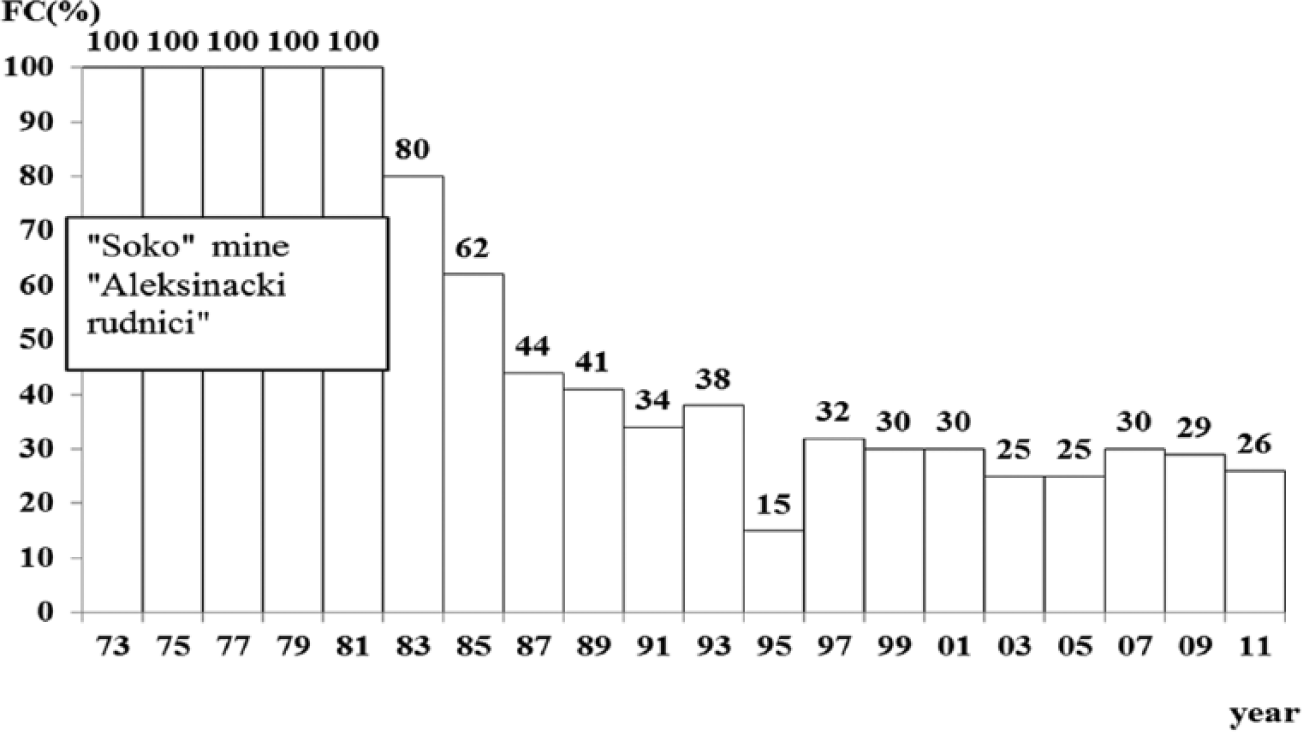
The share of imported MCS elements in total costs of the system
IV. Conclusion
Comprehensive analysis of the development and maintenance of the MCSs made it possible to identify and process all important aspects during the design and implementation of mining MCSs. Practice has shown that defined system conception and development strategy, production and the use of domestic products contributed to the increase in the safety level in underground coal mines because the technical characteristics of the system introduced continuous measurement, transmission and centralized processing, display and recording of data processing, unambiguous data presentation about events in the pit and reduction in MCS costs by means of reduction in purchase price, installation and commissioning, personnel training, servicing and maintenance. Special techno-economic benefit is the ability to make cheap further system modifications and upgrades.
Further research and development should be focused on expanding the functions of monitoring working parameters with the functions of detailed monitoring parameters of technological processes (transportation, export, drainage, etc.) and functions of local and remote management. Particular attention should be focused on the development and implementation of training programmes for the use of information provided by the mine MCS.
Footnotes
Funding
The author(s) received no financial support for the research, authorship and/or publication of this article.