



Abstract

CMAL Procures New Monitoring Network for Scottish Ports
Following a competitive tendering process, Caledonian Maritime Assets Limited (CMAL – www.cmassets.co.uk), which owns many of the ferries, ports and harbours in Scotland, has procured a network of 15 tide and weather stations from instrumentation specialist OTT Hydrometry (http://www.ott.com/en-uk). The new monitoring equipment provides live data on port conditions to enable the ferry sailing decisions to be made in a timely manner.
OTT installed the first monitoring station in August 2014, and the network is now almost complete with sensors providing data every minute via ultra-high frequency (UHF) radio to ‘gateways’ in the ferry offices, which then transmits the data via the Internet to a central server, which can be remotely accessed by authorised users.
Historically, ferry masters operating off the west coast of Scotland would have to sail to a port and, on arrival, visually assess the weather and tide conditions before deciding whether safe berthing alongside the pier or quayside would be possible. This wastes time and fuel and can cause immense frustration among passengers.
With many sites in island locations, remote access to accurate local data providing live information on tide level and key climatic conditions can facilitate substantial improvements to the service by aiding the ferry masters to make a more informed decision at an earlier stage in the voyage – sometimes even before departing the previous port or harbour.
CMAL Harbour Master David McHardie commented, We have a regulatory requirement to monitor the tide level in our statutory harbours, but this system also provides essential weather information for our ports.
He said, In the past, these measurements were taken manually, so the availability of continuous multiparameter data is an enormous improvement – not just in the quality and value of the information, but also in the safety benefits for harbour operations staff, that this provides.
Each monitor is located adjacent to the main berthing area on the pier with a lockable GRP control box. The system comprises an OTT radar level sensor (RLS); a Lüfft ultrasonic weather monitor measuring wind speed, gust and direction, air temperature and barometric pressure; an Adcon radio unit with backup batteries and a marine grade antenna.
The radar tide level sensor is an OTT RLS, a non-contact sensor using pulse radar technology with a large 35 m measurement range. Both the RLS and the weather sensors, which have no moving parts, have extremely low power consumption, which is vitally important for installations at remote sites. At two locations, it was not possible to install a radar sensor, so an OTT compact bubbler sensor (CBS) was installed providing comparable levels of accuracy and reliability.
A monitoring station used in CMAL’s tide and weather monitoring network

A close-up view of the radar sensor used in CMAL’s tide and weather monitoring network

Tektronix to Showcase New Coherent Optical Test Solutions at European Conference on Optical Communication 2015
Tektronix (http://www.tek.com) will be showcasing a wide range of optical test and measurement products and solutions at European Conference on Optical Communication (ECOC) 2015, from 28–30 September 2015 in Valencia, Spain.
The company will display a wide range of applications including the following:
40 Gb/s stressed pattern generation for high-speed datacom and telecom test;
40 Gb/s multi-channel bit error rate (BER) measurements and analysis for stressed receiver testing of data communications designs;
400G coherent optical modulation analysis for long-haul network design testing;
25G opto-electrical testing for validation of the critical 100GBASE-SR4 specification.
At the show, Tektronix will provide attendees with hands-on demonstrations and technical advice to help them solve their individual test and measurement challenges. On the stand will be the new DPO70000SX 70 GHz ATI Performance oscilloscope, which claims the lowest noise and highest effective bits of any ultra-high bandwidth real-time oscilloscope available on the market.
Tektronix’s new DPO70000SX 70 GHz ATI Performance oscilloscope is just one new instrument that visitors to ECOC 2015 will be able to see

Another product of interest will be the AWG70000 series offering bandwidth on demand by generating wide bandwidth signals at baseband frequency, intermediate frequency (IF) and radio frequency (RF) up to 20 GHz, with greater than −80 dBc dynamic range.
Others will include the new OM4245 45 GHz optical modulation analyser (OMA), which can support the latest 100G and next-gen 400G communications standards; a new series of high-speed pattern generators and bit error detectors to support optical and serial data communications testing on signals as fast as 40 Gb/s; and the new 80C15C, 32 GHz, single/multi-mode, broad wavelength optical sampling head, the latest addition to the extensive DSA8300 digital sampling oscilloscope platform.
Tektronix will also demonstrate its extensive range of PHY layer test solutions: eye diagrams and jitter performance, stressed receiver testing, crosstalk and BER tests, and optical modulation analysis.
ARC Sizes Total Available Market for Industrial Internet of Things
How many industrial automation devices are available for connection to the Industrial Internet of Things (IIoT)?
The IIoT, and its potential to transform production operations, is one of the hottest current topics in manufacturing. Along with Industry 4.0, information technology/operational technology (IT/OT) convergence and Smart Manufacturing, the IIoT is cited as the latest method for making manufacturing production more flexible, more cost-effective and more responsive to changes in market demand.
Not surprisingly, numerous market forecasts attempt to quantify the potential inherent in the Internet of Things (IoT), promising that billions of ‘things’ or devices, worth trillions, will soon be connected.
ARC Advisory Group (http://www.arcweb.com) has produced a report that answers a different but equally important question: how many industrial automation devices are and will be available for incorporation into the IIoT?
Drawing on the organisation’s 30 years of quantifying the market for industrial control devices, this research assesses the potential IIoT market from the realistic perspective of the number of installed and shipped devices that can potentially connect to the IIoT. This study specifically focuses on connected devices used in manufacturing production and excludes connected end devices such as automobiles, jet engines or televisions.
This market study may be purchased as an On-line Licence or as a PDF file. Go to http://www.arcweb.com/market-studies for more information.
Portable High-Precision Tool Tests Calibrates and Fault-Finds
Now available in the United Kingdom from Ixthus Instrumentation (http://www.ixthus.co.uk), Burster’s new TRANS CAL 7281 is a high-precision hand-held portable test and calibration tool for sensor components used on equipment such as hydraulic presses, torque tools, high-precision measuring devices and pressure-regulating systems on assembly lines.
This battery or mains-powered instrument supports strain gauge/normalised signals at ±5 and ±10 V, and potentiometric sensors. A strain gauge simulator up to 50 mV/V is included.
Combined with a reference sensor, the device provides a high-precision reference measurement chain for force or torque. The instrument can also be used for routine testing to measure and record isolation resistances and input/output resistances, and as a fault-finding tool for service engineers. An optional factory calibration certificate and a German-accredited DAkkS calibration certificate are available when the measurement device needs to be used as a reference.
The TRANS CAL 7281 can store up to 16 programs and has a data logging capacity of 30,000 measurements, which can be shared and transferred to a PC with Burster’s DigiCal configuration and data-acquisition software for display and reporting functions. Furthermore, Burster’s TEDS software can automatically load measuring chain values.
Burster’s new high-precision TRANS CAL 7281 hand-held portable test and calibration tool

Seaward Group Acquired by German Test Instruments Giant
Peterlee-based Seaward Group (http://www.seaward-group.com) has been acquired by a multinational company headquartered in Germany. Seaward’s business, which employs around 170 people and is a market leading manufacturer of electronic test and measurement instruments, has been bought by Metrawatt International GmbH for an undisclosed sum. Metrawatt (http://www.metrawatt-international.com) is part of the GMC Instruments Group.
Under the terms of the deal, the Seaward name and its brands will remain intact and manufacturing will continue at its County Durham facility, supported by overseas sales offices in the United States and Malaysia.
Metrawatt International also owns GMC-I-ProSys in Skelmersdale, a manufacturer of current probes, clamp meters and power quality instrumentation.
The directors of both Seaward and Metrawatt say that there is a strong synergy between the two companies, not only in the product ranges but also in the main markets served and the geographical spread – not least because Seaward currently supplies products to over 60 countries, recently breaking into Japan and China and also into a number of South American countries.
Rotary Sensor Provides High Performance for Angle Sensing
Further expanding Variohm EuroSensor’s range of precision position sensors, the new RSX-7900 angle sensor provides IP69K protection, long life and ISO13849 PL-d safety compliance in a robust non-contacting design that suits continuous work in mobile construction and agricultural machinery, and other extreme environment applications.
The sensor is offered in six standard measuring ranges with angles from 0°–60° to 360° with unrestricted rotation. Range resolution is 12 bit across a 4–20 mA output with linearity specified at 2% at ≥90°, while repeatability is 0.2° and update rate is 5 kHz.
Both single and dual redundant versions are available, and the non-contacting Novohall ‘Hall Effect’ measurement technology yields a 100 million movement life even under the most arduous shock and vibration conditions, the company says.
Redundant versions can be validated to ISO 13849 PL-d functional safety standard. Type E1 approval has also been obtained from the Federal Motor Transport Authority in Germany, and the unit also has a CANopen interface.
Go to http://www.variohm.com for more information.
The new RSX-7900 angle sensor from Variohm EuroSensor

DECC Invests £6 Million in Helping Smart Meters to Improve District Heating Technologies
Advanced algorithms might soon be used to dramatically improve the energy efficiency of district heat networks. This is the planned outcome of a £6 million funding programme from Department of Energy & Climate Change (DECC), in part given to London-based firm Guru Systems (http://gurusystems.com). This smart metering company will use a share of the cash to develop tools to analyse ‘Big Data’ on decentralised heating networks.
This is a second round of funding, and Guru Systems has won support from the DECC to develop the necessary tools that will identify the causes of inefficiency and propose cost measures to improve such heat networks.
The company’s proposal is for a web-based tool using advanced algorithms to analyse network performance data. This proposal has made it through to the first round of the government competition, which will see the company conduct feasibility studies.
Guru Systems is proposing a web-based tool to analyse heating network performance data. Algorithms will be developed that use techniques developed for ‘Big Data’ applications. These will recognise patterns in performance data and identify any likely inefficiency sources using information from smart meters, building management systems, M-Bus networks (a system for the networking and remote reading of utility meters) or manual readings.
Machine learning techniques will ensure that the algorithms’ accuracy improves continuously as it analyses ever more data.
The company has also been tasked with proposing solutions ranked by cost-effectiveness.
The firm’s smart metering technology has already been installed in more than 3000 properties on 35 district heat networks across the United Kingdom.
Mixed Forecast for World Medium-Voltage Motors Market in 2015 – Better Outlook Longer Term
A new IHS (https://www.ihs.com) study finds that the market performance for medium-voltage (MV) motors is linked closely to the performance of its end-user industries and global economic conditions, so the forecast varies. Yet, there will be an expected uptick in growth globally in the medium to long term.
This research finds that the market performance for MV electric motors varies – not unexpectedly – according to the success of the industries that use them, as well as the worldwide economy.
The significance of this, the report states, has never been more apparent than in the last few years as the world economy continues to improve from a global recession that has been compounded by problems in the still-recovering Eurozone economy, a marked slowdown in the Chinese economy (now also affected by China’s stock market crash), a variety of geopolitical problems, oil prices falling steeply, a global mining downturn and so on.
This is adversely affecting sales of MV motors in the affected areas yet, says IHS’ experts, the global economy is expected to continue improvement so, in the medium to longer term, the outlook is better.
Moreover, the sharp decline of oil prices is subsiding, and end-market demands are expected to increase, albeit with varying industry performance. This too will benefit MV motor sales around the world.
Therefore, IHS predicts the global MV motors market – estimated to have been worth £3.7 billion in 2014 – to decline slightly by 1.9% in 2015 to £3.6 billion, but then grow at a revenue compound annual growth rate (CAGR) of 3.6% from 2014 to 2019, achieving a market size of £4.4 billion in 2019.
Congatec AG Expands Executive Board to Help Accelerate Growth
Congatec AG (http://www.congatec.com/en.html), a leading technology and service provider for embedded computer boards and modules, has expanded its executive board to help accelerate growth. It has also named Jason Carlson as the new CEO. Carlson, who will be based in the United States, will lead Congatec as it continues to pursue its growth strategy. Most recently, he was CEO of QD Vision and previously was CEO at Emo Labs and Audiologic Inc.
In the new role as CFO, Josef Wenzl will strengthen the company’s financial strategy with his experience in leading finance at Congatec since 2010. Prior to joining Congatec, Josef Wenzl served as finance director and site general manager at Force Computers, Motorola and Emerson.
Pinch Valves Give Reliable Shut-Off and Smooth Media Flow for Optimised Processes
Festo (http://www.festo.com) has launched a new pneumatic pinch valve – the VZQA – which provides reliable control and shut-off in food and drink production processes. The device is durable, energy efficient, easy to service and flexible, thanks to its simple construction, claims the company.
It also provides a cost-effective alternative to conventional valves such as diaphragm and ball valves.
This VZQA pinch valve is a clean and technically straightforward solution for use with a wide range of media such as liquid, fibrous, particulates or granular substances.
It provides smooth media flow, and as such, the valve is ideal for optimising filling and metering systems as well as for use with suction and compressed gas controls. In all applications, the compact design saves valuable installation space, Festo says, which enables engineers to enhance the design of their process.
There are two versions available: a normally open (N/O) version for media pressures from 0–4 bar and a normally closed (N/C) version for media pressures from 0–6 bar. By increasing or decreasing the pilot pressure, the valve’s sealing cartridge opens or shuts off the flow, as appropriate to the version, without any additional actuators and with no risk of blockage.
The VZQA pinch valve can be actuated with low operating pressures. Depending on the medium and media pressure, an operating pressure of just 0.3–1 bar is enough in filling and metering applications to tightly shut off the media flow.
These high-performance aluminium or stainless steel valves are easy to service, which enables food processing managers to save downtime and associated costs.
Festo’s VZQA pinch valve gives a reliable shut-off, as well as a smooth media flow for many processing applications

Latest News from Sensors & Instrumentation
Now in its sixth year, the Sensors and Instrumentation show at the NEC Birmingham on 30 September and 1 October aims to reinforce how important instrumentation is for the design and implementation of measuring, monitoring and actuation systems and in data acquisition and processing. This now plays a major role in many technological areas, including certification, control and information.
Sensors & Instrumentation 2015 will offer visitors the opportunity to source the products they need from the most knowledgeable experts in the industry.
The show’s organisers want to contribute towards visitors’ on-going professional development and so will have a number of leading experts speaking in the seminar suite. They will be exploring the impact, developments and applications in a range of sensing and instrumentation technologies.
Some of the excellent presentations on offer include the following:
DJB Instruments – Accelerometers: get it right first time;
National Instruments – Practical advice for realising the full accuracy of your data-acquisition system;
HBM – Key factors of measurement uncertainty with force measurements;
Sensirion – Key criteria in the selection, mechanical design and assembly of Humidity Sensor ICs;
DELTA – On-chip temperature sensor with radio frequency identification (RFID) interface for medical devices;
Linear Technology – Digitalisation of wide dynamic range of sensor signals;
GE Measurement & Control – Best Practices for Moisture Sensor Implementation;
DAQ Systems – Key factors of measurement uncertainty with force measurements.
Go to http://www.sensiorsandinstrumentation.co.uk for more information.
Endress+Hauser to Strengthen Finnish Operations
Endress+Hauser Oy will be the exclusive provider of Endress+Hauser (http://www.uk.endress.com) field devices and related solutions and services in the Finnish market. The new company will start operations on the 1 July 2015 and will take over all business responsibilities in Finland, which includes maintaining longstanding customer relationships with companies in the Finnish process industries.
Endress+Hauser has successfully grown its business worldwide and now wants to place further emphasis on better serving Finnish industries. The new company aims to further increase market share in Finland by bringing out new products, services and solutions to address the needs of process industries.
Electro-Hydraulic Winch Control Upgraded
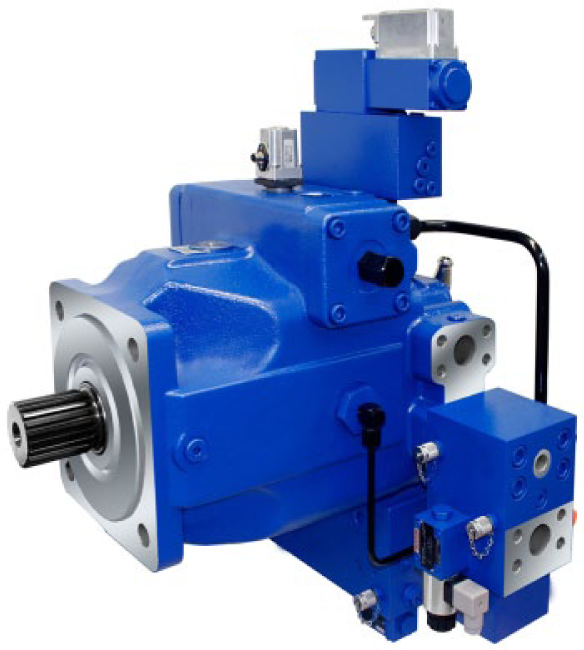
Bosch Rexroth (http://www.boschrexroth.com) has upgraded its electrohydraulic controller used to enhance the performance of the manufacturer’s Active Heave Compensation (AHC) system for offshore winching applications.
The new Rexroth DS2R electrohydraulic controller, which replaces the previous DS1 model, features proportional valve technology ensuring increased reliability and simpler maintenance.
This proportional technology offers a number of operational advantages for wave motion conditions, such as high dynamic response, accurate motion and energy efficiency. The proportional valve is capable of handling a greater range of fluid viscosities and requires less pressure drop to maintain control.
The Rexroth DS2R also boasts a streamlined design, eliminating the need for a sandwich filter, reducing the potential of contamination.
The new Rexroth DS2R electrohydraulic controller features proportional valve technology
RFID Tracks Radioactive Materials Used to Explore New Well Sites
RFID Journal reports that, following around 18 months of development and testing, the Pacific Northwest National Laboratory (PNNL) is piloting a system to wirelessly and automatically track radioactive materials used in oil well drilling to ensure that they do not end up in the wrong hands.
PNNL (http://www.pnnl.gov) is a US Department of Energy research facility aimed at finding energy solutions. In 2004, the National Nuclear Security Administration launched an effort to identify, secure, remove or manage the disposition of high-risk vulnerable nuclear and radiological materials. Such materials are used by the oil and gas companies, which use a process known as wire-line well logging. This requires the use of radioactive sources – sealed in metal containers – to characterise a well and predict its ability to produce oil or gas.
At the well-logging sites, oil and gas companies drill into the ground and, after removing a neutron or gamma source from its protective shield, use a wire line to lower it down the drill hole to identify rock formation patterns and the presence and size of porous formations. However, for various reasons, the radioactive sources’ security can become vulnerable at certain times.
The radioactive sources are potentially vulnerable to theft by terrorists or to other damage or loss during transportation or use onsite, so in 2014, PNNL launched a project to develop the system, known as Mobile Source Transit Security (MSTS). The project has led to the development of a solution that uses RFID and satellite communication technologies, along with sensors, to track the radioactive sources.
The solution features an active tag (eTag) attached to the source’s shield which transmits a 2.4-GHz signal using the Bluetooth Low Energy (BLE) protocol. A PNNL-developed device called a master control unit (MCU) receives the eTag’s signals and sends those data to a Geoforce GT1 asset-tracker device, which uses satellite communications to forward that information, along with its global positioning system (GPS) coordinates, to a server.
The responsible engineer then uses a phone or tablet to view data about the sources on a server, via the Internet network. Each source is packed in a shield to reduce the level of its radioactive emissions while in transit or storage, and an eTag is attached to that shield. Every eTag transmits a unique identifier linked to that source in the MCU.
The tag transmits its MAC address at regular intervals. Once the source is loaded into the truck, that signal is received by the MCU mounted in a compartment on the vehicle in which shielded sources are stored. The MCU also has a wired radioactive sensor, called an rTag, which measures the level of radioactivity within the truck.
The eTag has a built-in tamper-detection sensor, so although someone could remove it from the source’s shield, and then take the shielded source, the removed tag would continue to transmit its ID, as well as a status alert indicating it had been tampered with.
Taking Laser Marking Performance a Step Further
At a time when machine-to-machine communication is bringing significant gains in terms of efficiency and productivity, Technifor (http://www.technifor.co.uk) has launched a new range of laser marking machines, the Laser Solution F-series.
The range offers communication tools natively, allowing continuous and instantaneous interaction with the various workstations integrated into the chain of production.
Dedicated and generic interfaces (TCP/IP Ethernet, Profinet, RS232 and USB) are available, allowing for remote control – a single central server can manage a factory’s fleet of lasers. The high-performance components have resulted in marking equipment that is 50% more time-efficient than the previous generation.
Available in a whole range of powers (from 10 to 50 W), the Laser Solution F-Series permits the direct and permanent marking of a wide variety of parts and materials (plastics, metals, ceramics, etc.).
The marking head is adapted to industrial constraints: small spaces, extreme conditions of temperature and vibration. The head is robust and protected from dust or other splashes (IP54). The solution can be integrated with no necessity for filtration or additional enclosure, and it is immune to electromagnetic interference.
Designed to minimise installation costs and time, the equipment is easily interfaced with a programmable logic controller (PLC), thanks to pre-programmed controls. A control screen with integrated human–machine interface (HMI) displays the operations in progress and offers self-diagnostic capabilities: machine status, event history, backup files and maintenance messages are accessible in real time.
The Laser Solution F-series laser marking machines are new from Technifor

Dual Band Amplifier Offers Maximum Power for Automotive Radar Pulse Tests
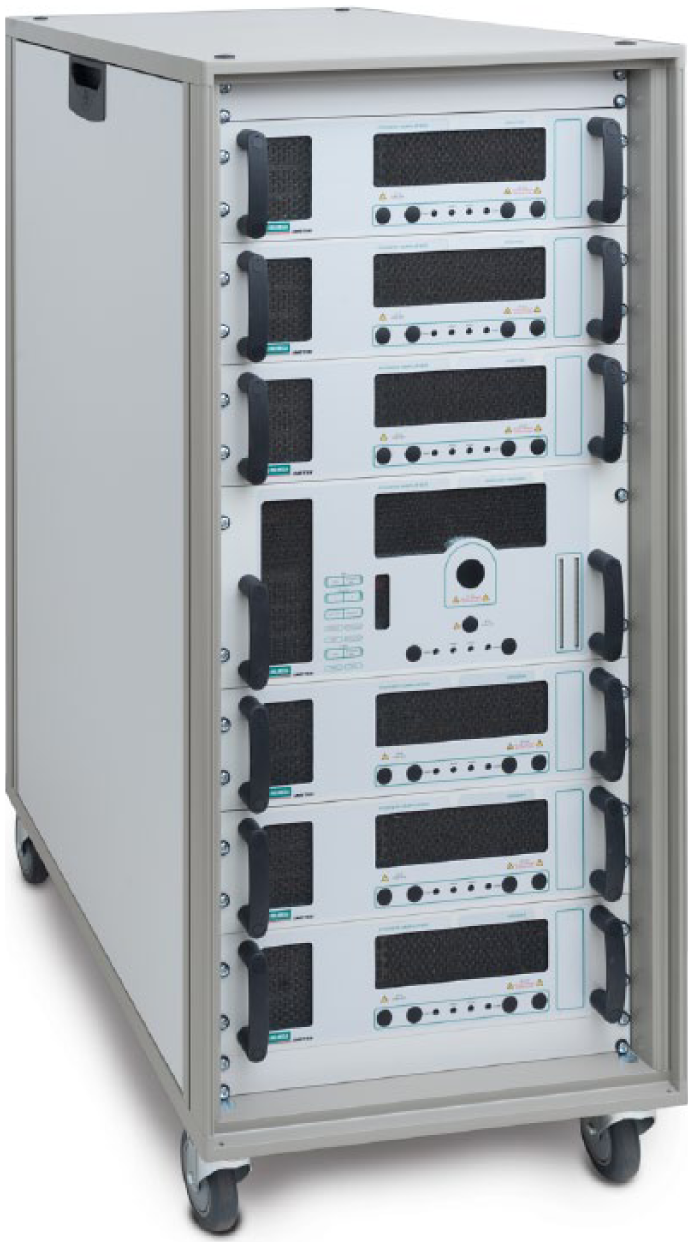
Milmega (http://www.milmega.co.uk), part of the Ametek Compliance Test Solutions group, has introduced a dual band amplifier designed to exceed the requirements of the latest automotive radar pulse test standards.
The AS0104-800/400 has been optimised for maximum power in the two radar bands, 1.2–1.4 GHz and 2.7–3.1 GHz.
This new solid-state amplifier complements Milmega’s existing 1–4 GHz amplifiers. The AS0104-800/400 uses dual band philosophy, with each band covering only one octave (1–2 GHz and 2–4 GHz).
A key advantage of this is that the harmonics of the test frequencies are outside the band of each of the sub-amplifiers and are very poorly amplified. As a result, the AS0104-800/400 can be used at saturation to deliver more output power rather than at the normal P1dB level, and so the amplifier can meet the required harmonic performance with no adverse effects on testing.
The amplifier offers harmonics below −20 dBc, even at saturation. Operating at saturation, the device can produce maximum continuous wave (CW) power >800 W 1.2–1.4 GHz and >400 W 2.7–3.1 GHz. This increase in power allows the amplifier to run an entire 600 V/m (at 1 m) radar pulse test using a single horn antenna. This helps easy set-up, reducing test time.
The MILMEGA AS0104-800/400 dual band amplifier
News in Brief
Survey of continuous and batch process best practices
The ARC Group (http://www.arcweb.com) has recently conducted a short survey to identify industrywide best practices for the continuous and batch process industries. The confidential survey took in views from people directly involved in process plant operations at the console operator, field operator, operations supervisor, operations manager, process engineer or plant manager levels. All participants in the survey will receive a summary of the survey results, which will allow participants to benchmark their operations against industry peers. All survey participants and the companies at which they work will remain confidential.
Push-pull data connectors bring high-speed cabling directly to the field
Designed for data rates of up to 10 Gbps, these new connectors from Phoenix-Contact (https://www.phoenixcontact.com) are protected against dirt, dust or humidity (to IP65/IP67). Because of their 360° shielding, they are also immune to electromagnetic interference. The push-pull technology means that users can insert and remove the connectors easily. Nevertheless, a mechanical locking mechanism reliably prevents unintentional release of the connection. The series includes versions for Profinet and Ethernet as well as fibre-optic versions for plastic optical fibre (POF), glass optical fibre (GOF) and plastic cladded fibre (PCF). All connectors are designed for conductor cross sections from 26 to 22 AWG. Both the straight and 45° angled versions are suitable for cable diameters of up to 9.5 mm.
Encoders become smarter yet smaller
The MicroE Optira series of encoders from Inmoco (http://www.inmoco.co.uk) offers high-performance standards for its size class. They offer up to 5 nm resolution with all interpolation, automatic gain control (AGC) and signal processing performed in the sensor head. The patented ‘PurePrecision’ optical technology and industry-leading alignment tolerances make the sensor head easy to install. There are three mounting options and industry standard incremental encoder outputs (analogue and digital). Standard flat flexible cable (FFC) connectors provide the durability and flexibility needed by designers of miniature precision motion control systems. Furthermore, compatibility with a wide range of linear and rotary gratings and scales enables a miniature installation footprint. It is claimed that the low power consumption is industry leading.
Mitsubishi opens new Netherlands office
Mitsubishi Electric’s successful global Factory Automation Group operates a network of sales offices and technology centres around the world – the latest of which, comprising a sales office and a dedicated training and technology facility in Mijdrecht near Amsterdam, will be officially opened on 28 May 2015. In total, the new office extends to 500 m2, houses an initial team of seven people, with plans for three more, and will service local demand from the Benelux region. Go to https://eu3a.mitsubishielectric.com
PAT enabling synTQ software at ACHEMA 2015
There is undoubtedly a paradigm shift happening in the development and manufacture of pharmaceutical and life science products, driven by the adoption of a PAT-based operational structure. The synTQ software suite from Optimal is a ‘knowledge management’ software suite that can slash the time-to-market for new drugs, decrease production times yet increase product quality using a reduced manufacturing footprint. Optimal has decided to attend the Achema trade show on 15 June 2015 to demonstrate that this software is ‘making PAT into a reality’. Go to http://www.syntq.eu
Want to learn about thermography?
Fluke is offering Certified Level 1 thermography training courses in partnership with Infrared Training Limited. These 4-day courses are designed to meet and exceed ISO 18436 and the ASNT SNT-TC-1A standards and are suitable for beginners or experienced thermographers wishing to gain an internationally recognised certificate. The Level 1 courses, mixing theoretical and practical based work, cover thermal/infrared physics, temperature, and how it is measured, the nature of heat and temperature, heat transfer, infrared technology and equipment and calibration of this equipment. The courses also cover infrared applications, practical camera operation, inspection techniques, infrared images and documentation, data collection, how to attain good infrared images, the database programs, plus report creation. Go to http://www.flukeacademy.shuttlepod.org/uk-level1thermography5