



Abstract

Study Finds Moderate Growth in the Photoelectric Sensor Market
Market research into the photoelectric sensor market has been carried out by ARC (http://www.arcweb.com). It delivers a current market analysis plus a 5-year market and technology forecast. The study is available in various editions, including worldwide and all regions.
This analysis finds that the photoelectric sensor market grew moderately in 2014. Growth in North America and Europe balanced a contraction in Asia, where leading suppliers suffered weak performances. It also finds that the emerging Industrial Internet of Things (IIoT), which requires sensor-based measurements for analysis and decision-support purposes, is becoming a strong driver for more sensors.
As almost 80% of photoelectric sensors are sold to original equipment manufacturers (OEMs), ARC has segmented these OEM revenues into 22 different machinery types to present a clearer picture of the OEM market.
For the top suppliers, ARC sees a strong concentration in Europe – particularly Germany and Japan. Moreover, both regions host specialised smaller companies. North America also hosts a number of strong suppliers of photoelectric sensors.
The study also finds that the automotive sector is the most important end user industry for photoelectric sensors, followed by the food and beverage industry. Investments in both industries continue, but ARC expects to see especially strong investments in automotive for 2015.
Looking at the business cycle, ARC expects sound development during the forecast period, despite political crises in various parts of the world. OEMs often stick with their current suppliers of photoelectric sensors. This makes it challenging, ARC says, for suppliers to enter new markets that are already well served. In Asia, price still plays an important role, while in Europe, reliability – and increasingly embedded intelligence – is an important buying criterion.
This market study, which can be purchased as an On-line Licence or as a PDF File, answers key questions to help new suppliers enter the photoelectric sensor market and existing suppliers grow their businesses.
Vehicle Dynamics Test System ‘Does Everything’
The new Correvit S-Motion vehicle dynamics test system from Kistler (http://www.kistler.com) uses proven optical measurement technology for non-contact measurement of speed and slip angle.
It provides all of the capability demanded by current driving dynamics testing in one, compact, easy to mount and install unit which may be moved from vehicle to vehicle simply and quickly. Eliminating the need for a precision GPS system to provide vehicle motion data ensures that testing is never dependent on satellite availability.
The S-Motion is ideal for where the high precision measurement of distance, speed (absolute, longitudinal, transverse) and angle are required for dynamic vehicle testing, for example, steady state circular-course driving (ISO 4138).
Integral accelerometers provide longitudinal and transverse acceleration data, which is mated with the optical speed and slip-angle information to provide significantly reduced signal noise and a high measurement frequency of 500 Hz with a minimal signal delay of 6 ms.
Furthermore, an integrated GPS receiver enables the determination of position and time and integrated angular rate sensors allow pitch and roll angle and rotation around the vertical axis of the vehicle to be measured.
The new Correvit S-Motion vehicle dynamics test system from Kistler. With it, there’s no need for a precision GPS system to provide vehicle motion data

Other signals, such as levelled acceleration or curve radius and the conversion of speed to any point of the vehicle, for example, centre of gravity or rear axis, are calculated inside the sensor.
Mass Flow Meter Now with Foundation Fieldbus
New from Magnetrol (Companion Company) (http://www.magnetrol.com) is its Thermatel TA2 thermal mass flow meter with Foundation fieldbus digital output communications.
This thermal mass flow meter now offers all of the advantages of the standard TA2, as well as the Foundation fieldbus connectivity. These benefits include dual gas calibration with two curves (e.g. propane and natural gas), field adjustability to install in different gas types or adjust for different gas mixes, plus a calibration verification procedure that save money because of reduced process downtime and unnecessary recalibrations.
Other features include internal resettable and non-resettable totalisers, a strong signal at low flows and low pressures with high turndown and ISO 17025 and NIST traceable calibrations.
The Thermatel TA2, in conjunction with the Eclipse Model 706 guided wave radar, E3 Modulevel and Orion Enhanced Jupiter magnetostrictive level transmitters, forms the Magnetrol fieldbus family.
Collecting Sensor Data via IO-Link Using Machine-Mountable Modules
The IO-Link box module devices from Beckhoff (http://www.beckhoff.co.uk) offers protection class IP67 and enables the local connection of sensors in the field via simple and cost-effective sensor cables. This provides straightforward data transfer to an IO-Link communication system, which is a communication technology for sensors and actuators that is ‘below the fieldbus level’ and is standardised according to IEC 61131-9.
The company offers 28 module variants in plastic or die-cast zinc housings that cover a wide range of application requirements.
The modules allow the making of cost-effective point-to-point connections directly in the field, and being able to support IO-Link provides benefits, particularly when complex sensors must be connected. Until now, it had already been possible to integrate up to four IO-Link devices via an IO-Link master, such as with the EP6224 EtherCAT Box (IP 67), the EL6624 EtherCAT Terminal or the KL6624 Bus Terminal (both IP 20). If such a master is present, the new IO-Link box modules now enable simple integration of further sensor signals, locally in the field via a simple sensor cable and which are then transferred collectively to the IO-Link master.
The comprehensive IP 67 I/O portfolio has, therefore, been extended for even more applications. With a total of 24 bus systems, the IP 67 I/O modules support all common communication protocols, and therefore heterogeneous applications.
The best performance by far, however, can be achieved by using EtherCAT Box modules throughout, so that the full functionality of EtherCAT can be harnessed without limitation.
Study Finds Convergences Mark New Era in Global Human–Machine Interface
The deployment of real-time intelligence and big data analytics is expected to revolutionise future human–machine interface (HMI) technologies that will control and monitor appliances, machines, electrical systems, processes and smart grids. Moreover, the IoT will have a major influence.
A new analysis from Frost & Sullivan, titled ‘Global Human Machine Interface Market’ (https://www.frost.com/m9a9), finds that the HMI market earned revenues of US$2.94b (£1.9b) in 2014 and estimates this to reach US$3.60b (£2.4b) by 2018.
The HMI is the space where the interactions between humans and machines occur. HMIs provide control and visualisation interfaces between human beings (the operators) and a process, machine, application or appliance.
Such devices and equipment, therefore, allow people to control, monitor, diagnose and manage various applications, and they typically comprise everything from simple text displays, graphical operator panels, touchscreens, industrial PCs, supervisory control and data acquisition (SCADA) and web-based HMI solutions.
HMI solutions, says the new study, ‘have made rapid strides in the last decade in step with changing customer demands’. As the trend towards real-time factory intelligence gains widespread acceptance in industries, HMI software will continue to evolve, it claims.
The analysis also finds that from merely providing plant data on a mobile device, HMI now delivers real-time data and actionable insights to operators. The consequent benefits, such as lower plant operation costs, higher process efficiency and greater energy efficiency, will ‘power the adoption of HMI solutions’.
Because, unlike discrete industries, continuous process industries (chemicals, food and oil) can manage with basic automation solutions for production in bulk quantities, the more advanced HMI solutions have found less use in the process sector. However, because manufacturers are clear that automation is crucial in staying profitable, the process industry take-up of more advanced HMI is likely to change. Likewise, growing awareness in other process sectors will open up new applications for HMI solutions.
To learn more, visit: http://ow.ly/LTHlN
Diode Laser Spectrometer Is Tuneable
Yokogawa (Companion Company) (http://www.yokogawa.com) has launched its TDLS8000 tuneable diode laser spectrometer, which can quickly make in situ measurements of gas concentrations in combustion and heating processes that are used in the oil, petrochemical, electric power, iron and steel and other industries.
With this new product, the company aims to capture a greater share of the gas analyser market by offering a solution that will make it possible to improve plant efficiency and safety.
As the successor to the TDLS200 laser gas analyser, the TDLS8000 offers – says Yokogawa – better reliability and operability.
Companies are always looking for ways to optimise processes by saving energy, reducing CO2 emissions and improving safety. One way of doing this is by optimising the air–fuel ratio in the combustion process. To accomplish this, sensors are needed that can continuously monitor the concentration of O2 and CO + CH4 in the radiant section of fired heaters.
The older TDLS200 laser gas analyser achieved this, but the new TDLS8000 satisfies the need for improved operability and greater adaptability in difficult applications. Using new and existing technologies, it provides highly reliable measurement with better operability and maintenance efficiency in a compact package. The instrument is expected to be certified to the IECEx, ATEX (Europe), FM (United States), cFM (Canada) and TIIS (Japan) explosion-proof standards. It will, therefore, be suitable for installation in hazardous areas that require the use of an explosion-proof enclosure.
Yokogawa’s new TDLS8000 tuneable diode laser spectrometer allows users to quickly make in situ measurements of gas concentrations in combustion and heating processes

Voice Control of Lighting and Switches with Amazon’s Echo
In a new ‘Internet of Things’ coupled with home automation and Cloud move, Internet giant Amazon Echo has unveiled its latest innovation – support for Philips Hue connected lighting and other products, such that lights and switches can be activated using nothing but the voice.
Following on from the Amazon Echo voice-activated speaker, launched last November, comes the next stage in the product’s evolution. Now, in addition to its initial music duties, the unit can accept spoken commands to enhance home automation – and one of the products it works with is Philips’ Hue light-emitting diode (LED) lamps. It also now works with Belkin WeMo home automation gadgets, including light switches.
Philips’ Hue is the connected lighting system that can become an integral part of its users’ day-to-day lives, being able to respond to alarms, timers, alerts and moods. Using Hue, householders can even link to data feeds so that these innovative coloured LED lights can tell them – for example – when they receive an important email. And now, using Amazon Echo’s newest incarnation, Hue can now be operated using the voice.
Once Hue and the other devices that work with Amazon Echo are connected to a home’s Wi-Fi system, an easy ‘discover my appliances’ routine automatically matches the devices to that they will communicate together. Then, all that is needed to operate them is to utter suitable phrases.
Amazon Echo is a high-quality audio speaker, but it has been designed around the human voice. It is always ‘on’, so all users have to do is ask for information – news, weather, music and more. The system starts working as soon as it detects the ‘wake word’.
The system works via an array of seven microphones under a light ring. These use beam-forming technology to ‘hear’ the user from any direction. With enhanced noise cancellation, the system can hear users ask questions even while music is being played. On-device keyword spotting detects the wake word, when the system lights up and streams audio to the Cloud. There, Amazon Web Services recognise it and respond to users’ requests.
The system’s intelligence is in the Cloud, running on Amazon Web Services, so that it continually learns and adds more functionality over time. The more Echo is used, the more it adapts to a user’s speech patterns, vocabulary and personal preferences. Users can switch a lamp (or lamps) on before rising from bed, turn on the fan or space heater while reading in a favourite chair or dim the lights from the settee to watch a film – ‘all without lifting a finger … or even raising your voice’, says Amazon Echo.
Being Bluetooth-enabled means that the system can stream a user’s chosen music services like Spotify, iTunes and Pandora from his or her smartphone or tablet.
Moreover, the system continues working when the user is away from home, so – with the free companion app on Fire OS, Android, iOS and desktop browsers – users can easily manage their alarms, music, shopping lists and more. Importantly, the same companion app enables simple set up to the home network.
Go to http://www.amazon.com/oc/echo/ for more information.
Schneider Electric Buys Process Automation Software Firm
ARC reports that Schneider Electric (http://www.schneider-electric.com) has acquired LimeWare (http://www.limewarecompany.com), a provider of system analysis and auditing software for Schneider Electric’s Foxboro Evo process automation and I/A Series distributed control systems (DCSs).
This move provides ‘Foxray’ software to help customers pinpoint and address critical industry challenges.
LimeWare was founded in 2006 and has its head quarters (HQ) in Porto Alegre, Brazil. Its Foxray system management software complements Schneider Electric’s Foxboro Evo and I/A Series process automation systems. The solution offers extra capability for configuration management, alarm management, operator action analysis and overall documentation.
It includes change tracking with a complete change management workflow process, graphics visualisation of the control block loops, integrity checks to solve all DCS configuration issues, plus scheduled reports. Alarms and operator action management and tracking are also provided, and there is I/O and FBM spare reserve and tracking too. An advance query engine can quickly fetch any DCS information.
Said Gary Freburger, president of Schneider Electric’s process automation business, ‘Acquiring Limeware and its Foxray software is an integral part of our strategy to help our customers improve their operational integrity and operational insight, while future-proofing their operations’.
LimeWare and its offerings will be fully integrated into Schneider Electric’s process automation business and will continue to be managed by its existing executive team.
Active Radio Frequency Identification for Aerospace Tracking
RFID Journal reports that two aerospace companies have been testing radio frequency identification (RFID) solutions that enable the creation of a wireless mesh network of battery-powered tags that can identify the locations of moving, tagged items, and be reconfigured quickly if the layout of their facilities changes.
These RFID solutions, supplied by aerospace industry systems integrator ID Integration (http://www.id-integration.com), include V-Tags and AssetWorx! software from InfinID Technologies.
One company has completed its pilot and is integrating the solution into its production system, while the second is still trialling the technology. The two firms have asked to remain unnamed.
The system has been designed to be simple and easy to deploy. High-value items that move around an aerospace facility are tagged with the battery-powered V-Tags, which transmit 2.4 GHz signals via a proprietary air-interface protocol.
V-Tags can also be attached to ceilings, pillars or walls, and the location of each of these fixed tags is stored in the AssetWorx! software.
A gateway reader is installed somewhere in the vicinity, in order to read transmissions from the asset and fixed tags, as well as forward the collected read data to the software to identify a moving asset’s location.
On a map of the facility, the AssetWorx! software displays an asset tag’s location – based on which fixed tags received that asset tag’s signal, and on the signal’s strength, as received by those fixed tags.
Novel Tube Connection Speeds Assembly of High-Pressure Instrumentation
What is being claimed as a ‘breakthrough in high integrity tube connection technology’ is now available from Parker Hannifin (http://www.parker.com). Designed for working pressures as high as 1550 bar, the new ‘flared cone’ technology advances the performance of compression-style tube connections and offers instrumentation system designers and installers major performance and time-saving advantages.
It also provides users with a simple and reliable method of speeding the assembly of instrument tubing systems for use in higher pressure applications in the oil and gas industries.
Developed by Parker Autoclave Engineers, the flared cone connection (FCC) technology is said to be a significant advance on the type of ‘cone and thread’ tube connections pioneered by the company.
It is based on a single-sleeve compression-style system. However, unlike conventional designs, the tube end is flared to prevent any possibility of ejection – and also provides the connection’s primary metal-to-metal seal. When the gland nut is tightened, the inside surface of the anti-ejection flare mates with a cone in the fitting or valve. The compression sleeve then mates with the body of the component to form a second, redundant, metal-to-metal seal.
This dual seal approach has a major reliability benefit; in the unlikely event that the primary seal fails, the secondary seal preserves the integrity of the connection. Installing an FCC is simply a matter of screwing the gland nut into the fitting or valve and tightening it to the prescribed torque. FCCs are also especially cost-effective in applications where leaks caused by vibration are an issue.
Installers can typically complete the task in less than 4 min, after only minimal training. This time saving can lead to significant cost reductions on installations with a large number of tube connections.
Protocol Converters for Telecontrol Systems
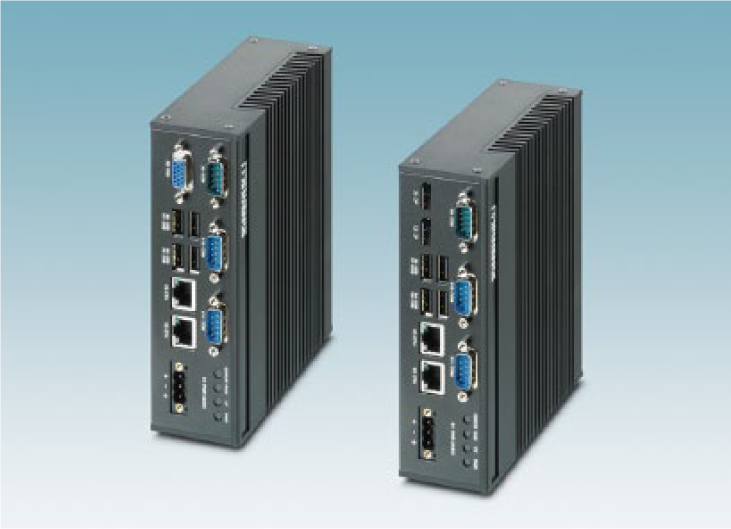
The new protocol converters in the Resygate product line from Phoenix Contact (https://www.phoenixcontact.com) now allow distributed stations to be monitored more easily and at a lower cost.
These devices convert many standard communication protocols, such as from water management or energy supply, into modern, standardised tele-control protocols. This reduces interface costs in the control system.
The formation of sub-networks allows more effective use of IP address ranges. The following protocols are converted into TCP/IP-based communication according to IEC 60870-5-101 bal, IEC 60870-5-101 unbal, IEC 60870-5-104, Modbus/RTU and Modbus/TCP.
Users can select the optimum solution from two device classes for their data volume.
Two converters are available: the Resygate 1000 for up to 500 process variables and Resygate 3000 for up to 4000 process variables. The devices also come with pre-installed software that allows all distributed stations to be configured from a single location.
The new Resygate protocol converters from Phoenix Contact allow distributed stations to be monitored more easily and cheaply
News in Brief
Passive RFID chip senses moisture and temperature
RFMicron (http://rfmicron.com) has launched the latest version of its Magnus S passive EPC Gen 2 ultra-high-frequency (UHF) RFID chip, with moisture- and temperature-sensing capabilities. The Magnus S3 temperature and humidity sensor chip follows the release of the Magnus S humidity-sensing chip last year. The chips can also come with pressure, weight and proximity sensors. A number of companies are considering using the chips for solutions aimed at the industrial, health-care and automotive sectors.
Free seminar and workshop held on production monitoring
Kistler Instruments held a free production monitoring seminar/workshop in Bromsgrove in June 2015. The application of force, pressure, torque and surface strain sensors was covered in the seminar with hands-on workshop experience of X-Y process monitoring using the Kistler maXYmos TL system. There was also an introduction to the monitoring and control of servo press systems using the latest maXYmos NC system. To see whether this seminar will be repeated, email
HMI gives high performance in a compact Zone 1 package
New from iSiS-Ex is its iSiS470 Zone 1 PC/driller’s display unit that is very light in weight. With its 12-in, high-resolution, multi-touch screen, this full workstation with flexible I/O is a solution that is ideal for permanent or daily rig up/down applications. As with its predecessor, the iSiS450, the iSiS470 is an HMI that is tough enough to resist all that nature can throw at it and keeps on working. Go to http://www.isis-ex.com
Process analytical technology software website goes live
Optimal Industrial Automation (http://optimal-ltd.co.uk) has launched a dedicated synTQ website and synTQ Assured product support portal for users of its synTQ Process Analytical Technology (PAT) Knowledge Management software. Now with its fifth generation in development, the software has become the default choice for many of the pharmaceutical majors, as PAT-based real-time monitoring and control manufacturing techniques are revolutionising drug production. In response, http://www.synTQ.com provides all interested parties from system integrators to end-users with a comprehensive public knowledge base for both synTQ and PAT.