



Abstract

Electric Drives Will be Indispensable in European Discrete Industries
The ability to provide higher energy efficiency and precise motion control is fuelling the uptake of electric drives in European discrete industries.
A new study from Frost & Sullivan, titled ‘Opportunities in the European Electric Drives Market for Discrete Industries’, finds that the market earned revenues of £0.78 billion (US$1.18 billion) in 2013 and estimates this to reach £0.93 billion (US$1.41 billion) by 2018.
Western Europe and Scandinavia will, this study finds, generate a higher proportion of the retrofit demand for electric drives, while a major share of adoption in Central and Eastern Europe (CEE) will stem from new installations.
Energy efficiency regulations and rising electricity prices too are encouraging end users to deploy electric drives in drive systems. Furthermore, manufacturers stand to benefit from modular electric drives, which can be modified to include servo mechanisms based on requirements. As a result, electric drives will be an inevitable part of all manufacturing equipment by the end of 2018.
Commented Frost & Sullivan Industrial Automation and Process Control Senior Research Analyst Krishna Raman, ‘The automotive and transportation as well as consumer packaged goods industries are likely to contribute a large share to market revenues in Europe’.
‘Servo drives are expected to be the fastest growing product segment, with key applications in machine tools, electronics & communication and packaging’.
However, the shifting of manufacturing plants to developing economies will limit overall market potential in the region. The use of electric drives in the printing industry is also projected to decrease due to the probable replacement of print media by electronic media.
The major challenge for vendors in Europe is communicating the value of electric drives to end users such that they are ready to invest in the product. Establishing a marketing strategy centred around the energy savings achieved through electric drives and around the strengths of the brand will go a long way in accelerating sales. Engaging with local sales partners and independent distributors will also widen their consumer base.
For complementary access to more information on this research, please visit http://ow.ly/FIBzm or go to http://www.motors.frost.com
New Website for Electrical Test Instruments
Electrical test instrument specialist Fluke has developed a new ‘Solution Centre’ portal on its UK website featuring ‘Why Professionals Choose Fluke’ tools.
Fluke says that it designs and manufactures some of the safest, most rugged, intuitive and accurate measurement tools in the world, and the portal illustrates why today’s professionals – in the eyes of the company – should choose to buy these products.
Broken down into five sub-sections, this new portal links to four video clips which provide detail under the titles ‘Safe. Accurate Reliable’, ‘Designed by you’, ‘Increase your efficiency’, ‘Prevent major problems’ and ‘Dedicated training’.
The portal can be found at http://www.fluke.co.uk/whyFluke, and it is frequently updated with new information, so users are recommended to add the link to their favourites list.
Encoders Are Now Vacuum-Rated
The MicroE Systems Mercury and Mercury II vacuum encoders from INMOCO are claimed to be smaller, of higher performance, faster to install and easier to set up and align than any other encoder. These tiny units fit into very tight spaces and work in both linear and rotary applications.
Thought to be only one-third the size of other encoders, the sensors are 8.2 mm tall, yet capable of resolutions up to 1.2 nm and cyclical error of ±20 nm. This means, says the company, that ‘unsurpassed’ motion system performance can be achieved in compact vacuum applications. All models perform at 10−8 torr with negligible outgassing and are resilient to magnetic forces.
The Mercury units have advanced electronics built into their shielded D-sub connectors to give what INMOCO describes as ‘class-leading performance’ in electrically noisy environments. The range includes encoders with digital, analogue or programmable output. Output is A-quad-B with interpolation to give resolutions to 0.005 µm (linear) and 67.1M CPR (rotary).
The MicroE Systems Mercury and Mercury II vacuum encoders from INMOCO are roughly one-third the size of most other encoders
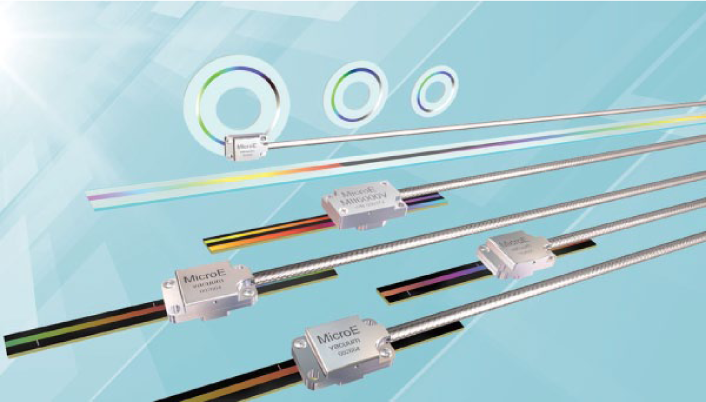
Power consumption for most models is only of 0.25 W, a level of energy efficiency that has the significant side benefit of reducing thermal effects.
GE Acquires Oceaneering’s Electric Actuator Product Line
ARC Advisory Group reports that GE has signed an agreement to acquire the Subsea Electric Actuator product line of Oceaneering, a global provider of engineering services and products to the oil and gas industry.
The product line is marketed under the Oceaneering Subsea All Electric and Ifokus brand, which specialises in the design and manufacturing of specialty subsea products. The focus is on electric valve actuators.
Ifokus is at the forefront of the offshore industry’s efforts to enhance conventional, hydraulic fluid–based subsea control equipment with faster electric actuation systems that offer increased diagnostic capabilities.
It is believed that Oceaneering’s Stavanger, Norway-based engineering team, which is dedicated to the Electric Actuator product line, will join GE Oil & Gas’ Subsea Systems business, which also operates from Stavanger.
Electric actuators are fitted to the subsea systems that control the flow, usually oil or gas, out of the well or the injection of fluids into the well to enhance recovery. These devices offer potentially lower overall system costs and also reduce the risk of hydraulic fluid leaks.
The technology is ideally suited for complex subsea processing applications and more difficult extraction environments, such as deep-water fields, or fields with longer offsets from the shoreline. With the end of easy oil recovery, this is expected to be a key growth segment for the industry.
The closing of this deal, which is subject to the usual regulatory approvals, is expected to be in the first quarter of 2015.
Safety Instrumentation Enhanced
Yokogawa Electric Corporation
Furthermore, R3.02.20 offers, the company claims, enhanced support of widely used open communication protocols, improving connectivity with other companies’ supervisory control and data acquisition (SCADA) software.
Yokogawa’s ProSafe-RS safety instrumented system (SIS). ProSafe-RS R3.02.20 is an updated release

Using the ProSafe-SLS information gathering capability on ProSafe-RS SIS, operators can now monitor the status of a ProSafe-SLS SIS from Centum VP window. If a problem occurs anywhere in a plant, the sequence-of-event (SOE) data from both SISs will be displayed on an integrated screen at the operator terminals. Operators and maintenance engineers can then use these data to quickly identify and analyse the problem cause.
Where oil and gas wellhead and pipeline applications are concerned, cost performance and space saving are key considerations. To satisfy these needs, ProSafe-RS comes with both safety and process control functions.
The applications and major target markets for this enhanced system include emergency shutdown systems (ESD) and fire and gas systems (FGS) in oil refineries, natural gas processing facilities, petrochemical plants and in oil and gas production facilities.
Programmable Logic Controllers (PLCs) and PLC-Based Programmable Automation Controllers Study from ARC
A market research study from ARC Advisory Group delivers current market analysis plus a 5-year market and technology forecast. The study is available in many editions including worldwide, all regions and a select group of countries.
This study addresses key questions such as
How can suppliers increase their value proposition?
Are different strategies required for new installations versus retrofit?
Will new distribution channels be required?
How critical is initial cost in relation to lifecycle cost?
How will niche market products impact the total market?
In recent years, many programmable logic controllers (PLCs) have evolved into programmable automation controller (PACs), which integrate logic, motion and safety control with cyber security and even energy management functionality within a common platform.
German, Swedish and US centres to focus on customised industrial communications

Today, most PLC revenues worldwide come from PLC-based PACs, and these revenues are growing at a faster rate than for traditional PLCs. Because of the success of PLC-based PACs, PLC technology has further penetrated the process industries, where they now often replace large distributed control systems (DCSs). This trend is stronger in emerging markets, as PLCs are easier to maintain and engineers are scarce.
In 2013, more than one-third of all PLCs sold worldwide were sold into the process industries. PLCs benefitted from the development in the process industries.
In North America, the hydraulic fracturing (‘fracking’) boom drives PLC sales for use in the oil and gas industry – although this may change as the price of oil tumbles. In the power industry in EMEA, PLCs are predominantly used in renewable energy, wind turbines, solar fields, water or small combined heat power plants.
The market for PLC and PLC-based PACs increasingly depends both on the installed base and increasing deployment in the process industries. With a replacement rate of roughly 10% across all segments, ARC estimates that around 50% of the total market by 2018 will be replacement business.
In the PLC market, different issues apply to suppliers, OEMs and end users of the technology. Machine builders have different priorities than users. PLC suppliers must closely collaborate with their clients to generate value and thereby defend their market position.
This market study may be purchased as an MIRA Online License or as a PDF File. The Online License has features (such as market history and market shares for the past several years) that are not available in PDF. Regional studies include country and industry market data. Country studies include market trends and industry data.
To learn more, either use the printed QR Code with your smartphone or go to http://www.arcweb.com/market-studies/pages/plcs-programmable-logic-controllers.aspx
BASEC to Showcase Its Cable-Testing Services at Middle East Electricity 2015
The British Approvals Service for Cables (BASEC) is to display the latest advances of its world-class cable testing laboratory at Middle East Electricity Exhibition (MEEE) at the Dubai International Convention and Exhibition Centre from 2 to 4 March 2015.
Since the launch of its cable testing laboratory in 2012, BASEC – which is believed to be the international leader in product certification services for electrical, data and signal cables and ancillary products – has continued to make significant investments to serve the demands of cable manufacturers and standards authorities across the world.
Over the last year, BASEC has commissioned brand new test equipment, increased its fire testing services and extended its United Kingdom Accreditation Service (UKAS) accreditation to include ISO 17025, an international standard that specifies the competence and quality management system requirements for laboratories that provide testing and calibration services.
For more than a decade, the organisation’s representatives have been working in the Middle East serving reputable cable manufacturers who hold BASEC certification for their products. BASEC has also developed strong links with key local regulators, utilities and industry groups who seek to drive forward quality, service and safety standards in this globally connected region.
Commented Glynn Stainthorpe, business development manager at BASEC, ‘The forthcoming implementation of the Construction Products Regulation 2011 (CPR) has implications for cable manufacturers in the Middle East who export into the European Union’.
‘We expect there will be an increased demand from cable manufacturers for the fire testing of cables in accordance with the CPR seeking to conform to the regulations’, he said.
In order to prepare for this, BASEC has made a substantial investment in its laboratory equipment with the introduction of three new re-configurable fire test labs, and a 3.5-m tall ladder rack rig for vertical fire tests on cables (IEC 60332-3-22 to 24 and BS EN 50399) complementing the organisation’s existing 3-m cube chamber for smoke emission tests (EN 61034-2) and halogen testing facilities.
Visit BASEC’s stand (5a15) at the Middle East Electricity Exhibition (MEEE) at the Dubai International Convention and Exhibition Centre from 2 to 4 March 2015. For further information, email
Element Silicon Drift Detector Is Compact Yet Powerful
EDAX, Inc., a leader in X-ray microanalysis and electron diffraction instrumentation, has introduced the Element Silicon Drift Detector (SDD), a new product line focused on serving the needs of the industrial market segment.
The Element SDD provides, it is claimed, a powerful analytical capability in a compact package, maximising performance and flexibility, while providing relatively simple operation to guarantee fast results and ease of use.
It also offers, the company says, excellent resolution and market-leading throughput and is designed with a silicon nitride (Si3N4) window to optimise low-energy X-ray transmission for light element analysis.
Backed by application-specific software, Element provides fast and efficient results for industrial analysis needs.
The Element SDD’s advanced design allows for a small footprint, which opens up opportunities in the growing tabletop and compact scanning electron microscope market. It saves space for additional analytical equipment and allows flexibility to ensure the ideal geometry and best data collection conditions.
The Element Silicon Drift Detector (SDD) by EDAX is for the industrial sector

EDAX claims that this detector provides ‘best in class’ performance over the entire range of count rates, allowing users to pick the ideal electron beam conditions for their samples without worrying about degrading SDD performance.
Update Your FieldCare Software Package
Endress+Hauser (http://www.uk.endress.com) is now offering customers the possibility of maintaining their FieldCare product installation.
FieldCare is the company’s Field Device Tool (FDT)-based plant asset management software – a universal tool for configuring field devices that provides a range of functionality from device parameterisation to engineered condition monitoring solutions.
Endress+Hauser says that the fastest way to configure its field devices is by using DeviceCare. User-centred design allows for transparent and intuitive device connection and configuration. Intuitive menu design and guided step-by-step approach with status indication ensures what is termed ‘best-in-class’ visibility.
The new software update, which contains FieldCare – package version 1.25.00 includes FieldCare 2.09.01, DeviceCare 1.01.07, DTM library 2.40.00 and iDTM library 2.00.224 – means that all configuration and communication information is carried in Device Type Management (DTM) programs (DeviceDTMs and CommDTMs) supplied by Endress+Hauser.
Simultaneous Provision of High-Resolution Surface Detail, Contour and 3D Inspection
From Taylor Hobson, a unit of AMETEK Ultra Precision Technologies (http://www.taylor-hobson.com), comes a new series of high-resolution instruments offering automated simultaneous surface and contour inspection.
The low noise axes and high-resolution gauge of the Talysurf i-Series instruments assure measurement integrity, and a choice of gauge ranges provides versatility for a variety of applications.
These instruments are available in 1-mm, 2-mm and 5-mm gauge ranges with an 18-bit gauge for improved resolution in surface detail, contour and 3D measurement. Powerful software for analysis of surface finish and form is included.
Ultra precision machining and finite element analysis (FEA) optimised design combine to provide low noise and high accuracy mechanical execution of the measuring axes. Balanced beam technology means that these instruments can be used in any orientation. Traceable standards and exclusive algorithms effectively eliminate instrument influence from the measurement results.
High-resolution Talysurf i-Series instruments deliver simultaneous surface and contour inspection for automotive, bearings, gears and many other applications

The applications include automotive, aerospace, bearing, machine tool, metal working, quality control, medical, marine, hydraulics, laboratory and in optics.
A New Technique for Generating Electricity Demonstrated
Finnish research scientists have recently demonstrated a new technique for generating electrical energy. The new method can be used in harvesting energy from mechanical vibrations of the environment and converting it into electricity.
The research scientists, working at VTT Technical Research Centre of Finland, have successfully generated energy by using the charging phenomenon that occurs naturally between two bodies with different work functions.
Work function is the amount of energy needed to remove an electron from a solid, and it determines, for example, the well-known photoelectric effect. When two conducting bodies with different work functions are connected to each other electrically, they accumulate opposite charges.
The schematic shows the new electricity generation technique. Bodies 1 and 2 have different work functions

Moving these bodies with respect to each other generates energy because of the attractive electrostatic force between the opposite charges. In VTT’s experiment, the energy generated by this motion was converted into useful electrical power by connecting the bodies to an external circuit. This new energy conversion technique also works with semiconductors.
Energy harvesters and new sensing solutions are among the projected megatrends of the near future, and they can replace batteries and other energy sources in applications where maintenance is difficult or impossible.
Energy harvesters are needed, for example, in wireless self-powered sensors and medical implants, where they could ultimately replace batteries. In the future, energy harvesters can open up new opportunities in many application areas such as wearable electronics, so this new technique could be very important.
In many sensor applications and medical implants – such as pacemakers – batteries typically provide electricity. Research into small energy harvesters that turn mechanical vibration into electricity has focused on piezoelectric and electrostatic devices. Unlike these devices, VTT’s technique – the scientists claim – does not require an integrated battery, electrets or piezo materials.
VTT estimates that the new electricity generation technology could be introduced on an industrial scale within 3–6 years.
News in Brief
Industrial touch panels for web applications
With its WP 3000 product range, Phoenix Contact has introduced a new generation of web panels for flexible operating and monitoring solutions. The devices work with a standard browser so that all web-based visualisations that support HTML5, the current web standard, can be displayed. The same also applies to JavaScript applications. The range includes four display sizes from 5.7″ to 12″. As the browser is the only interaction interface, the devices are used purely for operation. Data transmission is secured by Secure Sockets Layer (SSL) encryption. The web panels are mounted in medium-size machines in order to implement standard Human–Machine Interface (HMI) functions. The devices can be used in almost all industrial sectors because of the IP65 aluminium housing.
NI explains how to implement distributed control
In a 17-min webcast by National Instruments, Robert Hoffman, Product Manager, Signal.X Technologies LLC, shows in basic terms the best ways in which to implement a DCS. There are many choices to consider when implementing DCSs. In this webcast, viewers can hear from an expert (Robert Hoffman) on the trade-offs and considerations in selecting hardware and building the software architecture and then see how those choices can be implemented in a large DCS. View the webcast on demand at http://www.ni.com/webcast/3582/en/
Compact fanless quad-core box PC
The new and energy efficient Basicline 2000 box PCs from Phoenix Contact – for use in harsh industrial environments – now offer powerful third-generation quad-core processors in a fanless housing. The devices perform control and communication tasks and collect data in the areas of machine building and systems manufacturing, building automation, traffic technology and energy data transmission. They also provide maintenance-free, continuous 24-h operation – even where there are high temperatures, vibration, shock and electromagnetic compatibility (EMC) requirements. The box PC can be used for a wide range of applications because of its many interfaces, which include four USB, two DisplayPort, and three COM. Two Gigabit Ethernet ports are also available, as is CFast, hard disk drive (HDD) or solid state drive (SSD) mass storage. The RAM can be expanded by up to 8 GB DDR3.