




Abstract
Today, world’s energy needs are met all the way through fossil fuels and natural gas. As an outcome, the amount of fossil fuel is diminishing from year to year. This article shows the prospect of coconut oil as a renewable and alternative fuel for diesel. The diesel engine has versatile uses in small power generation and automobile sectors. This article is mainly focused on the performance and emission strategy while using biofuel as a substitute in diesel engine. An experimental arrangement is used to study the performance of a small diesel engine using different blends of biodiesel converted from coconut oil. With biodiesel, the engine is proficient running without difficulty. Different blends of biodiesel (i.e. B75, B50, and B25) have been used to avoid problematical modification of the engine or the fuel supply system. In conclusion, a comparison of engine performance for different blends of biodiesel has been accepted to determine the best possible blend for different operating conditions. As per the case study, coconut oil–diesel fuel blend resulted in lower smoke and NOx emissions. Besides, this research mainly focuses that the concentrations of biofuel increase the emissions of carbonyl compounds and that of acetaldehyde when compared with results from sole fuel (diesel) with same engine. Possible impacts of changing diesel to B75 diesel indicate an increase of ozone formation. In terms of environment health, a lower impact was projected considering only the changes in biofuel concentrations.
I. Introduction
A requirement for biofuel is an important crisis at present. UEL and energy crisis, and the concern regarding depleting non-renewable energy resources has led to a renewed interest in the quest for alternative fuels. Most promising alternatives fuel are vegetable oils and their derivatives. “In the starting stage vegetable oil used in a compression ignition engine was first demonstrated through Rudolph Diesel who used peanut oil in his diesel engine.” 1 The use of oils from coconut, soybean, sunflower, peanut, rapeseed, linseed, and palm oil among others has been attempted. The long-term use of vegetable oil leads to injector coking and the thickening of crankcase oil, which results in piston ring sticking. So, vegetable oils are not used in spark ignition (SI) engines because of endurance issues.2,3 To overcome this setback, various modifications of vegetable oils have been employed such as micro-emulsion formation, transesterification, and the use of viscosity reducers. 4 Among these, transesterification was considered as the most suitable modification because technical properties of esters are related to diesel. Through transesterification, these vegetable oils are converted to the alkyl esters of the fatty acids present in the vegetable oil.5,6 These esters are commonly referred to as biodiesel. Biodiesel is a substitute fuel that is renewable, in the sense that its primary feedstock has a sustainable source. Some other feedstocks that can be converted to biodiesel are waste restaurant grease and animal fat, which are discussed in the following.7,8 These sources are less expensive than vegetable oil. 9
In observation of the present instability in oil costs, biodiesel stands as a horny supply of other energy. By adopting and increasing the utilization of biodiesel, European countries have reduced their over-dependence on oil reserves. 10 Besides, conventional fuel has been reported as being finite. While it is worth noting that biodiesel would not fully replace petroleum diesel, biodiesel has its place as an alternate fuel and may be a supply of lubricity as an additive to diesel fuel. The emissions created from biodiesel are cleaner compared to crude based mostly diesel fuel. Particulate emissions, soot, and monoxide are lower since biodiesel is an aerated fuel. On the other hand, emissions of oxides of nitrogen (NOX) are higher when biodiesel is used. 11 The cause of the rise in NOX is unknown and is being studied. Cold flow property is a major problem of biodiesel. In colder climates, crystallization can arise, which leads to the plugging of fuel lines and filters. Typically, taking the United States as a case study, biofuel is blended with sole (diesel) fuel. A B20 blend would be 20% biodiesel in diesel fuel. 12 Such a blend would have better cold flow properties compared with neat biofuel. This research work is, therefore, aimed at producing biodiesel from ethyl esters of coconut oil and comparing some properties of the produced biodiesel with ASTM standards.
II. Biofuel Preparation
A. Biofuel
The main components of vegetable oil are triglycerides. Triglycerides are long chain fatty acids (esters of glycerol), commonly called fatty acids. Biodiesel is defined as mono alkyl esters of long chain fatty acids from renewable feedstock such as vegetable oils and animal fats, for use in compression ignition (CI) engines. For this research, coconut oil was selected as a combined fuel of sole fuel for diesel engine ( Figures 1 and 2 ). Many studies involving the use of vegetable oils such as coconut oil were conducted in the early 1980s. In modern technology, diesel engine testing indicates that vegetable oils can readily be used as a fuel or in a range of blends with diesel. The present stage engine research shows that engine durability is questionable when fuel blends contain more than 20% vegetable oil. Especially, deposits on the valves, pistons, combustion chambers, and fuel injectors can cause severe loss of output power, engine lubricant weakening, or even catastrophic failure to engines. Using pure coconut oil in standard engines is very attractive because of its low cost; however, it requires special technical care as it may shorten engine life. As coconut oil has up to 30 times higher viscosity than regular diesel at the same temperature, most of the engine modifications include a fuel heater.
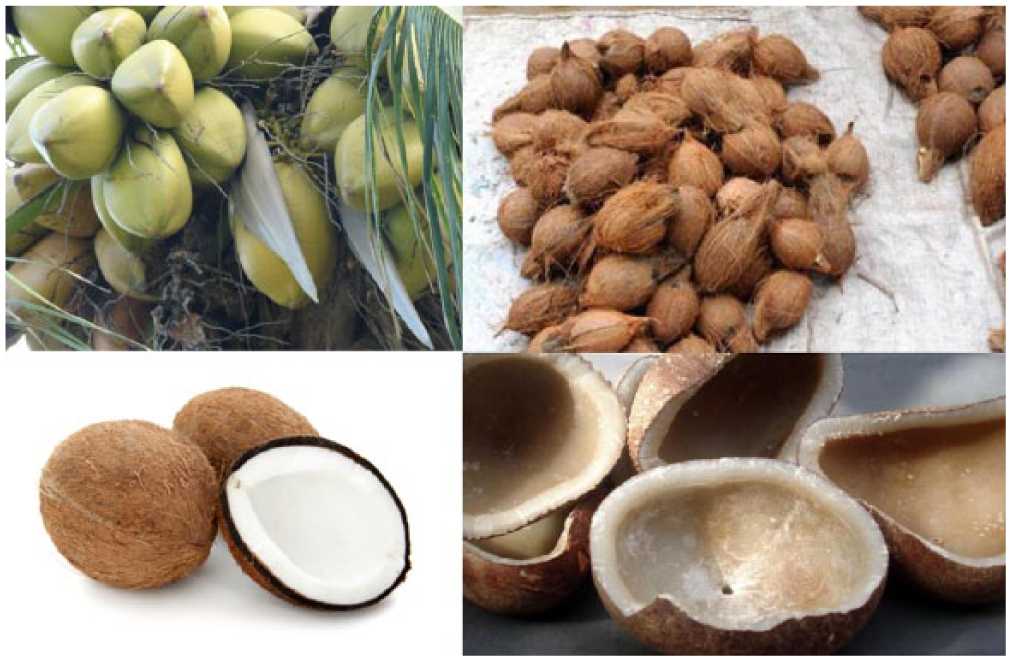
Collection of coconut for making biofuel
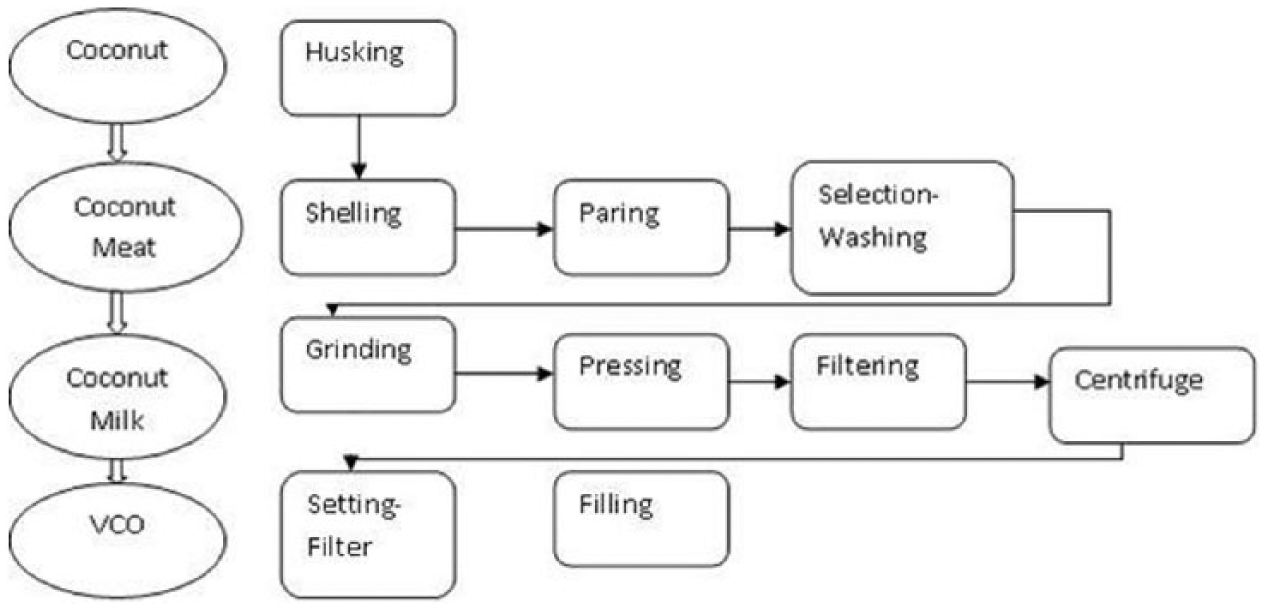
Coconut oil production process
B. Mixing conditions
A mixture of biofuels and conventional hydrocarbon-based diesel is the most commonly distributed product for use in the retail diesel fuel marketplace. 13 Much of the world uses a system known as the “B” factor to state the amount of biodiesel in any fuel mix: 100% biodiesel is referred to as B100, while 25% biodiesel 75% petro diesel is labeled B25, 50% biodiesel 50% petro diesel is labeled B50, and 75% biodiesel 25% petro diesel is labeled B75. Animal fats and coconut oil like any other vegetable oils are triglycerides, naturally containing glycerin.
The biodiesel process (transesterification) turns the oils into esters, separating out the glycerin from the main product (biodiesel). The glycerin sinks to the bottom, and the biodiesel floats on top and can be poured off. The process is called transesterification, which reserves alcohol to glycerin in a chemical reaction, using as a catalyst.
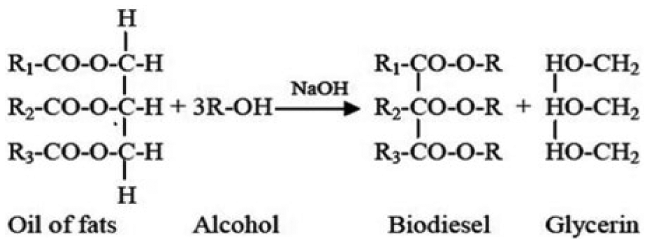
The following materials were used to produce biodiesel from coconut oil: 1 L of coconut oil, 200 mL of methanol 99+% pure, and sodium hydroxide (NaOH) scales accurate to 0.1 g. The key feedstock source used in this work is coconut oil, locally produced in India. By the stoichiometric process, 1 mole of coconut oil is required to react with 3 moles of methanol to produce 3 moles of the biodiesel and 1 mole of glycerol. A total of 100 g coconut oil was used for the transesterification process. 14 A reaction temperature of 65 °C was selected as reaction temperature for the process must be below the boiling point of alcohol (methanol, 78 °C) used. 15 Different researchers have reported different reaction times for transesterification process as well as the entire biodiesel production process. Experimentation reaction time ranges from less than 15 min to more than 60 min.16,17 Therefore, reaction time of 30 min was selected. Most of the research peoples have used 0.1%–1.2% (by weight of oil) of catalyst for biodiesel production. Therefore, 0.8% NaOH (by weight of coconut oil) concentration was selected, while 20% methanol was used. 18
C. Synthesis of biodiesel from coconut oil
For the transesterification of coconut oil, the following steps were being followed in this work. First 200 mL of methanol was mixed with 150 mL of (1 N) NaOH. As this is an exothermic reaction, the mixture would become hot. This kind of solution is known as sodium methoxide, which is a powerful corrosive base and is harmful to human skin. Mainly, safety precautions should be taken to avoid skin contamination during methoxide formation. Next, sodium methoxide was added to 1 L of coconut oil, which was preheated about 65 °C. Then, the mixture was shaken for 5 min in a glass container. After this, the mixture was left for 24 h (the longer is better). For the partition of glycerol and ester, this mixture then gradually settles down as two distinctive layers. The topmost transparent layer is 100% biodiesel, and the lower concentrated layer is glycerol. The heavier layer is removed either by gravity separation or with a centrifuge. In some cases, if the coconut oil contains lot of impurities, then a thin white layer is formed in between the two layers. Then, the biodiesel is washed with distilled water in order to take out waste, and a dry wash is done by air stone. 19
Biodiesel formed in the above process contains moisture (vaporization temperature: 100 °C), methanol (vaporization temperature: 60 °C), and usually some soap. If the soap height is low enough (275–510 ppm), the methanol can be removed by vaporization, and the methanol will usually be dry enough to directly recycle back to the reaction. Methanol is apt to act as a co-solvent for soap in biodiesel; so, at elevated soap levels, the soap will precipitate as a viscous sludge when the methanol is removed. In any case, heating the biodiesel at temperature above 100 °C would cause the removal of both the moisture and methanol as well. 20
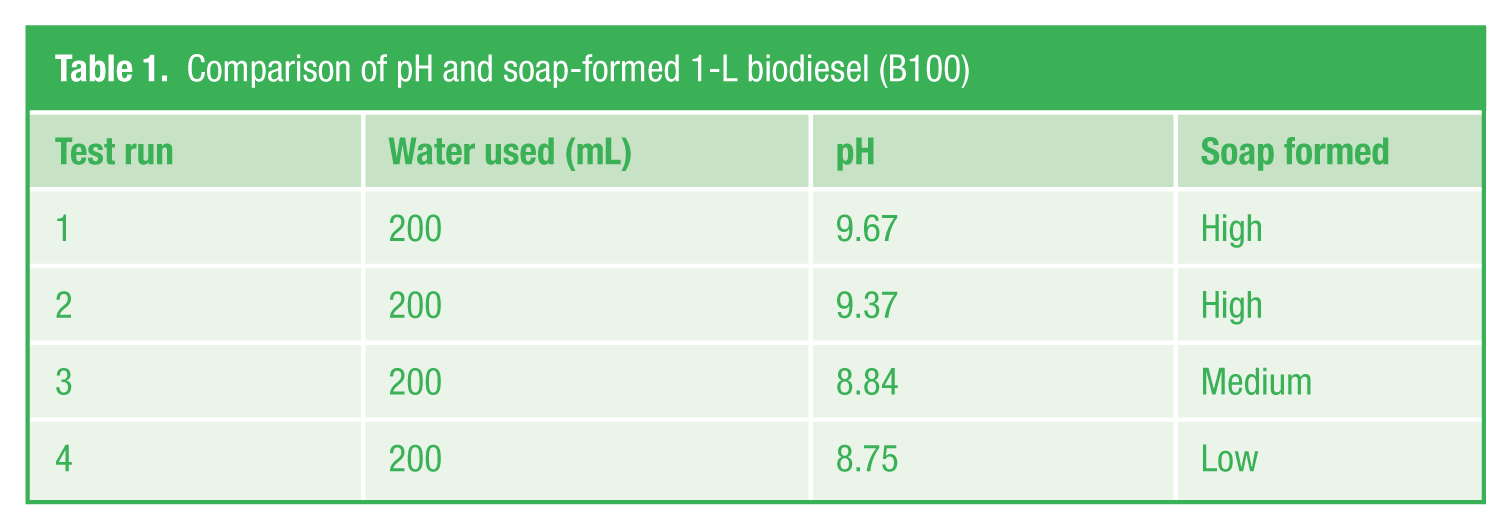
Washing was done in two different steps. First step, the collected biodiesel after transesterification effect was taken into a beaker. Hot water (40 °C) was poured into the biodiesel slowly. Then, the mixtures of biofuels were shaken slowly, and the solution was kept for 4 h in steady position. Then, a layer of soap is produced in the base of beaker. Then, the biodiesel is collected by a pipe followed by siphoning technique. The process was repeated four times, and gradually, soap formation was limited. The pH of the solution was also measured after each wash. This process is known as wet wash process. Table 1 shows the comparison of pH and soap formation with (B100) biodiesel. In another step, an air stone was used for producing bubbles in the solution for dry wash. This dry wash confirmed the formation of glycerol and soap rest in the mixture. A separate heater was used which was kept always at 35 °C for removing the water from biodiesel. After this method, finally, the biodiesel was collected and its properties were tested in the laboratory.
Comparison of pH and soap-formed 1-L biodiesel (B100)
III. Properties of Biodiesel and Their Blend Analysis
Biodiesel produced from coconut oil has comparable fuel properties with the conventional fossil diesel. A proportional learning of fuel properties with the conventional fossil diesel, neat biodiesel, and their various blends have been carried out in this work to find out suitable blending of biodiesel. In this study, B25, B50, B75, and B100 blend have been prepared to compare the fuel properties of different blends.
A. Heating value
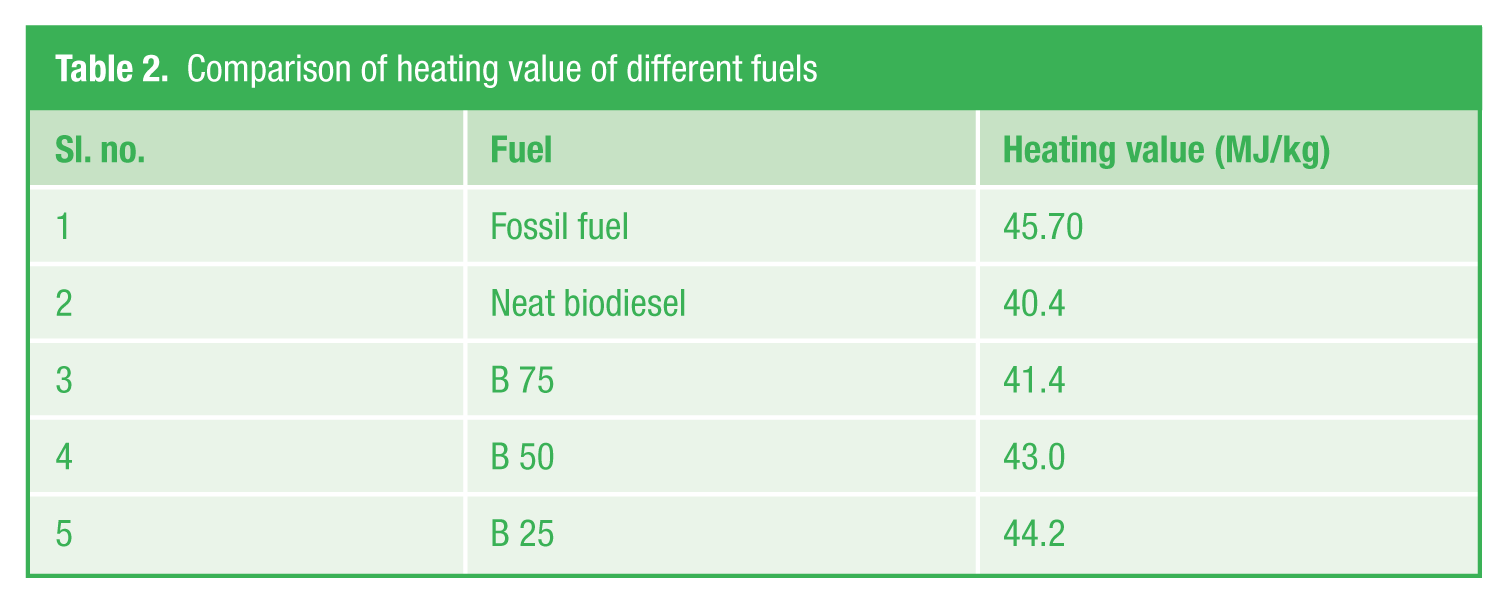
Heating value indicates the energy density of the fuel. In our study, ASTM 2382 method has been applied to measure the heating value of biodiesel and their blends. Table 2 shows the heating value of diesel, biodiesel, and their different blends in megajoules per kilogram. From Table 2 , it is observed that the diesel fuel has heating value of about 45 mJ/kg. Heating value of the fuel decreases as we choose higher blending of biodiesel. Since biodiesel has lower energy density than sole (diesel) fuel, maximum amount of biodiesel is required for producing same amount of energy as compared to diesel fuel. Basic details of different fuels are mentioned in Table 3 .
Comparison of heating value of different fuels
Details of different fuels
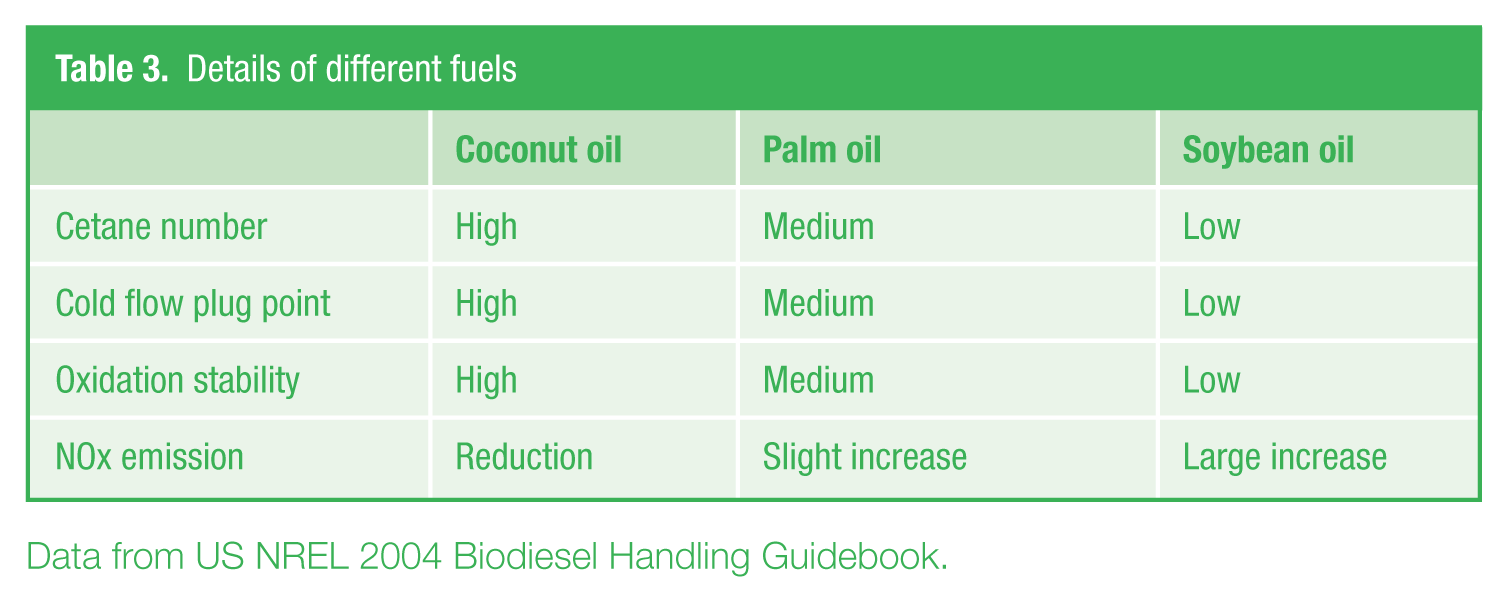
Data from US NREL 2004 Biodiesel Handling Guidebook.
B. Viscosity and flash point
Viscosity of the fuel exerts a strong influence on shape of the fuel spray. For example, high viscosity causes low atomization (large droplet size) and high penetration of spray jet. We observed that cold engines with higher viscous oil discharge will exhibit almost a solid stream of fuel pattern into the combustion chamber and starting of the engine may be difficult as a smoky exhaust will invariably appear. 20 In contrast, very low viscous fuel would cause to pass through leakage of the piston and piston wall especially after wear has occurred, which consequently prevents accurate metering of the fuel.
The high viscous fuel would exhibit almost a solid stream of spray pattern in the combustion chamber, and thus, cold starting of the engine would be complicated. So, using B100 fuel in the existing diesel engine would require modification of that fuel system, so that the fuel supply system exerts high spray pressure to achieve the desired spray pattern inside the engine cylinder. Flash point is an important property of CI engine fuel. The flash point of the biofuel is higher with higher blending of biodiesel. Biodiesel has lower energy density than diesel fuel, so maximum amount of compression ratio is required for producing same amount of energy as compared to diesel fuel.
IV. Engine Specification and Arrangement
The final product of biodiesel from coconut oil was used as an alternative fuel to operate a diesel engine, and the performance data were recorded:
Engine type : Kirloskar AV 1 engine
Number of cylinder : single cylinder
Cooling method : water cooled
Cubic capacity : 0.553 (L)
Rated speed : 1500 r/min
Method of ignition : CI diesel engine
Cylinder diameter : 80 mm
Piston stroke : 110 mm
Engine weight : 130 kg;
Compression ratio : 16.5:1;
Method of starting : hand starting.
The experimental setup consisted of engine test bed with fuel supply system and different measuring and metering devices with the engine shown in Figure 3 .
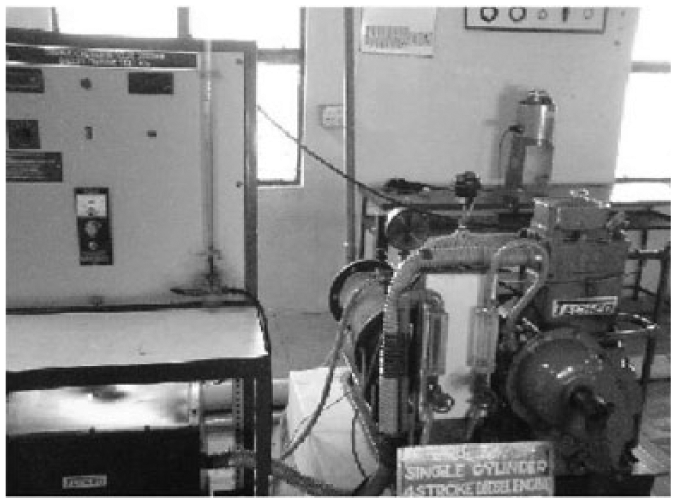
Experimental setup
A preheating system was made in diesel engine test bed with the help of heater and thermocouple for measuring the temperature. A control unit was used to set temperature and automatic control of heater. A separate tank was used for direct use of coconut oil in mixing with diesel. A single tank was used for testing biodiesel performance. Typical heater was used to preheat both oil and biodiesel. Brake horse power (BHP), brake-specific fuel consumption (BSFC), brake thermal efficiency, and exhaust gas temperature of the engine were measured for diesel, B100, B75, B50, and B25 blends. For measuring BHP, brake-type dynamometer was used. Test was run by varying fuel flow rate, which was measured in kilogram per second.
V. Results and Discussion
After the experimentation, different data are measured. Based on the data, we draw the following graphs. Figure 4 shows the variation of BSFC with flow rate for different fuels. BSFC for biodiesel blends is higher at lower fuel flow rate. BSFC decreases with the increase of fuel flow rate. It is also observed that the BSFC increases with higher blends. This is mainly due to the relationship among volumetric fuel injection system, viscosity, fuel specific gravity, and heating value. As an outcome, more biodiesel blend is needed to produce the same amount of energy due to its higher density and lower heating value in comparison to conventional diesel fuel.
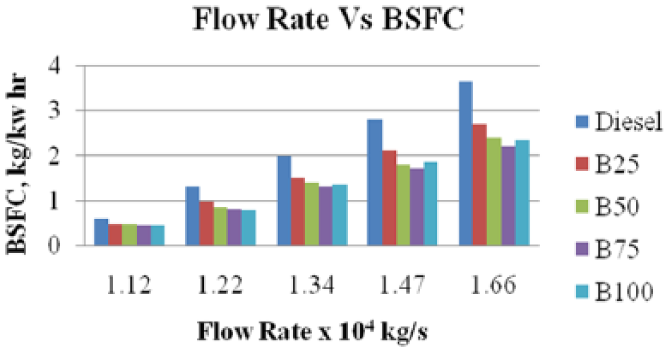
Variation of BSFC with fuel flow rate
Again, as biodiesel blends have different viscosity than diesel fuel, biodiesel causes poor atomization and mixture formation and thus increases the fuel consumption rate to maintain the power output. Figure 5 shows the relation between fuel flow rate and brake thermal efficiency (ηb) for different fuels. BSFC is a measure of overall efficiency of the engine. BSFC is inversely related with the efficiency. So, lower the value of BSFC, higher the overall efficiency of the engine. However, for different fuels with different heating values, the BSFC values are misleading, and hence brake thermal efficiency is employed when the engines are fueled with different types of fuel. From this figure, it is evident that BSFC for biodiesel is always higher, and ηb is always lower than that of diesel fuel. This is because biodiesel has lower heating value than conventional diesel fuel. One other cause for lower ηb for biodiesel blends is poor atomization which is attributed to higher density and kinematic viscosity of biodiesel blends.
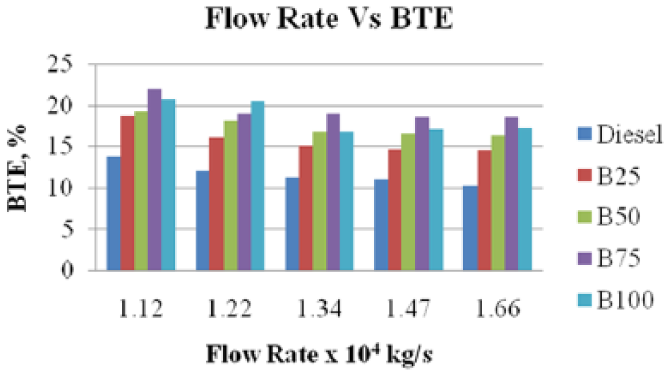
Variation of thermal efficiency with fuel flow rate
Figure 6 shows the relationship between BHP and fuel flow rate. BHP for biodiesel blends is higher at lower blend. It decreases with the increase of blend. It is also observed that BHP of engine increases with the increase of fuel flow rate. The more fuel is consumed by the engine, the more brake power it will generate. The diesel engine performance and its emission characteristic results showed that 10%–30% coconut oil blends produced a slightly higher performance in terms of brake power than that of diesel.
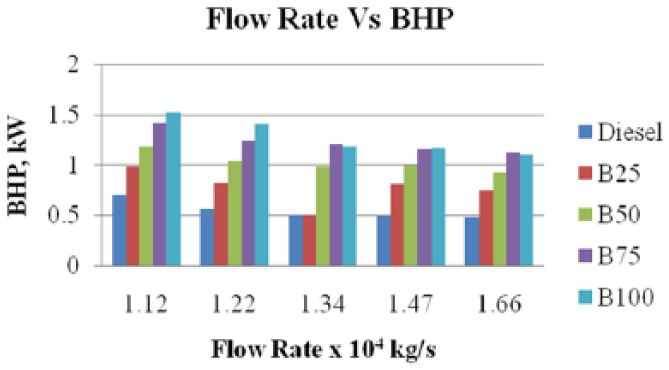
Variation of BHP with fuel flow rate
The present cost of running a diesel engine with biodiesel blends derived from mustard oil is included in the cost analysis. Based on the cost analysis, it is clear that running diesel engines with biodiesel blends is costly as compared to sole (diesel) fuel. However, cost can be considerably reduced, if methanol can be recycled after transesterification process. Moreover, in this experiment, processed coconut oil has been used. And using raw or unprocessed oil would also decrease the biodiesel production cost. In India, government grants a huge subsidy on diesel fuel, which is the reason for the lower price of diesel fuel. Hence, a thorough study is required for the feasibility analysis of biodiesel by comparing its production cost with international market price of diesel.
VI. Emission Characteristics
The extensive use of coconut oil to put back diesel has a range of prospective ecological settlement. Initially, there is the reduction of emissions of noxious gases and soot as compared to diesel because of the higher oxygen content of coconut oil. 21 Second, the use of coconut oil can be considered CO2 neutral. The CO2 stored in the coconuts, husks, and shells are used in the process of oil production (husk and shells for drying the copra) and burning of the oil. This CO2 is again sequestrated during the growing of new trees and nuts. Benefit of fragile Pacific island countries substantially through improvements in balance of payments and job creation. Simultaneously, coconut farmers are given access to a new potentially thriving market, once the difference with the yardstick of the diesel price further increases. The performance and emission characteristics of coconut oil are better than that of all other blends, and it is well comparable with diesel. As per the case study, we find the following emission identification while using coconut oil as a substitute for diesel fuel in direct injection (DI) diesel engine. The reduction in smoke density based on higher oxygen with biodiesel leads to the complete combustion of blended fuels.
A. NOx emission
Figure 7 shows the reduction of NOx emission with biofuel percentage. NOx emission increased with increase of percentage ratio of biodiesel. The increases of NOx emission due to the higher cetane number of biodiesel will reduce the ignition delay. The use of exhaust gas recirculation (EGR) can also reduce the NOx emission where the temperature of exhaust gas is reduced when passing through the combustion chamber.
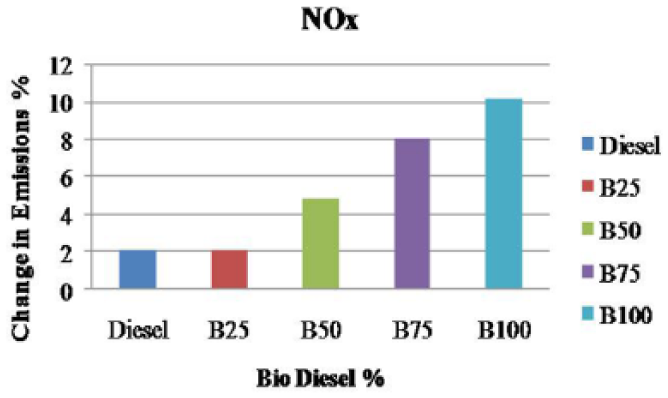
Reduction of NOx emission
B. Particulate matter emission
Average percentage of change in particulate matter (PM) emissions is mentioned in Figure 8 . The negative sign indicates the reduction of the percentage change in emission.
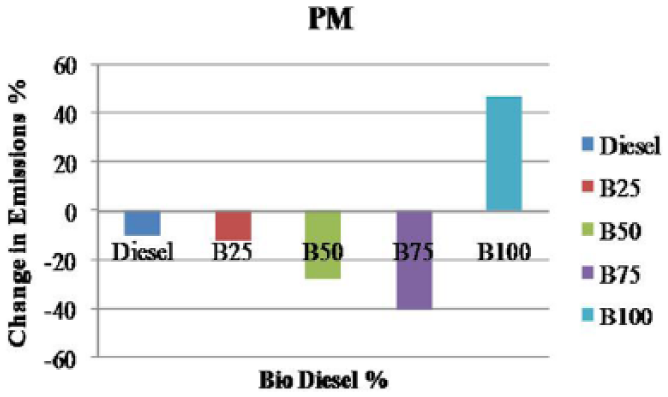
Reduction of PM emission
C. CO and HC emissions
Average percentages of CO and HC for the same biodiesel blends are plotted in Figures 9 and 10 . The reduction of CO and HC is due to the oxygenated fuel of biodiesel. It leads to an extra complete combustion. Thus, the higher oxygen contents and cetane number of biodiesel–diesel fuel blends tend to reduce HC emissions when compared to conventional diesel.
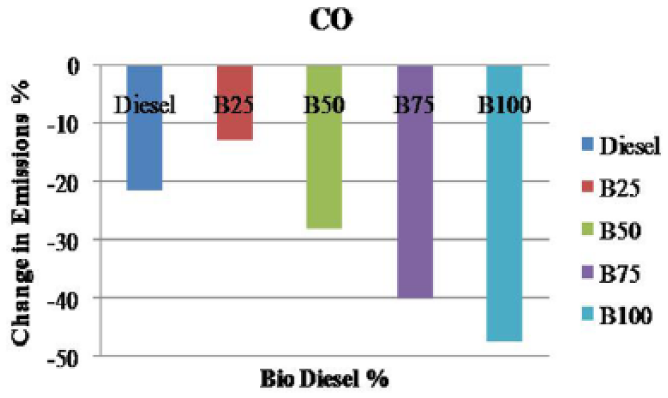
Reduction of CO emission
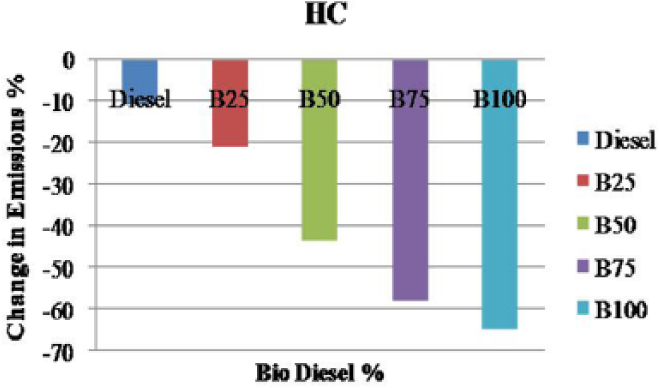
Reduction of HC emission
VII. Conclusion
In the current situation, biodiesel can be used as a good alternative source for marine engines. Even though production cost of biodiesel is high, it is environmentally friendly and considered as a good source of renewable energy. Comprehensive studies need to be done about the prospect of biodiesel in India. Biodiesel production from coconut oil is comparatively higher than soybean and rapeseed. Even though there is quite some evidence of the environmental benefits using vegetable oils as a fuel, in connection with environmental benefits, cost is the major factor behind these developments in Asian Continent. Motorists have successfully blended coconut oil with diesel to decrease costs per kilometer. For coconut oil fuel is a sustainable substitute to diesel fuel in India, restructuring of the coconut industry and replanting of coconut plantations are required. Widespread utilization of alternative fuels will require active involvement of engine manufacturers and neighboring mechanics. But energy output and fuel consumption rate are better than the sole fuel. Raw vegetable oil can be used as fuel in diesel engines with some slight modifications. While we use vegetable oils as DI diesel engine fuels, they play a vital role in helping the developed world to reduce the environmental collision of fossil fuels. B25 is the most suitable biodiesel blend among all. The specific fuel consumption (SFC) of B25 is much lower than the other concentrations. The percentage decrement of efficiency of B25 is relative to B50, which is the same as lower concentrations. B25 has higher NOx emission compared with lower concentration.
Footnotes
Funding
This research received no specific grant from any funding agency in the public, commercial, or not-for-profit sectors.