



Abstract

Thousands of Industrial Automation Systems May Be Affected by End of Windows XP Support
Support for Microsoft’s 12-year-old Windows XP officially ceased on 8 April 2014, so effectively, Windows no longer provides users with security updates or technical support for this operating system. The discontinued support affects millions of users worldwide, including the many companies that have implemented Windows XP in industrial automation and other applications.
Windows has stated that ‘PCs running Windows XP after 8 April 2014, should not be considered to be protected, and it is important that users migrate to a current supported operating system’.
This move could adversely affect millions of both personal and professional users across the globe, including the many companies that have implemented Windows XP in industrial automation applications.
As the longest supported Windows operating system, XP is most widely used in industrial automation, with its myriad electrical and electronic systems. This means that potential issues arising from the discontinued support could affect a large number of end users.
IHS (http://www.ihs.com) says that a large stock of older equipment with basic flaws in its security architecture remains that could prove problematic, and that XP is just one example of an area that will require compensating controls for necessary security requirements in an organisation to be met.
The greatest worry relating to the continued use of Windows XP in industrial automation is cyber security. Without the ongoing security updates to protect systems from attacks, users will be exposed to new threats that can exploit vulnerabilities of the operating system. Such threats exist to industrial automation equipment (IAE) operating on Windows XP, perhaps most notably industrial PCs (IPCs) and distributed control systems (DCSs).
Many end users have already upgraded to more modern operating systems that will continue to be supported. Larger companies – especially those driven by information technology (IT) departments – were typically more proactive in making advance preparations to upgrade early where necessary. But many smaller companies have delayed upgrades until absolutely necessary. Some of these will be at risk.
ARC Takes a Look at the Industrial IoT
Some of us are just becoming used to the idea of the ‘Internet of Things’ (IOT), which refers to uniquely identifiable objects and their virtual representations in an Internet-like structure, but what about the Industrial IoT? Is this the next big revolution in manufacturing, asks ARC Advisory Group (http://www.arcweb.com).
Information from IoT-connected devices promises to lower costs, optimise processes and provide a platform for business innovation, but concerns about security and standardisation could stand in its way.
ARC Advisory Group defines the industrial IoT as connecting intelligent physical entities, such as sensors, devices, machines, assets and products, to each other, to Internet services and to applications. The industrial IoT architecture builds upon current and emerging technologies such as mobile and intelligent devices, wired and wireless networks, cloud computing, Big Data, analytics and visualisation tools.
A short survey is part of ARC Advisory Group’s multifaceted research into the impact of the IoT on manufacturers. Responses are encouraged from both current and potential users of IoT solutions as well as providers, who are asked to answer the questions from the perspective of the solution type they offer.
Liquid Flow Sensor Hurtles into Space
On 6 May, a rocket lifted off bound for the International Space Station (ISS). On board was a liquid flow sensor from Sensirion AG (http://www.sensirion.com), which is part of a research project by Minnehaha Academy in Minnesota that is investigating the impact of microgravity on the effectiveness of liquid flow.
Among other potential findings, the project aims to shed light on the effects of weightlessness on the circulatory system.
The LS16 liquid flow sensor will be used to measure the flow of demineralised water generated by a piezoelectric pump in zero gravity. The results will be compared with those of a control experiment on earth.
It is thought that many applications in fluid dynamics, physics, biology and haemodynamics (the forces involved in the circulation of blood) will benefit from these findings.
Said Max Thompson, Student Project Manager at Minnehaha Academy, ‘Our experience with the LS16 sensor has been outstanding – it has been accurate, precise and durable’.
A computer generated image of the International Space Station. Sensirion’s LS16 liquid flow sensor is being used on-board to measure the flow of demineralised water generated by a piezoelectric pump in zero gravity.

Magazine Names Triconex Safety View as ‘Product of the Year’
Invensys (http://www.invensys.com/en), the leading supplier of industrial software, systems and control equipment, and now a part of Schneider Electric, says that its Triconex Safety View solution has been named the 2013 Product of the Year in the Process Control and Advanced Control category by Control Engineering, Czech Republic.
Subscribers to the publication identified the products they felt were the most exceptional based on technological progress, value, benefit and impact on the automation market. The Product of the Year Awards covered 10 industrial automation categories in 2013. Invensys has won this accolade for the past 3 years, with products such as its Foxboro Intelligent Marshalling smart I/O solution, its SimSci DYNSIM dynamic process simulation software and now Triconex Safety View.
‘The Process Control and Advanced Control category is always popular for producers and readers alike, with fierce competition for the Product of the Year award’, said Lukas Smelik, Editor-in-Chief, Control Engineering: Every year, Invensys brings strong products to the category, and this year’s win for Triconex Safety View highlights the strong level of innovation within Invensys, further showcased by products such as its Foxboro Evo process automation system. For that reason, I was not surprised that, like last year, Invensys won Product of the Year.
Triconex Safety View is an online tool that draws the plant operator’s attention to critical changes in process conditions that require immediate action. It also provides clear indication to operators, maintenance engineers and shift supervisors of Priority Level 1 alarms and all other safety-critical devices that have been placed in bypass, thus reducing the risk levels for which they were designed.
Invensys’ Triconex Safety View has been awarded ‘2013 Product of the Year’ in the Process Control and Advanced Control category by Control Engineering, Czech Republic.

‘Triconex Safety View provides the highest levels of safety integrity for critical alarm management applications’, said Mary Beth Connolly, Vice President of marketing for Invensys’ systems business.
Pressure Sensors Feature IO-Link
The new PSK pressure sensors from Phoenix Contact (http://www.phoenixcontact.com) records operating pressure levels in machines and systems. Pneumatic systems can, therefore, be monitored reliably and measured values continuously logged.
Input/Output (IO)-Link means that there are many options for intelligent sensor communication. The pressure sensors have a ceramic measuring cell and are designed for a nominal pressure of −1 to 10 bar. They are mechanically robust and are claimed to be both wear and fatigue-free. The resulting long-term stability ensures safe operation and reliable measuring results in over 100-m pressure cycles.
With IO-Link, the intelligent communication technology between the sensor (IO-Link device) and controller (IO-Link master), process data, parameters and diagnostic information can be transmitted from the pressure sensor via a standard cable.
If IO-Link is not used, the sensor acts as a pressure switch with two switching outputs (standard digital input/output (SIO) mode). With an IO-Link master, according to specification 1.1, the parameters of the connected sensor are saved and transferred to the new connected sensor on replacement, thereby eliminating the need for any time-consuming re-parameterisation.
A PSK pressure sensor by Phoenix Contact.

Motorola Sells RFID Business
Motorola has built itself a good name in the radio frequency identification (RFID) sector, yet has now sold this business to Zebra Technologies (http://www.zebra.com/gb/en.html).
Following a strategic review, Motorola decided that its enterprise division, which dealt mostly with bar-code and RFID equipment, didn’t have sufficient synergy with its government division, which sells communications equipment to first responders and police forces and so on.
Commented Anders Gustafsson, CEO, Zebra Technologies, Motorola Solutions’ mobile platform captures real-time data about physical assets, people and transactions across the enterprise. Zebra’s enabling technologies provide visibility into business operations for deeper insights and smarter decision-making.
He concluded saying, The companies’ shared commitment to innovation will help customers harness powerful technology trends like the Internet of Things (IoT), location and motion sensing and mobile enterprise cloud computing. We look forward to the months ahead as we integrate the businesses and continue to serve you with the highest quality
New Control Products Displayed at Hannover Fair
Eaton (http://www.eaton.com) presented its many circuit protection, power distribution, control and automation products and systems at this year’s enormous Hannover Fair.
The company showed its breadth of energy-efficient solutions designed to help customers worldwide use electrical, fluid and mechanical power more reliably, efficiently, safely and sustainably.
For machine builders, Eaton has, with its constantly expanding portfolio of SmartWire-DT components, integrated electrical systems and hydraulics in a single control architecture, to deliver higher levels of accuracy, speed, energy efficiency, reliability and flexibility throughout their productive life.
In addition, with a comprehensive range of electrical system protection solutions for harsh and hazardous areas, from product lines such as Crouse Hinds, CEAG, MTL or FHF Funke+Huster Fernsig, the company can help its customers keep their people safe and their facilities running, even in highly demanding applications.
Hazardous area communication platforms were on show too, and these set a standard for safety, claims Eaton. Signalling, notification and surveillance systems protect, alert and inform employees of critical safety situations, so people are always protected.
For more information, go to http://www.eaton.euk.com/electrical
Wireless Home Control Booms, as Z-Wave Alliance Shows
The smart home market is booming, due in part to home automation products becoming more affordable, functional and versatile. At the same time, developers have made great strides in product design. Z-Wave Alliance (http://www.z-wavealliance.org), the open consortium of leading companies that rely on the Z-Wave wireless standard, was represented by a number of members at CeBIT 2014.
For example, Fibaro Design showed its Home Centre 2 (HC2), which is the central control unit in the company’s system and part of every Z-Wave network. The central interface allows users to control devices in their homes, flats or offices while on the go.
For instance, smartphone owners can turn off lights or close shutters via a mobile app even after the door has closed behind them. HC2, therefore, gives users complete control of all lighting, heating and air conditioning, shutters, alarm systems, garage doors, as well as audio and video devices and so on that are integrated into the personal home network.
In another example, Poly-Control presented its product highlights, including the Poly-Lock door lock and the Poly-Pad control unit. Poly-Lock allows users to securely lock and unlock doors via wireless command – even from afar in case the user forgot to lock the door when leaving the house. The product is also easy to install and versatile as it is compatible with almost all locking systems worldwide. Users can control Poly-Lock using the Z-Wave User Interface, the Poly-Control Web Interface or a newly developed app for iPhone/Android.
Ventilation was not omitted. While DomoOne was not be represented at CeBIT, this Germany-based Z-Wave Alliance member produces AirControl, an app and sensors hybrid.
Other Z-Wave Alliance members at Cebit 2014 included Aeon Labs, Vision Security, Philio Technology, Flat-Out Technologies, NorthQ, Poly-Control and TKB Home, Buffalo Technology, Cuculus, Everspring Industry, Good Way Technology, Guangzhou MCOHome Technology and Z-Wave Europe.
For more information, go to http://www.z-wavealliance.org
Global MV Motor Market in Modest Recovery
The Eurozone continues to emerge from a prolonged recession, and the Chinese industrial juggernaut showed signs of slowing late in the year, and a new study by IHS Electronics (http://www.ihs.com) shows that during 2012, the global medium voltage (MV) motor market was estimated to be worth £3.45m, and grew by a modest 6.6% in revenues, with unit growth significantly lower than expected.
This study – titled ‘The world market for medium voltage motors’ – finds that the global market has been buoyed to a certain extent because of the unconventional oil and gas boom in North America – one of strongest and most robust regional sectors that is thought to be sparing the global market from recession-like growth below 5%. Revenues reported for the first three-quarters of 2013 suggested similar market performance to 2012 was to be expected.
Global 2012 revenues did not surpass the pre-recession level of 2009. The constraints in the global market were characterised by low growth of 2.8% in the EMEA, with unit growth of 0.8% compared to 2011; 2013 fared slightly better in the EMEA.
A slowdown of the Chinese industrial engine spilled into 2013 and contributed to keeping global growth at a modest rate. Compounding problems further, the global mining industry, a high-volume market for MV motors, suffered a massive slowdown in 2013 when investment for mining projects dried up almost completely.
IHS expects that the global market will regain steam in 2015 and 2016 after weathering a short-term storm of post-recession difficulties.
Energy Expansion Powers CIS Automation and Control Market
Upcoming brownfield and greenfield projects in the oil and gas and power generation industries will sustain the demand for automation and control solutions (ACS) in the Commonwealth of Independent States (CIS), according to the latest analysis by Frost & Sullivan.
Titled ‘Strategic analysis of the automation and control solutions market in CIS countries’, this study shows that among the countries in the region (Kazakhstan, Azerbaijan, Uzbekistan, Ukraine, Belarus, Armenia, Kyrgyzstan, Tajikistan and Moldova), Kazakhstan and Azerbaijan will remain market hot spots as scheduled oil and gas exploration activities. The anticipated modernisation of the industrial automation sectors will also pave the way for ACS adoption.
According to the report, the market earned revenues of £263.2m in 2013 and estimates this to reach £331.6m in 2017. While PLCs and safety instrumented systems (SIS) will continue to dominate the market, the DCS segment is expected to witness the highest growth rate.
Commented Frost & Sullivan Industrial Automation and Process Control Research Analyst Maryna Osipova, As awareness increases, industries in the CIS are deploying ACS to bolster production volumes, optimise manufacturing processes, decrease operational costs, and boost returns, advanced solutions that offer asset management capabilities and enable the processing, displaying and archiving of information are particularly making a mark among end users.
A key challenge is the lack of a well-qualified workforce. Innovative ACS systems require professional engineering resources for installation, operation and repair services, and the shortage of skilled assets affects project performance and customer service support for ACS products.
Expanding into the region will help ACS producers overcome cost concerns from end users to an extent through geographical proximity and product customisation activities, the study says.
For more information, go to http://www.industrialautomation.frost.com
Small Inverter Has a Big Impact on Ice Cream
A Mitsubishi Electric frequency inverter with stall prevention has ensured greater efficiency and performance in the production of traditional ice cream.
The traditional method of production used by ice cream manufacturers uses special machines to ensure that the automated production of ice cream is of high quality. Under no circumstances should there be an unscheduled production halt, as this could disrupt the kneading and freezing process, with the result that milk, flavourings, water and electricity would all be wasted.
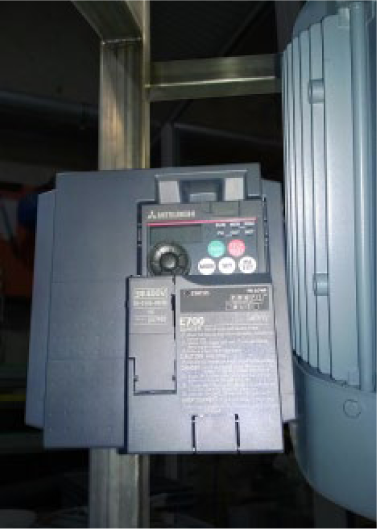
To eliminate this risk, Kälte-Rudi (http://www.kaelte-rudi.de) – the market leader in the manufacture of ice cream machines – installed the compact Mitsubishi Electric FR-E700 series frequency inverter in its Diagonal-Freezer, initially on a trial basis.
The Diagonal-Freezer – an ice cream machine from Kälte-Rudi features a diagonally installed production cylinder and paddle with kneading function.

This inverter proved a great success, and not just because of its integrated stall protection. The company has now decided to use the drives in its ice cream machines as standard – and also in other machines.
The Diagonal-Freezer is characterised by a diagonal production cylinder and agitator with kneading function. The machine produces creamy ice cream with optimum volume, storage stability and shelf life as well as minimal residual water and no re-crystallisation.
With the Mitsubishi Electric FR-E700 series frequency inverter, the Diagonal-Freezer now even continues operation when the motor reaches its performance limits. As a result, the availability of the machine and production efficiency have been improved (model shown: FR-E740).
The first step involves pasteurising the additives. Afterwards, the liquid is poured into the ice cream machine. During the process, air is bound into the liquid in order to give the ice cream its creamy consistency as well as more volume.
The drive can often be pushed to the limit, as traditional ice cream is difficult to handle. When the machine is mixing several litres of ice cream, it is only the movement of the ice cream that keeps it ‘liquid’. If the paddle stops working, the viscous mass would turn into a solid block of ice that would have to be defrosted in order to remove it from the machine. It is not possible to re-freeze ice cream that has melted because of the risk of salmonella forming. So if the motor stops unexpectedly during mixing, the product is useless.
Kälte-Rudi installs Mitsubishi Electric’s FR-E700 series inverters with integrated stall prevention in the Diagonal-Freezer as standard (model shown: FR-E740).

To solve this recurring problem, Mitsubishi Electric experts recommended testing inverters from the FR-E700 series. The integrated stall prevention ensures that the paddle can continue to turn even when the motor is operating within its overload range, as the inverter reduces the output speed for a short time.
Tests showed that the stall prevention can control overloading. If the motor goes into its overload range, the inverter will continue to operate at a reduced speed, so the mixing of the ice cream continues and the product remains intact.
With the FR-E700 series inverter, the machine now even continues operation when the motor reaches its performance limits. As a result, the availability of the machine and production efficiency has been improved.
Finally, the resource-saving inverter has indirectly contributed to the achievement of savings on additives, power and water consumption. That is important for smaller businesses – such as ice cream parlours in particular.
For further Information, go to eu3a.mitsubishielectric.com/fa and http://www.mitsubishielectric.com
ODVA to form SIG for ‘DeviceNet of Things’
The ODVA (http://www.odva.org), the global association whose members comprise some of the world’s leading automation companies, has announced that it has formed a new special interest group (SIG) called the SIG for the DeviceNet of Things.
The scope of work is to develop enhancements to the ODVA specifications that will enable expanded adoption of DeviceNet to low-cost, simple industrial devices that today are typically hardwired in the command-control and communication architecture of industrial plants.
Ultimately, it is hoped the activity will make it cost-effective for users to connect many new types of devices into DeviceNet and to eliminate expensive and complex gateways by using a blended DeviceNet-EtherNet/Internet protocol (IP) system.
By extending DeviceNet to more types of devices, users will be able both to preserve their investment in DeviceNet and to leverage seamless connectivity with EtherNet/IP via ODVA’s Common Industrial Protocol or ‘CIP’.
Said Katherine Voss, president and executive director of ODVA, The Internet of Things movement has established a basis for innovation of new smart ‘things’ in the automation world, but the cost of Ethernet is still too high for many industrial ‘things’ or devices. Users will be provided with the unparalleled business benefit of cost-competitive connectivity today for devices previously not connected, as well as systems engineered for the future that can evolve in step with the Internet of Things as the costs of Ethernet continue to decline.
The SIG held its first meeting in conjunction with ODVA’s 2014 Industry Conference and 16th Annual Meeting of Members. As of the first meeting, six ODVA members had signed up to participate in the SIG, including Eaton Electrical, HMS Industrial Networks, Omron, Panduit, Rockwell Automation and Weidmüller Interface.
Bürkert Presents Cutting-Edge Technology with Many Benefits
All currently available flow metering systems have weaknesses, limiting their range of applications, so Bürkert (http://www.burkert.co.uk) has developed a new device called FLOWave. This comes, the company claims, very close to the ideal.
The new technology, based on Surface Acoustic Waves (SAW), was introduced at the Hannover Fair in April.
Flowmeters use many different technologies, but the electromagnetic flowmeter (EMF) type is a well-established standard because of its broad range of applications. However, each technology has limitations, so selecting the most suitable for a specific application can be a challenge. The measuring task must be fulfilled, reliably, throughout the entire life cycle of the device.
As well the daily operative handling effort should remain within reasonable limits. FLOWave indicates its device status at every time with a light being related to Namur NE107 definitions and does not require maintenance activities. So downtimes can be reduced, resulting in significant life cycle cost reductions for users.
With this in mind, Bürkert set out to find a technology that would take account of that while offering significantly more value. The new SAW technology device fits the bill, and this flowmeter relies on the propagation of waves for measurements.
An important benefit of SAW for inline flow measurement of liquids is that it operates without any components or constrictions inside the measuring tube. The interior surface can be manufactured with the same surface finish applied to the rest of the pipeline. In terms of hygiene, cleaning and flow conditions, there are absolutely no differences compared to any other straight piece of pipe.
Also, there is no pressure drop and no effects of the fluid on sensor elements. There is no tedious selection process to come up with the best sensor variant. Maintenance is minimal if at all, while the company says that the transmitter, sensor and measuring tube stand up to the highest hygienic requirements.
Besides volume flow, temperature and density can also be measured, and therefore, the mass flow rate can be calculated. Additionally, the new flowmeter principle would work even with stagnant liquids so that results are available even with the smallest flow volumes. It is also suitable for very fast filling processes.
Certain effects, which may be caused in liquids due to gas bubbles or solid particles, are less pronounced with SAW, or can be detected with better reliability. Last but not least, says Bürkert, SAW is the only flowmeter technology that can distinguish between laminar and turbulent flows.
Brüel & Kjær Announces 2014 Acoustic Training Courses Dates
The 2014 Brüel & Kjær (http://www.bksv.co.uk) training calendar for the United Kingdom, which offers a range of acoustic and vibration classes, is now available.
New is a 3-day course Acoustic and Vibration Introduction for Design and Test Engineers course, which is intended to give industrial engineers a thorough understanding of the basic concepts that are important for both airborne and structure-borne noise and vibration in machinery. The aim is to help attendees understand the basic principles, and to distinguish the different aspects of noise and vibration generation.
In addition, there is a 2-day Theory and Practice of Noise Measurement course, which has been designed for environmental practitioners and consultants who may be unfamiliar with the basics of acoustic measurement. This course will provide a basic understanding of acoustic and measurement principles, encompassing many applications such as noise abatement, product labelling and building acoustics. Attendees will learn to carry out a variety of noise measurements, correct set-up of measuring instruments and assessment of noise reports.
Then there is a vibration measurement course, titled ‘Vibration testing for engineers and technicians’. This provides a practical introduction explaining how to interpret vibration test specifications and apply them to a vibration test system.
The company also has a full calendar of free, online training webinars, running throughout the year and presented by its technical experts.
Industrial Automation Conference 2014 for London in October
IHS Technology (https://technology.ihs.com) is to hold the second edition of the Industrial Automation Conference 2014, taking place on 23 and 24 October 2014 at 61 Whitehall, London. This event aims to combine the in-depth knowledge of the legacy IMS Research with the cross industry and economic expertise of IHS.
The programme will include insight into connectivity, industrial cyber security, energy efficiency, commodity pricing, emerging markets, industrial automation growth opportunities and the underpinning aspects of machinery production and capital expenditure.
Those attending will learn about the following topics: the countries and industries offering the best opportunities for IAE and how the macroeconomic environment affects this, and what impact a maturing Chinese economy will have on local manufacture and exports. For example, how is automation being used within the region?
Delegates will also learn about how convergence and the IoT will affect manufacturing, and how cyber security and operator safety is being approached and implemented in the manufacturing environment. What are the key factors influencing and driving change? Finally, the conference will look at what the factory of the future holds.
Study Shows Building Analytics, Cloud Services and Smart Grids Will Enhance Building Automation
Manufacturers of building automation systems (BAS) across Europe are taking their solutions to the next level by using supporting infrastructures – such as wireless control devices, cloud services, building analytics software, smart grids and vertical farming systems. Among these supporting infrastructures, building analytics, the cloud and smart grids are likely to play the most important role in strengthening the BAS market over the next 4 years, according to a new analysis from Frost & Sullivan (http://www.frost.com).
Titled ‘Enhancing building automation in Europe: Role of supporting infrastructures’, this study finds that the market earned revenues of £1.09b in 2013 and expects this to grow at a compound annual growth rate of 3.5% until 2018. Frost & Sullivan Industrial Automation and Process Control Research Analyst Krishna Raman said, BAS that use wireless control devices are gaining traction across Europe as they enable end users to easily reach remote and previously inaccessible parts of buildings as well as boost safety in hazardous industrial environments,
He continued, BAS that are integrated with building analytics are also becoming popular especially in the education and public sector due to the ability of these solutions to track and predict energy consumption patterns, pinpoint defective modules, and measure compliance to building efficiency standards.
The study finds that some vendors are turning to cloud services and acquiring smart metering capabilities to integrate buildings with smart grids. They are also looking to integrate BAS with control systems for vertical farms by 2016 in order to enhance energy, water and waste management efficiency in buildings.
One of the main concerns of market participants, however, is the lack of awareness among some end users on the advantages of investing in BAS.
For more information, email
News in Brief
Communication interfaces for fieldbus and industrial Ethernet
The first products in the new Anybus CompactCom 40-series from HMS industrial Networks (http://www.hms.se) offers fast communication to all major industrial networks, including EtherCAT, POWERLINK, EtherNet/IP, PROFINET and PROFIBUS. This series is based on HMS’ Anybus NP40 network processor and is especially suitable for high-end industrial applications that require fieldbus or real-time Ethernet connectivity. Offering close to ‘zero delay’ between devices and real-time networks, the 40-series is ideal for high-performance applications such as servo drive systems, which require fast network cycles and synchronisation capabilities.
Successful year for Endress+Hauser
Endress+Hauser Group (http://www.uk.endress.com/en) looks back on a successful year’s business – net sales, income, employment and investments all reached record levels, the company says. The Group, based in Reinach, Switzerland, increased its net sales by more than 7% to over €1.8b last year. In the United Kingdom, turnover increased by almost 14% to more than £43m. While foreign exchange rates slowed growth globally, acquisitions, particularly in the field of analytics, provided a boost. Besides venturing into new markets, the change at the head of the Group was the dominant feature of 2013. The Group also achieved a record operating profit of €277m, as well as a best ever net income of €187m. At the end of 2013, the company employed 11,919 people and invested around €130m in its worldwide production and sales network.
Take the survey on PLC and PAC
ARC Advisory Group (http://www.arcweb.com) is conducting research on the topic of programmable logic controller (PLC) and PLC-based process automation controllers (PACs) for a number of years. In addition to the quantitative research, which has covered around 90% of the market in the past, the organisation is now conducting an online survey. Currently also included are machine builders, end users and system integrators, next to the broad base of suppliers that support this research. ARC’s ‘PLC and PLC based PAC Global Market Research Study’ is planned for publication in the summer 2014. Along with the market study, the organisation will publish a series of reports, which will be available for clients and for purchase. In addition, participants will receive the key findings for free. Contact Florian Güldner at
Control and switching in a compact package
PLC logic, Phoenix Contact’s new programmable logic relay system, is particularly well suited for small automation tasks. It combines the strengths of established relay technology with logic functions in a single package. The modular design, featuring plug-in relays, enables flexible assembly, depending on the switching task. Pluggable switching elements ensure high machine and system availability, thanks to fast replacement during servicing. The system comprises logic modules, the PLC-Interface relay system and the Logic+ software. To start, the logic modules are plugged into eight relay modules. A compact 50-mm wide logic module can process 16 input/output signals. The base module can be expanded with up to two add-on modules for more complex applications, making it possible to process up to 48 input/output signals. Programming is via the intuitive Logic+ software needing no previous experience. Go to http://www.phoenixcontact.com
HMI is ATEX, IECEx and AEx certified
The iSiS1302 – a light, bright and slim human–machine interface (HMI) that was launched at OTC last year – is now officially ATEX, IECEx and AEx certified. This HMI combines light weight with a super high bright projective capacitive touch screen to create a state-of-the-art ATEX, IECEx and AEx certified Zone 2 Class 1 Division 2, Class 1 Zone 2 PC. For more information, go to the iSiS-Ex website at http://www.isis-ex.com
Mitsubishi Electric Group to acquire Setsuyo Astec Corporation
Mitsubishi Electric Corporation (http://www.mitsubishielectric.com) is to acquire Setsuyo Astec Corporation, a FA equipment sales firm operating in 10 Asian countries and regions, to enhance Mitsubishi Electric’s presence in these markets. With Setsuyo Astec as a wholly owned subsidiary, Mitsubishi Electric expects to raise FA sales in Asia to 200 billion yen by the fiscal year ending March 2017. Setsuyo Astec supplies FA equipment, LV and HV power distribution equipment, visual information equipment, semiconductors, electronic components and materials. The company currently trades in Asian markets. Said Hideyuki Okubo, Representative Senior Vice President in charge of Factory Automation Systems at Mitsubishi Electric, ‘By acquiring Setsuyo Astec and its seven subsidiary companies, Mitsubishi Electric will use their presence and business in Asia to reinforce local marketing and sales in the region’.
Low resistance measurement improved
Improving the accuracy to which low resistance can be measured is provided by the Cropico D07 Plus digital ohmmeter. This versatile, rugged and easy-to-use instrument simplifies resistance associated with electrical connections, weld integrity, cable and joint resistance, electric motors and other engineering applications. Accurate to within 0.05%, lead resistance errors are eliminated with the incorporation of true four-wire technology, while advanced features include seven selectable measurement ranges, extending from 0.1 µΩ to 6 kΩ – in addition to a 10A measuring current. The D07 Plus, which is in an impact-resistant, lightweight (5 kg) and easy-to-carry ABS case, can record and store 1000 measurements plus sequences. There is an option for selecting continuous or pulsed current output. Cropico is part of the Seaward Group (http://www.seaward.co.uk).