




Abstract
Effective screening and selection methods can potentially improve workforce quality. This paper investigates the effect of changing the job entrance methods on the aspirant pool for civil service jobs in India. A choice experiment was conducted among aspirants of a civil service exam randomly selected from coaching classes (n = 221). Participants were randomly shown one of the four job advertisements varying in Entrance Method (Exam vs. No Exam) and Job Type (Specialist vs. Generalist) and asked to rate their willingness to apply for the job. The results revealed a strong preference for entrance exams. Many aspirants rejected specialist roles aligned with their educational backgrounds, favouring generalist roles instead. Risk appetite influenced preferences for entrance exams, while time preference (patience) and public service motivation had no significant effect.The findings suggested that to attract specialists, the government must revise its recruitment strategy, as the current approach appeals predominantly to generalists. Significant changes in entrance methods could reshape the applicant pool.
Introduction
The effective functioning of the government depends on the quality of human resources in the bureaucracy. Designing optimal screening mechanisms for aspiring bureaucrats is crucial. The quality of bureaucracy depends on who applies for the civil service jobs and how they are selected (Bandiera et al., 2019). The type of recruitment process attracts students with a certain characteristic and deters a certain pool of students from applying. The government needs to design the selection criteria and the process in such a way that the right pool of applicants is targeted. Government jobs are oversubscribed for several reasons, and the state should consider ‘quality’ as an important factor in screening applicants. If the selection process is optimal, then the state does not have to work hard towards incentivising and motivating the civil servants (Finan et al., 2017).
The study examines aspirants’ preferences between exams and no-exams recruitment patterns for entry into the civil services. It questions that, if they are offered a similar government job based on their educational backgrounds and skills, will they apply for it or will they still prefer the exam pattern of recruitment? It examines whether the aspirants are ready to take up a specialist job that matches their educational backgrounds and needs them to apply their specialist skills or whether they prefer a generalist role that is open irrespective of their expertise. The study analyses the heterogeneous treatment effects. It explores the different types of aspirants who are attracted by the removal of an entrance exam and also by changing the type of job—specialist versus generalist. It also tries to understand whether aspirants with high or low values of risk and time preferences are more or less likely to apply for jobs with or without an entrance exam.
Research Questions
What do the aspirants prefer as the method of selection in civil services—exam or no exam?
Which job role do aspirants prefer in the government: specialist job or generalist job?
How does the preference for exams change as a function of aspirants’ risk and time preferences?
How does the preference for job type change with the change in the type and level of education?
Are the aspirants motivated for public service? Does the level of public service motivation determine which job will the aspirants choose?
Significance of the Study
The exam process for a candidate who clears all rounds in the first attempt is around 16–18 months. However, the exam allows six such attempts until the age of 32, and as an affirmative action, it allows nine attempts until the age of 35 for candidates from certain social categories. The chances of getting selected are less than 1%. There is an opportunity cost of time for the aspirant to pursue a master’s degree or work in a professional setting. The candidates not selected after investing 16–18 months might be a loss to the nation in terms of man-hours as there is no time for additional skill development. The aspirant does not receive any acknowledgement of appearing for the exam. If the government recruits using modern techniques of recruitment similar to those used in the private sector, the Government can potentially save a huge number of man-hours. It might be beneficial for the aspirant, as the other career options also remain open at the same time.
Literature Review
The Civil Service Entrance (CSE) exam recruits for 19 different departments of the central-level service. The candidate needs to complete a bachelor’s degree (in any field) to be eligible for the exam. It is divided into three stages. First is the ‘Preliminary’ exam, an objective type—(multiple choice questions). The ‘Mains’ exam selects potential candidates for the interview round. It consists of nine papers. The candidate can choose from a wide range of subjects, irrespective of the subject of the bachelor’s degree of the candidate. The ‘Interview’ lasts for about 30–40 minutes; it is the last round of selection. Selected candidates attend a formal training programme before being posted in their respective cadres. The tasks of the government have become more complex and specialised, suggesting that there is a need to reform the selection process to meet the changing needs. The examination pattern needs to be revised as there is no evidence on how the knowledge of general studies and classics helps in better administration. There are suggestions about applying the methods of recruitment from the private sector (Tangirala, 2010).
The knowledge of the political and socio-economic issues is important, but it nowhere guarantees that the student will be a good administrator. The abilities and quality of the candidates cannot be evaluated in the right way in a system where the candidates can choose any subject of interest and not of expertise (Bhatnagar, 2007). There is a discrepancy that there is a need to do specialist jobs but the exams are based on generalist knowledge (Tangirala, 2014a).
Experiment Design
The purpose of the study is to understand which type of entrance method and job type is preferred by the aspirants of the civil service exam. It measures the likelihood of the aspirants applying for a job on seeing an advertisement (see the Appendix). Two variables were manipulated in the job advertisement: entrance exam (entrance or no entrance) and two types of job (specialist or generalist), making it a 2 × 2 factorial, between-subject design, that is, four treatment conditions.
Generalist job with entrance exam resembling the current civil service job. It is analysed whether ratings for the other combinations of the entrance examination and the job type differ significantly from the existing one.
The specialist job with the entrance exam resembling the specialised central services. Recruitment for these services is also conducted using exams, but they require a relevant degree as an eligibility criterion.
No-entrance exam with speciality is similar to the NITI (National Institution for Transforming India) Aayog jobs. NITI Aayog is a policy research organisation at the Central government level. It recruits spcialists using a modern recruitment process like a CV and an interview.
No-entrance exam with no-speciality is like any generalist job available in the private sector.
Other factors, such as salary and experience level, were controlled. Before splitting the sample randomly, each participant answered a baseline question in which there was a choice between two job options. Two job advertisements (see the Appendix) depict the currently available government job scenario and explicitly reveal the preference between a generalist job with an exam and a specialist job with no exams.
The choice experiment was conducted using the online survey tool called Qualtrics. The anonymous online link to the experiment was sent through the official communication channel of the coaching class. The data were collected within two weeks.
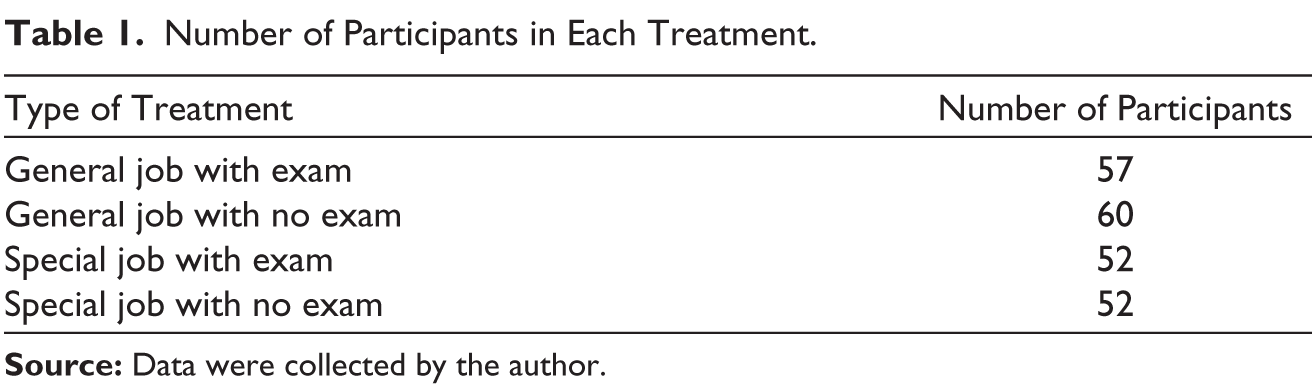
Table 1 shows the number of participants in each treatment group. The randomisation was successful in terms of the predetermined characteristics. There was roughly an equal number of aspirants according to age and gender in all four treatment groups.
Number of Participants in Each Treatment.
Choice of Variables
Entrance Exam versus No-Entrance Exam
A common exam is conducted to filter a large number of candidates at an earlier stage. Kumar (2015) interviewed experts from the public sector, and there was a unanimous criticism of the selection process. The author concluded from the analysis of the interviews that a complete re-engineering of the civil services is required. In an opposing view for recruitment without formal exams, Sundell (2012) argues that this system leads to nepotism and patronage in the civil service recruitment system. To avoid politicisation and nepotism in the civil services, it is necessary to maintain meritocracy. For the purpose of this study, the entrance exam condition was experimentally removed to see if it systematically shifts the characteristics of the pool of people who would consider applying for such a job. It also analyses whether the students want the government job irrespective of the entrance method.
Generalist Versus Specialist Type of Job
The Alagh Committee 2001 reported that students choose elective subjects according to the ability to score and not according to specialisation. The services are no longer generic, and they not only manage but also facilitate policies in their respective domains. This has created a need for domain expertise in government. Recently, the government did recruit some officers using the lateral-entry method as the need for experts was not fulfilled from within the services.
Awasthi (2020) conducted a Strengths, Weaknesses, Opportunities and Threats (SWOT) analysis of the lateral-entry scheme of the current government. 6,500 applications were received for 10 posts. The analysis suggests that the Indian Administrative Service (IAS) officers even after 10 years of service remain generalists. The lateral entry helps get domain expertise and a fresh viewpoint from outside the civil services.
Ferguson and Hasan (2013) studied the career paths of 3,122 IAS officers. They found that officers with specialised experience rather than diverse experience are preferred at the Central ministries for the posts of joint secretaries and above. They find strong evidence of educational performance on promotion to Central ministries. IAS officers with medical and science backgrounds were less likely to be promoted. They have identified that officers are frequently transferred, thus reducing their expertise within one sector. The relevant education of the civil servant also helps in getting a higher-order posting. This shows that the government prefers specialists. The strong empirical evidence strengthens the argument of specialising in the services.
In the present study, the job speciality criteria were manipulated to understand whether an aspirant preferred a generalist job or a specialist job. It would also help to understand the preference irrespective of the entrance method and with the entrance exam. Lastly, the paper provides an insight that if the services are specialised, will the current set of students apply for civil services? It would also help to understand whether the government should consider opening the doors for expert talent without the entrance exam.
Public Service Motivation
Public Service Motivation (PSM) is devised by Perry (1996) and revised and retested in Perry et al. (2010) and Perry (2014). In this study, a 14-item scale was used which was tested by Gupta et al. (2021) on the Indian population. Clerkin et al. (2009) found that students with higher levels of PSM were more likely to engage in charitable and volunteering activities. The PSM scores are indicators of their preference to work in the social sector. In another article, Clerkin and Coggburn (2012) concluded that PSM assessment is necessary for understanding the motivation of the recruits before selecting them in the public sector. Kjeldsen and Jacobsen (2013) concluded that the public service interest was positively related to students’ job preferences, but they also found contrary results that interest in policymaking had a negative effect on those who preferred civil service jobs. Asseburg et al. (2018) used PSM along with varying features in a job advertisement. They presented two job ads with different recruitment messages, one framed in an inspirational way and the other rationally. The inspirational messages were most effective in attracting students to public service jobs and this could be partially explained by the level of PSM of the applicant.
The PSM can also be used to test whether the level of PSM affects the willingness to apply for certain types of jobs. Testing this scale on the aspirant pool would also provide an insight into whether it could be included in the CSE exam like the aptitude test which was included in 2011 (Tangirala, 2014b).
Risk and Time Preferences
The experiment measures the risk and time preference. It is adopted from the Global Preference Survey (GPS) (Falk et al., 2015, 2016), and the abridged version of the scale, that is, the staircase method, is used. The scale asks the participants about their preference between a 50:50 gamble for ₹300 or a (varying) sure payment. The amounts presented against ₹300 varied according to the response to the previous choice set. For time preference, the participant chose between earning ₹100 today or (varying) monetary amounts earned after 12 months. The amounts presented against ₹100 varied according to the response to the previous choice set. The sequence of PSM, GPS risk and GPS time, is randomised for counterbalancing.
Design of Job Advertisements
The exam pattern used in the job advertisement for the treatment was the same as the exam pattern of the UPSC civil service exam, derived from Union Public Service Commission, 2021. The educational background requirement, CV, covering letter and interview process was the same as the one conducted by the NITI Aayog, a policy research organisation at the Central government, derived from NITI Aayog, 2021. The job descriptions were also adopted from the actual jobs available with the government. The names of actual organisations were not used to avoid bias about the names and to help participants focus only on the job descriptions and entrance criteria. Since the specialist job needs to be matched with a relevant educational background, the piped text function was used in Qualtrics. The bachelor’s degree that the student selected appeared exactly as the job requirement. If the student selected both, bachelors and masters, then both degrees appeared as the requirement of the job.
A similar design was used by Linos (2018). The main motive of the researchers was to understand how they can increase the number of applicants for the police service without reducing the quality of the applicants. They designed four different job advertisements with four parameters of how the job was presented.
Characteristics of the Participant Pool
The sample size of 221 consisted of students from age groups 18 to 32. The majority (n = 138) of the students belonged to the age group of 21–25. At the age of 21 years, a typical student completes a bachelor’s degree, which is a prerequisite for the civil service exams. There were 113 female participants, 107 male participants and one participant from the non-binary category. The educational backgrounds of the students were diverse. Out of 221, 70 aspirants were either pursuing or had completed a Master’s degree. The study did not differentiate between the students on the basis of their location—rural or urban—because the exam itself does not consider this factor.
Analysis and Discussion
Understanding the Preference of the Aspirants
The aspirants rated a generalist job higher than the specialist job. The mean rating for general job with exam is the highest and significantly different from the other job ratings, F (3, 217) = 6.862, p < .001. Figure 1 shows the mean rating for the specialised jobs with no-entrance exam is 6.94, while the rating for a general job with an exam is 8.58 out of 10.
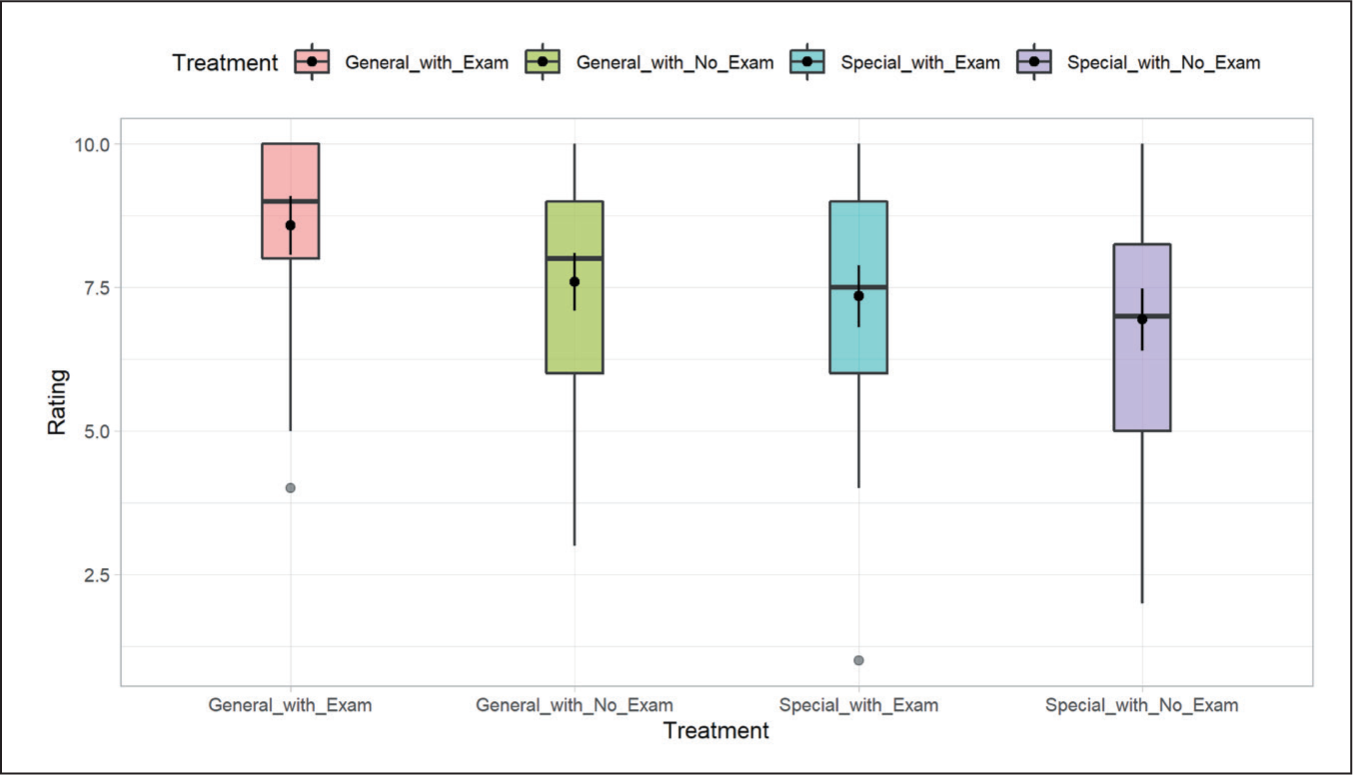
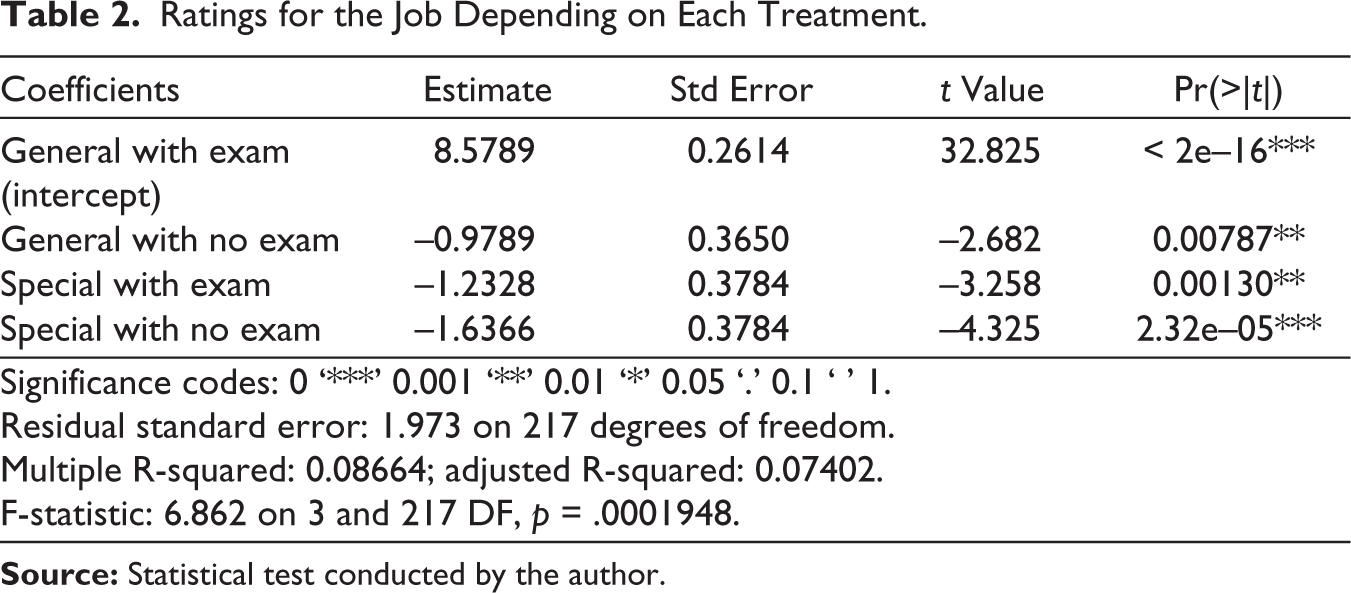
The mean rating for all the jobs differs significantly from each other (refer to Table 2). The primary analysis suggests that the aspirants prefer generalist roles and entrance exam.
Ratings for the Job Depending on Each Treatment.
The general job with the entrance exam resembles the current IAS while the special job resembles the job at the ‘NITI Aayog’.
Advertisements (see the Appendix) resembling these two jobs—IAS and NITI Aayog were shown as baseline and aspirants were asked to choose between the two. In the given choice frame, the majority of aspirants chose the generalist job with an exam (69%), despite both the jobs being the government ones.
This reiterates that keeping other things constant, such as salary, experience level and even the organisation, that is the government, aspirants self-select themselves in roles with entrance exams rather than the ones applied for using a CV, cover letter and an interview. They also prefer generalist roles over specialist ones. This indicates that the preference of aspirants does not differ from the status quo and if the government radically changes the system of selecting bureaucrats, the current set of aspirants would not prefer applying for the job.
Understanding the Preference Between Exam and No Exam
After controlling for the job type, and comparing the preference between exam versus no exam, it has been observed that the aspirants prefer exam criteria for entrance. The mean rating for the entrance exam (7.99/10) was significantly higher than the no-entrance exam condition. F (1,219) = 6.53, p = .011. The aspirants rate the no-exam condition 0.7 points less than the exam condition. They prefer the exam irrespective of the job type. The analysis suggests that if the aspirants are offered the same government job without an entrance exam, they would be less likely to choose it and still prefer the recruitment to using the entrance exam. Further analysis reveals an interesting observation that the aspirants prefer an exam if the role is a generalist, but for a specialist role, they are indifferent between exam or no exam.
There is a difference of 0.97 points in how the aspirants rate the exam criteria versus no-exam criteria within the generalist job role. This difference is significant F (1, 115) = 8.254, p = .00484). If the job is general, the aspirants prefer that the recruitment is through the exam process.
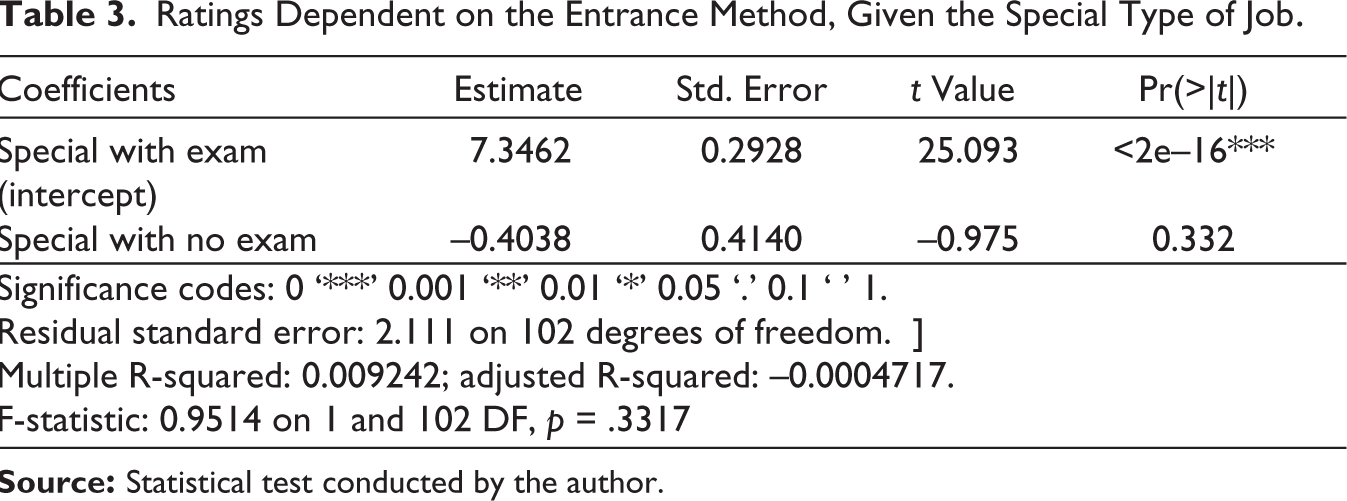
However, when the job is of a specialist, aspirants are indifferent between whether the entry to the job is through an exam or without an exam. The mean rating for the exam is higher but the difference is not significant F (1, 102) = 0.9514, p = .3317, suggesting that the aspirants do not consider the exam factor as important if it is a specialist role.
This suggests that if the government wants specialists in the services, the entrance method would not matter. If the government chooses the no-exam criteria for entrance, it will also attract students who are currently not applying.
Ratings Dependent on the Entrance Method, Given the Special Type of Job.
Understanding the Preference Between Generalist and Specialist Jobs
In this analysis, the entrance exam condition is controlled. The aspirants’ preference for the job type is analysed. It was observed that the aspirants prefer the generalist role over the specialist role. The difference between the mean ratings is 0.94 points, and it is significant F (1, 219) = 11.96, p < .001 (Figure 2).
Ratings for General Job and Special Job Condition.
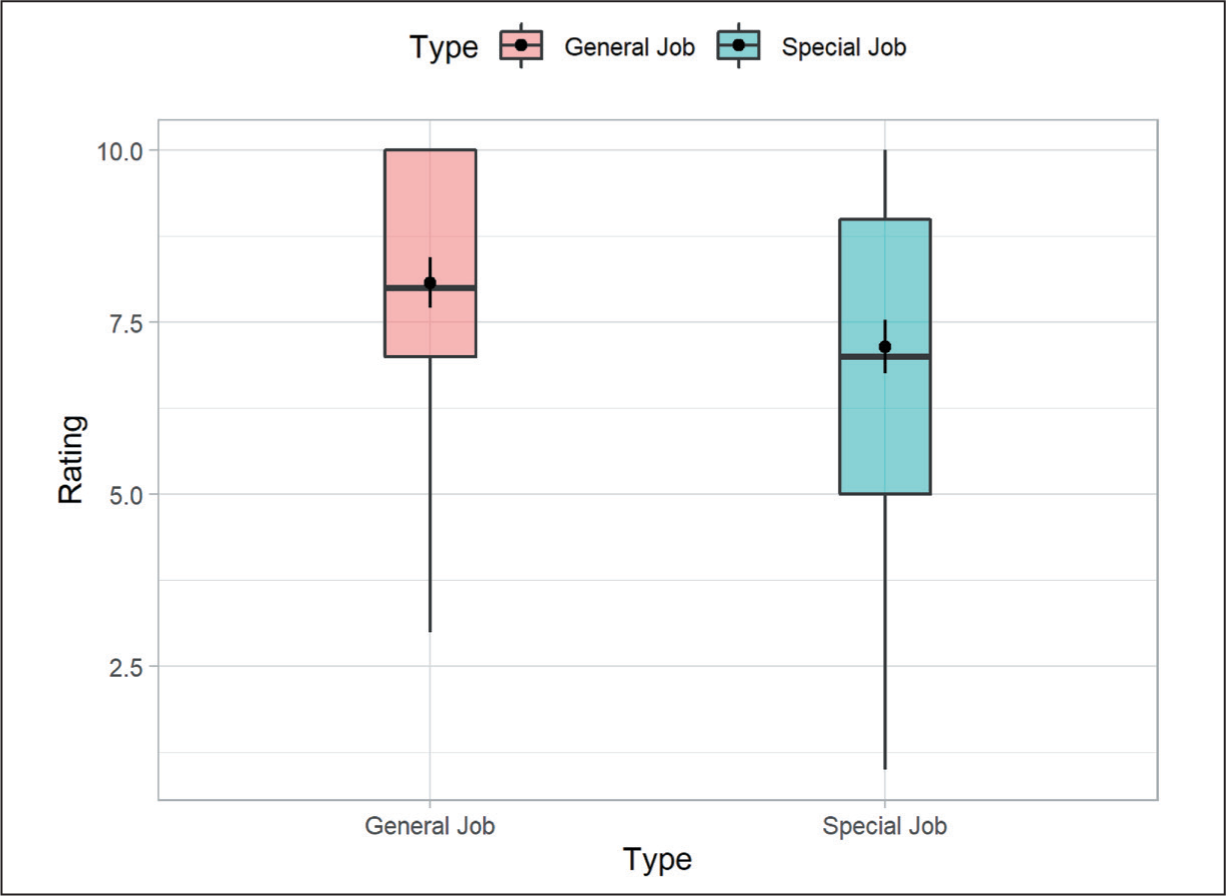
The mean rating for the generalist job irrespective of the entrance condition is 8.07, and the mean rating for the specialist job, irrespective of the entrance condition, is 7.144.
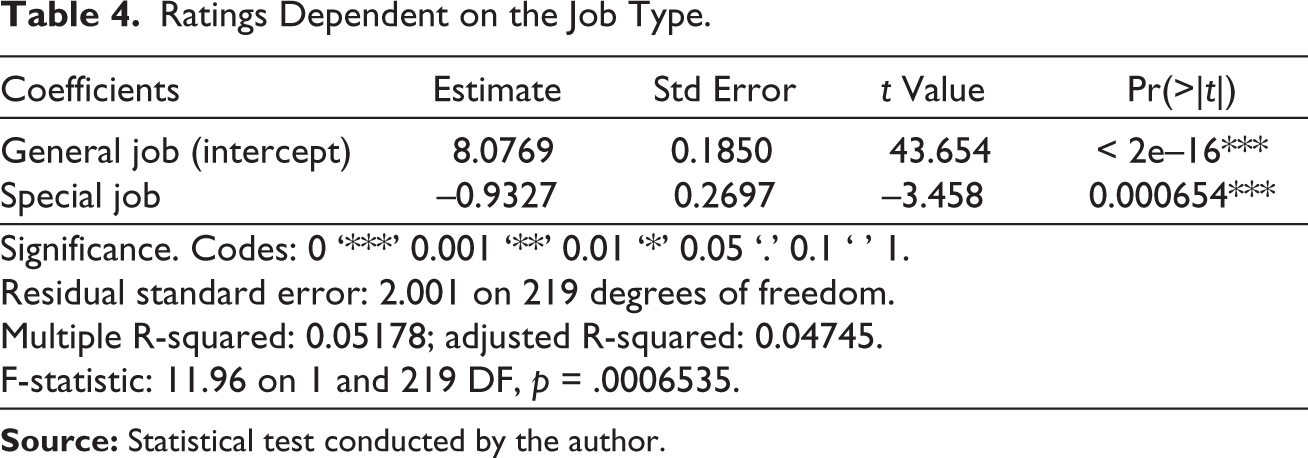
Table 4 suggests that the aspirants self-select themselves in the generalist roles over specialist roles. Even if both the jobs are within the government sector, the aspirants select the generalist roles. They are less willing to work as a specialist and would prefer managerial roles. The current aspirant pool would hence not be the right pool of students if the government wants specialists in the services. It will have to open the doors for the students who prefer specialist roles.
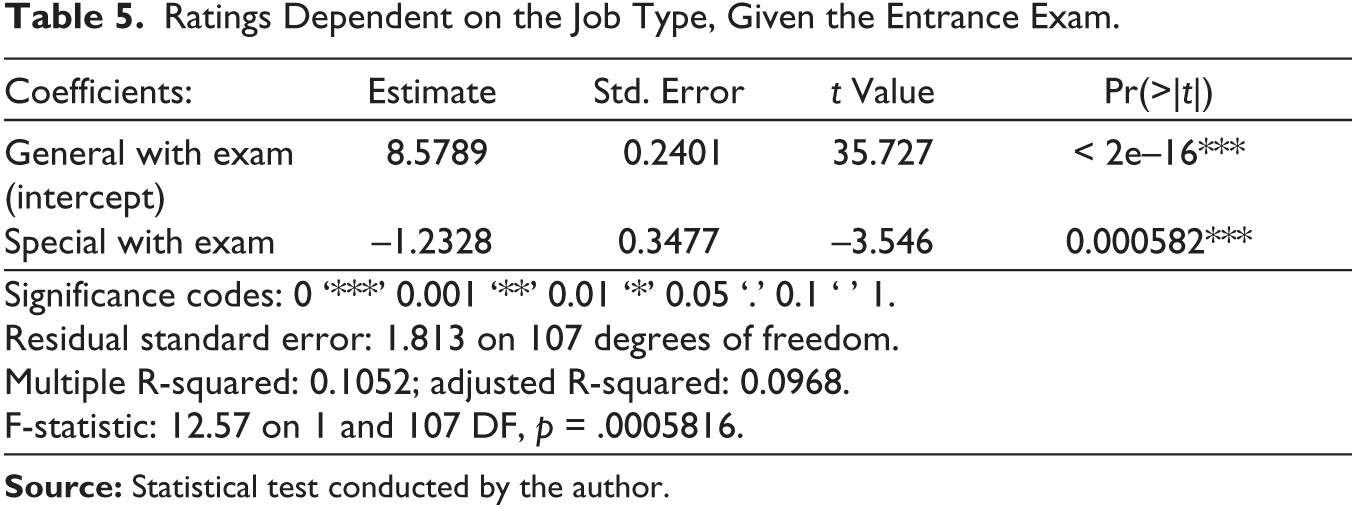
Table 5 suggests that given the entrance exam condition, the aspirants prefer a generalist job over a specialist job. There is a difference of 1.23 rating points between the two job types. This difference is significant. F (1, 107) = 12.57, p = .000582.
Ratings Dependent on the Job Type.
Ratings Dependent on the Job Type, Given the Entrance Exam.
This is observed in the present scenario as well. Certain government jobs require a special exam to be cleared. For example, the Indian Economic Services and Indian Engineering Services exactly resemble the specialists job with exam, and many aspirants are eligible for these exams. There is a higher probability of getting selected for a specialist service because of lower competition but the aspirants still prefer the generalist services.
Further, in the no-entrance exam condition, the aspirants become indifferent between specialist versus generalist role; F (1, 110) = 2.687, p = .104.
The job advertisement was customised for each participant in the treatment with a specialist job. This means that when the participant saw a specialist role with no exam, the educational background required was exactly the same as the aspirant possessed. Despite this, the aspirants rated the generalist role which had no requirement of a relevant educational background. The difference, however, is not significant. It is important to understand that aspirants do not consider their educational background as an important factor for selecting between jobs. Between the job relevant to their educational background and the other generic job, they prefer the generic job. This reiterates that the aspirants self-select themselves in generalist roles.
Bachelor’s Degree in Interaction with Job Type
This section discusses the finding that the aspirants do not consider their educational backgrounds while they apply for the job. Bachelor’s degree of the aspirants is classified into two types: special service bachelor and general service bachelor. The special service bachelor means that aspirants with these bachelor’s degrees have a relevant specialist service available in the government. The generalist service bachelor means that these aspirants do not have an exact service mapped with their educational background and they have to apply for generalist jobs. After the categorisation, the effect on the ratings of the jobs was checked, which was conditional on the job type and in interaction with the bachelor’s degree.
The difference in how the aspirants of two types of degrees, rate the job irrespective of the entrance type, is not significant. In other words, the general service bachelors and special service bachelors similarly rate the jobs. F (1, 217) = 0.04, p = .851.
The general service bachelor degree students rate the generalist job higher than the specialist job, but since the interaction is not significant F (1, 217) = 2.63, p = .106, the rating of the job type does not depend on whether the student is pursuing a special or general bachelor’s degree.
Understanding Job Preferences of Aspirants Pursuing or Completed Master’s Degree
There were 70 aspirants in the sample, who were either pursuing or had completed a master’s degree. The analysis checks whether the preference for job changes if the student is pursuing a masters’ degree.
A masters’ degree is pursued to attain specialist knowledge and work in a particular domain but the job preference does not change even when the student is pursuing masters. The analysis shows that the rating for the category special with the exam is the lowest (7.08/10) of the four. The rating for the generalist job with the exam is 8.47/10.
Students who are pursuing or have completed masters are eligible for the special services where there are a smaller number of applicants and hence have a better chance of getting selected. However, they are inclined towards the standard civil services. The Masters’ students rated the generalist roles higher than the others. The p-value for generalist jobs is significant and the other two jobs—generalist with no exam and specialist with exam—differ significantly from the intercept. The last category, special with no exam, does not differ significantly from the intercept. The results can be replicated on a bigger sample to get a robust analysis, but this can be indicative that the generalist job is preferred even by Masters’ students.
Effect of Risk Attitude on the Preferences of the Aspirants Between Exam and No Exam
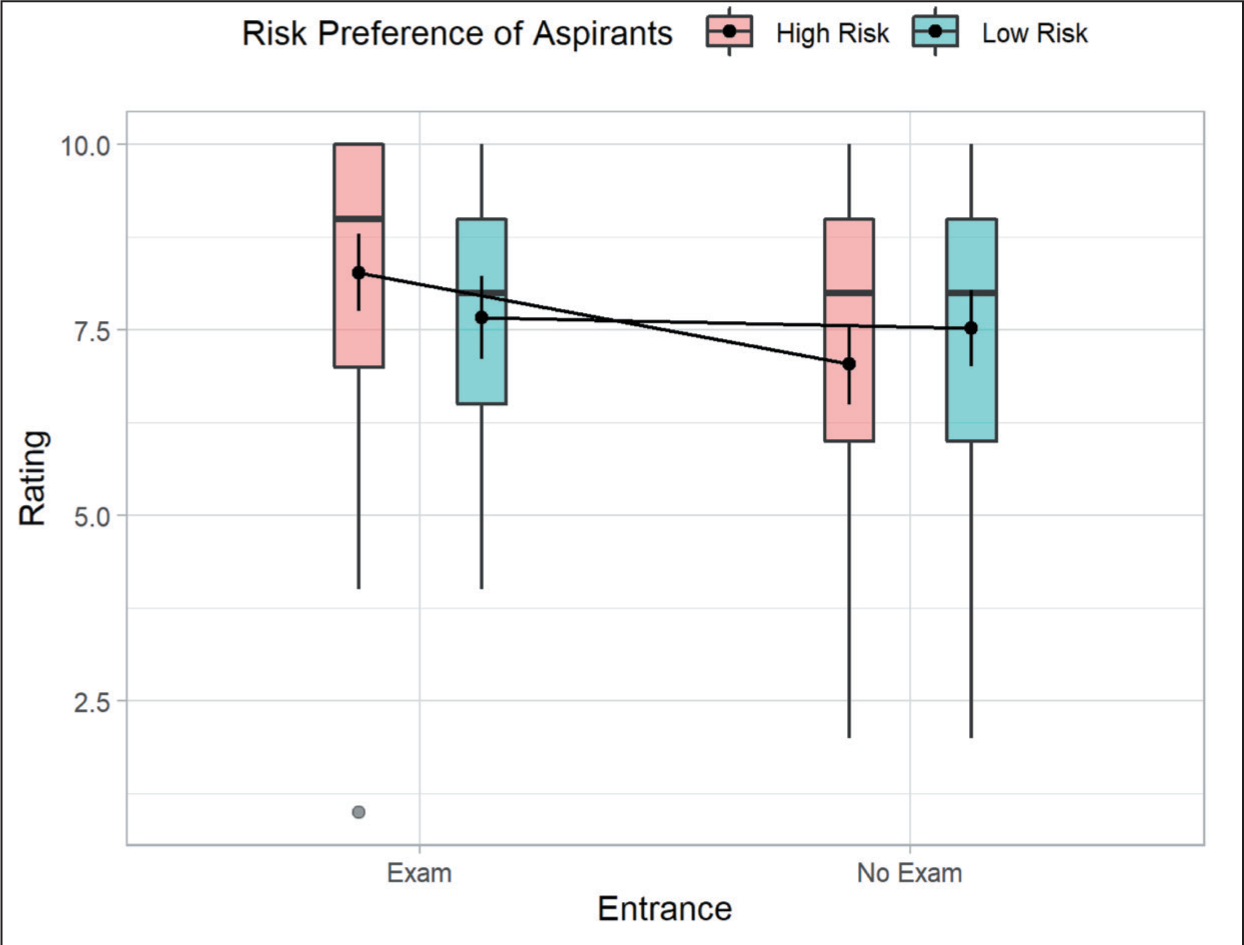
The risk preference measured was categorised into two levels: high risk and low risk (see Figure 3). The categorisation was based on the median score of the risk. The analysis shows how the ratings of the entrance type change with respect to the risk levels.
The interaction of the risk appetite and the entrance is significant, that is, risk score affects the ratings for the type of entrance—exam or no exam. Aspirants with a high-risk attitude prefer the entrance exam over the no-entrance exam. It can also be said that the entrance exam criteria attract risk-seeking students. The aspirants with high-risk attitudes prefer exams as compared to aspirants with low-risk attitudes. However, the aspirants with low-risk attitudes prefer no exam as compared to aspirants with high-risk attitudes; F (1, 217) = 4.08, p = .045. The government needs to consider this factor while designing the entrance criteria (Figure 3). It needs to be tested whether only a certain type of student aspires for the civil service job. The analysis has found that the preference for exams does change as a function of aspirants’ risk preferences.
The risk preference does not change with age. The risk attitude of the aspirants is stable in age groups; F (4, 216) = 1.58, p = .182.
Effect of Patience Scores on the Preferences of the Aspirants Between Exam and No Exam
The time preference is the willingness to give up something today to gain more of that later. It is the patience score of an individual, categorised as high patience and low patience. The categorisation was based on the median of the patience score. The analysis shows how the ratings of the entrance type change with respect to the patience levels (Figure 4).
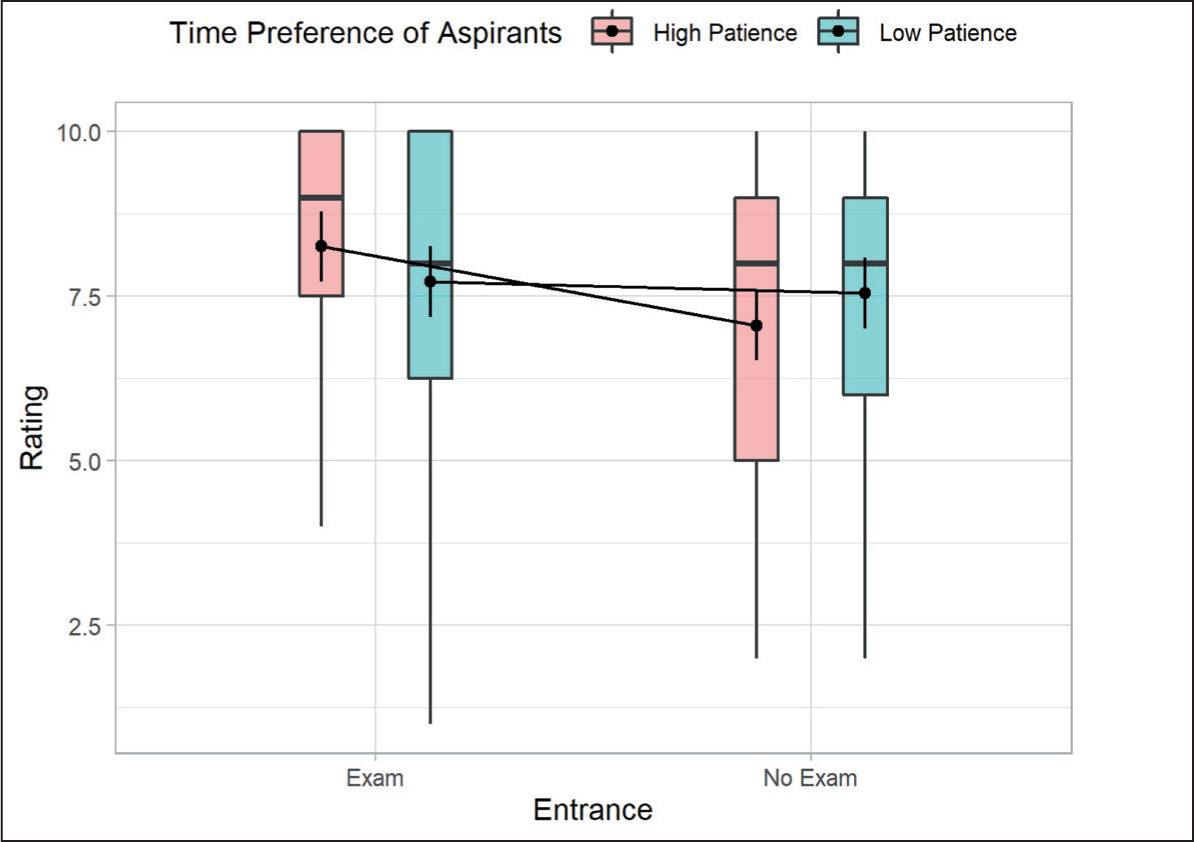
The difference in ratings across the patience levels is not significant. The ratings for jobs do not depend on what is the patience level (high versus low) of the aspirant; F (1, 217) = 0.01, p = .942.
There is no interaction between the patience level and the entrance type. The patience level cannot significantly determine what type of entrance an aspirant will choose; F (4, 216) = 1.58, p = .060. If this had been significant, it would suggest whether a person with high patience prefers an entrance exam. The graph shows that the high patience aspirant rating the exam criteria as higher, but since the interaction term is not significant, this is not the case.
The patience levels do not change with age; F (4, 216) = 0.68, p = .603.
Public Service Motivation
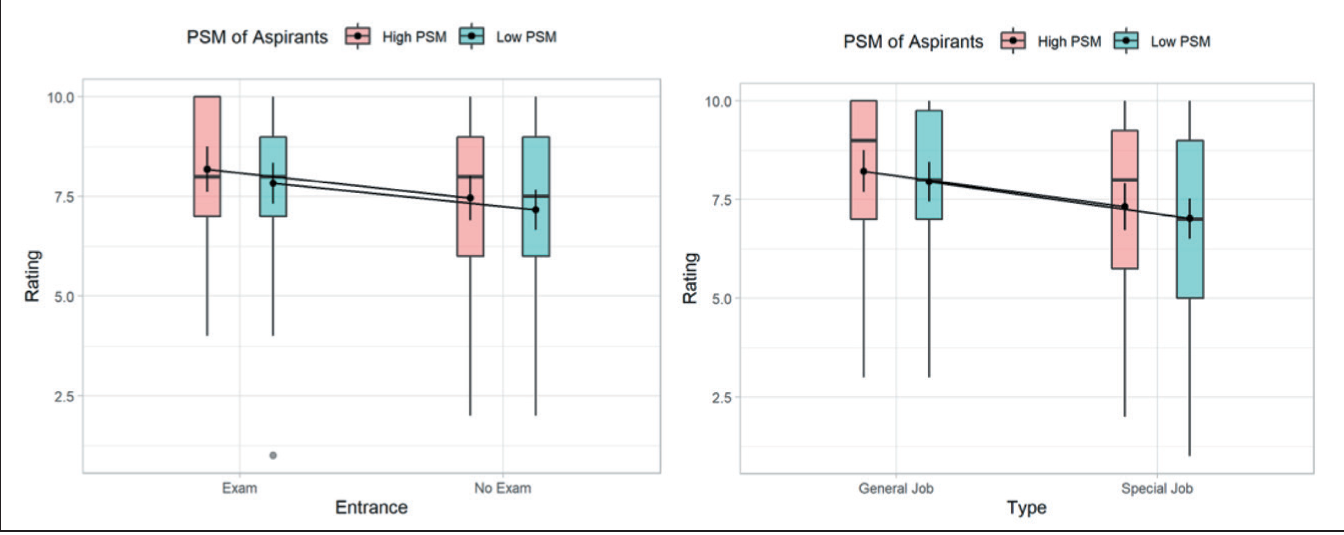
The mean PSM of all the aspirants in the sample is 4.51 out of 5. The PSM does not depend on gender. F (2, 218) = 0.57, p = .569. Male, female and other candidates are equally motivated for the public sector job. The PSM is stable across age levels. The difference in the values is not significant. F (4, 216) = 0.55, p = .701. This suggests that the PSM of the aspirants does not reduce or increase with age (Figure 5).
Effect of PSM on the Type of Entrance
The PSM was categorised as high PSM and low PSM. The categorisation was based on the median of the PSM score. The analysis explores whether the ratings of the entrance type change with respect to the PSM levels.
Irrespective of the entrance type, the difference in ratings for jobs between the PSM scores (high vs low) is not significant; F (1, 217) = 4.11, p = .238. There is no difference in how the high-PSM aspirants and low-PSM aspirants rate the jobs. The interaction is not significant, that is, PSM score does not affect ratings for the type of entrance—exam or no exam; F (1, 217) = 4.11, p = .925. There is no evidence of whether aspirants with a high PSM or low PSM prefer the entrance exam over the no-entrance exam. This evidence is, however, within the aspirants. There can be non-aspirants with high PSM, but the entrance exam affects their willingness to apply for the job.
Effect of PSM on the Type of Job
The analysis explores whether the ratings of the job type change with respect to the PSM levels.
Irrespective of the job type, the difference in ratings between PSM (high vs low) is not significant; F (1, 217) = 4.02, p = .298. Interaction is not significant, that is, PSM scores do not affect ratings for the type of job: special or general; F (4, 217) = 4.02, p = .9490. The students who select either of the jobs are equally motivated for public service.
Conclusion
The effectiveness of the civil services is based on the human resources it recruits. The right method of selection is essential to target the relevant aspirant pool and to filter the best of the minds for the services. Who apply for the government job and how they are selected is very important.
Experimental evidence suggests that the aspirants of the civil services in India are not yet ready to move from the existing system of entrance exams for the job. The aspirants strongly prefer the entrance exam as a recruitment strategy. They are not ready to apply for the same government post by showcasing their skill sets using a CV and an interview, the standard method used in the private sector.
The study also finds that aspirants self-select themselves in a generalist role over a specialist role. They do not prefer a specialist role even if it is within the government. Surprisingly, aspirants are ready to appear for an exam for a generic job, but they are not willing to sit an exam for a specialist job. Further, it was also revealed that the aspirants are not willing to take up a specialist job even if it is offered without an exam. This is irrespective of age, gender and other socio-demographic background, as the randomisation of participants was effective in these predetermined characteristics. In each of the four treatment groups, the number of aspirants is about equal by age and gender.
Unfortunately, they do not consider their educational background before applying for a job. This is true even for the aspirants who are pursuing or who hold a Master’s degree. This indicates that the aspirants are overfocusing on factors of jobs that are not relevant to their educational backgrounds. If the government wants to make good use of the talent, it needs to explain to the aspirants the roles and responsibilities correctly. It should match the educational background with the type of services. This will significantly lower the quantity of applicants but help to increase the quality.
If the government removes the entrance exam or connects job requirements with the educational background, it will significantly change the applicant pool. Removal of the entrance exam and using a different recruitment strategy will help to diversify the talent pool.
The learning for the specialist versus the generalist argument here is that the aspirants of the CSE exam are not willing to work as specialists, and if the government wants subject matter expertise, it may need to open the doors for fresh talent by targeting a new pool of students.
A further study comparing aspirants and non-aspirants needs to be conducted to reach robust conclusions. Conducting this study on a student population in general will help to understand exactly whether the entrance exam is currently deterring some students from entering the civil services. The preferences of the non-aspirant population would provide insight into whether it is different in terms of the variables of interest such as educational backgrounds, risk and time preferences and PSM. The comment regarding opening doors for the larger talent pool for getting expertise in the government would have been firmly concluded if the aspirant versus non-aspirant comparison was available. It would be interesting to analyse the difference in risk and time preferences, especially PSM between the aspirants and the non-aspirants. This remains a future scope of another study.
Footnotes
Author’s Note
This manuscript is part of the dissertation conducted during MSc Behavioural and Economic Science (2020–2021) at University of Warwick.
Declaration of Conflicting Interests
The author declared no potential conflicts of interest with respect to the research, authorship and/or publication of this article.
Funding
The author received no financial support for the research, authorship and/or publication of this article.