




Abstract
This study examines the allocation and fluctuation of 12 major categories of government spending at the state level in India. Using panel data from 15 prominent Indian states from 1990 to 2021, a panel autoregressive distributed lag (ARDL) method is employed. The findings reveal that increased central government funding encourages spending on education, agriculture, irrigation, disaster management, nutrition, and rural and urban development. In contrast, economic growth and increased revenue shift focus to energy, healthcare, urban development, transportation, communication, and water supply and sanitation. High public debt adversely affects all spending categories, highlighting the cyclic nature of various expenditures.
Keywords
Introduction
The effective allocation of public resources through prioritised spending 1 is a crucial element of fiscal policy that significantly impacts economic development and social welfare. Understanding how governments prioritise spending across different sectors over the business cycle is essential for effective policymaking and resource allocation. While extensive research has explored the cyclicality of public expenditure 2 and macro-fiscal factors at the national level (Afonso & Jalles, 2013; Jalles, 2020, 2021), there remains a notable gap in understanding the cyclical patterns and priorities of public expenditure across various sectors in emerging economies. India is one of the fastest-growing emerging economies, and its diverse regional characteristics make it an intriguing case for studying public spending prioritisation dynamics. This study aims to address this gap by providing a comprehensive analysis of public spending priorities across various sectors in Indian states, offering valuable insights for policymakers and practitioners involved in fiscal management and resource allocation.
Existing research suggests that social spending, including areas like health and education, tends to exhibit acyclical behaviour, while spending on social security and welfare shows countercyclical patterns in developed countries (Afonso & Jalles, 2013). Similarly, studies focusing on developing economies have found that government spending on social sectors, such as health, education and social protection, tends to remain relatively stable over time (Jalles, 2020). Recent investigations utilising time-varying measures have revealed that the cyclicality of government spending varies across different expenditure categories in advanced economies (Jalles, 2021). For instance, total government spending, wages, goods and services expenditure, primary expenditure, and interest payments exhibit countercyclical behaviour, indicating a negative relationship with output growth, while public investment tends to be procyclical. Previous studies have examined spending behaviour over the business cycle using macroeconomic determinants such as per capita gross domestic product (GDP), trade openness, government size, financial development and public debt (Jalles, 2021). These findings highlight the importance of understanding the dynamics of public spending priorities in different sectors and their implications for economic stability and growth.
The idea of spending prioritisation stems from the literature on fiscal space for the social sector, particularly the health sector, which has historically received lower budgetary allocations compared to other spending categories (Barroy et al., 2018; Tandon et al., 2014). These studies argue that spending prioritisation is strongly linked to conducive macro-fiscal policies. While a few studies in India have explored spending prioritisation and its macro-fiscal impact at the state level (Behera & Dash, 2019a, 2019b; Behera et al., 2020), these studies have primarily focused on specific sectors, such as the social sector, and have not comprehensively analysed the prioritisation of spending across multiple categories. Our study seeks to fill this research gap by providing a comprehensive analysis of public spending priorities across a range of sectors, including education, agriculture, energy, health, rural development, urban development, social security, irrigation and flood control, transport and communication, water supply and sanitation, and nutrition. Using extensive panel data from 15 major Indian states, we employ a panel autoregressive distributed lag (panel ARDL) approach to assess the cyclicality of state government spending in various categories and to identify the underlying determinants of sectoral spending priorities.
While the literature adopts a variety of methodological approaches to analyse expenditure cyclicality and prioritisation—primarily through time-series and panel data models—our study advances this by incorporating more robust techniques. These include unit root tests (Dickey & Fuller, 1979; Im et al., 2003; Levin et al., 2002), cross-sectional dependence (CSD) tests (Pesaran, 2004), and dynamic panel estimators such as the pooled mean group (PMG) estimator (Pesaran et al., 1999). Furthermore, we apply the cross-sectional ARDL approach proposed by Chudik et al. (2016), which allows for heterogeneous effects and cross-sectional correlations, thereby enhancing the robustness and validity of the results.
To the best of our knowledge, this is the first study to estimate the cyclical patterns of different categories of state government spending in India using this comprehensive framework. Additionally, the analysis incorporates key macroeconomic variables—such as economic growth, aggregate revenue, central transfers, public debt and financial development—to explore the factors influencing subnational spending decisions. These contributions distinguish our work from existing studies and provide novel insights into the nuanced dynamics of public spending prioritisation. The findings are expected to assist policymakers in aligning budgetary allocations with macroeconomic conditions and long-term development goals.
The remainder of the article is structured as follows. Section II presents a review of the relevant literature. Section III outlines the data sources and methodology adopted in the study. Section IV discusses the empirical findings, with a focus on the cyclicality and key determinants of spending prioritisation across Indian states. Finally, Section V concludes with the main insights and policy implications.
Literature Review
This section reviews the global and Indian literature on the cyclicality of public expenditure, sectoral spending prioritisation, and the political economy of fiscal policy. Emphasis is placed on insights relevant to India’s federal fiscal structure, with a particular focus on various development sector spending. The review is structured thematically to align with the conceptual framework and empirical objectives of the study.
Cyclicality of Public Expenditure: Global and Developing Country Evidence
A substantial body of empirical work has examined whether public expenditure behaves procyclically—rising during economic booms and contracting during downturns—or countercyclically, in line with Keynesian stabilisation principles. However, evidence from developing and emerging economies suggests a predominance of procyclical behaviour, often attributed to institutional weaknesses and fiscal rigidity.
Bova et al. (2014), in a cross-country International Monetary Fund (IMF) study, report that many developing countries display procyclical fiscal policy due to weak institutional frameworks and the absence of effective fiscal rules. Similarly, Gupta et al. (2010) find that social spending—particularly on health and education—is more vulnerable to procyclical patterns, with sharp increases in spending during booms but relatively mild reductions during recessions. This asymmetric response poses risks to long-term human development objectives.
Expanding on these findings, Afonso and Jalles (2013) and Jalles (2020, 2021) explore the time-varying nature of fiscal cyclicality across social sectors. Their results, drawn from diverse country samples, highlight substantial heterogeneity in cyclicality patterns, shaped by fiscal space, governance, and political incentives. Aizenman et al. (2019) also underscore the centrality of fiscal space in determining governments’ ability to adopt countercyclical policies, while Brueckner and Gradstein (2014) distinguish between responses to temporary versus persistent shocks, revealing the procyclical bias of developing economies under institutional constraints.
Sectoral Spending and Prioritisation: International and Indian Contexts
Sectoral allocation decisions—especially in health, education and infrastructure—are shaped by political, fiscal and developmental considerations. Abbott and Jones (2013, 2021, 2022) find that in Organisation for Economic Co-operation and Development (OECD) countries, the cyclicality of sectoral spending, including health and environmental expenditure, often reflects political incentives and voter pressures rather than stabilisation goals. Liang and Tussing (2019) further demonstrate the implications of cyclical health spending on public health outcomes.
In the Indian context, Goyal and Sharma (2015) analyse the composition and cyclicality of government expenditure and conclude that capital expenditure is more growth-enhancing and less procyclical than revenue expenditure. Ramanjini and Gayithri (2020), focusing on education expenditure across Indian states, identify a strong procyclical tendency, with budget cuts during slowdowns driven by revenue pressures. These findings are consistent with Behera and Dash (2019a, 2019b) and Behera et al. (2020), who emphasise persistent underinvestment in health at the state level, constrained by fiscal transfer mechanisms and limited revenue autonomy.
Bose and Banerjee (2025) critique the growth-centric fiscal paradigm in India and call for a macro-fiscal framework that embeds human development priorities. Similarly, Tandon et al. (2014) and Barroy et al. (2018) argue that reprioritising public expenditure towards health and social infrastructure is essential for achieving the Sustainable Development Goals (SDGs), but fiscal space and inter-sectoral trade-offs remain major hurdles.
Political Economy of Fiscal Policy and Federal Dynamics
Political and institutional factors significantly influence fiscal behaviour and spending priorities. Ayala-Cañón et al. (2022) show that social spending tends to synchronise across countries during crises, revealing a political dimension to expenditure decisions. Mawejje and Odhiambo (2022) demonstrate the influence of political regimes and governance quality on fiscal cyclicality in East Africa.
In India, the federal structure adds another layer of complexity. Behera et al. (2020) suggest that central transfers can moderate procyclical tendencies at the state level, although disparities in fiscal capacity remain pronounced. This is consistent with Xing and Fuest’s (2018) findings in the Chinese context, where decentralised fiscal arrangements exacerbate procyclical spending due to revenue uncertainties and soft budget constraints.
Official policy documents also reflect evolving concerns. The Economic Survey 2021–2022 (Ministry of Finance, 2022) stresses the need to strengthen countercyclical buffers and reprioritise expenditure in health and infrastructure as part of post-pandemic recovery. The Economic Survey 2016–2017 (Ministry of Finance, 2017) highlights that subnational fiscal stress often leads to disproportionate cuts in social sector spending, especially when debt obligations and revenue shocks hit state budgets.
Despite a growing body of work, several gaps remain. Most studies either examine national-level aggregates or focus on isolated sectors, leaving a gap in state-level, cross-sectoral assessments of expenditure cyclicality. Moreover, few empirical studies systematically incorporate political and institutional determinants into models of fiscal behaviour at the subnational level. There is also insufficient alignment between empirical findings and the policy discourse articulated in official surveys and fiscal documents. This study addresses these gaps by conducting a panel analysis of sector-specific expenditure cyclicality across Indian states, using macro-fiscal variables. By grounding the analysis in a more diverse and robust body of literature, the study aims to inform the design of more resilient and equity-oriented fiscal policies at the subnational level in India.
Data and Methodology
Data
Variables and Data Sources.
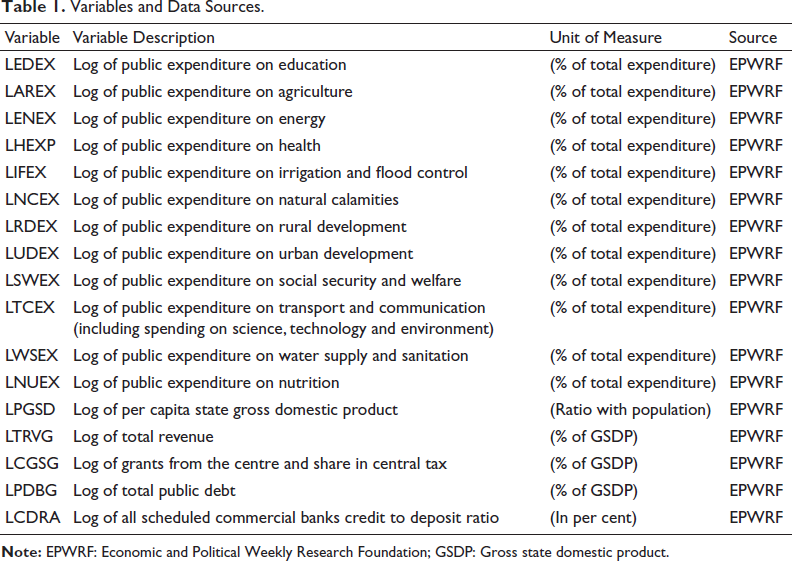
Variables and Data Sources.
Methodology
The study aims to investigate the effect of macro-fiscal variables on selected public spending in Indian states. Specifically, it explores the impact of economic growth, total revenue, grants and tax share from the central government, public debt and financial development on various categories of public spending. Additionally, a separate analysis is conducted to measure the influence of the business cycle, considering economic growth during both good and bad years, along with other relevant variables. The model specification for the econometric analysis is shown below.

In Equation (1),
This study employs a panel ARDL approach to model the dynamic relationship between sectoral government expenditure and macro-fiscal variables across 15 Indian states over the period 1990–2021. The panel ARDL model is chosen due to its suitability for our data set. It can accommodate a mix of stationary variables, including I(0) and I(1), and applies to studies with small sample sizes, providing reliable estimates even with limited observations. With 15 cross-sections and a 32-year time series, which may be considered relatively small for most panel studies, the method adequately addresses the data characteristics. It addresses potential endogeneity issues in panel data analysis by incorporating lagged dependent variables and other exogenous variables. Furthermore, it captures both the short-run dynamics and long-run equilibrium relationships in a heterogeneous panel setting, where states differ in economic structure, fiscal capacity and policy environment.
Given the characteristics of the Indian states, the panel ARDL method, particularly the PMG-ARDL estimation, is adopted in this study. The PMG estimator, proposed by Pesaran et al. (1999, 2001), is based on the assumption that cross-sectional units (here Indian states) share a common long-run equilibrium relationship, while allowing for heterogeneity in short-run dynamics, intercepts and error variances. This makes it particularly appropriate when long-term fiscal responses are expected to be similar across units, but short-term adjustments differ. Equations (1)–(6) can be expressed in the panel ARDL form developed by Pesaran et al. (1999, 2001) as:

The extended model can be expressed in the following form.

As the study uses 12 types of public spending, 12 models are estimated based on Equation (2), and a further 12 models are estimated based on Equation (3). The following models are therefore estimated.












All models from Equations (5) to (15) are estimated using panel ARDL methods. For example, for public expenditure on education, the model can be specified as follows.

For the extended model, it can be specified as follows.

Where
Descriptive Statistics Results
Descriptive Statistics.
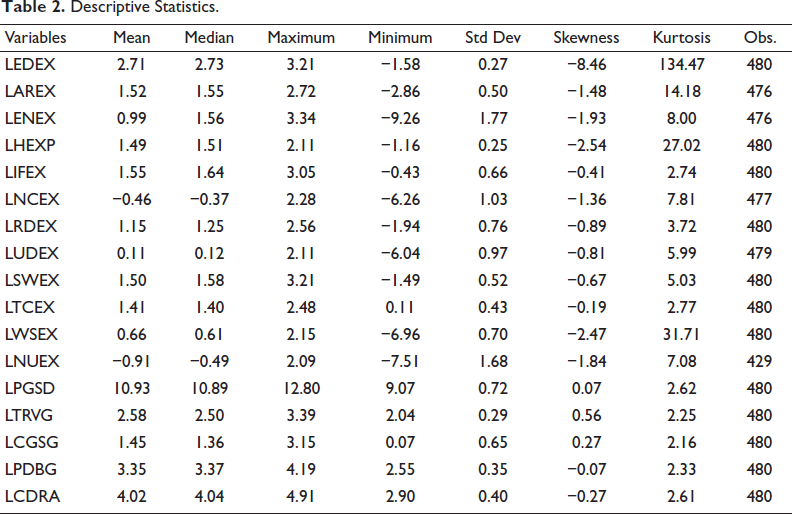
Descriptive Statistics.
Results of Panel Unit Root Tests
Results of the Unit Root Test.
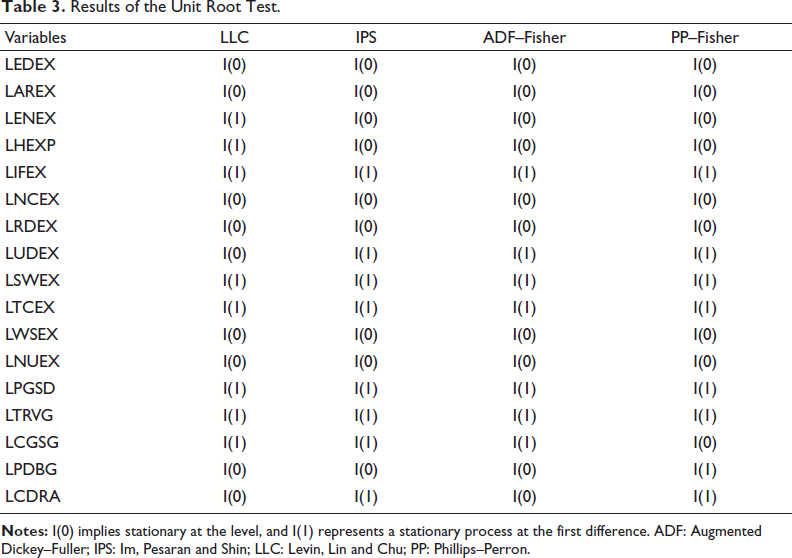
Results of Panel ARDL
This section sheds light on the factors influencing the allocation of public funds by subnational governments and highlights the importance of central government transfers, economic growth, revenue generation, financial development, and public debt burden in determining public spending priorities (Table 4). Both Akaike information criterion (AIC) and Schwarz information criterion (SIC) are applied to determine the optimal lag length of the selected models. 6 The analysis includes both the long-run and short-run effects. Let us discuss the results of the long run, followed by the short run.
The estimated results (Model 1) demonstrate that grants and shared taxes from the central government and financial development have a positive and highly statistically significant influence on public education spending. Conversely, higher economic growth and increased revenue exhibit a negative impact on public spending in the education sector. Furthermore, an escalation in public debt also has an adverse effect on public spending on education. Consequently, when the state government receives greater grants and shared taxes from the central government, they are more inclined to allocate a higher proportion of its budget to education. This trend is similarly observed in regions with greater financial development.
In Model 2, an increase in grants from the central government and financial development led to a rise in public spending on agriculture. Conversely, a higher debt burden and increased revenue tend to reduce public spending on agriculture. However, there is no statistically significant relationship found between economic growth and public spending in the agricultural sector. However, the findings of Model 3 confirm that higher economic growth has a positive and significant impact on public spending on energy. Additionally, both high revenue and financial development exert a favourable influence on public spending in the energy sector. Surprisingly, higher grants from the central government have an adverse impact on public spending on energy.
Upon analysing Model 4, it is observed that high economic growth has a more pronounced effect on public spending on health, indicating that regions with higher growth tend to allocate more resources to the healthcare sector. Conversely, higher public debt exhibits a negative impact on public spending on health. When examining public spending on irrigation and flood control (Model 5), it becomes apparent that only grants from the central government have a positive impact on this sector. The remaining variables exhibit adverse effects. Furthermore, the analysis indicates that public spending on natural calamities increases only when higher grants and tax shares are received from the government (Model 6). High economic growth, revenue and public debt do not significantly influence public spending on natural calamities.
The empirical findings concerning public spending on rural development (Model 7) reveal that, on average, states tend to reduce their public expenditure on rural development in response to higher economic growth, increased revenue collection, and a greater burden of public debt. However, if these states receive more grants from the central government and experience improved financial development, they are more likely to allocate additional resources to rural development. Similarly, for public spending on urban development (Model 8), it is discovered that states tend to increase their spending on urban development when they experience higher economic growth. Furthermore, greater financial development and increased revenue receipts from the central government also contribute to increased spending on urban development. Consequently, higher economic growth leads to a greater emphasis on urban development compared to rural development.
The findings from Model 9 indicate that higher economic growth has a positive and significant influence on public expenditure dedicated to social security and welfare. Similarly, total revenue and financial development also exhibit positive and significant impacts on public spending in this sector. Conversely, a higher burden of public debt results in a decrease in public spending on social security and welfare. Notably, grants from the central government are not utilised for public expenditure in this area. Hence, higher economic growth, increased tax and non-tax revenue, and enhanced financial development are the primary drivers of public spending on social security and welfare. Regarding the long-term outcomes of the transport and communication model (Model 10), it is observed that high economic growth and increased revenue lead to a higher allocation of public funds for transport and communication. Conversely, a rise in the burden of public debt negatively affects public spending in this sector. Thus, the analysis suggests that states prefer to allocate more resources to the development of transport, communication and technology through avenues other than incurring public debt or relying on grants and tax shares. Instead, they prioritise utilising their higher economic growth and revenue collection for this purpose.
In Model 11, the findings suggest that state governments are inclined to increase their expenditure on water supply and sanitation when they experience higher economic growth and achieve high revenue collection. Conversely, higher public debt and increased revenue receipts from the central government discourage spending in this sector. Moving on to Model 12, it is confirmed that higher revenue receipts from the central government have a positive and highly significant impact on public spending on nutrition. However, higher economic growth and increased revenue exhibit an adverse impact on public spending in the nutrition sector.
Results of Panel Autoregressive Distributed Lag (ARDL) Models.
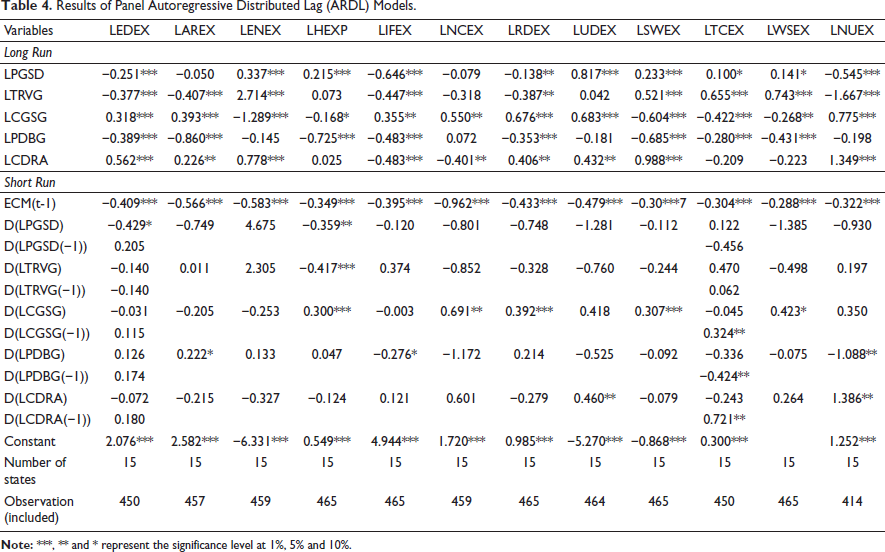
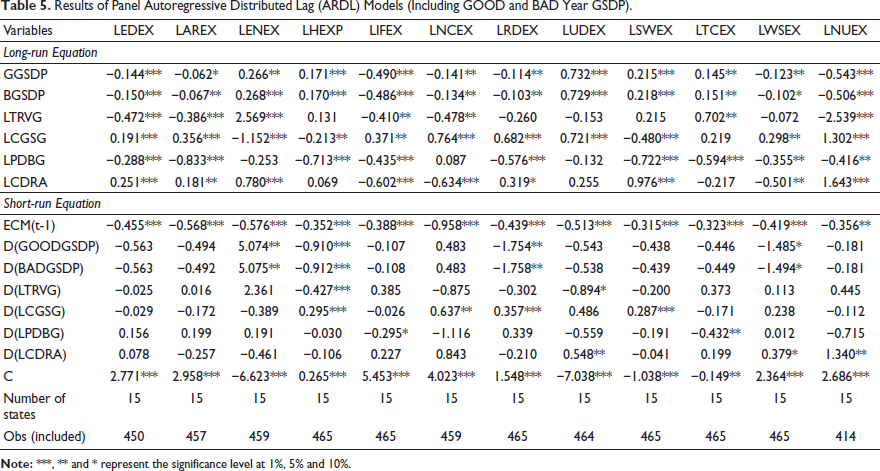
As mentioned earlier, to assess the impact of the business cycle, we have incorporated good-year growth and bad-year growth variables into all respective models, alongside other independent variables. This means that we have re-estimated the Models 4–15, considering both good-year growth and bad-year growth. These findings demonstrate how the business cycle, as captured by good-year growth and bad-year growth variables, influences state governments’ decisions regarding public spending in different sectors (Table 5).
Results of Panel Autoregressive Distributed Lag (ARDL) Models (Including GOOD and BAD Year GSDP).
Addressing CSD: Evidence from CS Augmented ARDL (CS-ARDL) Estimation
This section addresses the possibility of CSD across Indian states. CSD arises when states are influenced by common national shocks or coordinated policy responses. Ignoring such dependence can lead to biased and inefficient estimates.
Cross-sectional Dependency Results.
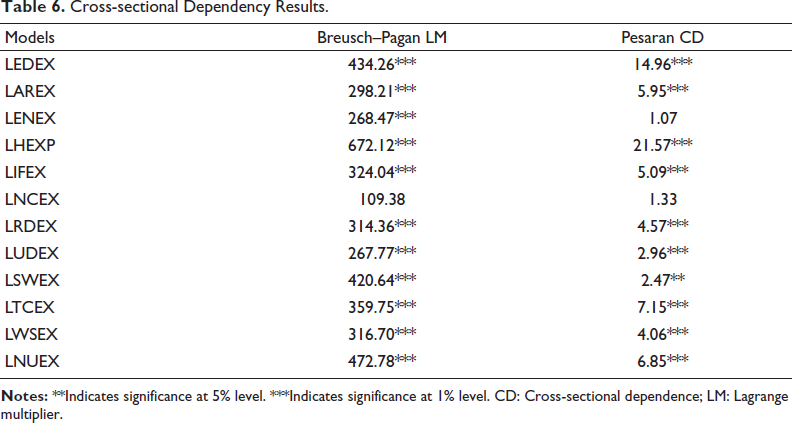
To address this issue, we employed the CS-ARDL estimator developed by Chudik and Pesaran (2015). This method augments the standard ARDL framework by incorporating cross-sectional averages of both the dependent and explanatory variables. It helps account for unobserved common factors and corrects for CSD. In addition, CS-ARDL allows for heterogeneity in both short-run and long-run coefficients across states, which is particularly useful in a federal context where states differ in fiscal capacities and policy responses. The model also accommodates variables with mixed orders of integration and the possibility of cointegration relationships.
The estimation results from the CS-ARDL model are presented in Table 7. Economic growth shows a significant positive long-run effect on spending in health, social welfare, transport and nutrition sectors, and a negative effect on irrigation and flood control. Total revenue is negatively associated with education and urban development expenditures, but positively linked with social welfare. Grants-in-aid have a positive and significant impact on most sectors, highlighting their supportive role in enabling state-level expenditure commitments. Public debt has a consistently negative and significant effect on several sectors, such as rural development and agriculture, underscoring the fiscal constraints imposed by debt servicing. Financial development shows weak and inconsistent effects.
Cross-section Augmented Autoregressive Distributed Lag (CS-ARDL) Estimation Results.
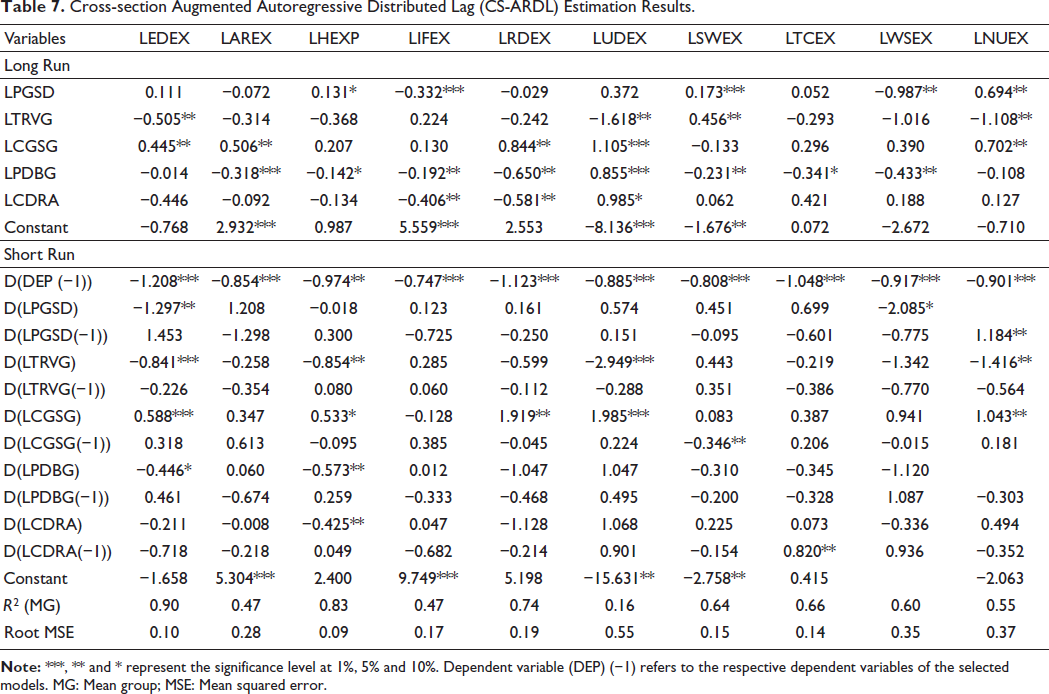
Short-run dynamics are significant in several models, particularly the lagged dependent variable, indicating stable adjustment processes. The results are generally consistent with those obtained under the PMG estimator. Overall, the CS-ARDL results corroborate the key findings from the PMG estimation while offering greater robustness by explicitly accounting for CSD and unobserved heterogeneity. This strengthens the credibility of the empirical results and reinforces the policy implications drawn from the study.
Critical Discussion of Results
The study results explain the cyclical (procyclical, countercyclical and acyclical) response to economic growth on public expenditure categories across Indian states using the panel ARDL model. The study utilises panel ARDL models and incorporates control variables such as total revenue, grants from the centre, share in central tax, total public debt, and the credit-deposit ratio of all scheduled commercial banks to assess their effects on public expenditure at the state level. The uniqueness of the study lies in its analysis of subnational level public expenditure data for various categories, allowing for an assessment of government prioritisation of spending in India.
The long-term findings validate that increased economic growth prioritises expenditures in energy, health, urban development, transportation and communication, water supply and sanitation, while neglecting public spending on education, irrigation and flood control, rural development and nutrition. Likewise, when aggregate revenue rises, subnational governments tend to allocate more public funds towards energy, social security and welfare, transportation and communication, technology, water supply and sanitation over the long run. However, an increase in the central share enhances public spending on education, agriculture, irrigation and flood control, natural calamities, rural development, urban development and nutrition. Financial development also aids in prioritising public spending on education, agriculture, energy, rural development, urban development, social security and welfare, and nutrition at the subnational level in the long run. The findings also confirm that higher levels of public debt have an adverse impact on most of these selected public spending at the subnational level over the long term.
The study reveals that state government spending on agriculture is countercyclical, indicating that spending is reduced during bad years and increased during good years. On the other hand, energy and health spending exhibit acyclical behaviour, implying that government spending remains unchanged regardless of the economic conditions. Spending on irrigation and flood control, natural calamities and rural development is found to be procyclical, with the government reducing spending in good years and increasing it in bad years. In contrast, spending on social security and welfare, nutrition, transport and communication is countercyclical, meaning that state governments spend more on these categories during bad years compared to good years. The study aligns with previous research that suggests government spending on education, health, and social security does not significantly change during economic fluctuations in emerging and developing countries (Afonso & Jalles, 2013; Jalles, 2020). Few studies have argued that developed countries tend to exhibit less spending procyclicality due to better institutions and fiscal stabilisation policies (Jalles, 2021).
Other factors such as public debt, trade openness, government size and political constraints have also been identified in past studies as determinants of government spending cyclicality (Aizenman et al., 2019; Jalles, 2020). Public debt is a robust determinant of procyclicality in government spending, particularly in developed countries (Aizenman et al., 2019). Transitory shocks, such as yearly variations in rainfall, can also influence spending patterns in developing countries (Brueckner & Gradstein, 2014). They argue that government expenditure on consumption shows a persistent effect due to year-to-year variation in the real GDP, as compared to transitory shocks in developing countries. Xing and Fuest (2018) argue that government spending is procyclical during the economic reform period, while less procyclical to output fluctuations after the reform, which was evident in the decentralisation period in China. A few studies also investigate the determinants of the cyclicality of fiscal policy using the panel ARDL model, and they found that government spending is procyclical with real per capita GDP irrespective of growth acceleration or deceleration periods (Mawejje & Odhiambo, 2022).
Earlier studies have also explored the cyclicality of spending on health and social security. Liang and Tussing (2019) find procyclicality of health expenditure in developing countries in a sample of 135 developing countries, which implies that a 1% rise in GDP is positively correlated with 0.61% deviations from government health expenditure. They argue that less procyclicality of health spending leads to shorter life expectancies and higher adult mortality rates. Similarly, Abbott and Jones (2021) argue that the government’s political agenda influences the cyclicality of government spending on public health services. They argue that the vote-maximising government increases health care expenditure during good times, while in bad years, the government provides incentives to sustain expenditure on health care by deprioritising other expenditure that has less priority. On the contrary, some studies argue that social spending serves as a countercyclical tool for stimulating recovery from economic crises in advanced countries (Ayala-Cañón et al., 2022). This is obvious and seen in many developed economies during the 2008 global financial crisis, spending on the social sector was reduced through the process of fiscal consolidation, and this credit crunch badly affected the health sector (Behera & Dash, 2019a, 2019b).
This study has also examined the cyclicality of rural public expenditure, government expenditure on natural calamities (environmental), and spending on infrastructure, which is unique, and the prioritisation of these types of expenditure would positively induce economic growth. It finds that rural public expenditure and government environmental expenditure exhibit procyclical behaviour, with increased spending during good years. Past studies argue that rural public expenditure is procyclical in nature in emerging economies like China (Luo et al., 2020). They argue that the procyclicality of rural public expenditure is related to the degree of development, which means that lower economic development leads to the procyclicality of rural expenditure. Similarly, Abbott and Jones (2022) examined the cyclicality of government environmental expenditure in OECD countries and found that the government increases environmental expenditure during good years and reduces it in the bad years because, during a recession, the government diverts spending from environmental protection to other public services programmes to retain voters’ sentiments. Similarly, a few studies argue that spending on infrastructure, particularly transport and communication, education and health infrastructure, is believed to have a positive effect on economic growth, while spending on agriculture and natural resources infrastructure may have an adverse effect (Babatunde, 2018).
This study provides a unique and comprehensive assessment of spending prioritisation across various social and economic sectors at the state level in India, the largest emerging economy. Over 31 years, we have examined how different categories of public spending respond to macro-fiscal variables during different phases of the business cycle, that is, both good and bad. The findings reveal a mixed response to the impact of macro-fiscal variables, including tax revenue, central government grants, public debt and financial development, on different components of expenditure in the short run and long run.
In the long run, spending prioritisation is observed towards sectors such as energy, health, urban development, transport and communication, and water supply and sanitation. However, public spending on education, irrigation and flood control, rural development and nutrition tends to be neglected. These long-term spending priorities are largely influenced by subnational revenue growth, indicating that central government funding is less necessary to finance these categories in the short run. Additionally, financial development plays a role in prioritising spending on education, agriculture, energy, rural development, urban development, social security and welfare, and nutrition at the subnational level in the long run. On the other hand, higher levels of public debt have an adverse impact on all types of public spending at the subnational level in the long run.
The study underscores that subnational governments tend to prioritise public spending on agricultural development, reducing regional disparities, education, natural calamities and nutrition when they receive more central shares from the central government. Furthermore, higher economic growth and revenue are associated with increased emphasis on public spending in energy, health and hygiene, and social security sectors. The findings of this study have important implications for policymakers and practitioners involved in fiscal management and resource allocation in India. Understanding the cyclical patterns and determinants of public spending priorities can inform the formulation of effective fiscal policies, aid in the identification of areas that require increased investment, and promote sustainable development at both the state and national levels.
However, it is important to acknowledge the limitations of this study. Institutional factors such as political constraints and good governance, as well as open macroeconomic factors like trade openness, globalisation and foreign direct investment, were not included in the empirical estimation, which could be seen as limitations compared to previous studies (Aizenman et al., 2019; Jalles, 2021). Additionally, data limitations at the state level in India pose challenges in incorporating other important factors such as the availability of minerals, mines and forest resources, which may influence the spending prioritisation decisions of regional governments.
Footnotes
Authors Contribution
RKM and DKB contributed to the design of the study and data analysis; DKB and RKM wrote the manuscript draft. All authors read and approved the final manuscript.
Availability of Data and Materials
The data used for this study can be available with the first author on a reasonable request.
Declaration of Conflict of Interests
The authors declared no potential conflicts of interest regarding the research, authorship and/or publication of this article.
Funding
The authors received no financial support for the research, authorship and/or publication of this article.
