




Abstract
This research explores the association of ethical leadership with employee service innovation behavior through a moderated mediation model. Theorizing on uncertainty reduction theory, we explore psychological ownership and creative self-efficacy as the underlying psychological mechanisms in the association between ethical leadership and employee service innovation behavior while considering the moderating role of sleep quality. We tested our theoretical model in two studies involving hospitality sector employees in the United States. Study 1 employed a three-wave (two-week period) time-lagged design (N = 237), and Study 2 used a two-wave (four-week period) survey design (N = 313). The findings suggest that workers’ psychological ownership and creative self-efficacy mediate the association between ethical leadership and employee service innovation behavior. In addition, sleep quality functions as an important boundary condition of the association between creative self-efficacy and service innovation behavior. Our research has important implications for understanding the impact of ethical leadership on important employee outcomes while considering the boundary condition role of employee sleep quality. The limitations of the study and future research directions are discussed.
Keywords
Introduction
Ethical leadership has become a focal point in the field of organizational behavior (Hoch et al., 2018; Peng and Kim, 2020; Tu et al., 2019). Research suggests that new government regulations, recent corporate scandals, and media and public pressure for ethical conduct have contributed to this increasing emphasis on ethical leadership in the workplace (Edelman and Nicholson, 2011; Neves and Story, 2015). Scholars assert that the conduct of ethical leaders trickles down from top management to supervisors, who communicate to their subordinates the behaviors preferred in their organizations (Brown and Mitchell, 2010; Tu and Lu, 2016). Research has shown ethical leadership to be related to several positive employee outcomes, such as work performance (Joplin et al., 2021), job engagement (Byun et al., 2018), organizational commitment (Kim and Brymer, 2011), and organizational citizenship behavior (Tourigny et al., 2019). Although past research has revealed some positive employee outcomes of ethical leadership, there are nevertheless very few studies examining the association between ethical leadership and employees’ job outcomes in terms of service innovation behavior (Dhar, 2016; Tu and Lu, 2013).
Service innovation behavior is described as the behavior of employees taking initiative to cultivate new products and processes and advance existing ones to achieve innovation at organizations (De Jong and Den Hartog, 2007). The development of new ideas is a complex process that involves the generation, promotion, and implementation of novel procedures (Janssen, 2003). However, this transformational process entails several risks, challenges, and ethical dilemmas; consequently, its successful navigation requires ethical leadership, which is generally associated with morality, autonomy, responsibility, and ideas (Brown and Treviño, 2006). Some studies have explored the association between ethical leadership and followers’ innovative behavior (Dhar, 2016; Hoang et al., 2022; Özsungur, 2019; Tu and Lu, 2013). However, there is little available on the mediating and boundary conditions of the positive association between ethical leadership and service innovation behavior. These gaps in the literature limit our understanding of when and how the ethical conduct of leaders boosts employees’ service innovation in organizations. Here, we posit our first research question: how do ethical leaders boost followers’ service innovation behavior in the hospitality industry?
We consider employee psychological ownership and creative self-efficacy as two important psychological factors that may clarify the important association between ethical leadership and employee service innovation. Psychological ownership is the feeling that something is one’s own. Pierce et al. (2001) viewed psychological ownership as a mental state wherein people feel ownership or think as if a piece of something is theirs. By comparison, creative self-efficacy is described as ‘the belief that one has the ability to produce creative outcomes’ (Tierney and Farmer, 2002). Avey et al. (2012) argued that ethical leaders exhibit fairness, equity, and consideration for their employees’ rights and, in this way, enable employees to feel ownership in the organization. These feelings of psychological ownership further promote employees’ innovative behavior in their service performance (Liu et al., 2019).
Uncertainty reduction theory (URT) supports similar inferences (Berger and Calabrese, 1974; Lind and Van den Bos, 2002). Indeed, ethical leadership may promote employees’ creative self-efficacy and feelings of psychological ownership by inspiring workers with confidence to take innovative action and by reducing uncertainty and the risks and consequences of performing innovative tasks in organizations. Scholars have argued that ethical leaders boost feelings of fairness, equity, and trust (Brown and Treviño, 2006), thereby reducing uncertainty (Lind and Van den Bos, 2002); thus, workers will exhibit more innovative behavior in an environment of ethical leadership.
If psychological ownership and creative self-efficacy are able to explain the positive association between ethical leadership and service innovation behavior, the next question is: under what conditions does this relationship exist? Research in the field of organizational behavior indicates that employee sleep is an increasingly important concern in the service sector because inadequate or poor-quality sleep can negatively influence employee service delivery (Reynolds et al., 2021; Valtonen and Veijola, 2011). Prior research suggests that sleep quality is an influential variable associated with several employee outcomes, including self-control (Barnes et al., 2012), cognitive ability (Leng et al., 2017), and self-efficacy (Herbert et al., 2015).
Scholars have argued that the shift-work nature of most employment in the hospitality industry makes research into employee sleep all the more crucial (e.g. McGinley and Wei, 2020; Mao et al., 2018). We argue that sleep quality is an important psychological resource for employees (Hamilton et al., 2007) that they require to display innovative behavior in their organizations. Thus, we expect that employees’ low sleep quality may weaken the positive relationships between creative self-efficacy, psychological ownership, and service innovation behavior.
Figure 1 presents our proposed research model. We make several substantial contributions to the literature by developing and testing this model. First, the literature on ethical leadership and employee service innovation behavior remains in its infancy, with scarce research examining this important association – primarily via cross-sectional studies. We contribute by examining this important relationship through a comprehensive moderated mediation model utilizing a time-lagged research design. Second, we contribute to the prior literature that investigates alternative psychological mechanisms to account for the effect of ethical leadership on employee service innovation. These efforts, too, advance our conceptual understanding of the ethical leadership–service innovation nexus. Third, we explore an essential yet overlooked area of research in the hospitality industry, where service innovation behavior is among the most valuable outcomes for employees’ service delivery performance. Finally, we examine the moderating role of an important variable, sleep quality. This represents a novel and unique contribution, particularly regarding the ethical leadership–service innovation relationship within the hospitality industry. Our findings on sleep quality offer several important insights for managers, employees, and organizations seeking to address workplace issues related to employee sleep.
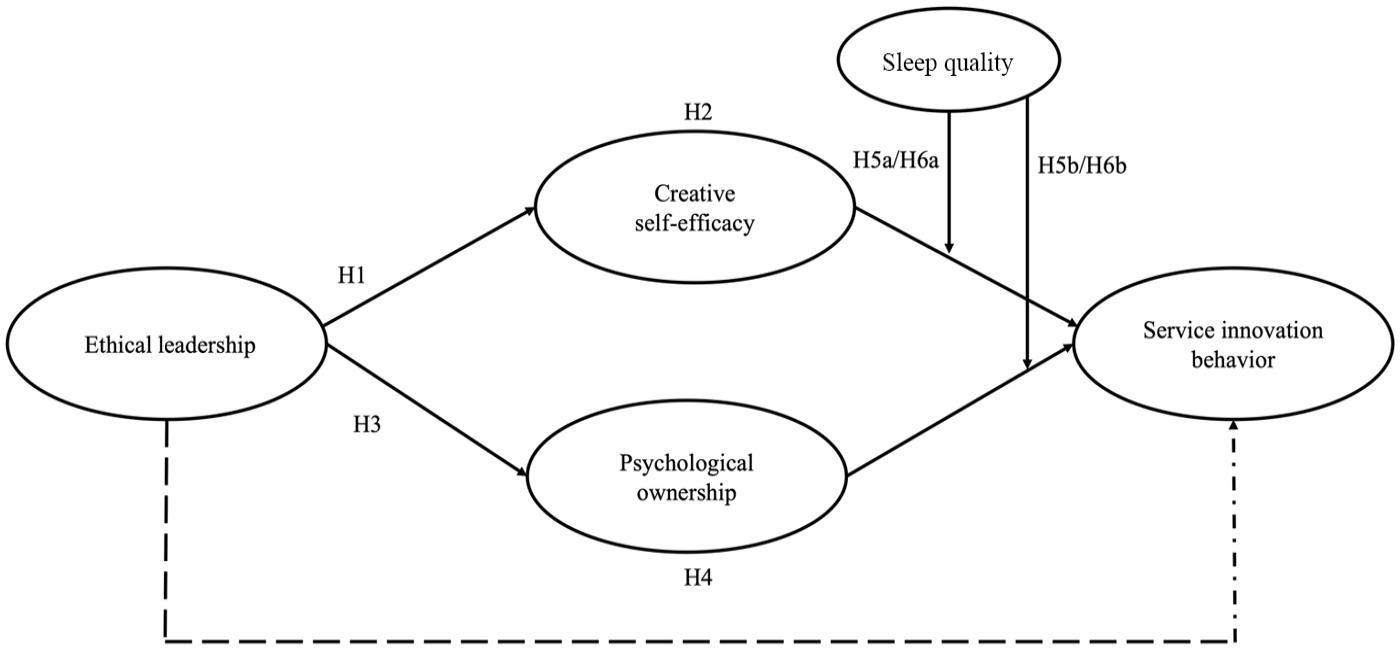
Theoretical model diagram.
Theoretical background and hypotheses development
Ethical leadership and uncertainty reduction theory
Ethical leadership is the appropriate conduct of managers through their actions and relationships in the group (Brown et al., 2005: 120). Ethical managers allow and inspire their subordinates to voice their viewpoints (Cheng et al., 2014). They empower their followers to learn and think about their decisions (De Hoogh and Den Hartog, 2008). Furthermore, ethical managers explain to employees the contributions of their efforts to the organization, enabling them to develop faith in their own abilities to make an impact through their innovative ideas (Özsungur, 2019). We argue that ethical leadership promotes an environment of trust and predictability, which reduces social risks for employees in their organizations (Loi et al., 2012). These assumptions of ethical leadership are best explained by URT proposed by Berger and Calabrese (1974). URT assumes that people attempt to reduce the uncertainty and unpredictability surrounding others’ behaviors. Reduced uncertainty and unpredictability about the consequences of their actions help individuals to take risks and introduce novel procedures and processes within their organizations (Lind and Van den Bos, 2002; Tu et al., 2019).
Ethical managers act as role models by demonstrating proactive behavior in developing innovative ideas, which helps followers feel confident in displaying their own innovative behavior (Qasim et al., 2022). Thus, individual learning via the altruistic behavior of ethical managers functions as a platform on which followers have efficacious displaced experiences. Walumbwa et al. (2011) argued that ethical managers exercise open communication and help their followers to focus on the process while performing certain tasks; this focus decreases their stress, anxiety, and uncertainty regarding the outcomes of a task.
Ethical managers are those who want to see their followers be highly creative in an environment in which their mistakes are considered opportunities to develop to meet future challenges (Tu et al., 2019). Thus, under the leadership of ethical managers, followers are more likely to conduct their assigned roles irrespective of their previous failures or unpredictable outcomes (Walumbwa and Schaubroeck, 2009). URT suggests that workers exhibit innovative behavior when unpredictability about the consequences of that novel behavior is low (Berger and Calabrese, 1974). We thereby theorize that managers’ ethical conduct can promote subordinates’ service innovation behavior by reducing the uncertainty and risk associated with taking innovative actions in their organizations.
Ethical leadership, creative self-efficacy, and service innovation behavior
Creative self-efficacy is described as the self-confidence that helps a person act creatively to complete a job under a variety of conditions (Tierney and Farmer, 2002). A high level of creative belief is an essential element for employees to contribute creatively at work (Gong et al., 2009). Bandura (1986) offered examples of various sources of self-efficacy, including enactive mastery (experience from work), vicarious learning (i.e. observing others), social persuasion (at others’ urging), and psychological state. Interestingly, studies on leadership have emphasized the significance of creative beliefs in promoting innovative culture (Gong et al., 2009; Huang et al., 2016; Jaiswal and Dhar, 2015; Wang et al., 2014).
Ethical leaders help their employees in several ways. For example, they offer their followers clarity regarding task requirements, and they motivate their work efforts by giving each individual consideration (Brown et al., 2005). Janssen (2003) contended that employees’ innovative work behavior involves creating, promoting, and applying new ideas to improve organizational effectiveness. Tu et al. (2019) suggested that leaders who exhibit ethical conduct can reduce the uncertainty and unpredictability related to the consequences of innovative behavior and thereby promote employees’ creative self-efficacy. Followers with higher levels of self-efficacy are more likely to create and use innovative ideas to accomplish challenging tasks (Gong et al., 2009).
According to Tierney and Farmer (2011), creative endeavors are challenging and risky and demand that employees draw on inner nurturing forces that are crucial for accomplishing creative jobs. People who have a good sense of creative self-efficacy believe that they can accomplish innovative tasks, which inspires them through the expectancy process. We contend that when there are low perceptions of uncertainty about the consequences of innovative actions, people anticipate less risk in initiating an innovative task. Such workers are able to demonstrate innovative behavior (Gong et al., 2020; Tierney and Farmer, 2002; Tu et al., 2019). Drawing on URT, we theorize that ethical leadership establishes an environment in which creative self-efficacy functions as a cognitive mechanism giving employees the confidence to cope with the uncertain environment, thereby enhancing their innovative behavior.
Waldman et al. (2001) found that organizational leaders play a central role in reducing uncertainty since they are in a position to provide the requisite confidence and vision in uncertain situations. Metwally et al. (2019) posited that workers try to make sense of the environment in which they are working to reduce any uncertainty before taking initiatives. Berger (1986) argued that people find clues that allow them to cope with uncertain conditions. Here, we argue that ethical leadership reduces uncertainty, giving followers the confidence to take innovative actions. This discussion leads us to assume that ethical leadership is positively associated with workers’ creativity-focused sense of efficacy, which is, in turn, associated with their service innovation behavior. We, therefore, assume that individuals’ creative self-efficacy is one important path through which ethical organizational leadership promotes employees’ service innovation behavior. Here, we hypothesize as follows:
H1: Ethical leadership is positively related to employee creative self-efficacy.
H2: Creative self-efficacy mediates the association of ethical leadership with employee service innovation behavior.
Ethical leadership, psychological ownership, and service innovation behavior
As a relatively recent concept in the field of organizational science, psychological ownership describes the effects of feelings of possession on individuals’ conceptual understandings, attitudes, and behaviors (Mayhew et al., 2007). People who have strong feelings of ownership over a specific job task are likely to be more creative in their jobs (Chung, 2019). Additionally, workers who feel more connected to their jobs devote more effort and energy toward their service innovation behavior (Mayhew et al., 2007). By reducing uncertainty and unpredictability, ethical leadership promotes equity, accountability, and a sense of belonging (Avey et al., 2012), which engenders workers’ feelings of psychological ownership. Ethical leaders establish an environment wherein employees are involved in decision making (Mo and Shi, 2017).
Research has shown several positive outcomes of psychological ownership in organizations, including job performance (Chen et al., 2023), commitment (Mustafa et al., 2021b), voice (Akcin et al., 2018), and organizational citizenship behavior (Mustafa et al., 2015). Other studies have highlighted the predictors of psychological ownership, such as justice perceptions (Hameed et al., 2019), organizational support (Curcuruto and Griffin, 2018), and organizational culture and climate (Mayhew et al., 2007). A relatively recent review of the psychological ownership literature highlights the role of leadership in influencing workers’ psychological ownership (Dawkins et al., 2017). This review also suggests that transformational and transactional leadership styles promote high levels of psychological ownership, while passive leadership styles decrease the sense of psychological ownership among employees. However, scholars have not yet studied the concept of psychological ownership in the context of ethical leadership and employee innovative behavior.
We theorize that psychological ownership is another underlying mediating path that connects ethical leadership to followers’ service innovation behavior. Our assumption is consistent with URT (Berger and Calabrese, 1974; Lind and Van den Bos, 2002), which suggests that leaders’ ethical conduct reduces uncertainty and unpredictability in organizations. Creativity and innovation are, as discussed above, rife with risk and challenges (e.g. Madjar et al., 2002). Reducing that uncertainty via leaders’ ethical conduct may enhance the sense of control (Tu et al., 2019) and the feelings of ownership of followers. These feelings, in turn, are likely to promote employees’ innovative behavior. We thus argue that ethical leadership provides frontline workers with an environment in which they feel ownership over their work and engage in innovative behavior to contribute to their organizations’ goals (Li et al., 2021). Here, we propose the following:
H3: Ethical leadership is positively associated with followers’ psychological ownership.
H4: Psychological ownership mediates the association of ethical leadership with employee service innovation behavior.
Moderating role of sleep quality
In recent decades, sleep has become an important topic of research for management scholars (Christian and Ellis, 2011). One of the reasons for this growing research interest is the increasing culture of sleep deprivation (Seton and Fitzgerald, 2021). Ferrara and De Gennaro (2001) argue that modern society is becoming sleep deprived, which has serious consequences. For example, scholars contend that low sleep quality may harm individuals’ alertness (Saper et al., 2005) and contribute to occupational injuries (Barnes and Wagner, 2009). Other negative work-related outcomes of sleep disturbance include reduced self-control and increased workplace deviance (Christian and Ellis, 2011), decreased self-efficacy (Nazari et al., 2014), and reduced well-being (Petitta et al., 2021). Prior studies have also revealed that low sleep quality has deleterious effects on individuals’ thinking ability (Horne, 1988) and, specifically, on their innovative thinking capacity (Harrison and Horne, 1999).
Sleep disturbance is particularly concerning among frontline workers in the hospitality industry because shift work is so common in this sector (Chiang, 2013; Lee et al., 2014). Berger (2009) has asserted that hospitality industry employees endure the most stressful work schedules. Lee et al. (2014) found that non-standard working hours were causing sleep issues, fatigue, and other related factors among hotel employees in Seoul. Shift-work sleep disorder is a psychological issue suffered by workers employed in shift-work positions (Drake et al., 2004) and is thus likely also prevalent among hospitality industry employees.
Prior related research has identified sleep quality as an essential psychological resource for positive employee outcomes in organizations (e.g. Barber and Munz, 2011; Hamilton et al., 2007). The extant research has consistently shown that low sleep quality results in impaired psychological resources (Barber et al., 2013; Barnes et al., 2012; Christian and Ellis, 2011); for example, low self-control (Barnes et al., 2012). Bakker et al. (2012) identified psychological distress as an outcome of sleep problems. Sleep scholars, such as Fuligni and Hardway (2006) and Hamilton et al. (2007), have detailed the detrimental effects of sleep quality on psychological health.
We argue that impaired psychological resources owing to low sleep quality may hinder hospitality sector employees’ engagement in innovative behavior even if – operating in an environment of low uncertainty created under ethical leaders – they possess high creative self-efficacy and high psychological ownership. Hence, the associations of psychological ownership, creative self-efficacy, and service innovation behavior will be moderated by sleep quality such that these associations will become weaker when workers experience low sleep quality. Here, we offer the following hypotheses:
H5a: Sleep quality moderates the association of creative self-efficacy with service innovation behavior; as such, the association is weak when sleep quality is low.
H5b: Sleep quality moderates the association of psychological ownership with service innovation behavior; as such, the relationship is weaker when sleep quality is low.
To this point, we have developed a theoretical foundation for the mediating mechanisms of creative self-efficacy and psychological ownership and the moderating role of sleep quality. In doing so, we assumed that creative self-efficacy and psychological ownership mediate the association of ethical leadership with employee service innovation behavior (H2 and H4) and that sleep quality moderates the associations between creative self-efficacy, psychological ownership, and service innovation behavior (H5a and H5b). The theoretical rationale for these hypotheses provides bases for an integrative moderated mediation model. Specifically, we expect sleep quality to moderate the indirect associations of ethical leadership and service innovation behavior through creative self-efficacy and psychological ownership. Thus, we propose the following integrated moderated mediation hypotheses:
H6a: Sleep quality moderates the association of ethical leadership with service innovation behavior through creative self-efficacy; as such, the indirect association is weak when sleep quality is low.
H6b: Sleep quality moderates the association of ethical leadership with service innovation behavior through psychological ownership such that the mediated relationship is weak when sleep quality is low.
Overview of research
We empirically tested our moderated mediation model in two studies using a time-lagged research design with samples of hospitality industry employees from the United States. In Study 1, we tested our dual-path mediated model employing three-wave time-lagged data with two weeks between each wave. We measured ethical leadership at T1, creative self-efficacy and psychological ownership at T2, and service innovation behavior at T3. In Study 2, we employed our full moderated mediation model. We collected two-wave time-lagged data with four weeks between each wave. We measured ethical leadership, creative self-efficacy, and psychological ownership at T1 and service innovation behavior at T2 while controlling for service innovation behavior and conscientiousness at T1.
Methodology
Study 1
For empirically testing our mediated model, we conducted Study 1 using a time-lagged research design. We launched an online survey through the Prolific data collection service to collect data from hospitality workers in the United States. This survey was conducted in three phases, with a two-week gap between each phase; past studies in the leadership context have recommended a two-week break between each wave of data collection (e.g. Epitropaki and Martin, 2005; Quade et al., 2020). At T1, we collected data from 398 respondents regarding their supervisors’ ethical leadership styles. After two weeks (i.e. at T2), we asked these 398 participants to provide data on the creative self-efficacy and psychological ownership scales. At this time (T2), 278 respondents provided the requested data, and then, two weeks after the completion of the T2 wave, we asked the 278 participants whose data we had collected in the T2 phase to rate their own service innovation behavior. Two hundred and forty-eight respondents participated at T3, and we removed 11 responses as being multivariate outliers, retaining 237 usable responses for our further analyses. We utilized the respondents’ Prolific IDs as unique codes to match and merge the data they had provided in the three waves. Of the 237 respondents, 62% were female. Further, 47% were between the ages of 20 and 29 years, and 22% were between the ages of 30 and 39 years. In addition, 46% had a graduate degree, and 59% had four to six years of experience in the hotel industry.
Measures
The scale in Brown et al. (2005) was used to measure ethical leadership. This scale consists of 10 items and is the scale most widely used for measuring employee perceptions of managers’ ethical conduct. We measure perceived ethical leadership rather than managers’ actual behavior as we believe that a focus on subordinates’ perceptions of their managers’ ethical conduct is most consistent with our theory and hypothesized research model. Moreover, several recent studies investigating ethical leadership have employed the same scale (Bakar and Connaughton, 2022; Mansur et al., 2020). Creative self-efficacy was measured using Tierney and Farmer’s (2002) scale that consists of three items. Psychological ownership was measured with a five-item scale developed and validated by Pierce et al. (2001) and Van Dyne and Pierce (2004). This scale focuses on feelings of possession. We further used a six-item scale from Hu et al. (2009) to measure service innovation behavior. We designed all scales used in Study 1 on a seven-point Likert scale ranging from 1 (strongly disagree) to 7 (strongly agree).
Study 2
We examined our full model with a time-lagged design and a moderated mediation analysis. We collected data for Study 2 – again, from the hospitality industry workers in the United States – via the Prolific data collection service. Study 2 was conducted in two waves with a one-month gap between each wave. Several previous leadership studies have recommended a one-month break between data collection waves (e.g. Moin et al., 2021; Rasheed et al., 2020). In the first wave of data collection (T1), we gathered information from 395 respondents on measures of ethical leadership, creative self-efficacy, psychological ownership, service innovation, sleep quality, and conscientiousness. We also collected demographic information (age, education, gender, and experience in the hospitality industry) from our respondents during T1 survey. Four weeks after the first phase (i.e. at T2), we asked the 395 individuals who had participated in T1 wave to provide data on measures of creative self-efficacy, psychological ownership, and service innovation behavior. Of these, 313 participants provided usable responses. A total of 319 respondents participated in our T3 survey; we removed six responses as being multivariate outliers and used 313 in our final analyses.
We utilized respondents’ Prolific IDs as unique codes to match and merge the data they had provided in the two waves. Of the 313 respondents, 52% were female. Further, 33% were between the ages of 20 and 29 years, and 35% were between the ages of 30 and 39 years. In addition, 47% had a graduate degree, and 22% had four to six years of experience in the hotel industry.
Measures
Study 2 employed the same measures as Study 1 to collect data on ethical leadership, creative self-efficacy, psychological ownership, and service innovation behavior. All questions were designed on a seven-point Likert scale from 1 (strongly disagree) to 7 (strongly agree). To measure respondents’ sleep quality, we employed a five-item scale from Geers et al. (2005). We used a measure of sleep quality rather than sleep quantity after considering the nature of our sample. As hospitality industry workers, our respondents were likely to engage in shift work (Yousaf et al., 2019). Furthermore, even those employees who had not worked a night shift in recent days may have experienced sleep quality issues (even if their sleep quantity was sufficient) owing to the sleep being disturbed throughout the regular shift-work cycle (Thach et al., 2020).
To measure conscientiousness, we used eight items from Costa et al. (1991). We also controlled for employees’ age, education, gender, experience in the hospitality industry, and conscientiousness (an important personality trait). Previous studies have shown a significant relationship between employees’ demographics and their innovative work behavior (Yidong and Xinxin, 2013). Similarly, prior studies have found that employees’ personality traits can predict their work behavior, including service innovation (Babalola et al., 2020; Mustafa et al., 2021a) and service performance behavior (Babalola et al., 2020). We contend further that conscientiousness – an influential personality trait (Costa et al., 1991; McCrae and John, 1992) characterized by responsibility, planning, adherence, and self-discipline – is highly relevant to our context and to the research model.
Analyses and results
We employed several strategies to analyze the data and test the hypotheses. In the data screening, we employed missing values analysis, multivariate outlier, data normality, descriptive statistics, and correlation analyses. In particular, we screened for employees who had at least one year of full-time experience in the hospitality industry. The data screening process utilized the same criteria in both studies. To test the discriminant validity of the scales in Studies 1 and 2, we performed a confirmatory factor analysis (CFA) in AMOS 24. Following the recommendations of Cortina et al. (2017), we thus verified that the CFA and substantive structural equation models in both our studies did not suffer from any measurement errors.
Results of Study 1
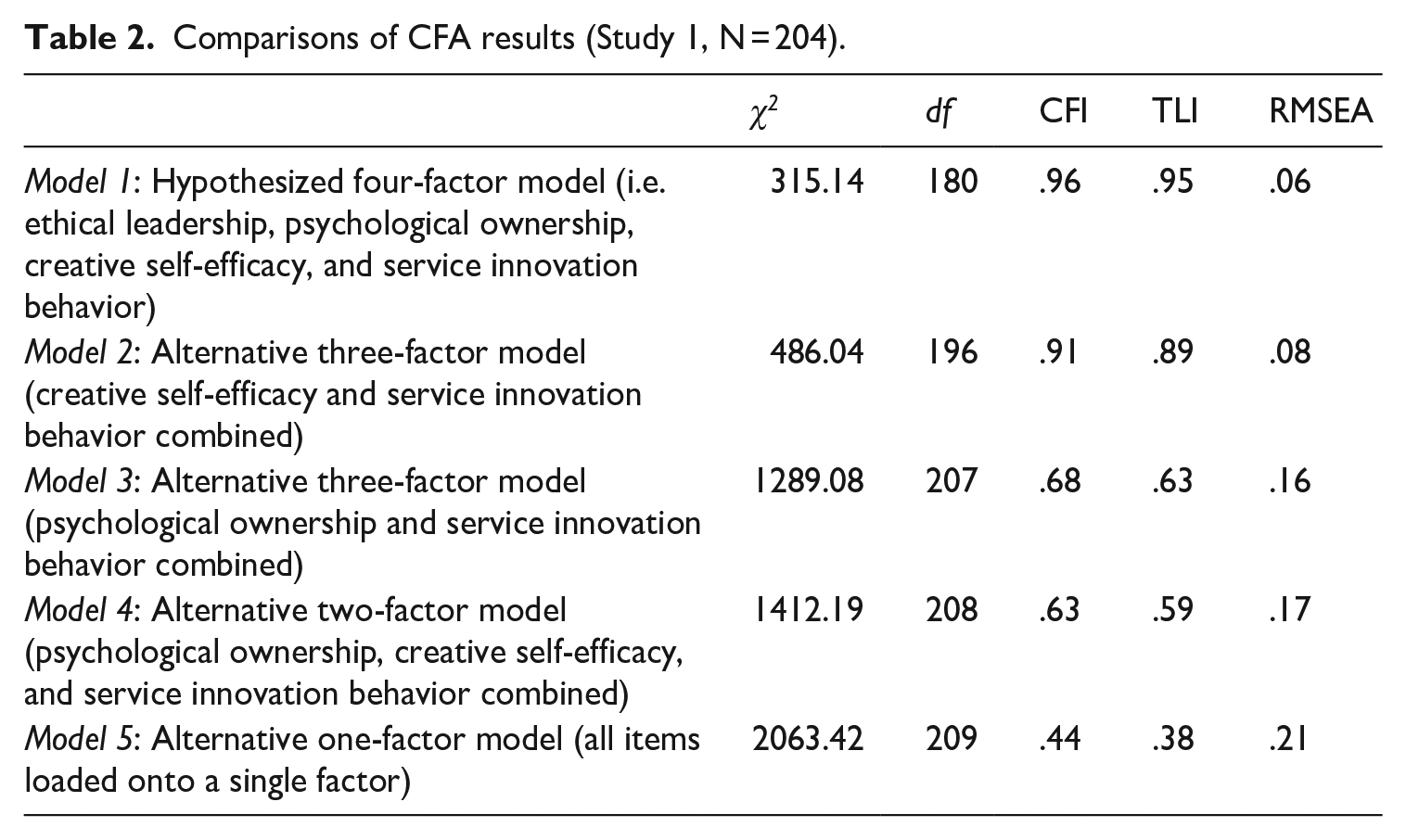
Table 1 reports the reliability, validity results, descriptive statistics, and inter-correlations for Study 1. The Cronbach’s alpha and composite reliability values of all constructs in Study 1 exceeded the threshold value of .70, which indicates good reliability. Table 1 further reports that the average variance extracted (AVE) values exceeded the threshold value of .50, which suggests good convergent validity. Similarly, the square roots of the AVEs for Study 1 exceeded the correlations of the corresponding constructs, thereby establishing the discriminant validity of the constructs in Study 1. According to the CFA results of Study 1 reported in Table 2, the hypothesized four-factor model (χ2/df = 1.75, CFI = .96, TLI = .95, RMSEA = .06) fit the data well. Additionally, fit indices of the retained four-factor model (i.e. Model 1) were compared with those of the three-factor models (i.e. Model 2), which combined creative self-efficacy and service innovation behavior, and Model 3, which combined psychological ownership and service innovation behavior, alternative Model 4, which combined psychological ownership, creative self-efficacy, and service innovation behavior into one factor, and the single- factor alternative model (i.e. Model 5, which loaded all indicators onto one factor). Table 2 reports the fit indices of our retained four-factor model and of the alternative models. The results demonstrate that the four-factor hypothesized model best fits the data.
Constructs reliability, validity, descriptive statistics, and inter-correlations (Study 1).
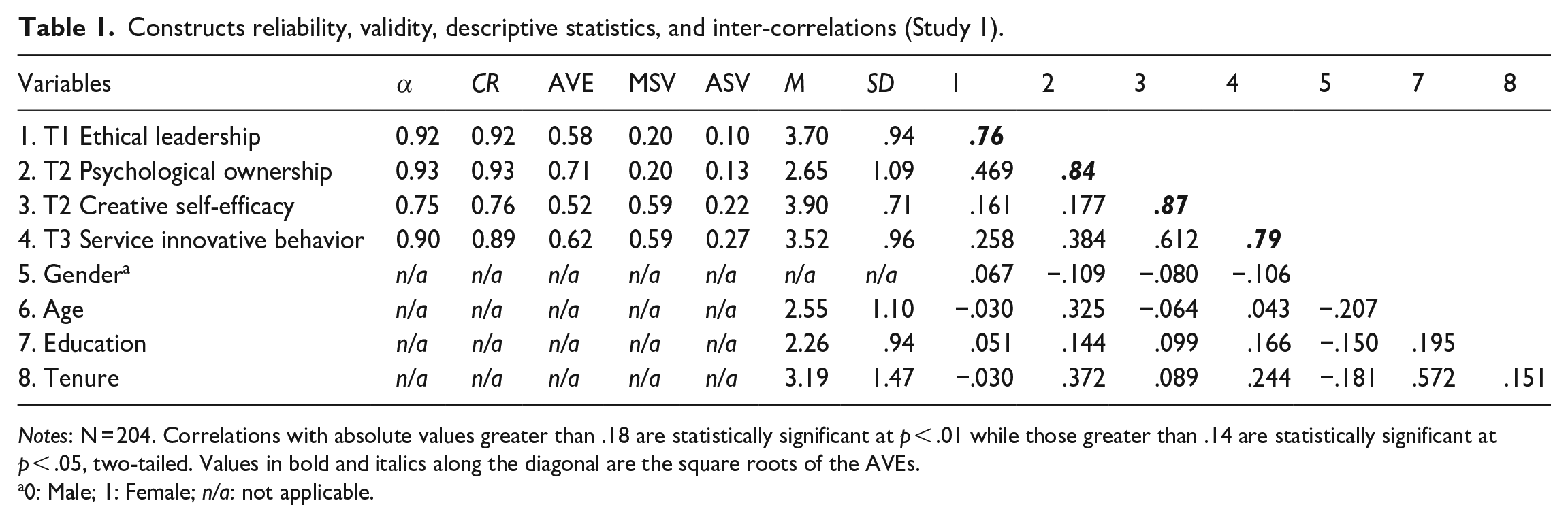
Notes: N = 204. Correlations with absolute values greater than .18 are statistically significant at p < .01 while those greater than .14 are statistically significant at p < .05, two-tailed. Values in bold and italics along the diagonal are the square roots of the AVEs.
0: Male; 1: Female; n/a: not applicable.
Comparisons of CFA results (Study 1, N = 204).
For testing our mediated hypothesized model, we tested the main and mediation hypotheses via structural equation modeling in AMOS 24. Table 3 indicates a positive relationship between ethical leadership at T1 and creative self-efficacy at T2 (β = 0.16, SE = 0.05, p < .01); these results support our H1. As Table 3 also shows, creative self-efficacy at T2 is, in turn, positively related to service innovation behavior at T3 (β = 0.57, SE = 0.07, p < .001). The results of Study 1 also confirm the positive and significant indirect effect of T1 ethical leadership on T3 service innovation behavior via T2 creative self-efficacy (indirect effect = .09, SE = 0.04, 95% CI [.01, .17]; thus, H3 received support. In addition, we observed a positive relationship between T1 ethical leadership and T2 psychological ownership (β = 0.47, SE = 0.07, p < .001); these results support our H3. Further, psychological ownership at T2 was positively associated with service innovation behavior at T3 (β = 0.27, SE = 0.05, p < .001). Overall, the results support the positive and significant indirect T1 effect of ethical leadership on T3 service innovation behavior through T2 psychological ownership (indirect effect = .15, SE = 0.04, 95% CI [.08, .25]. These results support our H4. Figure 2 presents the results of our mediation model.
Path coefficients from SEM results in Study 1.
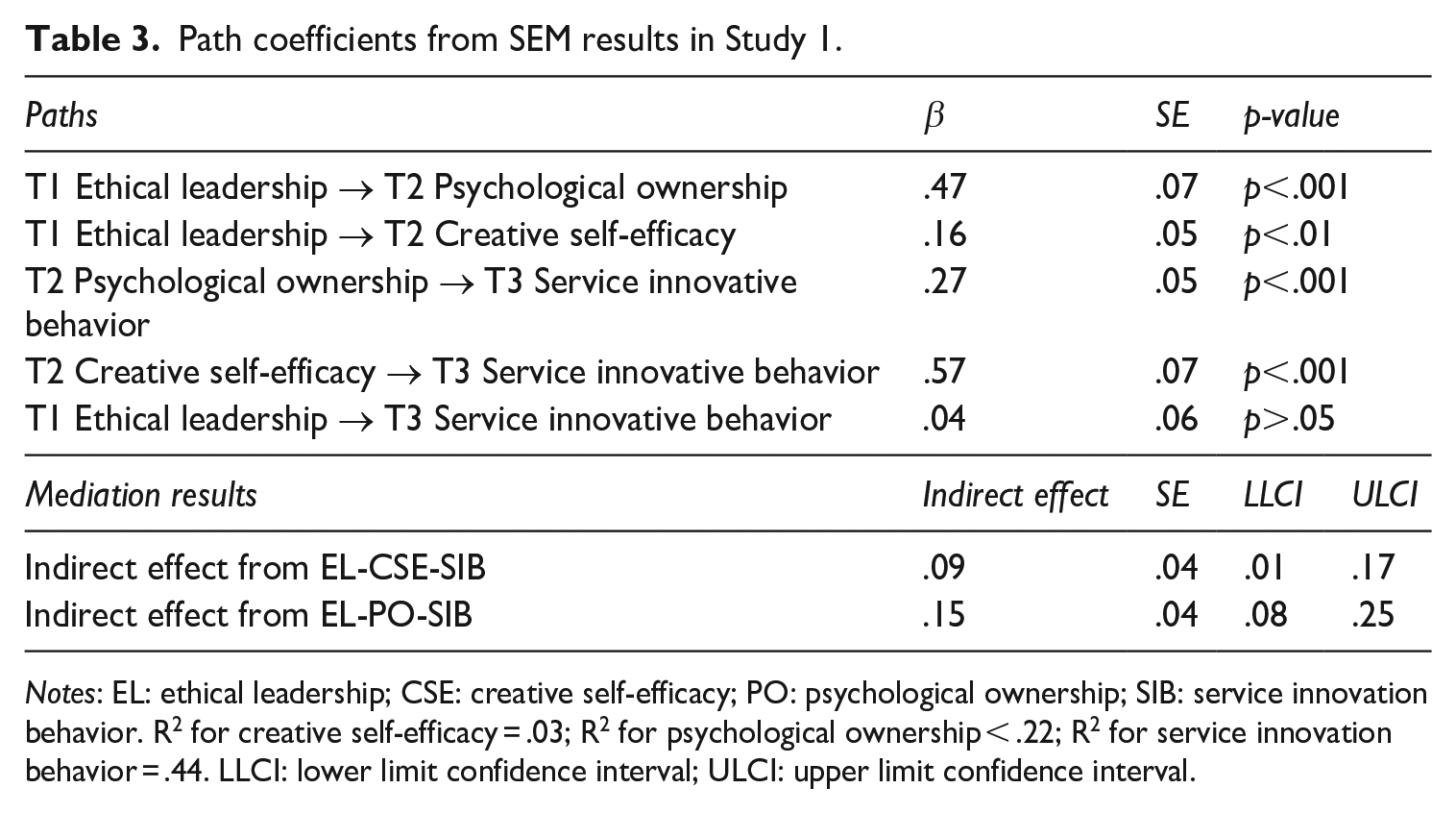
Notes: EL: ethical leadership; CSE: creative self-efficacy; PO: psychological ownership; SIB: service innovation behavior. R2 for creative self-efficacy = .03; R2 for psychological ownership < .22; R2 for service innovation behavior = .44. LLCI: lower limit confidence interval; ULCI: upper limit confidence interval.
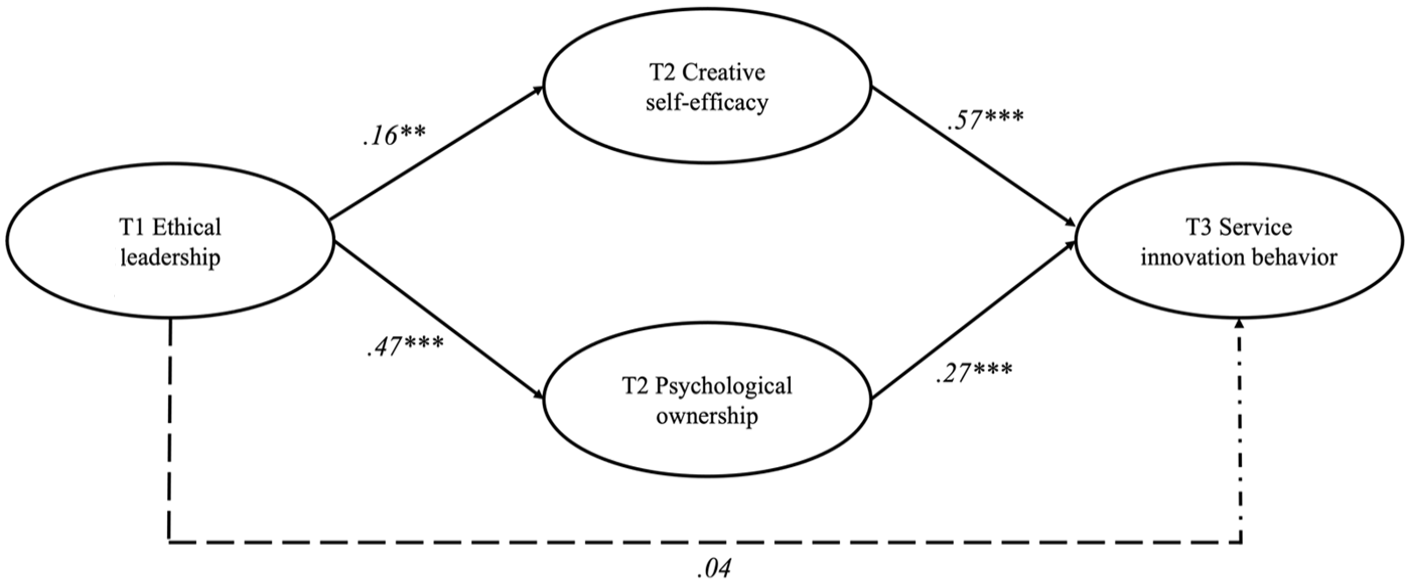
Study 1: Hypothesized structural equation model results.
Results of Study 2
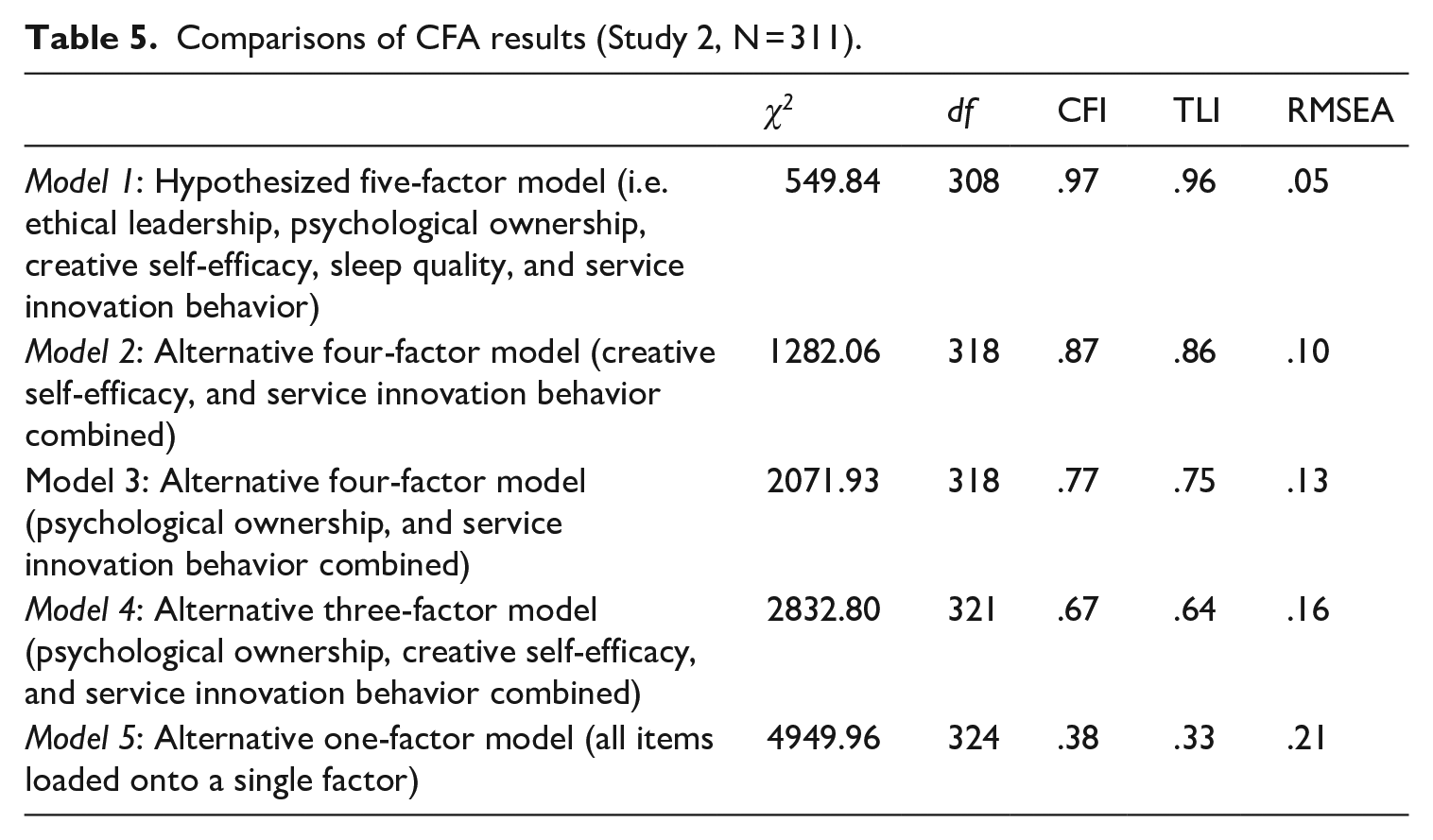
As Table 4 reports, the Cronbach’s alpha and composite reliability values of all constructs in Study 2 exceeded the threshold value of .70, which indicates good reliability. Table 4 further demonstrates that the AVE values exceeded the threshold value of .50, which indicates good convergent validity. Similarly, the square roots of the AVE values for Study 2 exceeded the correlations values of the corresponding constructs and thereby establishing the constructs’ discriminant validity. The CFA results of Study 2 reported in Table 5 demonstrate that the hypothesized five-factor model (χ2/df = 1.78, CFI = .97, TLI = .96, RMSEA = .05) fits the data well. The fit indices of the retained five-factor model (i.e. Model 1) were compared with those of the alternative four-factor models (i.e. Models 2 and 3), the alternative three-factor model (i.e. Model 4), and the alternative single-factor model (i.e. Model 5). Table 5 compares the CFA models, revealing that the retained four-factor model offered a better fit than the alternative models.
Constructs reliability, validity, descriptive statistics, and inter-correlations (Study 2).
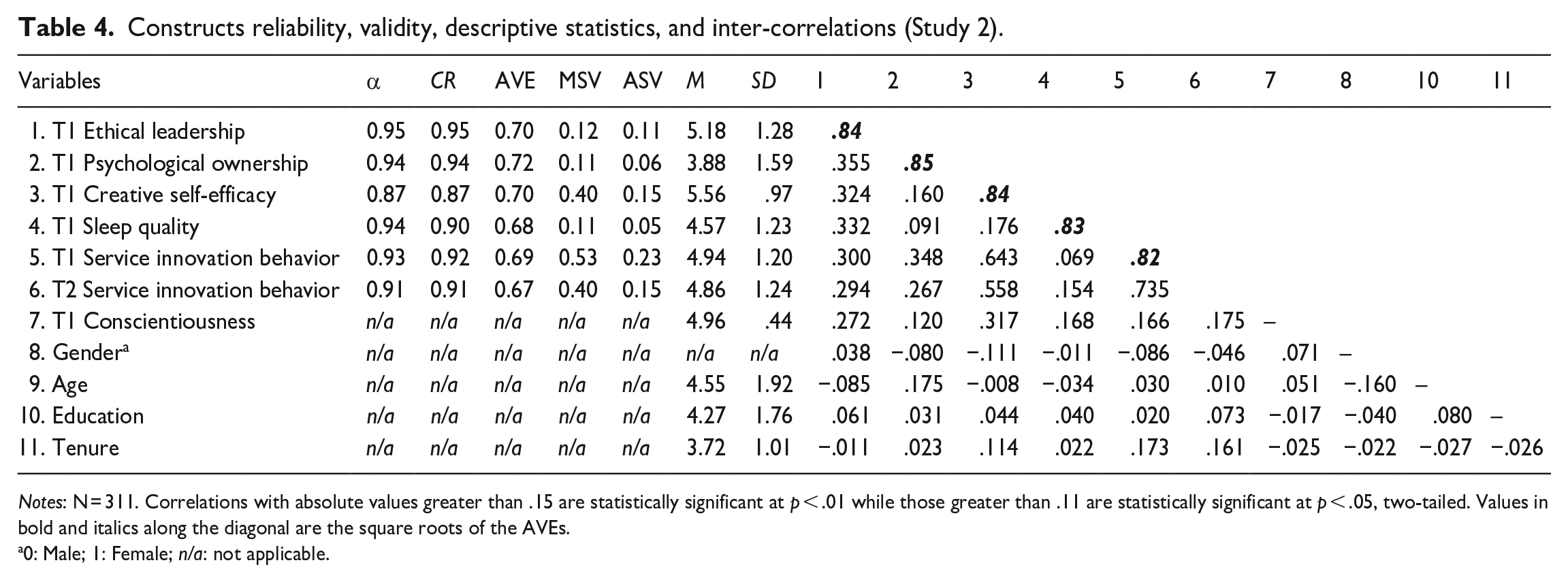
Notes: N = 311. Correlations with absolute values greater than .15 are statistically significant at p < .01 while those greater than .11 are statistically significant at p < .05, two-tailed. Values in bold and italics along the diagonal are the square roots of the AVEs.
0: Male; 1: Female; n/a: not applicable.
Comparisons of CFA results (Study 2, N = 311).
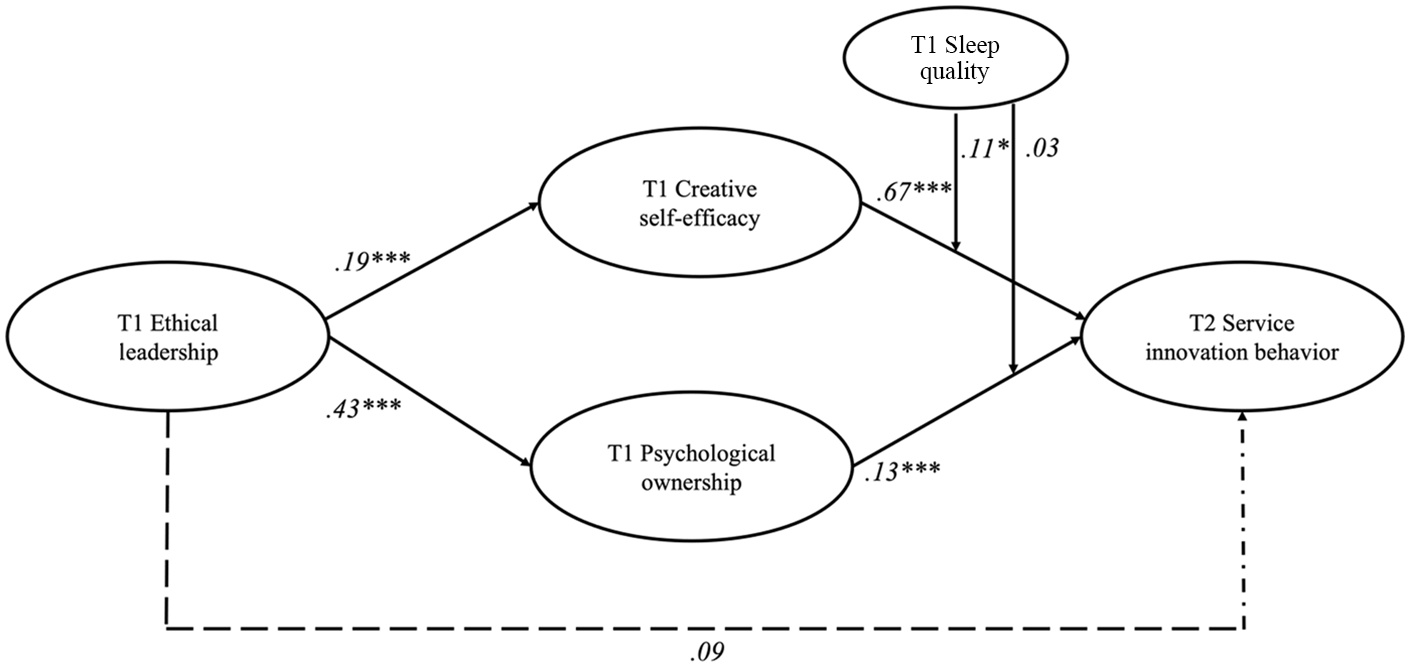
To test our hypothesized relationships in Study 2, we utilized Model 14 of Hayes’ (2013) PROCESS macro in SPSS. We controlled for participants’ conscientiousness and service innovation behavior at T1. The results in Table 6 reveal that ethical leadership at T1 positively influenced employees’ creative self-efficacy at T1 (β = 0.19, SE = 0.04, p < .001); these results support our H1. The results also indicate the positive indirect effect of T1 ethical leadership on T2 service innovation behavior through T1 creative self-efficacy (indirect effect = .06, SE = 0.03, 95% CI [.02, .12]; thus, H2 received support. Table 6 demonstrates further that T1 ethical leadership positively influenced T1 psychological ownership (β = 0.43, SE = 0.06, p < .01), thus supporting H3. Finally, our results demonstrate T1 ethical leadership’s positive indirect effect on T2 employee service innovation behavior through T1 psychological ownership (indirect effect = .13, SE = 0.04, 95% CI [.07, .20]; therefore, H4 received support. Figure 3 presents the results of Study 2.
Regression results (Study 2, N = 311).
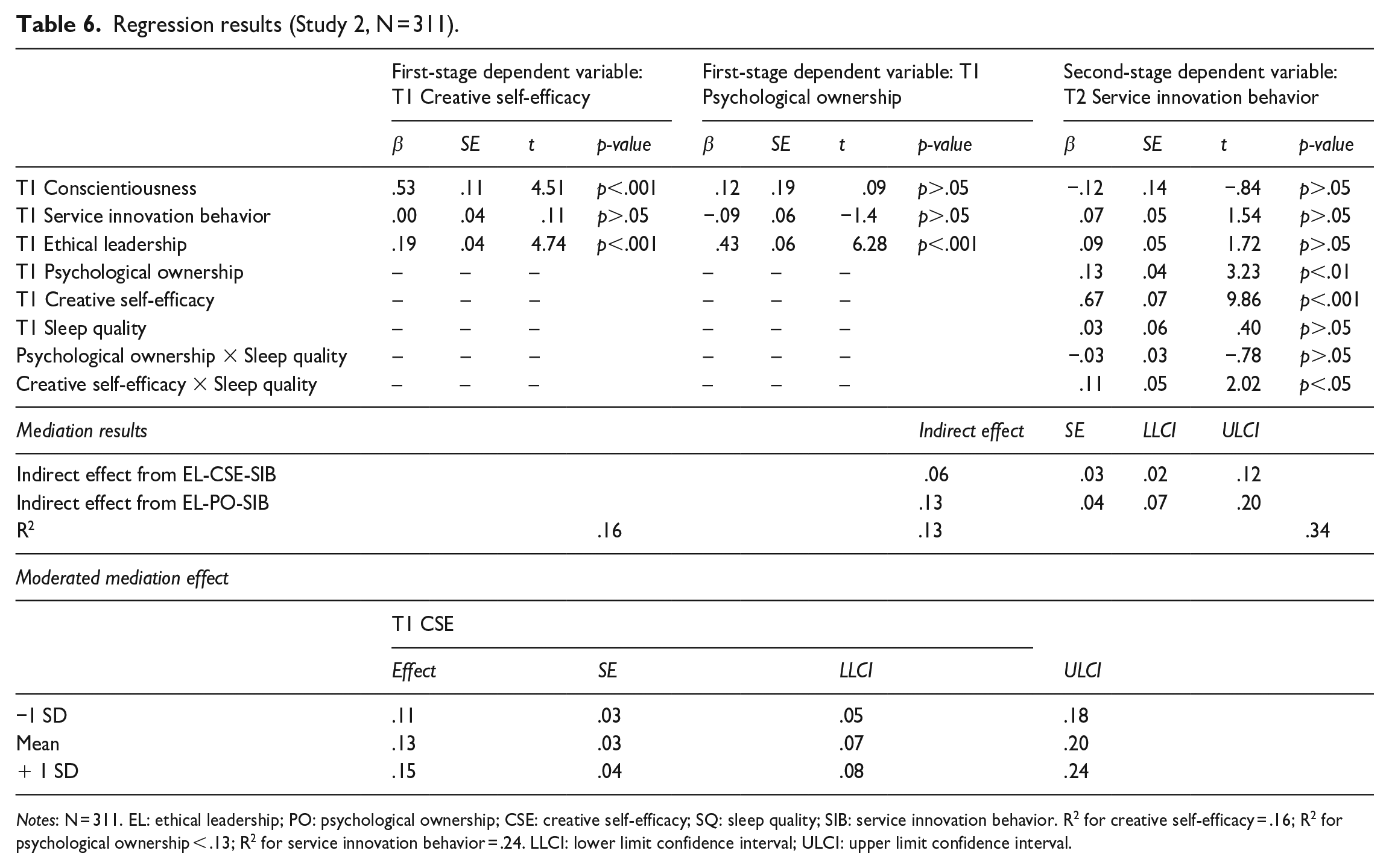
Notes: N = 311. EL: ethical leadership; PO: psychological ownership; CSE: creative self-efficacy; SQ: sleep quality; SIB: service innovation behavior. R2 for creative self-efficacy = .16; R2 for psychological ownership < .13; R2 for service innovation behavior = .24. LLCI: lower limit confidence interval; ULCI: upper limit confidence interval.
Study 2: Hypothesized structural equation model results.
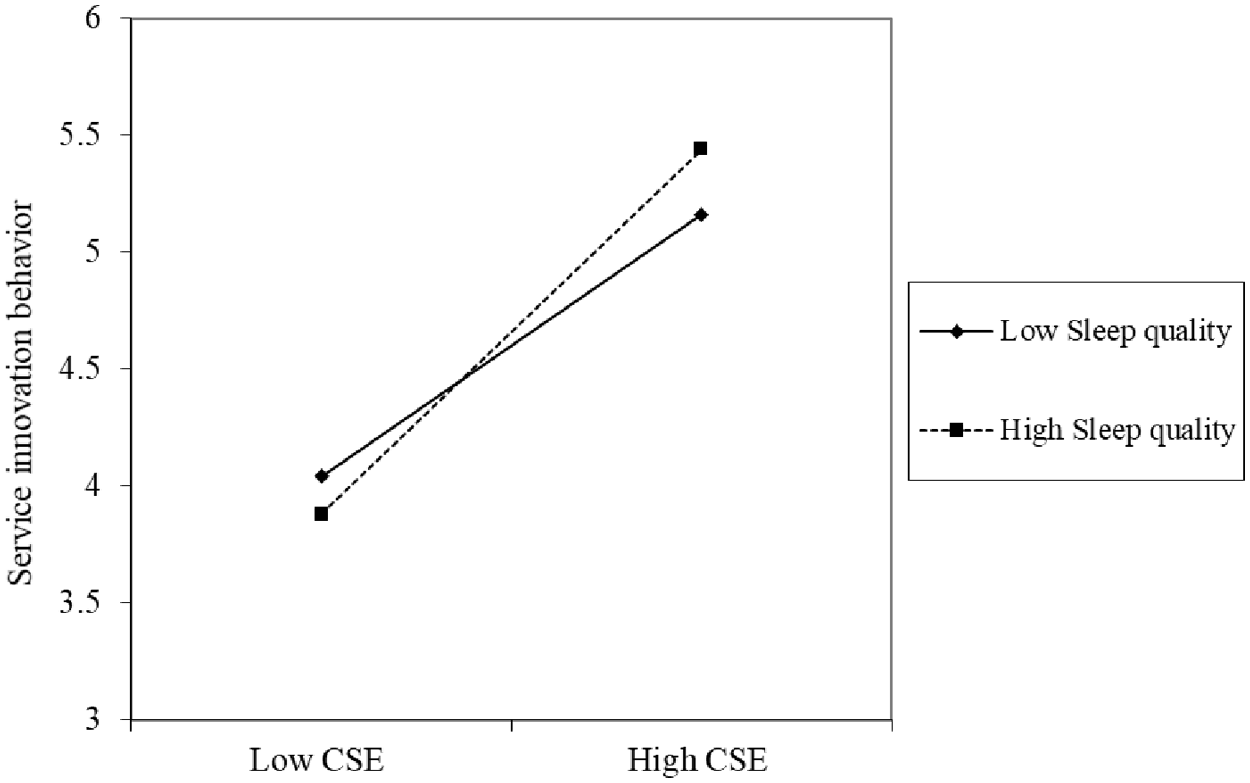
The results in Table 6 further suggest that the interaction term (creative self-efficacy × sleep quality) for service innovation behavior as a dependent variable was significant (β = 0.11, SE = 0.05, p < .05); hence, we accepted H5a. Figure 4 illustrates this relationship. However, the interaction term (psychological ownership × sleep quality) for service innovation behavior as a dependent variable was not significant; therefore, we rejected H5b.
Table 6 also reveals that the conditional indirect effect of T1 ethical leadership on T2 service innovation behavior through T1 creative self-efficacy was weaker at a low level (effect = 0.11, LLCI = 0.05, ULCI = 0.18) than at a high level (effect = 0.15, LLCI = 0.08, ULCI = 0.24) of T1 sleep quality. These results support our moderated mediation H6a. However, the results led us to reject our moderated mediation H6b, which proposed the moderation of the indirect effect of T1 ethical leadership on T2 service innovation behavior through T1 psychological ownership.
Interactive effect of CSE and sleep quality on service innovation behavior.
Discussion
We conducted this research to explore when and how ethical leadership promotes employee service innovation behavior in hospitality organizations. Drawing on URT (Berger and Calabrese, 1974; Lind and Van den Bos, 2002), we identified creative self-efficacy and psychological ownership as explaining the mediating mechanisms underlying the ethical leadership–service innovation behavior link. We further explored the role of employee sleep quality as a moderating variable on the direct and mediating relationships between psychological ownership, creative self-efficacy, and service innovation behavior.
The results of our two studies reveal that ethical leadership is positively associated with employee creative self-efficacy and psychological ownership, which are, in turn, associated positively with employee service innovation behavior. These results illuminate the ways in which ethical leadership influences employee service innovation behavior in organizations. The various service innovation behaviors among hospitality industry employees include introducing more sustainable ways of packaging food, providing unique and instant solutions for table and room management and housekeeping, dealing calmly with dissatisfied and even visibly angry customers, and handling service failures in unique and innovative ways. Drawing on URT (Lind and Van den Bos, 2002), we theorized that leaders’ ethical conduct reduces the uncertainty and unpredictability employees perceive to be associated with the consequences of their own innovative actions.
The results of our mediation analysis in both studies validate our assumptions, revealing creative self-efficacy and psychological ownership as underlying mediating variables through which ethical leadership promotes employee service innovation behavior. These findings are helpful for identifying the alternative mediating mechanisms that explain the relationship between ethical leadership and service innovation behavior. To elaborate, reduced uncertainty as a result of managers’ ethical conduct imbues employees with greater confidence and control, which, in turn, promotes their creative self-efficacy and psychological ownership. Finally, high creative self-efficacy and a feeling of psychological ownership encourage service innovation behavior.
Our moderated mediation analyses further identify employee sleep as an important factor in today’s organizations. In fact, low sleep quality functions in our model as a boundary condition that weakens the direct and indirect associations between creative self-efficacy and service innovation behavior, such that the relationships are weaker for employees with low sleep quality. This is another important finding of our research as it highlights a critical interaction between employee sleep and creative self-efficacy and the moderation impact of sleep quality on ethical leadership and service innovation behavior through creative self-efficacy. We contend that employee sleep quality is an essential psychological resource required for displaying innovative service behavior in organizations. Low sleep quality, therefore, increases uncertainty and negatively influences the positive relationship between creative self-efficacy and service innovation behavior.
Our findings do not, however, support the role of sleep quality in moderating the association between psychological ownership and service innovation behavior. This may be owing to the fact that the association between psychological ownership and employee service innovation behavior is stronger and is not influenced by low sleep quality. Thus, the positive associations between psychological ownership and service innovation behavior and the association of ethical leadership with service innovation behavior mediated through psychological ownership are not affected, even by workers’ low-quality sleep.
Theoretical implications
By highlighting the valuable role of ethical leadership in organizations, our findings carry important theoretical implications for the study of organizational behavior and service innovation. First, we apply the novel theoretical framework of URT (Berger and Calabrese, 1974; Lind and Van den Bos, 2002) to explore the dual path between ethical leadership and service innovation behavior. Our study explains how ethical leadership promotes workers’ service innovation behavior in organizations. Our findings are supported by some recent empirical studies highlighting the association of positive leadership styles with creativity (Cai et al., 2019; Tuan, 2020). Past research on ethical leadership has also shown that managers’ ethical conduct can increase employees’ innovative behavior (Dhar, 2016; Özsungur, 2019). The current study validates these research findings and further explores two critical alternative paths (i.e. psychological ownership and creative self-efficacy) through which ethical leadership connects to employee service innovation behavior.
Second, our URT-based approach (Berger and Calabrese, 1974; Lind and Van den Bos, 2002) highlights creative self-efficacy and psychological ownership as the underlying psychological paths through which managers’ ethical conduct helps employees to innovate in organizations. Past research has emphasized several positive outcomes of employees’ sense of psychological ownership. In addition, scholars have recently noted the potential of such leadership to enhance employees’ psychological ownership and, thus, their ability to achieve positive work-related outcomes (Hameed et al., 2019; Jiang and Li, 2019; Khatri and Dutta, 2018; Olckers et al., 2020). Our study complements these findings on the association between leadership and employees’ sense of psychological ownership. Indeed, our findings indicate that ethical leadership is positively associated with employees’ psychological ownership, which subsequently leads to their service innovation behavior.
On the other hand, our study links leaders’ ethical conduct with employees’ creative self-efficacy, which further promotes employees’ service innovation behavior. This important finding elucidates the association of ethical leadership with employees’ innovation behavior from a new angle. Recent research has also underscored the need for managers to improve employee creative self-efficacy and thereby enhance innovation and creativity in organizations (Newman et al., 2018; Park et al., 2020). By exploring this path of creative self-efficacy through which ethical leadership connects to service innovation behavior, our research contributes substantially to the literature in the area.
This research draws attention to the underlying psychological paths through which ethical leadership may enhance followers’ innovative behavior in the hospitality industry. Managers’ ethical conduct – for example, encouraging their employees to take initiative by promoting open communication, supporting job autonomy, and providing employees with opportunities to express their ideas and reducing the uncertainty and unpredictability associated with the consequences of innovative tasks (Brown et al., 2005; Tu et al., 2019) – enhances employees’ psychological ownership and creative self-efficacy, which further encourages them to engage in innovative behavior at work. Although past research has linked ethical leadership and employee creativity, our study goes further to provide the theoretical reasons (in the form of psychological ownership and creative self-efficacy) for this link through the lens of URT (Berger and Calabrese, 1974; Lind and Van den Bos, 2002). Finding this dual-path link between ethical leadership and employee service innovation behavior thus represents a unique theoretical contribution of our study.
Third, our research explores the important role of sleep quality in the context of ethical leadership and employee service innovation behavior. Although scholars have identified sleep as one of the most relevant and significant issues in modern organizations (Collins, 2018; Yousaf et al., 2019), they have not sufficiently studied it in the context of the service industry, such as the hospitality sector (Chiang et al., 2019). Owing to shift work and late hours, which are common in the service industry (Paez and Arendt, 2014; Yousaf et al., 2019), employee sleep is increasingly threatened. Research has already demonstrated the severe negative influence of low sleep quality on employee work outcomes in other contexts. These effects include reduced job satisfaction (Barnes et al., 2013), employee performance (Lim and Dinges, 2010), health (Strine and Chapman, 2005), and attitude (Litwiller et al., 2017). Our results confirm sleep quality as an influential variable and a major issue being faced by workers in the hospitality industry. Our findings regarding the critical role of employee sleep quality thus make unique contributions by extending the literature in the area.
Practical implications
This study has important practical implications for employees, managers, and organizations. First, the positive relationships we explore between ethical leadership, employee creative self-efficacy, and psychological ownership should encourage managers and organizations to duly value leaders’ ethical conduct. Employee service innovation behavior is a valuable outcome for organizations. According to our findings, managers’ ethical conduct promotes this outcome as well as psychological ownership and creative self-efficacy are required to engage in it. Organizations should, therefore, value and promote leaders’ ethical conduct to enhance workers’ service innovation behavior. Managers themselves can encourage ethical conduct in their organizations by promoting open communication, developing healthy interpersonal relationships with employees, and engaging in appropriate justice-based actions in all transactions with their subordinates.
Second, our results should motivate organizations in the service sector to organize relevant training and awareness programs, which aim to teach managers effective ways to display ethical conduct and thereby enhance their subordinates’ creative self-efficacy and psychological ownership. These efforts may include organizing motivational sessions for managers, encouraging employees to raise ethical issues, reinforcing managers’ ethical conduct through punishments and rewards, and promoting a code of ethics in the workplace.
Third, we identify sleep quality as an influential moderating variable in our model. Managers, organizations, and employees themselves should, therefore, devote due attention to the issue of sleep quality. Organizations should seriously consider workers’ sleep problems and devise effective solutions to them. For instance, managers and organizations should teach their workers about sleep-related issues in the workplace, including its financial costs and potential to cause safety incidents. Training programs can also teach employees to improve alertness and manage fatigue on the job. Studies have also identified the importance of exercise in neutralizing the impact of sleep problems among employees (Kareri et al., 2020; Lederman et al., 2019). Organizations and managers can therefore motivate their employees to engage in physical exercise at home or even at the office. Organizations can designate some space in the offices for a physical workout where employees who are experiencing low alertness owing to sleep issues can go to exercise. Organizations can also offer rewards for healthy and fit employees and those who report no sleep problems.
Finally, since shift work is associated with employee sleep quality problems in the hospitality industry (Rasheed et al., 2020; Yousaf et al., 2019), managing sleep is a greater challenge for organizations and managers in such industries (the never-sleeping industries). To address these challenges, organizations must promote and adopt relevant strategies and interventions. For example, workers should not be permanently assigned night-shift duty. Further, workers should enjoy the maximum freedom to decide whether or not they wish to work night shifts. In addition, workers should be given frequent breaks during their shifts.
Limitations and future research directions
Although we tested a comprehensive moderated mediation model using a time-lagged research design in studying the association of ethical leadership to employee innovative service behavior, our work does entail some limitations. First, we tested our model in the United States (an individualistic culture), where employee sleep problems are reported to be severe (Furuichi et al., 2020; Robbins et al., 2021) and where organizations and employees emphasize the ethical conduct of managers (Zeng and Xu, 2020). Future studies in collectivistic cultures may produce divergent findings. Second, we proposed and found supporting evidence for two mediating variables in the association of ethical leadership with employee service innovation behavior. However, we did not consider other relevant psychological mechanisms that could potentially affect hospitality organizations and other service sector firms. Future studies could explore this dimension.
Third, we identified sleep quality as an influential moderating variable but did so using a subjective measure of sleep quality. Future studies should work to objectively measure sleep quality (e.g. by relying on daily diary data or recording sleep patterns using sleep-tracking devices). Future studies could theorize and test the first-stage moderator in our present model. Moreover, because sleep is a psychological resource, it may directly affect employee innovative behavior. Future research, therefore, could test sleep quality as an antecedent of service innovation behavior.
Fourth, we measured ethical leadership in terms of hospitality industry employees’ perceptions. Future research could measure the actual behavior of leaders in terms of their ethical conduct. Fifth, we conducted our survey using an online data collection service (Prolific Academic). These services present some disadvantages, such as low response rates and respondent biases (Rice et al., 2017). Future researchers could investigate our model using other survey techniques. Finally, because biological and dispositional factors may influence individual behavior, and we note the significant impact of the control variable conscientiousness (an important personality trait), future researchers might investigate the moderating role of personality dimensions.
Conclusion
Employee service innovation behavior is among the most valuable outcomes in the service sector. Drawing on URT (Berger and Calabrese, 1974; Lind and Van den Bos, 2002), we find that ethical leadership promotes workers’ psychological ownership and creative self-efficacy, which are subsequently associated with employee service innovation behavior. Employees’ sleep quality, however, functions as a boundary condition of the association of creative self-efficacy with service innovation behavior and of the association of ethical leadership with service innovation behavior through creative self-efficacy. We conclude that employees with low sleep quality will not have positive outcomes even if they are working in an environment of ethical leadership.
Footnotes
Funding
The authors received no financial support for the research, authorship, and/or publication of this article.
