




Abstract
High levels of economic inequality are widely viewed as a key challenge facing both advanced industrial and developing economies. Country-level studies have consistently shown a negative link between income inequality and trust in others. This is typically attributed to greater social distance within unequal societies. Do we observe similar relationships within organisations? This is an important question because employee trust is associated with important outcomes for workers and organisations. We answer it by investigating the relationship between pay inequality and employee trust in managers at the workplace level using large-scale nationally representative matched employer–employee data from Britain. The article uses innovative machine learning methods to demonstrate a curvilinear relationship between pay inequality and trust. When pay inequality is at low to moderate levels, increasing inequality is associated with increasing employee trust but when pay inequality passes a certain threshold the relationship turns negative. The relationship is mediated by employees’ perceptions of manager fairness and moderated by employee collective voice. The implications of these findings for theory, research methodology, practice and future studies are discussed.
Introduction
Income inequality in Organisation for Economic Cooperation and Development (OECD) countries is at its highest levels for the past half-century. Rising inequality and the concomitant increase in social distance between people of different income groups undermines trust in others. Whether it is across countries (e.g. Elgar and Aitken, 2011; Leigh, 2006; Wilkinson and Pickett, 2010), within countries across states (e.g. Uslaner and Brown, 2005; Yang and Xin, 2020), across countries over time (Graafland and Lous, 2019) or in experiments where people receive different endowments (Greiner et al., 2012), higher inequality is associated with less trust in others.
While there is ample evidence concerning the impact of income inequality on trust at the country level, the relationship between pay inequality and trust within firms and workplaces has received less attention (Bapuji, 2015). This is a crucial gap in our knowledge considering the significant role of intra-firm pay inequality in the overall increase in income inequality levels (see Barth et al., 2016; Card et al., 2013; Song et al., 2019). Current work on outcomes of intra-firm pay inequality has predominantly focused on firm performance (Chan et al., 2020; Kelly and Seow, 2016; Wang et al., 2015) and to a lesser extent employee attitudes (Downes and Choi, 2014; Shaw, 2014). However, trust in managers, an important factor influencing both employee outcomes and organisational performance (Brown et al., 2015; Sharkie, 2009; Tzafrir, 2005), has so far not been investigated.
We explore the relationship between intra-workplace pay inequality and employee trust in managers in the United Kingdom using a large nationally representative survey that includes responses from both workers and managers, the 2011 Workplace Employment Relations Study. Our original contribution is threefold. First, using multilevel regression analysis we find evidence that, in contrast to societies as a whole, trust is higher in more unequal workplaces.
Second, extending this analysis using innovative machine learning methods, we find that in workplaces with higher inequality employees trust their managers more, but there is an inflection point at which the relationship turns negative. The relationship between intra-workplace pay inequality and employee trust in managers is thus inversely U-shaped. Third, drawing on theories of organisational fairness (Adams, 1965), we find evidence that an employee’s perception of managers’ fairness mediates observed relationships between pay inequality and trust, and that the relationship in question is moderated by employee collective voice which determines when higher levels of inequality increase and when they diminish trust.
Theoretical model
Conceptualising the relationship between income inequality and trust
Rousseau et al. (1998) established that trust consists of three components: (1) a willingness to be vulnerable to the actions of others; (2) confident or positive expectations about future outcomes; and (3) conditions of interdependence between the two trusting parties. Only if the trusting party is confident that the party to be trusted will behave positively will she make herself vulnerable (Mayer et al., 1995). Having positive expectations about the other party is the necessary precondition for any trust relationship. According to Jones and George (1998), developing higher forms of trust depends on the trust experience which is determined by the interplay of emotions, attitudes and shared values that are explored through repeated interaction. In line with this conceptualisation of trust, we will argue that it is not pay inequality per se but rather the perception of inequality, feelings of (un-)fairness, that shape employees’ experience of the social exchange with their managers and hence their trust relationship.
Research that has shown country-level relationships between higher income inequality and lower trust has predominantly used the increase in social distance associated with higher levels of inequality as the theoretical explanation for this relationship (Delhey and Newton, 2005; Jordahl, 2009; Olivera, 2015; Wilkinson and Pickett, 2010; Yang and Xin, 2020). Since it is the interaction with others that fosters the trust relationship (Rousseau et al., 1998; Searle and Dietz, 2012), inequality is said to influence trust negatively. Greater social distance also implies a growing disparity in preferences and (material) interests (Olin-Wright, 2015). It is the combination of the lack of interaction and the divide in interests and preferences that creates different sets of values, beliefs and norms (Coffé and Geys, 2006). Since there is a ‘natural tendency for people to associate and be more comfortable with those people who have similar beliefs’ (Rokeach et al., 1960: 161), inequality has a negative effect on trust.
It remains to be seen whether similar relationships will be observed at an organisational level, because the foregoing theory focuses on explaining trust in people who do not have personal relationships with each other, while at a workplace level employees do have an interpersonal relationship with their managers. The perceived social distance might vary between firms, yet, working for the same company in the same workplace provides members of the organisation with a common social identity through their shared group membership (Akerlof, 1997; Ashforth and Mael, 1989). The trust relationship between employees and managers is therefore shaped by complex organisational and interpersonal factors that require the application of theories more closely related to the workplace. Nevertheless, using findings on the country level as a starting point we posit:
Hypothesis 1: Employee trust in managers is lower in workplaces where intra-workplace pay inequality is higher.
The non-linear relationship between intra-workplace pay inequality and employee trust
Yet, we have to be cautious in arguing for a linear relationship between pay inequality and trust. Equity theory (Adams, 1965) posits that the negative consequences of inequality are contingent on perceptions of unfairness. It is plausible that up to a point workers regard inequality as fair and that higher pay inequality and higher trust can be compatible. This can happen if higher pay reflects greater levels of skill or effort. Higher managerial pay may also attract more competent managers who are better at engendering trust and cooperation. Furthermore, low to moderate levels of pay inequality can signal the potential for upward mobility and career progression especially if promotion, reward and recognition principles are transparent (Godechot and Senik, 2015; Pavlova et al., 2018; Yu and Wang, 2017).
However, when wages of those at the top of the income distribution continue to rise relative to the rest of the workforce (Piketty, 2014) and top manager wages are outpacing their performance (Bertrand and Mullainathan, 2001; Tatton, 2014), an average employee might start to view pay inequality as unjustified. That is, there is likely to be a threshold at which workers no longer believe high pay disparity reflects higher contribution or promotion prospects thus triggering unfairness perceptions and diminishing trust. We know from country-level studies that the relationship between income inequality and happiness is inverted U-shaped (Yu and Wang, 2017). Similar patterns are observed at a firm level in the relationship between perceptions of equity and job satisfaction (Huseman et al., 1987) as well as between wage inequality and firm performance (Mahy et al., 2011; Trevor et al., 2012). It therefore follows that the true relationship between pay inequality and trust is likely to be non-linear, with an inflection point on the probability distribution of inequality (Wang et al., 2015):
Hypothesis 2: The relationship between intra-workplace pay inequality and employee trust in managers is inverted U-shaped.
Intra-workplace pay inequality, employee trust in managers and perception of fairness
Equity theory (Adams, 1965) assumes that fairness is a causal mechanism transmitting the effect of inequality. Based on meritocratic principles of distributive fairness, equity theory posits that feelings of inequity or unfairness between employees and managers arise when the ratio of other employees’ inputs and outcomes is different from the individual’s own input–outcome ratio. That is, if other employees receive higher pay although they perceive to have similar qualities, ceteris paribus, the employee will be in a state of inequity. The person to be blamed for this unfairness is the employer – or those acting on her behalf, such as the managers – who should establish a fair distribution of pay within the workplace to maintain equity in the social exchange between employee and employer. If this is not the case, the employee will feel unfairly treated.
It is this emphasis on the perception of fairness that links pay inequality to employee trust. Both quantitative (Colquitt et al., 2007; Knoll and Gill, 2011) and qualitative (Lapidot et al., 2007) studies show that, out of Mayer et al.’s (1995) three factors of trustworthiness, benevolence and integrity are more important than ability for employees’ trust in their superiors. The descriptions of benevolence and integrity used are based on principles of fairness. The importance of organisational fairness is supported by consistent findings in empirical studies, which find distributive, procedural and interactional justice to be associated with trust in management and superiors (Choi, 2011; Cohen-Charash and Spector, 2001; Colquitt et al., 2001; DeConinck, 2010). Thus, from an equity theory perspective, it is not pay inequality per se that affects trust but rather the feeling of being unfairly treated that arises from the individual employee’s perception of an unfair distribution of pay. We hence expect:
Hypothesis 3: Employees’ fairness perceptions mediate the relationship between intra-workplace pay inequality and employee trust in managers.
So far, we have focused on the role of distributive concerns in the social exchange between employees and managers, how this affects perceptions of being treated fairly and as a result influences employee trust in managers. However, it is well established that whether pay inequality is perceived as positive or negative does not depend on the perception of outcomes alone but also on the perceived legitimacy of inequality (Downes and Choi, 2014; Shaw, 2014); that is, whether the allocation of outcomes might be justifiable by the presence of procedures that elicit fairness perceptions (Van Den Bos, 2005).
Moderating role of employee collective voice
Employee voice and participation are the primary mechanisms whereby employees have a ‘say’ on workplace matters relevant to them (Budd et al., 2010; Dundon et al., 2020). Collective voice, historically presented as trade union representation and collective bargaining (Bingham, 2016; Freeman and Medoff, 1984), enables employees to influence the process of wage determination thereby affecting pay levels and their distribution (Charlwood and Forth, 2009; Heery, 2011). Next to reducing pay inequality (Western and Rosenfield, 2011), trade unions attempt to improve the fairness of pay procedures by supporting employee participation in pay determination, formalising reward procedures, establishing due mechanisms to resolve possible disputes and providing transparency of the pay process through monitoring, audits and reviews (Heery, 2000; Rosetti, 2019). These elements bear close resemblance to Leventhal’s (1980) six criteria for procedural justice: consistency across time and person, suppression of biases, accuracy of information, correctability of decisions, representation in decision making and maintenance of ethical and moral standards. Trade unions’ main tool to achieve this is collective bargaining agreements (Western and Rosenfield, 2011). Providing a voice to employees increases employees’ perception of being fairly treated, which in turn has a positive influence on the acceptance of unfavourable outcome allocations; particularly in situations where individuals have sufficient information about their own outcomes but limited information about the outcomes of others, as is often the case with intra-workplace pay inequality (Van den Bos, 2005; Van den Bos et al., 1997).
Based on the assumption that when procedural justice is high people’s positive expectations about future outcomes outweigh the need for immediate outcomes (Walker et al., 1979), Brockner and Siegel (1996: 395, emphasis in original) argue that ‘it is not procedural justice per se . . . it is the degree of trust engendered by procedural fairness that interacts with distributive justice to influence reactions to a resource allocation decision’. It follows that, as the crucial element of trust is the positive expectation about future outcomes (Rousseau et al., 1998), employee voice mechanisms are likely to improve perceptions of being treated fairly in the future, which shifts the focus from the current to the future allocation of pay. We thus expect:
Hypothesis 4a: Employee collective voice positively moderates the relationship between intra-workplace pay inequality and employee trust in managers.
Hypothesis 4b: Employee collective voice positively moderates the relationship between intra-workplace pay inequality and employees’ fairness perceptions.
The theoretical model underpinning our hypotheses is depicted in Figure 1.
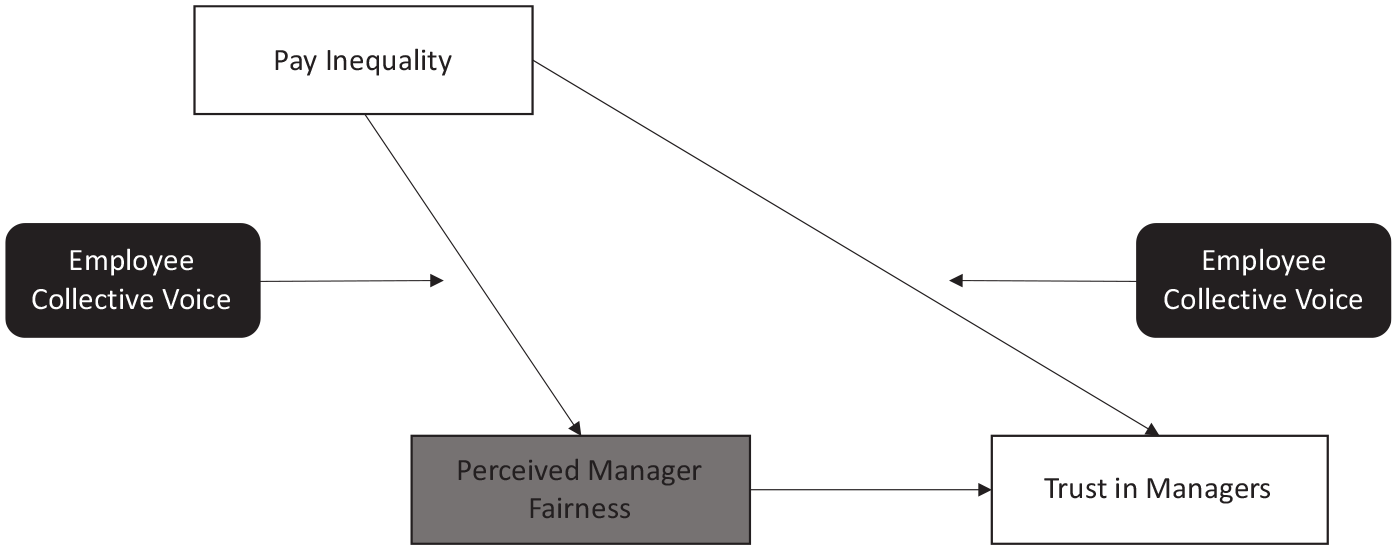
Theoretical model.
Methodology
Data
To test our theoretical model, we utilise the sixth wave of the Workplace Employment Relations Study (WERS) – the 2011 WERS – a nationally representative British survey on employment relations and working conditions. We use two components of the 2011 WERS: the Manager Questionnaire (MQ) and the Survey of Employees (SEQ). MQ data were collected through an interview with the most senior manager responsible for employment relations and a self-completion questionnaire on the basic characteristics of the workplace and workforce. The SEQ was a self-completion questionnaire distributed to a randomly selected representative sample of up to 25 employees in each workplace. A total of 2680 workplaces participated in the MQ (a response rate of 46%). Within these workplaces 21,981 employees completed the SEQ (a 50% response rate). Only full-time employees working 35 hours or more in an average week were kept in our sample because part-time workers will have less scope for interaction with managers, and it is this interaction which is at the heart of our theoretical model. Twenty-eight workplaces with a zero Gini coefficient were dropped as this is likely to be a measurement error.
Measures
Dependent variable: Employee trust
The literature is replete with different measures of trust (Colquitt et al., 2007). Broadly speaking, scholars tend to operationalise trust along three dimensions: positive expectations (e.g. Byrne et al., 2012; Clegg et al., 2002; McAllister, 1995); the willingness-to-be-vulnerable (e.g. Knoll and Gill, 2011; Mayer and Davis, 1999; Mayer and Gavin, 2005); direct questions concerning the extent to which a person, a group of people or organisations can be trusted (Brockner et al., 1997; Holland et al., 2012).
In the WERS, employees’ perceptions of trust were included in the SEQ using a positive expectations approach. Employees’ trust in managers was captured by a three-item five-point Likert-type scale (Cronbach’s alpha Managers here . . . 1) Can be relied upon to keep their promises 2) Deal with employees honestly 3) Are sincere in attempting to understand employees’ views.
Our measurement of trust reflects two different though correlated and reinforcing forms of trust. First, interpersonal trust between individuals who are in direct contact, such as the line manager. Second, organisational trust that is the trust that individuals have in their institutional environment (Tan and Tan, 2000), represented by the general management.
Independent variable: Pay inequality
The measurement of pay inequality was derived from the WERS Management Survey. Managers were asked to indicate the number of employees in the workplace falling into one of six gross hourly pay bands. These range from less than £5.93 to £18.01 or more per hour. Following Bryson et al. (2018), we took the median value of each respondent’s earnings band, except for those in the highest earnings band, which we multiplied by 1.5 because it does not have a ceiling. This returned the £27.01 per hour boundary of the highest pay band. We used the Gini coefficient as measurement of pay inequality. The key desirable property of the Gini coefficient is that it allows for easy interpretation given its values range from 0 (complete equality) to 1 (absolute inequality where one person holds all the income).
Mediator: Employees’ fairness perceptions
Employees’ perception of manager fairness was measured by a one-item five-point Likert-type scale from the SEQ: ‘Managers here treat employees fairly.’ Measuring fairness in this way aligns well to our theoretical model that focuses on whether employees perceive to be treated fairly in the social exchange as an outcome of equity considerations. It also captures how voice affects employees’ perception of manager fairness. Van Den Bos (2005) clarifies that although voice is commonly discussed in relation to procedural fairness, the true crux of it is the feeling of being fairly treated by having a voice in the process that determines outcome decisions.
Moderator: Collective voice
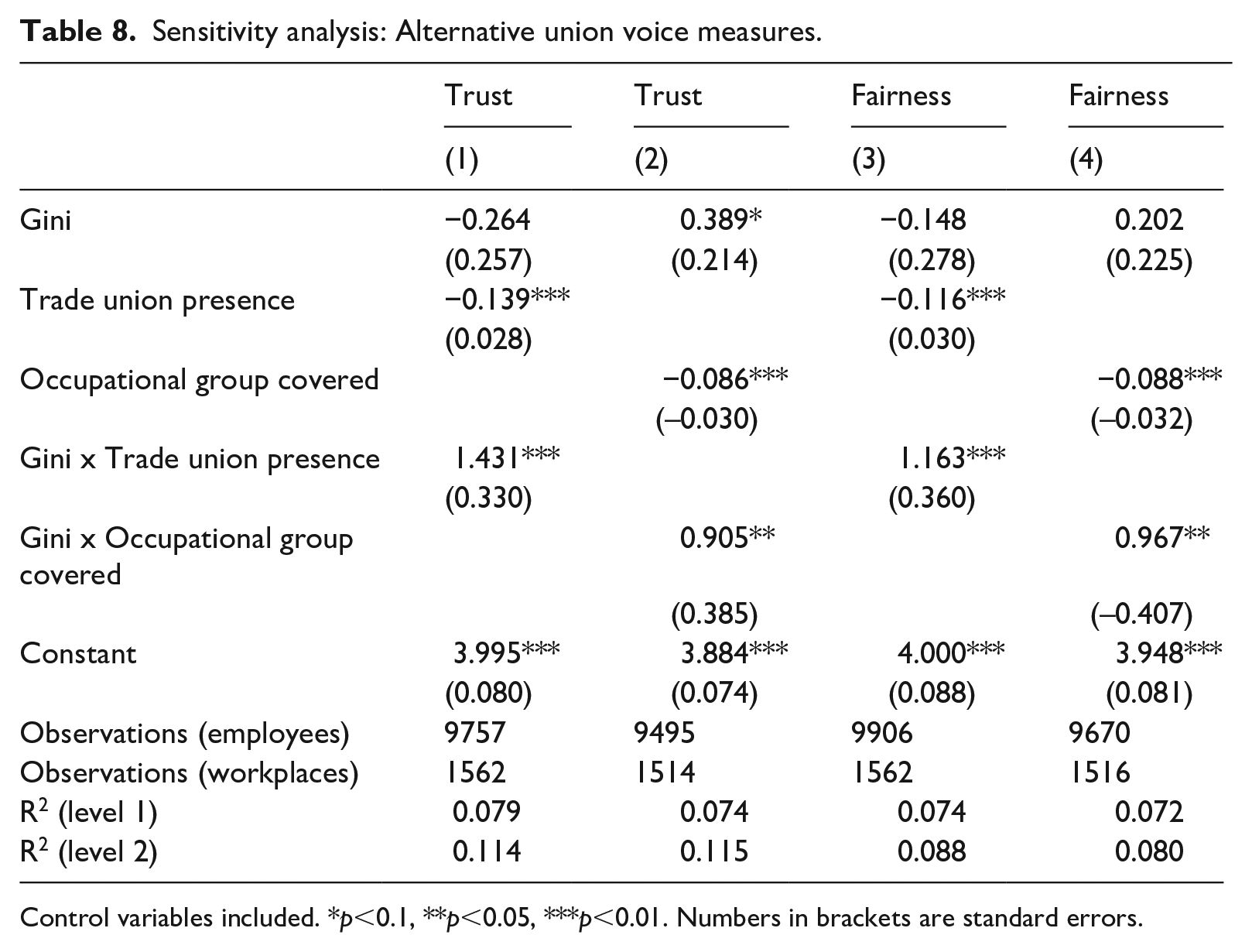
We used the proportion of employees covered by a collective bargaining agreement as a proxy for collective voice. In the sensitivity analysis, we looked at alternative measures of collective voice, namely a dummy variable for trade union presence at the workplace and a dummy for occupational collective bargaining coverage, taking the value of 1 if the employee’s occupational group is covered by collective agreements (0 otherwise).
Control variables
We control for tenure, supervisory role, gender, occupation, type of employment contract (permanent vs. temporary/fixed-term) and employee pay on the individual level, and for workplace size, age and legal status (private vs. public/non-profit).
Descriptive statistics for all study variables are reported in Table 1.
Descriptive statistics.
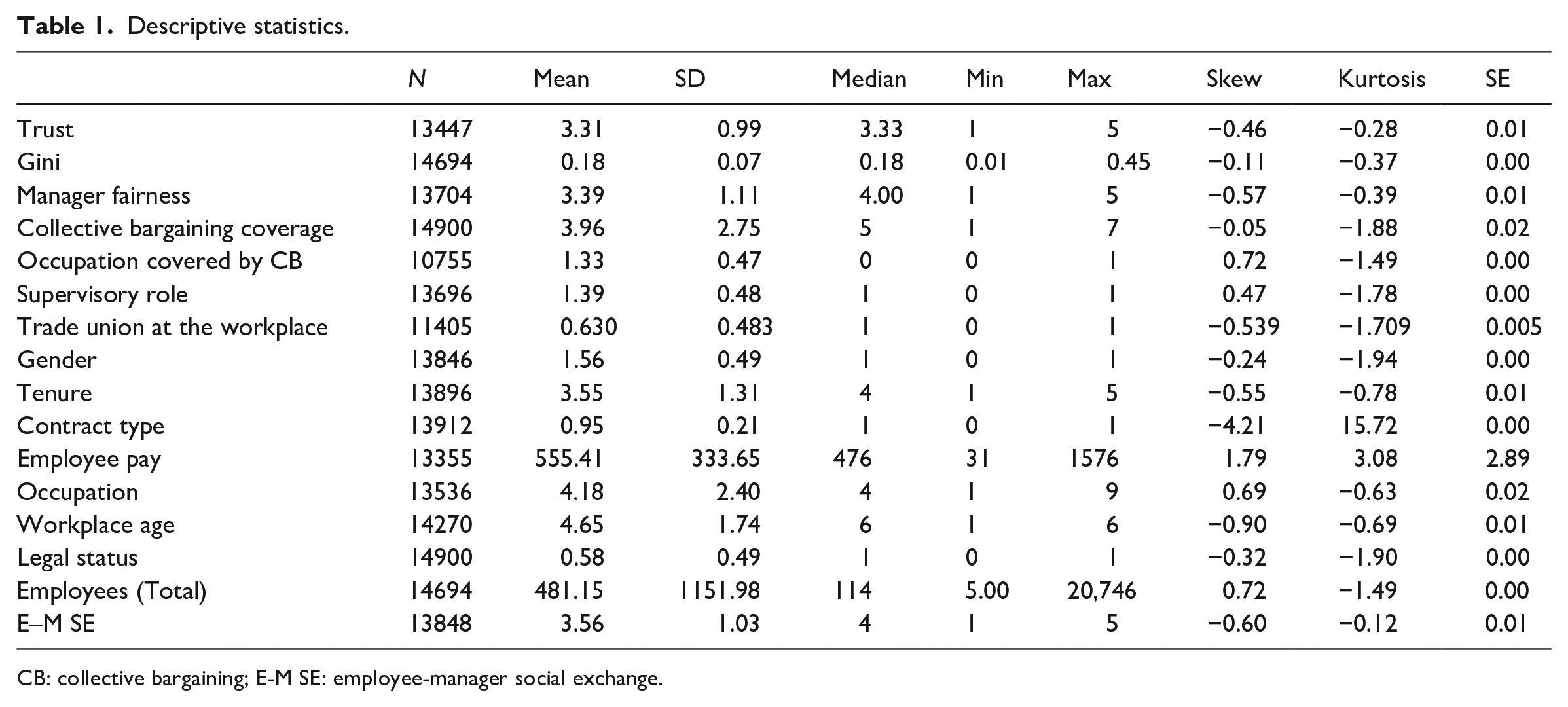
CB: collective bargaining; E-M SE: employee-manager social exchange.
Methods
We used two different analytical procedures to examine the relationship between pay inequality and trust. First, we employed a multilevel moderated mediation effect model. We followed this approach because the 2011 WERS is a hierarchical dataset where employees are nested within their respective workplaces. Multilevel analysis is appropriate for our data because the intra-class correlation coefficient (ICC1) indicated that roughly 17% of the overall variation in trust can be attributed to differences between average trust at workplace level. The regression model partitioned variance into level two (the workplace) and level one (employees). These differences would have been lost if we had aggregated the data to level two or used workplace fixed effects (Goldstein, 1995; Hox, 1992).
The mediation model in line with Baron and Kenny (1986) is depicted in Figure 2. This is a 2–1–1 model given pay inequality was measured at level two (workplace) while other variables in the model were measured at the employee level.
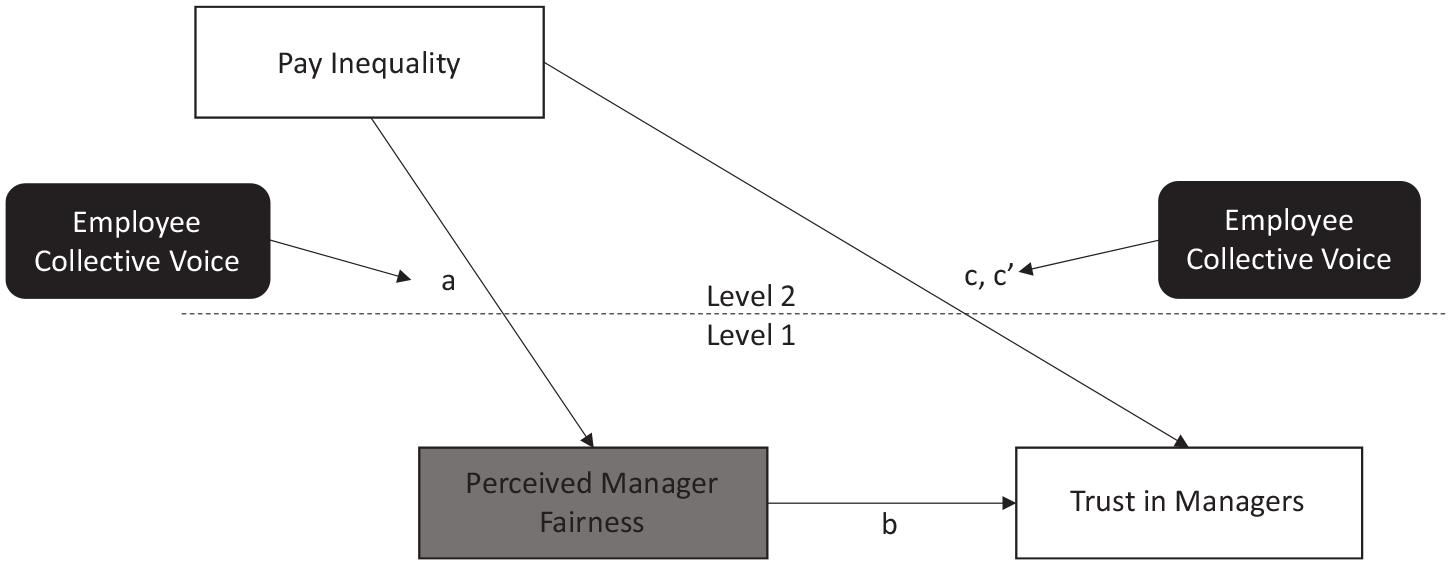
Multilevel moderated mediation effects model.
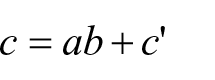
We deployed a random intercept multilevel model to estimate direct and mediated effects with the full maximum likelihood estimator that produces asymptotically efficient and consistent estimates and is, in reasonably large samples such as the WERS, robust against mild violations of regression assumptions (Hox, 1992; Maas and Hox, 2004). If at least one path of the mediation model is moderated, the whole affect is moderated:
Given that the true relationship between pay inequality and trust could be non-linear we included a polynomial term in the regression equation. However, for linear regressions to pick up a quadratic effect the non-linearity ought to be clear-cut with as little variation as possible around the inflection point. Random forest analysis, a class of machine learning algorithm, has been found to be better at identifying complex non-linear relationships than traditional forms of regression analysis (Goldstein et al., 2015). Therefore, we next used random forest analysis to build a predictive model of employee trust in managers given pay inequality, employee collective voice and other key variables included in study one.
Random forest (RF) is a widely used machine learning algorithm. It represents an ensemble algorithm of simple predictive models (decision trees) built by resampling (bootstrapping) a random selection of features (Svetnik et al., 2003). RF algorithmically selects cut-off points to grow decision trees where the effect of a predictor on an outcome is estimated at every splitting point. The splitting procedure is repeated multiple times with intermediate solutions, thus producing an ensemble (‘forest’) of decision trees. The random forest’s prediction is the average of fitted decision trees based on the random split of the dataset into the training and test subsets.
To derive the direction and magnitude of the relationship between ‘x’ and ‘y’, we used partial dependence plots (PDP), which are similar to marginal effects in linear regression. That is, PDP show the relationship between an independent variable and the outcome holding other features in the model constant. In addition to PDP, we use individual conditional expectation (ICE) plots which produce a prediction line per observation in the sample. This is a useful addition because PDP can mask heterogeneous effects that occur among some groups of respondents but not others. We employed a variant of ICE called centred ICE plots. Such plots have a thick line in the middle to give an overall impression as to where a central point of individual curves lies.
The online Appendix contains mathematical notations for the regression models, RF, PDP and ICE alongside sensitivity analyses. R scripts used to run the analysis can be obtained from the authors. The data can be obtained from the UK Data Archive.
Measurement model
Confirmatory factor analysis was conducted to assess validity and reliability of the measurement model. The measurement model comprised three latent variables: trust, fairness and a measure for the exchange relationship between employees and managers for sensitivity analysis (see Figure 3). To standardise results, the variance for both manifest and latent variables was fixed at 1. Initially, a theoretical measurement model was tested wherein individual items were allowed to load on their hypothesised latent constructs. This model was then compared to alternative specifications.
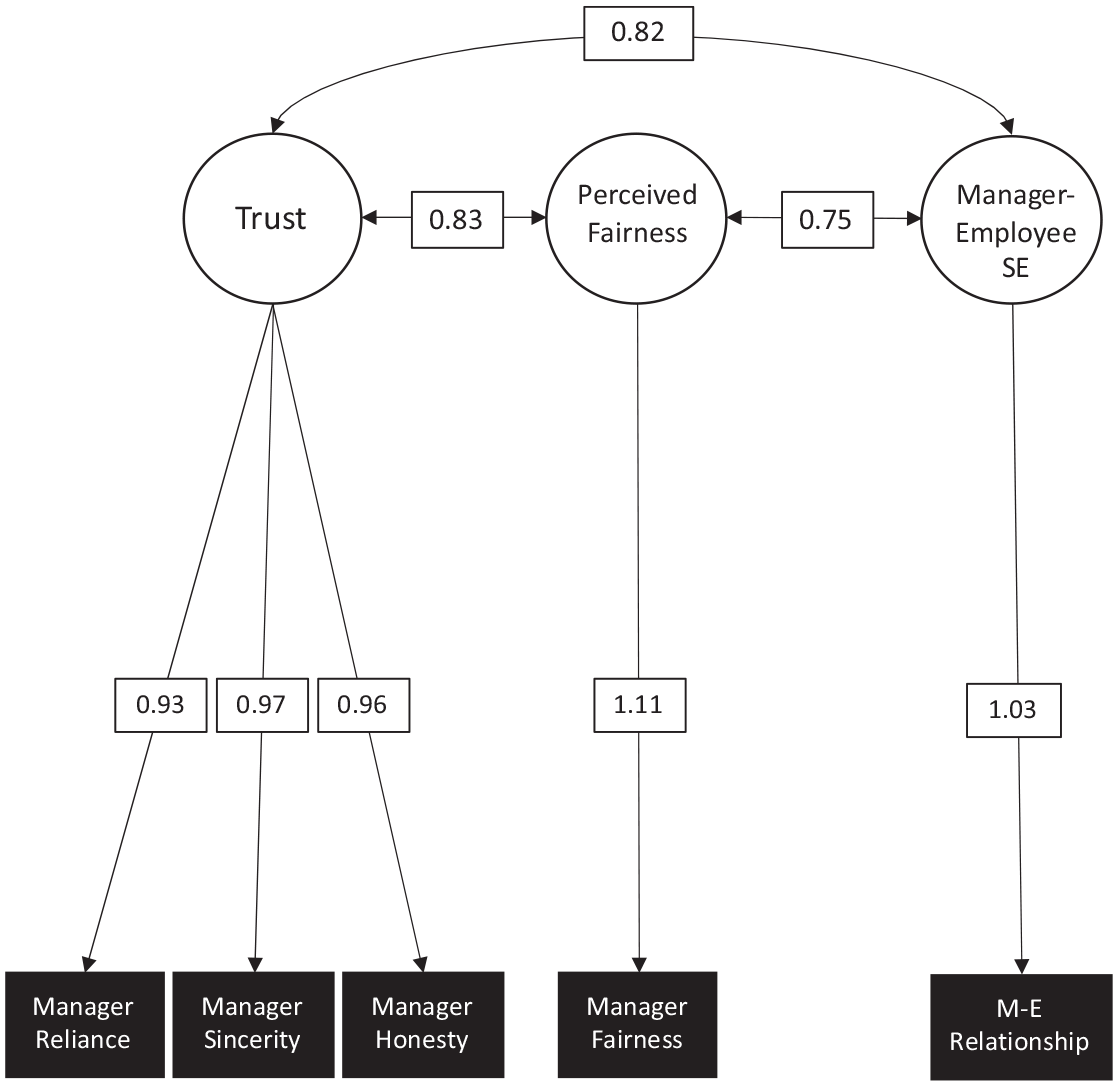
Path diagram of latent variables.
As can be seen in Table 2, the overall fit of the two-factor measurement model was good as all key indicators (CFI = 0.99, TLI = 0.99, RMSEA = 0.04, SRMR = 0.01) showed a good fit between the theoretical model and the data (Hu and Bentler, 1999). All latent variables had sufficient discriminant validity, and alternative specifications fared worse than the theoretical model.
CFA model fit indices.
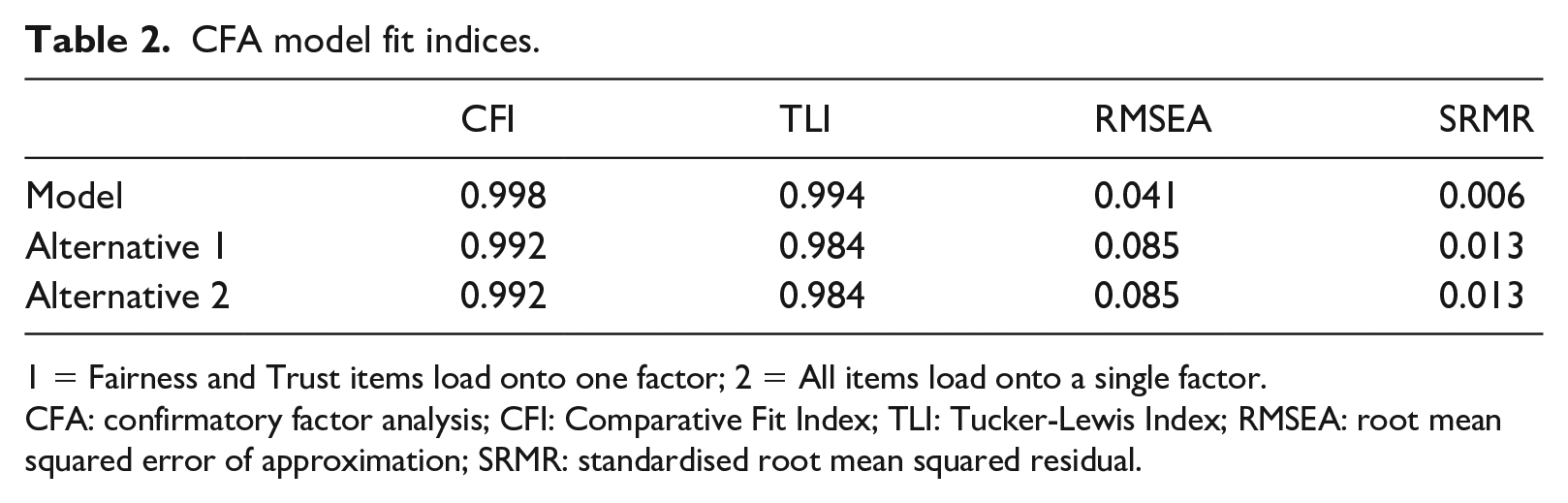
1 = Fairness and Trust items load onto one factor; 2 = All items load onto a single factor. CFA: confirmatory factor analysis; CFI: Comparative Fit Index; TLI: Tucker-Lewis Index; RMSEA: root mean squared error of approximation; SRMR: standardised root mean squared residual.
Common method variance
There is a possibility of common method variance in our data given that trust, fairness and social exchange items were all measured by Likert-type scales at employee level (Podsakoff et al., 2003). We used Lindell and Whitney’s (2001) marker variable test to check for common method variance. The following variable was used as a marker: ‘How well do the work skills you personally have match the skills you need to do your present job?’ As can be seen in Table 3, the correlation between the marker variable and the outcome items is the lowest (0.02) among all correlations between the outcome and other study variables.
Correlation matrix of latent variable items with marker variable.
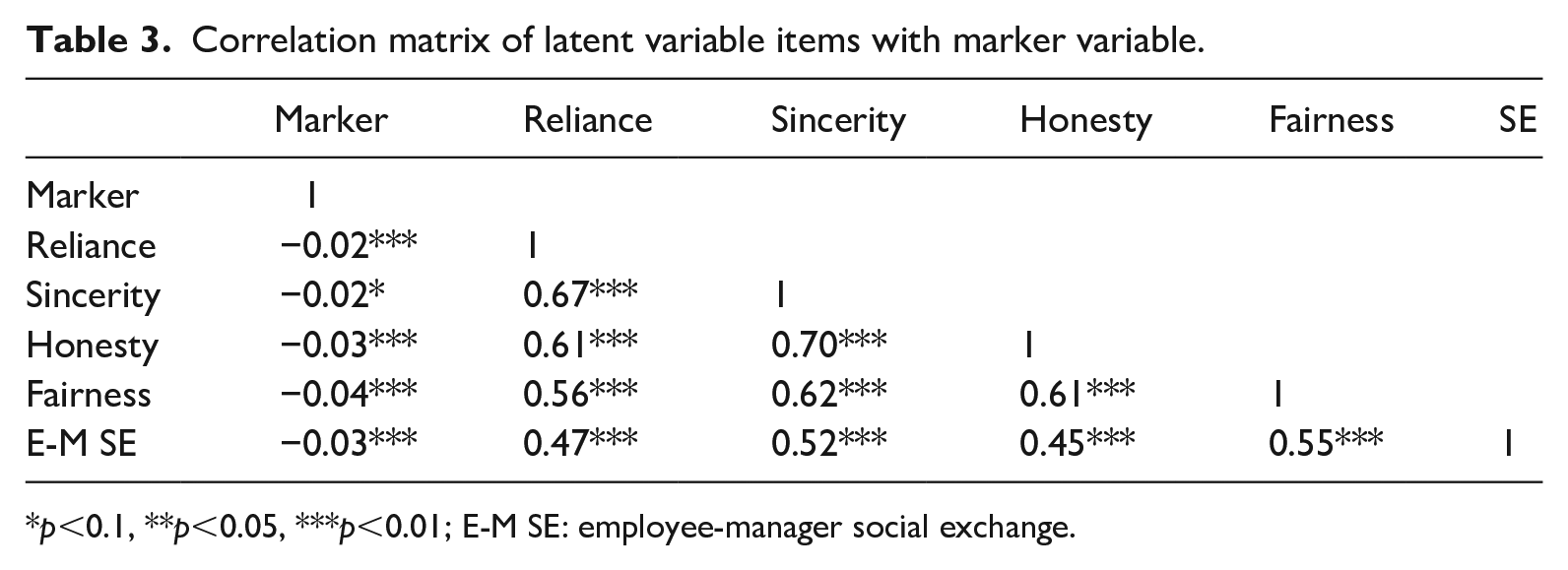
p<0.1, **p<0.05, ***p<0.01; E-M SE: employee-manager social exchange.
Although the correlation coefficient was statistically significant, this is not uncommon as p-values are generally low in large samples such as the WERS. The main takeaway from the marker variable test is that the marker variable bears no meaningful correlation of the items of interest, ranging from as little as 0.02 to no higher than 0.04. Hence, the element of the observed correlation stemming from common method variance (CMV) is relatively small.
After partialling-out the effect of the marker (see Lindell and Whitney, 2001), the correlation between all criterion variables slightly decreased, yet they are still statistically and quantitatively significant (Table 4). This shows that even after controlling for CMV the true correlation between the criterion and the outcome variables is still strongly positive and significant.
Partial correlation matrix.
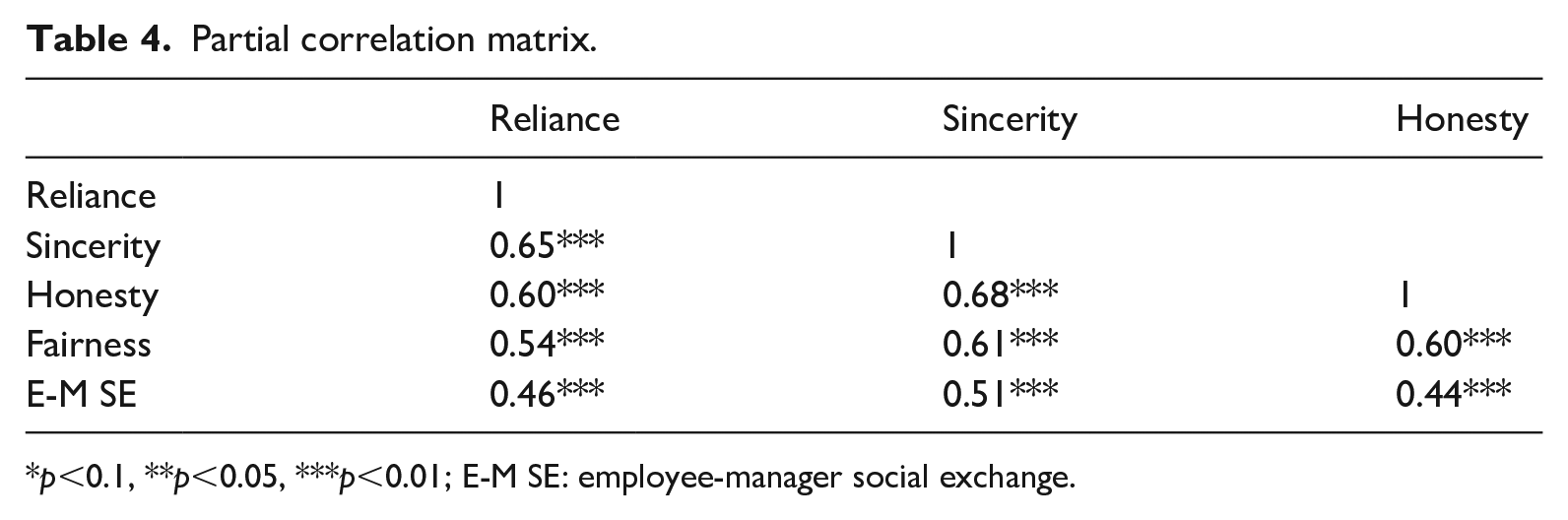
p<0.1, **p<0.05, ***p<0.01; E-M SE: employee-manager social exchange.
Results
Is there a direct relationship between pay inequality and trust?
The first question of interest is whether pay inequality is negatively associated with trust in managers. The results in Table 5 suggest a positive relationship between the Gini coefficient and trust in managers (β = 0.88, p-value < .001). After adding control variables, the size of the association decreased, but stayed significant and positive (Gini: β = 0.50, p-value < .01; logGini: β = 0.05, p-value < .05). This contradicts Hypothesis 1.
Regression results for the direct relationship between pay inequality and trust.
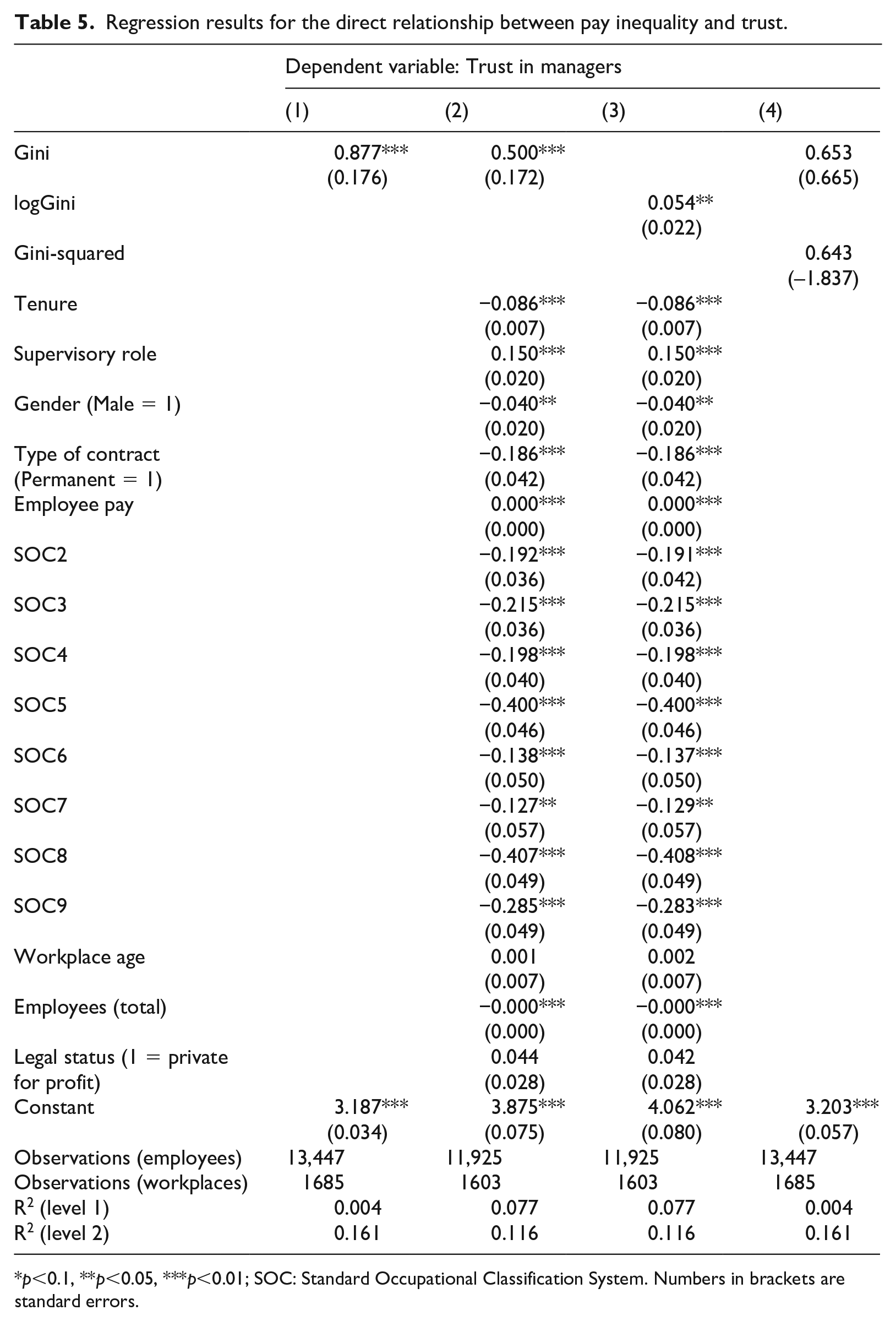
p<0.1, **p<0.05, ***p<0.01; SOC: Standard Occupational Classification System. Numbers in brackets are standard errors.
Is the relationship between pay inequality and trust non-linear?
Having established a statistically significant association between pay inequality and employee trust in managers, we turn to Hypothesis 2 and examine the possibility of this relationship being curvilinear. Following the empirical strategy outlined above, we first added a quadratic term to the regression equation. This yielded non-significant results as shown in Table 5 (see model 4; p-value = .73). Therefore, using regression analysis we have not been able to corroborate Hypothesis 2.
Acknowledging that linear regression can overlook genuine non-linear patterns in the data, we turned to RF. We estimated a model with pay inequality as a key predictor and trust in managers as an outcome. Variable importance scores and complete RF outputs can be found in the online Appendix. Figures 4 and 5 present the PDP and ICE plots respectively for the effect of intra-firm pay inequality on employee trust in managers. PDP shows the average marginal effect of pay inequality on trust, while the centred ICE plots visualise predictions for every observation in the data. PDP points to a clear-cut non-linear relationship between pay inequality and trust, with a turning point ~0.3. When the Gini coefficient is greater than this the previously positive relationship between pay inequality and trust turns negative. This is mirrored in the ICE plot, though it shows some variation around the inflection point (hence, a visibly small size of the U-shaped effect). Overall then, RF supports the curvilinear effect in accordance with Hypothesis 2.
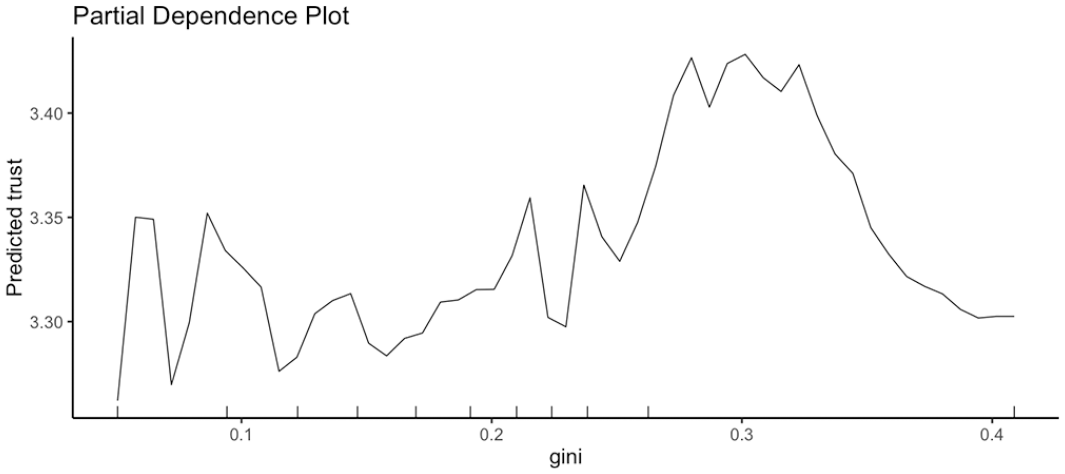
Partial dependence plot (Gini – Trust).
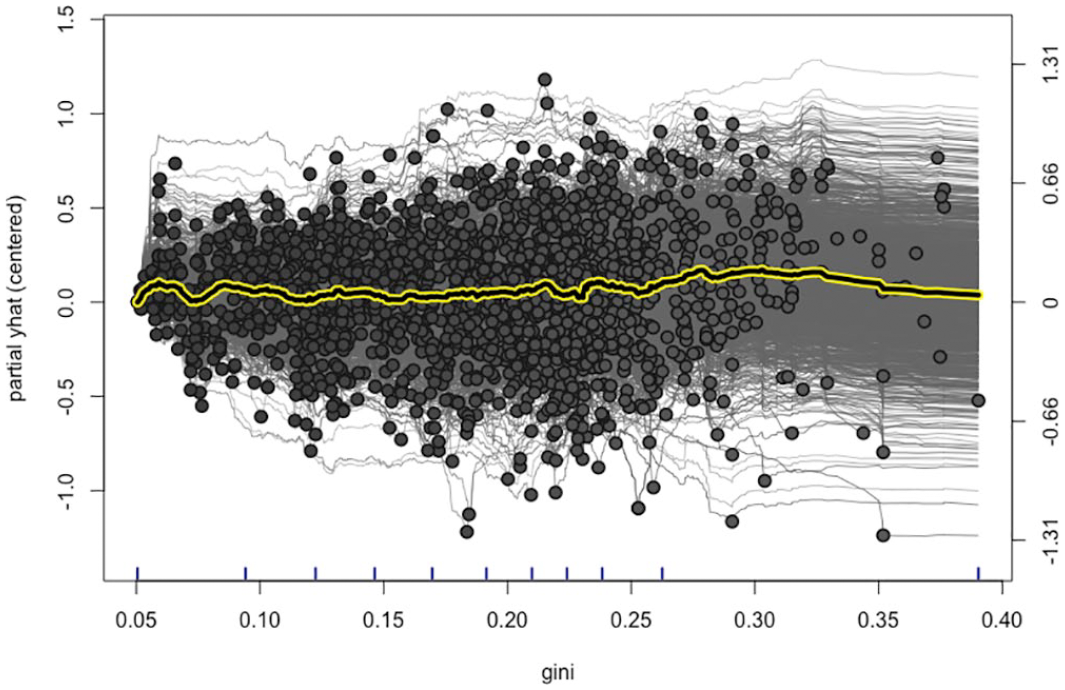
Conditional expectation plot (Gini – Trust).
Do fairness perceptions mediate the relationship between pay inequality and trust?
The results in Table 6 show that all required steps for a successful mediation are fulfilled. Both the direct association between pay inequality and trust, and the association between pay inequality and fairness are positive and significant. Moreover, after including fairness when regressing trust on pay inequality, the relationship between fairness and trust was statistically significant (β = 0.69, p-value < .001) while the effect of pay inequality diminished in size and turned non-significant (β = 0.151, p-value = .093). Including fairness in the model increased the R2 from around 0.2 to 0.65. Hypothesis 3 is thus supported: employees’ perception of manager fairness mediates the relationship between pay inequality and employee trust in managers.
Regression results for the mediating effect of perceived manager fairness.
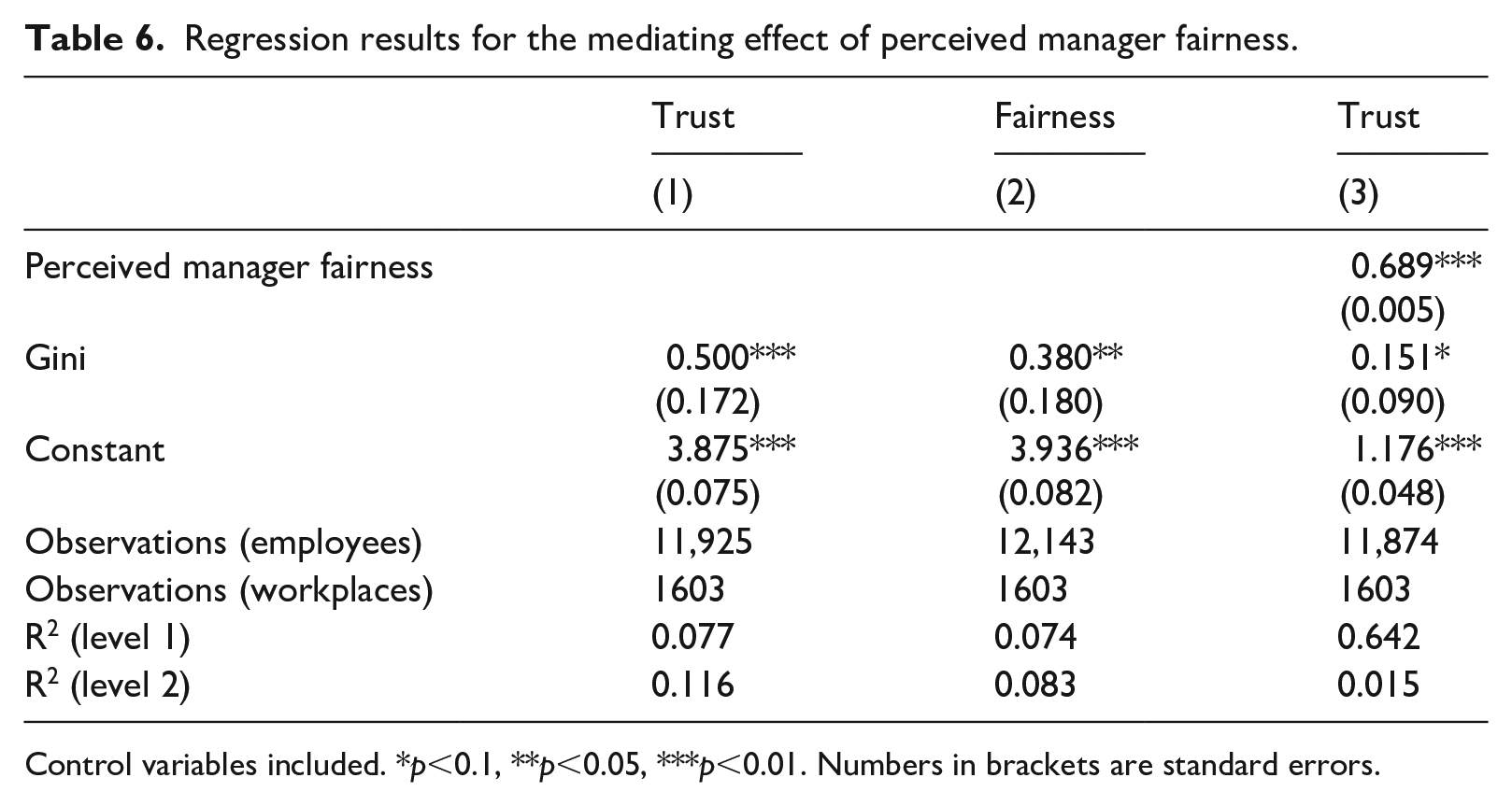
Control variables included.
p<0.1, **p<0.05, ***p<0.01. Numbers in brackets are standard errors.
Moderating effect of collective bargaining
As the results in Table 7 regression (1) suggest, the association between pay inequality and trust in managers is positive and significant at a 0.1% level for collective bargaining coverage (β = 0.214, p-value < .001). Hypothesis 4a was thus supported: employee collective voice positively moderates the association between pay inequality and employee trust in managers.
Regression results for the moderating role of collective employee voice in the relationship between pay inequality and trust and between pay inequality and fairness.
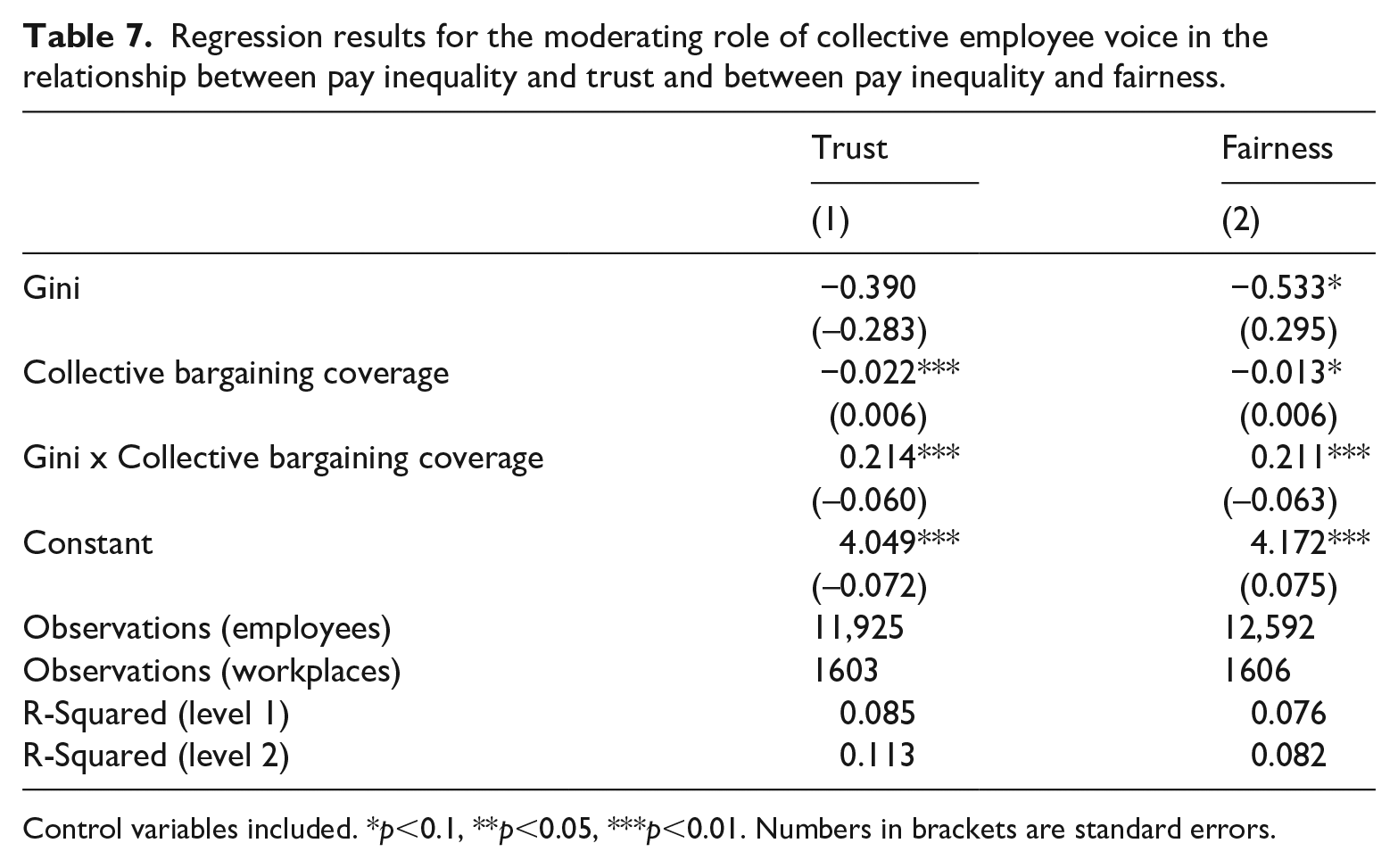
Control variables included.
p<0.1, **p<0.05, ***p<0.01. Numbers in brackets are standard errors.
The marginal effects in Figure 6 illustrate the importance of collective employee voice for the relationship between pay inequality and trust. In workplaces where no employee is covered by collective bargaining agreements, trust falls slightly as pay inequality increases while it increases in workplaces with a higher proportion of employees covered by collective bargaining.
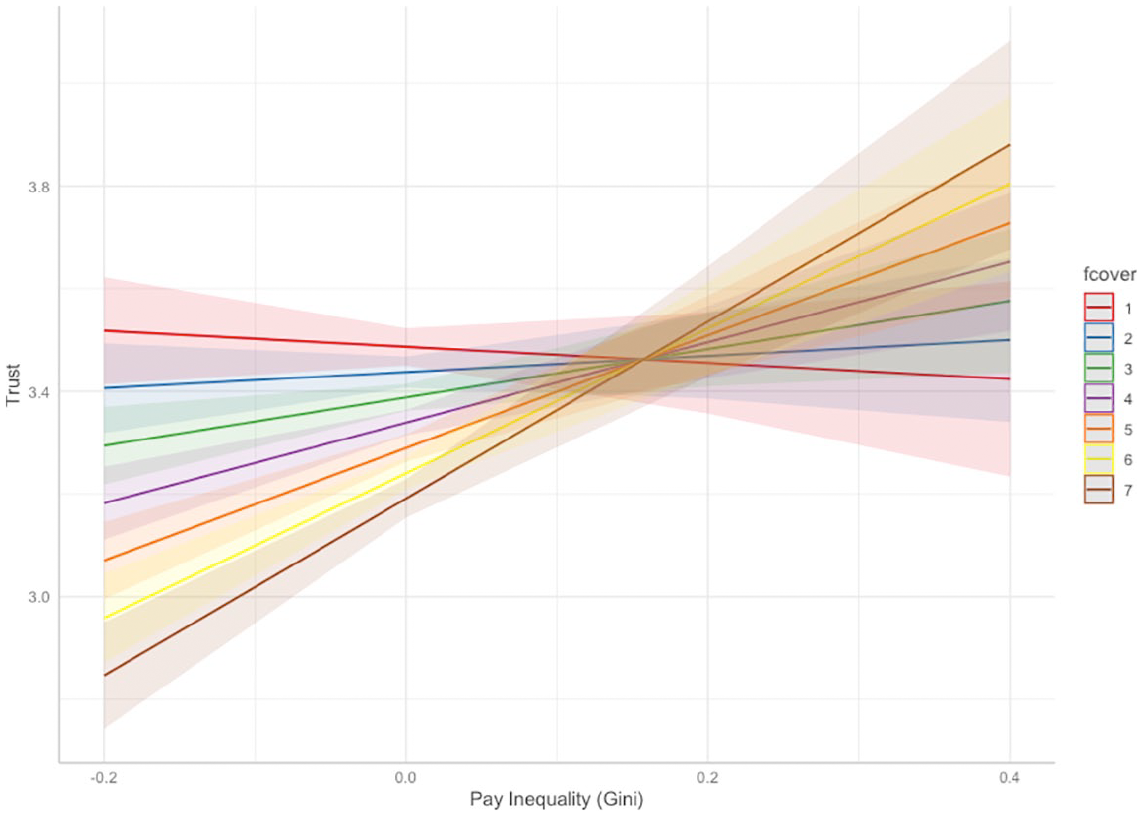
Marginal effects for the moderating effect of collective bargaining on the relationship between pay inequality and trust.
Results for the moderation effect of collective bargaining in the relationship between pay inequality and fairness are displayed in Table 7 regression (2). Almost identical to its relationship with trust in managers, collective bargaining positively moderates the relationship between pay inequality and perceived manager fairness. These findings support Hypothesis 4b. The marginal effects are illustrated in Figure 7.
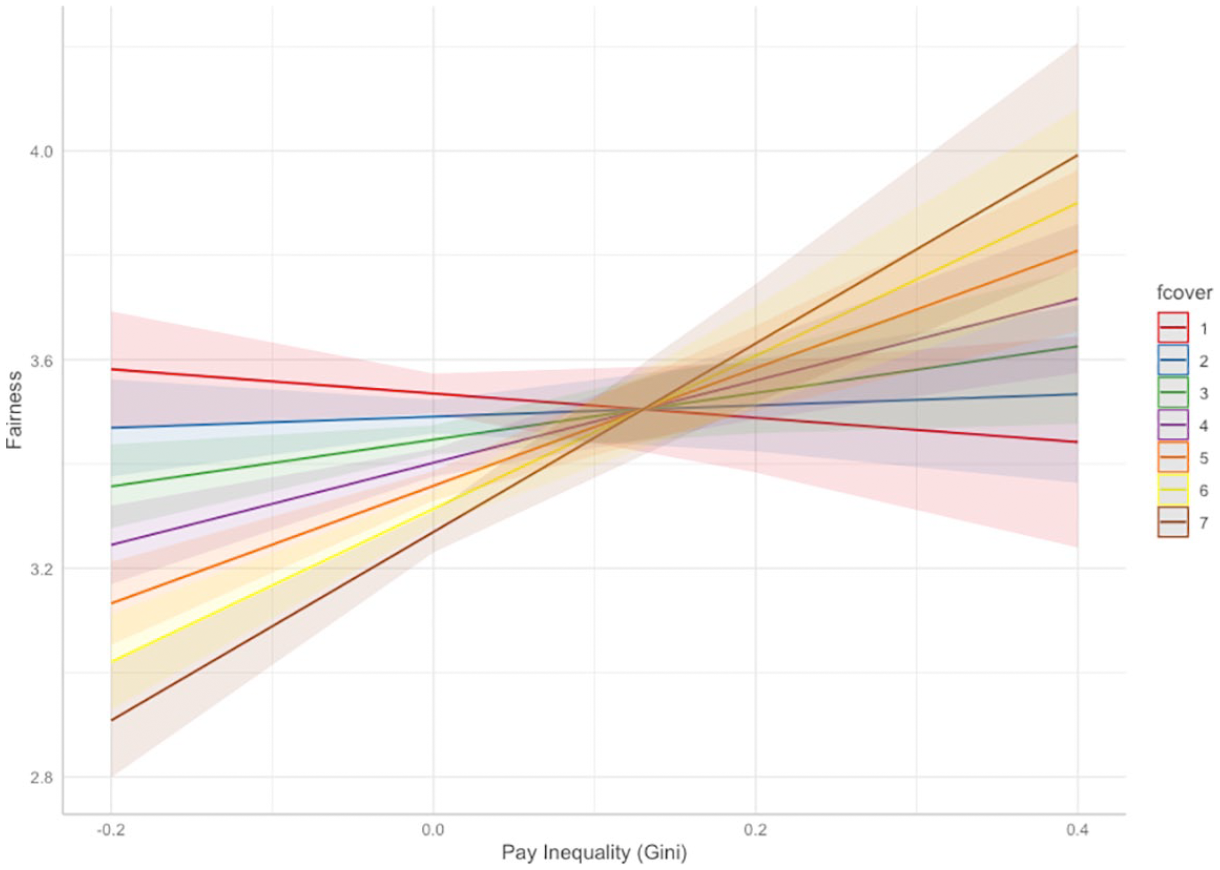
Marginal effects for the moderating effect of collective bargaining on the relationship between pay inequality and perceived fairness.
Assuming the true relationship between pay inequality and trust is curvilinear, we tested whether the moderating effect of employee collective voice manifests in RF. We used the same RF algorithm except for collective bargaining coverage that we used to split the data into two groups comprising organisations that are covered and not covered by collective bargaining agreements. The PDP by collective bargaining is reported in Figure 8, which demonstrates that the effect of pay inequality on trust is broadly positive (except the inflection point) in workplaces covered by collective agreements, but that does not hold among non-covered workplaces. This lends further support to the moderating effect of collective voice even when taking into account the non-linear relationship between pay inequality and trust.
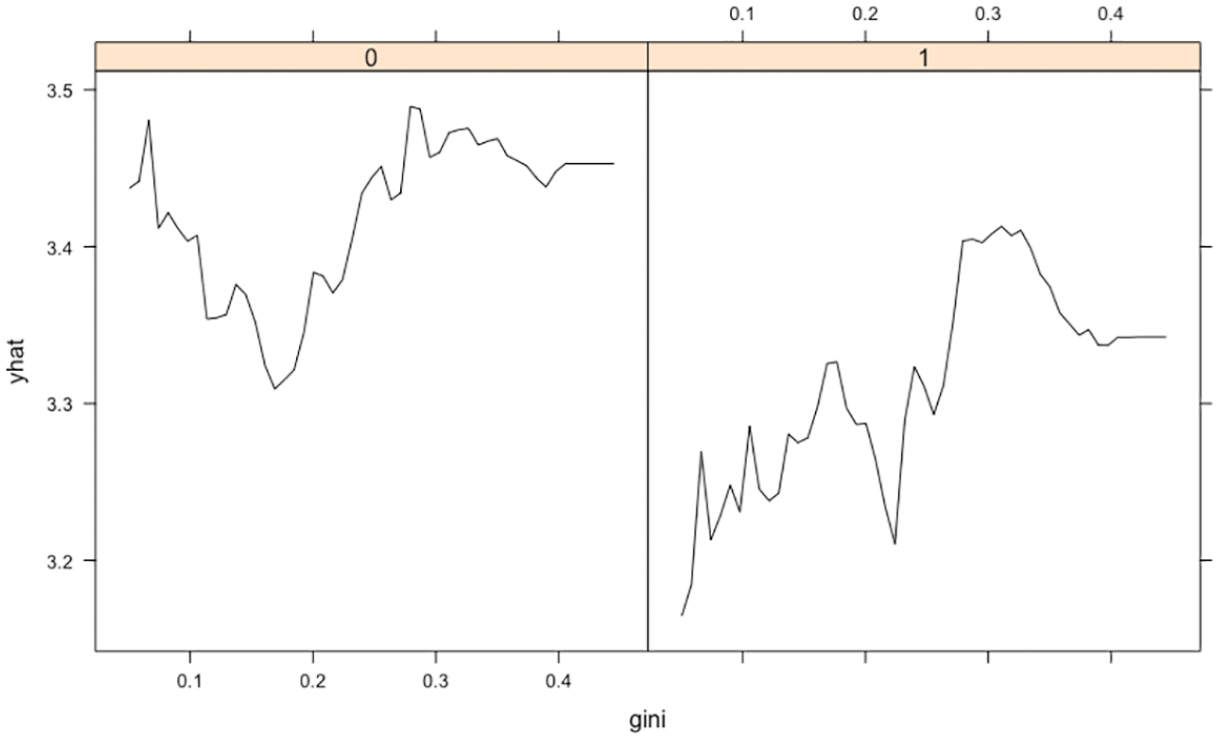
Partial dependence plot (Gini – Trust, by collective bargaining coverage).
We also investigated whether we still observed a mediating role for perceived fairness in the RF analysis. Results here were in line with the outcomes of the multilevel model reported above. The plots from this analysis are included in the online Appendix.
Sensitivity analysis
Alternative union voice measures
As described in the methods section, we have included two additional measures of union voice to test for the sensitivity of our results. The results for both alternative union voice measures, shown in Table 8, are statistically significant and in line with the findings above on the moderation and moderated mediation analysis of collective bargaining coverage.
Sensitivity analysis: Alternative union voice measures.
Control variables included.
p<0.1, **p<0.05, ***p<0.01. Numbers in brackets are standard errors.
An employee-manager social exchange measurement
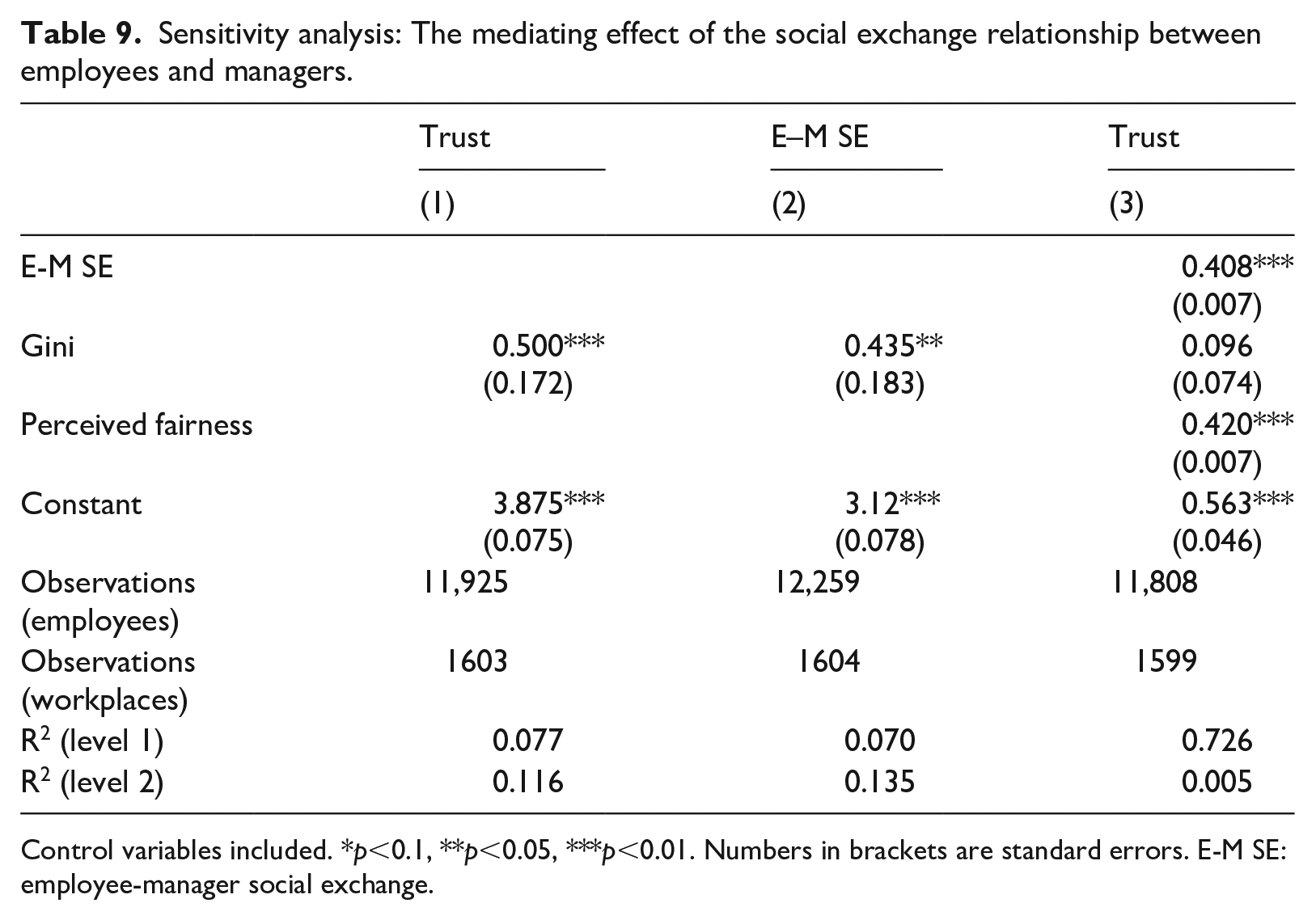
We have also included a measure that captures employees’ perception of the employee–manager relationship in the workplace, to test whether our model is still valid when including a parallel mediator that captures the social exchange between employees and managers (‘In general, how would you describe the relations between managers and employees here?’). Since trust is rooted in the social exchange between managers and employees, we would expect the employee-manager relationship to mediate the pay inequality–trust relationship.
The results in Table 9 support this. In line with our findings on perceived fairness, all steps for a successful mediation are fulfilled. Moreover, perceived fairness remained statistically significant (p-value < .0001) when adding the social exchange measure and the social exchange measure added to the explanatory power of our model (R2 = 0.73).
Sensitivity analysis: The mediating effect of the social exchange relationship between employees and managers.
Control variables included.
p<0.1, **p<0.05, ***p<0.01. Numbers in brackets are standard errors. E-M SE: employee-manager social exchange.
Robustness of cross-sectional mediation analysis
A significant limitation of our mediation analysis is that it is applied to cross-sectional data. This means that our results cannot speak for the temporal sequences of causal effects underpinning our model. Nor are we able to completely eliminate omitted variable bias. However, we conducted a sensitivity analysis with respect to the mediator–outcome relationship to probe the likelihood of violating the sequential ignorability assumption which posits that, conditional on observed covariates, there are no unmeasured confounders at every step of a causal mediation chain (Imai et al., 2010). The sensitivity function computes the true average mediated effect at different levels of a sensitivity parameter ‘rho’, which quantifies the violation of the sequential ignorability assumption. In addition to the sensitivity parameter, the output shows the product of the proportion of variance of a mediator and an outcome explained by an unobserved confounding variable at which the 95% confidence interval for mediated effects turns zero. The corresponding sensitivity coefficient ‘rho’ at which the mediation effect turns zero with 95% chance (confidence interval = [–0.007; 0.094]) is 0.8. Figure 9 visualises this. The product of R-squared coefficients for the mediation and outcome regressions (R^2_M*R^2_Y) with a confounder at which the average mediation effect turns zero was equal to 0.64. This implies that to overturn a mediation effect observed in our data a confounder would have to explain 80% of the originally explained variance of fairness perception and 80% of variance of employees’ trust in managers. While not impossible, this and other similar scenarios are unlikely to materialise. These results increase our confidence in the outcomes of our analysis, though in the absence of longitudinal data and experimental or quasi-experimental evidence we refrain from making stronger causal claims.
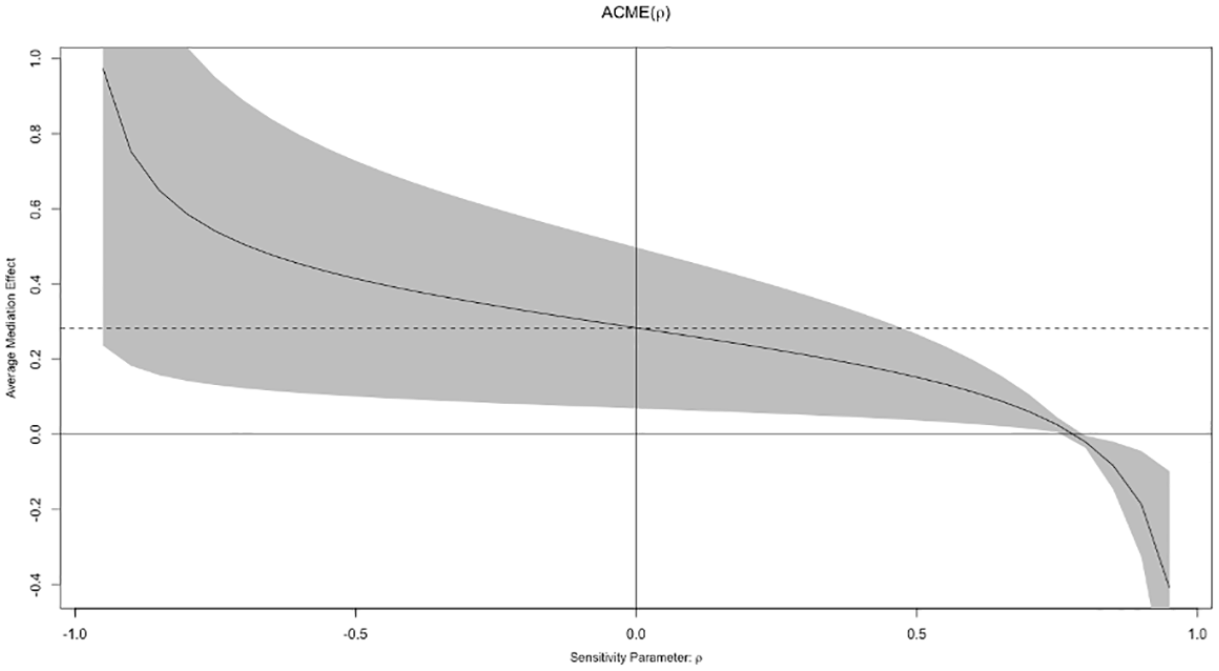
Sensitivity plot mediation analysis.
Discussion
At the level of societies, there is robust evidence that greater income inequality results in less trust between citizens. This article was motivated by a desire to understand whether we see this relationship replicated within organisations. This is a novel topic which has not previously been studied in the literature on trust in organisations. It is important considering the significant share of intra-firm pay inequality in the increase in overall income inequality levels on the one hand (Barth et al., 2016; Card et al., 2013; Song et al., 2019), and the positive outcomes associated with employee trust on the other hand (Brown et al., 2015; Sharkie, 2009; Tzafrir, 2005). Our results suggest that, contrary to findings on the macro level, the relationship between intra-workplace pay inequality and trust is initially positive. Using machine learning techniques, we have shown that this positive association only holds for low and moderate levels of inequality. Once pay inequality passes a threshold (Gini coefficient > 0.3) its relationship with trust turns negative. This threshold is very close to a broadly accepted borderline of ‘adequate’ inequality, 0.3–0.4 (OECD, 2011) and to previous research that linked a country-level Gini coefficient above 0.3 with poor health outcomes (Kondo et al., 2009). To put this number into perspective, a Gini coefficient of 0.3 is equivalent to the level of income inequality in Germany or France, and only slightly higher than inequality in ‘low-inequality’ countries such as Finland, Sweden, Norway and Denmark (Gini coefficient ~0.28). Crucially, the identified value at which the positive effect of inequality on trust breaks down is far below the current level of inequality in the United Kingdom (Gini coefficient = 0.37) and substantially lower than inequality in other OECD countries like the USA (0.39), Mexico (0.46) or South Africa (0.62) (OECD, 2020).
This study revealed that it is the embodied notion of perceived fairness in the social exchange between employees and managers that matters for the relationship between pay inequality and employee trust in managers. While individual fairness perceptions have been linked to employee trust in managers in the past (Choi, 2011; Cohen-Charash and Spector, 2001; Colquitt et al., 2001; DeConinck, 2010), we demonstrated that the relationships between pay inequality, trust and fairness perceptions are moderated by organisational factors – something that according to Nienaber et al. (2015) has received less attention in previous research. Specifically, the moderating role of collective voice has been tested based on the assumption that trade unions, through collective agreements, increase transparency and fairness of pay determination (Metcalf et al., 2001).
The results of the present study have implications for theory, research methodology and practice.
Theoretical implications
Broadly speaking, our findings support the role of fairness perceptions in understanding outcomes of intra-workplace pay inequality (Adams, 1965; Van Den Bos, 2005). This study extends intra-organisational pay inequality research in two fundamental ways. First, previously unobserved non-linear patterns in the relationship between pay inequality, perceived fairness and trust imply that a degree of pay inequality can be associated with positive employee attitudes (and perhaps, by extension performance) but only up to a point. This chimes with studies of the relationship between pay inequality, productivity and performance, which found similar curvilinear relationships (Mahy et al., 2011; Trevor et al., 2012). The non-linear association between pay inequality and fairness perceptions identified in this article is important because, contrary to previous research which argued that positive effects of pay inequality are explained by theories of self-interest (Lazear and Rosen, 1981) and that negative effects are explained by theories of fairness (Akerlof and Yellen, 1990), our theorisation and results suggest that fairness considerations can explain both positive and negative reactions to pay inequality.
It is plausible then that the underlying mechanisms by which inequality impacts trust in the workplace are different from forces that are at play in the society as a whole (Sandel, 2012). Workplace relationships are characterised by social as well as economic exchange relationships that are by definition interpersonal, affected by a multitude of organisational and individual factors. Hence, being in relatively close proximity to each other and their managers, employees can construe pay inequality as fair insofar as it reflects greater responsibilities and contributions of managers. The inflection point in this relationship (Gini coefficient ~0.3) is crucial in that it indicates how far the inequality can stretch before turning unfair, thereby disrupting established relationships in the workplace. This explanation is in line with Adams’ (1965) original theory on inequity in social exchanges and meritocratic fairness beliefs.
The second theoretical implication of this study is that the inverted U-shaped relationship between pay inequality and trust in managers varies depending on the organisational context in which pay differentials take place, thus supporting the idea of differential, contingent human resource management systems (Apospori et al., 2008; Clinton and Guest, 2013). One such contextual factor is employee collective voice. Our empirical findings demonstrate that the positive slope of the relationship between pay inequality, trust and fairness is found in workplaces with high levels of collective bargaining coverage. This relates to an established, yet recently neglected, strand of research that posits the breadth and depth of employee voice mechanisms as a key driving force for transparency and fairness in pay outcomes (Heery, 2000; Metcalf et al., 2001). Our findings confirm that if employees have a say on workplace matters relevant to them and are able to influence the process of pay determination through their representatives, they will perceive pay outcomes in a more positive light relative to workplaces where the channels of collective voice are absent. However, employee voice is not a panacea for inequality and unfairness since our findings revealed that the curvilinear relationship between pay inequality, fairness perceptions and trust persists in workplaces covered by collective agreements. This is a crucial finding that puts new perspective on the ‘fair process effect’ (Folger et al., 1979; Van Den Bos, 2005) at the workplace level, in that it shows that voice alone might only result in fairness perceptions and the acceptance of outcome decisions as long as outcome inequality does not pass a certain threshold (Gini coefficient > 0.3).
Methodological implications
This study presented a novel methodological approach where we combined traditional methods of regression analysis with machine learning algorithms. Machine learning has been instrumental in our attempt to uncover non-linear patterns in the relationship between pay inequality and trust in managers. The reason we turned to a random forest model is because it is a data-driven non-parametric technique that relaxes many stringent assumptions behind linear and polynomial regression models. Using recent advancements in machine learning, notably graphical methods of analysing the relationship between dependent and independent variables, we were able to unpick a non-linear, non-monotonous relationship between pay inequality and trust invisible to regression analysis but consistent with theory.
There are two main takeaways from our methodological approach. First, our study is a warning against the blind use of linear regression models and oversimplification of the outcomes of regression analysis. Had we relied exclusively on regression analysis, the interpretation of our results would have been different and potentially misleading. Second, we encourage scholars to utilise machine learning techniques more often, especially in studies that look at complex, multidimensional phenomena and use large datasets. This has been recognised in many academic disciplines including medical sciences and economics; it is time for human resource management and employment relations scholars to follow suit.
Practical implications
One of the key lessons for human resource (HR) practitioners is that pay inequality levels are likely to affect the relationship between employees and managers. This is important because both high levels of trust and fairness have been linked to employee work attitudes and outcomes such as commitment, satisfaction, extra-role behaviour and increased productivity (Brown et al., 2015; Sharkie, 2009; Tzafrir, 2005). HR managers should therefore consider carefully the within-company pay distribution when designing compensation systems. Analysis of industry pay benchmarking surveys can be used to monitor whether levels of within-company inequality are greater than industry norms (and therefore likely to be perceived as unfair). Managers might also use employee appraisal and performance management discussions to understand the extent to which their direct reports think their pay is fair and to clearly explain pay decision criteria in order to try to enhance perceptions of fairness. This can be explicitly encouraged through appraisal/performance management policies. The impact of these actions can be monitored at a company and business unit level by including questions that measure the extent to which employees think their pay is fair in staff attitudes surveys. This could be done by adding questions asking employees whether they view their pay to be fair in general, compared to others, and whether they feel that overall there seems to be a balance between employees’ inputs and outcomes, as well as whether they find they have enough say in pay matters. Employees’ perceptions of pay fairness can also be monitored through formal consultation channels (e.g. works councils and consultations as well as negotiations with trade unions).
Focusing on giving employees a voice to counter the potential negative effects of high degrees of pay inequality is a balancing act that demands caution and has its limits. At moderate levels of inequality fairness considerations from voice opportunity seem to override the perceptions of the allocation of outcomes. Formal rules and procedures, transparency, the opportunity for corrective measures – all parts of collective labour agreements – signal the employee fair and trustworthy behaviour of managers. With this in mind, practitioners should be aware of the potential positive effect of collective employee voice through collective bargaining on the quality of employee–manager relationships; an important aspect in times of declining union voice (Bingham, 2016). Although fairness and trust are initially lower in workplaces where unions play a strong role in pay matters, this is most likely because of the underlying working conditions (Bessa et al., 2020). Overall, our results suggest that giving employees a say can help to increase acceptance of pay differentiation but only up to a point. We identified a threshold for sustainable levels of pay inequality in the workplace (i.e. Gini ~0.3), which can serve as an indicator for HR practitioners. When developing and implementing pay systems and structures, HR officials should be aware of these organisational factors and limitations that can have a profound impact on workplace employment relations.
Limitations and future research
The strengths of this research are the high quality, nationally representative, matched employer–employee data on which it was based and the use of novel methods to uncover important non-linear relationships. Against these strengths must be set some potential weaknesses. Our analysis was based on cross-sectional data. Panel data would allow us to examine relationships between changes in pay inequality and its effects on trust, allowing stronger inferences about causality to be drawn. We did consider attempting such analysis with the WERS panels, but the long time periods between waves mean that it would be hard to make causal inferences because changes to pay inequality and trust would in all likelihood be accompanied by other significant but unobserved changes to the workplace. Our measure of pay inequality is likely to underestimate the actual level of pay inequality in the workplaces because of the way in which WERS measures pay. Moreover, our trust variable only captures the positive expectation component of trust, so it lacks the willingness-to-be-vulnerable element. Therefore, while our findings are novel and compelling, further testing with better measures and longitudinal data has the potential to provide more precise estimates and stronger causal inferences of the relationships we have investigated.
Supplemental Material
sj-pdf-1-hum-10.1177_0018726721994193 – Supplemental material for The effect of intra-workplace pay inequality on employee trust in managers: Assessing a multilevel moderated mediation effect model
Supplemental material, sj-pdf-1-hum-10.1177_0018726721994193 for The effect of intra-workplace pay inequality on employee trust in managers: Assessing a multilevel moderated mediation effect model by Felix Schulz, Danat Valizade and Andy Charlwood in Human Relations
Footnotes
Acknowledgements
The authors acknowledge the Department of Business, Innovation and Skills, the Economic and Social Research Council, the Advisory, Conciliation and Arbitration Service and the National Institute of Economic and Social Research as the originators of the 2011 Workplace Employee Relations Survey data, and the Data Archive at the University of Essex as the distributor of the data.
Funding
The authors received no financial support for the research, authorship and/or publication of this article.

Supplemental material
Supplemental material for this article is available online.
References
Supplementary Material
Please find the following supplemental material available below.
For Open Access articles published under a Creative Commons License, all supplemental material carries the same license as the article it is associated with.
For non-Open Access articles published, all supplemental material carries a non-exclusive license, and permission requests for re-use of supplemental material or any part of supplemental material shall be sent directly to the copyright owner as specified in the copyright notice associated with the article.
