



Abstract
Objective
The study aimed to reinvestigate psychological mechanisms of the influence of construction workers’ experience on hazard recognition performance, with signal detection theory (SDT) and electroencephalogram (EEG) readings.
Background
Existing evidence regarding the effect of experience on hazard recognition performance in the construction industry remains inconsistent. Behavior-wise, identification of dominant hazard recognition factors (sensitivity or response bias, or both) would help determine appropriate training strategies to improve hazard recognition. In terms of neuro-responses, induced gamma-band activity was expected to reflect the cognitive functions mediating the psychological effects of experience.
Method
Seventy-seven construction workers participated in a predesigned hazard recognition task, in which participants judged whether a hazard was present from a series of construction scenario pictures. We computed and compared the sensitivity and response bias of SDT and time-frequency representations of recorded EEG signals of the two experience-level groups.
Results
Novice workers had higher hazard recognition rates. Behavior-wise, novices were more sensitive than more experienced workers. Compared with experienced workers, novices showed stronger gamma-band difference power (hazardous minus safe) in the left frontal and right posterior parietal areas during the hazard recognition process.
Conclusion
Novices performed better at hazard recognition, indicating their sensitivity to the hazards without a clear difference in response bias. Based on the EEG data, novices’ sensitivity may be attributed to more efficient working memory and attentional control.
Application
There is a need for continuous refreshment of hazard recognition skills for experienced workers for safety interventions.
Keywords
Introduction
High accident rates present a major safety concern in the construction industry (Statistics, 2019). Statistically, more than half of on-site accidents are caused by workers’ inaccurate hazard recognition (Fang et al., 2016; Pereira et al., 2018; Wang et al., 2017). Since experience is a major factor affecting hazard recognition performance (Han, Feng et al., 2019) and safety behaviors (Li et al., 2015; Siegrist & Árvai, 2020), understanding how workers with different experience levels perceive and identify hazards is of great practical importance in order to provide group-specific hazard identification training strategies.
To date, the majority of previous studies have shown that experienced workers possess better hazard recognition performance (Chen & Jin, 2015; Haas et al., 2019; Han, Yin et al., 2019). However, one study found that experienced workers did not perform significantly better than novices in identifying hazards (Dzeng et al., 2016). Given the inconsistent results, the underlying rationale for the effects of experience on hazard recognition performance remains unclear (Jin et al., 2019). These inconsistencies may result from the complicated interactions of endogenous factors such as knowledge, mindset, and cognitive capability. According to Dzeng et al. (2016), the lack of significant differences in hazard identification between groups with different experience levels may be because general work experience is not identical to safety-specific experience. However, construction safety experts have shown a generally discontinuous increase in performance in identifying hazards with greater years of experience (Trillo-Cabello et al., 2021). In practice, aside from developing explicit know-how from regular safety training, construction workers also derive tacit knowledge from past on-site work experiences (Zhang & He, 2015). Hence, Han, Yin et al. (2019) proposed that experienced workers were better at applying their previous work experiences to match the current hazard scenario in order to form their perceptions and lead better to safety choices. In the study by Perlman et al. (2014), experienced construction superintendents could not correctly identify more hazards than civil engineering students, raising concerns regarding appropriate training and different safety mindsets. However, younger workers have been shown to have better cognitive capacity than their older counterparts, which may explain the lack of a significant difference between these groups (Garg, 1991; Salthouse, 1990). The trade-off among competing factors of hazard recognition remains unclear, making it difficult to determine the optimal strategies to train workers.
To address this ambiguity, it is important to determine whether a change in experience-related performance results from a hazard recognition ability loss, a simple safety mindset shift, or both. This diagnosis implies different corrective actions for safety training design. Although there is some indirect evidence relevant to this issue, it is still difficult to conclude which weighs more heavily. The tracking of construction workers’ eye movements has demonstrated that experienced workers showed more frequent short fixations on hazardous areas and less processing time than novices, indicating a better balance between processing and searching the scene (Hasanzadeh et al., 2017). Experienced workers also exhibited fewer fixations and more consistent scan paths than novices (Dzeng et al., 2016). These studies indicate a difference in visual attention guidance ability between experienced workers and novices. However, novices’ longer fixation durations could also be interpreted as a more conservative safety criterion—novices need to accumulate stronger sensory evidence before judging a scenario as hazardous (Wallis & Horswill, 2007). In contrast, Han et al. (2018) showed that novices tended to evaluate hazards with a higher degree of danger, while experienced workers demonstrated lower perceived risk levels (Trillo-Cabello et al., 2021). The present study attempted to separate the two attributions for individual differences in hazard recognition performance, by utilizing signal detection theory (SDT), providing corresponding alternative hypothetical measures, reflected in sensitivity (workers’ ability to discriminate between hazardous and non-hazardous situations) or response bias (the threshold of perceived hazardousness above which workers respond) (Swets, 2001).
Further, to gain direct understanding of the nature of cognition and its association with cognitive functions, neurophysiologic signatures of construction hazard recognition were explored. For example, previous studies have used event-related potentials to explore the neural features during the processing of hazards and identified P300 components in the frontal and parietal areas (Liu, 2018; Ma et al., 2014; Qin & Han, 2009). However, the effect of experience has not been considered in these studies. In addition, the above mentioned electroencephalogram (EEG) studies on construction hazard recognition preclude brain activities that appear with jitter in latency across trials by phase-locked analysis (Bossi et al., 2020). Nevertheless, hazard recognition requires high-order cognitive functions (Zhou et al., 2021), and recognizing different types of hazards is associated with distinct cognitive processes (Albert et al., 2017; Han, Yin et al., 2019). Thus, in a trial-based experiment, induced brain activities—which differ between phases across trials—will be elicited and can only be detected via time-frequency analysis of spectral power (Nieuwland et al., 2019).
Previous research has shown that the gamma band is responsible for the processing of threat-related stimuli (Garcia-Garcia et al., 2010; Maratos et al., 2012) and attentional bias in anxiety (Bar-Haim et al., 2007). This has since been related to construction hazard recognition, whereby experienced workers demonstrated a lower variation of vigilance than novices, reflected by a less fluctuated brain activity pattern (Wang et al., 2019). Gamma-band activity is initially associated with perceptual processes (Uhlhaas et al., 2009). However, high-frequency oscillation is not restricted to sensory processing, but also occurs during a variety of cognitive and executive processes, including working memory and attention (Jensen et al., 2007; Müller et al., 2001; Roux & Uhlhaas, 2014). Gamma-band activity, closely correlating with behavioral indexes of working memory performance, has been localized to key nodes of the brain network, including the prefrontal, parietal, and temporal cortices (Linden et al., 2012; Medendorp et al., 2007; Palva et al., 2010; Palva et al., 2011; Polanía et al., 2012; Roux et al., 2012). Previous research has also outlined temporal and parietal activity for attention and visual information processing associated with gamma oscillations (Keil et al., 2001; Müller et al., 2001; Tallonbaudry & Bertrand, 1999). As numerous empirical studies in other industries or fields have identified salient brain activity differences among experience-level groups (Wu et al., 2020), it is necessary to investigate the spectral and spatial characteristics of brain activity that mediate the psychological effects of work experience in the construction industry.
Therefore, the present study aimed to reinvestigate the influence mechanisms of work experience on hazard recognition performance, by means of SDT and EEG readings. We hypothesized that there would be a significant difference in sensitivity, response bias, or both between two experience-level subgroups. It was also expected that a stronger gamma-band induced brain activity would be observed in the subgroup with better hazard recognition performance.
Method
Participants
Initially, seventy-seven construction workers in Beijing were recruited through the real estate management office at Tsinghua University in China. One participant was excluded because of excessive artifacts in his EEG signal, which contaminated more than 50% of the trials. Only individuals working on-site were included, so one individual working as a project manager had to be excluded. A validation test was designed for all participants, five of whom were considered unreliable (see “Stimuli and Procedure” for details). The final sample consisted of 70 men (mean age = 42.2 years; range, 21–60 years; all Chinese).
We used years of work experience as a proxy for experience and investigated its relationship with behaviors and EEG signals. We categorized participants into two experience-level groups according to a common cut-off point of 10 years’ construction site experience (Maqsoom et al., 2018). The experienced worker group consisted of 40 participants (19.7 ± 8.0 years of work experience; range = 10–35 years; age = 44.0 ± 8.2 years); the novice group consisted of 30 participants (4.5 ± 2.4 years of work experience; range = 0.5–10 years; age = 39.8 ± 11.2 years). There was a significant difference in work experience between the two groups (t(68) = 10.09, p < .001, Cohen’s d = 2.58). The observed mean age difference was not statistically significant (t(68) = 1.79, p = .08, Cohen’s d = 0.42). Participants performed a Balloon Analogue Risk Task test, in which they clicked to inflate a simulated balloon that might explode at any size, with each click rewarded with money. At any point during each balloon trial, the participant could stop inflating the balloon, and their current earnings would be saved. After a balloon explosion with all money lost or a preceding money collection choice, the participant’s exposure to a balloon ended, and a new balloon appeared until a total of 30 balloon trials completed (Lejuez et al., 2002). The number of explosions was used as a proxy of the risk propensity, and no significant difference was found between both groups (t(68) = −1.30, p = .20, Cohen’s d = 0.31). All participants were right-handed and had normal or corrected-to-normal vision. All individuals provided written informed consent before the experiment and received 100 RMB as monetary compensation for their participation.
Stimuli and Procedure
All stimuli were acquired from an in-use safety management platform (Xu et al., 2019), which solicits, analyzes, and reports safety conditions for numerous projects. The construction inspectors input hazardous conditions with rhetoric descriptions. The records were double-checked and confirmed with a pre-developed procedure. After the confirmation of the hazardous condition, the general contractors were required to rectify the condition to be safe. After rectification, the pictorial recordings of the corresponding corrected scenes were uploaded (see (Xu et al., 2019) for more detail). This experiment consisted of 60 pairs of construction scenes with each pair having two opposite conditions (hazardous or safe), resulting in a total of 120 trials.
We developed an image-based hazard-recognition task in which participants were asked to judge whether the construction scenarios displayed on the screen were hazardous or safe. Prior to the experiment, a practice session (10 trials) was conducted to familiarize them with the experiment setting. The stimuli used in the practice session were different from those in the official experiment.
In the official experiment, the stimuli were presented using Tobii Pro Lab software. All trials were presented in a randomized order. To alleviate fatigue and learning effects, the trials were randomly assigned into four equal-sized blocks, and a one-minute break was imposed after each block. As illustrated in Figure 1, at the beginning of each trial, a fixation point appeared on the screen for 500 ms. Thereafter, a picture depicting a construction condition (e.g., an elevator with an open door) was presented for up to 3000 ms, followed by a blank screen that appeared for 500 ms. Subsequently, an image with the available responses (in Chinese) was shown, in which participants were instructed to assess the construction condition previously presented and determine its hazardousness by pressing a key on the keyboard (0 for safe, 1 for hazardous). If participants had already made a judgment during the picture display within 3000 ms, they could press any key to end the picture display, then the blank screen would be displayed, followed by the response screen. The response screen was presented until the participant responded. The entire experimental session lasted approximately 14 minutes. The experimental paradigm (Wang & Liao, 2021).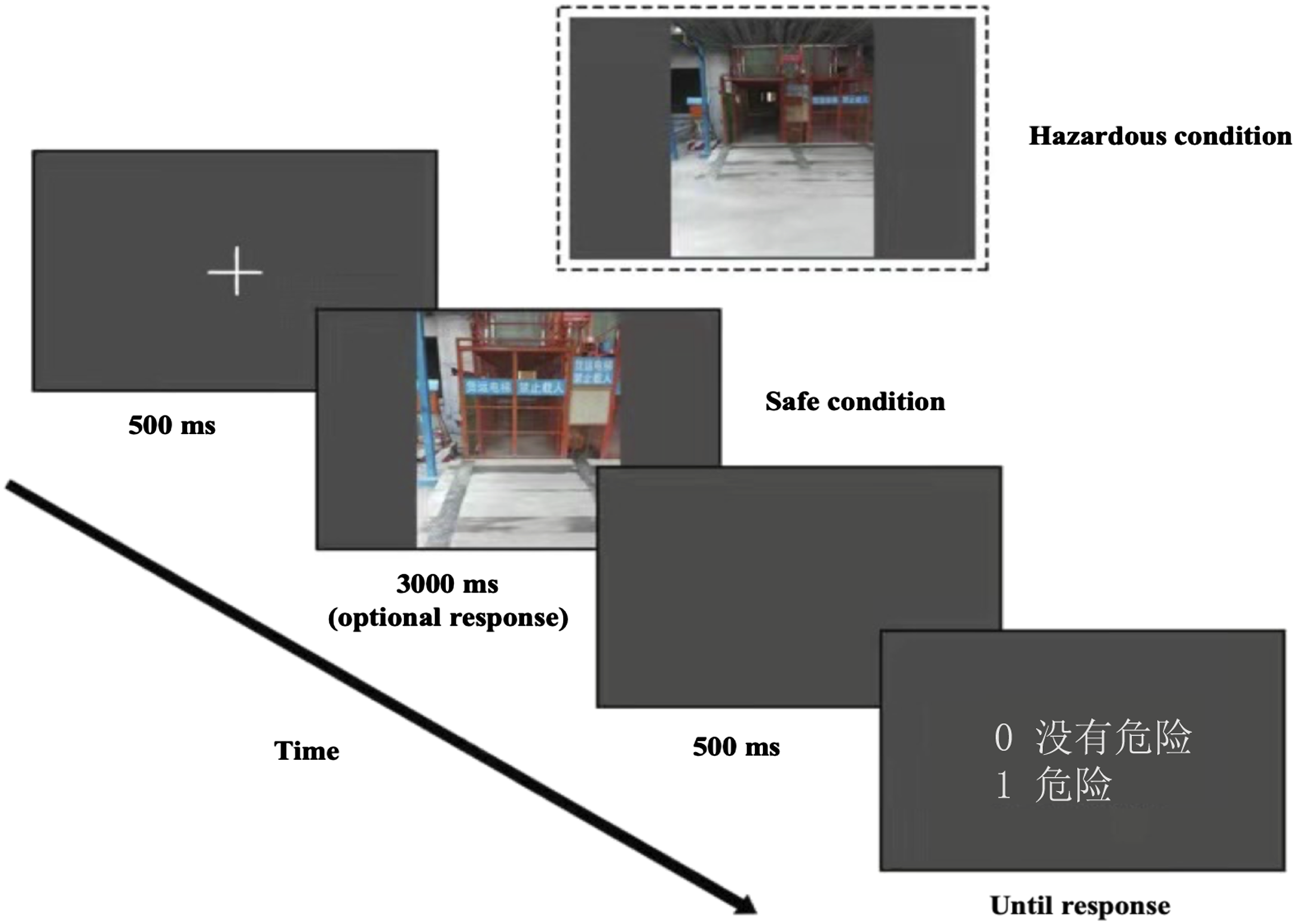
Lastly, there was a validation block with 30 trials, randomly selected from the previous 120 trials. Here, the consistency of responses to the same stimulus was verified. Five participants were excluded from data analysis because their inconsistency rate was >50%.
Behavioral Data Analysis
Participants’ response time and categorization performance were recorded. We used the SDT approach to analyze categorical data for each participant. To do this, the number of hits (i.e., categorizing hazardous stimuli as “hazardous”) and false alarms (i.e., categorizing safe stimuli as “hazardous”) were calculated in the first step. To avoid errors in the next step, the extreme values (i.e., 0 or 1) of hit rate and false alarm rate were adjusted by replacing rates of 0 with 0.5/n and rates of 1 with (n−0.5)/n, where n is the number of trials (Macmillan & Kaplan, 1985). Then a d′ value, which reflects sensitivity (i.e., the ability to discriminate between hazardous and safe scenarios), and a relative criterion location (Beta), which reflects the response bias (i.e., the tendency to consistently choose one option), were calculated by equations (1) and (2) (Wickens & Hollands, 2000).


EEG Recording and Analysis
Continuous EEG signals were collected at a sampling rate of 250 Hz using a 32-channel elastic electrode cap (Neuroscan system in China and Brain Products in the United States, from a 10–20 system). The EEG was referenced to all electrodes. The impedance of each electrode was maintained at less than 20 kΩ. During the offline analysis, EEG signals were treated with band-pass filtering (0.1–40 Hz), and the possible artifacts (eye movements and blinks, cardiac signals, muscle noise, and line noise) were assessed via independent component analysis. The corrected data for each trial were segmented into a 1200-ms epoch, with a 200-ms pre-stimulus baseline. Thereafter, epochs with the value exceeding ±100 μv in any recording electrode were rejected to avoid possible artifact contamination.
Time-frequency analyses were performed using the FieldTrip toolbox (Oostenveld et al., 2011) in MATLAB (MathWorks, Inc, Natlick, MA, USA). Each epoch was transformed in the frequency domain and the time-frequency representations of EEG signals were calculated (denoted as “power” afterwards as suggested by (Cohen & Gulbinaite, 2013)) for each condition (hazardous or safe) using Hanning taper. We then applied a 500-ms sliding window in 50-ms time steps. The median of the artifact-free trial data for each participant was computed and time-frequency maps were averaged across trials and normalized by calculating the relative change from baseline. Difference power (hazardous minus safe) was computed from each participant for further statistical analysis. We detected outliers, defined as points outside three standard deviations from the mean, and replaced them with the nearest element that was not an outlier. As the difference power from multi-channels did not fit a normal distribution (see Figure 2), nonparametric tests were applied for the EEG data analysis to increase reliability (Bridge & Sawilowsky, 1999). A Wilcoxon signed-rank test was conducted to explore the main effect of the condition (hazardous vs. safe). To explore the interaction effect of experience (experienced or novice) × condition (hazardous or safe), the Wilcoxon rank-sum test was applied to compare the difference power between the two experience-level groups. All statistical tests used a two-tailed approach, based on the same null hypothesis that subgroups had the same mean value using a 5% significance level. While the p-values were used to determine whether statistically significant differences existed between subgroups, z-scores indicated statistical differences between subgroups, as well as the direction of differences. Distribution plots for the gamma-band power during 250–800-ms post-stimulus from electrode PO8 induced by hazardous and safe stimuli in the novice and experienced groups.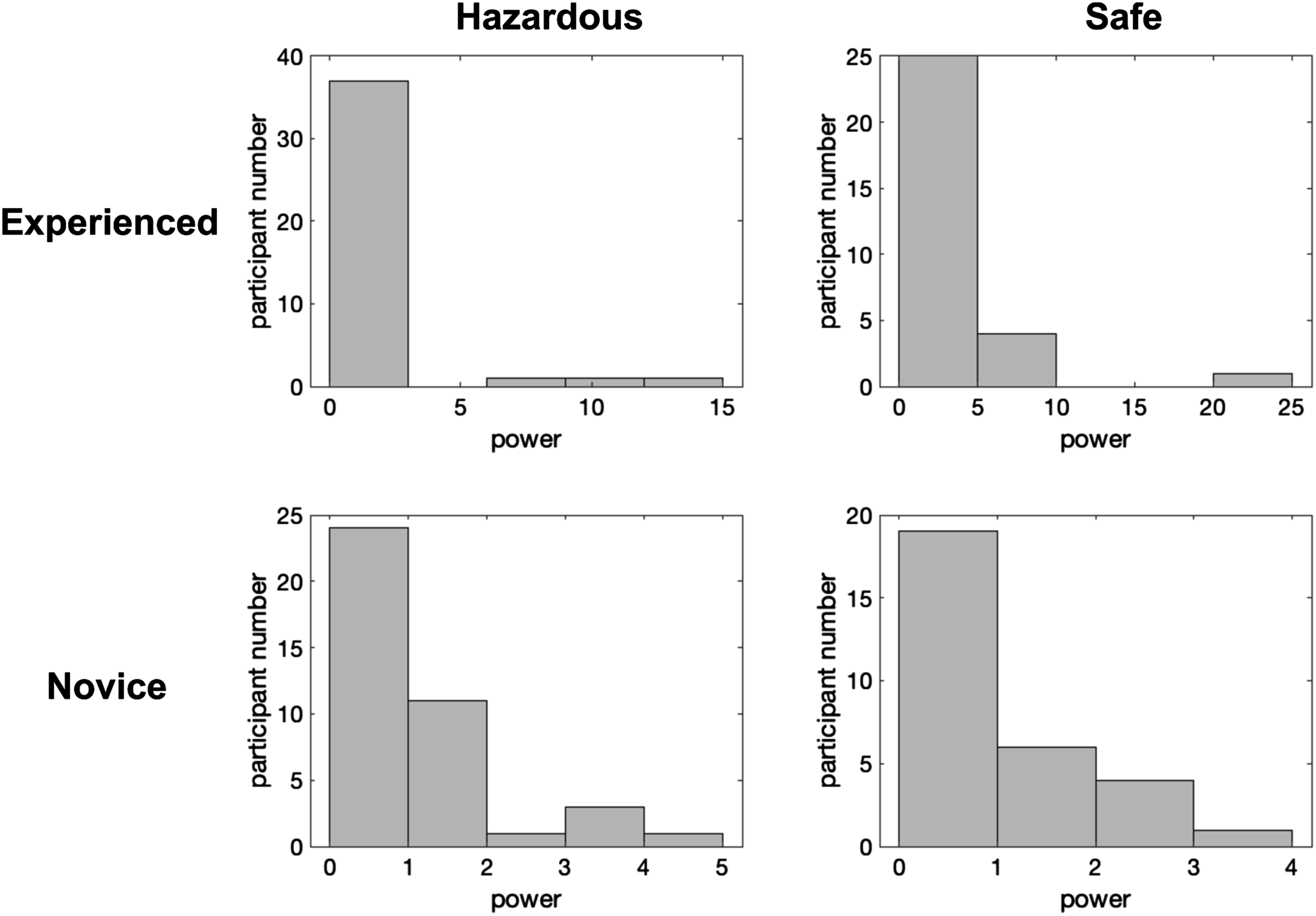
Results
Behavioral Results
As shown in Figure 3, novices more accurately identified hazards than experienced workers, M = 64.55%, 95% HDI [53.90%,75.20%] for the novices, M = 60.46%, 95% HDI [46.34%,74.59%] for the experienced workers, independent-samples t(68) = −2.60, p = .01, Cohen’s d = 0.64. Neither response time nor other performance indices showed significant differences between experienced workers and novices (p > .05; see Table 1). Accuracy (%) and response time (ms) for the hazard recognition task by subgroup. Note. Error bars indicate standard deviation. The Mean Value (M) and Standard Deviation (SD) for Response Time and Performance Rates of the Two Experience-Level Subgroups in the Hazard-Recognition Task Note. Early answer denotes a situation where a judgment was made prior to the response page display.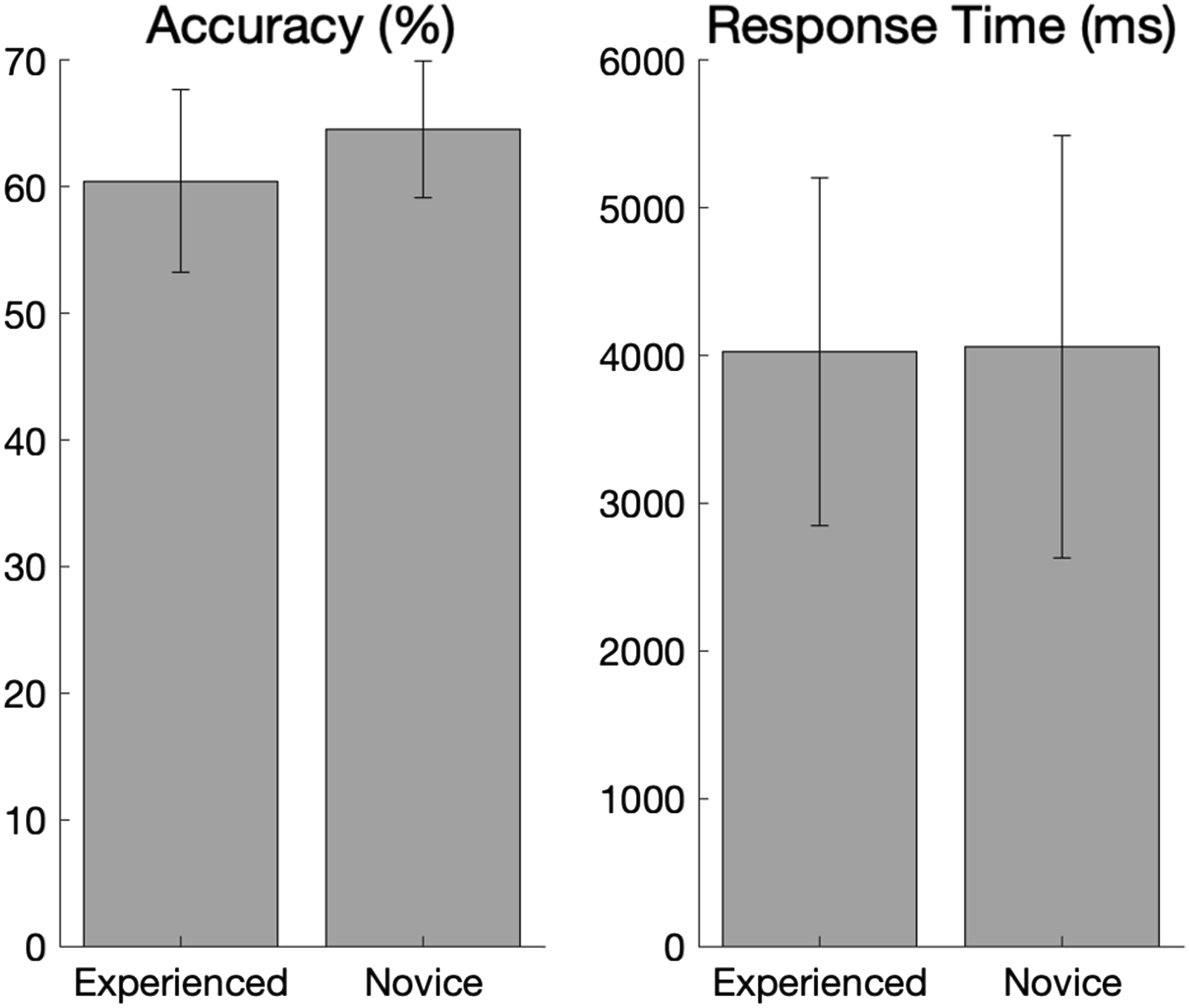
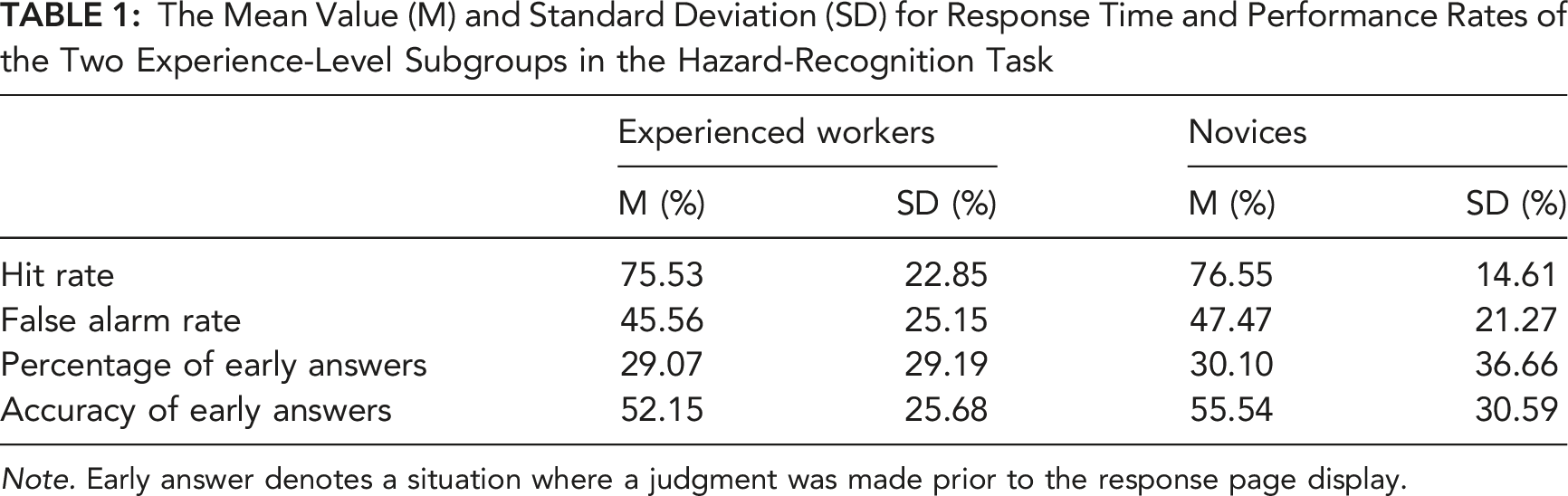
Figure 4 depicts mean sensitivity and response bias measures (d’ and Beta, respectively) for experienced workers and novices. Novices showed higher sensitivity than experienced workers, suggesting better hazard recognition ability for novices, M = 0.93, 95% HDI [0.19,1.67] for novices, M = 0.69, 95% HDI [−0.26,1.65] for experienced workers, independent-samples t(68) = −2.23, p = .03, Cohen’s d = 0.55. Response bias did not substantially differ between the two experience-level subgroups, although both subgroups showed a relatively liberal criterion (Beta < 1), M = 0.82, 95% HDI [−0.06,1.71] for novices, M = 0.80, 95% HDI [−0.12,1.72] for experienced workers, independent-samples t(68) = −0.25, p = .81, Cohen’s d = 0.06. Sensitivity measure (d’) and response bias measure (Beta) for the hazard recognition task by subgroup. Note. Error bars indicate standard deviation.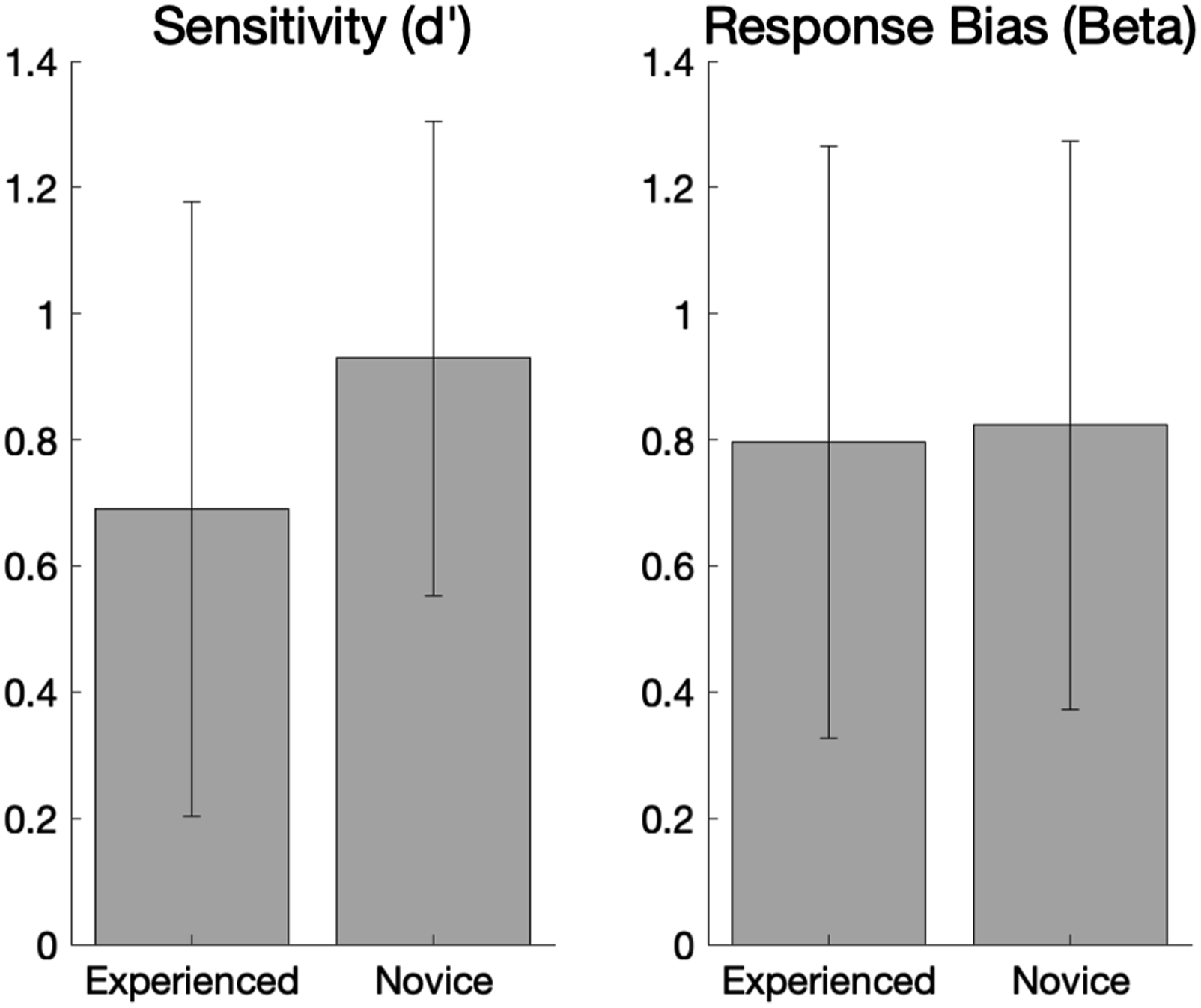
EEG Power Results
We found spectral power in this hazard recognition task to be most pronounced in the gamma band (Figure 5a), indicating that the stimuli for construction scenarios could evoke high-frequency activity, which could reflect the participation of higher-order sensory and cognitive functions (Wang et al., 2020). Thus, the average power of the induced neural oscillatory activities in the gamma band (30–40 Hz), based on the 250- to 800-ms post-stimulus window, were extracted for the following statistical analysis. The center of induced gamma activity for construction-site pictures was over the parieto-occipital electrodes during the 0.25–0.8 s period (Figure 5b), in line with previous findings indicating a relationship between brain activity and visual information processing (Razavi et al., 2017). (a) Grand averaged time-frequency map in the hazard recognition task for all participants, and representative Pz electrode data. The black box represents the 250- to 800-ms post-stimulus window. (b) Topography of power in the box selected area of the time-frequency map. Note. The color bar indicates the magnitude of oscillatory power.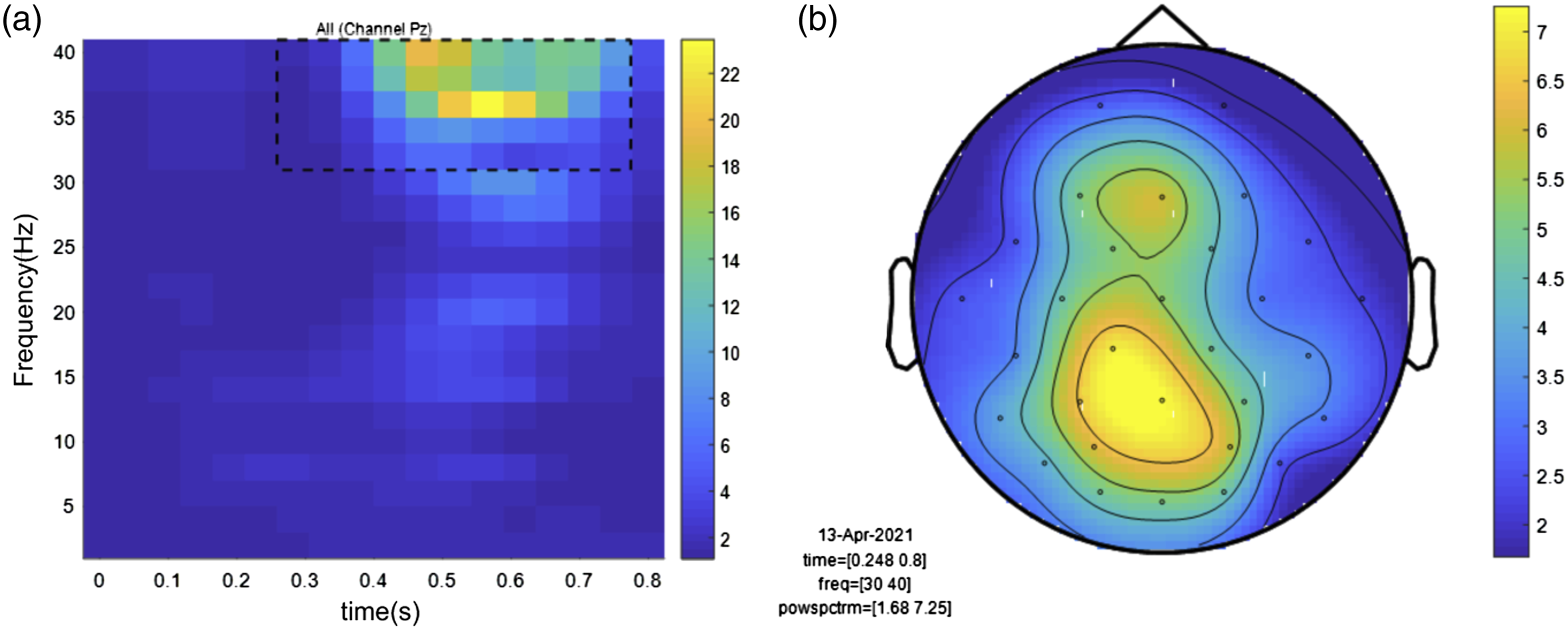
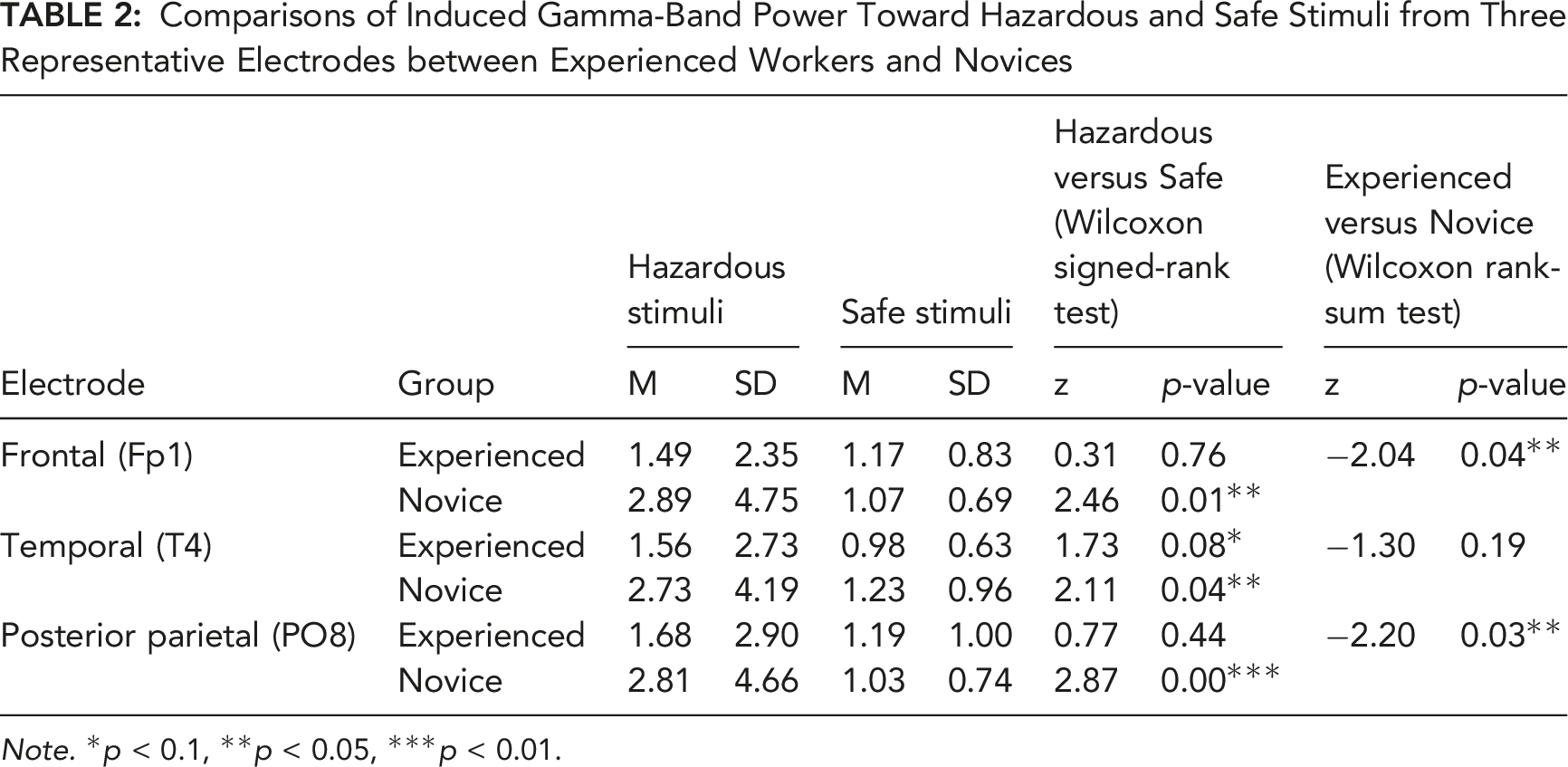
Comparisons of Induced Gamma-Band Power Toward Hazardous and Safe Stimuli from Three Representative Electrodes between Experienced Workers and Novices
Note. *p < 0.1, **p < 0.05, ***p < 0.01.
Discussion
This study aimed to investigate how experience confers its influence on construction workers’ hazard recognition performance. The main result was that, in comparison to experienced workers, novices were more accurate in identifying hazards. The possible underlying rationales are discussed below.
SDT Results
The present study attempted to clarify whether a subgroup’s poor hazard recognition could be attributed to low sensitivity or high response bias. At least with respect to the present sample, the sensitivity model was supported. This suggested that novices were better at discriminating between potentially hazardous scenes, while experienced workers were more likely to confuse sensory cues, leading them to misclassify hazards. However, there was no difference in terms of response bias, that is, their subjective definition of what accident likelihood counted as a “hazard.” This finding has important implications for designing safety training programs because a popular belief in the construction industry is that as construction workers get older, they tend to underestimate risks due to complacency and decreased motivation (Han, Jin et al., 2019; Liu, 2018; Maqsoom et al., 2018). This belief is based on a hypothesis that experienced workers can interpret the construction situation just as accurately as novices, but they may simply consider the same situation to be less risky and are thus less willing to label situations as hazardous than their younger counterparts, who react more cautiously. However, results in this study have shown the previous assumption to be wrong, and suggested a need for continuous refreshment of hazard recognition skills for experienced workers.
Gamma-Band Activation
Our statistical analysis indicated that novices showed stronger gamma-band difference power in the left frontal (Fp1) and right posterior parietal areas (P8, PO8) during the hazard recognition task. Frontal activation is prominent during working memory (GoldmanRakic, 1996). Considering gamma-band activity is particularly associated with visuospatial working memory maintenance (Jokisch & Jensen, 2007), the frontal cortex participates in information maintenance by directing attention to internal representations of sensory stimuli stored in posterior regions (Curtis & D’Esposito, 2003). As for the hemispheric specialization, the left frontal cortex is particularly correlated with object vision for remembering “what” an object is (Wilson et al., 1993), found to play a more important role during construction hazard recognition than the right frontal cortex (Zhou et al., 2021). This spatial feature is also highly consistent with the experience-modulated neuropsychological evidence identified in other fields (Wu et al., 2020).
Besides the left frontal area, the right posterior parietal cortex is a key neural locus of our mental representation of visual stimuli (Friedman-Hill et al., 1995; Shafritz et al., 2002; Todd & Marois, 2004) and is closely associated with visual working memory performance (Medendorp et al., 2007; Roux et al., 2012; Tanaka et al., 2013). Thus, these spatial characteristics of salient brain activities that significantly differentiate two subgroups indicated that, compared with experienced workers, novices might have a higher capacity for visuospatial working memory, facilitating improved performance of complex cognitive functions such as decision making and reasoning during hazard recognition process (Hazarika & Dasgupta, 2020).
In addition to working memory, induced gamma-band activity also has a close link with attentional perceptual mechanisms, as increased induced gamma power at posterior electrode sites have been identified when participants attended to a certain stimulus or perceived an object (Müller et al., 2001). Attention contributes to perceptual efficiency by selecting salient relevant sensory information for perception and awareness (Desimone & Duncan, 1995). We speculated that more efficient attentional control, mediated by a neural network in the posterior parietal cortex and prefrontal cortex (Shomstein & Yantis, 2004), might also be responsible for increased hazard recognition performance in novices.
The Cross-validation of SDT and EEG Results
SDT was used to evaluate an individual’s ability to discern between an information-bearing stimulus and noise (Albert et al., 2017), which has a natural link to the definition of hazard recognition (i.e., when a person is able to identify a particular hazard by successfully distinguishing it from other stimuli in the environment) (Kowalski-Trakofler & Barrett, 2003). Thus, the “hazard” in this task was regarded as the information-bearing signal. As the SDT curves represent hypothetical brain activity (Wickens & Hollands, 2000), we predicted that hazardous stimuli would elicit larger neural activation than safe stimuli. We found that higher levels of gamma activity were elicited by hazardous stimuli compared with safe ones from all electrodes, supporting our hypothesis. This EEG result corroborates with previous studies that meaningful or more complex stimuli could elicit greater gamma-band brain activation (Axmacher et al., 2007; Müller et al., 2001; Stein & Sarnthein, 2001).
Furthermore, it is worth noting that the sensitivity of SDT, which measures the distance between the mean value of the signal and noise curves, corresponds to the definition of difference power of the EEG. It was found that, in comparison to experienced workers, novices, who showed a larger d’, also demonstrated greater difference power in the left frontal and right posterior parietal areas, indicating consistency in the SDT and EEG results. These findings may also contribute to future brain-computer interface applications to predict hazard recognition performance from brain signals for driving an adaptive automated aiding system.
The SDT results suggested that a pure sensitivity account of hazard recognition performance was recommended to explain subgroup differences. This provided the foundation of utilizing EEG to further explore the intrinsic cognitive mechanism, since brain activation has been extensively linked with cognitive functions. Although there is some disagreement that the use of reverse inference is an appropriate exercise for the study of brain activation (Poldrack, 2006), cognitive processes can be inferred from brain imaging data if the different task settings are carefully taken into account (Hutzler, 2014). Additionally, this cross-validation of behavioral and neuropsychological measurements added weight to the inferences from EEG results.
Conclusion
In this study, experienced workers (>10 years’ work experience) showed poorer hazard recognition performance than their younger counterparts. SDT results revealed that experienced workers exhibited a lower sensitivity. Therefore, it is important to provide continuous refreshment of hazard recognition skills for experienced workers. Enhanced gamma-band activation in the left prefrontal and right posterior parietal cortex constitutes a neural basis for increased hazard recognition performance in construction workers, suggesting better working memory and attentional control in novices. Future studies should triangulate experience level with trade and other demographic factors to further explore how these subgroup factors interactively contribute to hazard recognition performance.
Key Points
Novices identified hazards more accurately and demonstrated higher sensitivity than experienced workers. Novices showed stronger gamma-band difference power in the left frontal and right posterior parietal areas, indicating more efficient working memory and attentional control when compared with experienced workers. A consistency between the sensitivity measure in signal detection theory and the difference power of electroencephalogram was demonstrated. The findings suggest a need for continuous refreshment of hazard recognition skills among experienced workers.
Footnotes

Xiaoshan Zhou, research assistant, Department of Construction Management, Tsinghua University. Bachelor’s in Construction Management, Beijing Jiaotong University in 2020. Research fields are occupational safety, ergonomics.
Pin-Chao Liao*, associate professor, Department of Construction Management, School of Civil Engineering, Tsinghua University. Ph D. in Civil Engineering, University of Texas at Austin in 2008. Research fields are occupational safety, ergonomics, behavioral science, neuropsychology.
Qingwen Xu, research assistant, Department of Construction Management, Tsinghua University. Post-Graduate in Civil Engineering, Tsinghua University in 2021. Research fields are occupational safety.