




Abstract
Introduction:
Rabies is a viral zoonotic disease which kills 59,000 people worldwide annually, 40% being children under the age of 15. Dogs are the main reservoir species for disease transmission. This study assessed the short-term impact of a single, creative teaching style education workshop on children’s knowledge and understanding of rabies prevention and avoiding bites from dogs. Workshops were delivered by the Bali Animal Welfare Association in the Indonesian province of Bali, where rabies continues to pose a considerable threat to human life.
Method:
The study used a quasi-experimental design. A total of 349 children aged 8–12 years in schools in the Gianyar regency were randomly assigned into two groups to complete multiple-choice quiz either pre or post intervention. The outcome assessed was learners’ understanding of rabies prevention.
Findings:
Results showed a significant positive effect of a workshop, with a Cohen’s D of 3.3; a large effect size (p < .01). Those that completed the questionnaire after the lesson had significantly higher scores (mean score = 8.82 ± 1.36) than the group assessed prior to the workshop (3.63 ± 1.72).
Conclusion:
This study highlights the effectiveness of a single workshop in improving knowledge and understanding of rabies prevention. It also explores the value of creative teaching methods for their potential to improve children’s understanding of rabies. Further research is needed, however, to evaluate long-term impact and ensure that desired influences on human behaviour change are achieved.
Introduction
Rabies is a viral zoonotic disease that affects the central nervous system and is virtually 100% fatal once clinical symptoms appear (World Health Organization, 2018, 2024). An estimated 59,000 people each year die of the disease, mostly in the world’s poorest and vulnerable communities; 40% being children under the age of 15 living within Asia and Africa (World Health Organization, 2024). Dogs are responsible for 99% of human cases, spread through saliva, via bites, scratches or direct contact with human mucosa (eyes, mouth, nose) (World Health Organization, 2024).
The Island of Bali had been historically free of rabies, due in part to a strict rabies control programme in 1926 which prohibited the introduction of other dogs to the island (Corrieri et al., 2018). While dog ownership varies across Bali, over 90% of dogs on the island are owned, with the majority allowed to roam freely within and between villages and sub-villages (banjars); living in proximity to households and associated food sources (Corrieri et al., 2018; Putra et al., 2013). In 2008, a rabies epidemic spread throughout Bali, thought to originate from an infected dog travelling with fishermen from a neighbouring island (Widyastuti et al., 2015). Dog culling was carried out as a first response, aimed at rapidly reducing the immediate risk of rabies transmission, but this action did not contain the outbreak (Putra et al., 2013; Suseno et al., 2019).
Studies have shown that culling is an ineffective and unpopular rabies elimination strategy (Hiby et al., 2023; Putra et al., 2013). Disease transmission is not density-dependent and can circulate where densities are as low as 1.36 dogs per km (Hampson et al., 2009). Mass vaccination, on the other hand, can achieve successful outcomes (Putra et al., 2013; Suseno et al., 2019). Mass dog vaccination was carried out by the Balinese government in partnership with Bali Animal Welfare Association (BAWA), and subsequently the Food and Agriculture Organization (FAO), achieving >70% dog vaccination coverage island wide. Bali’s most recent island-wide outbreak took place in 2022 following the 2020 COVID-19 pandemic in which government funds assigned to public health were redirected away from human post exposure rabies prophylaxis towards COVID-19-related healthcare and vaccinations (Tenaya et al., 2023).
There is strong evidence of information asymmetry relating to rabies understanding and prevention in Bali and elsewhere in the world, with the poorest communities more likely to lack knowledge or understanding necessary to both avoid bites and seek post exposure prophylaxis (PEP) than individuals in less economically deprived communities (Hampson et al., 2008).
It is well established that children’s behaviour around dogs is a likely cause of higher dog bite risk, and subsequent rabies contraction risk than adults (Burdon Bailey et al, 2018; Mustiana et al., 2015). Lack of knowledge and understanding of the consequences of specific behaviours around dogs may be a contributor to their higher likelihood of sustaining a bite. Multiple studies have concluded that children are often unable to identify certain markers of dog distress, aggression, and the consequences of inappropriate interactions with dogs (Aldridge and Rose, 2019; Baatz et al., 2023; Meints et al., 2018). And in rabies-endemic countries, children have been observed to lack specific knowledge regarding rabies and its causes (Burdon Bailey et al., 2018).
Furthermore, there may be barriers for children enacting safe behaviour around dogs due to their less developed executive function than adults, which may act as a protective skill when combined with the knowledge-driven ability to identify markers of dog aggression when interacting with animals (Baatz et al., 2024; Barton and Schwebel, 2007).
While combined vaccination efforts from BAWA and the Balinese government continue (Baliilu, 2024), there remains a need for greater empirical understanding into how human psychology and behavioural science can play a role in tackling the disease.
Rabies prevention education programme
BAWA is a Bali-based non-governmental organisation (NGO). A component of its work is child education in schools. Supported by the international dog welfare organisation Dogs Trust Worldwide, the programme delivers interactive workshops free of charge to Bali schools. The programme is a high-volume one, having delivered workshops to approximately 325,000 learners since 2017.
Underpinning this work is the belief that increased understanding provided by creative teaching methods will, within a wider systems approach that includes dog population control and vaccination, lead to the behaviour change necessary to reduce numbers of dog bites and human rabies cases (Widyastuti et al., 2015). The goal of the work is to eradicate rabies on the island of Bali, while also improving animal welfare standards.
School-based dog bite prevention education programmes that aim to increase knowledge and understanding on an assumption that this will result in a change in child behaviour to reduce dog bites are common globally (Isparta et al., 2021; King, 2019; Shen et al., 2017). While human behaviour change resulting from such programmes is under-evidenced (Baatz et al., 2020; Chapman et al., 2000), education programmes for school age children have been suggested as part of the solution to improving human–animal interactions and supporting a One Health systems approach (Acharya et al., 2021).
The BAWA educational workshop takes the form of a single 70-minute lesson, delivered to students aged 6 to 12 years (Indonesia academic grades 1 to 6). The programme targets children who will be at the Concrete Operational Stage (Inhelder and Piaget, 1966) of development, or the age range at which a child begins to apply logical thought and apply organised and rational knowledge to a real-world context. Previous studies show that children at this age may also be more likely to retain knowledge over time from education interventions relating to human–animal interaction than their younger peers (Hawkins et al., 2017). Furthermore, executive function is likely to be more established in children of this age. Children aged 7–11 years, for example, have been observed to outperform their younger peers in experiments related to behavioural inhibition (Best and Miller, 2010).
Each workshop was delivered in Bahasa Indonesian language by a Balinese facilitator in traditional Balinese style dress. The workshop delivery uses creative teaching methods, with inclusive activities that maximise child-centred teaching, active participation and culminate in an enjoyable and memorable experience for children. Such an approach aims to maximise learning within the local context (Holliday, 1994).
Bali education systems have been acknowledged positively in certain areas on an international development education landscape. The island has a good supply of government schools with 99.95% of children attending primary or elementary school (see https://bali.bps.go.id/) and has achieved various successes in integrating traditional Balinese cultural studies into curricula (Riastini et al., 2020; Susiani et al., 2022). Furthermore, social research has shown that the role of the teacher, although underpaid, is generally highly valued within island communities (Nilan, 2003).
Teaching approaches in Bali and wider Indonesia generally favour a didactic teacher-centred model of pedagogy, where the teacher assumes a central role as the primary source of knowledge (Irnidayanti and Fadhilah, 2023). More creative and learner-centred styles of teaching and ‘active learning’ have been shown to ensure effective learning, particularly in subjects requiring consideration of the individual and their interests and needs (Soleymanpour, 2014). Creative learning and teaching methods have been shown to have considerable effect on learning outcomes when applied alongside a more traditionally teacher-centred style in low- and middle-income countries (Dellavallade et al., 2014).
Children’s participation and enquiry in health development issues have also been identified as key contributors to health behaviour (Child to Child, 2015). When children can examine and choose which health behaviours are the best, they are more likely to perform those behaviours and contribute to solutions by sharing the health information with members of the family and community.
No published research was found that evaluates the effectiveness of a rabies prevention knowledge transfer programme in Bali or Indonesia to date. However, literature exists indicating that a single lesson on rabies prevention in Malawi can improve children’s knowledge (Burdon Bailey et al, 2018).
Methodology
Questionnaire development
Tool design by baseline analysis
No pre-existing empirical tool was found that specifically met the outcomes of interest in this education project, or the specific conditions experienced by children in Bali. A novel tool was therefore developed for this study, informed by the measures used in Burdon Bailey et al.’s (2018) and Baatz et al.’s (2020) work. This formed the foundation of the development of question items and style of questionnaire.
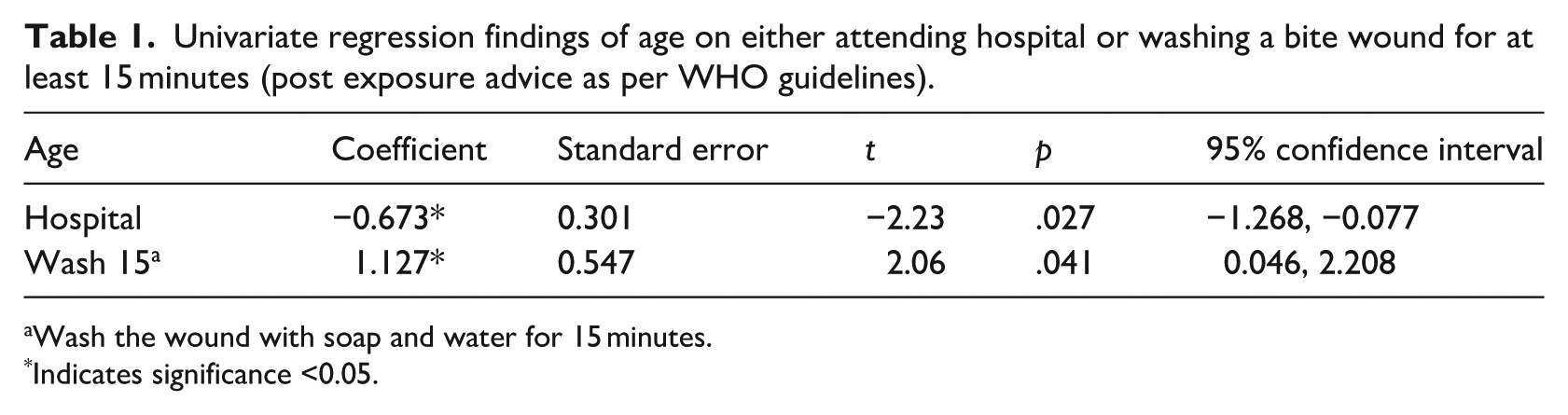
To support the development of, and enhance the internal validity of, the evaluation questionnaire, an initial needs analysis was conducted by means of a household survey with parents/caregivers and children aged 6–12 years who reported having sustained a dog bite (n = 150). The findings from this needs analysis are detailed below (see Table 1).
Univariate regression findings of age on either attending hospital or washing a bite wound for at least 15 minutes (post exposure advice as per WHO guidelines).
Wash the wound with soap and water for 15 minutes.
Indicates significance <0.05.
To identify children who had sustained a bite, the programme delivery team visited a selection of local banjars (sub-villages) – half of them in rural areas and the other half in urban areas, selected by convenience sampling. ‘Door to door’ surveying was subsequently conducted by the programme educators during the school holidays. Adults in the household were included in the survey if they reported that their child had ever sustained a dog bite. A total of 150 families were included; half deemed to be in rural areas (n = 75) and half in urban areas (n = 75). Details of the interview survey questions are available from the corresponding author upon request.
Findings suggested that of 150 children who had been bitten by dogs, boys made up 61% of the sample, aligning with other evidence suggesting boys are more frequently bitten than girls generally (Basco et al., 2020; Jakeman et al., 2020). Importantly, 77% of the 150 bites reported came from either a pet dog or a community dog known to the child, with the vast majority sustained either at home or close to home. While the assumption may be that children would be at higher risk of a bite from an unfamiliar dog, this suggests that children are more likely to be bitten by dogs they know.
Post exposure care understanding also appeared mixed. WHO official guidance lists immediate thorough washing with soap and water for 15 minutes and then accessing rapid post exposure prophylaxis treatment including immunoglobulin if indicated (World Health Organization, 2024). Sixty-six of the sample reported having washed the wound with soap and water, only 12 of whom reported to have washed the wound for more than 15 minutes. A total of 61 reported they then went to hospital. This indicated the need to support better knowledge of post exposure care in these communities.
This initial analysis enabled the authors to create the questions and multiple-choice answers for use in the main part of the study.
Tool piloting
A draft version of the tool was developed in Bahasa Indonesian. It comprised 10 multiple-choice and binary true/not true questions items with images being used to support understanding. Once a draft tool was complete, it was piloted with a sample of 116 children in the target age range in the Saba neighbourhood using a convenience sampling approach. Cronbach’s alpha analysis by item revealed that two question items required adjustment. These items were subsequently modified to produce the final instrument (online Supplemental File 1).
Workshop implementation
Selection of evaluation study participants
Using Qualtrics™ sample size calculator, with a confidence level of 90% and an estimated population size of 1.2 million children under the age of 12 years in Bali (UNICEF, 2015), sample size was determined to be a minimum of 271 children. A total of 349 children in grades 3–6 (aged 8–12), in three public elementary schools in the regency of Gianyar, participated in the study.
This area of Bali was selected due to its existing status as an area in which a BAWA dog welfare intervention was to take place. Each school had one class at each grade, comprising approximately 30 learners.
Data collection
A quasi-experimental design with randomisation was used (Hariton and Locascio, 2018). Within each class, learners were randomly assigned to two groups, with group one (the quasi-control group) completing a questionnaire before the workshop and the other after the workshop (the quasi-treatment group) on the same day.
Before the workshop, the quasi-control group completed the questionnaire individually and quietly, monitored by one of the teachers or supervisors, during this time the quasi-treatment group took part in a colouring in activity. Help was provided by teachers if necessary to aid understanding of the tool, but not to guide children’s response. After the workshop, the treatment group completed the questionnaire with the quasi-control group taking part in the colouring-in.
The workshop itself comprised of a series of creative teaching methods to keep learners engaged and motivated; to provide multiple opportunities for processing, collaboration, critical thinking and increased retention; and to allow learners to demonstrate desired behaviour in familiar situations (Mayer, 1989). All information and key messages are elicited from the learners through a variety of techniques such as questioning, demonstrations, storytelling and discovery-based worksheets. Activities include mind mapping and drawing, action songs, visualisation, role-play and games.
The lessons were delivered by qualified Balinese educators who had received extensive training in knowledge transfer through active learning in order to maximise learning outcomes.
Data analysis
Data inputting, storage and cleaning was conducted and descriptive statistics calculated with the aid of Microsoft Excel. Following this, data were imported to, and statistical analysis was conducted using IBM SPSS v25 and R v3.6.3 (R Core Team R: A Language and Environment for Statistical Computing.
Addressing each question individually, associations between the intervention group (whether the learner was part of the ‘Before’ or ‘After’ workshop group) and scoring being either the correct or an incorrect were explored using chi-square tests of association. To assess the overall effect of the workshop, the treatment effect, Cohen’s D was calculated to compare the overall mean total score out of 10 (maximum score of 10 ‘correct’ answers), and the mean standard deviation between the randomised ‘before’ and ‘after’ groups. Data were tested for normality graphically using Q-Q plots and histograms, and due to the existence of a non-normal distribution, a Mann–Whitney test was used to test whether the average mean scores significantly differed (p < .05) overall between the quasi-control and quasi-treatment groups.
As the data violated normality and equal variance assumptions, a Kruskall–Wallis test for comparisons between age groups for before and after the intervention separately, and a Mann–Whitney test for comparison by gender for before and after the intervention applying Bonferroni correction (p value of < .025) was used. A Dunn test with Bonferroni-adjusted p values was conducted as post hoc analysis where significant differences were found.
Ethical approval
Ethical approval for this study was granted by the Dogs Trust Ethical Review Board (Reference: ERB021). Consent for the initial dog bite household survey that provided the baseline needs analysis was gained both in writing from each parent or caregiver of the child under observation and verbally from both parent and child. Consent for the main experiment data collection was initially gained in writing from the relevant school principal at the time of scheduling the workshops, followed by individual parental consent sought by the school, with an opt-out option offered for parents or care givers not wishing their child to be included. A second opt-out opportunity was provided by the BAWA teachers prior to the workshop, who asked the child learners themselves to inform their class teacher should they be unwilling to participate in the study and the workshop.
Findings
Baseline needs analysis findings
Univariate regression analysis was used to explore the relationship between demographic and environmental characteristics on the likelihood of undertaking at least one correct post exposure course of action (hospital presentation and/or washing the wound for 15 minutes or more). As shown in Table 1, findings indicated that age alone had a significant effect on the likelihood of both attending hospital (Coef −0.7, p = .03) and washing the wound for 15 minutes or more (Coef 1.2, p = .04), with younger children being more likely to have visited hospital post-bite, and older children more likely to wash the wound for 15 minutes or more. The higher likelihood of hospital presentation in younger children also reflects findings from similar studies in high-income countries (Jakeman et al., 2020).
Evaluation findings
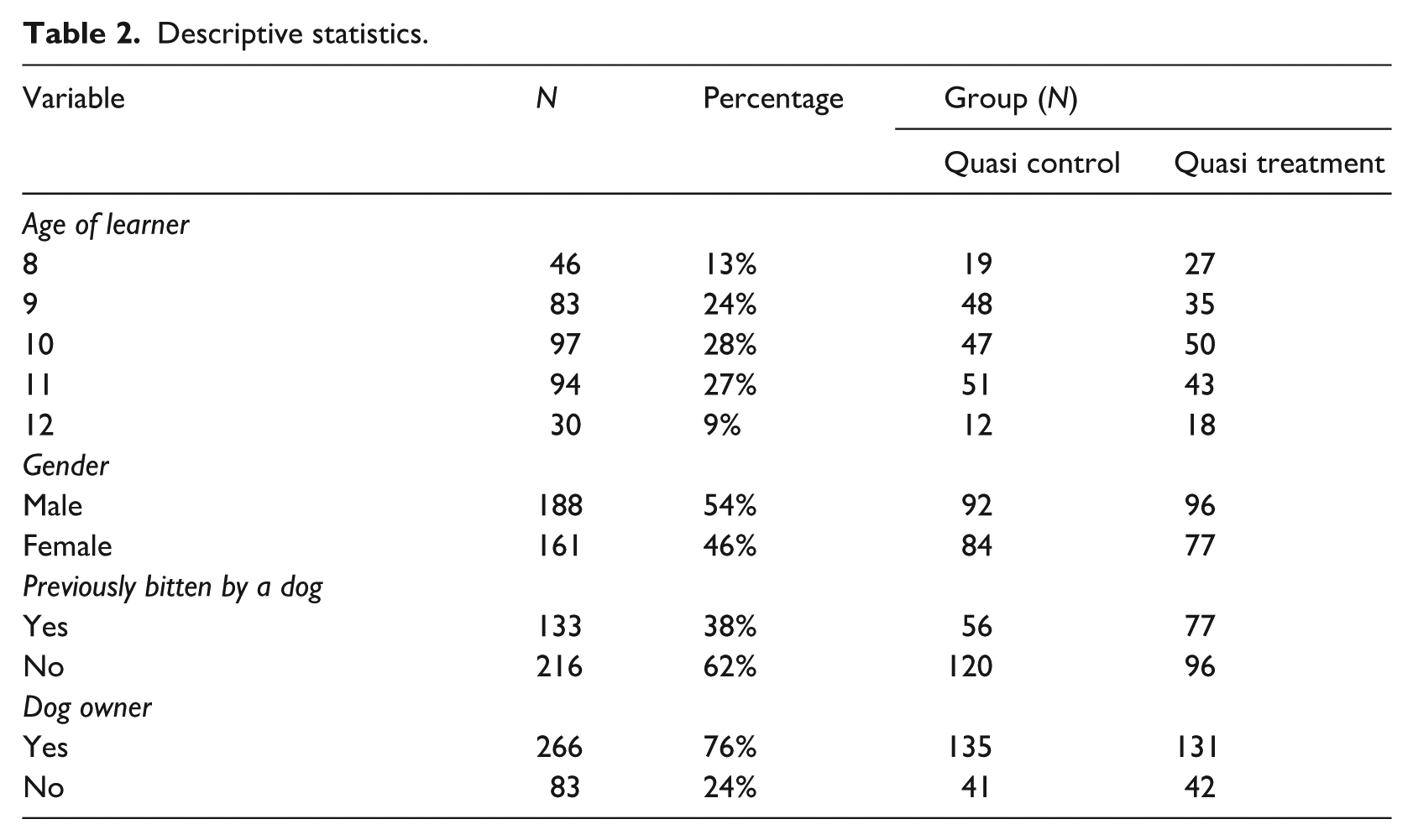
A total of 349 (176 Before; 173 After) individuals participated in the study. Participants were aged between 8 and 12 years old, and girls and boys were represented as evenly as possibly within the sample. The majority of participants reported on the questionnaire that their household owned a dog (76%) and had not previously been bitten by a dog prior to the workshop (62%) (Table 2).
Descriptive statistics.
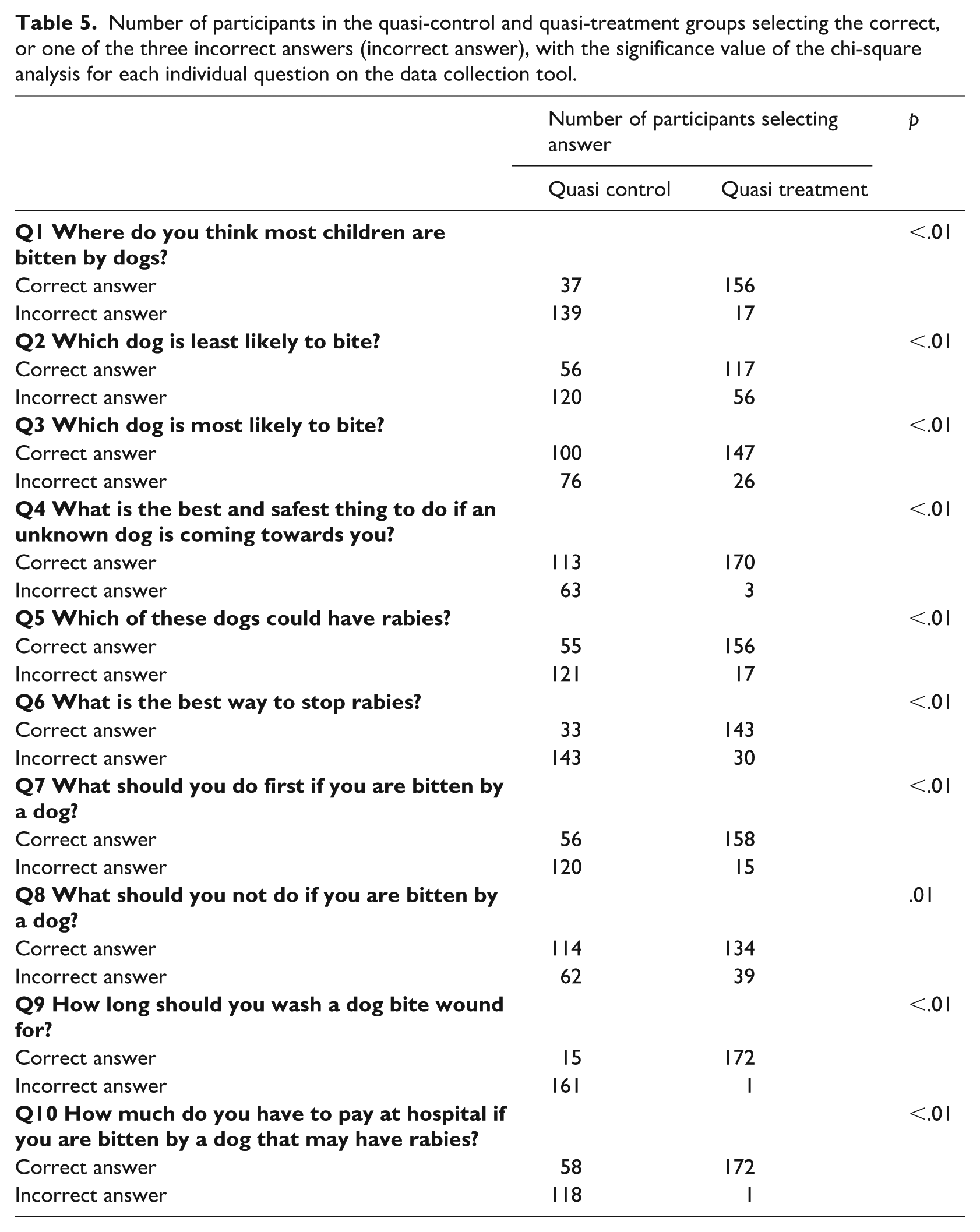
Chi-square analysis for independence between intervention group (whether the learner was part of the ‘Before’ or ‘After’ workshop group) and scoring either the correct or an incorrect answer showed statistical significance (p < .05) for all individual questions, suggesting that the given test answer was not independent of intervention group.
A multiple regression analysis was conducted to study the effect of age, gender, dog bite history and dog ownership status (Table 3) on the total score of the knowledge testing questions aggregated before and after groups. Both age and dog bite history were observed to predict (p < .05) total score on the tool, with older children and those who had been bitten scoring higher.
Mean scores and SD for each quiz question item.
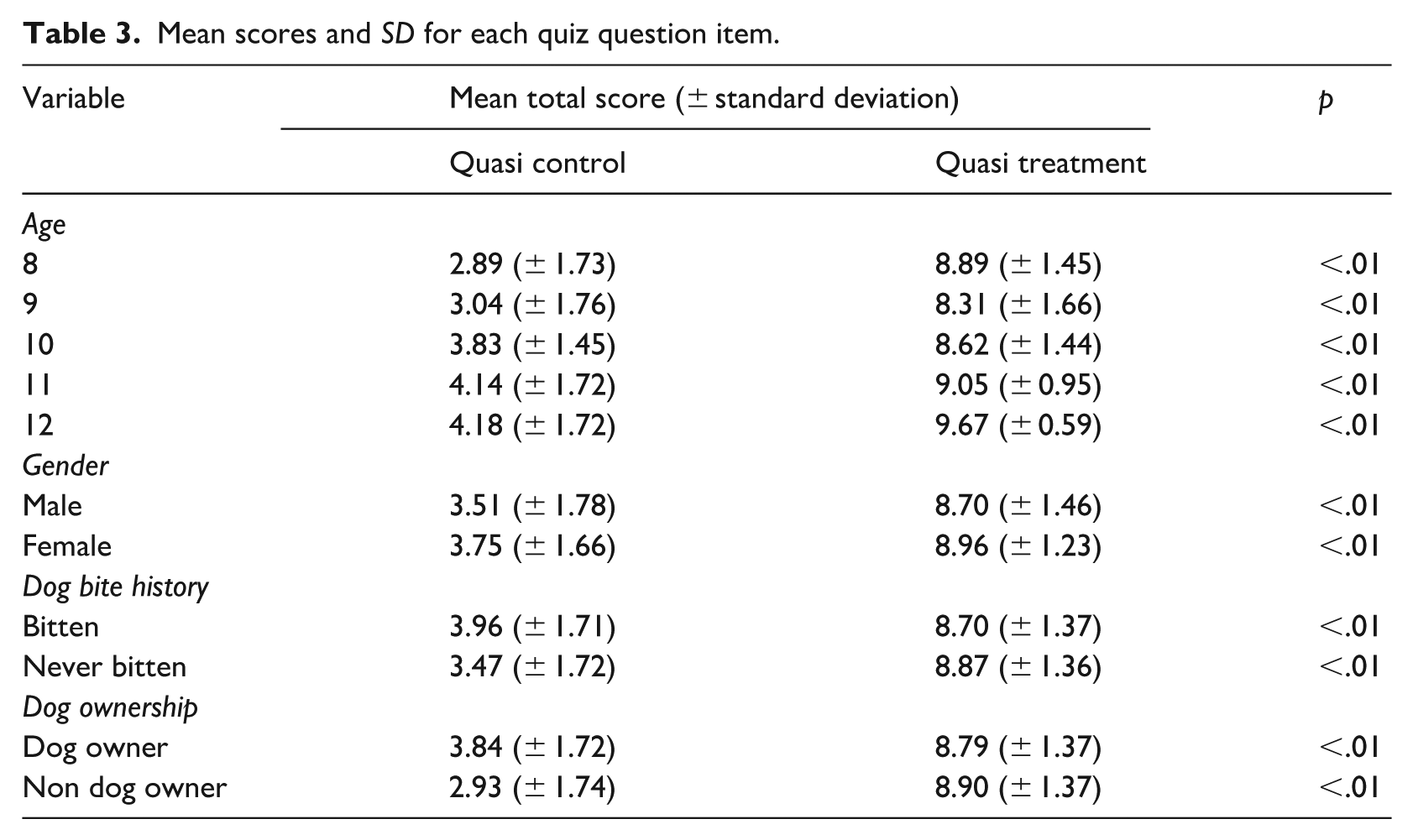
The Cohen’s D treatment effect size comparing the overall average score between the Before and After group was 3.3, showing a large effect of the workshop on the total score of learners. Figure 1 demonstrates the distribution of scores between the before (quasi-control group) and the after (quasi-treatment group). The Mann–Whitney analysis revealed a significant difference (p < .01) between the before and after groups and total score, whereby participants who completed the questionnaire after the lesson (Mean score = 8.82 ± 1.36) had significantly higher scores (i.e. more correct answers) than the before group (3.63 ± 1.72).
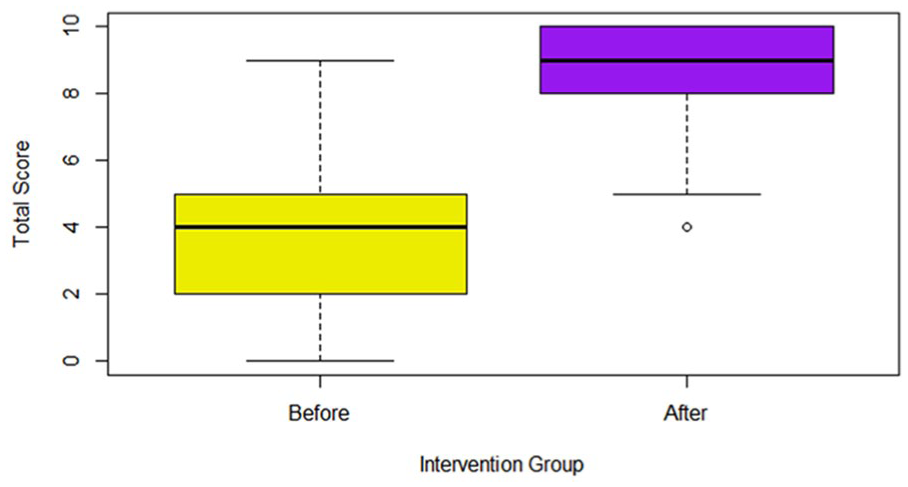
Box and whisker plot of distribution of quiz scores in quasi control (before) and quasi treatment (after) groups.
A significant effect of age on total score was found both within the before (p < .01) and after intervention group (p < .01), similarly the child’s dog bite history showed a significant effect with before (p < .01) and after (p < .01) (Kruskal–Wallis) (Table 4). Post hoc analysis demonstrated that in the quasi-control group, children aged 11 scored significantly higher than children aged 9 (p < .05), and in the quasi-treatment group, children aged 12 scored significantly higher than children aged 9 (p < .1) and 10 (p < .05).
Multiple linear regression findings observing effects of demographic metrics with total score as dependent variable.
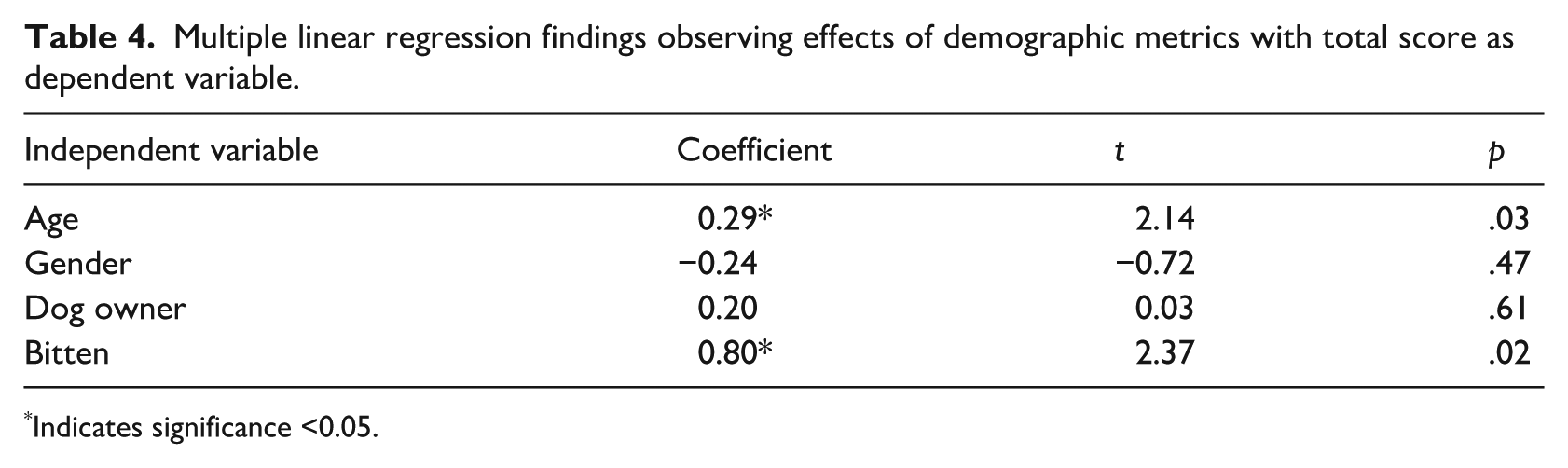
Indicates significance <0.05.
No significant effect of gender or dog ownership on total score (Mann–Whitney test) was found in either the quasi-control or the quasi-treatment group.
A significant increase in the knowledge (p < .01) was also observed on each of the 10 knowledge testing question items as shown in Table 5.
Number of participants in the quasi-control and quasi-treatment groups selecting the correct, or one of the three incorrect answers (incorrect answer), with the significance value of the chi-square analysis for each individual question on the data collection tool.
Discussion
This study did not set out to demonstrate a causal link between an education intervention and a change in children’s behaviour aligned with bite or zoonotic rabies reduction. Further scientific enquiry is needed to identify the ability of children of this age to change their behaviour as a result of acquiring knowledge of how to avoid rabies. Neither did the study aim to provide reliable statistics related to prevalence and/or causal factors of child dog bites in Bali.
Instead, the study sought to evidence the possibility of addressing knowledge gaps by means of a creative and enjoyable pedagogy in a context in which teacher-centred styles are prevalent. It also aimed to encourage replication of the methods to enable the development of additional evidence-based dog bite prevention education programmes. The low-resource methodology used in this study is relatively straightforward to deploy.
Regarding the baseline needs analysis, while response bias will likely have been present, this exploratory investigation was able to shed light on baseline knowledge regarding child dog bites and understandings of infection control. Furthermore, the study demonstrates the feasibility of devising tools and metrics building upon local knowledge and embracing cultural and experiential heterogeneity.
While the test scale alpha for the novel questionnaire tool was within the generally accepted poor range (α = .5), it should be recognised that the scale developed as a test of knowledge not a psychometric scale. The wider literature makes clear that the use of such tests can be problematic given secular effects linked to changing levels of human understanding (Taber, 2018). Alpha testing was used to develop a measure that was as reliable as possible.
Replication and use of the tool is encouraged; however, consideration must be given to the fact that it offers a quiz-based, not a psychometric, assessment of understanding. Furthermore, as aforementioned, human–dog interaction varies considerably across countries and contexts and thus the contents of the scale may not be relevant to the study of child–dog interaction and infection control in programmes outside of Bali.
Future of dog bite prevention education
Unlike non-zoonotic health-related international development concerns, rabies management and control must address an anthro-zoological context. Dog bite–mediated rabies in children is closely linked to child–dog interaction, and children’s development as well as their behaviour around dogs have been identified as associated with reasons for sustaining bites (Arhant et al., 2017; Baatz et al., 2024; Jakeman et al., 2020).
It is important for future work to take these issues into account, perhaps by adopting a developmental psychological focus and considering its implications for the kinds of pedagogy best fitted to children of different ages’ developmental stage and needs. In this study, the use of an interactive and inclusive pedagogy was key to achieving the intervention programme’s effects. Creative teaching methods, which build upon what children and a community already know, have strong learning potential in an international development context, especially when applied to settings where their use is not a typical experience of learning for children (Dellavallade et al., 2014). Such pedagogies not only contribute to knowledge acquisition but also provide a more memorable and enjoyable experience for the children.
Beyond this, and with growing international acceptance of the importance of One Health, there are important opportunities to explore in relation to education about zoonotic disease and rabies prevention (Acharya et al., 2021; Sudarshan et al., 2013). Encouraging children to understand and respond to dogs as sentient creatures, capable of aggressive reaction to aversive stimuli, as well as companionship and support, may be an impactful component of systems approaches. The best One Health way forward may therefore lie in integrated approaches that combine ongoing age-appropriate and engaging, contextually relevant child education, with sustained community engagement in banjars with whole households, and coordinated veterinary public health measures. Such strategies must acknowledge the interconnectedness of human psychology and animal health, and offer the greatest potential for long-term, sustainable rabies prevention in resource-limited settings.
This evaluation set out to assess whether a single, creatively delivered rabies prevention workshop could fill knowledge gaps among Balinese schoolchildren. The findings indicate a substantial and significant short-term improvement in children’s understanding of both rabies prevention and safe behaviour around dogs. Crucially, this was achieved through an interactive pedagogy in a context where didactic teaching styles are the norm. The baseline needs analysis also highlighted important gaps in knowledge of post-exposure care in Bali, underlining the need for tailored, age-appropriate education.
While these results are encouraging, the study was not designed to measure sustained behaviour change or long-term health outcomes, and further longitudinal research to explore these issues is required. Future work should also explore how such child-focused interventions can be embedded within broader One Health strategies, combining education with community engagement and veterinary public health measures. By aligning human psychological insights with animal health priorities, there is potential to create culturally grounded, sustainable approaches to rabies elimination in Bali and similar settings.
Supplemental Material
sj-docx-1-hej-10.1177_00178969251374283 – Supplemental material for The impact of a rabies prevention workshop on children’s understanding of dog bite avoidance and safety in Bali primary schools
Supplemental material, sj-docx-1-hej-10.1177_00178969251374283 for The impact of a rabies prevention workshop on children’s understanding of dog bite avoidance and safety in Bali primary schools by Anna Baatz, Maria Bjorning Gyde, Katharine Anderson, Janice Girardi, Karen Reed and Francesca Baker in Health Education Journal
Footnotes
Acknowledgements
The authors would like to thank the participants in this study and the education team at the Bali Animal Welfare Association (BAWA).
Data availability statement
Anonymised data from this study may be made available upon reasonable request to the corresponding author.
Declaration of conflicting interests
The authors declared the following potential conflicts of interest with respect to the research, authorship and/or publication of this article: Dogs Trust Worldwide provided financial support for the study but had no role in data collection, analysis and interpretation. While Anna Baatz and Katharine Anderson served as consultants for Dogs Trust Worldwide, they maintained full independence while conducting the research, in order to ensure the integrity and objectivity of the data analysis and results. All other authors declare that they have no other conflicts of interest related to this study.
Funding
The authors disclosed receipt of the following financial support for the research, authorship and/or publication of this article: this study was funded by Dogs Trust Worldwide.

Supplemental material
Supplemental material for this article is available online.
References
Supplementary Material
Please find the following supplemental material available below.
For Open Access articles published under a Creative Commons License, all supplemental material carries the same license as the article it is associated with.
For non-Open Access articles published, all supplemental material carries a non-exclusive license, and permission requests for re-use of supplemental material or any part of supplemental material shall be sent directly to the copyright owner as specified in the copyright notice associated with the article.
