



Abstract
Objective:
Pupils’ active involvement in the learning process may be pivotal for effective learning in food education and for connecting learned concepts to health-related behaviours. The objective of this study was to investigate effects of pupil participation on knowledge and satisfaction in the Norwegian school subject Food and Health.
Design and setting:
Thirteen classes from one lower secondary school in Western Norway were randomly assigned to two teaching intervention groups, with either moderate or high levels of pupil participation. The topic was seasonal fruit and vegetables. Questionnaires were responded to after 2 weeks and 6 months.
Methods:
Scores on pupils’ objective knowledge were calculated from multiple-choice and open-ended questions, and self-perceived knowledge and subject satisfaction were measured by Likert-type scale items. Difference between groups was determined using the Student’s t-test.
Results:
Multiple-choice scores did not differ between groups, but open-ended question scores were significantly higher in the high pupil participation group compared to the moderate pupil participation group at both 2 weeks and 6 months following the intervention (p = .04). Pupils’ self-perceived knowledge was significantly higher in the high participation group compared to the moderate participation group after 2 weeks, as was pupils’ satisfaction with the lessons (p < .001). Pupils in the high participation group were more confident that they could use what they had learned outside of school (2 weeks, p < .001) and make sustainable food choices (6 months, p = .02).
Conclusion:
Our findings indicate that level of pupil participation in food education lessons influenced pupils’ objective and self-perceived knowledge, and subject satisfaction. Further studies should investigate possible links to health-related behaviour.
Keywords
Introduction
An individual’s ability to find, evaluate and use health-related information are important determinants of health behaviour patterns (Conner and Norman, 1996). Within this context, food literacy, which encompasses the acquisition of critical knowledge, skills, behaviours and choices related to food (Truman et al., 2017), is especially relevant and has been linked to a healthy diet in adolescents (Vaitkeviciute et al., 2015).
To support the development of food literacy, school curricula in many countries have been adjusted to support the acquisition of relevant skill sets, with one approach being to increase pupils’ influence over the learning process. The Norwegian core curriculum for primary and lower secondary school states that pupils should participate in decisions concerning their own learning and co-create the learning environment with teachers (Norwegian Directorate of Education and Training (NDET), 2019, 2020b), thus enhancing pupil autonomy and participation. This is in line with research showing that teaching methods supporting pupil autonomy have the potential to increase pupils’ interest in learning (Reeve and Cheon, 2021), and that metacognition and allied strategies to encourage pupils to think about their own learning can increase progress within a subject area (Zimmerman and Moylan, 2009).
Within the Norwegian curriculum, deep learning is defined as learning ‘. . . something so well that you understand contexts and can use what you have learned in new situations’ (NDET, 2020b). Teaching that includes a focus on autonomy and collaboration is seen as a catalyst for the development of deep learning processes (Fullan et al., 2018). However, the implementation of dialogue-based and autonomy-supportive methods of learning has met opposition from some teachers (Reeve, 2009; Teo, 2019), and national curriculum goals of pupil participation can be challenging to implement (Jones, 2017).
One of the main goals of the Food and Health subject in Norwegian primary and secondary schools is to give pupils an understanding of the connection between diet and future health (NDET, 2020a). The potential of the subject with regard to public health is considerable, as it is mandatory for all pupils in Norway (NDET, 2020a). By default, the Food and Health subject area includes a large degree of pupil activity since the majority of available hours in the subject are used for food preparation and cooking practice (Bottolfs, 2020). However, Food and Health teachers often prioritise cooking skills over skills such as making critical and reflected food decisions and budget considerations; thus, the education provided may fail to meet certain curriculum goals (Beinert et al., 2020, 2022; Taar and Palojoki, 2022). Similarly, research has shown that despite an increased focus on pupil participation (NDET, 2020a, 2020b), both theoretical and practical lessons in the Food and Health subject remain teacher controlled (Aadland and Wergedahl, 2024). A recent survey in a Norwegian lower secondary school revealed that Food and Health pupils experience a low level of participation in the subject (Djupegot et al., 2023).
For Food and Health education to successfully influence health behaviour, pupils must be able to integrate and transfer knowledge across diverse contexts. To achieve this, pupil participation in learning has a crucial role to play. Consequently, there is a need for studies that document the effect of pupil participation on learning outcomes in food education. The current study investigated how a two-lesson teaching intervention in the Food and Health subject, with moderate versus high pupil participation, affected learning outcomes and subject satisfaction among lower secondary school pupils.
Methods
Study design
A between-subjects intervention took place to investigate the impact of different levels of pupil participation on knowledge and subject satisfaction. In one school, whole classes were randomised to teaching conditions with either moderate pupil participation or high pupil participation consisting of one theoretical lesson in the classroom and one practical lesson in the school kitchen. A questionnaire to assess pupils’ objective and subjective (self-perceived) knowledge level, as well as their satisfaction with the lessons and self-perceived pupil participation, was distributed 2 weeks after the intervention (short-term), and again at 6 months (long-term), towards the end of the school year.
Participants and recruitment
The project took place over a 2-year period. In total, data from pupils attending 13 ninth-grade Food and Health classes in one lower secondary school were collected. Seven of these classes took place in 2021–2022 (year 1) and six took place in 2022–2023 (year 2) of the intervention. All pupils were aged between 14 and 15 years.
In each year of the study, seven classes were randomly assigned to the moderate pupil participation intervention (14 groups in total) and six classes to the high pupil participation intervention (12 groups in total). Four Food and Health teachers employed at the school were responsible for the delivery of the teaching. To minimise potential confounding factors due to teaching style, all teachers taught both moderate and high pupil participation lessons. The school was located in an urban centre in Western Norway and was chosen based on a previous research collaboration.
Over the two intervention years, a total of 403 pupils were enrolled in ninth grade at the school. With respect to the 2-week follow-up questionnaire, 327 pupils started to complete it, and 302 pupils were included in the final analysis after answering more than two questions, giving a participation rate of 75%. In relation to the 6-month questionnaire, 273 pupils started to complete the questionnaire, and 255 pupils were included in the final analysis based on answering more than two questions, giving a participation rate of 63% (see Table 1).
Number of included pupils in the 2-week and 6-month questionnaire.
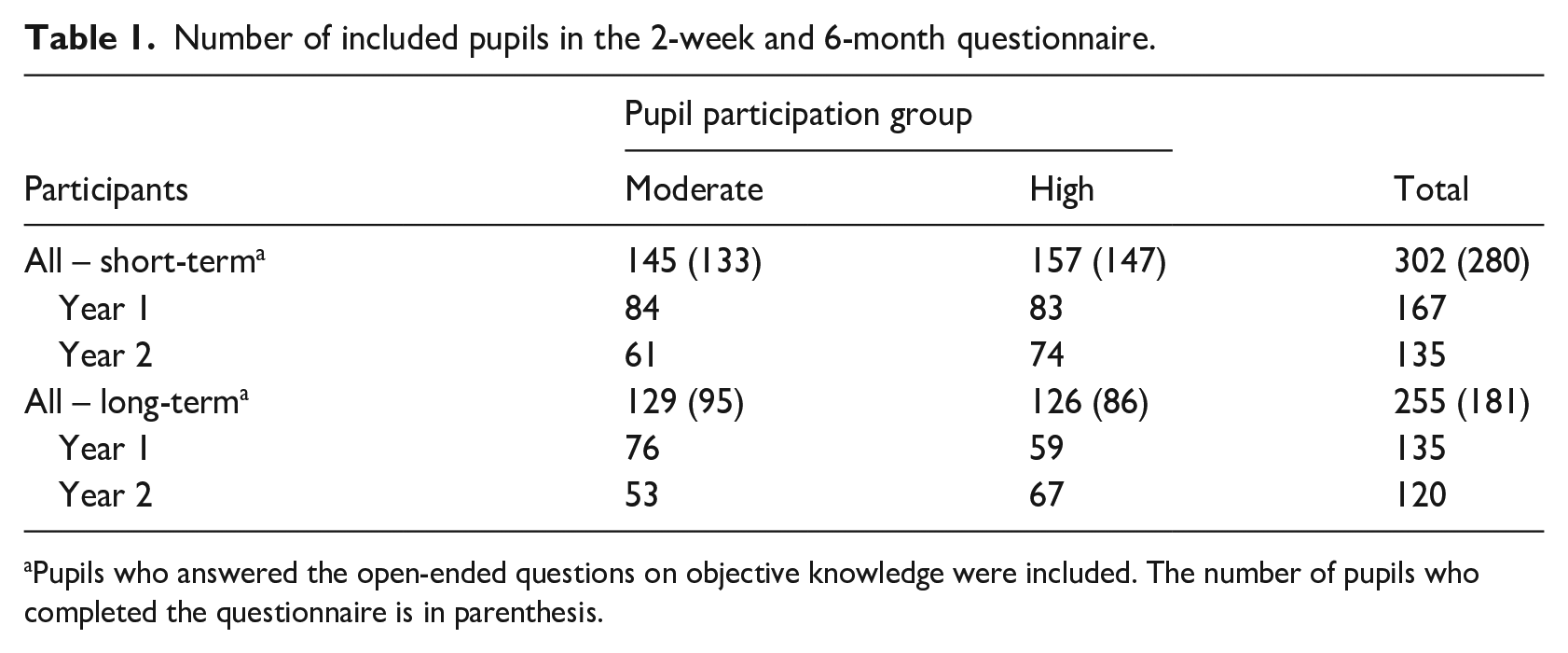
Pupils who answered the open-ended questions on objective knowledge were included. The number of pupils who completed the questionnaire is in parenthesis.
Ethics
The study was conducted in accordance with National Committee for Research in the Social Sciences and the Humanities (NESH, 2021) guidelines. The study was reviewed and approved for privacy and sensitivity considerations by Sikt (www.sikt.no), the Norwegian Agency for Shared Services in Education and Research (Reference: 206543). No personal or sensitive data was collected. An information letter about the study was first sent to parents through the school. In this letter, parents and pupils were informed that the teaching intervention was part of the normal school day, and that it was voluntary to complete the follow-up questionnaires.
Description of the intervention
Two teaching and learning interventions requiring either moderate or high levels of pupil participation were designed. Both consisting of 2-hour lessons to be delivered in two successive weeks (see online supplemental Table 1). Interventions were designed with the same theoretical and practical knowledge in mind and only differed in the level of pupil participation required. The lessons were developed in close collaboration with the teachers at the school. Since pupil participation is a requirement in Norwegian schools, the intervention aimed to investigate whether increasing participation to a high level resulted in benefits compared to a minimum, that is, a moderate participation level.
The lessons focused on seasonal fruit and vegetables, with a concern for health promotion and sustainability. Both the moderate and the high pupil participation theoretical lessons involved a general presentation by the teacher followed by pupil activities to engage learning. The main differences were that the pupils in the moderate pupil participation group watched a 45-minute video on fruit and vegetables in season, while the pupils in the high participation group discussed the topic in groups of 3–5, searched online, found recipes relevant to the topic, and planned a meal in line with a budget.
In the practical lesson the following week, the moderate participation group received a teacher-planned menu for food that they then prepared in groups of 3–5, while the high participation group developed and prepared their own menu.
Development and distribution of questionnaires
The intervention’s effect on objective knowledge, self-perceived knowledge and subject satisfaction was measured by digital questionnaires. The questionnaires focused on learning outcomes related to the topic of the teaching intervention.
Objective learning outcomes were measured by a combination of multiple-choice and open-ended items. Both questionnaires contained six multiple-choice questions. Questions were on recommended amounts of fruit and vegetable intake, the proportion of vegetables on the plate model, when root vegetables are in season, and the names of three different root vegetables. The 2-week questionnaire also had three open-ended objective knowledge questions, two on the topic of the lecture, and one on the cost of the meal, while the 6-month questionnaire contained one open-ended question on knowledge of the topic (see Data analysis below). In both questionnaires, instructions were to answer with short descriptions to the open-ended questions.
Self-perceived knowledge, pupils’ satisfaction with the subject and perceptions of pupil participation were measured by 5-point Likert-type scale items, 10 items in the 2-week questionnaire and 15 items in the 6-month questionnaire. An overview of items in the two questionnaires can be found in the Results section following. The questions included in the 2-week and 6-month questionnaires were not entirely identical. This discrepancy occurred partly because of differences in relevance in a short-term and long-term context. Some additional questions were also added to the 6-month questionnaire in year 2.
Both questionnaires were developed by the authors and pre-tested for readability by two 14- to 15-year-old children representative of the target group. Minor adjustments to the questions were made based on the feedback received. SurveyXact (Ramboll Group, Aarhus, Denmark) was used to generate the questionnaires, and no personally identifiable data was collected. Upon each occasion, links to the questionnaires were distributed during Food and Health lessons, and the pupils received oral information about the study from their teacher. The teacher was available for questions, and pupils were asked to answer the questions truthfully and independently.
Data analysis
For multiple-choice questions, answers were coded as either 0 (wrong) or 1 (correct), and a summary score from the six questions was calculated (range, 0–6). Objective knowledge was also assessed by pupils’ responses to the open-ended question ‘What are the reasons to eating according to season?’. Answers were scored on a scale from 0 to 3, depending on the ability to convey one (+1) or more (+1) reasons, including cost, availability, sustainability, and shorter transport or by placing the topics in a larger context and adding explanations (+1). Mean values with standard deviations for both intervention groups were calculated for this score and for Likert-type scale items. Normality was determined using the Shapiro–Wilk test. The Student’s t-test was used to identify any significant difference in means between groups, with statistical significance determined by p-values below .05.
In the 2-week questionnaire, objective knowledge was also assessed by pupils’ responses to the open-ended question ‘What were the topics of the lessons last week?’. Answers were rated 0 or 1, depending on the pupil’s ability to remember at least one of the main topics covered (mentioned either fruit and vegetables in season, or root vegetables). Knowledge about the likely cost of the meal was determined from pupils’ estimates, where answers within 120–160 NOK was considered correct (the maximum budget available was 150 NOK). The chi-square test of independence was used to determine any significant associations between the intervention group and the outcomes (p < .05).
Results
Pupils’ objective knowledge and level of pupil participation
The effect of the pupil participation intervention on short-term and long-term objective knowledge is presented in Figures 1 and 2. The objective knowledge scores from responses to multiple-choice questions revealed no significant differences between the intervention groups after 2 weeks or 6 months (Figure 1).
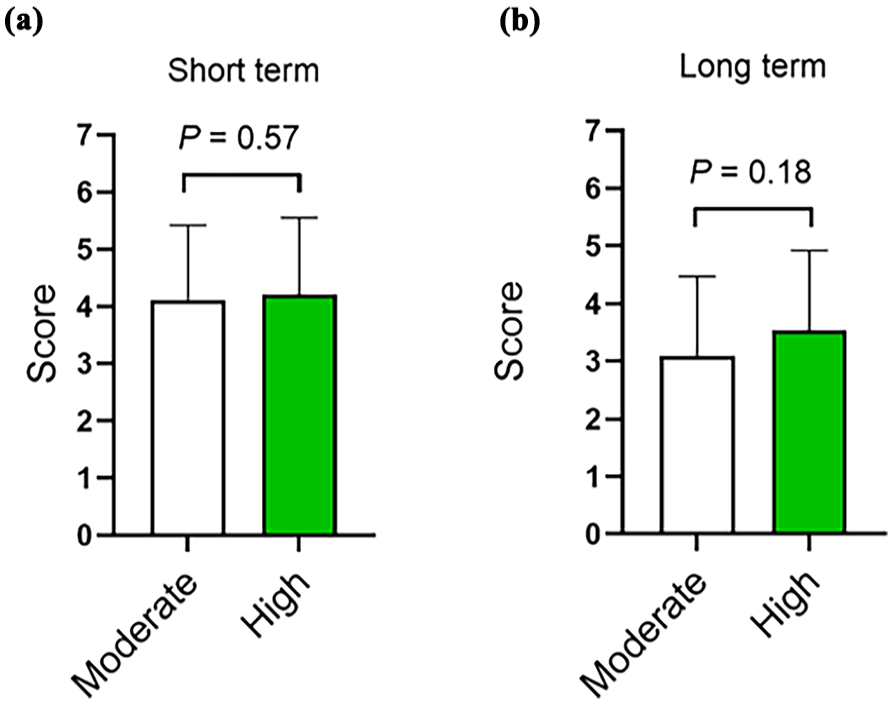
Pupil knowledge level measured by multiple-choice questions, after an intervention with either moderate or high pupil participation.
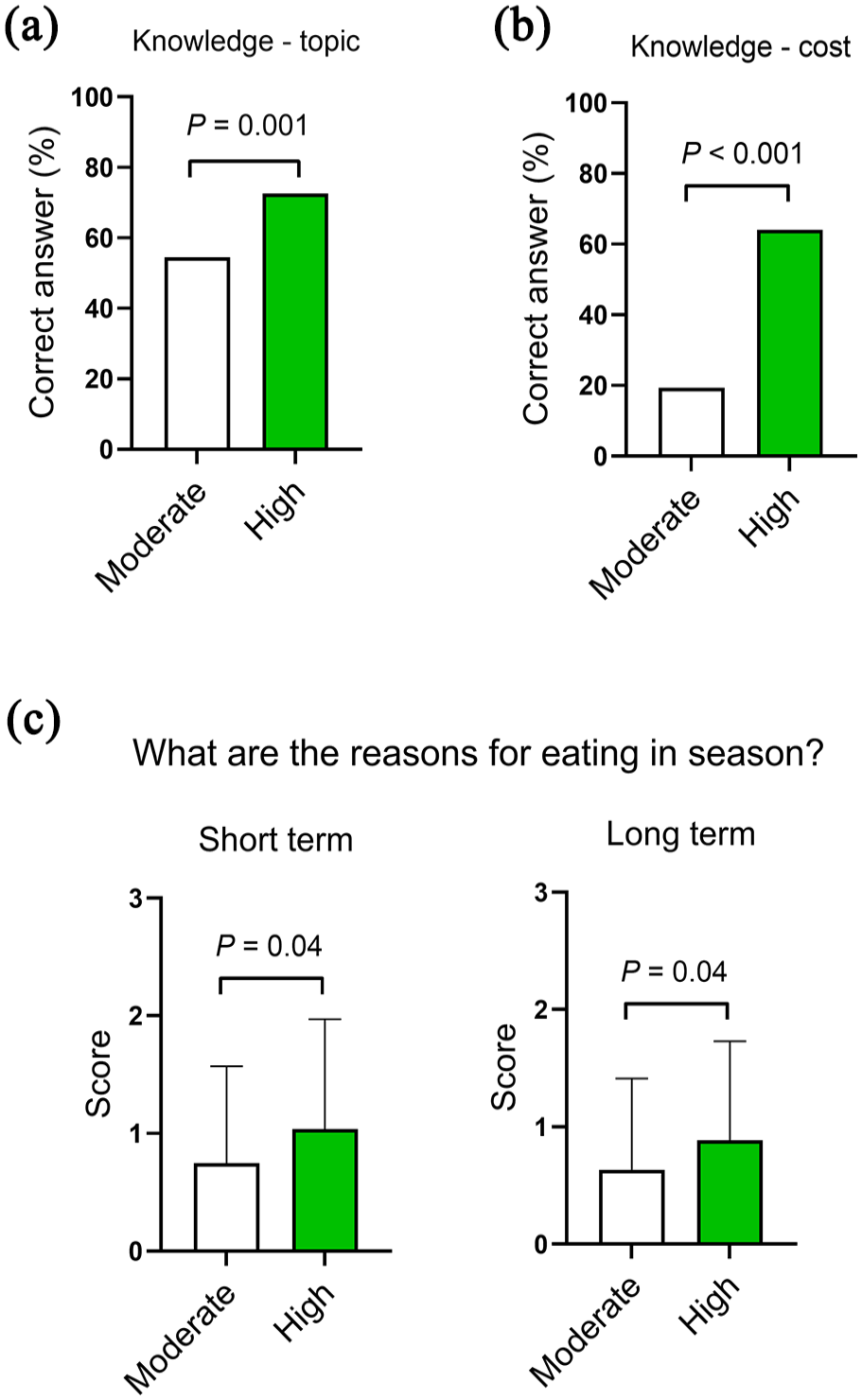
Pupil knowledge level measured by open-ended questions, following an intervention with either moderate or high pupil participation.
In open-ended questions after 2 weeks, pupils were asked to specify the topic of the previous lessons in Food and Health (Figure 2(a)). The mean score obtained by pupils in the high pupil participation group was significantly greater compared to that obtained by the moderate pupil participation group (p = .001).
During the lessons, the high pupil participation group was asked to plan a menu according to a budget, while the moderate pupil participation group did not receive information on the cost of the meal. This resulted in a significant higher percentage of pupils who were able to estimate the cost of the meal in the high pupil participation group compared to the moderate pupil participation group (Figure 2(b), p < .001).
To provide additional insight into the learning outcomes, pupils were asked to provide reasons for eating seasonal food. Answers were scored from 0 to 3 depending on whether specific topics relevant to the learning outcomes were mentioned and explained (Figure 2(c)). Pupils from the high pupil participation group had significantly higher scores than pupils from the moderate pupil participation group 2 weeks after the intervention (p = .04). Six months after the intervention, the score was lower in both groups, but the high pupil participation group still had a significantly higher score than the moderate pupil participation group (p = .04).
Pupils’ self-perceived knowledge and level of pupil participation
How the pupils perceived their knowledge and competence following lessons with moderate or high levels of pupil participation was investigated. Two weeks after the intervention, the mean score to the statements ‘After the Food and Health lessons the last two weeks, I have learned a lot about seasonal fruit and vegetables’ (p <.001); ‘. . . .I can easily find receipts with seasonal vegetables’ (p = .01); ‘. . . I can plan a meal with seasonal fruit and vegetables’ (p = .009); and ‘. . . I can make a meal with seasonable fruit and vegetables’ (p = .01) was significantly higher in the high pupil participation group compared to the moderate participation group, demonstrating that students from the high participation group agreed more with the statements.
There was no significant difference between mean scores to the statement ‘I can plan a time schedule and the order of work tasks’ (p = .71) in the high and the moderate pupil participation group. However, the mean score to the statement ‘I can plan a meal according to a budget’ was significantly higher in the high pupil participation group compared to the moderate pupil participation group (p = .009). In addition, the mean score in response to the statement ‘I can use what I have learned on seasonable fruit and vegetables outside of school’ was significantly higher in the high pupil participation compared to the moderate pupil participation group (Table 2, p < .001).
Effect on pupils’ self-perceived knowledge 2 weeks and 6 months following an intervention with either moderate or high level of pupil participation (PP). Higher values indicate agree more with the statements. a
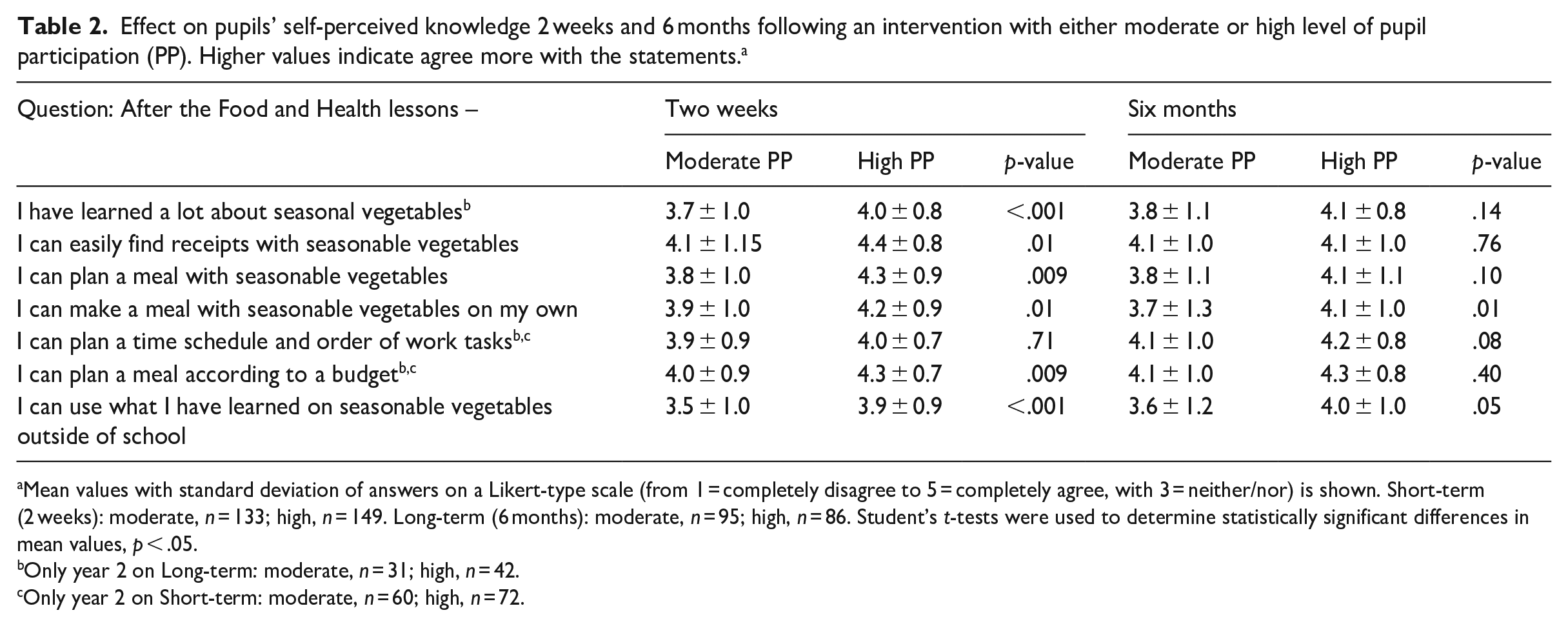
Mean values with standard deviation of answers on a Likert-type scale (from 1 = completely disagree to 5 = completely agree, with 3 = neither/nor) is shown. Short-term (2 weeks): moderate, n = 133; high, n = 149. Long-term (6 months): moderate, n = 95; high, n = 86. Student’s t-tests were used to determine statistically significant differences in mean values, p < .05.
Only year 2 on Long-term: moderate, n = 31; high, n = 42.
Only year 2 on Short-term: moderate, n = 60; high, n = 72.
Pupils’ ability to make sustainable food choices
After 6 months, the high pupil participation group got a higher score than the moderate participation group for the statement that what they had learned makes it easier to make sustainable food choices (p = .02, Table 3). Both groups said they would use what they had learned about sustainable food choices when they become adults (p = .07).
Pupils’ general perceptions on sustainable food choices 6 months after an intervention with either moderate or high level of pupil participation. a
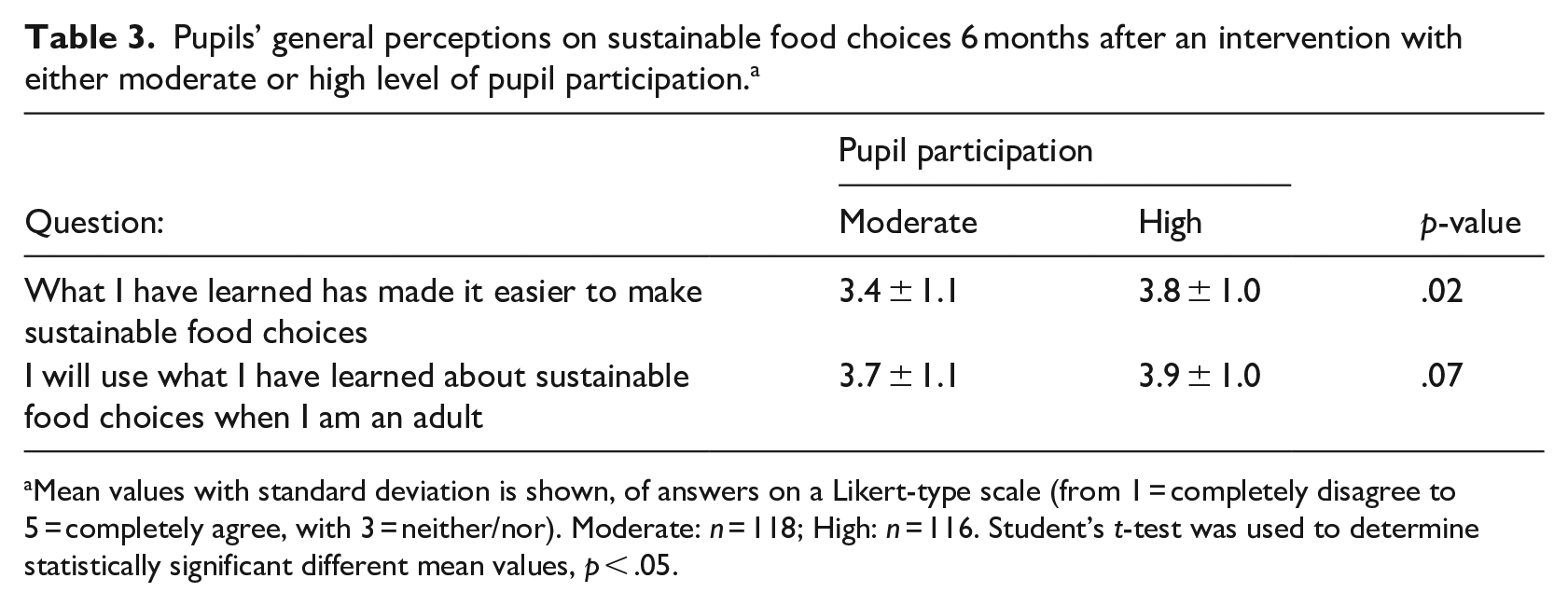
Mean values with standard deviation is shown, of answers on a Likert-type scale (from 1 = completely disagree to 5 = completely agree, with 3 = neither/nor). Moderate: n = 118; High: n = 116. Student’s t-test was used to determine statistically significant different mean values, p < .05.
Pupils’ subject satisfaction and self-perceived pupil participation
Two weeks following the intervention, the high pupil participation group reported having enjoyed the lesson more than usual, while the moderate pupil participation group was neutral in its response (p < .001, Table 4). The high pupil participation group also got a higher score on the statement ‘I learn best when I participate in the planning’, compared to the moderate pupil participation group (p < .001). However, this difference between groups was not observed at 6 months (p = .91). Both groups exhibited high agreement to the question ‘I like it when we can choose which dishes to make’ after 6 months, independent of the pupil participation intervention.
Self-reported subject satisfaction and pupil participation (PP) 2 weeks and 6 months after an intervention with either moderate or high pupil participation. a .
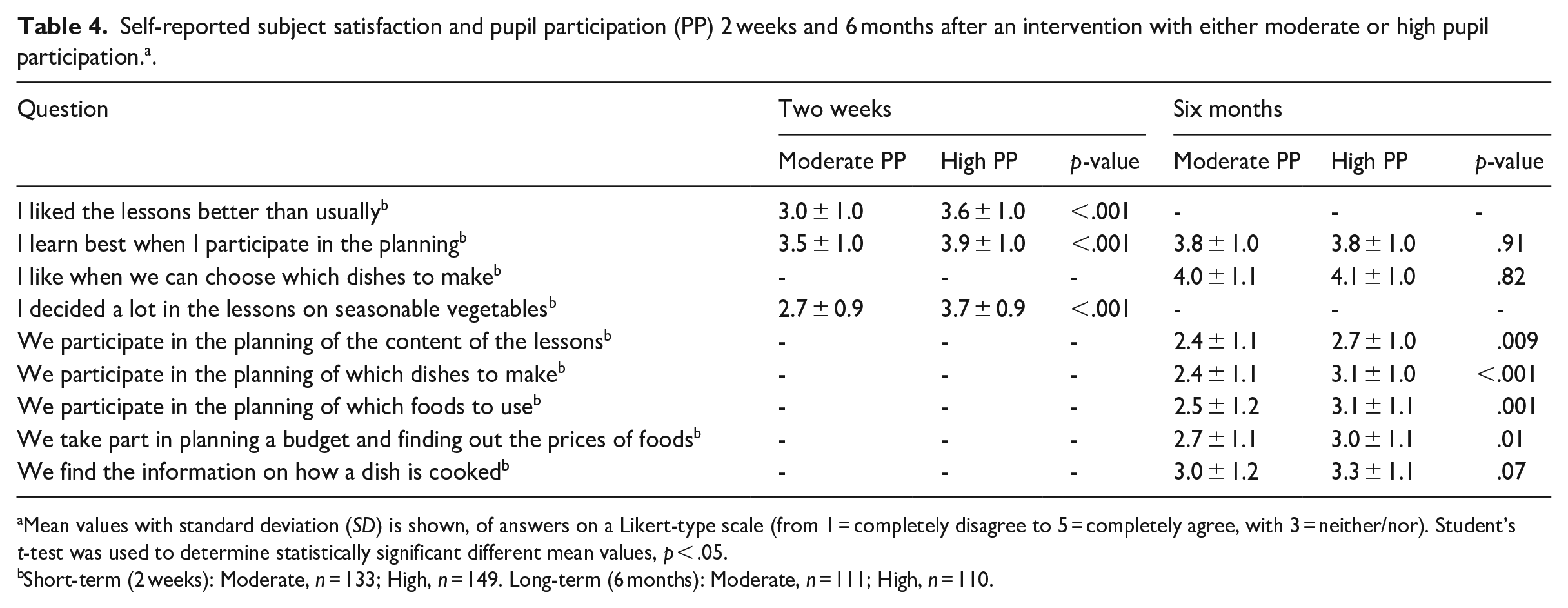
Mean values with standard deviation (SD) is shown, of answers on a Likert-type scale (from 1 = completely disagree to 5 = completely agree, with 3 = neither/nor). Student’s t-test was used to determine statistically significant different mean values, p < .05.
Short-term (2 weeks): Moderate, n = 133; High, n = 149. Long-term (6 months): Moderate, n = 111; High, n = 110.
Pupils’ self-perceived level of pupil participation after 2 weeks was significantly higher in the high versus moderate pupil participation group, as measured by agreement with the statement ‘I decided a lot in the lessons on seasonable fruit and vegetables’ (p < .001, Table 4). Interestingly, the effect of the high pupil participation intervention on self-perceived participation was still present after 6 months, as indicated by a higher score on the statement ‘We participate in the planning of the content of the lessons’ (p = .009), compared to the moderate participation group. In addition, despite low mean values on indicators of pupil participation in the long-term questionnaire, pupils from the high pupil participation group got a higher score than the moderate participation group on participation in planning which dishes to make (p < .001); which foods to use (p = .001); and making a budget and find prices (p = .01).
Discussion
In this study, we showed that a higher degree of pupil participation in two Food and Health lessons in lower secondary school increased pupils’ knowledge and satisfaction with the subject. Pupils in the high pupil participation group scored higher on knowledge about sustainability, fruit and vegetables compared to the moderate participation group in open-ended questions, indicating that pupils who worked in collaborative groups to find information and plan meals were better able to recall the information they learned both 2 weeks and 6 months after the intervention. This finding is in line with pedagogical theory concerning the value of a focus on pupil autonomy and metacognition as a means to support learning (Reeve and Cheon, 2021; Zimmerman and Moylan, 2009).
Adolescents are an important target group for health promotion as food habits developed at this time often continue into adulthood (Stok et al., 2018), and interventions targeting cooking skills in young people have been suggested as an health-promoting strategy (Roy et al., 2024). The act of food preparation is an important determinant of fruit and vegetable intake in young adults (Larson et al., 2006), while the act of preparing food may partly predict future diet quality (Laska et al., 2012). Importantly, pupil participation in menu planning and cooking in a school setting has been shown to increase health-related action competencies in adolescents (Ruge et al., 2016), and a school nutritional education programme resulted in more positive attitudes towards fresh food, openness to try new foods and higher confidence in making informed food decision (St. Pierre et al., 2024). Notably, in our study, we found an increased confidence in being able to cook with seasonable vegetables outside of school, as well as make sustainable food choices in the future in the high versus the moderate pupil participation group. The Food and Health subject, being mandatory for all Norwegian adolescents, is an important arena in which to influence future nutrition behaviour, but there currently is a mismatch between learning goals and teaching practices (Beinert et al., 2020). In addition to cooking skills, competence in how to find, interpret and critically evaluate information about diet and nutrition is important for future health behaviour (Conner and Norman, 1996; Cullen et al., 2015; Truman et al., 2017; Vaitkeviciute et al., 2015).
In the current intervention, the lessons with moderate pupil participation were based on traditional methods of teaching in the Food and Health subject and did not focus on active pupil participation in budgeting and costs, as reflected in the results. The importance of knowing how to make nutritious food on a budget has been highlighted as one of the essential skills for a healthy food practice (Fordyce, 2009; Parrish et al., 2016). Increased pupil participation may facilitate learning outcomes related to planning of meals according to budgets. However, findings from the current study indicate that in order to achieve long-lasting effects, this topic should be given greater emphasis throughout the learning process.
Pupil satisfaction with the high pupil participation lessons was significantly higher compared to the moderate pupil participation lessons. The pupils’ attitude towards how participation influenced learning differed in the short-term and long-term answers. In line with these findings, a previous study showed that pupils often mentioned that the teacher knows best and should decide (Djupegot et al., 2023). According to the new pedagogy for deep learning proposed by Fullan et al. (2018), the role of the teacher needs to be adapted depending on where the pupils are in their learning process, as active involvement of pupils requires reasonable expectations in line with their needs and interests (Fullan et al., 2018). In future studies, it will be important to investigate satisfaction with food education programmes involving high pupil participation in pupils with varying levels of competence and interest in school, to identify methods that motivate and benefit different groups of pupils and can be adapted to individual needs.
The intervention consisted of 4 hours of a total of approximately 83 hours during the year of Food and Health education at the lower secondary school. It is interesting to note that despite the short intervention period, pupils’ general perception of their own participation in the subject throughout the year was significantly higher among pupils from the high versus the moderate pupil participation group (Table 4). Although there are many factors that influence learning throughout a school year, the experimental design of this study revealed that the intervention had an effect on the pupils’ self-perceived pupil participation. Similar to the current findings, previous research indicates that participation has a positive association with pupils’ achievements in school (De Róiste et al., 2012; Mannion et al., 2022). In contrast, lack of participation has been linked to feelings of powerlessness and disengagement (Keisu and Ahlström, 2020). Analysis of pupil activities during home economics classes in Finland indicate that integrating and solving learning tasks together is a good way to convey many important health-related skills (Haapaniemi et al., 2023; Taar and Palojoki, 2022). Our findings show that pupil-planned lessons can be effective both for pupils’ learning and feeling of autonomy, and different forms of autonomy-supportive teaching, such as discussions, and pupil participation in defining learning outcomes and conducting evaluations, should be integrated into Food and Health education.
Limitations
As the intervention in this study was of short duration and data were collected at only one school, the results should be interpreted with caution. In addition, because questions about gender and socioeconomic status were only included in the long-term questionnaire, the effect of these parameters on the study outcomes could not be determined. However, we believe that the inclusion of 13 classes from 2 separate years, and the fact that the same 4 teachers taught both intervention groups, strengthens the findings.
Conclusion
Our findings indicate that high levels of pupil participation led to higher objective and self-perceived knowledge, and higher satisfaction with the Food and Health subject compared to moderate levels of participation, suggesting that pupil participation can be used as a means to increase the impact of food education in adolescents. Further research is needed, however, to shed light on the best strategies to increase pupil participation, as well as the relationship between pupil participation in the Food and Health subject and future health-related behaviours.
Supplemental Material
sj-docx-1-hej-10.1177_00178969251356788 – Supplemental material for Pupil participation influenced learning in Food and Health: A randomised controlled trial
Supplemental material, sj-docx-1-hej-10.1177_00178969251356788 for Pupil participation influenced learning in Food and Health: A randomised controlled trial by Bodil Bjørndal, Iselin Thowsen Vildmyren and Ingrid Laukeland Djupegot in Health Education Journal
Footnotes
Acknowledgements
The authors thank the study school and its teachers for their support in designing and implementing the intervention, and the pupils for participating in the study.
Data availability
The data referred to in this article may be made available by the corresponding author upon reasonable request.
Declaration of conflicting interests
The author(s) declared no potential conflicts of interest with respect to the research, authorship and/or publication of this article.
Funding

Supplemental material
Supplemental material for this article is available online.
References
Supplementary Material
Please find the following supplemental material available below.
For Open Access articles published under a Creative Commons License, all supplemental material carries the same license as the article it is associated with.
For non-Open Access articles published, all supplemental material carries a non-exclusive license, and permission requests for re-use of supplemental material or any part of supplemental material shall be sent directly to the copyright owner as specified in the copyright notice associated with the article.
