




Abstract
Objective:
University students are highly sedentary, increasing their risk of poor health outcomes. This study aimed to co-design and pilot a behavioural gain-framed nudge-based intervention to reduce university students’ sedentary behaviour by breaking up long periods of sitting every 30 minutes.
Methods:
Experienced-based co-design was used to conduct three workshops with university students and staff (n = 11) to develop and create the intervention (UC30). A mixed-methods pilot pre-post study investigated the effectiveness of the intervention in a university cohort (n = 60) over one semester. Semi-structured interviews (staff, n = 6; students, n = 3) and student survey responses (n = 43) were used to determine the primary outcomes of acceptability and feasibility. The secondary outcome measure was self-reported sedentary time (Past-day Adults’ Sedentary Time-University questionnaire, minutes/day).
Results:
Co-designed resources were simple to implement for staff and informative and influential for students. The qualitative analysis revealed three themes relevant to both students and staff: ‘delivery mode’, ‘academic engagement’ and ‘education and impact’. Total self-reported sedentary time did not decrease among students; however, there was a 51-minute daily reduction (95% confidence interval: −121, 19) in sitting-for-study post-intervention.
Conclusion:
Co-designed behavioural nudge-based resources as part of learning activities to reduce sedentary behaviour in university students may be effective in reducing sedentary time during study, improving health and learning outcomes, indicating a larger trial is warranted.
Trial registration:
Australia New Zealand Clinical Trials Register (ANZCTR): ACTRN126210006698971, https://www.anzctr.org.au/ACTRN12621000669897.aspx Registered 2 June 2021.
Introduction
Being a student at a university requires large amounts of sitting, with university students self-reporting sedentary time greater than 7 hours/day (Castro et al., 2020). These sedentary behaviour levels have increased over the last 10 years and are higher than those of the general young adult population (Castro et al., 2020). Self-reported sedentary time greater than 7 hours/day has been associated with an increased risk of dying from any cause (Ku et al., 2018). Higher levels of sedentary behaviour also increase the risk of certain non-communicable diseases such as cardiovascular disease and some cancers and are associated with adverse health outcomes, such as depression and increased weight (Saunders et al., 2020). Breaking up long periods of sitting has been found to reduce sedentary behaviour and improve physiological outcomes such as blood pressure and blood glucose levels (Saunders et al., 2020). University years have been identified as important time for future life patterns, including health-related behaviours such as dietary and physical activity choices (Al-Awwad et al., 2021). Therefore, there is a need to encourage less sedentary behaviour among members of this young adult population, potentially improving health outcomes in the longer term.
Few studies have focused on reducing sedentary behaviour or interrupting sedentary time in university students (Dillon et al., 2022; Keahey et al., 2021; Mnich et al., 2019; Paulus et al., 2021; Pope and Gao, 2022). Most previous studies have been based on behaviour change principles (e.g. social cognitive theory, health action process approach; Dillon et al., 2022; Keahey et al., 2021; Mnich et al., 2019; Pope and Gao, 2022), have used communication environment interventions (e.g. smart phone applications, text messages, social media groups; Dillon et al., 2022; Keahey et al., 2021; Pope and Gao, 2022) and have shown limited effectiveness in reducing sedentary behaviour, with moderate-to-high levels of bias and small sample sizes. Considering this, novel approaches are needed to reduce sedentary behaviour among university students, and no studies in this population appear to have used choice-architecture or co-designed interventions.
Choice-architecture interventions, or ‘behavioural nudges’, make subtle changes to the micro-environment (e.g. university, home, online), disrupting habitual behaviour and motivating the choice for a healthier option (Landais et al., 2020; Thaler and Sustein, 2008). The way a choice is presented, through layout, sequencing and the number of available options, affects the final decision and has the potential to affect health behaviours (Landais et al., 2020; Thaler and Sustein, 2008). Behavioural nudges have been proposed as a strategy to reduce sedentary time (Jones et al., 2021). In addition, co-design in health settings has been shown to improve stakeholder engagement with behavioural interventions (Dawda and Knight, 2019).
Co-design is a participatory design method, which seeks the active involvement of stakeholders to create a solution to an identified problem, with experience-based co-design (EBCD) used to guide co-design research in health settings (Green et al., 2020). It is designed to improve and develop services by bringing together the experiences of service users and providers in a series of workshops to create solutions (Dawda and Knight, 2019; Green et al., 2020). While the participatory nature of co-design has been suggested to contradict the soft paternalistic characteristics of nudges, the pairing together of co-design and nudging has been argued to be possible and effective, including in the promotion of healthy behaviour (Einfeld and Blomkamp, 2022).
To promote physical activity, gain-framed messaging is recommended, and a similar approach may be appropriate for sedentary behaviour messaging (Williamson et al., 2020). Physical activity messaging should be positive (gain-framed) rather than negative (loss-framed), targeted to specific demographics, highlighting short-term benefits and social marketing principles such as branding should be used (Williamson et al., 2020). However, currently it is unclear whether gain-framed or loss-framed messaging is more appropriate for reducing sedentary behaviour. Therefore, the aims of this study were to:
Co-design a behavioural nudge-based intervention using gain-framed messaging to break up long periods of sitting in university students, and
Evaluate the preliminary acceptability, feasibility and effectiveness of the co-designed resources in reducing university students’ total self-reported sedentary behaviour per day over one semester.
Methods
Study design
This study employed a sequential design, conducted in two phases over a 12-month period from April 2021. Phase 1 used EBCD to develop a suite of intervention (UC30) resources to be implemented in a university setting in three 2-hour workshops (June and November 2021; Dawda and Knight, 2019). Workshop participants included staff and students from the Faculty of Health at the University of Canberra. The outcomes of the workshops were summarised in a design brief, which was delivered to Faculty of Art and Design students who created the UC30 resources between August and November of 2021. Phase 2 of the study used a mixed-methods pilot pre-post study design conducted over two consecutive semesters in a cohort of physiotherapy students and staff. The co-designed UC30 intervention was implemented during a 13-week semester (between February and May 2022). To facilitate the design and reporting of this study, the STROBE and SQUIRE 2.0 statements were followed (Ogrinc et al., 2016; Von Elm et al., 2007). Ethics approval was received from the University of Canberra Human Research Ethics Committee (HREC-6973). Informed consent was obtained from all participants in the study.
Phase 1
Participants and recruitment
Using volunteer sampling, a small group of students and staff were recruited to participate in the co-design workshops via email and the online study platform in April to May 2021. Eligible workshop participants were academic staff and students from the Faculty of Health at the University of Canberra. Students were aged 18 years or older and had completed the subjects in which the intervention would be implemented in during the following semester.
Co-design workshops and creation of the resources
The main aims of the workshops were to develop ideas for a logo, video, posters, and behavioural nudge-based slides that could be incorporated into lectures and tutorials, encouraging students to break up long periods of sitting every 30 minutes. The workshops were facilitated by members of the research team (AM, NB, AF, NF) who were academics from the disciplines of psychology, sport and exercise science and physiotherapy, together with a student completing a physiotherapy degree.
In Workshop 1, the research team presented slides outlining the aims of the project and information about the health risks of sedentary behaviour (Short, 2021), the benefits of reducing sedentary behaviour (Dunstan et al., 2012; Felez-Nobrega et al., 2018; Healy et al., 2011; Ku et al., 2018) and positive messaging for behaviour change (Williamson et al., 2020). Brainstorming activities and group discussions allowed the development of ideas for the logo, posters and videos. Choice architecture and ‘nudging’ were explained to participants prior to group discussion of the behavioural nudge-based component (Münscher et al., 2016). At the conclusion of the workshop, the research team clarified group-generated ideas for the resource development.
Workshop 2 began with a summary of themes for each resource to encourage strengthening of ideas. Staff were asked what would make the UC30 behavioural nudge-based resources feasible to implement in their teaching, while students considered what would make the nudge-based resources appealing. The research team facilitated discussions and encouraged stakeholders (students and staff) to problem solve to reach agreement. Both Workshop 1 and 2 were conducted in-person and video- and audio-recorded.
Following the two workshops, a member of the research team summarised the outcomes into a design brief. The design brief was presented to students (n = 6) from the university’s Faculty of Art and Design who created the UC30 resources (logo, posters, videos and slides) in August to November 2021. The design team met virtually with a member of the research team once weekly for 30–60 minutes to ensure ideas generated in the workshops were incorporated into the logo, posters, slides and videos.
A final virtual workshop was held after the resources were created for workshop participants to provide feedback on the UC30 resource designs.
Phase 2
Participants and recruitment
A cohort of physiotherapy students not on clinical placement during the data collection and intervention period was identified by the research team. To be eligible to participate, students had to be 18 years of age or older, healthy and able to walk. In addition, students had to undertake at least one subject (e.g. Cardiothoracic Interventions in Physiotherapy) in which the intervention was being delivered. All subjects that included the UC30 intervention were delivered face-to-face primarily. Participants were recruited using voluntary sampling, advertising the study and survey link on the online learning platform and during lectures and tutorials, by teaching staff in October 2021. Eligibility was self-determined, and a subset of participants was recruited during the baseline data-collection period to participate in accelerometry measurement via the online survey. After the intervention, students were invited to participate in the interview component of the study via an online survey.
UC30 implementation
The UC30 resources (logo, video, posters, nudge-based slides) were presented to academic staff (n = 8) teaching subjects to the identified cohort in a 1-hour training workshop delivered in-person by two members of the research team in December 2021. The co-design process and creation of the UC30 intervention were briefly outlined, and resources were presented. Staff were asked to integrate 2- to 5-minute breaks every 30 minutes of teaching time, using the UC30 slides during the entire semester (13 weeks). Staff were also informed that they could choose alternative break options if they preferred or make use of the UC30 videos during these breaks. Suggestions on how to integrate the nudge-based slides every 30 minutes into learning material and delivery without disrupting teaching content were discussed.
Following the training workshop, the UC30 resources were provided via an intranet database to staff. Staff that were unable to attend the workshop received information and project resources via email and were encouraged to clarify any questions or concerns (n = 4). Posters were displayed throughout the intervention period in tutorial and lecture rooms where the intervention cohort had scheduled classes and in adjacent corridors and nearby bathrooms/toilets and cafes. During the semester, a member of the research team sent an email to academic teaching staff every 3 weeks encouraging on-going use of the intervention resources. All academic staff involved in delivering the UC30 intervention were invited to participate in an interview at the end of the intervention period.
Outcome measures
Outcome measures were collected in weeks 11–13, that is, Semester 2 2021 (baseline; October 2021) and weeks 11–13, that is, Semester 1 2022 (end intervention; April 2022). Data collection was conducted during the same weeks of two consecutive semesters to standardise study load. The Australian Capital Territory was under COVID-19 public health orders, with restrictions on recreational activities, work and study, for the duration of the baseline data-collection period (11–29 October 2021). Students were not permitted on the university campus during this time, and all academic content was delivered online. The primary outcome measures were feasibility and acceptability of the intervention (student online survey, staff and student interviews). The secondary outcome was total daily minutes of self-reported sedentary behaviour measured using a sedentary behaviour questionnaire (Past-day Adults’ Sedentary Time-University, PAST-U) completed online (Qualtrics XM, Sydney; Clark et al., 2016). Device-measured sedentary time (ActiGraph accelerometers) was also collected in a sub-group of participants to validate self-reported sedentary behaviour.
Acceptability and feasibility of the UC30 intervention
Post-intervention, questions were added to the student online survey to determine the acceptability and feasibility of the intervention (Bowen et al., 2009) (see online Supplemental File 1). Semi-structured interviews were also conducted to explore in-depth students’ (online Supplemental File 2) and staff (online Supplemental File 3) perceptions of the UC-30 intervention, aligning questions to the Theoretical Domains Framework (Atkins et al., 2017) to assess potential implementation issues. Interviews were conducted by members of the research team face-to-face or online for approximately 30 minutes. All interviews were audio-recorded and professionally transcribed verbatim.
Self-reported sedentary behaviour
The PAST-U is a nine-item instrument that uses past-day recall of sedentary time in hours and minutes while at work, study, travelling, eating and drinking, watching television, using the computer, socialising and any other daily activities (Clark et al., 2016; online Supplemental File 1). The questionnaire has been validated in a university student population and provides an acceptable measure of sedentary time (Clark et al., 2016). An anonymous questionnaire also included general demographic questions, such as age, gender and tertiary level of study, as well as a question (mother’s maiden name) to assist with linking the survey responses before and after the UC-30 intervention.
Device-measured sedentary behaviour
A subset of participants wore a triaxial accelerometer (ActiGraph GT3X, Fort Walton Beach, FL) to objectively measure sedentary behaviour (minutes/day). Participants were instructed to wear the accelerometer on their right hip, while awake, for 7 consecutive days by one of the research team members. All data were sampled and downloaded as raw data (30 Hz) and converted to 15-second epochs and counts per minute (cpm) using the ActiLife software (Peterson et al., 2015). Data were screened to exclude data if wear time was less than 10 hours per day and if there were only 4 days of valid data. To measure sedentary behaviour, the vector magnitude cut-point was used (<150 cpm) which has been validated in a university student population (Peterson et al., 2015). Estimating daily time spent in sedentary behaviour was calculated by dividing the total time (minutes) by the number of valid days. Participants were asked to complete the PAST-U survey after the final day of monitoring, for comparison of device and self-reported sedentary behaviour. The accelerometer and survey were retuned in-person to one of the research team or via mail in a reply-paid post pack.
Sample size
Survey sample size was based on the number of students enrolled in the intervention cohort during 2021 (n = 109). Using an online sample size calculator (Qualtrics XM), with a confidence interval of 95% and a margin of error of 5%, a sample size of 89 was required. As this was a pilot study, a formal sample size calculation for change in self-reported sedentary behaviour was not undertaken (Arain et al., 2010). An important goal of this study was to provide an estimate of the potential effect size of a behavioural nudge-based intervention on university students’ sedentary behaviour. Data from this study will be used to inform the planning for future studies. All students were invited to wear an accelerometer, and all students and staff were invited to participate in an interview after the intervention.
Data analysis
Data were analysed using descriptive and inferential analyses. To facilitate analysis and reporting, Likert-type scale responses were first dichotomised (i.e. agree vs neutral/disagree). Survey responses were matched pre- and post-intervention using the linking question and demographic data. For matched data, variables were analysed using paired t-tests (for normally distributed data) and the Wilcoxon signed-ranks test (for non-normally distributed data). Matched and unmatched participant characteristics at baseline were analysed using the Mann–Whitney U test to identify any differences between groups. For accelerometer participants, correlation between total self-reported and device-measured sedentary (minutes/day) was calculated using Pearson’s correlation coefficient. All data were analysed in SPSS version 28 (IMB, Sydney). Significance level was set at p < .05.
For the qualitative data, two experienced qualitative research team members independently coded and identified themes (JAB, NB) from the interview data and student survey open-text comments using Braun and Clarke’s (2021) reflexive thematic analysis approach: (1) familiarisation with the data; (2) coding the data; (3) generation of initial themes; (4) developing and reviewing of themes; (5) refining, defining and naming of themes and (6) writing up. The generated themes were discussed until a consensus was reached on final themes and categories.
Results
Phase 1
Eleven students (n = 7; 3 [43%] female) and staff (n = 4; 1 [25%] female) from four disciplines (midwifery, pharmacy, physiotherapy, sport and exercise science) participated in the co-design workshops. Participants recommended a simple, recognisable logo in university-associated colours to convey the UC30 aim. During the second workshop, participants agreed on the use of a clock face showing 30 minutes within the zero in UC30 (Figure 1(a)). For the educational posters, participants suggested strong imagery, limited text and consistent branding, highlighting the benefits of interrupting or reducing sedentary time (e.g. improves grade point average [GPA], concentration and memory) for display in a variety of learning environments, including other university spaces such as cafes and bathrooms (Figure 1(b)).
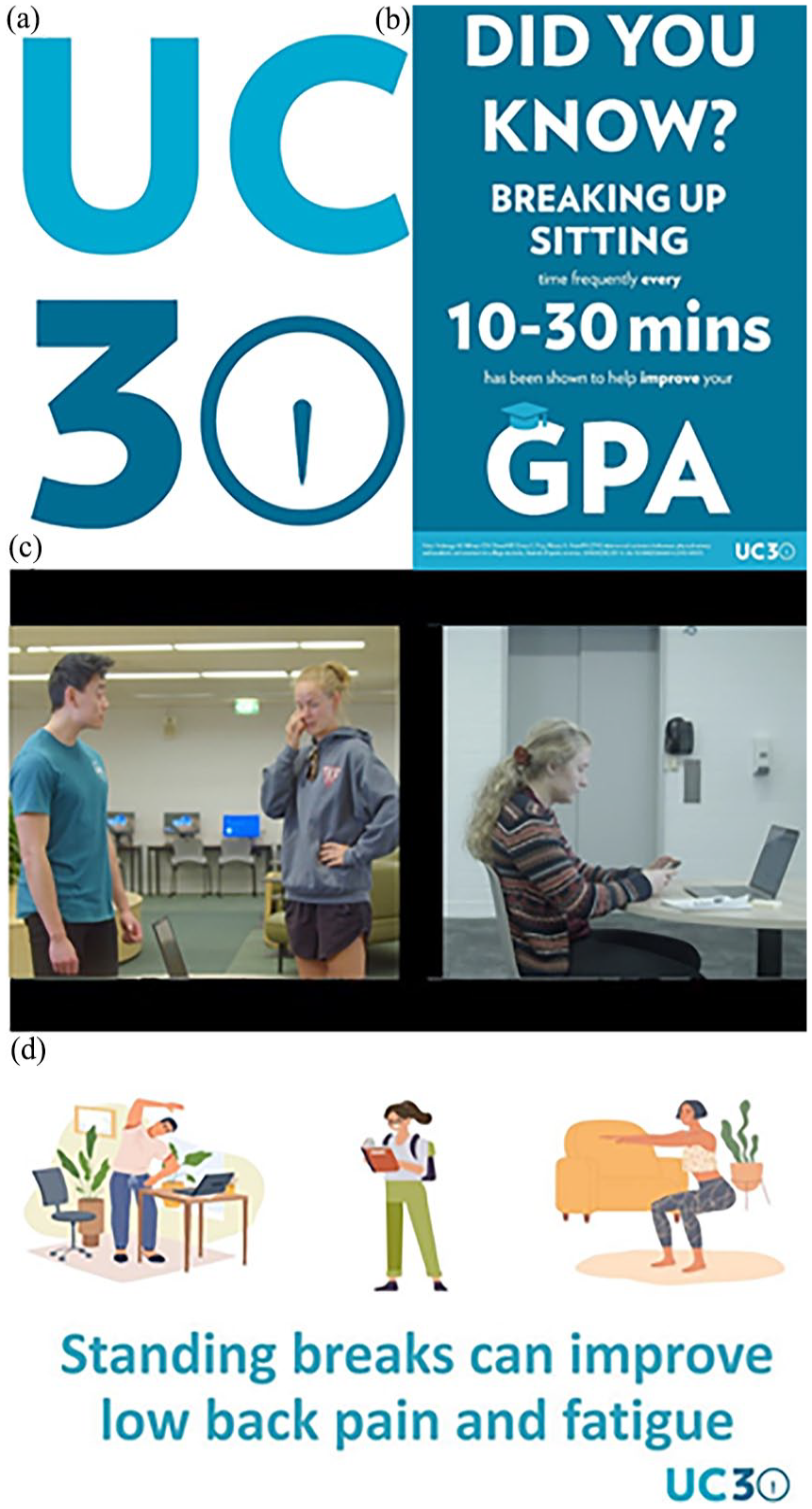
Examples of the co-designed UC30 resources. Four images of UC30 resources: (a) UC30 logo using letters and numbers, (b) UC30 poster describing breaking up sitting may improve grade point average, (c) photograph from the UC30 video comparing two university students standing happily and one university student sitting unhappily and (d) UC30 nudge
Participants proposed two videos: a longer video (1–2 minutes) discussing the benefits of reducing sedentary time, and a shorter video (<30 seconds) for display on monitors around the university. Participants wanted videos to include real students, be educational and light-hearted (Figure 1(c)). Staff wanted the behavioural nudge-based slides presented during teaching and learning activities to be simple, convenient and flexible; students wanted visually appealing and somewhat prescriptive messaging. Participants agreed a bank of PowerPoint (Microsoft 360, Redmond, WA) slides for use across the semester in face-to-face and virtual learning environments would best meet the needs of both staff and students (Figure 1(d)). Examples of the nudge-based prompts provided in the slides were ‘standing breaks can improve low-back pain and fatigue’ (Figure 1(d)) and ‘Taking a standing or movement break frequently can help improve concentration and comfort levels’.
The UC30 resources were completed in December of 2021 incorporating small changes based on feedback from the final co-design workshop during which participants expressed verbal satisfaction with the resources and provided written feedback via email. No other methods were used to assess resource satisfaction.
Phase 2
At baseline, 60 eligible students completed the UC30 survey. The majority of participants were female and completing an undergraduate physiotherapy degree, with a median age of 22 years (Table 1). Post-intervention, 50 eligible students completed the survey, and 25 responses could be matched pre- and post-intervention. Comparing matched and unmatched participants at baseline, there were no statistical differences in characteristics or self-reported sitting times.
UC30 participant characteristics at baseline (Phase 2).
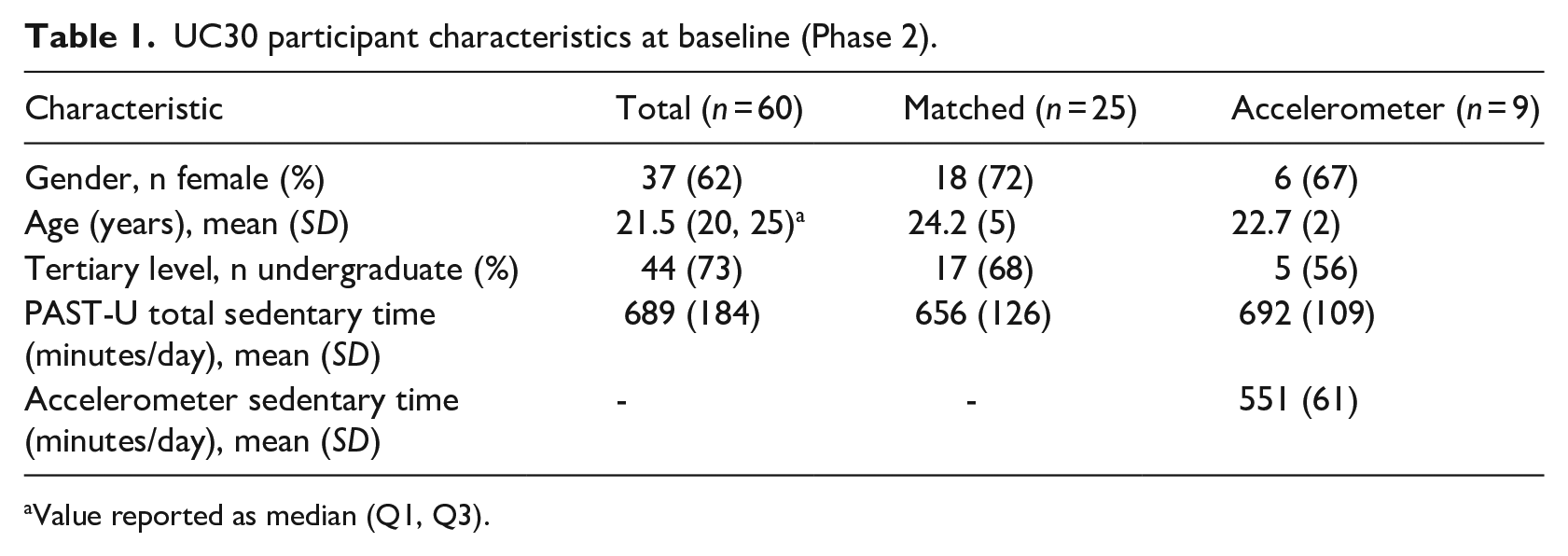
Value reported as median (Q1, Q3).
Acceptability and feasibility
Forty-three students completed the acceptability and feasibility questions in the post-intervention online UC30 survey. Almost all students understood the purpose of the intervention (Table 2), and the majority agreed that all UC30 resources were very useful in providing information about sitting behaviour (Table 2). The students reported the posters had the most influence on their sitting behaviour, their behaviour was most influenced in a face-to-face learning environment, and the intervention had the most impact early in the semester. The intervention had less of an influence on sitting time outside of the university setting. The resources were most prominent in face-to-face learning, and three out of four times, they were delivered consistently across units by academic staff. Breaking up long periods of sitting was a change from normal face-to-face lecture and tutorial delivery. Students enjoyed the opportunity to stand every 30 minutes, and the intervention changed their perception of sitting.
UC30 student acceptability and feasibility survey responses after the intervention (n = 43).
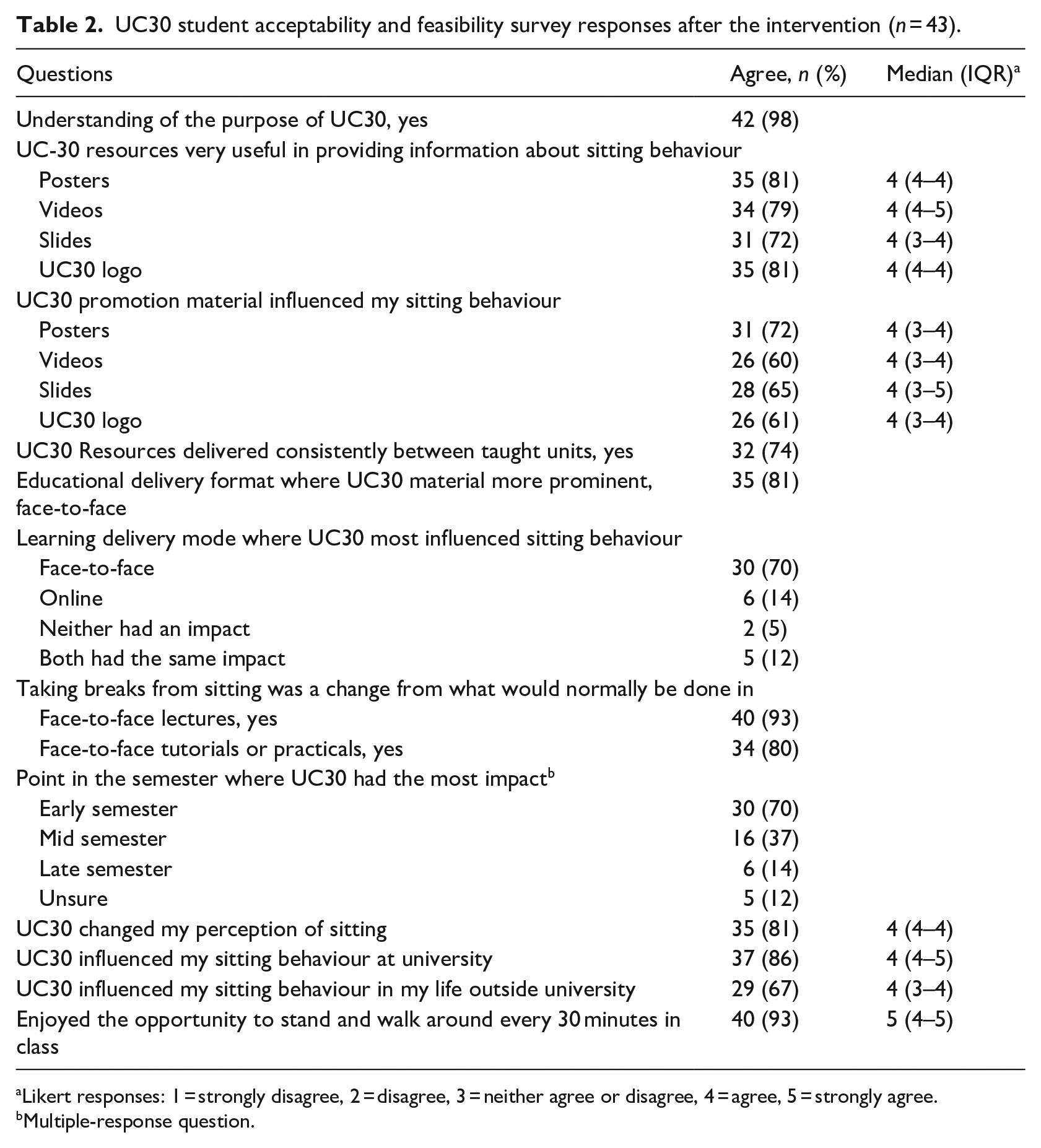
Likert responses: 1 = strongly disagree, 2 = disagree, 3 = neither agree or disagree, 4 = agree, 5 = strongly agree.
Multiple-response question.
Thirty-seven students provided survey open-text responses on the acceptability and feasibility of the intervention, and three students (2 female; mean age 25 years) and six staff (3 female; mean age 45 years) participated in the interviews. The qualitative analysis revealed three themes, common for both students and staff (Table 3).
Themes relating to the acceptability and feasibility of the UC30 intervention with supporting verbatim quotes from students and staff.
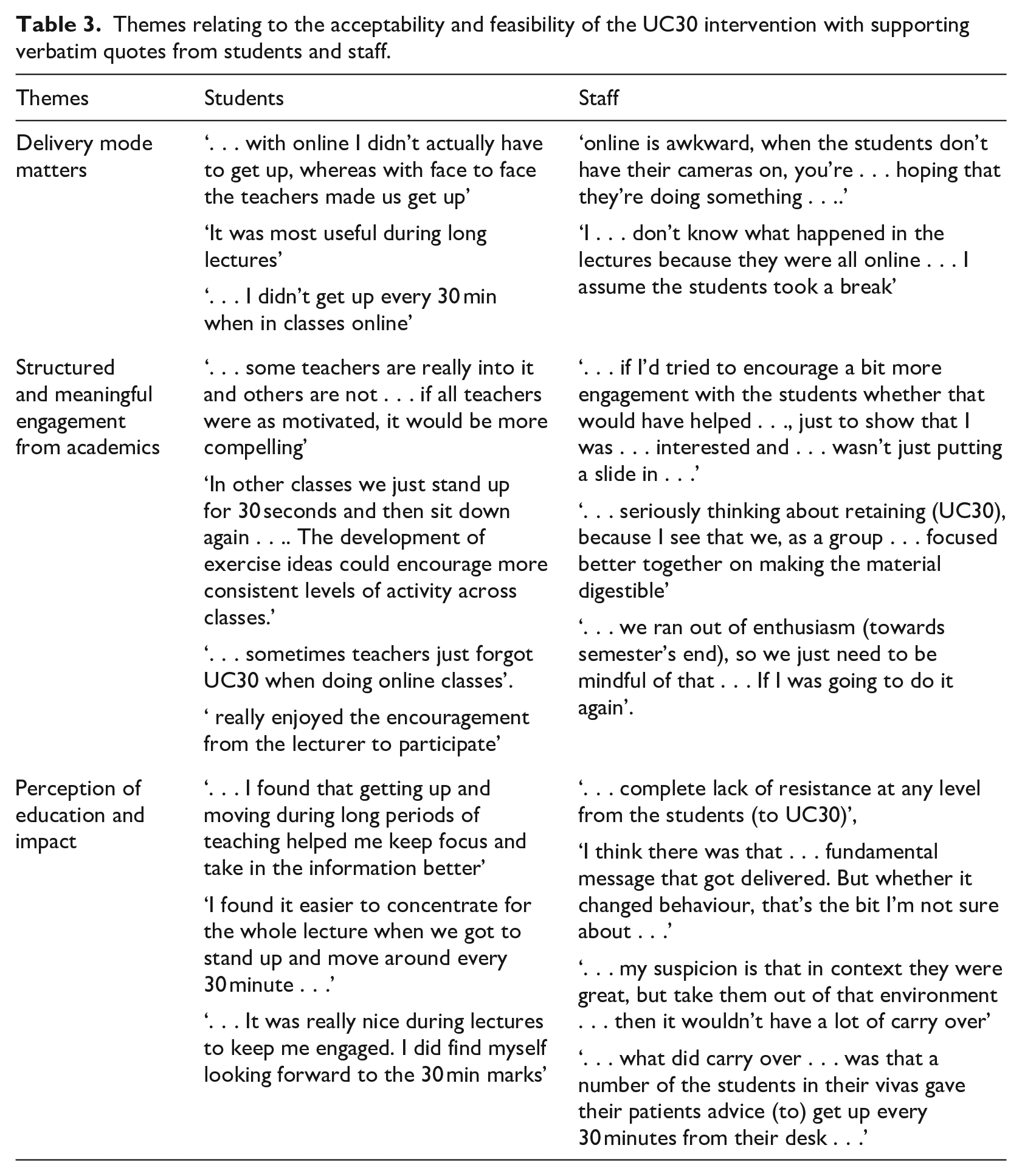
Delivery mode matters: The engagement with, and impact of, the intervention depended on the delivery mode. Students reported more apathy when the intervention was delivered online, and staff found it more challenging to implement the intervention in this delivery mode.
Structured and meaningful engagement: The perceived effectiveness of the intervention varied with the level of engagement by academic teaching staff. This was highlighted by the variety of interpretations of the intervention from the academic staff to align with their taught material and the student’s commentary with regards to the academic’s engagement. A cited factor associated with engagement level from staff included workload to implement the resources.
Perception of Education and Impact: Both students and staff reflected on how the intervention had an impact on educating the students on the benefits of UC30. These benefits were favourable in the face-to-face context but were unclear outside of the face-to-face classroom environment and over the longer term. No data were collected from staff on their use of alternative break options.
Sedentary behaviour
Total self-reported sedentary behaviour was high at baseline, approximately 11 hours/day and did not significantly change after the intervention (Table 4). Nine students wore an accelerometer at baseline. There was a moderate correlation between self-reported and device-measured sedentary behaviour (Table 1; r = .55, p = .16). For all sitting domains, there were no significant changes after the intervention except for sitting for transport which increased. In the sitting-for-study domain, there was a mean decrease of 51 minutes/day (95% confidence interval: −121 to 19); however, this did not reach statistical significance. The effect size for reduction in sitting time during the study was small (Cohen’s d = .3). The sample size needed to detect a change of this magnitude between groups, with a two-sided significance of p < .05 and power of 80%, is a minimum of 352 participants (176 in each group), calculated using G*Power version 3.1.9.4.
Self-reported daily minutes of sedentary behaviour (PAST-U) at baseline and post-intervention for UC30-matched participants (n = 25).
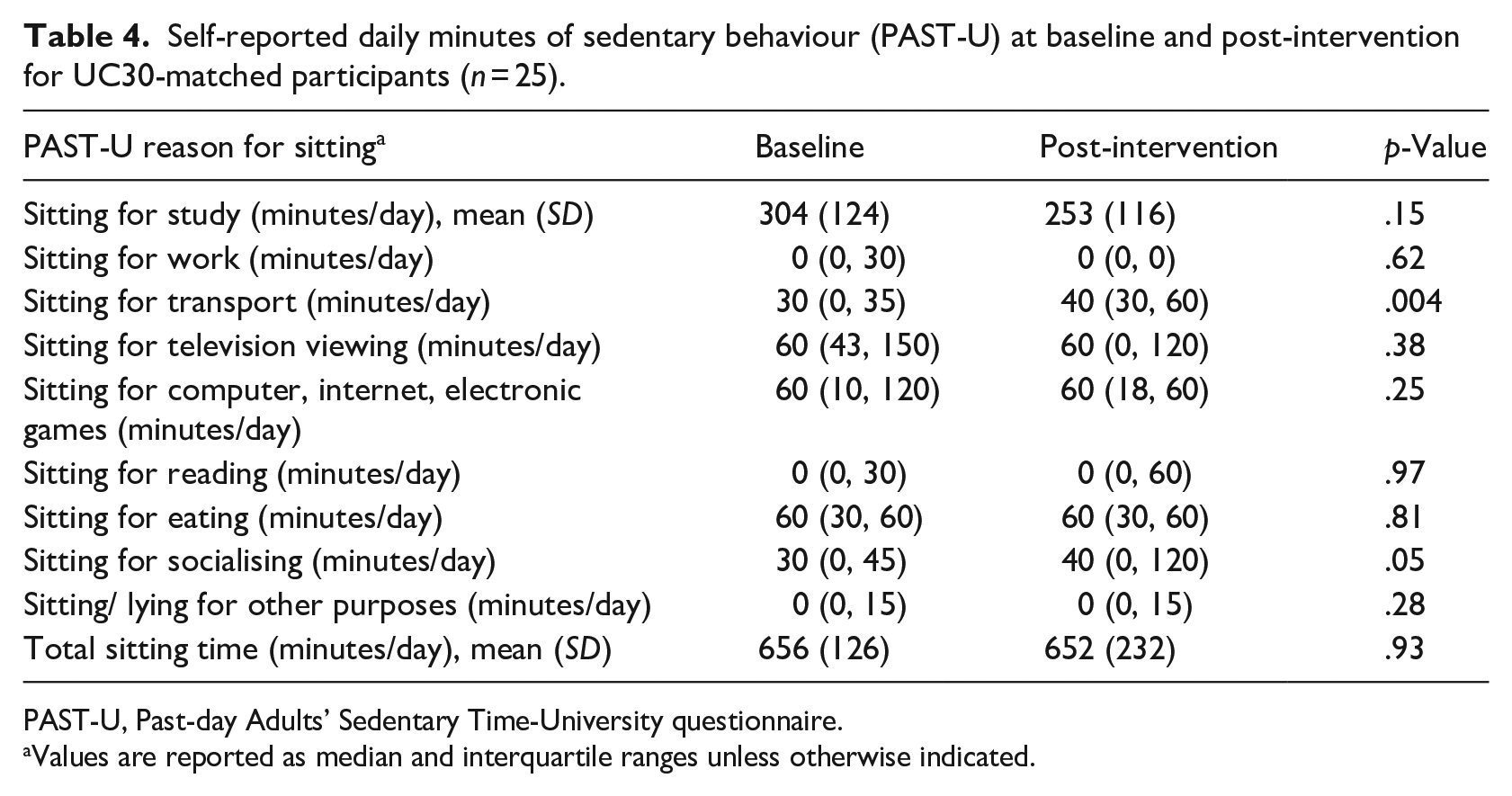
PAST-U, Past-day Adults’ Sedentary Time-University questionnaire.
Values are reported as median and interquartile ranges unless otherwise indicated.
Discussion
This appears to be the first trial to utilise co-design to create a gain-framed behavioural nudge
Studies using comparable co-design approaches report similar findings to our study, stating the process is effective in creating interventions that are deemed acceptable by stakeholder groups. One such study used co-design for the production of an intervention to reduce sedentary behaviour in stroke survivors (Hall et al., 2020). The authors highlighted the benefits of the co-design process to understand stakeholder experience before creating an intervention. Other literature utilising the co-design methodology in health research suggests that co-design enabled ‘considerable depth and richness to emerge’ in stakeholder group requests (Blackwell et al., 2017). The extent of ideas generated in the current study allowed the design team to create a large number of resources that built on stakeholder needs.
Another suggested benefit of co-design is the mitigation of power dynamics between stakeholders (Green et al., 2020). This encourages authentic sharing of experiences, which allows a breadth of ideas, and solutions to be shared (Slattery et al., 2020). This was evident during this project; staff and students worked together to create the intervention through sharing innovative ideas. Staff shared lived experience of delivering academic content and outlined the type of intervention that would be feasible to implement, having a sense of ownership over the created resources. These factors are proposed to improve success and outcomes of co-design and should promote longevity of the project (Hall et al., 2020).
The involvement of services users (university students) is a cornerstone of the co-design process (Slattery et al., 2020). Students emphasised important characteristics of an intervention that would be effective for them. Students shared their current knowledge of sedentary behaviour and ideas they thought would be effective in eliciting behaviour change. In addition, the Physical Activity Messaging Framework recommends the use of co-design for effective physical activity messaging, which may be relevant to sedentary behaviour messaging (Williamson et al., 2021). Thus, co-design with university students appeared to lead to an intervention that was useful for all stakeholders, increasing the quality, acceptability, feasibility and enjoyment of these outputs.
One of the key components of the UC30 intervention was to use gain-framed messaging. This messaging highlighted both the short- and long-term learning and health benefits of breaking up long periods of sitting. Interestingly, the students were much more aware of their short-term learning benefits and reported improvements in focus, engagement and concentration during learning activities. The effectiveness of short-term positive messages that are tailored to the specific population has been found in physical activity studies (Williamson et al., 2020). This may explain why a reduction in sitting time during study was found, as the UC30 messaging included learning benefits that were only delivered in this domain. In contrast, Castro et al. (2021) found that university students wanted more information on the negative health implications of prolonged sitting time, although they did find some evidence of university students wanting more information about the positive consequences of breaking up sitting (Castro et al., 2021). In addition, the posters and logo appeared to be particularly effective in providing information on the benefits of breaking up long periods of sitting and influencing the students sitting behaviour.
The use of social marketing principles (e.g. branding and promotional strategies) has been found to be more successful in changing behaviour than interventions that do not use these principles (Williamson et al., 2020), supporting the use of a brand such as UC30 and its associated resources. Nudging point-of-choice prompts such as posters has also been found to be effective strategies to promote physical activity in the general population (Forberger et al., 2019). In addition, the mode of delivery for a sedentary behaviour intervention for university students requires further investigation (Castro et al., 2021), including the influence of social norms in this setting (Melvin et al., 2020). However, our initial results indicate that UC30 was perceived to be more effective in the face-to-face setting, particularly if staff were more willing to implement the intervention.
Similar to other studies and systematic reviews in university student populations, total self-reported sedentary time of university students was high (Bertrand et al., 2021; Castro et al., 2020; Gallè et al., 2020). This self-reported sitting time (11 hours/day) was higher than that of other studies in university populations (7 hours/day; Castro et al., 2020). COVID-19 restrictions likely explain these findings, with increases in sedentary time found in university students during the pandemic (Bertrand et al., 2021; Gallè et al., 2020). Comparison of device-measured sedentary behaviour and PAST-U responses may further explain the increased total self-reported sedentary time. Device-measured sedentary time and PAST-U responses were moderately correlated before the intervention, supporting previous findings (Clark et al., 2016), but our participants over-reported sedentary time. Most participants under-report sedentary time by almost 2 hours per day when compared to device-measured sedentary behaviour (Prince et al., 2020).
It may also be that physiotherapy students were more aware of health and health behaviours, and therefore over-reported sedentary time due to its negative health consequences. Health students have been found to have better health literacy than students from other disciplines (Rababah et al., 2019). Despite this high level of total sitting time which did not change over time, there were changes in some sedentary behaviour domains. Sitting for transport significantly increased after the intervention. This may be due to COVID-19 lockdown restrictions in the baseline data-collection period, which were not in place during the post-intervention data-collection period, allowing students to return to normal on-campus classes and other activities that require transport time to attend. Importantly, sitting for study time was reduced by almost 1 hour per day. This was not statistically significant but may be clinically significant as it has been found that for every 30 minutes of sedentary behaviour reallocated to any intensity of physical activity, there is an improvement in health outcomes (Del Pozo-Cruz et al., 2018).
A reduction in sedentary behaviour may also be more important than increasing physical activity levels for improvement in educational outcomes (Babaeer et al., 2022). Improvements in educational outcomes appear to influence students’ sitting time and willingness to break up long periods of sitting, and these benefits should be communicated in future interventions targeting sedentary behaviour in this population.
Two previous studies have investigated the effect of similar interventions applied to the community (lectures and tutorials) and physical (study spaces) environments (Mnich et al., 2019; Paulus et al., 2021). Neither of these studies collected total or domain-specific sedentary time, limiting comparisons with the current study. Mnich et al. (2019) placed poster prompts in study areas and observed students (n = 2,809) over a 3-week period (Mnich et al., 2019). The prompts were designed as decisional cues, similar to the nudge-based resources used in our study. Unlike our study, Mnich and colleagues found a significant positive change to sedentary behaviour post-intervention with a reduction in the number of students sitting and a significant increase in the number of students standing or otherwise active. However, sedentary behaviour was measured differently to our study, using observation rather than self-report or device measures. Regardless, this positive result indicates that interventions similar to UC30 may be effective and suggest a larger cohort may be needed to identify a statistically significant result.
Paulus et al. (2021) implemented breaks in lectures and compared in-lecture sedentary habits between three non-randomised groups who received direction to stand, direction to be active and no direction during breaks (Paulus et al., 2021). In the direction-to-stand group, there was a large increase in students who self-reported standing from pre- (4%) to post-intervention (95%). Unlike UC30 resources, the lecture breaks were not choice-architecture founded; however, these results support our findings that using a sedentary behaviour intervention with resources designed for integration into academic content results in a reduction in sitting time only in this domain.
Strengths and limitations
This trial has several strengths. Phase 1 contributes to a growing number of studies utilising co-design to create an intervention. Engaging a student design team was a continuation of the co-design process. These students used ideas generated in the workshops and applied their expertise and own student experience to create final intervention resources that were practical, visually appealing and thematically consistent. In Phase 2, strengths included the objective measurement of sedentary behaviour in a sub-group of participants validating the self-report data, the use of a theoretical implementation framework to guide acceptability and feasibility questions in survey and interviews and the collection of data to inform a large-scale randomised controlled trial.
A limitation of Phase 1 must be the small number of workshop participants, limiting diversity of views and the involvement of the research team as facilitators as this may have influenced the resources created. Despite this, no EBCD framework defines a required number of participants (Green et al., 2020). In Phase 1 and 2, participants were drawn solely from the Faculty of Health in one university as the intervention was designed for implementation within this faculty. However, this limits generalisability to other disciplines, faculties and universities. In addition, the required survey sample size was not achieved, and there was a small sample size of matched participants providing pre- and post-intervention data, which may have limited the ability to detect significant changes in sedentary behaviour.
Selection bias may also have influenced the results of this study, with staff and student participants more interested in reducing sedentary behaviour potentially would have been more likely to participate. The use of a self-report questionnaire delivered online may also have introduced errors through inaccurate reporting and not standardising the day of reporting as a weekday or weekend. The PAST-U was originally designed to be interviewer administered (Clark et al., 2016). In addition, social desirability bias often leads to under-reporting; however, this was not found in the sub-group of accelerometer participants.
Furthermore, capturing sedentary behaviour breaks may have been a more useful measure than overall sitting time; however, few questionnaires capture frequency of breaks from sitting, and the authors are unaware of any questionnaires that capture this in a university setting (Sudholz et al., 2018). Acceptability and feasibility questions had also not been piloted prior to distributing the student survey or conducting the interviews but were theory-informed. Finally, the COVID-19 pandemic may have impacted the usual sedentary behaviour of participants, alongside seasonal differences where decreased sedentary behaviour and increased physical activity are usually observed in warmer months.
Conclusion
In this study, co-design enabled the production of UC30 resources to reduce sedentary behaviour, reflecting the priorities of staff and students. As a result, students and staff found the resources to be acceptable and feasible to implement. While the UC30 intervention did not result in a change in total self-reported sedentary time, the nearly 1-hour reduction in sitting for study time suggests that further investigation is required.
Supplemental Material
sj-docx-1-hej-10.1177_00178969251344397 – Supplemental material for Co-designed behavioural nudges to encourage university students to sit less (UC30): Findings from a mixed-methods pilot study
Supplemental material, sj-docx-1-hej-10.1177_00178969251344397 for Co-designed behavioural nudges to encourage university students to sit less (UC30): Findings from a mixed-methods pilot study by Nicole Freene, Alice Martin, Andrew Flood, Jaquelin A Bousie and Nick Ball in Health Education Journal
Supplemental Material
sj-docx-2-hej-10.1177_00178969251344397 – Supplemental material for Co-designed behavioural nudges to encourage university students to sit less (UC30): Findings from a mixed-methods pilot study
Supplemental material, sj-docx-2-hej-10.1177_00178969251344397 for Co-designed behavioural nudges to encourage university students to sit less (UC30): Findings from a mixed-methods pilot study by Nicole Freene, Alice Martin, Andrew Flood, Jaquelin A Bousie and Nick Ball in Health Education Journal
Supplemental Material
sj-docx-3-hej-10.1177_00178969251344397 – Supplemental material for Co-designed behavioural nudges to encourage university students to sit less (UC30): Findings from a mixed-methods pilot study
Supplemental material, sj-docx-3-hej-10.1177_00178969251344397 for Co-designed behavioural nudges to encourage university students to sit less (UC30): Findings from a mixed-methods pilot study by Nicole Freene, Alice Martin, Andrew Flood, Jaquelin A Bousie and Nick Ball in Health Education Journal
Footnotes
Acknowledgements
We thank students and staff from the Faculty of Health and students from the Faculty of Arts and Design at the University of Canberra for their participation in the study.
Declaration of conflicting interests
The author(s) declared no potential conflicts of interest with respect to the research, authorship, and/or publication of this article.
Funding
The author(s) disclosed receipt of the following financial support for the research, authorship, and/or publication of this article: This project was supported by a University of Canberra Faulty of Health Teaching Innovation Generating Education Research (TIGER) grant.

Data availability
The datasets used and analysed during the study, and the UC30 resources created, may be made available by the corresponding author upon reasonable request.
Supplemental material
Supplemental material for this article is available online.
References
Supplementary Material
Please find the following supplemental material available below.
For Open Access articles published under a Creative Commons License, all supplemental material carries the same license as the article it is associated with.
For non-Open Access articles published, all supplemental material carries a non-exclusive license, and permission requests for re-use of supplemental material or any part of supplemental material shall be sent directly to the copyright owner as specified in the copyright notice associated with the article.
