



Abstract
Objectives and Setting:
Schools are becoming more and more complex work environments, in turn impacting teachers’ well-being. This study aimed to better understand how one teacher’s well-being could be impacted when offered consistent opportunities to attend to their own personal wellness during school hours through monthly ‘unstructured wellness time’.
Design and Methods:
Using autoethnography, the research is an account of first author’s personal experiences as an educator. Data collection and analysis was an iterative and holistic examination of critical incidents, reflective journal entries and photographs to allow for ‘meaning-making’ and to convey the first author’s personal experiences throughout the ‘unstructured wellness times’. A Comprehensive School Health framework was also used to reflect on and interpret data throughout this study.
Results:
Findings showed that being offered consistent time throughout the school year to attend to teacher wellness led to an increase in feeling that first author’s health was of more value within the workplace.
Conclusion:
Key conclusions drawn from the study contribute to the growing amount of literature on teacher well-being and identify that with the proper supports in place, the concept of ‘unstructured wellness time’ could be an effective tool to improving teachers’ health within school workplace settings.
Keywords
Introduction
I’ve
1
been looking forward to tomorrow all week . . . I need it. I booked the full day off well in advance to ensure that I had sub coverage while I take a much needed Mental Health Day. I plan on taking care of myself and recharging so that I can continue to show up in the way that I want to for my students. I come inside from afternoon supervision and notice a Post-it note on my desk from the principal, that says ‘Please come see me after school’. (Journal Entry)
The anecdote above was a critical moment for me in my health 2 journey as an educator. After being questioned about booking a day off for my mental health and asked to further explain the reasoning behind this decision, I realised just how much work is left to be done with regards to schools and administration recognising and supporting all aspects of teachers’ well-being. 3 In addition, I have come to wonder why in that moment I felt obliged to explain the validity around booking a day off for my mental health and ashamed for taking preventive measures to avoid feeling even more unwell in the future. As I reflect on that day and the tearful angered walk I had out to my car, I feel an immense amount of drive to advocate for teachers’ wellness to be actively prioritised and supported within schools.
Casey et al. (2018) state that ‘many autoethnographic studies begin with feelings of confusion, neglect, anger, or conflict (p. 45)’. Influenced by this recognition, this research utilises an autoethnographic approach, which allowed me to revisit, share and reflect upon my past and present moments and provide others with insights into teachers’ experience(s) that occur within the workplace. As an educator who continues to notice the positive impact(s) of actively prioritising students’ wellness, 4 I was eager to identify and share the impact(s) of teachers’ wellness being equally recognised and supported. More specifically, by diving deeper into the concept of time for wellness, the aim of this study was to better understand how one teacher’s well-being could be impacted when offered consistent opportunities to attend to their own personal wellness during school hours.
My experiences as an educator have shown me that schools often focus heavily on one’s physical wellness (i.e. being ill), while overlooking other aspects of wellness. As Kelloway and Day (2005) highlight, ‘in order to achieve healthy workplace environments we must ensure that interventions incorporate the physical, psychological, and social states of being (p. 309)’. There are various components that impact one’s overall wellness: physical, emotional, social, occupational, environmental, intellectual and spiritual (Montoya and Summers, 2021). It is imperative for schools to equally acknowledge all the interconnected dimensions that collectively shape teachers’ health. By sharing this autoethnography, I hope my personal stories help disrupt current norms and narrative(s) around wellness and help promote a more holistic approach to supporting teachers’ overall well-being.
Literature review
Nwoko et al. (2023) highlight that teachers face many occupational challenges that negatively impact their overall well-being. They include intense workload, emotional demand, student behaviour and lack of support and/or resources. Teacher wellness is crucial for student learning and the overall functioning of schools (Devaki et al., 2019). To create a healthy learning environment that supports and values student wellness and learning, teachers must first feel healthy and well (Kelly, 2021). One way to achieve this is for school leaders to implement effective workplace wellness initiatives that aim to improve teachers’ well-being. However, attributes that influence the effectiveness of wellness initiative(s) within the workplace need to be better understood prior to implementation to ensure their success.
Supportive relationships help build a positive workplace culture and increase teacher well-being (Ortan et al., 2021). Ortan et al. (2021) found that teachers benefit from feeling a sense of belonging and appreciation within the workplace. It is important for school leaders to foster staff relationships in ways such as effective communication, empathetic listening and celebrating teachers’ work (Berkovich and Eyal, 2017; Morris et al., 2020). Shared leadership is also identified in the literature as a factor to successful wellness interventions as it builds mutual respect and trust among staff (Cansoy and Parlar, 2017; Wenner and Campbell, 2017). Some ways to help teachers feel included in the decision-making in developing wellness interventions from the aforementioned literature include valuing teachers’ ideas, treating teachers as professionals, collaborating with teachers and providing teachers with autonomy (Cansoy and Parlar, 2017; Wenner and Campbell, 2017). Bubb and Earley (2004) highlight that many teachers face unreasonable workloads. Ultimately, it is important for leaders to ‘redesign, reduce and redistribute’ workload (Pignata et al., 2017: 6) in order to create time and space within the workday for staff wellness interventions to sustainably exist. Some ways to achieve this include reducing and/or eliminating tasks, hiring more staff, smaller class sizes and providing teachers with more time to plan, prepare and assess (Bubb and Earley, 2004).
Many examples of staff wellness interventions can be identified in the academic literature. Adams et al. (2022) discuss the notion of delegating a health ‘champion’ and/or ‘wellness team’ to facilitate healthy workplace activities to improve staff wellness such as walking programmes, the development of healthy habit posters and wellness-themed bulletin boards, book studies and health-led activities during staff meetings. Firus (2023) suggests that when school leaders find ways to weave daily exercise into teachers’ schedules, it is likely to reduce stress and enhance teachers’ overall mood and performance. Finally, Iancu et al. (2018) highlight the importance of providing teachers with effective professional development opportunities to learn about the impacts of workplace stress to develop effective tools and/or strategies to manage it. Some examples of this include learning ways to practise mindfulness and/or develop workplace relaxation techniques.
The themes discussed highlight various staff wellness interventions and multiple factors to consider prior to planning and implementing health-focused initiatives into school workplace settings. My own experience allowed me to take part in many wellness initiatives that often exist within school settings and also provide my perspective into the topic. As one example, I was part of a ‘staff wellness team’ responsible for hosting health-focused activities to improve staff well-being. However, with this role came many challenges. First, the time spent planning and implementing staff wellness initiatives began to impact my own personal well-being and that of other team members. Second, the activities that the team suggested required pre-approval from school administration, which made us feel like there were rules around what workplace wellness was allowed to ‘look like’. Finally, I noticed that while the wellness activities seemed to improve the well-being of some staff members, others (myself included at times) appeared to prefer to be engaging in a wellness activity of their own choosing.
Taking this into consideration, in what follows as I reflect on the academic literature and my own personal experience, I wonder why a gap continues to exist in school leaders providing teachers with time and autonomy to become their own workplace wellness leaders? Therefore, this study aims to better understand how one teacher’s wellness could be impacted when offered consistent opportunities to attend to their own personal wellness during school hours.
Methods
Research design
Casey et al. (2018) state that ‘autoethnography is a qualitative methodology designed to examine or describe (graphy) the self (auto) in the context of culture (ethno) (p. 42)’. Autoethnography requires the researcher(s) to analyse their own personal experiences as well as consider how these experiences could potentially shed light on greater collective and cultural experiences (Ellis et al., 2011). As a result, autoethnography allows for the researcher to identify and critique cultural norms and/or practices by reflecting on their own personal experiences within that socio-cultural context. Casey et al. (2018) describe autoethnography as having similar foundations to narrative inquiry and self-study research but can be distinguished from them by centring the connection to culture. In this study, that centring both aligns with the commitments in other research methodologies and speaks to the culture of schools and teacher wellness. Autoethnography creates an opportunity for researchers to move through their own difficulties as well as influence greater change(s) within their community (Casey et al., 2018), which I aim to achieve by sharing my findings with other teachers and researchers.
Autoethnography was used to guide this study as it ‘. . . embraces other ways of knowing and views subjectivity as a strength’ (Williams, 2021: 4). Hascher and Waber (2021) in their systematic review on teacher well-being identified that 15 of the studies used interventions or quantitative measures and 21 used qualitative methods, seven of which were mixed-methods. Specific details of the qualitative inquiries highlight that much of the data were collected through interviews rather than in-depth practitioner inquiry, which this study adds to the literature. Conducting this autoethnographic study allowed me as both the researcher and participant to reflect on my own relationships to well-being and identify how teacher wellness continues to be recognised (or lack thereof) within schools. Sharing my personal experience has allowed me to ponder how other teachers’ wellness could be impacted when offered consistent time to attend to their own personal wellness throughout the school year.
Ethical considerations
This study was approved by the Ethics Committee of the University of Alberta (reference: Pro000132287) on 8 August 2023. All the participants provided written informed consent prior to enrolment in the study. This research was conducted ethically in accordance with University of Alberta Guidelines. To ensure confidentiality, pseudonyms are used when referring to individuals involved in the critical incidents.
While Chang (2021) highlights that those conducting individual autoethnography should reflect on why they have chosen to include the experiences they have in the study, Casey et al. (2018) state that ‘. . . autoethnographic research can include some extremely personal and sometimes painful topics written subjectively by those living with or inside the phenomenon (p. 45)’. Therefore, I have consciously reflected on my decision-making throughout the entirety of this study, both as the researcher and participant. This helped me recognise when I may have felt ‘. . . tempted to hide, moderate, or misrepresent my personal stories intentionally to avoid public embarrassment, protect implicated others, or support certain scholarly positions’ (Chang, 2021: 61).
Theoretical framework
Comprehensive School Health (CSH) is an internationally recognised approach that aims to support improvements in students’ educational outcomes while holistically addressing school health by transforming school culture (Joint Consortium for School Health (JCSH), 2024). The CSH framework serves as a catalyst to develop healthy school communities, focusing on four interconnected components: social and physical environment, teaching and learning, healthy school policy, partnerships and services (JCSH, 2024).
Within the work described in this paper, CSH acted as the framework to reflect on and interpret data throughout this study. Given the purpose of this research, CSH situates various aspects of my story to potentially support others to implement wellness initiatives that centre on CSH and teacher well-being more broadly. Specifically, I utilise the CSH framework to provide a structured way to contextualise and apply my findings to the school community. Aligning solutions with the CSH components hopefully ensures that changes in school communities are multifaceted and integrated, addressing all dimensions of teacher wellness. CSH has been studied in Canada and supported in K-12 education systems (Bassett-Gunter et al., 2016), and recently in post-secondary education (Nutter et al., 2022; Russell-Mayhew et al., 2017). By applying my findings to this framework, I aim to provide practical implications for schools and administrators to support teachers’ wellness.
Setting
I started this research in my fifth year of teaching when I had recently moved to a new school. Numerous critical incidents in my previous school shaped my interest in the importance of recognising and dedicating time to teachers’ wellness. The many miseducative (Dewey, 1938) moments I experienced in my previous school led me into an unhealthy place, affecting my teaching practice(s) and absenteeism. While the leaders at my previous school often aimed to control what wellness ‘looked’ liked, I often found myself feeling frustrated as I was forced to participate in wellness activities of their choice that rarely included any teacher input. In addition, there were very few opportunities to engage in wellness activities as teachers were often expected to prioritise ‘work tasks’, leaving wellness to be had outside of work. Given my school and district both had goals about increasing staff wellness, I found the practices prevalent within this school to be ‘checked off’ in a meaningless way.
I have chosen to analyse my more recent experiences that occurred in a new school environment. The leaders in this school initially expressed interest and support in offering teachers’ opportunities to engage in wellness activities of their choice that occurred during work hours. While Devaki et al. (2019) state ‘teacher well-being is a critical and often overlooked part of school progress (p. 35)’, I felt excited for this study to shed light on teachers’ experiences within school settings and highlight the impact of being provided time and autonomy to engage in meaningful wellness activities.
Data collection and analysis
The core data in this autoethnography were my personal reflections and experiences within my current school context to better understand the impact of being offered dedicated time within the workday to independently attend to my personal well-being. While Casey et al. (2018) highlight that those using autoethnography often ‘cycle through the past in order to better understand the present and plan for the future (p. 46)’, I found myself collecting multiple forms of data to better understand my past and present experiences and help inform effective ways for school leaders to recognise and support teacher well-being in the future.
Over 4 months, I gathered evidence through critical incidents, reflective journal entries and photographs to convey my personal experiences throughout the unstructured wellness times. Each month I recorded 1–2 journal entries, sometimes including photographs. I actively chose for my journal entries to be ‘promptless’ to be able to write freely and in the moment, although I occasionally used certain guiding questions to focus my reflections. Examples of these questions included: What wellness activity did I choose to engage in and why? Did this time increase my overall well-being? Has this time begun to impact my workplace wellness as a whole and/or improve my teaching practices in the classroom?
In addition, I revisited critical incidents from my past that shaped my health journey as an educator. Reflecting on these experiences, I engaged in what Chang (2021) identifies as ‘conversations with others who are familiar with my experience or were involved in my past experience (p. 57)’ to deepen my recollections and/or interpretations. Engaging in organic dialogue with other teachers allowed me to better understand my own experiences by listening and considering other people’s perspectives on teachers’ workplace wellness.
Autoethnography is an iterative process that involves ‘revisiting and rethinking the data’ and requires researchers to ‘systematically collect, verify, analyse, reduce, expand, interpret, and further collect data in the research process’ (Chang, 2021: 55). The journal entries and photographs shared throughout this study have helped me understand the impact of ‘unstructured wellness time’ on my overall wellness and teaching practice(s). The critical incidents I selected allowed me to reflect on significant moments influencing my health journey as an educator. I employed Chang (2021) concepts of ‘holistic examination’ and ‘meaning-making’ in my data analysis. Holistic examination allowed me to revisit and categorise the journal entries, critical incidents and photographs to discover common themes, connections and/or relationships. In addition, the conscious practice of ‘meaning-making’ allowed me to compare my experiences to illustrate in academic literature, deepening my understanding of my own journey in relation to others. Overall, continuous ‘holistic examination’ and ‘meaning-making’ ensured I was able to analyse the various forms of data I collected throughout the study.
Findings and discussion
As someone who has spent countless hours sitting in on professional learning sessions that communicate the importance(s) of teachers’ wellness, I always found it ironic that I was rarely provided with the time to actually engage in any wellness activities. For this reason, an important first step of this research was for my school principal and I to determine a consistent time during the workday that allowed for teachers to independently attend to their wellness whether this be within or beyond the school walls.
Teachers within my school were provided one ‘unstructured wellness time’ each month to engage in a wellness activity of their choice. This time typically occurred on a Thursday afternoon, early dismissal day for students, which offered 1 hour of uninterrupted time that was not part of the teachers daily teaching time. Prior to commencing this project, many staff members at the school I was working in appeared intrigued and confused around what this time could and/or would ‘look like’ leading me to believe that the act of supporting staff wellness was unfortunately an unknown concept. Thus, I created and shared a wellness bingo card (Figure 1) with school staff to suggest and share some ideas about what this time might include. Throughout this study, I found myself revisiting this bingo card to determine a personal wellness activity that at the time felt most meaningful to me.
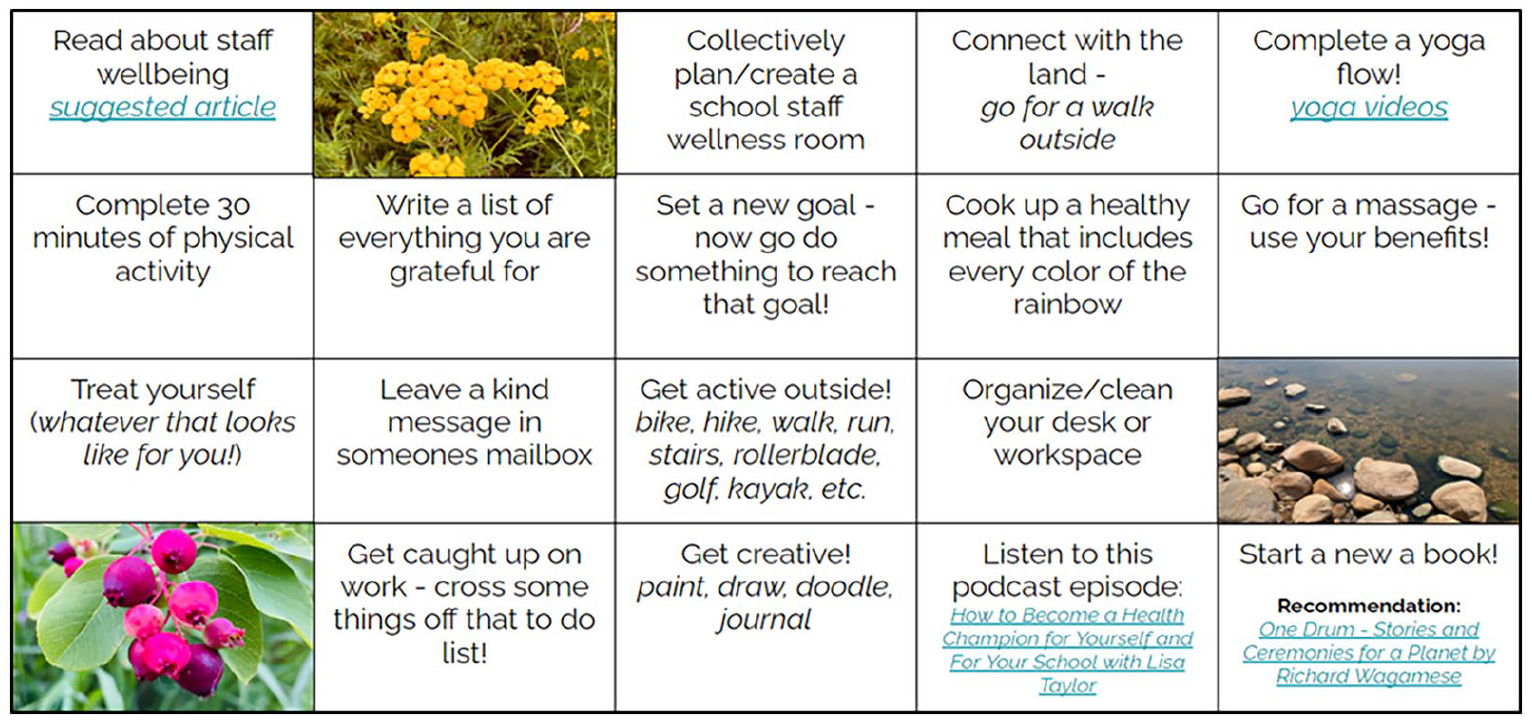
Wellness bingo.
Critical incident: moving through it
Today is our first wellness day! It’s been a stressful week and I know I need to engage in some form of physical activity to decompress and recharge. I initially felt a bit guilty walking out of the building as I noticed many chose to use this time in their classrooms and catch up on some work. But I was committed to prioritising my physical health today and therefore sat with the temporary discomfort I had deep within my stomach as I awkwardly walked down the hall, past the office, and out to my car. As I put my headphones in and made my way into a nearly empty weights room [gym/fitness centre], I couldn’t help but immediately feel complete bliss. I’m so used to attending PD on afternoons like today that involve sitting and learning about teachers’ health but never actually include being offered time to actively attend to it . . . I for once felt as though action was beginning to align with the words we are so often reminded of both within our district and school wide goals. I feel refreshed and energised after finishing a workout. Engaging in a form of exercise has not only led me to feel physically better but also mentally lighter. I also notice myself feeling more valued and trusted as an employee. My own individual well-being as an educator feels as though it is finally being noticed . . .
It was clear after my first ‘unstructured wellness time’ that being offered the opportunity to engage in a wellness activity of my choice that was embedded within the workday led me to feel more appreciated and supported as an employee. I had not experienced this in previous school settings where staff wellness initiatives were often confined to taking place inside the school building, that usually consisted of a single activity that was chosen and led by the administration and that shortly afterwards would be followed by an immense amount of work tasks. Berkovich and Eyal (2017) state that educational leadership significantly impacts school success through its effect on teachers’ emotions, attitudes and behaviours. It is no surprise that researchers highlight that supportive leadership styles influence school climate and help build cooperation and respect among colleagues (Ortan et al., 2021). As Cansoy and Parlar (2017) put it, ‘intense control by administrators is felt by teachers’ (p. 312), and it is important for school leaders to build trust and respect among their staff through a collaborative and shared approach to the decision-making. I quickly began to notice how time and autonomy were positively impacting me as an educator and colleague.
According to Boeskens and Nusche (2021), time is a critical factor in shaping how teachers experience their working environment. With that, school districts are in deep need of identifying ways to reduce teachers’ workload and implement systems that help teachers attend to a reasonable amount of work while providing designated time for teachers to effectively meet district-wide goals around staff wellness. In addition, leaders in school environments (e.g. school principals) ought to express consistent verbal support of teachers’ wellness. From there, I understand that a decrease in teachers’ workload alongside an increase in supportive leadership practices will lead to healthier school workplace environments in which teachers feel as though every aspect of their wellness is being equally recognised and prioritised. Kendrick’s (2022) study on compassion fatigue, burnout and the emotional labour of educational workers revealed mental and emotional distress to be extremely common among teachers, specifically burnout and compassion fatigue. It is essential therefore that teachers’ workload and the hidden labour that is present during the school day are recognised and time dedicated to supporting them is actualised.
Critical incident: leaving feeling lighter
I’ve been contemplating all day what I want to do during wellness time . . . I find myself wanting to leave and engage in some form of physical activity, but I know I have a lot lingering on my to do list. I decided to stay at school and catch up on some work. I also used some of this time to plan out my full day tomorrow. I appreciated having some time to tackle the amount of work that so easily piles up . . . I can now go enjoy a nice run after school without any stressful thoughts about missed deadlines or overdue tasks interrupting me on the trail.
By using my ‘unstructured wellness time’ to catch up on some work-related tasks, I noticed that I left work feeling less stressed than I normally do. I came into work the following morning feeling prepared and organized, which then in turn positively impacted student learning throughout the day. That being said, while providing time for educators to attend to their work-related tasks and responsibilities is an important first step, I want to highlight that teachers’ workload continues to grow and become more unattainable to keep up with. Jerrim and Sims (2021) highlight that many teachers end up working outside of the regular workday (i.e. marking) in order to meet the demands placed upon them. Therefore, it is imperative to provide enough time for teachers to plan, prepare and assess within the workday as this helps reduce the potential of them having to spend their personal time attending to an immense amount of work. Thus, school leaders must also aim to find ways that help reduce the high demands placed on teachers; this would provide more time for teachers to focus on the many other factors that shape their overall wellness.
Norton (2021) states ‘new mandate/requirements for teacher reporting, new implementation of technological services, extended requirements for student assessments/evaluation, and other extensions related to impact-reporting have continued to add to the teacher’s workload rather than helping to reduce it (p. 81)’. In addition, the Alberta Teacher Workload Study (Alberta Education, 2015), Heffernan et al. (2022) and many personal conversations I have had with teachers highlight the increase in complexities throughout today’s classrooms (e.g. diverse student needs, classroom sizes, increased paperwork) and are overwhelming the work of the profession as it becomes more challenging for educators to effectively attend to the amount of work placed upon them all while staying ‘well’. While the demands on teachers have changed and grown over time, the support systems in place have not and therefore need to catch up. One way for school districts to begin this work is to consider what Stacey et al. (2024: 196) suggest as redefining teachers ‘core work’ along with finding ways to restructure the workday such as readjusting teachers’ schedules and/or offering more opportunities for teachers to work in alternative environments.
Critical incident: struggling to find balance
I have a few things to get done before I head out and enjoy a much needed run. It feels nice having some time to work without a classroom full of students who require you at every given moment. After finishing up some tasks, I sneak out a bit early and go visit my favourite trail. Feeling slightly caught up with work is great, but nothing compares to a cool breeze of wind blowing the day’s stress away. Fresh spruce tips, magpies, and deep pink hues . . . (Figure 2).

Trail run photos.
Throughout this study, I began to notice a shift with regards to my workload influencing how I decided to spend my ‘unstructured wellness time’. While I often wanted to use this time to engage in some form of physical and/or artistic activity due to the positive impact that movement and creativity have on my overall wellness, it became clear that the guilt I would feel about leaving unfinished work behind prevented me from doing so. In addition, it did not help that when reminded of an ‘unstructured wellness time’ day, leaders within my school often referred to it as ‘time’ and only suggested work-related activities such as collaborating with other teachers, planning and/or marking. In other words, I found myself wondering if teachers (myself included) would have felt more comfortable to spend this time differently if the language used by school administrators encouraged a variety of wellness activities outside of solely work-related tasks. I began to identify that only being given 1 hour of time each month did not feel enough for teachers to fully explore other forms of wellness. I found myself having to determine some sort of balance between avoiding falling behind in work while also prioritising time to engage in activities that helped keep me going.
Throughout the entirety of this study, I found myself relating to Kelly (2021) in that ‘trying to find balance in my wellness while managing the stressful workload of teaching was particularly challenging (p. 3)’. McIntyre et al. (2017) state when educators feel that they receive sufficient school-based and system-level support, they are less likely to experience stress and more likely to experience well-being at work. Findings from this study highlight a need for teachers’ workload as well as the support systems currently in place to manage that workload be re-evaluated in order for school wellness initiatives such as ‘unstructured wellness time’ to allow for activities outside of keeping/catching up with work-related tasks. Workload stress encompasses different aspects of teaching and can be seen as time pressure – in other words, having too many tasks and insufficient time to complete them – this in turn leads to a poor work-life balance (Dixon, 2023). Teachers have some of the most stressful jobs possible, and workplace stress can have a seriously negative impact on their overall well-being (Nwoko et al., 2023). Therefore, understanding that ‘balance’ may look different for individual teachers, and that their choice of what to do with unstructured wellness time and how much time is needed may vary and are extremely important.
Limitations
Some may see a limitation of this autoethnographic study as lying in the single-person narrative and potential bias with regards to the vast topic of teacher wellness. However, that aspect in itself is part of why autoethnograpy is needed (Casey et al., 2018). The aim of this work was not to generalise the findings but rather share a detailed, personal account of how wellness might be thought about and implemented for teachers in schools aiming for resonance, understanding and action from readers. Conducting this study and writing it up for publication helped the first author better understand how subjective, personal and nuanced the topic of teacher wellness can be at times. Furthermore, the conscious practice of examining the data holistically, recurrently and for meaning-making allowed the first author to effectively draw connections and comparisons to others’ experiences as documented in the literature. That being said, the authors recognise the limited scope of this study and recommend additional research using other methodologies to broaden the scope and depth of understanding and better comprehend the variable and nuanced nature of teacher wellness in school settings.
Some concluding thoughts
Findings from this study suggest that providing teachers with ‘unstructured wellness time’ may be a helpful means of improving workplace well-being. An important first step for school districts and leaders is to reflect upon teachers’ growing workload and how this affects workplace wellness initiatives in schools. Heffernan et al. (2022) state, ‘a lack of time to rest and recuperate from intense and emotionally taxing work has serious consequences for teachers’ ability to remain within the profession and thrive (p. 202)’.
It was evident that many teachers in my school used this ‘unstructured wellness time’ as ‘work time’ rather than ‘wellness time’. I personally often grappled with the internal conflict of wanting to use my ‘unstructured wellness time’ to engage in wellness-focused activities yet felt pressure and guilt with the amount of work left undone. While using time to catch up on and complete work-related tasks increased my overall occupational wellness, I was disappointed that the size of my workload often hindered me from engaging in other forms of wellness that would have better helped me decompress and recharge (e.g. emotional, spiritual, physical). I often found myself wondering if other teachers were experiencing similar barriers to myself. One way to strengthen the overall understanding of how teachers are being provided ‘unstructured wellness time’ is for future research to hear multiple teachers’ perspectives within a whole school system. From there, common themes may be identifiable and help determine ways forward to make ‘unstructured wellness time’ a more effective and sustainable tool to increase teachers’ wellness.
I hope this research draws attention to the need for school leaders and governments to tackle the issue of workload prior to spewing out meaningless words embedded within district-wide goals that claim to be actively prioritising teachers’ wellness while adding more tasks to be done. I understand that initiatives such as ‘unstructured wellness time’ may offer opportunities for teachers to engage with various dimensions of wellness beyond occupational wellness. Although it is clear that teaching continues to grow in complexities as a profession, this research has influenced me to recognise, support and value my own personal wellness despite the many health barriers that continue to exist within school workplace settings. While Gallop et al. (2021) indicate that ‘there are no easy answers to all of the questions raised by the workload and complex challenges facing teachers today (p. 108)’, this study has helped me learn certain ways to navigate various forms of work-related stress. Some examples of this include setting boundaries, celebrating my own personal achievements and integrating wellness into my everyday at work by engaging in self-care practices during my unassignable time and/or daily lunch breaks. I hope to see future research identify ways for workplace wellness initiatives such as ‘unstructured wellness time’ to sustainably exist, enabling teachers to meet their many dimensions of wellness.
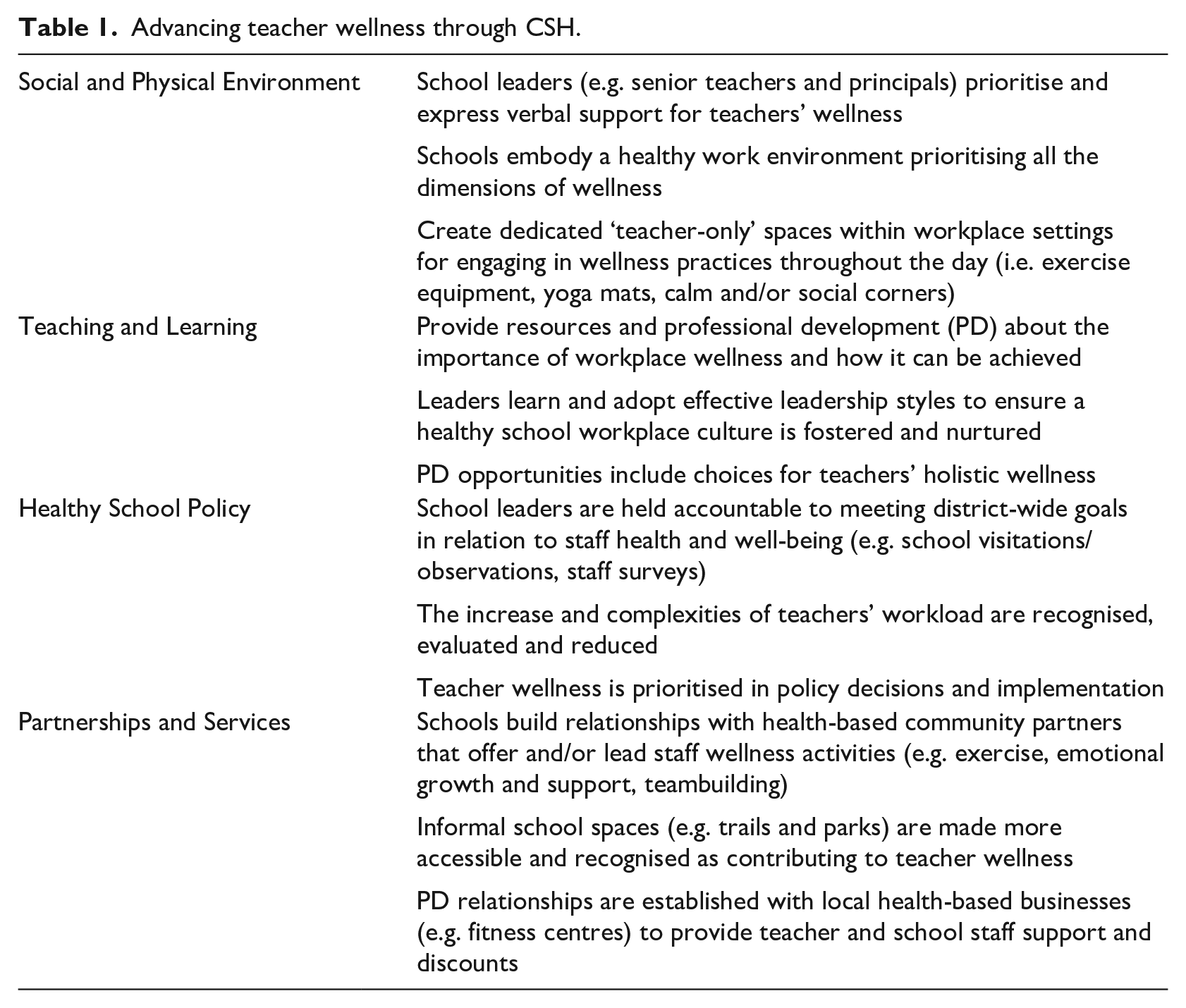
Reflecting on the findings from this study, I considered how the CSH framework could be a starting point for school districts and leaders to commence this work. CSH has shown improvements to student learning and student well-being (Centeio et al., 2021); however, it is intended to value and support the whole school community, including teachers. Table 1 identifies the four pillars of CSH with suggested practical outcomes to advance wellness initiatives for teachers in schools.
Advancing teacher wellness through CSH.
I continue to find myself unsure about whether I plan to continue in teaching due to the ‘tug-a-war’ of wellness that I experience as a teacher. However, I appreciate the impact this research has had on helping me move through some of the wellness hurdles I experienced within schools. As Casey et al. (2018) suggest, autoethnography often guides the researcher to a better place than where they started. While I commenced writing this paper with feelings of anger, bitterness and disappointment about school’s lack of time and attention towards teacher wellness, I now find myself feeling more at ease. While I may not be able to currently control the amount of workload teachers are given and expected to maintain, I do have control to find pockets of time within my workday to prioritise my own wellness and advocate for those around me to do the same.
I’m engulfed with the fresh smell of lilacs on my lunch walk around the neighbourhood (Figure 3) . . . listening to the sounds of rain as it pours and trickles off my umbrella. The musical chirps of two blue jays as they wisp through the air . . . I head back into the school and squeeze my way through a flood of excited students running out the doors for recess, ‘hope you had a nice walk Ms. Blazek’
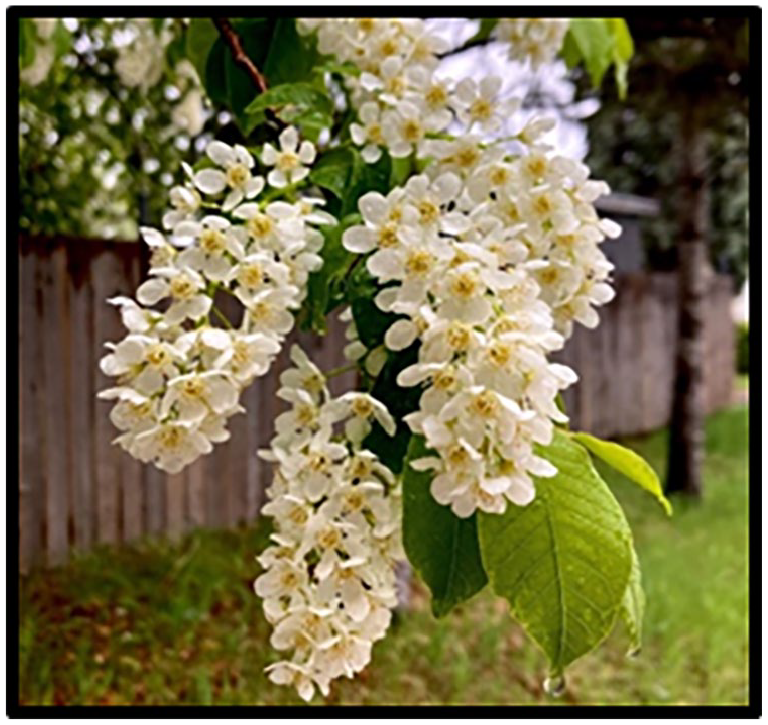
Lunch walk photos.
Footnotes
Declaration of conflicting interests
The author(s) declared no potential conflicts of interest with respect to the research, authorship, and/or publication of this article.
Funding
The author(s) received no financial support for the research, authorship, and/or publication of this article.
Use of AI
No AI support was used during this paper’s development
