




Abstract
Background:
To support and strengthen parenting skills, it is mandatory for municipalities in Sweden to offer parental education programmes to all parents. One such programme is the Circle of Security-Parenting (COS-P), in which parents participate in eight weekly group sessions, each lasting 90 minutes. COS-P helps parents recognise and respond to their child’s emotional needs for attachment. The programme focuses on enhancing parents’ understanding of their child’s behaviour, enabling them to address emotional needs effectively and foster security to benefit the child’s overall development.
Objective:
This study aimed to explore parents’ experiences of participating in COS-P parental education programme from a health-promotive perspective.
Design:
Qualitative design using an inductive approach.
Setting:
The COS-P programme was conducted in a medium-sized town in Sweden.
Method:
Nineteen semi-structured interviews were conducted and analysed using qualitative content analysis.
Results:
The analysis of the data resulted in one latent theme: from uncertainty and chaos to consciously empowering qualities; and five categories with it – parents’ understanding of the child needs developed; parents learned to handle conflicts and set boundaries; parents’ ability to reflect increased; parents’ inner security and calmness was strengthened; and parents’ stress was reduced.
Conclusion:
The findings show that the COS-P is a relevant programme for municipal authorities to offer parents as the result point at the programme’s ability to empower parenting and strengthen the attachment between parent and child. The programme contributed to increased self-efficacy, well-being and confidence in parenting and could therefore be seen as a useful health promotion intervention.
Introduction
Becoming a parent is a significant life change and a major turning point, often accompanied by the pressure to meet the expectations of being a perfect parent, which can feel unachievable (Meeussen and Van Laar, 2018). Parents encounter various situations in which they lack the resources to handle parenting challenges, increasing the risk of parental burnout (Mikolajczak et al., 2018; Ping et al., 2022).
Parents with less effective parenting skills tend to experience higher levels of stress (Bloomfield and Kendall, 2012), and it is crucial to support parents to feel secure in their parenting, as stressed parents may react in ways that can hinder their child’s mental, emotional, social, and physical growth and development (Hoffman et al., 2017). Stress can also lead to ineffective parenting and an emotional distance between parent and child, reducing parental well-being in daily life (Mikolajczak et al., 2018).
It is common for parents to experience negative emotions during parenting and child-rearing (Hoffman et al., 2017). When parents encounter difficulties, they may fall into patterns of shame and guilt, berating themselves, pretending everything is fine, or finding someone to blame. Stress and other negative emotions during parenthood can lead to unpleasant rather than positive experiences, negatively affecting parental well-being (Diener, 2000).
The quality of parenting and parental well-being significantly impacts the parent–child relationship and child’s well-being, with effects persisting into childhood and adolescence (Newland, 2014, 2015; Newland et al., 2013). Parental self-efficacy has been shown to be strongly associated with parental competence (Bloomfield and Kendall, 2012).
Parental education
In Sweden, since 2009, municipalities have been legally required to offer all parents with children up to 18 years of age the opportunity to participate in a universal parental education programme (SOU 2008: 131). The rationale behind this legalisation is that parental education is essential for strengthening parenting skills and improving children’s well-being (Gustafsson and Kihlström, 2019; Socialstyrelsen, 2015).
Providing legal support for parental education can be viewed as a health-promoting societal intervention, benefitting both parents and children (WHO, 1986). One such programme is the Circle of Security-Parenting (COS-P). The COS-P can be seen as an empowerment initiative, enabling parents to ‘express their needs, present their concerns, devise strategies for involvement in decision-making, and achieve social action to meet their needs’. This allows individuals to ‘see a closer correspondence between their goals in life and a sense of how to achieve them, and a relationship between their efforts and life outcomes’ (WHO, 1998: 6).
Health-promoting environments for parents often draw on social cognitive theory, which emphasises how social interaction facilitates the learning of skills, habits, attitudes and responses (Ho et al., 2022). Today, parents are expected to absorb and understand vast amounts of information necessary for effective parenting (Donelle et al., 2021; Hilfiker et al., 2019). However, it can be challenging for parents to discern which information to trust among the overwhelming amount of material available and to identify what is scientifically proven (Hilfiker et al., 2019). A parent’s level of health literacy influences their ability to make informed choices in their child’s best interests. Health literacy determines their motivation and ability to access, understand and apply information, which can make the difference between effective and ineffective parenting (WHO, 1998).
Circle of Security-Parenting
In Sweden, the COS-P is used by social services, child and adolescent psychiatry, residential care homes, child health care and family centres, and the Church of Sweden. This study is based on COS-P arrangements in a municipality with approximately 100,000 inhabitants.
The theoretical underpinnings of the COS-P programme lie in Bowlby’s attachment theory, which aims to foster secure attachment between children and their caregivers (Marvin et al., 2002). As part of the COS-P, parents are provided with tools to articulate their emotions and describe their interactions with their child (Cooper et al., 2009). The COS-P is open to anyone with a relationship with a child. Participants attend eight 90-minute group sessions over 8 weeks.
The COS-P uses pre-produced video vignettes depicting secure and problematic caregiver–child interactions in a group setting, complemented by written materials that provide an understanding of the role of attachment theory in parenting. The programme involves group discussions about what participants observe in the video vignettes or learn from other materials, as well as questions and comments from the group leader.
Meetings are structured around established themes, encouraging participants to reflect on themselves, their parenting, their child’s needs and their family. The sessions also promote reflection on the parents’ own upbringing, their role as parents, the child’s needs, and the challenges and opportunities of parenthood (Cooper et al., 2009). In this study, the COS-P had no age restrictions for the children. It was open to parents of children of all ages and included grandparents.
Research indicates that the COS-P, as a parent educational programme, can help parents reflect on their own childhood and how it influences their parenting (Glavin et al., 2023; Helle et al., 2023; Huber et al., 2015; Maxwell et al., 2021b). However, not all parents find self-reflection easy, and some may lack the capacity to develop ways of doing so (Maxwell et al., 2021b). In these circumstances, the COS-P can promote learning and self-care, encouraging a supportive approach rather than self-blame (Helle et al., 2023; Maxwell et al., 2021b). The goal is not to become a perfect parent (Helle et al., 2023). Rather, the COS-P provides parents with the tools to be present for their children, communicate effectively, validate a child’s feelings and needs, and understand their behaviour. The group process is seen as supportive and empowering (Glavin et al., 2023; Helle et al., 2023; Maxwell et al., 2021b).
Some studies have shown that the COS-P can improve attachment between parent and child (Gerdts-Andresen, 2021), while others have reported more mixed outcomes (Huber et al., 2015; Marvin et al., 2002). Parents’ anxieties about attachment to their children were found to decrease in one study (Zimmer-Gembeck et al., 2021). The COS-P helped enhance the relationship between child and parent in another investigation (Huber et al., 2015) while improving parents’ supportive responses to their child’s difficulties in a third study (Cassidy et al., 2017).
A systematic literature review found that the COS-P decreased parents’ stress levels (Gerdts-Andresen, 2021). Other research indicates fewer depressive symptoms among parents after participating in the programme (Maupin et al., 2017; Maxwell et al., 2021a) alongside reduced psychological symptoms (Huber et al., 2016). Parents reported feeling more secure in their parenting in the study by Maxwell et al. (2021a) and noted improvements in their parenting skills in other research (Gerdts-Andresen, 2021; Huber et al., 2016; Kohlhoff et al., 2016), together with increased self-efficacy as parents (Kohlhoff et al., 2016; Maxwell et al., 2021a).
The present study
Further research on the COS-P is needed, as it is increasingly used parent education programme (Gerdts-Andresen, 2021; Kohlhoff et al., 2016; Maupin et al., 2017; Maxwell et al., 2021a, 2021b). However, only one Swedish study has focused on the programme (Risholm Mothander et al., 2017), and no study to date has examined the COS-P from a health promotion perspective. This study, therefore, aimed to explore parents’ experiences of participating in the Circle of Security programme from a health-promotive perspective.
Methodology
This study employed a qualitative method with an explorative design, and data were collected through interviews (Graneheim et al., 2017). An interpretive approach focused on understanding parents’ experience of participation in the COS-P. The authors of this study have a background in qualitative research methods and possess extensive knowledge of child development, parenting interventions and health promotion.
Participants
Parents participating in the study were recruited from group of parents who had completed the COS-P programme offered by the Social Services or the Church of Sweden. No questions were asked regarding whether they had parental challenges prior to attending the COS-P. Purposive sampling has been identified as the best way to choose information-rich cases and is considered a useful approach to use in qualitative studies (Patton, 2015).
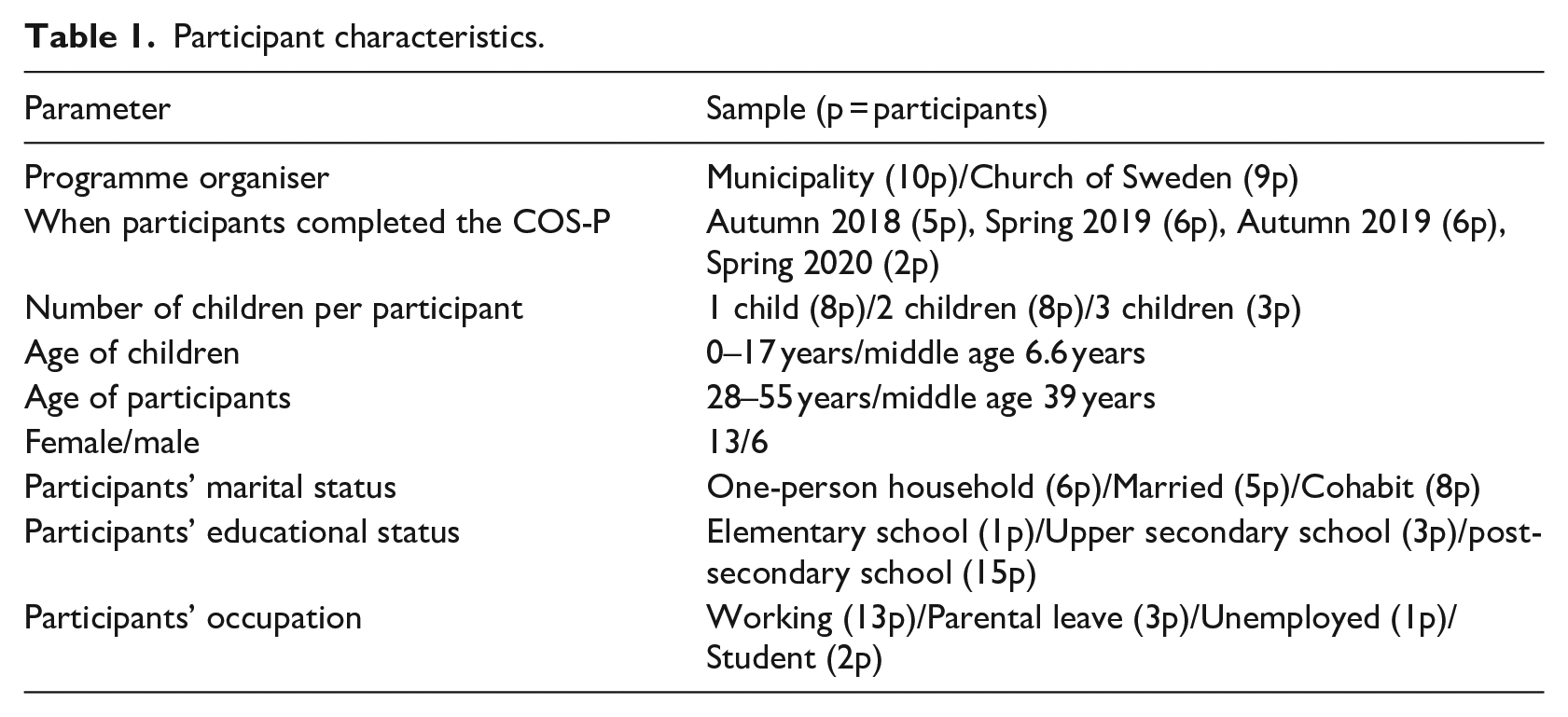
The inclusion criteria for participating in this study were having completed the COS-P programme at least 6–12 months prior and having sufficient proficiency in the Swedish language. A total of 19 parents (13 women and 9 men) participated in the interviews (Table 1). Most participants were employed and had a higher education qualification. A total of 32 children were represented by parents who participated in the COS-P programme. The children’s ages ranged from newborn to 17 years old, with 24 children being between 1 year and 12 years of age, and 8 being teenagers aged 13–17 years. Among the participants, eight were parents to a single child, eight had two children and three had three children. The average age of the children was 6.6 years, while the average age of the participating parents was 39 years. Participants had attended COS-P programmes between 2018 and 2020, and data collection occurred in November and December 2020.
Participant characteristics.
Procedure
The coordinator of the prevention unit in a social services department in a municipal authority in Sweden initially contacted one of the researchers (U.F.) with a request to evaluate the universal parent education programme (COS-P) from a parental perspective. Following approval, the researcher then reached out to the group leader at the Church of Sweden, who expressed interest in participating in the study. Invitations and information about the study were distributed to parents through these two organisations. Parents who were interested in participating contacted the first author via email or phone.
The study adhered to the ethical recommendations outlined in the Declaration of Helsinki (World Medical Association, 2013). Ethical approval was received from the Swedish Ethical Review Authority (Reference: 2019–06254), and personal data were handled in accordance with the EU General Data Protection Regulation (GDPR 2016/679). Participants were informed that their participation was voluntary, they could withdraw at any time and all data would be handled confidentially. Written informed consent was obtained from all participants before the interviews.
Data collection
An experienced group of researchers first discussed potential interview questions with the COS-P group leaders and coordinators to ensure facets of validity (Wass and Archer, 2011). Subsequently, two authors (M.S. and U.F.) developed a semi-structured interview guide. The questions focused on parents’ experiences of participating in the COS-P. Examples included: ‘Has your parenting changed as a result of participating in COS-P?’ ‘If so, how?’ and ‘Has your well-being been promoted?’ ‘If so, in what ways?’ Demographic data were collected prior to the interviews.
The first two interviews served as pilots to assess whether the questions elicited the desired information. No changes were made to the interview guide. All 19 interviews were conducted during November and December 2020 via phone due to COVID-19-related restrictions. Interviews were recorded using a dictaphone and lasted between 25 minutes and 1 hour and 15 minutes, with an average duration of approximately 40 minutes. The data for this study formed part of a larger study that had a broader aim of exploring parental participation in the COS-P. The first author conducted all interviews, and a research agency transcribed them verbatim.
Data analysis
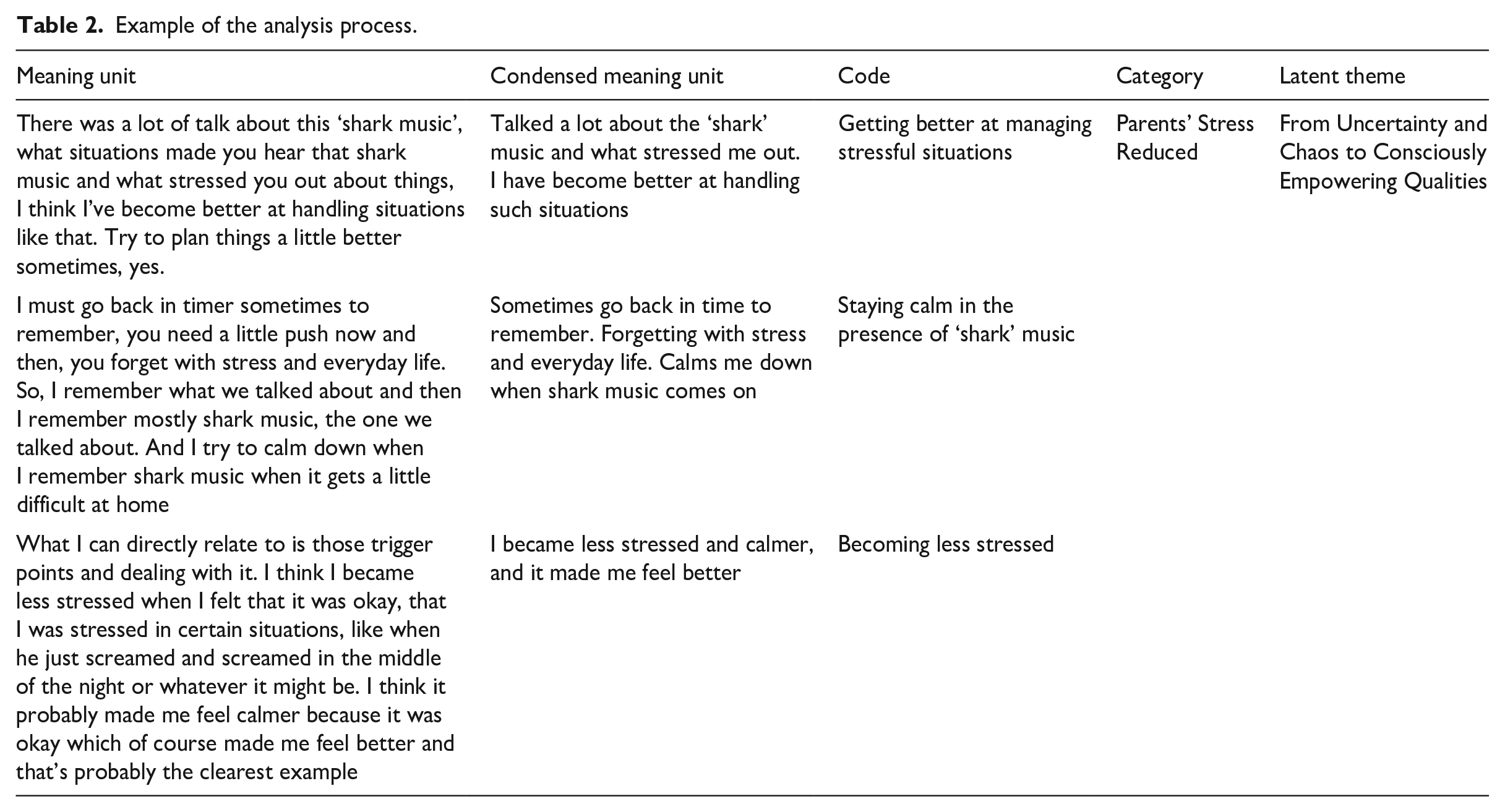
The interviews were analysed using inductive qualitative content analysis, following the steps outlined by Graneheim and Lundman (2004). All 19 interviews were transcribed by a research assistant, and repeatedly read by all authors to gain an overall impression and an understanding of parents’ experiences. The first author identified and condensed meaning units. Each participant was assigned a number (e.g. interviewee 1 was assigned Number 1), and these numbers were included in all meaningful units. A meeting was then held with all authors attending to determine the meaning units and initial codes. The researchers moved back and forth between the data and literature to interpret the parents experience with the COS-P programme. By comparing codes for similarities and differences, the first author identified broader and more general categories, which were reviewed and refined with input from all authors. The analysis was iterative, with the authors returning to earlier stages as necessary. The process continued until all authors agreed that the latent theme and five manifest categories were robust and aligned with the study’s aim (Table 2).
Example of the analysis process.
Findings
The findings may be summarised in one latent theme: from uncertainty and chaos to consciously empowering qualities, and five associated categories: parents’ understanding of children’s needs developed, parents’ learned to handle conflicts and set boundaries, parents’ ability to reflect increased, parents’ inner security and calmness was strengthened, parents’ stress reduced (Figure 1).
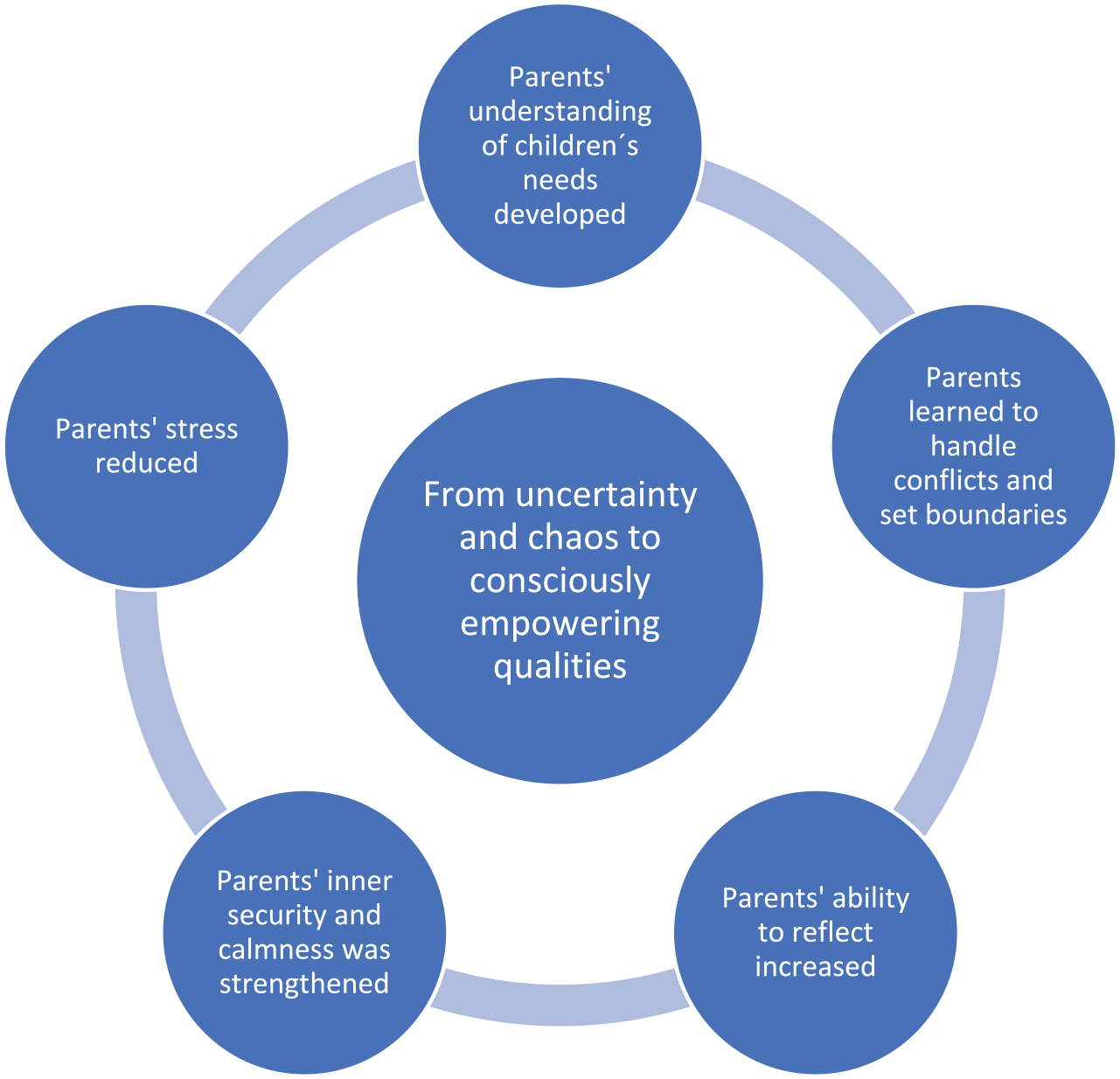
The latent theme and associated categories.
The categories contributing to this theme are described below, with a representative quotation provided for each. Some quotations have been lightly adapted from the spoken language to improve readability, but the original meaning has been preserved. Each quotation is followed by a number in parentheses, representing the interviewee who provided it.
From uncertainty and chaos to consciously empowering qualities
The overarching theme revealed that participation in the COS-P enhanced parents’ knowledge about parenting and managing everyday situations, thereby increasing their confidence. This improvement in parenting practices reduced stress levels and promoted a sense of well-being among participants.
Parents’ understanding of children’s needs developed
Parents reported that the COS-P enhanced their understanding of children’s needs, as well as provided tools to handle various situations. This new understanding helped parents act more appropriately in their roles. For instance, when a child displayed emotional behaviour, parents recognised the importance of being present and trying to understand the child’s needs. They noted that the COS-P offered insight into children’s needs, which were often similar to those of adults – for example, having a bad day at day-care or feeling tired and needing comfort from their parents. This deeper understanding empowered parents to provide better care for their children. Furthermore, parents observed that when they adopted these new approaches, the outcomes were more positive both for themselves and for their children. As a result, they felt a greater sense of satisfaction and confidence in their parenting:
I think generally that just seeing your child’s needs and understanding that there is a need behind every action. Generally, I think that has made me a little more sensitive to my child’s emotional expression. That also contributed to something positive between us. (7)
Parents adapted their behaviour and approach to addressing their children’s needs, which, in turn, positively influenced their children’s behaviour.
Parents learned to handle conflicts and set boundaries
Parents acknowledged that being a parent can sometimes be challenging. They felt that the COS-P equipped them with essential skills to improve their parenting and provided new knowledge tailored to specific situations in which they had previously expressed a need for extra support. Parents explained that the COS-P offered them guidance and understanding on managing conflict and setting boundaries. They discussed the importance of being clear and decisive while ensuring their child’s safety. They recognised that, as parents, they needed to evaluate each situation to determine when it was appropriate for them to make decisions and when the child could take the lead. The advice ‘choose your battles wisely’ resonated strongly with them. Parents reported feeling more confident and effective in being both firm and compassionate when setting boundaries, which ultimately resulted in fewer conflicts:
He thinks when I’m not nice, it is when I say he can’t use his mobile phone; for me, it’s safety// . . . //I think it’s safe when I limit what time he must sleep, and when he must turn off the phone. (5)
The COS-P also encouraged parents to resolve conflicts rather than leave them unresolved. They discussed issues with their children, apologised when necessary and explained their actions to model respectful and constructive conflict resolution:
My wife and I were talking about these the other week, and she thought it was one of my good things.// . . . //I usually say, ‘Sorry, kid, I didn’t mean to sound angry, but I just got frustrated because’, and so further that I try to raise behaviour and explain to him why I did what I did and apologise and accept that ‘I was wrong and it was not your fault’ and so on. (4)
Parents’ ability to reflect increased
Participants expressed a heightened ability to reflect on their parenting after attending the COS-P. They recognised how their behaviours influenced their children, and their well-being affected family dynamics. Reflection was an integral part of the programme, occurring both individually and with others. Parents appreciated the opportunity to explore their own upbringing, identifying patterns they wanted to sustain or break.
The group process facilitated meaningful discussion, providing insights into parenting challenges and fostering a sense of belonging. Parents valued hearing others’ experiences, which encouraged them to pause, reflect and consider new approaches to parenting:
It’s also fun when you find yourself in situations that are pretty clear, ‘Ah, that is the way it is’, and then you can talk about it with others, and as I said, you’ve got these words, and you reflect on it too, it feels a little funny when, despite many situations being difficult, but now I’m testing and I’m thinking extra about this. (9)
Some parents noted that the COS-P built upon their existing reflections and enhanced their knowledge:
As I said, my wife and I had reflected and talked quite a lot before he came and when he was little, and then I thought it worked as icing on the cake, which I took with me from there, which I thought was good and which you can build on and so on. (4)
Parents’ inner security and calmness were strengthened
Parents reported feeling calmer and more secure in their parenting roles after participating in the COS-P. They attributed this to the knowledge and skills they gained, which helped them understand how to act in different situations. One parent said, ‘I joined to broaden my views on how I can be as a parent and what is expected of me . . . I wanted to become more secure in my role as a parent’. Later in the interview, the same person said, ‘I think differently now . . . I became calmer . . . it feels much better’. The programme taught them that they were doing their best and that it was possible to repair the relationship with their child/children:
I am much calmer and more secure in my role as a parent. That it’s okay to make mistakes, we’re human. No one is this perfect parent, and you know that won’t be as hard on yourself, but you can reflect on how you act in different situations. (6)
This sense of calm and security was closely linked to the group process. Sharing experiences and receiving validation from other parents helped individual parents realise they were not alone in their struggles. Parents described how the group discussions reduced their feelings of shame and insecurity, allowing them to embrace their imperfections while striving to improve. The internal security gave them the strength to stay calm in difficult situations, reducing conflicts with their children. The achieved calmness influenced the whole family:
Yes, it is in two ways that children don’t do as you say, children do as you do, and if I am more harmonious and calmer, then the children are too, this thing with punches and kicks and screams has decreased radically since I took this programme . . . so absolutely the whole family has changed since I took this programme. (8)
Parents’ stress was reduced
Before attending the COS-P, parents often felt overwhelmed and lacked the knowledge and tools to handle stressful situations. The COS-P provided insights and introduced them to the concept of ‘shark music’ from the movie Jaws, a metaphor for stress triggers, helping them recognise and manage their reactions in high-pressure moments:
This thing with shark music was very interesting . . . in these stressful situations, precisely when it is essential to think about how to handle the situation even when it is most troublesome. (15)
Parents stated that learning to identify stressors enabled them to stay calmer, model positive behaviours for their children and resolve issues more effectively. Some mentioned stepping away temporarily or letting their partner take over when emotions ran high:
I deal with it so that I don’t have limited caring and then maybe I get angry about something, that has happened and then maybe you back off and let your partner step in and take over the situation instead. And then when I come back I’m not limited anymore . . . before that makes me unable to handle this situation in such a way which I should do to benefit the child. (8)
Stress was explained as limiting; it prevented parents from seeing the child’s needs and it created a risk of being a ‘mirror’ for children on how they should behave. Parents found it important to stay calm when ‘shark music’ situations arise, but following the programme they were able to manage stressful situations better:
There was a lot of talk about this shark music, what situations made you hear that shark music and what stressed you out about things, I think I’ve become better at handling situations like that. Try to plan things a little better sometimes, yes. (3)
Discussion
While parenting can bring much joy and a sense of fulfilment, it can also be a source of considerable stress for many parents, and no previous study has examined the COS-P from a health promotion perspective. Therefore, this study aimed to explore parents’ experiences of participating in the COS-P programme from a health promotion perspective, with focus on well-being.
Parent education is available to all parents in Sweden to strengthen parenthood and parenting skills, and in the long term improve both parents’ and children’s well-being. The purpose of this study was to explore parents’ experiences of taking part in educational programme. The main findings suggest that as the result of the programme parenting shifted from uncertainty and chaos to become a more conscious and empowering approach. The use of the COS-P helped parents handle various parenting situations more effectively, which is vital for influencing children’s mental, emotional, social, and physical growth and development (Hoffman et al., 2017). It is essential to provide parents with the right tools to foster a greater understanding of parenting, better strategies and enhanced well-being, as these factors are linked to children’s well-being (Newland, 2014, 2015; Newland et al., 2013).
From an educational perspective, social cognitive theory sees reflection as a key aspect of learning (Bandura, 2008). The findings from this study show that parents reflected on what they had learned and applied it to their parenting. Parents demonstrated increased health literacy (Rootman and Gordon-El-Bihbety, 2008) as they gained a better understanding of children’s needs, behaviours and how to provide optimal care. Studies of the COS-P have also indicated that the programme improves parents’ knowledge of their children’s interests, needs and behaviour (Glavin et al., 2023; Helle et al., 2023; Maxwell et al., 2021b). In this study, parents’ altered behaviour resulted in more successful parenting, with participants observing a positive impact on their children and an improved parent–child relationship. This aligns with the findings of Huber et al.’s (2015) study, which suggest that parents seeing how their changed behaviour leads to better parenting represents a fulfilled goal for improved well-being (Diener, 1984). Gaining better parenting skills enhances parents’ ability to take control of their lives, which is a core goal of health-promoting activities (WHO, 1986).
The theory behind the COS-P highlights the value of parents’ ability to reflect on their parenting (Hoffman et al., 2017). The findings of this study show that parents’ capacity for reflection increased, helping them identify when they needed to adapt their behaviours to suit different parenting situations. Participants recognised the positive effects of these changes and expressed gratitude for the opportunity to reflect. Other studies have reported similar findings (Glavin et al., 2023; Helle et al., 2023; Huber et al., 2015; Maxwell et al., 2021b). Our interpretation is that the COS-P enhanced parents’ self-efficacy, as evidenced by their increased security in their role as parents and their greater confidence in listening to their child’s needs and responding more appropriately. The findings also show that the COS-P equipped parents with the skills necessary to set boundaries and the confidence to manage complex conflicts and children’s emotional reactions. Following participation in the programmes, parents felt more secure in their decisions to set limits, a point supported by other research (Gerdts-Andresen, 2021; Maxwell et al., 2021a). By managing complex situations more effectively, conflicts were reduced, leading to improved parents’ well-being. This sense of control was associated with feelings of satisfaction (Diener, 2000) and could foster a sense of freedom, allowing parents to act on their parenting choices and control their own lives (Tengland, 2007).
Parents can perceive positive effects in their parenting when they boost their self-efficacy, which in turn can change their approach to managing challenging situations (Bandura, 1982). Although some of the reflections in this study were complex, parents did not blame themselves, as they received support to understand that they were doing their best. Other studies have shown similar results (Helle et al., 2023; Maxwell et al., 2021b). One study found that parents may lack confidence and feel the pressure to meet the expectations of being a good parent (Meeussen & Van Laar, 2018), but parents in this study gained more confidence and learned not to blame themselves.
In the present study, parents described how the COS-P had provided them with the knowledge to interact with their children in difficult situations, increasing their sense of security and ability to remain calm. Their understanding of the child’s circle of security aligns with goals of empowerment-supported activities (Tengland, 2008). Group processes were highlighted as an important aspect of being strengthened as a parent. In the group sessions, parents shared successful parenting examples and offered each other positive encouragement, which enhanced their chances of succeeding in their own parenting (Bandura, 1997).
Parents’ sense of security and calmness can be viewed as an internal emotional state and a successful outcome for improved well-being (Diener et al., 1999). The ability to gain knowledge (Bandura, 2008), increase understanding (Rootman and Gordon-El-Bihbety, 2008) and boost self-confidence (Tengland, 2006) are integral components of effective parenting. As parents, participants in this study felt supported by others and learned how to manage troubled situations. This is consistent with findings from Maxwell et al. (2021b), where parents emphasised the importance of group processes and the impact on parenting confidence. The results of our study show that parents experienced more positive emotions, indicating positive changes in their well-being (Diener et al., 1999). Prior to joining the COS-P, parents faced stressful situations and lacked the knowledge or tools to manage them effectively.
Findings from this study also reveal that parents experienced lower levels of stress due to a greater understanding of how to handle parental stress, as seen in other research (Gerdts-Andresen, 2021; Huber et al., 2016; Kohlhoff et al., 2016). While some studies have suggested that some parents can face a risk of burnout (Mikolajczak et al., 2018; Ping et al., 2022), the COS-P can support parents in caring for themselves and help transform dysfunctional parenting into more functional strategies (Carter, 2010). Parents viewed the COS-P as an investment in their role as parents, supporting them to create a secure and calm environment for the child.
The World Health Organization stresses the importance of healthy child development, which is also reflected in Goal 3 of the UN Sustainable Development Goals 2030. Accordingly, the state must ensure that parents are guided in the best interests of their children, and parents must be supported in strengthening parenthood. According to the national statistics authority, there are 1.2 million families with children under the age of 18 in Sweden. With the COS-P, the state can, from a health-promoting perspective, reach many parents, improving their well-being through parent education and providing better conditions for children’s well-being (Newland, 2014, 2015; Newland et al., 2013).
Supportive programmes such as the one described here should lead to increased self-control and personal change, allowing individuals to feel empowered and gain control over their quality of life (Tengland, 2008). The goal is for participants to show improved health (e.g. increased self-confidence, self-esteem, self-efficacy, autonomy) or increased knowledge (e.g. self-awareness, heightened awareness, developed skills, and competence). This study shows that the COS-P improved health knowledge and literacy, enabling them to make more informed choices about child-rearing.
Strengths and limitations
To ensure clear and informed consent, it was important that potential participants did not feel coerced into participating. The Church of Sweden and the municipality, rather than the COS-P group leader, assisted the first author in recruiting participants. The first author conducted the entire study and the analysis. To strengthen confirmability and reduce potential bias, the other three authors, who have substantial experience in the analysis of qualitative data, provided support throughout the analysis.
As parents participated in the COS-P between 2018 and 2020, with the interviews being conducted in November and December 2020, there may have been limitations regarding memory recall. However, the interviewees provided in-depth information, and all interviews were conducted over 2 months, minimising the risk of data inconsistency. In terms of methodological limitations, the findings are based on a small sample of parents (n = 19), which cannot represent the larger population that has participated in the COS-P in Sweden. However, it was not the intention to generalise from the findings of this qualitative study.
Conclusion
This study contributes to a better understanding of the COS-P as a health promotion programme to enhance parents’ empowerment, self-efficacy and well-being while child-rearing. Its findings provide professionals working with the COS-P with insights into the health-promoting activities that benefitted parents participating in the programmes. Decision-makers need to utilise the opportunities provided by the COS-P to make informed choices regarding future parent education programmes, especially for the parents of older children. Further qualitative studies with diverse populations, as well as quantitative randomised controlled trials or studies using quasi-experimental comparative designs, will further extend our understanding of the benefits and limitations of the COS-P and related parent support programmes.
Footnotes
Acknowledgements
The authors of this study thank the Church of Sweden, the municipality, and respondents for making the study possible.
Funding
The author(s) disclosed receipt of the following financial support for the research, authorship, and/or publication of this article: the Church of Sweden funded data collection for the larger project.
