



Abstract
Objectives and Setting:
Student physical and psychosocial health is an area of concern in Canadian schools, as poor health can be a disrupting factor to both academic performance and quality of life. The Comprehensive School Health (CSH) approach is an internationally recognised framework that can promote student health and academic outcomes in post-secondary settings. However, it is not known how the CSH framework can be embedded within post-secondary institutions. The objective of this study was to explore pre-service teachers’ experiences of CSH at the newly implemented ‘Healthy Teachers, Healthy Schools’ Symposium in the Faculty of Education at the University of Alberta.
Design and Methods:
Senior level students (n = 26) participated in focus group activities on the topic of CSH at the university. Notes and information about the topic were documented on charts, sticky notes and drawings. All data were compiled and thematically analysed.
Results:
Three themes were identified: (a) opportunities for personal and professional growth; (b) connections and student-centred instruction; and (c) physical spaces and places of wellness. Our results demonstrate tangible outcomes at the faculty/programme, instructor and student levels in successfully developing CSH.
Conclusion:
Embedding CSH in a university setting can create a safe, healthy, welcoming and affirming community in which students can develop the knowledge, skills, and understanding to support health and well-being in various contexts, for the self and for others.
Keywords
Introduction
Student health across all stages of education is an area of concern in Canada, as poor health can be a disrupting factor to both academic performance and quality of life (Eide et al., 2010; Mahdavi et al., 2023). In particular, mental health in post-secondary students is increasingly recognised as a public health concern (Wiens et al., 2020). A national report from 2018 found that roughly 34% of post-secondary students reported stress as a disrupting factor to their academic performance (American College Health Association, 2019).
Student educational achievement is influenced by a range of factors; however, health behaviours are notable and have been shown to exhibit a causal relationship with academic outcomes (Basch, 2011; McIsaac et al., 2015). Post-secondary students face a range of physical and psychosocial health concerns, and pre-service teachers – those in teacher training programmes – are no exception. Pre-service teachers often experience multiple effects as they are both students and transitioning into their professional roles. Pre-service teachers may experience stress in anticipation of teaching workloads, the behavioural management of students, lack of support after their practicum experience (Chaplain, 2008), and are expected to balance their educational knowledge with new practical experiences (Velasco, 2019). Their stress continues as they graduate and become employed in school communities, facing a range of issues including constraining teaching environments and workplace stress (Richards et al., 2018), not to mention the responsibility to support their own students’ health and implement health education (HE) curricula. It is therefore critical to understand how to better support students who are transitioning into the final components of their degree (pre-service teachers), to foster healthy, capable teachers who may champion health in the school communities they will workd with.
Against this background, the aim of this study was to examine pre-service teachers’ experiences of Comprehensive School Health (CSH) in the Faculty of Education at the University of Alberta, as well as to ascertain the challenges facing them and hopes for facilitating health as future teachers. In the Faculty of Education, we value health and well-being through mutual respect; empathy and compassion embodied in ethical behaviour; and positive relationships and a sense of belonging (University of Alberta, 2024: 8). It is an objective of the faculty to support respectful relations, health and well-being by creating and supporting a safe, healthy, welcoming and affirming community that is accessible, respectful, reflective of diversity and inclusivity (University of Alberta, 2024: 13). Furthermore, as a faculty, we strive to assist students to develop the knowledge, skills and understanding they need to support health and well-being in various contexts for self and others. Therefore, as faculty members and students, inquiring into the experiences of pre-service teachers during their preparation programmes is critical to determine how successful we are in supporting the health and well-being of future teachers.
Informed by the existing literature, this study identified tangible tools and strategies to manage stress and promote wellness for students in order to instil concepts of health and well-being, and provided practical assignments that better reflect wellness management in practical contexts. To address these identified concerns, we explored: what are the experiences and perceptions of pre-service teachers regarding the implementation and effectiveness of CSH as part of their teacher education programme?
The CSH approach is an internationally recognised framework to promote student health in schools, and has received significant attention for its effectiveness in improving student health in elementary, junior high, and high school populations (McKernan et al., 2019; Ofosu et al., 2018). However, the CSH approach is often underutilised in post-secondary settings, as most Bachelor of Education (BEd) programmes in Canada lack the infrastructure to implement holistic wellness, leaving students with inadequate access to personal health resources and ill-equipped to teach and promote health as they transition into their professional work (Denuwara and Gunawardena, 2017; Russell-Mayhew et al., 2016).
Pre-service teachers unique needs and opportunities for health promotion
While CSH has been adopted in some schools as an effective approach to improve health and education-related outcomes (Fung et al., 2012; Veugelers et al., 2022), beginner teachers often lack the experiences and/or education required to champion such initiatives as they progress into their professional years. Some professional development (PD) opportunities for teachers exist. However, it is important for teachers to benefit from participation in health education (HE) or physical education (PE) classwork as early as possible (e.g. during their time as post-secondary students) in order to prepare them as they integrate into their school communities (Robinson et al., 2024; Sulz et al., 2024).
Currently, a range of interventions are used to incorporate health and well-being into BEd programmes. For example, stress management, mindfulness and mentoring interventions have been found to reduce pre-service teachers’ stress (Birchinall et al., 2019; Briscoe, 2019). Positive learning environments (e.g. music, positive experiences, social support) have been demonstrated to promote well-being in BEd programme students in the UK (Joseph, 2019). In an evaluation of a teacher health training course in England by Byrne et al. (2016), pre-service teachers found training via university courses, which included lectures and practicum experiences, useful and felt that as a result they were better placed to teach and deal with future health issues. They also reported that practical experience, supportive colleagues and positive school culture facilitated the teaching HE (Byrne et al., 2016).
While the benefits of such actions and interventions are ongoing, there has been minimal investigation into the effects of BEd programmes that utilise a CSH approach. Perhaps most importantly, pre-service teachers understate the importance of health in school environments and the need to equip teachers with health information (Choden and Sherab, 2020). Improving teacher understandings of CSH can lead to improvements in teacher stress levels, health and well-being, and provide an avenue to promote health in their future school communities.
Promoting CSH in university and college settings
The CSH approach has four key components that can be implemented in post-secondary institutions. These encourage a focus on: (1) the social and physical environment; (2) teaching and learning; (3) healthy school policy; and (4) partnerships and services (Pan-Canadian Joint Consortium for School Health, 2022). Dooris et al. (2020) have detailed the key features of whole system approach to health promotion in a post-secondary setting. These included the creation of a supportive culture to support community well-being, having a focus on embedding and integrating health strategies (e.g. environment and facilities, support services, curriculum) in university policies and services, and incorporating bottom-up engagement and inclusion. Although there is growing recognition of the value of the CSH approach on university campuses (Dooris and Doherty, 2010; Dooris et al., 2020; Russell-Mayhew et al., 2017), there has been limited progress in exploring how universities can better support the health and well-being of their communities, with health and well-being often remaining peripheral to the mission and organisation of post-secondary institutions (Dooris and Doherty, 2010).
Universities that have implemented a CSH approach (sometimes known as health promoting or whole system universities) are gaining recognition for their role in developing healthy, sustainable societies through the promotion of health knowledge and resources in university communities (International Healthy Campuses 2015, Okanagan Charter). In 2016, the Canadian Health Promoting Universities and Colleges Network was formed to engage post-secondary institutions in promoting health within universities and colleges across Canada.
Major contributions from the University of Calgary have highlighted the upstream barriers to promoting health within universities, and the need to prioritise changes in institutional culture (Russell-Mayhew et al., 2015, 2016, 2017). For example, the University of Calgary has developed a mandatory degree requirement for all pre-service teachers to focus on CSH. This course aims to positively impact wellness environments in K–12 schools and the adoption of wellness in university culture and BEd programmes in particular (Russell-Mayhew et al., 2017).
In resonance with this work, the University of Alberta engaged in a joint initiative with the McConnell Foundation and Ever Active Schools to focus on teacher preparation programmes using a CSH framework so as to educate pre-service teachers and create a culture of wellness with the institution. A team comprising three professors, one graduate research assistant, and two undergraduate students was formed to explore CSH and its introduction into the pre-service programme in the Faculty of Education.
Method
Context
The University of Alberta has one of the largest faculties of education in Canada and offers both undergraduate and graduate programme options. Undergraduate programmes include 4-year Elementary and Secondary teacher education and training programmes, with options for 5-year combined degree programmes as well as an after-degree programme. All BEd programmes include professional practicums totalling 14 weeks of student teaching. With funding from the ‘Teachers of Tomorrow’ initiative and the University of Alberta, Faculty of Education Strategic Initiative fund, The Healthy Teachers, Healthy Schools Symposium was developed to equip senior level students entering their Introductory Professional Term (IPT) with the knowledge, tools, and resources to promote school-focused health and wellness. The Symposium included a keynote from a past student of the BEd programme and workshops hosted by community partners on topics such as mental health, physical activity, home-school partnerships and practicum preparation. The Symposium provided an ideal opportunity to explore pre-service teachers’ perspectives on CSH in an informal group setting and included focus group activities in the latter half of the day (Merriam and Tisdell, 2015). This study of the process and outcomes of the Symposium and related activities received approval from the Research Ethics Boards of the University of Alberta (Pro00085825).
Participants and data collection
Senior level students (n = 26) entering their IPT participated in focus group activities during the second half of the Symposium. Five members of the project team were leaders of table groups, facilitated the sessions and took notes of the dialogue occurring in the focus groups. Specifically, participants were asked to discuss topics in a small group and record ideas on sticky notes. The topics included (a) support for health and wellness in the faculty; (b) areas of need for personal health and wellness; (c) the faculty’s role supporting CSH for personal health and wellness; (d) the faculty’s role supporting the need for new teachers to comprehend and apply principles of CSH in K–12 schools; (e) challenges for personal health in the faculty and for teaching and supporting health in the future as a teacher in schools; and (f) hopes for personal health with in the faculty and for teaching and supporting health in the future as a teacher in schools. Students then organised their small groups’ answers within the following categories: social environment, physical environment and curricular aspects. Participants posted these answers to a chart paper shared by the larger group. Participants also outlined on chart paper their understanding of what a healthy university community might look like (see Figures 1 to 3).
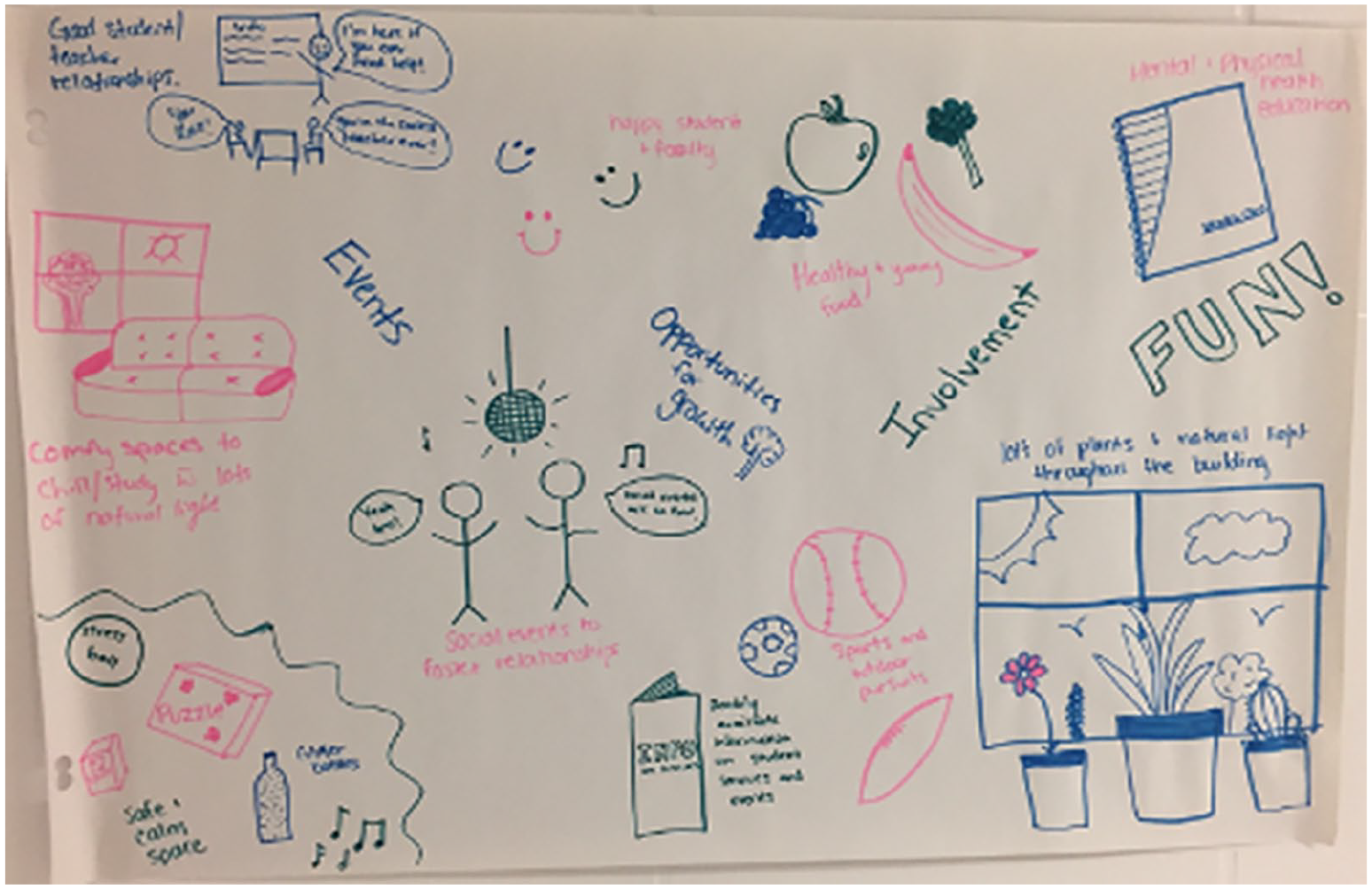
Group A – healthy schoool community.
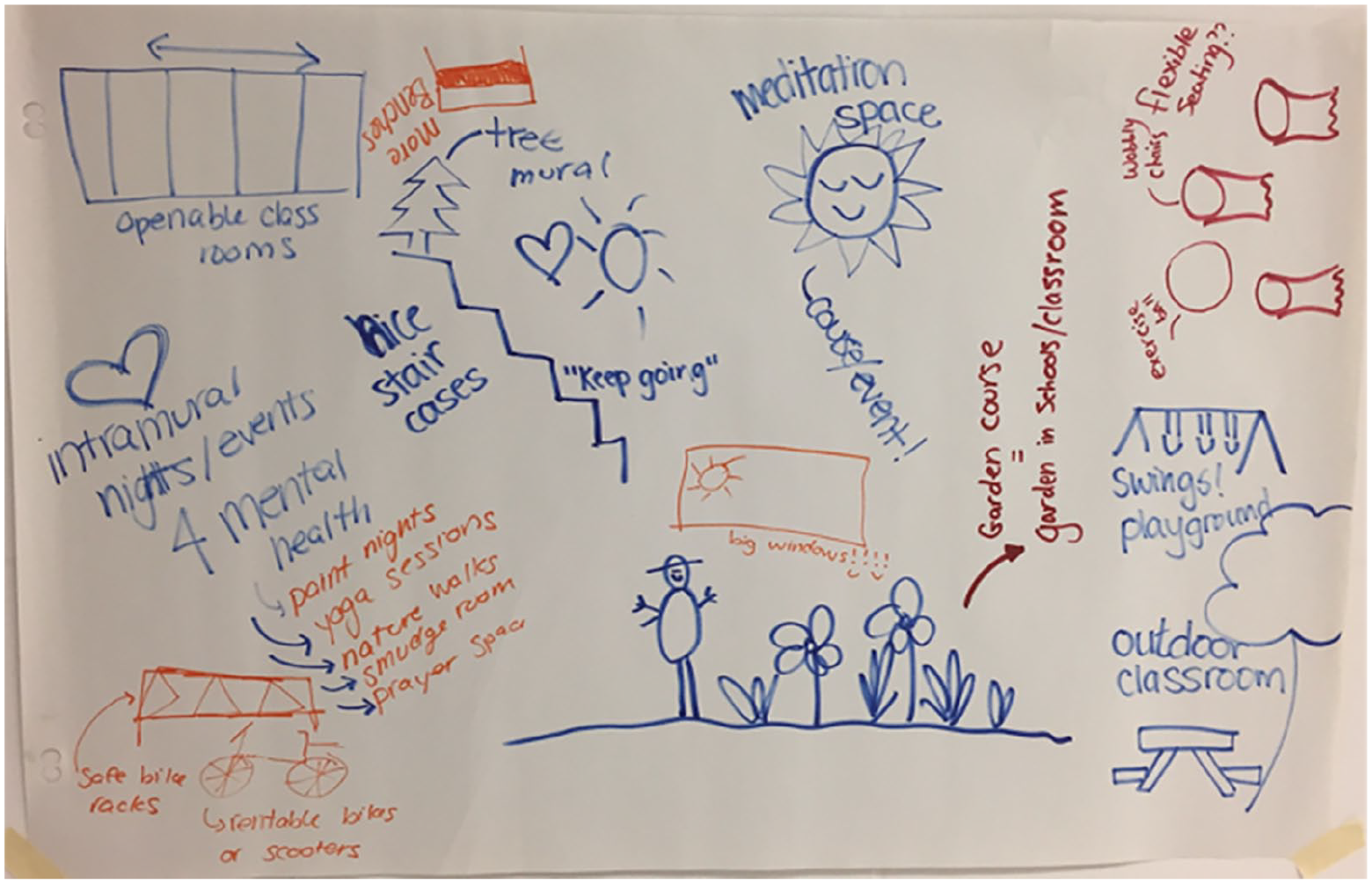
Group B – healthy school community.
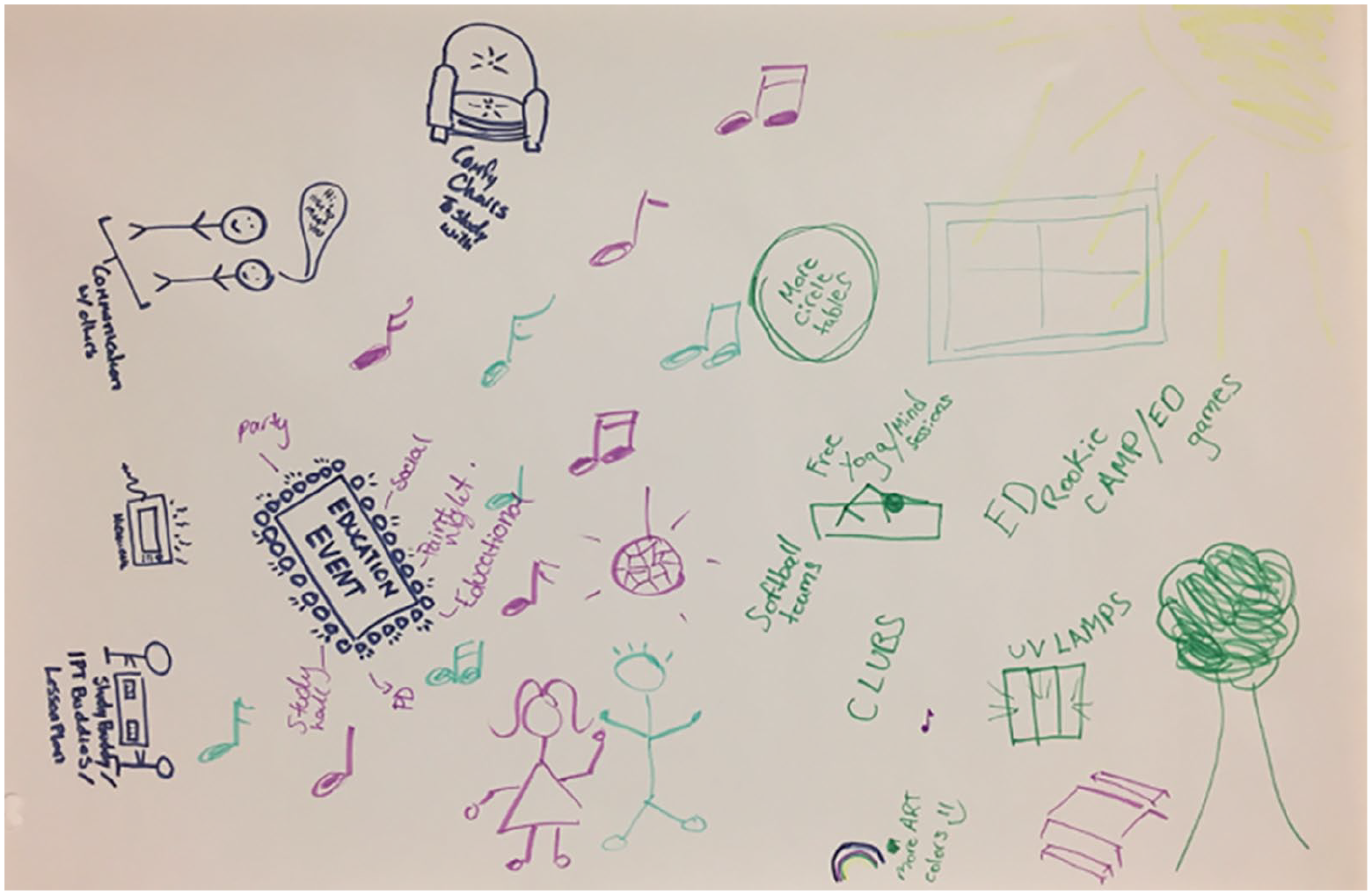
Group C – healthy school community.
Data analysis
The notes and information located on the charts, the notes from the individual table group leaders, and the visual data were transferred and compiled into a Microsoft Word document. Using the Braun and Clarke (2022) protocol for thematic analysis, data were analysed by H.M., M.B., T.D.B. and K.J. independently prior to collaborative discussion after each step. H.M. provided a tutorial to the other coders on the thematic analysis process to ensure understanding and consistency.
First, all data were read line-by-line in an immersive process that included making notes, looking for ideas and concepts that linked to the research question, and organising distinct concepts within each of the three umbrella categories that were used during the data collection and analysis process (social environment, physical environment, curricular aspects) into codes. To address intercoder reliability, the coding team worked through an example together for consistency prior to commencing this stage of review. After the coders had completed the initial coding phase, they sat down, reviewed their results and discussed any discrepancies. Next, codes were organised into sub-categories under each umbrella category independently prior to collaborative discussion. Finally, Author HM built the sub-categories into themes by reviewing the overarching meanings of the codes in relation to the research questions. Two overarching thematic areas were identified: health and wellness support, and gaps/barriers to health and wellness. Within each area, the themes were then re-visited to create a rich written account of the data (Braun and Clarke, 2022; Merriam and Tisdell, 2015).
Findings
When exploring the experiences and perceptions of pre-service teachers regarding the implementation and effectiveness of CSH as part of their teacher education programme, both supports and barriers to health and wellness became apparent. They included (a) opportunities for personal and professional growth; (b) connections and student-centred instruction; and (c) physical spaces and places of wellness.
Opportunities for personal and professional growth
Students characterised both social and curricular opportunities as central supports to their health and wellness as well as their personal and professional growth. In the current social environment of the faculty, students were pleased with the opportunities to engage in social events that included games nights, movie nights, and intramural activities. These activities supported their personal relationships with classmates and helped them learn about others’ experiences (e.g. on practicums) in ways that aided their professional growth. They also described how social events hosted by the Education Students’ Association (ESA) enhanced their health and wellness experiences. These included events such as playing with therapy dogs or having structured study buddies and peer support.
Curricular opportunities such as PD workshops, hosted by the faculty or the ESA, provided additional useful opportunities to learn how to promote health and wellness in their own lives and for their future students. These workshops facilitated communication between fellow students and members of the Faculty of Education, which contributed to positive health and a sense of belonging in the faculty. It was helpful for students to know their classmates and instructors well, and to feel successful, in order to create a positive environment for wellness to be achieved in their classes. However, some students reported being unaware of the social opportunities within the faculty. They did not always know about the events hosted by the ESA or opportunities that would connect them to the faculty. Poor communication strategies by the ESA and the faculty caused them to miss out on the events.
Students also observed an overall lack of PD workshops in the faculty that centred on health. The Healthy Teachers, Health Schools Symposium was the first opportunity many had had, that provided opportunities personal and professional growth in relation to health and wellness support for themselves, but also how to transfer relevant knowledge to their future teaching. Students noted there had been no mandatory classes in their programme on HE or PE. They felt that there was a lack of coursework on teaching HE and how to manage their mental health as a teacher. In response, students recommended that HE and PE become a required component of all BEd programmes.
Connections and student-centred instruction
Certain courses, instructors and staff were reported as having a critical influence on students’ health and wellness. Having classes and approachable instructors who encouraged social connections in the classroom environment helped students feel welcome. Small class sizes were seen as helping students connect with one another. Students also identified particular courses that supported their health and wellness. These included education psychology and counselling courses; curriculum and pedagogy for HE and PE courses; context of education and Aboriginal education courses; and context for professional and personal engagement courses. Curricula where course structures were flexible by offering a choice of assessment, exams in classrooms rather than large unfamiliar spaces, and mental health breaks integrated into class-time, were factors that had a positive impact on health and wellness.
When discussing their programmes of study, students felt that merging practical experience and coursework was important and needed to take place in classrooms earlier. Having practical sessions eased their stress and gave them a connection to students and the profession they were desiring to enter. Students wanted to have more ‘lab’ type sessions with experts to test out their ideas and knowledge, to learn about lesson planning earlier, to have more freedom with electives to choose within their programme, and to have more school visits. More practicums or early placements were also suggested for the programme, allowing practical knowledge and application to be developed alongside theoretical course work.
Students recalled communication about ‘health services’ from the faculty through emails or information booths around the building, which helped them connect to events and support outside the faculty. The information shared both in classes and through Faculty-wide communication connected students to resources (e.g. websites) and people that supported their health and wellness. Advisory appointments offered by Education Student Services (ESS) were helpful in providing mental health and course selection support. Receiving guidance on course choice contributed to students’ health and wellness as these small, personal communications made students feel heard, respected and that they had someone with their best interest in mind to support them through their programme. However, problems with advising were also evident. Students described some advisory sessions being too long, getting slow email replies from counsellors and there being a lack of options to set up personal meetings. Some students felt that better personal mental health resources and PD for students, teachers, and staff could be useful alternatives to advising appointments.
Physical spaces and places of wellness
Students identified specific physical spaces in the faculty as relevant to support health and wellness. These included the student lounge, the outdoor quad, large spaces to study in, discussion tables in classes, access to fitness centres, the library, and well-lit classrooms. They described how the free snacks and coffee from ESS and the ESA were things that promoted a sense of wellness on campus. Specific examples of the physical spaces and identifiers noted as ‘wellness’ supports were the walking treadmill desk in the library and the healthy food options in the cafeteria. These aspects did not just promote physical wellness but attributed to positive mental health and holistic wellness for the students. Although mostly positive spaces were identified by the students, they highlighted how some areas within the faculty were not welcoming (e.g. dimly lit, cold).
Discussion
While students in this research recognise and avail themselves of wellness opportunities available to them in the Faculty of Education at the University of Alberta, there are still barriers that are encountered. Aspects of a CSH approach have been engaged with across the faculty, but there is still work to be done. In this discussion, we will focus on three particular issues. First, recognition of the critical role of HE and PE in teaching about and promoting principles of CSH in teacher education programmes. Second, and linked to this, we note the lack of PD opportunities of relevance to CSH, wellness and health. Third, we provide a number of suggestions informed by the four pillars of CSH to help universities advance the use of a CSH approach.
The role of physical and health education
While the use of a CSH approach as part of a BEd programme is new and not extensively investigated, health classes or modules have long demonstrated efficacy among pre-service teachers in terms of their ability to teach HE (Fahlman et al., 2013. Heikinaro-Johansson et al. (2018), for example, embedded a health module within their teacher education programme in Finland and found that students advanced their knowledge of how to promote well-being in schools both theoretically and practically. Findings from our study reveal the desire of pre-service teachers to acquire knowledge on CSH in order to better support health and well-being for themselves and their future students.
Students readily identified the need to integrate a focus on HE and PE into BEd programmes in order to equip pre-service teachers with the tools needed to promote and experience health and wellness. Findings from a scoping review conducted by Sulz et al. (2024) on perceptions of K–12 HE in Canada revealed that teachers often feel unprepared to teach HE. They underscore the widespread need to strengthen teacher education so as to ensure that educators are competent, confident and comfortable with HE topics. The same study found that K–12 students felt that their HE courses were not addressing their needs, which may at least in part be explained by teachers feeling unprepared to teach the subject. Findings from this reveal that pre-service teachers noted a gap both in initial teacher education and in professional learning opportunities related to teaching HE and managing their health as educators. In response to these concerns, and in the light of our findings, there may be value in making HE and PE required components in future BEd programmes.
Physical and Health Education (PHE) Canada, the nation’s leader in physical and health education, recently developed the Canadian Physical and Health Education Competencies (CPHEC) to provide provinces and territories with information about the curriculum competencies and outcomes needed to deliver good quality school-based HE and PE. The competencies highlight the value and effectiveness of physical and health education from K–12 in Canada. Specifically, they advocate for mandatory physical and health education from K–12 and support efforts to increase teachers’ confidence to teach these important subjects. In other work, Davis et al. (2023) have stated ‘physical and health education teacher education programmes at universities in Canada are critical to the future of K-12 programmes’ (p. 10). A healthy school, in which HE and PE are valued and can flourish, can enhance the health and well-being of the wider school community (Davis et al., 2023). By providing future teachers with an understanding of CSH programming, students will be better prepared to build, support and sustain CSH initiatives in their future schools.
The need for faculty PD
Students noted a lack of Faculty-driven PD workshops focused on health and felt that more opportunities were needed for students and instructors. These findings speak to the importance of a whole of faculty or university-wide approach, as PD opportunities have been found to improve attitudes and perceived self-efficacy to teach the HE curriculum on social, emotional, and mental health (Byrne et al., 2012; Russell-Mayhew et al., 2015). On the instructor side, increasing attention is being given to the need to develop a campus climate to promote health for students (Di Placito-De Rango, 2018). Students discussed how their instructors and their pedagogy were pivotal to their health and wellness in the faculty – with these innovations serving as models and embedding the importance of PD for students.
Suggestions for next steps
To assist with the practical application of these findings, we have considered the barriers students identified alongside the CSH framework to identify factors that faculties/university programmes, instructors and student associations need to take into account (Table 1). Broadly, these practical suggestions speak to students’ desire to address barriers, improve communication and embed a concern for health and well-being into daily practice. Promoting health and wellness broadly and through the areas of CSH could improve students’ health and wellness both within the faculty and how they transfer that experience and knowledge to their future students.
Suggestions for improving and promoting student health in universities.
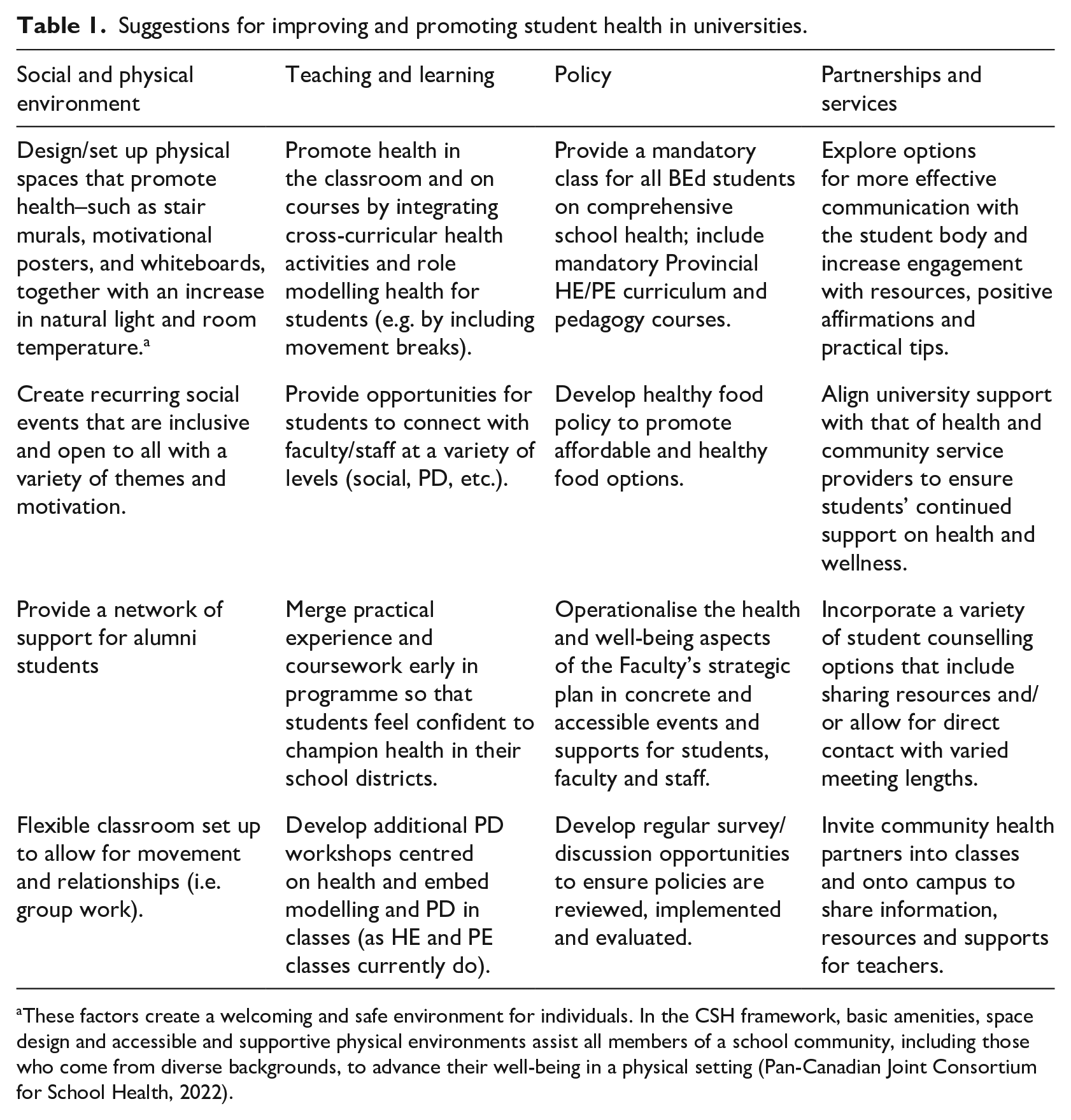
These factors create a welcoming and safe environment for individuals. In the CSH framework, basic amenities, space design and accessible and supportive physical environments assist all members of a school community, including those who come from diverse backgrounds, to advance their well-being in a physical setting (Pan-Canadian Joint Consortium for School Health, 2022).
Limitations
Like all research, this study has its limitations. The small student sample drawn from one particular programme in one Faculty of Education, at one Canadian university, means that the findings cannot be generalised. Furthermore, as the authors were involved in CSH teaching and research, they have a vested interest in a healthy university setting, which may have created response bias. As the focus groups took place directly after the delivery of PD on health in the faculty and those students that attended them were obviously interested in creating healthy school communities, their comments may be favourably disposed towards positive reactions created by the procedures involved in data collection.
Conclusion
CSH approaches in post-secondary institutions are key to developing healthy and resilient pre-service teachers. While pre-service teachers may be required to promote health in schools as they become professionally employed, they often lack the required resources and training. As demonstrated in this study, there is a distinct need for a CSH designated course as part of the BEd programme in the University of Alberta. Although not currently mandatory, around 85% of students pursuing the elementary education degree programme currently enrol on an optional HE or PE course. These data suggest that students are generally interested in taking courses and additional PD relevant topics to support their own and future students’ health and wellness. Promoting CSH in a post-secondary environment and understanding pre-service teachers’ perspectives of CSH within their faculty is a useful strategy to: (a) improve the health outcomes of pre-service teachers; (b) ensure that teachers are well-equipped to meet the demands of contemporary teaching and learning environments; and (c) empower teachers to promote change to create sustainable healthy school communities. We hope to build upon this enthusiasm in our future work.
Footnotes
Acknowledgements
We thank Ever Active Schools, the McConnell Foundation (Teachers of Tomorrow Project) and the University of Calgary (Body Image Lab) for encouraging us to pursue this research.
Declaration of conflicting interests
The author(s) declared no potential conflicts of interest with respect to the research, authorship and/or publication of this article.
Funding
The author(s) disclosed receipt of the following financial support for the research, authorship and/or publication of this article: this work was supported by the Faculty of Education Strategic Initiative Fund at the University of Alberta.
