



Abstract
Purpose of the research:
Co-constructed digital storytelling methods have the potential to provide authentic children’s perspectives for planning health and education support. The Our Stories project investigated how this method can be applied with autistic children and young people (CYP). A year-long sub-project supported four autistic CYP in a mainstream secondary school in the UK to create short videos illustrating how they manage their sensory and emotional experiences during the school day. The CYP were supported by a member of the Special Educational Needs and Disabilities team, a specialist autism teacher, a researcher, and filmmakers from a disability-led community interest company. This paper reflects on how we can authentically co-construct digital stories with autistic secondary pupils.
Major findings:
We identified two broad messages for genuinely participatory research. The first was how the structure of sessions changed, from an initial assumption of imposing structure to achieve the research aims to the negotiation of a messy, more fluid means of working to suit the CYP’s needs and wishes. Second was a change in the intended purpose of the stories, from a product to support reflection and understanding about emotional regulation, to each CYP’s own unfolding of purpose.
Conclusion:
We draw out general implications for co-construction in participatory research in terms of awareness of how to work with power relations in ways that keep the young person at the centre of analysis, and which recognise the need for space for CYP to construct their own meanings.
Keywords
Background
Digital storytelling is a powerful way for young people to share their experiences and express their needs. Digital approaches, notably the use of video, enable creators to show rather than tell in words, providing alternative methods of communication for young people who are minimally verbal or who find verbal communication challenging, such as some autistic young people (Parsons et al., 2021). Autistic people are often misunderstood by non-autistic people, and their perspectives and preferences are frequently lacking in research debate and wider discourse (Crompton et al., 2021; Pellicano and Stears, 2011). Dominant theoretical approaches to autism have been largely deficit-based, and such perceptions often influence educational and professional practice (Robertson, 2010). The neurodiversity movement challenges a deficit-based account of autism, instead adopting the notion of a neurocognitive function spectrum (Kapp, 2020; Singer, 2017). Neurodiversity advocates encourage a neuro-affirmative approach to supporting autistic people, which means recognising strengths and interests, as well as support needs. When adopted in education, some argue that a neuro-affirmative approach can lead to increased self-agency and self-advocacy, and promote positive self-esteem in autistic children (Taylor et al., 2023).
In the UK, the number of autistic pupils identified in mainstream settings is increasing (McConkey, 2020). Approximately 70% of autistic children are educated in mainstream settings, and autistic pupils make up roughly 5% of the mainstream secondary school population (Department for Education, 2023). Often, support for autistic pupils in mainstream schools is organised around a didactic pedagogy tailored to their expected needs, such as adult-directed interventions designed to coach ‘socially acceptable’ behaviour, including social skills training (Radley et al., 2020). In recent years, there has been a move towards neuro-affirmative practice in education, with increasing recognition of differences, and intentions to provide inclusive and adapted environments (O’Neill and Kenny, 2023). However, the adoption of methods that accommodate the full diversity of learners needs to be driven by autistic perspectives.
It is common for autistic people to have a difficulty expressing themselves verbally, meaning their views are not always captured by traditional research methods (Kinnaird et al., 2019; Pellicano and Stears, 2011). Creative and participatory methods are therefore necessary for the views and experiences of autistic young people to be accessed and represented in health and education service development. Digital storytelling is an inclusive, participatory research methodology, described as providing a ‘story in the eye of the storm’ (Lambert and Hessler, 2018; Parsons et al., 2021). A core principle of digital storytelling is understanding that creative and inclusive methods are necessary to capture the views of people whose voices are often overlooked or difficult to represent through usual methods (Lambert, 2010; Parsons et al., 2023). When told from their perspective, digital stories have the potential to convey the authentic experiences of autistic children and young people, with the child’s voice at the centre. Digital stories, therefore, afford a method of information sharing, but they also provide a means of expression and communication, and a reflective learning tool (Lambert, 2010).
Co-construction is fundamental to the digital storytelling methodology, whereby different actors work together equally to create and share new perspectives in short, 3- to 4-minute videos (Parsons et al., 2022). The term co-construction encompasses research co-production, or how research is conducted, and knowledge creation and expression (Parsons et al., 2022). Digital storytelling with autistic children and young people involves representing their perspectives and internal experiences in an explicit and shareable format. Creative ways of capturing children’s views, such as through the use of Wearcam technology, have been powerful in previous applications of the method, where families and professionals have created digital stories to share the experiences of minimally verbal children. In these contexts, digital stories have supported transitions between educational settings, such as from nursery to school (e.g. Parsons et al., 2021). They convey the identity and strengths of the child, which are so often absent in professional communication.
The Our Stories project stemmed from an appreciation that collaboration between research and practice could improve implementation of practical, holistic methods to support autistic pupils’ transitions, which are vital targets for research and support (Parsons et al., 2023). Major life transitions, such as changing schools, and more routine daily transitions, such as moving from one space to another, can both be challenging for autistic young people (Kapp et al., 2011; Roncaglia, 2013). Ineffective planning and support around times of transition can be a detriment to the mental health and well-being of autistic young people (Makin et al., 2017). The aim of the Our Stories project focused on in this paper was to extend the potential use of digital storytelling for different types of transitions in partnership with professional stakeholders (Parsons et al., 2023). In the sub-project described here, we worked with education professionals who had strong, positive relationships with several autistic pupils and their families in secondary education, and who were interested in innovative ways to better support autistic pupils. We investigated how the digital storytelling method could be adapted to support autistic secondary pupils to co-construct digital stories communicating their emotions during everyday transitions, such as the start of the school day or when changing lessons.
Why use digital storytelling with autistic secondary pupils?
Autistic pupils’ experiences of mainstream education can be challenging. They can experience higher levels of bullying and social exclusion compared with non-autistic peers, and can feel unsupported and misunderstood (Goodall, 2018; Goodall and MacKenzie, 2019). Some autistic people experience heightened sensory sensitivities, which can impact their daily functioning and undermine their learning (Birkett et al., 2022; Bogdashina, 2016). Birkett et al. (2022) showed that some autistic pupils actively seek to modulate the impact of the school environment by employing pre-prepared strategies and ‘sensory tactics’, such as using grounding strategies (e.g. thinking about their interests or playing specific games) or thinking about challenging experiences using metaphors (e.g. becoming part of the sea in a busy corridor). However, autistic pupils’ self-regulatory strategies, such as self-stimulatory or self-soothing behaviours, are often pathologised (Farahar, 2023). Even supports, such as frequent breaks or tools including ‘fidget’ toys, are often not accepted in mainstream education settings due to a lack of understanding and expected classroom disruption (Aspiranti and Hulac, 2022).
Parsons et al. (2015) described digital stories as tangible artefacts which can be viewed and reflected upon by others, including those in decision-making capacities. Many autistic people can experience alexithymia, a difficulty in identifying and communicating how they feel (Kinnaird et al., 2019). Even those without alexithymia can find emotional expression challenging, especially when their experiences are so often stigmatised in neurotypical settings (Cohen et al., 2022). This means those advocating for pupils’ support needs, such as parents, do not always identify the range of complex strategies autistic children appear to use (Clark and Adams, 2020). Since digital storytelling is not reliant on verbal communication, it offers alternative ways for pupils to convey their internal emotional and sensory experiences using visuals, sound, and video effects (e.g. Parsons et al., 2021). Sharing digital stories may enable autistic secondary pupils to advocate for their needs in predominantly neurotypical environments and to be actively involved in decision-making.
Digital storytelling using ‘Just Right’
Since autistic pupils may have challenges communicating their emotional and sensory experiences to others, we centred this sub-project on the Just Right programme, a scaling system with traffic-light colours created by specialist teachers and health professionals and designed to support self-regulation. Just Right is widely used by education professionals locally. It aims to provide a simple language for autistic pupils to communicate and manage their emotional and sensory experiences. In Just Right, the colours represent different ‘zones’, where ‘green’ is just right, ‘blue’ is tired or under-stimulated, ‘orange’ is anxious or hyper-alert and ‘red’ is in crisis or shutdown. We used Just Right to aid the process of co-creation, by providing a simple, common language to discuss and reflect upon pupils’ school experiences and to identify the strategies they used for self-regulation. We anticipated that the process of digital story co-creation and the resulting videos would act as powerful tools for self-reflection and empowerment for pupils to advocate for their needs. This paper provides a critical reflection on the application of digital storytelling in this context. Specifically, we consider how best to support autistic young people in mainstream secondary school to authentically communicate their emotional and sensory experiences through co-construction.
Method
Who was involved?
Three autistic secondary pupils (aged 12–15 years, female), who each had experience of the Just Right programme, co-constructed ‘How I feel . . . .’ stories with project partners representing their school experiences. An additional pupil, Pupil 4 (aged 14, male) started the project, but withdrew before filming. The partners involved in co-construction included two university researchers (including author 1 [D.G.]), two teaching staff including a member of the Special Educational Needs and Disabilities (SEND) team and a local authority Specialist Autism Teacher for autistic pupils (author 2 [S.G.]) and three filmmakers from Autek CIC, a disability-led community interest company that uses lived experience to produce inclusive videos and animations that empower individuals to live life on their own terms and to make places and services more accessible.
What did they do?
Pupils worked on their digital stories with support of the project partners during their timetabled ‘Understanding My Autism’ groups at school. These groups provided a neuro-affirmative and pupil-led space where autistic pupils could learn through pupil-led play, and with a focus on building connections with other autistic pupils. They, therefore, afforded an open and flexible space within a typically more constrained education setting. It also meant the research, and the researchers, became embedded within a familiar setting and in the lives of the young people.
Throughout the academic year 2021–2022, the pupils in the group consented to take part by creating digital stories about their experiences of school. Pupils received regular support with their digital stories from the researchers and teaching staff. One Understanding My Autism group a month was initially dedicated to digital stories. In March 2022, the frequency increased and pupils worked on their digital stories every week for the first half of their meeting. Autek delivered two sessions, one in November to review their plans for their digital stories and to introduce the filming tools, and another in February to introduce the editing tools.
The ‘Our Stories’ digital stories framework (Parsons et al., 2022) provides a toolkit with mapping documents to support professionals and families to consider and capture the perspective of minimally verbal autistic children (e.g. Parsons et al., 2021). Our initial intention was to use this existing structure but tailored for secondary pupils in the context of the Just Right programme. The planned structure included the stages: planning, filming, and editing (detailed below). This structure was developed with a focus on a relatively pre-defined final product that met the aims of the research: to support autistic secondary pupils to reflect upon and communicate their emotional and sensory experiences at school.
Planning: researchers and teachers used mapping documents to support pupils identify the things, places, and people that helped them feel calm and focused (green), anxious (orange), under-stimulated (blue), or overwhelmed (red), and to identify the strategies they used to help self-regulate. Pupils were then encouraged to use Storyboards, which we anticipated would help pupils build narratives for their digital stories around their mapped experiences.
Filming: Autek met pupils to review their Storyboards and plans, to offer filming advice, and to introduce the available filming tools, including Wearcams, iPads, and 360° video cameras. Pupils filmed over several months with varying degrees of independence supported by the researchers and teaching staff.
Editing: Autek delivered a second workshop demonstrating how to use the editing software, Flexclip and iMovie. Pupils then edited their footage during digital stories’ sessions while iteratively capturing footage. They received one-to-one support with editing from one of the researchers, who performed the more complex editing tasks.
When their digital stories were complete, the pupils and their parents were asked to provide their consent to share the videos. They were offered options with different levels of restriction. The least restrictive option was for the videos to be shared publicly online. They were also offered the option of allowing teachers, other professionals and/or other pupils to view their stories, or they could choose not to share the story beyond the research team. There are important ethical considerations surrounding the use of video data, including dynamic elements of privacy versus visibility and video ownership, which we discuss later alongside the broader implications of this project for participatory research. Two of the pupils’ digital stories are available online at: https://acorns-soton.org.uk/2023/01/our-stories-real-examples. We received ethical approval for this project from the University of Sussex’s Sciences and Technology Cross-Schools Research Ethics Committee (Ref: ER/DG241/12).
What did we learn about co-construction?
A central project goal was to determine how best to support verbal autistic secondary pupils to express their authentic experiences. The manner in which pupils worked, in ways we had not predicted, enabled us to identify two main lessons with broader implications for genuinely participatory research: (a) the need for negotiation in the use of structure during digital story co-construction and (b) the importance of empowering each pupil to find their own purpose for the digital stories. We provide evidence and implications for each in turn below.
Changes in how the sessions were structured
We anticipated that careful planning by adapting existing materials would scaffold pupils towards the creation of a final digital story that represented their internal experiences. The initial step was a mapping document, asking pupils to identify triggers and solutions for each of the four zones. However, pupils each had different ways of working beyond this framework. Our planned approach, therefore, did not meet pupils’ needs in terms of support or inspiration and appeared to limit their creative expression. Co-construction is a process of shared learning and knowledge elicitation and creation (Parsons et al., 2022), which can take place throughout the project life cycle. The process of digital story co-construction was integral for project partners to gain genuine insight into pupils’, sometimes implicit, knowledge of their regulatory strategies and complex internal experiences. We shifted to a pupil-led approach, where the use of structure was tailored for each pupil to enable effective knowledge transfer and perspective sharing, and to support pupils to find their own route to their story. One teacher described our altered approach as ‘structuring their ideas rather than starting off fitting their ideas into a structure’. Below, we describe how the use of structure in the co-construction of the digital stories changed for each pupil.
Pupil 1 carefully planned the content of her digital story using the mapping documents, as anticipated, but encountered barriers when translating this into filmed content. We provided additional one-to-one support to support her to find the best way to represent her experiences and so she could film covertly at school. During further one-to-one support with editing, Pupil 1 reflected upon her video alongside the project partners with whom she had developed a good relationship.
While Pupil 2 had ideas for what she wanted to film, such as wanting to show her dog and the cat she meets on the way to school, she had difficulty expressing the things that helped her self-regulate using the mapping documents and executing her ideas during filming. We recognised executive functioning challenges may have hindered her progress and adapted our support by creating additional structure at specific points in the process, such as creating filming schedules, and prompting her to capture video clips representing her ‘typical day’. By filming some main parts of her day, such as regular lessons and travelling to and from school, she was able to retrospectively identify how she felt during different parts of her day.
Pupil 3 used the storyboards to plan a loose structure for her story, including her monologing about what each zone felt like for her; however, she did not use the mapping documents to identify potential parts of her day to film. Instead, she captured numerous video clips that represented her salient school experiences, from shared interests with friends to seeking solace in the library. Her approach became akin to other participatory methods, such as Photovoice, which uses photos and videos as visual prompts to initiate critical reflection (Milne & Muir, 2019). Through reflective discussion and trial and error during editing, she identified the parts of her day that best fitted each of the Just Right zones.
The structure that prioritised mapping as the first activity may have resulted in Pupil 4 withdrawing at an early stage. He was most interested in editing a video with animation tools and appeared to struggle to express his experiences with the mapping documents and during discussion. In retrospect, using a ‘flipped’ structure, where animation was used from the outset may have supported Pupil 4’s reflection and better supported him to communicate his experiences.
Progress with the stories was slow, and the first task of mapping pupils’ experiences using the Just Right colours appeared challenging, or at least uncomfortable, for most pupils. On reflection, we felt that the story sessions were more adult-directed and focused directly on self-regulation, which contrasts with the more pupil-led ethos of the ‘Understanding My Autism’ groups. We therefore increased the frequency of the sessions and split the ‘Understanding My Autism’ into two parts with the first half focusing on digital stories and the second half including open time, where we played pupil-chosen games as a group.
Adapting the structure of the digital story sessions by including pupil-directed activities resulted in a return to the pupil-led ethos of the Understanding My Autism group and demonstrated the value of play as a method of research. Through careful and curious prompts from the adults involved in the project, pupils shared what school life was like for them as autistic young people. The sessions overall became much less about critical reflection of self-regulation and more about enjoyment of shared interests and connecting with one another through chosen activities. The pupil-directed time nurtured our relationships with pupils and between the pupils as a peer group. This unexpectedly created a positive social ecology for the pupils to unmask and engage with one another in an ‘autistic way’. As a result, we saw pupils become more comfortable and confident expressing their experiences and the organic development of a micro-culture of mutual support, where pupils showed understanding and acceptance of others’ experiences. Creating a safe and enjoyable space was therefore fundamental for all pupils to create honest and authentic digital stories, regardless of their approach to video creation.
A change in the intended purpose of the stories
Our initial aim was for the digital stories to show pupils’ self-regulatory strategies so others in school could understand and accommodate to them. However, the pupils did not execute this as we anticipated. Reducing and adapting the structural support and enabling the sessions to be more pupil-led seemed to empower each pupil to develop their individual purpose for the filming. This contrasted with the researchers’ initial aim to have stories illustrating each pupil’s strategies for supporting micro-transitions at school. This approach better aligns with participatory research methods, where the research questions are designed at place with community stakeholders. Each pupil developed a distinct purpose for their digital stories:
Pupil 1 did illustrate her self-regulatory strategies as we anticipated (e.g. Figure 1), but the project also seemed to create a broader positive impact for her. Her parents’ feedback noted that she appeared more comfortable and confident in her autistic identity, and she had even asked the specialist autism teacher to help her tell some friends about her autism diagnosis. Pupil 1 reclaimed her own story by focusing on her strengths and capabilities, which seems to have promoted a much broader positive identity, beyond managing emotional and sensory challenges. This stresses the need for flexibility in co-construction and for co-creators to be open to changing the purpose of the story by following the lead of the person at the centre of the story.
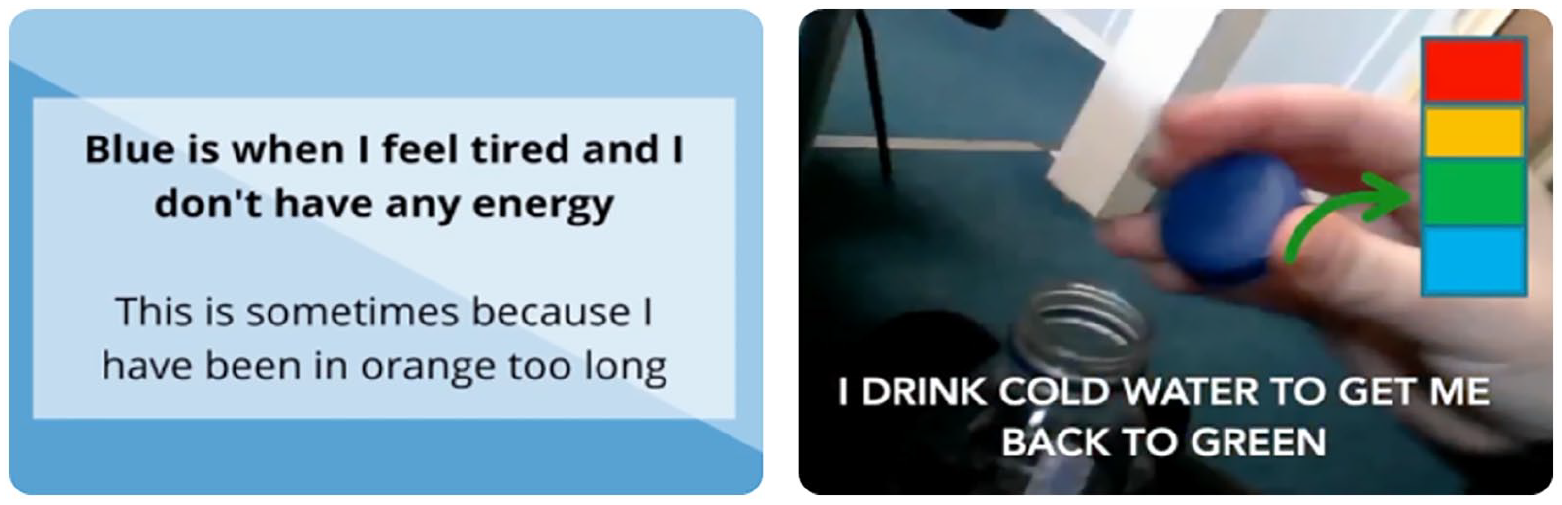
Stills from Pupil 1’s digital story, showing a strategy she uses when she is feeling under-stimulated.
Pupil 2’s digital story took the audience on a journey through her typical school day, mostly representing her interests and the activities where she felt ‘green’, rather than focusing on regulation strategies when moving away from the ‘Just Right’ zone. Her final digital story was akin to videos created in other parts of the Our Stories project in which autistic young people created ‘I am . . .’ stories about their strengths and interests (e.g. Ward et al., 2023). Focusing her video on the parts of her school day she most enjoyed enabled a broader exploration of Pupil 1’s identity in the context of her school environment. We see the parts of her day where she feels most connected and engaged, and where she presumably feels she can be herself, such as during a drama rehearsal, playing the piano (Figure 2), or during self-proclaimed info-dumping about her ‘hyper fixations’. While Pupil 2’s approach diverged from the intention to create a story centred on self-regulatory strategies, her approach aligns with the strengths-based foundation of the digital storytelling method. This refocus supported Pupil 2’s self-understanding and further positive development of her autistic identity, whose parent noted how she was ‘more comfortable in her skin with regards to how she acknowledges and articulates what life is like for her as an autistic female’.
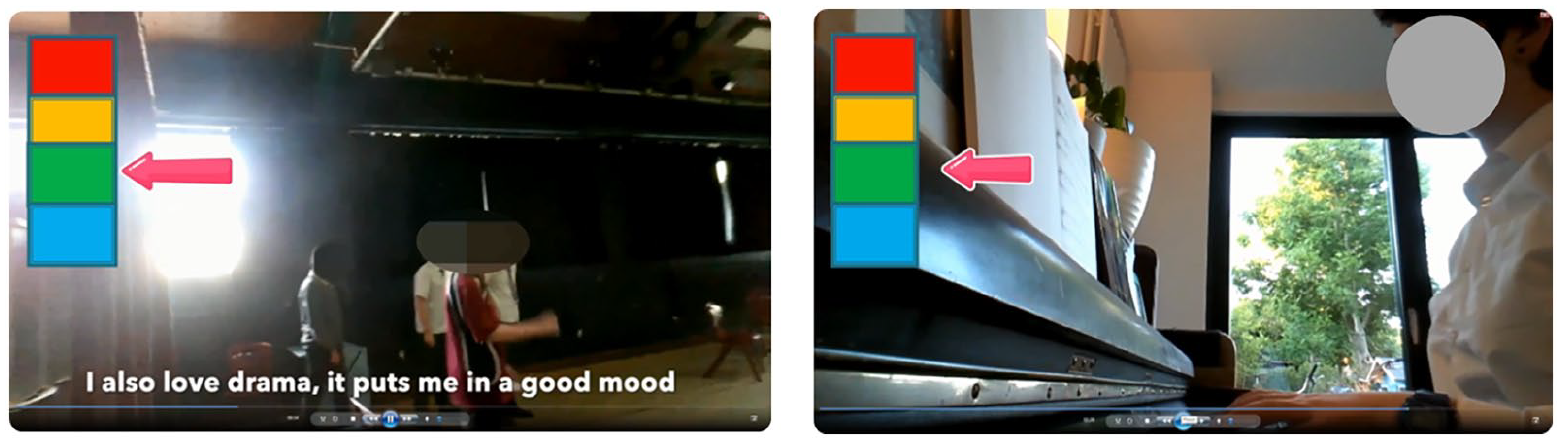
Stills from Pupil 2’s digital story showing her feeling green when playing the piano and during drama rehearsals.
Pupil 3 drew upon her previous involvement with the SEND team as an autism advocate in the conceptualisation of her digital story. She perceived the project as a route to offer support and guidance for new autistic pupils. In her video, she celebrated her personality, interests, and connections with friends in a confident portrayal of her identity. Pupil 3’s interpretation did fulfil the research purpose of showing how she feels and manages at school, but also acted as a source of inspiration for the other pupils in the project. Pupil 3 stated in her feedback that she appreciated the space the digital stories’ sessions gave her to unmask. She shared her honest experiences within the group and in her video. By including parts of herself that contributed to her autistic identity, we observed Pupil 3’s drive to support other pupils, and this was reflected in her interactions with the others in the project. As the eldest in the group and the one who appeared most assured in her autistic identity, she served as a role model and a potential source of inspiration for Pupils 1 and 2 to embrace and share their experiences as autistic young people.
“Red is not a very good feeling, red is fiery and hot, and not very nice, red is overwhelmed, red is sweaty, red is when all your thoughts are colliding in your head at the same time and you can’t make sense of any of them, red is when you don’t even know what you’re feeling, you’re stuck, your brain is stuck, you can’t do or say anything, there’s roaring in your ears, you’re palms are sweaty, knees weak, arms heavy . . . all that stuff . . . .” (Excerpt from Pupil 3’s digital story)
For all three pupils, the project supported their self-understanding and self-acceptance, which appeared to arise from working alongside autistic peers and through co-construction of their digital stories with the project partners. We had not anticipated the value of creating digital stories alongside peers, but it enabled pupils to recognise their similarities, and experience affirming feedback from peers and from both autistic and non-autistic project partners. The pupils built strong and lasting relationships, rapidly developed rapport with filmmakers from Autek in just one in-person session and over time they built good working relationships with the teaching staff and researchers. We expect the interactions between peers and with Autek, particularly Autek’s curious and encouraging approach, contributed to the pupils’ development in confidence and self-acceptance.
The videos still serve the researchers’ planned purpose, in illustrating various self-regulation strategies, and the intended purpose of these is to support education planning and support from professionals. However, the new purposes, brought by the pupils themselves, mean the stories may serve other uses, in particular presenting affirmative portraits of autistic identities and providing a shared group working process of co-creation that may enhance pupils’ positive identities. The pupils, therefore, added new unanticipated purposes and value, above the initial research aim, as well as supplying evidence of the need to adapt the co-creation methods and to be open to new purposes being created during co-creation.
Implications for participatory research
The Understanding My Autism group enabled safe and authentic expression of pupils’ identities and internal experiences and was therefore central for the implementation of the digital storytelling methodology in this context. We know autistic pupils can experience fear and stigma when being their authentic selves (Chapman et al., 2022; Cohen et al., 2022), and despite an emphasis on ‘pupil voice’ in mainstream education, meaningful participation of autistic pupils can be inadequate (Lundy, 2007). This project shows the need to be open to changes in structural support provided and to the possibility for the young people at the centre of the digital stories to bring new purposes. It has strong implications for the meaningful capture of pupil voice in education and for participatory research more generally.
For the views and experiences of autistic young people to be meaningfully represented in research and in service improvement, it is important to create safe and comfortable spaces for participation. An neuro-affirmative pupil-led approach with dedicated time for relationship development can build trust and enable researchers to adapt and tailor the research to the needs and preferences of pupils. Here, the group relationship was integral and was facilitated by the opportunity for the research team to become embedded researchers and by working in partnership with education professionals. While the group was situated within the institutional structure of the school, there was a sense of independence from the rest of their educational experience, which afforded us the flexibility to respond and adapt to their emerging needs and enthusiasm. By negotiating the research process in context and offering pupils agency in the structure of the group meetings, as well as the content of their digital stories, pupils’ voices were protected without agenda or expected learning outcomes.
We also demonstrate the value of real-world, messy data collection. We have described how our departure from a planned procedure enabled us to find new value and purpose driven by the needs and interests of the pupils. The project also differed from the normative structure of research in two additional ways. First, including researchers’ reflections and observations as data in preparation of this paper has allowed us to emphasise the potential mechanisms within the context that we argue supported pupils’ self-understanding and self-acceptance. Second, we worked in partnership with community stakeholders, namely two education professionals and Autek CIC, who were engaged not only in the delivery of the project, but also as participants in the evaluation, and as manuscript co-authors (i.e. as author 2). A separate analysis of the reflections of all the adult team members shows creating digital stories alongside peers and with support of autistic filmmakers supported relationship and identity development.
We note the potential limitations of the school staff and members of Autek CIC acting as participants, which some may argue can compromise the robustness of the research and reliability of findings. However, their ongoing involvement enabled extensive reflections on the most impactful elements of the project and gave us rich insight into the impact of the project on pupils’ broader lives, such as advocating for themselves in other school contexts and trying out for the school play. By adopting a participatory and pragmatic approach in applying the digital storytelling methodology, we have gathered rich and valuable insight into the use of digital storytelling within neuro-affirmative groups for autistic secondary pupils.
This project extended a methodology that had been applied predominantly in contexts with minimally verbal autistic children and autistic young people with learning disabilities (e.g. Parsons et al., 2021). Co-creating stories with minimally verbal children at the centre of them required involvement of different actors as equal partners, including parents and teaching staff, and careful co-construction was necessary to ensure the child’s perspective and voice was respected and central to the digital story. In this sub-project, we had expected to develop digital stories in the same way. We anticipated collaborating as equal partners, with the autistic young people as experts in their own experience and with the research team experts supporting them. We found new value when ceding more control to a pupil-led approach. In order to create the social ecology necessary for pupils to connect with one another and comfortably explore their autistic characteristics and identities, researchers and teaching staff needed to be open to change.
Uses of digital stories: being protected and being visible
In any context, a key ethical consideration in the creation of digital stories with autistic young people lies in the ownership and visibility of the resulting story. In the Our Stories project, ownership lay with the partners and participants (Parsons et al., 2023), who had full copies of all digital artefacts, including all video clips and the final digital stories. Pupils were given the option of whether to keep their videos entirely within the co-creation team or to share their videos beyond the project once the content of the video had been finalised. This meant pupils could create honest and ‘unmasked’ videos, without concern about visibility, and offered a way for pupils to exert agency in the purpose of the stories. Pupils can share their videos if they choose as a means of self-advocacy, support for other autistic pupils, or as a personal tool. However, making such personal videos more widely available naturally carries potential risks (Parry et al., 2016). There is a powerful tension between the drive for autistic experiences to be seen and understood and the drive for safeguarding and protection of young and vulnerable people. We offered a two-step process to consent, in which consent to participate and create digital stories was sought separately from consent to share the videos, which was sought at the end of the project. In the current project, one pupil was motivated to share their digital story as a means to support other autistic pupils. This tension between visibility and protection needs to be under constant review.
Central to pupils’ digital stories were their interactions with other pupils and the busyness of the school environment. In order to sufficiently capture the experiences of participants while protecting the anonymity of other pupils, we guided participants in two ways. The first involved coaching around careful filming techniques. Pupil 3, for instance, wanted to capture her experiences without other pupils knowing she was filming. We therefore planned recordings with Wearcams where only her point of view was in shot and created filming schedules to capture empty school spaces. For Pupils 1 and 2, we had detailed conversations about issues of consent, resulting in the removal of some clips where their friends did not want to be on film. Despite the remaining friends’ assent to be video recorded, we supported Pupils 1 and 2 to blur their faces due to practical difficulties obtaining parental consent, and in recognition of pupils’ potentially changing preferences regarding visibility.
Limitations and future directions
This project is unique due to the focus on developing and evaluating the digital storytelling method with autistic young people in new contexts. Fundamental to the project was the development of positive working relationships with young people, which inevitably required research resource. This is not always possible within the landscape of project funding, especially for studies with a small sample size. However, for researchers to undertake truly equitable co-production with young people, the time and space to build relationships is crucial. Due to the practical constraints of conducting embedded research in schools and due to the evolution of the project to a more pupil-led process, we were required to extend the project timescale. The extension allowed us to more suitably tailor the approach to each pupils’ needs, giving us a better understanding of how such methods can be successfully applied. The next steps would be to trial and evaluate the methods to more thoroughly examine the impact of creating the videos on autistic pupils’ outcomes.
We envisaged that the videos could be used as a self-advocacy tool, or to share with other autistic pupils through peer-support avenues. Since the project was already extended, we were, however, unable to work with the pupils to implement their videos in this way. That said, pupils’ involvement in the project appears to have had a broader impact on their lives, with one pupil remaining engaged with Autek for their work experience, and another writing an essay about being neurodivergent and neurodivergent young people’s rights. Further research could follow up on the long-term impact for pupils, as well as examining how the stories as physical artefacts are used and what supports pupils and their supporters might need to draw upon the videos as a resource.
Conclusion
Rethinking our approach to co-construction, by negotiating the research process and structure with pupils and professional stakeholders, enabled this project to become more meaningful and beneficial for pupils. As a result, we observed developments in the young people’s relationships, with other autistic young people in the group and in neurotypical friendships outside of the group setting. The pupils were described as more confident in their autistic identities by parents and teachers, which enabled them to better recognise and advocate for their needs in predominantly neurotypical contexts. We attribute these outcomes to the opportunity that the digital stories’ sessions provided for the young people to ‘unmask’ and connect with other autistic people, both within their peer group and the wider autistic community, via the involvement of Autek.
Throughout the study, the researchers became embedded in the educational context and developed safe and trusting relationships with education partners and pupils. This resulted in a better understanding of the autistic pupils’ needs and preferences and helped us to empower pupils to explore and share their own story. The Understanding My Autism group for autistic pupils was particularly important in providing a safe and supportive social context for autistic secondary pupils to create digital stories and to explore their autistic identities. Autistic pupils within a predominantly neurotypical environment may need such spaces to comfortably unmask and to connect with other autistic pupils and supportive staff. We therefore need policy that emphasises the impact of pupil-led, neuro-affirmative spaces for neurodivergent pupils’ health and well-being.
Footnotes
Acknowledgements
We extend our sincere thanks to the pupils, their parents and the school for their enthusiastic participation and engagement in the project, and for creating and sharing their digital stories. We also thank our project partners, including Autek CIC, colleagues in the Children and Technology Lab and University of Southampton, and the Our Stories advisory group.
Funding
The author(s) disclosed receipt of the following financial support for the research, authorship, and/or publication of this article: this research was funded by the UK Economic and Social Research Council (Reference: ES/V005286/1).
