



Abstract
Background:
Food-related advertisements have been identified as influential factors affecting Australian adolescents’ food preferences and dietary habits.
Objective:
This study aimed to investigate adolescents’ (athletes and non-athletes) views about healthy eating, the advertising of discretionary foods and beverages, and the effects of food advertising on dietary behaviours.
Method:
Qualitative study involving the analysis of data from seven focus group discussions with young people aged 12–17 years (N = 27; 10 males and 17 females; 14 elite athletes, 13 non-athletes) from three different socioeconomic status secondary schools.
Results:
Both athlete and non-athlete participants discussed the importance of how social media is used for food advertisements. Many adolescents exhibited scepticism about the intent of advertising discretionary foods and beverages targeted toward adolescents. Three themes were identified from the data analysis: (1) physical and cognitive benefits of healthy eating; (2) scepticism, mistrust and ethical concerns about food and beverage advertisements targeted toward adolescents; and (3) portrayal of thin and fit ideals in social media.
Conclusion:
Health educators and policymakers addressing adolescent healthy eating behaviours should focus more fully on the influence of social media food advertising. Greater promotion of the importance of good nutrition during adolescence may optimise training performance and improve young people’s nutritional knowledge and healthy eating habits.
Introduction
Food-related advertisements have been found to influence adolescents’ food preferences and dietary habits significantly, both internationally and in Australia (Boelsen-Robinson et al., 2015). In particular, the marketing of energy-dense, nutrient-poor foods and beverages to children and adolescents has been highlighted as a critical factor affecting dietary intake (Thai et al., 2017). Maintaining a balanced diet rich in fruit and vegetables has been demonstrated to protect against coronary heart disease, hypertension, stroke, diabetes mellitus and some cancers (Boeing et al., 2012; Muraki et al., 2013).
Nutrition is essential in promoting physical and mental health throughout the lifespan (National Health Medical Research Council [NHMRC], 2013). However, many Australian adolescents do not adhere to healthy dietary recommendations for fruit and vegetable intake (Morley et al., 2012). Instead, their dietary intake has been characterised as consisting of energy-dense, nutrient-poor foods high in fats, sodium and sugar (Fayet-Moore et al., 2020; Scaglioni et al., 2018), with over one-third (35%) of total energy consumed coming from ‘discretionary foods’ (Australian Bureau of Statistics, 2018). Discretionary foods, which include foods such as sweet biscuits, cakes, ice cream, confectionery, commercially fried meals, and other fatty, sweet, and salty snack foods, are distinguished by their high caloric density and a lack of essential nutrients (NHMRC, 2013).
An important factor contributing to unhealthy dietary attitudes and eating among the adolescent population is the messaging or advertising of discretionary foods (Qutteina et al., 2019). Digital platforms consisting of television and social media have been identified as a significant source of exposure to food advertisements for discretionary foods among young people (Kidd et al., 2021; Russell et al., 2019). According to psychological research, adolescents’ preferences for unhealthy food and beverages are influenced by social media advertisements or the use of celebrities, well-known characters, and athletes (Kucharczuk et al., 2022). As young people begin to gain more independence and autonomy, it is vital to help them establish healthy and balanced dietary habits (Bassett et al., 2008; Chan et al., 2020). Empowering children and young people with health education and sufficient knowledge to establish a healthy diet at a young age can result in a greater tendency to sustain healthy dietary habits into adulthood (Craigie et al., 2011).
Adolescent athletes do not always make the healthiest diet decisions at sporting events or have the finest meal options (Manore et al., 2017). Nelson et al. (2011) reviewed the literature to examine the effects of sports involvement on nutrition, physical activity and weight status in relation to youth sports. Only seven studies examined the relationship between sports participation and diet and identified that sports participation is associated with more fruit, vegetable and milk consumption, as well as fast food and sugar-sweetened beverages and overall calorie intake (Nelson et al., 2011). Minimal research has investigated high school athletes (Walsh et al., 2011), while most studies on these subjects in adolescent athletes have concentrated on elite or club players (Manore et al., 2017). Collectively, some evidence suggests that young athletes may respond differently to food advertising than non-athletes.
In their everyday lives, adolescents are rapidly shifting from the use of traditional media (e.g. television and magazines) to digital and social media (Kucharczuk et al., 2022). For example, social media (Facebook, Twitter and Instagram) has seen an increase in recipe, dietary and health information searches (Nour et al., 2018). A person’s beliefs about what people generally eat or what they ought to be eating can be affected by such exposure (Higgs, 2015). In addition, a study by Holland and Tiggemann (2016) has shown that social media may affect adolescents’ body image leading to disordered eating. Although adolescents are more sceptical toward advertising than younger children, they are still vulnerable to the often damaging effects of food and beverage advertising (Bassett et al., 2008; Harris and Fleming-Milici, 2019).
Exploring adolescents’ views and perspectives about healthy eating and the impact of food advertisements is essential for implementing targeted dietary interventions (Van Der Heijden et al., 2021). Research has shown that socioeconomic disparities in dietary patterns may be attributed to the taste of food, price of food, food availability and accessibility, peer group norms, the influence of advertising, the influence of social media and body image (Giskes et al., 2002; Reidpath et al., 2002; Van Der Heijden et al., 2021). Health education can provide adolescents with the knowledge they need to start eating well at a young age and prevent the lasting impact of socioeconomic disparities on a person’s dietary behaviour. Health promotion programmes implemented in schools provide students with opportunities to acquire the basic skills to live a healthy life (Chan et al., 2020). As young people gain greater independence and autonomy throughout secondary school, it is vital to help them establish healthy and balanced dietary habits (Bassett et al., 2008; Chan et al., 2020). Empowering them with health education and sufficient knowledge to establish a healthy diet at a young age can result in a greater tendency to sustain healthy dietary habits into adulthood (Craigie et al., 2011). For athletes, this knowledge may also assist with sports performance.
Much research has investigated adolescent and adolescent athletes’ eating patterns and nutrient intake (Noll et al., 2017). Limited research has investigated adolescents’ views on healthy eating or food marketing (Ares et al., 2022; Kucharczuk et al., 2022; Qutteina et al., 2019; Van Der Bend et al., 2022). To address this research gap, this study utilised a social constructionist approach to explore adolescents’ views of healthy eating and the effects of advertising discretionary foods and beverages on dietary behaviours. It also aimed to explore whether these perspectives differed across young people who identified as athletes or non-athletes.
Materials and methods
Participants
Participants were 27 students between the ages of 12 and 17 recruited from three secondary schools (two government/public, one independent/private) in South Australia. The three schools represented different areas of socioeconomic status based on the Index of Community Socio-Educational Advantage (ICSEA) (Louden, 2010).
Following approval by school principals, study details were made available by home economic and physical education teachers to adolescents (aged 12–17) and their parents and consent and assent to participate were sought. All participants were undertaking school subjects on home economics or physical education. In one school, participants who were elite athletes were enrolled in the school’s high-performance elite athlete programme (students who represented their state for their chosen sport) were included.
Procedure
Focus group discussions were used to explore Australian adolescents’ views about healthy eating and the effects of food advertising on dietary behaviour. A semi-structured interview schedule (see Table 1) was used to guide the focus group discussions which allowed for group interaction and enabled the researcher to engage with unforeseen topics that arose during the discussions. Question development was informed by the previous literature (e.g. Bailey et al., 2019; Shepherd et al., 2006; Velardo and Drummond, 2018). Elite athletes were interviewed separately from non-athletes to generate an in-depth discussion of healthy eating and the effects of food advertisements on dietary behaviour in each subgroup. Students who participated in each focus group came from the same school. Focus groups varied in size from three students to eight students.
Focus group questions.
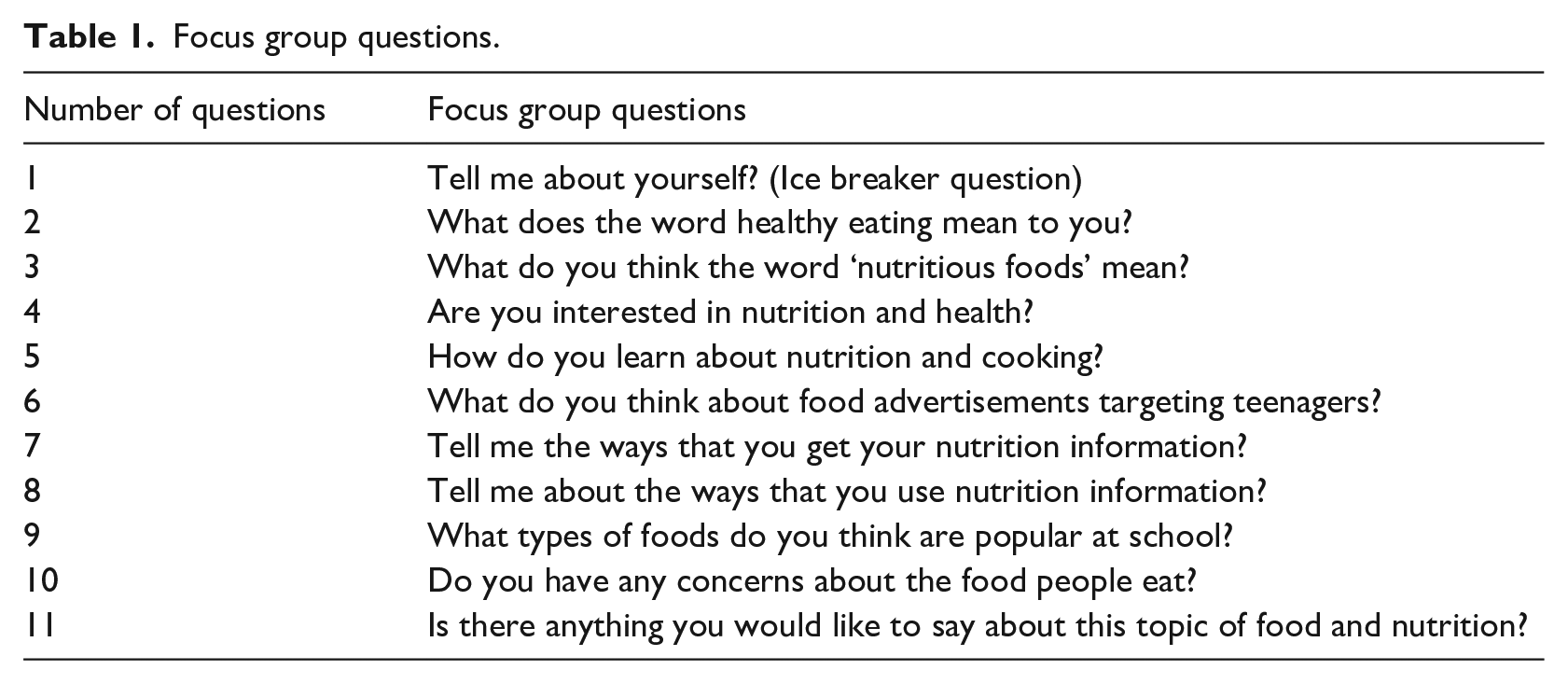
To prevent disengagement by participants during the group discussions, focus group discussions lasted no longer than 45 minutes (Heary and Hennessy, 2002). As compensation for participants’ time, students were provided with fruit, a bottle of water during session breaks, and a AUD10 gift card. Following best practice for focus group methodology (Freeman, 2006), both gendered homogeneous and gendered heterogenous focus groups took place. Theoretical saturation was achieved and identified by the seventh focus group session (Morse, 1995).
Data analysis
Focus group interviews were audio-recorded with the consent of parents and students’ assent, and professionally transcribed. The transcripts were de-identified to ensure confidentiality and then coded manually. Braun and Clarke’s (2014) six-step methodology, which involved becoming familiar with the data, creating preliminary codes, looking for themes, analysing themes, and defining and labelling themes, was used to conduct an inductive thematic analysis.
Ethical approval
Ethical approval for the study was received from the Flinders University Human Research Ethics Committee (Project Number 8098) and the South Australian Department of Education and Child Development Research Unit (Project Number 2019-0015).
Findings
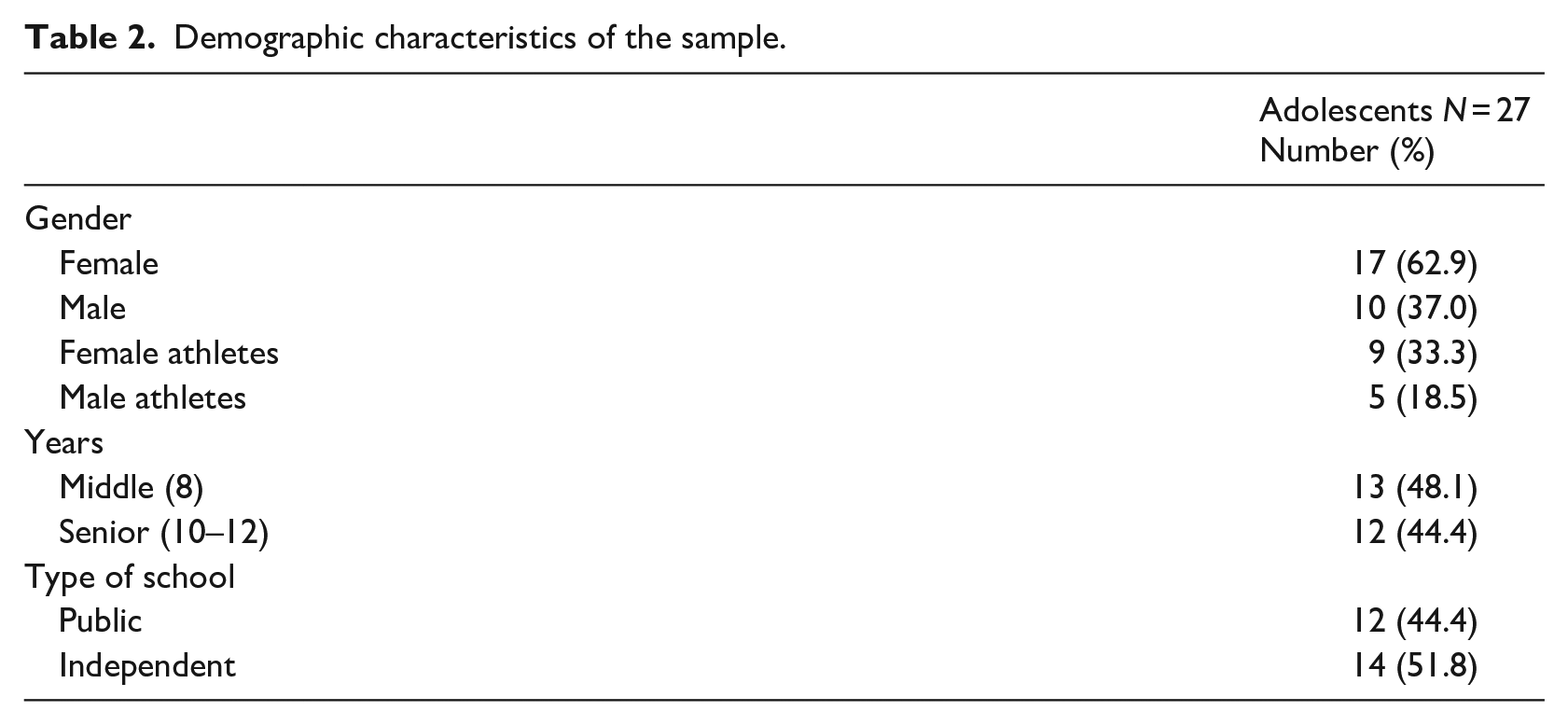
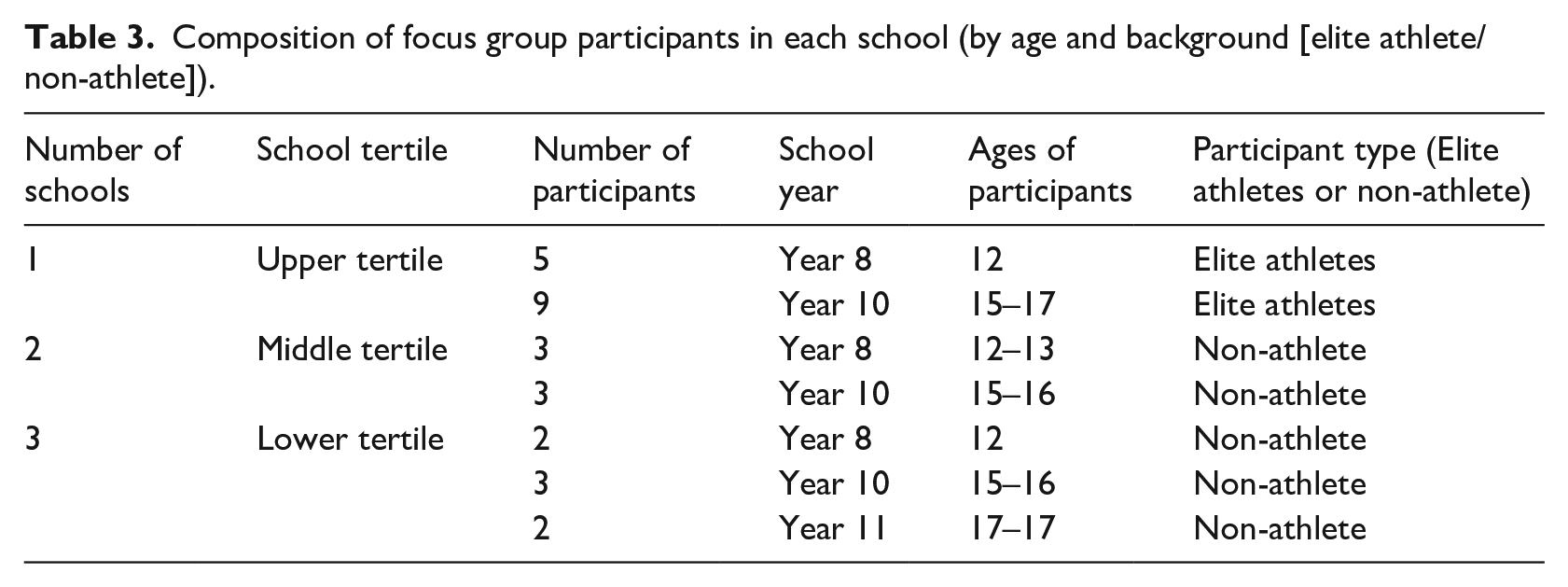
A total of seven focus group discussions were completed involving 27 adolescents (17 identified as female and 10 as male). On average, participants were 15 years old. Fourteen were elite athletes’ students, and 13 were non-athletes. Participants’ demographics are shown in Table 2 and the composition of each focus groups (by age and athlete status) is presented in Table 3. Three overarching themes were identified: (1) physical and cognitive benefits of healthy eating; (2) scepticism, mistrust and ethical concerns about food and beverage advertisements directed toward adolescents; and (3) portrayal of thin and fit ideals on social media.
Demographic characteristics of the sample.
Composition of focus group participants in each school (by age and background [elite athlete/non-athlete]).
Physical and cognitive benefits of healthy eating
Participants across all year levels and different socioeconomic backgrounds displayed a sound degree of nutritional knowledge when describing healthy eating practices. They recalled the food pyramids and food circles taught in primary and secondary schools. However, many elite athlete students claimed that adhering to the Australian dietary recommendations provided guidelines for the general population, not elite athletes:
I mean home ec’s [economics is] always just about healthy eating and . . ., so I think that might help ‘cos it goes through the food groups and like trying to balance the diet, but it’s not related to athletes, I think it’s just general.
Yeah, it’s just, yeah.
But it is about healthy eating.
It’s about the general population. But like for athletes it’s different again, yeah. (FG1; Upper tertile; Elite Athletes; Y10)
Students from the lower socioeconomic school were aware of the persuasive intent of food advertisements aimed at adolescents and the low cost of certain foods was a contributing factor to dietary behaviour:
Like slogans and words, they use, they usually target certain people and if their advertising is, it’s targeted towards people who won’t have a lot of money, like teenagers that don’t have jobs yet or students like that.
Most-what I . . . most of the stuff they advertise is really bad for you and not healthy (FG3; Lower tertile; Non-athletes; Y10)
Non-elite athlete students used the following words to describe healthy eating practices: balance, variety of food groups, lack of carbs, fruit and vegetables, and correct amounts of dairy and wheat:
[make] unhealthy food healthy by adding the right ingredients, not the unhealthy things. Like instead of adding sugar, add things that could replace sugar (FG3; Lower tertile; Non-athletes; Y10)
In contrast to the non-elite athletes, the elite sporting athlete student made reference to ‘carb loading’ and the need to eat foods at the ‘right times during the day’. For example, a participant who was enrolled in the elite athlete programme stated that they would:
Usually have carbs before a race meeting and stuff and protein afterwards and fruit and drink (FG2; Upper tertile; Elite Athletes; Y8)
When participants made reference to eating meals at appropriate times of the day, they referred to having breakfast in the morning, lunch in the afternoon and dinner in the evening. A motivating factor for elite athletes to adhere to healthy dietary intake and avoid energy-dense, nutrient-poor foods and beverages was the physical benefit this brought to their sporting performance.
Compared to non-athlete students, elite athlete students described the importance of eating healthily and aspired to demonstrate this by eating healthily before sports competitions and training sessions. Participants in the high-performance elite athlete programme described how nutrition was essential for their physical health and how good nutrition provided them with energy during their sporting performance. As one of them explained:
I think breakfast . . . game is really important, like when you have a breakfast that isn’t as good for you, you can tell like the difference when you play, I’m not sure if everybody can, but you can sometimes feel the difference (FG2; Upper tertile; Elite Athletes; Y10)
Although several non-athletes and elite athletes students said they did not eat breakfast regularly, the elite athlete students stated that eating breakfast before a sports competition/training or before the school day helped their concentration levels for both sports performance and academic studies:
I feel like, it keeps you up as well, like if you don’t eat much in the morning, you kind of just stand around and you’re like, ‘I don’t want to be here’. But if you like to eat food you feel energised, and you want to be there, and you can tell the difference . . . (FG1; Upper tertile; Elite Athletes; Y10)
Also, mentally, like concentrating, just like concentrating on your warm-ups and you know like getting into that zone and all that, so year it definitely helps . . . (FG1; Upper tertile; Elite Athletes; Y10)
When asked whether they were interested in nutrition, many of the elite athlete students expressed an interest in nutrition and its physical benefits and referred to sports coaches and sports nutritionists as valuable sources of information.
Scepticism, mistrust and ethical concerns about food and beverage advertisements directed toward adolescents
When students were asked about their perceptions and beliefs concerning food and beverage advertising, many participants expressed scepticism and mistrust toward food advertising for adolescents. This finding was consistent across the schools and was present regardless of whether participants were elite athletes or not. One student said they received food advertisements from multiple media platforms, including television, social media and the Internet:
Yeah, companies always target teenagers through social media and TV because that’s where most teenagers spend their time, that’s where they look. And they might see a product and they will buy it because of where they’re advertising (FG4; Lower tertile; Non-athletes; Y10)
When participants were questioned about what they noticed about food and beverage advertisements, several said the intent of the advertisements was to sell a product and generate profit:
Yeah, all the cheap stuff, like the huge brands that sell stuff cheap because they’ve earned money over a long period of time. They used to be healthy but now they are adding sugar and stuff into it because that will make you want the food more. As in the smaller brands that [sell] the whole [food] stuff like that – the whole foods like that – [. . .] it’s not really easy to find. (FG2; Upper tertile; Elite athletes; Y8)
Adolescent athletes discussed the importance of sports energy drinks and their effects on overall health and physical performance. Participants acknowledged ‘giving in’ and consuming these products even though they knew they were being targeted by advertising to consume them:
I think there’s lots of things that are marketed for sports people, but . . .
They’re . . . .
Yeah, they’re not that good for you. So like PowerAde, lots of people think ‘Oh I’ve just done something so I can have a PowerAde .’. ., it’s like ‘Oh you’ve done something, you can have a little bit of a PowerAde’, like people seem to think if it comes in a package it’s, that’s . . . .
Yeah well, I know a lot of people who, like myself when I have training, and I’ll have a PowerAde and, but . . . I’ll go straight to the water and then have a little bit of PowerAde, and then some people will drink heaps of PowerAde and no water. It’s like you know you shouldn’t be having too much of it, it’s just for that little, to get all your sweat back after you’ve done a run or something, it’s not supposed to be just something you drink at home when you feel like it, I feel like a lot of people do that. (FG1; Upper tertile; Elite Athletes; Y10)
Many focus group participants showed a mistrust of the exaggerated health claims made in food and beverage advertisements. In one focus group session, a participant claimed:
There’s a lot behind the scenes. There’s a lot of stuff that they could easily add to it, without us knowing. They don’t have to fully tell us everything. They have the fine print and all that to loop it around. Because there’s a lot of other adverts and all that are very deceitful, so your kind of just take onboard a stereotype where most adverts will have something deceitful in them. (FG6; Lower tertile; Non-athletes; Y11)
Parents’ views about food containing a significant amount of sugar were discussed in one of the focus groups from a lower tertile school:
I know my mum had drilled into me just trying to stay away from a lot of them like the . . . like a lot of things like a chocolate bar or something like that has a lot of refined sugars. (FG6; Lower tertile; Non-athletes; Y11).
Although participants discussed the importance of healthy eating, they wanted food products that tasted good. In reference to processed foods, one student stated that he still desired unhealthy food but understood that he could not consume it every day:
Yeah, so what I want to eat is a burger and stuff. But I know I can’t have that every single day. (FG6; Lower tertile; Non-athlete; Y11)
Portrayal of thin and fit ideals on social media
Study participants linked the concept of healthy eating with the avoidance of overweight and obesity. During the focus group discussions, the term ‘fat’ and ‘fatness’ were often used, highlighting adolescents’ perceptions of healthy eating and the need to avoid foods high in ‘fat’. Stereotypes associated being thin with being physically ‘fit’. One student stated the following in a focus group session:
Sometimes, some people eat a lot of unhealthy foods. But then there’s also with social media, some girls, like, not to say that boys don’t, but some girls end up eating nothing at all because that feels like – I never do that. Like body image as well. (FG7; Middle tertile; Non-athlete; Y10)
A focus group consisting of female participants discussed the social media and peer pressures placed on girls. One participant stated, ‘And people say over social media, ‘I eat this every day, and this is why I look this skinny’, and in real life, it’s probably not like that [at all]’ (FG3; Middle tertile; Non-athletes; Y10). Students were asked about the influence of social media on girls’ eating behaviour and self-concept:
I think it definitely does [influence us], because if you’re just scrolling through social media and say you just munched on some chips and then you just see this really skinny, pretty girls that . . . and you see that they’re eating kale and all this healthy food and you’re ‘Why do I look like this, why aren’t I eating that’? You start to judge yourself because you think that they’re like that because of the way they are. But then you start to judge yourself because you see what they’re eating, and what they’re eating and what they’re doing, and you’re not doing that. (FG7; Middle tertile; Non-athletes; Y10).
Self-image and looking fit were perceived as things that advertising sought to appeal to. Female elite athlete students discussed the significance of body image and the ideal of having a thin and fit body:
And I think with our age as well, it’s all about body image, and everyone wants to be fit and that sort of thing. So, for PowerAde and the likes, it’s about selling it to the general, like it’s not aimed at high performance, like not athletes, I think, like it’s the general population. If we throw, what’s the tennis player, I don’t know what her name is, someone on there, and everyone is like ‘Oh wow, I want to be like her’, but it’s for everyone else. And so, if they don’t really care about what they’re putting into it, it could have like all the sugar in the world, but it’s for the general population. (FG1; Upper tertile; Elite Athletes; Y10)
In contrast, boys associated food choices with developing muscles and physical strength, alongside the need to avoid fatness. In a focus group session, one boy commented:
‘It’s the same, like eggs and stuff. You eat eggs for more, I guess, protein. So [it] builds your muscle up when you go to the gym and stuff and yeah’. (FG3; Middle tertile; Non-athletes; Y10)
Discussion
In this study, social constructionism was used to explore Australian adolescents’ views about healthy eating and the effects of discretionary food advertising on dietary behaviour. Furthermore, we sought to examine whether there were any differences in these perceptions among adolescents who were elite athletes and those who were not. Although there is a considerable amount of research exploring advertising literacy and its effects on children and adolescents (Qutteina et al., 2019; Russell et al., 2019), few studies have used qualitative methods to investigate the impact of food advertisements and social media on the dietary behaviour of Australian adolescents. Three overarching themes were identified. These involved perceptions around the physical and cognitive benefits of healthy eating, general scepticism and mistrust about food advertisements directed toward adolescents, and the portrayal of thin and fit ideals on social media.
Across athlete status and socioeconomic status, adolescents in this study had broadly comparable attitudes toward healthy eating. Many participants associated fruit, vegetable and water with healthy food and drink consumption. As reported in previous research, it is common for adolescents to associate healthy eating with fruit and vegetable consumption (Van Der Heijden et al., 2021). Participants across all year levels and socioeconomic statuses described the physical and cognitive benefits of healthy eating, and their description of healthy foods was centred around the physical benefits of physical activity and overall health. Many elite athletes also discussed the importance of eating a healthy breakfast before school and sports training/competitions to improve their overall concentration.
When students were asked about their perceptions and beliefs about food and beverage advertising toward adolescents, many expressed scepticism and mistrust, consistent with previous research. Elite athletes in particular were able to recognise the use of famous sports people in the advertising of sports beverages and how this might impact the general public.
Outside the school environment, the online environment also significantly shapes norms and constructions around food and health. Some students mentioned that the content and images they viewed on social media regarding food and body image were unrealistic. Taken together with their scepticism toward food advertising, it is clear that the young people in this study exhibited a reassuringly high degree of social media literacy. Despite this, many participants still mentioned being influenced by social media in some way. As such, it is important to promote social media literacy for young people in relation to food advertising and health messaging. More generally, given the potential for misinformation on social media in current society (Muhammed and Mathew, 2022), focusing on building literacy in this space is essential.
Limitations
As with any research, the current study had several limitations. First, a small convenience sample of adolescents from three schools of differing socioeconomic status participated in the study. Furthermore, participants were predominantly recruited from either the school’s elite athlete programme or from home economics of physical education classes. It is not possible, therefore, to generalise beyond this context to a wider population. The study also involved are relatively small number of focus groups, making it hard to be sure that theoretical saturation was reached. Finally, because students were familiar with their peers, the possibility of social desirability effects influencing participants’ responses in the group discussions cannot be discounted.
Implications for policy and practice
Good nutrition and physical activity are key to adolescent health and development. Findings from this study suggest the need for schools to adopt a more holistic approach to promoting healthy eating to address the possible impact of food advertising and views about the ideal body. Since social media is an intrinsic part of modern society, educators must understand its relevance and potential impact on healthy eating, body image and disordered eating (Holland and Tiggemann, 2016). Adolescents’ beliefs and perceptions toward healthy eating and food literacy can be co-constructed on social media (Steils and Obaidalahe, 2020). School educators should focus on increasing adolescent knowledge and awareness of social media marketing tactics (Van Der Bend et al., 2022). Furthermore, increasing public support of regulations controlling social media food marketing content targeted at adolescents may help speed up international policy development in relation to adolescent-targeted food marketing (Van Der Bend et al., 2022).
Conclusion
This study contributes to research on young people’s health by exploring both elite athletes and non-elite athletes and non-athlete students’ views on healthy eating. It also investigated perceptions of food advertisements and social media on dietary behaviour. While some differences between the athletes and non-athletes were observed, it was clear that overall, participants understood how advertising and social media attempt to influence their dietary choices and could identify foods that were outside ideal dietary advice. Many students recognised the need to avoid certain foods because of their adverse health effects. However, while adolescents were sceptical of the intent of food advertisements toward them, they still desired products that were energy-dense and nutrient-poor. Future research is required to further examine food marketing on social media platforms, social media literacy and how this impacts adolescents’ dietary behaviours.
Footnotes
Declaration of conflicting interests
The author(s) declared no potential conflicts of interest with respect to the research, authorship and/or publication of this article.
Funding
The author(s) received no financial support for the research, authorship and/or publication of this article.
