




Abstract
Objective:
In contrast to previous research that has primarily focused on gender differences in health behaviour compliance, this study explored the association between gender consciousness and sun protection in China – a cultural setting in which there is a pronounced gender bias towards sun protection. These article is the first attempt to examine gender norms concerning sunscreen use among Chinese individuals, encompassing both young women and young men.
Design and setting:
Cross-sectional analysis conducted on one Chinese campus.
Methods:
Utilising data from the 2020 cohort of first-year students (549 male students and 1,489 female students) at a local university in Shanghai and employing OLS regression analysis, our analysis sheds light on gendered patterns of sun protection use among young individuals in China.
Results:
Findings reveal that gender attitudes affect women’s sun protection frequency without influencing their choice of specific products. Conversely, men’s gender conciousness shapes their sun protection methods but not their overall frequency of sun protection. In addition, despite lower aggregate levels of sun protection, young women exhibit higher heterogeneity in their responses than young men. Socioeconomic status, health awareness and gender consciousness are all significant factors influencing sun protection among female students; however, among men, only health awareness shows a positive correlation with the use of sun protection.
Conclusion:
The results of this study exhibit some differences from initial expectations, suggesting that the full adoption of sun protection measures is still a work in progress. However, despite the differences identified, findings provide valuable insights to inform future public health efforts to promote sun protection among youth.
Introduction
Sun protection is gaining attention in China as a crucial health behaviour, primarily in response to the detrimental effects of intense solar ultraviolet exposure on the skin and overall well-being (Gao et al., 2014; Wan et al., 2016; Zhou et al., 2017), including skin damage, sunburn, aging, photodermatosis, and skin cancer (Brown et al., 2006; Køster et al., 2010; Thieden et al., 2005). Despite the low incidence of skin cancer in Asia, an escalating trend of skin cancer hospitalisations cannot be disregarded (Kantor, 2021; Urban et al., 2021). In 2020, the largest domestic online trading platform in China, Taobao, recorded a sunscreen 1 (i.e. creams, hats, clothing, and umbrellas) transaction volume of 7.7 billion RMB, with individuals born after 1995 accounting for over 40% of all purchases. As the use of sun protection becomes more prevalent, it is emerging as a key aspect of subculture among Chinese youth.
Sun protection practices not only constitute a health behaviour but also serve as a symbolic manifestation of gender (Cho et al., 2010), illustrating how ‘doing gender’ (West and Zimmerman, 1987) emerges as an aspect of societal norms. Doing gender, as reflected in individuals’ gender consciousness, involves taking up specific gender roles (Greenstein and Davis, 2009; Homan, 2019; Qian and Li, 2020). Women typically apply sun protection more frequently than men, highlighting how gender acts as a pivotal factor in sunscreen use in both Western and Eastern cultures, albeit for distinct reasons. In Western culture, individuals often pursue a tanned skin as an indicator of health and wealth (Mayer and Glanz, 2014), even though engaging in self-tanning or sunbathing may lead to major skin health problems. Men, however, have been shown to be less attentive to sun protection use than women (Cho et al., 2010; Courtenay, 2000; Daniela et al., 2018). In Western contexts, men frequently adhere to forms of hegemonic masculinity that promote participation in detrimental behaviours, leading them to forgo sun protection.
In contrast to the Western pursuit of tanned skin, fair skin is a widely accepted beauty standard in East Asia (Miho et al., 2002), as is exemplified by the adage ‘white skin covers a hundred flaws’. Besides, Confucian patriarchal ideologies dictate distinct social expectations for men and women (Mahalik et al., 2008): Men are encouraged to display assertiveness and courage to assert their masculinity, while women are expected to prioritise family, appearance, and a more submissive role (Sherman and Zurbriggen, 2014). Taking into account these cultural expectations, when confronted with a behaviour closely related with widely acknowledged beauty standards, women who prioritise feminine traits tend to enthusiastically embrace these standards, while men, who emphasise masculine attributes, often eschew such endeavours.
Previous studies have examined how gender ideology influences Western men’s use of sun protection behaviour, as a tension often exists between this behaviour and traditional norms of masculinity. These studies suggest that the sun protection behaviour of male peers is the predominant determinant for men, while the behaviour of female peers has marginal influence on men (Cho et al., 2010). Moreover, since manufacturers frequently promote sunscreen creams as skin-whitening cosmetic products, men tend to lean towards clothing as an alternative (Walsh and Stock, 2012). Men who place a high value on their masculinity are less inclined to use sunscreen and exhibit lower skin safety awareness (Costner et al., 2019). Nevertheless, when confronted with evidence of sunburn on their faces, men with more entrenched masculinity beliefs are more inclined to acknowledge the damage resulting from photo-ageing (Ferrer and William, 2015; Walsh and Stock, 2012).
Existing research into variations in sun protection practices among Western women is limited, with a specific dearth of attention to the influence of gender attitudes. A study by Cho et al. is pertinent, however, suggesting that both female ‘peers’ sun protection behaviour and the perceived prevalence of male sun protection use significantly influence women. Men’s sun protection behaviour may have a notable impact on women, indicating that when men engage in it, a behaviour traditionally associated with women, this could further motivate women to be even more vigilant in their own endeavours.
Overall, existing research on the association between gender consciousness and sun protection behaviour primarily focuses on gender differences in compliance, which aligns with the gendered patterns observed in other health behaviours (Courtenay, 2000; Mollborn et al., 2020). However, in East Asian countries, gendered patterns of sun protection are influenced not only by gender differences in health behaviour compliance (Yu et al., 2017) but also by gender biases in aesthetic culture. Given these disparities in gender socialisation processes, the impact of gender consciousness on sun protection behaviour is likely to exhibit significant variations between East Asian and Western cultures. For instance, given the cultural preference for fair skin tones, East Asian men, who already exhibit lower health behaviour compliance than women, may be even less willing to use sun protection, especially those adhering to traditional gender norms. In contrast, driven by the pursuit of widely recognised beauty standards, East Asian women may be more enthusiastic about sun protection, with this tendency being even more pronounced among those who hold more traditional views of gender roles.
The use of sunscreen among Chinese individuals, a typical East Asian country, warrants further exploration. Previous studies in China have predominantly focused on enhancing awareness of sun protection (Wu et al., 2018; Zhong et al., 2017), paying limited attention to the influence of structural factors, such as culture (in the form of gender expectations) and social structure, that may be associated with health behaviours (Link, 2008). In addition, while a considerable amount of research has examined the relationship among masculinity norms, gender ideology, and men’s sunscreen use, substantially less attention has been devoted to femininity and gender role beliefs in relation to women’s health. This article is the first attempt to examine gender norms concerning sunscreen use among Chinese individuals, encompassing both young women and men.
The study aimed to analyse the factors influencing sun avoidance actions among college students, focusing on how gender attitudes shape sun protection practices among students attending a local university in Shanghai. Our research seeks to contribute to the existing literature by examining gendered sun protection patterns in a cultural context with a more pronounced gender bias towards sun protection and exploring the impact of gender attitudes on sun protection strategies in Chinese context. As the college years are crucial for establishing enduring habits, comprehending variations in sun protection behaviours and their underlying social determinants holds significant value in fostering such habits among young individuals.
Methods
Design and sample
We conducted a questionnaire-based online survey among first-year students at a Shanghai college to investigate their health and lifestyle habits in the summer of 2020. The questionnaire covered various factors such as socio-demographic characteristics, dietary habits, lifestyles, family environments, and social perceptions. Our aim was to gain a comprehensive understanding of the health habits of members of the post-2000s generation so as to promote healthy lifestyles during their college years, a critical period for habit formation. Effective behavioural interventions at this stage can result in lifelong benefits.
The study protocol was approved by the ethics committee of Shanghai University of Medicine and Health Sciences. (approval number: 2019-CSHS-SUMHS-05-230119197901252329). Out of 3,573 participating students who underwent comprehensive physical examinations, 2,038 fully completed the lifestyle questionnaires. Consequently, our sample was restricted to these 2,038 individuals with complete results, comprising 549 male students and 1,489 female students. This distribution aligns approximately with the male-to-female ratio in the selected school of study (7:3). Informed consent was obtained from all participants prior to participation in the study.
Measurements
Sun protection methods
The dependent variable in this study was the sun protection behaviour of first year students in relation to four types of sun protection products: sun hats, sun creams, sun-protective clothing and sun umbrellas. Participants were required to rate the frequency of use of each product on a five-point scale: 1 = ‘rarely use’, 2 = ‘occasional use in summer’, 3 = ‘fairly regular use in summer’, 4 = ‘consistent use in summer’ and 5 = ‘consistent use year around’. Elevated scores on the scale signify more frequent use of sun protection products.
Gender attitudes
The gender inequalities individuals encounter likely intensify their perception of divergent role expectations. Our primary independent variable, gender attitudes, was assessed by five items asking respondents to indicate their level of agreement with the following statements: ‘Men should prioritise their career, while women should put their family first’, ‘Men’s ability is innately superior to women’s’, ‘It is better to get married than to have a good job’, ‘In times of economic hardship, female employees should be laid off first’, ‘Household chores should be evenly distributed within the family’. The questions were scored from 1 (strongly disagree) to 5 (strongly agree). To ensure that higher scores indicated a more traditional gender ideology, we reverse-coded the item concerning the allocation of household responsibilities.
Compositional indicators
We included controls for socioeconomic status variables and health awareness indicators to account for their potential influence on sun protection behaviour among college students, as these factors are believed to be closely related to healthy lifestyles (Cutler and Lleras-Muney, 2010; Daniela et al., 2018; Mirowsky and Catherine, 2007). First-year college students rely heavily on their families, and their socioeconomic status is closely linked to that of their parents. Indicators of socioeconomic status included parental education levels, mother’s employment status (categorized as agricultural work, non-agricultural work, currently unemployed but ever working or homemaker), and monthly allowance during high school (categorized as below average, average or higher than average). We also incorporated Hukou status (rural or urban) and Shanghai residency, both closely associated with socioeconomic status, as additional socioeconomic factors in our analysis.
Health awareness can be manifested in health-related behaviours or health status, indicating the extent to which college students prioritise sustaining a healthy lifestyle, for instance, the prevalence of taking calcium tablets or vitamin D supplements. Furthermore, we stratified the body mass index (BMI) indicator into four categories: below 18.5 (underweight), equal to or above 18.5 but below 24 (standard), equal to or above 24 but below 28 (overweight) and above 28 (obese). In addition, we also incorporated two exercise variables to assess college students’ health awareness. The first variable represented the frequency of high-intensity exercises, including activities like running, skipping (with a rope), kicking a ball and playing basketball. The second variable represented the frequency of moderate-intensity exercises, such as jogging, practicing yoga or tai chi and engaging in light housework.
Analytical strategies
We used ordinary least squares (OLS) regression analysis to investigate how gender consciousness affected sun protection frequency and methods among Chinese college students. First, three separate OLS regression models were estimated on sun protection frequency: (1) a model using the pooled sample together with the gender variable and all control variables, (2) a model focusing on the male sample with all control variables and (3) a model analysing the female sample with all control variables.
We also examined the impact of gender consciousness on each sun protection method to understand gender differences in their selection. To achieve this objective, we estimated separate OLS regression models for each sun protection method and gender, controlling for all relevant variables.
Results
Descriptive results
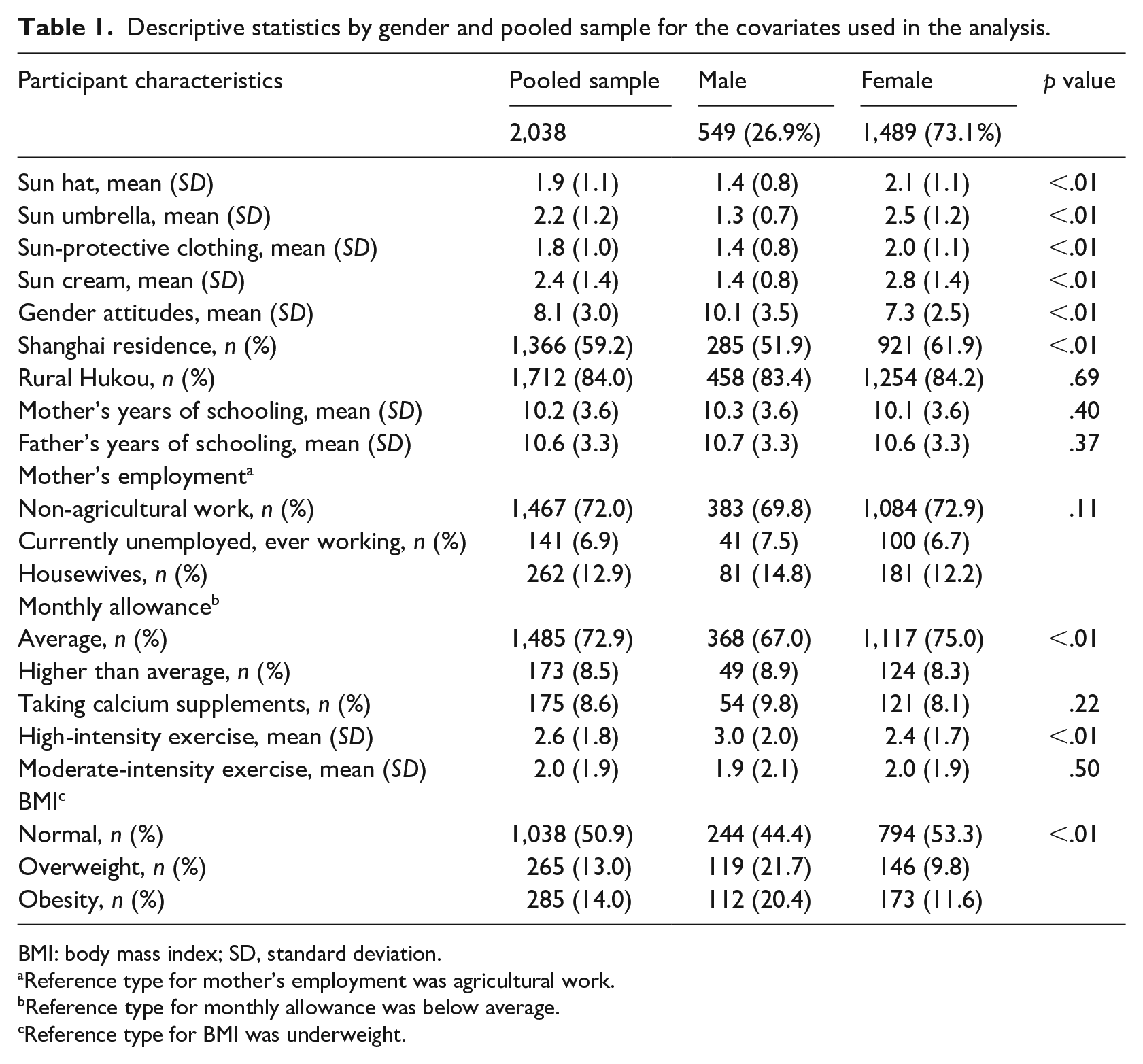
Table 1 presents the descriptive statistics for the analysed covariates, stratified by gender and the combined sample. As expected, male participants reported less frequent use of sun protection than their female counterparts, with an average frequency slightly above 1 on the five-point scale, indicating their sun protection practices fell between ‘minimal use’ and ‘occasional summer use’. Among the four sun protection types, sunshades were the least utilised by men.
Descriptive statistics by gender and pooled sample for the covariates used in the analysis.
BMI: body mass index; SD, standard deviation.
Reference type for mother’s employment was agricultural work.
Reference type for monthly allowance was below average.
Reference type for BMI was underweight.
On the other hand, women demonstrated more frequent protection application, with an average frequency of about two on the five-point scale, indicating ‘occasional summer use’. Among women, sunscreen cream was the most commonly used type of protection, while sun protection clothing was the least utilised. Furthermore, the average gender attitude score was 8.05, which suggests a relatively egalitarian gender ideology among this group of college students. Remarkably, in alignment with prior research demonstrating men’s less egalitarian gender ideology (Pepin and Cotter, 2018; Qian and Li, 2020), men’s average score (10.11) exceeded that of women’s (7.30).
Table 1 focused on the socioeconomic variables, showing that over 60% of students had Shanghai residency, and nearly 84% possessed an urban Hukou. Average parental education exceeded 10 years, with 72% of mothers working in non-agricultural sectors, and 72.87% of participants reporting an average high school monthly allowance. Health habit variables showed that 8.59% took calcium supplements, engaging in high-intensity exercise 2.56 times/week and moderate-intensity 1.99 times/week. About half of the students (50.93%) had normal BMI values. Most compositional variables exhibited consistency between genders, with the exception of male students’ lower proportion of Shanghai residency, higher frequency of high-intensity exercise and higher BMI scores.
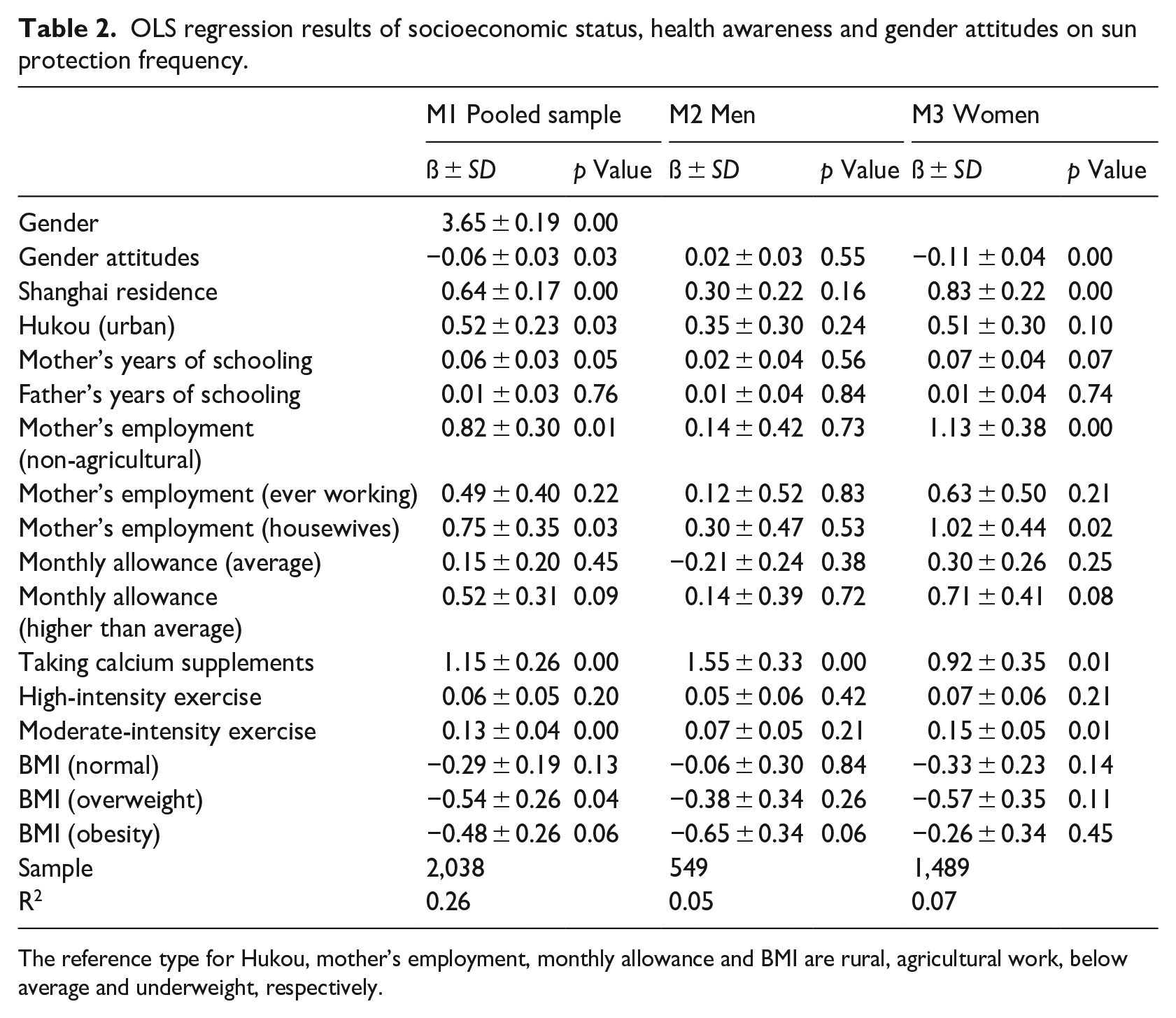
Gender attitudes on sun protection frequency of college students
In Table 2, the three models were denoted as M1 for the gender-pooled sample, M2 for the male sample and M3 for the female sample. The total sample served as a control, with the main focus being on interpreting the results of M2 and M3. The effects of other variables in M3 (female sample) closely resembled those in M1 (pooled sample). In the gender-pooled sample, women were more inclined to apply sun protection, exhibiting an increase of 3.648 in frequency when controlling for other factors. The negative coefficient of the gender attitudes variable suggested that women possessing more egalitarian gender ideology employed sun protection more frequently. Except for father’s education, socioeconomic status variables such as Hukou, mother’s education, mother’s employment and monthly allowance demonstrated significance, underscoring the pivotal role played by socioeconomic status in shaping health behaviour (Christensen and Carpiano, 2014; Cutler and Lleras-Muney, 2010). Among the three health variables, only calcium supplementation and moderate-intensity exercise were significantly positive, with calcium supplementation increasing sun protection frequency by 0.92. The significance of moderate-intensity exercise for women, while not evident in men, may be attributable to women’s focus on fitness. BMI did not correlate with women’s use of sun protection, implying that women’s motivations for body management may extend beyond health concerns. Taken together, socioeconomic status, health awareness and gender consciousness all contributed to women’s sun protection behaviour.
OLS regression results of socioeconomic status, health awareness and gender attitudes on sun protection frequency.
The reference type for Hukou, mother’s employment, monthly allowance and BMI are rural, agricultural work, below average and underweight, respectively.
Among men, the regression results revealed a limited number of significant variables, except those related to health awareness. Regular calcium supplement intake among male college students corresponded to a 1.546 increase in sun protection frequency. Obese male college students exhibited a reduced frequency of sun protection use. Interestingly, while male students’ gender consciousness exhibited a positive effect on sun protection, its influence was not statistically significant. This positive effect contradicted traditional gender role expectations, which postulated that men holding traditional gender attitudes are less likely to engage in skin protection.
Gender attitudes on single sun protection method
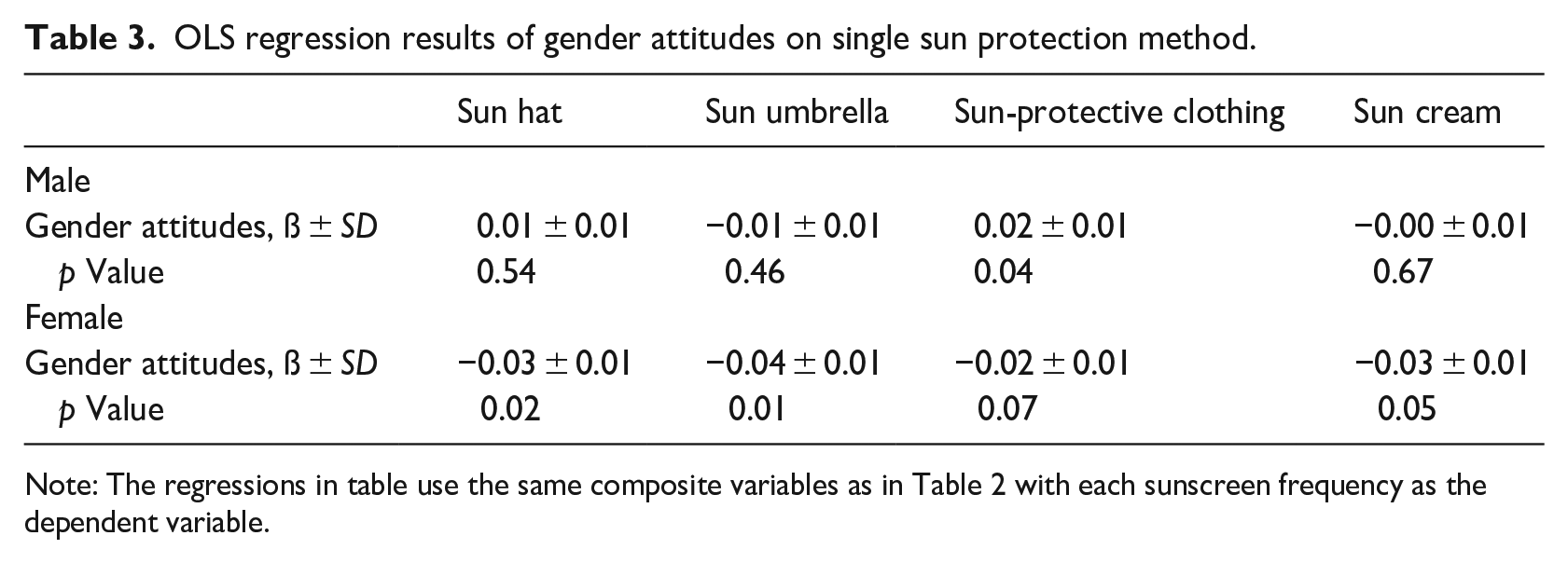
The upper part of Table 3 illustrates the impact of gender consciousness on men’s sun protection choices, while the lower portion pertains to women. The findings for men revealed that gender consciousness positively affected sun-protective clothing usage, signifying that more traditional men were inclined to use clothing due to cultural biases towards sun protection. Although the impact of gender attitudes on the remaining three sun protection strategies was not statistically significant, the direction of the effect merits attention. Egalitarian men exhibited a higher propensity to choose umbrellas and creams, whereas more traditional men favoured the less conspicuous sun hat.
OLS regression results of gender attitudes on single sun protection method.
Note: The regressions in table use the same composite variables as in Table 2 with each sunscreen frequency as the dependent variable.
For women, as there is no cultural taboo against sun protection, the impact of gender attitudes on the four methods was relatively consistent. Moreover, the influence of gender consciousness on the use of sun umbrella was slightly more pronounced than that of the other three methods. The effect of gender attitudes on single sun protection method can be seen in Figure 1.
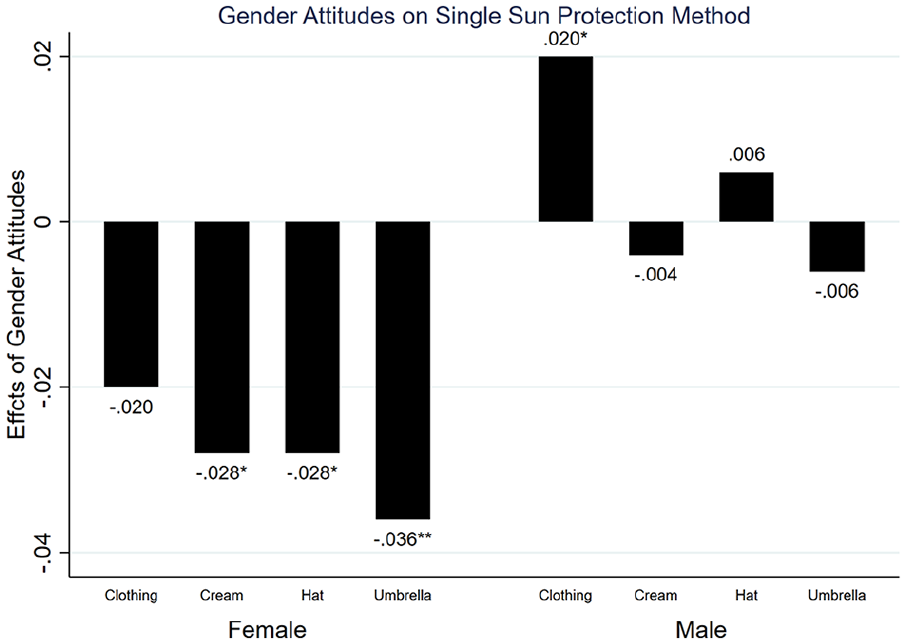
The effect of gender attitudes on single sun protection method.
Discussion
Paula England contends that women’s gradual entry into traditionally masculine pursuits (England, 2010) such as adopting men’s smoking habits, wearing short haircuts and assuming roles once exclusively held by men symbolises gender progress. However, men are less inclined to adopt behaviours typically associated with women due to the social perception that such behaviours are demeaning. For example, taking precautions to protect oneself from sun is incongruent with the traditional masculine trait of risk-taking. Moreover, in East Asia, sun protection activities are often closely associated with feminised skin-lightening practices, which further dissuades many men from engaging in them.
Previous research on the association between gender consciousness and sun protection has primarily focused on gender differences in health behaviour compliance. In contrast, our study delves more deeply into this relationship in the context of China – a cultural setting with a more pronounced gender bias towards sun protection. In contrast to previous research focused on men, our study includes both men and women to identify possible differences in their sun protection patterns. To empirically examine the influence of gender consciousness on gendered sun protection patterns, we utilised sun protection frequency and methods as dependent variables.
In a cultural context marked by a noticeable gender bias towards sun protection, we expected to find a stronger inverse relationship between men’s adherence to traditional gender roles and sun protection frequency, while women’s adherence to traditional gender roles would be more positively related to sun protection frequency. However, our research findings challenge these initial assumptions. We identified an inverse relationship between conventional gender attitudes and sun protection practice among female college students. This unforeseen outcome implied that those with more up-to-date beliefs were more likely to embrace sun protection measures. In addition, our study found no notable impact of gender attitudes on the frequency of sun protection practices among men.
Yet, the subtle influence of gender consciousness remains evident, suggesting men are guided to choose specific sun protection methods, with men adhering to more traditional gender norms showing a preference for less conspicuous approaches, such as sun-protective clothing. How then do we best interpret these results? The uniqueness of sun-protective clothing lies in its cultural perception among various sun protection products. Among the four sun protection methods considered, sun-protective clothing offers the highest level of discretion when compared to sun-protective hats and umbrellas. The use of sunscreen cream, however, shows a noticeably strong gender association due to its classification as a cosmetic and its complex process of application (Abroms et al., 2003). Consequently, for men with traditional gender consciousness seeking sun protection, sun-protective clothing emerges as the optimal choice, offering both concealment and a non-feminised option.
Synthesising the results from both men and women, it becomes evident that gender attitudes do play a significant role in shaping health decisions, although not entirely in the way expected. While gender consciousness influences women’s frequency of sun protection usage, in this study, it did not impact their specific means of sun protection. On the other hand, men’s gender awareness influenced their sun protection method choices but not their overall frequency of use.
In the light of the negative correlation between traditional gender attitudes and sun protection frequency among women, as well as the earlier findings that underscore men’s limited use and minimal variation in sun protection practices, an alternative interpretation is possible: namely that the widespread adoption of sun protection practices is still a work in progress and has not yet reached its full potential. In this respect, it is important to recognise that our sample was drawn from the Shanghai region, which is known for being at the forefront of new trends in China. More than half of the sampled students in the selected school were local residents of Shanghai, making them fairly representative of China’s most fashionable young generation. However, the fact that they still have some way to go in developing mature sun protection habits indicates that sun protection education in China still requires further support and encouragement.
Our examination of factors influencing college students’ use of sun protection provides invaluable insights for health education. Other research has shown that strategies to promote sun protection for women should concentrate on factors such as affordability (Araujo-Soares et al., 2013), health consciousness and gender equality. For men, the critical factor impacting their sun protection behaviour is health awareness, and educational efforts should highlight the adverse consequences of sun-related skin damage. In addition, traditional masculine ideologies discourage men from active engagement in sun protection, underlining the need to challenge conventional aesthetic preferences. By doing so, sun protection promotion can be more effectively implemented for men.
Limitations
The study has several limitations. First, there was an imbalance in sample sizes between groups, with a larger representation of young women than young men. Although we conducted subgroup analyses and explored potential differences within each group, the errors caused by the imbalanced sample sizes may not have been entirely eliminated. Second, the unexpected results of the association between gender attitudes and sunscreen frequency of use in both men and women underscore the complexity factors influencing sun protection behaviour. These findings call for longitudinal or panel data to gain a deeper understanding of underlying factors involved in shaping sun protection practices. Furthermore, it is important to enquire into the role of structural factors (not examined in this study) in influencing health outcomes and health behaviours such as sunscreen use.
Conclusions
This study investigated the determinants shaping sun protection use among college students, drawing upon data from the first-year students at a local college in Shanghai. We discovered that overall sun protection frequency remained low, especially among male students. Egalitarian gender attitudes augmented sunscreen usage among female students, but with no significant effect discerned for male students. Nevertheless, gender awareness did impact male students’ specific sun protection preferences. In addition, our findings revealed a disparity among female college students, whereby elevated socioeconomic status and heightened health consciousness significantly contributed to the enhancement of sun-protective behaviour. For male students, health consciousness alone demonstrated a moderate impact on sun protection use. These divergent patterns and factors between male and female students should inform future endeavours to promote sun protection among youth.
Footnotes
Declaration of conflicting interests
The author(s) declared no potential conflicts of interest with respect to the research, authorship, and/or publication of this article.
Funding
The author(s) disclosed receipt of the following financial support for the research, authorship, and/or publication of this article: this work was supported by the Chinese Nutrition Society Foundation (Grant CNS-ZD2019083).
