




Abstract
Objective:
To describe the creation of an educational podcast with ‘living cases’ of older adults to support students’ learning on a gerontology course and report on students’ evaluation of the project.
Setting:
Gerontology course in a graduate programme.
Method:
We developed a podcast series based on interviews with older adults in the community following recent guidelines for creating educational podcasts. The podcast episodes were used in a case-based group assignment to work on during the course and to present findings at the end.
Evaluation:
Student experiences were evaluated using a mixed-methods survey.
Results:
From November 2019 to January 2021, case-based podcasts, averaging 17 minutes in length, were created and evaluated. Most students found the content of the podcasts relevant to working with older adults and increased their understanding of the issues facing members of that population. Qualitative analysis of the survey findings found that the overall strengths of the podcasts were that they were well structured, provided an authentic, real-world experience, allowed listeners to experience an innovative teaching strategy, promoted reflection, and encouraged students to consider a future career working with older adults. Students also recommended ways to improve the podcasts.
Conclusion:
Delivering living case studies using podcasts is a feasible, inexpensive and effective teaching method for improving physiotherapy students’ attitudes towards caring for older adults. Students enjoyed learning via the podcasts and found them a valuable way to better understand the issues facing older adults. The living case podcasts could have broad applicability to other aging and health courses.
Introduction
Globally, society is ageing (World Health Organisation, 2022). Older adults (65 years and older) are using an increasingly disproportionate large share of healthcare services (Statistics Canada, 2017). Consequently, the demand for healthcare professionals with expertise in senior care is high and will increase dramatically in coming years. However, the supply of healthcare providers who choose to work with older adults continues to lag significantly behind demand (American Geriatrics Society, 2022; Farrell, 2018). This situation was anticipated decades ago by Kastenbaum (1963), who expected that therapists reluctant to provide care to older adults would become a significant barrier to developing an adequate workforce for older adult care (Kastenbaum, 1963).
Similar to students in other healthcare professions, many physiotherapy students seem less interested in delivering services to older adults than other patient populations (Avers, 2014; Glauser, 2019; Happell, 1999). Students sometimes express having unfavourable perceptions of working with older adults that could affect both their future career choices and the quality of care they provide to senior patients (Avers, 2014). A scoping review by Kalu et al. concluded that physiotherapy students generally have positive attitudes towards older adults but low interest in working with them (Kalu et al., 2018). Thus, even when students expressed a positive or neutral attitude towards ageing, they report little interest in pursuing a career in the care of older adults (Fitzgerald et al., 2003). Healthcare educators, therefore, play an essential role in preparing and encouraging future generations of healthcare professionals to work with the ageing population (Bardach and Rowles, 2012). Since older adults will comprise the largest proportion of patients and clients across most healthcare practice settings going forward, it is imperative to investigate innovative ways to improve physiotherapy, and other healthcare graduates’ skills, knowledge and interest in senior care (Avers, 2014).
Several interventions to improve student attitudes and willingness to work with older adults after graduation using an educational contact design have been tested (e.g. intergenerational contact and education on the topic), but the results are mixed (Burnes et al., 2019).
The living case approach to enhance student learning
Engaging older adults in the delivery of university courses is not new and can take several forms. For example, the involvement of older adults might include participating in student-run recreational programmes, concurrent participation in a course or a volunteering project with students, and engaging in reminiscence activities (Fees and Bradshaw, 2003; Hernandez and Gonzalez, 2008). Several studies show that shared programmes between older adults and students have benefits for both groups (Chippendale, 2013; Dupuis, 2002).
Previous research suggests that having experience with older adults was the main factor that consistently had a positive influence on physiotherapy students’ attitudes towards older adults (Kalu et al., 2018). This influence can be explained by contact theory, which suggests that interpersonal contact is one of the most effective ways to reduce prejudice between different groups (Allport et al., 1954). One way to improve student attitudes towards older adults is to create connections between students and older adults using living cases. Doing so provides opportunities for students to engage authentically with another person and understand the realities of their world in order to solve real-life challenges (Grassberger and Wilder, 2015). These living cases represent ‘real-life’ scenarios, and their implementation can help students learn to apply their clinical skills and knowledge to challenging and realistic healthcare scenarios (Sampson and Johannessen, 2019). However, in many undergraduate courses, incorporating living cases involving older adults can be difficult (Russell et al., 2022). One challenge of using living cases is that students are sometimes hesitant to make statements that the individual concerned might interpret as critical or negative. Furthermore, the logistics of arranging for students to meet and work with older adults are complicated, as bringing older adults on campus may be difficult due to such factors as transportation, accessibility, and financial constraints, which have been further exacerbated by recent COVID-19 restrictions.
To successfully implement the living case approach in today’s learning environments, innovative emerging technological solutions to these problems are required.
Podcasting as an educational tool
One emerging technology to address these challenges is podcasting. Podcasting may be described as a technology used to deliver, receive, and listen to audio content (Bonini, 2015). Podcast listenership is growing significantly (Jham et al., 2008), and support for their use to facilitate education in health fields is growing (Nwosu et al., 2017; Pilarski et al., 2008; Shantikumar, 2009). Emerging research on using podcasts as an educational tool suggests that it has several advantages for learners, including reducing student stress and anxiety, accommodating students with varying study habits, and allowing students to engage in other activities while learning (Pilarski et al., 2008; Shantikumar, 2009). In addition, podcasts can feel personal, as the listener hears the narrator or main character talking about their challenges directly to them without distraction. This creates a psychologically safe and relatively stress-free environment (Berk et al., 2020), making students more able to learn. Podcasts also provide greater flexibility and efficiency (Berk et al., 2020). Production is relatively inexpensive, allowing most podcasts to be distributed for free. Podcasts are also user-friendly and do not need sophisticated equipment or training to use (Jham et al., 2008). Overall, podcasts provide an accessible medium for delivering information to users that may foster reflection, engagement and emotional connections.
Educators have called for greater integration of online technology into health professionals’ instruction to incorporate higher quality content into teaching, develop lifelong learning habits, simplify access to knowledge and personalise and enrich learners’ experiences (Mącznik et al., 2015). Pedagogical activities that encourage active and reflective learning to translate knowledge may be particularly salient in this context. Rigorous studies that evaluate the use of technologies in the educational process for healthcare professional students, specifically for physiotherapy students, are currently lacking.
The aim of this study was to produce novel, evidence-informed educational podcasts for physiotherapy learners in a gerontology course that presented living case studies of older adults and then evaluated them from the students’ perspective. Podcasts were selected to deliver knowledge in an engaging manner that addresses the embodied experiences of living cases. By offering an avenue for older adults to share their experiences through storytelling, podcasts can create a more memorable and human learning experience.
The educational context
The students in this study were enrolled in a Master’s entry-level physiotherapy programme. ‘Geriatrics’ is a 4-credit core yearly course designed to help second-year physiotherapy students gain knowledge and clinical skills related to caring for older adults. Traditionally, students in this course were assigned to groups and given a case-based project to investigate. Feedback indicated that while students found the traditional case studies provided relevant scenarios, many felt disconnected from the cases presented.
The podcasts we develope involve individual living cases with a problem or health challenge presented at the end of each episode for the students to think about, investigate and ultimately solve. For the course’s main assignment, students were divided into groups of 4 to 6, and each was assigned an episode. Groups worked on their cases outside class and developed a solution to the challenge that the case posed. Students then presented their cases and solutions during a mini-scientific presentation day. The groups were assessed using an assessment rubric which was shared at the start of the assignment.
Ethics approval for the study was received from the Queen’s University and Affiliated Hospitals Health Sciences Research Ethics Board (File #: 6029900). Informed consent was obtained from all participants in the study.
Methods
Conceptual framework
This paper is informed by the Knowledge to Action (KTA) framework (Graham et al., 2006), which conceptualises knowledge translation through two key elements: knowledge creation (the refinement of knowledge into knowledge products or tools) and the action cycle (the processes focused on the application of knowledge and evaluation). Here, the process consisted of the development of a knowledge product (i.e. the podcast), and the evaluation and tailoring of this knowledge product to the appropriate context (Graham et al., 2006).
Development of the podcast
The development process followed key design principles and guidelines for developing educational podcasts (Lin et al., 2015; Nwosu et al., 2017) and included six phases: (1) planning, including infrastructure development; (2) defining the scope of each episode; (3) adapting existing podcast quality indicators and educational guiding principles; (4) participant recruitment and storyline creation; (5) developing and professionally editing the podcast; and (6) quality assurance: testing by the team members and external clinicians in the field.
Planning and infrastructure development
Audio recording equipment was bought and tested, including a high-quality audio recorder, a pop filter, a microphone with cables, microphone stands, headphones, and a laptop. The University streaming service was used to host the podcasts for testing. This service is linked to the University learning management system and provided a secure means of accessing podcast episodes.
Defining the scope of each episode
The target audiences were physiotherapy students, and the episodes centred around a pre-selected list of themes informed by a review of the literature and aligned to the course objectives (see Table 1). The podcast was titled GeroCast, reflecting the subject and technology used. The podcasts followed an interview-based format and focused on older adults with complex health or social issues. The podcasts also included education-focused content, such as statistics on the topic and/or relevant laws and regulations. When possible, principles of diversity and equity were considered in selecting topics and participants include different voices. Our research team applied their combined expertise in interviewing, healthcare and educational research to guide the production of the podcasts.
Topics covered in the podcasts and evaluated by participants.
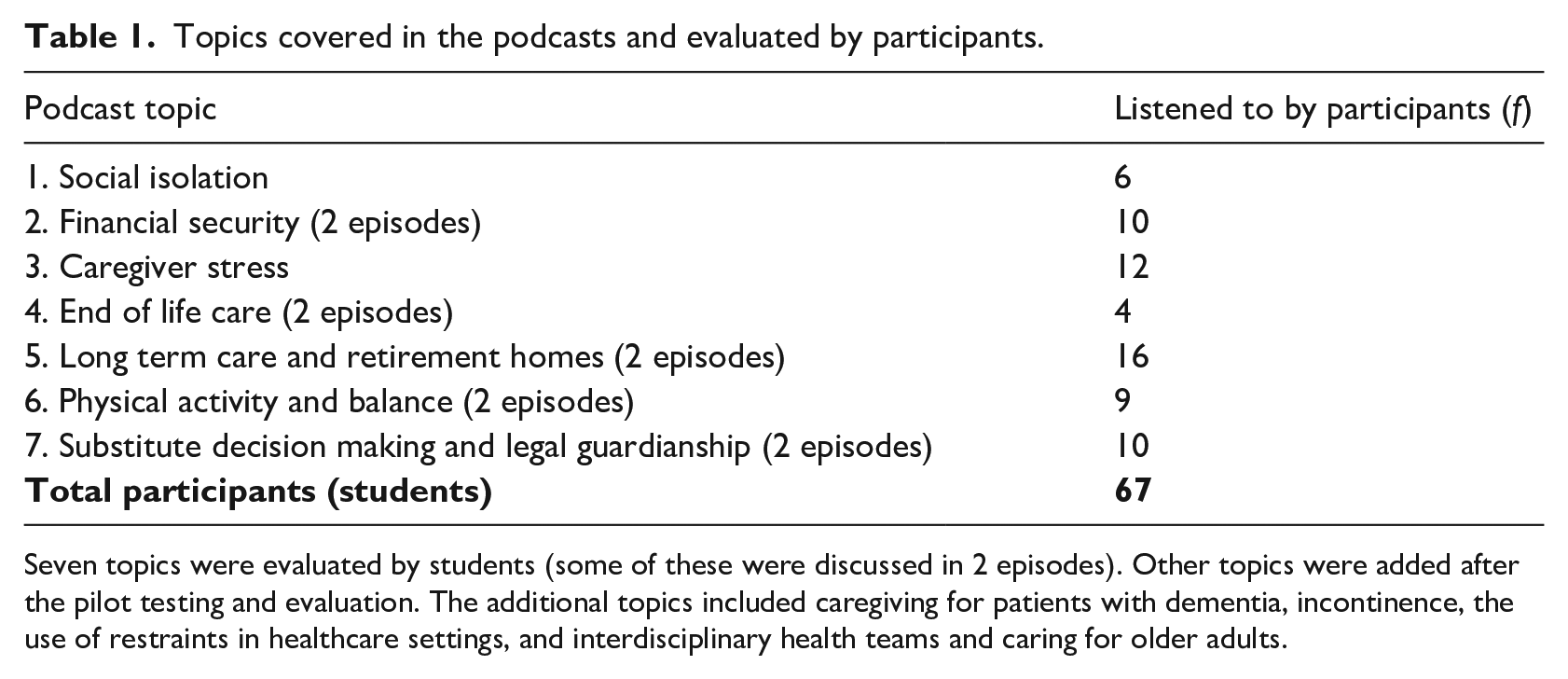
Seven topics were evaluated by students (some of these were discussed in 2 episodes). Other topics were added after the pilot testing and evaluation. The additional topics included caregiving for patients with dementia, incontinence, the use of restraints in healthcare settings, and interdisciplinary health teams and caring for older adults.
Adapting existing podcast quality indicators and educational guiding principles
Key indicators of podcast quality for medical education were applied in the development, including credibility, bias, transparency, academic rigour and professionalism (Lin et al., 2015; Nwosu et al., 2017). We created a checklist based on available guidelines and used it as a quality assurance tool (online supplemental Appendix A). The guiding principles in designing our podcasts are transferrable to other courses at our university and beyond, including aligning the podcast with the goals and outcomes for student learning (Biggs, 1996), enabling multiple means of representation by adopting Universal Design for Learning Guidelines (CAST, 2018), embracing authenticity and encouraging reflection and critical thinking by creating questions that promote deep thinking (Chang, 2019).
Participant recruitment and storyline creation
Once the scope of each episode had been defined, interviewees were recruited. A purposive sampling strategy was used to recruit living cases. Living cases of older adults with a relevant story related to one of the predetermined topics (Table 1, which also includes the number of students listened to each episode in the study) were identified through the University Health Sciences Experiential Learning Programme, seniors’ centres, local community centres and patient and personal networks. Using the list of themes selected, the research team recruited older adults with relevant stories and experiences. Potential living cases were briefly interviewed to introduce the project and confirm their suitability for providing a living case podcast. This preliminary interview also helped in preparing the storyline and guiding the actual interview for the podcast.
Recording, editing and professionally producing the podcast
For each episode of the podcast, an older adult or living case was interviewed about a selected topic. When suitable, healthcare providers and other community members relevant to the story were also interviewed. Once all interviews were complete, the recordings were edited and professionally produced. Each episode was facilitated by a host, who provided connections between the information presented, lived experience of the living case, and questions for reflection. This strategy was used to enhance the interactivity of the podcasts by eliciting student reflection and encouraging the application of knowledge to practice. This approach also addressed the common criticism that using educational podcasts is a passive learning strategy (Palmer and Devitt, 2007).
Quality assurance testing and transcription
The final step in the podcast’s development involved reviewing and refining each podcast. A diverse group of rehabilitation clinicians (n = 6) and the team members reviewed the podcasts and provided critical feedback using a standardised form (available from the corresponding author on request). This review process allowed the team to gain insight into the clarity and accuracy of the information presented and its relevance to clinical practice. 1
Evaluating and tailoring knowledge
The second step focused on evaluating the podcast episodes to ensure they were tailored to the needs of the learners before the formal use of the podcasts. During this step, a cohort of learners was asked to evaluate the podcasts and provide feedback. This feedback was incorporated into the final version of the podcasts for further dissemination and evaluation (i.e. the action cycle). The GeroCast living case studies episodes were evaluated by postgraduate physiotherapy students to assess their perspectives on the value, usability and feasibility of this innovative learning tool.
Some interviews were used to produce more than one episode with a little different focus and/or a different case assignment at the end. The evaluation survey had to be coordinated with the time of course delivery within the academic year. The topics piloted and evaluated by the cohort of students were social isolation, financial security after retirement (2 episodes), caregiver stress; end of life care (2 episodes), long-term care and retirement homes (2 episodes), physical activity and balance (2 episodes) and substitute decision making (2 episodes), see Table 1. The average length of each episode was 17 minutes.
Evaluation data were collected through an anonymous online survey via the Qualtrics™ platform. The survey was distributed and managed by team members from the Office of Professional Development and Educational Scholarship in the Faculty of Health Sciences who were not associated with the course or the students. The survey collected demographic information and examined participants’ perspectives on the podcasts: content and effectiveness for learning, design quality, strengths and recommendations. The survey included both Likert-type and open-ended questions (details available from the corresponding author on request). Participants were recruited by means of an email invitation followed by two email reminders 2 weeks apart (Dillman et al., 2014: 2014). Participants were provided with a letter of information and gained access to the survey once they consented to participate in the study.
Quantitative data were imported into Excel and analysed using descriptive statistics, including frequencies, percentages, ranges and medians. Given the robust narrative comments provided by the open-ended questions in the survey, these qualitative data were uploaded into NVivo12 and submitted to content analysis using a thematic open coding approach (Falvo et al., 2021; Sampson and Johannessen, 2019). Two researchers independently coded the first quarter of each of the open-ended survey responses. Their codes were compared and revised to ensure inter-coder reliability (95%) (Cofie et al., 2022). The remaining 5% of the codes were discussed until consensus and shared meanings were established, and then one researcher coded the remaining comments. The quantitative and qualitative analyses were compared to address reflexivity and mitigate bias among the researchers (Barry et al., 1999).
Results
The cohort of students invited to participate in this study were mainly women (63%). Participants ages ranged from 21 to 29 years at the time of admission, and they came to the programme from diverse educational backgrounds, such as kinesiology, physical education, exercise science, health sciences and psychology.
Episodes addressing seven topics were evaluated by students. Sixty-seven evaluation survey responses were collected. Some students might have listened to several episodes and may therefore have responded more than once. The evaluation survey results are organised according to both the quantitative and the qualitative results.
Quantitative analysis: content, value and structure of the podcast
Participants were asked to reflect on both the content and structure of the podcast series and the perceived outcomes (Table 2). An overwhelming majority of participants reported that the content of the podcasts was relevant to working with older adults and believed the podcasts increased their understanding of the issues facing them (range: 73%–100%, median 92%). Most participants either agreed or strongly agreed that the podcast series was an effective learning tool (range: 80%–100%, median 90%), provided an alternative to traditional written case studies (range: 65%–100%, median 90%), and was an engaging teaching and learning strategy (range: 71%–100%, median 88%).
Podcast expectations across topics.
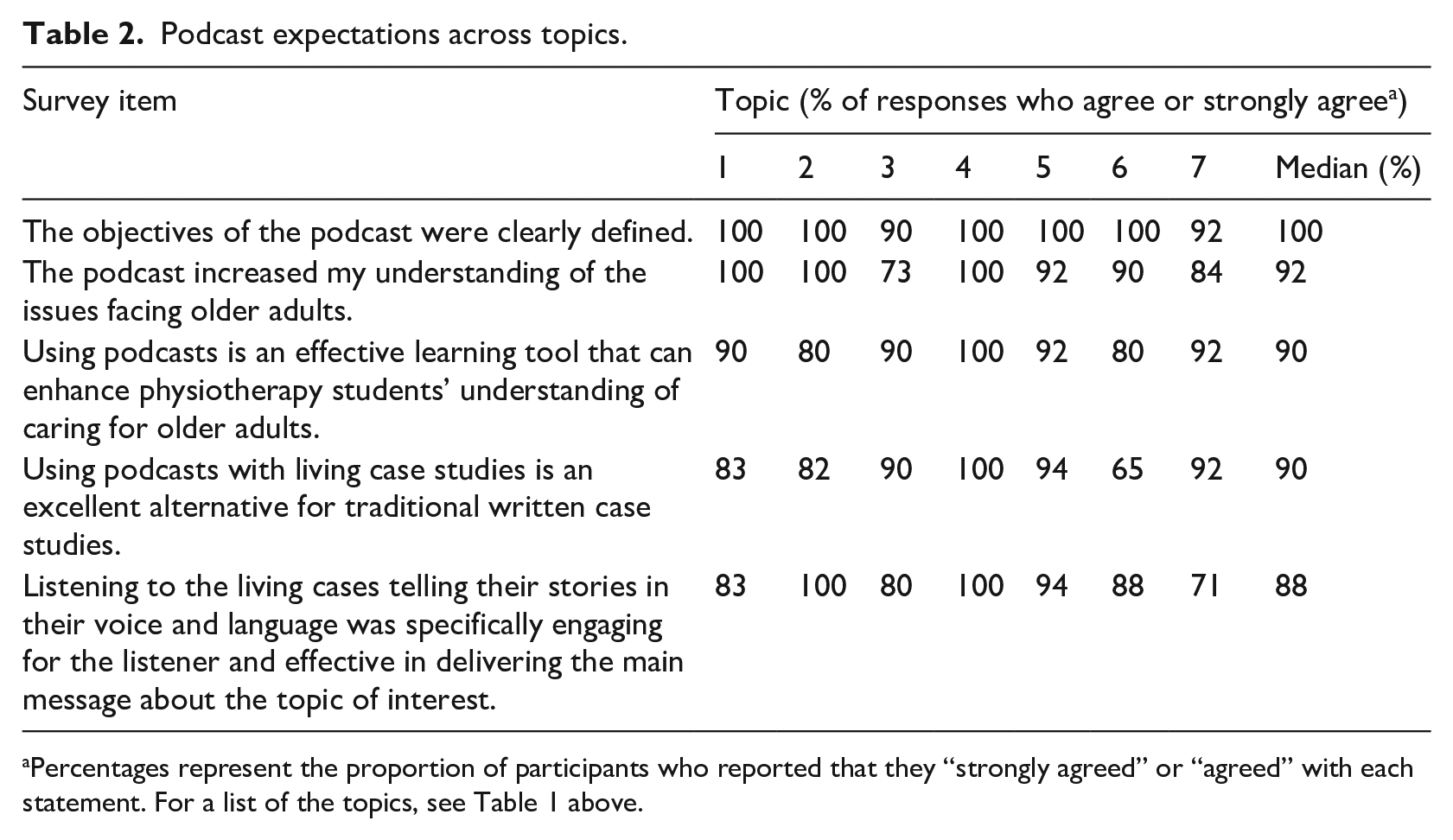
Percentages represent the proportion of participants who reported that they “strongly agreed” or “agreed” with each statement. For a list of the topics, see Table 1 above.
When asked to report on each episode’s perceived value, feasibility and utility (Table 3), most participants reported that the technology worked well (range from 92% to 100%, median 100%), the content was presented at an appropriate level (range: 92%–100%, median 100%), and the podcasts flowed well (range: 60%–100%, median 93%).
Value, feasibility and utility of podcast topics.
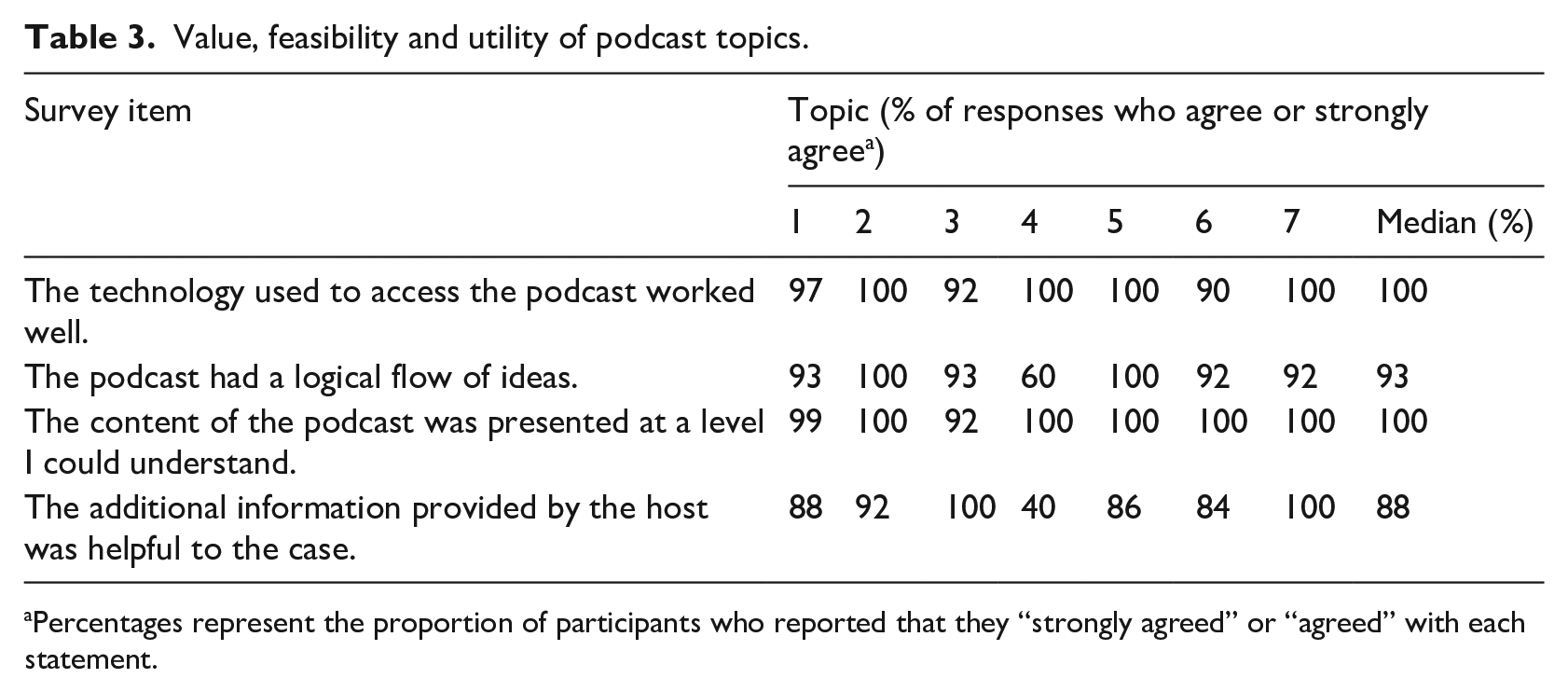
Percentages represent the proportion of participants who reported that they “strongly agreed” or “agreed” with each statement.
Qualitative narrative feedback results
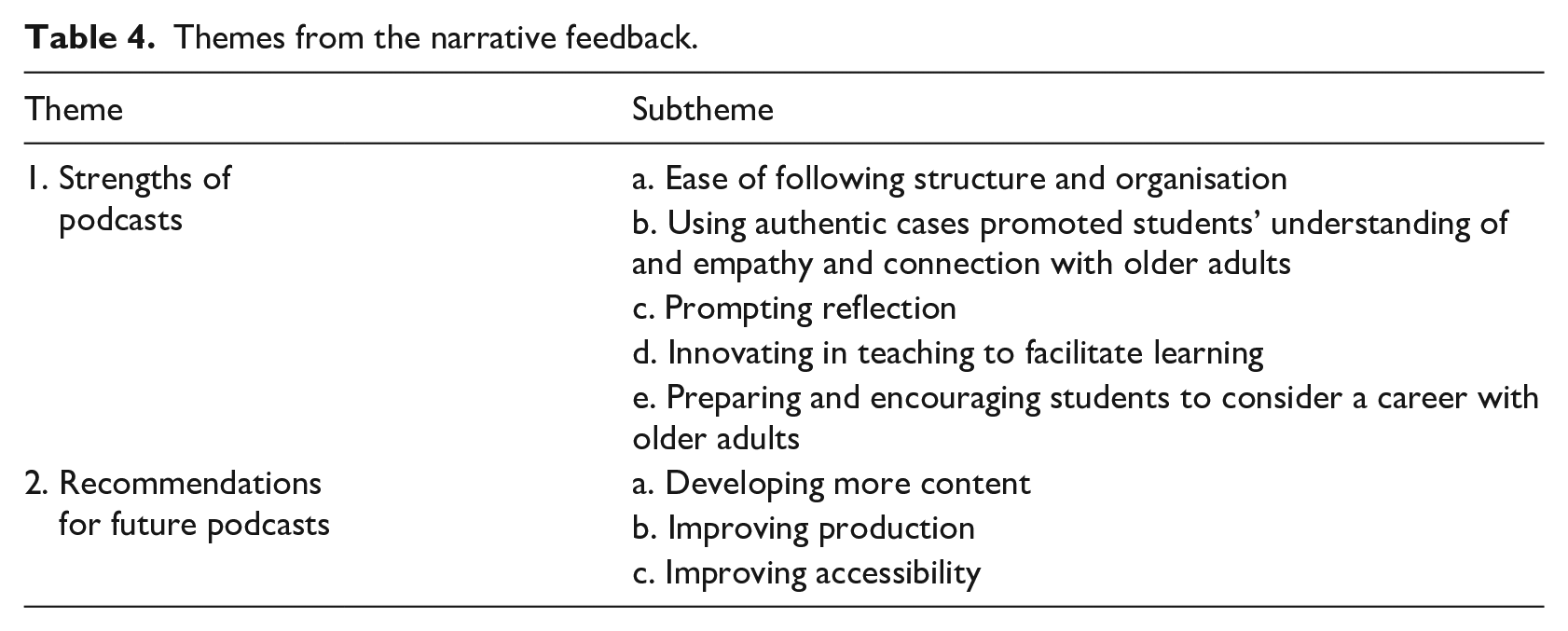
The narrative feedback was organised into two overarching themes: podcast strengths and recommendations for future iterations (Table 4).
Themes from the narrative feedback.
Podcast strengths: an innovative tool for reflection and learning
Participants indicated that the episodes were well-structured and organised, provided an authentic, real-world experience, allowed them to experience an innovative teaching strategy, promoted reflection, and encouraged students to consider a future career with older adults.
Ease of following structure and organisation
Participants reflected on the high quality of the podcasts, particularly their structure and organisation. For example, participants stated that the ‘quality of the audio was good’, and that the podcast episodes provided ‘a professional feel’, were ‘easy to understand’, and were reasonable in length. One participant wrote: [It was] very good production quality (for example, the mic[rophone] quality was extremely clear). I also liked how succinct the episode was; it made it very easy to listen to complete without getting distracted (I believe my episode was 11 minutes long).
Another participant noted: ‘I love podcasts . . . this one sounds like any other excellent HCP [Health Care Professionals] you can find on the web!’. Overall, participants perceived the podcast’s content to be engaging and highly relevant to their field. One of them reported, ‘It was engaging and beneficial to hear of a real lived experience, and the guest was a pleasure to listen to and learn from’.
Using authentic cases promoted students’ understanding, empathy, and connection with older adults
The episodes provided an avenue for learners to engage with the lived experiences of older adults. Participants felt that the podcasts were relatable, challenged their assumptions, facilitated reflection on experiences from different perspectives, and promoted empathy and compassion. Applicable comments include: ‘You can relate to the stories and the information better due to hearing the real-life experiences with older adults’ and ‘Listening to these seniors makes you “feel” their story and see their struggle’.
Another participant wrote: Sometimes, incorrect assumptions are made. I think these podcasts for the case study are a fantastic idea, as hearing a real-life case study is much more engaging than reading a paragraph. This will allow students to feel more of a connection with the patient and have a better understanding of the case.
Some participants described how the podcasts helped bridge theory to practice through the provision of realistic scenarios: ‘I found listening to the person speak to their experience and case is a lot more realistic and similar to practice’. Others highlighted that listening to older adults’ stories told by older adults themselves helped them connect with the storyteller and be more engaged: ‘Hearing stories firsthand makes the scenarios more engaging and realistic. I appreciate that I am able to place a name and voice to the story’.
Prompting reflection
Several participants suggested that the questions asked throughout the podcasts were important in promoting reflection, as they allowed participants time to consider the information and how they could use this information to improve their care of older adults. For example, participants highlighted how the reflective questions ‘… made me consider new ideas about making balance activities specific to the patient in the podcast’, and ‘… were helpful to determine what you had learned and what you should’ve taken from the podcast’.
Innovating in teaching to facilitate learning
Participants preferred learning through the podcasts over traditional written cases and lectures. Comments included, ‘auditory cases are a fun and new way to learn (we typically have written cases)’, ‘[This was] much better than reading a written case’, and ‘Living cases are more engaging compared to normal lectures’. Participants also indicated that the podcasts were easier to understand than past case studies: ‘I also loved the interview; the conversation was so easy to follow’, and ‘I also really enjoy podcasts as a learning tool, so it is a nice addition and change from normal study tools’. Some students liked the convenience of learning using podcasts and how this allowed them to multitask: ‘[I am] able to listen to anywhere! I was able to listen while driving in the car’.
Preparing and encouraging students to consider a career with older adults
Several participants suggested that listening to the podcast(s) prepared them to work with older adults in the future. One student noted that ‘the content was relevant to not only working with older adults but also to issues we will also face in our future’. Others stated that they facilitated learning in this field: ‘This podcast would be a great help for students learning about gerontology’. Some noted that they were considering the possibility of working in a geriatric setting after graduation due to this course: ‘. . . I am very interested now in working with older adults when I graduate and enter the workforce’, and ‘. . . I am also looking forward to working in a field with older adults!’
Recommendations: room for improvement
Participants’ primary recommendations related to the content, format and organisation, and accessibility of the podcast. Several participants stated they had no recommendations.
Developing additional content
Some participants suggested that additional resources be provided with the podcasts, including research-based information: ‘It may be helpful to provide a website or potential resources at the end of the podcast as a starting point to begin looking for the answers to the questions at the end of the podcast’. Responses also indicated that additional podcast guests, such as a physiotherapists and other healthcare professionals, could offer important perspectives. Finally, one participant recommended that any biases within the podcasts be acknowledged: ‘Perhaps preface or end with a statement regarding bias from the host’.
Improving production
Responses suggested that future podcasts could be designed to foster casual conversations to improve the flow and natural conversations. Some participants indicated that one episode seemed overly scripted and rushed, and consequently, at times, there appeared to be a lack of empathy for the interviewee: ‘[The podcast] seemed very scripted and sometimes not very natural or genuine’.
Improving accessibility
The primary recommendation in terms of accessibility was for there to be access to transcripts of the podcasts to support hearing and language barriers. One participant wrote, ‘I enjoy the podcast format; however, I think it would be useful and inclusive to provide a transcript. Providing the transcript will make the podcast accessible to all students and their learning needs’. Another comment suggested that the podcast be available on alternative platforms such as Apple or Spotify to ‘make listening even easier’ and more accessible.
Later episodes of the podcast were refined based on the students’ feedback. The finalised podcast format included objectives, background information on a health-related topic, reflective questions for students throughout the episode, a summary of the episode, and a relevant assignment per episode. All episodes were transcribed to improve accessibility.
Discussion
The GeroCast project aimed to support the learning experience of physiotherapy students in a graduate-level gerontology course. Using podcast-style interviews, older adults from the community shared their lived experiences related to ageing and healthcare. Upon listening to these podcast episodes, physiotherapy students had the opportunity to study an older adult’s current case to address a real-life issue they could face in their practice. The evaluation from the student perspective of the project showed that this approach to education was highly welcomed by students, feasible and had the potential to improve student attitudes towards older adults and encourage them to consider working with them.
We have already implemented several recommendations derived from participant feedback in a recent iteration of the GeroCast learning activity. The changes made to date include adding or clarifying learning objectives at the beginning of each podcast, improving the clarity of some audio recordings, summarising the podcast, hyperlinking references, and additional supports for easy access in the transcripts and acknowledging the potential biases of the guest speakers. The research team also ensured that all podcast transcripts were available in pdf format and shared through different platforms to adhere to universal design principles (CAST, 2018).
To our knowledge, this is the first project that aims to develop a living case podcast series for physiotherapy educational purposes and has been designed to align with relevant quality indicators. In line with previous literature, the results of this study highlight the strength of podcasts as an opportunity to access learning anywhere, anytime (Bonini, 2015). This form of digital education is likely to increase over time and engage wider educational circuits. Using the living case approach will help students translate their learning to practice in challenging healthcare scenarios. Ultimately, using podcasting technology to present older adults’ experiences could improve student attitudes towards working with older adults. We expect that providing targeted digital information based on living cases will allow students to build connections between knowledge learned, practice and patient outcomes. The student evaluation, which the research team conducted, supported achieving these objectives.
Engaging older adults in delivering university courses is not new (Fees and Bradshaw, 2003; Hernandez and Gonzalez, 2008). This study did not evaluate the older adults’ perspective as our project targeted the students. However, other studies have shown that older adults participating in joint initiatives with university students felt that these initiatives allowed them to continue contributing to society and feel valued (Dupuis, 2002). Other reported personal benefits by older adults participating in research included gaining knowledge, improving individual skills, building networks and allowing them to tell their stories from their perspective (Littlechild et al., 2015).
Using podcasts is an important step in innovating healthcare education and addressing long-lasting problems within our educational system, including keeping up with future changes in the sector (Frenk et al., 2010). Previous research has shown that creating in-person connections between students and older adults can improve students’ attitudes; however, this can be complicated in academic settings (Russell et al., 2022). Using podcasts can provide an excellent alternative to connect students with older adults’ real stories, improve their empathy and compassion and encourage them to consider working with older adults in the future. In this study, students noted that the content of the podcasts improved their understanding of issues facing older adults in the community. Podcasts can help educational programmes focus their curricula on cross-cutting and practical topics required for the future healthcare system. This approach can help train future healthcare providers who can solve problems, function as part of a diverse team, and innovate as part of their clinical work.
Podcasting in education as an approach to teaching is transferable to other topics since podcasts can be employed in many disciplines. The GeroCast podcasts have been designed to function as stand-alone mediums that can be integrated into other health sciences courses or as resources for online and blended courses.
Limitations
This educational intervention was implemented and evaluated with one cohort of physiotherapy students at one institution; therefore, attempts to generalise from these findings to other programmes and professions should ensure the specific context is considered. We could not do pre-post testing of learning outcomes, as this initiative was integrated into the course, where several evidence-based strategies are used. It was, therefore, difficult to identify the effect of this initiative from other strategies other than by using the specific evaluation we conducted. In addition, self-evaluation of learning by students has known limitations (Kruger and Dunning, 1999). In this study, we asked students to reflect specifically on the podcast itself. Some students may have evaluated more than one episode, so we avoided reporting aggregate data wherever possible to reduce the potential of any multi-calculation reporting bias.
Conclusion
Health educators have begun using podcasts to support students’ learning, and this practice will likely continue to expand. An ageing population wherein older adults form the largest percentage of patients across most practice healthcare settings requires that healthcare students be prepared to care for them. Delivering living case studies using podcasting is a feasible, inexpensive and effective teaching method for improving healthcare students’ attitudes towards caring for the senior population.
In this study, the learning activity enhanced student learning. Overall, students enjoyed learning via podcasts and found it a valuable way to better understand issues facing older adults. The living case podcasts have broad applicability to other ageing- or health-related courses. Project findings demonstrate how podcast technology can be used to introduce humanity into healthcare professional teaching. At a time when face-to-face contact is limited, there is a critical need for connection, and podcasts offer an easy way to connect.
The transferability of this approach to other disciplines is important, especially for engaging and supporting a vulnerable population. Finally, as authors, we feel that the communal and collaborative educational process used to create this initiative makes the process itself a valuable educational experience for other interested educators.
Supplemental Material
sj-docx-1-hej-10.1177_00178969221145351 – Supplemental material for GeroCast: Using podcasting to deliver living cases in gerontology education
Supplemental material, sj-docx-1-hej-10.1177_00178969221145351 for GeroCast: Using podcasting to deliver living cases in gerontology education by Mohammad Auais, Julie Cameron, Jennifer Turnnidge, Nancy Dalgarno, Klodiana Kolomitro and Lucie Pelland in Health Education Journal
Footnotes
Acknowledgements
We thank the Queen’s Centre for Teaching and Learning for funding this project and Angie Mendieta-Sweet from the Experiential Learning Programme in the Faculty of Health Sciences, Queen’s University, for facilitating the recruitment of living cases. We are grateful to the guest speakers who made the podcasts possible and to the students who participated in the pilot testing of the GeroCast project.
Declaration of conflicting interests
The author(s) declared no potential conflicts of interest with respect to the research, authorship, and/or publication of this article.
Funding
The author(s) disclosed receipt of the following financial support for the research, authorship, and/or publication of this article: this work was supported by a grant from the Centre for Teaching and Learning at Queen’s University, Canada.

Supplemental material
Supplemental material for this article is available online.
Notes
References
Supplementary Material
Please find the following supplemental material available below.
For Open Access articles published under a Creative Commons License, all supplemental material carries the same license as the article it is associated with.
For non-Open Access articles published, all supplemental material carries a non-exclusive license, and permission requests for re-use of supplemental material or any part of supplemental material shall be sent directly to the copyright owner as specified in the copyright notice associated with the article.
