



Abstract
Few studies have investigated the effects of citizen science (CS) in formal environmental education. Using a three-wave quasi-experimental design to survey students from three secondary schools (N Total = 126), we tested the effects of two different education treatments (instruction treatment and CS treatment) on personal and collective outcomes related to biodiversity protection. Both treatments included teaching units on urban biodiversity, but only participants in the CS treatment engaged in joint fieldwork and discussions on urban diversity together with researchers. Results revealed that both treatments increased students’ knowledge about biodiversity compared to control conditions. However, only the CS treatment raised students’ collective and personal biodiversity-protective behavior and collective action intentions as well as their nature relatedness. Increases in self-reported behavior and collective action intentions were partly mediated by changes in nature relatedness (but not knowledge). Our results highlight the potential of CS interventions to foster biodiversity protection and pro-environmental identity.
Introduction
Biodiversity is decreasing at unprecedented pace (Intergovernmental Science-Policy Platform on Biodiversity and Ecosystem Services [IPBES], 2019), posing a major threat to human civilization (Rockström et al., 2009). As human activities are the major cause of biodiversity decline (Newbold et al., 2015; Tilman et al., 2017), human action can also be the central lever to halt biodiversity loss. People can help to preserve biodiversity by engaging in everyday biodiversity-protective behaviors (e.g., reduce consumption), by acting politically towards systemic change, and by endorsing pro-ecological policies, such as the establishment of protected areas. Given the global dimension of the biodiversity crisis, collective forms of thinking and acting are required to support ecological transformation of societies (Fritsche et al., 2018).
But when does collective environmental action emerge, and how can it be fostered (Fritsche & Masson, 2021)? Two possible routes are citizen participation and school education, which are the focus of the present article. Environmental education programs often aim to improve people’s knowledge of environmental problems as a precondition to foster pro-environmental behavior, such as biodiversity-protective behavior (Barth et al., 2012). Yet, environmental psychologists has long demonstrated that increases in environmental knowledge do not necessarily translate into more eco-friendly lifestyles (knowledge-action gap; Kollmuss & Agyeman, 2002). Meta-analytic results suggest that knowledge about environmental problems is—at best—a distal predictor of pro-environmental behavior (Bamberg & Möser, 2007).
More recent approaches in environmental education have started to employ different teaching methods to make more effective use of education as a tool for sustainable development (Aikens et al., 2016). This includes approaches focusing on exposure to and active participation in contexts and activities promoting pro-environmental behavior, such as outdoor education (Jeronen et al., 2016) or collaboration with practitioners and stakeholders from different fields (e.g., researchers). For example, field trips offer students experiential learning opportunities, thereby fostering their interest in environmental issues (Simmons et al., 2008) and strengthening their emotional connection to nature (Otto & Pensini, 2017).
Similarly, including citizen science (CS) activities in school education, such as joint field research or joint discussions among students, teachers and scientists, may provide students with new learning experiences (e.g., Araújo et al., 2022; Wichmann et al., 2022). CS describes the active, voluntary participation of interested community members in scientific research projects. It can encompass a range of activities, from short-term data collection activities to intensive participation in research processes that require a high level of expertise (Bonn et al., 2021). Participating in biodiversity science may not only increase students’ awareness of environmental problems, but may also strengthen their intrinsic commitment to, and establish habits of participating in, nature protection. From an applied perspective, CS is often considered as a tool to enable and support sustainability transitions (i.e., ecological transformation of societies), for example through motivating citizens to actively participate in the co-creation of knowledge about possible transition paths (e.g., real-world laboratories; Parodi et al., 2017; Rollin et al., 2021).
However, research approaches that quantitatively test the potential and effectiveness of CS to shape people’s attitude and behavior towards environmental-friendly engagement are surprisingly scarce. This is particularly true in the context of school education. Qualitative research, such as qualitative project evaluations and cross-programmatic research in CS have only just begun to fill this gap (Phillips et al., 2018). However, studies on environmental education indicate that addressing environmental issues in school may have the potential to improve children’s and adolescents’ environmental knowledge, attitudes, action intentions, and self-reported behavior (van de Wetering et al., 2022). Furthermore, research on CS has largely been restricted to informal learning environments and free-choice learning (Falk & Dierking, 2002), as CS projects for students have hardly found their way into schools until the last decade. Thus, little is known about the effectiveness of implementing CS in school teaching, particularly in the context of biodiversity action.
Our study represents one of the first comprehensive attempts to evaluate the effectiveness of a CS approach in school education as a tool to induce behavioral change by following a trans-disciplinary approach, integrating biodiversity science and didactics into a socio-psychological intervention. By applying a three-wave quasi-experimental design spanning approximately 6 months, we investigate whether using a CS approach in school education has the potential for increasing students’ awareness about threatened biodiversity and fostering their personal and collective biodiversity-protective action, also exploring potential mediating variables of CS effects (such as biodiversity knowledge).
Biodiversity Action
Previous research has highlighted various factors that explain and foster people’s biodiversity-protective behavior. Classic approaches look at biodiversity-protective behavior as a personal decision that rests on people’s awareness of and knowledge about biodiversity issues, ascription of personal responsibility for solving these issues, personal pro-ecological values and attitudes, personal costs and benefits, perceived interpersonal social pressure (so-called subjective norms; Ajzen, 1991), and perceived ability to perform a specific biodiversity-protective action (for meta-analytical summary see Klöckner, 2013). However, beyond personal rational-choice and moral considerations, people’s actions are often motivated by their sense of identity. Accordingly, personal attachment to, and identification with, the natural environment has been shown to determine people’s biodiversity-protective behavior as well (Vesely et al., 2021).
However, understanding biodiversity protection as a result of merely personal or interpersonal factors neglects the collective nature of biodiversity action (Fielding & Hornsey, 2016; Fritsche et al., 2018). Effective protection of biodiversity requires an ecological transformation of whole societies. Thus, beyond individuals’ personal consumption or travel-choice behavior, citizens’ attitudes towards, and support of, collective environmental policies and collective environmental action become pivotal (Bamberg et al., 2015). These political attitudes and actions should not only depend on personal costs and benefits but also on how people perceive the capability and willingness of their collectives (e.g., their country, their generation) to engage in far-reaching change (Fritsche & Masson, 2021).
Even more so, collective cognition should also play a decisive role in motivating individuals’ private biodiversity actions (Fritsche et al., 2018). This is because while large-scale environmental problems are most effectively addressed through collective efforts, individuals also play a vital role, particularly when their actions are guided by a shared sense of purpose within a collective. A lack of collective framing may otherwise result in a sense of personal helplessness and inertia (Salomon et al., 2017) if people conceive their actions as merely personal. Instead, individuals should be motivated to protect biodiversity when they define themselves via their membership in social groups (i.e., social identity; Turner & Reynolds, 1987), particularly in groups that are both collectively willing and capable of protecting biodiversity, such as members of a generation or the community of (citizen) scientists (Brügger et al., 2020; Fisher, 2016). Accordingly, the identification with pro-environmental groups, perceived pro-environmental ingroup norms, and collective environmental efficacy predict people’s pro-environmental action intentions (Jugert et al., 2016; Masson & Fritsche, 2021). In sum, both personal as well as collective factors should affect people’s willingness to engage in biodiversity-protective behavior (i.e., biodiversity action).
Citizen Science and Environmental Education
School education is an important factor for learning and socialization. It can help to build students’ biodiversity knowledge and problem awareness and may have the potential to affect their biodiversity action later in life. Biodiversity is a complex biological concept as it encompasses species diversity, diversity of interactions and ecosystems as well as genetic diversity (Article 2; UNCED, 1992). Beyond this purely scientific definition, biodiversity also has symbolic and normative aspects (Dreyfus et al., 1999; Potthast & Berg, 2016). This variety of facets makes it interesting as a socio-scientific issue, but also difficult to teach. Previous authors have investigated environmental learning in the field of biodiversity (Beery & Jørgensen, 2018; Chalmin-Pui & Perkins, 2017; Franc et al., 2013; Littledyke, 2008; Schneiderhan-Opel & Bogner, 2020). While explicitly targeting the personal knowledge factor, and thereby focusing merely on the scientific aspects of biodiversity, school education may fall short of strengthening equally important factors required for predisposing citizens to act for the environment. This may concern the feeling being personally related to nature or having experienced collective agency. Particularly, school teaching in the natural sciences is typically not about creating a personal relation to the object of study or to foster a shared goal, or even habits, of collectively acting to protect the environment and biodiversity (Gebhard et al., 2017; Reinhardt, 2020).
However, personal connection to nature is crucial for preparing students to act on the ground of their scientific knowledge about the biodiversity crisis (Fritsche et al., 2018; Vesely et al., 2021; Wiegelmann & Zabel, 2021), which can be considered a “value-laden concept” (Kassas, 2002, p. 347). The “purpose of biodiversity education is to develop knowledge and skills and to cultivate attitudes that would enable the society to respond to these requirements and responsibilities” (Kassas, 2002, p. 347). Nature experiences should be individually meaningful in order to have an effect on behavior. Wiegelmann and Zabel (2021) retraced individual processes of understanding biological biodiversity, using a process model of meaningful understanding (Gebhard et al., 2017; Helmstad, 1999). According to their results, learners do not only need a scientific understanding of biodiversity in order to perceive it as personally meaningful. Rather, they should also have the opportunity to relate this complex topic to their individual nature experiences.
Representative survey research suggests that the current lack of sufficient societal action to protect biodiversity cannot be attributed to a lack of knowledge about the value of and the threat to biodiversity (e.g., Bundesministerium für Umwelt, Naturschutz und nukleare Sicherheit [BMU] & Bundesamt für Naturschutz [BfN], 2018). Instead, a significant gap between knowledge and action can often be observed (e.g., Barth et al., 2012; Ferreira & Klütsch, 2021; Roche et al., 2022). Thus, traditional teaching might need to be complemented by other elements tailored to strengthen personal involvement and action related to biodiversity. In the present study, we test whether the concept of citizen science might be such a complement in formal school education.
CS is “the involvement of the public in scientific research—whether community-driven research or global investigations” (Citizen Science Association [CSA], n.d.). This involvement encompasses “collecting, categorizing, transcribing, or analyzing scientific data” (Bonney et al., 2014 p. 1436). Similarly, research on CS distinguishes between different levels of involvement in the research process (Arnstein, 1969). This may range from “crowdsourcing”, where citizens merely contribute data or provide technical infrastructure to aid the research process, to “extreme citizen science”, where citizens are involved in nearly all stages of the research process (Haklay, 2018). There is substantial variety in both the level of citizen involvement as well as the adherence to scientific standards when comparing different CS projects (see Hecker et al., 2018; von Gönner et al., 2023).
Recently, CS has gained considerable attention as a tool for science education and environmental education (Araújo et al., 2022; e.g., Bonney et al., 2014; Chandler et al., 2017; Turrini et al., 2018; von Gönner et al., 2024). In formal school education, it is seen as a participatory approach with high transformative potential for both teachers and students. Consequently, it has been suggested recently to analyze such educational projects on multiple levels, evaluating the benefits for both school students and their instructors (Zhang et al., 2023). However, so far, the vast majority of research on participant outcomes is still focused on voluntary participants in informal CS projects. Peter et al. (2021) conducted an online survey of 1,160 adult CS participants across 63 informal CS projects in the field of biodiversity. As the participants reported a great increase in knowledge, interest, and motivation regarding species, Peter et al. (2021) advocate for integrating biodiversity-related CS into formal education as a way for young people to experience nature and gain species knowledge. This seems even more crucial given the decline in species knowledge among current biology teachers (Frobel & Schlumprecht, 2016). Specifically, CS is expected to provide expertise to students through their participation in research projects, to foster an understanding of scientific processes (the “nature of science”) and to offer participation opportunities in a democratic society (Kelemen-Finan et al., 2018). Empirical evidence in informal biodiversity projects suggests that CS participant outcomes in interest and knowledge gain are particularly strong regarding the object of study (Jordan et al., 2011; Lewandowski & Oberhauser, 2017; Peter et al., 2021).
Furthermore, we assume that CS projects can help to bridge the knowledge-action gap mentioned above by enhancing scientific literacy and scientific reasoning skills at the same time as conveying a strong experience of empowerment and the willingness to engage in decision making processes, thereby revealing its true transformational potential (Bela et al., 2016; Jordan et al., 2011; O’Sullivan et al., 2016; Siebert & Richter, 2021). Although the gap between knowledge and action is well documented, a comprehensive model explaining this phenomenon remains elusive (Kollmuss & Agyeman, 2002). Despite this complexity, recent empirical studies suggest that CS projects may play a role in bridging this gap. Kapos et al. (2008) distinguish between two main categories when it comes to the effect of CS on conservation practice: (1) Conservation research and management, where the scientific data gathered in CS projects can inform conservation practice and (2) conservation learning and action, where participants engagement in CS influences their environmental behavior immediately and/or in the future, for example through learning processes. Ballard et al. (2017) refer to these categories, examining six cases of youth-focused CS projects in the San Francisco Bay area. Results indicate that the way in which youth-focused CS programs influence conservation practice can be “both immediate and direct, and long-term through capacity building for youth in the form of developing their environmental science agency” (p. 9). The authors identify three key CS processes in the examined case studies: ensuring rigorous data collection, disseminating scientific findings to authentic external audiences, and investigating complex social-ecological systems. While our understanding of how CS bridges the knowledge-action gap is still evolving, these studies provide emerging models that offer plausible explanations.
The teaching of socially relevant topics has long been discussed in science education under the generic term “socio-scientific issues” (Zeidler, 2014). Cross-curricular approaches offer great potential for teaching such topics, for example in the form of project lessons or cooperation with extracurricular partners. CS is also believed to foster scientific inquiry, critical thinking, and problem solving in formal science education (e.g., Mueller et al., 2012; Shah & Martinez, 2016). However, in the real world of traditional school practice and its fixation on content and training, the curriculum usually imposes tight constraints on such plans (Gray et al., 2012). Consequently, recent global movements such as Fridays for Future chose school strikes as a platform for their political activities. While a proportion of headmasters and teachers supported this political action by their students, some political leaders underlined that science is a matter for experts only (e.g., Frankfurter Rundschau, 2019). Such hierarchical patterns of science communication and the inherent role of schools might hinder the development of collective agency beliefs in students and, relatedly, democratic action on the ground of scientific insights. The question arises if CS in school can help to bridge the large gap between traditional science lessons and collective environmental action. In other words, can CS in school help to increase awareness of environmental issues and to foster pro-environmental behavior, including biodiversity-protective behavior? Involving students in biodiversity research may affect psychological variables that drive biodiversity action on both the personal and the collective level. Specifically, it may fuel students’ environmental identity (Clayton, 2003) by creating an intrinsic personal connection to biodiversity (nature relatedness; Nisbet & Zelenski, 2013) and a commitment to protect nature (personal norm; Klöckner, 2013). Indeed, people’s subjective relatedness to nature seems to be positively affected by reflecting on nature (beyond merely spending time in nature and outdoors; Lengieza & Swim, 2021; Lengieza et al., 2021; Nisbet & Zelenski, 2011) and scientific investigation and advocacy for nature may even strengthen this effect. At the same time, doing citizen science may create a personal habit (Klöckner, 2013) of engaging in biodiversity action. The collective nature of citizen science may also foster the perception of pro-biodiversity norms and collective environmental efficacy (i.e., collective environmental agency; Fritsche & Masson, 2021). In sum, this speaks for CS increasing private (e.g., consumption) and political (e.g., supporting policies) biodiversity action on both students’ personal and the collective level of the self.
Current Study
The current study investigates the effectiveness of a CS intervention as part of formal school education in enhancing adolescents’ knowledge about urban biodiversity, their relatedness to nature, and their self-reported urban biodiversity-protective behavior (e.g., the preservation of natural spaces in the city). Building on psychological models of personal and collective pro-environmental action (Fritsche et al., 2018; Klöckner, 2013), we tested the effectiveness of the two treatments on a number of personal and collective biodiversity-related outcomes. Specifically, we investigated whether participation in the treatment groups (vs. control groups) increased school students’ biodiversity-protective collective and personal behavior and action intentions. Additionally, we explored possible treatment effects on personal and collective predictors of biodiversity-protective behavior, such as self-reported biodiversity knowledge, nature relatedness, as well as perceived social norms on biodiversity-protective behavior and collective efficacy beliefs to protect biodiversity both referring to the young generation as the ingroup.
We used a three-wave quasi-experimental control group design (pretest, posttest, follow-up) to survey students from three cooperating schools (see Figure 1). Two treatment groups were included: one received a teaching sequence on urban biodiversity followed by a citizen science component (“citizen science group”; School 2), while the other had the same sequence followed by project days (hereafter “instruction group”; School 1). The third school served as a control group (“control school”). A second control group consisted of participants from the two treatment schools that did not receive any treatment (“control courses”). We expected both treatments to foster school students’ knowledge about biodiversity and—possibly—their personal norm (i.e., moral obligation) to protect biodiversity at posttest and follow-up. However, participants in the citizen science group (vs. instruction group) should report a stronger increase in nature relatedness and collective outcomes (perceived social norms, collective efficacy beliefs) as well as increased self-reported pro-biodiversity behavior and action intentions at posttest and follow-up. Finally, we tested whether potential changes in biodiversity-protective behavior and action intentions throughout the evaluation phase were mediated by changes in the predictor variables.
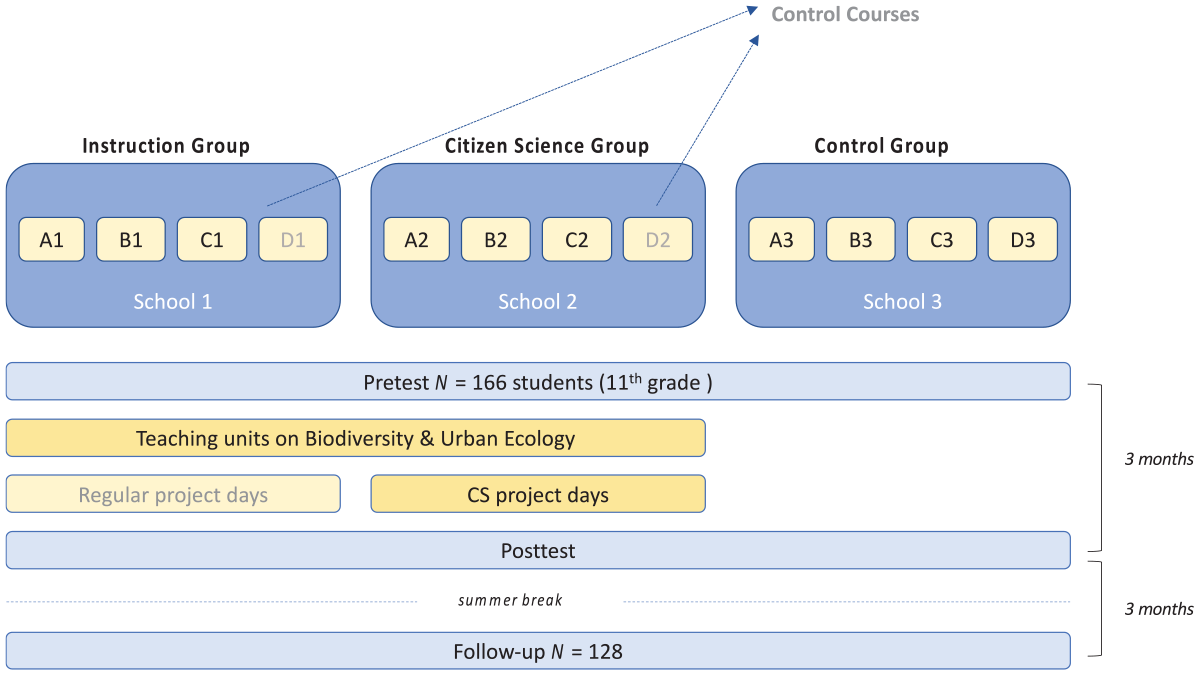
Study design, sample sizes and composition of the treatment and control groups. This figure shows three experimental conditions (Instruction, Citizen Science and Control Group) to which collaborating schools were randomly assigned to (School 1, 2, 3; blue boxes); within one school, all 11th grade students are distributed in parallel courses (A, B, C, D ; yellow boxes); combination of letters A, B, C, D and numbers 1, 2, 3 are meant for illustration purposes (e.g., class A1 represents a parallel course of the 11th grade of School 1); within School 1 (Instruction Group) and School 2 (Citizen Science Group) respectively three parallel courses (A, B, C) received treatment depending on their experimental condition, parallel courses (D1, D2) received no treatment and functioned as control courses within the treatment schools. In School 3 (Control Group) all parallel courses (A3 to D3) received no treatment and had lessons as usual. Figure also shows content and time sequence of the experimental manipulation.
Methods
Participants
A total of 166 students from three secondary schools in Germany completed the pretest questionnaire. In the citizen science group, instruction group, and control courses, 39 participants did not provide posttest and/or follow-up data (study withdrawal: N = 27, lacking parental consent: N = 12). In the control school, one participant did not provide posttest data, resulting in a final sample of 126 participants (75.9% of pretest sample). Seventy-nine participants identified as female, 39 identified as male, and three participants identified as gender-diverse (five participants did not disclose their gender). Age ranged from 16 to 21 years (M = 17.13, SD = 0.74). Participants who completed all study questionnaires and dropout participants did not differ on relevant pretest variables, such as personal and collective behavior and action intentions, perceived social norms, personal and collective efficacy beliefs, ingroup identification, nature relatedness, and biodiversity knowledge (all ps > .19). The level of dropout differed significantly between the four groups (citizen science group: 36.7%, instruction group: 34.8%, control school: 2.3%, control courses: 17.9%; χ2(3) = 18.9, p < .001).
Treatment and Control Schools
The study encompassed three urban grammar schools, located in the Free State of Saxony, Germany, each hosting a comparable number of 11th grade students: School 1 (91 students; 43 female), School 2 (80 students; 50 female), and School 3 (93 students; 53 female; Statistisches Landesamt des Freistaates Sachsen, 2018). These schools, situated within the urban core of a city with a population exceeding 500,000 and each with 700 to 900 students total, share similar profiles, though exhibit slight differences in their immediate catchment areas. The neighborhoods surrounding School 1 (instruction group) and School 3 (control school) show little deviation from the average net income in the city, while School 2 (CS treatment) is located in a neighborhood with a 25% higher net income (Stadt Leipzig, Amt für Statistik und Wahlen, 2024). Notably, this neighborhood also exhibits a comparatively high percentage of foreign residents (13%), a figure akin to that of the control school (14%), particularly when compared to School 1 (instruction group, 8%; Stadt Leipzig, Amt für Statistik und Wahlen, 2024). Overall, the schools appear to be sufficiently similar, especially given the high mobility of students in the urban area, so that the actual catchment areas are presumably larger and overlap more than the immediate environment of the schools.
Design and Procedure
Participants were students of 11th grade courses recruited from three different schools to participate in a project on urban biodiversity. The three schools were randomly assigned to one of three experimental conditions (two treatment schools, one control school; see Figure 1): Participants in the citizen science group (N = 31, School 2) received a specifically designed teaching unit, including five 90 minute lessons on the topic of (urban) biodiversity. Additionally, they participated in a 2-day biodiversity science project, organized as a CS project. Respondents in the instruction group (N = 30, School 1) received the teaching unit as well, but did not participate in the CS project. Instead, they participated in two project days on the topic of urban biodiversity, which were structured similarly to project days in previous school years. Participants from the third school served as a control group (N = 42), which did not receive any treatment (control school). As a second control group (control courses), we also recruited students from the two treatment schools (School 1 & 2) who did not participate in the treatments (N = 23). The control school and control courses received standard ecology lessons but not with a particular emphasis on urban biodiversity. Additionally, they did not offer accompanying project days to these students during the study period. However, it cannot be ruled out that some aspects of biodiversity were incidentally addressed in their curriculum, albeit this seems rather unlikely. Participants from the two treatment schools and the control courses were surveyed at pretest (i.e., before receiving the series of lessons), posttest (i.e., after completing the project days), and follow-up (i.e., approximately 6 months after pretest). Respondents from the control school were surveyed at pretest and posttest.
Intervention Description
Teaching Unit
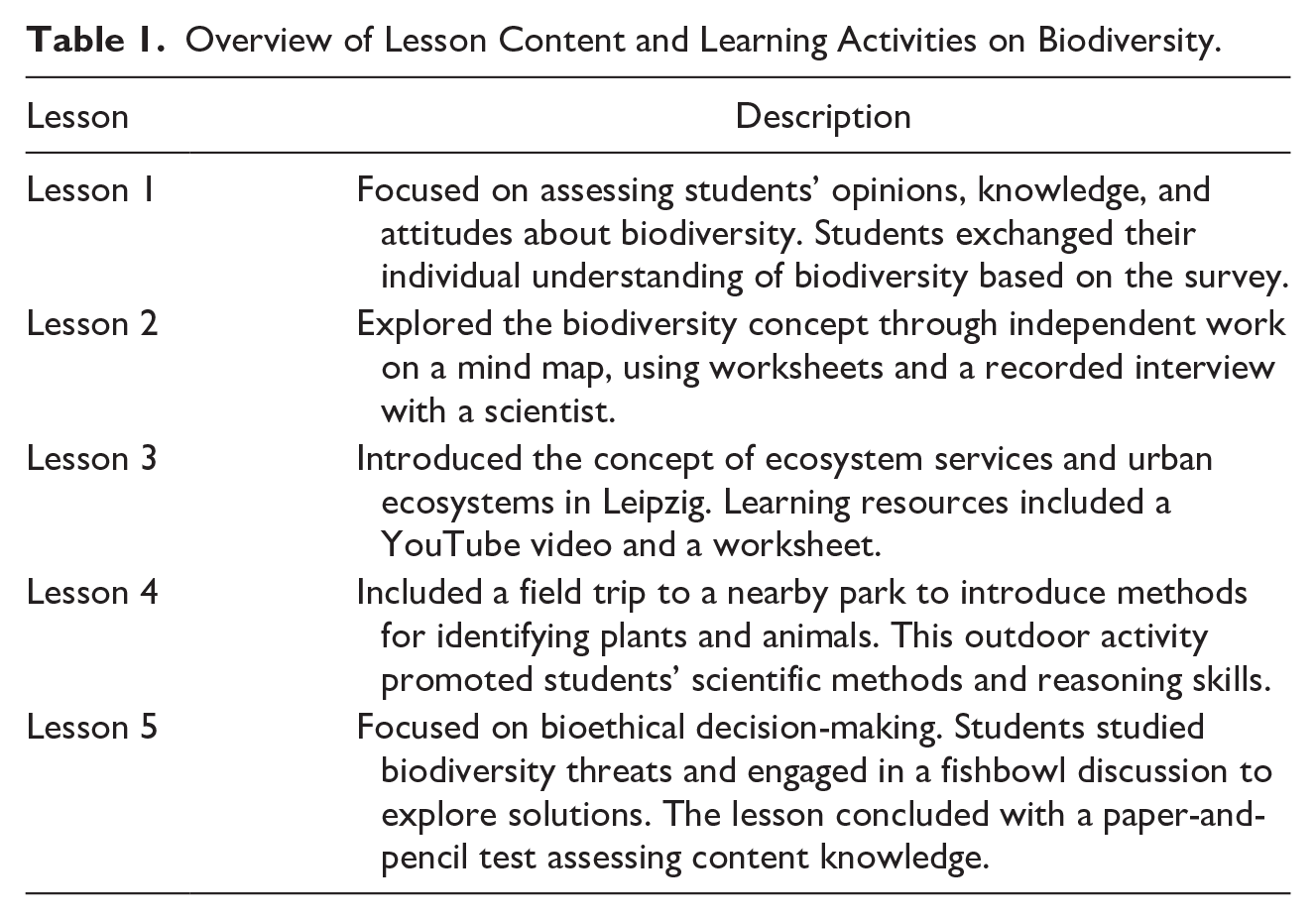
The teaching unit “Biodiversity and Urban Ecology” was designed to provide a deeper understanding of the topics of biodiversity and ecosystem services in the context of urban ecosystems. It was aligned with the Saxonian curriculum for biology and has been extensively tested in courses of grade 11. With (1) biological content knowledge, (2) scientific methods and scientific reasoning, (3) biology-specific communication, and (4) bioethical decision-making, all four competence areas of the national biology standards (KMK, 2004) were taken into account in the planning process. The structure and key activities of the lessons are summarized in Table 1.
Overview of Lesson Content and Learning Activities on Biodiversity.
Project Days
Both, the citizen science and the instruction group, participated in a 2-day project following the teaching unit. Each group went on two field trips to explore urban biodiversity hotspots and evaluated these field data afterwards with the help of their teachers and an additional project team. At the end of the second day, the participants were given the opportunity to present their results in the form of a gallery tour. In sum, both treatments were outdoor-based, biodiversity-related, and took place in group contexts, thus making them comparable regarding the general setting. However, the treatment in the citizen science group was designed to enable the exchange of individual perspectives on biodiversity with experts and self-guided inquiry close to “real science”. For that purpose, we conceptualized the field excursion phase in the citizen science group as an interactive CS project. This included group discussions on biodiversity topics, and we encouraged participants to contribute their own perspective on biodiversity to the project. Following the idea of a self-determined scientific inquiry, we also encouraged the citizen science group to collect data on local biodiversity in their favorite urban places, so-called “cool spots”. This freedom of choice regarding the place in nature was an important feature of this treatment, designed in order to foster the students’ attachment to this specific spot and to make them develop a “sense of place” and thereby to strengthen their feeling of agency, an important component of citizen science. Furthermore, participants in the citizen science group applied a self-chosen subset of methods that were introduced by local biodiversity scientists from an international biodiversity research institute. Thereby we were able to fulfill a broad range of criteria developed by the European Citizen Science Association (ECSA, 2015), for example, active involvement of citizens in scientific endeavor, consideration of the specific perspective of the participants with benefits for all stakeholders, gaining new knowledge and data (for more details on CS project days and their alignment with ECSA principles, see Supplemental Appendix 1). The fieldwork in the instruction group was organized as a more traditional school excursion, including the identification of plant and insect species, or the examination of water samples. For these activities, the students worked in small groups at learning stations in nearby urban green spaces that had been previously selected for them, guided by their regular biology teacher or local scouts from the project team. In contrast to the citizen science group, the treatment in the instruction group did not involve any exchange formats or in-depth discussions with scientific experts and offered hardly any options for the participants to influence how the fieldwork was done.
Measures
All study variables were assessed at pretest, posttest and follow-up (or at pretest and posttest for the control school). Inter-scale correlations as well as means and standard deviations for all study variables are presented in Tables 2 and 3. Total scales were calculated as mean scores across the scale items. If not indicated otherwise, we assessed all scales on seven-point scales (1 = “strongly disagree” to 7 = “strongly agree”).
Inter-Scale Correlations Between Study Variables.
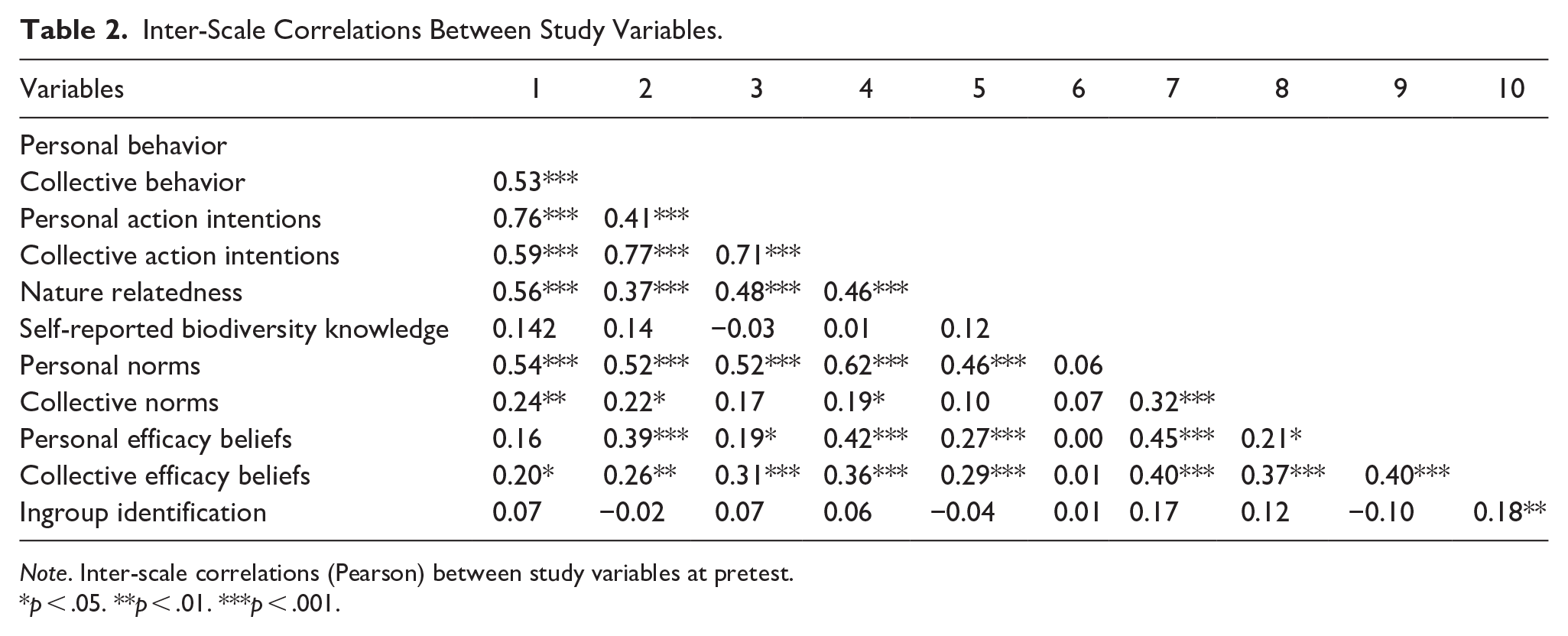
Note. Inter-scale correlations (Pearson) between study variables at pretest.
p < .05. **p < .01. ***p < .001.
Means and Standard Deviations of Central Outcome Variables.
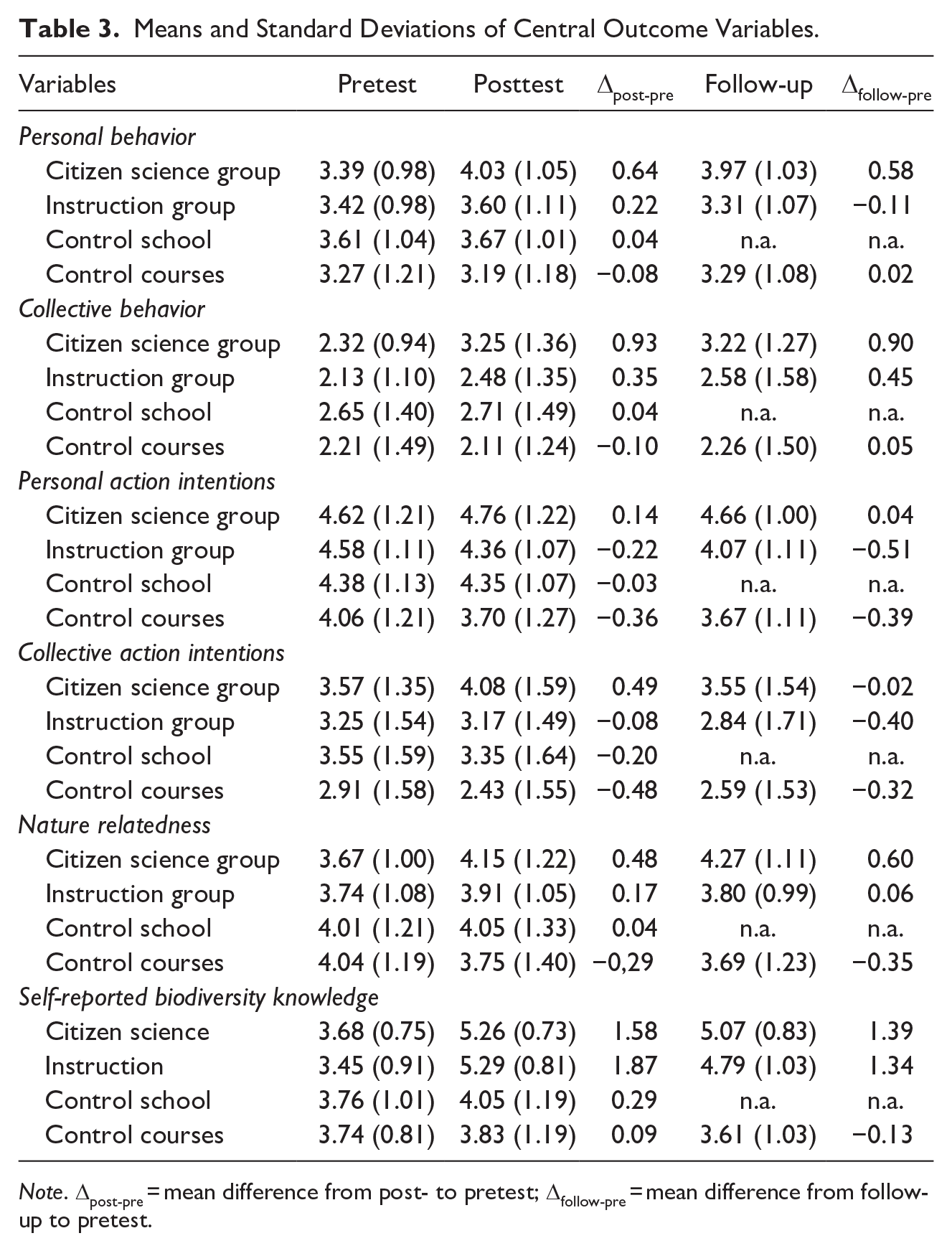
Note. Δpost-pre = mean difference from post- to pretest; Δfollow-pre = mean difference from follow-up to pretest.
Participants completed measures that assess personal and collective biodiversity-protective behavior during the last 3 months (i.e., “have made sure not eat anything that comes from endangered species” or “have participated in events to protect biodiversity together with people of your generation”) as well as personal and collective biodiversity-protective action intentions (i.e., intentions to engage in biodiversity-protective behavior in the future). Items were taken from previous research on pro-environmental behavior and adapted to fit the context of biodiversity protection (e.g., Masson & Fritsche, 2021; Vesely et al., 2021). The questionnaire also contained measures of personal and collective predictors of biodiversity-protective behavior. Personal predictors included respondents’ self-reported biodiversity knowledge, questions on the strength of their self-identification and emotional connection to the natural world, that is, nature relatedness (adapted from Nisbet & Zelenski, 2013), as well as measures of personal norms about biodiversity-protective behavior (i.e., feelings of moral obligation to protect biodiversity; adapted from Klöckner, 2013) and personal efficacy beliefs to contribute to biodiversity protection (adapted from Jugert et al., 2016). Measures of collective predictors included respondents’ age group (“your generation”) as salient social ingroup. We measured descriptive and injunctive ingroup norms on biodiversity-protective behavior (i.e., perceptions of other group members’ biodiversity-protective attitudes and behavior; adapted from Masson et al., 2016), collective efficacy beliefs to effectively protect biodiversity (adapted from Jugert et al., 2016), and participants’ level of identification with their age group, that is, strength of ingroup identification (Postmes et al., 2013). Detailed information on all study variables, including number of items per scale, example items and information on scale reliabilities (Cronbach’s alpha coefficients), are presented in Table 4. 1 The complete original questionnaire is provided in Supplemental Appendix 2.
Measures and Scale Reliabilities (Cronbach’s Alpha and Item Correlation).
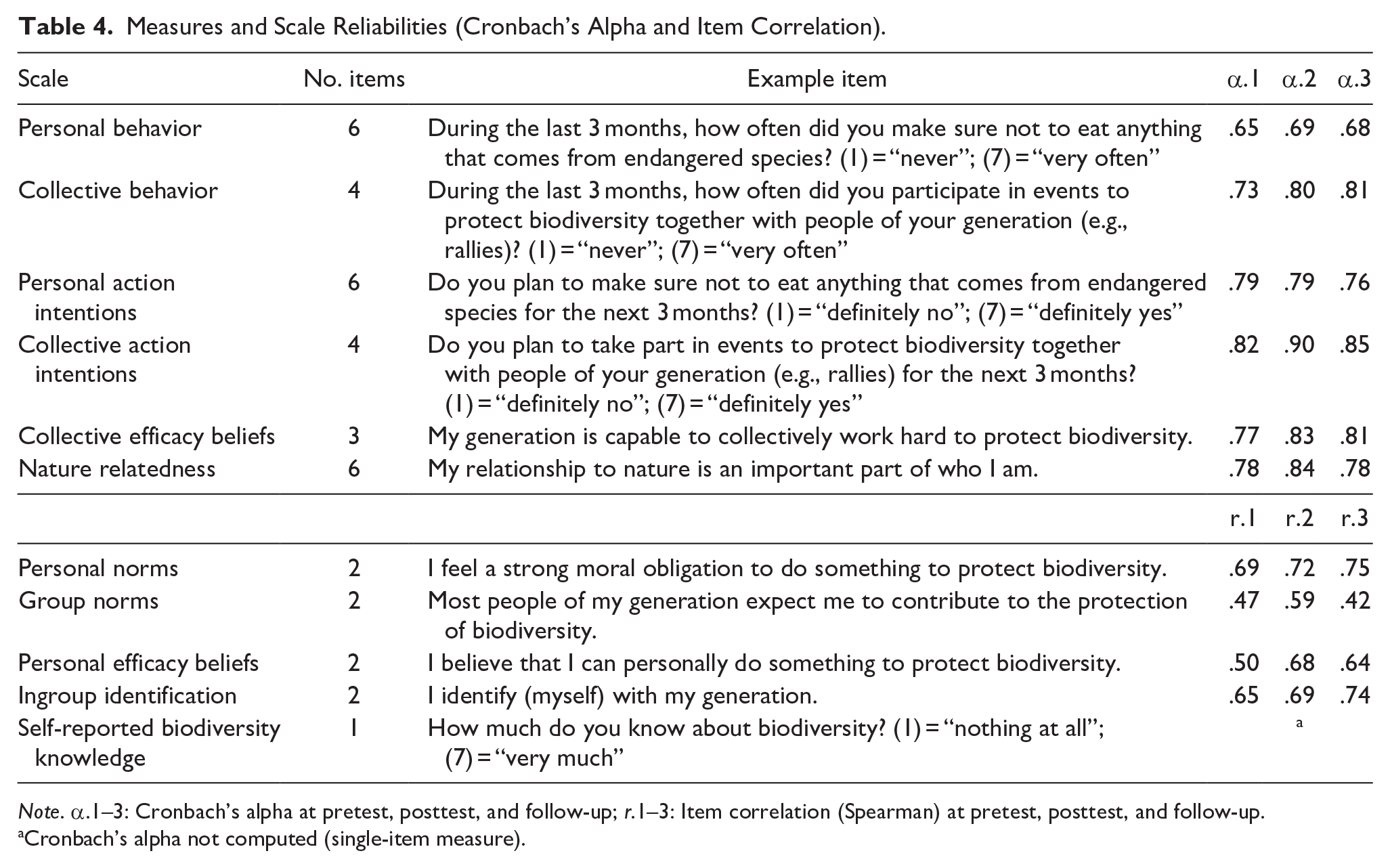
Note. α.1–3: Cronbach’s alpha at pretest, posttest, and follow-up; r.1–3: Item correlation (Spearman) at pretest, posttest, and follow-up.
Cronbach’s alpha not computed (single-item measure).
Data Preparation
We conducted one-way analysis of variance to identify potential differences in our study variables at pretest between the four groups (citizen science group, instruction group, control school, control courses). Results revealed no significant (and only two marginally significant) between-group differences (all ps > .083), indicating no substantial baseline differences for our study variables (personal and collective behavior and action intentions, nature relatedness, biodiversity knowledge, personal and collective norms, personal and collective efficacy beliefs, strength of ingroup identification). Skewness and kurtosis indices for our study variables fell well within acceptable estimates of normality (i.e., <|1|) at all of the three time points (exceptions: skewness and kurtosis collective behavior at pretest, skewness and kurtosis collective efficacy at posttest; maximum value < |1.43|).
Analyses
Linear mixed-effects models with random intercepts for participants were estimated to assess within-participant changes from pretest to follow-up for our outcome measures, as well as differences between the four groups (i.e., two treatment schools, control courses, and control school). Analyses were conducted applying restricted maximum likelihood estimation (REML) using the GAMLj package (Gallucci, 2019) in jamovi (The Jamovi Project, 2022). Separate mixed models were estimated for each of the outcome measures including time (pretest, posttest, follow-up), group (citizen science group, instruction group, control school, control courses), as well their interaction term as predictors. For mediation analysis we used the procedure proposed by (Valente & MacKinnon, 2017) to assess mediation in pretest-posttest control group design. We restricted mediation analysis to pretest and posttest data, as no follow-up data had been collected for the control school. Mediation analysis was conducted using MPlus (Ver. 7.4; Muthén & Muthén, 1998).
Results
Mixed-Model Analysis
Within-participant changes in the central outcome measures across the three measurement points are presented in Table 3; the corresponding simple effects analysis results are reported in Table 5.
Simple Effects Analysis for CENTRAL Outcome Variables.
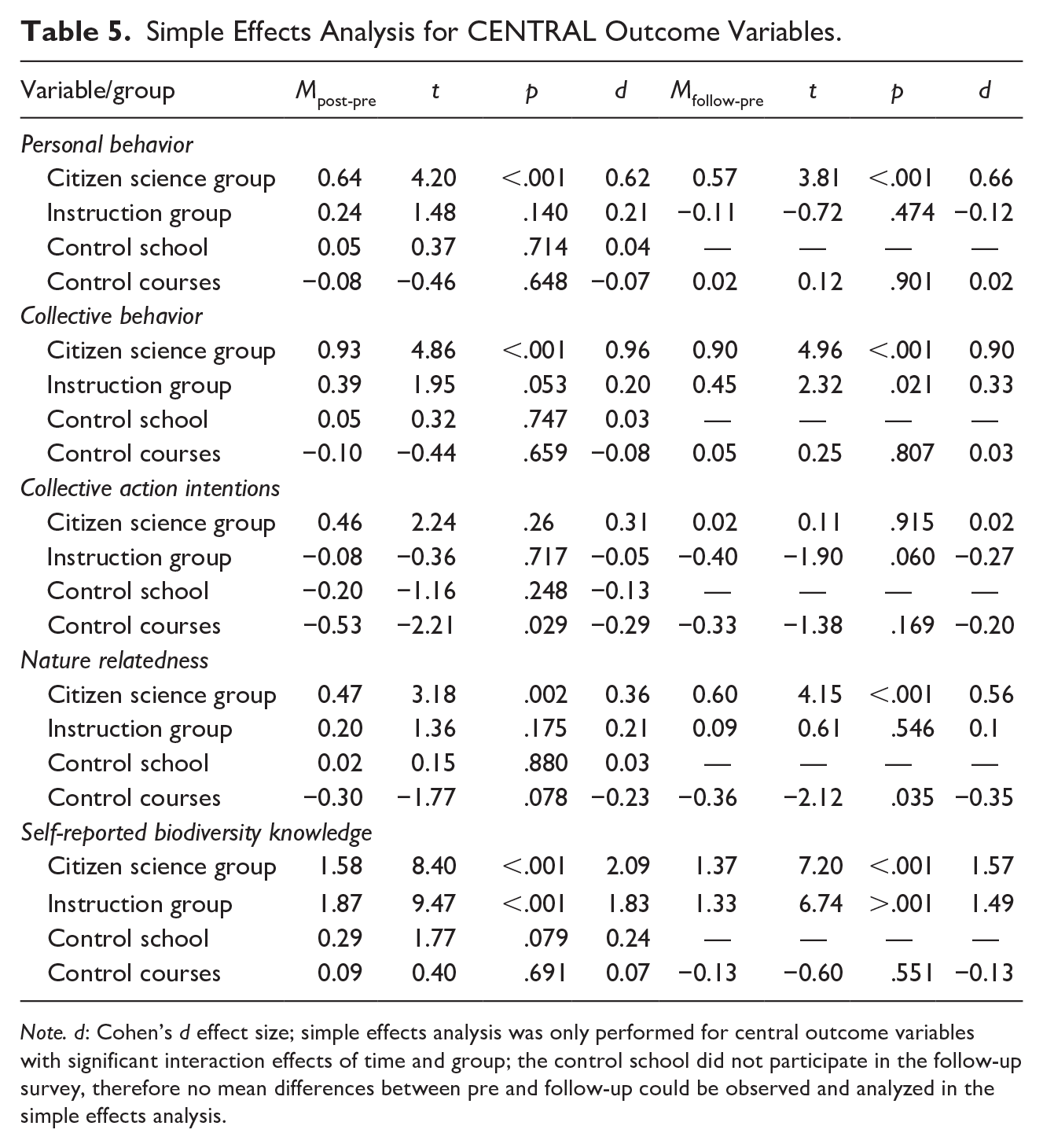
Note. d: Cohen’s d effect size; simple effects analysis was only performed for central outcome variables with significant interaction effects of time and group; the control school did not participate in the follow-up survey, therefore no mean differences between pre and follow-up could be observed and analyzed in the simple effects analysis.
Personal and Collective Biodiversity-Protective Behavior
For personal behavior, results showed a significant main effect of time, F(2, 199) = 3.72, p = .026,
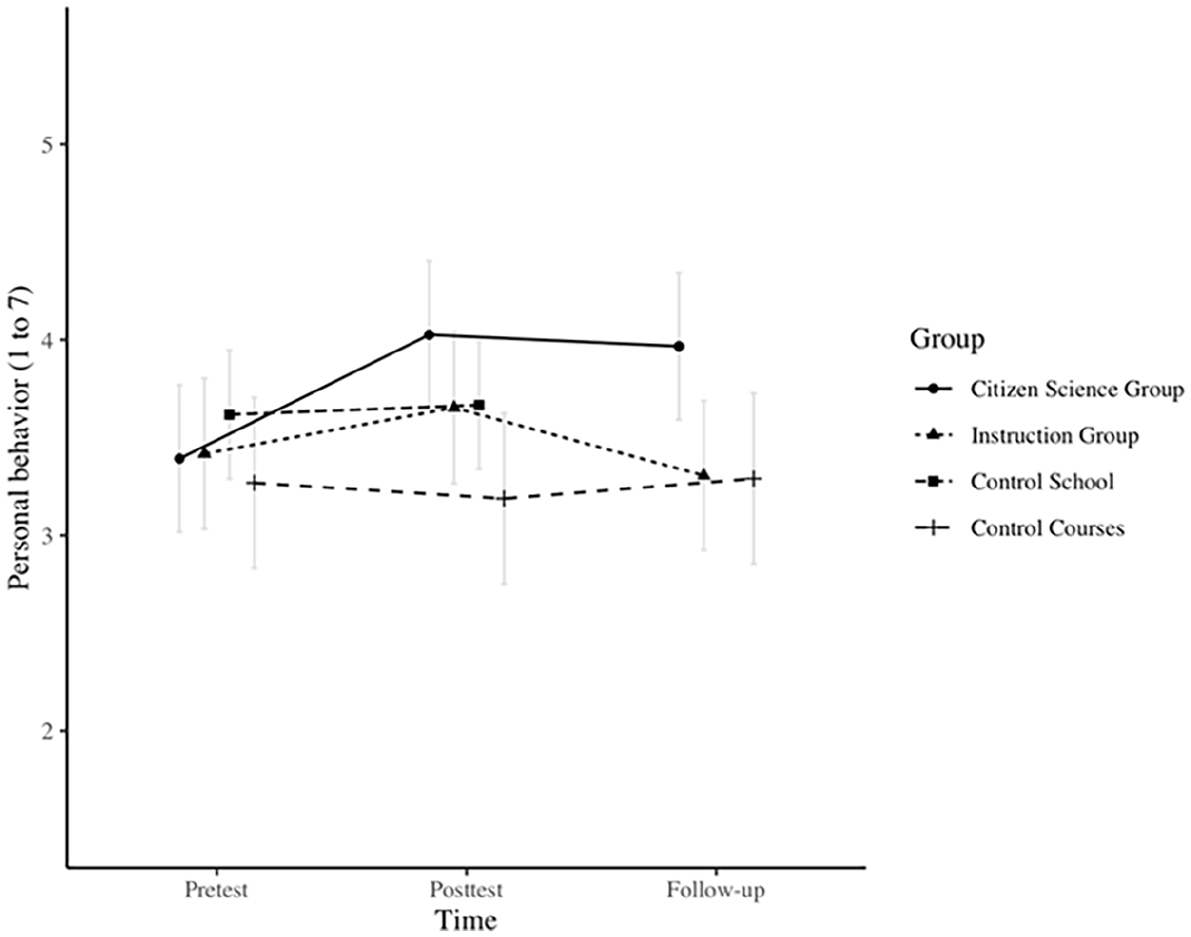
Personal behavior.
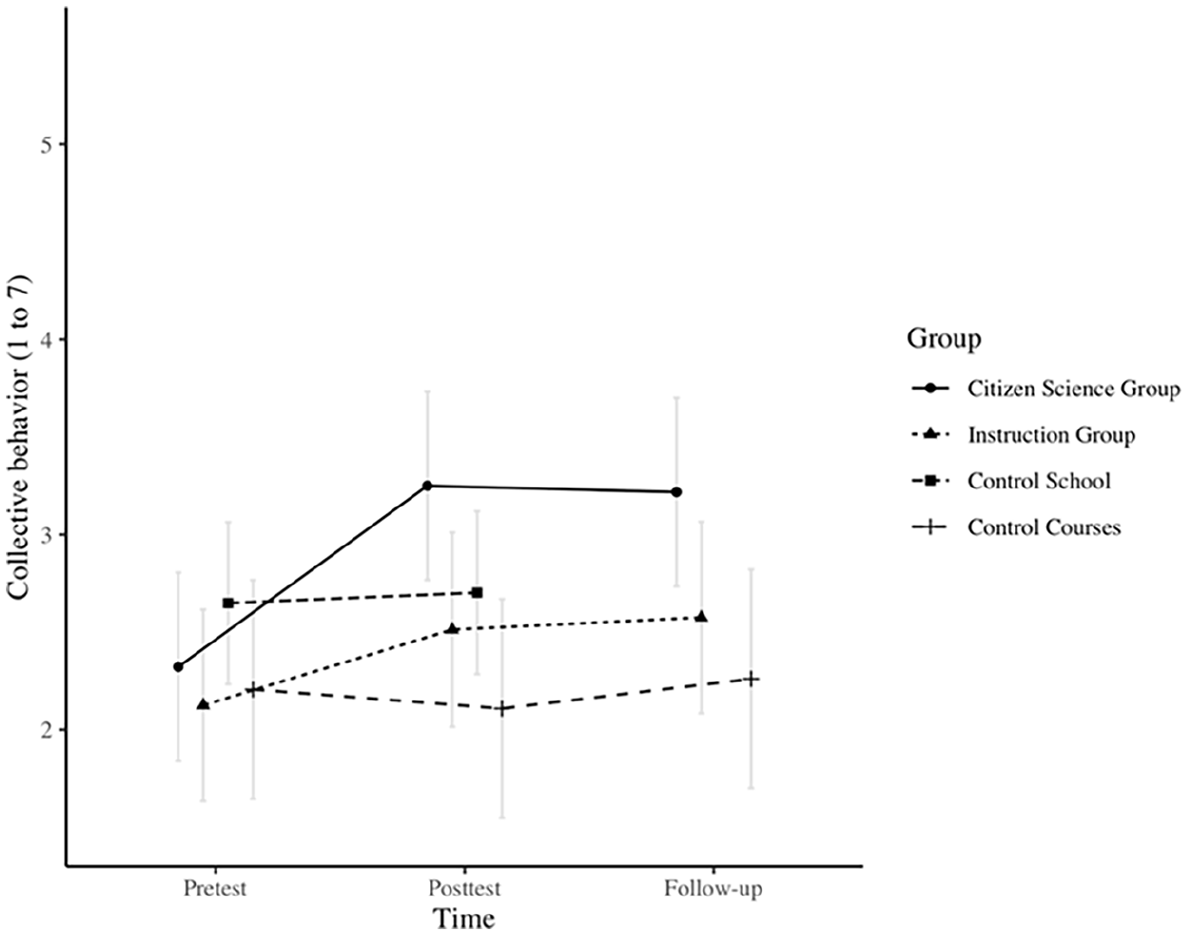
Collective behavior.
Personal and Collective Biodiversity-Protective Action Intentions
For personal action intentions, results showed a significant negative main effect of time, F(2, 198) = 4.27, p = .015,
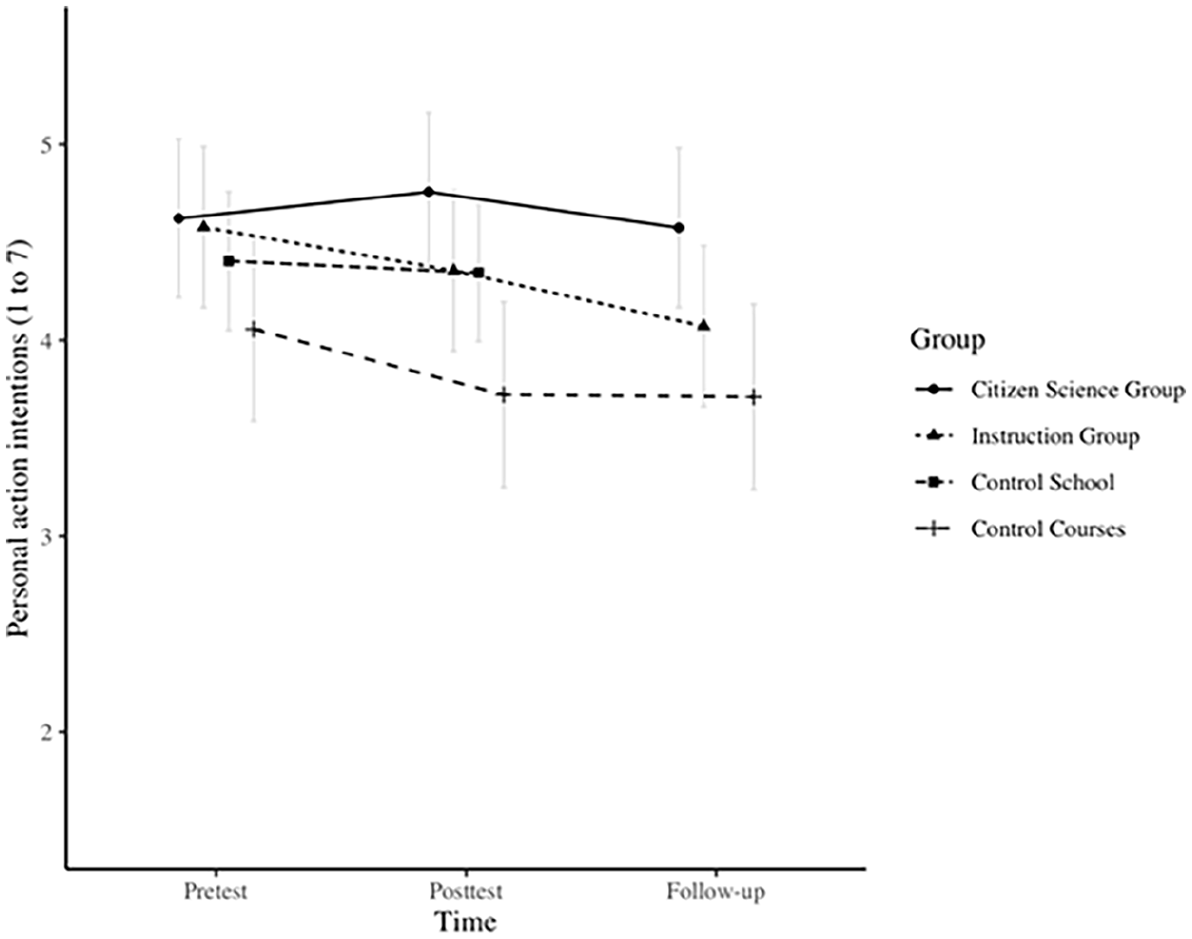
Personal action intentions.
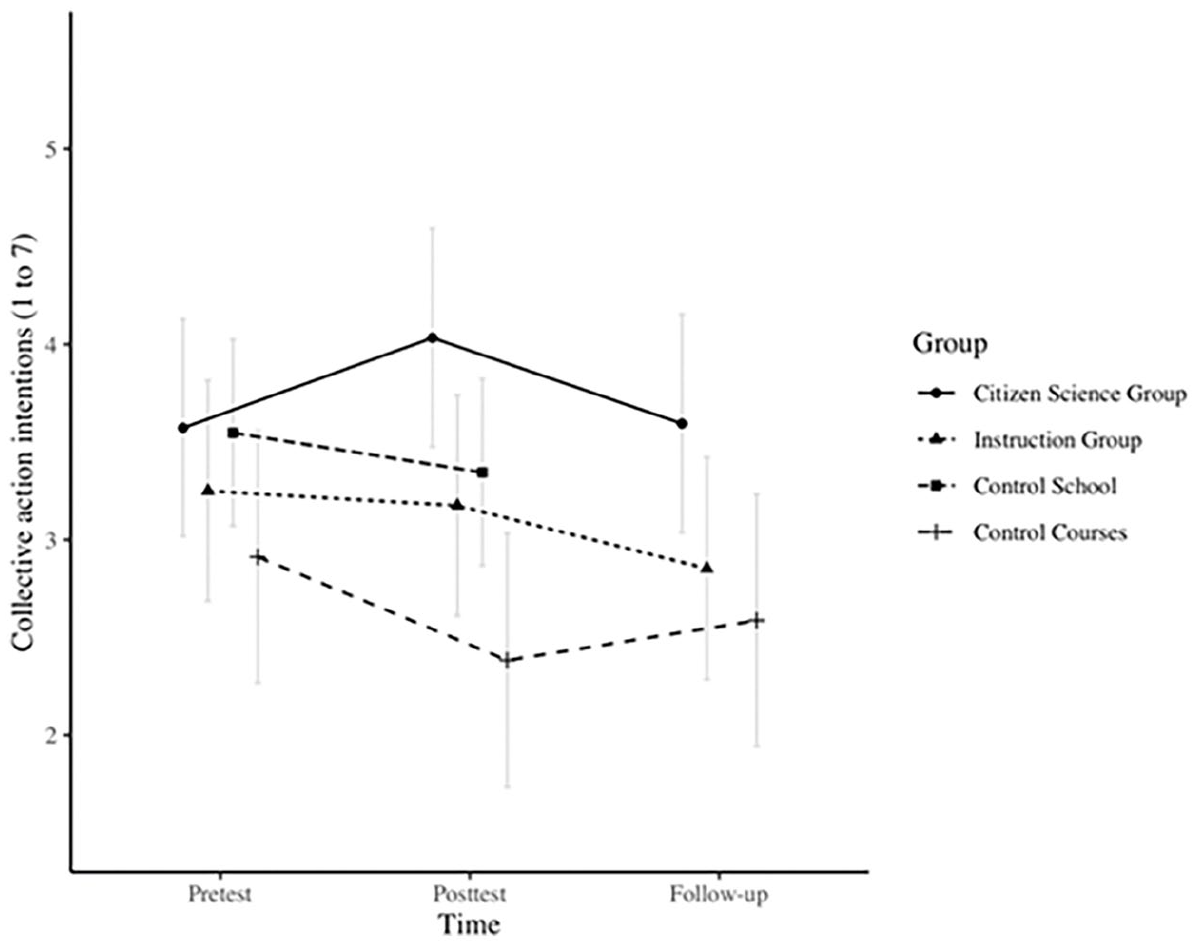
Collective action intentions.
Other Measures: Nature Relatedness, Biodiversity Knowledge
We also tested for within-participant changes in potential predictor variables of personal and collective behavior, including nature relatedness, self-reported biodiversity knowledge, personal and ingroup norms, personal and collective efficacy beliefs, and ingroup identification. Results indicated treatment effects (i.e., significant interaction effect of time and group) for nature relatedness, F(5, 198) = 4.49, p < .001,
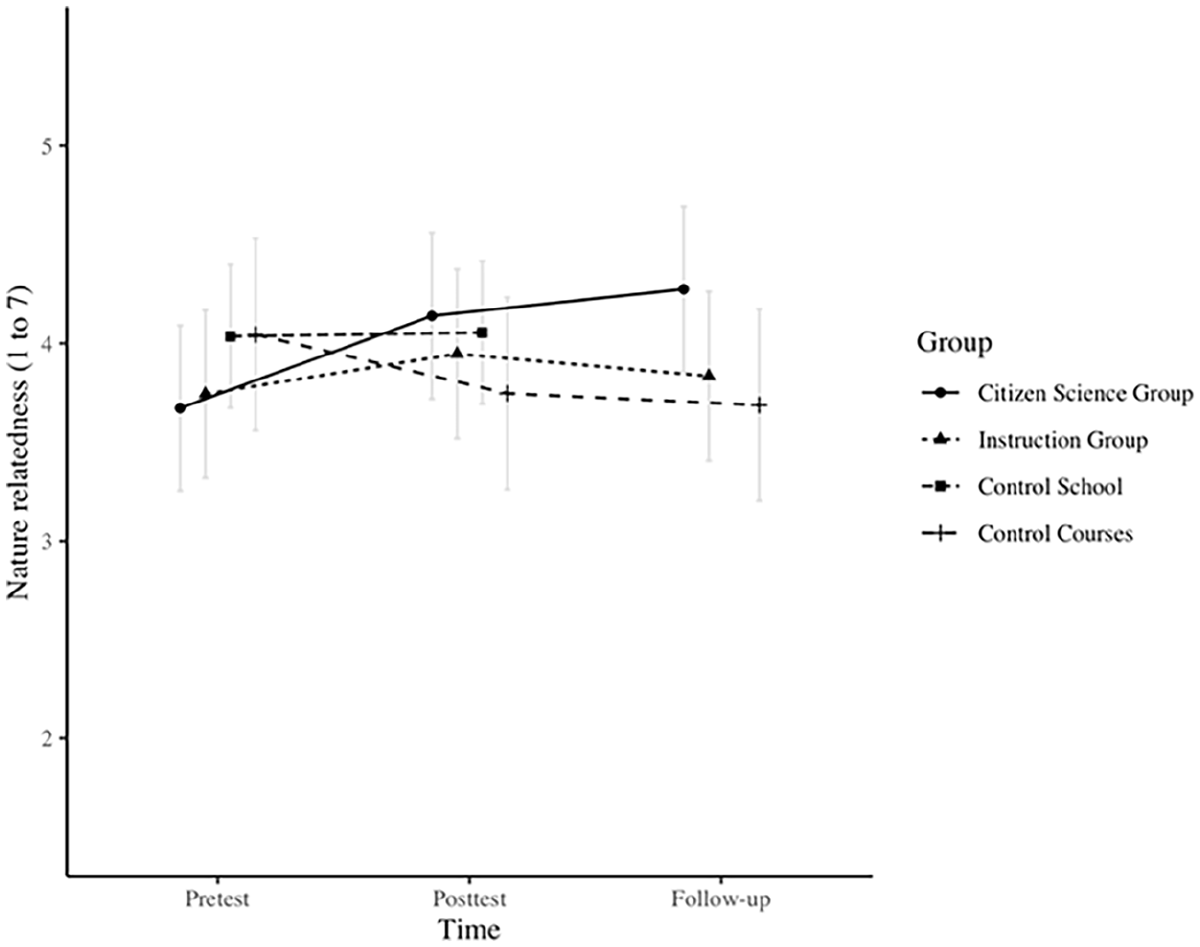
Nature relatedness.
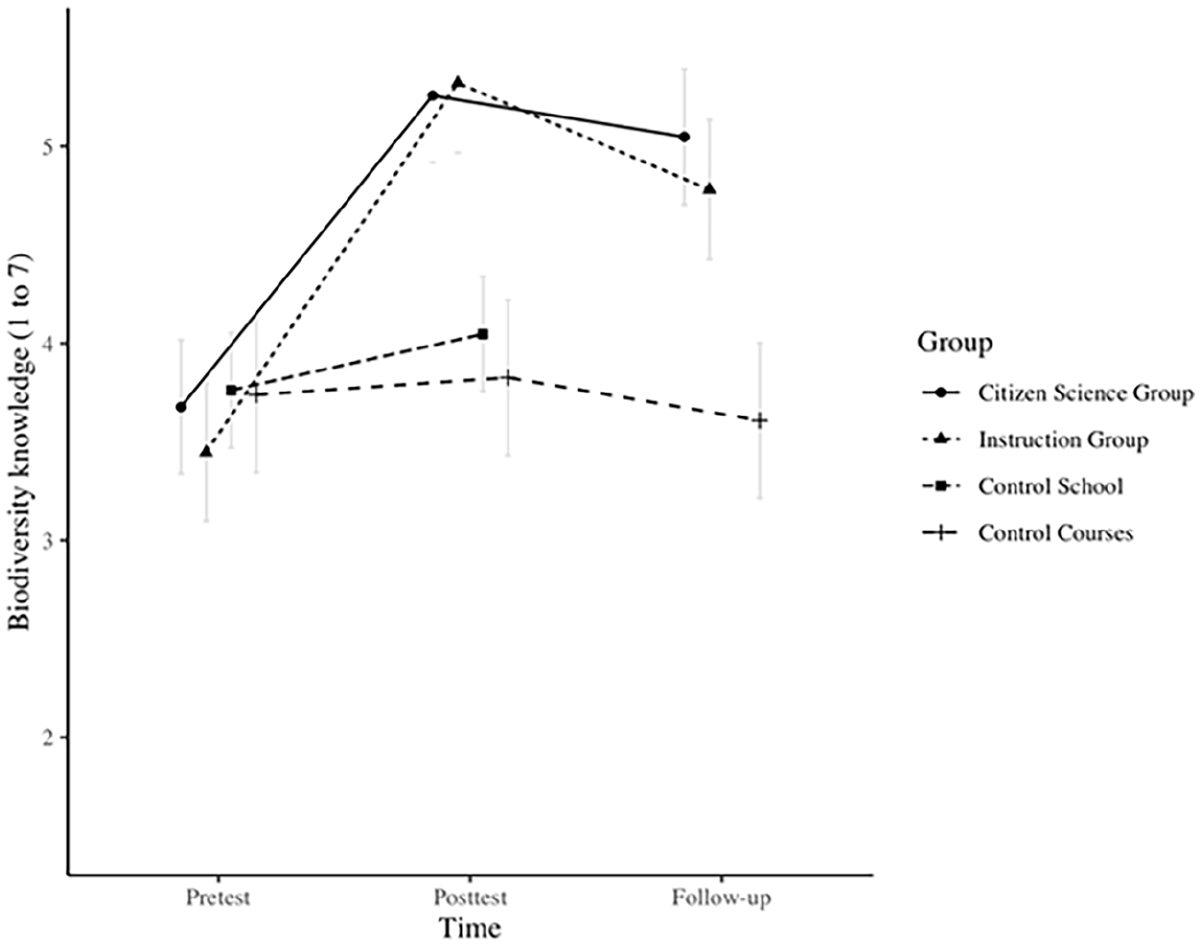
Biodiversity knowledge.
Mediation Analysis
We conducted analyses of longitudinal mediated effects of experimental condition through nature relatedness and self-reported biodiversity knowledge (mediator variables) on personal and collective biodiversity-protective behavior as well as collective biodiversity-protective action intentions (outcome variables). Mediation analysis was limited to nature relatedness and biodiversity knowledge, as variables with nonsignificant treatment effects were unlikely to be significant mediators of treatment effects (MacKinnon et al., 2001). Specifically, we investigated whether changes in personal behavior, collective behavior and/or collective action intentions from pretest to posttest were mediated by changes in nature relatedness and/or biodiversity knowledge between the two measurement points. We fitted mediation models including pretest and posttest data following the procedure proposed by Valente and MacKinnon (2017). In order to increase the statistical power of the mediation analysis, we recoded our (four-group) treatment factor variable, collapsing the citizen science and the instruction group in one group (labelled “treatment” coded “1”) and the two control groups in another group (labelled “control” coded “0”). Parallel mediation analysis was conducted including nature relatedness and biodiversity knowledge as parallel mediator variables for each of the three outcome variables. Model fit was good for all mediation models (all CFIs ≥ 0.99, all RMSEAs ≤ 0.086). Results showed significant combined indirect effects of the treatment variable on personal and collective behavior through both mediators (collective behavior: unstandardized IE = 0.29, SE = 0.12, 95% CI [0.03, 0.54]; personal behavior: IE = 0.25, SE = 0.13, 95% CI [0.01, 0.51]). For collective action intentions, we found no significant combined indirect effect, IE = 0.13, SE = 0.17, 95% CI [−0.21, 0.45]. Closer inspection of the combined indirect effects indicated significant specific indirect effects of the treatment variable on personal and collective behavior through nature relatedness (collective behavior: unstandardized IE = 0.14, SE = 0.08, 95% CI [0.02, 0.32]; personal behavior: IE = 0.11, SE = 0.06, 95% CI [0.01, 0.24]), but not through self-reported biodiversity knowledge (collective behavior: unstandardized IE = 0.15, SE = 0.12, 95% CI [−0.09, 0.38]; personal behavior: IE = 0.15, SE = 0.14, 95% CI [−0.11, 0.41]). In other words, changes in personal and collective behavior were partially mediated by changes in nature relatedness, but not by changes in self-reported biodiversity knowledge.
Discussion
Human-made biodiversity loss is proceeding at unprecedented pace, threatening all life on earth and the well-being of future generations. To lay the ground for transformational change and raise awareness for courses of action, school education plays a pivotal role. Education not only has to convey knowledge about biodiversity and the prevailing crisis, but should prepare school students to take part in our society as (future) citizens to protect biodiversity (UN Secretary-General, 2003). The current study represents one of the first comprehensive attempts to evaluate the effectiveness of CS as a tool for behavioral change and demonstrates that CS can be an effective tool to complement formal school education in reaching these goals. We tested the effects of two different education treatments (instruction and CS intervention) on personal and collective outcomes related to biodiversity protection. Both treatments included a multi-lesson teaching unit on urban biodiversity, but only participants in the CS treatment had the chance to engage in and shape joint fieldwork and discussions on urban diversity together with researchers from a local research institute.
Our results showed that while both interventions increased students’ knowledge about biodiversity (compared to the two no-treatment control conditions), the CS intervention uniquely raised adolescents’ personal relatedness to nature and their personal and collective behavior and action intentions towards the protection of biodiversity (compared to all the other three non-CS conditions). Strikingly, the effects on self-reported behavior, nature-relatedness, and knowledge were stable across the posttest and the 3 months later follow-up test, that is, for approximately 6 months. Collective engagement with local biodiversity and biodiversity science succeeded in providing experiences of nature relatedness and joint biodiversity action that fostered their science-based action as citizens far beyond the intervention. Moreover, the effect of the CS intervention was not restricted to changes in specific behavioral patterns related to the context of the intervention. Instead, self-reported biodiversity action across different behavioral domains was significantly increased, ranging from littering behavior in natural environments to not eating products from endangered species. Such spill-over effects of interventions to encourage sustainable behavior are supported by a recent meta-analysis by Geiger et al. (2021).
To unravel underlying mechanisms that may have implications from an applied perspective, we tested if these effects were caused by changes in specific intermediate variables. Mediation analyses indicated that the CS intervention was effective in elevating biodiversity action by raising students’ personal relatedness to nature (but not through increasing their biodiversity knowledge). This highlights the role of identity as a driver of pro-environmental action (Vesely et al., 2021) and the high potential CS interventions have in fostering self-identification with, and affective bonds to, nature in people. The potential of CS may even transcend (educational) intervention approaches that foster nature relatedness solely through nature contact (Sellmann & Bogner, 2013; Stern et al., 2008). Our study reveals that focusing on and taking responsibility for local biodiversity can change adolescent’s perspective on nature as being part of the self (and their psychological closeness to and fondness of nature). As other living beings become part of the self and psychologically closer, people may be more inclined to consider the existence and “interests” of other species in their everyday behavior (Nisbet & Zelenski, 2013). Future research should more closely examine the specific identity processes involved in CS effects, particularly by distinguishing between identification with nature from identification with a specific place (Scannell & Gifford, 2010). The CS “cool spot” intervention may influence both, and both forms of identification—whether with nature or place—have been shown to promote pro-environmental behavior (Vesely et al., 2021).
Furthermore, the results of our mediation analyses demonstrated that interventions focusing solely on increasing people’s biodiversity knowledge are less effective in strengthening efforts to protect biodiversity, which is in line with research investigating outdoor learning approaches in school students (e.g., Otto & Pensini, 2017). However, environmental education programs are often still built around the idea that knowledge is an important precondition to act in favor of nature. In contrast, our results suggest that strengthening (collective) identities linked to biodiversity-protective behavior might be a more promising strategy to foster sustainable behavior change, especially in the long-term. Interestingly, when it comes to behavior changes, the outcome of informal CS projects with adults is most visible in communication activities and participation in other CS projects, and much less when relating to general environmental behavior (Jordan et al., 2011; Lewandowski & Oberhauser, 2017; Peter et al., 2021). As our data collection did not sufficiently cover the effect of our CS intervention on the students’ communication activities, we thereby may even have missed another relevant part of participant outcomes.
For educational practice, it is encouraging that we found activating effects on students’ biodiversity action in our study. This adds an optimistic voice to the discussion about the potential of CS projects in schools. Overall, our empirical knowledge on the effectiveness of CS interventions embedded in formal science learning is currently still rather patchy. While most authors praise the opportunities that CS bears for formal education (e.g., Harlin et al., 2018; Zoellick et al., 2012), it is also generally acknowledged that there are specific challenges. Formal education, due to its primary focus on learning goals as well as its non-voluntary and less self-determined character, might not be seen as an ideal place to include CS elements at first glance. Zoellick et al. (2012) describe the trade-off between student learning benefit and scientific research benefit that characterizes CS projects in schools. Recent studies illustrate these difficulties and highlight that such interventions in schools pursue a variety of objectives, some of them in the science classroom and some beyond (Araújo et al., 2022; Wichmann et al., 2022). Both studies only found limited intervention effects, thus concluding that environmental CS projects alone cannot be expected to create pro-environmental behavior. Rather, such projects should be integrated into regular classes and their learning objectives, which was realized in our study, possibly explaining its measurable success. The scarcity of empirical evidence on CS in schools can also be attributed to the methodological challenges that these studies face (e.g., control group studies usually have to work with nonrandomized groups). The evidence is also still unclear with respect to social exchange, which one could expect to play a large role in the experience of collective efficacy (see for example Dickinson & Crain, 2019).
It is interesting to compare our results with studies on CS in informal education in the field of biodiversity. Findings of a recent large-scale survey showed a great increase in knowledge, interest, and motivation regarding species through informal biodiversity CS projects (Peter et al., 2021). The authors conclude from this result that it should be promising to integrate CS into formal education as a way for young people to experience nature and develop interest in species and biodiversity, to a greater extent than they could in regular biology lessons. However, their survey results hardly seem transferable to the situation in school projects, as participants differ considerably regarding their demographic profiles as well as in other conditions. For example, survey participants were self-selected and had freely chosen to participate in the CS projects. The authors state that “many of them might have had pro-environmental attitudes and might have been involved in pro-environmental behavior before starting to participate” (Peter et al., 2021, p. 306). Also, the authors did not collect factors related to the project structure and design, so their results do not allow to draw conclusions for project development. We conclude that, as the demographic profiles and the conditions of participation are considerably diverging, it seems inadequate to transfer lessons learned in informal projects with voluntary enthusiasts to formal CS projects in school—at least, it should be done very carefully as long as the body of research on CS in formal learning environments remains scarce.
In the context of the research gap on the effectiveness of CS in schools, we assign some relevance and novelty to the finding that our CS project had activating effects on students’ biodiversity action. Participating in CS together with other students might have raised adolescents’ biodiversity action because it provided an experience of collective agency. Jointly studying biodiversity and its threats in relation to their collective environment (i.e., their own city and their own “cool spot”) may have created a sense of a joint concern about local biodiversity, leading to the formation of an autonomous collective goal to protect it. In addition, communicating their common findings and concern to a scientific public allowed the experience of collective goal-directed action. Finally, scientists’ actual or presumed responses might have created a sense of collective effectiveness. These three elements (autonomous collective goal, goal-directed collective action, collective effect) should be crucial for perceiving collective environmental agency (Fritsche, 2022; Fritsche & Masson, 2021) and, as a consequence, for being motivated to act for the environment even beyond the initial action context. This is indicated by the fact that the CS intervention not only increased adolescents’ personal, but also their collective action to protect biodiversity.
Unfortunately, in the present study we did not measure perceptions of collective biodiversity norms and collective efficacy with regard to students’ citizen science group. Instead, these perceptions were measured for the young generation as the ingroup, which was not particularly relevant in the CS intervention (indicated by the missing effect of the intervention on identification with the young generation). Although, as a general trend, perceived collective pro-biodiversity norms and perceived collective efficacy of the young generation increased across time points, this effect was not only present in the citizen science group but also in the instruction and control group. This general environmental politicization of large parts of the young generation may have masked the specific treatment effect of the CS course as during that time collective pro-environmental norms and efficacy increased anyway. Future research may investigate the effects of CS-based treatments on collective biodiversity-related outcomes, such as collective efficacy beliefs, in more controlled environments. This may refer to the choice of reference group to ensure a higher degree of correspondence between the group salient in the intervention process and the chosen reference group, but also to the implementation of such treatments in less politicized social environments or samples.
Even if it is not possible to ultimately rule out alternative explanations of the observed effects in our quasi-experimental design (e.g., school-based effects), we detected consistent differences in the changes in our outcome measures between the CS group (and for some measures also the instruction group) and the control courses, which increased our confidence in the current findings. The control courses participants were sampled from the same schools as the CS and instruction groups’ participants. As a result, it is less probable that the observed changes in biodiversity action and intentions can simply be attributed to school-specific characteristics. Furthermore, one may question if our CS intervention qualifies as a true citizen science project. We argue that despite being only a 2-day project, our design implemented distinctive key elements of CS within a formal education setting (e.g., being involved in developing research questions and data inquiry, aspects of co-design, work with real data, collected following scientific standards). Compared to the instruction group, the CS group’s project featured a more interactive style and provided more degrees of freedom (i.e., the choice of their favorite place in nature for the fieldwork phase) and responsibility to the students. It was also embedded in a framework that allowed collaboration with local scientists and an appreciation of students’ results in an out-of-school context. Also in future educational CS projects, we will consider analyzing the participant outcomes at multiple levels, widening the scope to the instructors, for example, the involved teachers (Zhang et al., 2023).
Finally, we could observe that the intervention primarily affected behavior but less so behavior intentions. This may point to the nature of the psychological processes involved. These seem to be largely unconscious and automatic, given that students’ change in behavior was not reflected in similar changes in their conscious intentions. As a possible explanation, the intervention might have altered students’ generalized habits of how to perceive and interact with local nature and biodiversity. Habitual behavior means that certain contexts quite reliably trigger a specific kind of thinking or behavior without forming respective intentions being necessary (Ouellette & Wood, 1998). CS activities that take place in people’s closer surroundings and everyday contexts (students’ “cool spots” in the present study) might forge an association of these places and contexts with conservation activities in participants’ memory, thus eliciting more of these activities in people’s everyday life. This possible habit-formation process of implicitly learning to handle nature carefully clearly marks one of the major advantages of engaging actively in science instead of passively consuming its outcomes. This suggests complementing conventional school teaching, where biodiversity concepts are often taught in abstract terms that do not directly connect to students’ everyday environments. For instance, lessons may focus on species decline in distant rainforests or vanishing habitats in the Arctic, rather than linking biodiversity to familiar, local contexts.
Our study highlights an often still untapped potential in teaching biology: promoting nature relatedness and forming conservation habits through direct encounters with nature and—importantly—joint exploration in everyone’s personal surroundings will strongly exceed the approach of solely transferring knowledge to induce urgently needed change. In other words: Take the classroom into nature and practice science by exploring biodiversity.
Conclusion
Including citizen science elements in school-teaching on biodiversity fostered students’ pro-diversity action on both the personal (e.g., private consumption) and the collective (e.g., participation in collective protest) level. We found first evidence for students’ increased personal relatedness to nature to explain this effect. However, the role of other possible factors, such as elevated perceptions of collective agency, are still to be properly investigated in future research. The present study should be a starting point for further systematic evaluations of citizen science school teaching and citizen science education in general. More experimental studies are needed to develop a better understanding between the connection of citizen science approaches in school, learning, and consequently behavioral outcomes. We encourage more studies to consider experimental designs involving proper control groups to tease out the specific contribution of actively involving people in doing environmental science beyond merely knowledge-based interventions. Also, to understand the “transformative” potential of citizen science to affect and sustain people’s environmental action it seems crucial to go beyond knowledge effects and to look at how citizen science transforms people’s personal and collective identities. In fact, this kind of science does not just interpret (i.e., describe and explain) the world but may indeed contribute to change it.
Supplemental Material
sj-docx-1-eab-10.1177_00139165251345383 – Supplemental material for Citizen Science Goes to School: Intervention Effects on Biodiversity Knowledge, Nature Relatedness, and Biodiversity Action in Secondary School Students
Supplemental material, sj-docx-1-eab-10.1177_00139165251345383 for Citizen Science Goes to School: Intervention Effects on Biodiversity Knowledge, Nature Relatedness, and Biodiversity Action in Secondary School Students by Torsten Masson, Julia Siebert, Sabrina Köhler, Immo Fritsche and Jörg Zabel in Environment and Behavior
Footnotes
Acknowledgements
We thank Dirk Binder, Aletta Bonn, Martin Lindner, Anett Richter and Karin Ulbrich for being part of the project team, Dirk Binder for developing and performing the teaching unit, Anett Richter for substantial support during project development and practical application, Melissa Marselle and Martin Scheuch for valuable input on nature relatedness and citizen science. Furthermore, we thank all teachers from the three schools as well as all iDiv scientists supporting the study.
Declaration of Conflicting Interests
The author(s) declared no potential conflicts of interest with respect to the research, authorship, and/or publication of this article.
Funding
The author(s) disclosed receipt of the following financial support for the research, authorship, and/or publication of this article: This research has been conducted in the framework of the iDiv Flexpool—the internal funding mechanism of the German Centre for Integrative Biodiversity Research (iDiv) Halle-Jena-Leipzig, funded by the Deutsche Forschungsgemeinschaft (DFG, German Research Foundation)—FZT 118, 202548816.

Supplemental Material
Supplemental material for this article is available online.
Notes
Author Biographies
References
Supplementary Material
Please find the following supplemental material available below.
For Open Access articles published under a Creative Commons License, all supplemental material carries the same license as the article it is associated with.
For non-Open Access articles published, all supplemental material carries a non-exclusive license, and permission requests for re-use of supplemental material or any part of supplemental material shall be sent directly to the copyright owner as specified in the copyright notice associated with the article.
