




Abstract
Emerging digital technologies have the potential to motivate children’s interaction with nature. However, as the end-users of such tools, children have hardly been involved in their design process. This paper aims to investigate the desired characteristics of digital tools for an ideal interaction with nature from children’s perspective. We conducted an exploratory study, combining an outdoor activity and a co-design workshop, with 23 children from a secondary school in the Netherlands. We used a multimodal approach and the children-nature interaction model as a framework to analyze children’s designs. Findings show that children’s experience of using a nature-related digital tool in nature, and outline the design characteristics, requirements, and intervention functions of children’s on ideal digital tools that can increase their interaction with nature from their perspective.
Keywords
Introduction
Children and teenagers in cities are engaging less and less with natural areas in the city, or the so-called “urban green infrastructure” (UGI) (Freeman et al., 2018; Novotný et al., 2021). This is detrimental to their growth and well-being (Tzoulas et al., 2007; Xu et al., 2020). Globally, cities are implementing policies and initiatives to address children’s lack of regular outdoor play, such as UNICEF’s Child-Friendly Cities Program (Malone, 2013). Meanwhile, the pervasiveness of digital technology is shown to decrease children’s outdoor play in nature (Oswald et al., 2020). Even though some organizations have called for severe limitations on children’s use of digital technology due to the link between the greater use of technology and decreased exposure to nature, it is also argued that emerging digital technologies have the potential to motivate children to interact with nature (Cumbo et al., 2014; Fails & Jones, 2020; Wang & Komlodi, 2012). For example, children are shown to prefer and actively participate more in technology-dependent outdoor activities compared to non-technology-dependent outdoor activities (Chavez, 2009). Furthermore, digital technology is increasingly used for children-nature interaction through design-oriented education (Strawhacker et al., 2020).
Ideally, designing for children should incorporate them as important contributors when creating an interactive application (Markopoulos & Bekker, 2003). They provide crucial information as they share the target group’s cognitive, motor, and comprehension abilities—which sets them apart from the adult population (Bruckman et al., 2009; Hanna et al., 1997). Here, children’s imagination is a precious asset. Additionally, they are often willing to give their opinions and provide unusual perspectives on everything, even the most difficult issues. However, children as the end-users of digital tools are rarely involved in their design process while there is an increasing call from research to take in their actual experience of using digital tools (Rubegni et al., 2022).
Over the past two decades, the field of design research has shifted closer to the end-users. The well-known participatory design movement that began in the early 1970s has given rise to the “co-design” approach (Stålberg et al., 2016). Co-design, an approach to design that aims to actively involve all stakeholders in the design process to ensure the product meets their needs, is usable and accepted (Melonio & Gennari, 2013). Nowadays, children are increasingly engaged in technology design (i.e., the process of creating and perfecting technology) since designers have grown more conscious of children as credible participants with significant insights and firsthand knowledge of the design process (Gennari et al., 2019). Nevertheless, it is difficult to understand children’s technology wants and needs (Druin, 2002).
Nowadays, children are using interactive technology more frequently. Examples of design participation with children in academic literature are still relatively uncommon. Even though an increasing number of studies are focusing on this issue (see Related Works section) (Malinin & Parnell, 2012), it is still challenging to regard a child as an authentic co-designer. Due to factors like budget or time constraints, opportunities for children to participate in design decision-making about their environments are dismissed (Kyttä et al., 2004; Wake, 2013). Although there is a growing interest in engaging children in the design of interactive learning technology (Palaigeorgiou & Sidiropoulou, 2021), children are often involved passively (e.g., as testers) in the design of technology (Van Mechelen, 2016).
Table 1 shows an overview of our research questions and the corresponding used methods. Here,
An Overview of Research Questions and Used Methods.
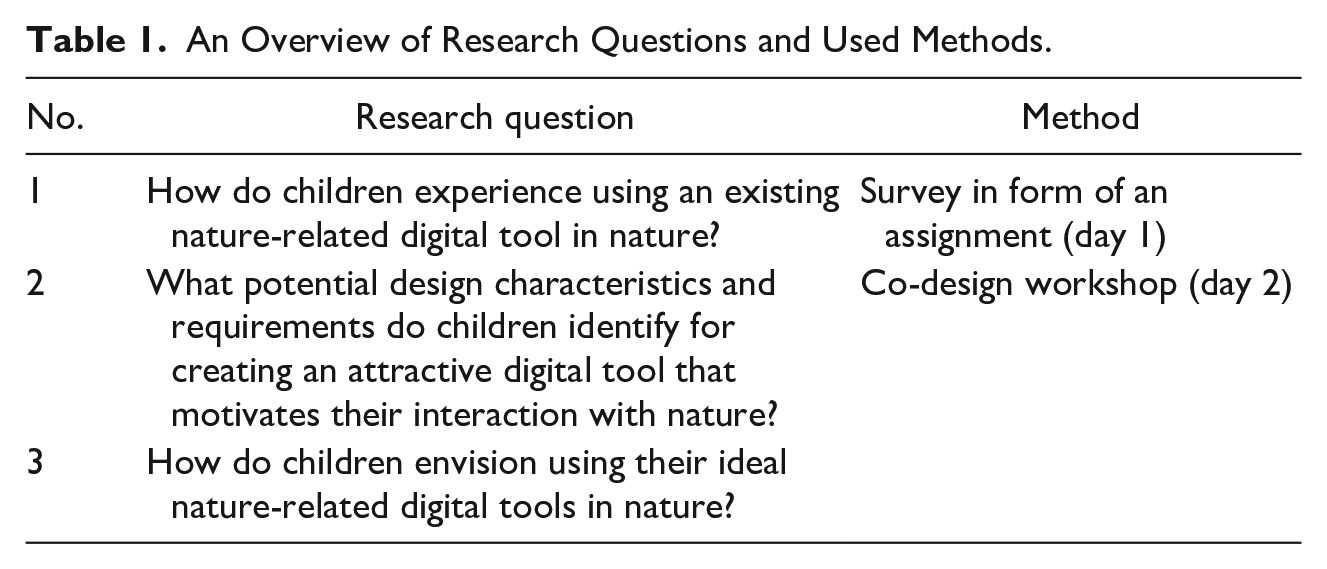
We answer the above questions by analyzing children’s inputs from a survey and organizing a co-design workshop with a structured assignment conducted during a 2-day research activity with around twenty 12–14-year-old children in collaboration with a secondary school in Rotterdam, the Netherlands. On the first day, 21 children aged between 12 and 14 were asked to test an existing digital app designed for children’s interaction with nature, on a walking route in nature. The second day included a co-design workshop with children as co-designers, and two researchers plus a teacher as facilitators. Here, children were asked to design their ideal interactive nature-related digital tool. We analyze the inputs gathered during the 2-day activity using the COM-B behavior change model (Michie et al., 2011) and its adoption to children-UGI interaction (Yin et al., 2022) (see A Conceptual Model for Children-UGI Interaction section). Using a behavior change model enables us to predict how various design characteristics, requirements, and intervention functions could potentially influence children-UGI interaction. Intervention functions are intended to alter an individual’s capability, opportunity, and/or motivation to engage in behavior (Michie et al., 2014). The COM-B model helps with understanding how digital tools can affect the capability, opportunity, and/or motivation for children-UGI interaction, through various intervention functions. This theoretical underpinning can support researchers in understanding the behavioral change impact of nature-related digital tools better but also inform designers to make tools that are more likely to stimulate the desired behavior change toward children’s interaction with nature. Furthermore, the outcomes of this study add to the ongoing research on co-design with children, especially for creating digital tools.
This paper is organized as follows: in Section “Related Works” we review related works on the co-design of interactive digital tools with children and explain a conceptual model for children-UGI interaction. Section “Methodology” outlines the experimental design, data collection, and analysis methods. The results of the analysis are presented in Section “Results”. Finally, we present the conclusion and discussion in Section “Conclusion and Discussion”.
Related Works
Previous Studies on Co-designing Interactive Digital Tools With Children
Children’s input in the collaborative design and development process is critical (Druin et al., 1998). For instance, Liverpool et al. (2020) highlighted that children and young people tend to prefer digital tools that include features such as videos, limited text, personalization, social interactions, and options for receiving text message reminders. Furthermore, the changes in learning conditions by digitalization can significantly influence children’s engagement (Bergdahl et al., 2020). A major part of existing works on co-designing interactive digital tools with children focuses on
Recent works have also co-designed augmented reality (AR) systems with children. Alhumaidan (2017) conducted three co-design studies involving nine primary school children aged 8 to 10 and three adults. The documentation of the co-design process offers a useful framework for developing an AR textbook with children, which includes collaborative experiences, learning, and usability factors as crucial principles. Hamidi et al. (2014) conducted a co-design workshop with 23 children aged 5 to 13 to explore, design, and implement digitally augmented paper artifacts based on traditional folk art from children’s native regions. Finally, some works have applied co-design with children for digital tools to help children with the investigation of spatial practice. For example, Williams et al. (2005) carried out several design workshops with 36 children aged 9 and 10 to create “outdoor soundscapes” by using emerging wireless technology. They conclude that such technologies could impact children’s access to, use of, and safety in an urban environment.
Few studies have focused on co-designing interactive digital tools for children’s
Previous works have created explorative frameworks or prototypes targeted at children, aiming to encourage them to learn about nature with ambient devices (i.e., the tools that display information with simpler interaction and more emphasis on the sounds of nature) (Sankupellay et al., 2017). For example, Rogers et al. (2004) designed the Ambient Wood outdoor learning experience for pairs of children aged 11 to 12 to explore the woodlands with different forms of digital augmentation. Explorations using this outdoor learning experience inspire children to conduct contextualized scientific inquiry and reflect on their interactions in the outdoor surroundings. Soro et al. (2018) produced another prototype, Ambient Birdhouse, which is an interactive digital device that includes sounds and videos of local birds to arouse children’s interest and engagement in nature and awareness for protection. Children were encouraged to learn bird calls and create and play games involving the Birdhouse.
Overall, the existing literature on co-designing interactive digital tools with children focuses more on educational purposes, while promoting children’s interaction with nature has received less attention. Probes, toolkits, and prototypes are three approaches used in the design process (Sanders & Stappers, 2014). Children can be empowered to actively shape technological development and critically reflect on the role of technology in their practices (Iversen et al., 2017). Tsvyatkova and Storni (2019) summarized different co-design approaches, techniques, and tools tailored for children of different ages across four design stages: user needs background research, design explorations, prototyping, and testing. They reported that children aged 7 to 12 were frequently engaged as evaluators, informants, and design partners, and there were various approaches, techniques, and tools to support design exploration and prototype evaluation. They found no discussions on co-design activities for children under 3 years old and over 15 years old. They also reported very few activities that support children aged 3 to 5 and above 14 as testers when evaluating user experience or as idea-makers in the elaboration process. Adolescents aged 14 were mentioned as informants for collecting users’ requirements and as design partners. However, there are few investigations involving teenagers in technology development, especially in prototyping and, less frequently, in co-design explorations (Tsvyatkova & Storni, 2019; Yarosh et al., 2011). Thus, this paper aims to further explore 12–14-year-old children’s ideal digital tools that facilitate their interactions with nature through a co-design experiment.
A Conceptual Model for Children-UGI Interaction
Many design processes and method propositions have operationalized behavior change theories (Cash et al., 2017). Various behavior change theories aim to explain why and how behavior changes. For example, Michie et al. (2011) propose the COM-B model, which is a behavior change framework with three behavior components: capability, opportunity, and motivation. It aims to understand which factors could change the behavior from personal physical or psychological abilities (i.e., physical capability and psychological capability), external chances in an environmental system (i.e., socio-cultural environment and physical environment), and a mental motivation process (i.e., automatic motivation and reflective motivation). The children-UGI interaction model builds on the COM-B model and captures a wide range of determinants related to children’s behavior in nature (Yin et al., 2022), including the ability to independently move or play in nature, ability to understand or remember the natural environment, desires to interact with nature, feelings about decision making to interact with nature, and both social and physical opportunities to interact with nature (Figure 1). This model also identifies the potential functions of digital interventions on each level, including enablement, education, persuasion, and environmental restructuring. We use the children-UGI interaction model as a framework to analyze the children’s inputs gathered during the two-day activity.
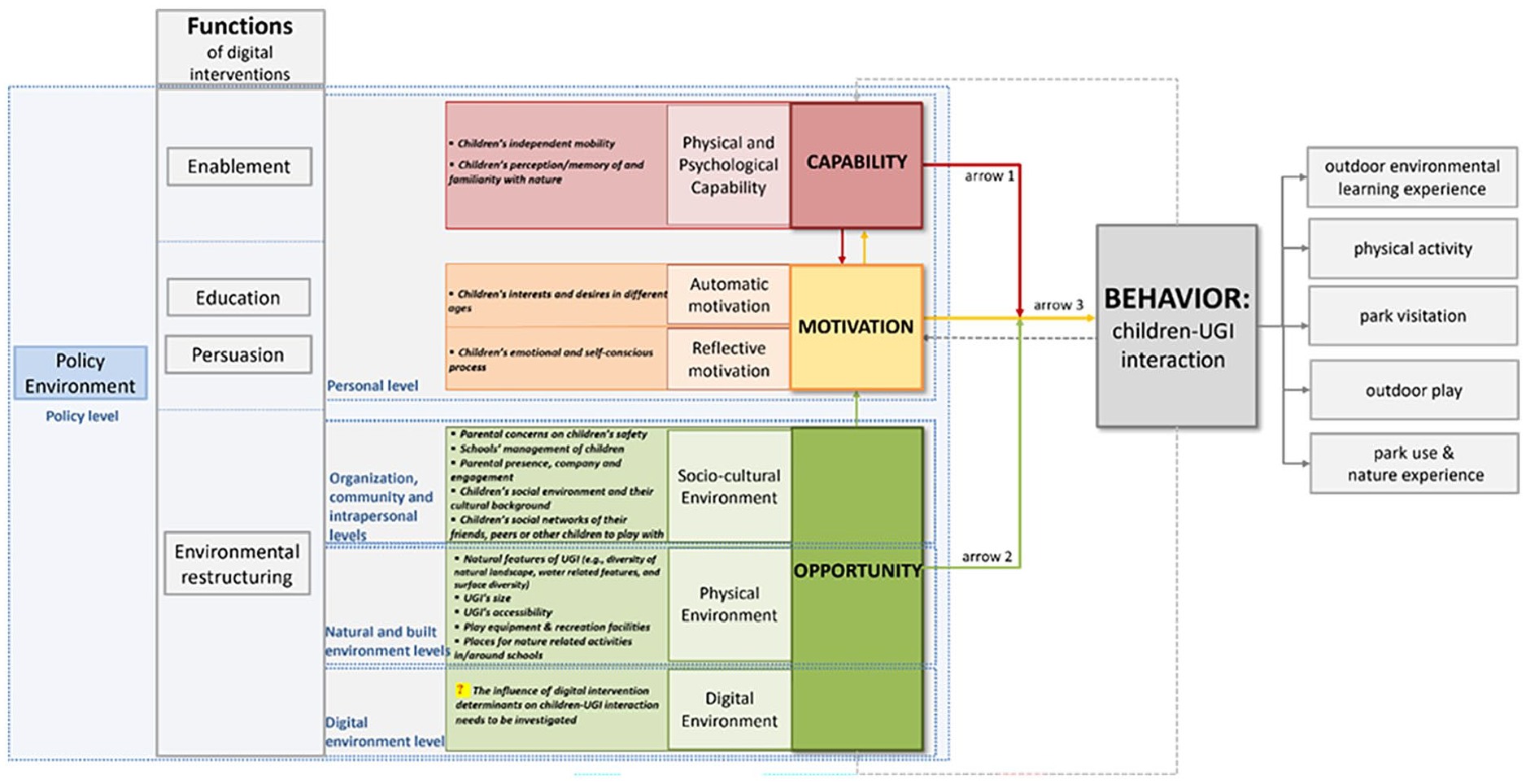
The children-UGI interaction model (Yin et al., 2022).
Methodology
Recruitment and Consent
We undertook a 2-day activity with a class from a secondary school in Rotterdam. Child participants were recruited with their parents’ consent as well as their own. The study was approved by the Human Research Ethics Committee of the authors’ institution. All participants were informed about the data collection process and the possibility to withdraw from the study at any time desired. In the end, a total of 21 children (11 male and 10 female) participated in the first-day outdoor activity, and two additional children (1 male and 1 female) attended the second-day workshop.
Data Collection
Data were collected on March 6th and 7th, 2023. Since the essence of conceptual design involves “prior information” (i.e., prior knowledge, experience of, or contact with experimental subjects) as an essential element of the design process (Jansson & Smith, 1991), we began by providing an example of a nature-related digital application for children. The children experienced using this example app in nature before starting the design process. So on the first day, children experienced nature by following a route using a nature-related digital application, followed on the second day by an indoor co-design workshop on children’s ideal nature-related digital tools.
On the first day, we organized a children’s outdoor activity in nature (Figure 2). Before the activity, we briefed the children and their parents about the activity’s procedure and explained the research aim. On the day of the activity, children were invited to experience nature by following a walking route using an existing nature-related treasure hunt app. The app, IVN Route, is created by wildlife volunteers and developed by IVN Nederland, a Dutch organization for nature education. The IVN Route app covers a number of walking and cycling routes in natural areas in the Netherlands. This GPS-based app provides various nature-related information (e.g., knowledge of the local flora and fauna), tasks (e.g., measuring the diameter of a tree), or quizzes (e.g., guessing the animal to which a certain footprint belongs). These pop up automatically when areas of interest along the routes are reached. The app interface is shown in Appendix A of the Supplemental Material. After the activity which took around an hour, each child was given a survey to complete as a take-home assignment before the second-day workshop. The survey investigated children’s experiences with the app following its use, aiming to motivate children to reflect on their experience in nature and think about the design characteristics, requirements, and function of nature-related digital tools ahead of the second day’s workshop. The first part of the survey included reflective questions about the experience of using the tested app in nature during the outdoor activity. These questions were based on several sources for the design of relevant and validated user experience questionnaires, that is, the Heuristic Evaluation (Martin et al., 2012) and User Experience Questionnaire (UEQ) (Laugwitz et al., 2007). The second part of the survey was about children’s opinions on whether the tested app changed any of their abilities, opportunities, and motivation to interact with nature by providing examples for each. The last part of the survey investigated children’s suggestions on design characteristics, requirements, and functions that a nature-related digital tool should have. Supplemental Appendix B shows the survey.
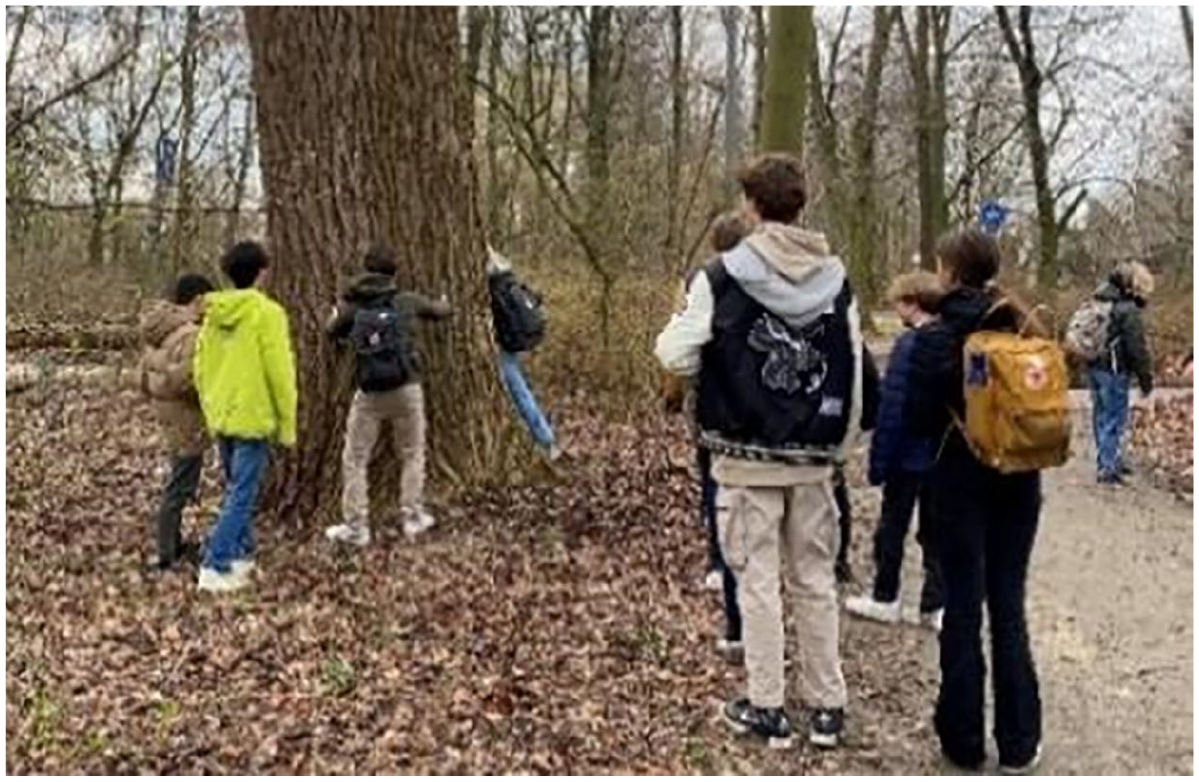
First-day outdoor activity.
On the second day, we conducted a co-design workshop with children, focusing on designing their ideal nature-related digital tools (Figure 3). We organized the workshop at the school, to ensure a familiar and safe environment for the children. The design team consisted of 23 children. At the start, children were randomly divided into five teams of 4 to 5 participants, while two researchers and a teacher moved among groups.
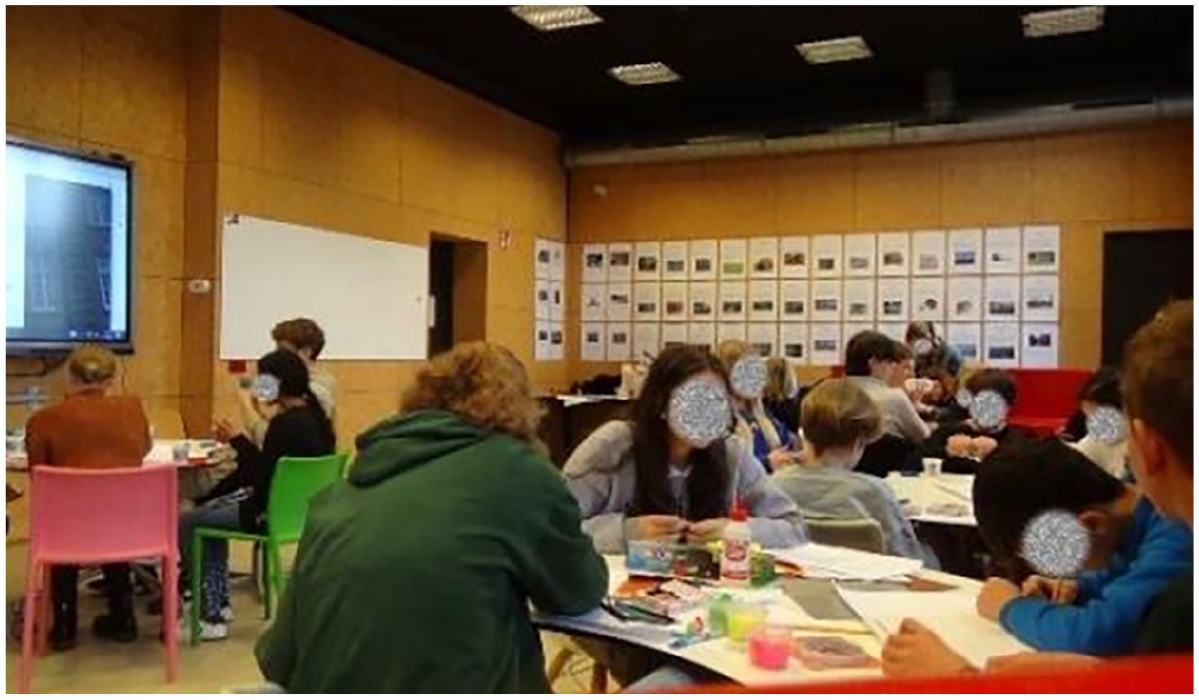
Second-day indoor co-design workshop.
The workshop started with a brief introduction to explain its aim and tasks. Children were invited to design artifacts in subgroups within approximately an hour’s time. During the design time, they were encouraged to discuss and share their ideas or findings from the survey to come up with a joint program of requirements for the digital tools that could increase their interaction with nature.
The workshop aimed to explore children’s ideas about how to design tools to foster their interaction with nature through an existing participatory design technique named low-tech prototyping (Alhumaidan, 2017). We started the workshop with brainstorming, as it can encourage the sharing of creativity and ideas among teams (Paay et al., 2023). It is argued that children come up with the most creative ideas when brainstorming is followed by prototyping (Sluis-Thiescheffer et al., 2016). We thus provided children with materials and tools for prototyping (e.g., colored pencils, pens, erasers, sticky notes, and clay) to act as catalysts of design ideation (Grigg, 2020). Each group of children was given instructions to explain and visualize their ideal tools on four A3 and A2 papers (see Supplemental Appendix C). Children were asked to introduce their aim and slogan for their design on the first page. Then, they were asked to describe their tool’s design characteristics, requirements, and functions on page 2, and to visualize their tool’s interface on page 3. On the last page, children described their intended use of the tool they designed to interact with nature. In the end, each group was asked to share and present group ideas of their prototypes in a 3-minute presentation.
The role of the adults in this study was to support the activity. The researchers designed and organized the whole event (e.g., activity design, survey design, the introduction of the activity to the participants), and collected all data during the activity. On the first day, two researchers along with the teacher accompanied the children during the outdoor activity to ensure their safety. On the second day, the two researchers conducted the workshop and answered the children’s questions throughout.
The secondary school investigated in this research is located in Rotterdam’s Kralingnen West neighborhood. According to van Goeverden and de Boer (2013), the average distance between children’s homes and their secondary schools in the Dutch context is less than 6.9 km. Given the sensitivity of inquiring about participating children’s socio-economic status, we used Dutch census data to approximate the possible socio-economic backgrounds of the participating children by investigating family socio-economic characteristics within a 6.9 km radius of the school. Here, we assume that the children live near the investigated school and not beyond this radius when interpreting the socio-demographics of the surrounding neighborhoods. Data were obtained from the Dutch census (Central Bureau of Statistics, 2024). Using median-weighted analysis, we found that the annual household income of the community within this radius is approximately 30,150 euros (lower than the average household income in the Netherlands) from 2024. The average education level is medium, which includes upper secondary education and various levels of vocational training. Additionally, the overall ethnic composition of the region is dominated by Dutch or European residents.
Data Analysis
We did a multimodal analysis of data using the transcripts of each group’s presentation and the produced design artifacts. Multimodality is an interdisciplinary approach based on social semiotics, which not only uses language to communicate and represent, but also uses a range of meaning-making forms (e.g., drawing, modeling, and sketching) (Jewitt, 2013; Kress, 2010). This method has been applied in the context of participatory design for analyzing different modes of communication, including both textual and tangible co-design outcomes (Derboven et al., 2015).
Following the method of Khalilollahi et al. (2023), we used deductive and inductive strategies to identify the keywords related to design characteristics, requirements, and intervention functions used by the children. Deductive codes were derived from the components of the COM-B model. Inductive codes were developed by (re)reading children’s group design ideas and their presentation transcripts, identifying concepts with similar attributes, and eventually clustering them into larger groups (for detailed codes and examples, please see tables in sections “Design Characteristics and Requirements” and “Intervention Functions of Children’s Ideal Nature-Related Digital Tools”). The first author conducted the data analysis of children’s group design and their presentations. We did a thematic content analysis to map the keywords used by children regarding their ideal tools’ design characteristics, requirements, or intervention functions, onto the COM-B model components: a design characteristic, requirement, or intervention function is linked to the capability component if it addresses children’s physical or psychological abilities; a design characteristic, requirement, or intervention function is linked to the opportunity component if it addresses the opportunities provided by the physical and socio-cultural environments; finally, a design characteristic, requirement, or intervention function is linked to motivation if it addresses the aspects that drive and guide child-nature interaction.
Results
Children’s Experience With an Existing Nature-Related Digital Tool
The survey given after the app use was completed by 21 children. It investigated how children experienced the app based on a Likert-scale ranging from “strongly disagree” to “strongly agree” (Figure 4). In total, 21 children completed the survey. The results indicate that most children have a positive attitude toward the use of the app generally. Specifically, they think they can use it easily and it is aesthetically pleasing. Around 75% of the children hold a neutral attitude toward the app’s personalization potential and attractiveness. Most children support the app’s mapping system, efficiency, personalization, and complexity.
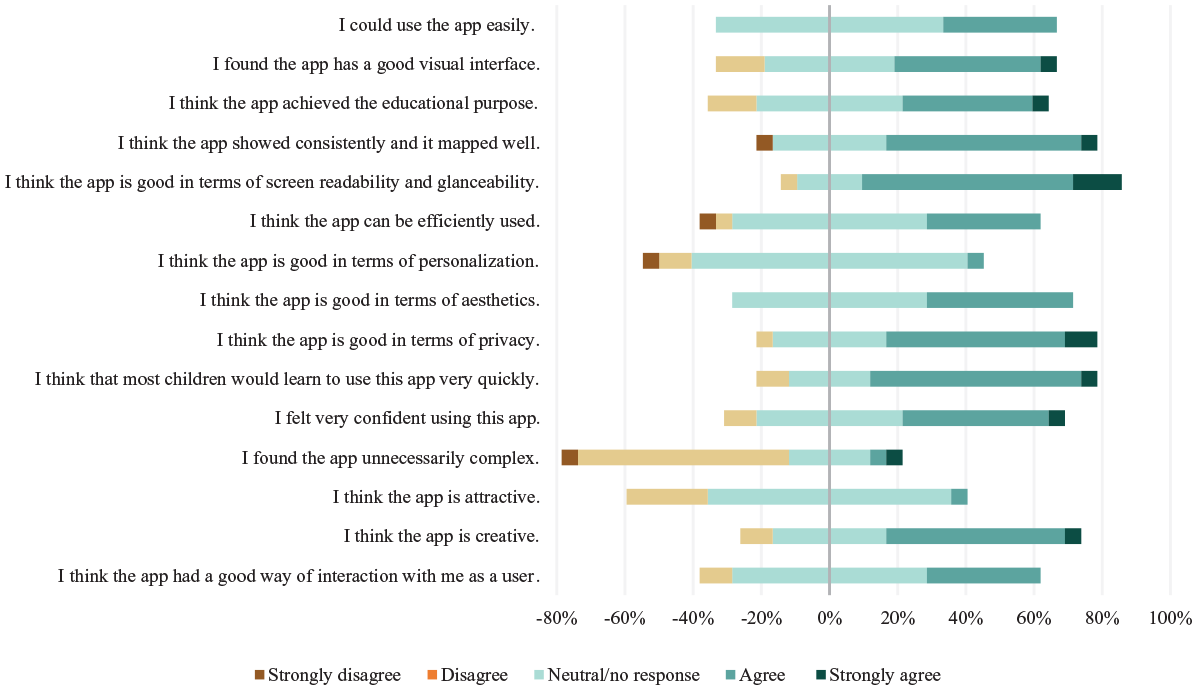
Children’s experience of using an existing nature-related digital tool during the outdoor activity ordered from strongly disagree to strongly agree.
Additionally, we asked children several open-ended questions about their experience of using the app during the outdoor activity, such as their general opinion about the app, and what they (dis)liked about it. Figure 5 demonstrates the frequency of children’s general opinions about the app. Positive numbers refer to positive attitudes, while negative opinions are presented by negative numbers. It shows that children consider the app to be fun or useful. Additionally, Figure 6 shows the frequency of what children (dis)liked about the app. Overall, children’s favorite aspect of the app is its educational function, as they can learn new things when using it in nature, while the most disliked aspect is its dysfunctional user interface (e.g., non-responding buttons or zooming). Interestingly, children have different opinions about the quiz in this app. Some children like it while others do not.
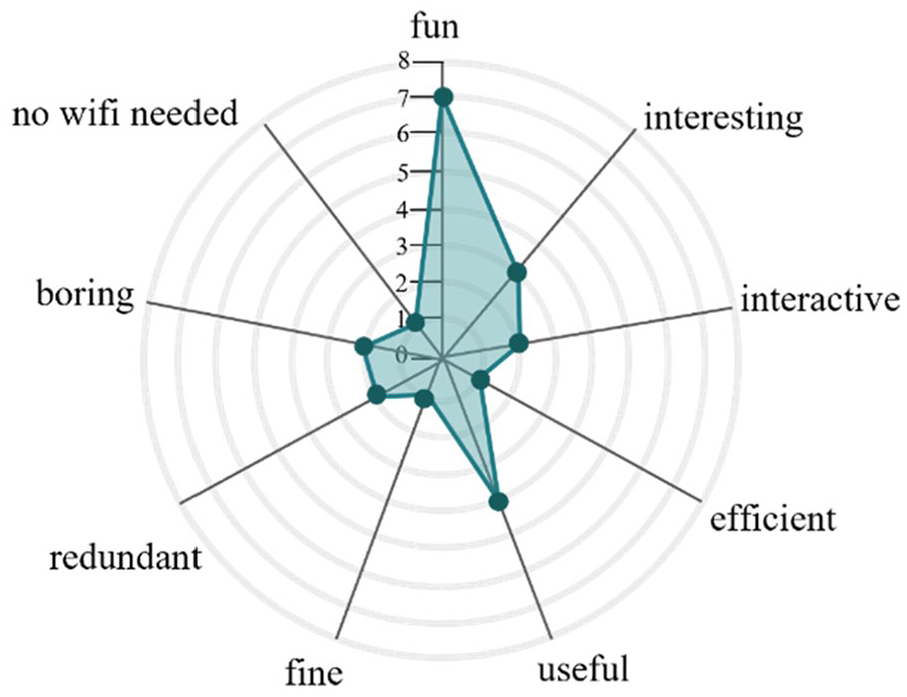
Frequencies of children’s general opinions on using this app during outdoor activity.
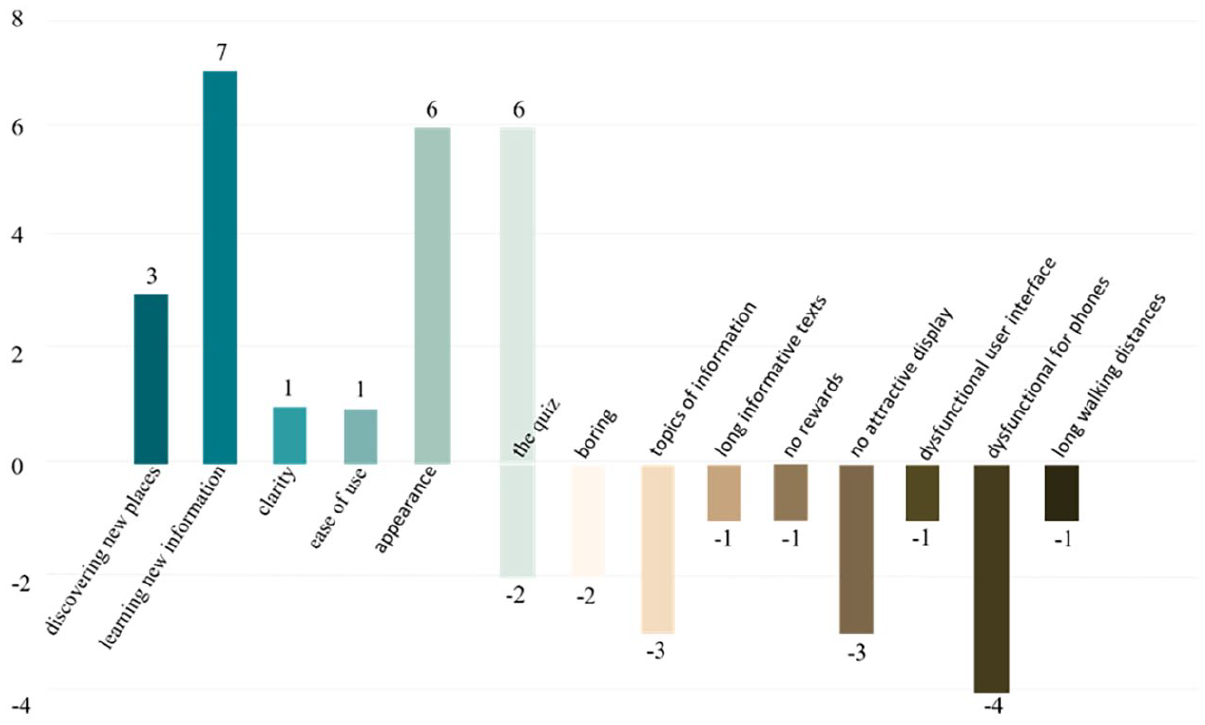
Frequencies of children’s likes (positive numbers) and dislikes (negative numbers) about their use of the app.
Figure 7 shows children’s opinions on whether the app changes their capabilities, opportunities, and motivation to interact with nature. In terms of capability, we found that the majority disagree that the app could increase their capability to move or play in nature independently (physical capability), while they agree that it could improve their ability to understand or remember the natural environment better (psychological capability). In addition, roughly half of the children are neutral when discussing whether using an app increases their motivation in terms of desires and decisions to interact with nature. Lastly, half of the children think the app could increase the opportunity for social interaction with families, friends, and peers in nature, while most of them agree it could increase their physical opportunities, such as accessibility to nature, playing equipment, and places for nature-related activities.
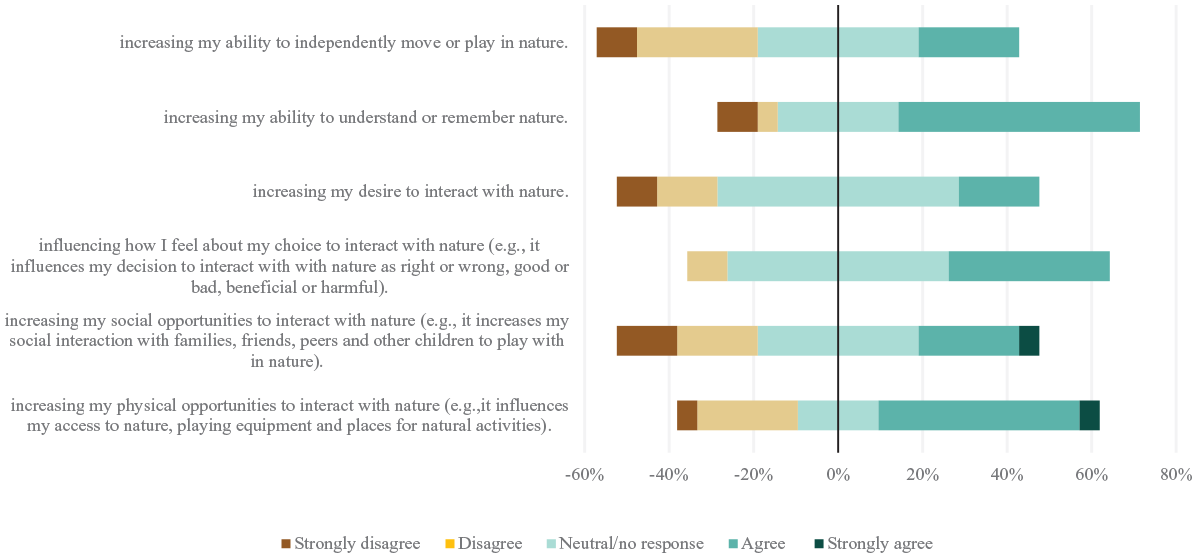
Children’s opinions on whether the app changes their capability, opportunity, and motivation to interact with nature.
Design Characteristics and Requirements
We gathered children’s inputs on potential design characteristics and requirements of their ideal nature-related digital tool through the design work in the workshop. We then mapped these onto the components of the COM-B model and its adaptation, the children-UGI interaction model.
Design Characteristics
Table 2 outlines the design characteristics identified from the keywords used by children, and the share of groups that pointed them out. It shows that most groups highlight the design characteristics regarding the aspects of physical capability and automatic motivation, while less focus is placed on psychological capability and reflective motivation.
Design Characteristics Derived From Children’s Keywords, Mapped Onto the COM-B Model and the Children-UGI Interaction Model.
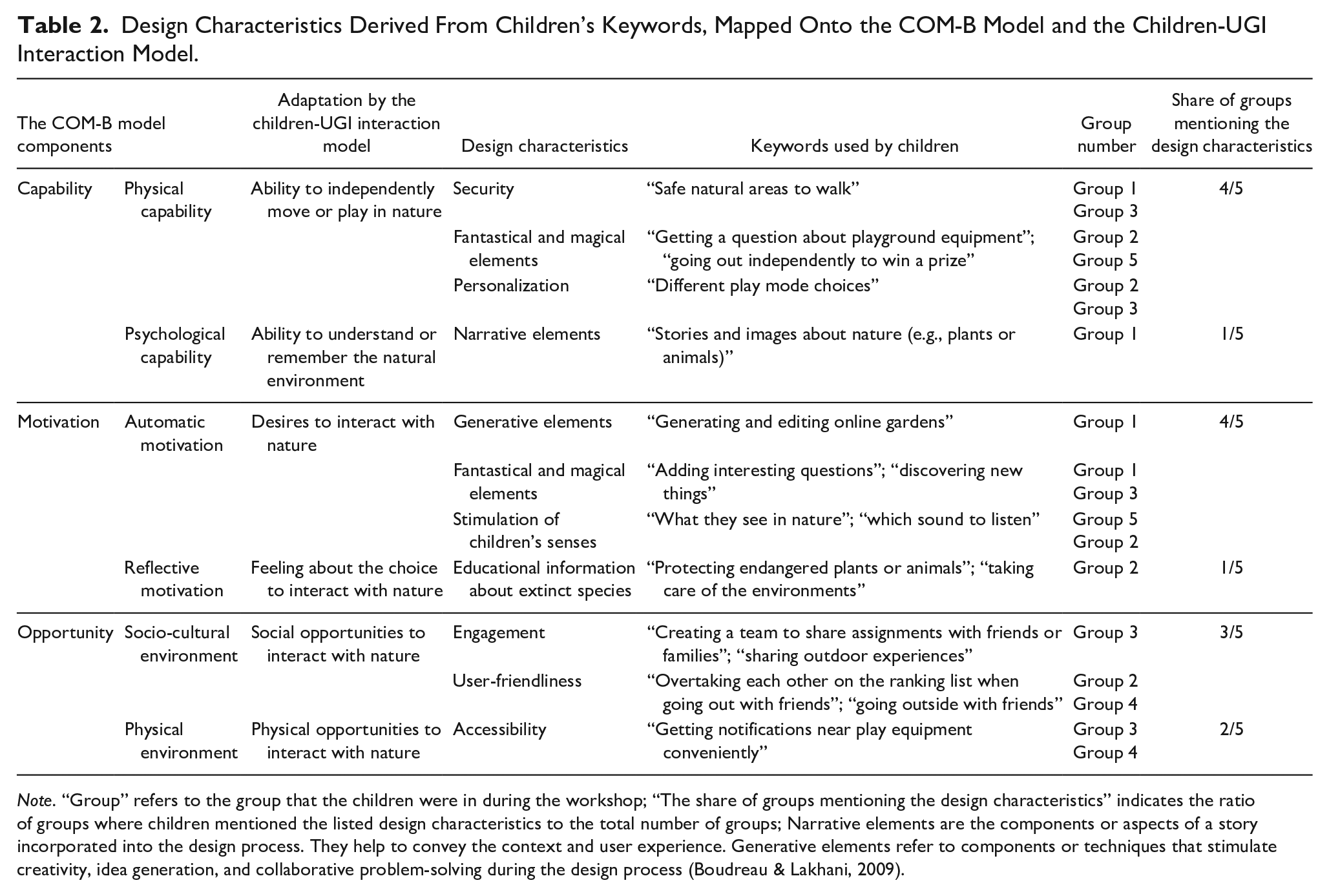
Note. “Group” refers to the group that the children were in during the workshop; “The share of groups mentioning the design characteristics” indicates the ratio of groups where children mentioned the listed design characteristics to the total number of groups; Narrative elements are the components or aspects of a story incorporated into the design process. They help to convey the context and user experience. Generative elements refer to components or techniques that stimulate creativity, idea generation, and collaborative problem-solving during the design process (Boudreau & Lakhani, 2009).
Design Requirements
Table 3 presents the design requirements extracted from children’s keywords for their designed artifacts, and the share of groups that have mentioned them. Overall, the focus is more on the design requirements regarding automatic motivation, such as gamification mechanism, and educational information about nature. On the contrary, the keywords related to reflective motivation and physical environment are less mentioned.
Design Requirements Derived From Children’s Keywords, Mapped Onto the COM-B Model and the Children-UGI Interaction Model.
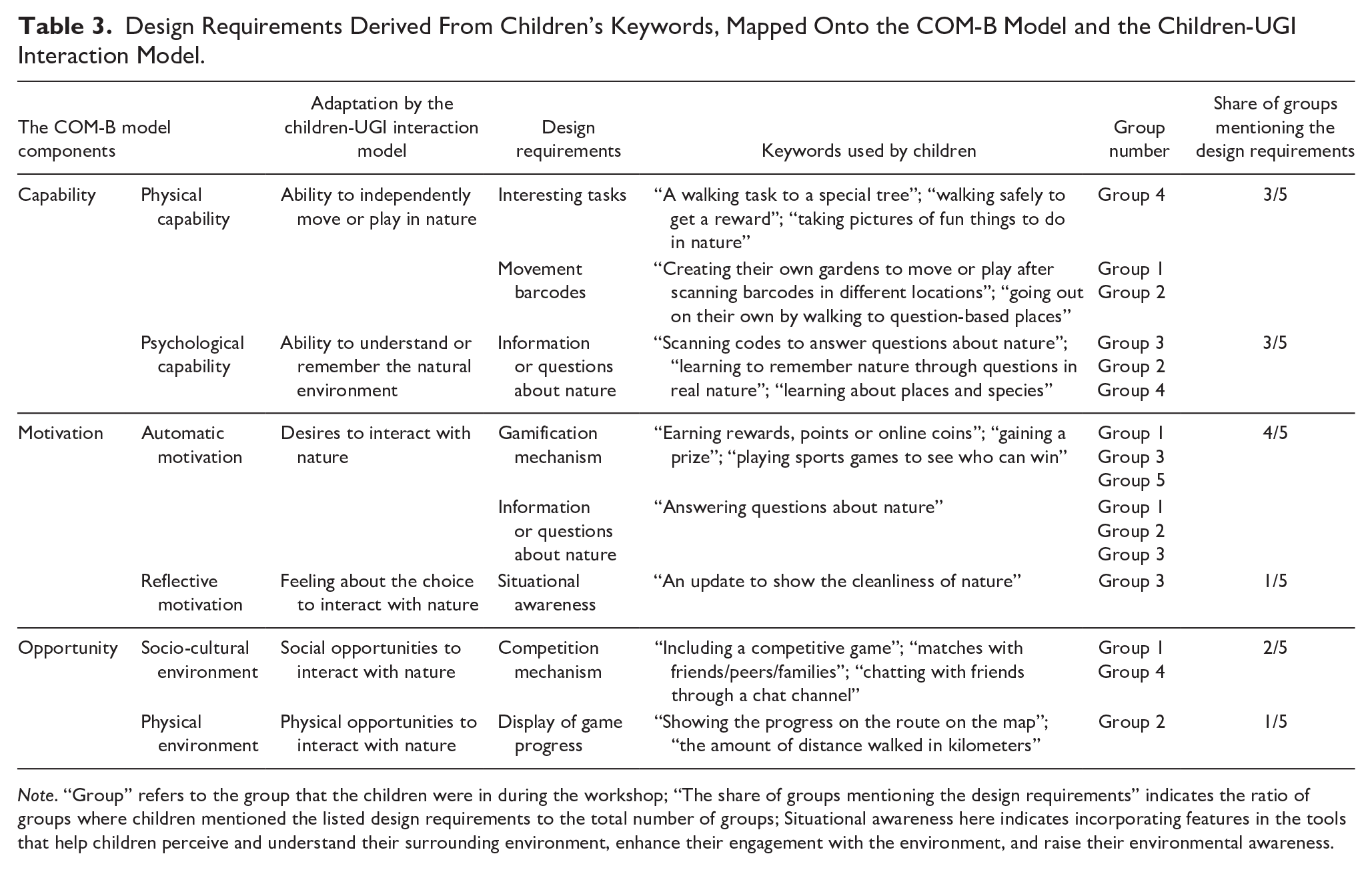
Note. “Group” refers to the group that the children were in during the workshop; “The share of groups mentioning the design requirements” indicates the ratio of groups where children mentioned the listed design requirements to the total number of groups; Situational awareness here indicates incorporating features in the tools that help children perceive and understand their surrounding environment, enhance their engagement with the environment, and raise their environmental awareness.
Figure 8 shows the example artifacts from the groups, which are related to the design requirements based on the capability aspect. Figure 9 shows the example artifacts. The left one is linked to the design requirements based on the motivation aspect, while the right one is according to the opportunity aspect.
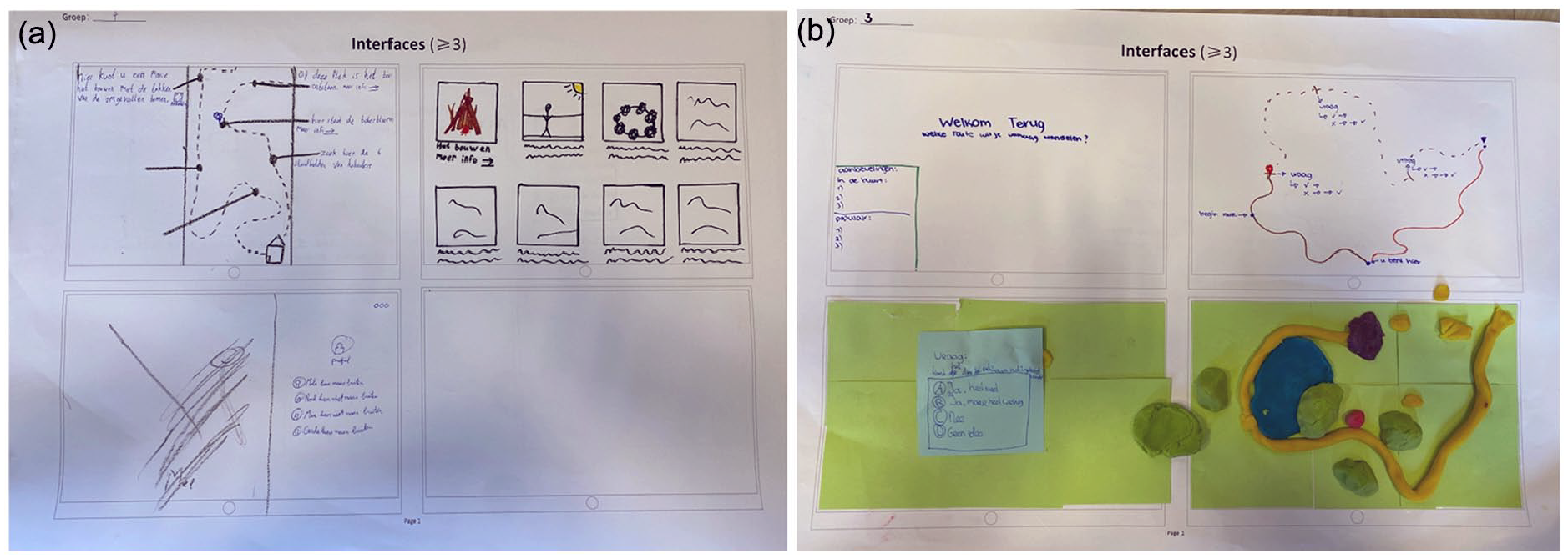
(a) Artifacts design from Group 4 and (b) artifacts design from Group 3.
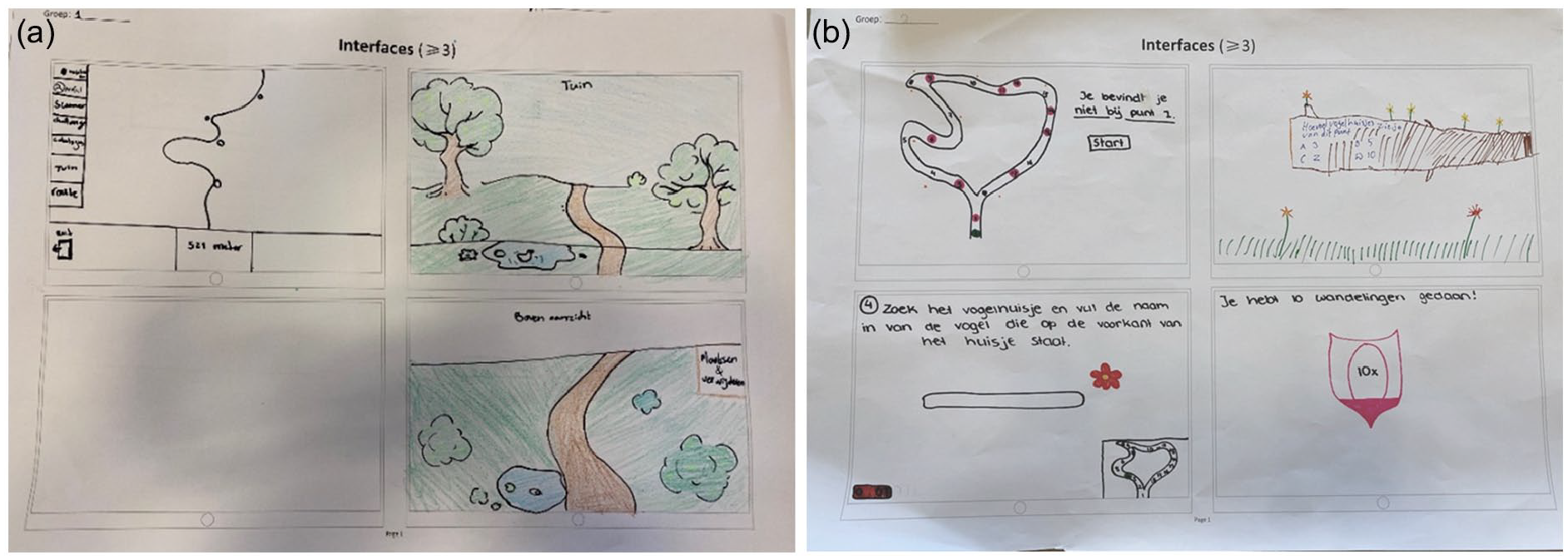
(a) Artifacts design from Group 1 and (b) artifacts design from Group 2.
Intervention Functions of Children’s Ideal Nature-Related Digital Tools
Table 4 illustrates the design artifacts for each group and the scenarios in which children would use their designed tools in nature. It also compares each group’s design with the tested app. Children’s designs are influenced by the tested app since all groups designed a route app. However, additional features are identified from their designs, such as QR codes along the route, questions regarding environmental protection, and point-based reward mechanisms.
Children’s Design Artifacts per Group, Compared With the Tested App.
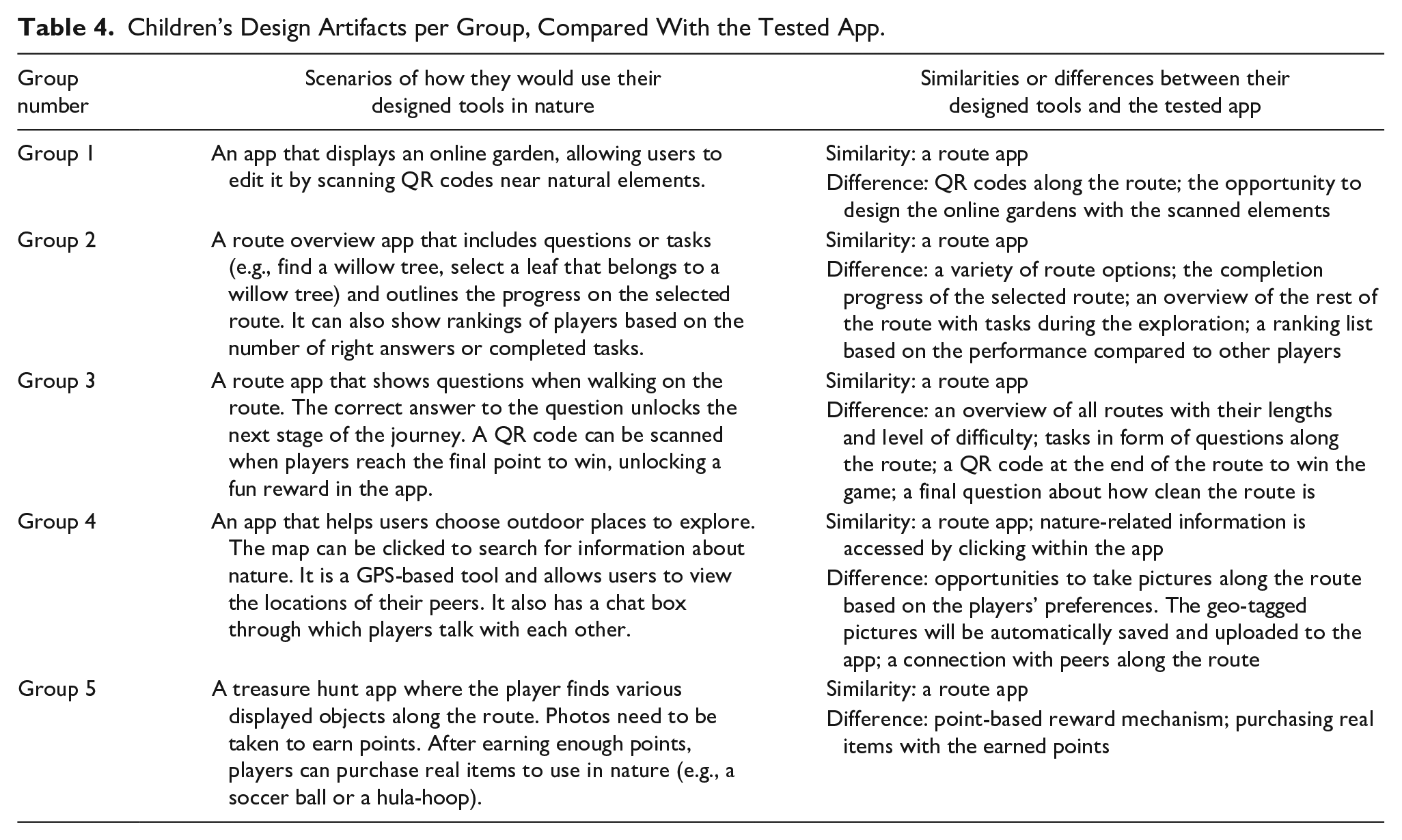
As explained in Section Data Analysis, we have used thematic content analysis to identify the intervention functions of children’s suggested tools (i.e., how they can potentially change the capability, opportunity and/or motivation to interact with nature). We then mapped the intervention functions onto the components of the children-UGI interaction model (Table 5). The identified intervention functions are explained below.
Intervention Functions Derived From Children’s Keywords, Mapped Onto the COM-B Model and the Children-UGI Interaction Model.
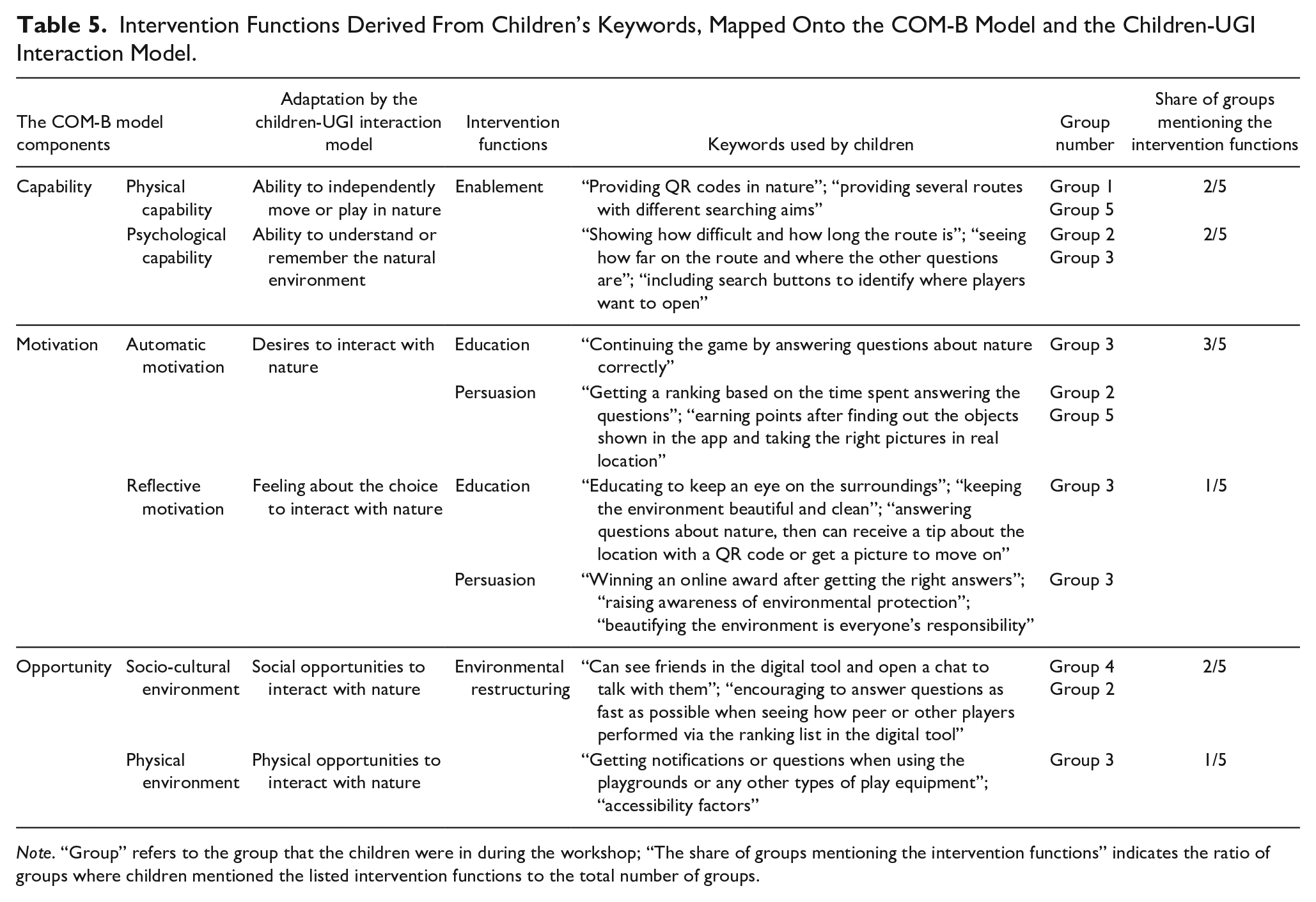
Note. “Group” refers to the group that the children were in during the workshop; “The share of groups mentioning the intervention functions” indicates the ratio of groups where children mentioned the listed intervention functions to the total number of groups.
Enablement function of digital tools for stimulating children’s capability
Enablement refers to increasing capability or opportunity by increasing possibilities or reducing obstacles (Michie et al., 2011). Nature-related digital tools have the potential to enhance children-UGI interaction through the enablement function. For instance, the suggested optional route searching by Group 5 enables child players to choose their favorite natural environment and play in nature more freely. Here, the tool will display different objects (e.g., summer flowers, pine trees, birds, or ants) that children prefer to hunt for based on their selected route. A search button to identify how long and how difficult the route is could also provide players with a desire to interact with nature, as it is helpful in deciding whether to play or not.
Education and Persuasion Functions of Digital Tools for Stimulating Children’s Motivation
Education means increasing knowledge or understanding, and persuasion refers to inducing positive or negative feelings or stimulating actions by using communication (Michie et al., 2011). Children could be motivated to interact with UGI through education and persuasion functions of digital tools. Examples from children’s designs include the questions on nature-related knowledge suggested by Group 3 (education function), or the ranking mechanism proposed by Group 2 (persuasion function) that can influence children’s automatic motivation. Additionally, the persuasive function of digital interventions occurs via communication strategies such as the use of imagery to influence children’s reflective motivation. For instance, Group 3 suggests that a question about the cleanliness of the environment when appears at the end of the route can influence children’s reflective motivation.
Environmental Restructuring of Digital Tools for Stimulating Children’s Opportunity
Environmental restructuring refers to changing the physical or social context (Michie et al., 2011). Digital tools can be used to alter the social and physical opportunities to encourage children-UGI interaction with this function. Child participants preferred to do outdoor activities together with friends or families by using their ideal tools. Specifically, children would like to play multiplayer games in nature, see how their friends behave in nature, or search natural elements together. For example, Group 4 proposes a suggested chat interface to talk with friends. Group 2 creates a ranking mechanism that shows how their peers have performed on the route.
Conclusion and Discussion
This exploratory study aimed to explore children’s experience of a specific nature-related digital tool, and to investigate the design characteristics, requirements, and intervention functions of children’s ideal nature-related digital tools. To do so, we conducted an exploratory study combining an outdoor activity and a co-design workshop with 23 children aged 12 to 14 from a secondary school in the Netherlands. Our findings and recommendations are listed below.
Children’s Experience With an Existing Nature-Related Digital Tool
This study reveals children’s opinions about their experience with the tested app. Regarding capability, most children believe the app enhances their understanding of the natural environment but disagree about its potential to increase their ability to move or play in nature independently. This aligns with findings from Kawas, Kuhn, et al. (2020; Kawas, Sherry-Wagner, et al., 2020) who observed that educational apps tend to prioritize enhancing children’s environmental knowledge over physical engagement. Many existing apps focus on visual learning and knowledge-based interactions (e.g., identifying plants or animals), rather than encouraging free movement or unstructured play. Another possible reason is that parental safety concerns limit children’s independent movement when using the tools in nature (Lindqvist et al. 2018). Regarding motivation, roughly half of our children express neutrality about whether the app increased their desire to interact with nature. One possible reason is that digital tools can sometimes serve more as informative guides than direct enablers or motivational drivers for outdoor engagement (Liverpool et al., 2020). Children might already feel that they do not need technology to motivate them to explore nature, as their motivation could be driven by intrinsic factors, such as personal curiosity or social interactions (Colombo et al., 2014). Regarding opportunities, half of the children believe that the app could enhance their social interactions, and most agree it could increase physical opportunities, such as accessibility to natural spaces and play equipment. Digital tools can not only serve as facilitators for group activities, encouraging shared experiences among peers and family members, but also act as a bridge between the digital world and the physical environment, guiding children to nature-related locations and activities.
Our results indicate that children prefer nature-related digital tools to: (i) have an attractive and easy-to-understand user interface (e.g., by using colors), (ii) include guidance for the user interface (e.g., step-by-step explanation), (iii) include a reward mechanism, (iv) provide concise information, (v) include tips to be able to complete quizzes or tasks, and (vi) be available for all types of mobile operating systems.
Design Characteristics, Requirements, and Intervention Functions
Figure 10 shows the design characteristics and requirements needed for children’s nature-related digital tools, and the intervention functions of these tools, extracted from children’s designs. As mentioned by Michie et al. (2011), some intervention functions might change one or more behavior component(s) (e.g., education function can also influence capability in addition to motivation). However, we have assigned each intervention function to the COM-B model component that it most influences for the sake of clarity.
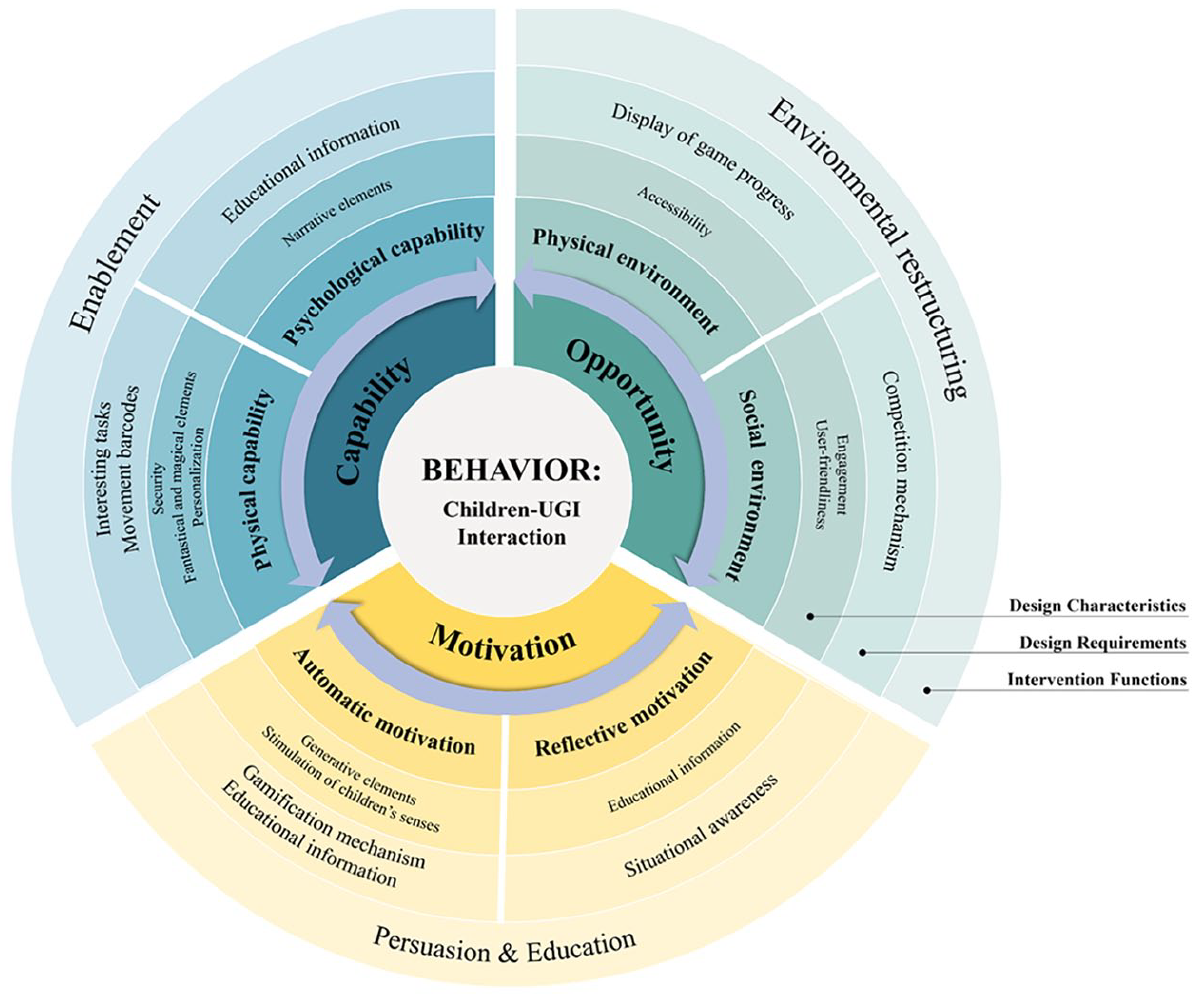
Design characteristics, requirements, and intervention functions of children’s ideal nature-related digital tools based on the COM-B model and the children-UGI interaction model.
Design Characteristics
Regarding the capability to interact with nature, our study finds that children prioritize the
Regarding capability and motivation, children in our study suggest incorporating
Regarding opportunity components of children-UGI interaction, our study highlights the importance of
Design Requirements
In terms of physical capability, children in our study frequently mention
Furthermore, the
Intervention Functions
Nature-related digital tools have the potential to enhance children-UGI interaction through the functions of enablement, persuasion, education, and environmental restructuring. Regarding physical and psychological capability, the children in this study highlight the importance of the
As a case study focused on children’s nature-related digital tools, this research does not encompass all potential design considerations. Several elements from prior studies, such as colorfulness, readability, tactile interactions, photographing tasks, and long-term competition mechanisms, were not raised by our participants but remain important. More precisely, Colombo et al. (2014) emphasized the importance of vibrant color and smooth readability in enhancing narrative and generative flow. However, this has not surfaced in our study because our children were old enough to be likely capable of reading smoothly without colorful elements, as suggested by Large et al. (2002) and Large and Beheshti (2005). In addition to visual and auditory elements from our study, tactile interactions, which stimulate sensory engagement with nature (e.g., touching leaves or grass), are important for motivation (Kawas, Sherry-Wagner, et al., 2020). Another feature overlooked in our case is photography tasks, which can encourage children to search for natural elements physically and observe surroundings more closely (Kawas, Sherry-Wagner, et al., 2020). Lastly, long-term competition mechanisms, such as location-based challenges, are crucial for sustained engagement (Kawas, Sherry-Wagner, et al., 2020). While our study identifies a number of key elements of children’s nature-related digital tool design from their perspectives, further research is needed to incorporate more comprehensive and engaging design considerations and create tools that cater to diverse age groups and contexts.
Limitations and Avenues for Future Research
This study explores the experience of a group of children aged 12 to 14 from the Netherlands with a specific nature-related digital tool. It also investigates the design characteristics, requirements, and function interventions of their ideal nature-related digital tools. This is an exploratory study where we test a specific application with a relatively small sample of children in a Dutch city. While the results cannot be generalized, they provide useful first insights into children’s ideal nature-related digital tools and our methodology can be reproduced to investigate other cases. First, the mentioned design characteristics, requirements, and intervention functions are those identified by us so far based on our sample. There is a need for more empirical studies that test a range of nature-related digital tools across various locations and age groups and identify additional design characteristics, requirements, and intervention functions based on children’s inputs. Second, bias may arise as we selected children from a specific technical school in the Netherlands and did not collect data on their precise socioeconomic status or ethnicity data. We recommended that future studies investigate further stratification to control for the influence of these factors. Third, testing an existing digital app in advance of the co-design workshop is likely to have influenced children’s design ideas to some degree. Design problems given without fixating examples might result in a wider range of design ideas not limited by the examples (Jansson & Smith, 1991). Future work is advised to consider how to stimulate children’s divergent thinking when co-designing. Fourth, 5-point Likert scale questions, ranging from strongly disagree to strongly agree, were used to understand their opinions on whether the tested app influenced their capabilities, opportunities, and motivation to interact with nature during outdoor activities. However, further in-depth investigation is required to understand the motivations for their answers. These may be attributed to different personal or contextual factors, such as children’s age and gender, and parents’ attitudes and concerns. Considering interviews or follow-up questions after the activity would be beneficial for gaining deeper insight into the reasoning behind children’s choices. Fifth, children might be interested in using digital tools in the beginning but might feel bored after a while. Thus, longitudinal studies are needed for testing the attractiveness and the use of nature-related digital tools in the long term.
Supplemental Material
sj-docx-1-eab-10.1177_00139165241311071 – Supplemental material for Co-designing an Ideal Nature-Related Digital Tool With Children: An Exploratory Study From the Netherlands
Supplemental material, sj-docx-1-eab-10.1177_00139165241311071 for Co-designing an Ideal Nature-Related Digital Tool With Children: An Exploratory Study From the Netherlands by Shengchen Yin, Dena Kasraian, Gubing Wang, Suzan Evers and Pieter van Wesemael in Environment and Behavior
Supplemental Material
sj-docx-2-eab-10.1177_00139165241311071 – Supplemental material for Co-designing an Ideal Nature-Related Digital Tool With Children: An Exploratory Study From the Netherlands
Supplemental material, sj-docx-2-eab-10.1177_00139165241311071 for Co-designing an Ideal Nature-Related Digital Tool With Children: An Exploratory Study From the Netherlands by Shengchen Yin, Dena Kasraian, Gubing Wang, Suzan Evers and Pieter van Wesemael in Environment and Behavior
Supplemental Material
sj-docx-3-eab-10.1177_00139165241311071 – Supplemental material for Co-designing an Ideal Nature-Related Digital Tool With Children: An Exploratory Study From the Netherlands
Supplemental material, sj-docx-3-eab-10.1177_00139165241311071 for Co-designing an Ideal Nature-Related Digital Tool With Children: An Exploratory Study From the Netherlands by Shengchen Yin, Dena Kasraian, Gubing Wang, Suzan Evers and Pieter van Wesemael in Environment and Behavior
Footnotes
Acknowledgements
We are grateful to Huub van der Loo for helping us organize the research activity and for his valuable feedback afterwards. We would also like to thank all the participating children from Technasium Libanon Lyceum of Rotterdam.
Author Contributions
Declaration of Conflicting Interests
The author(s) declared no potential conflicts of interest with respect to the research, authorship, and/or publication of this article.
Funding
The author(s) disclosed receipt of the following financial support for the research, authorship, and/or publication of this article: This work was supported by China Scholarship Council.
Ethical Approval
This study was approved by the Ethical Review Board TU/e (ERB approval number: ERB2022BE48a).

Supplemental Material
Supplemental material for this article is available online.
Author Biographies
References
Supplementary Material
Please find the following supplemental material available below.
For Open Access articles published under a Creative Commons License, all supplemental material carries the same license as the article it is associated with.
For non-Open Access articles published, all supplemental material carries a non-exclusive license, and permission requests for re-use of supplemental material or any part of supplemental material shall be sent directly to the copyright owner as specified in the copyright notice associated with the article.
