



Abstract
This paper provides an in-depth understanding of children’s perspectives toward playing on three interactive playgrounds located in a schoolyard in Enschede, a city located in the eastern part of the Netherlands, in the Twente region. The COM-B model of behavior change is used to explore children’s perspectives. This model defines behavior as the result of an interaction between three components that generate behavior: Capability, Opportunity, and Motivation. The perceptions and experiences of 27 children aged 8 to 12 from playing on these interactive playgrounds are investigated through go-along group interviews and focus group discussions. Based on our findings, we list key issues and general recommendations for designing interactive playgrounds for children’s outdoor play based on children’s perspectives. These key issues and recommendations are beneficial for practitioners, and in particular, interactive designers who develop interactive playgrounds that stimulate children’s outdoor play behavior.
Introduction
The literature clearly demonstrates the importance of outdoor play for healthy growth and development of social, emotional, physical, and cognitive skills of children (Ansari et al., 2015; Little & Wyver, 2008; McCurdy et al., 2010). The provision of opportunities for children’s outdoor play such as the establishment of public playgrounds is increasingly recognized within research and policy communities as a basic right for children’s development. These opportunities are beneficial for promoting children’s physical, mental, and social health as defined by the WHO, including the enhancement of social skills, motor skills, creativity, and efforts toward obesity reduction (Gil-Madrona et al., 2019; Hart, 2002). Playground-based initiatives such as traditional playgrounds (traditional-equipment play areas containing adult-play-structures like swings, slides, and climbing frames), adventure (also known as “natural playgrounds” and “junk playgrounds”), and contemporary (more designed environments with different forms and textures) are kinds of interventions to provide children with opportunities for outdoor play (Czalczynska-Podolska, 2014; Hayward et al., 1974). Effective interventions in schoolyards can enhance students’ interest and motivation, increase the participation of boys and girls in physical and sports activities, and reduce conflicts between students (Castillo-Rodríguez et al., 2018).
The interactive playgrounds are a type of playground-based intervention that has been developed in recent years to provide rich and engaging play opportunities for children by incorporating interactive elements into traditional playgrounds (Poppe et al., 2014; Soute et al., 2010). These installations combine the benefits of traditional playgrounds with advances in technology such as sensors and actuators to enhance children’s play experiences (Cumbo et al., 2014; Soute et al., 2010; Sturm et al., 2008). Interactive playgrounds have the potential to motivate children’s outdoor play (Back et al., 2016; Cumbo et al., 2014). Children’s motivation is displayed in their preferences for exploring, creativity, imaginary role-play, learning, problem-solving, rule-based, and skill-based team games (Cumbo et al., 2014). Interactive playgrounds can motivate children by offering a mix of physical, cognitive, and social challenges like sports and pretend play. These spaces also provide external encouragement through feedback systems using scores, lights, and sounds (Khalilollahi et al., 2023a, 2023b; van Delden et al., 2018).
However, an in-depth understanding of children’s in situ behavior and attitudes toward outdoor playing on interactive playgrounds are missing in the academic literature (Khalilollahi et al., 2023a, 2023b). Our research aims to fill this gap by exploring children’s actual play on interactive playgrounds to understand the range of play activities possible. It also allows us to determine whether children are using these playgrounds as intended or in different ways. Moreover, investigating children’s perspectives on playing on interactive playgrounds provides insights into the potential influence of these playgrounds on children’s motivation to engage in outdoor play behavior.
For a systematic understanding of children’s experiences of outdoor playing on interactive playgrounds, it is helpful to use the lens of the Capability, Opportunity, Motivation, Behavior (COM-B) model developed by Michie et al. (2011). This model theorizes behavior as the result of an interaction between three components that generate behavior: “Capability,” “Opportunity,” and “Motivation” (Figure 1). Capability refers to the individual physical and psychological capacity to engage in an activity. Opportunity refers to the factors afforded by the physical and social environment that lies outside the individual and makes behavior possible or constrains it. Motivation is a factor that energizes and directs behavior. Motivation may be reflective, that is, inspired by others or events (extrinsic motivation), or it may be automatic, that is, originating from within the individual (intrinsic motivation).
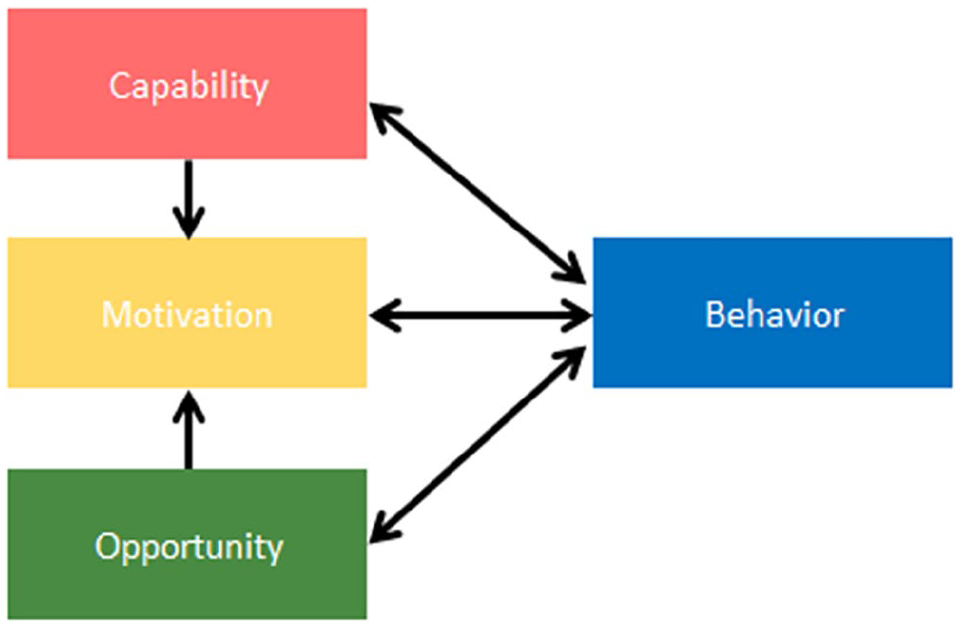
The COM-B model.
Motivation is at the core of the model. Thus, it is a component that attaches to any type of behavior that capability and opportunity would permit in a given situation. In other words, the more capable people are in enacting a type of behavior and the more conducive the environment is to enact it, the more motivated they are to do it (West & Michie, 2020). Motivation energizes behavior in pursuit of a goal and is the fundamental property of all behaviors (Simpson & Balsam, 2015). Thus, it has a critical role in stimulating children’s outdoor play. With motivation at the core of the COM-B model, we can understand how interactive playgrounds can impact children’s capabilities and environmental opportunities, and ultimately their motivation to play outdoors. As far as the authors are aware, this study represents the first instance of employing the COM-B model to understand children’s perspectives on playing on both traditional and interactive playgrounds.
Khalilollahi et al. (2023a) adapted the COM-B model to explain the influential factors of children’s outdoor play behavior. These factors (e.g., children’s independent ability, the presence of other children, etcetera) influence outdoor play behavior by increasing or decreasing children’s capability and motivation or providing them with social and physical environment opportunities. For example, the quality, layout, and maintenance of a playground are significantly associated with providing more environmental opportunities and subsequently children’s motivation for outdoor play. Our research builds on the influential factors of children’s outdoor play behavior identified in previous work (Khalilollahi et al., 2023a). These factors provide a theoretical foundation for exploring children’s outdoor play behavior on interactive playgrounds.
Understanding children’s perspectives on playing on interactive playgrounds also enables us to identify the key issues for the successful design of these playgrounds. Sturm et al. (2008) define the key issues of a successful interactive playground for children’s outdoor play as simplicity, social interaction, challenge, goals, and feedback. However, these key issues are not based on children’s perspectives, which can provide a different useful angle for the design of interactive playgrounds. Investigating children’s experiences helps identify the (un)pleasant characteristics of interactive playgrounds for children’s outdoor play from their own perspectives. This in turn can guide the design of successful interactive playgrounds based on children’s actual play.
Therefore, this article addresses two research questions: 1) How do children play on interactive playgrounds? 2) How can interactive playgrounds potentially affect children’s capability, opportunity, and ultimately their motivation to engage in outdoor play? These questions are answered by exploring children’s perspectives through go-along group interviews and focus group discussions with a number of children. A case study approach is used to gain a deeper understanding of how children use particular playgrounds and how these playgrounds might stimulate children to play outdoors. The used case study approach helps with an in-depth understanding of a behavior at a micro-level “real-world” context and learning from one case could provide a general understanding of other cases (Gifford, 2016). The findings of this research contribute to the theory of behavior change and are of importance to practitioners, in particular designers who design interactive systems that encourage children to play outside.
Methodology
Setting
This study was carried out at a public primary school in Enschede, a city in the eastern Netherlands. The school is situated in Enschede’s Boswinkel district, which is a diverse neighborhood with a blend of young and elderly residents from various cultural backgrounds. The connection with the school was established through the design company Yalp 1 responsible for developing the interactive playgrounds on this school. This connection facilitated access to the school and collaboration with the school’s principal and teachers for the purpose of conducting this study. This school was chosen for the current study as it has three interactive playgrounds in its schoolyard: Memo, Toro, and Sutu (Figure 2). The Memo is an interactive game element designed to further engage children in intelligent games. It consists of a playing field and seven columns equipped with a 360° LED touch screen that shows minimalistic visual effects like numbers or symbols. Furthermore, there exists an interactive ball wall (Sutu) and a sports field (Toro) which are designed to encourage children’s active outdoor play. The Toro is an interactive soccer and hockey field with four interactive goals that are spread over the field. When a goal is scored, it reacts with LED lighting and sensors. The Sutu is an interactive ball wall that uses vibration sensors to register ball contact. Each playground offers a wide variety of games. Refer to Table 1 for a list of the examples of the games available at each playground and their instructions. In this schoolyard, there are also a variety of non-interactive playgrounds. These include a grass field, a basketball court, a boot camp zone, an exercise garden tailored for the elderly, climbing frames, climbing wall, and a scrambling device. Additionally, there are traditional playground elements like swings, slides, and seesaw.
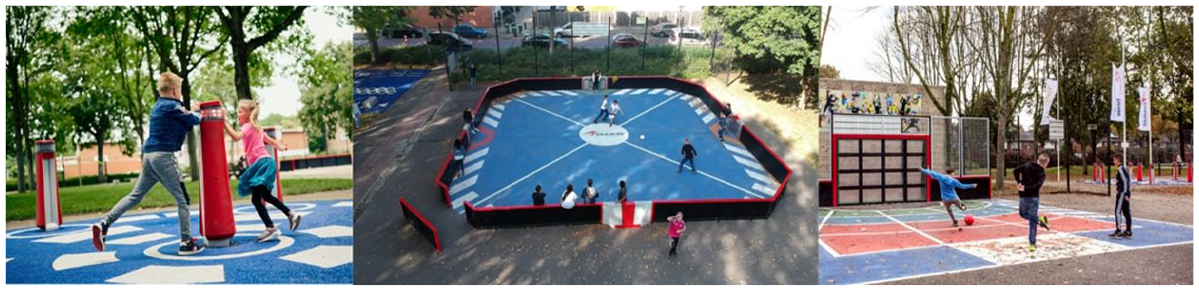
Yalp interactive playgrounds from left to right: Memo, Toro, and Sutu.
The Interactive Playground Games Overview.
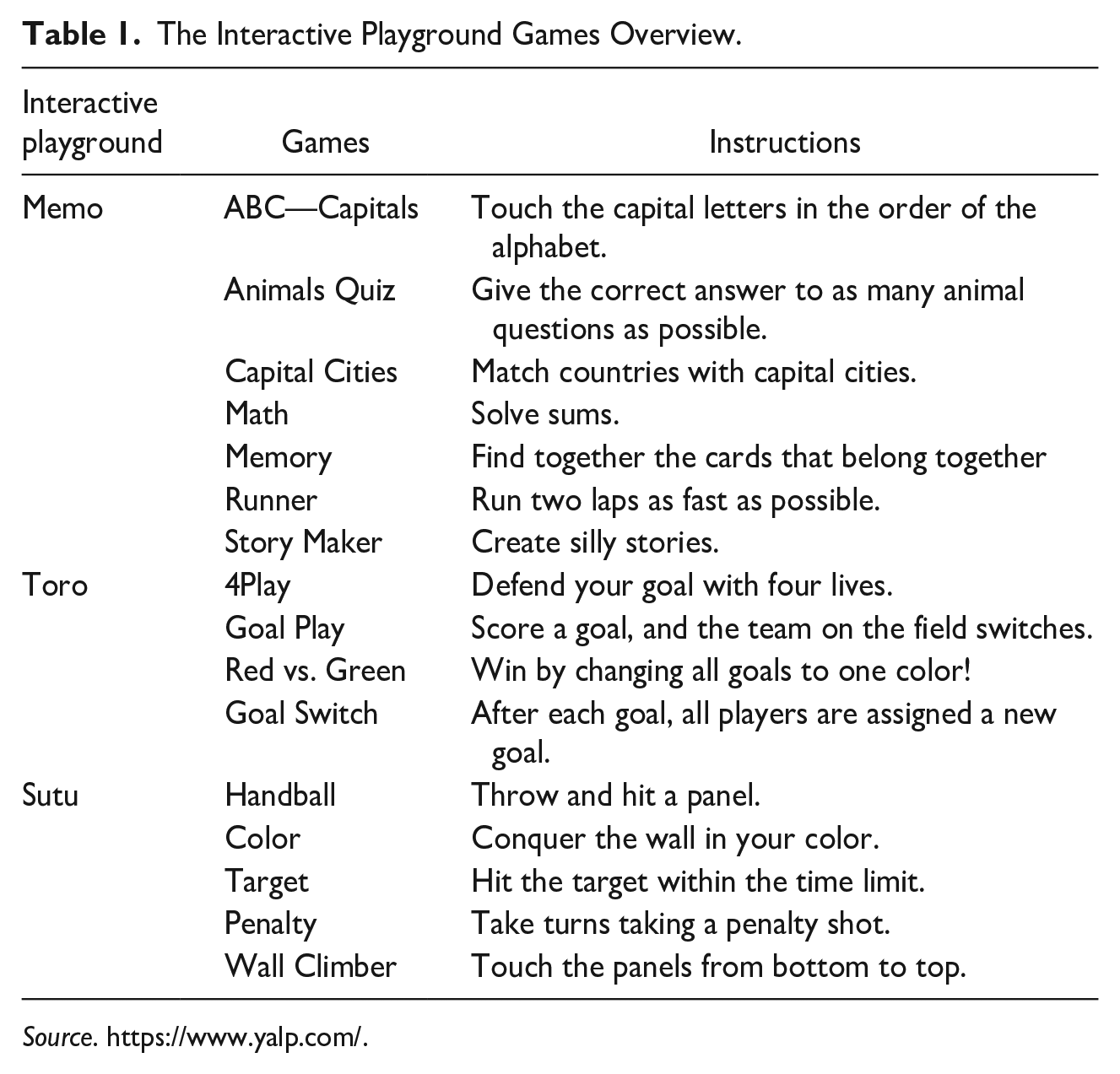
Source. https://www.yalp.com/.
Participants and Recruitment
The target group includes Group 1 (8–9 years old), Group 2 (8–9 years old), Group 3 (10 years old), Group 4 (10–11 years old), and Group 5 (11–12 years old). These age groups were recruited since 8 to 12-year-olds are often physically active and can engage in outdoor play independently. Participants were recruited by teachers at the school. In total 27 children (15 girls and 12 boys) divided into five groups participated in the study. The group size ranged from four to six participants, in line with recommendations for group interviews to ensure in-depth insight into children’s experiences (Morgan, 1997). Each group was structured to represent students from specific grade levels. Groups 1 and 2 consisted of students from grades 5/62 and groups 3 and 4 comprised students from grade 7. Group 5 was formed by students from grade 8. Table S1 in the Supplemental Material shows the group composition and participant information including group number, ID number, age, and gender.
Ethical Approval
A consent mechanism was used that was approved by the institution’s Ethics Committee and adhered to data protection laws. The consent form included information about the purpose of the study, interviewee rights, and data storage and usage procedures. Out of 66 forms sent, 27 parents gave consent for their children to participate in the study. All parents of the participating children provided written informed consent on behalf of the children, and all children could withdraw from the study at any time.
Research Method
The research method in this research is a combination of inductive and deductive approaches. An inductive approach was employed to explore children’s actual outdoor play activities within interactive playgrounds. This method facilitated the derivation of themes and patterns directly from the data to understand how children engage in outdoor play on interactive playgrounds. Additionally, a deductive approach was used to understand the influence of interactive playgrounds on children’s outdoor play behavior, drawing insights from the components of the COM-B model. This structured framework enabled a detailed analysis of how interactive playgrounds can influence capability, opportunity, and motivation of children to engage in outdoor playing on interactive playgrounds.
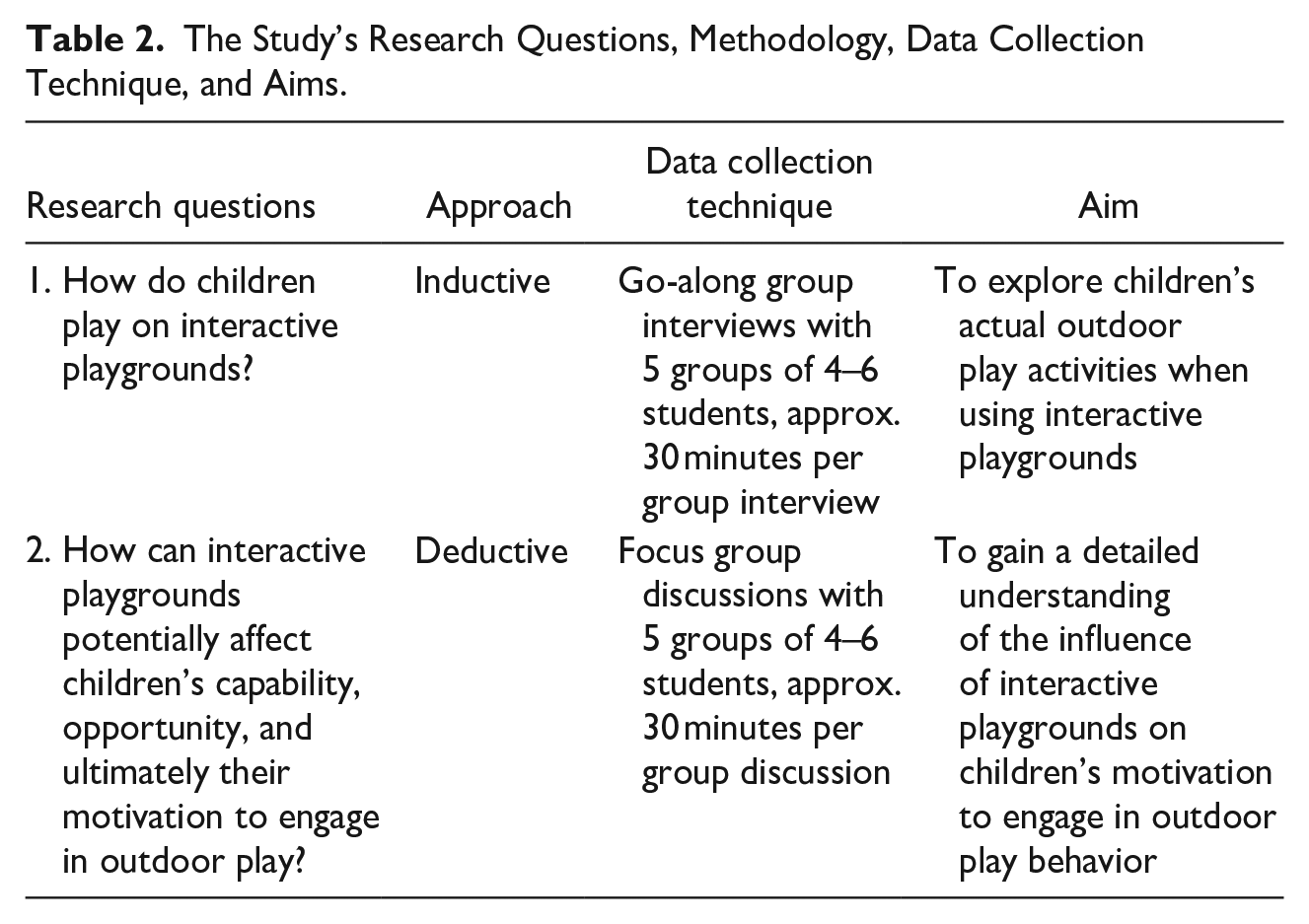
This study used two qualitative data collection techniques (go-along group interview and focus group discussion) to explore children’s outdoor play behavior on interactive playgrounds. Go-along group interviews and focus group discussions were conducted with five groups of children each. Therefore, this study includes five group interview sessions and five focus group discussion sessions. The number of participants in each group is shown in Table S1. Table 2 presents how the research questions of this study are addressed by inductive and deductive approaches and go-along group and focus group discussion data collection techniques. These techniques are described in more detail below.
The Study’s Research Questions, Methodology, Data Collection Technique, and Aims.
Go-Along Group Interviews
Go-along group interviews were conducted to explore how children play on the selected interactive playgrounds. Go-along interviews, a.k.a. walk-along interviews, help obtain the contextualized perspectives of participants on how they experience an environment (Garcia et al., 2012). This technique is useful for understanding the real and on-site experiences of children compared to traditional interview techniques such as a survey that relies on participants recalling past experiences (Veitch et al., 2020). In addition, go-along interviews provide an opportunity to increase respondent participation. Each respondent serves as a “tour guide” for the researcher. This technique creates an interplay between the environment, the researcher, and the participant, which can help prompt in-depth discussion and facilitate contextual discussions (Carpiano, 2009; Kinney, 2017). The go-along interviews were conducted in groups as group interviews give children the chance to present to their peers, which sparks conversations between them and encourages them to elaborate (Ponizovsky-Bergelson et al., 2019).
Focus Group Discussions
Focus group discussions were conducted to gain detailed qualitative information about how interactive playgrounds can influence children’s outdoor play behavior. Focus group discussion is an interactive discussion technique to obtain the participants’ in-depth experiences and perspectives. The interactive nature of focus group discussion enables this technique to generate more insights into the research issues than interviews (Hennink et al., 2011). Focus groups offer a rich, interactive, and developmentally effective approach to planning, and evaluation in research with children (Kennedy et al., 2001). Focus group discussions also helped us identify children’s shared beliefs and points of view about playing on interactive playgrounds.
Collecting data from children in a peer group format, such as go-along group interviews and focus group discussions, is valuable in gaining insights into the social dynamics and behaviors of children. However, it also comes with some limitations. For instance, children may be influenced by their desire to be accepted or liked by their peers, leading to socially desirable responses that may not reflect their true thoughts or behaviors (Daley, 2013). This can result in inaccurate or exaggerated information. To address this limitation, researchers carefully consider the group dynamics and ensure that the data collection environment promotes openness, trust, and confidentiality. Additionally, the age and maturity level of the children were taken into account when designing and interpreting the data collection process.
Data Collection Procedure
Data were collected during a two-day visit to the school in November 2022. Two researchers (English and Dutch speaking) collected the data. A Dutch research assistant conducted the go-along group interviews and focus group discussions. The Dutch research assistant involved in this study had experience in qualitative data collection with children and qualitative research methods. The first author, who designed the research, provided training to the assistant. This involved an in-depth explanation of the research methodology, hands-on guidance, and supplementary material such as articles and books specifically focused on go-along group interviews and focus group discussions. This ensured that the assistant was well-prepared and equipped to conduct the data collection. To facilitate the conversation and evoke memories, the data collection started with the go-along group interview in the location of interactive playgrounds. To begin the group interview, the children were asked to show their favorite interactive playground. Then the interview began on the playground, which was more popular. Children’s interactive outdoor play activities in each playground were explored by a series of semi-structured interview questions (see Table 3). These questions followed a prepared topic guide using topical probes. Probes are used to remind the interviewer to ask about specific topics to ensure that detailed information on the topic is collected. Here, the probes were about the outdoor play activity that children do on the playgrounds and even those that the playgrounds are not intended for. The go-along group interviews were around 30 minutes for each group and audio recorded.
Go-Along Group Interview and Focus Group Discussion Questions.
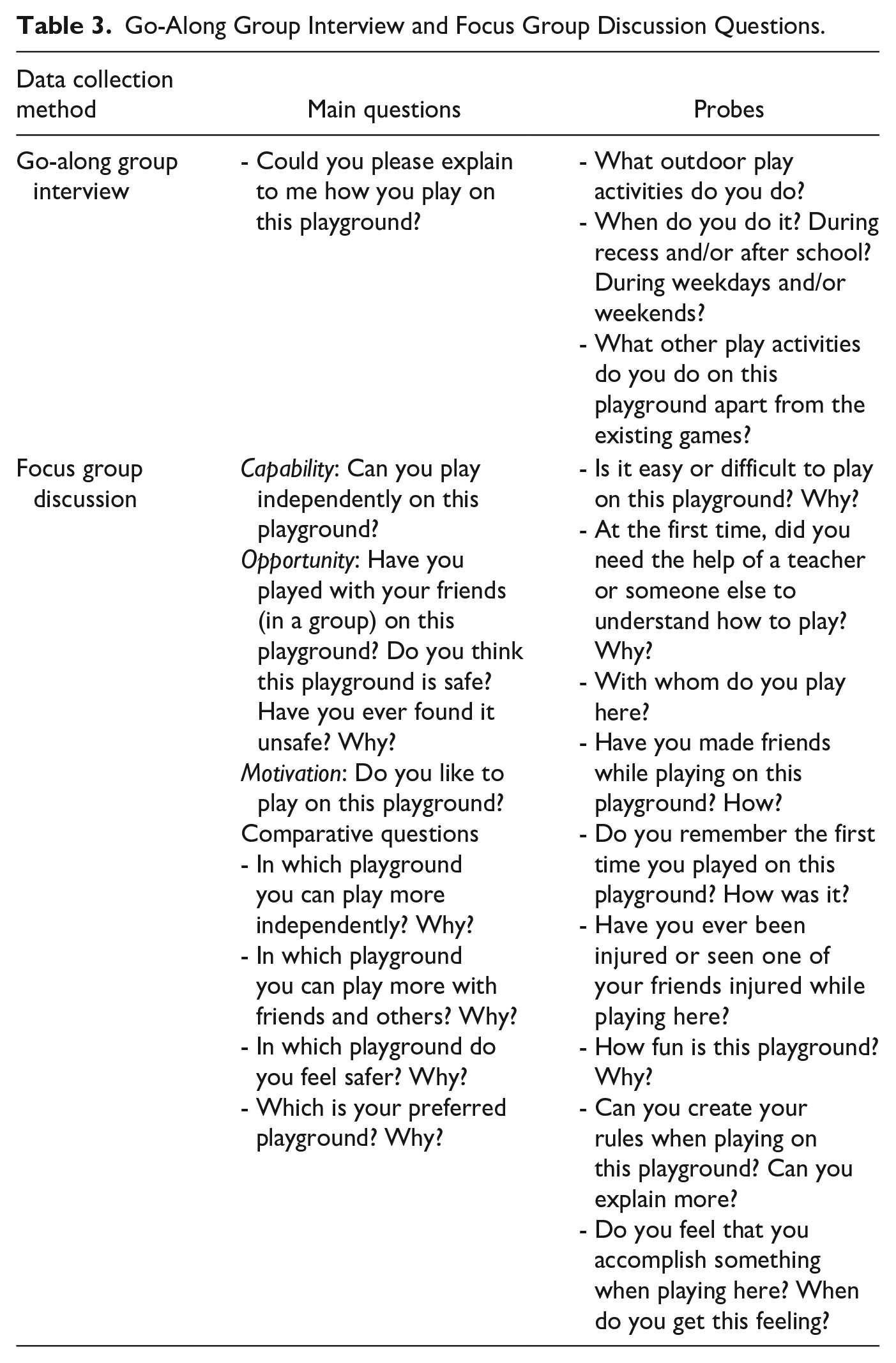
The focus group discussions were conducted at school after the go-along group interviews. The focus group discussions lasted for approximately 30 minutes and were audio recorded. The discussion topics originated from the COM-B components (capability, opportunity, and motivation) and included a series of topical probes. The probes were based on the underlying factors of children’s outdoor play, as identified by Khalilollahi et al. (2023a). The use of the COM-B helps frame the discussion topics in a clear and focused manner. Children were shown photos of each playground in order to first focus the discussion on one playground and then some comparative questions about all three interactive playgrounds were asked. In this study, we do not aim to compare these three interactive playgrounds, but comparative questions helped us to understand why one playground is used more than others from a child’s perspectives. Table 3 shows the main interview and discussion questions and topical probes. The questions were approved by the Ethical Review Board of the researchers’ institution.
Data Analysis
The data analysis for this study was carried out by the first author of the research. An in-depth analysis of the given responses of the go-along interviews and focus group discussions was carried out using a qualitative data analysis method. This method involves concurrent inductive and deductive thematic analysis (Hennink et al., 2011). Preparing data for analysis involved three main tasks: producing a verbatim transcript of the interviews and focus group discussions, translating the transcripts from Dutch to English, and removing identifiers from the data to preserve participant anonymity. The audio recordings were transcribed verbatim manually by a native Dutch researcher. Prior to analysis, the accuracy of transcripts was verified by another proficient Dutch individual. Then the transcripts were translated to English. Data analysis was conducted multiple times. Data saturation, the point at which data analysis stopped providing additional insights or themes, was considered during the analysis. Upon reaching a point where no new themes or insights emerged from the data, we concluded that data saturation had been achieved.
To analyze the go-along group interview responses, the inductive codes were developed by reading and rereading data to identify explicit and more subtle themes. To identify the inductive codes, data were scanned to highlight different types of children’s outdoor play activities. Three types of children’s outdoor play activities, that is, “physical,” “social,” and “cognitive” were identified from inductive data analysis. Table S2 in the Supplemental Material shows the themes and inductive codes developed for the thematic analysis of activities played by children on Memo, Toro, and Sutu, along with examples from the data. This table includes themes, their related codes, descriptions, and data examples. Furthermore, it indicates which participants mentioned each code and the total occurrence of each code across all participants. All outdoor play activities identified from the go-along group interviews were included in order to not overlook any potential play activity.
To analyze the focus group discussions a deductive coding framework was established based on the questions and topical probes. This framework included information on how interactive playgrounds can influence children’s interactive outdoor play. This framework was formulated using the influential factors of children’s outdoor play behavior developed by Khalilollahi et al. (2023a) based on the COM-B model. Table S3 in the Supplemental Material shows the themes and deductive codes developed for the thematic analysis of the influence of Memo, Toro, and Sutu on children’s interactive outdoor play, along with examples from the data. It also specifies which participants mentioned each code and how often each code appeared across all participants.
Children’s responses from focus group discussions were coded based on “capability,” “opportunity,” and “motivation.” They were also categorized into positive and negative depending on how children expressed their experience with playing on these playgrounds. Eventually, the key issues for the design of interactive playgrounds for children’s outdoor play were identified from children’s responses. For instance, the children indicated that, on the one hand, Toro’s small-sized playfield makes it possible to win faster, and on the other hand, it results in the ball being bounced frequently outside the field. Therefore, we concluded that the playground field size and how it is separated from its surroundings is an issue to consider when designing interactive playgrounds.
Subsequently, the linkage between the identified key issues and recommendations for the design of interactive playgrounds and the components of the COM-B model is distinguished as follows: (1) If a key issue and recommendation for the design of an interactive playground were related to the psychological and physical aspects of the children’s outdoor play, it is linked to the capability component; (2) If a key issue and recommendation for the design of interactive playground were related to the socio-cultural determinants of children’s outdoor play and the opportunities afforded by the physical environment, it is linked to the opportunity component; (3) If a key issue and recommendation for the design of interactive playground were related to the aspects that energize and direct a child’s outdoor play behavior, it is linked to motivation.
Results
Children’s Outdoor Play Activities on Interactive Playgrounds
Based on the analysis of children’s input collected from the go-along group interviews, three types of outdoor play activities are possible on these playgrounds: physical, social, and cognitive. Children’s outdoor play activities on Memo, Toro, and Sutu interactive playgrounds are presented in Table 4. The activities are derived from the go-along group interviews with children.
Children’s Outdoor Play Activities on Memo, Toro, and Sutu Interactive Playgrounds.
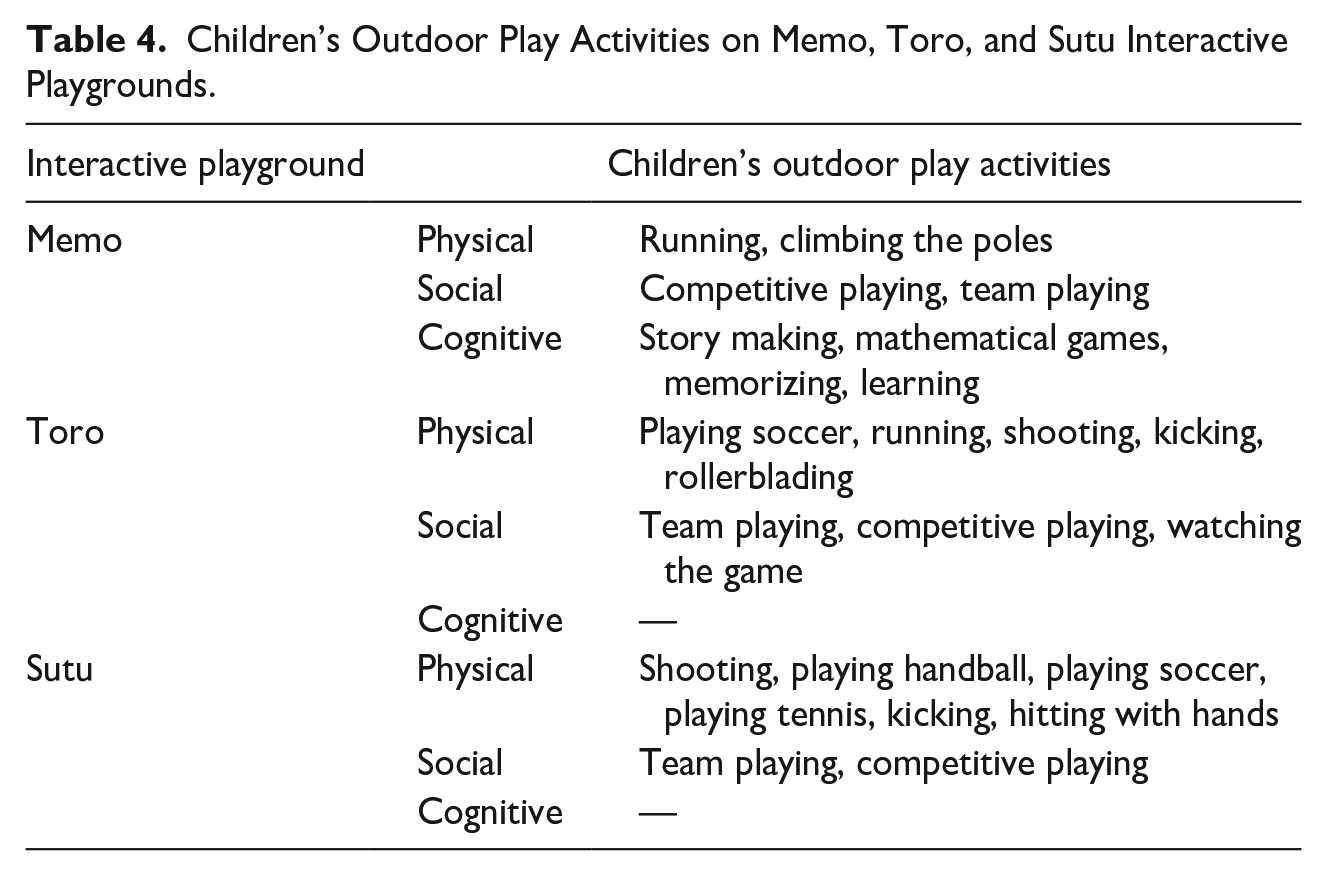
On Memo, children can perform physical, social, and cognitive play activities. However, here, cognitive play is the most dominant type of play. The children explained that they start playing by pressing the button on the central pillar and selecting a game and then they follow a game that mostly involves running. The children indicated that they like to play the “Math,” “Story maker,” and “Memory.” When children were asked if they can play in different ways than existing games, one of the boys (P8) showed that he likes to climb the pillar and stand on it. In general, girls and younger children were more interested in playing on Memo. However, one young boy (P7) said that he plays on Memo every day even on weekends when school is closed.
On Toro, physical and social play activities are possible. Children indicated that soccer is the main game that they play on Toro. They explained that they mainly play the “4Play” game. Most children liked to play on Toro, especially a great number of boys who said that they play soccer on Toro every day. Few younger girls (P1, P3, P11, P12) stated that they have never played on Toro because they do not like soccer. However, a girl said (P12) although she does not play soccer, she likes to sit on the concrete fences around the Toro and watch others playing. In response to the question of whether children played games other than the intended designed games, a girl (P23) said she rollerblades on the field as it is suitable for this activity.
Similarly, on Sutu, physical and social play activities are possible. The children indicated that they like to play the “Target,” “Handball,” and “Penalty.” The children elaborated that they can be involved in a single-player or multiplayer game. However, a boy (P10) said that Sutu is more of a solitary game, and he prefers to play on Toro as he likes to play in a team. On the other hand, one of the children (P21) said that on the days when the children of other classes play soccer on the Toro or the grass field and there is no place to play soccer, they play soccer on Sutu. The children explained that they start playing by pressing the button on the wall and then they choose a game and follow it. From children’s perspectives, different games are possible to play on Sutu. For instance, in one game they can score by shooting the ball to hit a box on the ball wall. In another game, one player defends the panels and the other shoots. Whoever scores the most goals, is the winner. Although this playground is designed for shooting the ball, most of the girls said that the boys often play with a ball and girls play by kicking the panels with their feet or hitting them with their hands. One girl (P6) explained that this is because shooting balls are not very easy for girls. Two children (P2, P6) also said that they played tennis and handball on this playground.
The Influence of Interactive Playgrounds on Children’s Outdoor Play Behavior
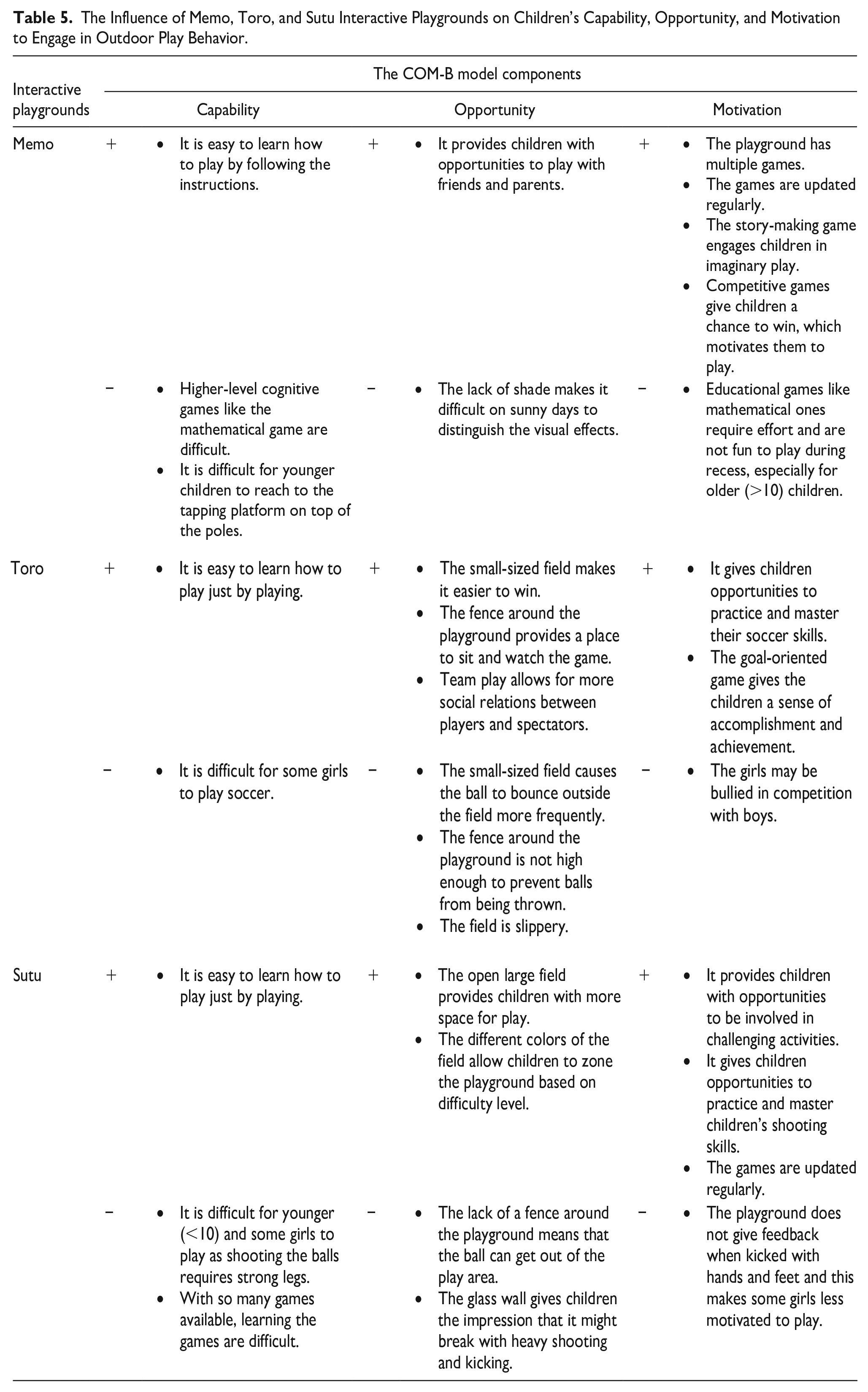
This section uses the lens of the COM-B model to discuss how the selected interactive playgrounds influence children’s outdoor play behavior. The application of the COM-B model allows us to interpret our research findings in a structured and coherent manner. The model helps us relate children’s perspectives of playing on the interactive playgrounds to the underlying factors of capability, opportunity, and motivation, enabling a more robust analysis and validation of our study results. Table 5 shows how Memo, Toro, and Sutu can positively or negatively influence children’s capability, opportunity, and motivation for engaging in outdoor play activities. This table is derived from focus group discussions with the children. Below, you will find more detailed information, including quotes from children, to bolster the analysis.
The Influence of Memo, Toro, and Sutu Interactive Playgrounds on Children’s Capability, Opportunity, and Motivation to Engage in Outdoor Play Behavior.
Capability
In terms of physical capability, most children are capable to engage in outdoor playing on Memo. Here, the main physical activity is running and students in this school are all non-disabled. On Toro, however, two girls (P2, P6) found it difficult to play a game because soccer dominates the scene, and they explained that to play soccer, especially against boys, they need to be powerful, as one girl (P2) expressed, “I tried playing soccer with the boys once, but they said I wasn’t strong enough to keep up. It made me feel sad and left out.” However, there were a few girls (P22, P23, P24, P25, P26) who were able to play as they said they like to play with the ball. On Sutu two girls (P2, P6) were not as capable of playing as boys like Toro. This is because Sutu’s main game is shooting the ball with feet. They further explained that for shooting the ball they require stronger legs, which makes it especially difficult for girls to be involved in the game and compete with boys, as one boy participant (P15) shared, “I’ve seen girls try to play, but they can’t kick the ball as hard as us boys, so they get left out and teased sometimes.” He also explained that most of boys usually prefer to play with children of the same age and gender because they have the same ability and skill in playing, and this can prevent conflicts between them.
From the psychological capability perspectives, most children (P1, P2, P3, P9, P17, P18, P20) indicated that they could intuitively start to play on Memo by pressing the button and following the instructions explained by a voice employed in the interactive playground. For two children (P1, P2), it was difficult to play cognitive games like the mathematical game at higher levels, as one child (P1) mentioned, “I got stuck on the hard math questions, and it felt frustrating because I couldn’t figure them out like some of the other kids.” It was easy for all children to learn how to play on Toro. In their own words, they have learned just by playing. They explained that they already knew how to play soccer and they just needed to learn the rules imposed by each game. Similarly, also, most of the children (P5, P7, P8, P11, P15, P22, P23, P25, P26, P27) were able to understand how to play on Sutu; however, one girl (P3) stated that it is difficult for her because Sutu has a lot of games, and it makes it difficult for her to learn and remember the games, as she said, “There are so many games to choose from, and I sometimes forget how to play them all. It can get confusing.” Additionally, another girl (P2) explained, “We cannot, or maybe we do not know how to choose a game, so we play a game that is randomly suggested by the playground. It’s easier that way, even though we don’t always get to play our favorites.”
Opportunity
In terms of physical opportunity, six children (P2, P3, P17, P18, P19, P21) complained that the reflection of sunlight on Memo’s screens during sunny days made it difficult to see the visual effects. As one boy (P19) said, “When the sun shines directly on the screen, I can’t see anything properly, and it’s frustrating because I can’t enjoy the games as much.” The physical attributes of Toro affected children’s outdoor play in different ways. From the children’s viewpoint, the small-sized field makes it easier and faster for the children to win compared to a grass field, as they do not have to run long distances to reach the goals. On the other hand, they complained that because of the field’s small size, the ball ended up being thrown many times outside of the fence surrounding the field, as one girl (P22) explained, “We have to stop the game so often to go fetch the ball, and it gets annoying.” Another boy (P27) added, “The height of the fence is low, so the ball easily goes over, and we have to go get it all the time.”
The slippery field was another issue that some children were unhappy with, one boy (P19) shared, “I fell and hurt my knee once when it was wet. It’s dangerous to play on Toro when it’s rainy or wet.” Another girl (P17) added, “Yeah, I slipped a few times too. It’s not safe, especially when it rains.” Most of the children were happy to have a large open space to play on Sutu; however, some children (P6, P7, P15, P18) complained that the ball often ends up outside the playground. They further explained that this might be due to the absence of a fence around this playground, as one boy (P20) expressed, “Sometimes, we have to stop the game to go get the ball because it rolls too far away.” The glass wall also gives children the impression that it might break with heavy shooting and kicking, one girl (P14) mentioned, “We have to be careful not to hit the ball too hard, or it might break the glass.” Two children explained that they use the colors on the surface of the field to create zones for different skill levels based on the distance to the wall. They called these zones “penalty spots,” as one boy (P9) explained, “The red zone is closest to the wall, so it’s easier to shoot from there. But the blue zone, which is farthest from the wall, is the hardest. It takes more skill to score from there.” Another girl (P6) added, “Yeah, we challenge ourselves to shoot from different zones and see who can score the most goals from the blue zone.”
In terms of social opportunity, four children (P1, P2, P3, P4) elaborated that Memo provides them with opportunities to be involved in a group game with their friends and cousins, as one girl (P3) shared, “It’s so much fun when we all play together, and we can cheer each other on.” One young boy (P4) said that he likes to come to play with his parents and explains to them how different games are played on Memo, as he put it, “I like showing my parents the games I know. It makes me feel like a teacher!” Toro allows playing and competing with a great number of children which provides the possibility of establishing social relationships. These social relationships are established even among children who come to watch the game. It also provides children with the opportunity to make friends. For example, a girl (P1) mentioned: “Once I met a girl here and we became friends while playing.” Six children (P15, P16, P19, P20, P21, P22) elaborated that Sutu provides them with opportunities to play and practice shooting and soccer skills with friends, as one boy (P4) explained, “It’s great because we can practice our shooting and passing together, and it makes us better at playing soccer.” They further explained that as they practice a skill together, they develop and strengthen common goals. A girl (P3) added, “We all want to get better at scoring goals, so we work together and cheer each other on.” This also strengthens the bonds among friends and provides a sense of support and belonging, which ultimately helps children improve their social skills, as another boy (P5) put it, “We feel like a team, and we know we can rely on each other. It’s fun, and it helps us be better friends too.”
Motivation
In terms of automatic motivation, seven young children (8–9-year-olds including P2, P3, P4, P7, P9, P11, P13) were intrinsically motivated to play on Memo. They explicitly stated that they like to play on Memo because it is fun, as one boy (P4) shared, “There are so many games to choose from, and they are all fun to play!” They further explained that this is because Memo has many games and new games are added occasionally, as a girl (P2) added, “I always find new games to try, and it keeps me interested.” A keen motivation to engage in the story-making game is expressed by most children, as another girl (P3) mentioned, “I love creating stories and playing different characters.” Older children (>10 years) did not demonstrate too much desire to play on Memo, as one girl (P22) explained, “Most of the games are educational, and we don’t really want to think about school during break times” Two girls (P22 and P24) explained that they liked to play on Memo when it was newly installed in the schoolyard, but after a while, it was not as fun as it used to be, as one of the girls (P22) stated, “It was exciting when it was new, but we got used to it, and it’s not as exciting now.” The other girl (P24) agreed, “Yeah, it’s just not the same anymore.” Both girls and boys indicated that they liked to play on Toro, as one girl (P25) stated, “I enjoy the games, and it’s fun to play with everyone. Six children (P2, P3, P13, P21, P25, P27) showed a sense of belonging to Memo, Toro, and Sutu. They recalled the first time they played on Toro and described it with excitement, as a boy (P27) shared, “I remember how cool it was when Toro first came to our school. Everyone wanted to play on it.” They explained that at first Toro was very popular with the children, and they would fight each other for a chance to play. They said that although Toro, Memo, and Sutu are not as popular as the first days, they still feel proud of having these types of playgrounds at their school, as a girl (P24) mentioned, “Even though it’s not as crowded now, I’m happy we have these fun playgrounds.” They elaborated that they feel proud as their school is the only school in the city to have interactive playgrounds. One girl (P25) added, “I think it’s because they’re different from regular playgrounds. It makes our school special.”
In terms of reflective motivation, almost all boys from all groups declared a strong motivation to play on Toro (many said they play on Toro every day), as one boy (P4) expressed, “I love playing on Toro, and I play it all the time!” Their favorite game was “4Play.” In this game, each team starts with four points and when a team runs out of all points it loses the game. They further explained that their high motivation to participate in this game was because it sets specific goals (hitting a goal 4 times) and reaching these goals gives them a sense of accomplishment and achievement. However, a couple of boys (P20, P21) also said that when they play with girls they should play gently and therefore it would not be very challenging, as one boy (P27) shared, “Sometimes we go easy on the girls, so it’s not as competitive.” Maybe for this reason, one girl said (P17) that girls rarely compete with boys on Toro, another boy (P21) added, “Yeah, the girls usually play together, and we play with the boys.”
Some of the older boys showed strong motivation to play on Sutu, where they prefer to practice their shooting tactics. They believe their shooting skills have enhanced as a result, as one boy (P20) explained, “I like using Sutu to practice shooting. It’s fun, and I feel like I’ve gotten better at shooting the ball.” Another boy (P21) added, “I can practice different techniques and get better at scoring goals.” The children explained that they can choose different difficulty levels, and the game becomes more challenging at higher levels, as a girl (P17) mentioned, “I like trying the harder levels, it’s more exciting.”
Older children (10–12-year-olds including P19, P21, P24, P26, P27) demonstrated a desire to be involved in challenging activities, as one girl (P24) noted, “I like playing games that are not too easy, it’s more fun when it’s challenging.” They further explained that when they overcome tough challenges, they feel successful, as a boy (P27) mentioned, “When I score a difficult goal, it feels great!” However, most of the girls did not feel successful when playing on Sutu, as a girl (P14) expressed, “The wall doesn’t recognize our kicks, so we don’t get any points.” They further explained that they mostly play on Sutu by kicking the wall with their hands or feet, as another girl (P13) said, “It’s hard for the wall to see our kicks.” Since the wall does not recognize their kicks, they do not get any points. Finally, some of the children stated that they enjoy playing Sutu games as they are updated frequently, so the games do not get boring for them, as one boy (P9) mentioned, “I like that there are always new games to try.”
Conclusion and Discussion
This paper investigates the children’s perspectives and experiences of playing on particular interactive playgrounds named Memo, Toro, and Sutu. The use of go-along group interview and focus group discussion techniques enabled children to explain their actual experience of playing on these playgrounds. The results of the go-along group interviews demonstrate that children perform various physical, social, and cognitive play activities on these playgrounds. These play activities include the games that the playgrounds are designed for and the games that the children invent themselves (like rollerblading on Toro or kicking the Sutu wall with their hands). However, Memo, Toro, and Sutu do not give many opportunities to invent games. Our findings on children’s play activities on interactive playgrounds, including both the designed games and children’s inventive play, align with previous studies that emphasize the importance of open-ended play opportunities in promoting children’s creativity and engagement (Sandseter, 2009; Smith et al., 2014). This suggests that designers should consider incorporating features that allow for flexible and open-ended play experiences on interactive playgrounds. For instance, the Sutu wall feedback systems should be adjusted to respond to the girl’s way of playing (i.e., kicking the wall with hands and feet).
The influence of interactive playgrounds on children’s outdoor play behavior was explored through focus group discussions with children. The COM-B model was used as a framework for understanding how interactive playgrounds can affect the various components that generate behavior. Based on the COM-B model, “Capability,” “Opportunity,” and “Motivation,” are the components that interact with each other and generate behavior. By incorporating the concepts of capability, opportunity, and motivation, the model offered a holistic approach to understanding the interplay of various elements affecting children’s outdoor play experiences. Moreover, building upon the theoretical framework developed by Khalilollahi et al. (2023a), we established a strong theoretical foundation for exploring children’s outdoor play behavior in the context of interactive playgrounds. This adaptation allows us to identify critical aspects that influence children’s capability and motivation for outdoor play and how the environment can provide opportunities for such play.
The results of the focus group discussion showed that Memo, Toro, and Sutu can both positively and negatively affect children’s capability, opportunity, and ultimately their motivation to engage in outdoor play behavior. Some contradictory results were also identified from the interviews. For instance, on Toro, although the low-height fence does not prevent balls from being thrown outside of the field (negative point), it provides a seating place for spectators to sit and watch the game (positive point). These contrasting results are consistent with previous research that highlights the multifaceted nature of playground design and its impact on children’s play experiences (Beighle et al., 2006; Fjørtoft & Sageie, 2000). By acknowledging these mixed outcomes, designers can take a balanced approach to creating interactive playgrounds that cater to diverse play preferences and needs.
Moreover, the feedback from the children regarding the presence of interactive playgrounds in their schoolyard was generally positive, as they expressed happiness and enthusiasm about these innovative play areas. However, it was notable that some children mentioned a potential concern: if there were only interactive playgrounds in their schoolyard, they believed they would eventually become bored. This observation suggests that while interactive playgrounds offer unique and engaging play experiences, they may not fully replace the appeal of traditional playgrounds. These findings align with previous literature on playground design and children’s play preferences. Studies by Smith et al. (2014) and Sandseter (2009) have emphasized the importance of offering diverse play opportunities in schoolyards. A combination of interactive and traditional playgrounds allows children to engage in various play opportunities and play types that suit their individual interests and abilities.
Children of different ages and genders are affected differently by the interactive playgrounds. For instance, the girls are less interested in Toro and Sutu games than boys and younger children are more motivated to play on Memo than older ones. Moreover, they elaborated that they prefer to play with children of the same gender and age group to prevent conflicts between them. This finding is consistent with previous studies indicating that children of different ages and genders prefer to have exclusive play zones to play within their own social group (Aminpour, 2022). Thus, designers are recommended to include a variety of games that are appropriate for children of different ages and genders when designing interactive playgrounds and consider separate play zones according to age and gender.
The focus on children’s narratives and perceptions of playing on particular playgrounds through the lens of the COM-B model enables us to get a more systematic understanding of the general and site-specific experiences of children on a playground. The application of this model to children’s outdoor play experiences on interactive playgrounds adds value by providing a comprehensive framework for understanding the interplay of capability, opportunity, and motivation in shaping their play behavior. Overall, inspired by children’s perspectives of playing on Memo, Toro, and Sutu, we have identified a list of general key issues and recommendations for the design of interactive playgrounds for children’s outdoor play. We are aware that there are many important issues that interactive playgrounds designers have to take into account, such as the technical and maintenance considerations. However, we focus on the key issues that are identified by our study and are related to the children’s experience of playing on a sample of interactive playgrounds (Figure 3). We use the COM-B model to present the identified key issues of interactive playgrounds that can generally influence children’s outdoor play behavior. Based on this conceptual framework different key issues of the interactive playgrounds can, directly and indirectly, influence children’s outdoor play by influencing their capability, motivation, and opportunity. For example, the ability to understand the game can directly affect children’s capability, and indirectly their motivation, and subsequently their outdoor play behavior.
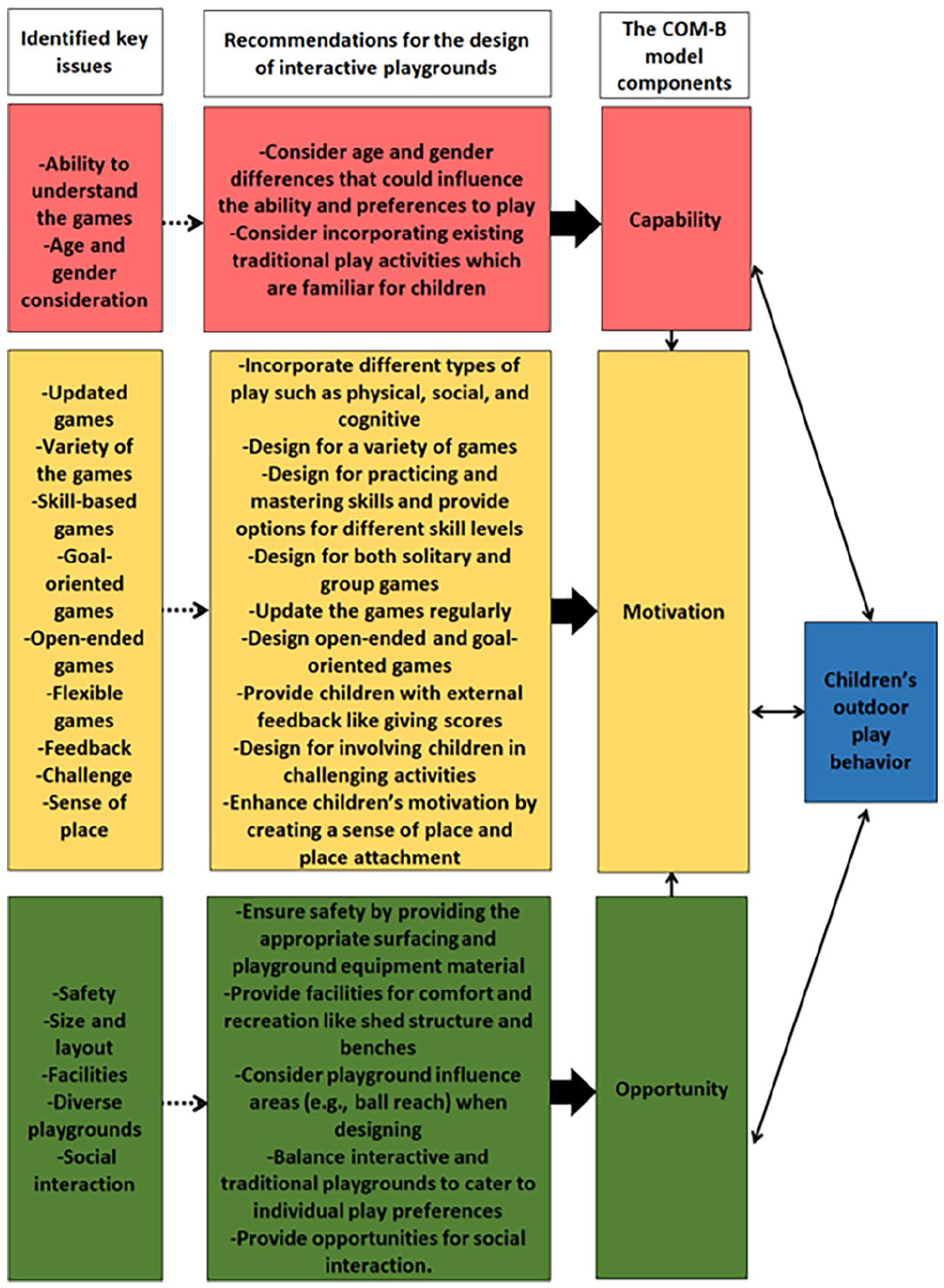
The identified key issues and recommendations for the design of interactive playgrounds for children’s outdoor play behavior based on the COM-B model.
In terms of capability, one key issue for the design of interactive playgrounds aimed to enhance children’s capability to engage in outdoor play is ensuring them understand the games by providing clear instructions and intuitive interfaces. Another issue involves considering age and gender differences in play preferences and abilities. Recommendations include designing games with clear instructions and accommodating diverse interests and developmental stages. Incorporating familiar traditional play activities can also enhance children’s engagement. Gender and age differences also influence children’s preferences and interactions with these playgrounds, suggesting the importance of inclusive and age-appropriate design.
In terms of opportunity, a number of key issues for enhancing physical and social opportunities for children’s outdoor play on interactive playgrounds have been identified. Safety measures such as appropriate surfacing and equipment materials ensure that children can play freely without the risk of injuries. Facilities like shed structures and benches provide comfort and encourage children to spend more time outdoors. Considering playground influence areas, such as ball reach and layout, ensures that children can play more comfortably without constant interruptions. The results have shown that children generally expressed positivity about interactive playgrounds but noted potential boredom if only interactive playgrounds were available. This suggests the importance of offering diverse play opportunities, and the need for a balance between interactive and traditional playgrounds. Moreover, providing opportunities for social interaction within the playground environment promotes communication, teamwork, and relationship-building skills among children. By creating inclusive and welcoming spaces that prioritize safety, comfort, and social interaction, interactive playgrounds can effectively enhance children’s physical and social opportunities for outdoor play.
In terms of motivation, addressing key issues such as updated games, variety, skill-based activities, and providing feedback can enhance children’s motivation to engage in outdoor play on interactive playgrounds. By incorporating a diverse range of games and activities, designers can cater to children’s varying interests and preferences. Moreover, regularly updating games helps maintain children’s interest and excitement, preventing boredom and encouraging continued participation. Designing games that offer both open-ended exploration and clear goals allows children to exercise their creativity while also experiencing a sense of achievement. Skill-based games that provide opportunities for practicing and mastering new abilities empower children to challenge themselves and develop confidence in their capabilities. Additionally, incorporating elements of challenge and competition fosters excitement, a desire to improve, and strive for success. Providing children with external feedback, such as scores and achievements, reinforces their efforts and encourages continued engagement. This feedback not only serves as a measure of progress but also instills a sense of accomplishment and satisfaction. Furthermore, designing for both solitary and group games promotes social interaction and collaboration and fosters a sense of community among children. Lastly, creating a sense of place and attachment to the playground environment can enhance children’s motivation to engage in outdoor play. By designing interactive playgrounds that reflect the unique identity and characteristics of their surroundings, children develop a stronger connection to space and have a sense of ownership and belonging.
We should note that this study takes a first step toward getting in-depth insights into children’s outdoor play behavior on interactive playgrounds from their perspectives. More studies on children’s experience of playing on different interactive playgrounds are needed to develop a more comprehensive understanding of the role of interactive playgrounds in the quantity and quality of children’s outdoor play behavior. The use of additional theoretical frameworks, such as the Theoretical Domains Framework (TDF), in future research can provide a broader theoretical lens beyond COM-B model for understanding children’s outdoor play behavior on interactive playgrounds. The Theoretical Domains Framework (TDF) is a comprehensive framework used in behavioral science and implementation research, often used in conjunction with the COM-B model, which provides a practical guide for designing interventions. It was developed to better understand and address the complexities surrounding behavior change and the implementation of interventions (Atkins et al., 2017).
Furthermore, longitudinal empirical analyses of children’s playing behavior can also help evaluate the effectiveness of interactive playgrounds in supporting and stimulating children’s outdoor play. Moreover, efforts were made to mitigate peer influence on children’s responses in group interviews and discussions; however, it remains challenging to entirely eliminate the presence of social desirability bias. Employing a diverse range of data collection techniques, such as individual interviews or surveys, can enhance the comprehensiveness of understanding each child’s viewpoints and experiences. In addition, a comparative study between children’s experiences and attitudes toward playing on traditional and interactive playgrounds could help us understand the added value of interactive playgrounds compared to traditional ones. It can also help designers identify what pleasant features of traditional playgrounds for children’s outdoor play can be incorporated into interactive playgrounds. Finally, in future studies, the perspectives of caregivers should also be considered. The caregivers’ satisfaction with playground equipment can influence children’s perceptions, motivations for engaging in outdoor play, and their play experience (Gil-Madrona & Martínez-López, 2016; Khalilollahi et al., 2023a).
Supplemental Material
sj-docx-1-eab-10.1177_00139165241245815 – Supplemental material for Interactive Playgrounds and Children’s Outdoor Play Behavior: Children’s Perspectives
Supplemental material, sj-docx-1-eab-10.1177_00139165241245815 for Interactive Playgrounds and Children’s Outdoor Play Behavior: Children’s Perspectives by Avin Khalilollahi, Dena Kasraian, Astrid D. A. M. Kemperman and Pieter van Wesemael in Environment and Behavior
Footnotes
Acknowledgements
We would like to thank Europa obs Dalton school’s principal and teachers for their assistance through the data collection process with students. We are also thankful to Rob Tuitert, director at Yalp interactive play equipment company who helped us with the section of the case study and communication with the school principal. Finally, we are immensely grateful to Suzan Evers for assisting with an interview with children in Dutch and transcribing and translating data from Dutch to English. This paper and the research behind it would not have been possible without her assistance.
Declaration of Conflicting Interests
The author(s) declared no potential conflicts of interest with respect to the research, authorship, and/or publication of this article.
Funding
The author(s) received no financial support for the research, authorship, and/or publication of this article.

Supplemental Material
Supplemental material for this article is available online.
Notes
Author Biographies
References
Supplementary Material
Please find the following supplemental material available below.
For Open Access articles published under a Creative Commons License, all supplemental material carries the same license as the article it is associated with.
For non-Open Access articles published, all supplemental material carries a non-exclusive license, and permission requests for re-use of supplemental material or any part of supplemental material shall be sent directly to the copyright owner as specified in the copyright notice associated with the article.
