



Abstract
Pro-environmental change is essential to address climate change. Impact from behavior change interventions increases if non-target behaviors also change. Here, we explore such behavioral spillover effects following a water conservation behavioral intervention and examine whether they are mediated by changes in relevant identities and beliefs. We used a persuasive intervention to encourage 150 participants to reduce daily shower-times over 14 days to conserve water. The intervention comprised information-provision, eliciting a shower time reduction commitment, and (for half the sample) progress feedback. We found that participants reduced shower time (by 38%) and intended to engage more in water-saving and pro-environmental activities, but we found no evidence of behavioral spillover (i.e., non-targeted intention change was not mediated by change in the target behavior). There was no additional effect on behavior change of receiving feedback. We discuss the implications of these findings for spillover in theory and practice.
Water scarcity is a growing issue due to a rapid growth in demand and the impacts of climate change, requiring water conservation and management (Committee on Climate Change, 2015). Addressing water shortages and other aspects of climate change requires radical change in societies and the lifestyles of individuals (de Coninck et al., 2018). Behavior change can be encouraged using interventions, which are coordinated activities designed to target change in specific behavior patterns, such as by incentivizing, supporting, informing, and guiding change (Michie et al., 2011). Interventions to encourage pro-environmental behavior (Steg & Vlek, 2009) may involve targeting behavior patterns that are specific (e.g., reducing air travel), more general (e.g., reducing motorized transport use), or broad in scope (e.g., living a sustainable lifestyle). If the ultimate objective is to encourage behavioral changes broadly (sustainable lifestyles), then it is vital to know how far intervening to change just one target behavior brings about other behavior changes (spillovers), positive or negative to this ultimate objective (Thøgersen, 1999). One initial change may make subsequent changes much easier or more desirable, resulting in increased likelihood of making further pro-environmental changes. This is termed positive spillover (Austin et al., 2011). On the other hand, one initial change may make subsequent changes less desirable or more difficult, resulting in increased likelihood of contra-environmental behavior in other aspects of life. This is termed negative spillover (Sorrell et al., 2020; Truelove et al., 2014).
Several types of spillover effect have been theorized (Galizzi & Whitmarsh, 2019), including across time, for example, from weekdays to weekends, and context, for example, from home to the workplace (Nilsson et al., 2017; e.g., Whitmarsh et al., 2018). In this article, we consider only spillover between different behaviors. Specifically, we consider whether saving water in one way (by reducing time spent in the shower) spills over into intentions to adopt other water saving behaviors (e.g., using less water to cook) or broader pro-environmental behaviors (e.g., saving energy). Spillover between different behaviors can be understood in at least three different ways. The first is that changing one behavior actually causes a subsequent change in a second behavior (behavioral spillover; Galizzi & Whitmarsh, 2019; Nash et al., 2017). This causation could be indirect, such as when it is mediated by intervening changes in one’s environmental attitudes (Poortinga et al., 2013). The second way to understand spillover between different behaviors is that both behavior changes share the same cause (e.g., an intervention), but one behavior does not cause another (non-behavioral spillover; cf. DeRiso & Ludwig, 2012). Finally, spillover may not actually occur. These three possibilities are represented in Figure 1.
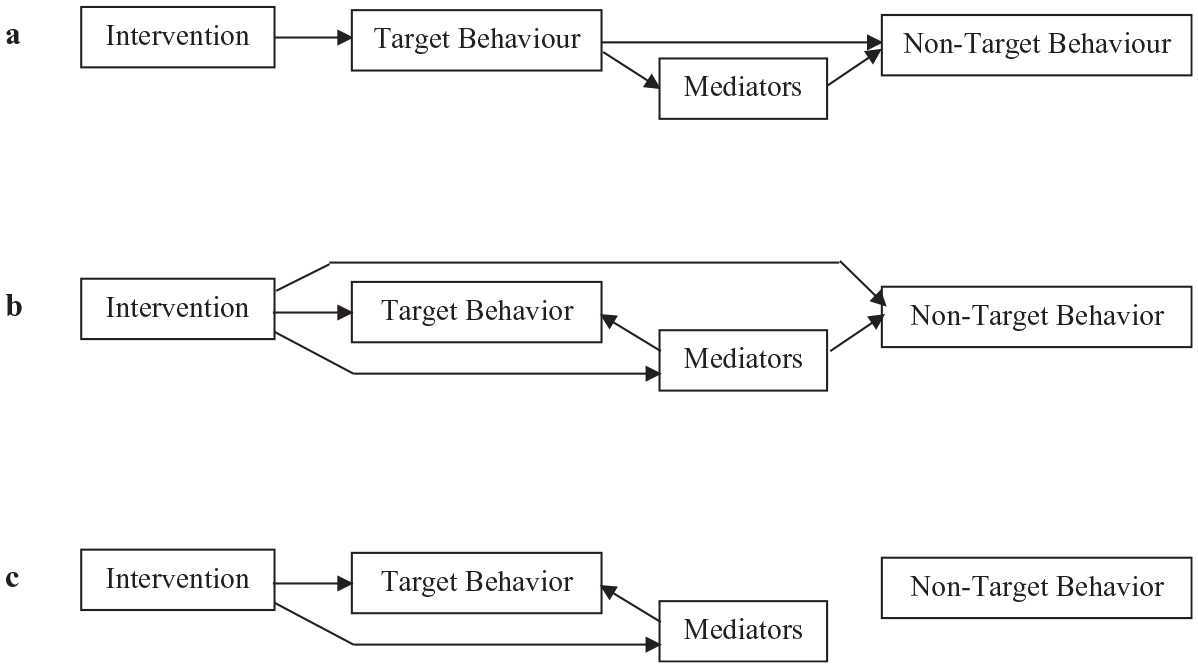
Direct and mediated causal paths.
In the present study, we encouraged participants to take shorter showers (to save water) in order to determine whether this change would spillover into stronger intentions for other water-saving and pro-environmental behaviors. We also assessed whether changes in relevant beliefs (efficacy and compensatory beliefs) and identity (pro-environmental identity) would mediate these spillover effects. We also tested whether providing performance feedback on water-saving would enhance any spillover effects detected.
Pro-Environmental Identity
Individual actions are partly guided by self-identity (Terry et al., 1999). People who identify themselves as environmentally friendly people (who have a pro-environmental self-identity) are more likely to engage in pro-environmental behavior (Carfora et al., 2017; Van der Werff et al., 2014a; Whitmarsh & O'Neill, 2010). Identity can guide behavior, but behavior can also guide identity: people make inferences about who they are from what they do (Bem, 1972). Through this mechanism, adopting one behavior has been hypothesized to strengthen pro-environmental self-identity and lead to other pro-environmental behaviors (Whitmarsh & O'Neill, 2010). This process has been evinced in experimental demonstrations of positive cuing, where participants are asked to recall their past environmentally friendly behavior and, through this recollection, it is shown that their pro-environmental self-identity becomes stronger (Cornelissen et al., 2008; Van der Werff et al., 2014a). For instance, Cornelissen et al. (2008) found that when participants were asked to recall (more or less) pro-environmental behavior, those who recalled more behaviors also tended to spontaneously engage in a small pro-environmental behavior, that is using fewer sheets of paper during a subsequent writing task. Other studies in this paradigm show that self-identity change mediates this link, for instance that recalling more numerous, unique and/or difficult behaviors (i.e., those that more strongly imply one’s pro-environmental identity) makes this manipulation more effective (van der Werff et al., 2014b) and perhaps more reliable in producing positive spillover (Fanghella et al., 2019; Lacasse, 2016). Beyond the laboratory, evidence is less clear, however. Van der Werff et al. (2014a), study #1, showed, in a two-wave non-intervention study, that identity mediated a link between current meat consumption and eco-driving in the previous year. Over a 2-week period Carfora et al. (2017) showed a similar reliance upon self-identity across a range of domestic pro-environmental behaviors. By contrast, Xu et al. (2018), testing whether green identity mediated spillover from several interventions to encourage recycling behavior, found positive spillover effects (recyclers reported other pro-environmental behavior) but no evidence to support a mediating role for pro-environmental self-identity. Similarly, two studies manipulating actual pro-environmental behavior (rather than recollection of past pro-environmental behavior) found mixed support for self-identity mediated spillover (Lacasse, 2019; Truelove et al., 2016), perhaps because the behaviors manipulated (e.g., recycling a cup, unplugging unused electrical devices) were not unique/difficult enough for participants to infer that they had become more pro-environmental individuals. In summary, the role of self-identity change in spillover is less evident in correlational and field studies compared to controlled experiments.
Self-Efficacy
Self-efficacy beliefs are beliefs about one’s own future performance capabilities under different circumstances (Maddux & Kleiman, 2016). Self-efficacy beliefs are considered necessary for persistence under changing or challenging circumstances (Bandura, 1982; Maddux & Kleiman, 2016). Success in past actions strengthens one’s self-efficacy beliefs, increasing the likelihood of similar future activity when it is rewarding (e.g., Bandura & Cervone, 1983). In this way, changing self-efficacy beliefs could mediate pro-environmental spillovers (Austin et al., 2011). The few studies of self-efficacy beliefs as mediators of spillover have shown encouraging results. Steinhorst et al. (2015) used an information-based intervention to encourage energy-saving in order to reduce greenhouse gas emissions. They found that spillover from the intervention to intentions to engage in other pro-environmental behaviors (e.g., reduce car-use, reduce beef consumption) was mediated by stronger self-efficacy for reducing carbon emissions. Lauren et al. (2016), studying the role of self-efficacy in the spillover of water conservation behavior, found that self-efficacy (for water conservation) mediated an association between simple water conservation behaviors (e.g., reduced toilet flushing) and intentions to engage in more difficult water-conservation behaviors, with (in their second study) these difficult conservation intentions associated with more difficult water conservation behaviors. It is important to note that general self-efficacy may be less relevant than specific self-efficacy (Maddux & Kleiman, 2016). For instance, Lauren et al. (2019), in a positive cuing experiment, found evidence to support the mediating role of pro-environmental self-identity in spillover to pro-environmental behavior intentions but not evidence that general self-efficacy for pro-environmental behavior mediated the association.
Collective Efficacy
Collective efficacy beliefs are beliefs about the future performance or capability of a group in which one is a member. This is relevant in interdependent coordinated activities, such as working in teams, but also an important consideration wherever interdependence is necessary to bring about a tangible outcome (Bandura, 2000), including in situations where each individual works separately toward a common outcome (Zaccaro et al., 1995), such as working to mitigate large-scale environmental problems (Jugert et al., 2016). Irrespective of individual self-efficacy, collective efficacy is necessary for persistence in activities where only collective action can be tangibly successful (Fritsche & Masson, 2021). Whereas self-efficacy beliefs form through successful past actions by individuals, collective efficacy beliefs form through successful collective actions and beliefs about one’s group, such as competency and willingness to contribute (Watson et al., 2001; Zaccaro et al., 1995). In the present study, respondents were aware that they were participating in a study alongside other participants, and some respondents also received performance feedback, including feedback on the performance of the group. In this context, we might expect increasing collective efficacy to facilitate spillover from the target to non-target behaviors. However, collective efficacy, to our knowledge, has not been studied as a potential mediator of spillover before, though this has been hypothesized (Lauren et al., 2019). At least two studies show supporting evidence. Jugert et al. (2016) manipulated efficacy beliefs using fictitious newspaper articles (articles reporting the success or failure of a pro-environmental initiative by one’s social group). They found that using this method to increase collective efficacy for pro-environmental behavior also seemed to increase self-efficacy for pro-environmental behavior, which was associated with intentions to engage in a variety of pro-environmental behaviors. Similarly, Reese and Junge (2017) found that general pro-environmental collective efficacy (concerning participants as a group) mediated an association between successful plastic reduction, in a “plastics challenge,” and general intentions to engage in pro-environmental behavior. So, from the available evidence, there is good reason to consider that pro-environmental spillover could occur through changes in efficacy beliefs.
Compensatory Green Beliefs (CGBs)
Pro-environmental self-identity and efficacy beliefs tend to explain positive spillover effects, however negative spillover is also a possibility (Truelove et al., 2014). One potential explanation for negative spillover is compensatory beliefs, which are beliefs that good and bad behavior should be balanced, rather than the good maximized and the bad minimized. Compensatory beliefs are one strategy that people can use to reduce the psychological discomfort, the cognitive dissonance (Harmon-Jones & Mills, 2019), of bad behavior (Knäuper et al., 2004). Applied to environmentally significant behavior, these can be termed Compensatory Green Beliefs (CGBs, Capstick et al., 2019; Hope et al., 2018; Kaklamanou et al., 2015). Capstick et al. (2019), using representative survey data in seven countries (including the UK), showed that: (1) respondents with CGBs reported less pro-environmental behavior within resource/waste behavior and food/purchasing categories, and (2) these respondents showed less consistency between these two categories of behavior. These findings indicate that CGBs are related to inconsistency between both similar and dissimilar pro-environmental behaviors. Qualitative evidence (Hope et al., 2018) indicates overlap between CGBs and other explanations for negative spillover (Nash et al., 2017; Sorrell et al., 2020), such as guilt and moral licensing (e.g., Truelove et al., 2016; see also Merritt et al., 2010) or a contribution ethic (e.g., Lauren et al., 2019).
Feedback and Spillover
Information regarding task performance, performance feedback, has often been used as an intervention strategy and is widely used to help guide goal pursuit (Kluger & DeNisi, 1996; Locke & Latham, 2002; Osbaldiston & Schott, 2012); this involves providing specific information rather than praise or blame (cf. Lanzini & Thøgersen, 2014). If individuals are less aware of their success or failure (in meeting an overall goal) then it is more difficult for individuals to judge effectively how to proceed: whether to try a new approach, make greater effort, or re-evaluate what is achievable (Locke & Latham, 2002). Moreover, as has been outlined above, self-identity and efficacy beliefs are factors affected by feedback and, hence, such feedback might facilitate spillover mediated by these factors. However, behavior change is only one response to feedback: abandoning or changing goals, or rejecting the feedback, are also potential responses (Kluger & DeNisi, 1996) and these might result in minimal or negative spillover. While interventions that foster intrinsic motivations are considered more likely to spillover (Maki et al., 2019; Thøgersen & Crompton, 2009), performance feedback has not, to our knowledge, been considered with respect to which interventions might promote pro-environmental spillover.
Research Context: UK Water Conservation and Global Water Scarcity
According to the UK Environment Agency, future water forecasts in the UK are for demand to outpace supply in the 2030s—sometimes referred to in the water industry as “the jaws of death” (Bevan, 2019). Population growth increases demand whilst climate change reduces supply (Committee on Climate Change, 2015). For example, droughts are forecast to increase by 40% in the UK, over the coming decades (Spinoni et al., 2018). On average, public water use in the UK is 142 l per person per day (Energy Saving Trust, 2014), which exceeds recommendations of no more than 100 liters being required to meet our health and hygiene needs (Howard & Bartram, 2003). On average, showering accounts for 25% of UK household water use, with individuals spending around 8 min on each shower they take (Energy Saving Trust, 2014). Showers, especially hot showers, require energy and, hence, generate indirect greenhouse gas (GHG) emissions, contributing to global warming. Around 5% of UK GHG emissions arise from domestic water use, 89% of which (around 4.5% of UK GHG emissions) are attributable to water used in the home, particularly heating that water; the other 11% is attributable to water supply and treatment (Environment Agency, 2008). Hence, household water use affects water supply and contributes to climate change both through transporting and heating water. These GHG emissions contribute to a changing climate and further water shortages globally: it has been estimated that with each degree of warming 7% of the world population will have 20% fewer renewable water resources (Jiménez Cisneros et al., 2014) and that in 10 years’ time two-thirds of the global population could be living under water stressed conditions (WWAP World Water Assessment Programme (WWAP), 2012). Therefore, spending more time in the shower than necessary places demand upon water supply while, through contributing to climate change, also diminishes its supply.
Hypotheses
We tested six hypotheses. Hypotheses one and two concern the efficacy of the intervention. The third and fourth concern behavioral spillover and its mediation. The fifth and sixth concern mediation in non-behavioral spillover.
H1. The intervention reduces shower time.
H2. The intervention strengthens water conservation intentions and pro-environmental intentions.
H3. Shower-time change mediates the relationships between the intervention and changes in water conservation intentions and changes in pro-environmental intentions.
H4. Changes in psychological variables (pro-environmental identity, self-efficacy, collective efficacy, and compensatory green beliefs) mediate the relationship between shower time change and changes in water conservation intentions and changes in pro-environmental intentions.
H5. Changes in psychological variables (pro-environmental identity, self-efficacy, collective efficacy, and compensatory green beliefs) mediate the relationships between the intervention and changes in water conservation intentions and changes in pro-environmental intentions.
H6. Changes in pro-environmental identity, self-efficacy, collective efficacy, and compensatory green beliefs mediate relationships between the intervention and changes in shower time.
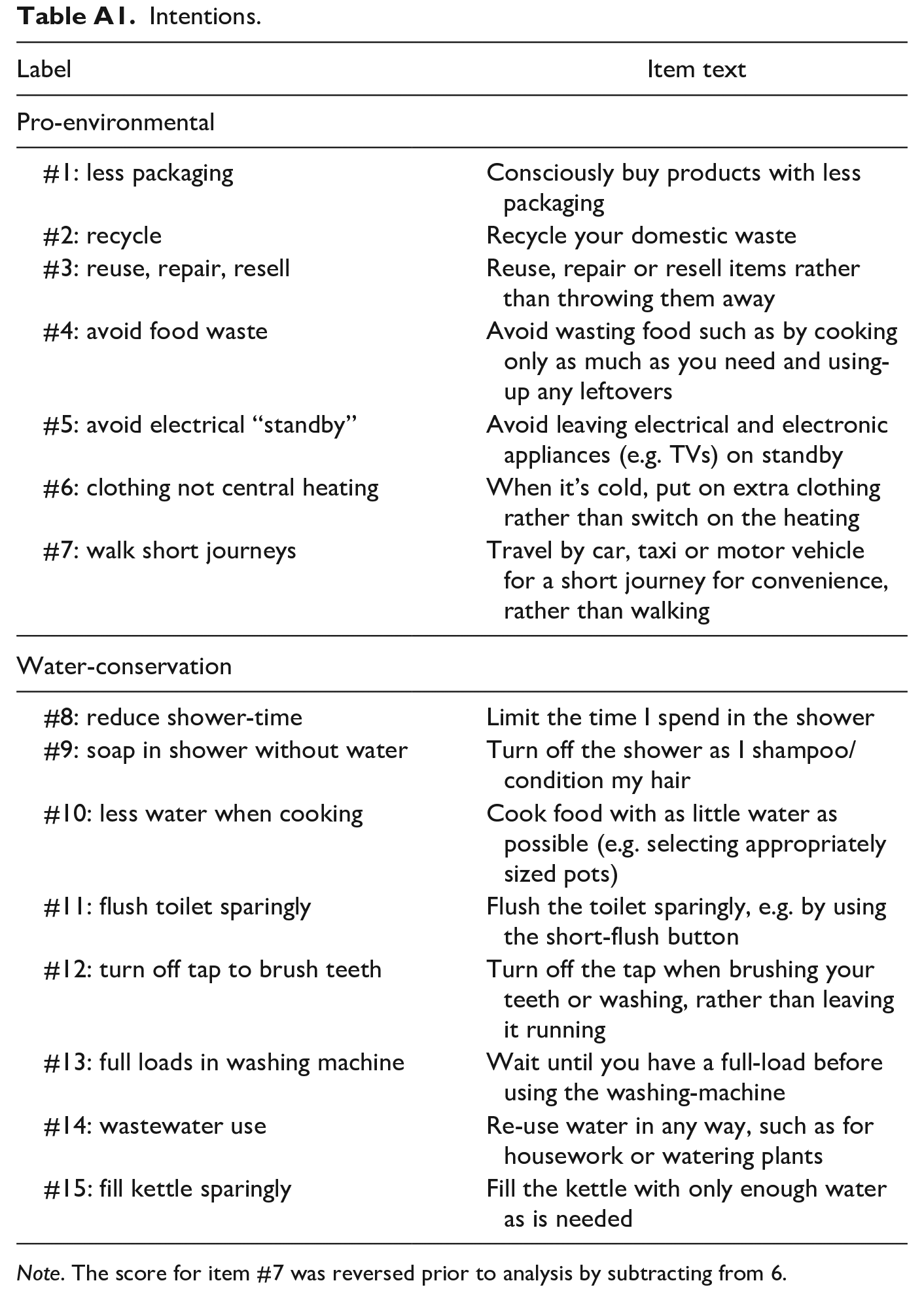
Water conservation intentions were intentions to engage in eight different water-saving behaviors, including to turn off the shower as one shampoos or conditions one’s hair and to cook food with as little water as possible. Pro-environmental intentions were intentions to engage in seven different pro-environmental behaviors, including avoiding leaving electrical and electronic appliances on standby and putting on extra clothing rather than switching on the heating when it is cold. All behaviors are given in appendix Table A1.
Method
Design and Participants
In a mixed 2 × 2 design, we compared measurements before and after the intervention, and with and without feedback. Shower behavior was reported in a questionnaire taken daily (QsD), whereas other measurements were taken by asking identical questions in a baseline questionnaire at the beginning of the study (Qs1) and a follow-up questionnaire at the end of the study (Qs2). To encourage normal behavior before the intervention, questions and instructions before that point were chosen to convey participation in a study of lifestyle in general. Our choice of sample-size target (180 participants) was informed by power analysis using pilot study results (N = 62) and previous relevant research (Kluger & DeNisi, 1996; Noar et al., 2007; Osbaldiston & Schott, 2012), as well as by the larger sample sizes necessary for mediation analyses (Fritz & Mackinnon, 2007). Our power analysis used an anticipated effect size of R = .15 (d = 0.3) for repeated-measures ANOVA and was calculated using G*Power (Faul et al., 2009). For our final sample, we estimated sensitivity to effect-sizes as low as R = .12 (d = 0.25) in repeated-measures ANOVA. Cardiff University, UK, students and staff volunteered to participate through a School of Psychology research panel and through open advertisements on university social media and noticeboards. We requested volunteers who took showers rather than baths. Participants were randomly assigned to either information/commitment + feedback or information/commitment-only groups at recruitment. One hundred and sixty-seven people participated; 17 participants were excluded due to insufficient data. Participants in our final sample of 150 participants were typically female (127, 84.7%), mostly aged between 18 and 25 (91.3%, Mage = 21.0, SDage = 4.98), and 14 participants (9.3%) were university staff rather than students. Seventy-three participants (48.7%) participated in the feedback condition.
Materials
Shower Timer
Participants were given a digital shower timer (on day #0) to inform them of daily shower times, and to facilitate shower time data collection. Each timer currently retails at around £8 in the UK, weighs 50 g, and is 8.5 × 6.5 × 2 cm, water resistant and adheres to surfaces with a suction cup. Participants were shown how to use the timer by a researcher. To avoid emphasizing its potential use in shower time reduction prior to the intervention, respondents were told that the timer was to help them “keep track” of the amount of time spent in the shower; reductions were not mentioned until the intervention on day #4.
Intervention
Our intervention consisted of three elements. (1) At the end of day #4, participants received an information intervention: they were asked to read a 400-word text entitled “The Global Water Crisis” (see online Supplemental). As an intervention activity, providing information like this may have limited effect (Lehman & Geller, 2004) but is also relatively simple and cost-effective (Steg & Vlek, 2009). (2) After the information intervention (on day #4) we asked participants to make a voluntary commitment (Abrahamse & Matthies, 2013) to try to reduce their shower times to 4 min or less (Fielding et al., 2012; Walton & Hume, 2011) in order to save water during the next 10 days. All participants made this commitment. Providing information and requesting commitment can be synergistic in changing pro-environmental behavior (Osbaldiston & Schott, 2012). (3) Some participants also received daily performance feedback on water conservation on days 6 to 13. Feedback contained water saving estimates by comparison to the UK average shower time and assuming a typical shower flow (Energy Saving Trust, 2014). Savings were stated in terms of the previous day. They were also stated in terms of all previous days (from day #5), both for the participant and for the group (i.e., savings made across all participants), thus providing feedback on both individual and group performance. To enhance any feedback effects, we reported water-savings at 20% above our estimates, and negative feedback was only reported in terms of the daily (lack of) water saving, accompanied with the message “Don’t worry, though. Maybe you can get back on track tomorrow?.” Prior evidence indicates that information and feedback are synergistic in changing behavior (Osbaldiston & Schott, 2012). An example of feedback is given in the online Supplemental.
Questionnaires
All data was collected using Qualtrics © survey software (https://www.qualtrics.com). Full questionnaire materials are given in the online Supplemental. Unless otherwise specified, change scores were calculated as the arithmetic difference between second-questionnaire scores and first-questionnaire scores.
Baseline and Follow-Up Questionnaires
Most questions in the baseline (Qs1) and follow-up (Qs2) questionnaires were identical.
Intentions
For intentions, we asked “how likely is it that you will do each of the following in the next two weeks,” followed by 25 different behaviors and a five-point response scale between highly unlikely (1) and highly likely (5) (Armitage et al., 2015).
-
-
Identity, Efficacy, Compensatory Green Beliefs, and Student Identity
We asked to what extent they agreed or disagreed with the listed statements followed by different statements and a five-point response scale between strongly disagree (1) and strongly agree (5). Cronbach’s Alpha was often low in the first questionnaire. We addressed this issue by using more-correlated pairs of items across both questionnaire datasets.
-
-
-
-
-
Daily Questionnaires
Shower behavior questions were identical across the completed daily questionnaires (QsD). For shower time, we asked “how long did your main shower take, yesterday,” in minutes and seconds. For shower frequency, we asked “how many showers did you take, yesterday” with answers none, 1, 2, 3, and 4 or more. No more than two showers were ever reported, so the variable was coded 0, 1 or 2. To help convey participation in a study of lifestyle in general rather than water use in particular, we also asked similar questions about a second type of behavior: university travel choices and travel-times. For analysis, change in shower time was the difference between average time after the information intervention, days #4 to #13, and before this intervention, days #1 to #3, with relative shower time change (analogous to a percentage change) as the natural logarithm (Ln) of this difference (Tornqvist et al., 1985). QsD sent on day #4 included additional questions specific to the information intervention. Our measures of intentions, including shower duration intentions, were measured separately, as described in the paragraph titled “Water Conservation and Pro-Environmental Behavioral Intentions,” above.
To assess memory for the information, we asked “which of the following best describes the information you have just read” with three possible answers, that “Britain is [one of the wettest countries/about average/one of the driest countries] in Europe per unit of population.”
Engagement with the information was assessed using five statements (α = .804) on a five-point scale from strongly disagree (1) to strongly agree (5), for example “I found the information persuasive” and “the info made me feel that I have the personal capacity to save water by reducing my shower time.”
Procedure
On receiving institutional ethical approval, we initiated rolling recruitment of participants between November 11th and December 18th, 2018. For each participant, the study lasted 15 days. Table 1 shows daily events in sequence. On day #0, participants visited our laboratory. After a written briefing, participants consented to participate, and answered the first questionnaire. They were then given a shower-timer, shown how to use it, and asked to begin daily shower time measurements on the following day. To help convey participation in a study of lifestyle in general and thus encourage more natural responding during the baseline period, the written briefing stated that we wanted to find “views on a range of lifestyle issues and how these relate to everyday behaviors” and that participants “may also receive some additional information to read and instructions on how to manage daily water use.” On the mornings of days 2 to 14, participants received an email with a hyperlink to the daily questionnaire, in which participants reports the shower-time for the previous day. On day #4, after the daily questionnaire, the information intervention, engagement questions, and commitment request followed. Subsequent emails (days 5 to 14) included thanks for working to meet a 4-min target for shower time. Participants in the feedback group received performance feedback in these emails, beginning on day #6. On day #14 (or at their earliest convenience thereafter) participants completed the second questionnaire in the laboratory, were fully debriefed, thanked, and remunerated (£25 cash).
Study Procedure: Days on Which Actions Were Taken.
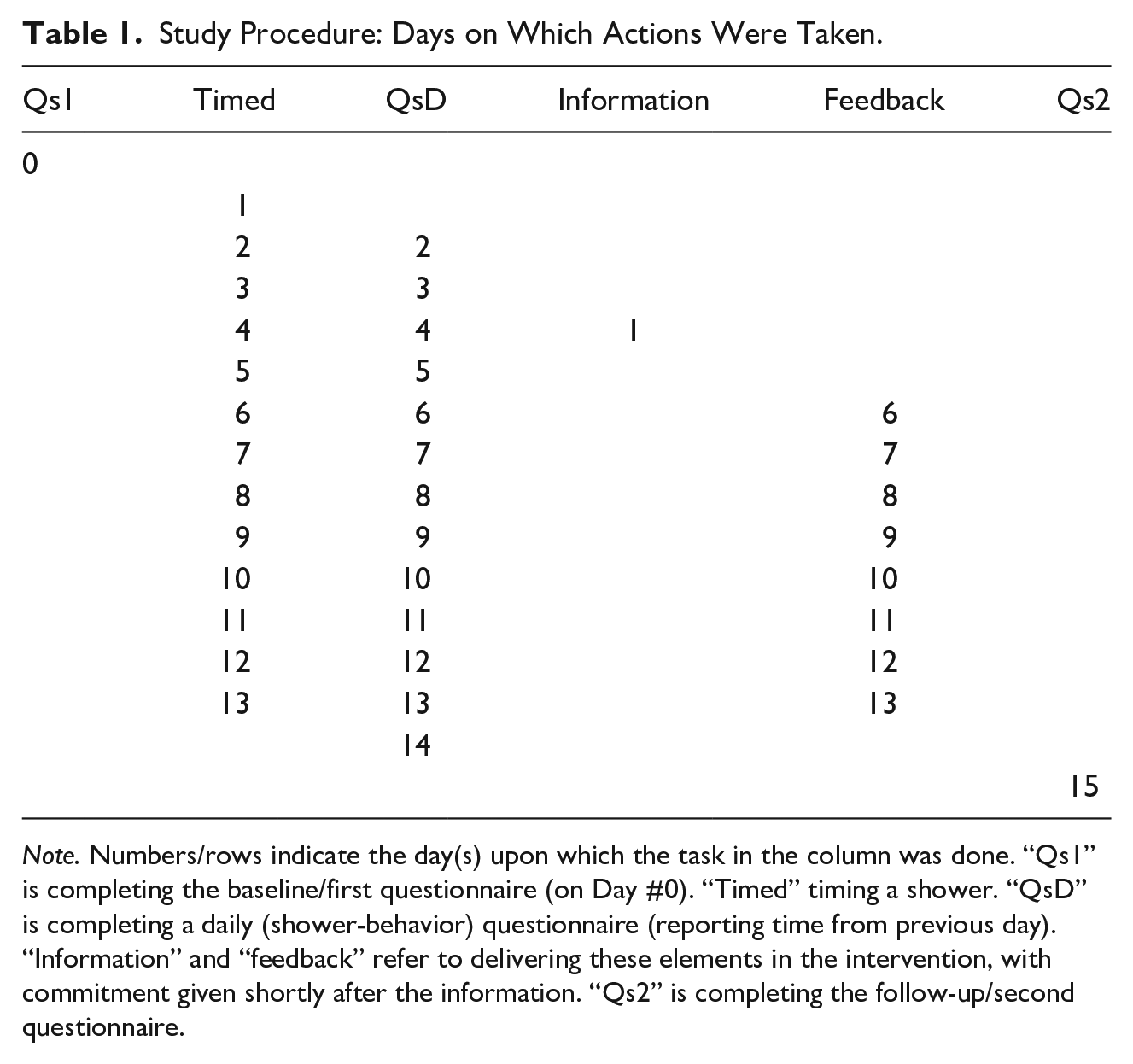
Note. Numbers/rows indicate the day(s) upon which the task in the column was done. “Qs1” is completing the baseline/first questionnaire (on Day #0). “Timed” timing a shower. “QsD” is completing a daily (shower-behavior) questionnaire (reporting time from previous day). “Information” and “feedback” refer to delivering these elements in the intervention, with commitment given shortly after the information. “Qs2” is completing the follow-up/second questionnaire.
Analyses
All analyses were conducted using IBM SPSS version 25. Repeated measures mediation (path) analyses were conducted using the MEMORE macro in SPSS (V.2 Beta3; Montoya & Hayes, 2017). Confidence intervals for indirect effects were percentile bootstrapped from 5,000 samples. Repeated statistical hypothesis testing (e.g., across 15 different intention variables) increases familywise error rate, so we used the Holm-Bonferroni sequentially rejective method (Holm, 1979) to minimize this rate of error. 1
Results
Initial Checks
On day 3, the intervention information was considered engaging, with scores significantly exceeding the scale mid-point (3), M(SD) =4.02 (0.493), t(149) = 25.359, p < .001, 95% CI [3.94, 4.10] and the memory question was answered beyond the chance threshold (of 33⅓ %) with 62.7% correct, χ2 (2) =61.06, p < .0001, 95% CI [40.38%, 85.80%]. Feedback and control groups did not differ at recruitment on measured variables: across 24 measured variables (including age, gender, and student identity) only four variables showed significance at a p < .05 criterion: recycling intention, Mdifference = 0.44, t(114.1) =3.375, p = .001008, 95% CI [0.182, 0.700], washing full loads intention, Mdifference = 0.22, t(136.7) =2.113, p = .036), 95% CI [0.014, 0.428], turning off the shower to shampoo/condition hair intention, Mdifference = −0.36, t(134.0) =−2.155, p = .033), 95% CI [−0.688, −0.029], and self-efficacy, Mdifference = 0.016, t(165.0) =2.055, p = .041), 95% CI [0.0063, 0.3171] (see online Supplemental, Table S3). Applying the Holm-Bonferroni criteria, no statistically significant difference was found [0.001008 > (0.05 ÷ 24), 0.033 > (0.05 ÷ 23), 0.036 > (0.05 ÷ 22), and 0.041 > (0.05 ÷ 21)]. Descriptive statistics and bivariate correlations are reported in the online Supplemental in Tables S4 to S7 and Figure S1. Participants in the sample, as well as being mostly students, tended to be moderate in their student identity, the confidence interval of the mean being between 3.57 and 3.79, and approximately half the sample, 73 (48.7%) scoring between 2 (disagree) and 4 (agree). However, student identity was also not correlated with collective efficacy, or with any other psychological variables used in the study (see online Supplemental, Table S5). Baseline measurements showed relatively consistent patterns of positive correlation between pro-environmental identity and intentions; efficacy and compensatory beliefs showed a less consistent pattern of correlation with intentions (see online Supplemental, Table S5).
Intervention Effects: Hypotheses 1 and 2
Our first and second hypotheses were that the intervention, respectively, reduces shower-time (H1) and strengthens water conservation intentions and pro-environmental intentions (H2). Table 2 presents key results from a series of mixed factorial ANOVAs in which different outcome variables are compared. Results in this table confirm both hypotheses with respect to information and commitment. However, additional effects from feedback were not confirmed. 2 Table 2 also shows that information and commitment reduced shower time by around 2 min and 20 s (approximately 38%), on average. All water saving intentions increased, and four of seven pro-environmental intentions increased with information and commitment. Shower frequency decreased by around one shower every 10 days with information and commitment. Pro-environmental self-identity, self-efficacy, and collective efficacy increased, and compensatory green beliefs decreased, with information and commitment. In all analyses, feedback showed no statistically significant additional effect.
Comparisons of Measured Variables Before and After the Intervention.
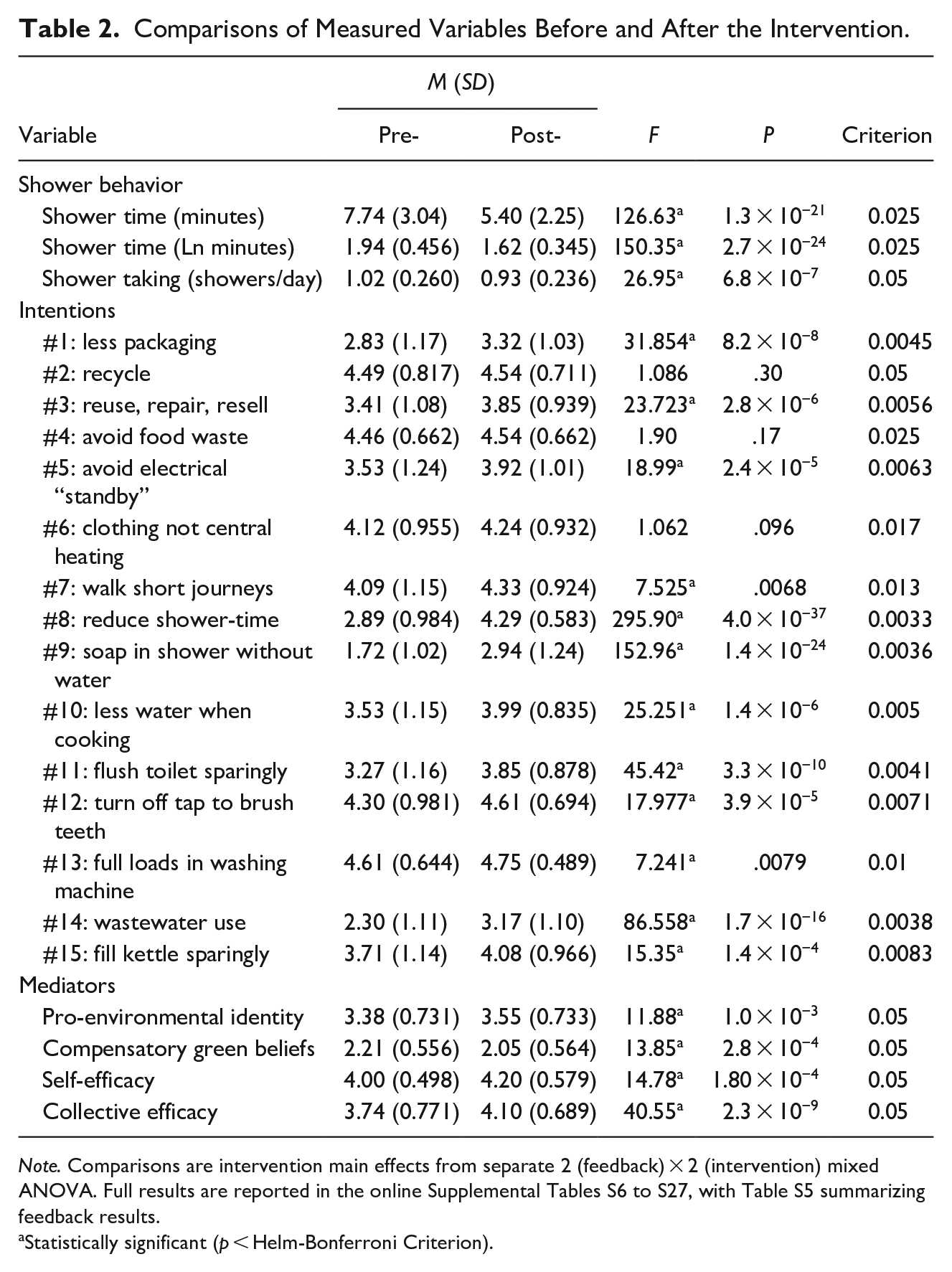
Note. Comparisons are intervention main effects from separate 2 (feedback) × 2 (intervention) mixed ANOVA. Full results are reported in the online Supplemental Tables S6 to S27, with Table S5 summarizing feedback results.
Statistically significant (p < Helm-Bonferroni Criterion).
Spillover: Hypotheses 3, 4, 5, and 6
Our third and fourth hypotheses were that shower time change (H3) and psychological variables (H4), respectively, mediate the relationships between the intervention and change in intentions. We tested these hypotheses using a series of repeated measures mediated linear multiple regression analyses in which intention change (Y) is estimated from change in relative shower time (M) with the intervention (X) and found no supporting evidence. 3 Our fifth and sixth hypotheses were that changes in psychological variables mediate the relationships between the intervention and, respectively, changes in intentions (H5) and changes in shower time (H6). We tested these hypotheses using a series of repeated-measures mediated linear multiple regression analyses in which intention change (Y) is estimated from changes in pro-environmental self-identity (Identity), collective efficacy (CE), self-efficacy (SE), and compensatory green beliefs (CGB), with the intervention (X). Applying the Holm-Bonferroni criteria, we find some (albeit limited) evidence for H5, because the relationship between change in intention #1 (to use less packaging) and the intervention meets the requirement for statistical significance (2 × 10⁻⁴ < 0.003 ⅓) and the corresponding indirect effect for pro-environmental self-identity in this model is also statistically significant, b = 0.09, Boot 95% CI [0.03, 0.17]. 4 We found no supporting evidence for our sixth hypothesis (psychological variables mediating between the intervention and change in shower time). 5
Results Summary
Figure 2 illustrates our primary results. Of six hypotheses, three were evidentially supported (H1, H2, and H5) and three were not (H3, H4 and H6). Our findings support the effectiveness of an information + commitment intervention but do not support the additive effectiveness of daily feedback. We found slight evidence for pro-environmental self-identity change as a mediator, this being statistically significant only for intentions to use less packaging, but no evidence for other mediation effects hypothesized, including those concerning behavioral spillover.

Hypotheses evinced.
Discussion
Changing behavior is key to mitigating and adapting to environmental problems such as the changing climate and increasing water scarcity (de Coninck et al., 2018). It is essential that interventions have a positive net effect and, hence, it is essential to know whether and how behavioral changes spillover into further behavioral changes. In this study, we targeted a single relevant behavior (shower-time reduction) and not only changed this behavior (shower times reduced by around 38%) but also effectuated consonant changes in shower frequency and in most pro-environmental behavioral intentions, as well as in pro-environmental identity, efficacy beliefs, and compensatory beliefs. Therefore, we show that this intervention had a positive overall effect upon participants pro-environmental behavior and outlook. This is consistent with the effectiveness of the techniques we used (Osbaldiston & Schott, 2012), but also provides promising evidence that these approaches do not seem to backfire and may produce positive net effects upon the environment.
Our theoretical focus was upon testing the behavioral spillover hypothesis (Galizzi & Whitmarsh, 2019; Nash et al., 2017) in terms of intentions: that a target behavior change (e.g., in shower times) can cause spillover to pro-environmental intentions for other behaviors. We found no correlational evidence for this hypothesis, which tends to undermine the idea that the spillover effects we found were behavioral spillover effects, because causation is a necessary condition for behavioral spillover (Galizzi & Whitmarsh, 2019; Nash et al., 2017) and statistical association is a necessary condition for causation. In the absence of clear behavioral spillover effects, spillover may be non-behavioral: from common pro-environmental orientations, such as general attitudes (Henn et al., 2020) or intrinsic motivations (Frey, 1993; Maki et al., 2019), and may involve enabling beliefs or circumstances (Klöckner, 2013). Such a motivational explanation may appear less plausible given our failure (for the most part) to evince a mediating role for pro-environmental identity, self (and collective) efficacy, and compensatory green beliefs. However, there are several elements to consider in interpreting these results. First, our analysis covered only changes in these variables, rather than relationships to their initial levels. Second, these variables did increase with the intervention. Third, we did find some (limited) evidence for the action of changing pro-environmental identity upon pro-environmental intentions. Fourth, these variables were selected to test behavioral spillover, rather than motivational spillover. Fifth, some of these variables exhibited marginally acceptable levels of alpha reliability, hence these may have been less able to permit detection of mediating effects statistically due to measurement error.
It is important to appreciate that this study was conducted with relatively limited means and, as a result, had some important limitations. The first is the use of intentions, rather than behavior, as a dependent variable. This practice has been criticized but remains common in the study of pro-environmental spillover (Maki et al., 2019; Galizzi & Whitmarsh, 2019). Beyond the often-weak links between intentions and subsequent behavior (Sheeran, 2002), there is the question of whether the psychological changes we considered, in identity and beliefs, are perhaps more important in successfully adopting new behavior patterns than in the contemplating of such changes prior to action. With respect to efficacy beliefs, it may be that these were less important in spillover to intentions because ostensibly simple actions (e.g., turning off a tap, filling a kettle) are only appreciable as difficult to change when one tries to change them and begins to appreciate how ingrained they have become (Polivy & Herman, 2002). Contrariwise, we showed a pattern of mediation from our intervention to specific intention, intentions to consciously buy products with less packaging, through changes in pro-environmental self-identity. It is significant that this is (ostensibly) an unambiguously green behavior, hence less likely influenced by opposing or conflicting motives from other consumer motivations (Whitmarsh, 2009). It may also be significant that our measure of pro-environmental identity involved items perhaps emphasizing pro-environmental consumption (Whitmarsh & O'Neill, 2010; e.g., Sparks & Shepherd, 1992), rather than other aspects of this identity, such as conservation or activism.
During the baseline period of the study, we took care, through phrasing of instructions and choice of materials, to convey a study of lifestyle behavior in general, and not to focus on either water use or the subsequent use of a behavior change intervention. However, given the use of a shower timer, we cannot exclude the possibility that this implied a focus upon water use from the outset. More generally, it is important to consider that this study was undertaken in the context of research and within a sample recruited at a university. As such, we might expect some demand effects (Orne, 1962), or that the study sample, motivated to perform well as research participants, may have been more motivated to show the efficacy of the intervention through their behavior than they might have been had they participated outside the context of research. Future research can allow for this using additional experimental controls or by studying this intervention covertly or beyond a research context (e.g., Fielding et al., 2012).
Another important limitation is that our design entailed measurement (shower-time recording) at baseline and follow-up, so we cannot evince the effectiveness of information and commitment for individuals who are not recording their shower-times. However, a concomitant is that improvements we show cannot be attributed to the action of recording shower time alone, because improvements were observed after a recording-only baseline period, though we cannot exclude the possibilities either that shower-monitoring enhanced or enabled intervention effects or that shower-monitoring lead further performance feedback to be redundant, hence, to show no clear effect upon shower time changes between groups. To control for possible confounding, future research might involve a control group where water use is measured covertly. More broadly, we used a repeated measures design without a non-intervention control group to exclude concurrent confounds, so extraneous factors (e.g., concurrent influences in media or social marketing) cannot be excluded, though our strategy of rolling recruitment does tend to suggest that time-specific confounds, if they exist, were of limited influence. Likewise, by combining information provision and commitment elicitation (to increase intervention efficacy) we preclude analysis of the effect of each element alone.
Further study of the practical applicability of our findings may offer opportunities to answer these outstanding theoretical questions. To our knowledge, this is one of only a small set of studies to consider interventions to encourage water conservation behaviors in a time and place where conditions of water stress are uncommon (Syme et al., 2000) and hence offers some hope that population-related water scarcity can be addressed through low-cost persuasive interventions. From an applied perspective, it is important to go on to show that this intervention works beyond a university sample, and beyond the manifest purpose of research. In taking this approach (encouraging spillover) it is important to consider previous advice on the subject (e.g., Lanzini & Thøgersen, 2014), including the seeming incompatibility between spillover and incentives-based interventions (Poortinga et al., 2013; Xu et al., 2018) that may crowd-out (exclude) the intrinsic motivations that appear to be decisive (Frey, 1993). Furthermore, we tended to consider only domestic pro-environmental behaviors, but there may be additional factors involved in generating spillover between social contexts, such as from the home to workplaces (Whitmarsh et al., 2018). Our focus on the short-run (intentional) effects also leaves unaddressed barriers presented by the long-run behavioral patterns generated by habits, social practices, and social norms (Kurz et al., 2015). In selecting shower time as a target behavior and asking people to monitor their shower times to save water, we may have been fortunate in the short-run ability of monitoring to suppress habitual tendencies (Quinn et al., 2010) and in the agreement between this new activity and showering as a practice of time-efficient cleanliness (Hand et al., 2005); other behaviors may be more intransigent to change unless these long-run tendencies are addressed (Verplanken & Roy, 2016).
Overall, our study shows that a low-cost intervention designed to encourage motivated reductions in shower-time can do so successfully and also spillover into broader water use and pro-environmental intentions, which may be the beginning of a process toward individuals embracing sustainable lifestyles. In doing so, we found no evidence that a change in shower time was necessary for spillover to take place, suggesting that this may not be essential in encouraging pro-environmental spillover.
Supplemental Material
sj-docx-1-eab-10.1177_00139165231201371 – Supplemental material for A Drop in the Ocean? Fostering Water-Saving Behavior and Spillover Through Information Provision and Feedback
Supplemental material, sj-docx-1-eab-10.1177_00139165231201371 for A Drop in the Ocean? Fostering Water-Saving Behavior and Spillover Through Information Provision and Feedback by Paul Haggar, Lorraine Whitmarsh and Nicholas Nash in Environment and Behavior
Footnotes
Appendix
Intentions.
| Label | Item text |
|---|---|
| Pro-environmental | |
| #1: less packaging | Consciously buy products with less packaging |
| #2: recycle | Recycle your domestic waste |
| #3: reuse, repair, resell | Reuse, repair or resell items rather than throwing them away |
| #4: avoid food waste | Avoid wasting food such as by cooking only as much as you need and using-up any leftovers |
| #5: avoid electrical “standby” | Avoid leaving electrical and electronic appliances (e.g. TVs) on standby |
| #6: clothing not central heating | When it’s cold, put on extra clothing rather than switch on the heating |
| #7: walk short journeys | Travel by car, taxi or motor vehicle for a short journey for convenience, rather than walking |
| Water-conservation | |
| #8: reduce shower-time | Limit the time I spend in the shower |
| #9: soap in shower without water | Turn off the shower as I shampoo/condition my hair |
| #10: less water when cooking | Cook food with as little water as possible (e.g. selecting appropriately sized pots) |
| #11: flush toilet sparingly | Flush the toilet sparingly, e.g. by using the short-flush button |
| #12: turn off tap to brush teeth | Turn off the tap when brushing your teeth or washing, rather than leaving it running |
| #13: full loads in washing machine | Wait until you have a full-load before using the washing-machine |
| #14: wastewater use | Re-use water in any way, such as for housework or watering plants |
| #15: fill kettle sparingly | Fill the kettle with only enough water as is needed |
Note. The score for item #7 was reversed prior to analysis by subtracting from 6.
Declaration of Conflicting Interests
The author(s) declared no potential conflicts of interest with respect to the research, authorship, and/or publication of this article.
Funding
The author(s) disclosed receipt of the following financial support for the research, authorship, and/or publication of this article: Our work was funded by European Research Council (ERC) Starting Grant CASPI [336665].

Supplemental Material
Supplemental material for this article is available online.
Notes
Author Biographies
References
Supplementary Material
Please find the following supplemental material available below.
For Open Access articles published under a Creative Commons License, all supplemental material carries the same license as the article it is associated with.
For non-Open Access articles published, all supplemental material carries a non-exclusive license, and permission requests for re-use of supplemental material or any part of supplemental material shall be sent directly to the copyright owner as specified in the copyright notice associated with the article.
