




Abstract
Assessing the measurement model (MM) of self-report scales is crucial to obtain valid measurements of individuals’ latent psychological constructs. This entails evaluating the number of measured constructs and determining which construct is measured by which item. Exploratory factor analysis (EFA) is the most-used method to evaluate these psychometric properties, where the number of measured constructs (i.e., factors) is assessed, and, afterward, rotational freedom is resolved to interpret these factors. This study assessed the effects of an acquiescence response style (ARS) on EFA for unidimensional and multidimensional (un)balanced scales. Specifically, we evaluated (a) whether ARS is captured as an additional factor, (b) the effect of different rotation approaches on the content and ARS factors recovery, and (c) the effect of extracting the additional ARS factor on the recovery of factor loadings. ARS was often captured as an additional factor in balanced scales when it was strong. For these scales, ignoring extracting this additional ARS factor, or rotating to simple structure when extracting it, harmed the recovery of the original MM by introducing bias in loadings and cross-loadings. These issues were avoided by using informed rotation approaches (i.e., target rotation), where (part of) the rotation target is specified according to a priori expectations on the MM. Not extracting the additional ARS factor did not affect the loading recovery in unbalanced scales. Researchers should consider the potential presence of ARS when assessing the psychometric properties of balanced scales and use informed rotation approaches when suspecting that an additional factor is an ARS factor.
Keywords
Introduction
Evaluating the psychometric properties of self-report scales in behavioral sciences is crucial for a valid assessment of individuals’ latent constructs (e.g., self-esteem). Commonly, the assessment of these psychometric properties entails, among other things, evaluating the measurement model (MM). The latter indicates how many latent constructs or factors are measured by the items, and which factor is measured by which items. Also, it needs to be determined whether items are good measurements of latent constructs (i.e., how strongly they load on factors), and whether they measure more than one latent construct at the same time (i.e., load on multiple factors).
The most frequently used method to unravel the psychometric properties of newly developed scales is EFA. Without imposing an assumed structure on the factor loadings, except (possibly) the number of factors, EFA identifies the relations between factors and items by analyzing the item correlations. Because of its advantageous exploratory nature as well as its popularity, EFA is often considered a mandatory step in the context of scale construction (Goretzko et al., 2021; Howard, 2016).
An important limitation of self-report scales is that, despite their widespread use, they might not always sufficiently capture the psychological trait being measured (Van Vaerenbergh & Thomas, 2013). In fact, subject responses might not always be consistent with the measured psychological construct (Bolt & Johnson, 2009). These inconsistencies, generally defined as response styles (RSs) or response bias, can be viewed as systematic or stylistic tendencies in the manner respondents use a rating scale when responding to self-report items (Paulhus, 1991). One well-known RS is the acquiescent one, which is a tendency to agree with items regardless of their content (Van Vaerenbergh &Thomas, 2013).
Failing to take into account acquiescence response style (ARS) can harm psychometric analyses in many ways. For instance, ARS can inflate observed means and correlations (Van Vaerenbergh & Thomas, 2013), increase or decrease the strength of relations between factors and items (Ferrando & Lorenzo-Seva, 2010), and result in an additional factor (Billiet & McClendon, 2000). These potential artifacts not only interfere with the psychometric assessment of the properties of a scale but can also invalidate the interpretation of subjects’ scale scores (Bolt & Johnson, 2009).
When the scale has been previously validated, the number of factors to be measured, and their zero-loading structure are known a priori. In such cases, ARS can be explicitly included in the MM as an additional factor. Previous research has demonstrated how ARS can be easily incorporated in the context of confirmatory factor analysis (Billiet & McClendon, 2000), item response theory (Falk & Cai, 2016), and latent class analysis (Morren et al., 2011). One crucial limitation of these confirmatory approaches, however, is the need for a priori knowledge regarding the MM, which is, of course, lacking when the goal is to determine this MM in the first place.
The assessment of a scale’s MM can, therefore, be difficult when ARS causes distortions. In EFA, the number of factors is usually evaluated and, upon resolving rotational freedom, an additional factor could be erroneously interpreted as a dimension of the psychological construct of interest, while it is merely a consequence of ARS. In addition, when not taking ARS into account in the rotation, items may seem to measure more than one factor at the same time, or seem to be a bad measurement of a factor (i.e., low loading), which might lead researchers to drop these seemingly malfunctioning items from the scale. Furthermore, in the most extreme case in which most, or all, items are heavily affected by ARS, the whole scale may seem to be disfunctional.
While some methods have been proposed to reduce the effects of ARS on EFA (Ferrando et al., 2003, 2016; Lorenzo-Seva & Rodríguez-Fornells, 2006) only a few papers examined the impact of ignoring or being unaware of ARS on the recovery of factor loadings (Ferrando & Lorenzo-Seva, 2010; Savalei & Falk, 2014). The latter studies, however, have mostly dealt with scales measuring only a single content factor (i.e., unidimensional scales) measured by continuous items or items that may be treated as such (i.e., items with more than five categories; Rhemtulla et al., 2012), which only partially mirror the features of commonly used self-report scales and preclude investigating the influence of rotation. In addition, none of these studies investigated to what extent ARS is retrieved as an additional factor by commonly used model selection criteria (e.g., Bayesian Information Criterion; Schwarz, 1978), which, in empirical practice, would generally precede any further investigation of the loadings. Drawing upon these existing gaps in current research, this article aims to extensively study the impact of ARS on the assessment of the psychometric properties of self-report scales, as well as strategies to account for ARS when using EFA. This investigation comprises a simulation study on unidimensional and multidimensional scales for two types of data (i.e., ordinal and approximately continuous data). In addition, we simulated a null scenario (i.e., without an ARS factor) that served as a point of comparison. By means of this simulation study, we will assess (a) how often and in which conditions different model selection criteria retain the additional ARS factor, (b) the effect of different rotation approaches on the recovery of the content and ARS factors when the additional ARS factor is retained, and (c) the effect of (not) retaining the ARS factor on the recovery of the (properly rotated) factor loadings and correlations.
The remainder of the article proceeds as follows: in section “Theoretical Framework,” we provide a general introduction to EFA and how ARS can affect some of its main steps, namely dimensionality assessment and factor rotation. For factor rotation, we discuss two types of rotation, namely rotation to simple structure (i.e., as one usually does when unaware of a potential ARS) and informed rotation approaches (e.g., rotation to a partially specified target that takes the potential ARS factor into account). Section “Simulation Study” focuses on a simulation study that evaluates the performance of EFA in assessing the psychometric properties of unidimensional and multidimensional scales (with and without the presence of ARS). Finally, in section “Discussion,” recommendations are formulated based on the results of the simulation study along with limitations of the current study and future research directions.
Theoretical Framework
Factor Analysis Model With ARS
Consider that continuous responses by

where
When using exploratory factor analysis (EFA; Lawley & Maxwell, 1962) as a first step in assessing the psychometric properties of a scale, the factors in (1) are not (yet) labeled (i.e., researchers do not have or impose a priori assumptions on whether a factor corresponds to a certain content factor or an ARS). Also, the assumption of continuous item responses often cannot be safely made, especially in the case of ordered-categorical variables (e.g., a Likert-type-scale item with “disagree,”“neither agree nor disagree,” and “agree” as response options). In that case, it is better to assume that the data matrix

A categorical EFA model for the vector of scores

where

Polychoric correlations are generally used as the input for categorical EFA, where the correlation between ordinal items is computed as the correlation of the standard bivariate normal distribution of their latent response variables
Potential Effects of ARS on Factor Rotation
Factors obtained from EFA have rotational freedom (i.e., rotating them does not affect model fit; Browne, 2001), which should be resolved to obtain an interpretable solution. Commonly, the goal is to strive for simple structure and different criteria can be applied to minimize the variable complexity (i.e., number of non-zero loadings per variable), the factor complexity (i.e., number of non-zero loadings per factor), or a combination of both (Schmitt & Sass, 2011). In this article, we focus on minimizing the variable complexity by means of oblique simple structure rotation (i.e., allowing the factors to become correlated) because there are little to no theoretical reasons to assume that the content factors are uncorrelated in case of multidimensional constructs and minimizing the variable complexity matches the idea of non-ambiguous items that are clear measurements of only one factor. In addition, this rotation allows content factors and the ARS factor to be correlated, which, according to recent literature, is both theoretically and empirically acceptable for some personality traits (e.g., agreeableness, extraversion, impulsiveness; see Weijters et al., 2010 and Ferrando et al., 2016 for a review).
Simple structure can be pursued with uninformed or informed rotation approaches, where the former applies no a priori assumptions on the MM structure and the latter involves rotating to a (partially) specified target based on such a priori assumptions. To exemplify how (un)informed simple structure rotation can be affected by the presence of an ARS, we make use of an illustrative example, whose loadings are displayed in Table 1. Specifically, the top part of the table displays the (partially) specified targets for the informed rotation approaches, while the bottom part displays the different sets of rotated loadings. Moreover, the values in the target original matrix were used as the population values of the loadings to generate the data with
(Semi-) Specified Targets (Top), and Rotated Loadings Using Uninformed and Informed Rotation Approaches (Bottom) of an EFA Model With 12 Items and Three Factors for an Illustrative Example.
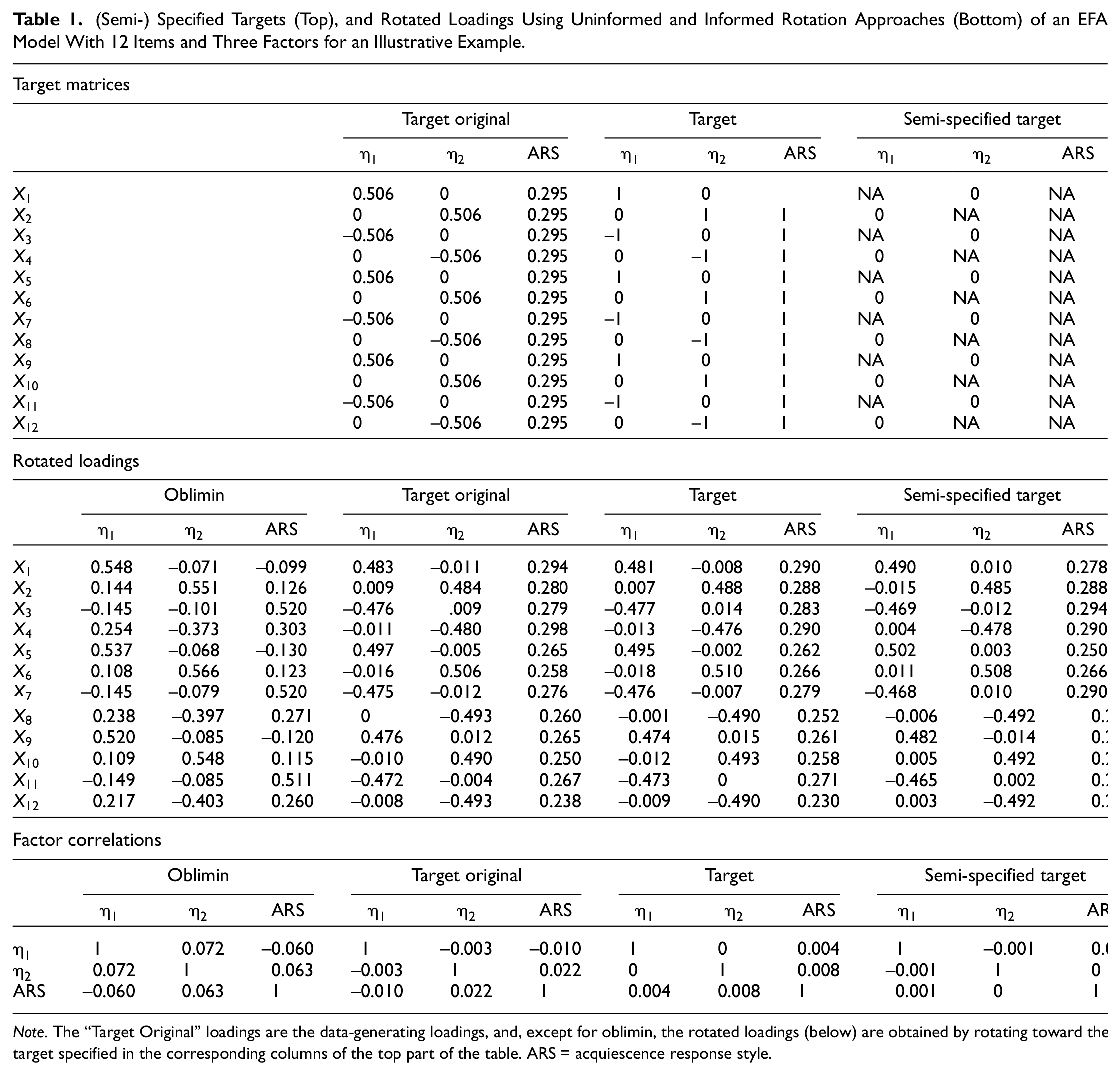
Note. The “Target Original” loadings are the data-generating loadings, and, except for oblimin, the rotated loadings (below) are obtained by rotating toward the target specified in the corresponding columns of the top part of the table. ARS = acquiescence response style.
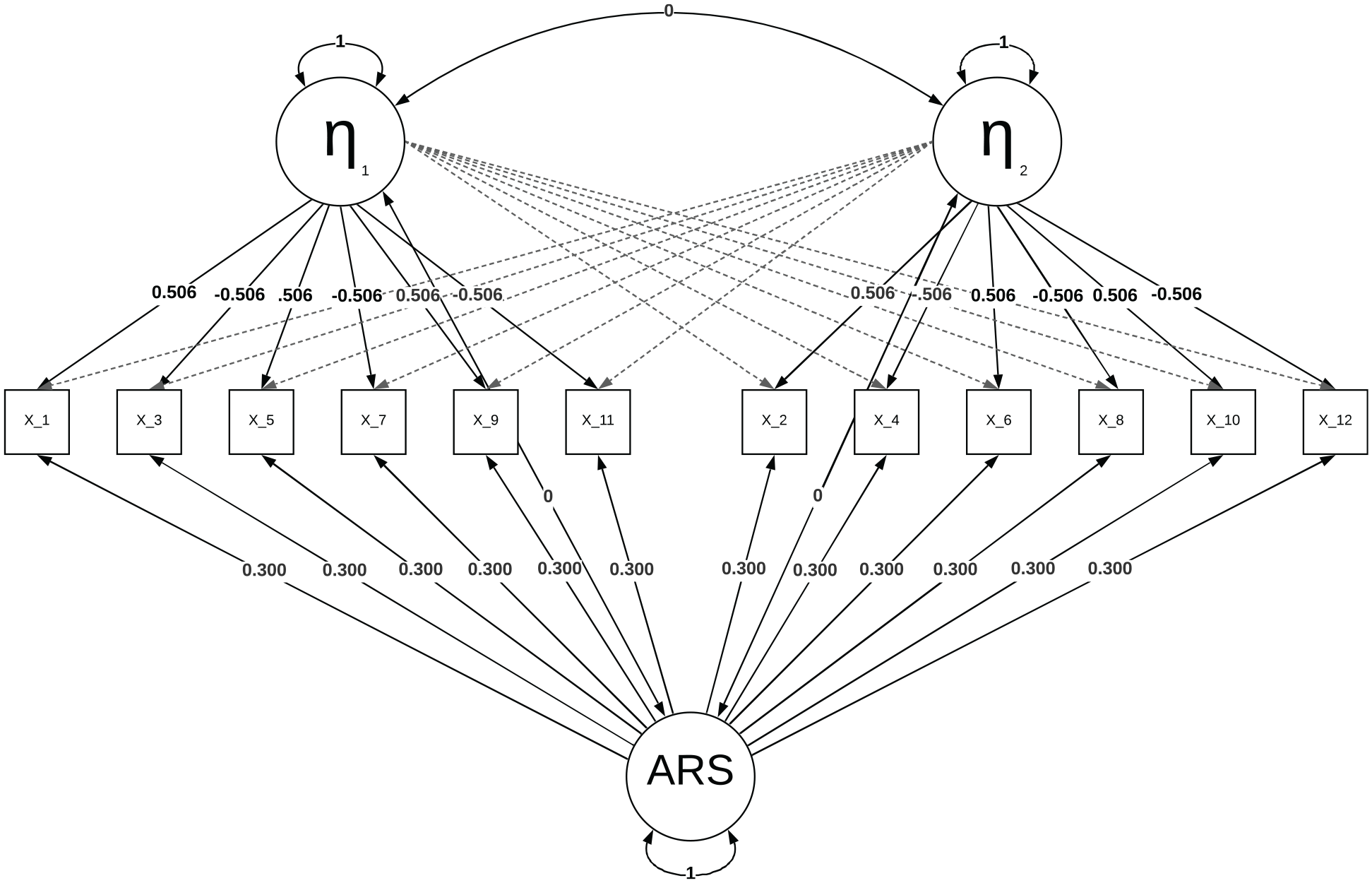
A Multidimensional Factor Model With an ARS Factor
Uninformed Rotation
Uninformed simple structure rotation tries to achieve simple structure by minimizing a rotation criterion, without applying any user-specified expectations regarding the MM. Several oblique rotation criteria are available. One is (Direct) oblimin (Clarkson & Jennrich, 1988), which is widely used and offered by popular statistical packages (e.g., SPSS, STATA); others are promax (Hendrickson & White, 1964), promin (Lorenzo-Seva, 1999), and geomin (the default in Mplus; Asparouhov & Muthén, 2009; Yates, 1988).
In the example, we rotated the estimated unrotated loadings using oblimin,
3
and the results are displayed in the bottom part of Table 1. The oblimin rotated loadings illustrate how, by using uninformed simple structure rotation, the original factor structure is not recovered. For example, items 4 and 8 load moderately on all factors, and, without further investigations, one might decide to erroneously discard these two items from the scale. This result is not suprising, as previous research already established that, in the case of items loading on multiple factors (here due to the ARS factor), uninformed simple structure rotation criteria perform sub-optimally (Ferrando & Seva, 2000; Lorenzo-Seva, 1999; Schmitt & Sass, 2011). It is interesting to observe how, in order to pursue simple structure, the rotation tries to separate the positive and negative poles of the two content factors.
4
However, with only three factors this cannot be achieved, and, as a result, it produces many small and moderate cross-loadings that seem to correspond with such a tendency to separate the different poles of each content factor. For example, the loadings of
Informed Rotation
In informed rotation approaches (e.g., target rotation; Browne, 2001) assumptions regarding the MM are translated into a user-specified target loading matrix. The loadings are, then, rotated to approximate this target loading matrix. The target does not need to be fully specified (i.e., some elements may be unspecified). The specified elements can be zero or take on any value for the non-zero loadings, but, in many practical applications, it is recommended to specify only the zero loadings as precise values for the non-zero loadings are rarely, if ever, known prior to estimating the model (Browne, 2001). Furthermore, some studies have highlighted the robustness of partially (or semi-) specified target rotation when the zero target values are left unspecified and the non-zero target values are misspecified (Myers et al., 2013, 2015), but the generalizability of these results to fully specified target rotation as well as to misspecification of the zero loadings (e.g., erroneously specifying a non-zero loading as zero) remains unclear (Garcia-Garzon et al., 2019). Note that, despite the exploratory evaluation of the scale’s MM, researchers often have at least some expectations on what the scale is measuring. In fact, the scale is developed to measure one or more content factors and the questions are specifically selected and attuned to do so. However, if researchers do not have such expectations, simplimax (Kiers, 1994) may be used to obtain an optimal, empirically derived semi-specified target for a given loading matrix, as well as the target-rotated loadings.
In the top part of Table 1, two different fully specified target matrices are displayed, that is, one with the data-generating values, and one in which the structure was specified using zeros and ones (as is often done in practice), and the corresponding rotated loadings are shown below these target matrices. In both cases, the rotated factor loadings as well as the factor correlations are well recovered, which highlights the suitability of informed rotation approaches in the presence of violations of simple structure, for instance, due to an ARS factor. In order to avoid misspecification of the unknown elements in the target, semi-specified target rotation can be used. Table 1 displays a semi-specified target matrix, specifying only the zero loadings, and the corresponding rotated loadings at the top and bottom part, respectively. The semi-specified target rotated loadings clearly show how zero and non-zero loadings as well as the factor correlations can be accurately recovered by specifying only part of the assumed factor structure in the target. Note that the loadings are recovered as well as with the rotation toward the fully specified target matrices.
Potential Effects of ARS on Dimensionality Assessment
Until now, it was assumed that the additional ARS factor is retained, which might not always be the case in empirical applications. In fact, in EFA, the number of factors needs to be determined, and this decision generally relies on both “objective” criteria and subjective judgment (i.e., interpretability). A popular objective criterion for maximum likelihood (ML) factor analysis is the Bayesian Information Criterion (BIC; Schwarz, 1978), which is a function of how well a model fits the data (i.e., log-likelihood) and the model’s complexity (i.e., number of freely estimated parameters). For a model

where
Different aspects might play a role in retaining (i.e., selecting) an ARS as an additional factor. For example, various studies suggest that an ARS factor can be conceptualized as a weak factor (i.e., with items showing weak to moderate loadings; Danner et al., 2015; Ferrando et al., 2004), potentially making it harder to capture by “objective” model selection criteria. Furthermore, scales that are unbalanced (i.e., with only positively worded items) or partially balanced (i.e., with a few negatively worded items) might hamper the detection of an additional ARS factor as it would either be more difficult to differentiate it from the content factor(s), or even impossible in the case of unbalanced unidimensional scales (Ferrando & Lorenzo-Seva, 2010; Savalei & Falk, 2014).
Equally important, an ARS might seriously affect the assessment of the MM regardless of it being retained (i.e., an additional factor selected) in the model selection step or not. In fact, as shown in the illustrative example in section “Potential Effects Of ARS on Factor Rotation,” conclusions with regard to the MM are misleading if the ARS factor is retained and the loadings are rotated using uninformed simple structure rotation approaches. Alternatively, failure to select the ARS factor could result in biased loadings on the content factor(s) and bias in the factor correlations. An example of the latter is presented in Figure 2, where, after generating data using the model in Figure 1, a two-factor model was estimated (i.e., ignoring the ARS factor) and the estimated loadings were rotated using oblimin. The results displayed in Figure 2 indicate that not taking the ARS factor into account caused most loadings to be under/overestimated.
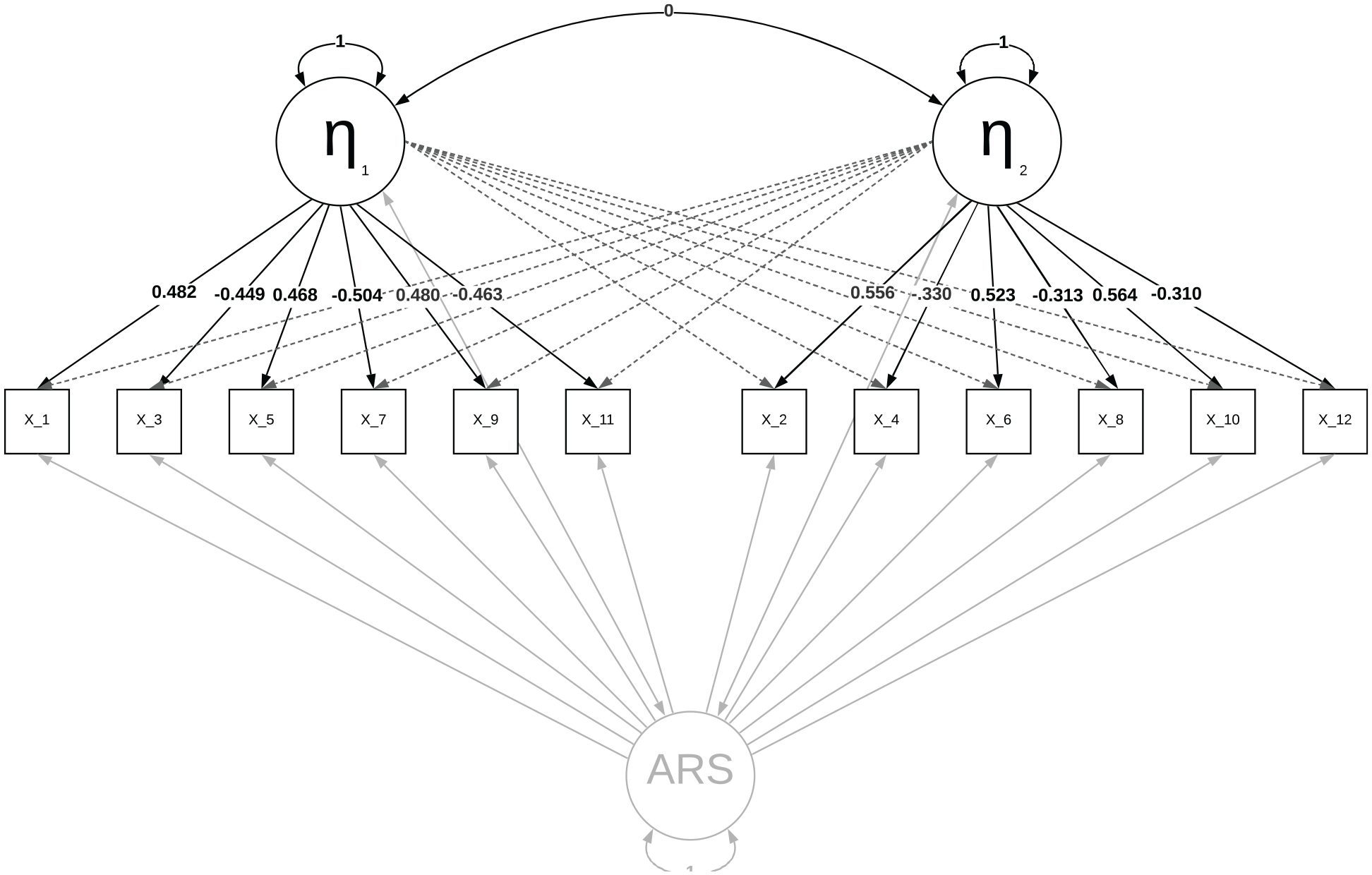
A Multidimensional Factor Model in Which the ARS Factor Is Ignored
Simulation Study
To evaluate the impact of an ARS on the assessment of the psychometric properties of unidimensional and multidimensional scales using EFA, a simulation study was conducted, where we assessed (a) the selected number of number of factors, and the recovery of factor loadings and correlations when ARS was (b) taken into count (i.e., extracted), and (c) ignored (i.e., not extracted). As a point of comparison a null scenario (i.e., without an ARS factor) was simulated, the results of which are reported in the Appendix.
The following six factors were manipulated:
The number of subjects
The number of categories
The type of scale at two levels: balanced, unbalanced.
The number of content factors
The number of items
The strength of the ARS factor at three levels: small, medium and large.
The sample size of 250 is in line with the recommended minimal sample for obtaining precise factor loading estimates with moderate item communalities (Fabrigar et al., 1999; MacCallum et al., 1999). Furthermore, the manipulated levels for the number of categories were chosen to represent the following: (a) items that can be treated as ordinal (i.e., three categories), (b) continuous (i.e., seven categories), or (c) both (i.e., five categories; Rhemtulla et al., 2012). In addition, both balanced and unbalanced scales were included, as the former are generally suggested and preferred to detect ARS (Ferrando & Lorenzo-Seva, 2010; Van Vaerenbergh & Thomas, 2013), whereas the latter is representative of most empirical applications (Ferrando & Lorenzo-Seva, 2010). Finally, both unidimensional and multidimensional scales were simulated. A full-factorial design was used with 2 (number of subjects) × 3 (number of categories) × 2 (type of scale) × 2 (number of factors) × 2 (number of items) × 3 (strength of ARS) = 144 conditions. For each condition, 100 replications were generated resulting in 14,400 data sets.
Methods
Data Generation
We used a Q-dimensional normal ogive graded response model (noGRM) as the data-generating model to be able to use the
Population Values Used in the Simulation Study.
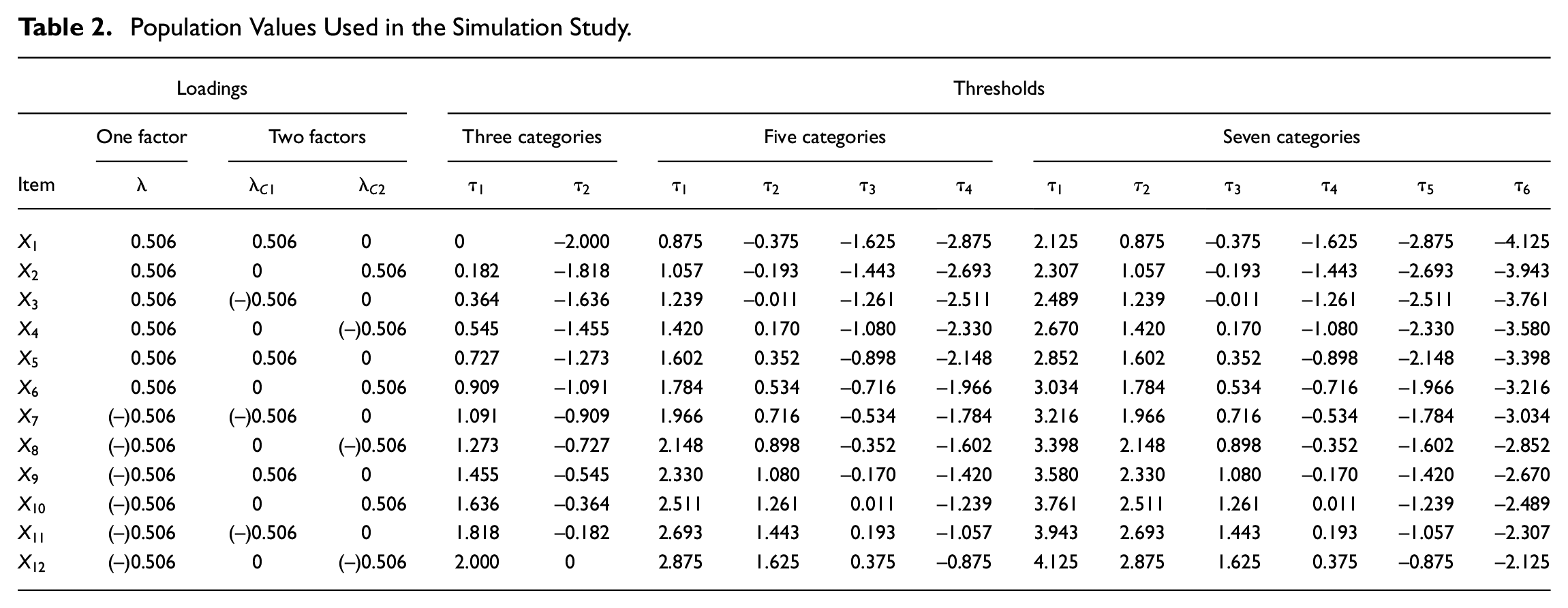
To simulate balanced scales, for the content factor(s), half of the loadings were positive (i.e., indicative items), and the other half were negative (i.e., contra-indicative items), whereas all loadings were positive to simulate unbalanced scales. Furthermore, as displayed in Table 2, the distance between the first threshold of the easiest and the most difficult item was two SDs (e.g., for items with three categories, first threshold of item 1 = 0, and first threshold of item 12 = 2). To avoid estimation issues (e.g., non-convergence), we only accepted data sets where each item’s category contains at least a single observation. In the rare cases where a category was not present among the generated scores for a specific item, the entire data generation process was repeated until all response categories were observed.
The ARS factor scores were sampled from a right-censored normal distribution. This distribution allowed us to simulate subjects who either did or did not show an ARS (i.e., have a positive or zero factor score on the ARS dimension), without allowing for scores representing a disagreeing tendency. Furthermore, with regard to the three levels of the ARS factor, the values of the loadings for the small, medium, and large ARS scenarios were 0.218, 0.343, and 0.506, respectively. 5 The effects of a small, medium, and large ARS on the items’ univariate distribution are illustrated by the example shown in Figure 3, where data were generated for an item with five categories, 10,000 observations, and using the thresholds of the seventh item in Table 2. Clearly, the higher categories (i.e., 4 and 5) are more often selected as the strength of the ARS increases.
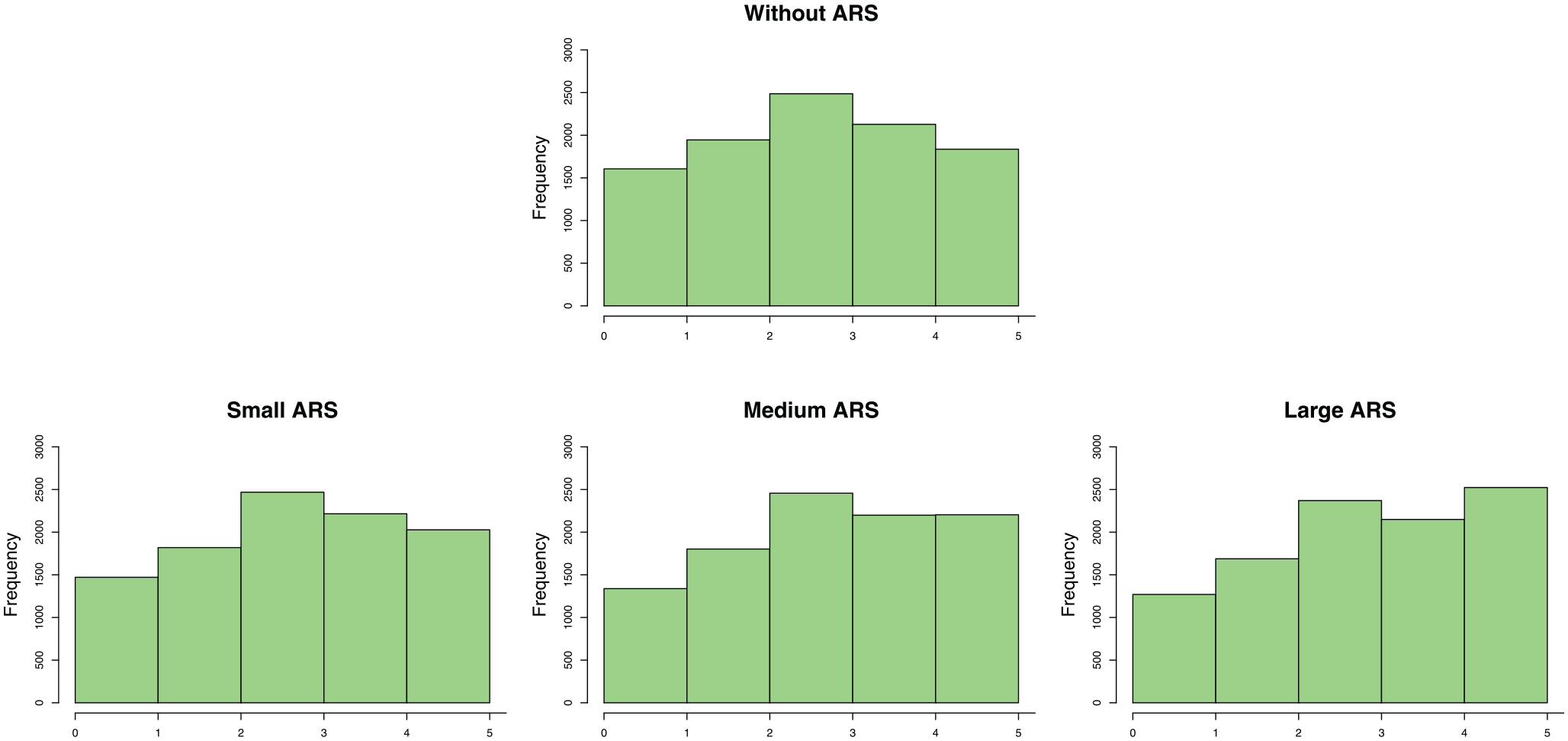
The Effects of the ARS Manipulations on a Five Categories Item With
Data Analysis
The analyses proceeded as follows: first, for each generated data set, we estimated EFA models with up to three factors, in the case of unidimensional scales, and up to four factors, in the case of multidimensional scales. Furthermore, to study the effects of ARS when treating the data as ordinal or continuous (e.g., ordinal for three categories or approximately continuous for seven categories), the EFA models were estimated both for Pearson correlations and polychoric correlations. Note that the initial factor solutions were estimated with orthogonal factors and using maximum likelihood estimation.
Afterwards, three model selection criteria were considered to evaluate the number of dimensions (i.e., select among the three/four factor models), namely BIC, Parallel Analysis (PA), and the CHull using the CAF index as a goodness-of-fit measure (see section “Potential effects of ARS on dimensionality assessment”).
6
For PA, we retained a factor if its eigenvalue was larger than a given
Next, irrespective of the results of the model selection procedures, the loadings for the models with and without the ARS factor were rotated using uninformed rotation approaches and informed rotation approaches. For uninformed rotation, we chose oblimin as it is a popular rotation approach available in most statistical software, 7 and it allowed us to assess the effect of naively rotating toward simple structure when extracting an additional factor (i.e., as one would do when unaware of ARS). 8 To avoid local optima, we performed oblimin rotation using the gradient projection algorithm with 10 random starts and delta = 0. For informed rotations, we used fully specified target (FST) and semi-specified target (SST) rotations, and the target matrices are displayed in Table 3. For FST rotation, the elements of both the content and the ARS factor were fully specified in the target matrices using ones and zeros for the non-zero and zero loadings, respectively, whereas only the zero loadings on the content factor were specified for SST. Also, FST and SST were used both when ARS factor was retained or not for multidimensional scales, whereas only FST was used when the ARS factor was retained for unidimensional scales. Oblique Procrustes rotation was used for each target rotation.
Target Matrices.
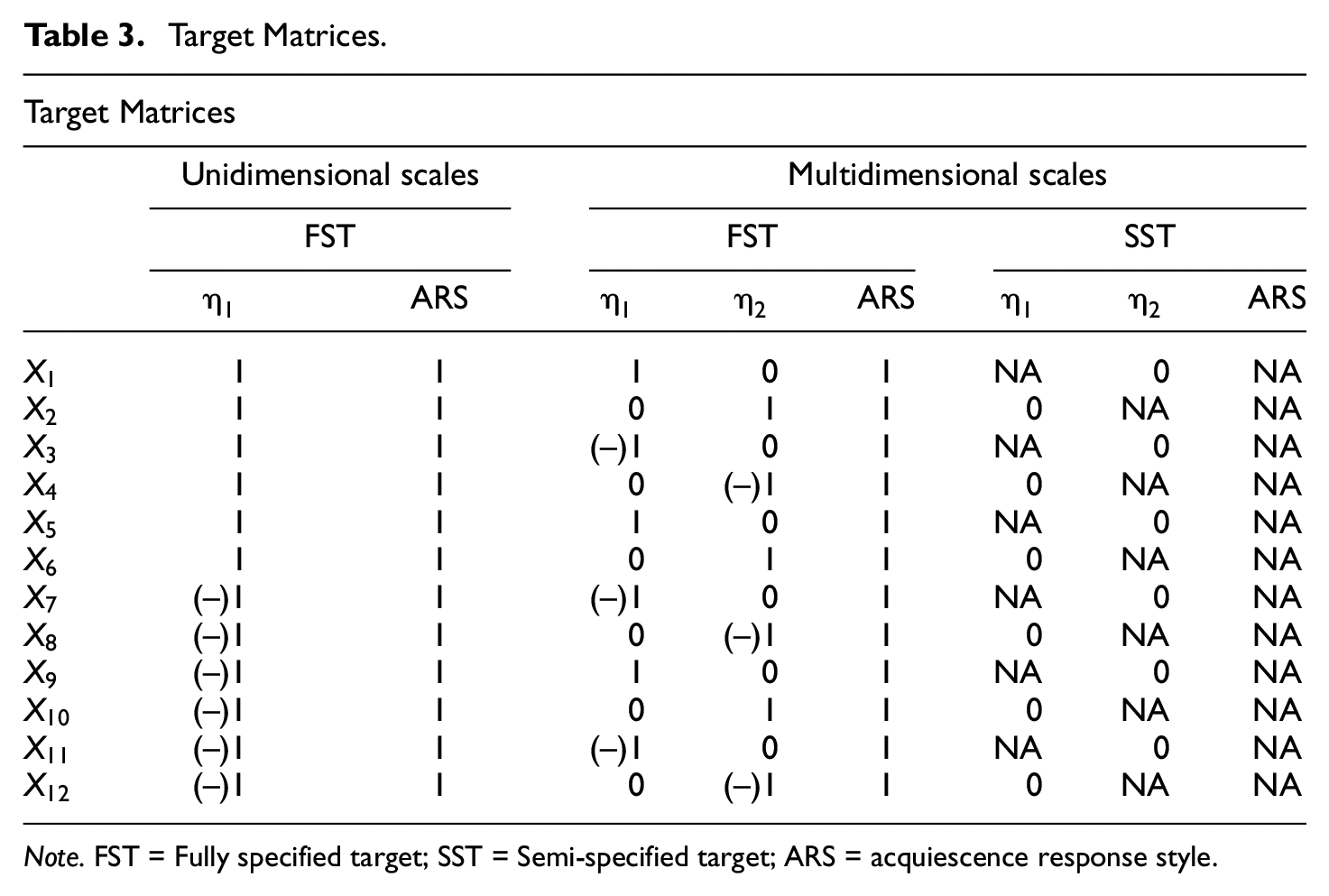
Note. FST = Fully specified target; SST = Semi-specified target; ARS = acquiescence response style.
Outcome Measures
The true positive rate (TPR) was calculated for the BIC, PA, and CHull, both for the models estimated using polychoric correlations and Pearson correlations. Here, the TPR represents the proportion of selecting a two- or three-factor model for unidimensional and multidimensional scales, respectively—that is, the proportion of selecting the additional ARS factor.
Furthermore, the root mean square error (RMSE) between the estimated and true values of the factor loadings was calculated as
Then, an
The results for the model selection and recovery of factor loadings and factor correlations when ARS was not simulated (i.e., null scenario), are reported in the Appendix (Tables A1 – A4) as the performance of the model selection and rotation approaches in these conditions only serves as a comparison. In short, their performance was generally satisfactory in all conditions, with a TPR—in this case, equal to the proportion of selecting the correct number of content factors—of at least 0.90 for all model selection criteria, and
Data Simulation, Software and Packages
The data were simulated and analyzed using R (R Core Team, 2013). Specifically, for generating the data, the R package
Results
Dimensionality Assessment
The TPR results for the different model selection criteria in the small, medium, and large ARS conditions largely overlapped between unidimensional and multidimensional scales. Hence, we only report the multidimensional scale results in Table 4 and Table 5 for balanced and unbalanced scales, respectively. 10 Overall, the performance of the model selection criteria was mostly affected by the type of scale (i.e., balanced and unbalanced) and the strength of the ARS. The ARS factor was almost never retained in the conditions with unbalanced scales as indicated by the close-to-zero TPRs. These results align with and generalize those from Ferrando and Lorenzo-Seva (2010), who indicated that, for unidimensional unbalanced scales, the fit of a unidimensional model (i.e., without the additional ARS factor) would generally be acceptable as the content factor loadings absorb the ARS factor loadings. Our results extend this finding to multidimensional unbalanced scales, where the cross-loadings on content factors absorb the additional ARS factor, making the latter undetectable in the model selection step. For balanced scales, the additional ARS factor was mostly selected in the conditions with medium and large ARS, where both Pearson-based PA and CHull were equally sensitive or more sensitive than the BIC to this additional factor. 11 However, polychoric-based PA rarely suggested to retain the additional ARS factor in the low- and medium-ARS conditions, which is in line with previous research that showed that polychoric-based PA generally underestimates the number of dimensions (Cho et al., 2009).
Main Effects on Model Selection TPR for Multidimensional Balanced Scales in Function of Strength of the ARS and the Simulated Conditions.
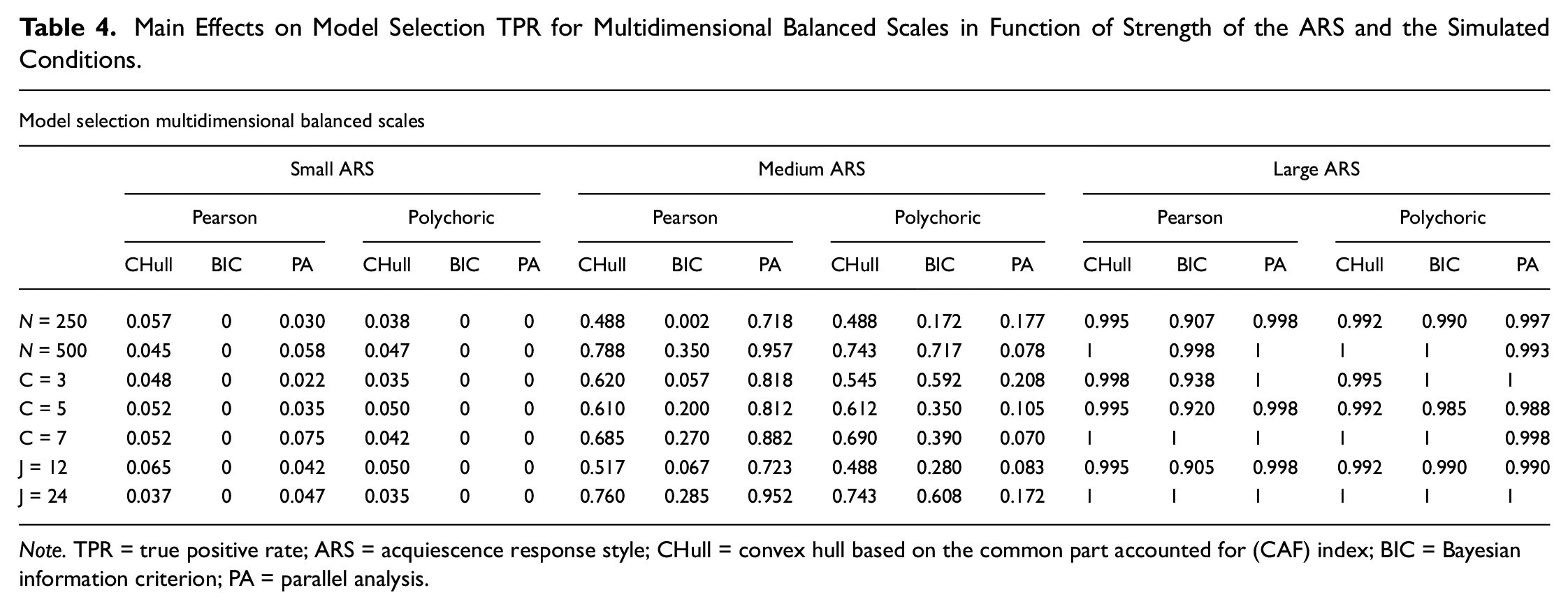
Note. TPR = true positive rate; ARS = acquiescence response style; CHull = convex hull based on the common part accounted for (CAF) index; BIC = Bayesian information criterion; PA = parallel analysis.
Main Effects on Model Selection TPR for Multidimensional Unbalanced Scales in Function of Strength of the ARS and the Simulated Conditions.
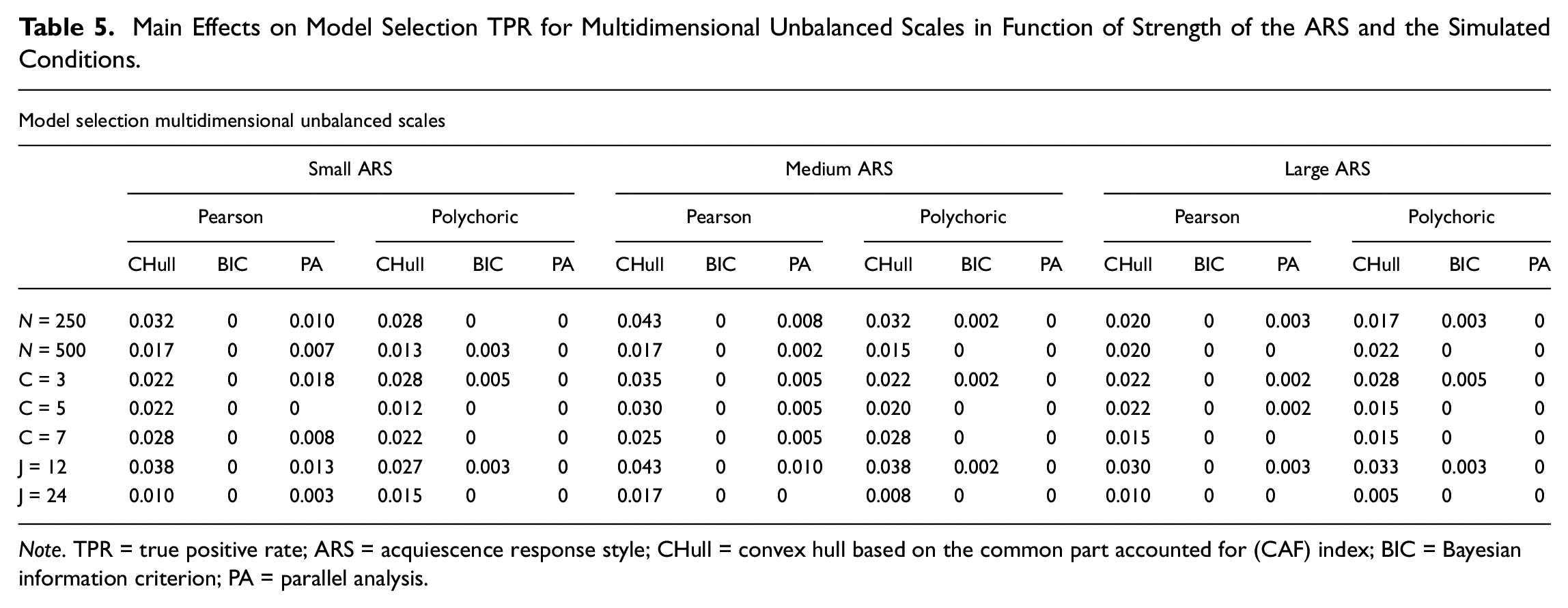
Note. TPR = true positive rate; ARS = acquiescence response style; CHull = convex hull based on the common part accounted for (CAF) index; BIC = Bayesian information criterion; PA = parallel analysis.
Bias With the Additional ARS Dimension
Factor Loadings
The
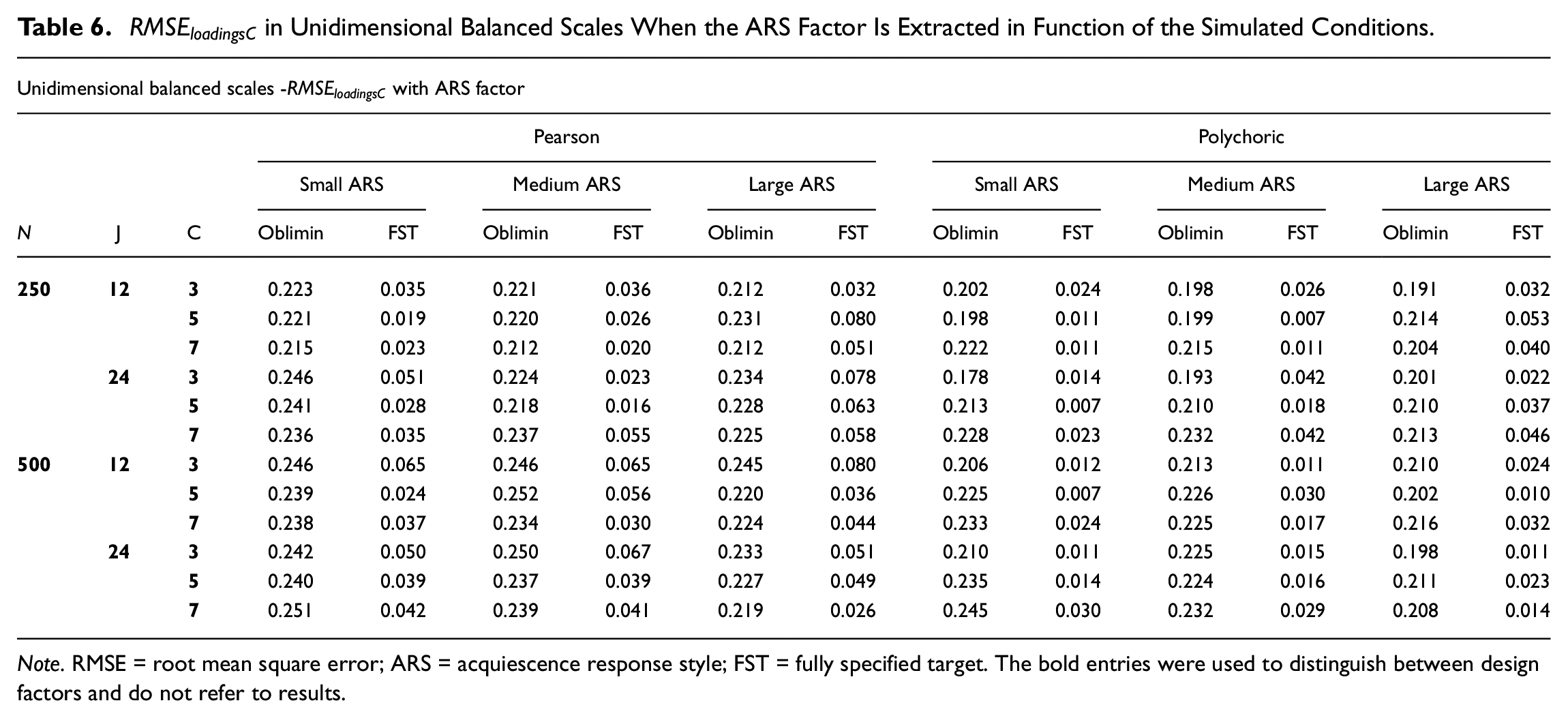
Note. RMSE = root mean square error; ARS = acquiescence response style; FST = fully specified target. The bold entries were used to distinguish between design factors and do not refer to results.
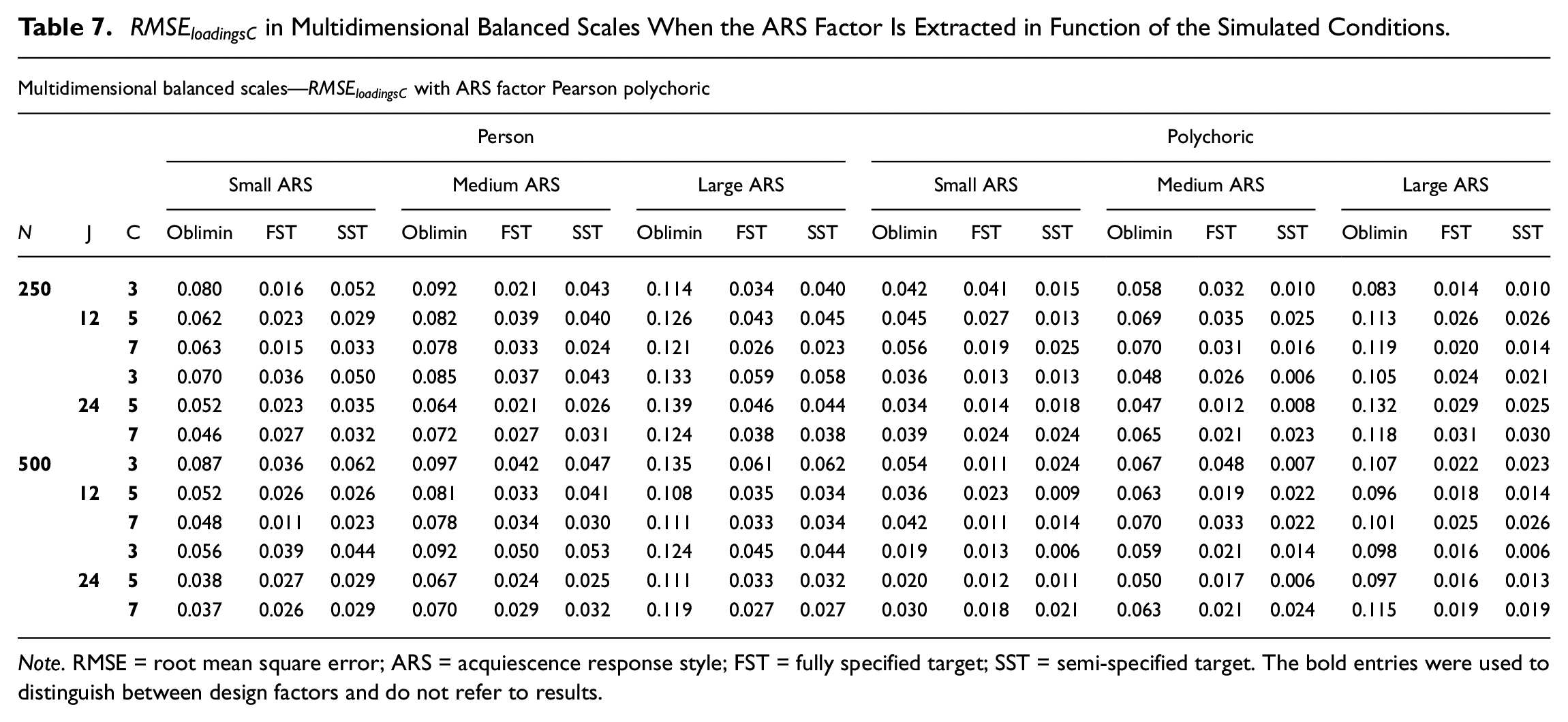
Note. RMSE = root mean square error; ARS = acquiescence response style; FST = fully specified target; SST = semi-specified target. The bold entries were used to distinguish between design factors and do not refer to results.
For multidimensional balanced scales, Table 8 displays the MMAB results for the zero loadings when the ARS factor is extracted. 13 The MMAB was below 0.2 for informed rotation approaches, but not for oblimin rotation, for which MMAB was often > 0.2 in conditions with medium ARS and always > 0.3 in conditions with large ARS, and thus is larger than the commonly used cut-off of 0.2 for “non-ignorable” cross-loadings (Stevens, 1992).
Main Effects on MMAB for Zero Loadings in Multidimensional Balanced Scales When the ARS Factor Is Extracted in Function of the Simulated Conditions.
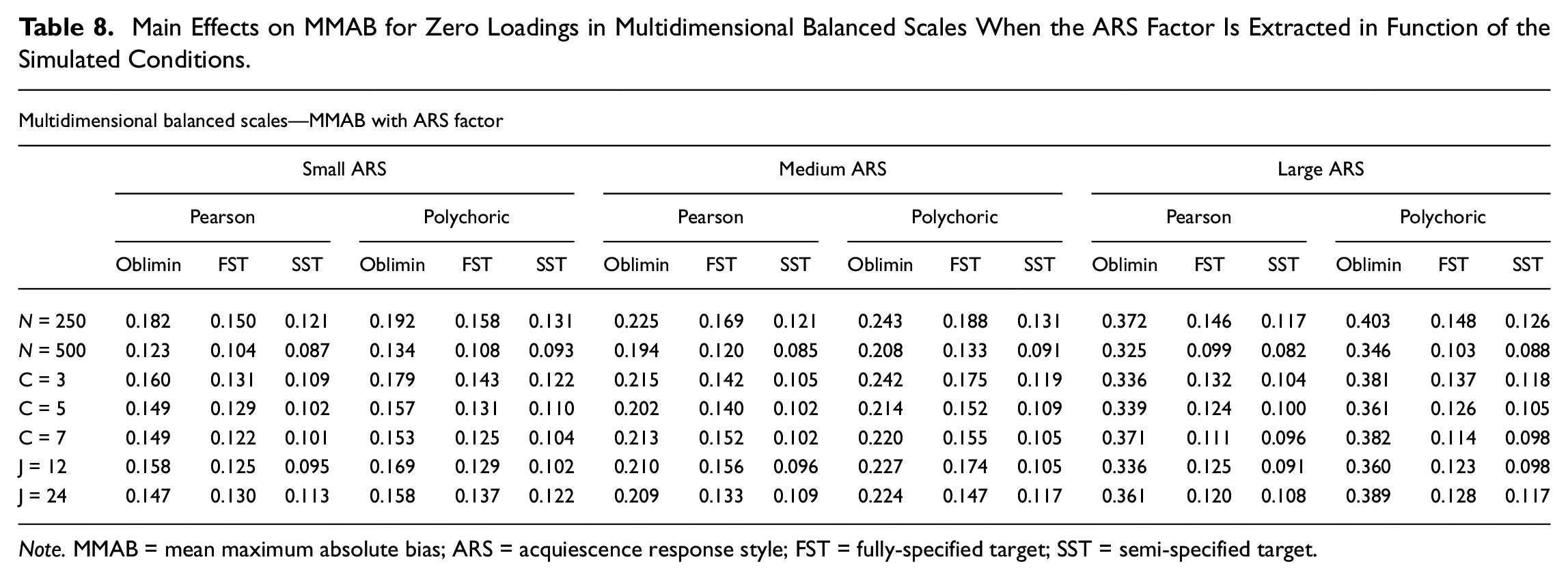
Note. MMAB = mean maximum absolute bias; ARS = acquiescence response style; FST = fully-specified target; SST = semi-specified target.
Factor Correlations
The
Main Effects on
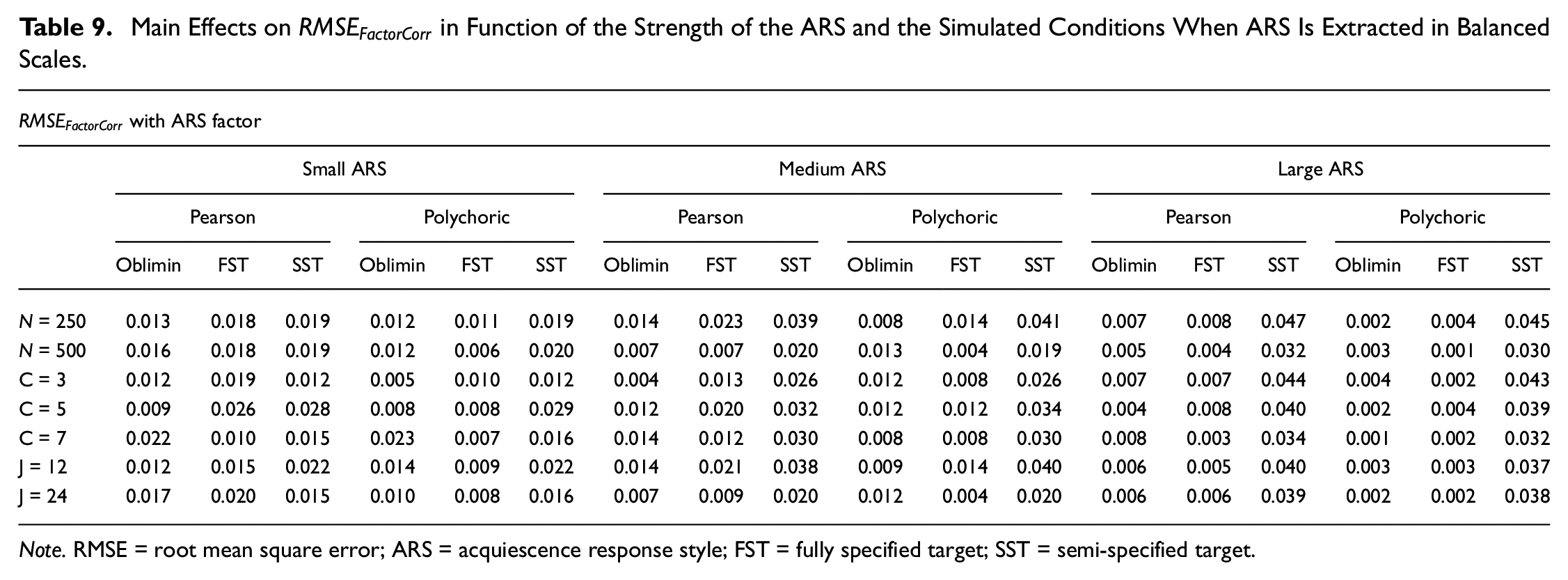
Note. RMSE = root mean square error; ARS = acquiescence response style; FST = fully specified target; SST = semi-specified target.
Bias Without the Additional ARS Dimension
Factor Loadings
The
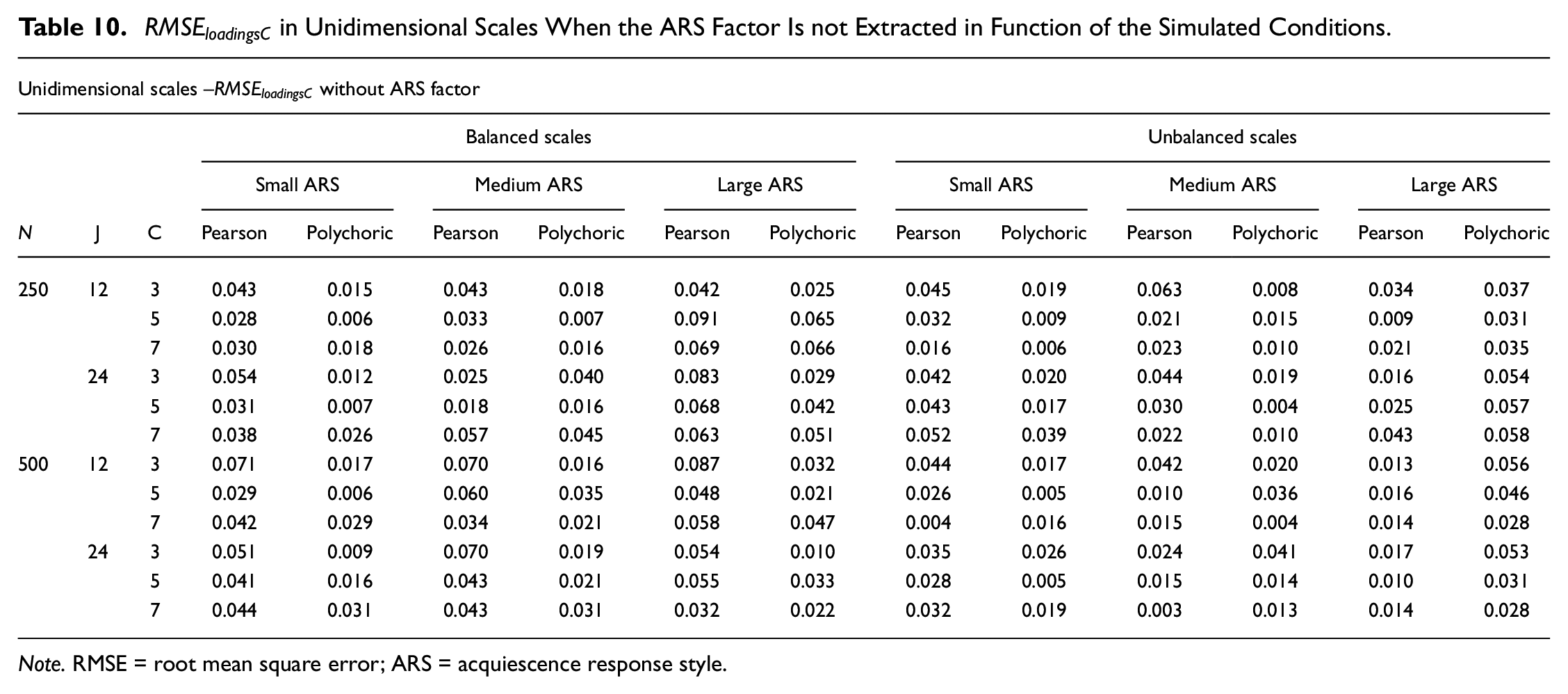
Note. RMSE = root mean square error; ARS = acquiescence response style.
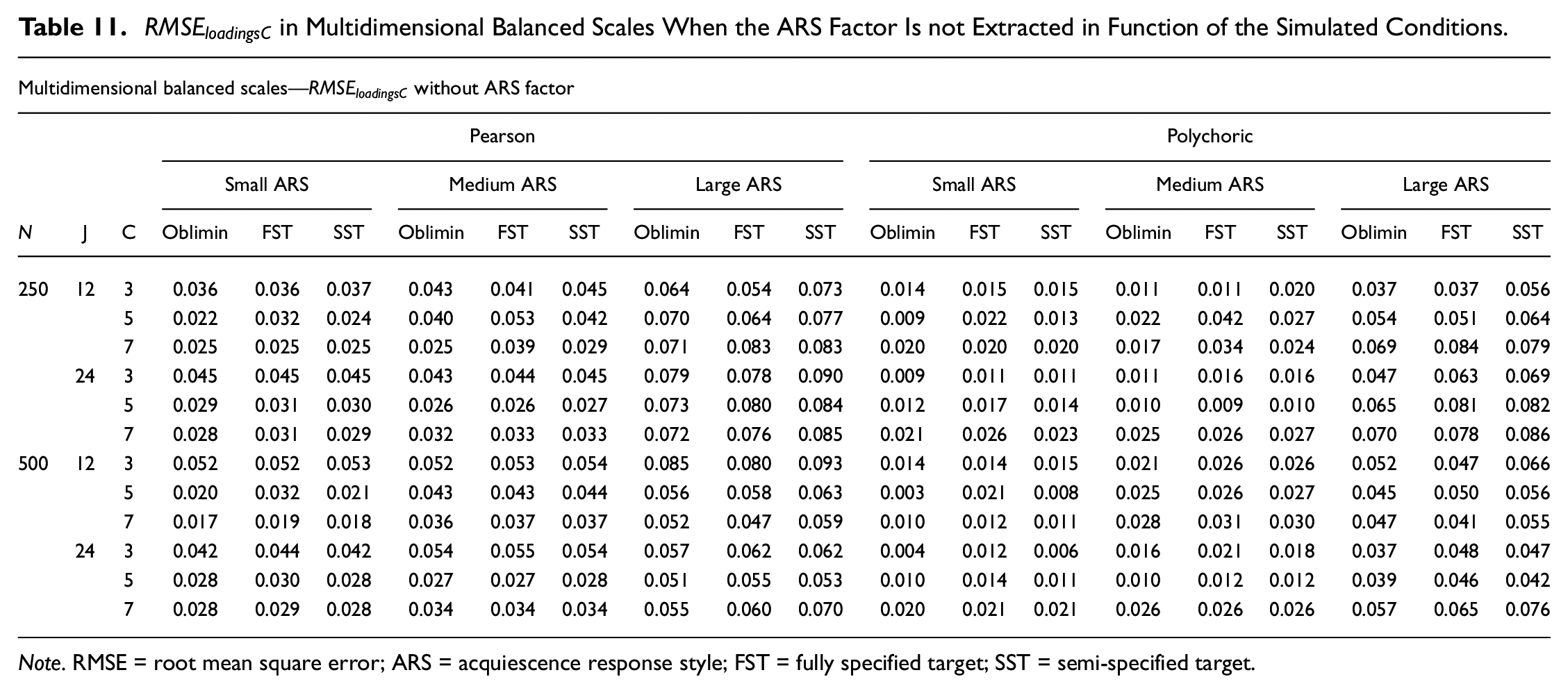
Note. RMSE = root mean square error; ARS = acquiescence response style; FST = fully specified target; SST = semi-specified target.
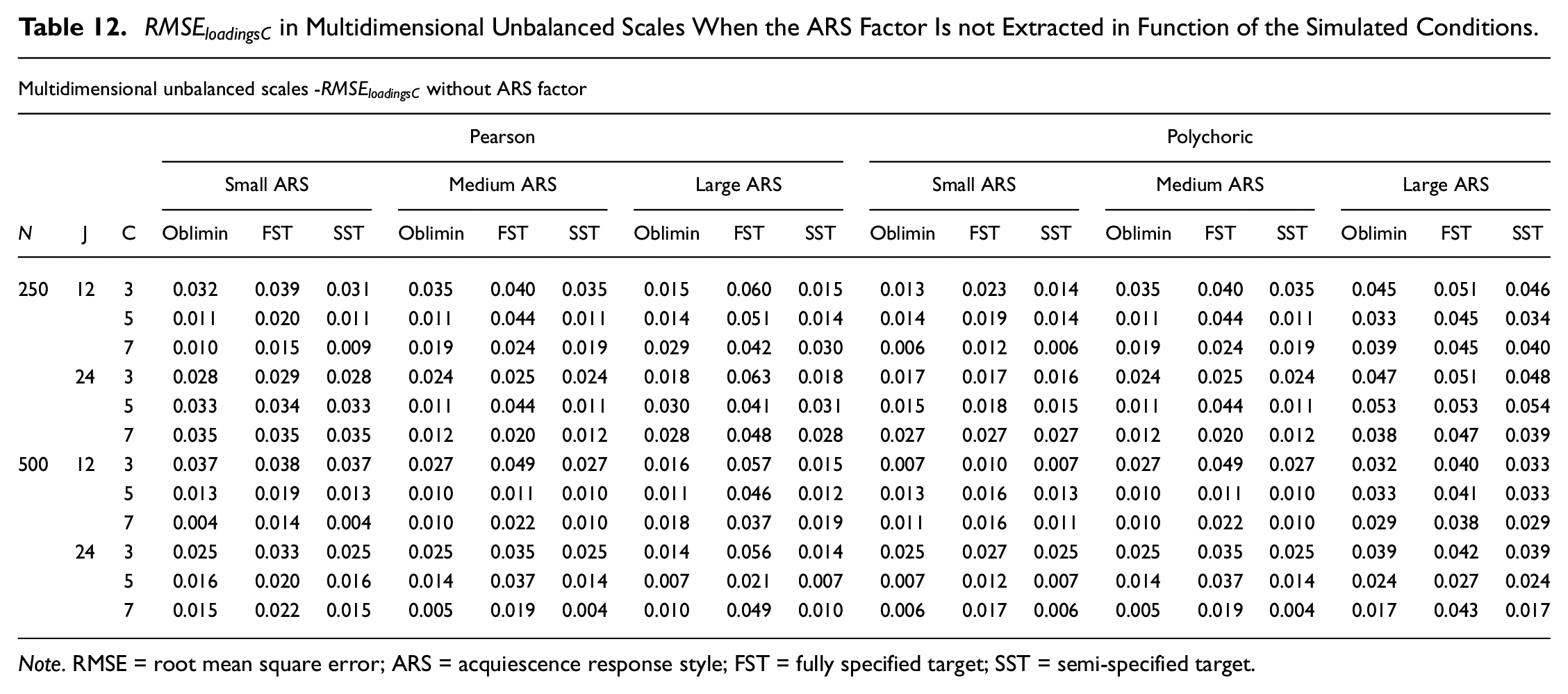
Note. RMSE = root mean square error; ARS = acquiescence response style; FST = fully specified target; SST = semi-specified target.
The MMAB results for the zero loadings in balanced and unbalanced scales are displayed in Tables 13 and 14. For all rotation approaches, the MMAB was >0.2 when large ARS was simulated in balanced scales, which is larger than this commonly used cut-off for “non-ignorable” cross-loadings (Stevens, 1992). In contrast, ignoring ARS did not increase the MMAB in the conditions with unbalanced scales as indicated by the MMAB always < 0.2. In fact, in comparison to Table A18 (i.e., when extracting the ARS factor), MMAB is now smaller (when using oblimin and FST) or equally small (when using SST).
Main Effects on MMAB for Zero Loadings in Multidimensional Balanced Scales When the ARS Factor Is not Extracted in Function of the Simulated Conditions.
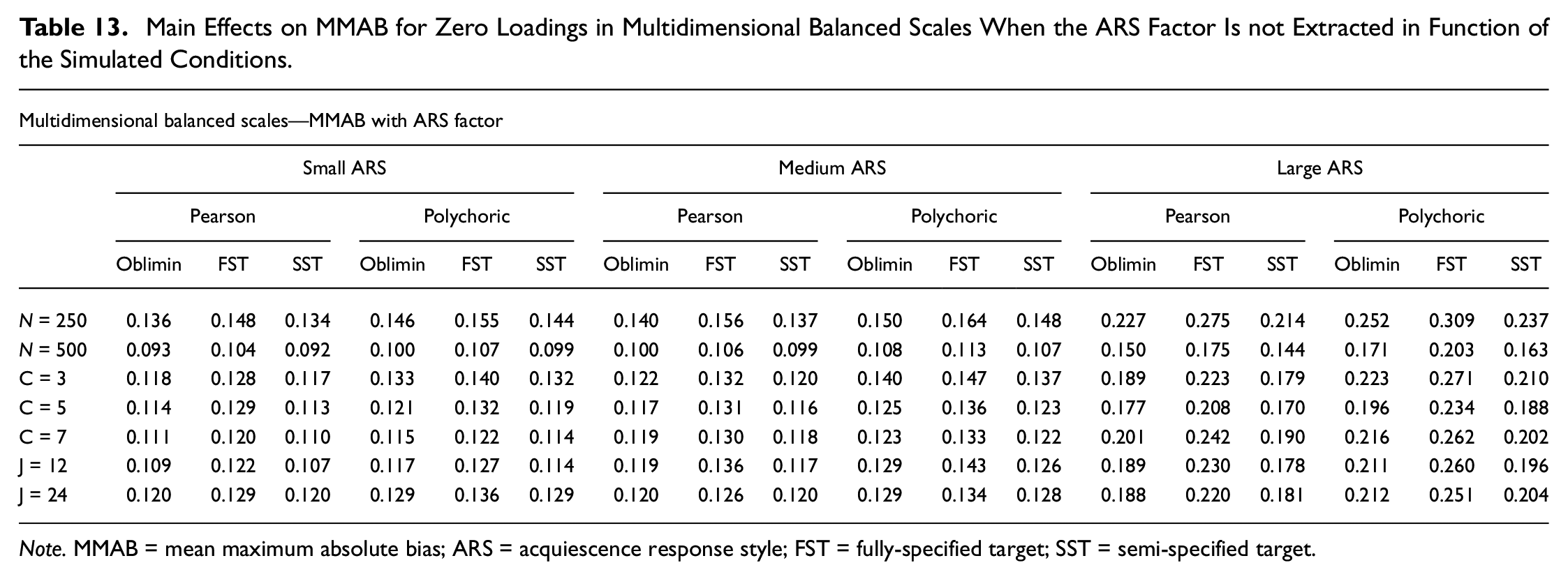
Note. MMAB = mean maximum absolute bias; ARS = acquiescence response style; FST = fully-specified target; SST = semi-specified target.
Main Effects on MMAB for Zero Loadings in Multidimensional Unbalanced Scales When the ARS Factor Is not Extracted in Function of the Simulated Conditions.
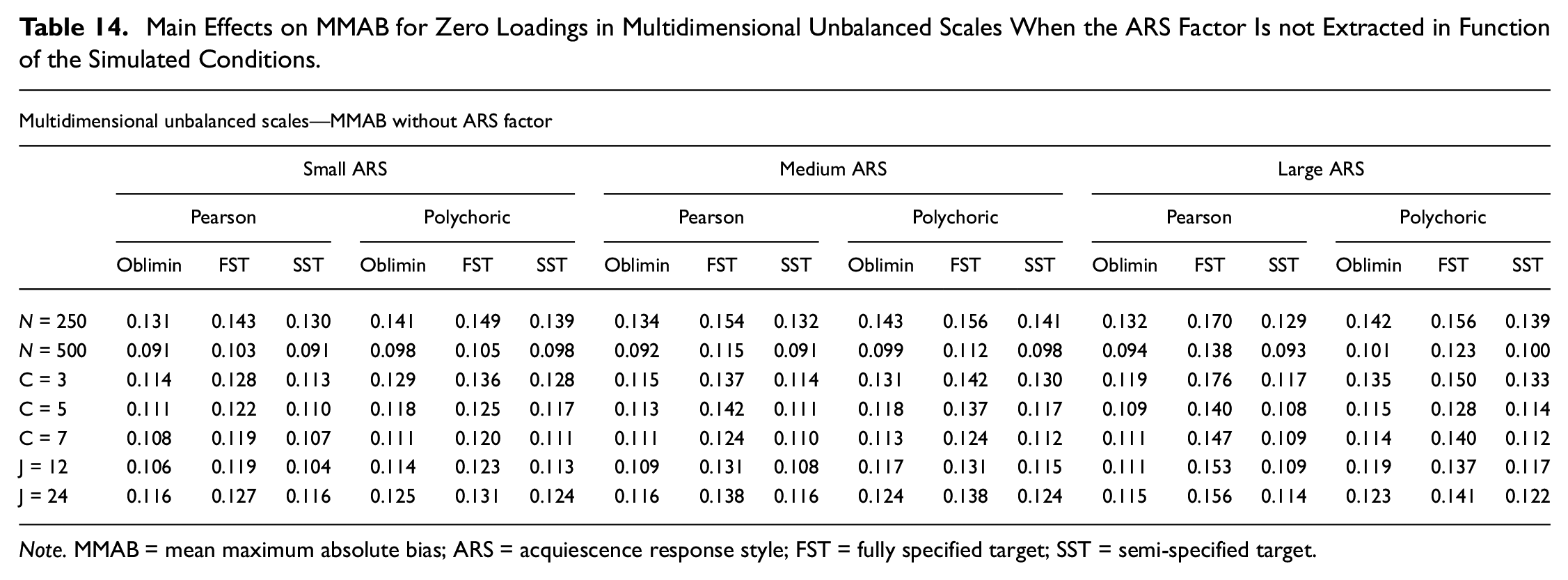
Note. MMAB = mean maximum absolute bias; ARS = acquiescence response style; FST = fully specified target; SST = semi-specified target.
Factor Correlations
The
Main Effects on
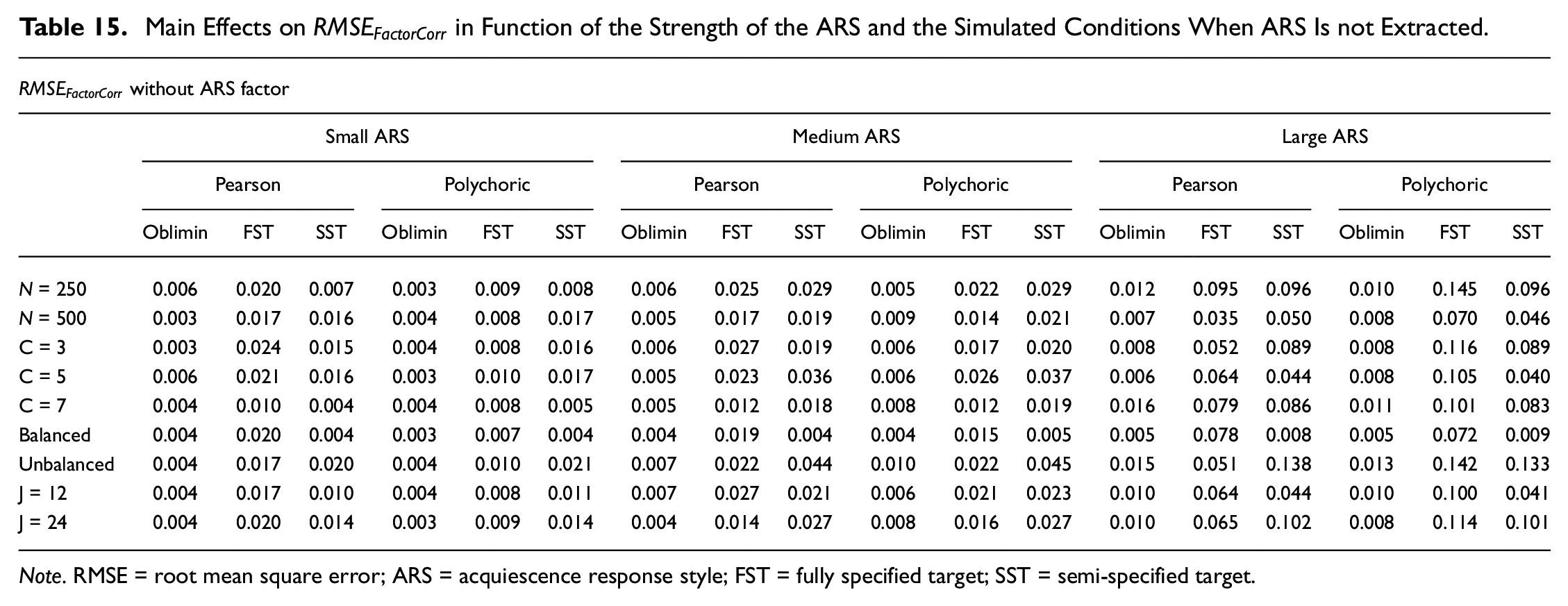
Note. RMSE = root mean square error; ARS = acquiescence response style; FST = fully specified target; SST = semi-specified target.
Conclusions
The simulation study assessed the performance of EFA with regard to the number of suggested factors as well as the recovery of factor loadings and correlations in the presence of ARS both when retaining the ARS as an additional factor or not. The results indicated that, in terms of model selection, the type of scale as well as the strength of the ARS were particularly impactful on the suggested number of factors to retain. In fact, for both unidimensional and multidimensional scales, the additional ARS factor was almost never captured when unbalanced scales were simulated. In the conditions with balanced scales, the additional ARS factor was mostly selected when its strength was medium or large, especially by Pearson-based PA and to a lesser extent by the BIC and the CHull. Thus, in case of balanced scales, selecting an additional factor that may be an ARS factor is a realistic scenario one should be aware of.
In terms of factor rotation, when the ARS factor was extracted in balanced scales, the choice of how to rotate is important. In fact, rotating to simple structure (i.e., oblimin) resulted in biased loadings, and the maximal bias on the zero loadings was particularly large. The latter results are relevant for empirical practice, where trying to pursue simple structure in balanced scales with an additional (but unacknowledged) ARS factor might lead to (a) the exclusion of items that seem to measure multiple factors (i.e., with cross-loadings), or (b) under/overestimation how well the items measure a content factor (i.e., biased primary loading). In contrast, the factor loadings of balanced scales were accurately recovered when using informed rotation approaches (i.e., fully and semi-specified target rotation), which shows that it pays off to be aware of the fact that an additional factor may be an ARS factor. Taken together, these findings suggest that ARS is often extracted as an additional factor in balanced scales and that, for these scales, rotating toward (part of) the assumed MM (i.e., using informed rotation approaches) suffices to accurately assess the MM of these scales. Note that, for multidimensional scales, rotating toward a semi-specified target matrix, where only the zero loadings on the content factors were specified, allowed to recover the scales’ MM as accurately as when rotating toward a fully specified target matrix. However, ignoring the ARS factor in multidimensional balanced scales generally resulted in large cross-loadings (irrespective of the rotation), whereas not extracting an additional ARS factor did not affect the factor loading recovery in unbalanced scales. Hence, in empirical practice, researchers should be aware of the fact that not retaining an additional ARS factor might lead to erroneous conclusions on the psychometric properties of the questionnaire items in a balanced scale.
Discussion
Assessing the psychometric properties of self-report scales is essential to obtain valid measurements of individuals’ latent psychological constructs (i.e., factors). This requires investigating the MM by determining the number of factors, their structure (i.e., which factor is measured by which item) and whether items are pure measurements of one factor. These psychometric properties are commonly assessed by EFA, where it is necessary to (a) evaluate the number of factors to retain, and (b) solve rotational freedom to enhance the interpretability of these retained factors. By means of a simulation study, we showed that these two aspects are affected by an ARS among the respondents, and that these effects on factor loadings and cross-loadings are more severe for balanced than for unbalanced scales. In what follows, we discuss the implications of these results for empirical practice for the two types of scales separately.
For balanced scales, especially large ARS often resulted in selecting an additional factor. For these scales, when retained, it is crucial to realize that this additional factor may be an ARS factor and to take this into account in the rotation step. In fact, we showed that naively rotating toward simple structure (i.e., assuming that each item measures only one factor) resulted in biased loadings as well as “non-ignorable” cross-loadings. The latter might drive researchers using balanced scales to draw erroneous conclusions when assessing whether items are non-ambiguous measures of a single factor, and whether they should be excluded from the scale (or replaced). This is avoided by using informed rotation approaches, where the additional ARS factor is taken into account by fully or partially specifying a priori assumptions or expectations regarding the MM in a target rotation matrix, and specifying the additional factor as a factor with high loadings for all items or leaving it unspecified. Furthermore, in multidimensional balanced scales, not extracting a large ARS factor often resulted in large cross-loadings, irrespective of the rotation. Thus, to properly assess the psychometric properties of a balanced scale, we not only recommend to use informed rotation if an additional factor is extracted but we even advise to extract the additional factor irrespective of whether the model selection criteria suggest to do so and compare this solution (upon informed rotation) to the one without this additional factor. Note that this result is also relevant to researchers that aim to use exploratory structural equation modeling (ESEM; Asparouhov & Muthén, 2009), where the number of factors is commonly assumed to be known a priori, and one, thus, likely disregards the potential presence of an ARS factor.
For unbalanced scales, the additional ARS factor was seldom selected in the model selection step. Our findings align with those analytically derived by Ferrando and Lorenzo-Seva (2010) for unidimensional scales and generalize them to multidimensional scales, where the cross-loadings on the factors allow for much flexibility so that the additional ARS factor is easily “absorbed” by the content ones, and thus hardly ever (or never) retained as an additional factor. Furthermore, not extracting ARS as an additional factor did not affect the factor loadings and correlation much, and, thus, when evaluating these psychometric properties, researchers can simply ignore the potential factor. Nevertheless, one should not conclude that ignoring an additional ARS factor in unbalanced scales is completely harmless. It is important to bear in mind that ARS might influence individual estimates with regard to the measured factors (i.e., factor scores), which, however, were not part of our investigation.
In summary, these findings indicate that it is crucial for researchers to beware of ARS and, for balanced scales, it is best to extract this as an additional factor and take its nature into account when rotating the factors. For the latter, our advise is to use semi-specified target rotation as it proved to perform well, and it avoids the potential influence of miss-specifying the size of the primary loadings—even though such an influence was not found in this article (Myers et al., 2013, 2015). When researchers do not have assumptions regarding the MM, an optimal semi-specified target for a given loading matrix—as well as the target-rotated loadings—can be obtained using simplimax (Kiers, 1994). However, note that the performance of simplimax when extracting an additional ARS factor has not been evaluated, and it would be interesting to do so in future research.
While providing useful insights on the effects of ARS on EFA, the generalizability of these results is subject to certain limitations. For instance, in this study, we only considered fully balanced or unbalanced scales but not semi-balanced scales. The latter are not uncommon in psychological research as, for some psychological constructs, contra-indicative items may be harder to formulate without facing the risk of measuring something else (Van Vaerenbergh & Thomas, 2013). Moreover, de la Fuente and Abad (2020) recently assessed the effects of ARS on both EFA and random intercept factor analysis (RIFA; Maydeu-Olivares & Coffman, 2006) with partially unbalanced scales, and showed that factor loadings were severely affected when using EFA (but not RIFA), especially when the size of the loadings differed strongly between indicative and contra-indicative items. However, whether the additional ARS factor was suggested in the model selection step was not investigated by them, and, in future research, it would certainly be interesting to investigate whether the ARS factor would be suggested in the model selection step. An additional limitation of our study is that the data were simulated under conditions where the MMs did not include cross-loadings among the content factors. However, this does not entirely correspond to empirical practice, where cross-loadings are frequently encountered (Li et al., 2020). Cross-loadings can have an important impact, not only on the number of factors to retain in EFA (Li et al., 2020) but also on the performance of uninformed rotation approaches (Ferrando & Seva, 2000; Lorenzo-Seva, 1999; Schmitt & Sass, 2011). Also, we only used oblimin as an uninformed rotation approach; however, future research may investigate the performance of uninformed rotation approaches that are suitable for the evaluation of MMs that do not adhere to simple structure, like promin rotation or promax-based tandem II (Beauducel & Kersting, 2020; Lorenzo-Seva, 1999). Finally, in this article, we specifically focused on oblique rotations (i.e., allowing content and ARS factors to be correlated), which is in line with recent theoretical and empirical studies addressing the relationships between personality traits and acquiescence (detailed reviews can be found in Weijters et al., 2010 and Ferrando et al., 2016). However, it should be noted that, for certain psychological traits, a relation with acquiescence may be irrelevant or absent (McCrae & Costa, 1983; Messick & Frederiksen, 1958). Therefore, for some unidimensional scales measuring these traits, orthogonal rotations (i.e., not allowing the content and ARS factor to be correlated) may be appropriate. Ferrando et al. (2016) developed a procedure to test the orthogonality assumption between a content factor and an ARS factor in unidimensional scales when a “good” set of items measuring acquiescence is available (e.g., a pool of items selected from a validated scale that measures acquiescence). However, as the authors had indicated, further research may be needed to (a) develop these marker items, which are not often available in practice and (b) extend this approach to multidimensional scales. In addition, oblique rotation may be appropriate even when the correlation between acquiescence and psychological traits is irrelevant. In fact, one may expect that, when using an informed rotation approach (e.g., target rotation) on factors that include an ARS factor, correlations among a content and ARS factor will be accurately recovered, and thus that a “true” zero correlation between ARS and content factors will likely result in an close-to-zero correlation after rotation. However, when using an uninformed rotation approach (e.g., oblimin), the different factors are not accurately disentangled, making this a less relevant issue. Recovery of the ARS factor (i.e., factor loadings and correlation) was not the goal of this investigation, but may be worth investigating in future research.
Supplemental Material
sj-docx-1-ebm-10.1177_00131644221089857 – Supplemental material for Awareness Is Bliss: How Acquiescence Affects Exploratory Factor Analysis
Supplemental material, sj-docx-1-ebm-10.1177_00131644221089857 for Awareness Is Bliss: How Acquiescence Affects Exploratory Factor Analysis by E. Damiano D’Urso, Jesper Tijmstra, Jeroen K. Vermunt and Kim De Roover in Educational and Psychological Measurement
Footnotes
Declaration of Conflicting Interests
The author(s) declared no potential conflicts of interest with respect to the research, authorship, and/or publication of this article.
Funding
The author(s) received no financial support for the research, authorship, and/or publication of this article.

Supplemental Material
Supplemental material for this article is available online.
Notes
References
Supplementary Material
Please find the following supplemental material available below.
For Open Access articles published under a Creative Commons License, all supplemental material carries the same license as the article it is associated with.
For non-Open Access articles published, all supplemental material carries a non-exclusive license, and permission requests for re-use of supplemental material or any part of supplemental material shall be sent directly to the copyright owner as specified in the copyright notice associated with the article.
