




Abstract
Keywords
Introduction
Few educational problems have received more attention in recent decades than the failure to ensure that elementary and secondary classrooms are all staffed with qualified teachers due to perennial teacher shortages. It has been long and widely held that teacher staffing problems 1 and shortages are primarily due to an insufficient supply of new teachers in the face of two large-scale demographic trends—increasing student enrollments and increasing teacher retirements due to an aging of the teaching force—and that these staffing problems have resulted in lower school performance (see, e.g., American Federation of Teachers, 2022; García & Weiss, 2019; Government Accountability Office, 2022; National Academy of Sciences, 1987, 2007; National Commission on Excellence in Education, 1983; National Commission on Mathematics and Science Teaching for the twenty-first Century, 2000; National Commission on Teaching and America's Future, 1996, 1997; National Research Council, 2002; President's Council of Advisors on Science and Technology, 2010; U.S. Department of Education, 2009.
The prevailing policy response to these school staffing problems has primarily focused on increasing the supply of new teachers (e.g., Allen et al., 2023; Fowler, 2003, 2008; Greene, 2019; Hirsch et al., 2001; Liu et al., 2004; Liu et al., 2008; Randazzo, 2022; Rice et al., 2008; Theobald, 1990). Over the decades, a wide range of initiatives have been implemented to recruit new candidates into teaching. Among these are midcareer-change programs; alternative certification programs designed to expedite entry; overseas teacher recruiting initiatives; and financial incentives, such as scholarships, signing bonuses and student loan forgiveness. An example of this genre of reform was President Obama's “100k in 10” program initiated in 2010 to recruit 100,000 new STEM teachers by 2020. Some of these initiatives entail a “lowering of the bar and widening of the gate” to fill openings, resulting in higher levels of underqualified teachers, and some don’t. But, regardless of their differences, underlying this wide variety of initiatives is a common assumption—that school staffing problems are due to an insufficient supply of new teachers and hence the best solution is to increase the supply of new teachers.
The Importance of Teacher Turnover
More recently, research and reform on teacher shortages has begun to recognize the role of preretirement teacher turnover in teacher staffing problems. Beginning over two decades ago we empirically documented that teacher shortages are not solely a consequence of producing too few new teachers, but also a result of too many existing teachers departing long before retirement, which in turn is largely driven by school organizational conditions. And hence the solution to shortages, suggested by the data, does not solely lie in recruiting more new teachers, but also in improving the retention of existing teachers through improvements in schools as workplaces (Ingersoll, 1997, 2001; Ingersoll & May, 2012; Ingersoll & Perda, 2010; Ingersoll et al., 2019, 2022). A number of studies have since provided support for this thesis that teacher turnover is a leading factor behind teacher shortages (e.g., Behrstock, 2009; Simon & Johnson, 2015; Sutcher et al., 2016; Carver-Thomas & Darling-Hammond, 2017, 2019; García & Weiss, 2020). The objective of this study is to extend and utilize this perspective in an examination of teacher shortages and turnover in rural schools.
Research on the many facets of teacher turnover—its determinants, levels, variations and consequences—has seen a dramatic growth in recent decades (for reviews, see Borman & Dowling, 2008; Guarino et al., 2006; Johnson et al., 2005; Nguyen et al., 2020). Turnover can be beneficial for students in cases where the departing teachers are ineffective or low performing and the entrance of “new blood” into faculties can enhance innovation and student learning (Grissom & Bartanen, 2019; Ingersoll, 2001; Ingersoll & May, 2012). On the other hand, a growing number of studies have shown that turnover in teaching can incur substantial financial costs (e.g., Alliance for Excellent Education, 2005; Barnes et al., 2007; Milanowski & Odden, 2007; Synar & Maiden, 2012; Texas Center for Educational Research, 2000; Villar & Strong, 2007; Watlington et al., 2010) and can have a negative impact on faculty quality, student achievement and school performance (e.g., Boyd et al., 2007; Clotfelter et al., 2006; Henry & Redding, 2018; Keesler, 2010; Krieg, 2004 Levy et al., 2010; Merrill, 2014; Ronfeldt et al., 2013; Smylie & Wenzel, 2003; Sorensen & Ladd, 2020). Along with his research, there has also been a growing recognition in the realm of educational policy and reform that teacher turnover is a serious national problem that needs to be addressed (Alliance for Excellent Education, 2005; American Federation of Teachers, 2022; Aragon, 2016; García & Weiss, 2019; National Commission on Teaching and America's Future, 2003).
Research on Teacher Shortages and Turnover in Rural Schools
Researchers have also long held that both teacher shortages and teacher turnover problems affect some types of schools and communities more than others. Much of the existing research and reform has tended to focus on urban environments because of an assumption that schools in those settings suffer from the most serious staffing problems—especially in comparison to suburban schools (e.g., García & Weiss, 2019; Liu et al., 2008; Quartz et al., 2008; Simon & Johnson, 2015). In contrast, there has been far less recognition of teacher shortages and teacher retention challenges facing schools in rural communities. Indeed, a number of researchers and reformers have argued that this important and significant segment of the population of schools, students and teachers has been relatively neglected (e.g., Lavalley, 2018; Pendola & Fuller, 2018; Schaefer et al., 2016), and that rural education exemplifies a case of “spatial injustice,” where inequities and deficits in key resources, such as adequate teacher staffing, are deeply rooted in geography (Tieken, 2017).
To be sure, there have been a small but growing number of empirical studies that have insightfully identified the particular challenges and deficits common to rural schools that impact their ability to ensure adequate teacher staffing and teacher retention. These include: lower salaries due to a smaller tax base; unsafe and inadequate facilities; fewer classroom and pedagogical resources; more out-of-field and cross-grade teaching because of smaller faculty sizes; less separation between personal and professional life resulting in limited privacy; fewer job opportunities for family or significant others; enhanced responsibility for overall caretaking of students; professional and psychological isolation due to distance from professional communities and other education institutions; as well as fewer amenities, such as retail services and recreational activities; (for reviews, see McClure & Reeves, 2004; Tran et al., 2020; Tran & Dou, 2019).
Researchers have also identified a particular characteristic of rural schools that can positively impact teacher staffing and retention—the strength of community ties. Teachers often stay in rural schools primarily on the strength of relationships, including those with students, colleagues and administrators, as well as community members. Because of the smaller size of most rural schools, strong bonds often form between teachers and their colleagues and students, that result in life-long relationships. Rural teachers’ efficacy and impact on their students can be more visible because of the smaller community. Teachers see their students after they graduate and become adults who work and grow their own families in the local community (e.g., Eppley, 2015; Seelig & McCabe, 2021). These attributes can be used as place-based teacher recruitment and retention tools (Tran et al., 2020), and research has suggested some potential success with this strategy (Maranto, 2013). However, if smaller rural school districts consolidate, a localized sense of community could be disrupted—undermining this key attraction of rural schools (Duncombe & Yinger, 2010).
Such studies have illuminated the factors impacting teacher shortages and retention in rural schools. However, much of the literature on rural teachers focuses on single settings (e.g., Brownell et al., 2005; Seelig & McCabe, 2021) or on single states (e.g., Goff & Brueker, 2017; Kane, 2010; Maranto, 2013; Miller, 2012)—providing in-depth analyses, but not a broader portrait. Moreover, much of this research focuses solely on rural areas and does not entail comparisons to other types of communities (e.g., Lowe, 2006; Monk, 2007). As a result of these limitations, it remains unclear what are the overall levels of teacher staffing problems, shortages and turnover in rural schools across the U.S., and whether these have been the same, or different, than those in other types of communities and locales. This study seeks to address this gap.
The Study
The objective of this study is to analyze national data to provide an overall portrait of teacher shortages and turnover in rural schools across the nation. Our method is comparative; we specifically focus on rural schools and compare them to schools in other types of locales and communities. This study is an extension of our above-described prior research on teacher turnover and shortages to focus on teacher staffing problems in rural schools Understanding the larger national landscape of teacher shortages and turnover in rural schools provides a larger context for the other papers in this special journal issue on spatial injustice in rural education, and is essential to understanding the sources and solutions to the ongoing teacher staffing problems confronting rural schools—an often marginalized and neglected segment of the teaching force.
Research Questions
There are five specific research questions we seek to address:
Has the Number of Rural Schools, Students and Teachers Changed in Recent Decades? What do the national data indicate about demographic changes in rural education? Have there been changes in student enrollments, and the size and age of the teaching force in rural schools? Do these trends differ in other communities and locales?
To What Extent Do Rural Schools Have Teacher Shortages and Staffing Problems?
To what degree do rural schools suffer from difficulties staffing their classrooms with qualified teachers? Does this differ from schools in other communities and locales?
What Is the Role of Teacher Turnover in Rural Teacher Shortages and Staffing Problems?
What portion of the demand for new teachers, and the subsequent staffing problems in rural schools, is accounted for by teacher turnover? Does this differ from schools in other communities and locales?
How High is Teacher Turnover in Rural Schools?
What is the overall magnitude of teacher turnover? Do the turnover rates differ across different kinds of rural schools and how do they compare to those of teachers in other types of communities and locales?
What Are the Reasons for Teacher Turnover in Rural Schools?
What reasons do rural teachers give for their departures? Do these differ for teachers in other communities and locales? Which particular aspects of schools and of teachers’ jobs, especially policy-amenable factors, are most tied to the turnover of teachers?
Theoretical Perspective
The theoretical perspective we adopt in this research is drawn from organizational theory and the sociology of organizations, occupations, and work. Our operating premise is that in order to fully understand the causes and consequences of school staffing problems, it is necessary to “put the organization back” into the analysis (cf. Stolzenberg, 1978), and to examine these issues from the perspective of the schools and districts where these processes happen, and within which teachers work. In organizational theory and research, employee supply, demand, and turnover have long been central issues (e.g., Hom & Griffeth, 1995; Jovanovic, 1979; Mobley, 1982; Price, 1977, 1989; Meirer & Hicklin, 2007; Siebert & Zubanov, 2009). However, there have been few efforts to apply this theoretical perspective to understanding staffing problems in education. By adopting this perspective, we seek to discover the extent to which staffing problems in schools can be usefully reframed from macro-level issues, involving inexorable societal demographic trends, such as student enrollment and teacher retirement increases, to organizational-level issues, involving policy-amenable aspects of the structure, management and leadership in school districts and schools (see Woulfin & Allen, 2022 for discussion of the use of organzational theory to improve schools).
We developed this organizational theoretical perspective in a series of studies, beginning over two decades ago, analyzing multiple national data sources, especially the National Center for Education Statistics’ Schools and Staffing Survey (SASS)/Teacher Follow-Up Survey (TFS), to empirically evaluate the adequacy of the supply of qualified teachers, to establish the extent of teacher shortfalls, to empirically investigate the role of teacher turnover in shortages, and in turn to empirically investigate the reasons for teacher turnover (Ingersoll, 1997, 2001; Ingersoll & May, 2012; Ingersoll & Perda, 2010). We focused on those specific years over the past 3 decades that had the most severe teacher shortages.
These analyses established that a substantial number of schools each year report serious problems filling their teaching position openings, especially in fields such as mathematics and science. But, our data also showed these teacher staffing problems are not simply a result of an insufficient supply of new teachers. We documented that there are multiple sources of the new supply of teachers, of which a relatively minor source has been the primary focus of research and commentary—the pipeline of newly qualified candidates with degrees from teacher education programs. Often ignored, but far larger, sources are those candidates in the pipeline with non-education degrees, and the reserve pool of former teachers. Our data showed the teacher supply, from all of the above sources combined, has been more than sufficient to cover both student enrollment and teacher retirement increases, even in years when teacher staffing problems and shortages have been most severe, and even for the highest shortage teaching fields, such as math and science.
However, our data also showed that this was not the case when we included the departures of teachers before retirement—a figure that is many times larger than retirement departures. The data showed that much of the hiring of new teachers prior to a school year was simply to fill spots vacated by other teachers who departed their schools at the end of the prior school year, and most of these departures are not a result of an aging workforce. Rather, preretirement turnover is a primary factor behind the demand for new hires and the accompanying difficulties schools have adequately staffing classrooms with qualified teachers. In turn, we documented that teacher turnover varies greatly among different kinds of schools, serving different student populations, and is closely tied to the quality of leadership and organizational conditions in schools. Hence, the data suggests that improving teacher retention, through effective school leadership and by improving school organizational conditions, could be an important antidote to teacher staffing problems, and ultimately, improving school performance. From this empirical research, we derived an alternative perspective to longstanding dominant theory regarding teacher shortages and the perennial staffing problems encountered by many schools (see Figure 1).
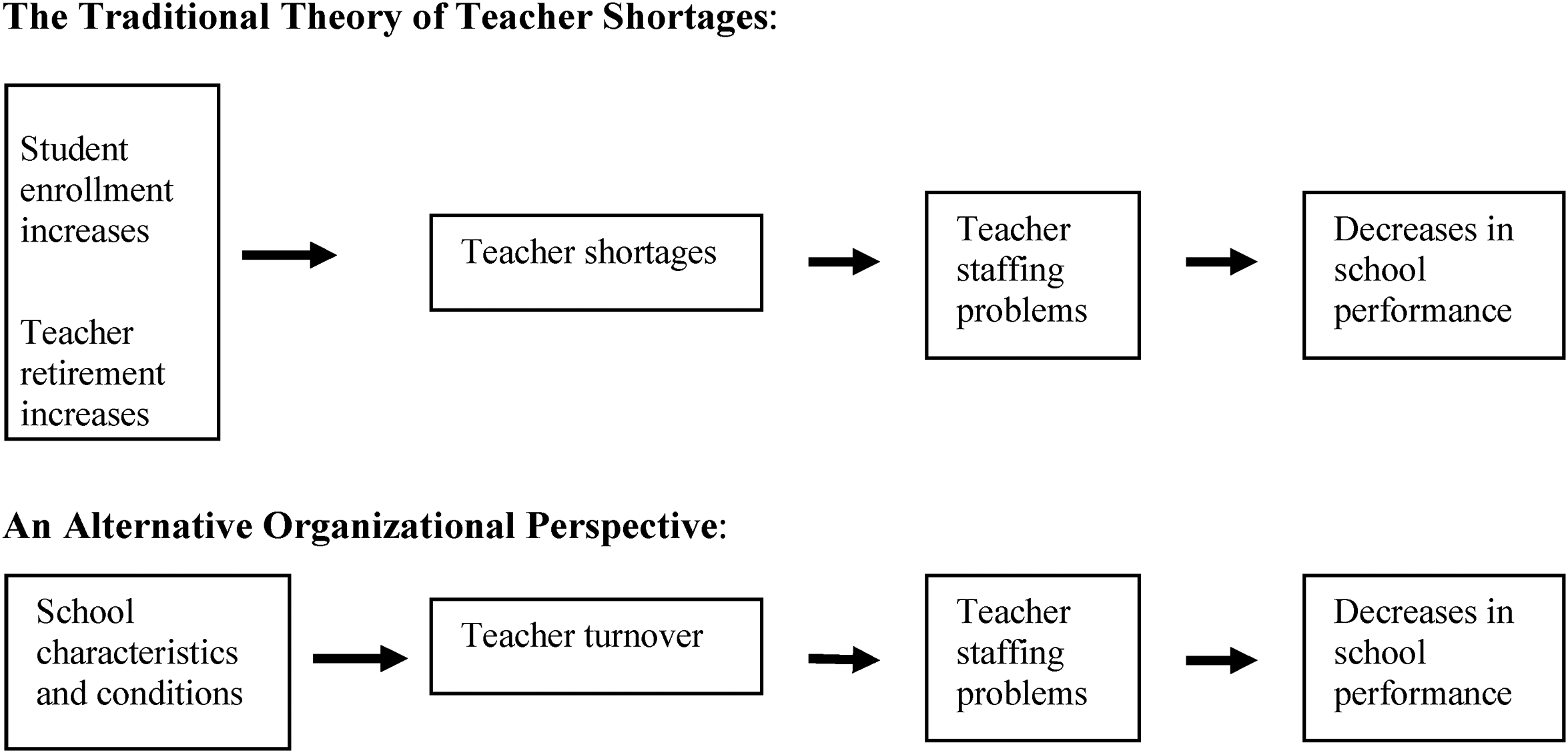
Two perspectives on the causes and consequences of teacher staffing problems.
Over the past two decades we have extended this research and utilized this perspective to examine teacher shortages and turnover in particular types of schools (e.g., high-poverty) and for specific types of teachers. In particular, we have undertaken sustained investigations of two segments of the teaching force widely believed to face the most severe shortages—mathematics/science teachers (Ingersoll & May, 2012; Ingersoll & Perda, 2010) and teachers from under-represented racial-ethnic groups (Ingersoll & May, 2011; Ingersoll et al., 2019, 2022). This study seeks to extend our perspective to the case of teachers in rural schools. It is important to note that the above two perspectives in Figure 1 are not mutually exclusive, but complimentary, and we examine our data in light of both perspectives. Research question (1) focuses on demographic changes in rural education, including changes in student enrollments and the size and age of the teaching force—two trends central to traditional theory on teacher shortages. Research questions (2–5) utilize our organizational perspective to examine shortages and turnover in rural schools.
In the next section, we describe our data and methods. In the following sections of this article, we present the results sequentially for each of our research questions. We then conclude by summarizing our findings and discussing their implications for understanding and addressing teacher staffing problems in rural schools.
Data and Methods
The primary source of data for this study is the SASS and its successor, the National Teacher Principal Survey (NTPS) collected by the Census Bureau for the National Center for Education Statistics, the data collection agency of the US Department of Education. SASS/NTPS is the largest and most comprehensive data source available on teachers in elementary and secondary schools. SASS/NTPS administers questionnaires to a random sample of about 40,000 teachers, 11,000 schools, and 4,500 districts, representing all types of teachers, schools, districts, and all 50 states. NCES has administered these surveys on a regular basis; to date, nine cycles have been completed—1987–88, 1990–91, 1993–94, 1999–2000, 2003–04, 2007–08, 2011–12; 2015–16, 2017–18 (for the two most recent cycles, the name of the survey was changed from the SASS to the NTPS). The data represent teachers for kindergarten through grade 12, part-time and full-time, and from all types of schools, including public, charter, and private. Our analysis uses data from all cycles of SASS/NTPS available, over the three-decade period from 1987 to 2018. Among the strengths of the SASS/NTPS are its large sample size and its long duration. These allow us to explore changes in the teaching force over time and to make accurate comparisons among different types of teachers and schools (for more information on the 2017–18 NTPS, see Taie & Goldring, 2020).
In addition, up to the 2011–12 cycle of SASS, all those teachers in the school sample who departed from their schools in the year subsequent to the administration of the initial SASS survey questionnaire were contacted to obtain information on their departures. This nationally representative supplemental sample—the TFS—contains about 6,000 teachers. The TFS distinguishes two general types of turnover. The first, often called teacher attrition, refers to those who leave teaching altogether. The second type, often called teacher migration, refers to those who transfer or move to different teaching jobs in other schools. Our analysis focuses in particular on data from the most recent TFS, administered in 2012–13, which only included public school teachers (for more information on the 2012–13 TFS, see Goldring et al., 2014). A possible limitation of our study is the utilization of turnover data from 2013, collected almost a decade ago. However, our prior analyses have revealed that patterns of levels, variations and reasons for turnover have showed little change since the late 1980s.
Along with collecting data on the rates of turnover, the TFS questionnaire includes a set of items that asked teacher-respondents to indicate the reasons for their departures from a list in the survey questionnaire. Self-report data such as these are useful because those departing are, of course, often in the best position to know the reasons for their departures. But, such self-report data are also retrospective attributions, possibly subject to bias and, hence, warrant caution in interpretation. In past analyses we have utilized the self-report data in conjunction with multiple regression analyses of the relationship between school characteristics and job conditions and the likelihood of teachers departing (e.g., Ingersoll, 2001; Ingersoll & May, 2012; Ingersoll et al., 2019). Those analyses showed a strong level of consistency between the self-reported reasons for turnover, and the factors correlated with the likelihood of turnover, giving us some confidence in the usefulness of the self-report data.
Our analyses focuses on teachers in public schools in rural communities or locales and compares them with the population of teachers and public schools in urban and suburban locales and communities. Following NCES, we utilize the Census Bureau's classifications of locales based on their degree of urbanicity. Census and NCES twice altered the definitions of locales over the period of SASS/NTPS data collections, an issue we account for in our data analysis (for details on locale definitions, see U.S. Department of Education, 2002; and Chen et al., 2011). 2 In the 2017–18 NTPS, 20.4% of public schools were classified as rural schools, employing 17.9% of all public school teachers, and enrolling 18.8% of all public school students. The 2017–18 NTPS samples represent 23,859 rural public schools, with 727,171 teachers and 9,544,311 students.
A possible limitation of our analysis is our use of standardized definitions of rurality. Analysts have used differing definitions of rurality, each with advantages and weaknesses (Hawley et al., 2016). Rurality, for example, can be defined based on a specific community, which can capture rich contextual depth, but may fail to generalize to other rural communities. On the other hand, a standardized definition of rurality, such as we use, allows for broad comparisons, but may not account for variations among different rural communities.
From the SASS/NTPS, we analyze data on trends in the numbers of schools, students and teachers; the portion of schools with teaching job openings by field, and the degree of difficulty school administrators report filling their teaching job openings. From the TFS, we analyze data on the rates, magnitude, variations of, and reasons for, teacher turnover. Given our objective of providing a broad national portrait, we primarily present descriptive data estimates we generated using basic statistical analytic techniques. In addition, as background, we undertook analyses of variance to assess the the portions of the variation in our measures of both teacher shortages and turnover that lie at the school level. In this study, we do not include multivariate analyses of, for instance, the relative effects of different factors on turnover, as we have done elsewhere. Where we report comparisons for our descriptive measures, for example between teacher estimates for rural school teachers and urban school teachers, we indicate whether differences are statistically significant at a 95% level of confidence. However, it is important to note that, given the large sample size of the SASS and NTPS, most differences between estimates are highly statistically significant, even if the difference is small. In our discussion below, we focus on larger differences that are of substantive significance. Because the TFS has a smaller sample size, we include standard errors in our tables presenting those data. The SASS/NTPS/TFS use a complex stratified survey design with over- and under-sampling of particular subgroups. To obtain unbiased estimates of the national population of schools, students, and teachers in the year of the survey, the observations are weighted by the inverse of their probability of selection.
Results
Has the Number of Rural Schools, Students and Teachers Changed in Recent Decades?
Prior to turning to our main topic of teacher shortages and turnover in rural schools, we first examine the larger context of demographic changes in rural education, including changes in student enrollments and the size and age of the teaching force— two trends central to traditional theory on teacher shortages (see Figure 1).
Over the past three decades total elementary and secondary student enrollments in the US have steadily risen (see Figure 2). Expansion in the student population is not new. The numbers of students grew throughout the twentieth century, and the rate of growth began to soar in the late 1940s with the post–World War II baby boom. Student enrollment peaked by 1970 and then declined until the mid-1980s. In the mid-1980s, elementary and secondary student enrollment again began to grow and has continued since (for details, see Ingersoll et al., 2021).
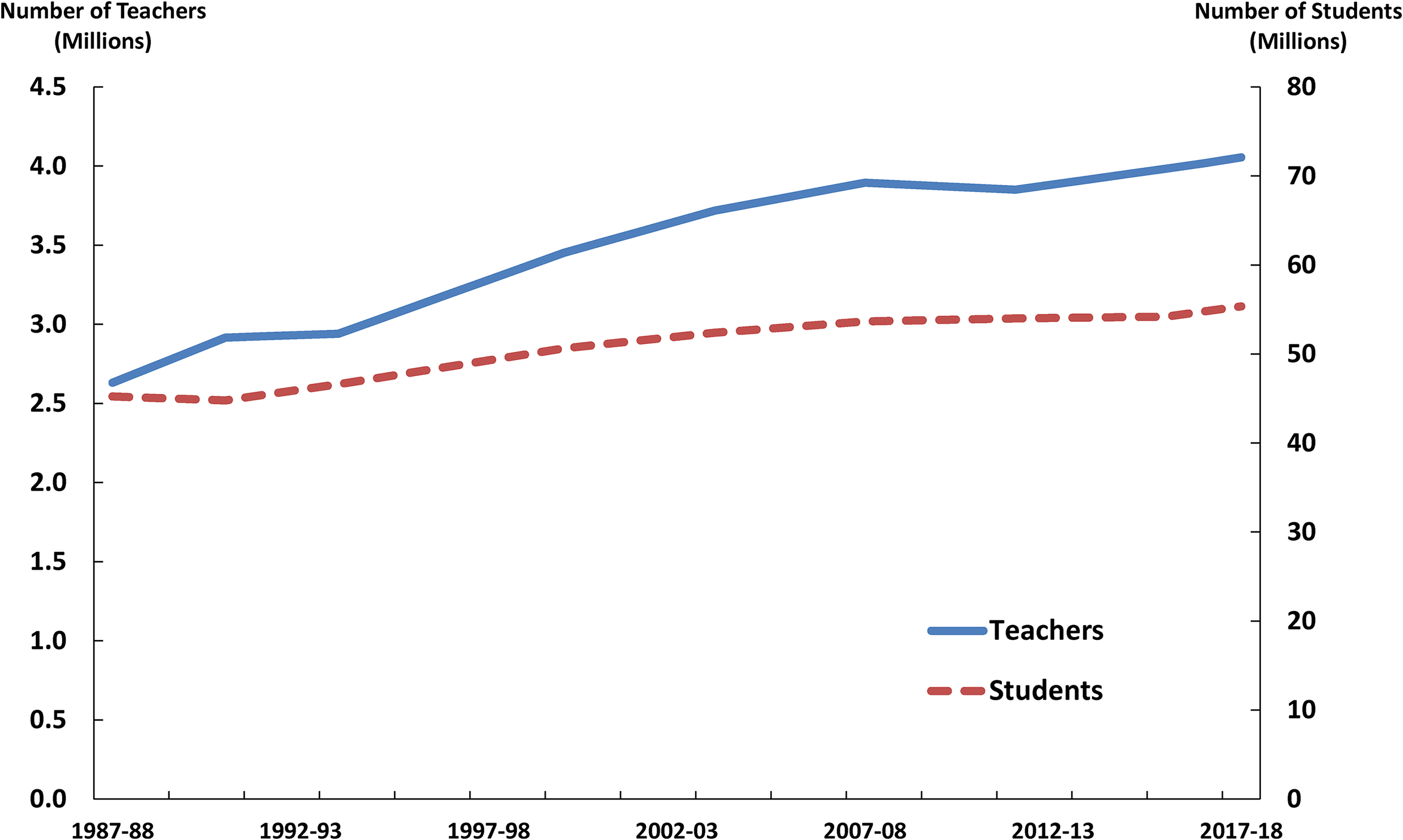
Trends in the number of elementary and secondary school teachers and students, from 1987–88 to 2017–18.
Given these overall increases in student enrollments, not surprisingly, the data also show, that for any given year, most schools have had job openings for which teachers were recruited and interviewed, the number of teachers hired annually has increased, and over the past three decades the size of the teaching force has increased. As also illustrated in Figure 2, interestingly, the number of teachers employed has increased at a faster pace than that of students enrolled—at over twice the rate—a striking finding we explore in more depth elsewhere (Ingersoll et al., 2021; Ingersoll, May, et al., 2022; Ingersoll, Merrill, et al., 2022).
Our focus here is on how these demographic changes differ by locale. Assessing these changes by locale over time is complicated because, as mentioned earlier, the Census Bureau, twice altered, in 1998 and 2005
Trends in the Number of K-12 Public Schools, Students and Teachers, by School Locale, 1999–2018.
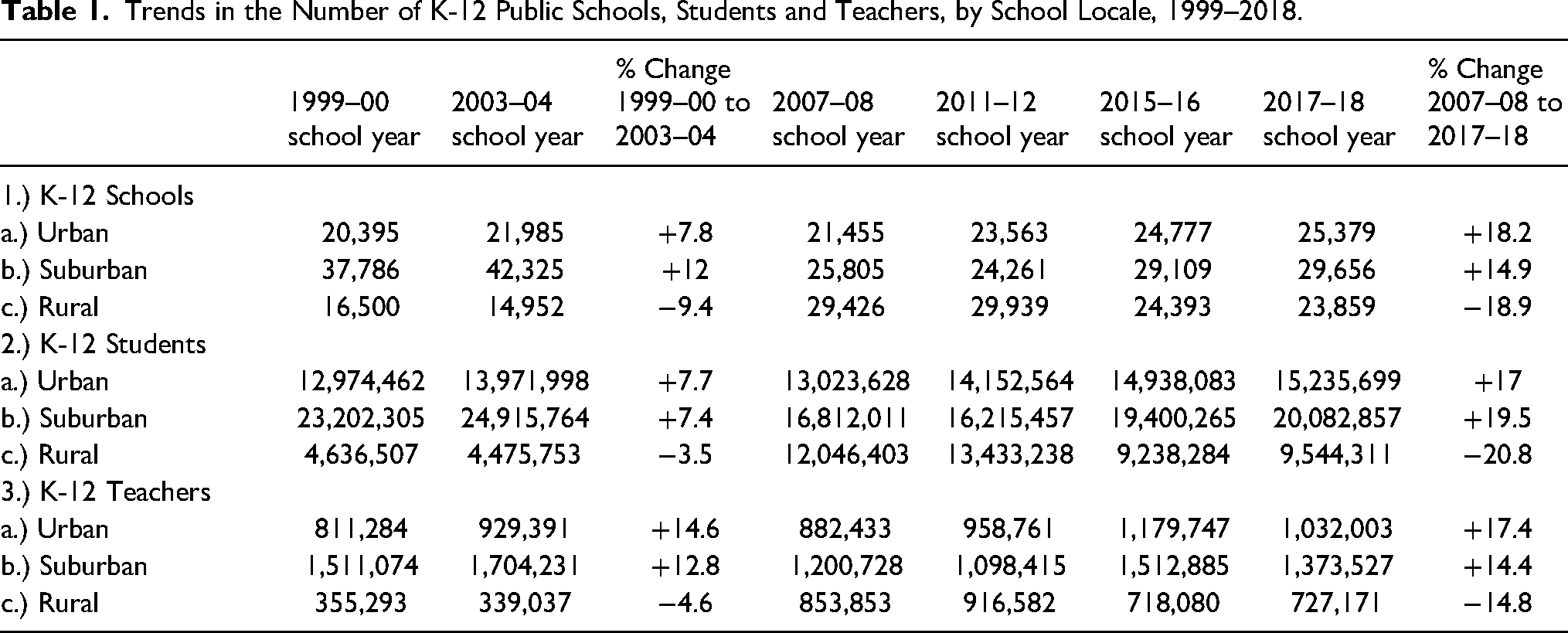
While the number of schools, the number of students, and the number of teachers in urban and suburban communities, all increased in recent decades, the opposite occured in rural communties. Combining the two time periods, the data show that over recent decades the number of schools in urban areas increased by 26%, the number of students by 25%, and the number of teachers by almost a third. There has also been a similar increase in suburban communities. In contrast, the number of schools in rural communities has decreased by over 28%, the number of students by 24% and the number of teachers by 19%. Moreover, the pace of these decreases appears to have accelerated over time, especially since 2012. 3 This is consistent with research documenting a long decline in the population in rural areas (e.g., Davis et al., 2022).
Along with student enrollment increases, traditional teacher shortage theory also holds that an aging of the teacher force, and hence increasing retirements, is a large factor behind shortages (see Figure 1). And, our data analyses confirm that since the late 1980s there has, in fact, been an increase in the mean age of teachers, in the number of teachers over age 50, and in teacher retirements. But, the data also show this trend has changed in the past decade. While data on teacher retirements are not available beyond 2012–13, the data on the teacher age distribution show that, since 2011–12, the teacher aging trend began to vary by locale. Between 2012 and 2018, the number and percent of teachers approaching retirement (age 50 or more) increased in suburban schools, stayed steady in urban schools, but decreased in rural schools by 23%. In short, in recent years there has not been an overall aging of the rural teaching force.
To What Extent Do Rural Schools Have Teacher Shortages and Staffing Problems?
Given rural schools’ above-described decrease in students, along with a decrease in the number of older teachers, (and hence in subsequent retirements), and in turn a decrease in demand for, and employment of, new teachers, traditional teacher shortage theory would predict that such schools would have less difficulty staffing their classrooms, that is, suffer less from teacher shortages and staffing problems. In contrast, traditional shortage theory would also expect the opposite in urban and suburban schools, with their increase in students, along with an increase in retirement-age teachers (especially in suburban schools) and hence increase in demand for, and employment of, new teachers.
The most grounded and accurate empirical measures available of the extent of actual teacher staffing problems and shortages in schools are data from school administrators on the actual degree of difficulty they encounter filling their teaching position openings (e.g., Behrstock, 2009; Ingersoll, 2001; Ingersoll & Perda, 2010). Importantly for our analysis, SASS/NTPS collect data on the numbers of school principals reporting teaching job openings for the upcoming school year and those that experienced difficulties filling those openings. The most recent data from SASS/NTPS for this indicator are from the 2015–16 cycle.
Figure 3 focuses on rural public secondary schools. It presents data on the percent of principals reporting their school had teaching vacancies at the start of the school year—teaching positions for which teachers were recruited and interviewed—and the percent that reported they experienced serious difficulty filling one or more of those vacancies. As shown in the top row of Figure 3, overall, over three quarters of principals in rural public secondary schools had teaching vacancies in one or more of nine key teaching fields, and over half of those reported they had serious difficulty staffing those positions—representing 46% of all rural public secondary schools.
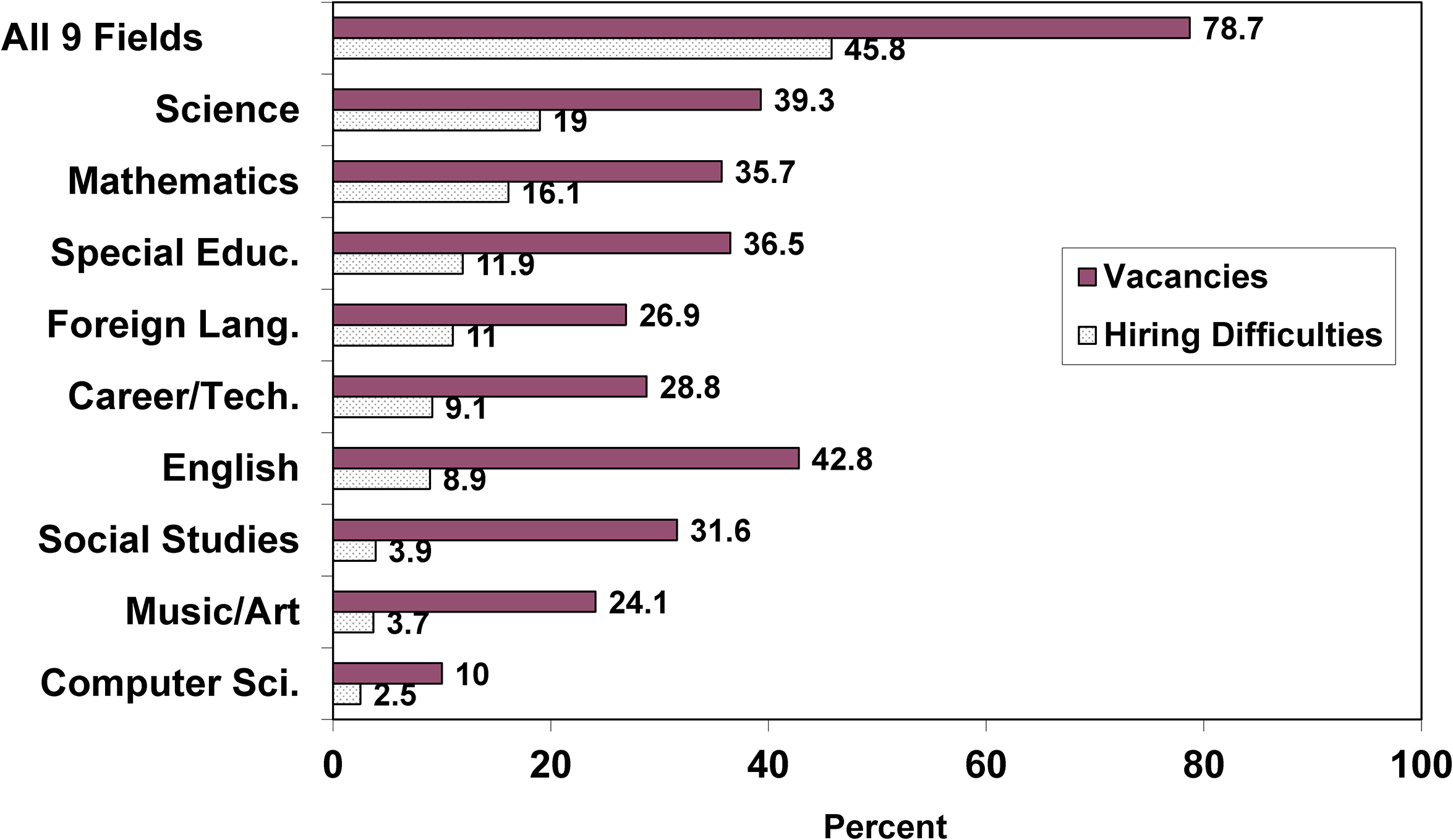
Percent rural public secondary schools with teaching vacancies and with serious difficulties filling those vacancies, by teaching field.
Moreover, the data also show large field-to-field differences in vacancies and staffing difficulties in rural schools. Mathematics and science experienced their most serious problems in rural schools. Thirty-nine percent of rural public secondary schools had job openings for teachers in science, and about 44% of these indicated serious difficulties filling these openings, representing 19% of rural public secondary schools. Similarly, 36% of secondary schools had job openings for mathematics teachers, and about half of these indicated serious difficulties filling these openings, representing about 16% of all rural public secondary schools.
On the other hand, for some teaching fields, few schools had serious difficulty filling positions. For instance, as also shown in Figure 3, in the field of social studies, 32% of rural public secondary schools had job openings, but only about 13% of these—representing only 4% of all rural public secondary schools—indicated that they had serious difficulty filling those openings.
Table 2 presents the same data on teacher staffing problems, but with comparisons of urban, suburban and rural schools. The data reveal that levels of staffing difficulties were very similar for both rural and non-rural schools. As shown in the top row, overall, suburban public secondary schools were slightly less likely to experience difficulties filling their teaching positions—42% reported difficulties in one or more of the nine fields, compared to 46% for both urban and rural schools (differences at statistically significant levels). But, in most fields there were not large differences between urban, suburban and rural schools in the percentages of schools with staffing problems.
Percent Public Secondary Schools with Serious Difficulties Filling Teaching Vacancies, by Teaching Field, by School Locale.
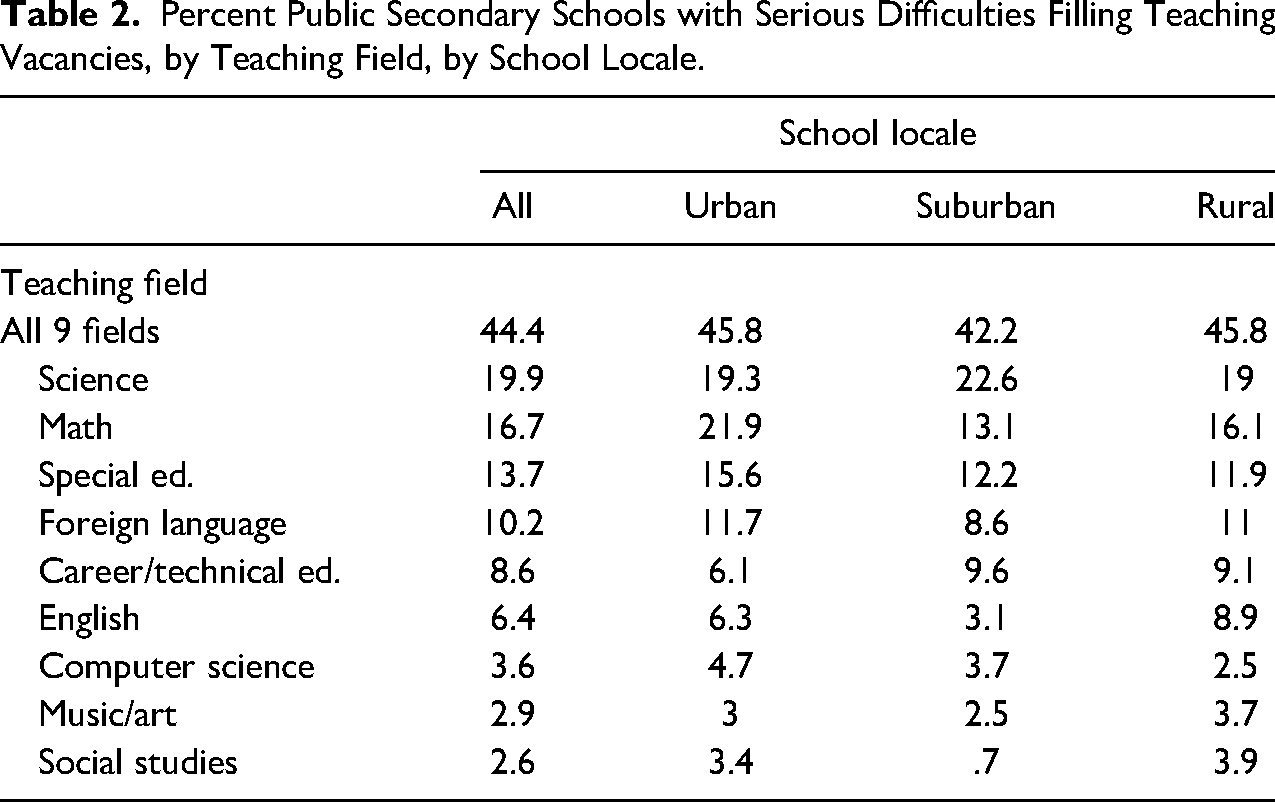
In sum, the data show that, as expected, many schools have had staffing problems. But, surprisingly, this has been just as true for rural as other schools. Despite decreasing numbers of students, and hence demand for teachers, many rural schools have nevertheless had difficulties staffing their teaching positions. In short, rural schools have faced similar teacher shortages and staffing problems as urban schools. Moreover, our analyses of these same measures from earlier cycles of SASS, from the early 1990s, also reveal that while levels of staffing problems have risen and fallen, these cross-field and cross-locale patterns in teacher staffing problems and shortages have remained consistent over time.
It is important to recognize that for all these locales, as shown in Figure 3 and Table 2, while the actual number of schools is substantial, it represents a minority of schools that have had serious staffing problems in any given field, in any given year. That is, teacher shortages are limited to particular schools and particular fields. Moreover, while there has not been large differences in staffing difficulties, on average, across schools from rural, urban, and suburban locales, there are nevertheless, large school-to-school differences. In our background analyses of variance of these data we found that the variation in levels of school staffing difficulties is far greater within, than between, states and, moreover, such variation is far greater between schools than between school districts. 4 The largest variation in the degree of staffing difficulties and in staffing problems by location are those between different schools, even within the same school district. Moreover, our analyses document that the poverty level of schools is one of the strongest correlates of their degree of staffing difficulties; high-poverty schools are far more likely to have serious staffing difficulties than low-poverty schools. In other words, within the same state, locale, teacher labor market, and licensure and pension systems, the extent of shortages varies greatly among different schools—suggesting the usefulness of our organizational-level perspective to understand the sources of these staffing problems—which we turn to in the next sections.
What is the Role of Teacher Turnover in Rural Teacher Shortages and Staffing Problems?
The above data from school administrators on the degree of difficulty encountered filling teaching job openings is a useful empirical measure of teacher shortages and staffing problems. But, data on the extent of staffing difficulties themselves do not indicate the sources of these difficulties. In particular, these data do not themselves distinguish whether rural schools’ staffing problems are primarily a result of an inadequate quantity of new teacher supply, or high levels of teacher turnover. While the SASS/NTPS data do not allow us to assess the former, the data do allow us to examine the latter—levels of teacher turnover in rural schools and their role in teacher staffing problems.
Researchers have long held that elementary and secondary teaching has relatively high rates of annual departures of teachers from schools (Lortie, 1975; Murnane et al., 1991; Tyack, 1974). To empirically compare teacher departure rates to those in other occupations and lines of work, we analyzed national data from two different administrations of NCES’ longitudinal Baccalaureate and Beyond Survey (1993–2003 and 2008–18). We found that attrition in teaching (those leaving the occupation entirely) is lower than in some lines of work (child-care workers, secretaries, paralegals), is slightly higher than police officers and nurses, and far higher attrition than some established and traditional professions, such as law, engineering, architecture (see Ingersoll et al., 2021; Ingersoll, May, et al., 2022; Ingersoll, Merrill, et al., 2022).
However, it is important to recognize that K-12 teachers form one of the largest occupational groups in the nation (U.S. Bureau of the Census, 2018) and hence, given their relatively high turnover levels, numerically, the flows of teachers in and out of schools are large. To illustrate this phenomenon for rural schools, we analyzed data from the most recent SASS/TFS cycle that included data on both hiring and turnover (2011–13). As shown in Figure 4, about 90,000 teachers entered rural public schools, at the beginning of the school year, and by the following school year, about 145,000—equivalent to 162% of those just hired—departed from their schools. Thus, during that 10–12 month period, before, during and after that school year, there were about 245,000 teachers in job transition into, between or out of rural public schools, representing over one quarter of the entire rural public teaching force—a scenario akin to a “revolving door.”
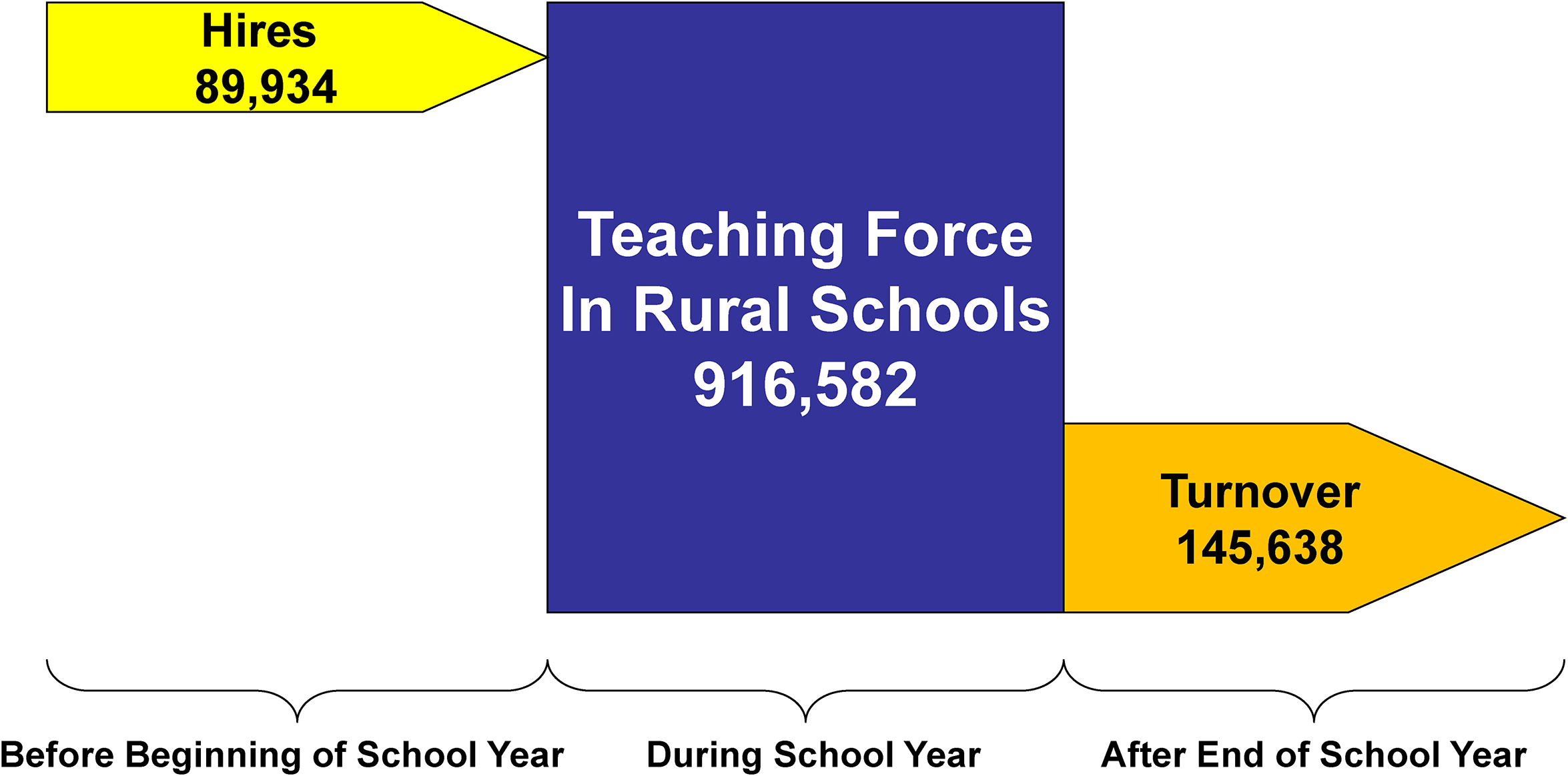
Numbers of teachers in transition into and out of rural public schools before and after school year.
While this revolving-door pattern is similar for rural, urban and suburban schools and is consistent across the cycles of SASS/TFS, the ratio of turnover to hiring is especially high for rural schools because of their decline in the number of students and teachers, as evidenced in Table 1. Hence, the need for new hires, and accompanying staffing difficulties, in rural schools, are not driven by increases in student enrollments—as students in rural schools have decreased. Rather, the data show that the hiring of new teachers in rural schools prior to a school year is largely to fill spots vacated by other teachers who departed their schools at the end of the prior school year.
It is important to note that the incoming and outgoing teacher flows in Figure 4 are calculated at the level of the school. Hires and turnover refer to those newly entering or departing a particular school. Cross-school moves, even within districts, are counted as hires or as turnover. Total teacher turnover as depicted in Figure 4 is fairly evenly split between its’ two major components—migration and attrition. Teacher migration, of course, does not decrease the overall net supply of teachers, as does those leaving for retirement and career changes, and hence does not contribute to overall shortages from a system level of analysis. However, that does not mean that cross-school and cross-district moving do not contribute to teacher staffing problems in particular schools. From an organizational perspective, and from the viewpoint of those managing educational organizations, teacher migration and attrition have the same effect; in either case, they result in a decrease in staff that usually must be replaced, and, at times resulting in staffing difficulties and staffing problems. Moreover, as we show in the next section, cross-school moves are asymmetric; the flows to and from schools in different locales are not evenly balanced.
In addition, a portion of those leaving teaching represent temporary attrition. The latter, of course, do not result in a permanent loss of human capital from the teacher supply and, hence, do not permanently contribute to overall shortages. Indeed, the re-entrance of former teachers is a major source of new supply (Ingersoll & Perda, 2010). However, like migration, that does not mean that the departure of teachers for one or more years does not contribute to teacher staffing problems. Again, from a school-level and organizational perspective, temporary attrition results in a decrease in staff that usually must be replaced, regardless of whether those leaving later return to that same school or another.
We further empirically confirmed our hypothesis of a link between teacher turnover and shortage problems using a school-level of measure of turnover. The data show that those schools with serious teacher staffing problems (as shown earlier in Table 2 and Figure 3), were almost twice as likely to have had above-average turnover rates the prior year, as those schools reporting no difficulties. And, as we will show in the next sections, most of these departures were not a result of an aging and retiring teaching force. Rather, preretirement voluntary turnover is behind the majority of the demand for new hires, and the accompanying difficulties rural schools have adequately staffing classrooms. In short, in rural schools, preretirement teacher turnover is the primary driver behind shortages and staffing problems.
How High is Teacher Turnover in Rural Schools?
It is important to recognize that above-described overall levels of turnover mask large differences in teacher departure rates from different types of schools, revealing the need to disaggregate our data. The flow of teachers out of schools is not equally distributed across states, regions, and school districts. However, as with our background analyses of variance of the staffing difficulties data discussed in the prior section, our background analyses of variance of teacher turnover documented that the largest variations in teacher departures by location, are those between different schools, even within the same district. 5 Moreover, our analyses of the data show that teacher turnover is concentrated—in any given year almost half of all public school teacher turnover takes place in just one quarter of the population of public schools. The poverty level of schools is one of the strongest correlates of teacher turnover; high-poverty schools have significantly higher turnover than do low-poverty schools.
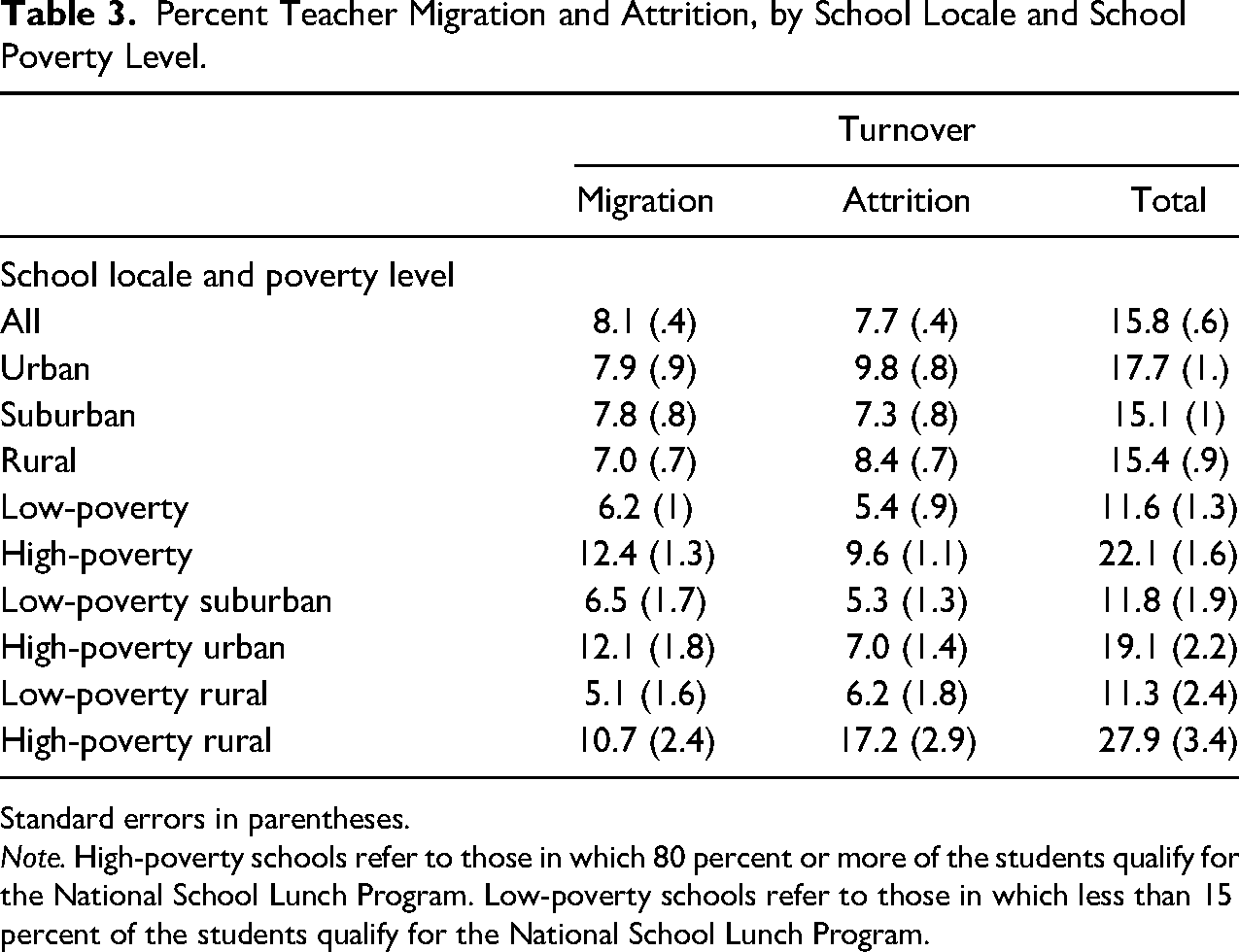
As shown in Table 3, overall rural public school teacher turnover is about average (15.4%), urban teachers have slightly higher than average rates (17.7%), and suburban teachers have slightly lower rates (15.1%) (these differences are of borderline statistical significance). High-poverty schools (in which 80% or more of the students qualify for the National School Lunch Program) have almost double the rate of turnover as do low-poverty schools (less than 15% NSLP), and at a very high level of statistical significance. And, schools that are both high-poverty and urban have amongst the highest rates of turnover (19.1%).
Percent Teacher Migration and Attrition, by School Locale and School Poverty Level.
Standard errors in parentheses.
Note. High-poverty schools refer to those in which 80 percent or more of the students qualify for the National School Lunch Program. Low-poverty schools refer to those in which less than 15 percent of the students qualify for the National School Lunch Program.
However, strikingly, the data show that high-poverty rural public schools have unusually high rates of turnover—almost 28% of their teachers depart annually (12% of rural public schools were in high-poverty communities). Of note, high-poverty rural public schools have higher turnover than high-poverty urban schools, a difference at a very high level of statistical significance.
The data also show substantial, and uneven, annual teacher migration across locales. We used the TFS data to more closely examine the characteristics of the destination schools of cross-school migrants in order to discern the degree of symmetry in teachers’ moves to and from school in different locales. We calculated ratios of the percentage of teacher movers going from one school locale to another, to the percentage moving in the reverse direction. The data show that, interestingly, there is an annual net gain and loss for schools, according to school locale. For instance, as shown in Figure 5, teachers who migrated were over twice as likely (ratio of 2.6) to move from rural to urban schools, as in reverse—from urban to rural schools. Likewise, teachers were over twice as likely (ratio of 2.3) to move from rural to suburban schools, as in reverse—from suburban to rural schools. In contrast teacher migration from urban to suburban was only slightly higher than in reverse (ratio of 1.2). The net result is a large annual asymmetric reshuffling within the school system of a substantial portion of the teaching force, with a net loss to rural schools and a net gain to urban and suburban schools. These findings on migration provide further support for our theoretical perspective that fully understanding the staffing problems of schools requires examining them from a school level and from the perspective of the organizations in which they occur.
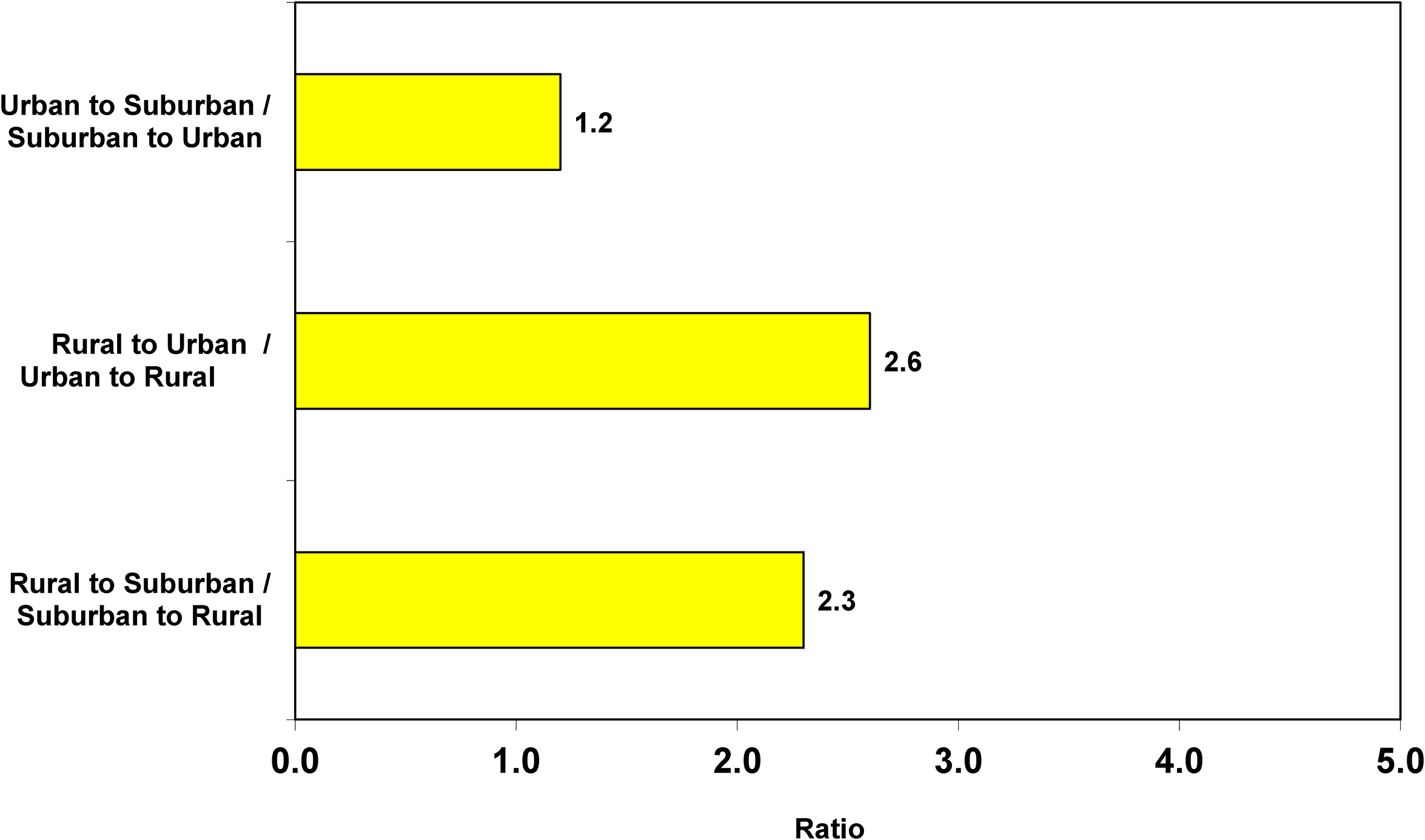
Ratio of percentages of teachers migrating in opposite directions to and from public schools in different locales.
What Are the Reasons for Teacher Turnover in Rural Schools?
These data raise several questions—what are the reasons for teacher turnover, why do some schools have far higher turnover than others and, for our focus, what are the reasons for teacher turnover in rural schools? One method of answering these questions is to ask those who have moved or left why they did so. We examined such self-report data drawn from items in the TFS questionnaire that asked teachers to indicate the level of importance of 22 factors, listed in the survey questionnaire, in their decision to move or leave. The top panel in Table 4 presents data on the percentage of teachers who reported that particular categories of reasons were “very” or “extremely” important in their decision to depart on a five-point scale from “not important” to “extremely important.” 6 Note that the percentages in the top panel of Table 4 add up to more than 100%, because respondents could indicate more than one reason for their departures and hence our categories are not mutually exclusive. The table compares rural with urban and suburban teachers.
Percent Teachers Reporting Various Reasons Were Important for Their Turnover, by School Locale.
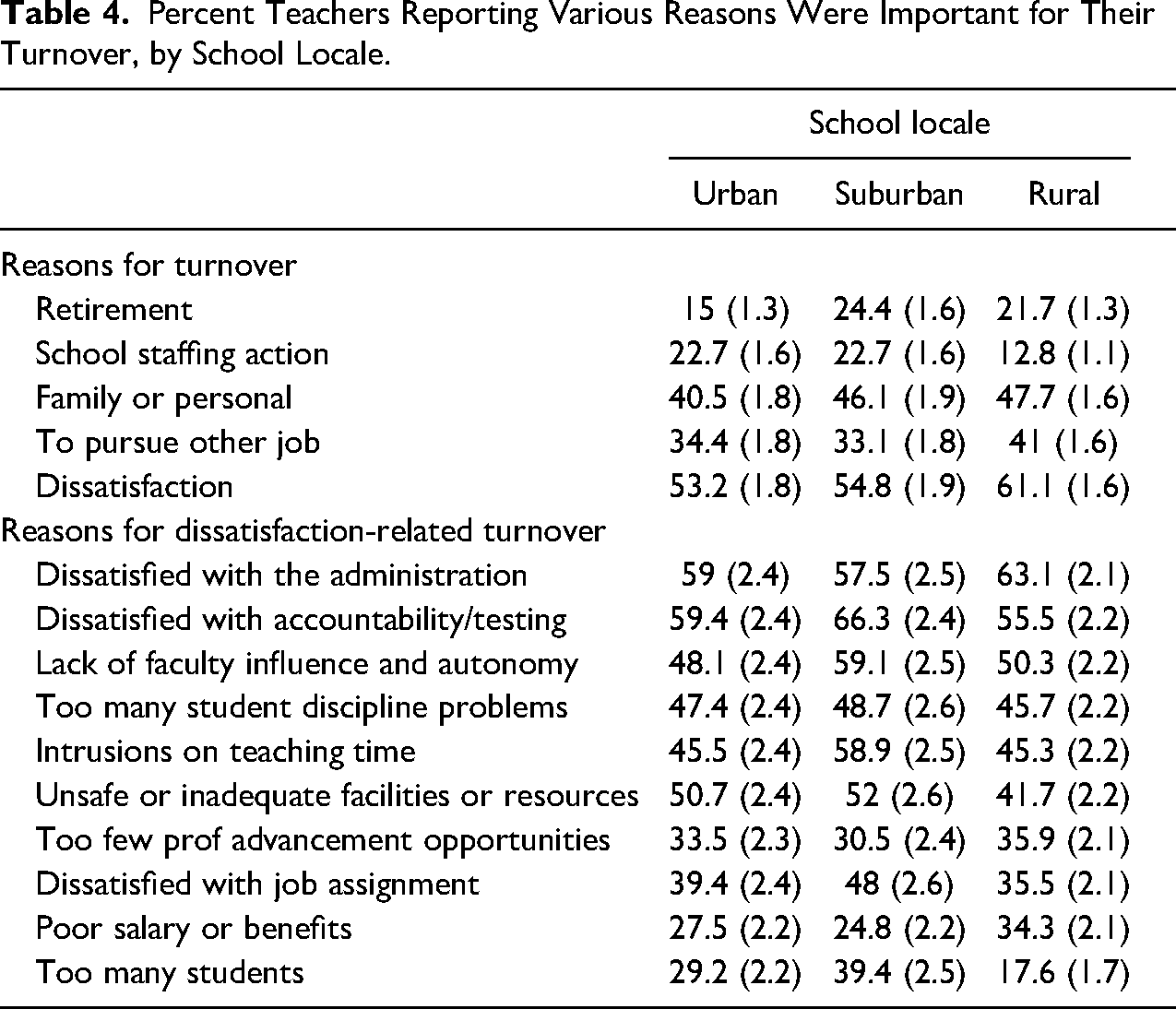
Overall, rural teachers were both similar and different from other teachers in the general patterns regarding the reasons why they moved from or left their jobs. Retirement is listed by about 22% of the total of those who departed as an important reason for their departure. This is an important finding because, as reviewed earlier, traditional theory on teacher shortages has long held that an aging and retiring teaching force is a major factor behind teacher shortages. However, the data show that retirement accounts for a relatively small portion of departures compared to other reasons.
School staffing actions include layoffs, terminations, school closings and reorganizations and involuntary cross-school transfers. Sometimes these staffing actions entail migration to other schools and other times leaving teaching altogether. Like retirement, these account for only a relatively small portion of total turnover from schools—about one-fifth of urban and suburban teachers. Rural teachers were less likely (less than 13%) and at a statistically significant level, to cite this category of reasons for their departures than teachers in other schools.
A third category of turnover—for family or personal reasons—includes departures for pregnancy/child rearing, health problems, and family moves, including taking a job more conveniently located. These account for more turnover, and at a statistically significant level, than either retirement or staffing actions. These reasons are also probably common to all occupations, and all types of organizations, and a normal part of worklife. Just under half of all teachers cite these as reasons for their departures. Rural teachers were not more or less likely to cite this reason than others at a statistically significant level.
A fourth category—to pursue another job—includes those who moved to another school, those who left teaching to pursue another career, or to take courses to improve their career opportunities within or outside the field of education. Some of the latter are only temporary leavers, and after getting a graduate degree or advanced credential, re-enter teaching as part of the new supply. Notably, rural teachers were more likely, at a statistically significant level, to cite this category—to pursue another job—as a reason for their departures than either urban or suburban teachers.
Finally, the largest category is those who departed because they were dissatisfied with some aspect of the teaching job. Over half of all departing teachers reported that job dissatisfaction was “very” or “extremely important” in their decision to depart. Strikingly rural teachers were more likely to cite this category (61%), at a statistically significant level, than either urban or suburban teachers. The data indicate that over 79,000 rural teachers left teaching altogether just after the school year. Only about 32,000 of these left because of retirement. That is, almost three times as many indicated that job dissatisfaction was an important factor in their decision to leave teaching, compared to retirement
These data raise a further question: of those who reported dissatisfaction with some aspect of their job as a reason to depart, what were their particular sources of dissatisfaction. The bottom panel in Table 4 presents disaggregated data on ten particular factors included in this category. The data reveal that there were large differences in the factors most likely to be cited by teachers and also some differences between rural and other teachers.
Among rural teachers, dissatisfaction with the school administration was the most common factor cited (63%) as important to their decision to depart. Rural teachers were more likely to cite this reason, at a statistically significant level, than suburban teachers. The next most frequently cited reasons among rural teachers who departed because of dissatisfaction,
were dissatisfaction with accountability/testing (55%) and dissatisfaction with a lack of classroom autonomy or lack of input into decision making (50%).
Compared to the above three reasons, rural teachers were less likely to indicate that dissatisfaction with unsafe or inadequate facilities, with too few professional advancement or leadership opportunities, and with their job assignment, were important factors in their departures. The least likely reasons given by rural teachers were dissatisfaction with their salaries/benefits and dissatisfaction with the number of students/class-sizes. Only 34% of rural teachers reported inadequate or poor salary and/or benefits were important reasons to depart and less than one-fifth of rural departees reported dissatisfaction with the numbers of students they taught as an important factor. However, for both of these reasons, rural teachers differed from both urban and suburban teachers, at a statistically significant level. Rural teachers were more likely to cite salaries and benefits than others (NTPS data indicate that in 2017–18, the average salary in public schools for a first-year teacher was about $43,700, and for first-year teachers in rural schools it was about $39,900). On the other hand, rural teachers less often reported the number of students taught as a reason to depart than other teachers.
The data also reveal a similar pattern of reasons for both teacher migration and attrition. A desire to pursue another job and job dissatisfaction were the most cited categories by both movers and leavers. And for both movers and leavers, dissatisfaction with the school administration, dissatisfaction with accountability/testing and dissatisfaction with a lack of classroom autonomy/input into decision making were among the most frequently cited and salaries and class-size were among the least frequently cited.
Conclusions and Implications
The objective of this study is to provide an overall national portrait of teacher shortages and turnover in rural schools. Understanding the larger national landscape of these problems is essential to understanding the sources and solutions to the teacher staffing challenges particular to rural schools, that researchers have insightfully brought to light (for reviews, see ; McClure & Reeves, 2004). Tran & Dou, 2019; Tran et al., 2020) Our study revealed six findings:
The Rural School Sector is Shrinking
Our analysis began by examining larger demographic changes in rural education, including changes in student enrollments and the size and age of the teaching force—demographic trends central to traditional theory on teacher shortages (Figure 1). In contrast to urban and suburban communities, over the past couple of decades, the number of schools, students and teachers in rural areas have decreased sharply. This is consistent with research documenting a long decline in the population in rural areas (e.g., Davis et al., 2022). Moreover, unlike in urban and suburban schools, over the past decade, the rural teaching force, overall, has gotten younger, resulting in a decrease in the number and percent of teachers approaching retirement age.
Many Rural Schools Suffer from Teacher Shortages
Despite a decrease in students, and accordingly a decrease in the demand for, and employment of, teachers in rural schools, the latter are just as likely as urban and suburban schools to have serious difficulties filling their teaching openings. The fields of mathematics and science experienced the most serious staffing problems in rural schools.
Many Rural Schools Suffer from a Revolving Door of Teachers
Our data indicate that teacher turnover is the primary driver of staffing problems and shortages in rural schools. The data show that preretirement departures of teachers are behind most of the demand for new hires, and the subsequent staffing difficulties experienced, in many rural schools.
There Are Large Differences in Rates of Turnover Between Different Types of Schools
Teacher turnover is especially high in high-poverty rural schools—over a quarter of their teachers depart each year—and higher than in high-poverty urban schools. Moreover, the data reveal large differences in the destinations of teachers who migrated from one school to another. Movers were over twice as likely to move from rural to urban, or rural to suburban schools, as in reverse. The net result of this is a large annual reshuffling within the school system of a large portion of the rural teaching force, with a net loss to rural schools and a net gain to urban and suburban schools.
Job Dissatisfaction is the Primary Driver of Teacher Turnover in Rural Schools
There are many factors behind school differences in teacher turnover. A major set of factors involves teachers’ dissatisfaction with various aspects of the teaching job. Over 60% of teachers departing from rural schools cite dissatisfaction as a main reason for their departures and 41% indicate they are departing to pursue a different or better job. These are higher levels than in urban or suburban schools.
School Organizational Conditions are Strongly Linked to Teacher Turnover in Rural Schools
The leading factors behind dissatisfaction-related turnover in rural schools are dissatisfaction with school administrations, dissatisfaction with accountability and testing and dissatisfaction with a lack of classroom autonomy or lack of input into school decision making.
Collectively, these findings, coupled with the earlier summarized research highlighting the particular teacher staffing challenges for rural schools, provide an example of the spatial injustice faced by rural education—the relative disparities in teacher staffing problems, teacher turnover, and the organizational factors behind the latter (Tieken, 2017). According to our analysis, high-poverty rural schools, in particular, face the most intense teacher turnover and yet the staffing challenges of rural schools receive less attention than those of their urban counterparts. It is also important to acknowledge a possible data limitation in our study—the national data we analyze extend to spring 2018. Currently, as of yet national data on teacher shortages and turnover since the pandemic that began in spring 2020 have not been released.This raises questions about whether these trends have continued into the present, especially after the pandemic that began in spring 2020. Numerous commentators have drawn attention to high levels of employee turnover across the economy since the advent of the pandemic (e.g., Smith, 2022). Numerous reports have also drawn attention to increased stress for teachers during the pandemic (e.g., Wright, 2022). Future improvements in the economy could increase other employment options for teachers, and in turn, increase in teacher turnover. This will most likely be especially true for high-poverty rural schools. Hence, addressing high teacher turnover could become even more important over time.
Implications
Where the quantity of teachers demanded is greater than the quantity of teachers supplied, given the prevailing wages and working conditions, there are numerous possible policy responses. Longstanding theory on teacher shortages (Figure 1) holds that the main source of the problem is an insufficient supply of new teachers, in the face of student enrollment and teacher retirement increases. In turn, increasing the supply of new teachers has long been a dominant reform strategy. Nothing in this study suggests these efforts are not worthwhile, but the data indicate that teacher recruitment strategies, alone, do not directly address a major root source of teacher staffing problems—preretirement turnover. In short, recruiting more teachers, while an important first step, will not fully solve school staffing inadequacies if large numbers of such teachers then depart in a few years. Decreasing the loss of those recruited by such initiatives could prevent the loss of those investments, and also lessen the ongoing need for creating new recruitment initiatives.
Our data analyses suggest that staffing problems in schools can be usefully reframed from macro-level issues, involving inexorable societal demographic trends, to organizational-level issues, involving aspects of the structure and management of school districts and schools. From the organizational perspective of this analysis, schools are not simply victims of external demographic trends. Rather our data suggest there is a significant role for school management and leadership in both the genesis of, and solution to, teacher staffing problems. From an organizational perspective, many of the reasons for teacher turnover revealed by our data analysis are notable because they are examples of manipulable and policy-amenable aspects of particular districts and schools, with implications for the management and leadership of schools.
Two of the most frequently cited organizational factors behind rural teacher turnover – teachers’ decisionmaking influence and school accountability – are also notable because they are central and longstanding tenets in the field of organizational theory. Experts in organizational leadership have long advocated a balanced approach to implementing organizational accountability and employee authority in work settings (e.g., Drucker, 1992). In this view, accountability and authority must go hand in hand in workplaces. Delegating autonomy or authority to employees without also ensuring commensurate accountability can foster inefficiencies and irresponsible behavior and lead to low performance. Likewise, implementing organizational accountability without providing commensurate autonomy and authority to employees can foster job dissatisfaction, increase employee turnover, and lead to low performance. From this perspective, both of these organizational structures are necessary, but neither alone is sufficient. This balanced approach is a key characteristic underlying the theory and model of the established professions, such as law, medicine, university professors, dentistry, engineering (Freidson 1986). In the professional model, practitioners are, ideally, first provided with the training, resources, conditions, and autonomy to do the job—and then they are held accountable for doing the job well. Translating this balanced perspective to school settings, in prior research we have examined the relative effects of both teachers’ decisionmaking influence and school accountability in schools. We have documented that schools with both high levels of teacher decisionmaking influence and strong academic standards for teachers, have both better teacher retention and higher student achievement (e.g., Ingersoll 2003; Ingersoll and Collins, 2019). To be sure, the data do not suggest that altering any of the organizational conditions we examined would be easy, nor do the data place blame on school leaders—there can be numerous financial, political, organizational and legal barriers to improvements in schools as workplaces. However, unlike reforms such as teacher salary increases and class-size reduction, changing some of the organizational conditions revealed in the data, such as the degree to which teachers have input into school-wide decisions, and the amount of autonomy teachers hold in their classrooms, would appear to be less costly financially—an important consideration, especially in rural settings.
Footnotes
Declaration of Conflicting Interests
The author(s) declared no potential conflicts of interest with respect to the research, authorship, and/or publication of this article.
Funding
The author(s) received no financial support for the research, authorship, and/or publication of this article.

Notes
Correction (May 2023):
This article has been updated with minor textual corrections since its original publication.