



Abstract
This paper critically examines the transformative potential of integrating Community Engagement (CE) and Culturally Responsive Pedagogy (CRP) within Initial Teacher Education (ITE) programs globally. It highlights the significance of community-based learning and the Funds of Knowledge (FoK) framework in preparing educators to address the complexities of superdiverse classrooms. Through a systematic review, the study identifies effective practices and systemic barriers in ITE, advocating for a paradigm shift that aligns teacher preparation with the cultural realities of students. The proposed model synthesizes CRP, CE, and FoK to cultivate critical consciousness and adaptive expertise, essential for fostering inclusive learning environments. By providing actionable recommendations for reimagining ITE, this paper promotes equity and educational justice, asserting that nurturing culturally competent educators is crucial for the success of all learners in an interconnected world. Ultimately, this vision paves the way for a more equitable educational future, where diversity is celebrated as a cornerstone of effective teaching and learning.
Keywords
Introduction
The educational landscape is undergoing a profound transformation due to unprecedented globalization and migration. Classrooms are increasingly characterized by superdiversity, presenting a rich tapestry of cultural, linguistic, and socio-economic complexities (Vertovec et al., 2024). This demographic shift brings significant challenges but also unique opportunities for innovation in education, necessitating a reimagining of Initial Teacher Education (ITE). Educators must be equipped to navigate this diversity and create inclusive learning environments that authentically reflect the realities and identities of their students.
The urgency for reform is highlighted by the recognition that traditional pedagogical models are inadequate for addressing the unique needs of diverse learners. As classrooms evolve into microcosms of global society, ITE must adopt approaches that embrace flexibility, reflexivity, and Culturally Responsive Pedagogy (CRP). CRP serves as a crucial framework that validates and leverages the diverse experiences and knowledge students bring, ensuring that all voices are heard and valued.
Central to this transformative approach are Community Engagement (CE) and CRP, which together form a powerful framework for teacher preparation. CE fosters collaborative partnerships between schools and communities, facilitating experiential learning that enriches both students and educators (Zygmunt et al., 2018). Wilson (2025) emphasize the importance of community engagement in fostering inclusivity and representation, particularly through initiatives that connect with underrepresented groups and promote active participation in educational settings. Simultaneously, CRP focuses on centering student voices and recognizing cultural assets, cultivating equitable learning opportunities (Gay, 2018).
Integrating the Funds of Knowledge (FoK) framework further enhances this pedagogical approach by acknowledging the rich cultural knowledge that students and their families possess (Moll et al., 1992). The synthesis of CE, CRP, and FoK is not merely theoretical; it is essential for preparing educators to meet the demands of superdiverse classrooms. Educators trained in these frameworks are better positioned to foster student engagement, promote academic success, and contribute to a more equitable society.
Navigating these complexities requires cultivating adaptive expertise—an indispensable skill that enables teachers to critically assess, respond to, and thrive in diverse learning environments (Gube & Lajoie, 2020). This involves fostering critical reflection, dialog, and praxis within teacher education programs, empowering educators to challenge inequitable power structures and respond adeptly to the diverse learning needs of their students (Almeida, 2019; Cochran-Smith & Lytle, 1993; Freire, 1970). Such a perspective enhances educational outcomes and transforms educators into advocates for equity and justice, positioning them as vital agents of change within their communities.
In light of these pressing needs, this study aims to illuminate pathways for ITE to evolve in response to contemporary challenges. By exploring the integration of CE, CRP, and FoK within teacher preparation, this research seeks to provide actionable insights for developing educators who are responsive to classroom complexities and committed to fostering an inclusive and equitable educational landscape for all students.
This study is guided by three research questions: (1) How are CRP, FoK, and CE integrated into ITE programs across diverse educational and cultural contexts? (2) What successes and limitations do these integrated models present in preparing educators for superdiverse classrooms globally? (3) How can systemic barriers—such as resource constraints and rigid curriculum standards—be addressed to enhance the implementation of CRP, CE, and FoK in teacher education?
By systematically addressing these questions, this paper aims to inform policymakers, educators, and researchers about the potential of a globally adaptive yet context-specific approach to teacher preparation. The urgency for reform in ITE underscores the necessity of fostering educational equity and justice in increasingly diverse societies. This research highlights the critical need for transformative practices in teacher education and offers actionable insights for reimagining ITE, empowering educators to thrive and contribute meaningfully to their communities.
Literature Review
The educational landscape is experiencing profound transformations due to unprecedented globalization and migration. Classrooms are increasingly shaped by superdiversity, reflecting a rich tapestry of cultural, linguistic, and socio-economic complexities (Vertovec et al., 2024). This superdiversity necessitates a reevaluation of traditional teacher education paradigms, highlighting the intricate intersections of culture, language, and identity that characterize modern classrooms (Wekker, 2020). As globalization accelerates, educational frameworks must adapt to these complexities, challenging conventional methods of analyzing social change (Cole & Woodrow, 2016). Redefining educational quality through social cohesion becomes essential, emphasizing the pivotal roles of teachers in cultivating inclusive and adaptive learning environments (Sayed et al., 2016).
Recent scholarship underscores the significance of incorporating culturally sustaining practices, family engagement, and equitable pedagogies to enhance educational outcomes for all students. This literature review critically examines the integration of Culturally Responsive Pedagogy (CRP), Funds of Knowledge (FoK), and Community Engagement (CE) within Initial Teacher Education (ITE), while addressing the challenges and systemic barriers that may impede their implementation.
Culturally Responsive Pedagogy (CRP)
Culturally Responsive Pedagogy (CRP) represents a transformative educational framework that emphasizes the importance of cultural responsiveness, cognitive engagement, and strong community connections (Gay, 2018; Gist et al., 2019). By prioritizing cultural competence and fostering critical consciousness, CRP empowers educators to validate and incorporate the lived experiences of their students into their teaching practices (Caingcoy, 2023). This enhancement of teachers’ self-efficacy in culturally responsive teaching not only refines instructional methods but also actively promotes social equity within educational settings (Comstock et al., 2023).
Professional development centered on multicultural education is crucial for strengthening teacher self-efficacy in diverse classrooms, which in turn nurtures a positive school climate. However, challenges remain, such as resistance to engaging in discussions about diversity and the need to balance cultural knowledge without perpetuating stereotypes (Choi & Lee, 2020). This focus is especially important when addressing the academic challenges faced by students from low-income backgrounds, who often experience lower standardized test scores, higher dropout rates, and reduced college attendance compared to their more affluent peers (Falk, 2015). These disparities highlight the urgent necessity of CRP in alleviating the negative impacts of poverty on educational outcomes.
Ladson-Billings (1994) seminal work on Culturally Relevant Pedagogy specifically addresses teaching practices that support African American students, underscoring the significance of culturally relevant methods in tackling racial and ethnic disparities in education (Castagno & Brayboy, 2008; Villegas & Lucas, 2002). Recent studies further emphasize the critical role of culturally responsive teaching (CRT) in urban classrooms that serve diverse student populations. Teachers typically exhibit a strong commitment to CRT, demonstrating an understanding of its key components and expressing confidence in their ability to engage diverse learners (Bonner et al., 2018). Effective CRT strategies include integrating students’ interests into the curriculum, establishing real-world connections, and allowing for student choice (Tanase, 2022). Moreover, Chan and Tang (2025) find that students often perceive educational disparities as opportunities for social mobility rather than as injustices, advocating for a broader definition of success that encompasses job satisfaction and personal fulfillment while critically examining the influence of neoliberalism on education.
The effectiveness of CRT is significantly influenced by teachers’ sense of purpose, competence, autonomy, reflexivity, and commitment to ongoing professional development (Min & Nelson, 2024). Additionally, adopting a mentor role rather than acting as a gatekeeper can foster deeper learning and promote equitable treatment among students (Butera et al., 2021). These insights contribute to a theoretical understanding of teacher agency in the pursuit of social justice, offering practical implications for school administrators, teacher educators, and policymakers who aim to empower teachers as effective change agents in diverse educational environments (Min et al., 2022; Min & Nelson, 2024).
Despite its considerable potential, the implementation of CRP encounters significant obstacles. A lack of consensus on definitions complicates its application (Kennedy et al., 2016), and existing teacher standards often overlook the fundamental principles of CRP (Santoro & Kennedy, 2016). Furthermore, pre-service teachers may struggle to comprehend cultural constructs (Halbert & Chigeza, 2015), and supervisors’ limited knowledge of CRP can hinder its effective implementation (Griffin et al., 2016). To address these challenges, it is essential to establish a supportive framework that encourages critical reflection and ongoing professional development.
Community Engagement (CE)
Community Engagement (CE) plays a crucial role in educational practice, acting as a conduit between theoretical knowledge and its practical application. It cultivates a collaborative environment where educators and community members unite to enhance the learning experience. By involving diverse stakeholders, CE enriches the educational landscape while fostering social responsibility, critical thinking, and active citizenship among learners. Successful partnerships hinge on dialogic interaction, mutual respect, and recognition of knowledge plurality (Mutero, 2021). Nhlapo and Hlalele (2023) critically evaluate a university-community partnership in South Africa using the relational leadership model, revealing both achievements and challenges. Their findings highlight the necessity for universities to align community engagement efforts with ethical leadership principles to achieve sustainable impact.
In preservice teacher education, CE’s significance is amplified. It offers future educators the opportunity to reflect on their beliefs and practices, deepening their understanding of the communities they will serve. This engagement fosters a sense of agency, empowering preservice teachers to evolve from mere instructors to advocates for their students and communities (Klehr, 2015).
At the core of this transformative process is culturally relevant teaching (CRT), which emphasizes leveraging community strengths. For instance, utilizing local hubs, such as barbershops, can serve as impactful platforms for education and empowerment, particularly for African American students (Swindler Boutte & Hill, 2006). This approach transcends superficial cultural matching; it necessitates educators to engage deeply with the political and social dynamics influencing their students’ lives.
The exploration of culturally responsive pedagogy (CRP) further underscores CE’s critical role in preservice education. Gist (2017) posits that effective CRP is anchored in themes of resistance, revelation, and support. By prioritizing change modeling and community building, CRP can significantly enhance the professional development of educators, particularly those from underrepresented backgrounds. Tailoring teacher preparation programs to address the unique challenges faced by educators of color is essential for their success in diverse educational settings.
Moreover, Castillo (2023) emphasizes the importance of family and community partnerships within culturally responsive education. Innovative engagement models that facilitate collaboration among stakeholders in curriculum development and educator training can help dismantle systemic barriers to community involvement in education. This reevaluation of existing frameworks is vital for integrating community voices into educational policies.
Furthermore, Boutte (2018) critically examines the obstacles to implementing culturally relevant teaching courses for preservice teachers at predominantly white institutions. This analysis underscores the urgent need to embed CRT into early childhood education and teacher preparation programs, equipping educators to navigate the complexities of their students’ realities.
In summary, the intersection of community engagement and culturally relevant pedagogy in preservice teacher education presents a rich terrain for exploration and growth. By promoting critical reflection and active community involvement, preservice teachers can emerge as transformative educators who not only address the needs of their students but also advocate for systemic change within the educational landscape.
Integrating Funds of Knowledge (FoK)
The Funds of Knowledge framework emphasizes the value of students’ cultural and community knowledge as essential learning resources (Moll et al., 1992). This approach acknowledges the valuable knowledge and skills that students bring from their communities, fostering greater engagement and inclusivity (Hogg, 2016). Community mapping emerges as a valuable tool for developing CRP within teacher education, enhancing preservice teachers’ understanding of key dimensions, including self and other perceptions, social relations, and knowledge (Jackson & Bryson, 2018). A framework that incorporates critical reflection, social justice action, and critical questioning can effectively integrate community mapping into teacher preparation, equipping future educators to meet diverse student needs (Allen et al., 2017). Similarly, the Leader in Me (LiM) program significantly boosts social-emotional learning, academic performance, and school climate in participating schools (Bergin et al., 2024).
't Gilde and Volman (2021) developed a framework for leveraging students' Funds of Knowledge and Identity (FoK/I) in superdiverse classrooms, addressing the disconnect between students’ lived experiences and teachers’ sociocultural backgrounds. Maddamsetti (2020) underscores the importance of multi-stakeholder support and community-engaged learning in preservice teacher education. Integrating FoK into instruction necessitates a multifaceted approach, including Professional Learning Communities (PLCs), reflective mentorship, and experiential learning opportunities (Timperley et al., 2017; Wetzel et al., 2015). However, many ITE programs struggle to transition from theoretical discussions to practical applications, further emphasizing the urgent need for curricular reforms that prioritize experiential learning (Leider et al., 2024).
The Role of Anticolonial and Culturally Sustaining Practices
Advocating for an anticolonial, community-centered urban teacher preparation model, Lyiscott et al. (2018) employ Youth Participatory Action Research to establish collaborative teacher-student networks focused on socially relevant projects that prioritize marginalized community needs. This emphasis on community engagement aligns with K. Nash’s (2018) findings, which observed shifts in racial perceptions among teachers exposed to CR/RP. However, the persistence of white racial discourse highlights the ongoing challenge of dismantling ingrained biases.
Maddamsetti (2021) illustrates how lived experiences, dialog, and critical engagement with dominant narratives shape the development and implementation of culturally relevant and sustaining pedagogy (CR/SP). B. Nash et al. (2021) demonstrate how teachers can construct curricula around students’ existing knowledge, effectively disrupting white-centric norms. The synthesis of these findings indicates that robust preservice teacher education requires substantial field-based experience and a commitment to culturally responsive practices, particularly for educators of color.
Global Perspectives and Decolonization
International perspectives on Initial Teacher Education (ITE) highlight the significant advantages of integrating Culturally Responsive Pedagogy (CRP), Community Engagement (CE), and Funds of Knowledge (FoK). For instance, Finland emphasizes reflective teaching practices that actively incorporate students’ cultural backgrounds (Acquah et al., 2020). Similarly, New Zealand’s ITE programs are grounded in bicultural principles derived from the Treaty of Waitangi, ensuring inclusivity for Māori and Pacific students (Blackberry & Kearney, 2021; Fickel et al., 2018; Safa, 2025). In Australia, research underscores the importance of culturally nourishing pedagogies in supporting First Nations students (Bishop & Vass, 2020; Lowe et al., 2025). Additionally, Bendixen et al. (2023) investigate how racism and a race-evasive culture within a predominantly white teacher workforce influence perceptions of urban school climate in the United States. These global frameworks collectively reinforce the necessity of culturally responsive teaching to cultivate supportive learning environments that affirm students’ identities, thereby addressing the institutionalized racism prevalent in schools and fostering more equitable learning spaces.
The urgent need to decolonize teacher education becomes increasingly evident as colonial legacies continue to shape educational structures. Jackson et al. (2021) critically explore internalized racism among preservice teachers of color in predominantly white institutions, arguing that without decolonization, efforts to develop culturally relevant pedagogy may inadvertently perpetuate existing biases. In a similar vein, Kohli and Pizarro (2022) reveal that teacher educators of color encounter systemic racism within teacher education programs, which are often structured to perpetuate racial stress and harm. This emphasizes the necessity for reforms aimed at promoting racial justice. Moreover, authentic engagement with Indigenous epistemologies is crucial, fostering a dual-lens approach where both Indigenous and non-Indigenous worldviews coexist (Domínguez, 2019; Furo, 2018; Worchel, 2022).
In summary, this literature review illustrates that the integration of Culturally Responsive Pedagogy, Funds of Knowledge, and Community Engagement within Initial Teacher Education is vital for addressing the diverse needs of students. By fostering supportive, inclusive, and culturally sustaining learning environments, teacher education programs can better prepare educators to engage effectively with their communities and promote equity in education. The collective findings underscore the importance of systemic changes in teacher preparation, highlighting the need for ongoing reflection, community involvement, and a steadfast commitment to social justice. Figure 1 illustrates a cohesive framework that synthesizes these elements and provides actionable pathways for addressing persistent educational inequities across diverse contexts.
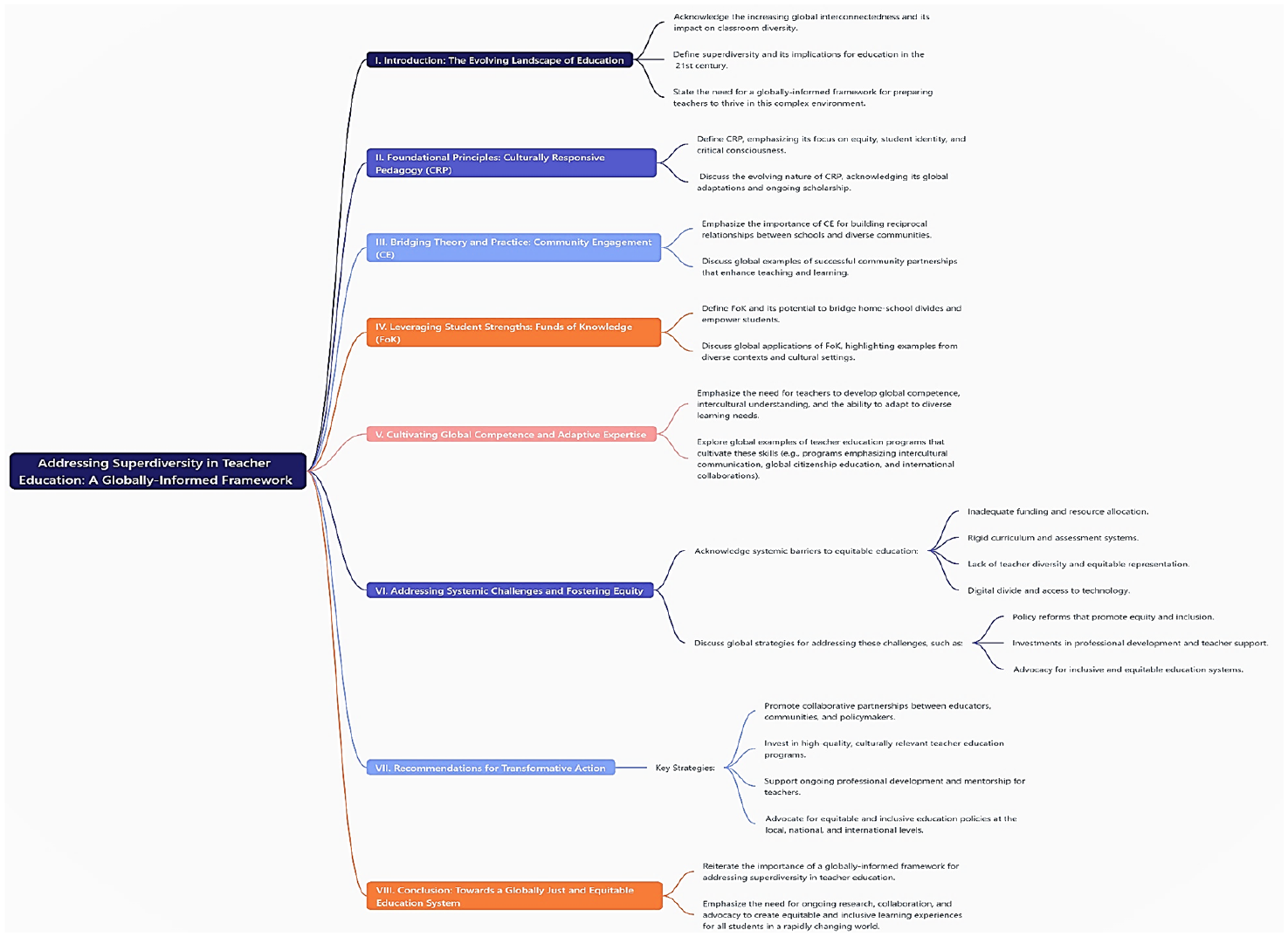
A framework for addressing superdiversity in teacher education.
Ultimately, embedding CRP, FoK, and CE within ITE programs is essential for ensuring that teachers are well-prepared to meet the demands of superdiverse classrooms. By addressing systemic barriers and enhancing pedagogical frameworks, we can cultivate a more inclusive and equitable educational landscape that reflects the complexities of our modern society.
Methodology
This study employs a systematic literature review to explore the integration of Culturally Responsive Pedagogy (CRP), Community Engagement (CE), and Funds of Knowledge (FoK) within Initial Teacher Education (ITE) programs. Guided by the structured principles of Petticrew and Roberts (2008), this approach ensures a transparent and replicable examination of best practices, emerging trends, and research gaps across diverse global contexts. By systematically analyzing existing scholarship, the study aims to provide a comprehensive understanding of how these pedagogical frameworks can be effectively embedded within ITE to prepare educators for increasingly diverse classrooms.
Three intersecting frameworks—Culturally Responsive Pedagogy (CRP), Community Engagement (CE), and Funds of Knowledge (FoK)—provide the conceptual grounding for this study. Each offers a distinct yet interrelated lens through which to examine the preparation of teachers in settings marked by significant linguistic and cultural diversity. Ladson-Billings (1994) and Gay (2002) draw attention to teaching that centers students’ cultural knowledge, not as an add-on, but as foundational to learning. Epstein (2011) frames community engagement as the ongoing interaction between families and schools, where both contribute to shaping educational outcomes. Moll et al. (1992) use the term FoK to describe the skills and understandings developed in households through everyday activity. Their work challenges views that treat students’ backgrounds as deficient. It stands against schooling practices that ignore or dismiss what children bring with them into the classroom. CE complements these perspectives, as Zygmunt et al. (2018) stress the role of school-community partnerships in fostering experiential learning opportunities that enrich both educators and students.
Expanding upon these foundational concepts, the framework incorporates key principles of Freirean Pedagogy, which emphasizes critical reflection, dialog, and praxis as essential components of transformative teaching (Almeida, 2019; Freire, 1970). This perspective aligns closely with the development of Adaptive Expertise (Hatano & Inagaki, 1986), an essential skill that enables educators to navigate the complexities of diverse learning environments. By integrating Freirean Pedagogy, teacher education can empower educators to become agents of social change within their classrooms and communities, fostering the critical reflection and adaptability necessary to address students’ unique learning needs effectively (Almeida, 2019).
This integrated theoretical framework provides a robust analytical lens for examining the literature on CRP, CE, and FoK in ITE. By synthesizing these perspectives, the study aims to offer a holistic understanding of how teacher education can cultivate culturally competent, equity-driven educators who are prepared to engage meaningfully with diverse student populations.
A systematic literature search was conducted across ERIC, JSTOR, Google Scholar, Scopus, and Web of Science to ensure a comprehensive yet focused scope. Boolean search operators were applied with key terms such as “Culturally Responsive Pedagogy” AND “Teacher Education,” “Funds of Knowledge” AND “Community Engagement,” and “Adaptive Expertise” AND “Equity in Education.” This initial search yielded 494 studies, which were screened for methodological rigor, relevance to CRP, CE, and FoK in ITE programs, and publication in peer-reviewed sources. Through an iterative selection process guided by PRISMA guidelines (Page et al., 2021), a final dataset of 66 studies, published between 2010 and 2024, was identified for inclusion. Each addressed one or more of these frameworks within initial teacher education or in-service professional development. The selection and screening process followed established protocols and is summarized in the PRISMA diagram (Figure 2). I examined the studies to identify common themes and differences. This helped me understand how the frameworks were applied in practice and how they were viewed in policy.
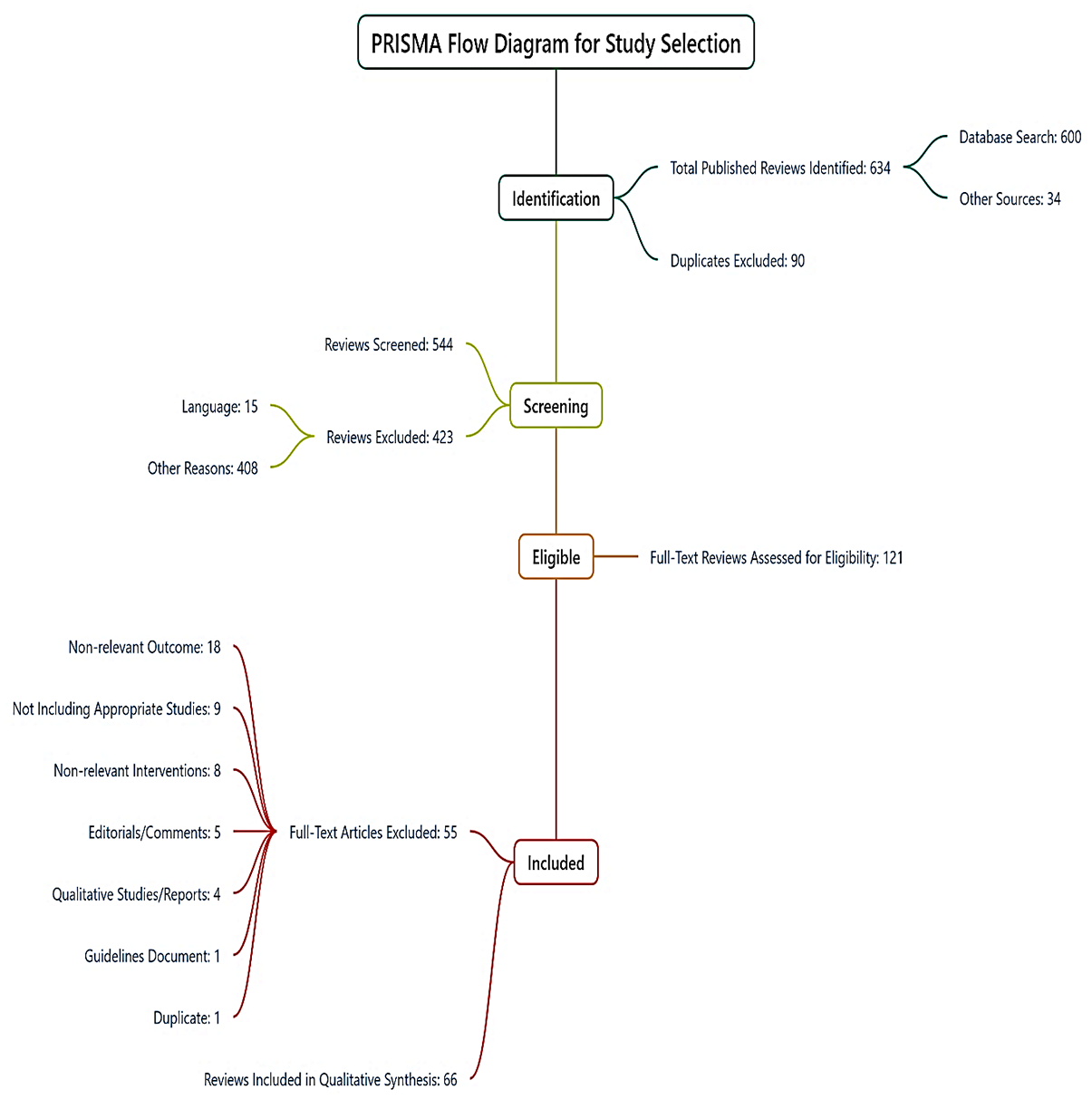
PRISMA flow diagram for study selection.
The data were analyzed using qualitative thematic analysis, following the principles outlined by Braun and Clarke (2006). The analysis followed an inductive approach, beginning with open coding to identify recurring themes related to the implementation and effectiveness of CRP, CE, and FoK in teacher education. These themes were refined through axial coding, allowing for the identification of key patterns, challenges, and successful strategies. Finally, selective coding was applied to synthesize findings into a coherent framework, illustrating how these pedagogical models contribute to enhancing teacher preparation.
To ensure trustworthiness and analytical rigor, inter-rater checks were conducted throughout the coding process, reinforcing consistency in theme identification and interpretation. This methodological rigor strengthens the reliability and validity of the study’s findings. Throughout the review, attention was given to reflexivity in order to recognize the influence of the researcher’s positionality and potential biases. During the review, I kept notes to track assumptions based on my background and experience. I reflected on how my perspective might influence my interpretation of the texts.
To ensure the reliability of the findings, interpretations were regularly discussed with colleagues throughout the research process. These discussions, though informal, were focused, prompting a re-evaluation of initial data readings, a testing of assumptions, and the identification of potentially overlooked points. This approach strengthened the consistency of the analysis and helped maintain close alignment with the empirical data.
The final synthesis presents a nuanced understanding of how CRP, CE, and FoK collectively shape the preparation of culturally competent educators. The study’s findings offer critical insights into best practices for equity-driven teacher education and provide a foundation for future research and policy development. By employing a rigorous and transparent methodology, this study ensures its contributions are both meaningful and impactful in advancing culturally responsive, inclusive teacher education that meets the evolving needs of diverse educational contexts globally.
Findings and Discussion
This systematic review highlights the urgent necessity for transformative shifts in teacher education through the integration of Culturally Responsive Pedagogy (CRP), Funds of Knowledge (FoK), and Community Engagement (CE) to effectively address the increasing diversity in contemporary classrooms (Beauchamp et al., 2015; Menter et al., 2017). As societies evolve into superdiverse entities (Vertovec et al., 2024), teacher preparation must transcend rigid, traditional models. It is imperative to embrace inclusive, student-centered approaches that prioritize cultural backgrounds and community contexts (Kim & Slapac, 2015; C. Sleeter, 2019).
The Imperative of Culturally Responsive Pedagogy
Integrating CRP into Initial Teacher Education (ITE) necessitates comprehensive embedding within curricula, practicum experiences, and mentorship frameworks (Gay, 2018). Effective programs are those that foster cultural competence and equity awareness while empowering students to become active participants in their learning journeys (Paris & Alim, 2017). Such experiences enhance intercultural sensitivity and refine professional practices concerning language, communication, and cultural considerations, underscoring the need for cross-cultural integration in teacher education (Savva, 2017).
However, institutional barriers, including entrenched Eurocentric pedagogies and faculty unpreparedness, significantly hinder these transformative efforts. Addressing these challenges requires robust professional development training that equips educators to implement CRP effectively (Gay, 2021; Santoro & Kennedy, 2016). The FoK framework further enriches CRP by leveraging students’ cultural knowledge, strengthening school-community partnerships (Moll et al., 1992). Boundary-spanning roles in educational partnerships are crucial for bridging institutional divides and improving outcomes. These roles vary along spectrums of focus, orientation, expertise, disposition, and agency, shaped by organizational and contextual factors (Wegemer & Renick, 2021). Despite its promise, many ITE programs struggle to translate theory into practice, necessitating curricular restructuring that prioritizes experiential learning (Zygmunt et al., 2018). Community Engagement (CE) collaborative learning emerges as essential for deepening teachers’ understanding of diverse student populations and informing culturally responsive instructional strategies (B. Nash et al., 2021; Nganga & Kambutu, 2024).
In practice, there remains a noticeable gap between the widespread academic endorsement of culturally responsive teaching and how it is carried out in teacher education programs. While CRP, CE, and FoK are well-supported in the literature, they are not yet embedded systematically across most institutions. When these frameworks are included, it is usually through particular initiatives—such as community partnerships, practicum placements in culturally diverse schools, or courses that challenge mainstream, one-size-fits-all teaching approaches.
This reflects a more fundamental concern. Merely acknowledging diversity in principle is insufficient for teacher education. Meaningfully embedding CRP, CE and FoK demands sustained effort across curriculum development, pedagogical methods, and assessment practices. Just as important is the need for strong institutional support. Teachers need both the space and the resources to reflect on their own assumptions and cultural backgrounds. Without that kind of backing, efforts to promote inclusion often stay at the surface. Professional learning should be designed with this in mind—so that teachers are not just talking about diversity in theory, but are actually prepared to deal with the day-to-day challenges of teaching in highly diverse classrooms.
Collaboration as a Catalyst for Change
Collaboration among teacher educators, institutions, and communities is critical for fostering equitable practices that meet the diverse learning needs of students (Baker-Doyle, 2019; Wynter-Hoyte et al., 2021). Programs that position students as knowledge leaders cultivate inclusive classrooms and validate cultural identities (Banegas, 2022; Brown & Crippen, 2017). Yet, institutional resistance to change remains a formidable challenge due to entrenched methodologies (Reinhardt, 2018). Thus, there is a pressing need for policy-driven reforms and a systemic commitment to transformation (Paris & Alim, 2017).
Addressing systemic barriers is paramount. Kettle et al. (2022) emphasize the necessity for new conceptualizations and collaborative efforts to ensure the relevance of ITE research and practice. Rigid curricula, faculty limitations, and a lack of accreditation mandates obstruct the adoption of CRP, FoK, and CE (Allen et al., 2017; C. E. Sleeter, 2011). Traditional teacher education often prioritizes standardization over inclusivity, limiting educators’ ability to support diverse learners effectively (Gay, 2021). The global teacher shortage further amplifies the urgency for culturally competent educators (Burnett & Lampert, 2016). To address these challenges, it is essential to develop policy frameworks that integrate culturally responsive practices into licensure and training requirements.
Cultivating Adaptive Expertise for the Future
To inspire a transformative future in teacher education, cultivating adaptive expertise for superdiverse classrooms is crucial. Implementing practice-based approaches that immerse pre-service teachers in real-world challenges enhances their pedagogical reasoning and prepares them to navigate the complexities of diverse educational settings (Meneses et al., 2023; Wood et al., 2021). Zhang (2019) proposed innovative criteria for evaluating ITE research quality, emphasizing practical applications. A paradigm shift toward equity-centered, practice-based approaches is imperative, and future research should explore longitudinal studies assessing the impact of CRP, FoK, and CE on teacher effectiveness (Gist et al., 2019). Interdisciplinary frameworks can bridge the gap between theory and practice, fostering mentorship models where novice educators learn from experienced practitioners (Caspe & Hernandez, 2024).
The Role of Decolonization in Teacher Education
Decolonizing teacher education through Indigenous perspectives and critical pedagogy is essential for fostering inclusivity and equity (Amsler et al., 2020; Robinson, 2023). In New Zealand, bicultural ITE programs exemplify this approach by integrating Māori and Pacific Islander pedagogies, showcasing the practical application of culturally responsive frameworks (Fickel et al., 2018; Roberts, 2019). Beyond Indigenous education, urban teacher preparation programs must embed culturally responsive strategies to bridge systemic disparities, particularly in STEM education and other underrepresented fields (O’Keeffe et al., 2019; Young & Young, 2023).
Conclusion
This study positions Initial Teacher Education (ITE) as a pivotal catalyst for systemic transformation, advocating for the essential integration of Culturally Responsive Pedagogy (CRP), Funds of Knowledge (FoK), and adaptive expertise within teaching frameworks. It is imperative that a collective commitment from policymakers, educational institutions, and educators is cultivated to foster social justice and create equitable learning environments for all students.
By proactively addressing the identified challenges and embracing innovative, equity-focused practices, teacher education can effectively respond to the diverse needs of learners, ultimately contributing to a more just and inclusive society. The call for transformative change in ITE transcends academic discourse; it represents a moral imperative that equips educators to navigate and enrich the complexities of diverse classrooms. This empowerment is not merely beneficial but essential for enabling all students to thrive.
In essence, the integration of CRP, FoK, and adaptive expertise within ITE programs is not just a strategy for improvement; it signifies a fundamental shift toward recognizing and valuing the rich cultural and experiential diversity that students bring into the educational sphere. As we move forward, our unwavering commitment to these transformative practices will not only enhance educational outcomes but will also serve as a beacon of hope. It is a vision for a future where every learner is celebrated, empowered, and equipped to succeed in an increasingly interconnected world.
Let us embrace this journey together, ensuring that our educational frameworks reflect the vibrant tapestry of our communities and prepare future educators to lead with empathy, understanding, and a commitment to equity. This is not just an educational evolution; it is a necessary revolution that promises to enrich the lives of educators and students alike, forging pathways to a more inclusive and equitable society.
Footnotes
Declaration of Conflicting Interests
The author declared no potential conflicts of interest with respect to the research, authorship, and/or publication of this article.
Funding
Open access publication fees for this research were covered by the author’s affiliation.
