




Abstract
Socio-spatial inequalities are on the rise in Turkey, resulting in increasing segregation between population groups with different socioeconomic and educational backgrounds. Therefore, the link between school-based and residential segregation has become crucial for understanding urban and social divisions, specifically in the large metropolitan areas. However, our knowledge about this relationship in the case of Turkey and many non-Western countries is limited. What we know from the related literature based on Western experiences is that school and residential segregation are highly interrelated, and analyzing this relation is the key to understanding socio-spatial inequalities in cities. This article, therefore, aims to investigate the socio-spatial relation between the academic performance of high-schools and the residential segregation in educational line in Ankara, Turkey. In this article, academic performance is represented by national university entrance examination results at school level and residential segregation is analyzed through population census at the neighborhood level. The methodology involves the classification of public and private high schools in terms of academic performance and cross-referencing with schools’ educational environment. We find that in terms of the relationship between school’s academic performance and residential patterns Ankara is, in fact, a divided city in educational lines.
Introduction
Segregation studies have mainly focused on residential areas. Traditional studies on residential segregation have dealt mainly with the patterns and processes of segregation and division of ethnic and racial groups, usually in Western cities. A vast literature analyzing residential segregation, mostly with an empirical approach employing spatial statistics and indices has sprung up since the 1940s (Musterd et al., 2017; Van Kempen & Murie, 2009). This literature has revealed the significance of analyzing the link between social group characteristics and residential patterns in understanding socio-spatial inequalities in the greater metropolises. With the recent introduction of a new dimension to urban segregation studies, emphasis is being placed on the importance of education-based inequalities. In this developing literature, analyzing the link between school and residential segregation is the key to a new understanding of urban inequalities. Accordingly, socio-spatial inequalities in cities are strongly linked to inequalities in the education system (Bernalius & Vaattovaara, 2016; Boterman et al., 2019; Maloutas et al., 2019). Research has shown that in many European and American cities, children with different socioeconomic and ethnic backgrounds are often segregated at neighborhood and school levels, known as school segregation (Ball, 2003; Maloutas et al., 2019). There is widespread agreement in the literature that school segregation is highly related to residential segregation (Reardon & Yun, 2005; Wilson, 2010), and school performance reflects the segregation patterns of the neighborhoods and the surrounding social environment (Bernalius & Vaattovaara, 2016; Boterman et al., 2019; Maloutas et al., 2019).
Despite this developing literature on Western experiences, our knowledge of the relationship between residential and educational segregation in non-Western countries remains limited. In Turkey, while the division of the cities into different social groups and its causes have received plenty of attention (Geniş, 2007; Işık & Pınarcıoğlu, 2009; Kurtuluş, 2011), the link between education, schools, and residential segregation are not yet thoroughly understood. Education is, however, a critical factor in the development of divided patterns of the cities in Turkey. This is because in Turkey, education is strongly linked to income and poverty, and it is a vital indicator for determining social classes and socioeconomic status. In Turkey, poverty decreases significantly as the level of education increases. According to Turkish Statistical Institute’s (TURKSTAT) annual study on education spending and poverty rates, people in the top income quintile spend about 10 times more on education than those in the lowest income quintile. Moreover, whereas the poverty rate in Turkey is 27.7% among illiterate people, it drops to 7.8% for high school graduates, and 2.6% for university graduates (TURKSTAT, 2023). Access to university is, therefore, often viewed as a pathway to a secure and prestigious future, especially among the middle and higher economic groups and this widely held belief has made education an increasingly competitive arena in Turkey. Many parents in Turkey are concerned about their children’s exposure to low educational standards, inadequate language or analytical skills, or insecure social environments, specifically in public schools (Bagci & Gizir, 2013). While parents in the middle and higher social classes are often thought to be attentive to their children’s education, parents in lower classes are frequently assumed to be less invested in their children’s schooling. In Turkey, public schools are an option for middle-low and low-income families, while private schools are almost the norm for most middle- and high-income families (Ünal et al., 2010). 1
Against this background, this article aims to investigate the socio-spatial relation between the academic performance of high schools and residential segregation in education lines in the Ankara metropolitan area. Ankara is in many ways an unexplored and promising case for examining the relation between education and segregation. Other than being the nation’ capital, Ankara has the most highly educated population and is therefore known as “the educational capital of Turkey.” 2 The article seeks to answer two main questions: First, is there a spatial relationship between academic performance of high schools and residential segregation in Ankara? Second, if it obtains, does this relationship lead to new spatial typologies or urban divisions? To answer these questions, academic performance is represented by National University Entrance Examination (NUEE) results (MoNE, 2021; Student Selection and Placement Center [SSPC], 2016) at the high school level and residential segregation is analyzed through the population census (educational status) at the neighborhood level (TURKSTAT, 2021). By cross-referencing these two datasets we examine the relationship of school-based and residential-based segregation.
This article has five sections. The following section presents the theoretical background on education, inequality, and residential segregation relationships. It discusses the role of education in Turkey in producing and reproducing social inequalities. The third section presents the data and the methods used in the article. This is followed by section four, where the findings are discussed. Section five concludes.
Theoretical Background: The Role of Schools and Education in the Segregation Patterns of Cities
There has been a substantial growth in the literature addressing the link between residential and school segregation. These studies reveal that the relationship between these two domains is quite strong, specifically in American and European metropolises (Reardon et al., 2000; Reardon & Yun, 2005). However, the relationship between school and residential segregation is contextual regarding the roles of institutions and socio-spatial characteristics of cities (Boterman et al., 2019; Reardon, 2016; Wilson, 2010). According to Boterman et al. (2019), while the institutional context in school segregation deals with public financing, parental choice, and the role and status of private schools, the spatial context depends more on the geography of education where one can see the direct relationship between the location and the performance or social composition of a school as well as the spatial distribution of schools in urban space. Analyzing how these two contexts work together is critical for understanding how and what educational inequalities are produced in cities and how school and residential segregation are interrelated (Boterman, 2018; Burgess et al., 2005; Candipan, 2019).
The relations between the geography of education and institutional contexts indicate different experiences. In terms of school allocation systems, in some cities, school catchment area rules and free parental choice are used together, whereas in others, one dominates (James et al., 2010). However, school segregation and residential segregation remain related in every case. In countries with almost no school preference and the central government organizes the school allocation system, families with children often consider schools a significant factor in their residential decisions. In Denmark and Finland, for instance, private schools are primarily financed by the state or the public. In such a system, the composition of the school reflects the composition of the neighborhood or settlement in which the school is located (Bernalius & Vaattovaara, 2019; Boterman et al., 2019). This is particularly common in other Western countries where public schools and school catchment area rules are prevalent, which shape the social landscape of urban areas. In Spain, Italy, and Germany, where the school catchment area rule is primarily implemented, residential mobility becomes a parental strategy to access high-performing schools (Boterman, 2013; Butler & Hamnett, 2007). Butler and Hamnett (2007) also found that in the UK, middle-class families often move to areas with better schools to ensure their children’s safety and academic success. This is also the case for white middle-class suburbs in American cities, where school segregation generally occurs in neighborhoods that are socially and spatially segregated with the implementation of school catchment area rules (Butler et al., 2013). However, studies have also demonstrated that free parental choice can also contribute to school and residential segregation, particularly in cases where high-performing schools are in high demand. In London, Paris, and Germany, it was observed that with the rise in free parental choice, school and residential segregation both increased (Hamnett & Butler, 2013; Oberti & Savina, 2019; Ramos Lobato & Groos, 2019). Similarly, research in Sweden has revealed that expanding parental choice can further widen educational inequalities since lower social groups may not have the same opportunities to travel and may be more likely to enroll their children in less preferred schools. This highlights that the location of a school still plays a significant role, even in choice-based school allocation systems (Boterman et al., 2019).
Positioning Turkey among these countries is difficult, since there has been little interest in analyzing the relationship between school and residential segregation in Turkish urban studies. Segregation and education have always been hotly debated by scholars in Turkey, but they have been treated as separate areas of interest. On the one hand, a growing body of literature explains and analyzes segregation, and it highlights that existing residential and social divisions in metropolises are amplified by neo-liberal policies. These policies have resulted in the creation of new and exclusive urban spaces for the wealthy, while the older parts of cities are subjected to gentrification and urban transformation that often displace the urban poor in many major cities (Geniş, 2007; Kurtuluş, 2011). Studies directly on residential segregation in Turkey have also shown that, in the major cities of Turkey, such as Istanbul and Ankara, the highest and lowest status groups are not only segregated from each other but are also isolated within their groups, indicating a higher level of residential segregation (Ataç, 2016; Güvenç & Işık, 2002; Işık & Pınarcıoğlu, 2009).
Despite the developing literature and understanding on high levels of residential segregation in Turkey, no studies have analyzed the phenomenon of segregation in urban areas, specifically in terms of school, education level, and the residential environment. 3 Although the role of education in distinguishing social classes and understanding regional inequalities is often highlighted in research conducted by educational scientists (Duman, 2008; Tomul, 2007), the relationship between school and residential environments is an area that has been largely overlooked in Turkish urban studies. This article, therefore, not only provides a non-Western perspective on school and residential segregation, but also a novel contribution to national urban studies.
The Data, Methodology, and Educational Environment in Turkey
In Turkey, the education system requires 12 years of compulsory schooling, which is divided into three 4-year periods. The first two periods (8 years) constitute primary education whereas the last period (4 years) is secondary education. This article analyzes schools in Ankara which offer secondary education. Schools offering secondary education are often referred to as high schools in Turkey, and this term is used throughout the article. There are, however, different types of high schools in Turkey. High schools affiliated with the Ministry of National Education’s (MoNE) General Directorate of Secondary Education consists of three types of schools, namely Anatolian high schools, science high schools, and social sciences high schools. 4 These high school types differ in terms of curriculum and specialization, as well as student admissions.
The school student admission system changes frequently, often from 1 year to the next, in Turkey. Although this dynamic structure of student allocation can be confusing, central examinations are still widely used as the primary method for admittance to higher education and high schools. It is important to note, however, that central examinations are not the only way to enter a high school in Turkey. There are three ways in which students are accepted into high schools, whether they are public or private. Firstly, some schools such as Anatolian high schools, science high schools, and social sciences high schools accept students through a combination of the central placement method, based on parents’ school preference list and student’s central examination scores. 5 Secondly, some Anatolian high schools accept students through the local placement method, which is based on school catchment area rules, and these schools primarily serve students with low central examination scores. Lastly, parents may have free choice of private high schools. However, in private science high schools, both parental choice and central exam scores are taken into consideration during the admission process. Since there is no pattern of high school admissions, school type is not considered in this analysis. The analysis primarily focuses on the public and private distinction, since private high schools in Ankara constitute more than half of all high schools. Table 1 shows the number and types of high schools analyzed in the article.
The Number of High Schools in Ankara Included in the Analyses.
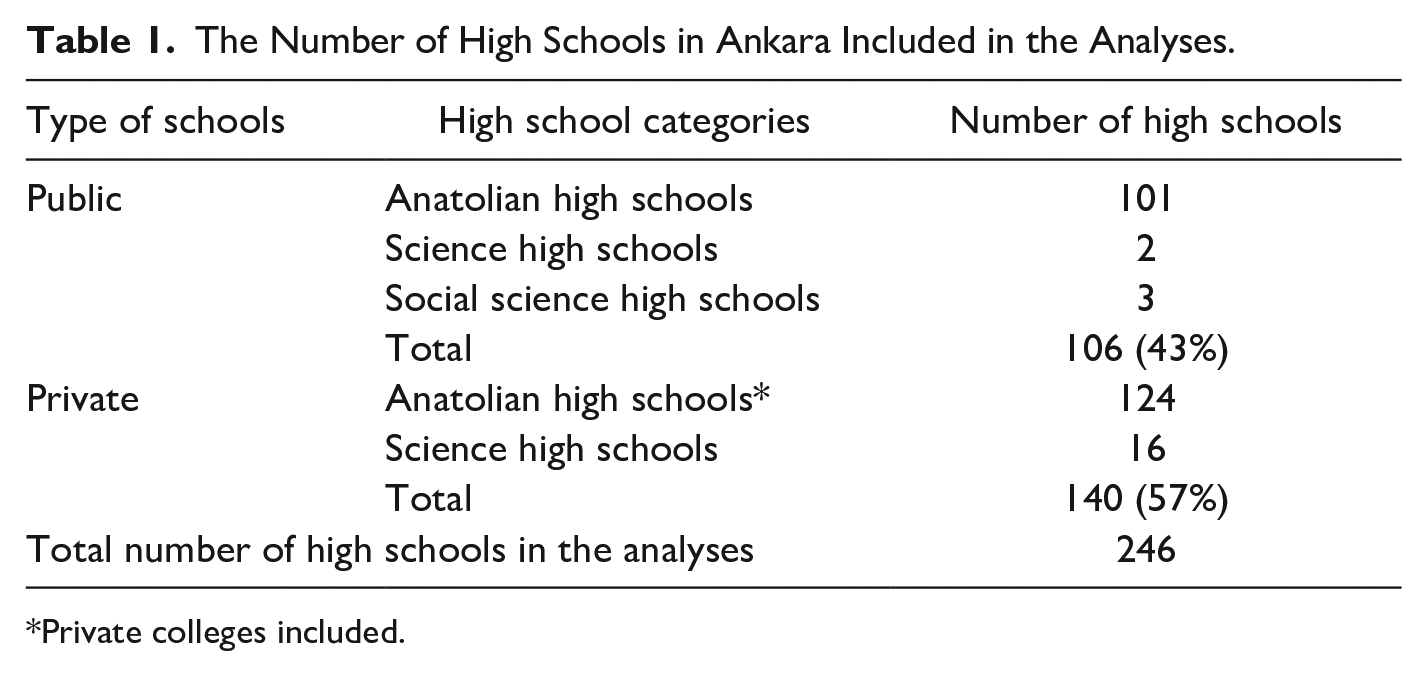
Private colleges included.
This article uses the SSPC 2016 NUEE dataset, which is the most comprehensive dataset available for representing the academic performance of high schools in Ankara. The 2016 NUEE in Turkey was held in two stages, the first being the higher education transition exam and the second phase being the undergraduate placement exam. The data used to represent the academic performance of high schools in this article is school-based data for the first stage, which is used to select students who may go on to higher education. In this exam, students answered a total of 160 questions from the Turkish, Mathematics, Social Sciences and Natural Sciences tests. This article used the equally weighted mean score for each school, so that each high school can be evaluated on equal grounds. High schools in the NUEE dataset were also verified and revised with current school data from the Turkish (MoNE, 2021) and high schools that had not been established in 2021 were removed from the data set. This ensures the inclusion of high schools which have been able to survive for many years in an ever-changing system. 6
The residential segregation pattern in Ankara is studied using census data at the neighborhood level provided by the TURKSTAT (2021). In Turkey, neighborhood-level census data is only available by education, gender, age, and marital status. Education is considered critical for this article as it is a strong indicator of socio-economic status in Turkey. Thus, the level of high and higher education (university graduates, people with master’s degree and people with doctorate degree) in a neighborhood is used as the primary variable in defining the social environment of schools. The research covers urban neighborhoods within the Ankara metropolitan area, as depicted in Figure 1. 7
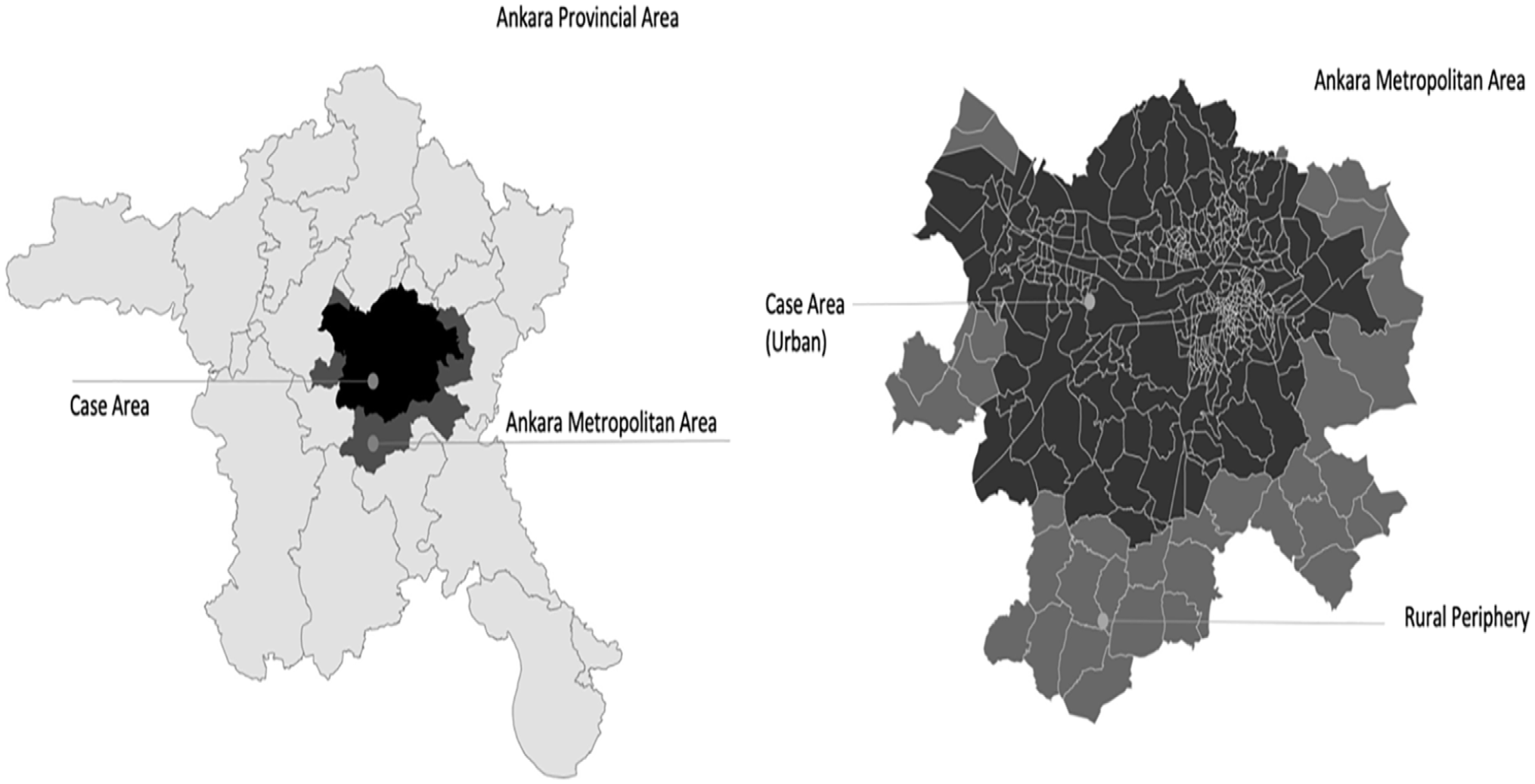
Case area: The neighborhoods analyzed.
This study uses three stages of analysis. Firstly, it analyzes the distribution of high schools across the city according to their academic performances in the NUEE. This is done through a point distribution and buffer analysis. Secondly, the geography of education levels is examined at the neighborhood level through a pattern analysis. Finally, the academic performance of high schools in the NUEE with the education levels of surrounding neighborhoods are analyzed to create new typologies representing the relationship of school-based and residential-based segregation. Figure 2 shows the data and methods used to depict the distribution of high schools and residential segregation maps in Ankara. The following section represents the core findings by referring to the methodology used in each stage.
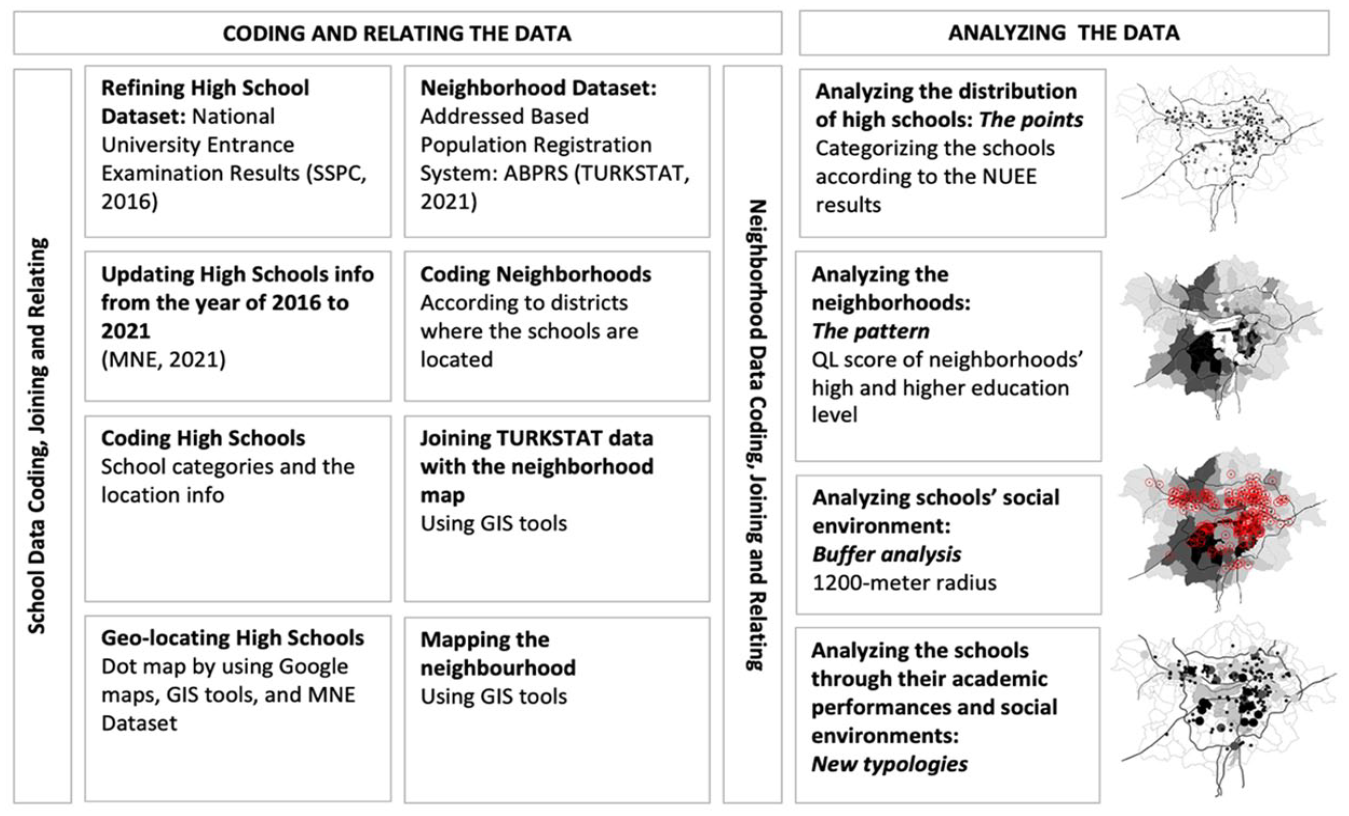
The methodological steps of the study.
Analyses and Core Findings
To show that education is a key factor for understanding social and spatial divisions in Turkey, segregation index scores were calculated for the high and low educated population groups in Ankara (Table 2). The segregation index measure is a statistical method that is widely used in segregation studies to analyze the level of residential segregation in a city or to compare segregation levels among different groups or cities. The article uses two major segregation indices, namely the Dissimilarity Index (one and two groups) and Isolation Index, which were proposed by Massey and Denton (1988) to represent the dimensions of “evenness” and “exposure” in residential segregation. According to the index scores ranging from 0.00 to 1.00, (where 0 represents minimum and 1 represents maximum segregation) the degree of residential segregation of the highly educated population in Ankara is 0.55, whereas the isolation index is 0.42. These scores are 0.48 and 0.38 respectively for the low educated groups of Ankara, which are relatively high scores. As a benchmark, according to Massey and Denton (1993), U.S. cities with segregation index scores for ethnic groups below 30 are considered to have low segregation, those between 30 and 60 are moderate, and those above 60 are high segregation. According to the two groups’ DI index score, the degree of segregation of the highest and lowest education groups in Ankara relative to each other is 0.65. This score can also be described as high, meaning that more than half of the population must be relocated to achieve an even distribution of the high and low educated populations in the city. It is evident from segregation index scores that education matters in residential segregation patterns in Ankara.
Segregation Index Scores of Education Groups in Ankara.
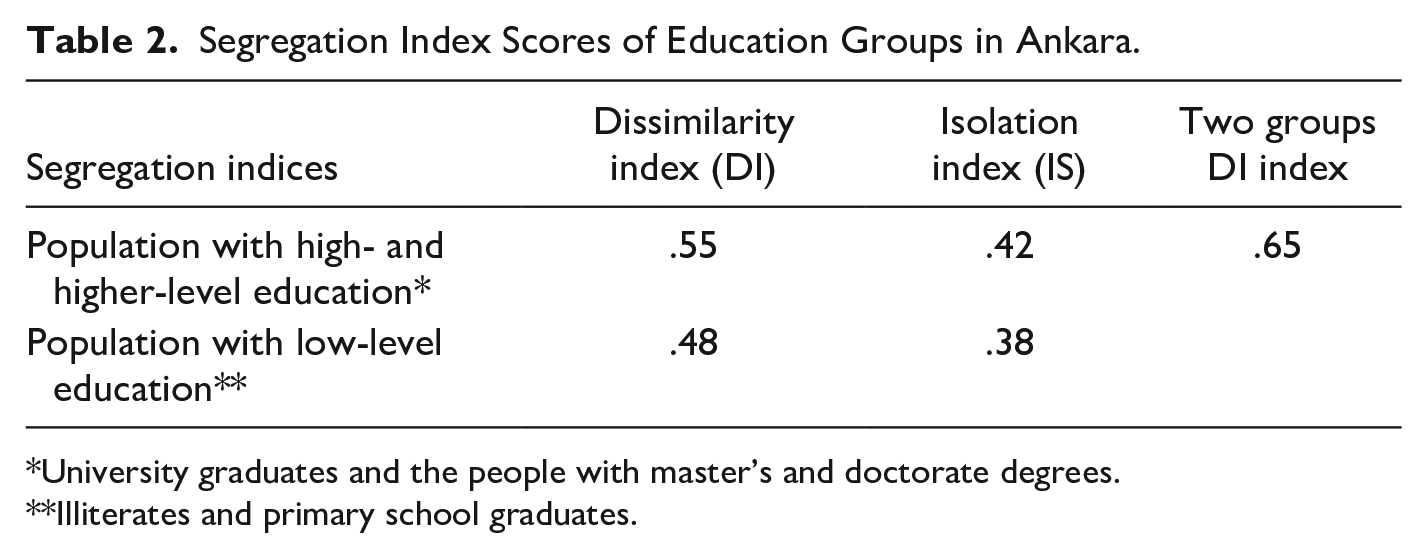
University graduates and the people with master’s and doctorate degrees.
Illiterates and primary school graduates.
The initial step for examining school-based and residential segregation in Ankara involves analyzing the spatial distribution of high schools based on their academic performances in the NUEE. High schools were categorized in accordance with their performance scores in the NUEE to obtain three categories from low to high. High schools with NUEE scores between 180 and 250 are considered low-performance, while those between 250 and 350 are mid-performance, and those between 350 and 500 are high-performance. To be able to depict the urban residential segregation pattern of Ankara, spatial QL scores 8 for people with high education level is measured and in the end three main and five sub-categories have been obtained. Low level segregation in education line is defined by QL scores between 0 and 1, mid-level segregation by QL scores between 1 and 2, and high-level segregation by QL scores between 2 and 2.5.
Map 1 in Figure 3 shows the distribution of the high schools in Ankara according to their academic performances in the NUEE. According to the map, the city is divided into two by high school performance. High-performing schools are located mainly along the south and southwest corridors of the city, and, in contrast, low-performing schools are generally found in the northeastern peripheral zone of Ankara. According to Map 2 in Figure 3, Ankara’s southern and southwestern neighborhoods have a higher education level, while the education level is relatively low in the northeastern peripheral zone. This indicates an overlapping division between school location and residential patterns.
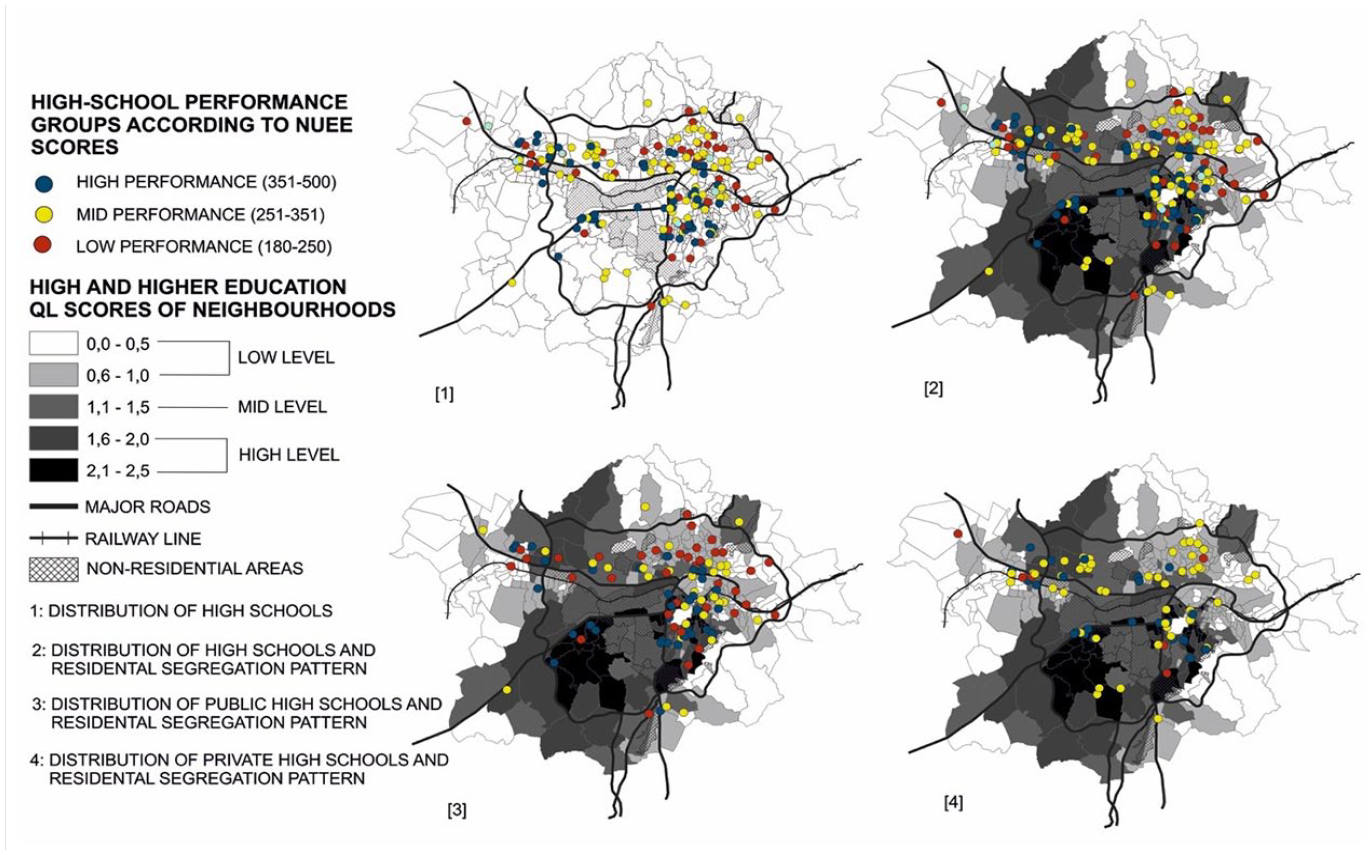
Distribution of high schools and residential segregation pattern of Ankara.
The spatial distribution of public and private high schools reveals another pattern of division. Maps 3 and 4 in Figure 3 show the spatial distribution of public and private high schools, respectively. The first finding obtained from these maps is that public and private high schools are distributed in a similar pattern throughout the city. Private high schools, like public schools, are found in almost all educational environments. However, in terms of urban areas where they are concentrated, private high schools are generally found in the newly developed and highly educated western corridors of Ankara, whereas public high schools are explicitly clustered in the northern and northeastern parts, where the level of education is moderate and low.
Based on prior research (Boterman, 2018; Burgess et al., 2005), these initial findings suggest the presence of a divided and segregated urban pattern where there is a tendency for high-performing schools to cluster in the socio-economically developed areas of the cities. On this basis, to analytically assess the relation between high schools’ academic performances and their surrounding social environment, a new score that represents the educational environment value was developed. This new score is based on the educational characteristics of the neighborhoods in a 1,200-m radius -a buffer zone- around a high school. In other words, the educational environment of each high school is defined by the weighted mean of QL values of the neighborhoods that are found in the school’s buffer zone. As a result of this co-referencing, each high school received two scores in the end: one based on its academic performance and the other based on the educational level of its environment. 9 This results in new school typologies that can be represented by crosstabs and maps. Table 3 (crosstabs) shows the relationship between high school academic performance and their educational environment as percentage values, while Figure 4 (maps) displays the spatial distribution of the nine new typologies in Ankara representing the direct relationship of school-based and residential-based segregation in urban patterns. Below, the relationship between school performance and their educational environment is explained based on the categories of high-performing schools, mid-performing schools, and low-performing schools, and their respective educational environments.
Crosstab: High School’s Academic Performances Versus Educational Environment*.
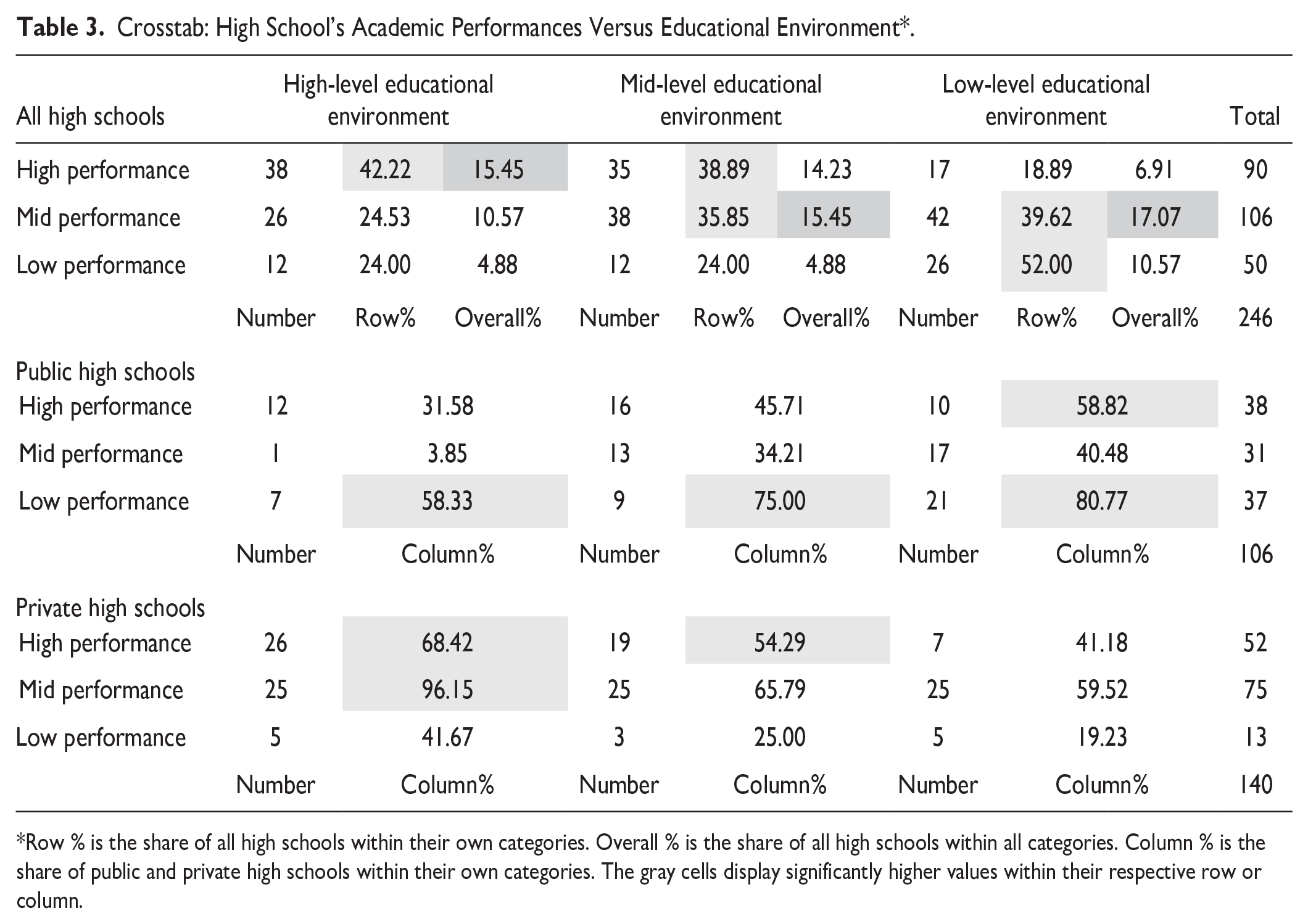
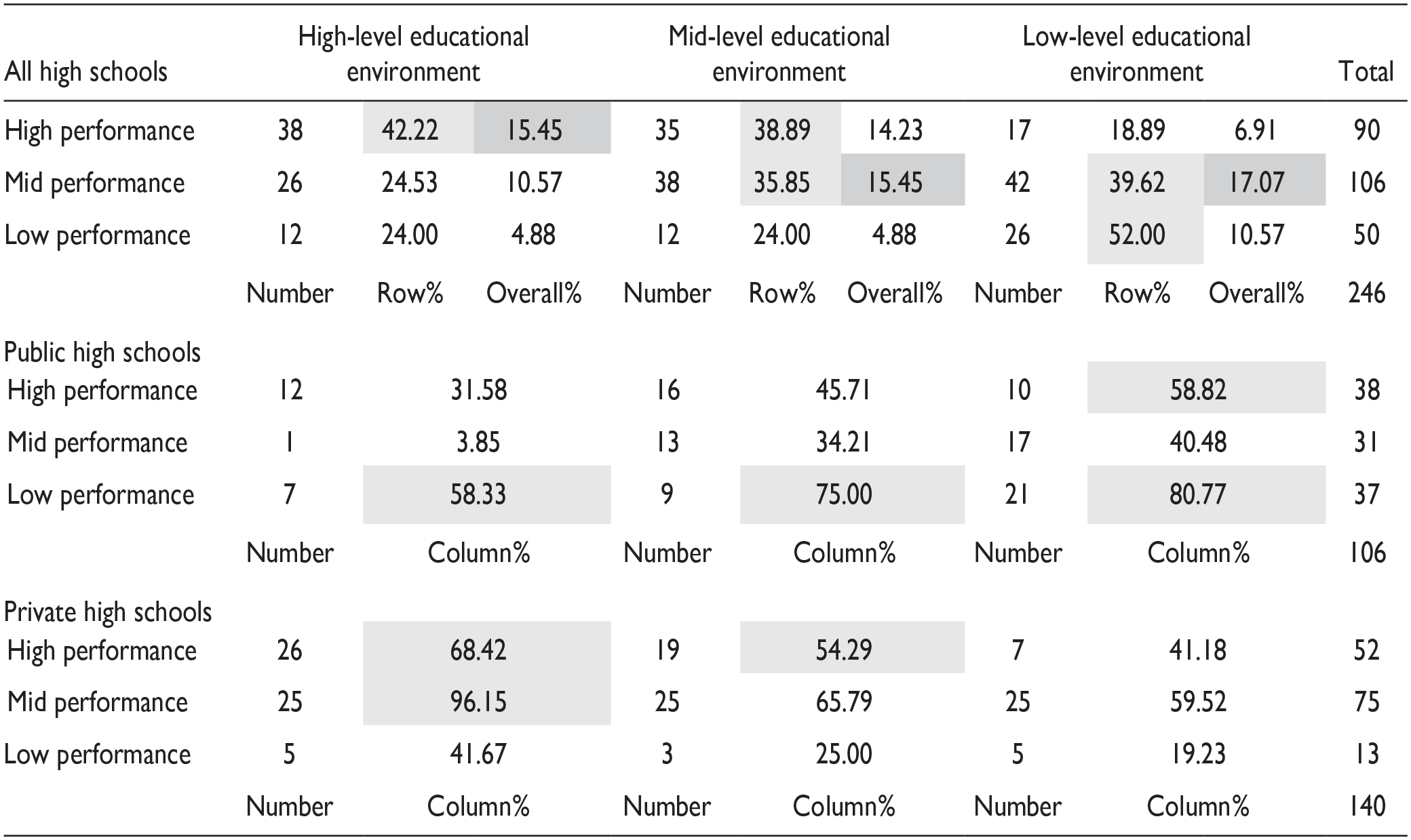
Row % is the share of all high schools within their own categories. Overall % is the share of all high schools within all categories. Column % is the share of public and private high schools within their own categories. The gray cells display significantly higher values within their respective row or column.
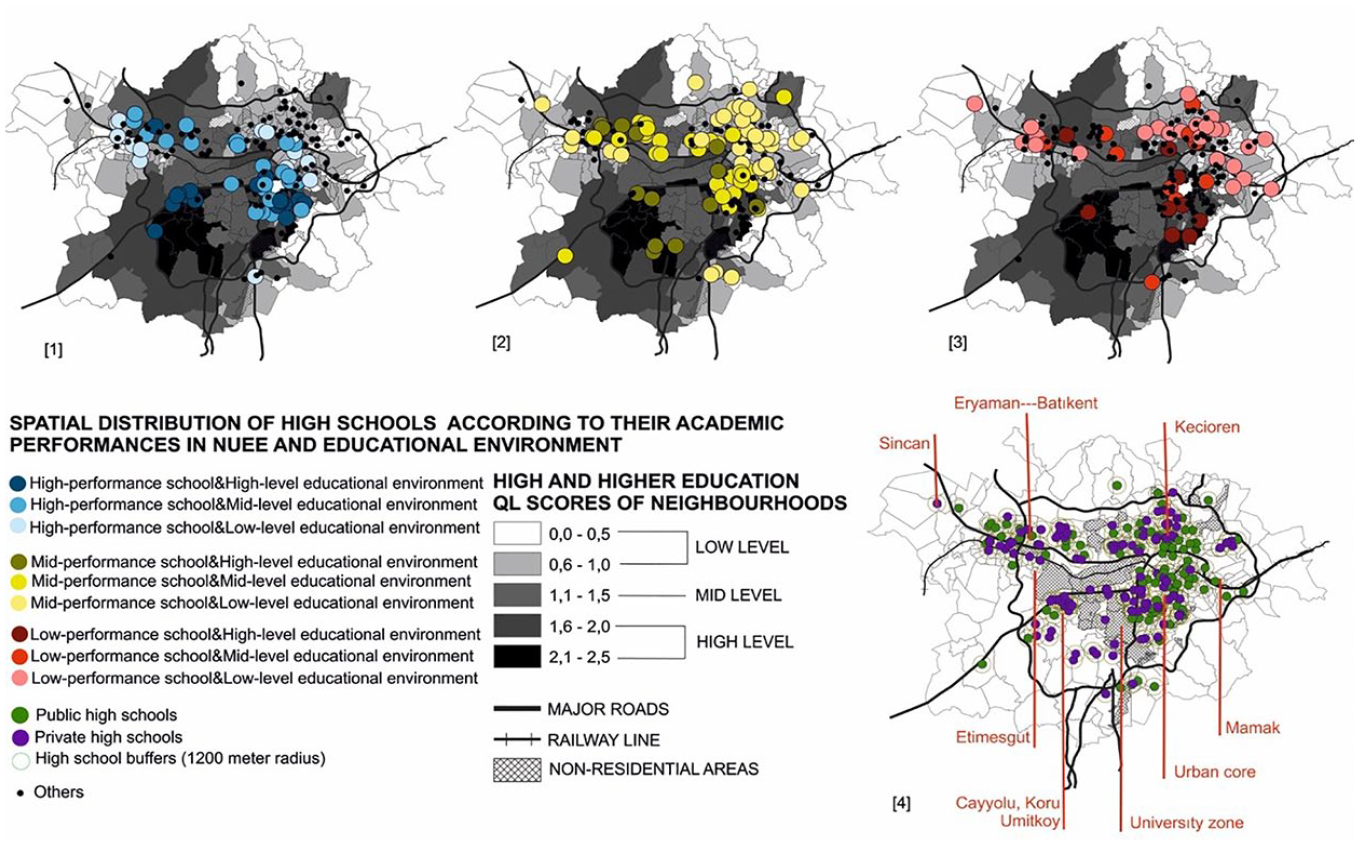
New high school typologies in Ankara according both to academic performance and surrounding educational environment.
High performing schools and educational environment: According to Table 3, 42.22% of high-performance schools are found in a high-level educational environment, while 38.89% are in a mid-level, and 6.91% are in a low-level educational environment. This indicates that high-performing schools in Ankara are surrounded by high and moderate educational environments, with only a small percentage is in a low educational environment. This relation is even more obvious for private high schools. According to Table 3 and Figure 4, approximately two-thirds of high-performing schools are private high schools, which are concentrated in upper- and middle-level educational environments.
To examine these initial findings further, the typologies have been assessed, which show the relation between school performances and their educational environment. The first typology that comes to the foreground is, without question, high-performance schools in a high-level educational environment, which makes up 15.45% of all schools analyzed in Ankara. According to Table 3 the majority of high performing schools are found in the high educational environment indicating a greater match between high performance and higher educational environment. Map 1 in Figure 4 shows that most of these schools are mainly located in the southern central corridor of Ankara (Kavaklidere-Çankaya-Oran), as well as in the southwestern developing urban corridor (Koru-Çayyolu-Alacaatli-Incek) and around the universities zone located in the southwest. These affluent regions of Ankara are home to the most socio-economically developed neighborhoods of the city. The southwestern corridor of Ankara is a new and growing residential zone of the city, which developed particularly after the 2000s. Therefore, this corridor serves as a dense and an almost limitless growing zone of the city specifically for the use of the upper classes.
Another cluster for the high-performance and high-environment match can be seen in the southern axis of the central core which has, traditionally and historically, been the most socio-economically developed part of central Ankara. It is critical to see that high-performing schools, specifically the private high schools (68.42% of the high schools in this typology are private), seem to follow both the traditional and newly developed affluent corridors of the city and this pattern is almost the norm for Ankara’s high-performing private schools.
The relation between high-performance and high-environment can also be observed in another typology, which represents the high-performance schools in a mid-level educational environment (14.23% of all high schools). Based on Table 3, 38.89% of high-performance schools are found in a mid-level educational environment and the typology is almost evenly divided between public and private high schools (45.71% public; 54.29% private high schools). According to Map 1 in Figure 4, high schools in this typology are mainly located around the central urban core (Anittepe, Bahcelievler, Kavaklidere), especially around the western development corridor, which has a higher population density and is known as the industrial and middle-class residential zone of Ankara (Yenimahalle, Etimesgut, Eryaman) and around the universities zone located in the southwest. This typology of high-performance and mid-environment therefore represents the school choices of upper and upper-middle status groups in Ankara.
The typology of high-performance schools in a low-level educational environment is an exceptional one, as only 6.91% of all schools fall under this category. It is worth noting that the majority of high schools in this category (58.82%) are public, indicating that private high-performing schools have a lower tendency to occupy low educational environments. Based on Figure 4, this typology is concentrated in two specific areas of the city: First, in the northern outskirts where education and socio-economic status are lower, population density is higher (Etlik and Kecioren); second, in the far western corridor (Sincan and Etimesgut) where residential settlements are located along with the military zone and industrial areas. However, although very few in number, it seems that high-performing public schools located in low educational environments have the potential to become agents of change and bring about positive transformation in low educational environments.
The findings on high-performing schools and their surrounding environment suggests that in Ankara, high-performing high schools are often located in the most affluent parts of the city and primarily cater to students from the upper and middle socioeconomic groups, with a significant presence of private schools. These initial findings together represent the existence of a broad level of school-based residential segregation in Ankara specifically for the side of high performing schools in the high-level educational environment.
Mid-performing schools and educational environment: When it comes to mid-performing schools, Table 3 shows that around 40% of these schools in Ankara are located in areas with the lowest educational environments, while 35% are in mid-level educational environments and 25% are located in high-level educational environments. Crucially, 70% of mid-performing high schools in Ankara are private high schools suggesting that the majority of mid-performing high schools are private and tend to be located in mid and low-level educational environments. These findings are critical for understanding the widespread distribution of private schools in Ankara. Although private high schools are found in almost every educational environment, high-performing private high schools are located in affluent neighborhoods, while mid-performing ones can be heavily found in middle and low-status neighborhoods, making up the majority of its typology.
One of the common typologies in Ankara, in terms of the relationship between academic performance and the social environment, is mid-performance schools in a mid-level educational environment (this typology accounts for 15.45% of all high schools). This means that a mid-level performing high school in Ankara is likely to be located in a mid- to lower-level educated environment and the majority of them are private schools (65.79%). As shown on Map 2 in Figure 4, this typology is found in almost every mid-level educated area of the city, including the southern and eastern parts of urban central core (Kavaklidere, Esat, Anittepe), the north-eastern, western corridors (Eryaman, Batikent, Demetevler) and the eastern periphery of the city (Kecioren), where population density is high, and settlement is relatively old.
The private school effect is also very visible even in the disadvantaged neighborhoods of Ankara. Mid-performance high schools in a low-level educational environment is the most common typology in Ankara, with a share of 17.07%. 40.48% of all mid-performing high schools are in low-level education environments and private high schools make up the majority of this typology (59.52%). Map 2 in Figure 4 reveals that this typology is mainly clustered in the north-eastern and eastern peripheral zones of the city (Mamak, Altindag) and the north-western far corridor (Sincan), which have the lowest education levels in Ankara. Private high schools maintain the quality of education at a moderate level in the northern and eastern peripheries, where mid-performing public schools are comparatively few in number. Additionally, while almost 60% of the mid-performing schools in a low-educated environment are private high schools, 80.77% of the low-performing high schools are public. Although public schools are distributed widely across all educational environments, their performance tends to decrease as the educational level of the surrounding area decreases.
Low performing schools and educational environment: In figures, over half of the (52%) lowest-performing high schools and 10.57% of all high schools fall into the typology of low-performance high schools in a low-level educational environment. In other words, around 2 out of every 10 high schools in Ankara are low-performing schools located in a low-educated environment and are highly likely (more than 80%) to be a public school. The northeastern periphery (Altindag and Mamak) and the city’s far-western corridor (Sincan) are the areas where this typology is usually found.
The remaining half of the low-performing schools are distributed equally between medium and high-level educational environments (24% each). Low-performance schools in a high-level educational environment form the smallest typology, as shown in Table 3. Only 4.88% of high schools fall under the low performance-high environment typology. Map 3 in Figure 4 shows that this typology is hardly clustered. A cluster may be said to exist on in the southern axis of the urban central core (Kavaklidere-Çankaya-Oran axis), where the upper classes reside. This is almost the same for the low-performance schools in a mid-level educational environment. High schools in this typology are located in neighborhoods mainly in and around the central core. Besides, more than 60% of low-performing high schools in mid and low-level educated neighborhoods are public schools, indicating an inverse relationship between academic performance and the number of public schools.
Final Remarks and Conclusion
This article covers a rare study that explores the relationship between academic performance of high schools and residential segregation in education lines in the Ankara metropolitan area, providing a non-Western example. The article presents three key findings: Firstly, high schools in Ankara are spatially segregated based on their academic performance, with public and private schools playing a crucial role in this spatial division. Secondly, neighborhoods in Ankara are highly residentially segregated based on the education level of residents. Lastly, school-based segregation and residential segregation are mostly interrelated, and these two patterns overlap in most cases, indicating that Ankara is a divided city in terms of the level of education and the academic performance of high schools.
The core findings of the article also show that Ankara is broadly divided into two areas, with high-performing high schools concentrated in the more affluent southern and western regions, while low-performing high schools are mainly found in the underdeveloped northern and eastern peripheral areas. The findings, thereby, highlight the significance of education in shaping social and economic positions, along with residential segregation trends in Turkey. It is therefore critical to underline that the findings of the article on the segregation of schools and neighborhoods are mainly consistent with Western research on school and residential segregation (Musterd et al., 2017; Reardon, 2016). This phenomenon is often described as “the location of the school matters” to explain urban social and residential inequalities and, therefore, school, and residential segregation are somehow interrelated. However, this article also identifies some exceptions to this broad division. In some cases, high-performing schools are found in low educational environments, and vice versa. According to Boterman et al. (2019), this pattern is mainly observed in the countries where private education is prevalent, and families have more options for school choice. This is particularly true in Ankara, where the education system and its related social and residential patterns are heavily influenced by market mechanisms. The findings reveal that private high schools play a significant role in every division pattern in Ankara. While private schools can be found in all educational environments, only high-performing ones choose to locate in higher education environments. Studies have demonstrated that free parental choice can also contribute to school and residential segregation, particularly in cases where high-performing schools are in high demand (Hamnett & Butler, 2013). This is exactly the case for Ankara specifically for the private schools found in the affluent parts of the city. However, the case of Ankara differs from the literature in that most mid-performing high schools are private, and these schools are primarily located in upper and middle-level educational environments. Public high schools, on the other hand, are located in all educational environments in the city, but they tend to lag behind private high schools in terms of academic performance, especially in the disadvantaged peripheral zones of Ankara.
The article demonstrates that in areas where residential inequalities are already prevalent, school-based segregation acts as a mechanism that maintains the divide. High schools’ locations and the prevalence of private schools in Ankara are, therefore, both causes and effects of social and residential inequalities in the city. Education is not only a criterion for social and economic positions or social classes in Turkey, but it also plays a crucial role in shaping residential and school-based segregation patterns and forming new divisions and typologies within cities. The findings of this article are, therefore, critical as they demonstrate the varying impact of education-related distinctions on urban, residential, and social patterns in Turkey, specifically in the Ankara metropolitan area. While the article’s findings are largely consistent with those of Western countries, it is evident that in a country like Turkey, where there are substantial socio-economic disparities and social inequalities, educational inequalities form the foundation of other forms of inequality. Educational disparities give rise to social inequalities, which in turn lead to spatial divisions, creating cycles that are challenging to break and perpetuate themselves over time. This article, thereby, reiterates the critical role of education-based inequalities in Turkey and other developing nations as well in mitigating social and spatial divisions of greater metropolises.
The article’s findings are the first of their kind in Turkey, yet they are not sufficient for a comprehensive understanding of the ongoing problem of segregation in Turkish cities. It has been revealed that residential segregation patterns in Ankara are connected to high school academic performance in various ways, creating new classifications and divisions. However, further studies are needed to examine how residential segregation is related to inequalities in other crucial urban domains, such as school compositions, work, and other daily activity spaces. Similar studies should be conducted in other cities and institutional contexts to develop a theoretical framework for exploring the relationship between school and residential segregation. An analysis of various educational landscapes would also be beneficial.
Footnotes
Declaration of Conflicting Interests
The author declared no potential conflicts of interest with respect to the research, authorship, and/or publication of this article.
Funding
The author received no financial support for the research, authorship, and/or publication of this article.
