




Abstract
New pedagogic approaches combining Transdisciplinary, Experiential, and Adaptive perspectives are emerging to respond to increasingly complex urban conditions. By addressing the gap in current urban design studio education, the study defined a framework to assist teachers in designing novel teaching formats based on TEA learning approaches. The framework proposed provides a reference to set up TEA urban design studios and an assessment toolkit to assess their effectiveness in learning and teaching. The comparative analysis of two studio applications shows interdependence of TEA learning and teaching dimensions and generates transferrable recommendations to support a new urban design studio pedagogy that effectively responds to contemporary societal and environmental challenges.
Keywords
Introduction
Cities are complex socio-ecological systems, under the pressure of unpredictable climatic, ecological and cultural dynamics. To address change and achieve urban sustainability, spatial planning disciplines have been gradually shifting focus from formal design to more holistic and sustainable approaches (Palazzo, 2019b). Tertiary education in the urban design disciplines has been reflecting this change, as there is an increasing interest to define novel pedagogic approaches to accommodate new objectives and support learners with appropriate knowledge and skills (Radović, 2004).
To address objectives of urban sustainability, traditional disciplinary skills need to be integrated with new transferrable and soft skills (Grover et al., 2020). These skills and expertise cannot be taught in the classroom only, and require the collaboration of academic research, the design profession and local knowledge from the urban communities.
Since architecture, urban design, and planning education has moved from professional practice into academia, future designers “learn from speculative design projects in classes” called “design studios” (Mewburn, 2012, p. 363). The design studio pedagogy consists in a professional situation reproduced in an academic context where students are engaged in a challenging and rewarding environment (Ioannou, 2018; Neuman, 2016) and where they learn “by design” (Burak, 2017; Higgins et al., 2009). The design studio allows students to apply theory to practice by solving simulated problems (Higgins et al., 2009) and provides opportunity to learn from both individual and group dynamics (Jones, 2019).
However, there are some limitations to the design studio pedagogy.
In first place, design studio education is criticized as a conceptual practice that disconnects social and cultural realities from design (Sargın & Savaş, 2012) as rarely involves the potential of local communities to generate design alternatives (Burak, 2017). Balassiano (2011) further argues that conventional studios rarely expose students to “wicked” or complex problems with the notion of uncertainty, as exist in the real world. Generally, the traditional studio model is often a top-down practice where students learn under the guidance of one instructor (Burak, 2017; Higgins et al., 2009). Few interactions with real users and a general focus on theory and design conceptualization can make students confused when facing practical problems in the reality (Kotval, 2003).
Moreover, design studio assessments mostly rely on the evaluation of design outputs created by students, rather than considering how problems were solved overall (Webster, 2006). Instead, contemporary practices in urban design deal with multiple perspectives, including both the product and the process of shaping urban space (Madanipour, 1997; Rowley, 1994). Numerous stakeholders and dynamics are involved from design to implementation phases. Thus, also urban design learning should include the process as reflected by real-world projects and consider adaptive and flexible results negotiated along the process, rather than formal outputs (Grover et al., 2020).
To address the limitations of a traditional design studio format, urban design teaching has progressively moved toward outreach activities in real-world situations often with the participation of the local community. Several experiences in this space demonstrate that students’ engagement in project’s conceptualization, design, negotiation, and realization phases enhance their ability to deal with uncertainty of real-world practice (Herman & Rodgers, 2020; Zivkovic et al., 2019) and provide a deeper understanding of complex issues (Jones, 2019; Kotval, 2003). Real-world applications support collaborations outside the university with experts (lecturer, industry professionals) and non-experts (residents, users) (Jones, 2019; Kotval, 2003). Importantly, peer learning in small groups also builds negotiation and conflict resolution skills needed in the urban design practice that cannot be taught in classroom only studios (Kotval, 2003; Qu et al., 2020).
A systematic review of recent studio pedagogy has identified Transdisciplinary, Experiential and Adaptive (TEA) learning as critical dimensions of outreach studio teaching. The integration of TEA learning dimensions brings urban design teaching back in a real-world context to include the voice and knowledge of local communities. However, despite the positive advances in urban studio pedagogy, there are remaining challenges to implement practice-based and collaborative design studios. In particular, learning and teaching approaches integrating all TEA dimensions have not yet been systematically examined by education research to assess opportunities and challenges.
Moreover, these design studios in an immersive environment are context dependent and therefore based on flexible learning and teaching outcomes and outputs. This poses a further challenge as they cannot not easily assessed only by students’ surveys that measure overall course satisfaction and knowledge acquired.
Thus, this study pursues the objective to identify the learning and teaching dimensions and principles that effectively enable a combined TEA studio model and to examine them in the current practice. To achieve this objective, it responds to the question of how to define a evaluation framework based on a set of rigorous criteria, outcomes objectives and related assessment indicators able to unravel the structure of an efficient studio model and to evaluate its feasibility and efficacy.
The broader understanding generated by the application of this framework is aimed to support the design and evaluation of the TEA studio model and enable its further developments.
Aim, Methodology, and Structure of the Paper
To address the gap in current pedagogy and deepen the understanding of outreach design studio teaching, TEA learning approaches were examined with the objective to facilitate a more practical, socially inclusive, and adaptive learning for students, and support sustainable urban design. The study is also aimed at defining a framework to assist teachers in designing an urban design studio integrating the three TEA learning dimensions. On the base of the pedagogic literature and the authors’ extensive experience in TEA teaching, the research has developed a measurement instrument to evaluate the studio effectiveness. Two case studies conducted by the authors between 2016 and 2019 in Australia have been reviewed and evaluated using the TEA framework (Yin, 2018).
Australian academia is relatively new to applications of outreach and community led studios, for instance in comparison with experimentations carried out in Europe and the US since at least the 1990s. The renewal of this tradition of learning and teaching comes in a moment of significant uncertainty for the urban socio-ecological system. This makes the Australian contribution particularly relevant to fulfill the demand of a new generation of urban designers exposed to the most recent urban challenges (Mateo-Babiano & Palipane, 2020). Moreover, an assessment of this kind has not yet been attempted before or it is still under development, for example the experience of PlaceAgency (Dominique & Hernandez-Santin, 2020).
The paper is articulated in three parts. The first part is a critical review of TEA learning dimensions and outlines an integrated theoretical framework for urban design studio teaching. The second part develops a set of criteria or indicators and relative values by examining the case studies and comparing them. Part three validates the TEA dimensions of learning against two case studies, generates transferrable recommendations to design educators and defines a new urban design studio pedagogy that effectively address teaching questions and respond to contemporary societal and environmental challenges.
The TEA Learning and Teaching Framework (Literature Review)
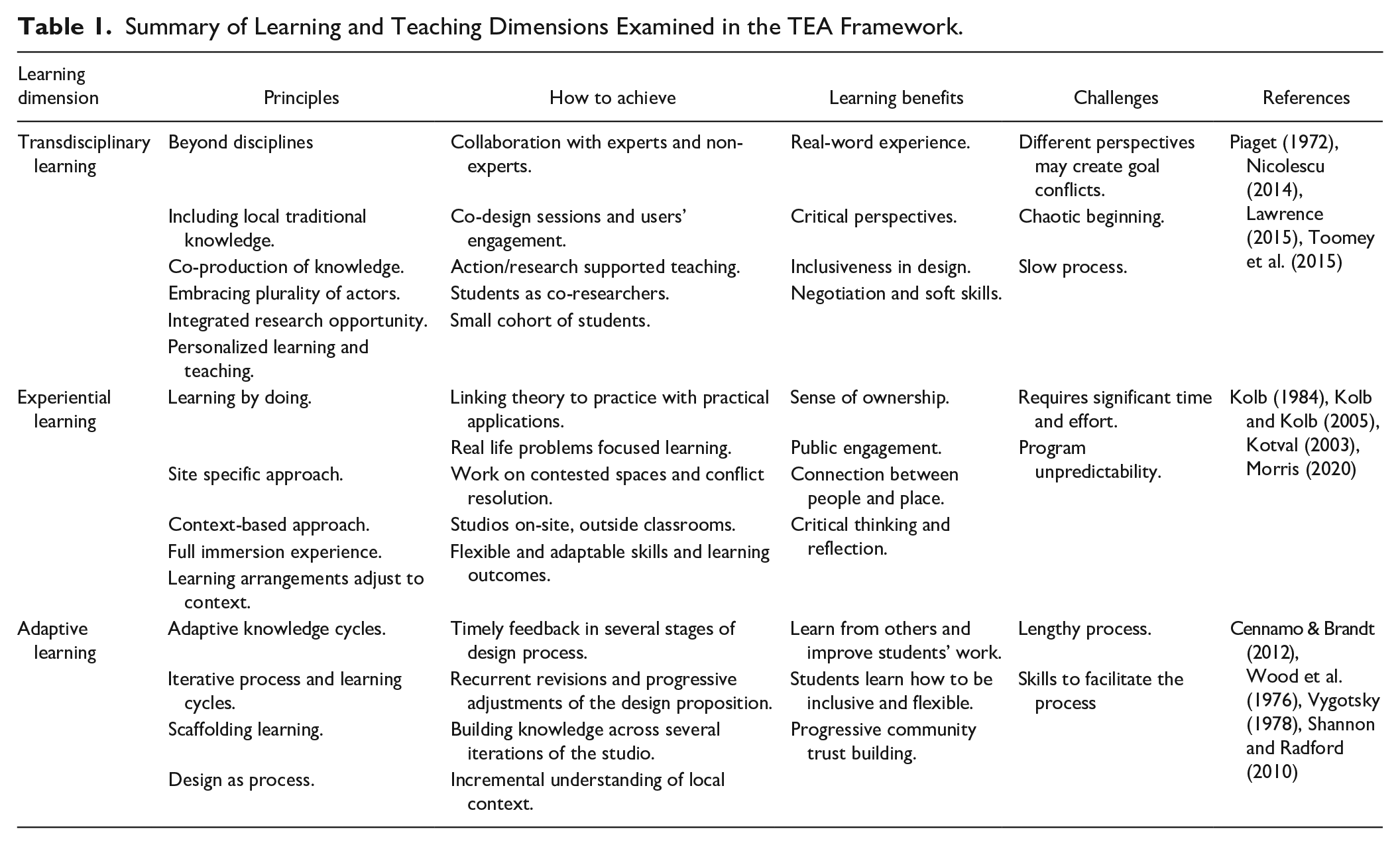
This section explores how recent theory and experimentation have contributed to advance the conventional urban design studio model by introducing a new learning experience and addressing the gaps in current pedagogy. Three main learning and teaching dimensions have been identified in the literature that focus on the multiple uncertainties of contemporary design and planning (Kato & Ahern, 2008). Transdisciplinary learning, Experiential learning, and Adaptive learning approaches have been examined in detail (Table 1).
Summary of Learning and Teaching Dimensions Examined in the TEA Framework.
Transdisciplinary Learning
Transdisciplinarity is a concept in evolution. Initially describing the production and use of knowledge across disciplines (Piaget, 1972) it has recently acquired a broader meaning to include traditional and local knowledge beyond disciplinary boundaries (Dena et al., 2018; Mauser et al., 2013; Neuman, 2016; Nicolescu, 2014). The concept focuses on the cooperation of academics and non-academics in research (Collier et al., 2016; Palazzo, 2019a, 2020; Qu et al., 2020). As noted by Toomey: “Trans-disciplinary work moves beyond the bridging of divides within academia to engaging directly with the production and use of knowledge outside of the academy.” (Toomey et al., 2015, p. 1)
In a broader sense, transdisciplinarity refers to the capacity of strengthening the collaboration across different institutions, the professions, fields of research and local stakeholders, including the community, to co-produce knowledge and increase the opportunity of integrating research in teaching (Després et al., 2011; Lawrence, 2015). Elizabeth and Ashhurst (2018) identified four principles of transdisciplinarity in higher education: problem focused, embracing plurality, co-production of knowledge, and more flexible and dynamic teaching arrangements.
Transdisciplinary learning in the urban design studio
The concept of transdisciplinarity suggests a new way of learning and collaborative problem solving (Christensen et al., 2006). In urban design, it incorporates principles of inclusiveness, engagement, co-design and open processes aimed at generating resilient urban places (Mateo-Babiano & Palipane, 2020; Palazzo, 2020). Transdisciplinarity teaching adds a critical lens in education by engaging with the production and use of knowledge outside academia (Anderson, 2014; Khan et al., 2014) by adding another level of complexity to students’ learning experience (Qu et al., 2020). Students are engaged in living labs in between academia and society (Mauser et al., 2013) involving “the real, specific world and actors” (Prominski & Seggern, 2019, p. 8). In the role of co-researchers, students collaborate with other disciplines, experts and urban actors, and support local communities to recognize their own agenda (Schmidt et al., 2020).
However, as this approach involves several stakeholders and disciplines, different perspectives and objectives may generate conflicts along the process (Engels & Kerstin, 2018). Moreover, the collaboration between students and local stakeholders requires a degree of flexibility in determining the learning outcomes. The process can be chaotic and sometimes inefficient, unless properly organized (Broussard et al., 2014). Thus, the involvement of many actors requires long-term initiatives across several years to integrate different perspectives. Only small cohorts may guarantee an effective exposure of students to the collaborative process.
Experiential Learning
Experiential learning is the process whereby “knowledge is created through the transformation of experience” (Kolb 1984, p. 41). This concept has been widely adopted in higher education in different disciplinary fields (Kolb & Kolb, 2005). Six principles were defined to describe experiential learning: process, experience, conflict resolution, adaptation, context, social and personal knowledge, and experience (Kolb 1984). Bransford et al. (2000) describe experiential learning as a new education science, where knowledge and understanding are generated by reflecting on previous experience. Bransford et al. (2000) also points out that students’ abilities are enhanced when they understand when, why, and what types of skills are needed, and how they are relevant to problem-solving and conflict resolutions. Furthermore, Morris (2020) highlights how full immersion experience must include social and cultural aspects and the community.
Experiential learning in the urban design studio
Experiential learning in the urban design studio involves the application of the design process to real-world problems. Urban design is a discipline that focuses on the intrinsic connections between the physical and social dimensions of the urban environment. Thus, Experiential learning allows students to appreciate the role of the community in managing urban space and acknowledge the bonds between people and places (Zivkovic et al., 2019).
Moreover, by observing and planning real places, students refine their ability to deal with the uncertainty of the urban design practice (Herman & Rodgers, 2020). Their existing disciplinary skills are integrated by new transferrable and soft skills required in dealing with real life places, for instance negotiation skills.
In general, experiential learning in the urban design studio places a focus on sustainability by addressing site-specific dimensions unique to places (Grover et al., 2020). As a result, students gain a better understanding of complex urban processes, for example informal urbanism (Jones, 2019; Kotval, 2003). Experiential applications also bring students to engage with more people outside the university (Herman & Rodgers, 2020). Importantly, collaborations enable peer learning, informal discussion, feedback from experts (lecturer, industry professionals) and non-experts (locals, users) (Jones, 2019; Kotval, 2003). At the same time, students acquire the capacity to manage group dynamics, negotiate and solve conflicts (Kotval, 2003; Qu et al., 2020), which are valuable skills in the urban planning practice and cannot be taught in large lecture-based contexts or classroom-setting studios.
However, experiential learning in the urban design studios also requires a significant amount of time and effort. The collaboration with local community and residents in projects dealing with urban space is often involving the contested dimensions of place, and thus entails complex negotiation, consultation, and engagement processes. In conflictual conditions, to integrate planning theory with practice within an academic studio may be challenging, as teachers are not always familiar with real-world situations (Senbel, 2012). As the process requires high levels of critical thinking and self-reflection (Morris, 2020), significant teacher’s experience is also needed to assist students and facilitate the learning process.
Adaptive Learning
In design education, adaptive learning describes how knowledge informs decision making through iterations of virtuous feedback loops (Cennamo & Brandt, 2012). The concept originated in the frame of the environmental sciences to cope with the uncertainty of the natural environment in complex ecological systems (Holling, 1978). Adaptive management cycles are defined as processes of progressive learning able to adjust gradually a system to avoid undesirable outcomes (Walker & David, 2006). To facilitate this dialectic, groups discussions provide the ground for defining alternative plans and ideas (Holling, 1978). Transferred to education and research, an adaptive knowledge cycle implies the iteration of learning loops throughout context analysis, hypothesis definition, and hypothesis testing.
Adaptive learning in the urban design studio
In design studio pedagogy, adaptive learning implies a non-linear and iterative process to inform and progressively adjust design decisions (Cennamo & Brandt, 2012; Lee, 2006; Shannon & Radford, 2010). As in a real-world project, students must incorporate external feedbacks to improve their designs. A continuous revision of design propositions facilitates students’ incremental understanding of complex urban design issues (Shannon & Radford, 2010).
Shannon and Radford (2010) emphasize the role of scaffolding learning as a core component of design studios with an adaptive and iterative knowledge approach. The concept of “scaffolding” may refer to different pedagogic concepts and techniques (Vygotsky, 1978; Wood et al., 1976). However, for the purpose of this study, we define it as the use of knowledge developed by students in previous design studios to support, or scaffold, following studios. This allows long term relationships that enable the production of design propositions suitable to a specific context, build trust and connections with local stakeholders and overall improve design outcomes.
Adaptive learning concepts are not easily applicable to design studios. Design iterations require longer timeframes and may not fit into the academic calendar. The process also requires teachers’ competence to support students incremental learning (Shannon & Radford, 2010). Moreover, an adaptive approach to design studio implies the acceptance of a degree of unpredictability. Project’s knowledge background and program’s objectives may need to be defined progressively in a process of discovery and experimentation that requires flexible skills and learning outcomes. Similarly, design studio outcomes, typically predetermined by teachers, may need to be co-created with students along the studio process.
The TEA Urban Design Studio Case Studies
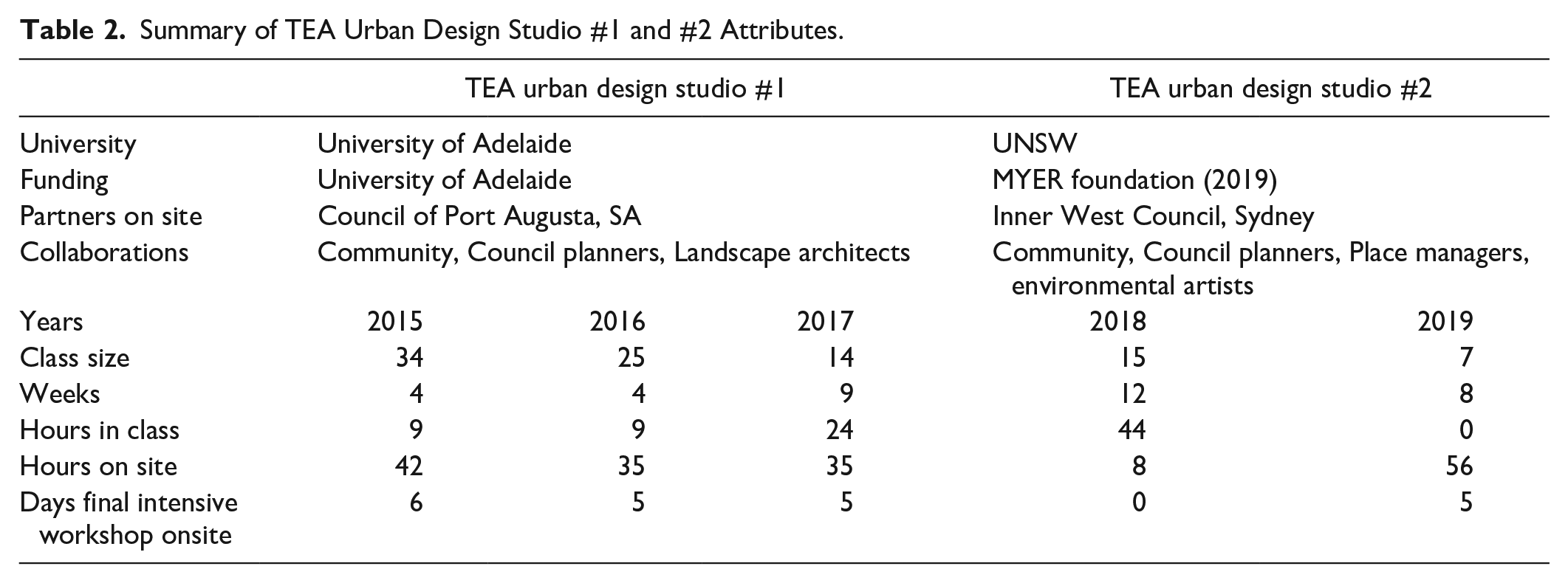
Two urban design studios were examined to test an integrated transdisciplinary, experiential and adaptive approach to learning. Both studios were developed in the frame of interdisciplinary master programs in Architecture, Urban and Landscape Design in Australia and focused on action/research with the collaborations of local experts and the community. The courses included the realization of an urban installation on site and were organized in the frame of larger scope projects, coordinated by the authors. Table 2 summarizes the main attributes of each studio.
Summary of TEA Urban Design Studio #1 and #2 Attributes.
TEA Urban Design Studio #1: Port Augusta CBD, South Australia
At the University of Adelaide, South Australia, the studio was carried on in the frame of the Urban Ecosystem Design Lab, a research cluster focused on experiential learning and action/research (Figure 1). This project included community driven projects with a multidisciplinary and experimental approach and a focus on the socio-ecological response to design initiatives in the urban realm (Palazzo, 2019a). The main objective of the program was to enhance the social commitment of students/designers through proactive exchanges with the urban actors.
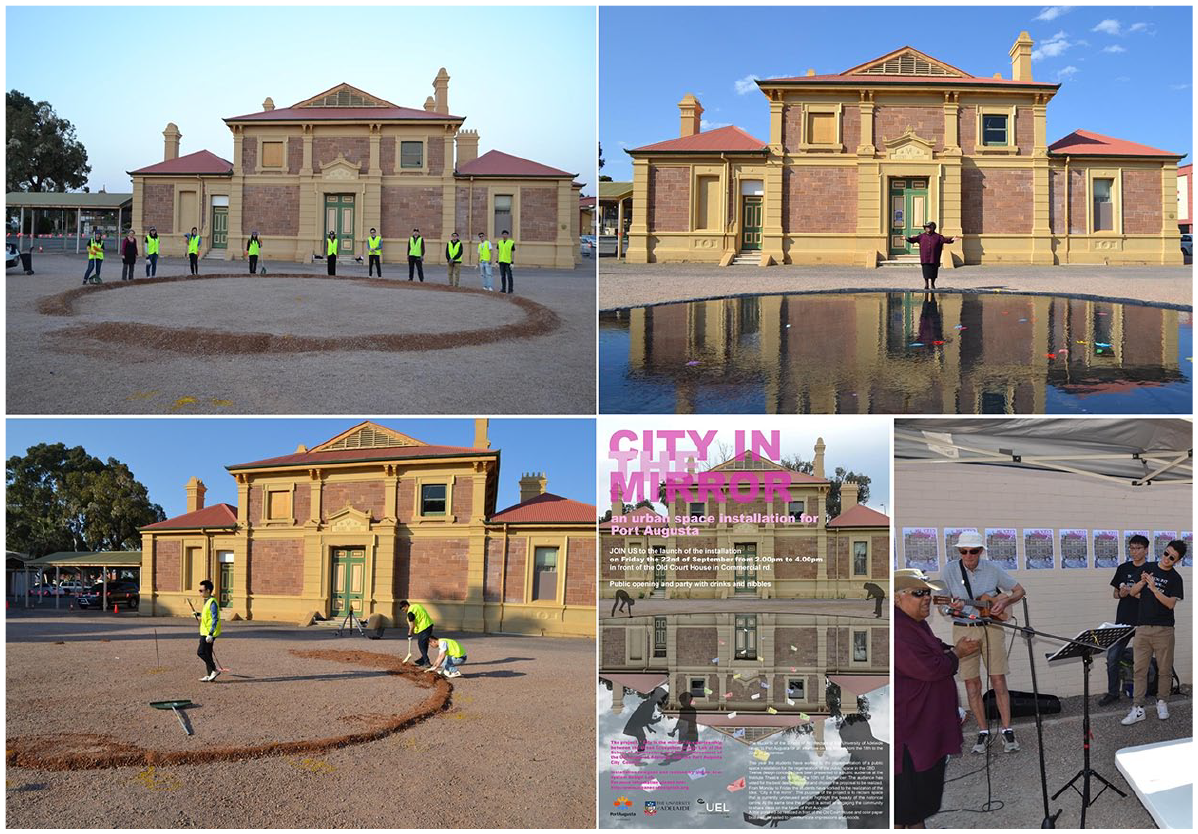
EA Urban Design Studio #1: Port Augusta CBD, South Australia. Students during the construction of pop-up urban installation. Photo credits: Elisa Palazzo and Bruno Pelucca.
TEA Urban Design Studio #2: Lewisham West, Inner West Sydney, New South Wales
At UNSW, Sydney the studio was developed in the frame of PlaceAgency, a university consortium involving six institutions across Australia, that engaged over 800 students in 35 design studios (Figure 2). The initiative was aimed at disseminating the practice of placemaking and tactical urbanism in tertiary education (Dominique & Hernandez-Santin, 2020; Palazzo, 2019a).
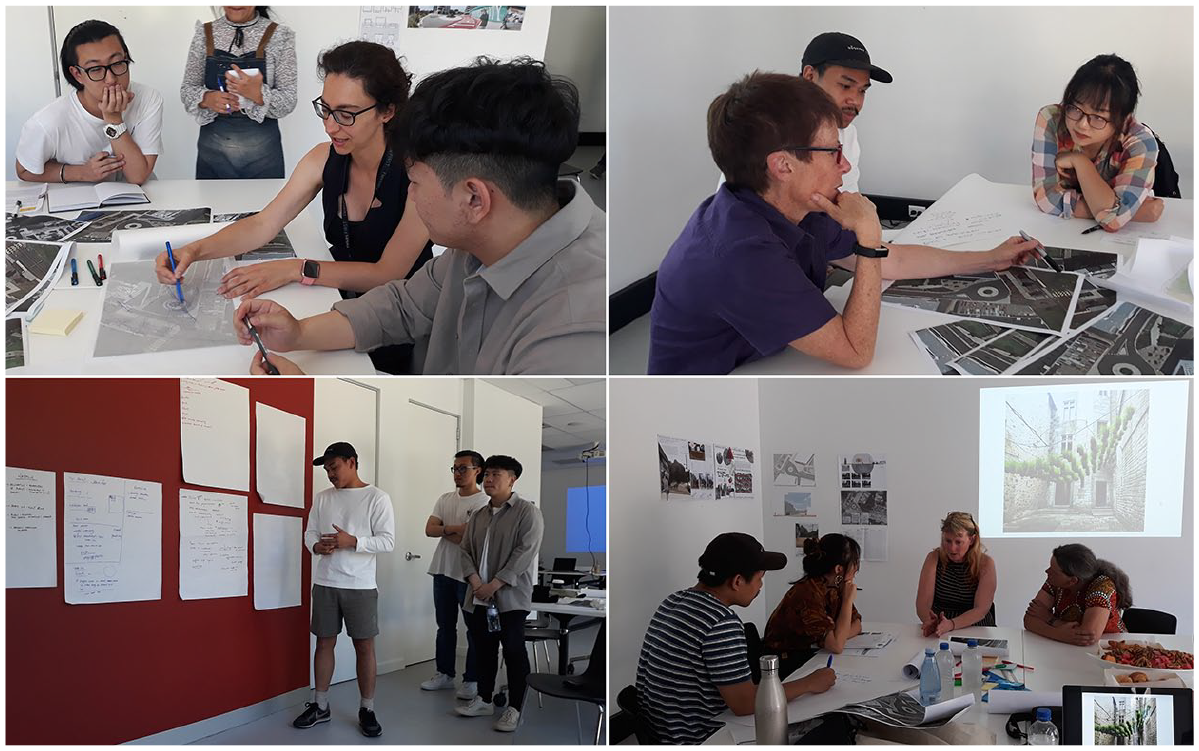
TEA Urban Design Studio #2: Lewisham West, Inner West Sydney, New South Wales. Students during co-design sessions. Photo credits: Elisa Palazzo.
Both design studios included the following learning activities:
a. An intensive workshop on site, outside the campus.
b. Logistic support by local councils providing a workshop venue on site and technical assistance.
c. Participation of local stakeholders, including residents and the community in co-design sessions.
d. Involvement of experts from different disciplines, including design professionals, project managers, artists, and planners.
e. Small class cohorts (max 25 students).
f. Scaffolding learning based on previous year students’ research findings.
g. Adaptive learning incorporating community feedback in an iterative process.
h. Public engagement campaigns and public events organization planned and carried out by students.
i. A public exhibition displaying students projects and a design contest assessed by a panel of residents and planners.
j. Awarded projects were renegotiated to be implemented.
k. The implementation of one urban installation in a week-long execution phase.
l. A final event to launch the urban installation with the participation of the community.
Assessing TEA Approaches in Urban Design Studios
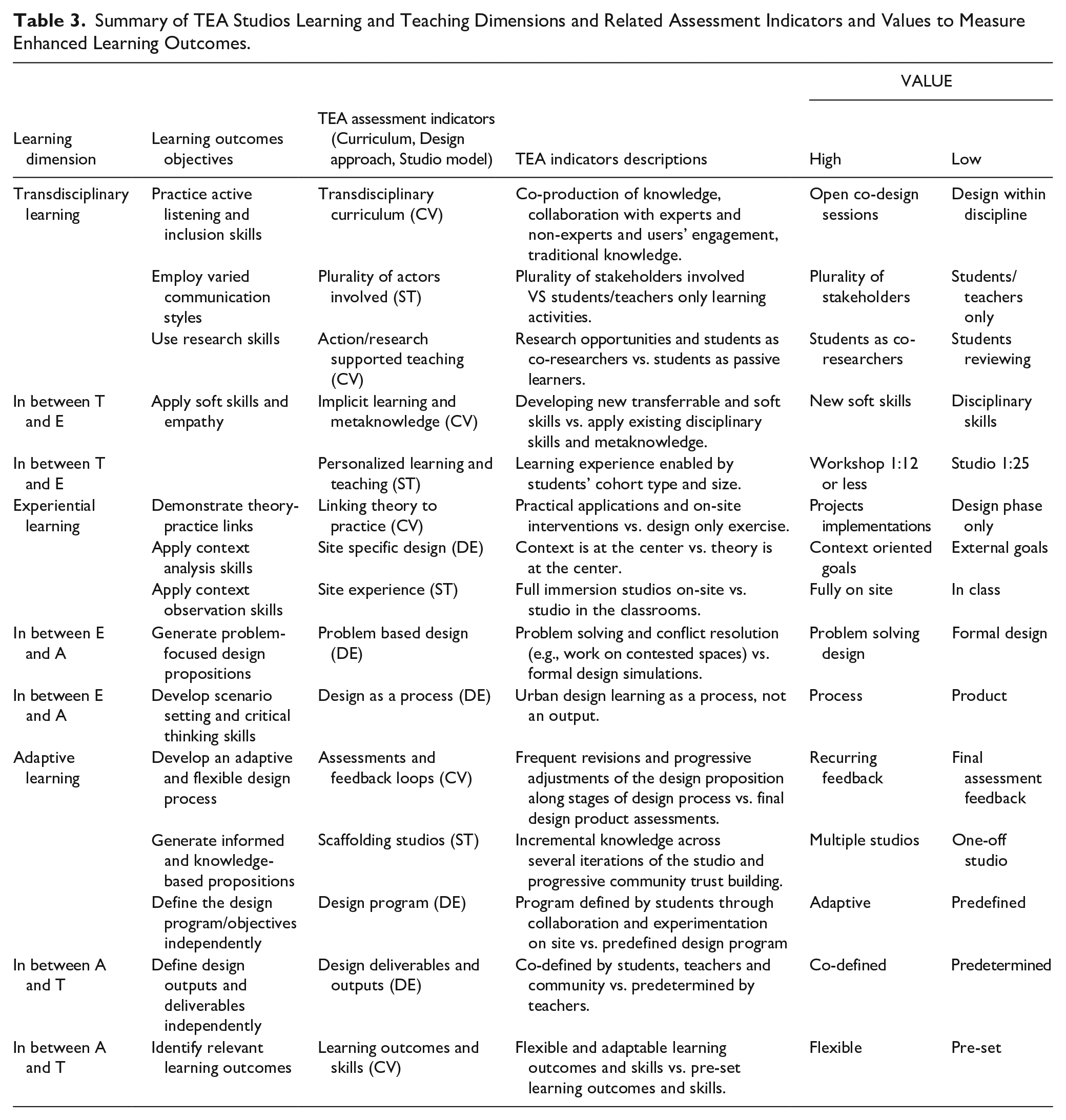
The application of the TEA framework to case studies shows recurrent learning strategies and outcomes. Five criteria, or indicators, were discussed for each TEA learning dimension according to their incidence and evaluated through maximum and minimum values. The analysis of these values in the frame of two case studies measures the efficacy of a TEA design studio learning and teaching model to achieve optimal learning outcomes. Indicators and related values were organized and displayed in a “radar chart,” a visual tool that enables the comparison of multiple variables.
Fifteen criteria have been discussed for each TEA urban design studio and summarized in Table 3. The radar charts in Figures 3 and 4 present the findings derived from comparative analysis.
Summary of TEA Studios Learning and Teaching Dimensions and Related Assessment Indicators and Values to Measure Enhanced Learning Outcomes.
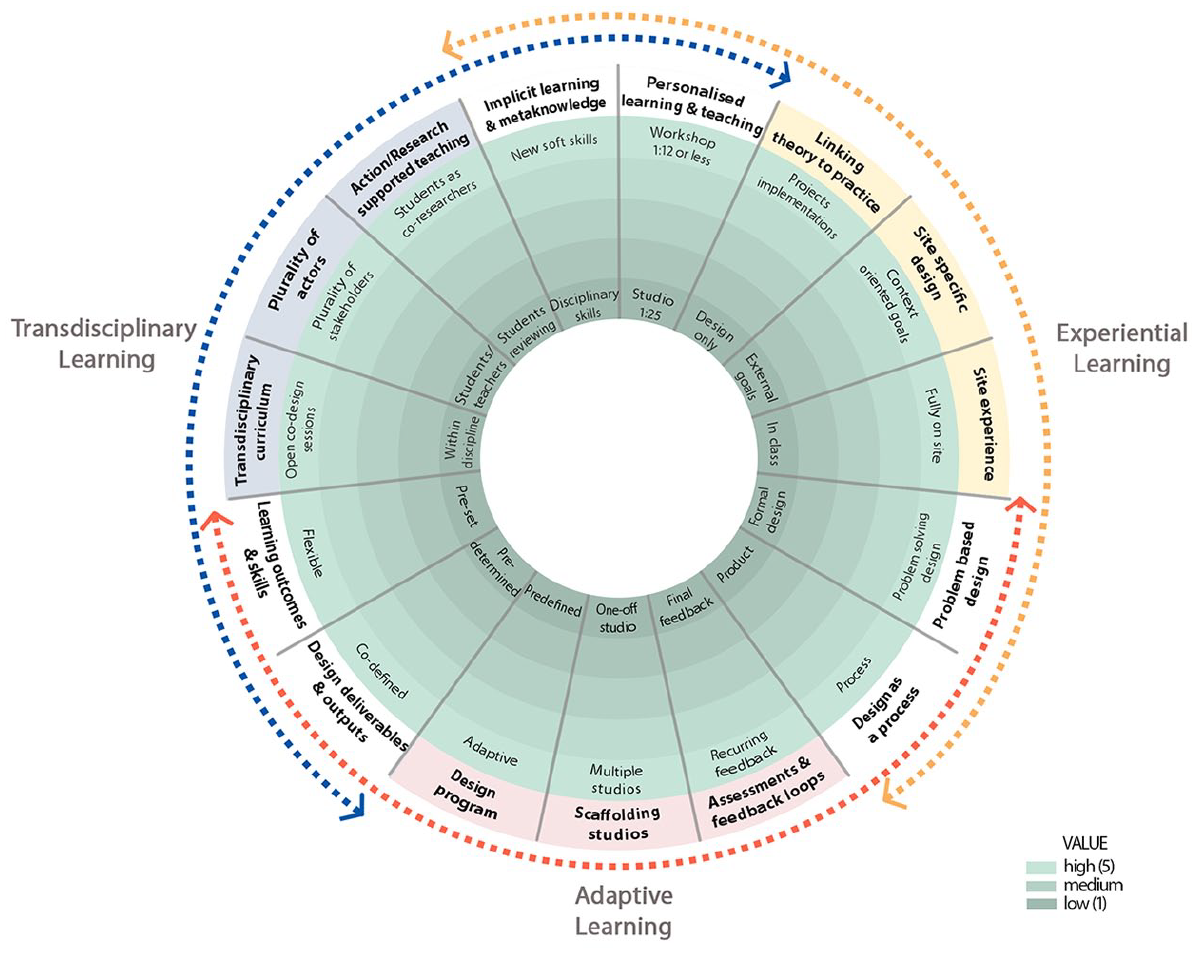
TEA studio evaluation indicators and related values for each learning dimension consolidated in an assessment radar chart.
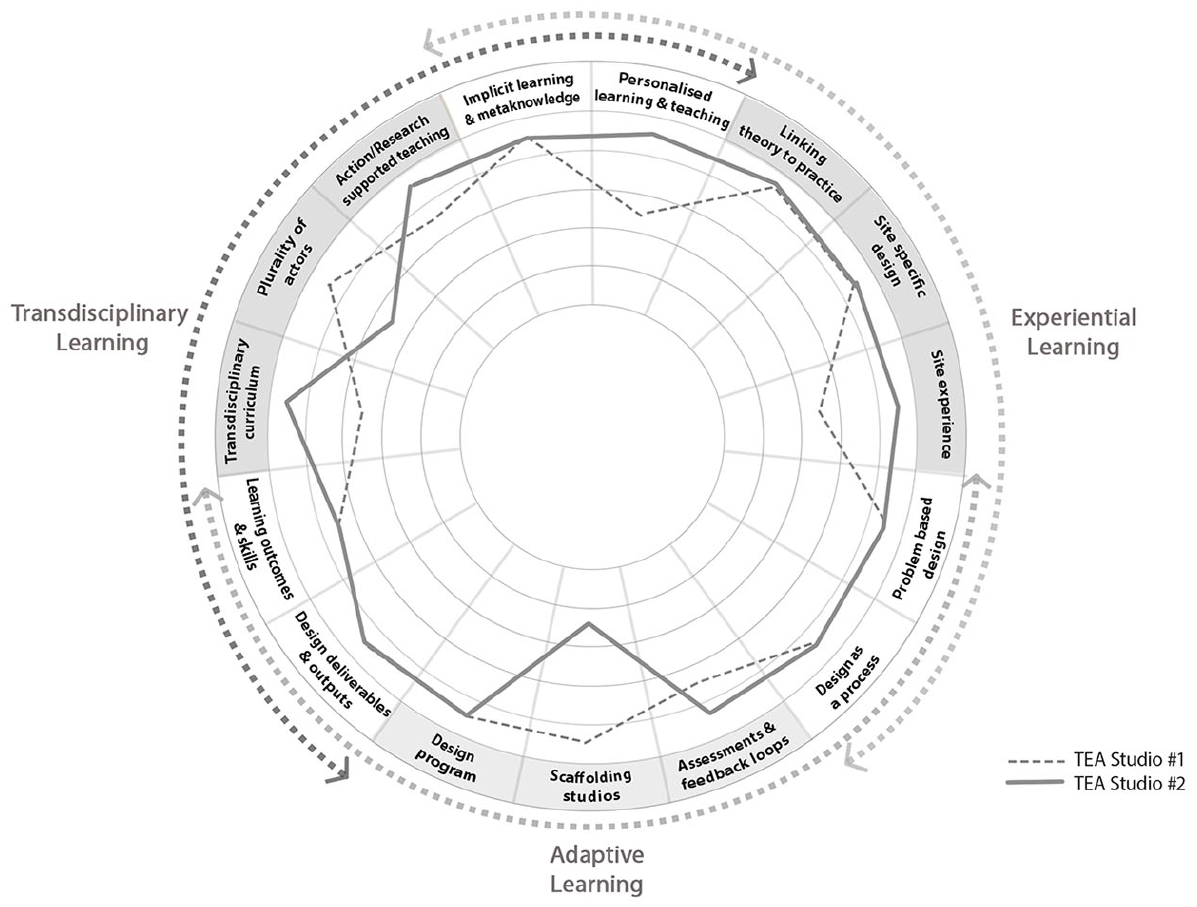
Radar chart summarizing comparative analysis of TEA design studio #1 and #2.
Transdisciplinary curriculum
A transdisciplinary environment involves the co-production of knowledge through the collaboration with experts and non-experts and users’ engagement. High values are enabled by open co-design sessions with the direct collaboration of students, residents and the community, to include local or traditional knowledge in the design proposition. Low values restrict design to traditional disciplinary boundaries.
TEA studio #1 employed community focus groups and discussions that enabled students in practicing active listening and interpretative skills. TEA studio #2 directly engaged the local community in co-design sessions where students had to mediate their own vision with different perspectives, needs and requests (Figure 2).
Plurality of actors involved
The need to address a plurality of actors engages students in different communication styles to adjust to the audience, expertise, and/or disciplinary field. High values are represented by numerous stakeholders involved in the design process while low values reflect students/teachers only learning activities.
TEA studio #1 engaged with several stakeholders, the community and design professionals. Local technicians and planners from the local council worked with students in the construction of a temporary installation, providing a range of instruments and technical skills new to students. Students of TEA studio #2 addressed urban space regulatory frameworks by negotiating their design propositions with council’s planners.
Action/research supported teaching
A real context provides the ground for teachers and students to develop and test design hypothesis through an interactive inquiry process. Research skills are developed working on field. High values are represented by students acting as co-researchers in data collection, analysis, and the design process. Low values see students as passive learners, reviewing and validating information and data.
TEA studio #1 students were involved in a comprehensive data collection campaign, including interviews to local stakeholders and residents. TEA studio #2 students were engaged in the realization of pop-up micro-installation in the urban space to analyze users’ behavioral changes and reactions to spatial transformations.
Implicit learning and metaknowledge
Social interaction with urban actors encourages students to develop new transferrable and soft skills, for instance mediation skills and empathy. High values imply the development of both new and old skills while low values entail the application of disciplinary skills only.
In both TEA studio #1 and #2, students met communities’ members in face-to-face interviews, semi-structured focus-groups, co-design sessions and large audience meetings, to discuss their urban design propositions.
Personalized learning and teaching
Learning experience can vary depending on students’ class type and size. Design studios are typically carried out in classes with a teacher/students ratio of 1:25. Personalized learning experience is enabled with cohorts ratios of 1:12 or less, as in a workshop or “lab” teaching model. Lower ratios allow a “safe-to-fail” learning environment that facilitates greater experimentation.
In TEA studio #1 and #2 teacher/students ratios were varying, ranging from 1:25 to 1:15. Lower ratios (1:14 for #1 and 1:8 for #2) enabled a greater program’s flexibility.
Linking theory to practice
A design implementation objective challenges students to critically revise their prior knowledge about design acquired in the class. Applications of urban design theory to a real context require considerable efforts to translate abstract constructs into practical outcomes and outputs. High values are represented by the realization of on-site interventions such an urban installations. Low values refer to design only simulations in the studio class.
Both TEA studio #1 and #2 involved a temporary installation in the public space based on students’ design propositions (Figure 1). Students had to address time, resources, and planning constraints to bring their concept design to fruition through an intensive group work requiring coordination and leadership skills such as in the design professions.
Site specific design
Design propositions are site-specific when they are prompted by local conditions and an endogenous program, rather than external objectives. Students develop urban analysis skills to identify context-dependant goals. High values are represented by local context conditions at the center of learning and teaching activities. Low values reflect a priority to external goals.
Urban analysis activities in TEA studio #1 were designed to facilitate students’ understanding of the context and develop a site specific knowledge to sustain robust design propositions. Activities involved the realization of a 3′ film to capture students’ first-hand experience of the site. TEA studio #2 was based on both traditional urban analysis and more experimental approaches such as pop-up urban micro-installations in the urban space.
Site experience
Teaching outside the classroom in a full immersive situation exposes students to a transformative experience which help them to identify the reasons and objectives of design. Accurate and specific observations about the site are aimed to inform design propositions. High values are related to fully on-site urban design studios while low values relate to studios developed in the classroom only.
TEA studio #1 was developed in part in class with a 1 week final intensive workshop onsite. TEA studio #2 was developed completely on site, with weekly studio time in a venue provided by local council and a final intensive workshop.
Problem based design
Students are involved in complex urban design decisions about societal and environmental challenges. These require addressing a plurality of conflicting interests about contested spaces that enable problem solving and conflict resolution skills. High values are represented by critical thinking triggered by real-life problems while low values refer to conventional and formal design.
Both TEA studio #1 and #2 challenged students to generate problem-focused design propositions by addressing critical issues related to urban space. Problems were identified and addressed mainly involving disputed public places, conflicting uses of common resources, and reclamation of vehicular space for pedestrian uses.
Design as a process
Design propositions and scenario making are used to trigger discussions and reflections on urban issues with the public and the local communities, rather than focusing on formal design outputs. High values are represented by critical thinking triggered by the design process. Low values are usually displayed by design as represented by graphic outputs.
TEA studio #1 and #2 focused on generating collaborative interactions and scenarios setting to enable a shared understanding of public space in urban areas.
Assessments and feedback loops
Iterative knowledge cycles are prompted by frequent projects reviews and progressive adjustments of design propositions along the phases of design process. Students develop an adaptive mindset and flexible attitude. Design outputs assessments are not necessarily the focus of the academic evaluation. High values are measured when recurring feedbacks are provided at several stages of the design process. Low values connotate assessment based on final feedbacks only.
Both TEA studio #1 and #2 included formative and summative assessments, involving local community and practitioners in discussion panels throughout the design process. Final assessments were based on the success of the temporary installation’s launch event (number of community members participating, comments received, public satisfaction about outcomes, etc.).
Scaffolding studios
Several iterations of the design studio in consecutive years enable a process of incremental knowledge building and support long-term relationships with local stakeholders and communities. Students generate informed and knowledge-based propositions triggered by previous students’ findings. High values are represented by collaborations across multiple studios iterations while low values by a one-off studio.
TEA studio #1 was carried on in three consecutive years with an incremental complexity from general urban analysis to context-based propositions. TEA studio #1 was developed across two iterations. However, the two studios had a slightly different focus which only in part supported the achievement of scaffolding objectives.
Design program
Context focused design propositions require adaptive and flexible approaches to the design program, that cannot be predefined. This allows students to develop a personal view and define their own on design objectives. High values are defined by a design program defined by students through collaborative and experimental activities on site. Low values are defined by a conventional design program predefined by teachers.
In TEA studio #1, the design program was determined by students during the iteration of three design studios. Initially addressing general ecological and social sustainability challenges, students gradually shifted focus to more specific issues, such as the impact of vehicular traffic on urban liveability. In TEA studio #2, each student was required to identify a specific design program’s objective from the onset of the studio, for instance by targeting conflicting uses in the public space.
Design outputs and deliverables
The active role of students in defining studio outputs and deliverables stimulates critical thinking and understanding of the urban processes. High values are represented by design outputs and deliverables co-defined by students and teachers. Low values are related to outputs and deliverables predetermined by teachers.
In TEA studio #1 outputs and deliverable were defined by teachers for the first and second iteration of the studio while were co-defines in iteration 3. TEA studio #2 outputs and deliverables were defined by students with teachers’ support.
Learning outcomes and skills
Design studios aimed at responding to real-world problems and supporting the local community must customize learning outcomes and skills to a specific time and context, which makes them difficult to be predetermined. Ideally students should be involved in the identification of relevant learning outcomes as part of the studio process. High values reflect flexible and adaptable learning outcomes discussed with students. Low values present learning outcomes and skills that are pre-set by course outlines.
In addition to disciplinary learning outcomes, both TEA studio #1 and #2 supported a diverse range of soft skills, required in activities such as public engagement and community consultations, events organization, public speaking and media management, construction management, details design, etc. TEA studio #2 was in part constrained by the PlaceAgency program focusing specifically on tactical urbanism and placemaking.
Discussion
This paper defines a framework to design and evaluate a new urban design studio format, based on the three strategic dimensions of transdisciplinary, experiential, and adaptive learning, to bring the urban design teaching outside the classroom and enhance the social commitments of students. The study has examined the structure of two TEA urban design studios by describing and analyzing their teaching applications.
The framework proposed provides at the same time:
a reference to set up urban design studios learning and teaching objectives in a studio design phase, and
a survey tool to capture how much of those objectives were achieved in a post-studio phase.
The framework has been tested by the authors on two past studio teaching applications. However, it was designed to support future design studios assessments also from a student and community perspective.
The comparative analysis has shown the correlation and interdependence of TEA learning and teaching dimensions in the studio applications.
Moreover, three strategies were adopted in both studios (Figure 5):
the collaborative production of knowledge was pursued with the introduction of
a context-based event with the implementation of small scale
a
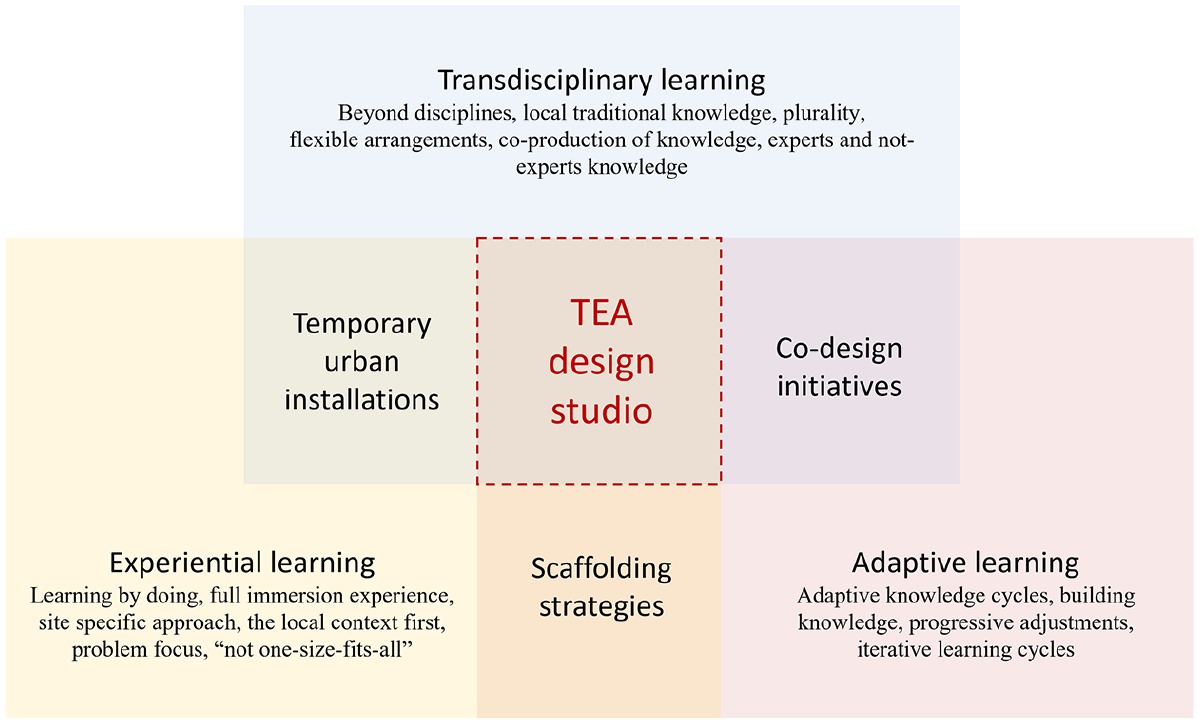
Correlations and interdependence of transdisciplinary, experiential, and adaptive learning dimensions in the TEA design studio applications.
These strategies were critical to enable a strong and long-lasting relationship and trust with the local stakeholders, the community, and the site.
Benefits were provided on three levels, from the perspective of students, academics and the community. The projects were very positively received by students. In particular, positive feedbacks were reported about the flexible and diverse working environment where students were able to use their own particular expertise or interests. Most students found the projects very challenging but also rewarding as in most cases it was their first experience of a real project’s implementation.
The TEA studio also represented a significant opportunity for research and for the consolidation of relationships between academia, industry and the engagement of local stakeholders. Finally, the community expressed appreciation for the opportunity to discuss and share alternative views about the use of public space, define a shared agenda based on evidence and research provided by students and develop sustainable goals propositions tailored on the context.
The application of the TEA learning model shows that there are some unsolved challenges that still need consideration.
In first place, more flexibility in learning and teaching is essential to bring the urban design studio outside the classroom. The TEA design studio is based on a format that requires novel programs, timeframes and, most importantly, course outlines including disciplinary and non-disciplinary learning outcomes. Some degree of adaptability is required allowing for future changes, revisions, or additions to accommodate the specificity of each studio context. This raises a broader question whether current tertiary education programs and procedures will be able to accommodate these new formats and in which situations.
In addition, a TEA design studio model is resource intensive. For instance, the dislocation of students outside the classroom requires complex project management skills that are uncommon among academic instructors (Boyer, 2020). Risk assessment procedures, insurance and liability approvals also often discourage the implementation of practice-based programs from being carried on. As already acknowledged by Kotval (2003), the experience of the TEA urban design studio shows that there is a generalized lack of faculty involvement in delivering this pedagogical approach. Faculty members either have a limited professional background or focus more on research and publication and thus similar studios are usually delivered by sessional staff, usually professional urban designers.
Despite several challenges ahead to integrate the new model in the formal academic teaching, there are some possible ways forward and recommendations.
In first place, to address issues of urban sustainability and to capture the growing complexity of the urban realm is essential to train a new generation of educators in the urban and landscape design disciplines with a broader expertise and a more integrated role in society. For instance, teaching focused staff could be equipped with facilitating skills to deal with the design profession and engage with the community.
The TEA design studios examined by this study involve applications of urban and landscape design. However, possible opportunities can derive from extending the method to non-design focused disciplines that have similar interests on people, places and urban sustainability, such as urban planning and the social sciences. This let envisage the possibility of interdisciplinary group of students from different backgrounds working collaboratively together in solving major urban challenges.
Moreover, the response to the global pandemic has recently contributed to increase the use of modern networking technology and remote learning. While this is generally a positive innovation, the generalized use of digital tools in the classroom poses also new challenges and need a careful reconsideration. As face-to-face interactions and real-life learning experience have been drastically reduced, it is vitally important to recreate opportunities for students to spend time in social environments. In this frame, the TEA design studio model is suitable to be integrated with information technology and online teaching management tools. More broadly, a hybrid learning mode could also address some of the operational challenges of TEA urban design studios, in particular in relation to the strict time frames of academic teaching. Future applications could test TEA design studio in an intensive format on site, preceded by online synchronous teaching and self-learning.
Conclusion
The TEA design studio model is an alternative to traditional urban design teaching that often leaves the community behind in the planning process. Intensifying urban entropy shows that many different conflicting outlooks will shape the future development of cities and will need concerted actions. Urban areas will require a broader engagement and a plurality of actors in planning and design processes. Thus, the application of a TEA approach shows a way to strengthen the collaboration across different institutions, professions, academia and local actors and realign conflicting objectives into a common trajectory of sustainability. The question is whether tertiary education systems will be ready to embrace this challenge and shift back to real-world situations where teaching is aimed at training a new generation of urban designers prepared to approach increasingly complex urban situations. Or whether urban design teaching will persist mainly through simulations and conceptualizations disengaged with cities challenges.
Footnotes
Declaration of Conflicting Interests
The author(s) declared no potential conflicts of interest with respect to the research, authorship, and/or publication of this article.
Funding
The author(s) received no financial support for the research, authorship, and/or publication of this article.
