



Abstract
Given the continuing debate on whether women are less corrupt than men, this study investigates the socio-political context in which men and women give bribes based on the seventh round of the Afrobarometer multi-country data set. We also seek to understand how a country’s freedom status and gender equality level inform the extent to which women and men are likely to be involved in corruption. In doing so, the study focuses on the influence of gender status, the number of female legislators, gender equality, and political freedom on bribe-giving among men and women. Research results indicate that (1) women in Africa are less likely to pay bribes than men, controlling both macro-level and micro-level factors, (2) women are less likely than men to give bribes in countries with high gender equality, and (3) the tendency for women to give bribes is the lowest in politically free countries. However, the inclination of women’s bribery reached the highest level among countries with partial political freedom. This study extends the theoretical and empirical understanding of the context within which women are more or less likely to give bribes, especially in the global South.
Introduction
Corruption, the misuse of power to serve private ends, undermines political stability, development, and global security (Julius Otusanya, 2011; Rotberg, 2009; United Nations Development Programme, 2018; United Nations Office on Drugs and Crime (UNODC), 2015, 2019), indicating the need to combat corruption. Since research generally shows that women are less likely than men to engage in corruption, it is suggested that one way to combat corruption is to place more women in positions of political power (Alexander and Bågenholm, 2018; Dollar et al., 2001; Esarey and Schwindt-Bayer, 2018; Swamy et al., 2001). Based on cross-country data, Swamy et al. (2001), for example, found that corruption was reduced when women’s representation in the labour market and legislature 1 increased, especially in high-profile positions in the government. Several reasons may account for women’s low tendency to engage in corruption. For instance, Paternoster and Simpson (1996) suggest that women are often socialized to be more honest than men, explaining why women are less likely than men to engage in corruption.
But other studies indicate that when women are given similar freedoms and corrupt opportunities as men, they tend to be as corrupt as men (Alhassan-Alolo, 2007; Armantier and Boly, 2011; Esarey and Chirillo, 2013; Schulze and Frank, 2003; UNODC, 2020; Waziri-AzI and Stolpe, 2020). These studies suggest that political and gender equality contexts in which women and men are embedded are crucial in informing gender differences in corruption. For instance, it has been found that because women have less power than men in automatic societies, they are more vulnerable to paying bribes than their male counterparts to access public resources (Esarey and Chirillo, 2013; Téllez, n.d.).
Against this backdrop, this article examines the socio-political context in which men and women give bribes. We also seek to understand how a country’s freedom status and gender equality level inform the extent to which women and men are likely to be involved in corruption. Data used are obtained from the Afrobarometer (Round 7), a multi-country level survey collected from 29 African countries. This study is important because, in the African context, a multi-country level study investigating whether a country’s freedom status and degree of gender equality influence gender differences in corrupt behaviours is virtually nonexistent. Thus, this article seeks to extend our theoretical understanding of gender differences in bribery, especially in the African context. We are aware of the different dimensions of corruption not studied in this article, such as embezzlement, graft, extortion, influence peddling, nepotism, and favouritism, among others. Nevertheless, studying bribery provided one with one of the most common forms of corruption the average African is more likely to encounter daily.
This study employed the freedom index (from the Freedom House project) as one of the political contexts which inform women’s bribery behaviour. This measure is important for capturing and categorizing the realities of democratization in many African countries. It captures broader indices of political and civic liberties, including the right to vote, freedom of expression and equality before the law, encompassing actions by both state and non-state actors. The freedom index covers more countries (210) than most freedom and democracy indices. In addition, the study also examines women’s legislative representation (from the Inter-Parliamentary Union) and gender inequality index (GII; from the United Nations Development Programme) as some of the socio-political context that informs women’s bribery.
Political context, gender, and corruption
Scholars have debated the basis of gender differences in corruption. Scholars have proffered several explanations at the micro level. For some, women may be socialized to be more honest or even feel there is a greater probability of being caught, and this negatively impacts their tendency to be corrupt (Eagly and Crowley, 1986; Paternoster and Simpson, 1996). Other scholars have suggested that women are less corrupt than men because women are more risk-averse than men (Barnes and Beaulieu, 2019; Barnes et al., 2018; Charness and Gneezy, 2012; Gustafson, 1998; Tooby and Cosmides, 1990). For Goetz (2007), women’s marginalization from power positions makes it difficult for them to be corrupt. Other studies have noted that women’s dependence on the state and the accompanying lack of access to political networks reduces their opportunities to be corrupt (Alexander et al., 2020; Stensöta et al., 2015). Studies show that women in influential positions are often scrutinized for corrupt behaviours than men (Baxter, 2018; Dezső et al., 2016; Eagly et al., 1992; Lasna Kabir, 2020; Lyness and Heilman, 2006), explaining women’s low tendency to engage in corrupt behaviour. Similarly, women tend to be held to higher standards than their male counterparts (Schwindt-Bayer et al., 2018). Nevertheless, the link between gender and corruption has also been examined from the macro perspective.
Gender equality and corruption
At the macro level, some scholars have argued that the greater representation of women in the legislature has been found to be linked to lower levels of corruption (Alexander and Bågenholm, 2018; Dollar et al., 2001; Dong and Torgler, 2013; Esarey and Schwindt-Bayer, 2018; Jha and Sarangi, 2018; Swamy et al., 2001; Wängnerud, 2012). For Dollar et al. (2001), the impact of women’s legislative representation on corruption is based on the idea that women are less likely than men to behave opportunistically in positions of power. They also suggested that bringing more women into governance may have benefits for society. Similarly, Swamy et al. (2001) found that a higher engagement by women in the labour force and polity is associated with lower levels of corruption. They suggested that corruption in the legislature is a critical aspect of political corruption, and if women generally accept fewer bribes, the incidences of legislative corruption will be reduced if they hold more political seats (Swamy et al., 2001). A study of provinces in Mexico noted that states with a greater proportion of women elected often display lower levels of corrupt practices than states with a lower number of elected female politicians (Wängnerud, 2012). Another study of 22 provinces in China by Dong and Torgler (2013) found that Chinese provinces with a greater proportion of female legislators often have lower levels of corruption.
More studies have noted contexts in which women’s legislative representation informs corrupt practices. For Esarey and Schwindt-Bayer (2018), greater electoral accountability in countries is strongly correlated with a higher proportion of female legislators and lower levels of corruption. In nations where the subject of corruption is a recurrent electoral issue, female politicians seem to be more engaged in fighting corruption than their male counterparts (Alexander and Bågenholm, 2018). They suggest that female politicians tend to be more willing to fight corruption than male politicians, especially during electoral campaigns (Alexander and Bågenholm, 2018). When comparing democratic and autocratic political contexts, greater female engagement in governance is weakly associated, if the democratization index is applied, with political cleanliness in authoritarian countries (Esarey and Chirillo, 2013). Similarly, Chaudhuri (2012) observes that there are no substantial differences in corrupt behaviour among men and women in developing countries, especially nations where corruption is more endemic. However, among democratic countries, there is a strong link between women’s participation in government and government cleanliness and transparency (Esarey and Chirillo, 2013).
Many scholars have also pointed to the impact of gender equality on corruption (Branisa et al., 2013; Branisa and Ziegler, 2010; Hao et al., 2018; Jha and Sarangi, 2018). Higher levels of inequality in social and political institutions are linked to high levels of corruption (Branisa et al., 2013). The level of corruption is higher in countries where social institutions hinder women’s freedom to contribute to social life (Branisa et al., 2013; Branisa and Ziegler, 2010). For Jha and Sarangi (2018), corruption is lower in societies where women enjoy greater equality than their male counterparts because, for them, women are better able to positively affect policymaking. Another multinational study of 80 countries within the period of 2000 to 2012 noted that a greater proportion of female legislators and higher female secondary school enrolment is linked to a lower level of political corruption (Hao et al., 2018). For Hao et al. (2018), once more women are able to acquire a higher level of education, their social horizons are broadened, and this positively impacts their earning capacity. However, more educated women may be more willing and more capable of paying bribes, and therefore, corruption would become more serious (Hao et al., 2018).
Political freedom, gender, and corruption
Other scholars have noted that the impact of gender equality or female legislative representation on corruption tends to be mediated or explained by political factors. One of the foundational studies that makes this argument was by Sung (2003). For Sung (2003), when appropriate measures of liberal democratization are added to the multivariate model testing the impact of female legislators on corruption, the initial gender-corruption association becomes non-significant. In other words, even though female legislative representation is linked to lower levels of corruption under some circumstances, this association loses significance when the impact of democratic liberalism is controlled (Sung, 2003). The idea behind this finding is that a strong political and civic mechanism that promotes competition and accountability in the polity and economy is the best antidote to systematic corruption (Sung, 2003). In this sense, the structure of a polity can promote or inhibit women’s entry into that political system. Since democratic liberalism promotes the idea that individuals have certain inalienable rights that the state must secure them, female engagement in the political and public sphere is a hallmark of liberal democracies (Sen, 1999). In other words, the impact of greater female legislators on corruption takes place due to the benefits and operations of liberal democracy. The benefits of living in a liberal democracy stimulate women’s political agency, and it also enables the polity to be competitive and transparent. Thus, the same attitude and atmosphere of liberal democracy that enables the inclusion of women in the political system also enshrines accountability and a level of political competition that curbs corruption. In some sense, female legislators in liberal democracy may often use anti-corruption crusades as a means of electioneering (Alexander and Bågenholm, 2018; Rothstein, 2016). Female politicians often influence stricter monitoring of public resources and funds, and this lessens long-term levels of corruption (Alexander and Bågenholm, 2018; Alexander and Ravlik, 2015).
Other scholars have noted the role of the political context on corruption. Gender differences in corruption are shaped by the level of a country’s freedom status (Alhassan-Alolo, 2007; Kasser-Tee, 2021; Schulze and Frank, 2003; UNODC, 2020). On one hand, in freer societies, women tend to be less corrupt than men (Manow, 2005; Treisman, 2007). Countries with high levels and long histories of liberal democracy – especially countries that have a vigorous and independent free press – tend to be less corrupt (Treisman, 2007). However, according to Manow (2005), corrupt practices in partially democratic regimes are slightly higher than in fully authoritarian states. Once this threshold of autocracy is passed, it is possible for democracy to reduce corruption (Manow, 2005). For Debski et al. (2018), greater representation of women in politics does not decrease corruption levels once country-specific time-invariant factors are accounted for. On the other hand, studies show that in autocratic or unfree countries, women have less power, and as a result, they tend to give more bribes to access public resources (Esarey and Chirillo, 2013; Téllez, n.d.). For Esarey and Chirillo (2013), the gender differences in corruption are smaller in autocratic states than in democratic states. They further declared that ‘the power of female participation in government to control corruption is contingent on democratic political institutions, with a stronger relationship in democratic states compared to autocratic states’ (Esarey and Chirillo, 2013: 381). Thus, one can assume that women’s tendency for bribery stems from a country’s freedom status.
It is important to note that most studies on corruption by economists have often relied on data sets and surveys on perceptions or attitudes toward corruption (Chaudhuri, 2012). However, one of the limitations of these studies is that even though they shed light on people’s attitudes towards corruption, they do not inform us about what individuals may do or how they may behave when they are placed in the actual context of a corrupt transaction (Chaudhuri, 2012). In this sense, our study seeks to add to the literature by employing the Afrobarometer data set, which collects information on whether people paid bribes to public officials for services.
Furthermore, it would be interesting to analyze the subject matter in the context of developing and transition countries (Torgler and Valev, 2010). This study focuses on giving bribes, which is one dimension of corruption, among many others. The act of bribery is a dimension of corruption that is relatively more common among the average African. Given that corruption is conceptualized as the abuse and utilization of public resources for private gains, studying bribery behaviour points to how individuals engage with day-to-day forms of corrupt behaviour.
This study contributes to the literature on two fronts. First, to examine the gendered nature of bribery within the socio-political context of Africa. Second, to go one step further on the current debate on the linkages between gender and corruption and investigate how the contexts of gender equality and political freedom inform bribery among African women.
Research questions
This study is mainly concerned with the socio-political context in which women gave bribes. It sheds light on the context within which women are more or less likely to give bribes in the global South. We assume that women may provide as many bribes as men in politically unfree countries. We also believe that women may give as many bribes as men in countries with a high level of gender inequality. Women may be compelled to provide bribes in these contexts to enable them to access their basic necessities. Hence, using the freedom index and gender equality as independent variables, we seek to understand how political context and gender equality inform the gender differences in bribery. Our research questions for this study are:
Is there a gender gap in giving bribes in Africa?
Does the context of women’s legislative representation inform the gender gap in bribery?
Does gender equality influence the gender gap in giving bribes?
Does political freedom impact the gender gap in bribery?
Methods
This study examines how the political context informs the link between gender and engagement in bribery. This study employs the seventh round of the Afrobarometer multi-country data set. The data set captures information on the socio-economic and political attitudes of adult African countries. The sample collected for the data is based on clustered, stratified, multi-stage, and area probability sampling (Afrobarometer, n.d.). The response rates for the countries in this study range from 70% to 90%. This round consists of 29 African countries: Benin, Botswana, Burkina Faso, Cameroun, Cote d’voire, Gabon, Gambia, Ghana, Kenya, Lesotho, Liberia, Malawi, Mali, Mauritius, Morocco, Namibia, Niger, Sao Tome, Senegal, Sierra Leone, South Africa, Sudan, Swaziland, Tanzania, Togo, Tunisia, Uganda, Zambia, and Zimbabwe. The Afrobarometer data set is the most appropriate for this study as it provides the most comprehensive data on the socio-political and cultural attitudes of the average African, with a relatively high response rate and sample size. This study employs about 31,000 respondents who had an encounter with the institutions used to measure the giving of bribes.
Measurements
Outcome variable
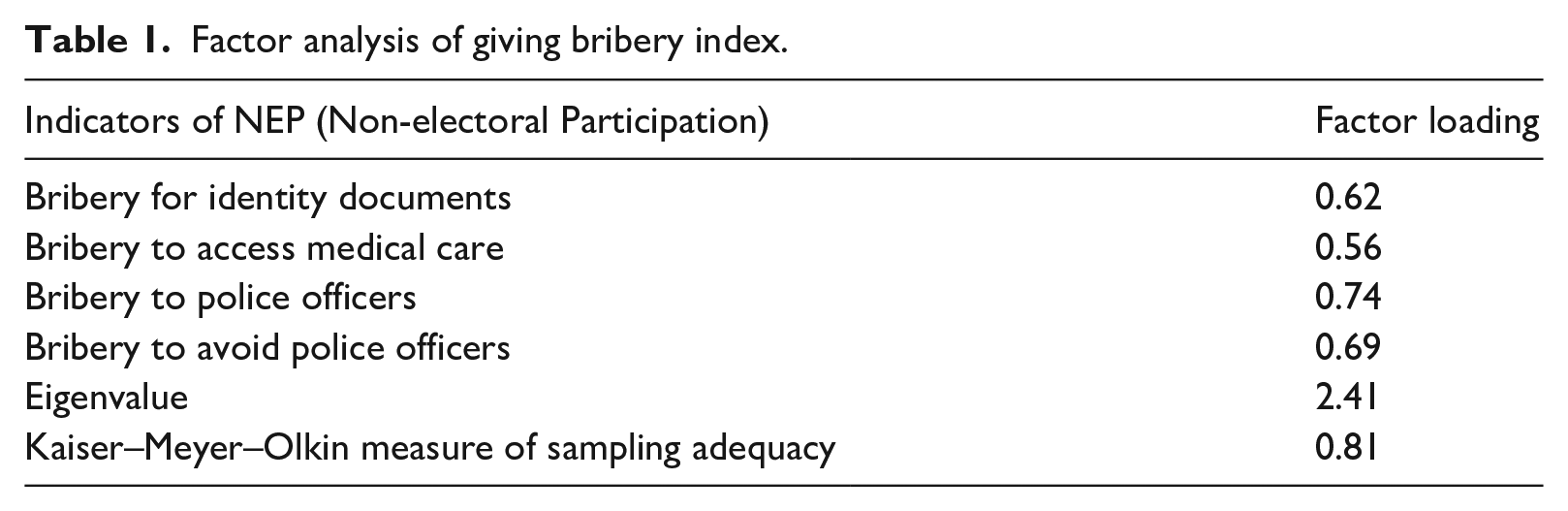
Giving bribes was employed as the outcome variable for this study. The variable covers a range of actions in which respondents provided bribes to members of the medical, governmental, and police institutions. In the Afrobarometer, respondents were asked about the extent to which they had contact with members of these institutions and gave bribes to access medical care, acquire a government document, and police assistance. Respondents were asked if they had ever paid a bribe for public school services, medical care, an identity document, police assistance, and to avoid problems with the police in the past 12 months. Each of these questions was recoded as binary (‘0’ for Never, ‘1’ for Once or Twice, ‘2’ for Few Times, and ‘3’ for Often). We examined the latent construct of the four questions via principal component analysis (PCA) using a tetrachronic inter-item correlation. The PCA shows that the four questions tap into a single underlying variable (see Table 1). Thus, the four questions were employed to generate an additive index that ranges from 0 (lowest engagement in bribery) to 12 (highest engagement in bribery).
Factor analysis of giving bribery index.
Focal variables
At the individual level, gender serves as a focal variable to enable us to examine how men and women differ in their engagement in bribes. The variable was recoded as ‘0’ (Female) and ‘1’ (Male). At the country level, we measure political freedom with the freedom index, which is a measure of the extent to which citizens in a country enjoy civil liberties and political rights (Puddington, 2013). The index is categorized as ‘0’ (Not Free), ‘1’ (Fairly Free), and ‘2’ (Free). For gender equality, we employed the GII by the United Nations Development Programme. The GII is a composite metric of gender inequality using the dimensions of reproductive health, empowerment, and the labour market. 2 The GII scores range from 0 (i.e., Women and men are equal) to 1 (i.e., Women and men are unequal). In other words, a low GII score indicates a high level of equality between men and women, while a high GII score indicates a high level of gender inequality. Finally, we applied the percentage of female legislators to the models based on the figures from the Inter-Parliamentary Union.
Control variables
At the individual level, the control variables employed for this study are age (measured as a numerical variable), educational attainment (recoded as None/Informal = 0, Primary = 1, Secondary = 2, University = 3), place of residence (recoded as Rural = 0, Urban = 1), membership in voluntary associations (recoded as Not a member = 0, Inactive member = 1, Active member = 2), employment status (recoded as Unemployed = 0, Employed = 1), engagement in political discussions (recoded as Never = 0, Sometimes = 1, Often = 2), perception of free speech in the country (recoded as Not free = 0, Somewhat free = 1, Very free = 2), political partisanship (recoded as No = 0, Yes = 1), religious affiliation (recoded as Muslim = 0, Christianity = 1, Others = 2), and deprivation index. The deprivation index is an additive measure of respondents’ lack of access to food, water, health, fuel, and income. At the country level, the control variables are gross national income (GNI) to capture the country’s economic status and the Corruption Perception Index (CPI) to measure the perceived level of corruption in the country, 3 Polity V’s institutionalized autocracy and institutionalized democracy, and the press freedom index from Reporters without borders.
Data analysis
Given the multi-country format of the data set, the study employed a hierarchical linear model (HLM) or multilevel analysis. The HLM analysis enables one to analyze the cross-national variations in the giving of bribes in Africa. It also captures the within-country variation among respondents in their countries (Raudenbush and Bryk, 2002). This form of analysis indicates that individuals can be clustered in socio-cultural and geographic groups, which distinguishes the influences at the group level from influences at the individual level (Wheaton and Young, 2020). In addition, the HLM involved negative binomial regressions (NBRs). NBR is appropriate for the nature of the outcome, which is a count variable. This outcome variable is over-dispersed, and the conditional variance is greater than the conditional mean. The NBR model provides extra parameters to the analysis needed to address the over-dispersed nature of the outcome variable (Cameron and Trivedi, 2013).
Intraclass correlation coefficients were undertaken for the analysis of variance (ANOVA) for the outcome variable. The intraclass correlation reveals that the proportion of variance in giving bribes accounted for nation-level differences varied across the model. The ANOVA results show that 7% of the total differences in giving of bribes occur due to national differences. We also examined the effects of gender on the giving of bribes. Five HLM models were analyzed for this study. The first two models are the random coefficient models, which contain gender and all the variables of the model. Due to the inclusion of the proportion of female legislators in its measurement, the models alternated between adding and removing the GII inequality index and the proportion of female legislators. Thus, Model 1 has only the percentage of female legislators, Model 2 has only the GII, and Model 3 has both the proportion of female legislators and GII. For the fourth, fifth, and sixth models, we examined the cross-over effects of gender, freedom index (fourth model), gender inequality (fifth model), and the percentage of female legislators (sixth model) giving bribes. The interaction models were used to create predicted probabilities for marginal effects. In addition, we included a random coefficient for gender. The random coefficient enables one to assess the possible varying effects of gender across countries (Wheaton and Young, 2020).
Results
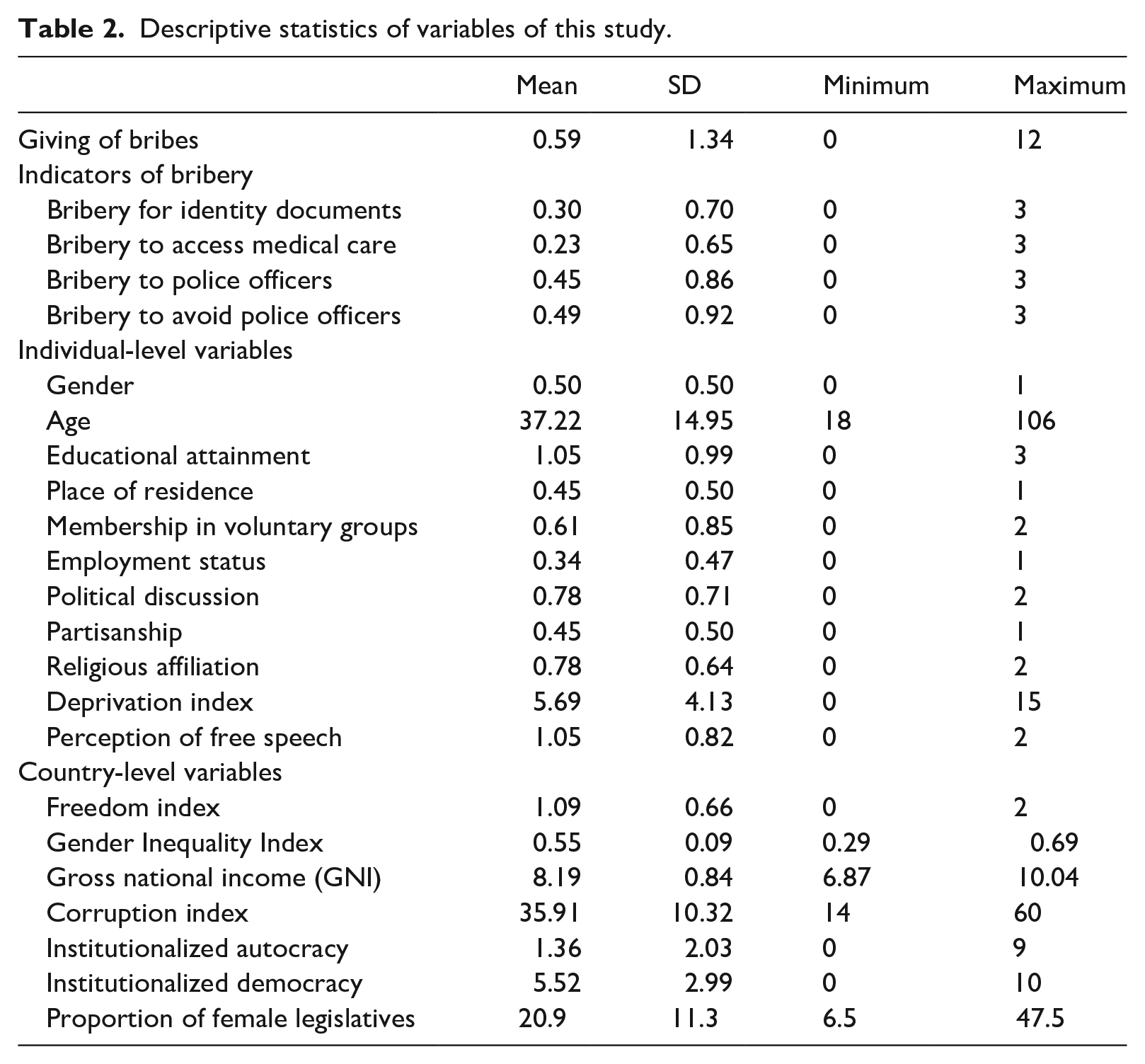
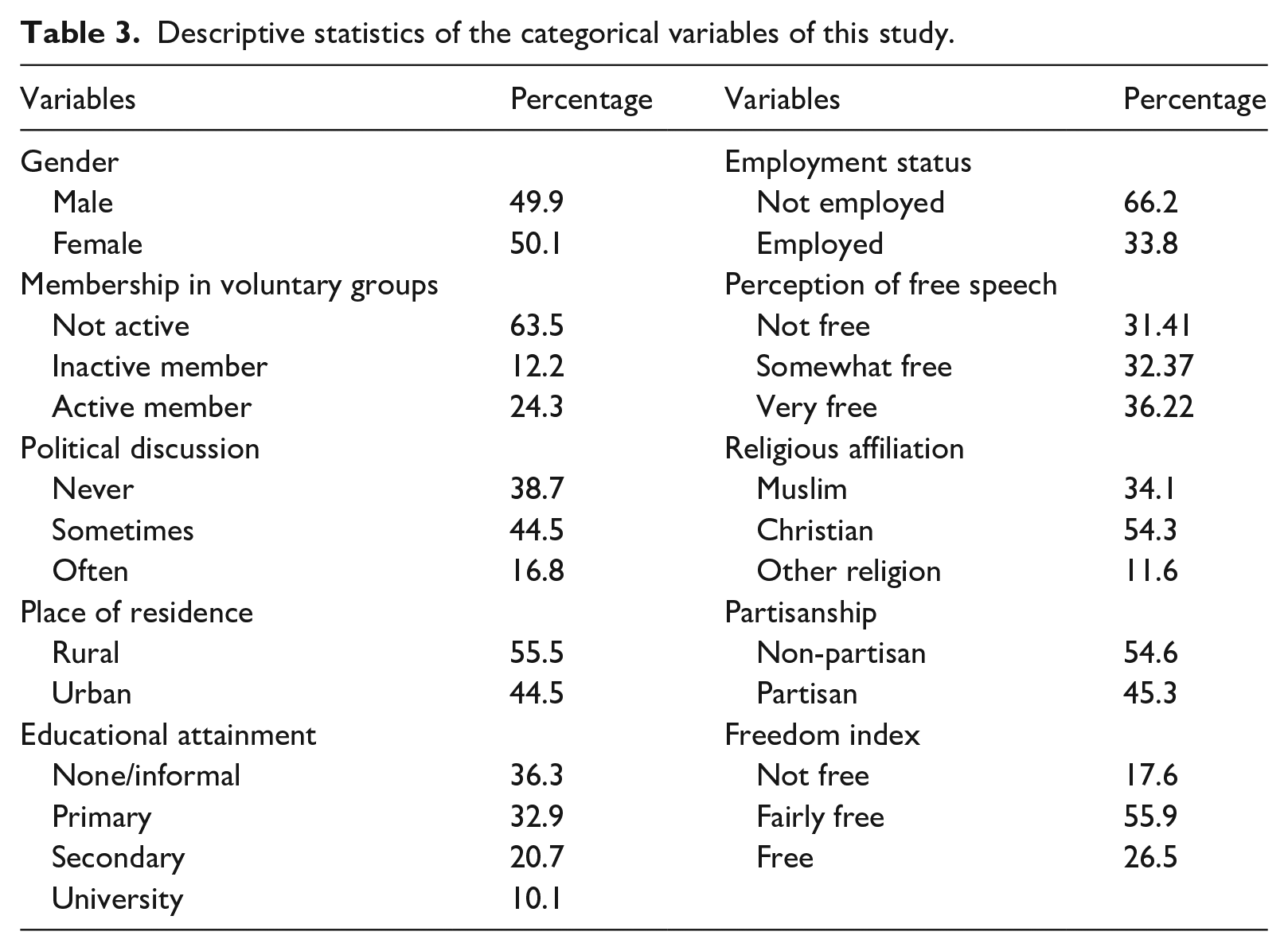
Tables 2 and 3 present the descriptive statistics of all the variables for this study. About 59% of Africans who had contact with the police, governmental, or medical institutions paid bribes to officials in those establishments. Figure 1 also shows that across the four items of giving bribes, male respondents were paid more bribes across the board than their female counterparts. Giving bribes to the police for assistance (0.45) or to avoid them (0.49) is the most common form of bribery. At the country level, most of the African countries are within the fairly free category. Also, the average GII score was 0.55 (as the world average is 0.445). This score implies that there is a relatively high level of gender inequality in Africa when compared to the rest of the world.
Descriptive statistics of variables of this study.
Descriptive statistics of the categorical variables of this study.
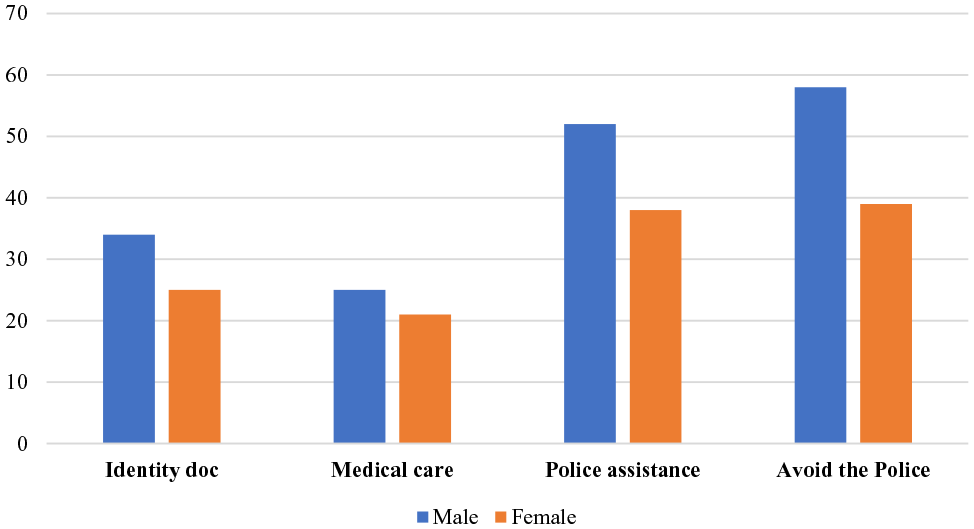
Gender and giving of bribes.
Multivariate analysis
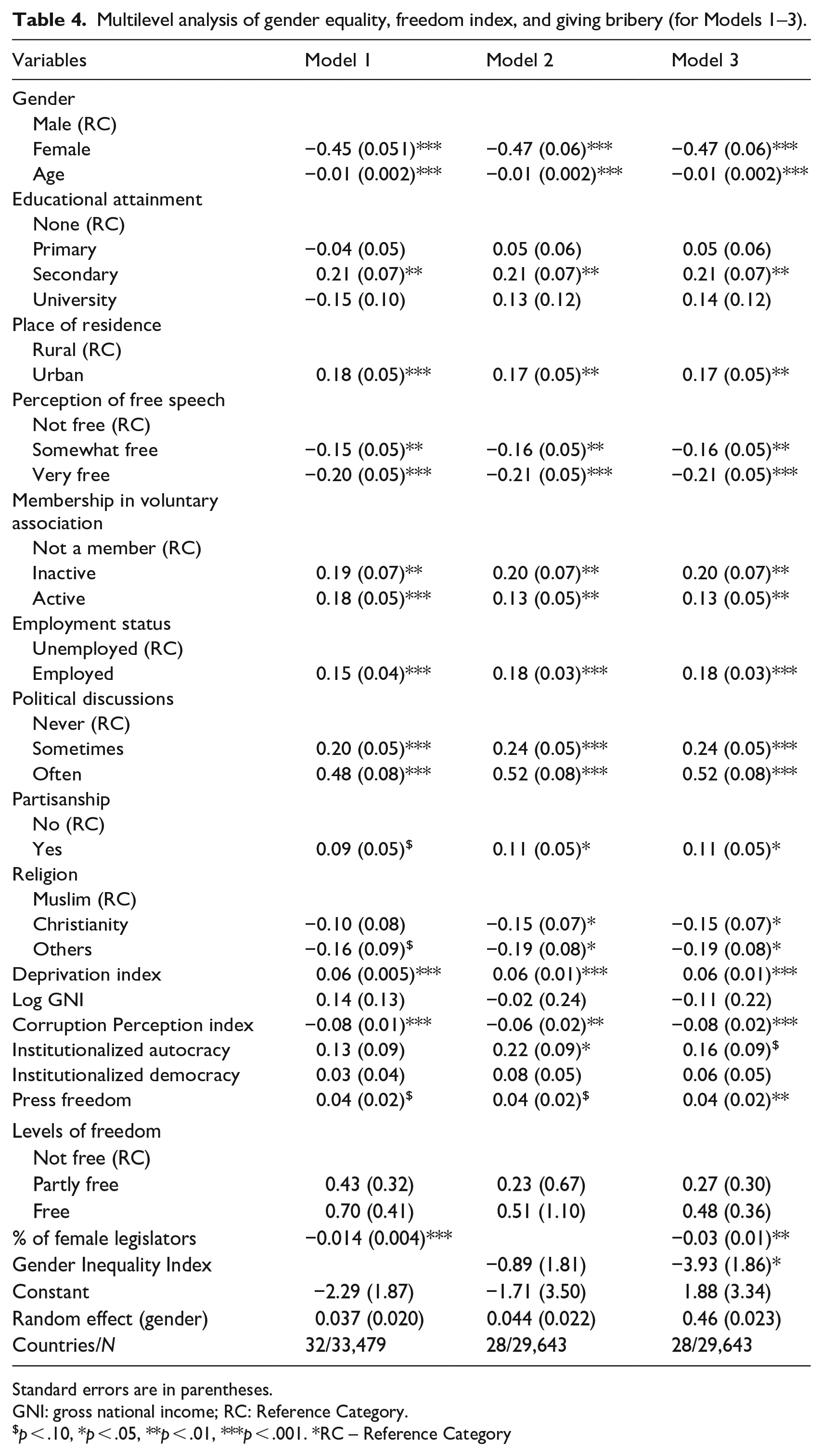
Tables 4 and 5 contain the three models of the multivariate analysis. Model 1 consists of the focal variables and the controls in the random-effects models, and this model shows that women were less likely to pay bribes than men. The random effects for the slopes for gender marginally vary across African countries, with consideration of the control variables. Model 1 shows that the freedom index is not associated with bribery. However, the model shows that the percentage of female legislators and the GII is negatively associated with bribery. Thus, the higher the percentage of female legislators, the less the level of bribery. Model 2 shows that gender inequality is not associated with bribery. However, Model 3 shows that the GII and proportion of female legislators are associated with bribery. The model shows that an increase in female legislators is associated with a reduction in bribery; however, more equality between the genders increases the incidence of bribery among Africans.
Multilevel analysis of gender equality, freedom index, and giving bribery (for Models 1–3).
Standard errors are in parentheses.
GNI: gross national income; RC: Reference Category.
p < .10, *p < .05, **p < .01, ***p < .001. *RC – Reference Category
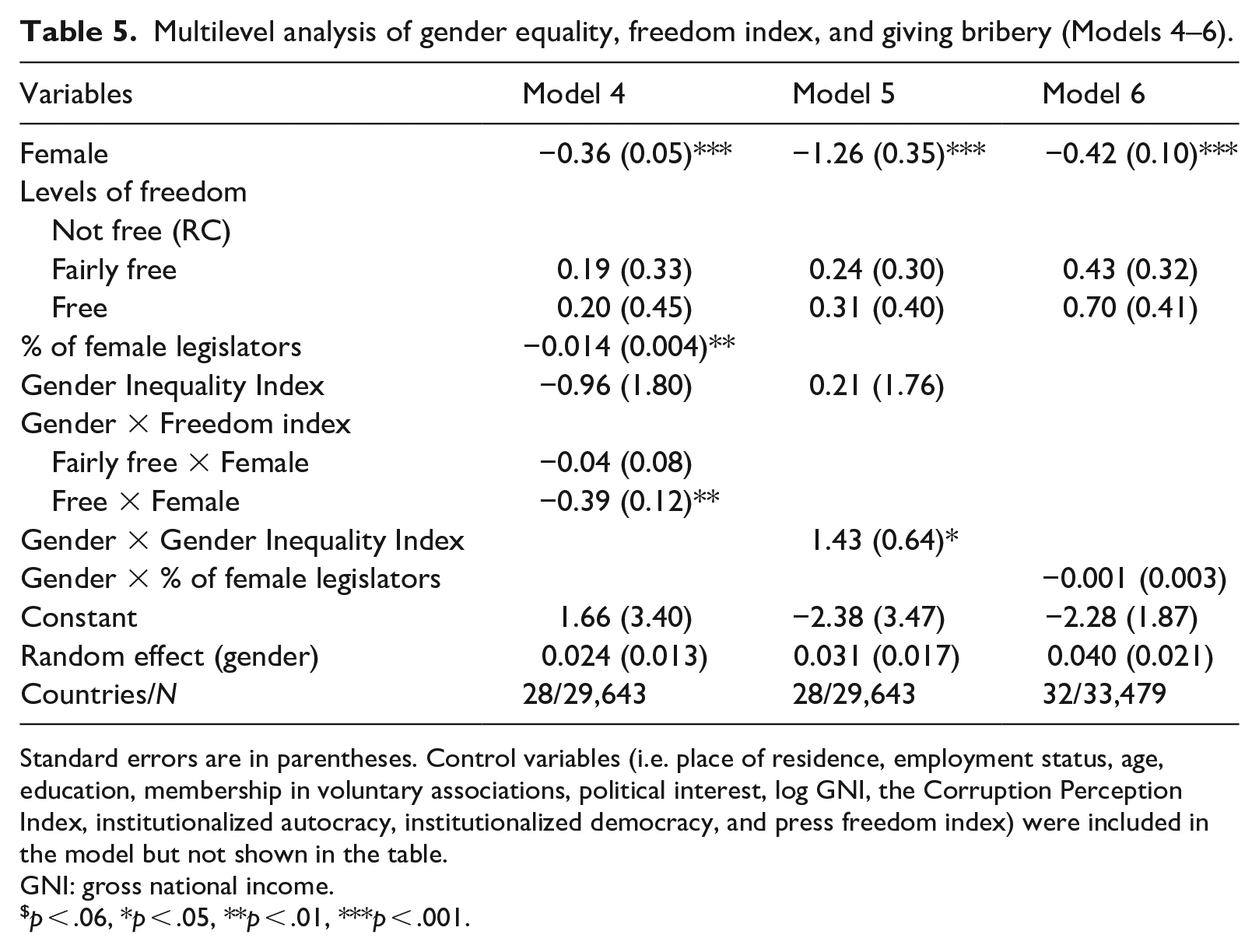
Multilevel analysis of gender equality, freedom index, and giving bribery (Models 4–6).
Standard errors are in parentheses. Control variables (i.e. place of residence, employment status, age, education, membership in voluntary associations, political interest, log GNI, the Corruption Perception Index, institutionalized autocracy, institutionalized democracy, and press freedom index) were included in the model but not shown in the table.
GNI: gross national income.
p < .06, *p < .05, **p < .01, ***p < .001.
Models 4, 5, and 6 show the cross-over effects of freedom status, gender inequality, and the percentage of female legislators on gender and bribery. Model 4 shows that the gender gaps in giving bribes widen in free countries. This is evident in Figure 2, as women are significantly less likely to give bribes than men in free countries. Also, the tendency for women to give bribes is the lowest in politically free countries. This tendency is related to partially free countries, where women’s bribery behaviour is highest. Women’s tendency to give bribes is higher in non-free than politically free countries. However, the tendency to give bribes is at its highest in fairly free countries, both for men and women.
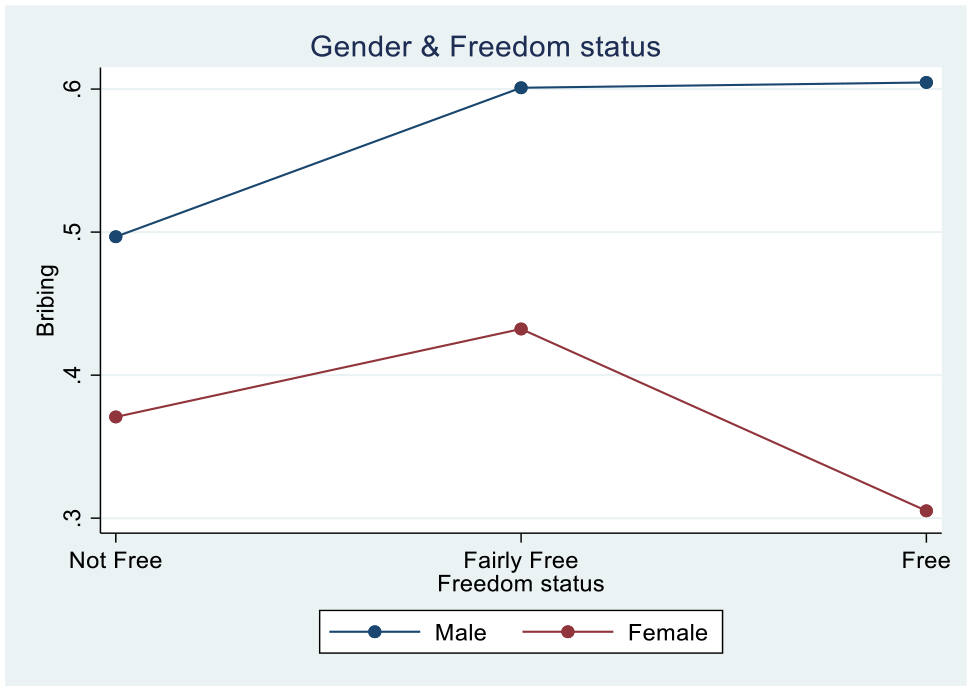
Gender, freedom status, and giving of bribes.
It is important to note that other country-level indicators of political freedom, such as the Polity IV score and democracy index, did not provide any significant results for the cross-level interaction with gender. When applied, the other indicators followed a similar direction shown with freedom index and gender. In other words, the marginal plots of the other country-level indicators of political freedom revealed that men and women gave the most bribes in hybrid democracies, and both genders gave their least bribes in full or institutionalized democracies (margin plots available upon request). Furthermore, categorizing countries as free, partially free, and unfree by the freedom index provides unique insights into the evolving nature of democratization in Africa, which is analytically useful for this study. The freedom index captures and categorizes the experiences of political and civic liberties among the average citizens, unlike other measures that are mainly based on institutional measures or a mix of institutional and individual measures of political and civil freedoms.
In Model 5, gender gaps in giving bribes narrow as gender equality decreases in society. As shown on the left-hand side of Figure 3, women tend to be inclined to give fewer bribes in countries that experience more gender equality. On the right side of the graph in Figure 3, women are more likely to pay bribes in countries that experience more gender inequality. Thus, Models 3 and 4 align as the gender gaps in giving bribes widen in politically free countries and societies with high levels of gender equality. Similarly, the gender gaps in giving bribes are the narrowest in politically unfree countries and societies with high levels of gender inequality. Moreover, women’s bribery behaviour is lower in politically free countries and societies with higher levels of gender equality. However, women’s bribery behaviour is the highest in partially free countries and societies with higher levels of gender inequality.
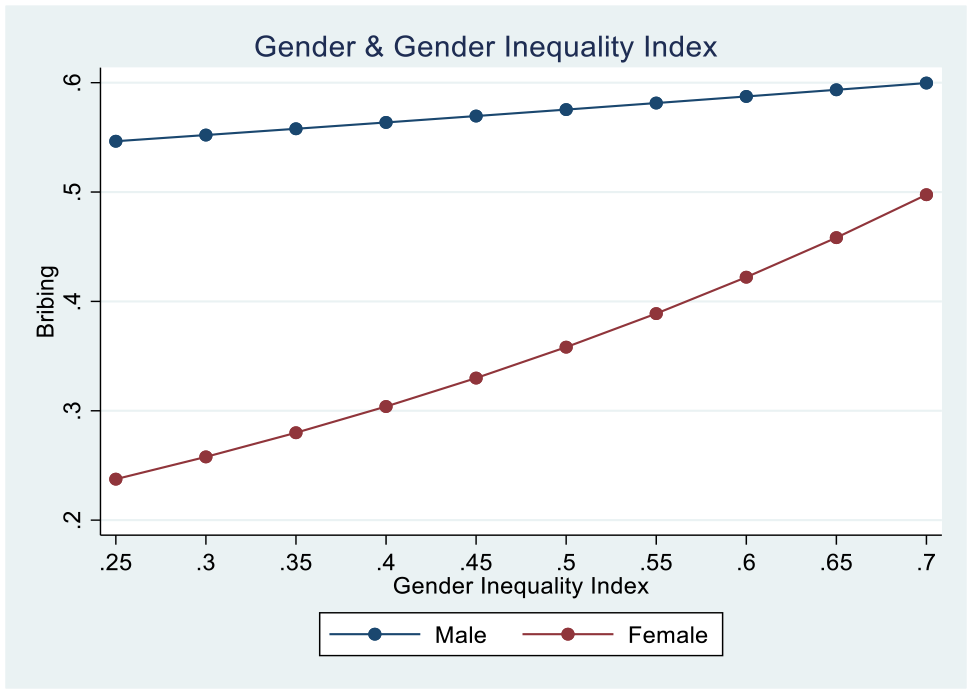
Gender, gender inequality index, and giving of bribes.
In Model 6, the percentage of female legislators does not affect the relationship between gender and the giving of bribes. Even though there is a negative effect between the percentage of female legislators and bribery in Model 1, this contextual variable is not consequential for women’s bribery behaviour.
Discussion
The study sought to understand if women give fewer bribes than men and the context in which they provide fewer bribes. To address this broad question based on previous literature and conceptual frameworks, we sought to understand how the political context informs the gender gaps in bribery. This study indicates that African women, overall, were less likely to pay bribes than men. Also, women’s likelihood of paying bribes increases with higher levels of gender inequality in a country, while their likelihood decreases with a high level of political freedom.
Is there a gender gap in giving bribes in Africa? Model 1 showed that women were less likely to pay bribes than men in Africa after the individual- and country-level variables were controlled. This finding is consistent with previous studies that have found that women give fewer bribes than men (Barnes and Beaulieu, 2019; Barnes et al., 2018; Charness and Gneezy, 2012; Gustafson, 1998). Model 1 also reveals that the higher the female legislative representation in the country, the less bribery the general populace gives. This finding also aligns with previous studies by Dollar et al. (2001) and Swamy et al. (2001). However, the freedom index is not associated with the general levels of bribery.
One of the contexts tested in this study is the impact of female legislators. In Model 5, the percentage of female legislators does not affect the relationship between gender and the giving of bribes. This finding implies that even though more female legislators may decrease the general level of bribery, such variables do not explain why women give less or more bribes than men.
However, one context that informs the link between gender and bribery is gender inequality, as shown in Model 4. The gender gaps in giving bribes close with higher levels of gender inequality. In this sense, women tend to be less inclined to give bribes in countries that experience more gender equality. This finding is consistent with the studies by Jha and Sarangi (2018) and Branisa and Ziegler (2010). Corruption is higher in societies where social institutions restrict women’s freedom (Branisa and Ziegler, 2010). The improvement of the general conditions of the average woman may enable them to avoid paying bribes, much more than the presence of female legislators. Looking at how gender equality is measured, one can argue that improvement in such an index implies the provision and the ease of access to adequate healthcare services, social infrastructure, (full or self-) employment prospect, and educational opportunities. The provision of these services and infrastructures can enable women to seek and successfully attain alternative means of meeting their basic necessities whenever they encounter corrupt officials. The impact of gender equality also aligns with the impact of political freedom. Support for gender equality tends to be a consequence of democratization and political freedom (Beer, 2009; Inglehart et al., 2002). Similarly, this study shows that countries that empower women remove the need for them to give bribes to access their basic needs.
Model 4 and Figure 3 also reveal that women’s bribery behaviour seems to be more sensitive to gender equality than men’s bribery behaviour. This finding also points to the mutually reinforcing dimensions of the nature of access to basic needs and bribes. One can assume that women will not access basic services if they do not pay bribes. This lack of access to basic needs can further negatively affect their general well-being in that society. Political freedom is also implicated in how gender equality informs the link between gender and bribes. The core reforms needed to improve women’s access to their basic needs tend to be ushered in by political liberalization. In this sense, this finding is the need for policy tools that will enhance gender equality, especially within the framework of the democratization process. Further studies should be undertaken on how women in less egalitarian countries navigate corrupt officials and institutions to access their basic necessities.
In Model 3, we found that the tendency for women to give bribes is the lowest in politically free countries. This tendency is related to partially free countries, where both women’s (and men’s) bribery behaviour is highest. This finding aligns with studies by Sung (2003) and Esarey and Chirillo (2013). Democratic institutions can activate the link between gender and bribery (Esarey and Chirillo, 2013). The risks of engaging in corrupt practices and being discovered to be corrupt are often higher in politically free states (Esarey and Chirillo, 2013). Thus, women tend to be differentially impacted by these risks, and they sense the more significant pressure of conforming to the existing political values about bribery and corruption (Esarey and Chirillo, 2013).
It is also important to note the nature of bribery in partially free countries. As shown in this study, bribery in these fairly free countries is far higher than what is observed in autocracies. These kinds of countries tend to have non-independent judiciaries, widespread corruption, harassment, and pressure placed on the media, the anaemic rule of law, and more pronounced faults than flawed democracies in the realms of underdeveloped political culture, and issues in the functioning of governance (Vásquez et al., 2021). Thus, these nations tend to have volatile governments that thread the boundaries between falling into full autocracies or reaching a relatively well-functioning democracy. In this sense, the nature of political uncertainty in fairly free countries can fuel the use of bribery among Africans to access basic means of living. More studies can be undertaken on the dynamics of corruption and bribery in fairly free countries to understand how women navigate these systems to access their basic means of living.
Limitations of the study
One of the limitations of this study is the cross-sectional nature of the data. This study examines how country-level variables inform individual behaviour. Thus, we do not make any causal association with the models presented in this article. A longitudinal study can be undertaken to enable more fixed effects analysis to be conducted on gender and bribery. Another limitation is that the dimensions of bribery measured in this study do not distinguish between corruption in the public and private spheres. Similarly, the Afrobarometer data set only has a limited number of indicators of bribery behaviour. We recognize that there are other institutions in which bribery occurs, including bank, marketplace, and religious institutions. We also recognize that women may be asked to engage in sexual activities to access certain basic services. Thus, new rounds of the Afrobarometer survey and studies on Africa can seek more indicators of bribery behaviour. Nevertheless, the indicators stated in the data set still cover many of the institutions and officials with whom most Africans interact.
Moreover, the indicators of bribery used in this study do not distinguish forms of bribes that occur as a function of greasing the wheels of public or private service (i.e., as a normative practice in society) or as a result of coercion (i.e., where an individual may feel that if they do not pay the bribe, they will experience some negative consequence). Given the quantitative nature of the data, this study could not distinguish between these two motivations as the data set did not ask for the motivations of bribery from the respondents. Also, we are unable to outline the theoretical consequences of such motivations from our data. Thus, this limitation points to the need for qualitative studies to be conducted on how the political context informs and shapes the different motivations for bribery.
Concluding remarks
Given the limited scholarly work on the possible context in which women are less corrupt than men, this study investigated the socio-political context in which men and women give bribes. This work also examined how a country’s freedom status and gender equality level inform the extent to which women and men are likely to be involved in corruption. Research results indicate that, first, women are less likely to pay bribes than men, controlling for macro- and micro-level factors. Second, women are less likely than men to give bribes in countries with high gender equality. Third, the tendency for women to offer bribes is the lowest in politically free countries. Overall, this study suggests that political freedom and gender equality inform differences in corrupt behaviours among women and men, extending theoretical and empirical understanding of the context in which men and women are more likely to be corrupt.
The study also points to the analytical importance of studying and understanding women’s bribery behaviour in fairly free or hybrid democracies. Women in many parts of Africa, especially in evolving or unstable democracies, often find themselves vulnerable to the pressures of corruption in public bureaucracies, and their inability or unwillingness to pay bribes can condemn them to deeper levels of poverty. Thus, this study implies that political and socio-economic development is a critical component in correcting individual corrupt behaviour. Such development can enable individuals, especially women, to access alternative routes to meet their basic needs without compromising their moral or ethical principles.
Footnotes
Funding
The authors received no financial support for the research, authorship, and/or publication of this article.
