



Abstract
The United States of America is a country with a long tradition of migration in which second- and third-generation Americans have been assimilated into a cultural ‘melting pot.’ This multicultural reality highlights the many varied elements of superdiversity that make up the complex characteristics of contemporary society in this country. In the present study, the authors seek to identify some of these elements of superdiversity by viewing them qualitatively through the eyes and experiences of offspring of multicultural transnational couples with a migratory background living in the US. The primary data collection consisted of 90-minute personal interviews with 29 subjects between 15 and 30 years of age who reside in the state of Florida and whose parents identified as being from different national origins. The results show significant differences in interpretations between the classic definitions of nationality and cultural identity, highlighting personal networks as a dimension to be taken into account for the analysis of superdiversity. Implications for practice and some directions for future research are discussed.
Introduction
The term ‘superdiversity’ was first coined by Vertovec when immigrants changed the ‘patterns of migration data’ (Vertovec, 2019). If immigrants were at the center of this phenomenon, then their children should be considered part of this process, too. This study’s significance lies in its inclusion of second-generation immigrants (referred to here as second-generations) as the foci of superdiversity from a multiple theme perspective (van Ewijk, 2018).
Most research on second-generations has focused on socio-demographic descriptions by measuring diversity with a series of variables (Pew Research Center, 2013, 2017; Portes and Rumbaut, 2001, 2014; Rumbaut, 2004) and establishing differences between first- and second-generation immigrants (Rumbaut, 2004). Studies have analyzed aspects of adaptation, acculturation or integration, but without focusing on superdiversity as a reference concept, nor connecting the available knowledge on dimensions of superdiversity as a lens to analyze second-generations.
The purpose of this article is to explore the perspectives of the offspring of ‘multicultural transnational couples’ (see Methods section for clarification) with a migratory background regarding the various elements of diversity. To do so, the researchers analyzed a comprehensive set of themes using semi-structured interviews designed to assess which superdiversity dimensions arise from their discourse and which ones have bigger overall representation.
Considering complexity as a theoretical framework, we assume that the population is not stable. It is constantly undergoing transformative changes as its essential nature is dynamism and complexity, requiring a ‘layering of interpretations’ of social reality (Given, 2008: 75). The concept of superdiversity suits a complexity framework (van Ewijk, 2018) as it takes into account an array of variables and dimensions to properly analyze our contemporary social reality.
Migratory flows as a backdrop for understanding second-generations and superdiversity
Trends in migratory flows began changing at unprecedented rates at the turn of the century. Between 1990 and 2000, the international migrant population stood at 20 million before more than doubling (47 million) between 2000 and 2010. Between 2010 and 2019, this number rose to 50.8 million (United Nations Department of Economic and Affairs Population Division, 2019).
An analysis of migration flows (both temporary and permanent arrivals) during this time period shows that the US took in 2 million immigrants per year, nearly triple that of Spain with the next highest intake of 682,000 annually. These numbers have now balanced out, with Germany placed first in 2017 (1.4 million) and the USA placed second (1.1 million) (United Nations Department of Economic and Affairs Population Division, 2019).
Despite this reduction, the fact remains that the US has been involved in multiple human migratory waves and thus has been the subject of numerous migration studies. The concept of the melting pot arose in this geographical context in the early 20th century, at which point nearly 15% of the population of North America was of foreign origin. For the first time since then, the US has a similar percentage of citizens of foreign origin (13.6%), a percentage which is forecast to double by 2065 (D’Vera, 2015).
When analyzing the US’s migration history, changes are evident regarding immigrant countries of origin. Whereas during the 1960s the vast majority of immigrants came from Europe and Canada (84%), these regions were in the minority in 2017 (13.2%) with Latin Americans predominating (50.4%), especially Mexicans, who represented about half of this group (Pew Research Center, 2017). This relates to the geographical focus of the present study, since 26.1% of Florida’s population consider themselves Hispanic or Latino (US Census Bureau, 2019).
The Floridian melting pot is a clear example of this diversity as the state contains two of the nation’s 20 metropolitan areas with the highest numbers of immigrants (Orlando and Miami) (Radford, 2017), where two in 10 people are citizens of overseas origin. Statewide, US citizens born to couples with at least one parent of foreign origin account for 12.5% of Florida’s total population (American Immigration Council, 2017).
A wide range of countries of origin leads to diversity in terms of individual, family, social, economic and cultural traits, ideologies, rituals, and practices. These differences include religion, languages, principles, values, legal status in the host country, employment conditions, connections with countries of origin, and even the resources to which each group has access, either due to national affiliation or their personal or family situations.
Under these circumstances, the original proposal by Vertovec (2007) on how contemporary society should be analyzed, specifically in multicultural contexts, would involve the integration of measures focusing on dimensions beyond those related to ethnicity.
Literature review
Contemporary complexity as a framework for superdiversity
Following the turn of the century, contemporary society experienced a series of changes that have altered its structure and relationships. These changes, although largely positive, have brought with them a series of global challenges, classified by some as global risks (Adam et al., 2005), all of which are interconnected and may have difficult and complex associations.
It could be said that the current social situation consists of, among other factors, a population set in a socio-political, cultural, and economic context existing in physical and digital space as defined by territories and social media (López Peláez et al., 2018). In this context, each individual exists at the intersection of several diversities, with many variables combining for each specific context, which can create compounded problems difficult for individuals to manage (van Ewijk, 2018). We define this concept as social complexity.
In order to achieve an integrated approach that more accurately characterizes social complexity, it is necessary to systematize its dimensions, moving from a multi-dimensional perspective that in some ways creates a lack of global comprehension, dividing and restricting people’s worldviews, to an inter-dimensional vision which embraces them, giving each dimension its own space without losing sight of the whole. It would be erroneous to interpret the studied situation based on one (or several) of its components only, or even to interpret the dimensions in their entirety if they are not understood in the context of interrelationships.
Superdiversity dimensions
The integrated approach proposed here is not an easy task to achieve. In fact, some authors agree that despite the need to define the dimensions of superdiversity, many doubts arise about its methodological implications and conceptual associations with previous research, such as ethnicity, social class, diversity, and intersectionality (Foner et al., 2019). Vertovec reminds us that the central idea of intersectionality has historically revolved around the race–gender–social class triad with a political dimension (Bryson and Jones, 2011; Hankivsky and Jordan-Zachery, 2019; Kantola and Lombardo, 2017; Lutz et al., 2011; Wilson, 2013). With some exceptions, intersectionality does not specifically focus on migration (Fathi, 2017), while superdiversity revolves around certain patterns in migration data ‘tak[ing] into account the compound effects of multiple variables or characteristics’ (Vertovec, 2019: 10). Similarly, the author states that superdiversity does not denote ‘more diversity,’ or ‘very much diversity’ (although there are studies that proceed along these lines), nor does it denote ‘more ethnicity,’ ‘meaning that new migration processes have brought more ethnic groups to a nation or city than in the past’ (Vertovec, 2019: 6).
It is not the intention of this article to try to arrive at an exhaustive list of superdiversity elements as this task could involve obstacles such as attempting to ‘account for too many axes of differentiation’ (Meissner, 2015: 560). However, the multi-dimensional nature of superdiversity has already been covered by different authors, beginning with Vertovec himself (Foner et al., 2019; Goodson and Grzymala-Kazlowska, 2017; Meissner, 2015; Meissner and Vertovec, 2015; Vertovec, 2007, 2010).
For this study, we consider Pride’s multi-dimensional proposal of superdiversity (2015), in which five dimensions are identified, each with its own subcategories: (a) individual: age, gender, country of origin, ethnicity, religious tradition; (b) socio-economic: education, occupation and income; (c) household: number of residents, dependent members and languages spoken; (d) space/place: ethnic makeup of a community, diversity within groups, places of worship, other physical spaces; and (e) migrations: migration channels, immigration status, date of arrival, intended length of stay.
Personal social networks as a superdiversity dimension
Even though relationships are referred to as an underlying bond between different elements of superdiversity by some authors (Goodson and Grzymala-Kazlowska, 2017; Meissner, 2015; Vertovec, 2019), there is a dearth of literature regarding personal networks as a key component for the analysis.
In the social networks approach, structural and functional dimensions emerge most commonly as the main component of personal networks, but other perspectives are also evoked. Sluzki (1996) adds a third, that being understanding the attributes of each link as the specific properties of each relationship. Barrón (1996) also considers a ‘contextual’ perspective, similar to that proposed by Sluzki.
Guadalupe (2017) synthesizes the above authors’ proposals in three dimensions: structural, functional and relational-contextual. The ‘structural’ dimension refers to the organization of the relational network or the ‘arrangement of relationships,’ and the ‘functional’ to the exchanges and needs addressed in the network. The ‘relational-contextual’ dimension describes relationships within their specific context and history (2017: 65).
Networks – structural dimension
The main components of structure are: (a) size, or the composition in terms of number of network members in each relational field (Sluzki, 1996), and (b) density, understood as the interconnection between members of the social network, regardless of the central subject (Barrón, 1996; Berkman and Glass, 2000).
Networks – functional dimension
Personal social networks are generally regarded as social support systems and sources of primary and informal support, often referred to as ‘support networks’ (Wellman, 1981; Wellman and Berkowitz, 1988), although this support is not always effective. Whether as sources or resources, and whether individually or collectively, members of social networks commonly fulfill various functions in interpersonal exchange (Guadalupe, 2017; Wellman, 1981).
There are two kind of functions within this dimension: (a) generic, expressing three fundamental forms of social support: emotional, tangible (material and instrumental), and informative; (b) specific, concerning social support functions: social company, access to resources and new links, and social regulation (Guadalupe, 2017: 68).
Networks – relational and contextual dimensions
The relational dimension is defined as the ‘specific properties of each relationship between the subject and the rest of the network’s members’ (Guadalupe, 2017: 69). These properties are expressed by: (a) homogeneity–heterogeneity, or the similarity or difference found in network members in dimensions such as attitudes, experiences and values (Barrón, 1996; Berkman and Glass, 2000), demographic, behavioral, socio-cultural, and socio-economic characteristics; (b) intensity, as the relationship’s degree of intimacy, as well as the common history of the members; (c) durability, assessing the network in its diachronic dimension (Berkman and Glass, 2000), indicating its stability; and (d) sources of stress, endogenous or exogenous and the eventual relational conflict in the network.
The contextual dimension determines the ways relationships are established and the exchange of resources between network members. This dimension is characterized by (a) geographical dispersion, considered as the distance between the subject’s residence and the members of her or his network, as well as (b) contact frequency, or the form and frequency of contact between them. The geographical dispersion of the network affects accessibility, ease of contact maintenance, effectiveness, and speed of response in a crisis situation as well as the contact frequency itself (Sluzki, 1996).
Second-generations as a way to analyze superdiversity
The concept of ‘immigrant generations,’ particularly second-generations, is utilized in this study as a way of analyzing superdiversity. Although this population is not made up of immigrants per se, as they are people born in the host countries, the fact that at least one of their parents is of foreign origin means that they possess a history of immigration. This history is subsequently reflected in their own lives in terms of personal and cultural identity, language, and socio-economic impact in terms of both occupational and educational issues. Legal status and even transnational practices resulting from their relationships with extended family in their parents’ countries of origin are also reflected. The diversity associated with ‘second-generations’ has already been highlighted in several multivariate studies (Pew Research Center, 2013; Portes and Rumbaut, 2001, 2014; Rumbaut, 2004).
In recent years, social science studies have not been focusing on offspring when analyzing superdiversity, or at least when taking this conceptual framework into consideration as a whole. 1 Many studies have focused on second-generation adaptation, acculturation or integration through different facets of life and culture, such as language (Cantone, 2019; Stavans and Ashkenazi, 2020; Verhaeghe et al., 2019), religion or spirituality (Bruce, 2020; Falcke et al., 2020; Hoechner, 2020; Parnes et al., 2020; Shen, 2020), legal status (Labussière and Vink, 2020), marriage (Phillips et al., 2020), schooling (Bayona-i-Carrasco et al., 2020; Bissonnette et al., 2019; Chachashvili-Bolotin et al., 2019; Cheng and Yuen, 2019; De Feyter et al., 2020; Demintseva, 2020; Diaz, 2020; Orupabo et al., 2020; Volante et al., 2019), health (Zhu, 2019), employment (Briggs, 2020; Sakamoto and Hsu, 2020), mobilities (Marrow, 2020), national identification and belonginess (Bacchus, 2020; Etienne, 2020; Forrest et al., 2020; Marino, 2020; McClure, 2020; Schaefer and Simon, 2020; Solimene, 2019; Verhaeghe et al., 2020; Zhou and Rodríguez-Mantilla, 2020), political and/or civil society participation or activism (Khachikian, 2019; Le, 2020; Potochnick and Stegmaier, 2020; Terriquez and Lin, 2020), transnational practices (Brocket, 2020; Bruce, 2020; Hernández-León et al., 2020; Jain, 2019; Solimene, 2019), gender (Valdez and Tran, 2020), or attitudes towards others’ cultures (van Maaren and van de Rijt, 2020).
Other studies have focused on the relationship (and outcomes coming from it) between: second-generations and their families (Bayrakdar and Guveli, 2020; Choi et al., 2020; Coleman-Minahan and Samari, 2020; Kho et al., 2019; Souralová, 2020) or second-generations and their friend networks (Lauer and Yan, 2020).
Clearly, second-generation immigrants have been the subject of many studies using multiple approaches, especially in the United States. There is a long tradition of analysis, and although the term still generates controversy about whether it applies to this population (Rumbaut, 2004), there is an impetus to understand, analyze, and explain the differences between this generation and its predecessor. Our proposal is to analyze it through the lens of superdiversity with an emphasis on networks, due to space constraints.
Methods
Design and data analysis steps
Qualitative thematic analysis was applied. The categorization process was based on two types of categories: substantive and theoretical (Flick, 2014), the latter being the starting point for this study. Superdiversity dimensions were taken as the theoretical component driving the research design. The objective of this was to identify themes related to superdiversity as well as patterns in the data regarding its dimensions. In order to do so, Pride’s original proposal (2015) was taken into consideration for our first theoretical categorization (see Literature review), constituting our first coding system for analysis.
Afterwards, substantive categorization was inductively generated through a close open coding of the data (Strauss and Corbin, 1990) with the aim of identifying new elements that were subsequently examined in greater detail (Freeman, 2017). The new themes were analyzed and discussed by the authors in order to (a) make them fit within the pre-existing theoretical categories; or (b) to constitute elements of new categories.
This second round of coding made it possible to (a) maintain or change the proposed theoretical dimensions within our sample; and (b) find out new subcategories within each confirmed dimension.
The authors tested internal homogeneity through inclusivity, consistency, and integrability (Patton, 2002). Inclusivity was established by including all participant responses in the sample. Codes were judged for consistency by including each emergent code in the analysis if it was generated more than twice in the sample. Emergent codes were considered as major if they were identified more than five times in the sample. The researchers tested for integrability by seeking to discover an overall picture of what the codes indicated and how they integrated with each other.
A total of 218 codes, created on the basis of the theoretical assumptions referred to previously, as well as new information coming from substantive categorization, were used to achieve a coding coverage of 61% of the total text.
Based on the analyzed interviews, the information was grouped into six major categories. A synthesis of the coding system is represented in Figure 1 with the main categories/subcategories. The major dimensions are: (a) individual, (b) family, (c) cultural, (d) socio-economic, (e) contextual, and (f) networks. This approach is similar to other classifications that have already been made for superdiversity (Goodson and Grzymala-Kazlowska, 2017; Pride, 2015), albeit with some variations. Variations included the following: (1) Since the migration dimension did not specifically apply to the analyzed sample, because they are American citizens, the broader term ‘culture’ was prioritized and used instead of the concept of ‘migration.’ (2) The term ‘culture’ fit the data better as a broader concept because it allowed researchers to explore and conceptualize other important themes found within interviews. Examples of these themes include cultural practices, concepts such as feeling of belonging, national identity, cultural stereotypes, and even discrimination or racism. (3) The authors also decided to use the term ‘context’ rather than ‘space/place’ because it provides a more in-depth framework for positioning the person in relationship to relevant circumstances. Thus, the concept of ‘local community’ includes ‘neighborhood social networks’ and place of residence includes personal perceptions of the living space.
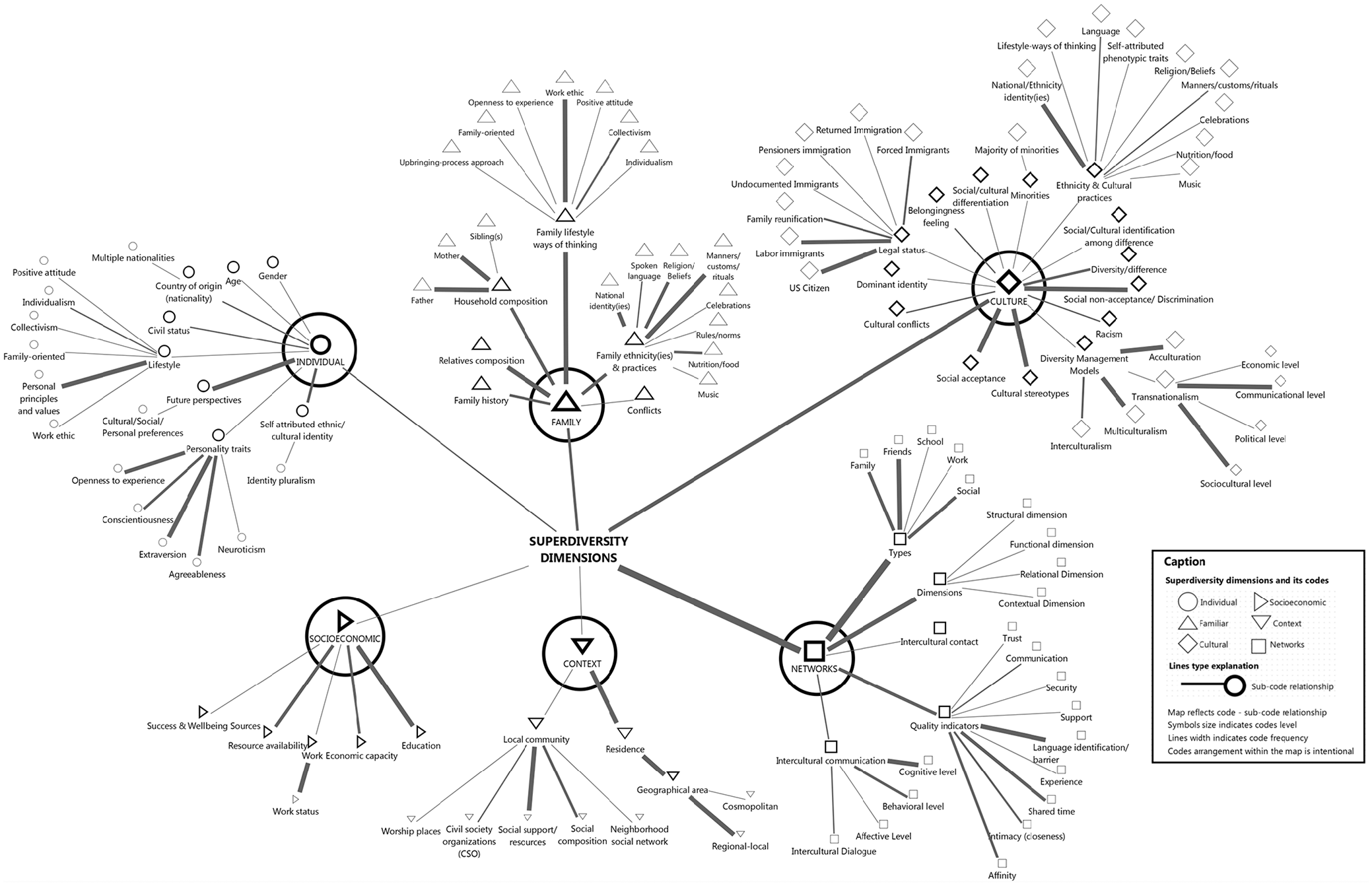
Superdiversity dimensions. Main code/subcode extraction.
After carefully analyzing data, and as a result of different questions about a subject’s relationships (family, friend, co-workers, social relations, etc.), major codes emerged from the discourse related to them. Also, high numbers of co-occurrences arose between these codes and other dimensions (as shown in Results). Therefore, authors decided to include networks as a dimension, given their importance throughout the analysis and their interconnections among all other dimensions.
Since the content of the participants’ discourse was related to the theoretical concepts about the structural, functional, and relational-contextual dimensions of networks (see Literature review), theoretical categories were created based on the proposals of Guadalupe (2017), Sluzki (1996), and Barrón (1996). The remaining major categories were generated through a close open coding of the data (Strauss and Corbin, 1990).
Among all six major categories already referred to (Figure 1), networks constitute the most relevant in terms of frequency with a total of 720 coded segments, followed by culture with 613. Family as a category stands with a total of 437 coded segments as the third most coded dimension.
Instrument
Semi-structured interviews were designed (Galleta, 2013), based on culturally relevant themes identified in the literature that could be explored and applied to offspring from multicultural transnational couples living in the USA with a migratory background. Themes included broad questions related to superdiversity dimensions, taking into consideration aspects as age, gender, work status, level of education, nationality, living status with parents, relatives living in the USA, and the number of siblings they have. Thus, the main qualitative topics were: (a) family, including family background, relationships with parents, relatives and siblings, residence status, immigration background, cultural conflicts management, cultural practices at home, and future life perspective; (b) neighborhood, including knowledge of and engagement with resources such as public transportation, non-profit organizations, schools, stores, and social movements; (c) school, including ethnic composition by nationality, satisfaction and quality indicators, perception of self and others, relationships with teachers and classmates, and cultural diversity management; (d) feelings of ‘belongingness’ to any specific nationality(ies), and social acceptance from equals/friends, family, and school/work members; and (e) cultural conflict management, or how they think about and deal with cultural conflicts (as a cost or as an opportunity), strategies they use to resolve them, how they manage unresolved conflicts, and the perceived consequences of not resolving them.
Example questions included the following: ‘What do you think about your neighborhood?’; ‘Tell me about your family history/background (where your parents and grandparents are from)’; ‘What kinds of things do you and your siblings do when you get together?’; ‘How long have your parents lived in the US?’; ‘Why did they decide to move to the US?’; ‘What nationality do you feel like you identify with the most (father’s/ mother’s/host society)? Why?’; ‘How do you think American society accepts you as an individual?’; ‘How do you think American society accepts your cultural group?’
Interview questions and participant responses were audio recorded and transcribed. The average duration of the interviews was 90 minutes. The transcription process was carried out by master’s level graduate students under the authors’ supervision. Transcription was done literally. Data were then uploaded to the MAXQDA program for code classification. Code classification was developed by the first author and then validated by the second author. Concept mapping through computer-assisted data analysis was implemented as a broad approach to analyzing the qualitative data (Given, 2008).
For quotes and segments retrieved from the dataset, ‘I’ will indicate the interviewee and ‘R’ will indicate the researcher. Using a number-assignment system in the Results section (e.g., I.1), anonymity was assured for all interviewees, as only the authors know the relationship between participant names and their numbers. Actual names were not used during the analysis and the transcripts were anonymized before upload to the MAXQDA program.
Sample and sampling
The sample size was determined by the number of volunteers who consented to be interviewed for the research study. The volunteer sample was gathered from individuals coming from multicultural transnational couples with a migratory background living in the area of Orlando, Florida and neighboring towns. The 29 interviewees fit the classification of ‘immigrant generations,’ as all of them confirmed that: (a) both parents belong to different nationalities; and (b) at least one parent was born in a country other than the US. Under these criteria, we can consider the parents as multicultural transnational couples.
The snowball criterion was first applied, as subjects were asked to refer the researcher to others who might be recruited as subjects. Once the volunteers provided informed consent, interviews were conducted at school, home, or in a neutral setting. All interviews were conducted by the first author who has had previous experience with qualitative data gathering (namely, interviews and focus groups). Individuals under the age of 18 were accompanied by at least one parent or legal guardian throughout interviews. No parents or legal guardians interfered during the interview process. All participants were read a privacy and volunteer statement which specified how their responses would be used and that they were not under any obligation to answer any question that they did not want to answer. Despite the diverse nationalities of the sample, all interviewees were English-speaking individuals; so all interviews were conducted in English.
Sampling limitations
Due to the self-selection of the sample, the recruitment process could have included researcher bias related to (a) the selected location, which was chosen intentionally for accessibility reasons; and (b) the first interviewee from whom the snowball process originated. Likewise, data gathered from individuals under 18 years old may have been subject to social desirability bias due to the presence of adults during the interview process. Finally, due to age differences within the sample, different worldview interpretations could reflect cohort effects. The authors acknowledge these differences, especially on future life perspectives. When questions did not fit due to age (i.e., work-related questions for individuals under 16 years of age), they were omitted.
Results
Interviewees’ socio-demographic data at a glance
Before discussing the specific network dimension of superdiversity, it should be noted that the analyzed sample is consistent with the concept of national diversity resulting from migration, which several authors have proposed is crucial as a framework for studying superdiversity (Meissner and Vertovec, 2015; Vertovec, 2010).
Despite the fact that 28 of the 29 interviewees are US citizens, there are multiple acknowledged self-perceived national identities, not always associated with the US identity. While it is true that most of them hold dual nationality (and even triple nationality), the majority of the sample had difficulty answering the first question, ‘what is your nationality?’
I’m Puerto Rican and I’m Irish
. . . And your passport is from? You were born . . .
I was born here
I’m Colombian
Colombian, but the one shown in your passport is American
American. I was born in New York, yeah.
so you’re American but Colombian . . .
basically, my father is Colombian and my mother is Italian.
The concept of ‘nationality’ in the United States is often associated with the ‘race and ethnicity’ classification identified in population censuses. However, it is interesting to note that the interviewee’s own national identity, as in the first instance, is not always that of the country in which they were born.
Interviewees’ basic socio-demographic data (frequencies).
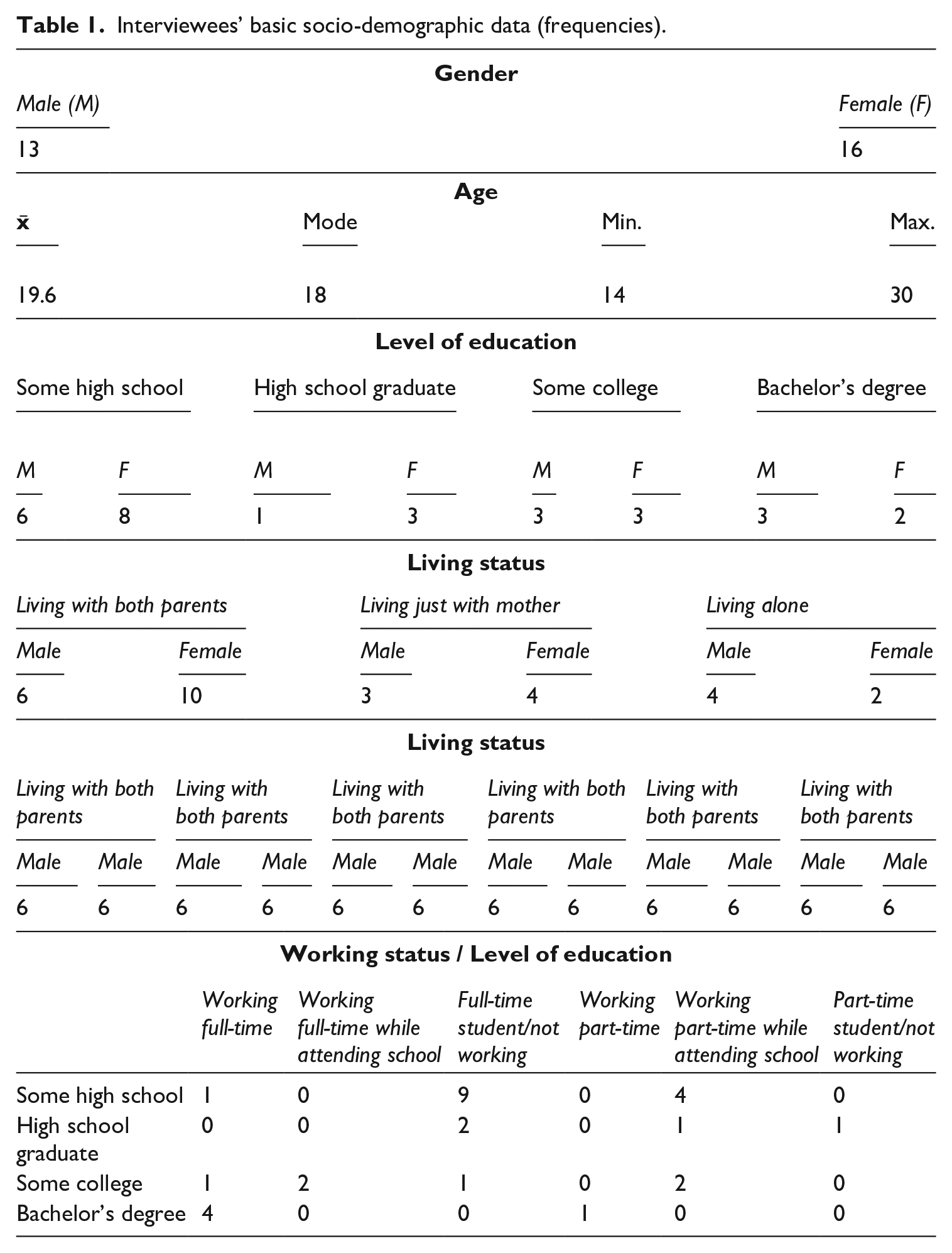
The vast majority (22 out of 29) of the sample are involved in educational study to some extent, and the highest percentage is associated with those who only engage in that activity. However, more than half of those interviewed also work. Looking more closely at the data, 5 out of 6 who work full-time already have a Bachelor’s degree or are attending university. Part-time jobs are more associated with students with some high school (4 out of 6). This is an indicator that must be considered when interpreting the data from this sample, as all the interviewees have either studied or are in school.
From a gender perspective, when comparing the two groups (women vs. men), there are more women who work part-time while attending school in this sample (5 vs. 2). Similarly, the majority of men (7 out of 13) are full-time students/not working, whereas this number is lower for women (5 out of 16).
Networks
As mentioned in the methodological section, this dimension is composed of (1) network dimensions, including their subcategories (structural, functional, relational, and contextual dimensions); (2) types, including the subcategories of family, friends, school, work, and social (the last meaning acquaintances, but not necessarily ‘friends’); (3) quality assessment; (4) intercultural communication; and (5) intercultural contact.
The two most representative categories of networks in terms of coded segments are types (318) and dimensions (180), and due to space constraints, these will be the only ones explored in this article.
Types
Within networks types, family is shown as the most referenced by interviewees, representing 44% of all coded segments for this category. Friends is a distant second at 15%, and social networks is third at 11%.
Even though family constitutes a type of network, due to its importance within the data (in terms of frequency and co-occurrences) it is represented as a separate dimension (Figure 1). Some authors have described it as the ‘Household’ dimension (Pride, 2015), but due to the inclusion of relatives and family history, ‘Family’ serves as a broader category that accommodates a greater number of related codes.
The parent–offspring relationship is one of the most important subcategories for this type of network within our sample. This relationship is expressed in many ways, although it is more evident in the customs, rituals, and family manners acquired by offspring. Time spent together seems to be important for this construct.
My father . . . his big day is when Thanksgiving comes. It’s like you got to have the gravy with mashed potatoes and stuff. Then Christmas is both of my parents but I think it overpowers my mom because my mom’s the one who’s mostly at home and she’s the one who shares the culture with us.
I would have to say just overall my morals, like everything; how to treat people, don’t steal, don’t take things that don’t belong to you, don’t hurt people. My whole way of life I learned from them.
Hard work is important. Education is important. Um . . . to be nice, to be friendly and to be considerate of others is all stuff they always tell us.
Although communication is the vehicle through which relationships are built, explicit mentions of it mainly appear between parent and offspring as a conflict resolution strategy.
We mostly talk. Sometimes, if it’s kind of really bad and I can’t find the words to say to my mom, I’ll like to write a letter to just get my feelings out.
My family is very open. If someone’s got an issue, it’s going to be talked about, so usually face to face communication and talking.
Another important element for this relationship is the emotional support that is given, especially through the maternal figure. Alternately, work ethic appears to be more related to father figures, but not exclusively.
My mom . . . would be her caring, she’s very nurturing, always wanted to help people. She had foster kids, you know people that needed a place to stay for the week, ‘oh come stay with me.’
What have you learned from him?
His work ethic. He’s a truck driver, so he’s always been waking at two o’clock in the morning to put food on the table since I was young. So, his work ethic.
He’s really strict, you know? He always had a very strong work ethic, and he helped pass that down to me.
In addition to emotional support, parents exercise functions of social regulation, understood as social control manifested by the pressure exerted on members to reaffirm responsibilities, norms, and roles (Sluzki, 1996). On the one hand, this function favors socialization of individuals. On the other, it facilitates exclusion at times of deviation.
My mother once said that [a] certain group of friends weren’t right for me because they were not the right ‘type of friends’ and she thought they were not a good influence for me, so she said: ‘I don’t think they’re right for you, and you live under my household so I decide who your friends are going to be.’
It is interesting to note that the interviewees refer to the frequency of contact as the most salient element of their relationship with relatives. This does not suggest that contact exists, but sometimes represents a desire. In addition, telephone calls and other electronic means also count as concrete forms of contact for interviewees, so they can be considered examples of transnational practices.
Regarding my family back in Ecuador, every here and there we FaceTime or whatever.
Sometimes we FaceTime [with relatives] and talk and it’s good since we haven’t seen each other that much. It’s good.
met my dad’s uncle once, but I was really young like maybe six years old, so I don’t really remember that much about him, but on my mom’s side my grandparents still live in Puerto Rico and we go there every year.
I used to see them all the time because I lived here, near them. Now a little less ’cause I live like an hour away, but I still have a great relation with them. Some of my uncles are tech savvy, so I could still text them and stuff too and I know they keep up with me on like Facebook and I try to do the same.
Between siblings, contact frequency and a common spoken language are the two key elements for this type of relationship. Regarding language, all used English amongst themselves and occasionally other languages when communicating with parents. Contact leads to shared time which is common when living in the same house, although some still keep in touch even when no longer living together.
I mostly speak in Spanish to my mom. Um, my step-dad understands everything but he doesn’t speak Spanish back. He speaks English. He knows words here and there. Um, my sister and I sometimes speak Spanish but for the most part in English, and then my step-sister doesn’t speak any Spanish or understand it.
We watch TV, we go out to eat and stuff, we run together sometimes . . .
I’m close with them, but you know, they all have kids now and I go to all their birthdays and I go back home and visit randomly. I can walk in the house without knocking, you know, so it’s a good relationship.
Friends networks are mainly characterized by homogeneity among their members. This characteristic is related to the affinity between the members and the communication that occurs between them. For this, language identification plays an important role. It should be noted that homogeneity and affinity are not always related to common cultural or ethnic traits, but common personal lifestyles, as stated by I.3: ‘all my friends came from sports.’
There’s people who choose their own people and some other people choose to go with different people like me. I like to hang out with . . . I wouldn’t say ‘white boy’ but American, right? White boy. And Hispanics too, ’cause you know, we can speak English and Spanish.
Cultural diversity, in the form of different nationalities, is present in friendship relationships, although there is a tendency for participants to gather with people with similar ethnic characteristics.
I guess that’s based on the personality. If they’re like black people or Hispanics or whites . . . I mean, in my school we all get along pretty well, but to be honest with you I’ll pretty much hang out with ‘my pack.’
Even though I have friends that are Hispanic, we identify more with our American side than we do our Hispanic side.
The common reaction among the interviewees is to feel accepted by their friends. Similar to family, friends are a source of emotional support while functioning as a mechanism of social regulation. Although the same religious beliefs are not necessarily shared among them, there are examples of respect for and openness to each other’s spiritual choices.
I get invited to go to church, so I go to church just to make people happy. Why not? Like my best friend, his mother is devout Christian, so Sundays, like today, I woke up and I went to church. Do I believe in it? No, but I sit there with an open mind and I listen, I learn.
Regarding social relationships, there is a shared feeling among interviewees that they are socially accepted, although the common factor for reporting this feeling is some extent of affinity with others.
If someone invites me and says, ‘let’s hang out,’ I’ll do it, but mostly my friends are at church and that’s the people who I spend the most time with. It’s just that we don’t share that many things, so we don’t have many things in common.
I think for the most part they accept me. You have to accept your own people ’cause you don’t have a choice, they’re your people, you know, so that’s kind of how I feel.
I can pass to be accepted. I don’t have an accent. I don’t have anything very outlining around me that someone can identify immediately and say (snaps finger) ‘I can judge you for this now,’ so I still fill the middle in the group.
When this condition is not met, then situations of non-acceptance, discrimination or even racism arise. In the latter case, this appears to be linked with perceptions of physical traits.
I remember when I was eight, like someone called me the ‘n’ word when I was playing basketball. I was like ‘I’m not, I’m not even black.’
When I feel non-accepted, I guess it is because I have tan skin, dark hair, and the beard, I have all the features of Hispanic. But I think it’s more appearance than cultural.
Despite circumstances of discrimination or non-acceptance, most participants consider social relations to be positive within the multicultural context in which they live as this enables intercultural contact and learning about other cultures and realities.
When asked about what they believed were the advantages of having a cultural ‘double heritage,’ all the participants said that having been born and raised in a multicultural family environment has enabled them to have intercultural openness to other experiences, highlighting it as a positive point.
I have tons of friends that are Arabic, that are from all different cultures. Having a background of two cultures gives me an advantage, ’cause now I know how to be sensitive to multiple cultures instead of just my own, so it makes it easy to handle.
I feel like it gives you a better world view, and the better view that you have of the world the better you have chances of communicating and understanding people. I feel like especially in the US, you see that people are really closed off to other cultures, other religions, other things. When experiencing more than one culture, you realize the best of both worlds and you realize that there’s some good things here and there. So, it opens up your mind.
Brief notes about network dimensions
As the analysis will focus on the two dimensions of networks with the highest frequency, that is, the relational and the functional, the central codes that cross and co-occur between the different dimensions will be outlined to provide a holistic perspective.
Intensity, being a subcategory of the relational dimension, co-occurs with emotional support (functional dimension) and with contact frequency (contextual dimension). The co-occurrence between intensity and emotional support is equated, above all, through the friends’ relationship, although intensity also appears with equal frequency in family and relatives’ relationships. This code appears to be central to the sample.
Finally, with less frequency and without relevant co-occurrence links, we have the structural dimension, in which the size of the network stands out. Size is associated primarily with composition, which is especially reflected in the segments linked to family celebrations and social events (see Figure 1), and therefore, social acceptance co-occurs with size.
Networks – relational dimension
To explain the relational dimension of the interviewees’ networks, the components of two categories and their relationships must be understood: ‘homogeneity/heterogeneity’ and ‘intensity,’ the latter having been previously identified as a central property of relational networks.
For this sample, the homogeneity/heterogeneity category presents three main co-occurrences: relationships with friends, affinity, and sources of stress. When considering friendships as a type of network, the reasons for homogeneity and affinity as characteristics have already been explained. However, a question arises as to why the source of stress appears as related code.
For the interviewees, friends are not a direct source of stress, but stress is triggered when there are conflicting interests, especially when one’s family practices (cultural and/or religious) differ significantly from friends’ ways of thinking or of doing things.
My family is really religious, and I serve at the church, so sometimes I have friends that invite me to their parties or school activities that happen in school, but church gets in our way.
There was one time when I felt culturally separated, when like all my friends went out trick-or-treating and everything.
Heterogeneity, understood as behavioral, socio-cultural, or values differences found among network members (Barrón, 1996; Berkman and Glass, 2000), is also related to sources of stress in the context of classmates’ relationships. From the analysis of the segments, it is evident that language barriers can be divisive, as can cultural and national idiosyncrasies.
And whenever you look at them [the other cultural group in the school class context], they look at you back and they snap at you. It’s like, ‘what are you looking at?’ and you’re like ‘okay, relax.’
. . . because when you go to the school and you don’t know the language, who you’ll hang out with? the people that know another language? I mean, that’s stressful. Are you going to communicate with people that you really can’t?
we kind of have a lot of Colombians in our school and the ones that we have like the people that aren’t from Colombia . . . the people that aren’t from Colombia we say like ‘oh my God, like those Colombians are so annoying with their stupid soccer and their . . . and oh like please be quiet.’
Co-occurrence between discrimination and sources of stress is also evident in a more open social context, highlighting cultural, ethnic, or religious issues.
You have many white people, they have certain feelings towards Middle Easterns because of the situation that’s going on with Syria or the Middle East of religion culture-wise right now is like, really bad.
They’ve put this barrier between them they’re like ‘I’m American, you’re not.’ And it’s like ‘I’m better than you, I’m smarter than you, I’m from here you’re not, don’t try to take over, don’t try to be part of us ’cause you’re not part of us.’
Conversely, intensity is highly related to contact frequency, shared time, durability, and emotional support within our sample, as the types of networks that best portray the intensity in the relationship are family (nuclear and extensive) and friends. While intuitive, this tendency has also been formally studied (Berkman and Glass, 2000).
Networks – functional dimension
The functional dimension of networks has three main categories in our sample according to the frequency count: emotional support, social regulation, and tangible support.
For emotional support, multiple categories emerge in the interviews. Apart from what has already been mentioned regarding the relationship of family (especially the mother) and friends as the main support networks, the level of emotional support is closely associated with relationship intensity.
Affinity is not only related to kinship. National identity or common life experiences also create links that affect emotional support.
Since she [a cousin] knew we were family and we were like, both from the same place, it made everything okay. Now we are just like friends and family.
She experienced the same thing as me. No one knew where Trinidad was, so she told me she would say she was Puerto Rican and just leave out Trinidad ’cause no one even knew, but now that we both know where Trinidad [is], that brought us together.
Religion precipitates an element of affinity. Although relationships that are formed between families can also generate feelings of affinity that strengthened the emotional support networks of the interviewees.
An ex-friend of mine, she goes to my church and we grew up together in the church. We were like, this close they thought we were sisters and we always shared things together and everything. Our parents were fairly close with each other.
Finally, affinity can also be related to age and gender, evidenced in the exchanges and activities that take place between parents and children as well as between equals.
Certain things, you know, motherly and daughterly things I can express more with her than with my father, which is like fatherly and daughterly kind of thing.
We get along, we play, I mean my dad is like my best friend I guess.
I have cousins and they are really cool ’cause specially they are my age. My aunt has like a lot of kids so they really have a lot in my range I could hang out with.
Emotional support is a two-way asset. Some of the interviewees, when describing their participation as volunteers in civil society organizations, referred to how they themselves were a source of support.
I got to volunteer as the one who made the little ribbons for first place, second place, and third place. So I basically just made the ribbons and it felt really good ’cause you help out and you get to know that parents are really proud of their kids.
As social regulation has already been addressed, the last category of the functional dimension of networks, according to the frequency count, is tangible support.
Regarding the material type of tangible support, two main themes emerge: parents as a resource (for those who don’t have a job) and work. The instrumental form of this support is more present in the relationship between the youngest interviewees who still attend school and their teachers who are important sources of instrumental support.
If you need help with the work, they [teachers] are always there.
She [my teacher] is always worrying about everyone’s business and she makes sure everyone is fine in a kind of way, it doesn’t bother [me].
Tangible support is also evident in relationships between family members, even among those who are most distant, as well as in neighborhood networks.
They come to Orlando, they call me. They need a place to stay, I’ve had my cousins come to stay, and same thing for me if I’m in Miami, you know, there’s not even a question, don’t get a hotel, you better come stay here.
She [my neighbor] helps around. Helps everyone around the neighborhood and it is just really helpful.
Discussion
The analysis of the interviews gives rise to a series of ideas that should be discussed and analyzed in greater depth and in future research, namely: first, there are multiple variables associated with the dimensions of superdiversity present in the literature (Aptekar, 2019; Boccagni, 2015; Creese and Blackledge, 2018; Geldof, 2016; Goodson and Grzymala-Kazlowska, 2017; Grzymala-Kazlowska and Phillimore, 2018; Meissner, 2015; Meissner and Vertovec, 2015; Nowicka and Vertovec, 2014; Ozkazanc-Pan, 2019; Pride, 2015; Schrooten et al., 2016; van Robaeys et al., 2018; Vertovec, 2007, 2010, 2019), some of which have been presented in this study (Figure 1). Second, new indicators appear relating to each dimension, making their description and explanation even more complex. Third, as shown in Figures 2–6, categories associated with the varied dimensions of superdiversity co-occur throughout the interview discourse, showing interconnections both within and between the dimensions. Fourth, the personal social network concept arises as the most coded and referred-to within this study, constituting one of the spaces where variables intersect and shifting focus toward the concept of inter-dimensionality.
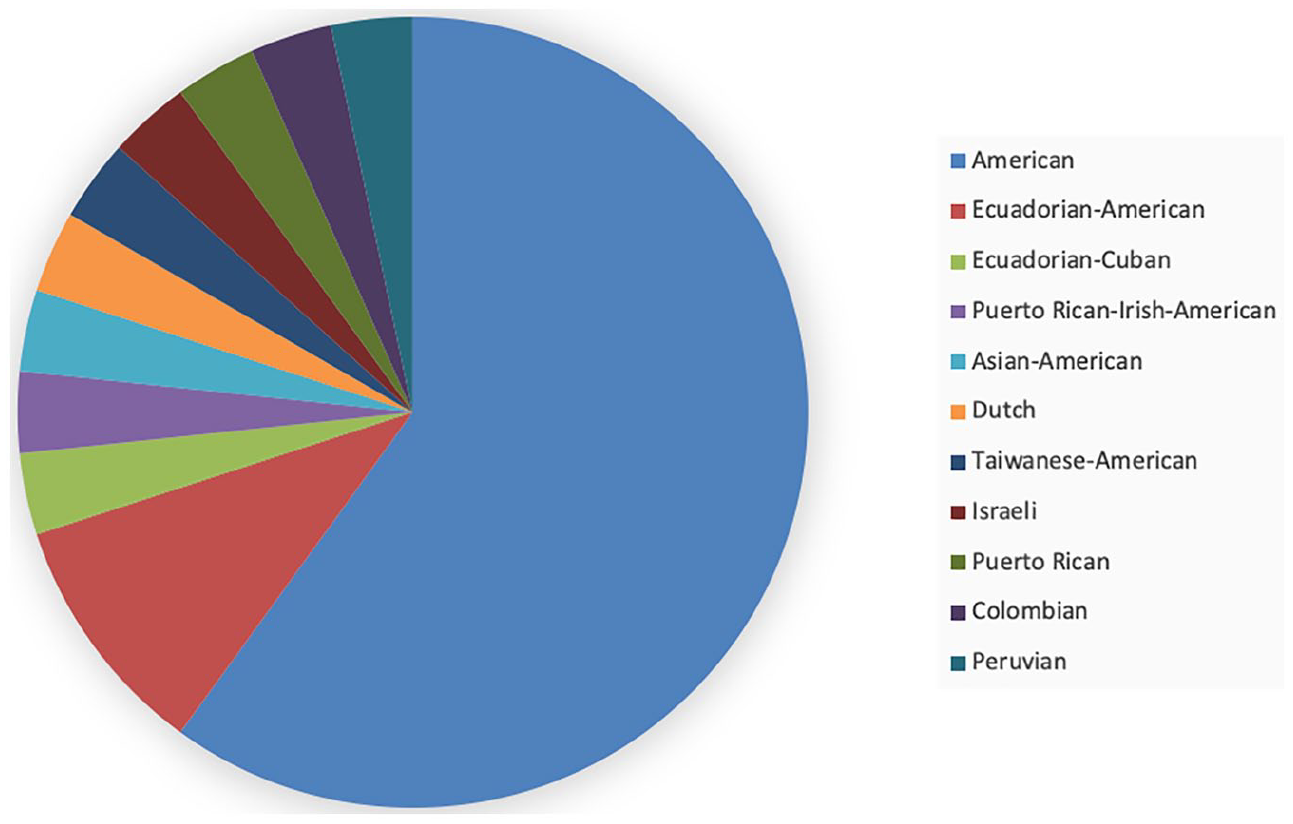
Self-attributed national identity.
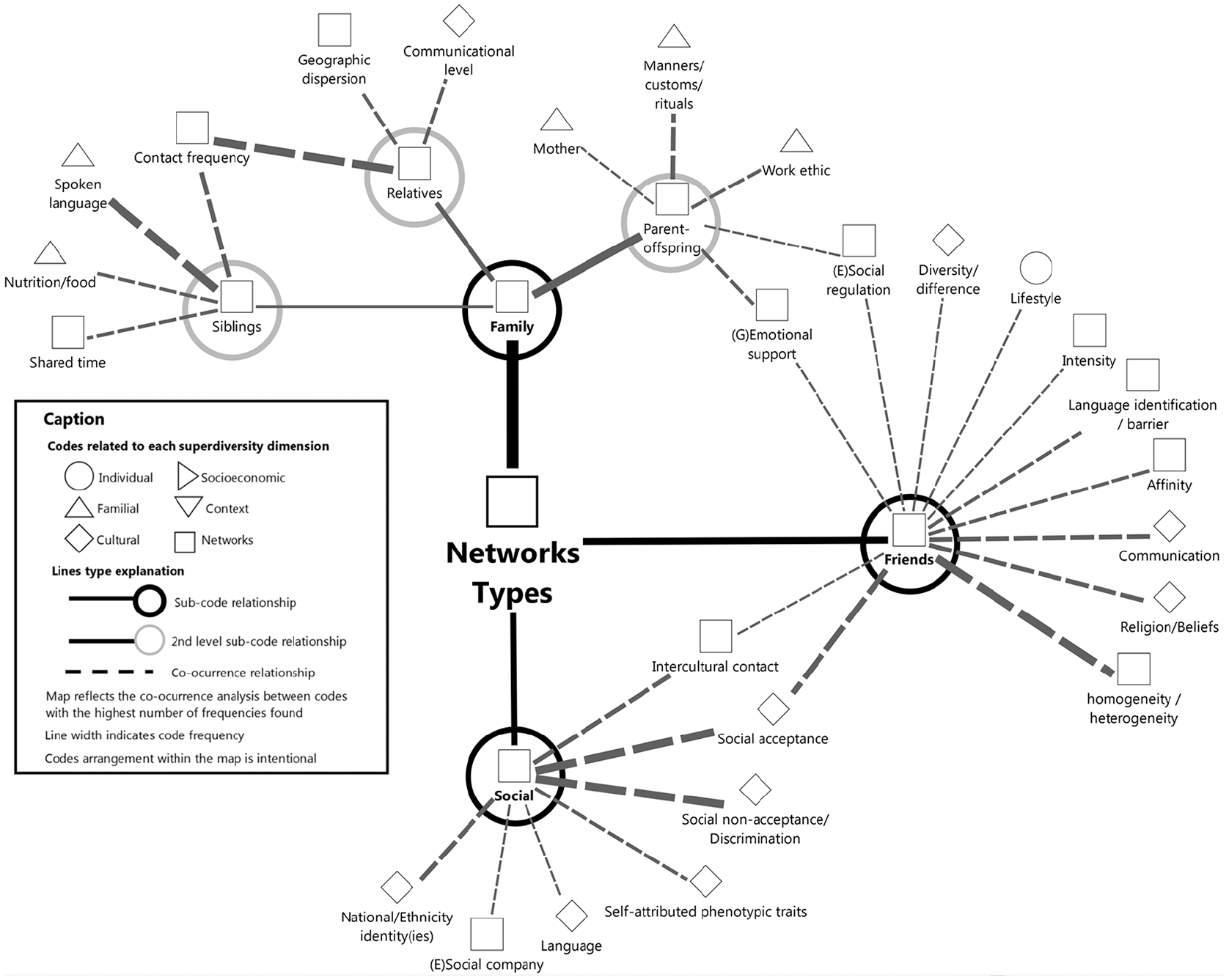
Networks types: main code extraction.
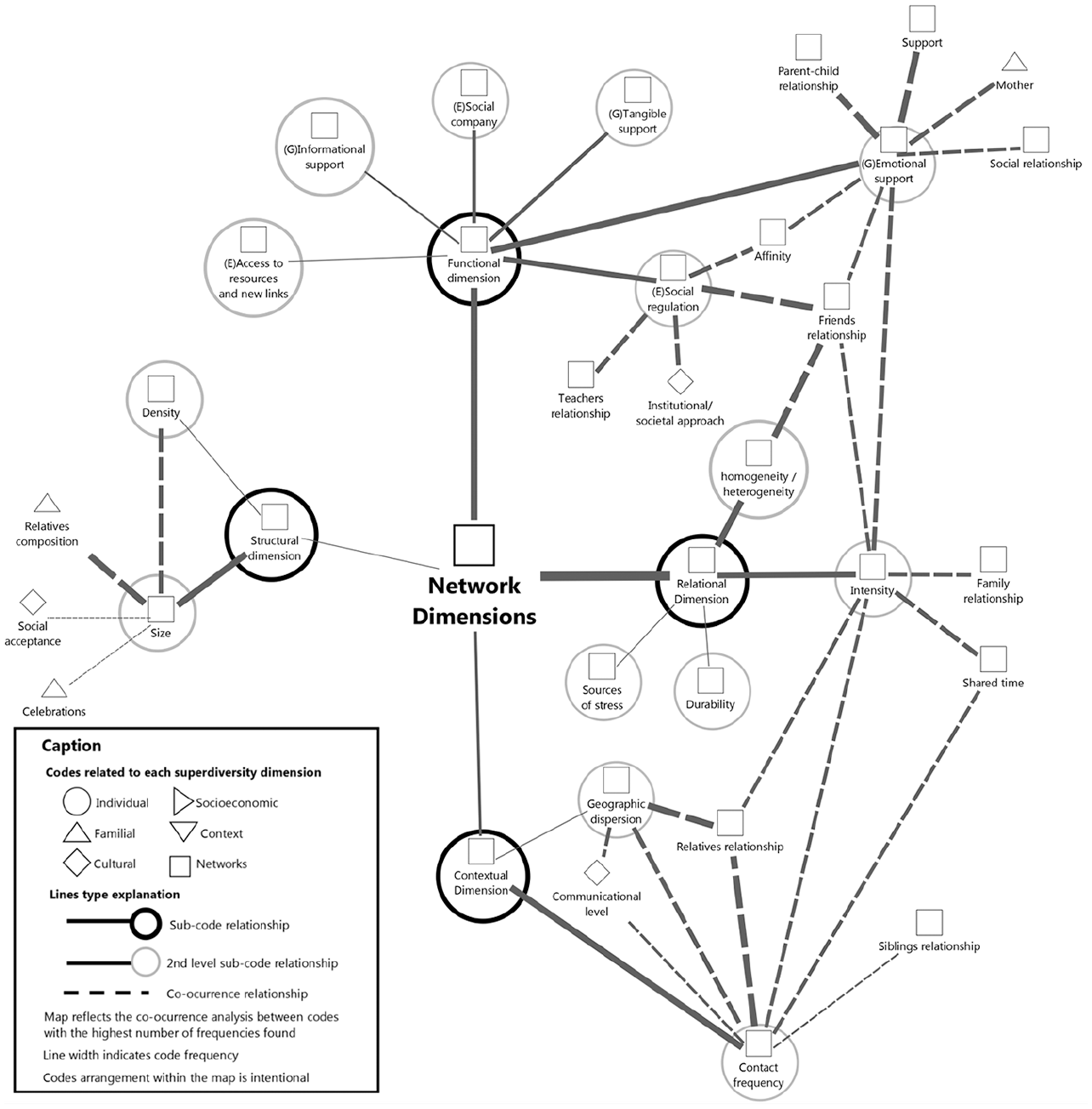
Networks dimensions: main code extraction.
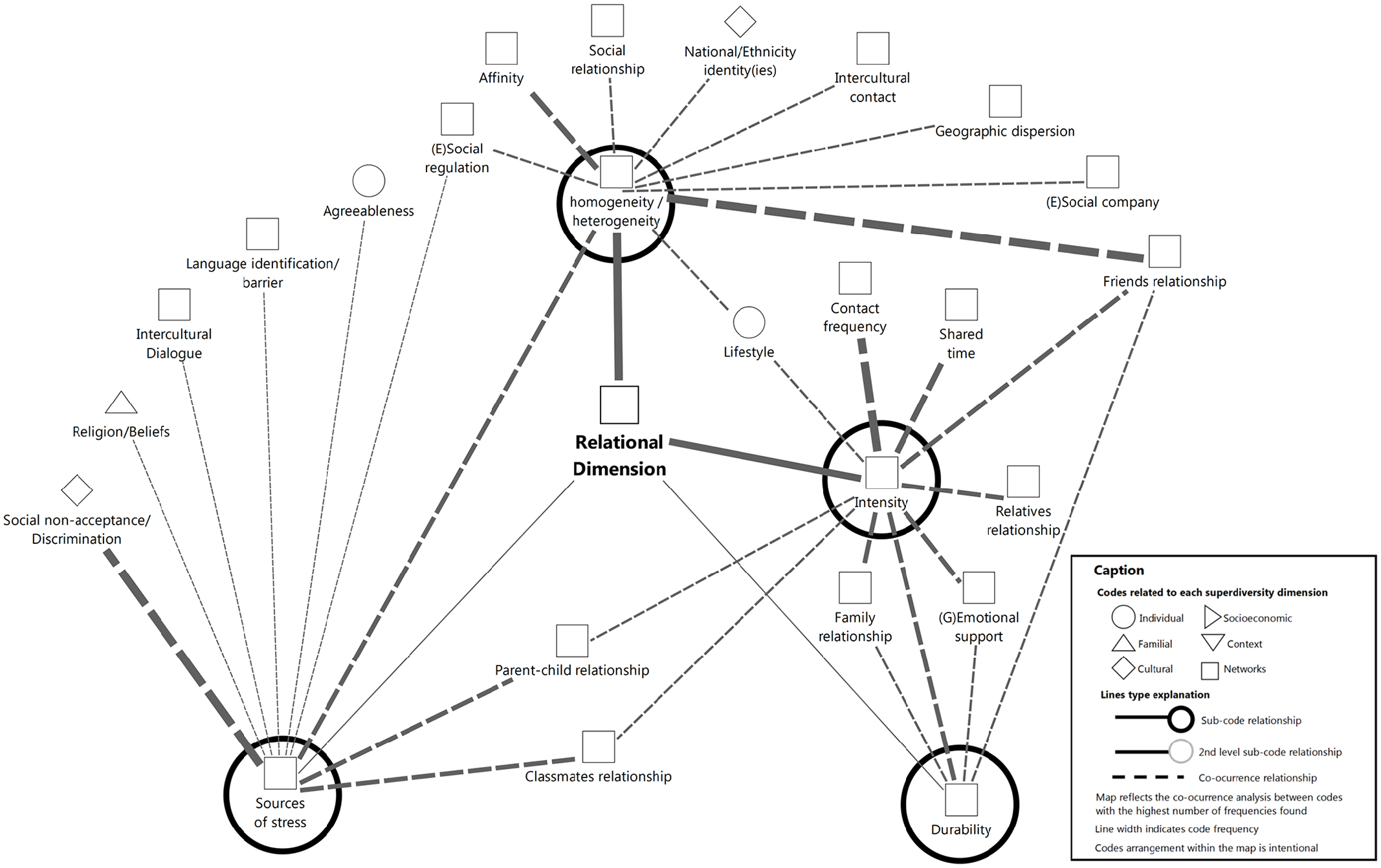
Networks – relational dimension: main code extraction.
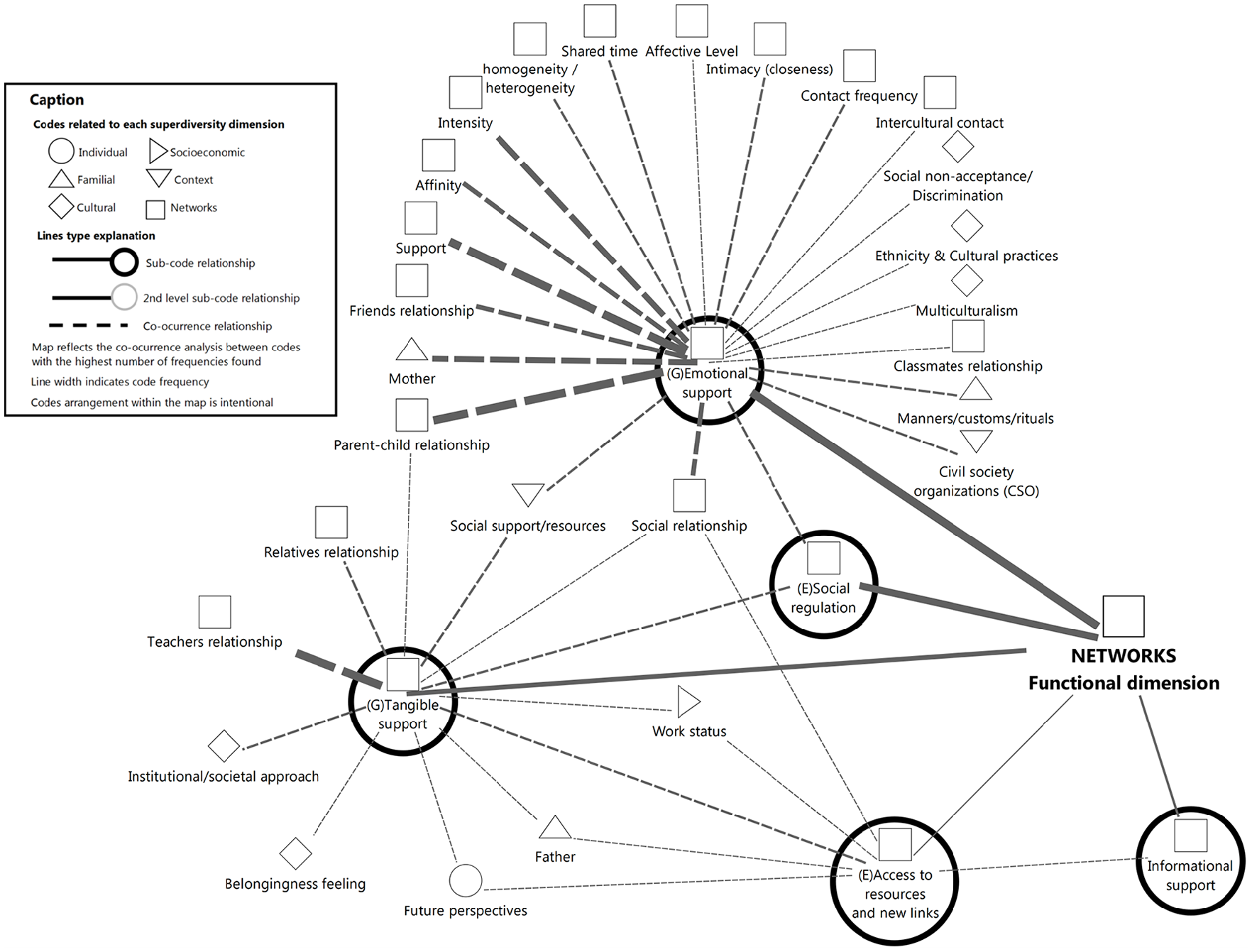
Networks – functional dimension: main code extraction.
In light of the analysis that has been performed, it could be considered a framework adjustment of the dimensions of superdiversity (as described in the Literature review) in which networks could be included as an autonomous dimension. The concept of networks, while previously researched by other authors (Goodson and Grzymala-Kazlowska, 2017), has a different approach. This study proposes to integrate networks as a transversal dimension of superdiversity, in which other more macro factors of superdiversity should be considered in future analysis, such as oppression, inequality, exclusion, stratification, class, status, and power (Aptekar, 2019; Ferreira and Álvarez-Pérez, 2017; Vertovec, 2019; Wessendorf, 2014).
Inter-dimensionality requires reflection from social intervention professions in four particular senses: (a) the importance of networks for intervention, given that they intersect all of the other presented dimensions and form a fundamental axis, particularly when offering relational training to people, groups, and communities in an increasingly individualistic society (van Ewijk, 2018), in order to avoid what has been called relational illiteracy (López Peláez, 2015: 125); (b) the consideration of the subject as a whole in which their inter-dimensionality cannot be neglected, since comprehension and intervention must be considered holistically – for this purpose, it will be necessary to embrace interprofessional practices and collaborative work between organizations while focusing on the subject rather than the partial resources of each institution; (c) the influence of the macro factors mentioned above (with attention to how these dimensions interrelate) on anti-discriminatory and anti-oppressive practices (Adams, 2003; Adams et al., 2009; Dominelli and Moosa-Mitha, 2014); and (d) the political dimension, combined with more community-oriented interventions in which social links are created or strengthened (López Peláez, 2012).
Limitations of the study and future research
Age and gender variables did not form part of the thematic analysis, as they did not feature during the interview discourse. This study is qualitative in nature, and so there is no intention to generalize the data to the population represented by this sample. However, it does shed light on new variables to be taken into account for the study of superdiversity.
Macro factors like power, class, stratification, oppression, and inequality, among others, are not explored in this study and should be taken into account in future research, as well as an in-depth analysis of the remaining five dimensions described in Figure 1.
Footnotes
Funding
This article was supported by national funds through Fundação para a Ciência e a Tecnologia (FCT) in the Strategic Financing of the R&D Unit UID/SOC/03126/2019.
