




Abstract
Recent socio-political situations in the Middle East and elsewhere have resulted in a large number of refugees searching for new places to settle. To understand how a new place could become a home, the authors conducted qualitative research in the Netherlands. The study looked at the home experiences and (micro)homemaking practices of young Syrian refugees in an innovative housing project in Amsterdam. In this project, Dutch and Syrian young adults are housed together to foster integration. This article also looks at Boccagni’s model for understanding immigrant live-in workers’ homes. The authors further develop the model by introducing a mobility lens, which offers the possibility of elaborating on theoretical notions between now-and-then and here-and-there and the empirical findings derived from this study.
Introduction
The Office of the United Nations High Commissioner for Refugees (UNCHR, 2015) reports that 65.3 million forcibly displaced people are wandering around the world and 21.3 million refugees are seeking protection in foreign countries. In 2015, about 1.2 million refugees applied for residence status in EU member states. Although many European societies have shown compassion towards refugees, the relative number of refugees being accepted by European countries is small. In fact, the 1.2 million asylum seekers equate to only 0.2% of the total EU population.
Refugees face insecurity in the present and uncertainty about their futures, two parts of what Bauman (2006: 128) calls the ‘fears of contemporary times’. Refugees responded to fears in their original homes by leaving, and they look for a sense of home in their host societies. To understand refugees’ senses of home, this study focuses on the concepts of home and homemaking. Home is the place where one feels like one belongs, and homemaking is a continuous process of creating a sense of feeling at home (e.g. Duyvendak, 2011; Smets and Sneep, 2017).
An ideal practice of homemaking is rooted in a Korean idiom 啐啄同時 (pronounced JulTakDongSi), which means that the chick and the mother hen peck the shell of the egg together. The chick’s efforts are necessary for it to break out of the egg. However, if the mother hen helps when needed, the chick can break out of the egg safely. This offers insight into how refugees can be supported in creating a sense of home in a new environment. We see the possibility and actual practices of ‘pecking the shell together’ in the innovative housing project Startblok Riekerhaven in Amsterdam. In this project, Syrian refugees work at integrating into a new society, whatever integration means to them, while Dutch 1 residents help facilitate their integration process. Although some residents have criticized Startblok Riekerhaven, saying that its merits are fictitious, many have benefited from the opportunities of the project.
This study focuses on Syrian refugees in the housing project and their efforts to integrate. We focus on how they experience home in everyday life and which homemaking practices they employ. We start with a literature review of the concepts of home and homemaking. Then, we describe the housing project Startblok Riekerhaven, followed by descriptions of the home experiences and homemaking practices of Syrian newcomers who live in the project. Finally, we discuss their senses of home and its theoretical implications.
Home in theoretical perspective
Home captures both material and immaterial aspects. The material aspects are associated with physical, tangible and visible elements such as furniture and food (Buitelaar and Stock, 2010; Duruz, 2010), whereas the immaterial aspects are associated with intangible, emotional and social elements such as language and culture (Eijberts and Ghorashi, 2016; Kusenbach and Paulsen, 2013: 8–9). Elements of home also include material (object-centred) and immaterial (people- or relational-centred) characteristics, and all of these elements help make up the functions of one’s home. Therefore, Gans (2015) encouraged crossing the border between people- or relational-centred and object-centred conceptions to achieve an interdisciplinary perspective, as physical settings and people are interrelated.
The concepts of housing and home are often used interchangeably, but they need to be distinguished. Although the concept of housing may capture human activities around the physical house (Turner, 1972), it generally involves an object-centred vocabulary. For example, UN-Habitat (2009: 3–9) associates housing with issues such as financial affordability, security of tenure, proper location for jobs, education and healthcare, and core infrastructure concerning water, sanitation and energy. Here, the focus is on physical elements, and socio-emotional elements are missing, such as the feelings of individual residents, their relations with neighbours and their daily experiences around the house. Contrary to the concept of housing, the concept of home implies a people-centred conception. Therefore, we use ‘home’ rather than ‘housing’ in this study. The value of home is also associated with social and emotional elements (Boccagni, 2017a; Duyvendak, 2011; Easthope, 2004; Ginsberg, 1999; Kusenbach and Paulsen, 2013; Mallett, 2004; Smets and Hellinga, 2014; Smets and Sneep, 2017). Although home can include housing, it is generally related with the senses of feeling at home, of belonging and of identity. Mallett (2004: 84) provides a comprehensive understanding of home:
The term home functions as a repository for complex, inter-related and at times contradictory socio-cultural ideas about people’s relationship with one another, especially family, and with places, spaces, and things.
Although the image of everyday life associated with home differs over time, it is still widely accepted that people take physical, emotional and psychological rest at home. Home is thus widely acknowledged as a foundation of one’s life. Mallett (2004: 84) elaborates the term by enumerating feelings such as comfort, security, relaxation, and ease of intimacy. When home is connected to a collective identity that creates feelings of inclusion, the sense of belonging is closely related to ‘feeling at home’ (Antonsich, 2010; Buitelaar and Stock, 2010; Fenster, 2005; Ghorashi, 2017; Yuval-Davis, 2006). Home, therefore, entails multilayered meanings and values in an individual’s life, as well as a physical shelter.
Duyvendak (2011: 38–39) distinguishes three elements of home, namely, familiarity, haven and heaven. In his theoretical framework, home captures an in-depth knowledge built up over time (familiarity), feelings of safety, security and privacy, which are associated at the microlevel of the house (haven), and public identity and exclusivity towards a neighbourhood, city and even a nation (heaven). Thus, Duyvendak (2011: 122) suggests that home could be sought and found in any particular, generic, or symbolic place, in a private or public context. It is also possible that certain domiciles are ideally realized, while others may be devastating (Duyvendak, 2011: 44–45, 62–63; Mallett, 2004). Migrants, for example, may experience discrimination or social limitations from being non-native, and they may feel incongruity around their homes (Ghorashi, 2017; Smets and Sneep, 2017). For those who have experienced forced migration, the unsettled, changing, open and mobile characteristics of home may be emphasized (Brun and Fábos, 2015).
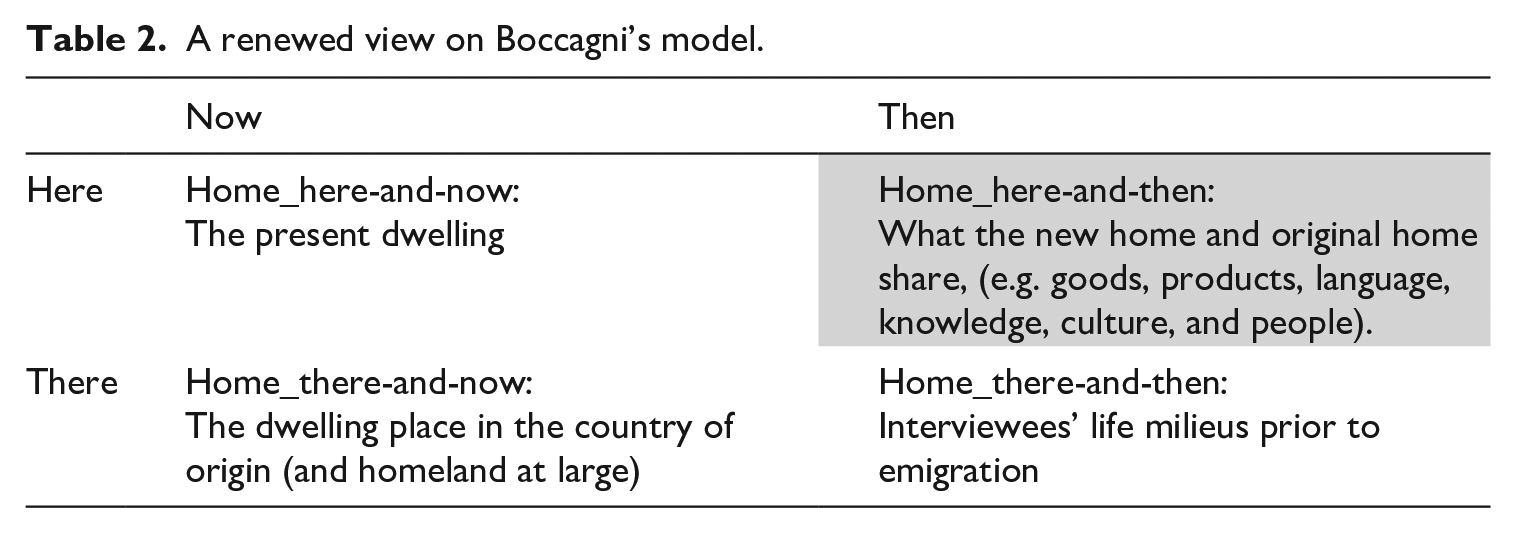
Migrants experience both a temporal and spatial shift of home. For instance, migrants and migrant communities reproduce their original homes through cultural products such as rituals, events, food and goods (Werbner, 2018). In this regard, Boccagni (2018) found that various spheres of home reflect temporal and spatial lines in migrants’ homes. In his framework, migrants find a sense of home not only in their current live-in workplace but also in their country of origin and their previous life experiences. This view suggests that personal images of home encompass the entire span of people’s life stories. Arguing that migrants find a sense of home in multiple locations and times, Boccagni suggests four spheres of home: Home_here-and-now, Home_here-and-then, Home_there-and-now and Home_there-and-then (see Table 1). The first and the last spheres, here-and-now and there-and-then, are associated with migrants’ current dwelling and their original home before migration, respectively. There-and-now still exists because migrants are connected to people and events and to their physical house in their country of origin. Home_here-and-then refers to the friction between home experiences then, in the country of origin, and home experiences here, in a new area/country with its own history. However, here-and-then experiences were not observed in his study, because home experiences of then took place in the country of origin (pp. 319–320).
Understandings of immigrant live-in workers’ ‘home’ along spatial and temporal lines.
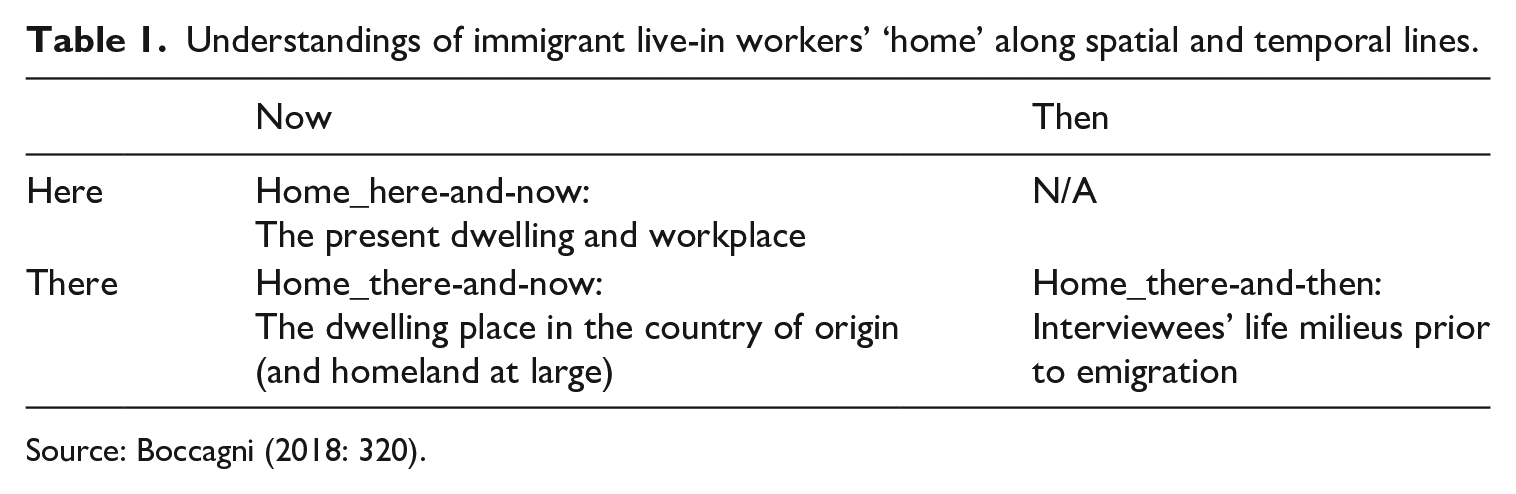
Source: Boccagni (2018: 320).
Based on Boccagni’s framework, home should be understood as a continuous process rather than as a fixed and completed result because people continuously express their identity with the physical elements of home, which tend to reflect their social position in society. Boccagni (2017a) argues that home should be understood as an everyday life experience and the creation of home as an open-ended and unaccomplished process. In addition to considering the different locations of home – home existing in different spatial and temporal lines – it is important to take into account how home is perceived:
There is an irremediably normative side to home, which results in an existential attempt to bridge the gap between what home looks [like] and what it should look like. Parallel to this, a tension can be traced between the static and inward-looking bases of what is ordinarily framed as home, and the ways of perceiving, negotiating and enacting it under societal conditions of mobility and diversity. (Boccagni, 2017b: 10)
Boccagni (2017b) introduced the concept of ‘homing’, which refers to the micro practices of creating a sense of home in relation to a biographical constitution of home but in such a way that home remains open ended. Creating a sense of home includes combinations of security, familiarity and control related to one’s life circumstances that are time and place dependent. The concept of homing can be distinguished into three levels: cognitive moral (expectations of what home should be), emotional (feelings about being at home) and practical (relationships between home and place).
The concept of homing partly overlaps with homemaking practices. Such homemaking practices, in particular, are evident in immigrants’ lives (Boccagni, 2017a: xxiv). For example, Buitelaar and Stock (2010) show that migrants decorate their houses with objects that reveal their origins, such as furniture, ornaments, photos and interior designs. These aspects can be considered micro processes of homemaking or homing. Moreover, these homemaking practices reflect one’s aspirations, expectations and concerns for the future (Boccagni, 2017a: 40).
In the process of homemaking, individual assets and social circumstances have significant influence. Boccagni (2017a) reports that external opportunity structures affect homemaking processes and the assets needed for them. To elaborate on the external structure of opportunities and assets from a migrant perspective, this study adopts the concepts of social capital and mobility. Putnam (1995: 67) defines social capital as ‘features of social organization such as networks, norms, and social trust that facilitate coordination and cooperation for mutual benefit’. Social capital can be distinguished into bonding and bridging forms. Bonding social capital indicates connections within a group that shares similarities; bridging social capital indicates connections that link different groups. Putnam (2000: 22) states that bonding social capital encourages reciprocity and solidarity, while bridging social capital is more suitable for obtaining access to external assets and spreading information. Similarly, De Souza Briggs (1998) categorizes social capital into social support and social leverage and argues that social support (strong ties with kin and friends) helps individuals cope with life’s stresses and challenges, while social leverage (weak ties with acquaintances) is the key to getting ahead. Migrants want to reproduce and reconstruct their homes as they were in their original societies, but they also want to nurture and cultivate their lives in their new societies. They therefore count on both bonding and bridging social capital, that is, social support and social leverage.
In addition, the mobility of contemporary society influences migrants’ homemaking. Watt and Smets (2014) present mobility as a distinguishing feature of contemporary society; they thus suggest using a mobility lens to see both material and immaterial aspects of the sense of belonging more accurately in dynamic perspectives. Urry (2007) captures mobility in five categories: corporeal travel of people, physical movement of objects, imaginative travel, virtual travel and communicative travel. Considering that migrants’ lives are the aggregate output of mobility, it is essential to view their homes through a mobility lens. Indeed, people are moving on a global scale, and this phenomenon further encourages researchers to understand home as ‘a process marked by openness and change’ (Korac, 2009: 26).
Refugees left behind their homes in their countries of origin, and they employ coping strategies in the new situations they encounter. They try to create a sense of home in different ways, and value capturing multiple layers of material and immaterial elements of home along various temporal and spatial lines. Therefore, this study looks at how these aspects as well as social capital and mobility influence refugees’ homemaking practices.
Methodology
This study involved semi-structured interviews conducted August–November 2017 with 16 Startblok Riekerhaven residents (12 Syrian refugees, three Dutch, and one Eritrean refugee who was also a project manager) and three professionals from the municipality of Amsterdam and the housing corporation De Key. In addition, more than 10 informal conversations about the project took place with individual and groups of Syrian and Dutch Startblok Riekerhaven residents. Interviewees were selected through individual contact or introduction from other interviewees. During the research period, the first author participated in various events at Startblok Riekerhaven, such as parties, sports events, language exchanges and dinners with residents. Moreover, he visited Startblok Riekerhaven about twice a week to observe residents’ material environments and behaviours. Photos were taken to provide visual information.
Semi-structured interviews lasted between one and two hours and took place in the interviewees’ studios, in Startblok Riekerhaven’s common rooms, or at a cafe downtown. Interviewees were asked to describe their own experiences and feelings concerning their homes. They also shared stories from friends or gossip heard from other residents. Most Syrian interviewees were male, except for one female interviewee. Five interviewees were revisited for one or two follow-up interviews each and for informal talks to gather more in-depth information. Interviews were conducted in English. Informants had different levels of English proficiency, but all had sufficient English to discuss their experiences and related emotions. Interviews were recorded, after acquiring consent from the interviewee. Interview materials were transcribed verbatim and coded. Thematic coding (Bryman, 2012) enabled finding patterns that reflect how people have spoken about the topics of interest.
A researcher’s positionality affects a study by creating power relations between the researcher and informants and by influencing how empirical results are interpreted (see also Bonfanti et al., 2018). In our study, the researcher’s positionality created different degrees of insider- and outsiderness. On the one hand, the researcher was neither a Startblok resident nor a Syrian, which created a sense of outsiderness and made it difficult to approach residents in the beginning of the fieldwork. On the other hand, over time, the researcher became familiar with the physical environment of the project and developed relationships as well as friendships with residents. The sense of insiderness developed and led to in-depth understanding. Also, because the researcher is Korean he had some understanding of the shared experiences and feelings of the Syrian interlocutors.
Startblok Riekerhaven
To cope with housing demands for refugee status holders, the local government of Amsterdam New West and De Key housing corporation started a housing project in September 2015. The local government provided land that was formerly occupied by a sports park at a lower than market-rate price, and the housing corporation provided housing units at lower than market-rate rents by reusing prefabricated housing units from a temporary location in Amsterdam (Houthavens, a new development). Residents moved into the new project area starting in July 2016.
Startblok Riekerhaven is an innovative housing project consisting of 565 housing units for 282 status holders and 283 Dutch, all of whom are 18–27 years old and single. Among the status holders, 50% are Syrian. This study focused mainly on Syrians because they are the largest group of refugees. Startblok Riekerhaven has nine buildings with 463 private studios and 102 two- or three-bedroom apartments (Figure 1); all housing units are equipped with a bathroom and cooking facilities. There are 19 living groups of 16–32 residents who share a hallway and a common room with additional cooking facilities, laundry machine(s), couches and tables for communal use. This housing project focuses on mixing newcomer and Dutch young adults. Residents can reside in this housing project for a maximum of five years by contract (Startblok Riekerhaven, 2018). Most of the refugee residents are male, whereas the Dutch residents have a balanced gender ratio. Only two female Syrians are living in Startblok.
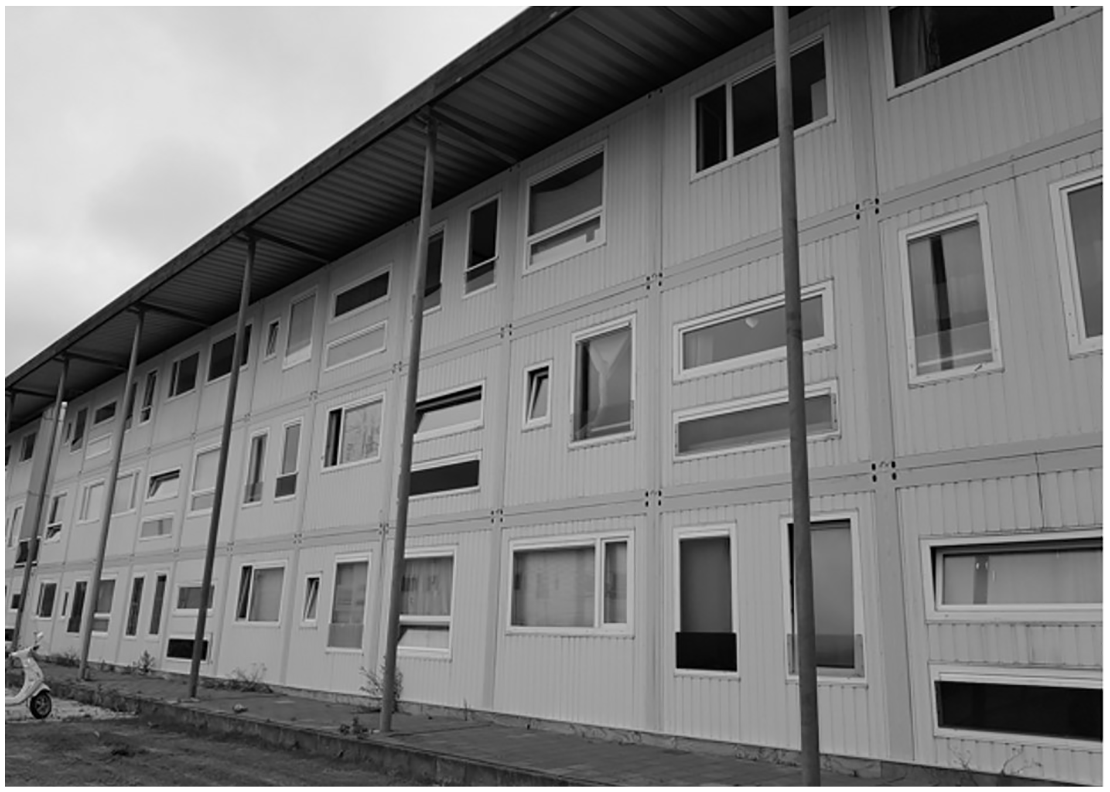
A housing block at Startblok Riekerhaven.
Living groups in Startblok Riekerhaven share a hallway and common room (Figures 2 and 3), which is intended to create opportunities for interaction between the refugee and Dutch residents. Each living group consists of Dutch and status holders from various countries such as Syria, Eritrea and Afghanistan. Startblok Riekerhaven is operated on a self-management system in which residents participate in the maintenance of the living spaces, such as cleaning the common room by rotation. In addition, residents can organize events such as movie nights or birthday parties in the common room or at Startblok Riekerhaven’s clubhouse. The self-management system is overseen by about 10 project managers for the entire project and by hallway managers – one Dutch and one newcomer for each living group. 2 Because both authors of this article are male, gender differences within the project were difficult to identify.
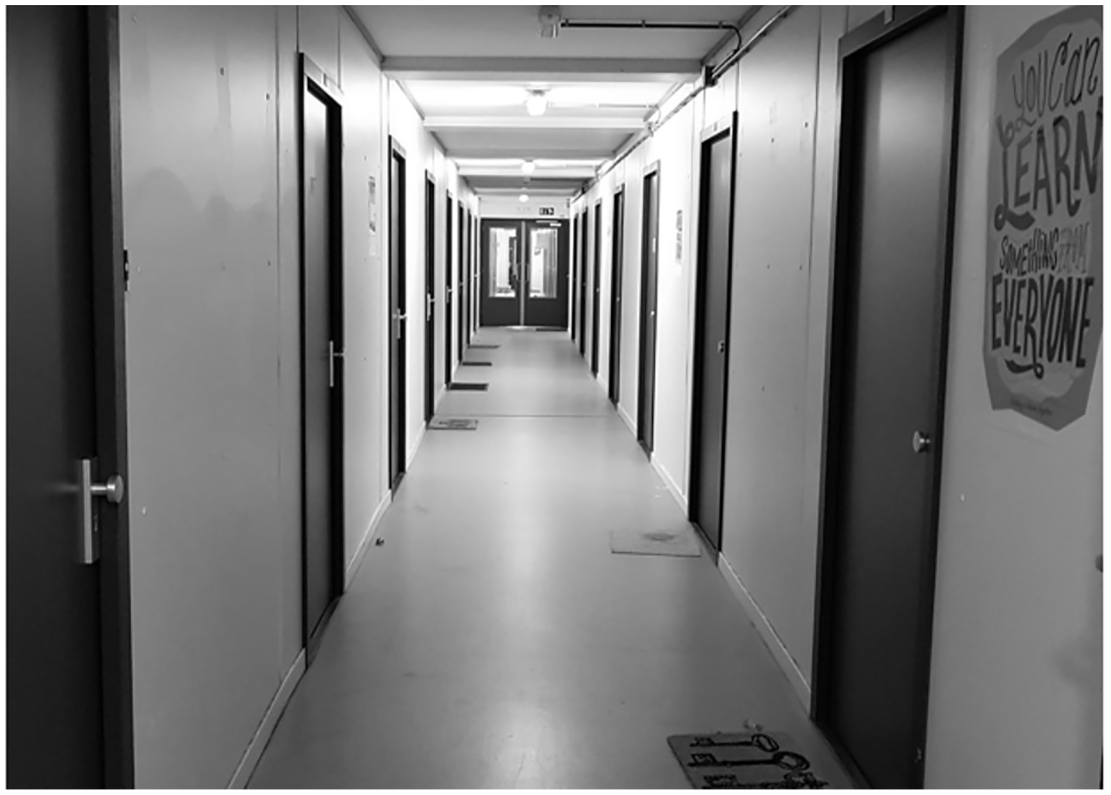
A hallway.
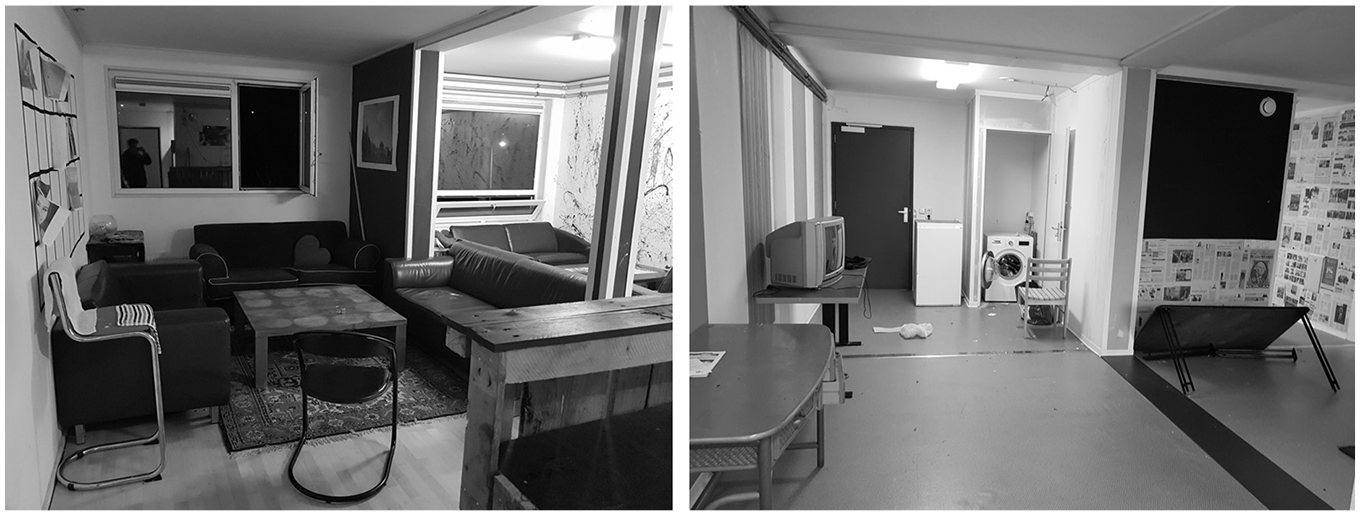
Common rooms.
Studios at Startblok Riekerhaven are 23 m2, including the bathroom and kitchen (Figure 4). Apartment units (2–3 bedrooms) have a shared living room (25 m2), but the bedrooms are smaller than a studio (13 m2 or 15 m2). The monthly rent, which includes a service cost for heating, electricity, water and internet, is €510 for a studio and €387–437 for a room in an apartment. Studio residents can apply for a housing subsidy from the Dutch government. 3 This research focuses more on the studios than the apartments because the project’s characteristics are better expressed in the studios, where community building within a living group plays an important role.
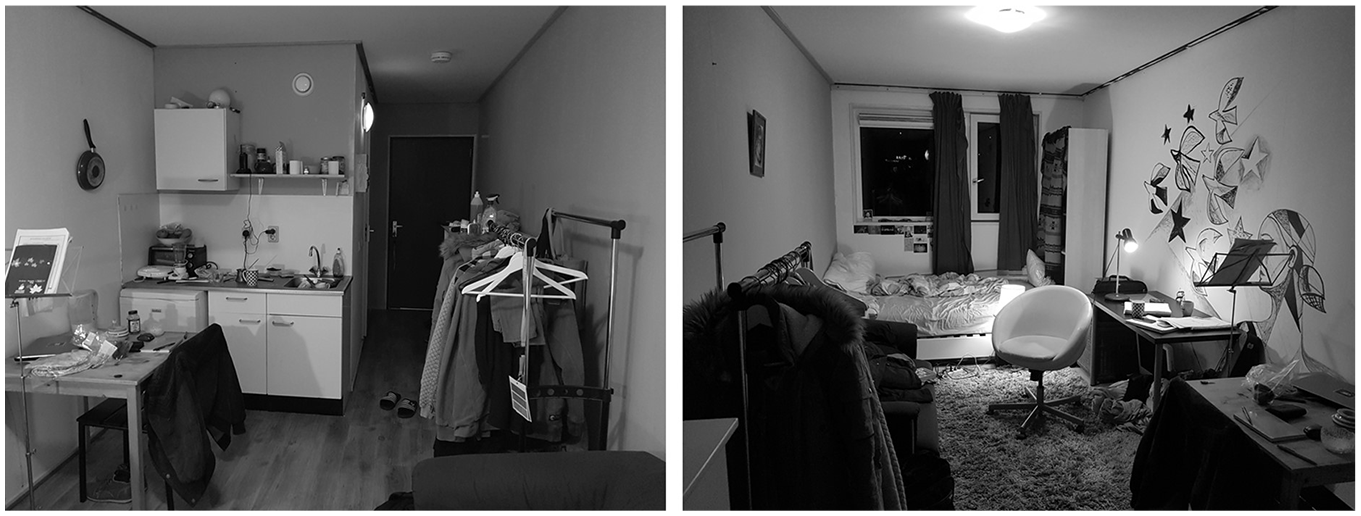
A Syrian resident’s studio.
Analysis
This analysis section is divided in three subsections. Attention will be paid to home experiences of Syrian refugees, which will be followed by their homemaking practices. Finally we will reconsider their sense of home.
Home experiences of Syrian refugees
Syrian interviewees reported having a private space as one of the most distinct positive experiences at Startblok Riekerhaven. After a long journey and living in refugee camps, having personal space meant a lot to them. Although the size of the studio was smaller than they expected based on former home experiences and rumours about the benefits they would get in the Netherlands, many saw the size as sufficient for single life, especially considering the housing situation in Amsterdam.
The positive experiences at Startblok Riekerhaven were largely grounded in social settings rather than physical settings. Syrian residents liked living with Dutch residents, which offered opportunities to learn the Dutch language. For Syrians who could speak English, conversations were easier because most Dutch residents spoke English. Though Syrian newcomers made efforts to integrate into Dutch society, they nonetheless still enjoyed Syrian food and speaking their native language. Most Syrians seemed to make a soft landing in Startblok Riekerhaven, going back and forth between the Syrian and Dutch communities.
Syrian interviewees also expressed sceptical views about Startblok Riekerhaven. Although they have private space, some complained about the housing quality. Studio housing makes cooking difficult due to strong smells when preparing Arabic food. Windows made of various sizes and shapes have an aesthetic appeal, but some types of windows are too small for ventilation. The construction material also matters. One interviewee considered Startblok Riekerhaven a camp because of the use of container housing. Comparing Startblok Riekerhaven with their previous houses in Syria, interviewees reported that they were not used to hearing noise from neighbours and from people walking in the apartments above them. Other issues include poorly managed communal spaces, such as a dirty kitchen in the common room or a dirty garbage disposal site, which have led to discomfort among residents, and defects in plumbing and electrical systems when people first moved in, which caused negative impressions at the beginning. Finally, residents on the ground floor have felt uncomfortable when people walk past their rooms and look in. Sometimes people have even knocked on their windows, creating a feeling of insecurity.
Some Syrian interviewees criticized the behaviour of fellow residents. They complained that people rarely share deeper conversations outside their own ethnic groups, mainly due to language barriers and cultural differences. Such superficial relationships with Dutch residents generated negative views about Startblok Riekerhaven among refugees. They also argued that living groups could not be considered ‘communities’, because each resident is busy with their individual life. Usually, greetings between residents have not led to friendships.
In sum, Syrian interviewees have ambivalent feelings about their experiences at Startblok Riekerhaven. Although it provides unique opportunities for refugees’ integration, some interviewees criticize the shallow relationships with Dutch residents. Most interviewees say that the quality of housing is acceptable considering the housing situation in Amsterdam, but they also stress that it is ‘alternative housing’ because it is built from ‘containers’. Additionally, although many interviewees had a negative impression of Startblok Riekerhaven in the initial stages, but they have gradually become more satisfied due to good social experiences. However, some have had only negative experiences. One interviewee’s complaints showed that criticisms about the physical setting are not necessarily related to the material aspects themselves. Instead, for him, individual identity was a central issue connected to a sense of autonomy and control over one’s space and social location, as well as self-realization.
Homemaking practices of Syrian refugees
In Startblok Riekerhaven, it is common for a few Syrians to gather together to eat Syrian food and talk with each other in Arabic. They may smoke a shisha (water pipe), listen to Arabic music, or play cards or computer games. Having Syrian friends around enables them to recall the sense of home they had in Syria. Thus, Syrian residents actively reproduce the sense of their original homes with fellow Syrians (Figures 5, 6 and 7). In this section, we will look into homemaking practices in studios, communal spaces, the housing projects and virtual spaces.
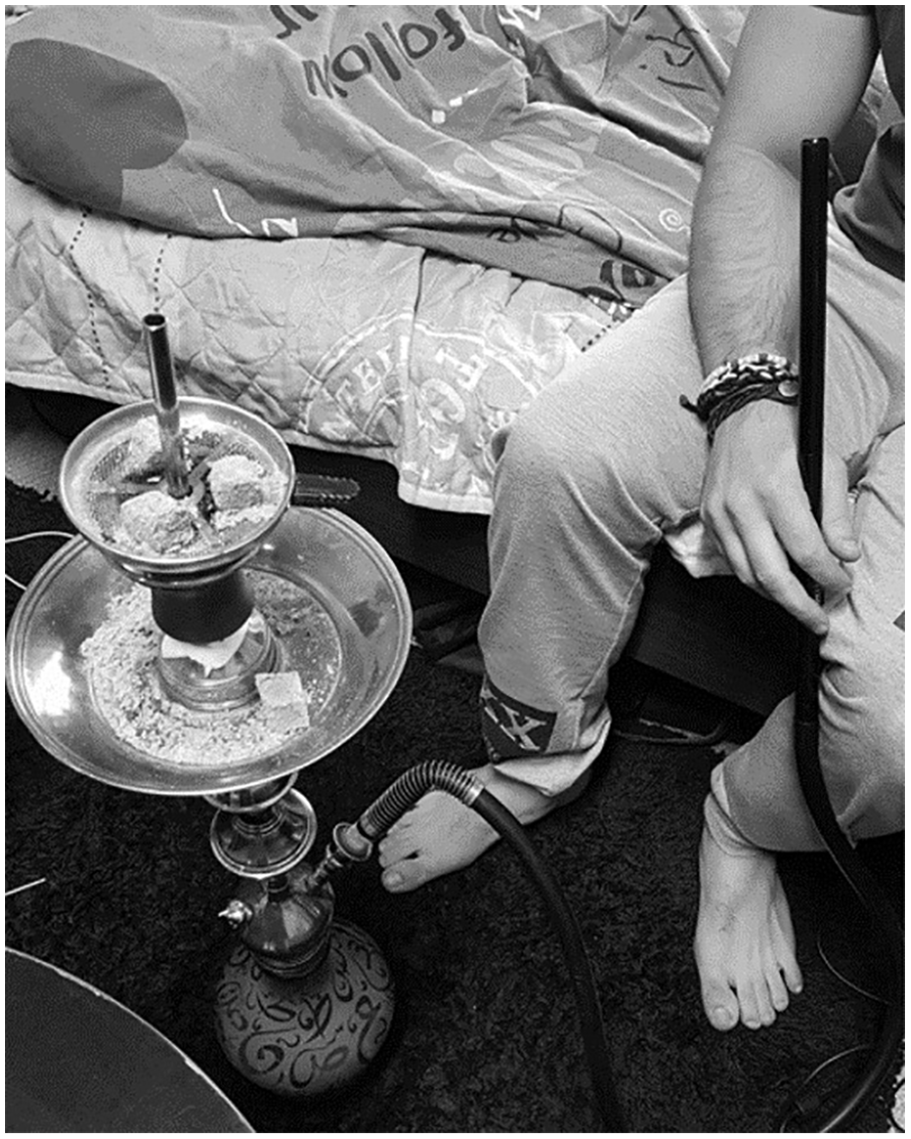
A Syrian resident smoking shisha.
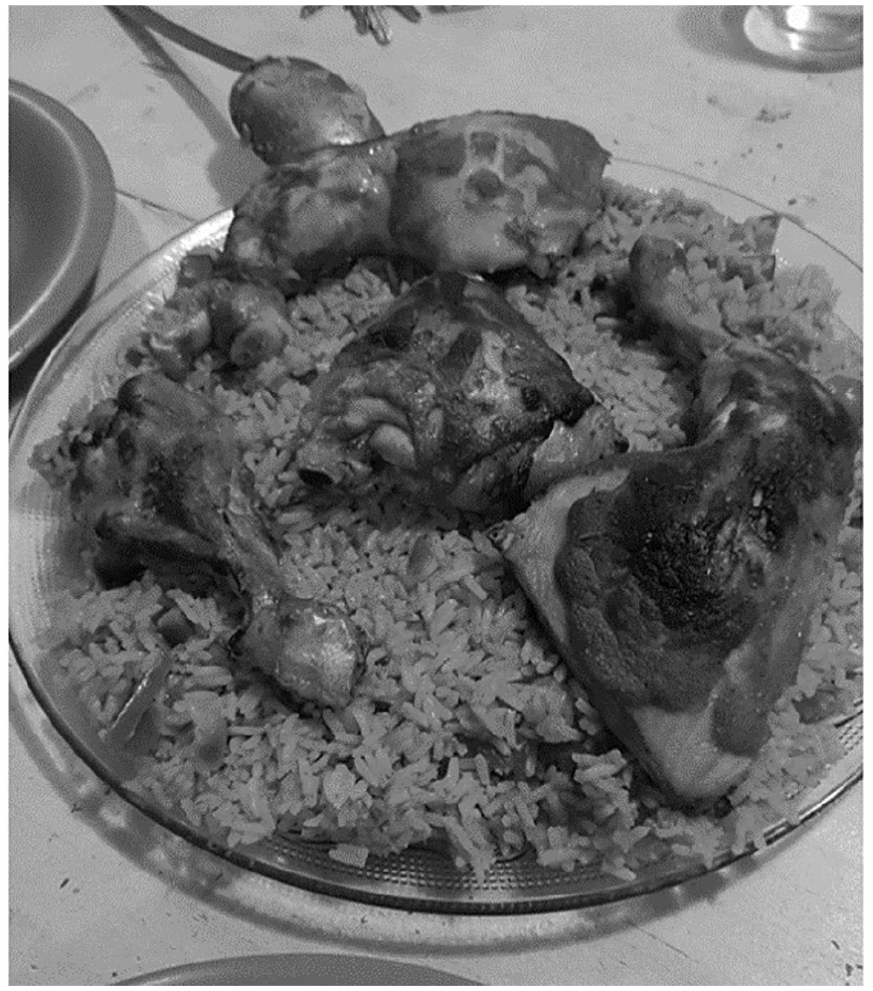
Kabsa – Syrian food.
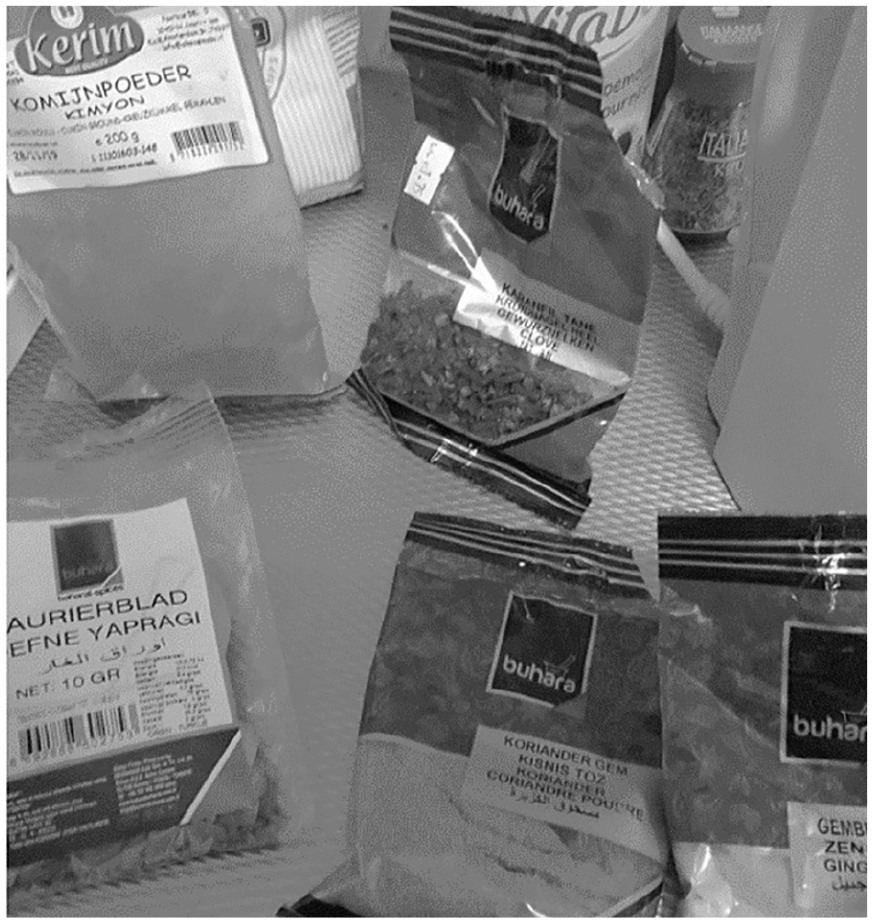
Syrian spices.
The Syrian residents have tended to decorate their studios in similar ways. During the first few days of settling in, they painted their walls and bought furniture (mainly a dining table, tea table, couch and bed) and then gradually decorated their homes by, for instance, hanging pictures on the walls and putting carpets on the floor. Although a common room is available for social gatherings, most Syrian residents have furnished their private homes to host guests. They have created exclusive spaces where they can easily reproduce a sense of home with selected others. Although spatially constrained, they have reproduced a physical environment in which they can feel comfortable and can reproduce common behaviours from Syria, such as sitting on the floor with friends. However, they flexibly practise differing cultural behaviours. When the first author visited their homes, they always said, ‘Whatever you like’, about taking shoes off. They said that when Dutch people visit their homes, they naturally come into the house wearing their shoes, but Syrians do not step on the carpet with their shoes on.
Material homemaking practices take place largely in the studio. Here, homemaking practices are Syrian oriented rather than pursuing integration with Dutch. For example, Syrian interviewees praised various events at Startblok Riekerhaven, but only a few actually participated in those events, such as sports competitions, language and cultural exchanges, and small parties. Even when they participated in such events, they tended to cluster with fellow Syrians. Syrians in this project also demonstrated that they could bring familiar material and immaterial elements into their new life settings, not only decorating their studios according to their tastes, but also spending time with fellow Syrians in a familiar way. They could also easily access familiar content from online media such as YouTube or Facebook. Through these various ways of reproducing familiarity by surrounding themselves with familiar things and spending time with fellow Syrians, the Syrians in this project ‘reproduced’ home-like settings and lifestyles.
In this way, a studio becomes home as a haven but also home as a heaven for Syrian residents, a place where they can find feelings of privacy, security, control, comfort, rest and intimacy. Moreover, they can feel at home in a group with which they share a similar cultural identity. As a trade-off, successful homemaking in their studios with fellow Syrians has resulted in a loose sense of community within the living group. As Syrians can easily find a sense of home in their studios with reproduced familiarity, the value of a common room, the importance of integratio, and the sense of inclusion with Dutch is less emphasized in building a sense of home at Startblok Riekerhaven.
Homemaking practices in the communal spaces are not as noticeable as in private spaces. Syrian interviewees said that they rarely use the common room and that they do not care much for it due to its lack of cleanliness. They complained about the physical conditions of the common room and the loosely knit community. Nevertheless, they do not actively contribute to decorating the common room or initiating group activities. They limit individual activities in the common room to doing laundry and cleaning the space when it is their turn. Regarding the underuse or even misuse of the common room, Syrian interviewees criticized hallway managers for not taking responsibility. However, hallway managers (Syrian as well as Dutch) refuted that their primary role is to keep the common room and hallway clean. Moreover, organizing social events, such as group barbeques or birthday parties for residents, is difficult because many residents are busy with their personal lives.
In contrast to the prominent negative impressions and the inactive homemaking practices of living groups towards the common rooms, Startblok Riekerhaven as a whole seems to contribute to Syrian refugees’ homemaking practices regarding cultivating a new life. Syrian residents frequently have short conversations in Dutch with Dutch residents. Moreover, when they receive a letter written in Dutch, they can ask fellow Syrian or Dutch residents about its contents and requisite follow-up actions. Thus, they can get help and gradually become familiar with the habits of the host society. Meanwhile, in Startblok Riekerhaven, interethnic couples have often formed. A Syrian interviewee said that ‘every’ Syrian guy has a Dutch girlfriend in the housing complex. Although this is an exaggeration, it shows the possibilities for networking and forming relationships in Startblok Riekerhaven.
Also, it is clear that Syrian interviewees actively utilize online content and mobile technology in their homemaking practices. During interviews, they enjoyed showing Syrian scenery through a smartphone or a laptop computer. They also introduced music videos, comedy shows and soccer games on YouTube. Through their smartphones, they could also be ‘connected’ with their families in Syria at any time. A Syrian interviewee said that when he cooks, he frequently asks his mother in Syria for advice through a video call. Furthermore, in personal SNS (social network service) pages such as Facebook, a Syrian identity is clearly expressed. Although the Syrian residents get along with Dutch people, their Facebook pages are full of Arabic postings and traces of communication with those who use the Arabic language. This implies that settling down in a new society no longer requires a disconnection from one’s former society. Rather, it creates possibilities of being embedded in both societies, but in different ways. Nowadays, not only can Syrian products and goods be easily obtained in Amsterdam, but it is also possible to produce an original home-related object anytime via the internet.
Senses of home reconsidered
The home experiences of Syrian refugees in Startblok Riekerhaven reflect various elements of home. From an object-centred perspective, which captures material elements of home, their home experiences are associated with the quality of the studios and common rooms. These elements include the size of the space, the level of soundproofing, the size and quality of the windows and doors, and the container as a construction material. From the people-centred perspective, which captures immaterial elements of home, Syrians’ home experiences are associated with the composition of residents and the behaviours of fellow residents. For example, along with where residents are from, such topics as how they behave in public spaces, how they use the communal facilities, and how they build relationships have influenced the senses of home and the homemaking practices of Syrian refugees. Reflecting these material and immaterial elements, Syrian refugees in this project seek and find senses of home, pursuing such senses as privacy, autonomy, intimacy, comfort, inclusion, community and so on.
After one year of operation, the Startblok Riekerhaven project team claimed that it was a successful project because many Syrian newcomers and Dutch young adults had built strong ties with each other, which contributes to the integration of refugees in the host society. They also assumed that the self-management system used at Startblok Riekerhaven was fostering interactions between people and that hallway managers were playing a central role. The project managers – also Startblok Riekerhaven residents – held a similar point of view. During their interviews, project managers stated that the project provided chances for refugees’ integration by forming close relationships with various residents and that the living group and the availability of a common room facilitated such opportunities.
The integration process at Startblok Riekerhaven links well with the concept of social capital. Ideally, refugees in the project could develop and utilize both bonding and bridging social capital with their same ethnic group and with Dutch, respectively. Hallway managers could play a role as facilitators who accelerate interactions between residents. The common room could be a platform where those activities take place. In these ways, the housing project team and project managers intended to make home-like settings for refugees based on establishing close relationships with Dutch young adults.
Indeed, many Syrian residents stated that being housed together with Dutch residents at Startblok Riekerhaven facilitated their integration into the host society by providing the chance to learn and practise Dutch in daily life. Even simple greetings and short conversations helped them learn and practise the Dutch language. However, those interactions did not necessarily take place within the living group. Most interviewees refuted the idea that members of a living group developed strong ties with each other compared to their relationships with non-members. They also stated that they only visited the common room when they had a specific purpose, mostly for using the laundry machines. Syrians, even hallway managers, stated that their living group was not active, and the self-management system did not make significant contributions to establishing an active living group community. They claimed that the different lifestyles and daily schedules became obstacles to creating active interactions within a living group. For example, most Dutch residents have a full-time schedule to go to school or work, whereas most Syrian residents have a less busy schedule for language or vocational training.
Furthermore, Syrian and Dutch residents have different ways of spending time together. For some Syrian residents, the way Dutch young people relax – drinking beer and talking – is not familiar or comfortable due to the different thoughts and customs, which are partly grounded in their religious backgrounds. In addition, they blamed hallway managers for the inactive living groups, claiming that the managers should facilitate the living group community and keep the common room clean but that they were not fulfilling their roles. Managers were barely fulfilling their primary obligation of managing cleaning schedules. However, Syrian interviewees admitted that the benefit hallway managers receive, €50 per month, is insufficient to ask for much devotion. As a result, Syrians’ homemaking practices at Startblok Riekerhaven are different from what the housing provider and project managers promoted.
Rather than finding a sense of home in the common room by forming strong ties with fellow members of their living groups, Syrian residents created a sense of home in their private studios. The features of their homemaking practices at Startblok Riekerhaven are as follows. First, they have reproduced familiar living environments. Second, many Syrian residents have equipped their spaces for guests, with a couch and tea table, allowing them to spend time with others with whom they feel close and intimate. Third, in their homemaking practices involving decorating their homes and spending time with other Syrian residents, they actively mobilize other cultural outcomes. Sometimes, non-cultural affairs can turn into cultural ones associated with their memories about their home of origin. As such, they get a sense of home in their studios, reproducing familiar settings and behaviours with fellow Syrians, which are associated with various forms of mobility, such as the movement of products, online content and memories.
Discussion
From a theoretical perspective, we identified the following characteristics in Syrian residents’ homemaking practices at Startblok Riekerhaven. First, the ways Syrian residents build a sense of familiarity does not rely only on ‘accumulating’ as they experience life situations and surrounding environmental settings (see Boccagni, 2017a; Duyvendak, 2011). They also actively ‘bring’ already familiar things and situations from both material and immaterial elements such as necessities, accessories, online content and fellow residents. Here, the virtual spaces and online content accessible through mobile devices make outstanding contributions (cf. Doná, 2015). Second, due to mobility, Syrians develop a sense of home as heaven in two directions. Along with ‘cultivating’ a sense of home in the host society by learning the language and culture, they create a sense of home as heaven by ‘reproducing’ home-like settings, such as having Syrian food with Syrian friends, talking in Arabic while smoking a shisha, and visiting and inviting over other Syrian residents. Here, their cultivating practices are future oriented, while their reproducing practices are past oriented. Furthermore, by using a mobility lens, we see that a sense of home can develop in a way that includes people’s multiple identities. Thus, we see that leisure activities, consumption practices, homing practices and housing designs all impact residents’ identities (cf. Thomsen, 2007). This can be linked with the notion of home as haven and heaven in the same space, suggesting that the notion of home can be more diversified or differentiated based on one’s home aspirations.
The theoretical understanding of home in this study also uses the concept of social capital to capture Boccagni’s (2017a) concept of an external structure of opportunities. At Startblok Riekerhaven, many Syrians are developing an origin-centred sense of home while also making efforts towards integration into their host society. It is clear that fellow Syrian residents contribute to homemaking by sharing information, experiences and emotions. However, whether Syrian residents are taking advantage of bridging social capital from fellow Dutch residents is not clear. The housing project team selected Dutch residents based on their motivation to help refugees integrate by living in the same housing project. Moreover, the self-management system with hallway managers was designed to facilitate bridging social capital between refugee and Dutch residents. However, because of residents’ inactive participation and hallway managers’ limited efforts, the bridging social capital is not being used to its fullest potential – though some Syrian residents do benefit from the opportunities to learn and practise the local language and culture. Generally, though, the ‘cultivating’ type of homemaking practices are mostly taking place outside the housing project by taking language courses, attending vocational school and participating in part-time jobs, in contrast to the ‘reproducing’ type of practices that are active at Startblok Riekerhaven.
Meanwhile, some Syrians mingle more with Dutch residents than do others. Those who can speak better English or Dutch and who are highly sociable tend to have more contact with Dutch residents. This seems obvious, but it raises future research questions regarding the sense of home and homemaking in the era of mobility. Syrians who studied English before arriving in the Netherlands may have a faster and smoother process of homemaking. Those who experienced a so-called Western lifestyle in Syria have better cultural receptivity than those who did not. In addition to capturing such knowledge and experiences as assets in Boccagni’s (2018: 320) model of home spheres, it is important to see that some refugees have a blurred distinction or a narrow gap between here and there. Considering that one’s life trajectory shows continuity regardless of location, it is also possible to see that some Syrian residents had already nurtured a home for ‘here-and-now’ when they were ‘there-and-then’. Moreover, the concept of assets captures somewhat limited elements in the homemaking trajectory, as one’s personality and past experiences also have a large impact on one’s current home experiences, homemaking processes and homemaking strategies. Therefore, we suggest that research should look for elements of ‘Home_here-and-then’ (see grey square in Table 2) from people’s past experiences regardless of changes in location. In other words, in this era of mobility, many elements of home can be connected and continued, which implies that a sense of home can now be less dependent on a physical space than it was in the past.
A renewed view on Boccagni’s model.
Conclusion
This study looked into the home experiences and homemaking strategies of young Syrian refugees in an innovative housing project in Amsterdam. Although the material aspects of their homes differed from what they desired, Syrian residents tended to adjust to the housing’s physical limitations in size and quality. Startblok Riekerhaven provided the possibility of meeting Dutch residents as well as Syrian residents. Most Syrian interviewees were able to cope with their aspirations to reproduce their original homes while creating new homes in the host society. However, when residents could not fulfil their social needs, complaints about the physical setting increased.
Contrary to the housing project team’s expectations that Syrian residents would use the common rooms and interact with Dutch residents, homemaking practices took place in their private studios. Most living groups in our research lacked a strong sense of community. This was generally due to residents’ and hallway managers’ low commitment to building community rather than to language and cultural barriers. Syrians at Startblok Riekerhaven employed homemaking practices that work with bonding social capital more than those that engage bridging social capital. Moreover, various possibilities for bringing familiar settings into their new homes facilitated origin-centred homemaking among the Syrian residents. Although they experienced a sense of home as being private, intimate and secure, their sense of home was spatially limited and mainly developed in and around their private spaces, where the micro practices of creating a home are involved, as Boccagni’s concept of homing explains. Therefore, the assumption that Startblok Riekerhaven is contributing to the integration of refugees in the host society was not necessarily supported by this study.
This research suggests that a mobility lens should be applied to home studies in order to take societal changes into account, as one’s ability to feel at home in a place is not only a matter of personal emotion but also societal consequences (Boccagni, 2017a: 98). Goods move more frequently and quickly (sometimes instantly) than in previous times, and people can communicate regardless of distance due to the development of information and communication technology. At Startblok Riekerhaven, Syrian residents have easy access to familiar homely things and ambiences. Thus, rather than working on integration, they emphasize their Syrian identity. Moreover, given that personal assets such as personality and language skills were developed ‘there’ (in Syria), yet they still have a value and function in feeling at home ‘here’ (in Startblok Riekerhaven), the temporal and spatial distinction of the home can be reconsidered employing a mobility lens. In this regard, the homemaking practices of Syrian interviewees at Startblok Riekerhaven reveal that migration in the era of mobility makes home less time and space dependent. Syrian residents can fill their homes with products they are already familiar with and can together create a sense of being at home in Syria. They can develop a sense of home that, coupled with mobile devices and online content, they can carry with them all the time. They are still connected to their ‘home_there’ in various ways by cultivating a microcosm – a part of homing practices – that benefits from the mobility of people, goods and communication.
The theoretical impact of this study can be summarized in the following findings. First, home studies should reflect both material and immaterial elements because these are interlinked. Second, a sense of home is associated with even small objects, not just built environments and social atmospheres. Third, the influence of mobility on homemaking practices is critical in contemporary society. Finally, the use of a mobility lens offers possibilities for grounding Boccagni’s model in such a way that all elements of here and there in combination with now and then can be used so that full-fledged layers of a sense of home can be found and further analysed.
Footnotes
Acknowledgements
Thanks are due to Magarethe Kusenbach, Paolo Boccagni, two anonymous referees, and all interviewees related to the Startblok Riekerhaven Project.
Funding
The authors received no financial support for the research, authorship, and/or publication of this article.
