



Abstract
The international debate on public sociology has failed to increase our understanding of how we might engage with new publics, particularly potential research publics. Parallel literatures exploring over-research, research fatigue, non-response and public (mis)understanding of sociology can shed light on how underlying boundary disciplinary issues might influence willingness to participate in sociological research. This article explores the case study of parents of people with Rett syndrome, an over-researched group at the centre of competing research discourses following a breakthrough in genetic research. Data from a wider study was used to explore reasons for research participation, non-participation and dropout, including interviews (n = 20) and a brief survey about reasons for non-response (n = 58). An individualist perspective led to interpretations of social interventions as stigmatising and refusal to participate. Parent activists fundraising for and promoting genetic research challenged notions of voluntary groups as being receptive to organic public sociology. While individual benefits were experienced, there were signs of research fatigue from multiple approaches. Finally, the close link between social activism and research participation increased the risk of unwitting exploitation, an issue of concern for organic public sociology.
Introduction
It has been 15 years since Burawoy exhorted sociologists to ‘engage multiple publics in multiple ways’, with the ideal of reducing the gap between ‘the sociological ethos’ and ‘the world we live in’ (Burawoy, 2005a: 4). Yet we have failed to develop an understanding of how to engage with publics other than the already-receptive readers of breakthrough ‘traditional public sociology’ books, or the engaged community members of ‘organic public sociology’ who work alongside us in a range of participatory forms of research towards broadly shared aims of social change. In short, we have grown no closer to answering Scott’s (2005: 407) question, ‘how is it possible to make people want to listen?’
Two literatures have recently emerged with the potential to shed light on sociology’s attempts to engage with new publics. First, there are the papers about sociology’s boundary disputes with other disciplines both within the academy and in the public eye, particularly sociologists’ reach and constraints in shaping (largely news media-led) public discourse around public issues. Second, is the emerging literature on ‘over-research’, which explores decisions of members of the public(s) around participation in social research, which could shed light on decisions about participating in ‘organic public sociology’ in areas of personal interest. This article brings these perspectives together by exploring disciplinary boundary issues at the recruitment level for a key public – over-researched people regularly approached to take part in research by other disciplines. By exploring attempted recruitment of over-researched publics we can develop our understanding of how to engage publics who may be less willing to ‘listen’, develop ethical approaches to recruiting from over-researched groups and increase our understanding of the impact of boundary disputes on wider ‘research publics’ who have the potential to become future organic sociology publics.
In this article I explore a potential research public’s perspectives on research participation: parents of people with Rett syndrome. Rett syndrome is a rare neurological condition affecting mainly girls and women and is the most common recognised cause of profound and multiple learning disabilities (Kerr, 2002; Neurological Alliance, 2003). Parents of people with Rett syndrome are at the centre of competing discourses about the meaning, prognosis and management of the condition following advances in genetic medicine. This makes this group an ideal case study for exploring understanding of sociological research from the perspective of a potential research public.
Public sociology: Engaging receptive publics in limited ways?
The potential publics Burawoy (2005a) described can be characterised as those broadly supportive of sociological concerns. His focus is on those engaged in supporting civil society, particularly forms that exist to keep ‘at bay both state despotism and market tyranny’ (p. 24). These included a ‘thin’, passive public that engages with ‘traditional public sociology’ – specifically books or opinion pieces by sociologists, and ‘a visible, thick, active, local and often counter-public’, including existing community or activist groups (trade unions, neighbourhood associations, communities of faith and rights organisations), and sociology students. Yet, as Scott (2005) argues, this ignores a wider unwillingness to engage with sociological perspectives, where ‘the key task for public sociology … is to establish the means through which publics are motivated to take seriously and to engage with its academic products’ (p. 408).
To date, the only serious discussion of an ‘unmotivated’ public is the news media, which is portrayed as a group of gatekeepers of public discourse on social topics (Beck, 2005; Gans, 2016). The majority of this research has focused on reflexive accounts of sociologists’ attempts to influence wider political or public discourses with their research. Such papers tend to coalesce around themes of media reports being stripped of the nuances that make the research distinctly ‘sociological’ (Beck, 2005) or the difficulties of shaping public discourse on social issues in ‘an anti-intellectual and heavily mediated political milieu’ (McLaughlin and Neal, 2007: 910). Rarely, with a combination of intensive work and institutional support combined with a highly topical public event, media engagement with sociological theory can be positive (see Vaughan, 2005, for an example).
Elsewhere, the news media has been described as inhospitable to sociological voices, which has been attributed to the domination of other disciplines (e.g. psychology, economics and political science: Boyns and Fletcher, 2005). These disciplines more usually provide explanations for ‘phenomena such as social interaction, structural inequality, occupational trajectories, and cultural trends’ instead of sociologists (Siebel and Smith, 2009: 291). Where sociologists’ views are reported in the news media, framing is mixed, both reflecting broad acceptance of key sociological arguments but also attempts to discredit the discipline by trivialising it (Siebel and Smith, 2009). Instead there is a preference for an ‘individualism frame’ (after Dorfman et al., 2005; Eisinga et al., 1999), which is intrinsically at odds with a sociological perspective: … the news media tend to highlight stories where people are singularly responsible for, and individually overcome, their circumstances. … This cycle presents a challenge to the theoretical underpinning of our discipline, which posits that nearly every aspect of an individual’s life is guided by broader social phenomena that can’t be overcome by force of will. (Siebel and Smith, 2009: 297)
Yet while our understanding of the difficulties of engaging with media publics is slowly increasing, our lack of understanding of why (non-media) publics may be unwilling to engage with sociological perspectives (Scott, 2005) persists. Besides exploration of how gatekeepers may challenge the ideological underpinnings of sociological research, or ‘deal make’ for access (McAreavey and Das, 2013), there has been little discussion of how our wider research publics might perceive approaches to participate in sociological research. To understand this we need to draw upon parallel literatures that explore disengagement from or lack of willingness to participate in social research, specifically over-research, research fatigue and non-response. These concepts provide an indirect way to understand an important, and underexplored public: our potential research public.
Over-research, research fatigue and non-response
In recent years the term ‘over-research’ has gained traction, but it remains poorly defined (Koen et al., 2017). While a relatively new term, it brings together pre-existing epistemological, methodological, ethical and logistical debates in research participation (Koen et al., 2017). As such it touches on a range of longstanding research dilemmas related to access, the balance of power in the research encounter, non-response, debates about social research, social change, public sociology as a social good, research fatigue, the role of participants in designing research and publics’ understandings of science and sociology. The term ‘over-researched community’ has been used in a range of studies, including trial research in health (e.g. Essack et al., 2009; Heise et al., 2008) as well as social research (Clark, 2008; Sukarieh and Tannock, 2013). It has been applied to communities (Koen et al., 2017; Sukarieh and Tannock, 2013), but also places (Neal et al., 2016). The risk of being over-researched is higher if you belong to a hard-to-reach group, or one experiencing an unusual phenomenon, where ratios of attempts to engage are high per member of the population (Clark, 2008).
‘Over-research’ has a negative connotation, describing the research relationship as an extractive process that benefits the academic community alone (Koen et al., 2017; Neal et al., 2016; Sukarieh and Tannock, 2013). However, Neal and colleagues (2016) problematise this, suggesting that over-researched people may become more research ‘savvy’ over time, showing agency in using research to further their own agendas.
Research fatigue is another popular, but rarely defined term. According to Clark (2008) it can be understood as a result of disillusionment that is related to being ‘over-researched’: … research fatigue can be said to occur when individuals and groups become tired of engaging with research and it can be identified by a demonstration of reluctance toward continuing engagement with an existing project, or a refusal to engage with any further research. (Clark, 2008: 955–956)
Research fatigue therefore has particular relevance to understanding why our potential research publics might choose to disengage from future recruitment attempts. When applied to social and community research, this relates to the notion of research being ‘extractive’ and reflecting a corresponding lack of collective, social benefits for those who might otherwise choose to participate (Beebeejaun et al., 2014; Clark, 2008; Crow, 2013; Sukarieh and Tannock, 2013). This can be understood as a problem of researchers over-stating possible benefits (Beebeejaun et al., 2014; Clark, 2008; Crow, 2013), of participants’ misinterpretations of what the research might be able to accomplish (Koen et al., 2017; O’Reilly, 2005) or of personally meaningful benefits failing to arise for individuals (Sukarieh and Tannock, 2013). However, these concerns need to be tempered with what we already know about the benefits of participating in qualitative social research (see e.g. Hiller and DiLuzio, 2004), which can particularly benefit vulnerable groups (e.g. Alexander, 2010).
Non-response – failure to respond to research recruitment attempts – overlaps with research fatigue in that people may become non-responders when they have become fatigued with participating in research. However it could also describe people who never participate in research. While much has been written about people disengaging from (often qualitative) social research, there has been relatively little discussion of non-response outside of the survey methodology literature (e.g. Groves et al., 2004). It is often characterised as a quantitative issue within the sociological literature (Slauson-Blevins and Johnson, 2016), probably because it is related to the quantitative goals of representativeness and generalisability. However there are notable exceptions that try to explore, for instance, men’s high non-response levels in qualitative fertility research (Lloyd, 1996). Non-response is intrinsically difficult to study given that one’s target population by definition refuses to participate in research. Nonetheless, requests for very short forms of participation have been explored with some success, for example following up with two or three questions seeking reasons for non-response.
Implicit within the above debates, but rarely discussed, is sociology’s history of boundary disputes with other disciplines. The boundary dispute literature tends to explore sociology’s position within the academy (Bourdieu, 1990; Jawad et al., 2017; Meer and Connor, 2016), rather than its impact on potential research publics. In public engagement and measures of impact, public sociology must compete for survival with disciplines whose outputs align more easily with neoliberal conceptions of research as a problem-solving, market-driven endeavour (Holmwood, 2010). Some of the issues associated with research fatigue – a lack of immediate, personal benefits, or a difficulty in delivering on longer-term social change – reflect an underlying disciplinary boundary issue. Indeed a lack of immediate benefits has been used by medical gatekeepers to block social scientific access to participants (Nattrass, 2006). Nattrass argues that a ‘narrow application of the requirement that the research “benefits” the research subject is … necessarily always going to be biased against the social scientist’ (Nattrass, 2006: 17).
Sociological and public understandings of genetic syndromes
While it is difficult to present a coherent sociological disciplinary identity (Boyns and Fletcher, 2005), it is possible to outline how sociology has contributed to specific topics and contrast this with clinical and medical perspectives. This can provide localised, informative case studies that can create a wider understanding of how potential research publics may interpret sociological research in relation to the research of other disciplines.
One area in which sociological perspectives and lay narratives have been more closely – if not perfectly – aligned is in the study of disability, where academic discourse has historically been driven by the work of disability activists highlighting the role of the social environment in disabling people (Owens, 2015). However the impact of the Human Genome Project on knowledge and techniques alongside the greater availability of information online has resulted in a proliferation of easily available lay and expert views of syndromes (Skinner and Schaffer, 2006). This has led to the ‘geneticisation’ of syndromes previously described as manifestations of profound and multiple learning disabilities (Featherstone and Atkinson, 2012) and the development of ‘biological citizenship’ (Rose, 2001) related to these new genetic identities. Research into the use of the internet for support following a genetic diagnosis has demonstrated that parents tend not to challenge the biomedical model but seek information from other parents to understand the diagnosis and support medical decisions (Lowe et al., 2009), suggesting a resurgence in biomedical, rather than social, interpretations of disability.
Parents of people with Rett syndrome provide a powerful example of how research discourses can influence lay sense-making activities and vice versa. Advances in genetic techniques have led to the development of a genetic ‘cure’ discourse that has been widely taken up in the field of genetic syndromes and found traction in public discourse and parent activism. Featherstone and Atkinson (2012) argue that parents became mobilised around the genetic identity of ‘Rett syndrome’, conceptualising this as a form of biological citizenship. There are close links between parent activism and biomedical research. For example, charitable donations funded ground-breaking research by Guy et al. (2007) where Rett-like symptoms were ‘switched off’ by artificially deactivating and reactivating one of the genes associated with clinically diagnosed cases (Featherstone and Atkinson, 2012). Featherstone and Atkinson (2012) argue this piece of research powerfully shaped how parents made sense of the syndrome and its meaning for their own child. Discourses on some social media sites, family associations and carers described Rett syndrome as a kind of ‘locked-in syndrome’ and a cure as a way of ‘return[ing] these girls to the apparently normal state before the onset of the syndrome’ (Featherstone and Atkinson, 2012: 80). This in turn led to some parents founding new charities to fundraise for research with the stated aim of developing gene therapies to treat or cure the syndrome (e.g. Reverse Rett and Cure Rett in the UK). These organisations are supported by wider forms of parent activism including fundraising activities, sharing content around Rett syndrome on social media and participating in awareness-raising campaigns in mainstream media. This challenges notions of organic public sociology and the implication that community or charitable groups organise around social change, act as ‘counter-publics’, or may be intrinsically sympathetic to a sociological perspective. Parents of people with Rett syndrome therefore sit at the centre of a range of competing disciplinary discourses about the meaning of their child’s diagnosis and prognosis. However the impact of these disciplinary boundary disputes has not been explored in terms of how competing discourses might impact on recruitment into sociological research.
In summary, our understanding of an important public – our research public – remains underdeveloped in the concept of public sociology. Exploration of the tensions between the individualism and sociological frames focus on interpretation of research data in the media or gatekeepers’ perceptions, not the initial decision to participate in sociological research. The literature on over-research can tell us something about this, particularly how research fatigue links to ambiguity in impact. Genetic research discourses are influencing lay interpretation of syndromes, and lay activists are creating and supporting new sources of research funding to further genetic research. This provides a competing discourse for understanding, and action by a public following a diagnosis of a disabling syndrome, challenging social conceptions of disability and Burawoy’s (2005a) assumptions underlying an ‘organic public sociology’.
This article will explore a case study of attempting to recruit parents of people with Rett syndrome into a sociological study. This allows us to explore a potential research public’s motivation to participate in sociological research. Parents of people with Rett syndrome are an over-researched group, according to Clark’s (2008) definition, being a relatively small group experiencing a rare phenomenon who are regularly approached to participate in or support genetic or clinical research. This is compounded, as here, when reliable databases of potential participants represent a fraction of the prevalence rate (here this was about 20%). As people with Rett syndrome experience a range of health problems as well as learning disability and communication issues, they sit within wider patient and carer groups that are likely to be approached for multiple research projects by different disciplines. A DelphiS search using the terms ‘Rett syndrome’ and ‘parent’ and key synonyms showed nearly 500 articles published in the last decade, 300 of which were published in the last five years. As such they provide an excellent case study for exploring whether underlying boundary issues might impact on recruitment to a sociological study, where benefits may be less clear than for clinical or genetic studies. Parents of people with Rett syndrome are also among the first groups of people attempting to interpret the meaning of post-Human Genome Project research for their children and sit at the centre of competing research discourses. With its exploration of relationships and social processes, my research had a clear sociological focus, providing a clear contrast to the clinical and genetic research that parents were regularly asked to participate in. This case study therefore has wider relevance in exploring the impact of disciplinary boundary disputes on recruitment into sociological research, and what this might mean for sociologists aiming to engage with a research public.
Research design
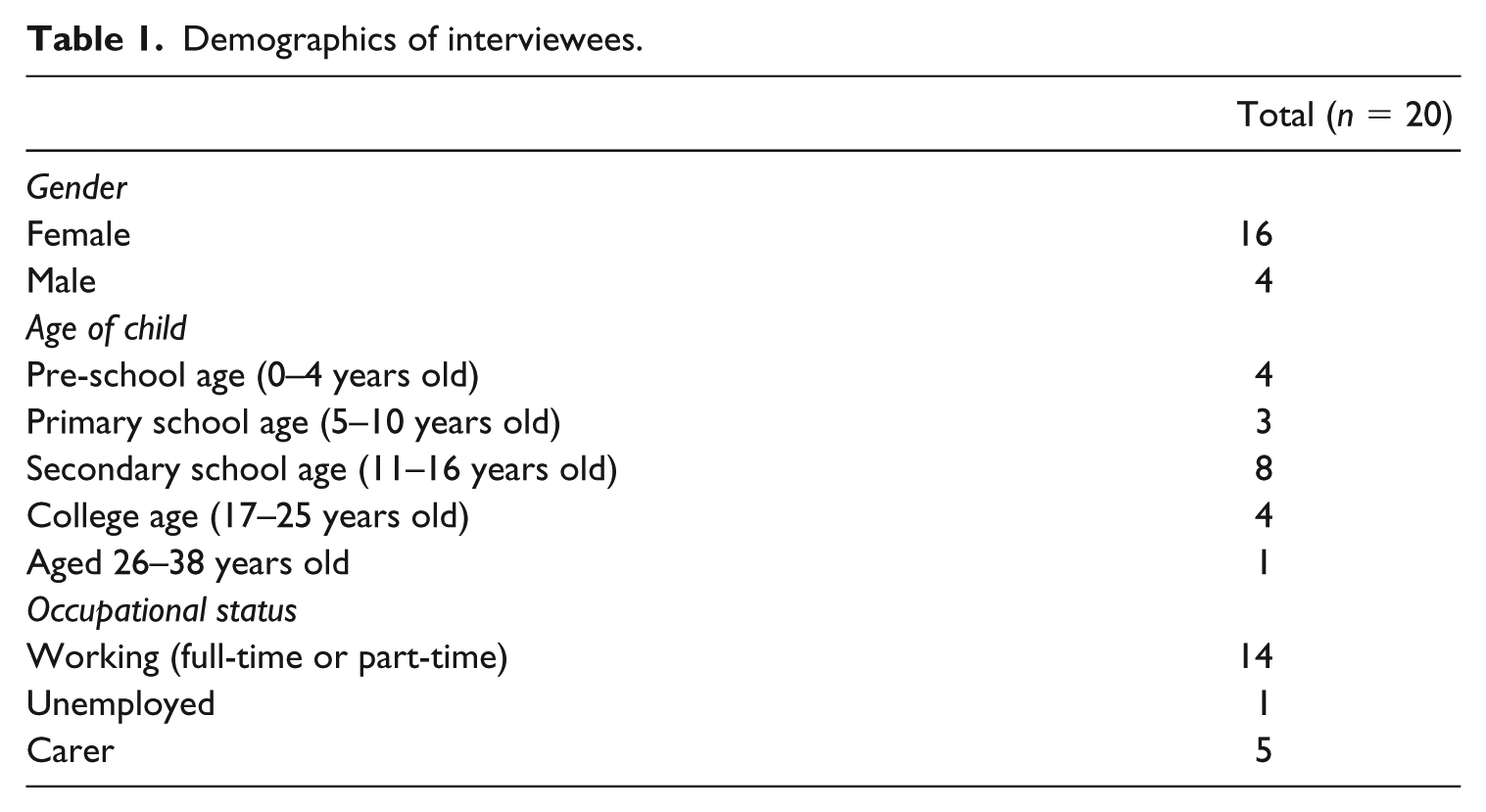
The findings presented here are taken from a wider doctoral study into the role of the internet in the advice and information-seeking practices of parents of people with a rare syndrome in the UK. For details of the full study, see Hope (2015). This article focuses on two elements of the study – interviews, and completed ‘non-response’ forms by people who declined to participate in any part of the main study. Recruitment took place between November 2012 and March 2013. Eligible people – parents of a living person with a current diagnosis of Rett syndrome – were recruited through a range of channels. This included members of Rett UK, a charity focused on providing support and advice to members, articles about the research in the Rett UK newsletter, and posts in relevant online sources of support and information including the Facebook pages of the two other UK Rett-syndrome focused charities operating at the time, which predominantly fundraised for gene therapy and treatment research (Rett Syndrome Research Trust and Cure Rett) and generic carers’ organisations. Parents were recruited to interviews through the survey (not reported here but see Hope, 2015, for details). Forty-nine eligible parents indicated an interest in being interviewed, with 20 beginning and 19 completing interviews (permission was given to use data from the incomplete interview). Table 1 provides a demographic breakdown of interviewees.
Demographics of interviewees.
The short form asking about reasons for non-response was sent to all people sent the original survey (n = 619). This form included both open and closed response options. Seventy-one completed non-response forms were received, including 58 from parents meeting the eligibility criteria. Given the need to make this form appealing to people who had not responded to a survey, demographic details were not collected excepting whether they met eligibility criteria.
Findings
I analysed interview data thematically following the methods described by Lofland et al. (2006). This allowed for the combination of deductive coding with the use of specific theories to guide top-down inductive coding. The data reported here came from second-order codes on research practices, a subset of caring practices that described how parents fundraised for, read about, participated in, interpreted, promoted, shared and discussed research relating to Rett syndrome. Data from the non-response form were thematically analysed using the same principles. Third-level theoretical coding was used to explore the extent to which reasons for participating or refusing to participate related to the sociological nature of the study.
The stigma of seeking social support
For some parents, the topic of social support appeared to be stigmatising. While this is specific to my research topic, parents’ responses highlighted a discrepancy between how I interpreted support through a social model of disability and the individualist frame (Dorfman et al., 2005; Eisinga et al., 1999) used by some parents completing the non-response form. Two parents emphasised the importance of support from within the family, setting this against seeking external support: … although I do surveys and questionnaires … I don’t find online support any use to me at all. Life is for living and getting on with whatever life has dealt you. I have a great family network around us and we are not a family in crisis or need. We are a normal family doing things our way. We all muck in together and our daughter … is the most delightful young lady you could wish to meet. (Anonymous respondent 2) My daughter is a bright alert child who requires 24hr support. She is what she is and we keep her as fit and healthy as possible. I occasionally look/link [unclear] into Rett news but am not looking for miracles. Just giving her the best life she can have without put pressure on everybody of miracle cures, etc. We are a family and live as such. (Anonymous respondent 3)
While these were only short descriptions and could not be explored further, I was interested in the dichotomy set up between families who do and do not seek support. A family who seek support are seen in the first account as a ‘family in crisis or need’. In both accounts, a family who do not seek additional support (online) are described as a ‘great family network’, a ‘normal family doing things our way’, ‘muck[ing] in together’, or as ‘a family [… who] live as such’. The implication is that ‘normal’ families should be able to manage without support, and (online) support-seeking outside the family reflects poorly on the family unit. Interestingly, in the second account, this is related to genetic research in particular (‘not looking for miracles’/‘miracle cures’), so was not specific to sociological research, but encompassed it through the information-seeking aspect. My research approach seemed to be interpreted as suggesting all families were in need of support, and this, perhaps, was stigmatising for these parents (‘we are not a family in crisis or need’). Their descriptions of their daughters as the ‘most delightful young lady you could wish to meet’ and ‘a bright alert child’ recalled the disability literature and movement in rejecting the notion of a child with a disability as a ‘burden’. The sense of the importance of families to be self-sufficient was echoed in other responses to this form, specifically parents who had arranged for residential care for their daughter and found research on support (or all research) difficult to discuss because of the emotions it raised: … you need to know that the main reason for me not responding to surveys (not only yours, but several over the years) is because of the profound emotional distress and grief they instigate. They bring back an overwhelming sense of guilt for not being able to care for my daughter within our family home. (Anonymous respondent 4) My daughter is now in residential care, too upsetting to fill in questionnaire. (Anonymous respondent 5)
There was a clear disparity between my sociological approach to social support and the stigmatising interpretation of these respondents. My approach was based on the assumption that difficulties in gaining information and appropriate support were related to social issues such as information dissemination and accessibility, cultural capital, inequalities and the bureaucratic challenges involved in gaining equipment and funding. By contrast, parents’ responses reflected an individualist view where ‘people are singularly responsible for, and individually overcome, their circumstances’ (Siebel and Smith, 2009: 297).
Genetic versus social impact
The potential impact of further genetic research was transformed into a very powerful lay message by parent activists. At the time of my data collection, the funding of social support provision for parents of people with Rett syndrome was part of an ongoing debate on social media. This reflected the different agendas of the charities and centred on the relative value of funding social support rather than research into gene therapy and treatments. During the course of my research I met many parents who were involved in fundraising for charities and research, held voluntary roles in the different charities, shared information about Rett syndrome through social media (including high-profile blogs), lobbied government and appeared with their children in promotional material for charities. Over half of the interviewees were actively involved in these kinds of activities. This included participating in, fundraising for or promoting clinical and genetic research. Some parents who participated in my research had also participated in genetic research in the past, or were actively involved in highlighting the potential of genetic research. This partly reflects Neal et al.’s (2016) assertion that over-researched groups have agency and can become research savvy, engaging in research as part of an overall strategy to improve something, driven by special-interest collectives led by parent (or patient) activists.
I’ve done a bit of stuff, um there have one there have been one or two surveys that I’ve taken part in, which have been online surveys … there were two particular ones which were about, the actual [genetic] mutation, I can’t remember who did them. (Lucy) I’m making people aware of it [through my blog], to the extent that when I then ask for sponsorship or whatever that they’re then aware and want to help. That’s good, what I really want to raise awareness of is the potential for scientific progress [Interviewer: Ok] that’s the thing I really want to raise awareness of. (Sarah)
The use of these kinds of collectives to fundraise for research seems likely to increase with the proliferation of crowd-funding and individually endorsed social media campaigns. However – and in direct contrast to the kind of civic-action-oriented organic public sociology envisaged by Burawoy (2005a) – this poses a potential risk to disciplines like sociology. Activists who might have become involved in organic public sociology in the past may not now agitate for social change, but focus on supporting the research of other disciplines, such as genetics.
As argued by Nattrass (2006), the impact messages of social science research can lack the immediacy of the kinds of messages promoted by medical and genetic research. This can lead to the research fatigue described by Clark (2008) and Sukarieh and Tannock (2013), where initial enthusiasm was replaced by increasing research fatigue as personally meaningful benefits fail to materialise. For some parents the lack of a clear personal benefit of my research led to them questioning their involvement. One parent had completed and returned a survey, but written ‘What will I gain by filling out this survey?’ at the top, suggesting her engagement was diminishing due to a lack of clear, individual returns.
However, this was not the whole picture for those who agreed to participate. The potential of a cure was seen as a powerful personal impact for some parents, while others were more sceptical: … we don’t know what the future holds for [my daughter] and, if there is a cure, or t- treatment, you know, is she one day going to be able to look back and read what I’ve written? (Laura) Um, uh obviously I’d love a cure [Interviewer: Mm] but I don’t think a cure’s gonna come in time for my girl [Interviewer: Mm, mm] you know and while yeah, it’d be nice for future girls I have to get on with the life that we’ve got … when it comes to fundraising I’d rather fundraise for her or for her hospice, you know [Interviewer: Mm-hm] rather than [for a cure-focused charity] [Interviewer: Yeah] because they’re the ones that are gonna help us out, you know. (Tina) … you’re not gonna get a cure, I mean I’d love to say that … [my daughter’s] not incontinent and she can talk and she doesn’t have seizures, three things and it’d be great, but that’s not gonna be a cure, that’s going to be other me- types of medication, isn’t it? and and you know I certainly I’m listening to to it and finding out what research is being done um but you know, we’re not there, with any of those yet, but it would be wonderful, wouldn’t it? (Lynne)
In part this reflected the age of child and perceived impact of a future treatment or ‘cure’, but also reflected changes in support needs, where parents of adult children had become more engaged in dealing with new social, rather than new health needs: … the other thing, is that that we don’t need as much of of what that was now anymore because we’re kind of in a place where, [my daughter’s] older and it’s easier to to know what you need, there’s just not so many needs really […] they’re more social needs more than medical needs now. (Lynne)
Like many sociological researchers I was wary of misleading potential participants by over-promising specific personal or public benefits (Beebeejaun et al., 2014; Clark, 2008; Crow, 2013). I therefore limited descriptions of impact to a commitment to working closely with the main gatekeeper charity to improve their support offering for parents. However, despite these efforts some interviewees were motivated by a vision of my work that went beyond what I had communicated (as reported by Koen et al., 2017; O’Reilly, 2005): … there will be sort of advice or guidance on how to go about, online, effective online support … It’d be good, I think s-so, yeah, I think it would be good. (Sarah)
Finally some aspects of the personal benefits or issues involved in participation only emerged once someone had engaged in the research. These could reflect personal agendas for participating, as described by Neal et al. (2016). This made it difficult to anticipate and include them in research information sheets, reflecting the open-ended and unpredictable nature of qualitative enquiry. Two key benefits that emerged were the ability to share hidden parenting practices anonymously and to discuss traumatic events with a non-judgemental and supportive listener. Many interviewees – particularly younger or more geographically isolated parents – reported a lack of exposure to their peers’ experiences and wanted to hear other parents’ stories (which can serve a normalising function; Alexander, 2010).
Some parents used the interviews to discuss private and occasionally harrowing experiences. One interview involved a detailed account of the clinical death of a child (unrelated to her diagnosis of Rett syndrome) who was revived because of the mother’s intervention, as well as a series of thematically related experiences, touching on other traumas and on bereavement. This mirrors Rolls and Relf’s (2006) study exploring counselling provision for teachers after a pupil’s death. While the interviews were ostensibly about the support offered, they became pseudo-counselling sessions when it emerged that the support had been inadequate.
The role of the researcher as a backstage confidante, who was able to share parents’ hidden practices and listen non-judgementally to difficult experiences, was valuable to some parents, and may be more difficult to achieve in research that focuses on their child’s syndrome. However in contrast, some parents reported finding my line of research too intrusive, and abandoned even the completion of the survey part-way through: I think I did try to fill out the questionnaire online but found it too personal … (Anonymous respondent 6)
Therefore for some of the potential research public, delayed benefits were important. The perceived potential for a cure or future treatment for their child meant they supported genetic research through participation or fundraising. Others were sceptical of the potential for their own (usually adult) child. Similarly, while some parents perceived public goods from my research, others did not. Finally, while some parents discovered or deliberately pursued the immediate benefits of normalising their experiences or discussing traumatic events with a non-judgemental listener, others found even an anonymous survey required too much disclosure.
No distinction between disciplines
For some parents the disciplinary focus of research was not a deciding factor in their decision to participate, supporting Burawoy’s claim that ‘publics … don’t recognise such academic distinctions’ (Burawoy, 2005b: 428). However this lack of distinction raised different issues. For some parents there was a sense of duty to participate in all kinds of Rett syndrome research, regardless of disciplinary focus: I think any research is good research, isn’t it, it just [Interviewer: Mm] it just opens it all up to people [Interviewer: yeah] if nothing else it gets people thinking. (Lisa) … we like to help out [Interviewer: well thank you] wherever we can [Interviewer: thank you] We’ve done quite a few different things actually […] the last one, it was looking at the care needs of […] girls with Rett syndrome … and we also took part in the um … at the nutritional needs of girls with Rett syndrome between the age of four and whatever it was compared to their mainstream counterparts [Interviewer: yeah] we did that as well [Interviewer: great] yes, so we just, we say yes to everything more or less. (Alison) I’ll tend to do surveys, I’m quite, I’m quite a survey quite a you know you get me to do the odd survey here and there especially if it’s Survey Monkey cos it’s easy, [laughing] you know [Interviewer: yeah, yeah] so I’m not so bad on those, I do those for people and I I also, and one of the reason I’ll do those for people cos is I feel that that’s important that we contribute if we wanna get things better people need to do research. (Lynne)
This mirrors the role of altruism described in public understanding of science studies. For example some studies exploring participation decisions in randomised controlled trials found people would participate to contribute to the greater good when a personal benefit was not guaranteed (Donovan et al., 2002; Horwood et al., 2016).
Some interviewees described what appeared to be a ‘felt imperative’ to contribute towards research into Rett syndrome (after Ziebland’s [2004] work on cancer patients’ ‘felt imperative’ to amass knowledge). For these parents, participation in and support for research, keeping up to date with research findings and fundraising for research charities were embedded in their wider caring practices, reflecting their proxy biological citizenship as parents of people with Rett syndrome. The strength of this imperative became clearer when interviewees experiencing distressing life experiences remained committed to participating in the research. This included parents who suggested postponing a planned interview until after their daughter’s intensive care hospital admission, their mother’s funeral or where one interviewee had a ‘nervous breakdown’ and suggested switching interview mode from email to telephone (see Hope [2016] for further details). This raised the potential of unwittingly exploiting parents with a felt imperative to participate and becoming the parasitical researcher described in Sukarieh and Tannock (2013). This could be a particular risk for sociologists engaging in organic public sociology, where the potential research public’s personal cause and research participation can become enmeshed.
However, while some parents were extremely dedicated to research, the majority of people I approached declined to participate, so their views are unknown. Carers’ response rates to individual requests for research are often relatively low (for instance, 40% in Blackburn and Read, 2005) and this may be due to the cumulative effect of receiving frequent approaches from a wide range of researchers, as described by one non-respondent: As a carer one receives
Therefore while there was evidence of a group of parents for whom research participation involved a sense of obligation enmeshed in their wider caring practices, these parents were not in the majority. While there was less opportunity to interrogate the reasons behind non-participation, the existence of parents who participate in research across disciplines suggests that disciplinary boundaries are irrelevant in at least some cases. These findings raise the possibility of the potential for ‘extractive’ organic public sociology, when both researchers and researched groups are strongly committed to a shared interest.
In summary, decisions to participate in a piece of sociological research are multifaceted. They include a commitment to an individualist perspective that made research exploring collective responses to a personal trouble seem stigmatising. For some, participation in sociological research was linked to a perceived contribution to public goods or agentic attempts to gain private benefit. The sense of research fatigue relating to over-research was conveyed in a lack of capacity to respond to multiple research approaches or questioning the individual benefit of participation, which may be more difficult for sociological research to promise. For interviewees, participation could be part of a wider activism that could align with promoting and fundraising for genetic research, rather than social change or civic activism. The alignment of activism with research participation increased the risk of exploitation as interviewees continued to express a sense of obligation to participate even when facing mental health or life challenges.
Conclusion
Although this example is drawn from medical sociology it has a wider application to sociological research that competes for participants with other disciplines. These findings demonstrate that public understanding of sociology by potential research publics can be limited. As with the news media, an individualism frame can shape how responsibility for private issues is perceived, meaning that at least some areas of research can appear stigmatising to some members of our potential research public. Attempting to challenge the individualism frame may be a tall order for researchers in individual projects, as demonstrated in research on attempts to shift media narratives around, for example, British national identity (McLaughlin and Neal, 2007). These kinds of challenges to public discourse can happen when public issues align with pertinent forms of traditional public sociology by well-placed senior academics (e.g. Vaughan, 2005), or over the longer term (Ericson, 2005), but are unlikely to be successful within recruitment to a small study. Indeed who gets to decide which interpretation of an individual’s account has primacy is part of a wider debate within sociology – the difference between Gramscian and Bourdieusian approaches, which differ in the weight given to the individual’s account or that of the researcher (Burawoy, 2005b). This continues to be a lively debate, for instance more recently in Irwin (2018) and Parsell and Clarke (2017).
This study also adds to the critique of Burawoy’s (2005a) conception of public sociology as tightly wedded to Marxist ideals, where normative assumptions are made about how a public might be empowered to make social change (Boyns and Fletcher, 2005). As shown here, activism can also reflect underlying boundary disputes where activists’ focus may not be on social change but on furthering the research agenda of other disciplines. This has the potential to further entrench dominance of certain disciplines that have powerful impact messages that it is difficult for sociologists to compete with. As also shown here and described in Clark (2008) and Sukarieh and Tannock (2013), over-researched groups can become fatigued, and it is possible that those who declined to participate here due to multiple approaches, or participated while questioning the personal benefits, were fatigued. This raises the possibility that participation in other disciplines’ research may be preferred where capacity is low and research fatigue is setting in.
However, as argued by Neal et al. (2016), some participants showed agency in shaping the research encounter for their own personal benefit. This included drawing out the backstage accounts accessed through the research or using the interview as a form of pseudo-counselling session. While there is a large literature on the benefits of having a non-judgemental listener, there are important issues relating to how much this should be offered as a benefit of participation given the lack of reliable ‘debriefing’ or other support for academic researchers (Wray et al., 2007). Finally, where research participation was part of wider activism, this raised the possibility of research becoming extractive, something not addressed in Burawoy’s (2005a) idealised conception of organic public sociology.
Footnotes
Acknowledgements
Thank you to Professor Catherine Pope for comments on an earlier draft and to the anonymous reviewers and editors for their helpful feedback.
Funding
This work was supported by an Economic and Social Research Council award (Guildford, SEDTC, University of Surrey), grant number 1089317.
